Tamplin Cycle Car - 1921 by Perico001 This is one of the few remaining Tamplins, a car make from Staines in England.
The car is a proper cycle-car, with its narrow wheels, straight mudguards and staggered, tandem-seating arrangement. It was designed by Captain Sir John Carden, who had built his first car in 1913. This model has a front-mounted 1,000 cc, V-twin JAP engine, reinforced fibreboard bodywork, a simple belt drive and rather flimsy, independent front-wheel suspension.
In 1919 Carden sold the production rights to this car to one of his dealers, E.A. Tamplin, who immediately linked his name to the car. Tamplins remained in production until 1925, though it is said that the cars were manufactured to order until 1927.
Taurrhina longiceps macho [De Togo] by quenoteam Pienso que los escarabajos son posiblemente unos de los animales más bellos del planeta
I think that beetles are possibly one of the most beautiful animals on the planet.
Canon EOS 6D
Mitutoyo M Plan APO 5x 0.14 + Raynox 250
MJKZZ Ultra Rail MINI V2 + IR Remote Motion Controller.
Tiempo exposición: 1/25" - ISO100
Canon Auto Bellows
Stacking
Nº de fotos: 213
Pasos: 45 µm
Magnificación aproximada: 3x https://flic.kr/p/2mP6dcA
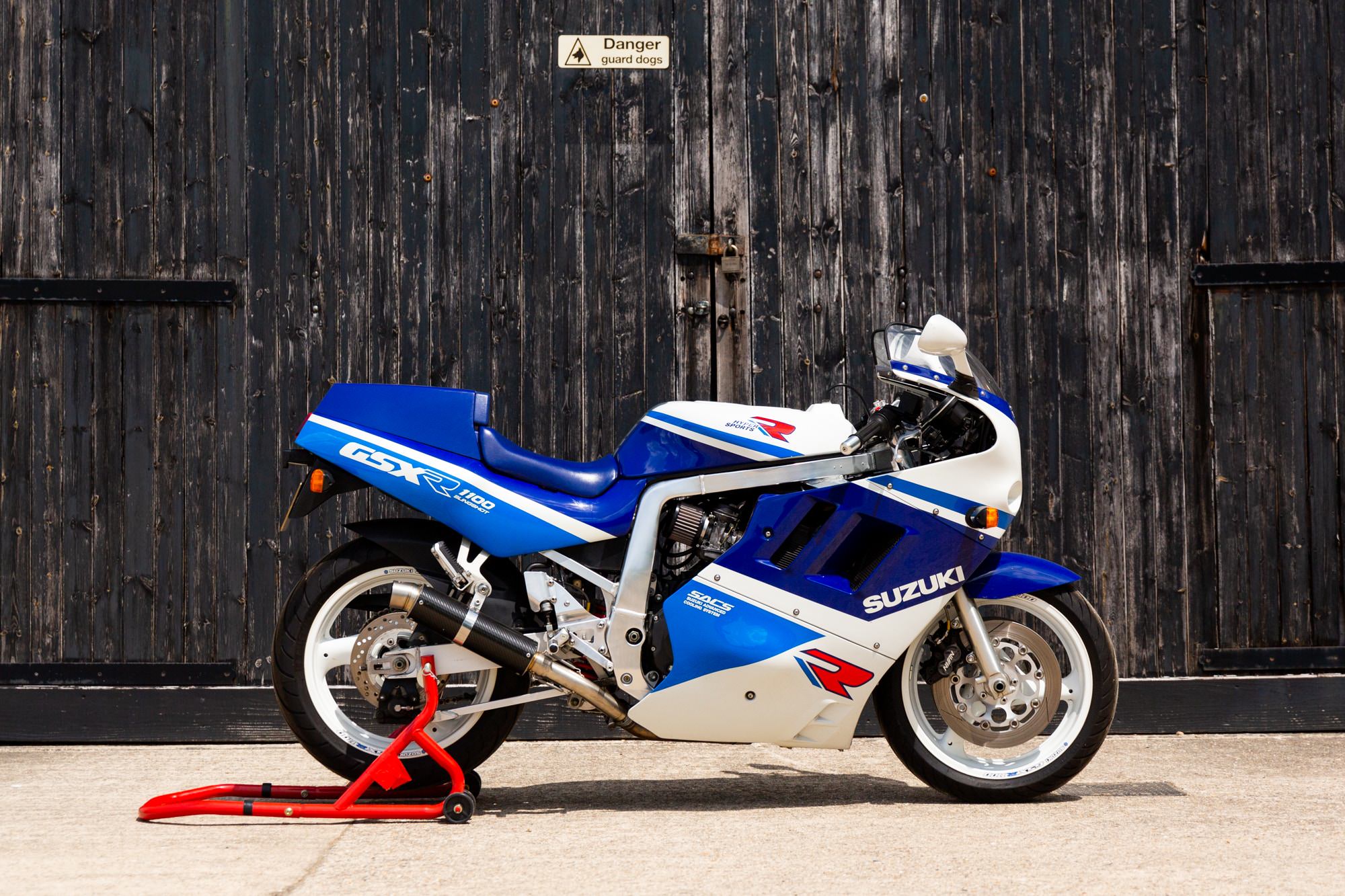
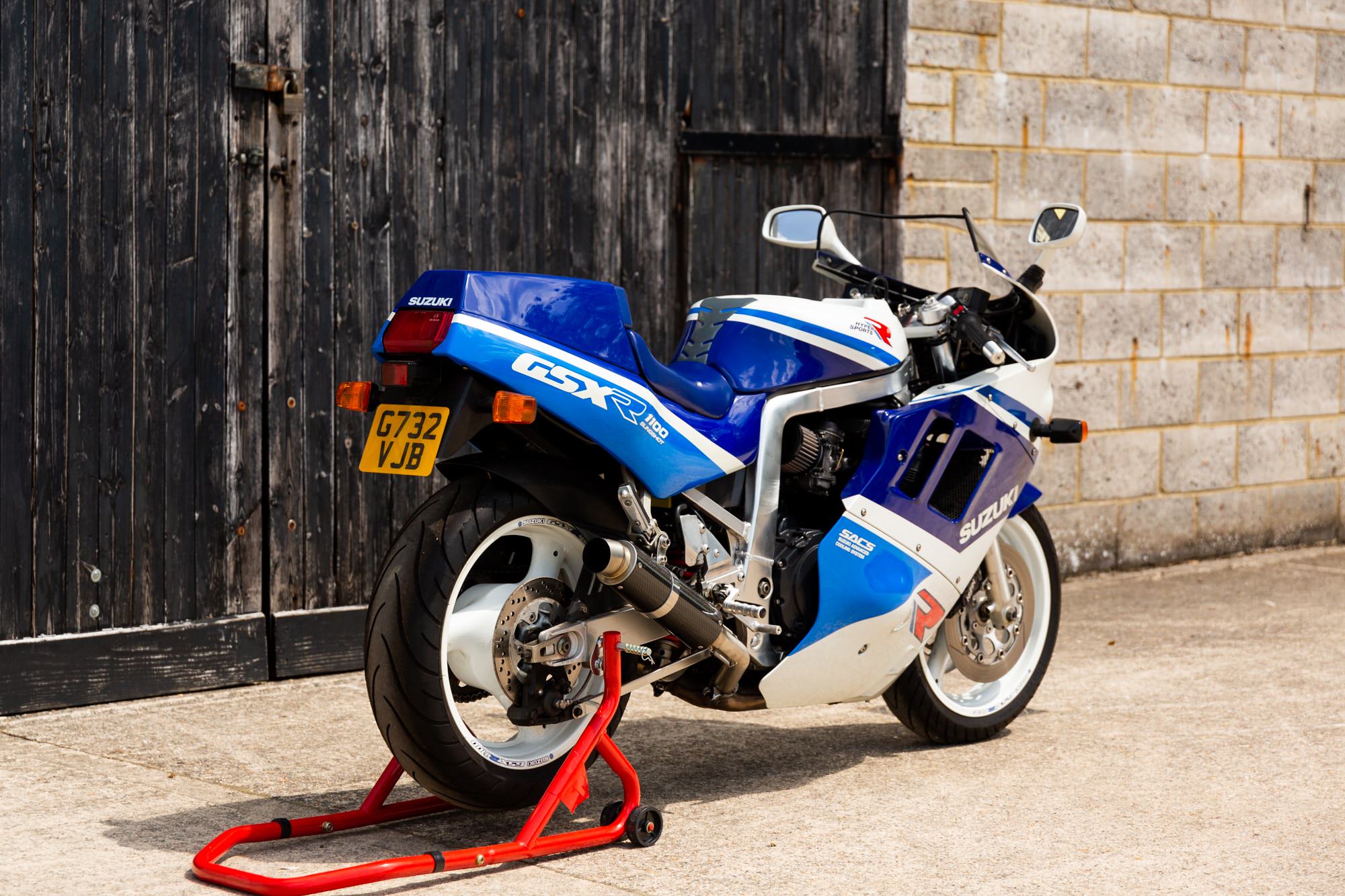
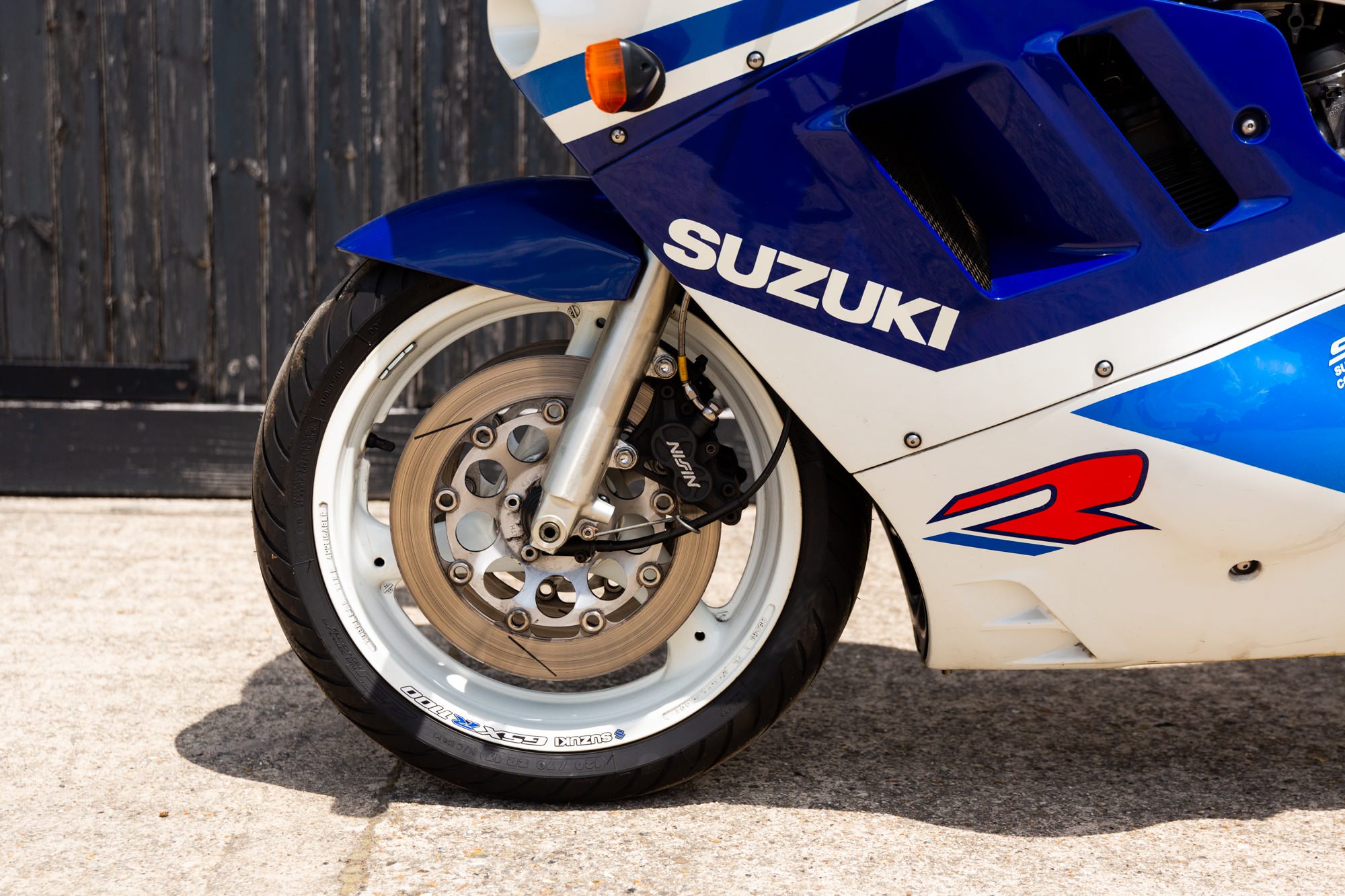
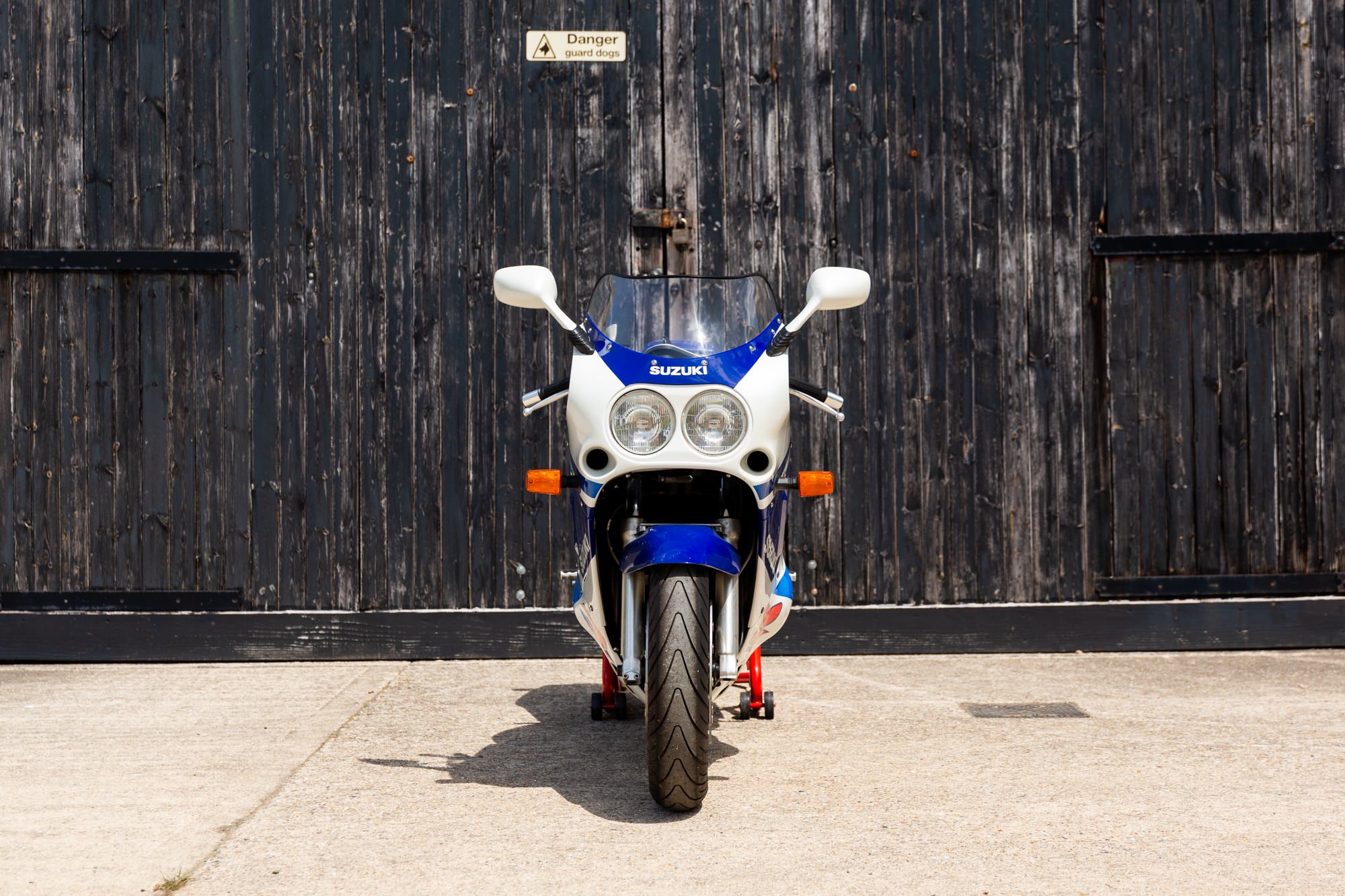
When the Suzuki GSX-R1100 was introduced in 1986 it triggered a shockwave through the motorcycle media, it was one of the first “modern” superbikes and its 128 hp engine made it one of the fastest production motorcycles the world had ever seen.
The Suzuki GSX was nicknamed the “Gixxer” early in its life and its a name that’s stuck with the model through multiple generations of production. It was a model that triggered an acceleration of the arms race that was already well underway between the big four Japanese motorcycle manufacturers – Honda, Yamaha, Kawasaki, and Suzuki.
Fast Facts – The Suzuki GSX-R1100 K
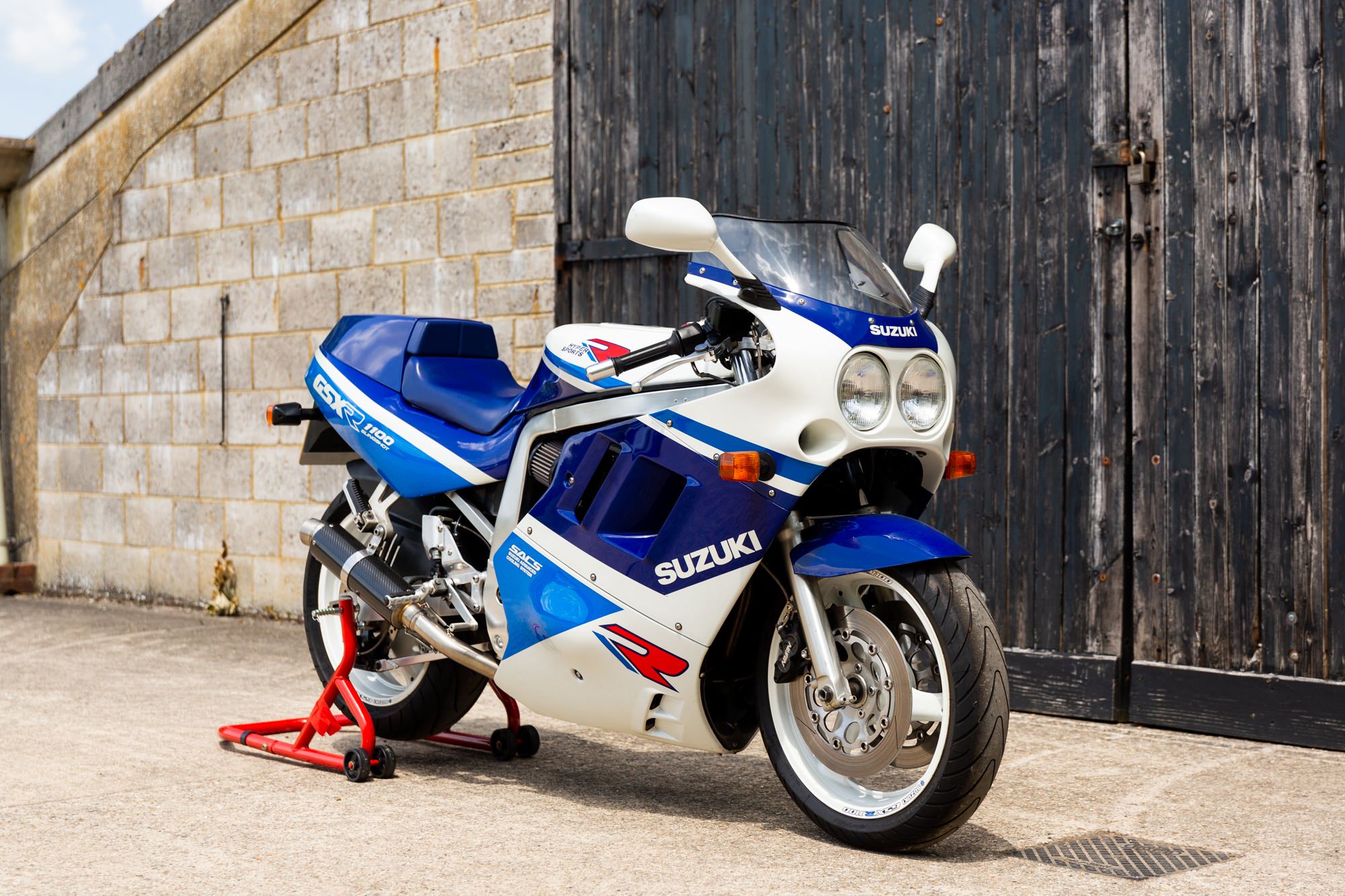
The Suzuki GSX-R1100 “K” was released for the 1989 model year, it’s powered by an air and oil-cooled 1,127cc inline four-cylinder engine installed transversely inside a square-section alloy frame.
With 138 bhp at 9,000 rpm the GSX-R1100 K was essentially a Formula 1 car on two wheels, and it send its competitors scrambling to develop their own comparable models.
Suzuki built the GSX-R series of superbikes over a number of generations, each with a slew of upgrades to make the bikes ever faster and more competitive.
The distinctive styling of the first generation GSX-R1100 combined with its performance abilities have seen it become a highly collectible motorcycle in recent years.
Suzuki And The GSX-R1100
The development of the GSX-R was led by Suzuki engineer Etsuo Yokouchi, he worked with his engineering team to create a superbike that would fundamentally change the superbike market and provide some much needed competition for the Honda Interceptor.
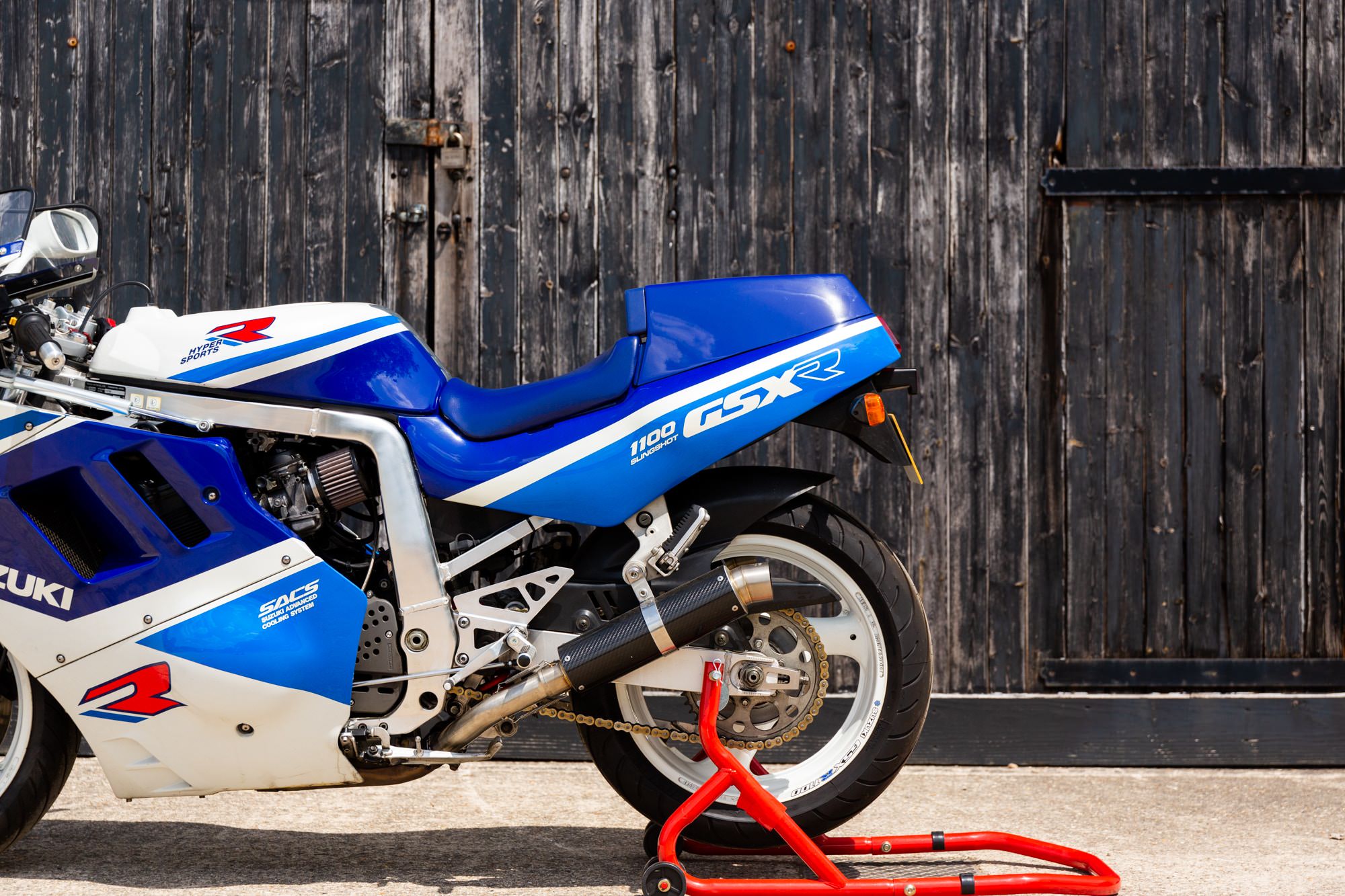
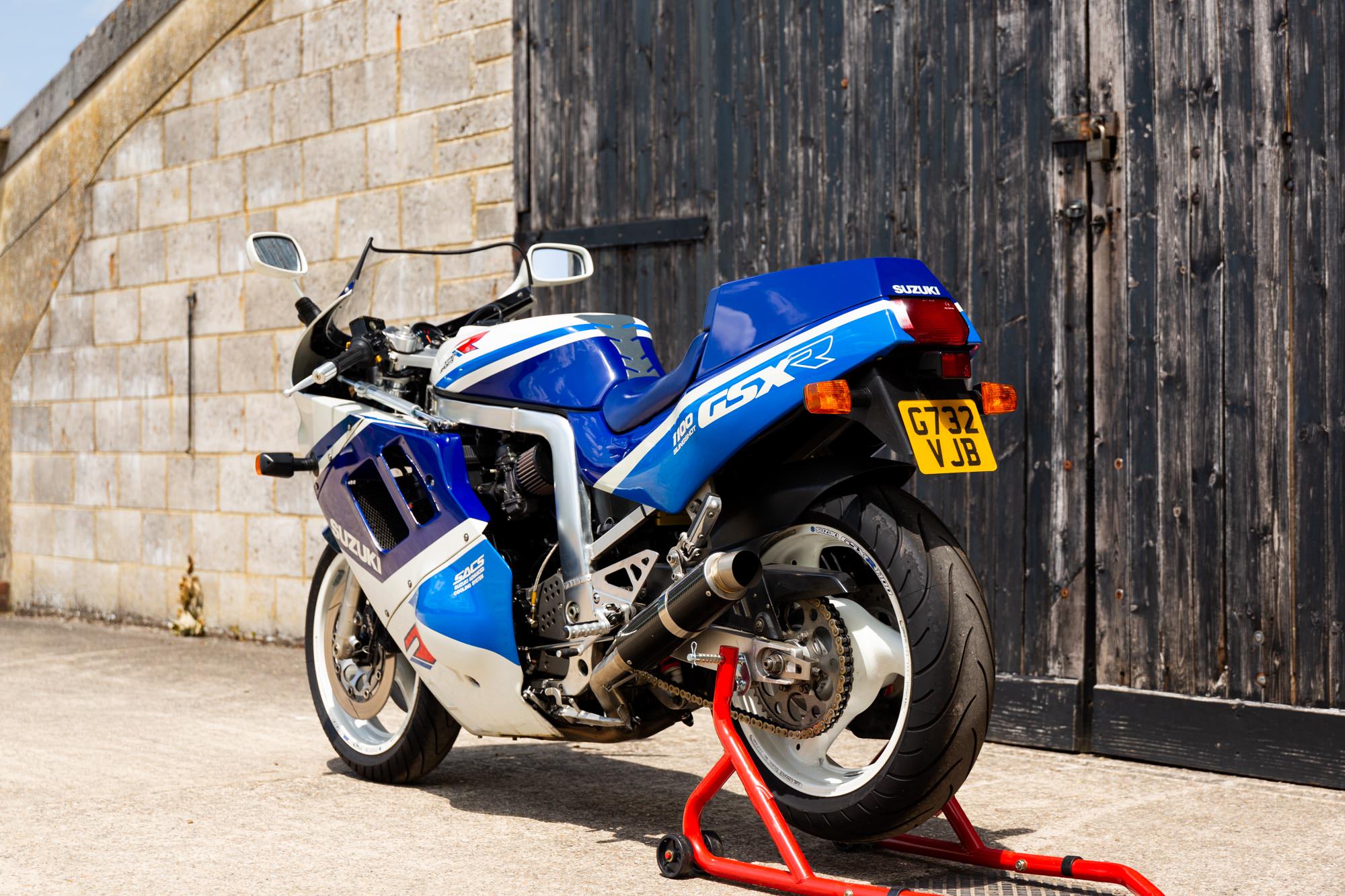
The distinctive square-section alloy frame helped reduce the weight of the GSX-R series while increasing rigidity.
Yokouchi and his team developed a new square-section alloy frame for the GSX-R that would prove considerably lighter than a comparable tubular steel duplex frame that had been used extensively by motorcycle manufacturers for decades.
The first Suzuki GSX-R was introduced in the 1984 model year but it was only sold in Japan, it was the GSX-R400 an it would set the framework for all the Gixxers that would follow. The larger GSX-R750 would arrive in 1985 and this was followed by the GSX-R1100 in 1986.
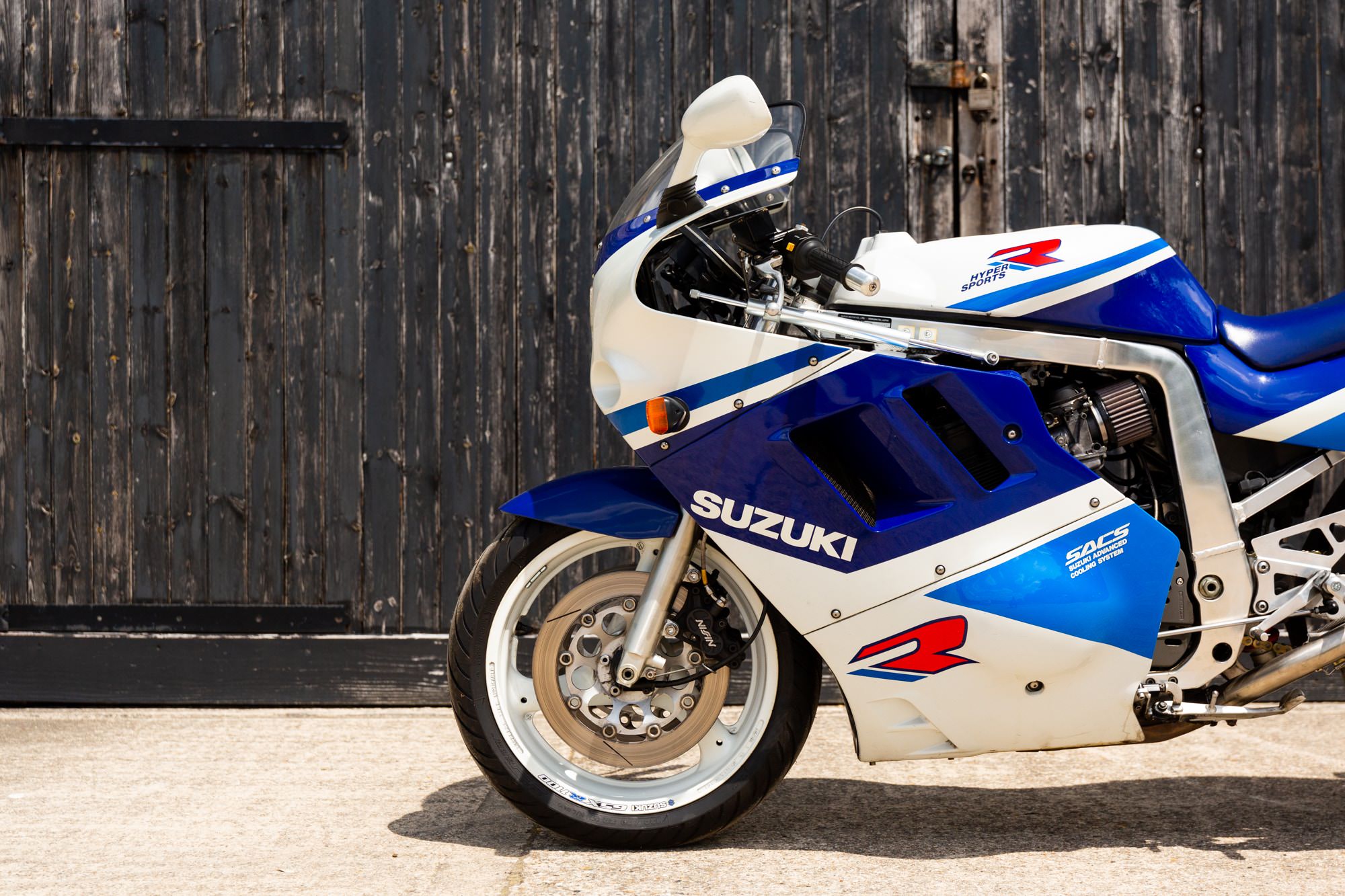
Each of these three models used a lightweight square-section alloy frame, an inline-four cylinder engine with air and oil cooling, double overhead cams, and top-of-the-line brakes and suspension. All of this was wrapped in a full fairing often finished in a distinctive white and two-tone blue livery.
In 1989 the Suzuki GSX-R1100 “K” was released. This was the model that saw the introduction of the incredibly popular 1,127cc engine, up from the 1,052cc engine that had been used in earlier years. This new engine was famed for both its 138 bhp – 145 bhp power output and its toughness, with some drag racing bikes being tuned to reliably turn out 300+ bhp.
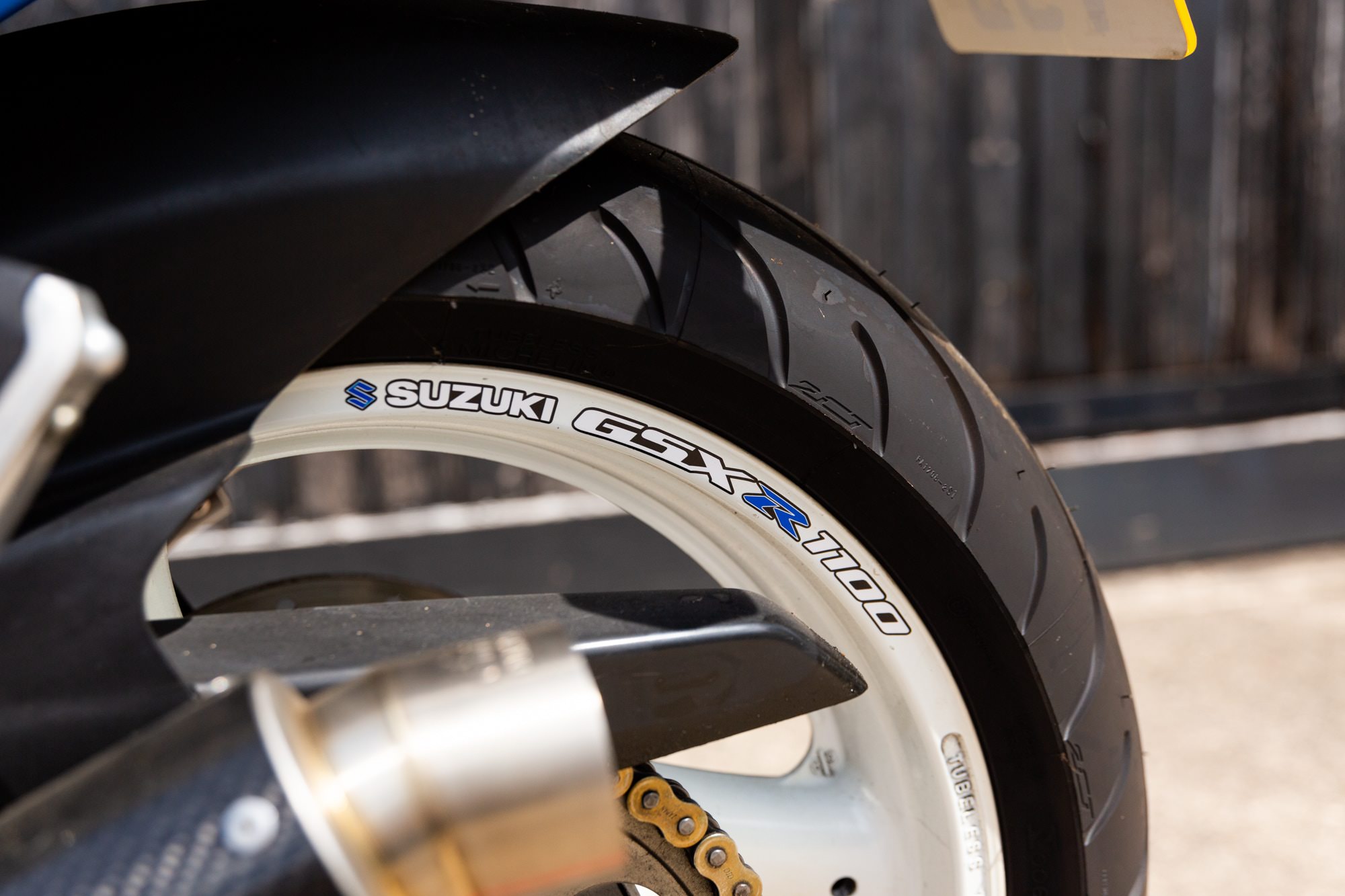
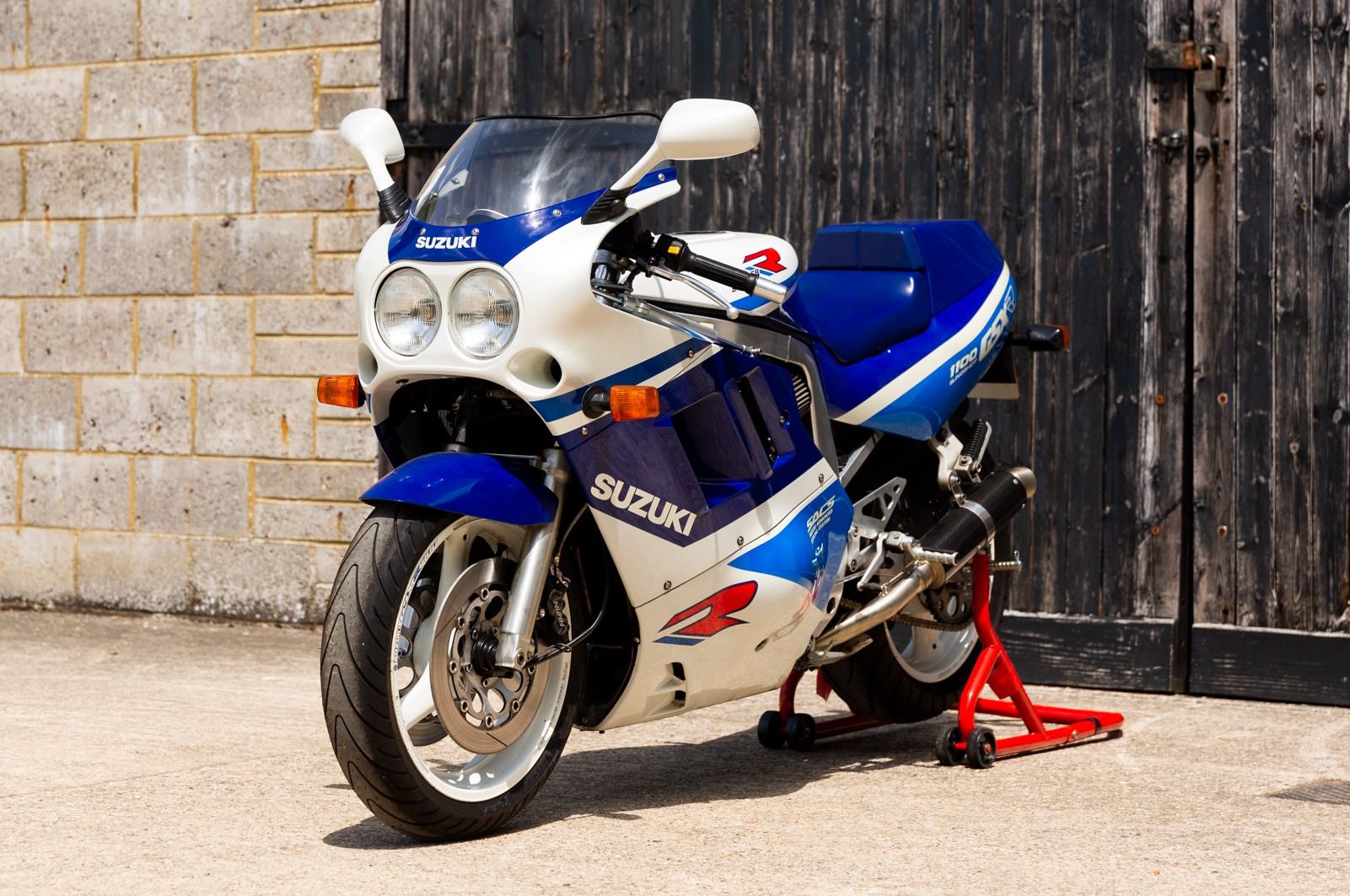
Suzuki’s two-tone blue and white paint scheme has become inextricably linked to the GSX-R series.
The 1989 Suzuki GSX-R1100 K Shown Here
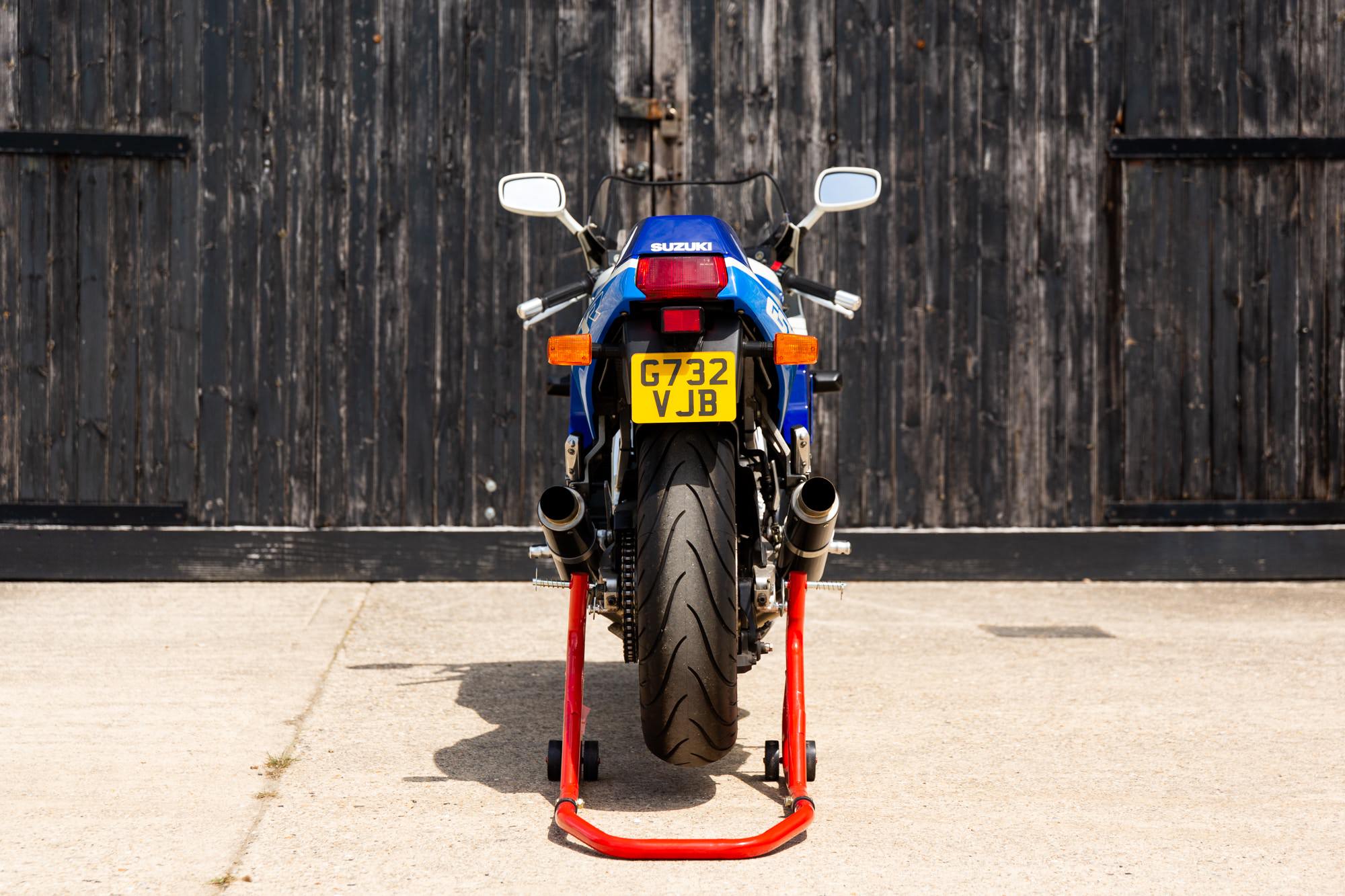
The bike you see here is a highly-collectible Suzuki GSX-R1100 K, a 1989 model year bike that was the first to receive the larger and more powerful 1,127cc engine.
With its four cylinders, double overhead cams, 16 valves, and four Mikuni carburetors producing 138 bhp at 9,000 rpm, the ’89 GSX-R1100 was an engineering tour de force.
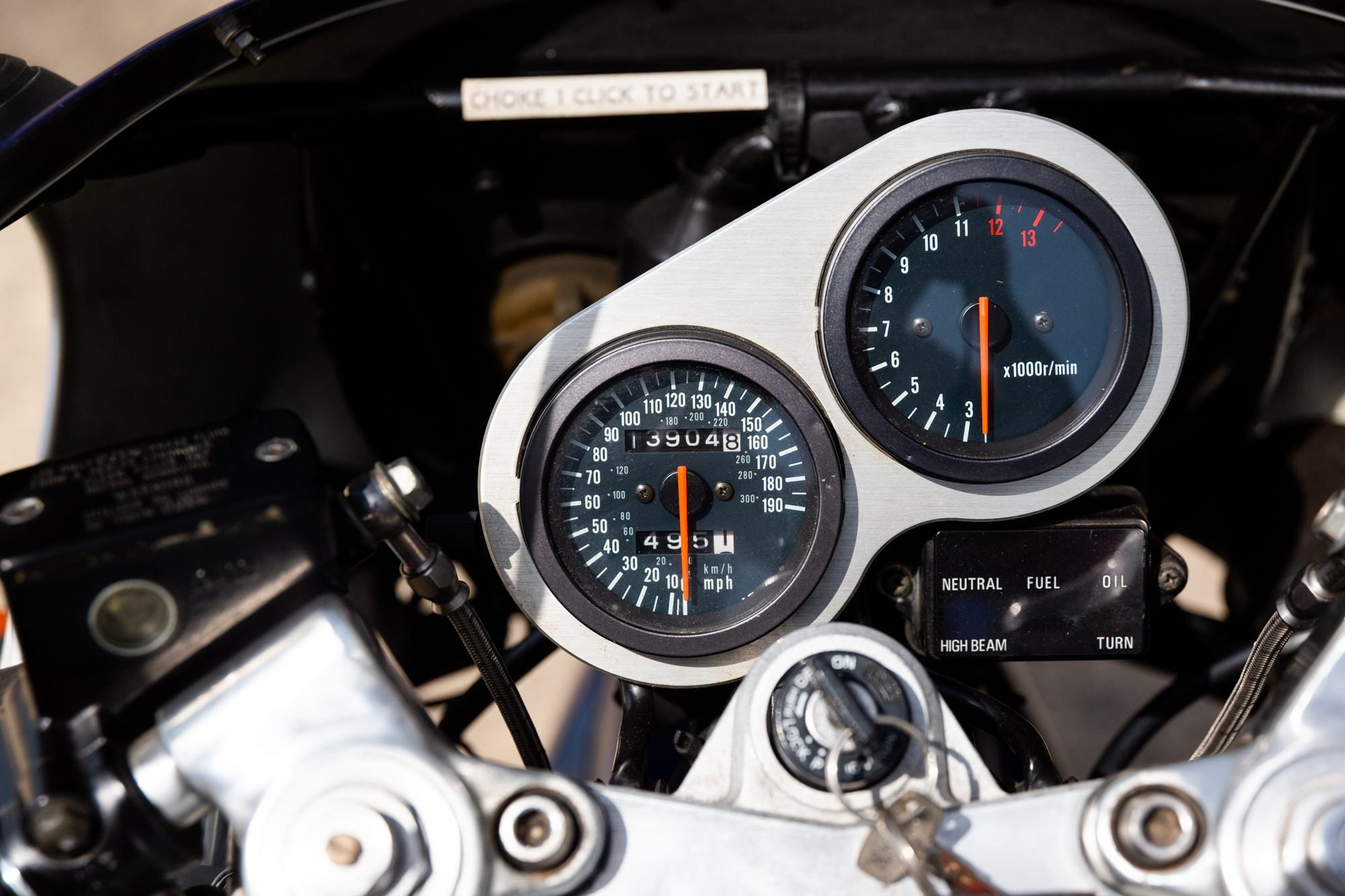
The example you see here has accumulated just 13,904 miles since it was delivered new, and it’s listed as having no known damage to the frame or bodywork.
There can be no doubt that the GSX-R1100 is one of the all-time greats of the superbike world, so it’ll be interesting to see what this one sells for. It’s currently being auctioned live by Collecting Cars in the UK, if you’d like to read more about it or register to bid you can click here to visit the listing.
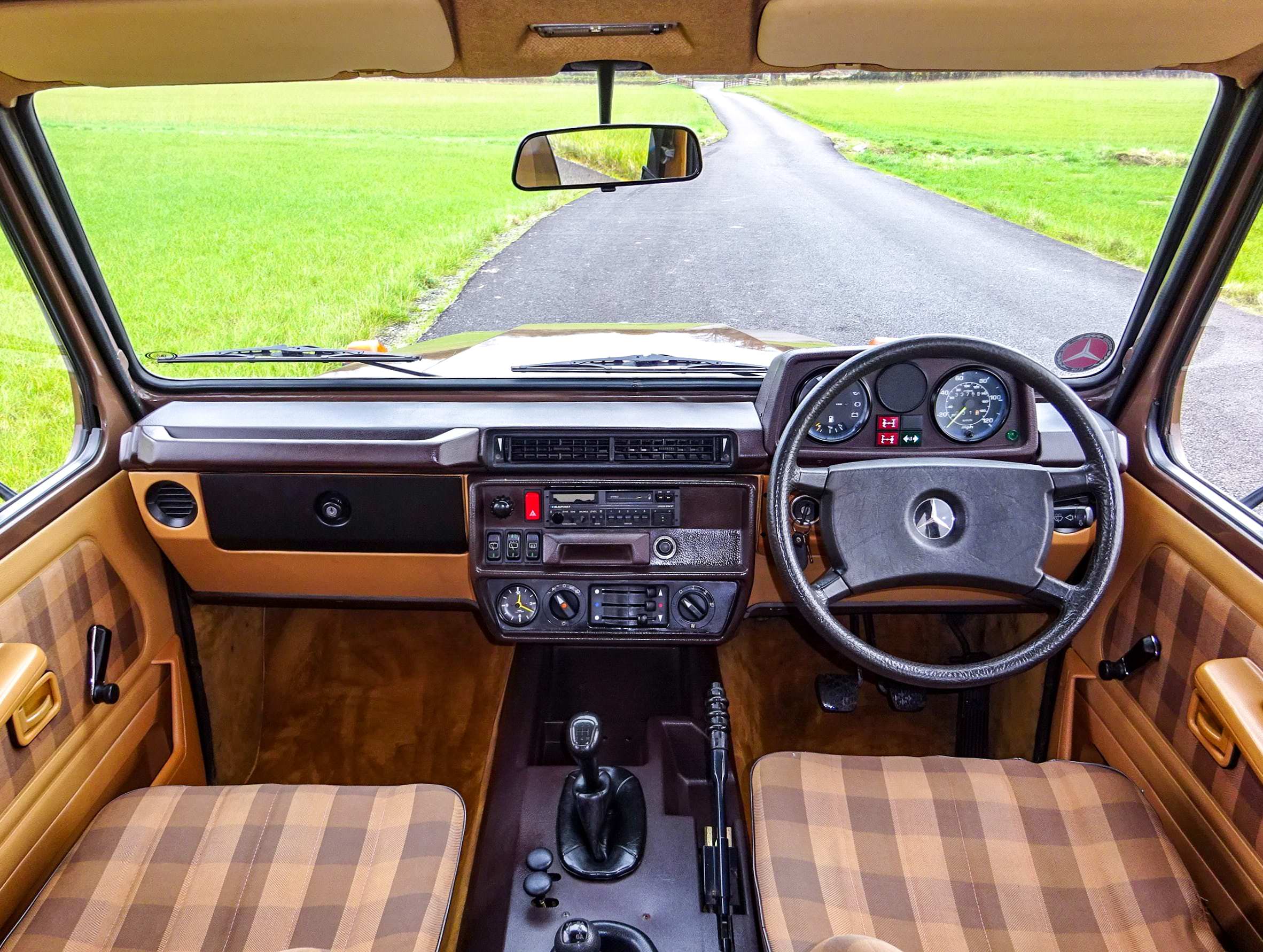
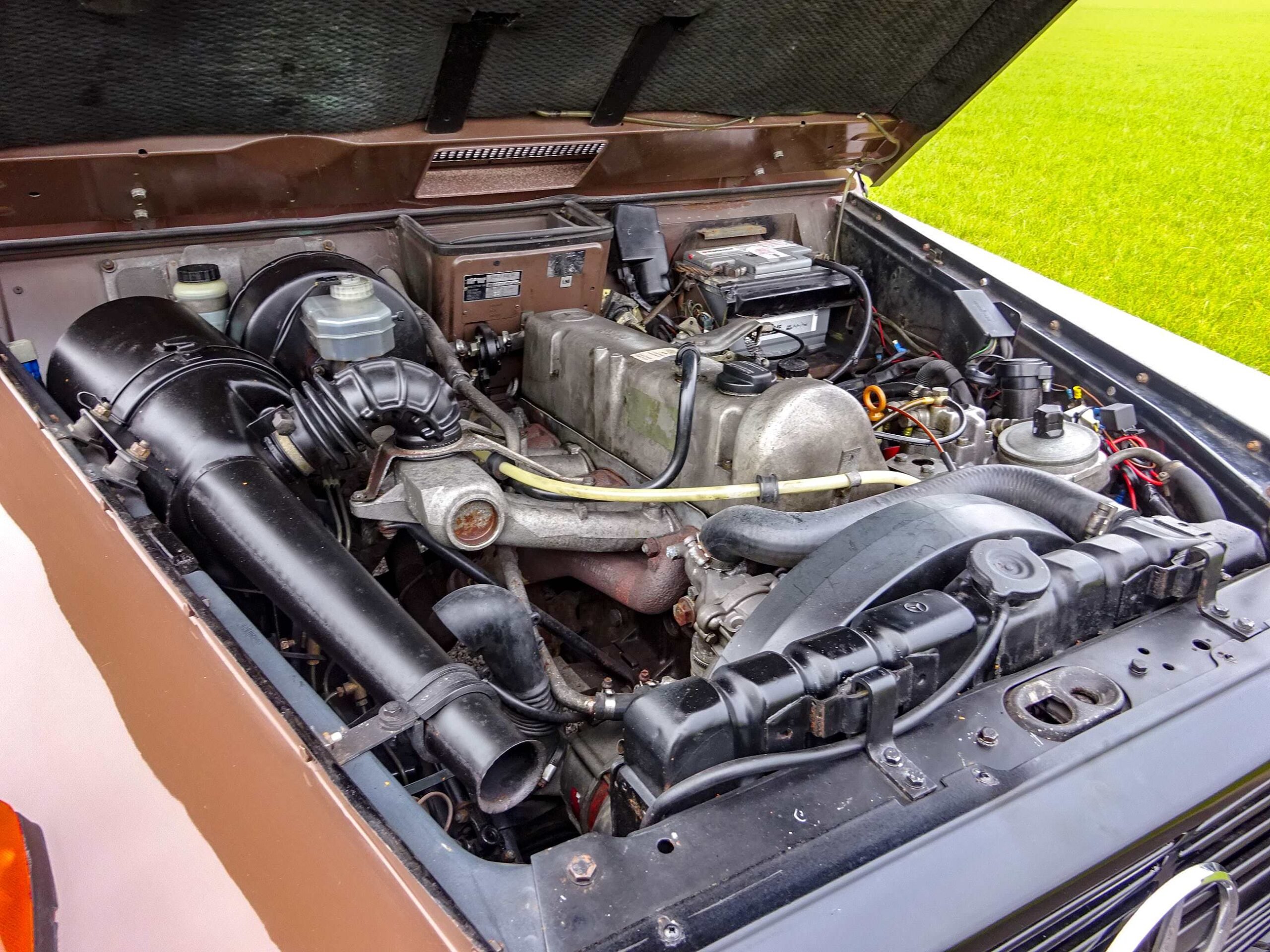
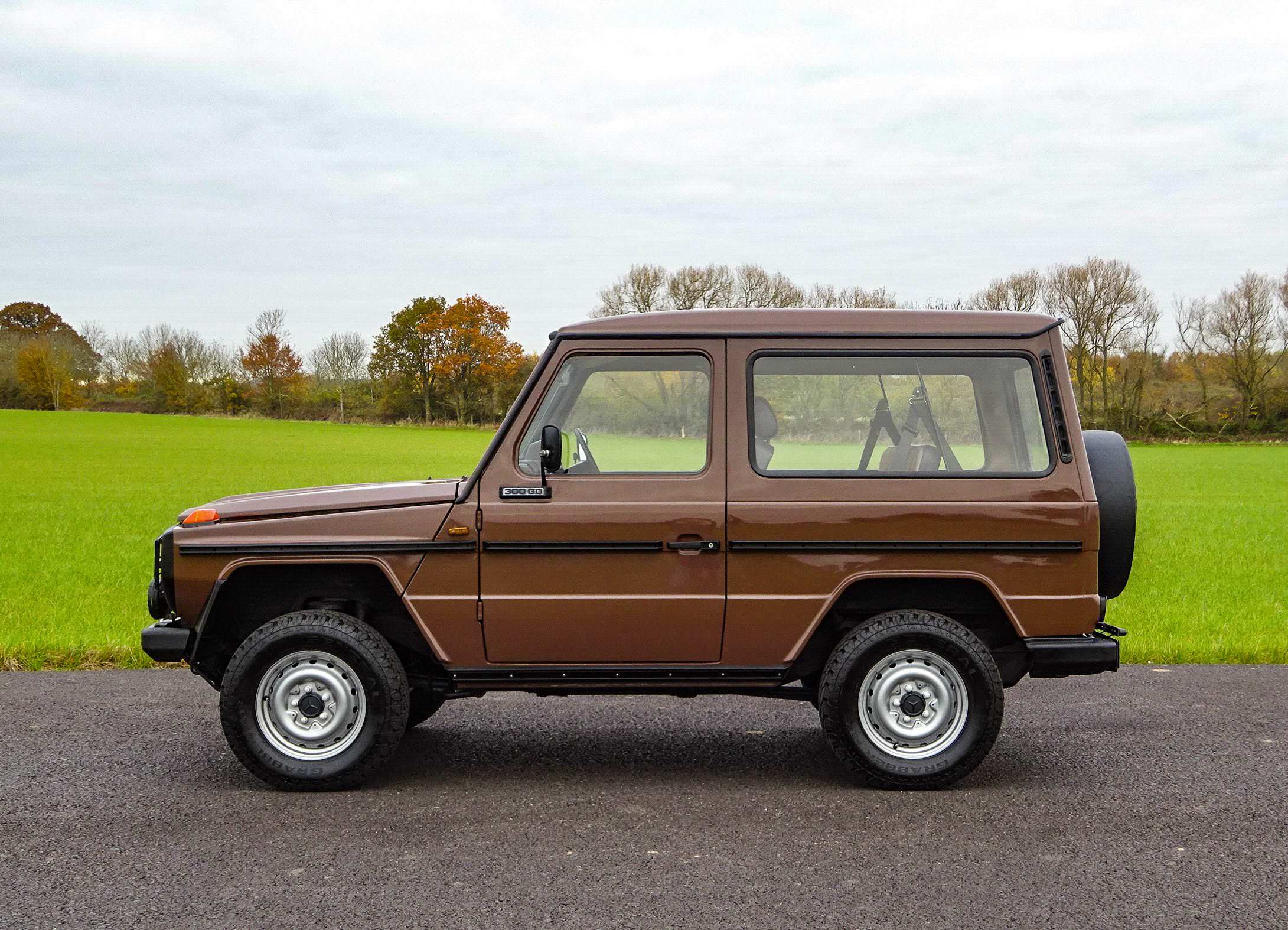
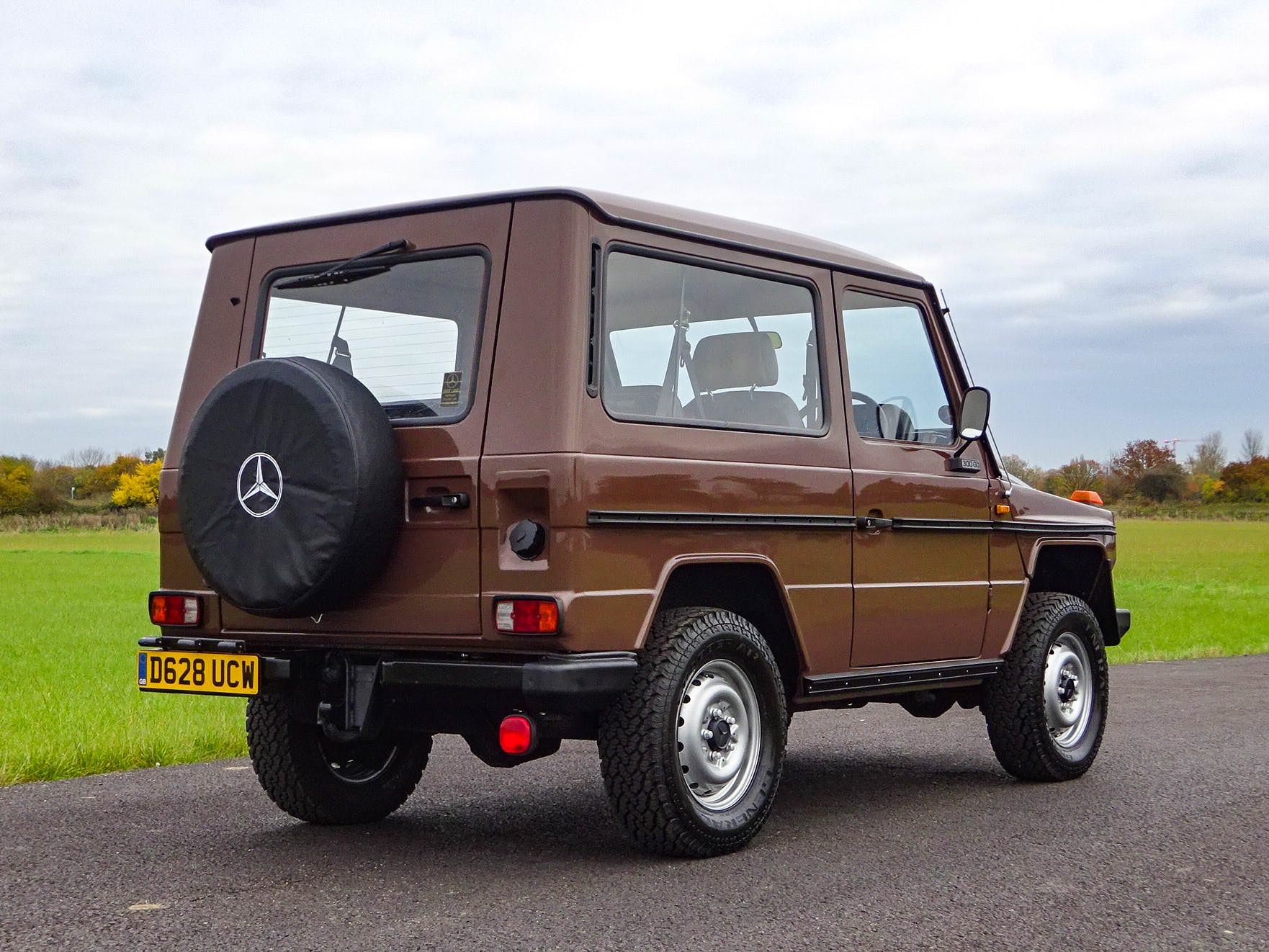
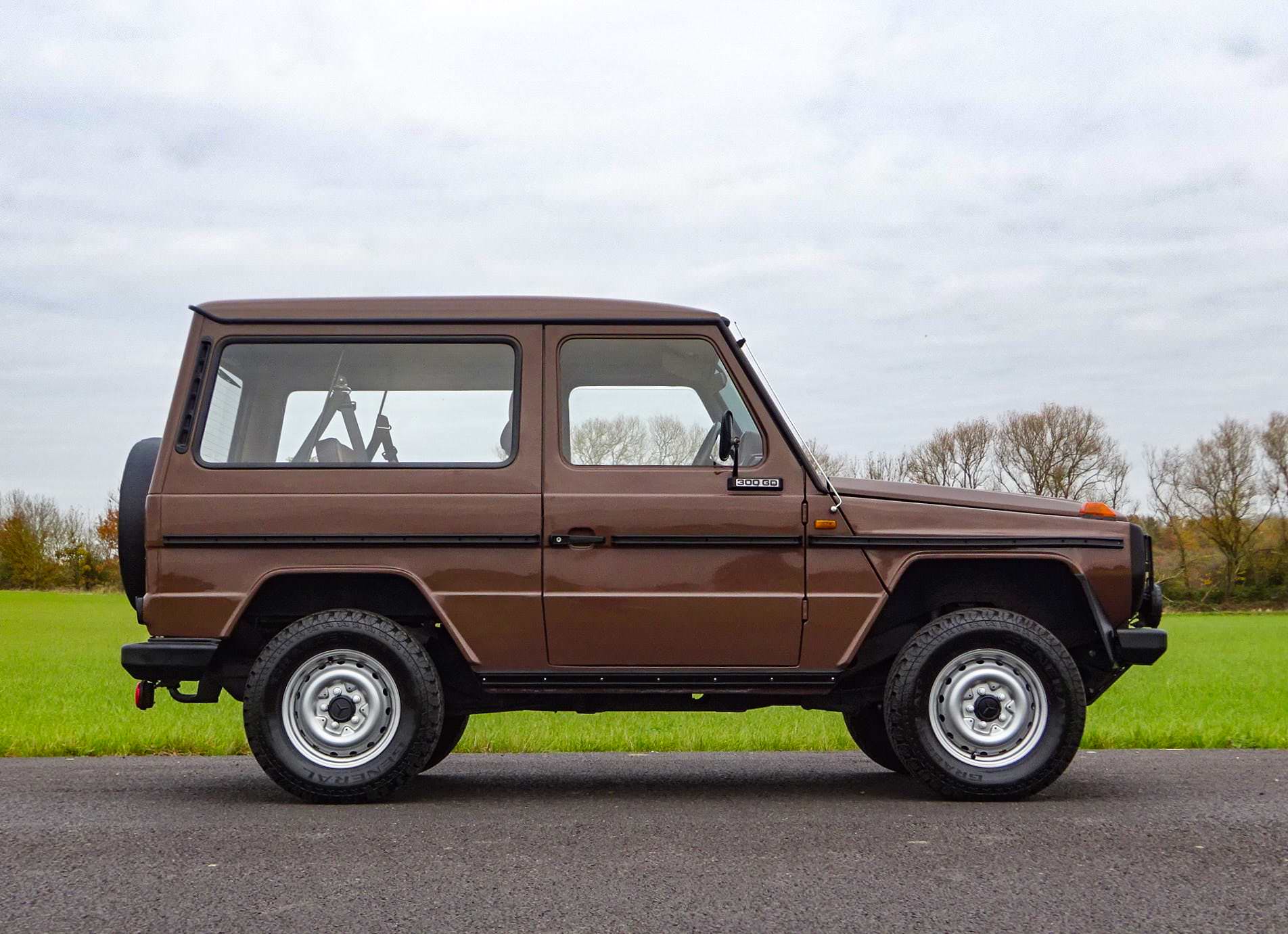
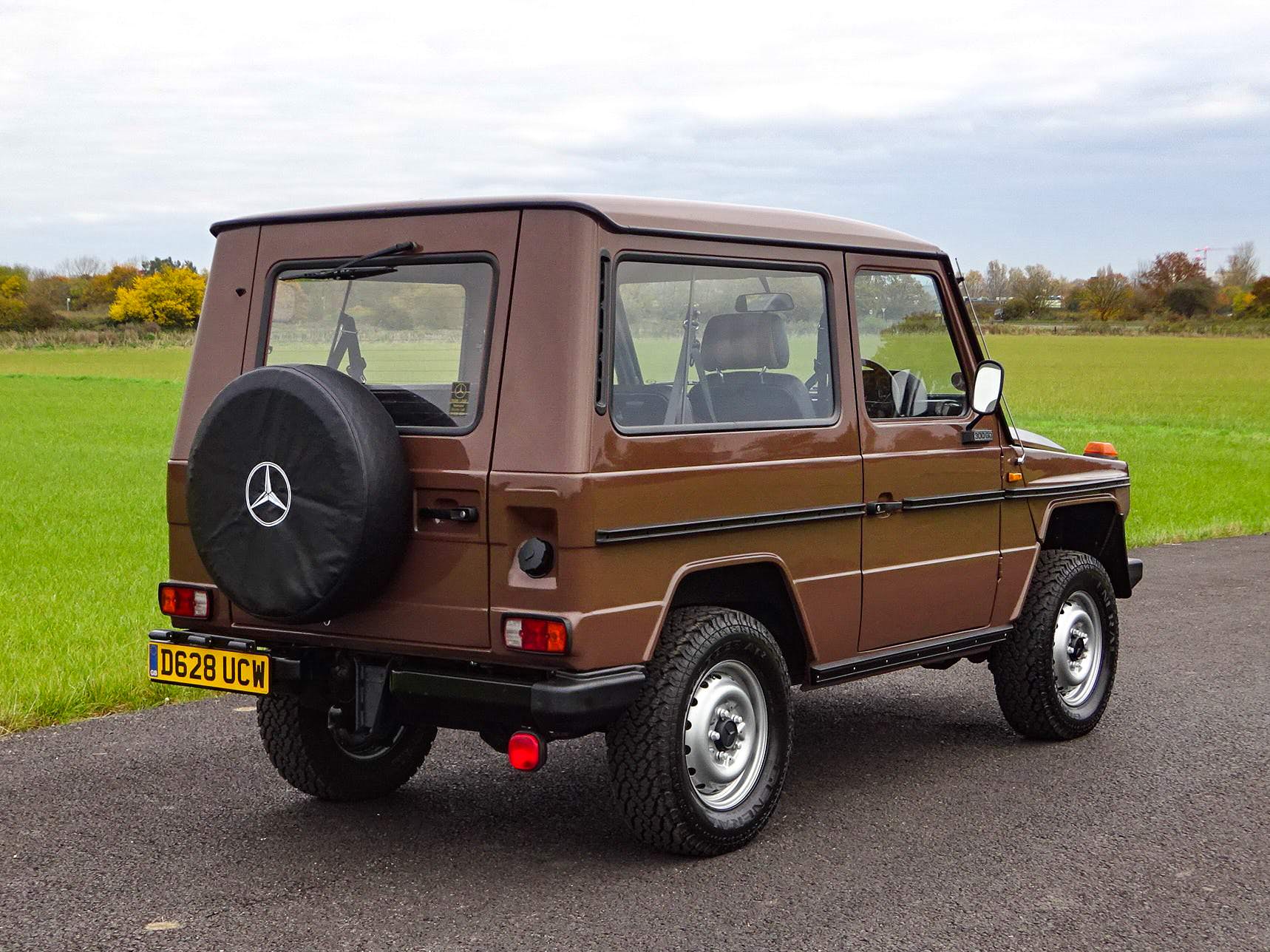
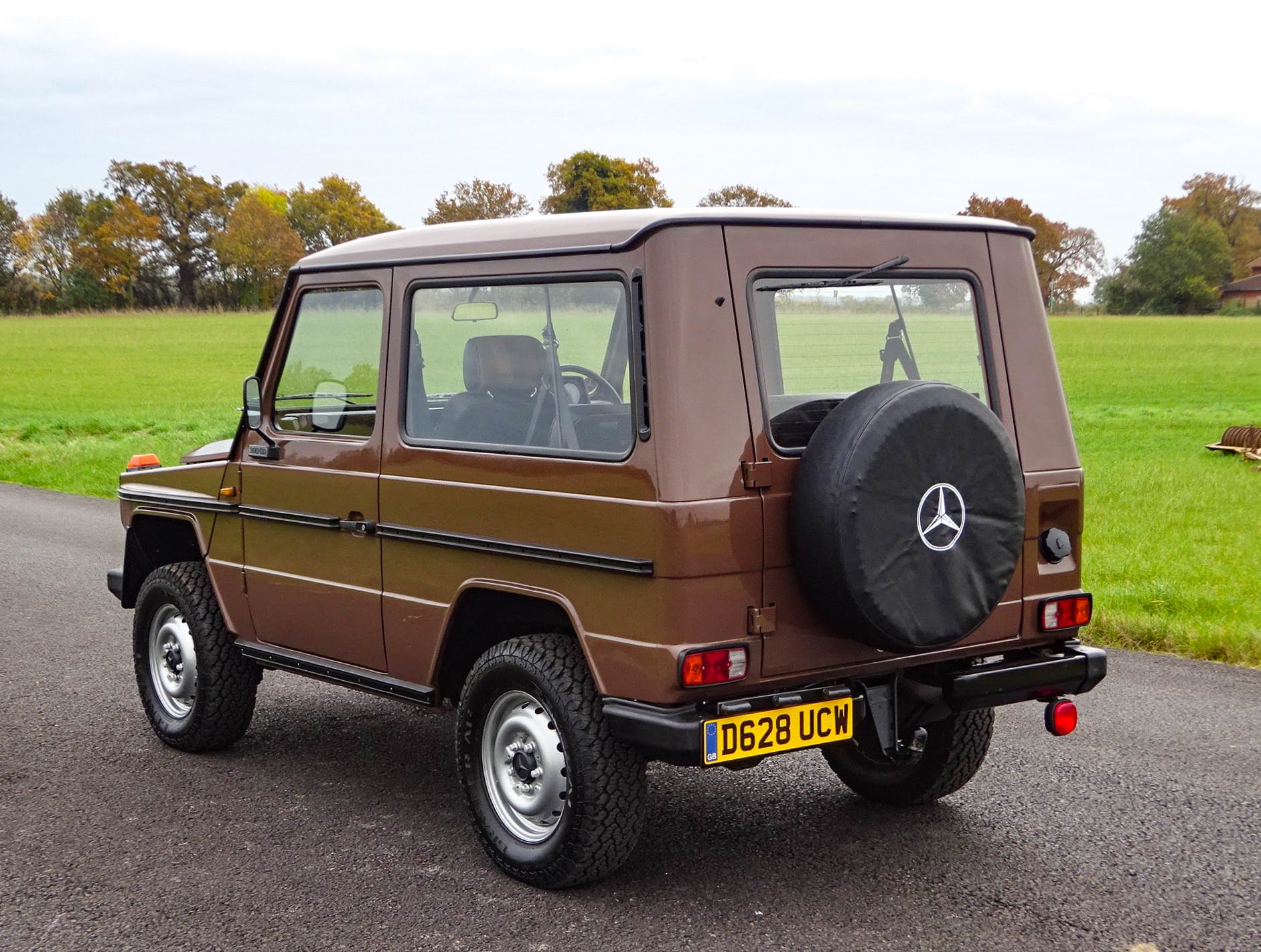
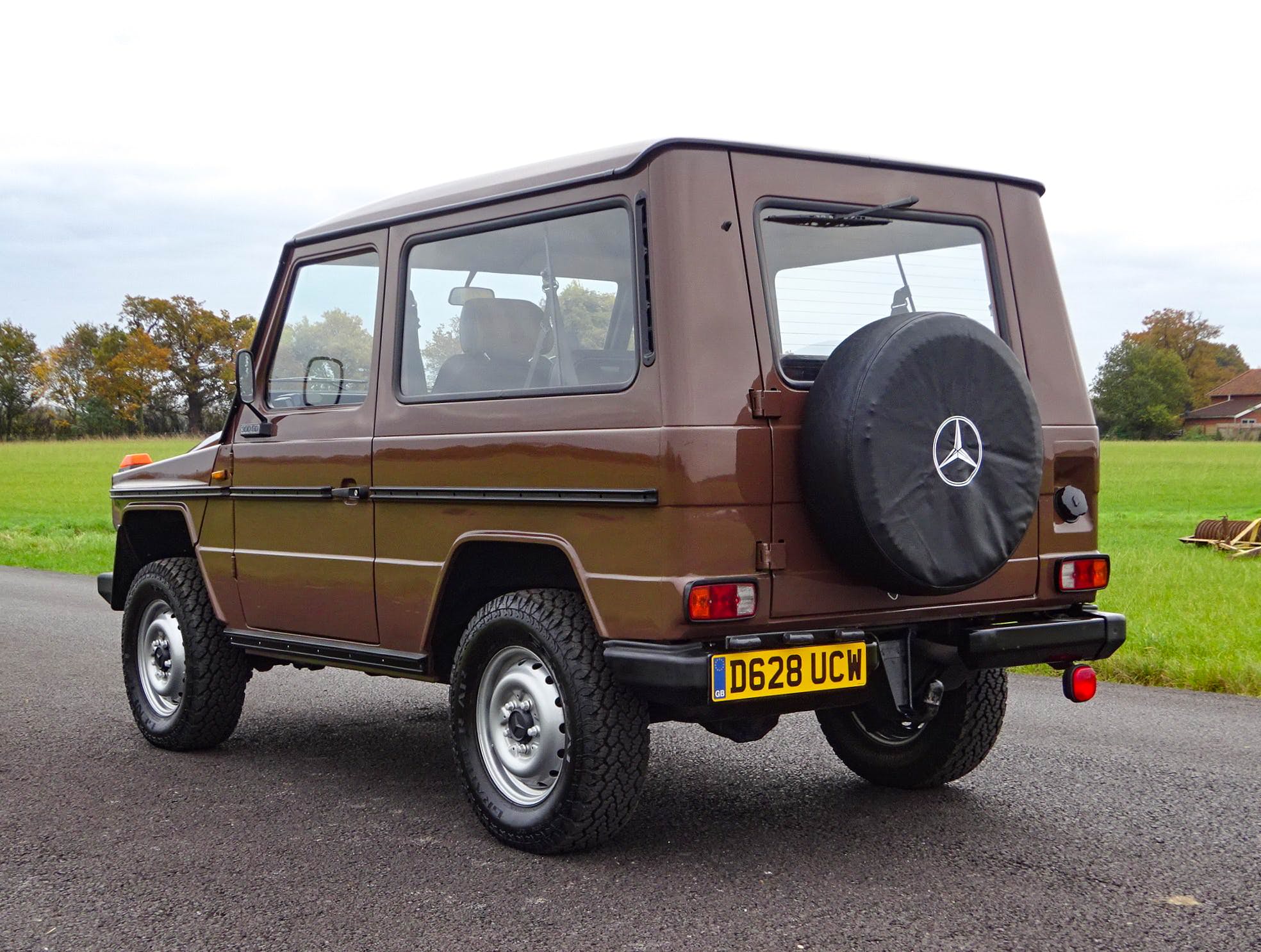
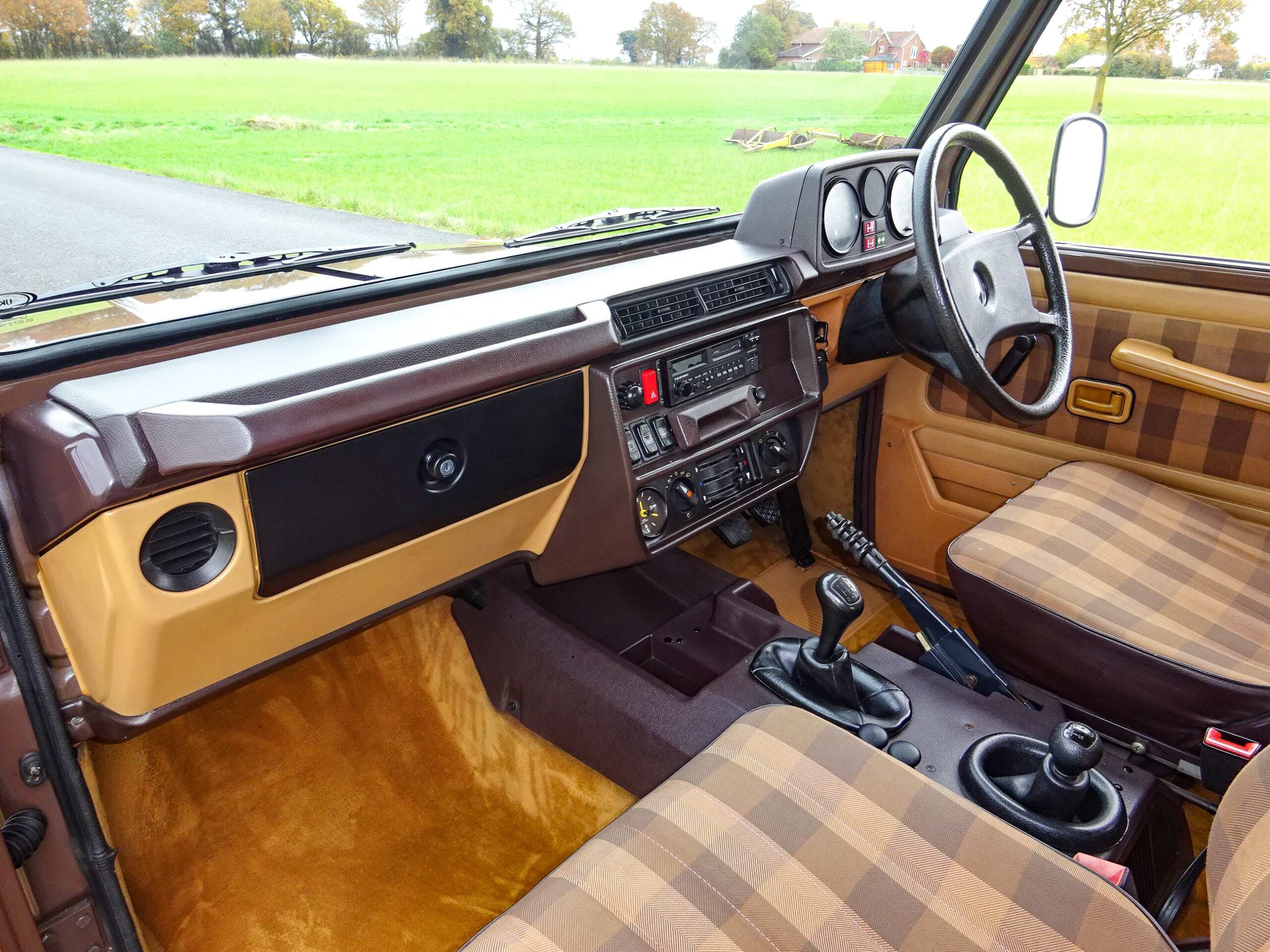
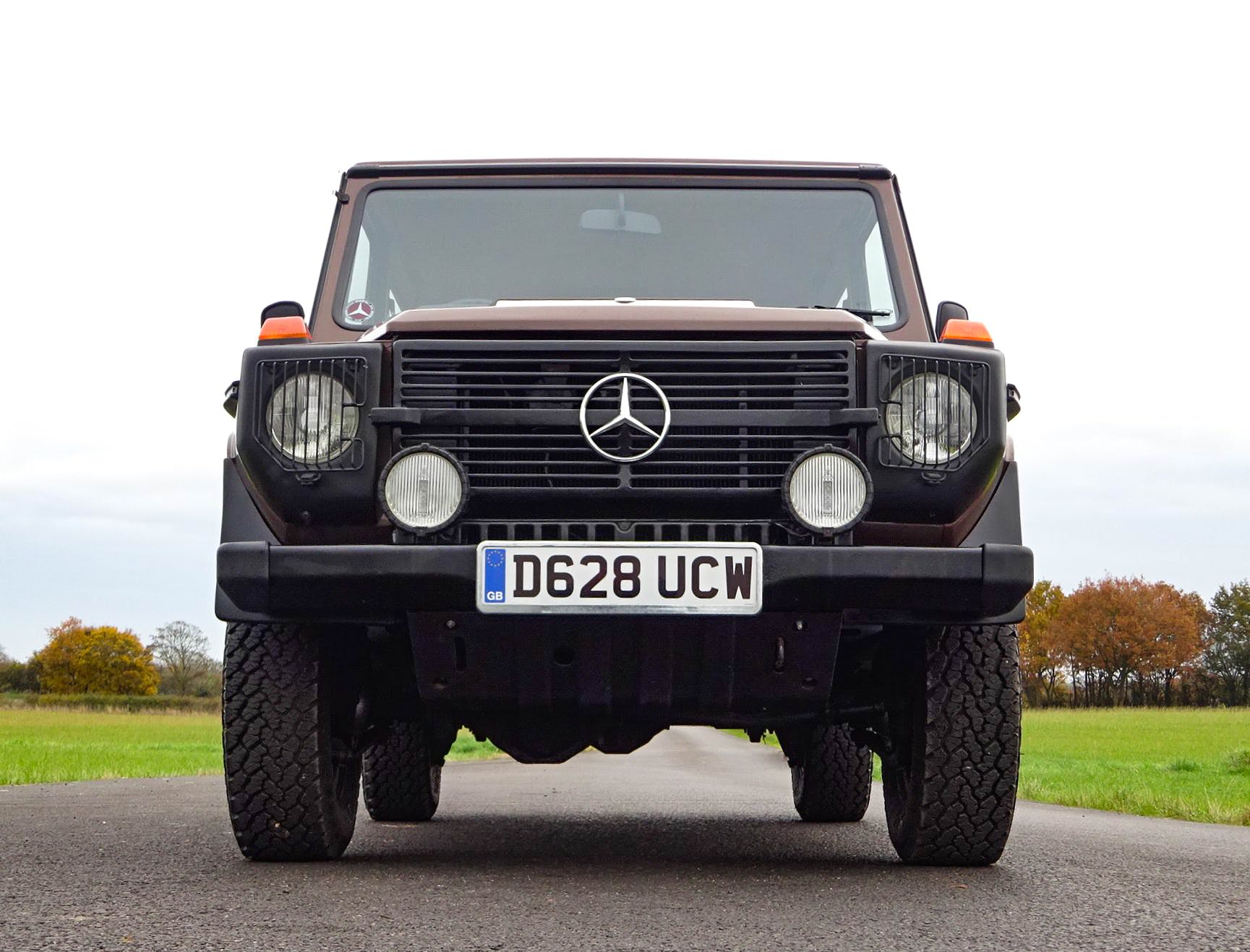
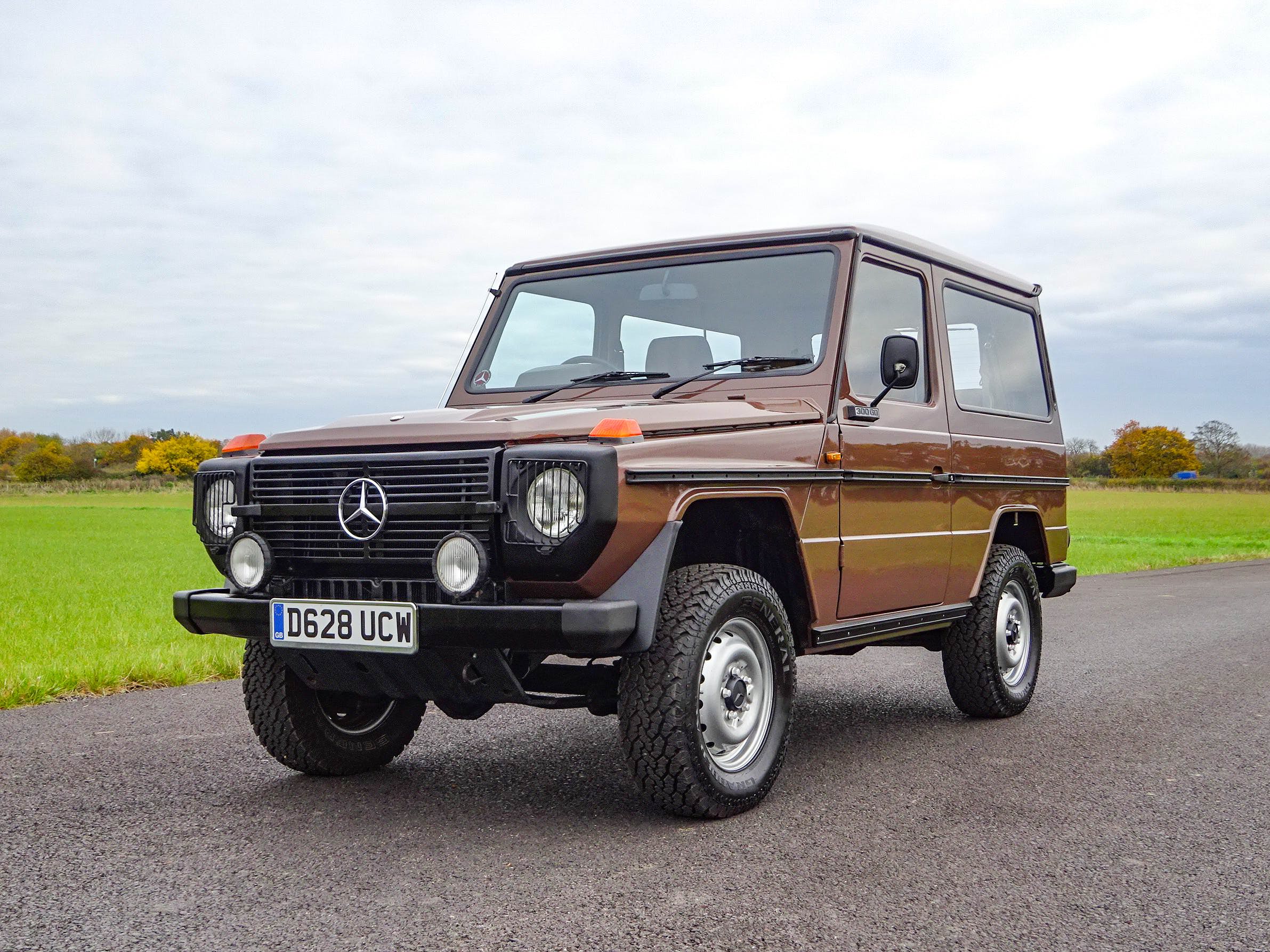
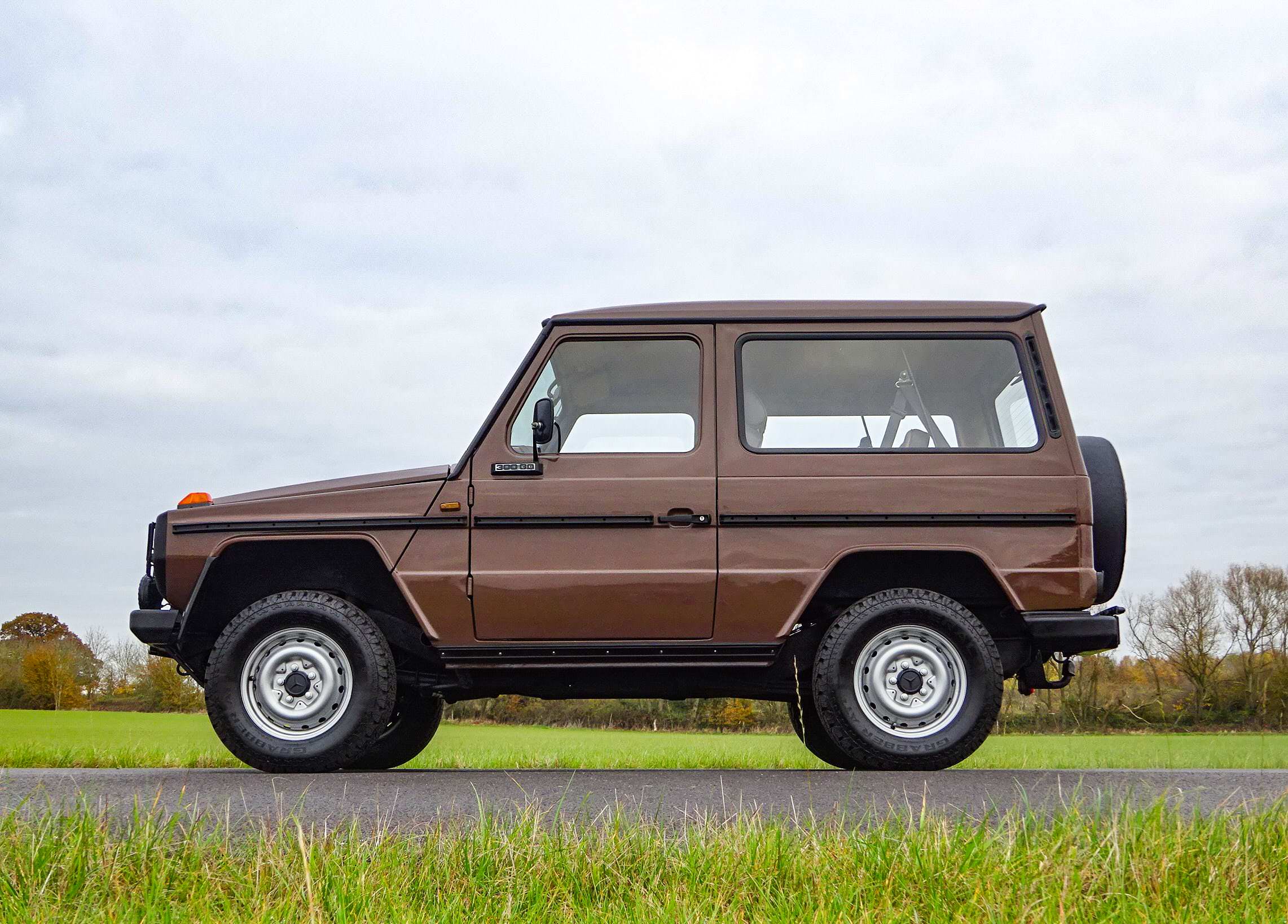
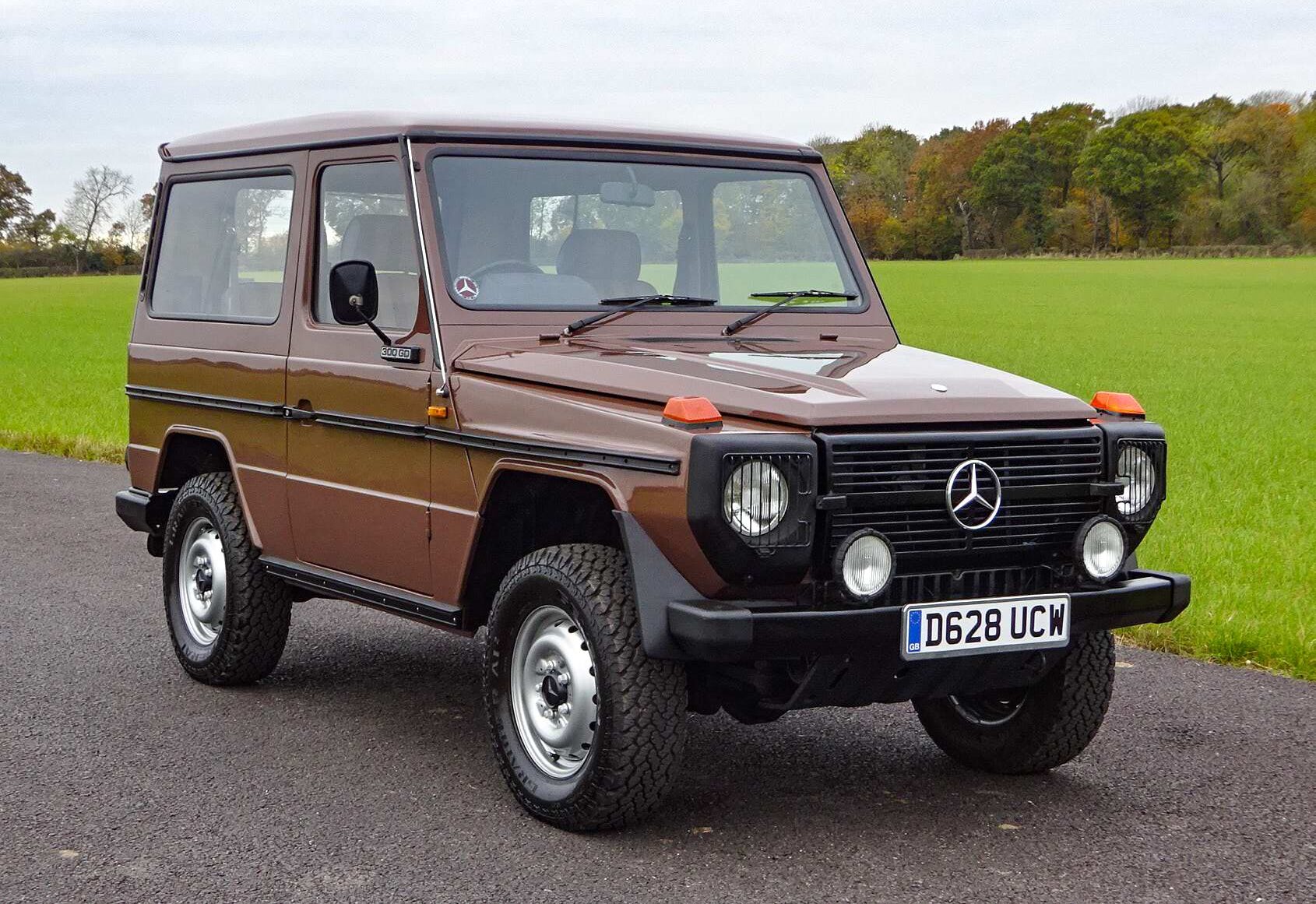
This is a restored Mercedes-Benz G Wagon 300GD from the first generation of the model family, known as the W460 series. The 300GD is generally considered the most desirable version, as it’s powered by one of the toughest internal combustion engines ever designed – the Mercedes-Benz OM617 diesel.
After its introduction in 1979 the G Wagon was used extensively by militaries, civilians, and overland adventurers who prized the vehicle’s reliability and off road prowess. Perhaps the most famous G Wagon of this period was the custom example built for the Vatican for use by the Pope – it became known as the “Papa G.”
Fast Facts – The Mercedes-Benz G Wagon W460
Mercedes-Benz started working on the vehicle that would become the G Wagon in 1972, collaborating with Steyr-Daimler-Puch who had extensive experience building 4x4s.
The original concept for the G Wagon is credited to the Shah of Iran who was a major Mercedes shareholder at the time.
Mercedes developed the G Wagon to compete with the likes of the Land Rover, Range Rover, Land Cruiser, and Jeep – targeting both civilian and military buyers.
The first generation G Wagon was the W460 and it would remain in production from 1979 until 1992 when it was replaced with the W461.
The Shah, The Pope, And The G Wagon
Interestingly the idea to create the G Wagon, or G Wagen, wasn’t dreamt up in Germany but rather in Iran. The Shah of Iran conceived of the idea and as he was a significant Mercedes-Benz shareholder at the time the company listened to him.
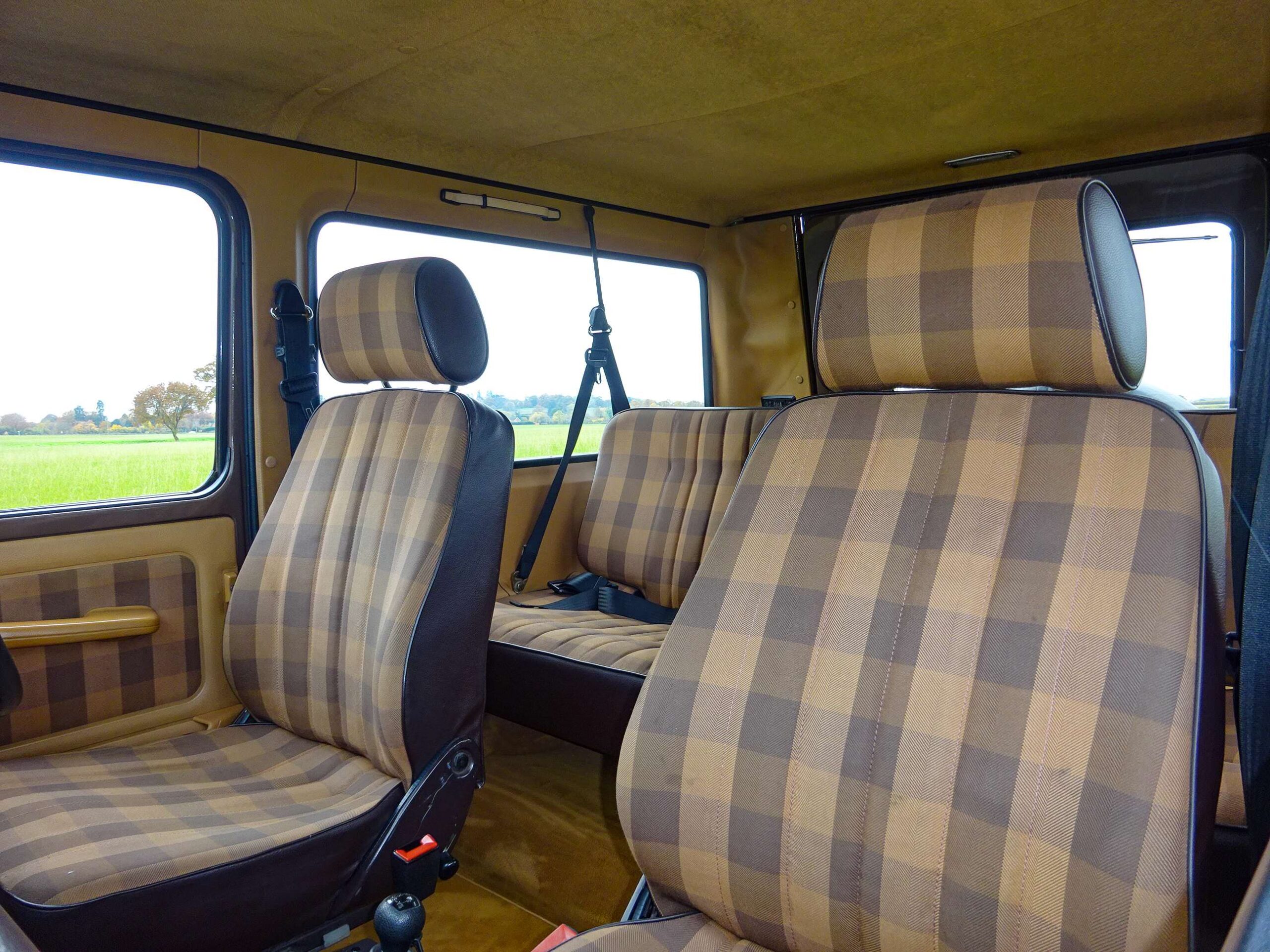
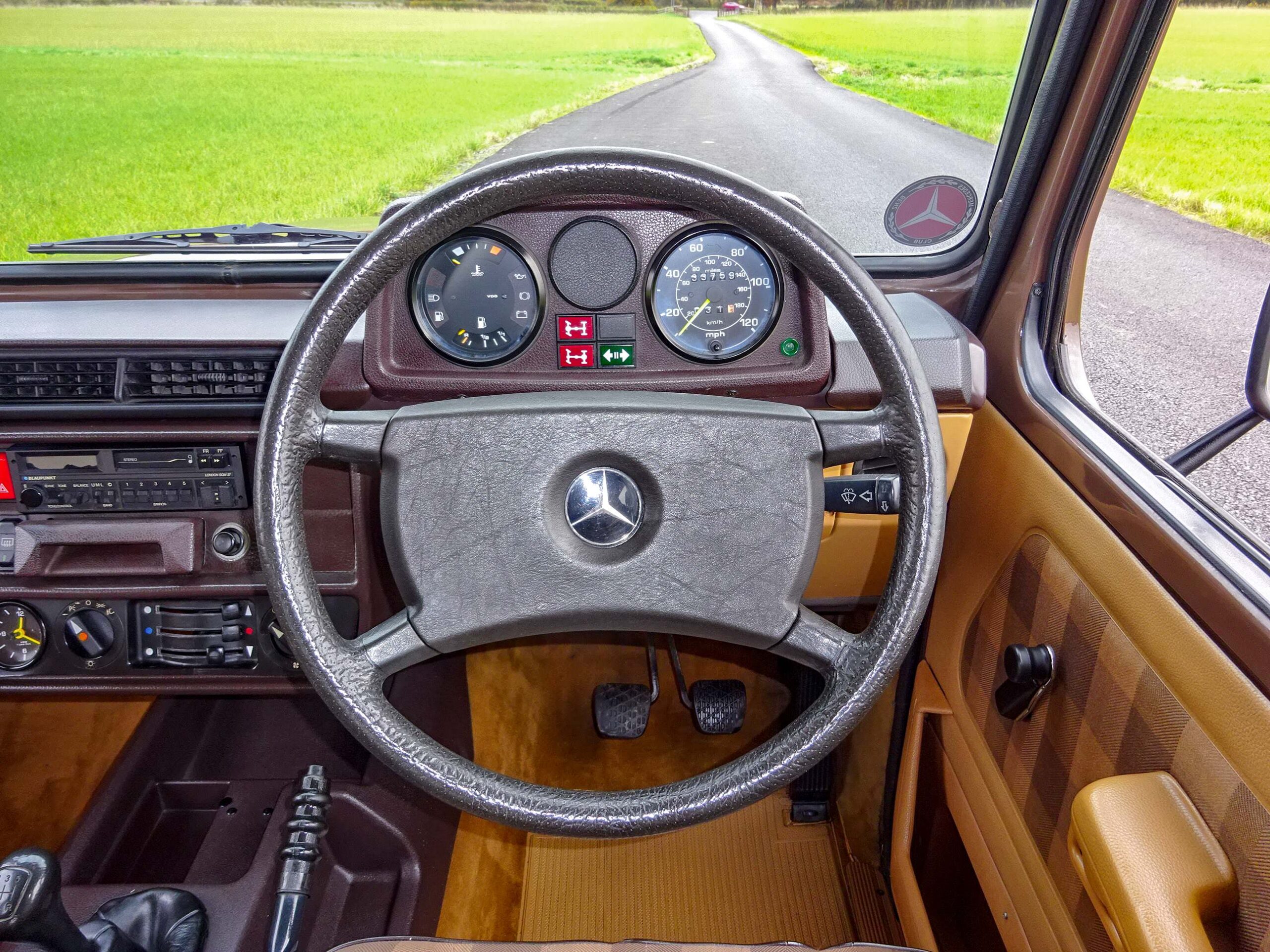
The interior of the W460 G Wagon has more in common with the Range Rovers of the period than the competing Land Rovers or Land Cruisers, with much more thought given to passenger comfort.
As it turns out, the Shah’s idea was a stroke of genius and the G Wagon (later named the G Class) would become Mercedes’ second longest running production vehicle, after its 4×4 sibling the Unimog.
Mercedes engineers worked on the G Wagon prototypes alongside engineers at Steyr-Daimler-Puch who had vast experience developing four-wheel drive vehicles of this type. Design work began in 1972 and they had drivable prototypes testing as far afield as the Arctic Circle and Sahara Desert by 1974.
After a few years of testing and design tweaks the final production G Wagon would be unveiled at a media event at the off-road proving ground in Toulon, France, in 1979. Initially the vehicle was offered with three engine options and five body variants, through these were expanded in the following years.
The utilitarian design of the G Wagon was developed to be reliable, highly-capable off-road, and as tough as possible.
Above Video: This short film from Mercedes gives you a speed run through the history of the G Wagon.
The vehicle was originally offered with the 230 GE, 280 GE, and 300 GD engine options. The 230 GE is an inline-four cylinder gasoline engine with 123 bhp and 141 lb ft of torque, the 280 GE is an inline-six gasoline engine with 154 bhp and 165 lb ft of torque, and the 300 GD is an inline-five diesel with 88 bhp and 127 lb ft of torque.
Though none of these engine options were particularly powerful they were over engineered and under stressed to ensure they would offer bulletproof reliability for both the military and civilian buyers.
By the time the next generation G Wagon was unveiled in 1992 it was clear that the vehicle was being targeted more at civilian buyers, and in 1994 the model line was officially renamed “G Class.”
The 1986 Mercedes-Benz G Wagon 300GD Shown Here
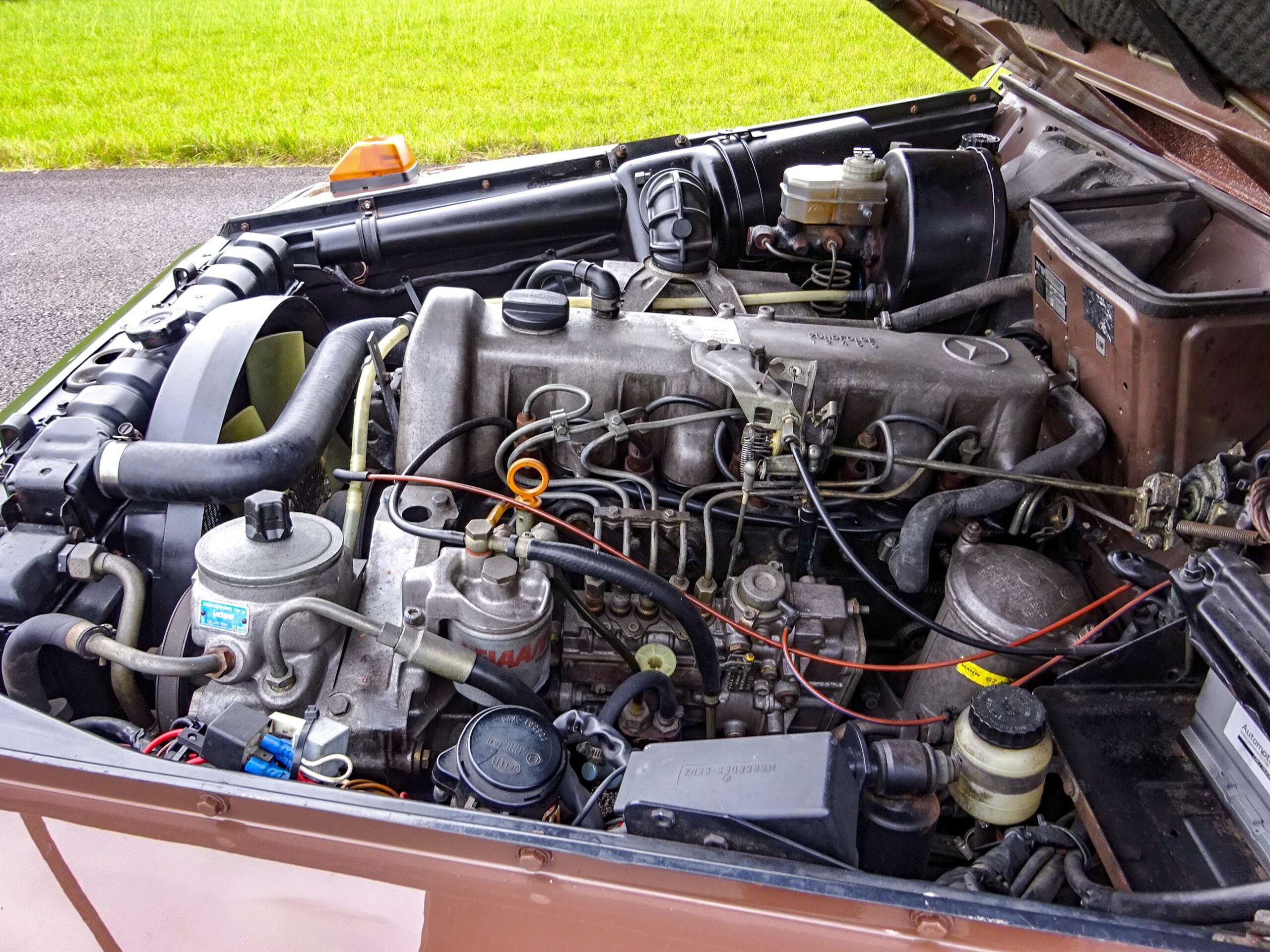
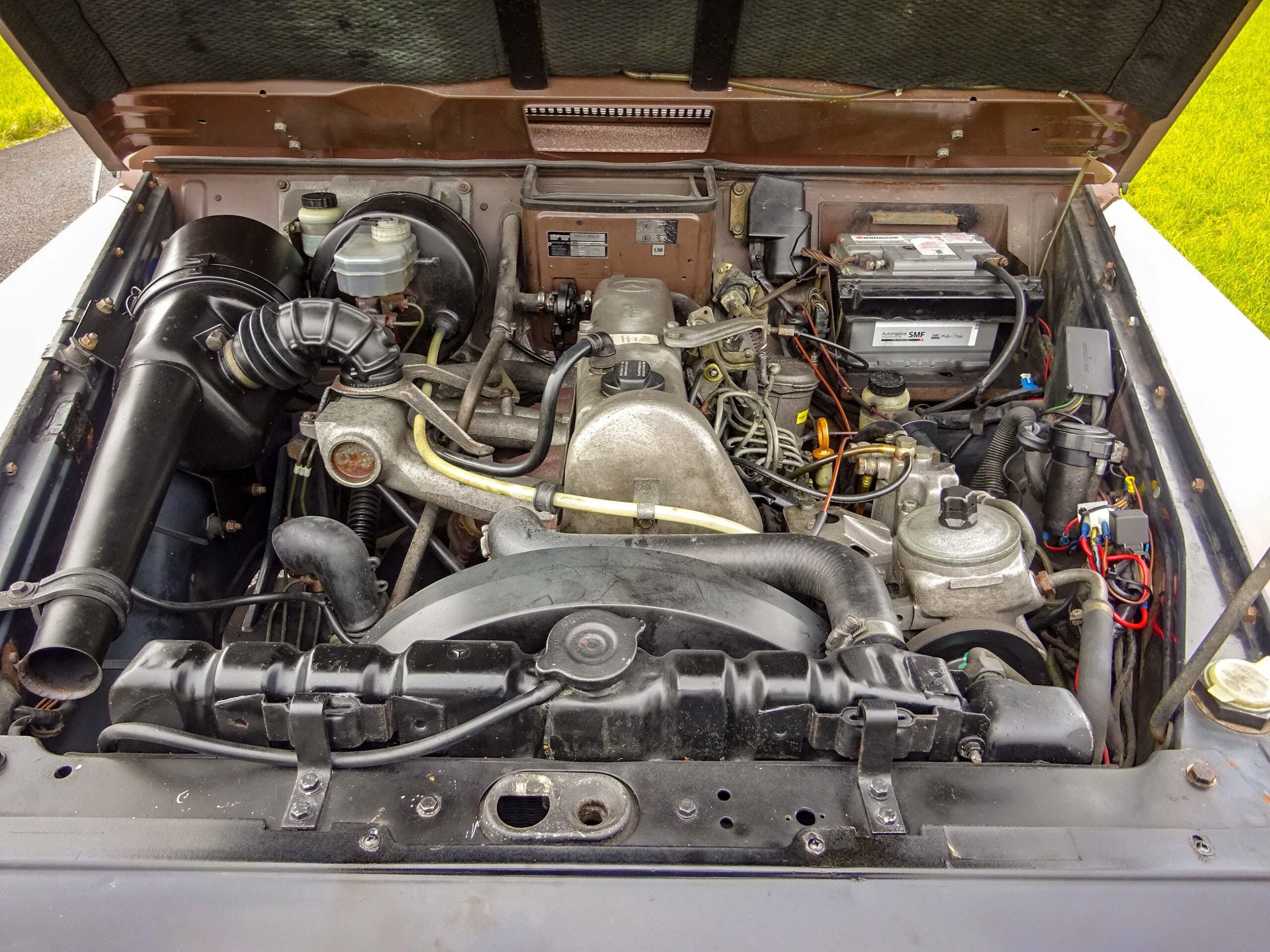
The vehicle you see here is a 1986 example of the much sought after 300GD G Wagon. Though not powerful by any description, with 88 bhp and 127 lb ft of torque, the 3.0 liter inline-five diesel used in the 300GD has become legendary for its reliability.
The 3.0 liter inline-five cylinder OM617 engine used in the 300GD is legendary for its longevity, with some examples lasting over a million kilometers before needing a rebuild.
The 300GD is powered by the Mercedes-Benz OM617 engine, these were used in a variety of Mercedes vehicles from the mid-1970s through to the early 1990s.
The OM617 engine is known for its ability to reach over 1,000,000 kms or 620,000 miles with just standard oil changes and maintenance being carried out.
The G Wagon pictured here was restored a number of years ago and is also now wearing a fresh coat of paint. According to the listing this vehicle has covered just 5,879 miles in the past 15 years and it remains in excellent condition throughout.
If you happen to be in the market for a nice original ’80s era G Wagon this one is currently being auctioned live by Car and Classic in the United Kingdom. Bidding is now underway and you can click here to visit the listing.
Hemiptera, Pentatomidea Agonoscelis sp. [de Camerooon] by quenoteam Canon EOS 6D
Mitutoyo M Plan APO 5x 0.14 + Raynox 250
MJKZZ Ultra Rail MINI V2 + IR Remote Motion Controller.
Tiempo exposición: 1/40" - ISO100
Canon Auto Bellows
Stacking
Nº de fotos: 95
Pasos: 45 µm
Magnificación aproximada: 3x https://flic.kr/p/2mNRdx5
The Dodge Power Wagon was released to the general public in 1945 as America’s first mass-produced 4×4 pickup truck. It was closely based on the Dodge 3/4 ton WC series of military trucks built during World War II, trucks that developed a reputation both for their toughness and their ability to go anywhere.
So highly regarded were the Dodge 3/4 ton vehicles that General George Patton chose one as his own personal vehicle for use in Europe during the war, it was the Dodge WC Command Car variant that had been equipped to look almost like an oversized Willys Jeep.
Fast Facts – The Dodge Power Wagon
Dodge based the Power Wagon on their earlier WWII-era 3/4 ton WC series of military trucks.
The Power Wagon was developed specifically for agricultural and commercial use, it was marketed as “a self-propelled power plant,” and it had mechanical power takeoffs for operating heavy farm machinery.
With its high ground clearance, four-wheel drive, and up to 3/4 ton load carrying ability the Power Wagon was also used by the forestry service, national park services, logging companies, rural fire departments, and anyone else who needed to get heavy work done off road.
The first generation of Power Wagons was powered by a 230 cubic inch flathead inline-six sending power back through a two-speed transfer case to a four-speed manual transmission.
Origins Of The Power Wagon
The Dodge 3/4 ton WC series were used extensively by American forces during WWII.
These trucks were able to carry far more than a standard Jeep yet could traverse most of the same terrain, and the WC series were able to be configured for a multitude of tasks including cargo carrying, radio operations, command operations, field ambulances, and more.
Above Video: This short film gives a great (albeit brief) insight into the history of the Dodge Power Wagon.
The WC series trucks were designed to be simple to build and maintain, they used body on chassis construction, with a simple steel body, a reliable inline-six cylinder gasoline engine, and a heavy duty two-speed transfer case mated to a four-speed transmission.
GIs quickly realized the value of the WC trucks, and they provided much of the cargo-carrying infrastructure over land that was required as Allied forces fought their way through Europe on their way to toppling the Third Reich.
By 1945 executives at Dodge were looking at ways to commercialize the WC trucks for civilian use and they struck upon the same realization that the creators of the Land Rover and Unimog would have at around the same moment in history.
This realization that all of the military capabilities of these four-wheel drives would also make them ideal for agricultural use – particularly with the addition of a mechanical power takeoff so that farmers could operate a wide variety of equipment, from threshers and fence post diggers, to wood saws and harvesters.
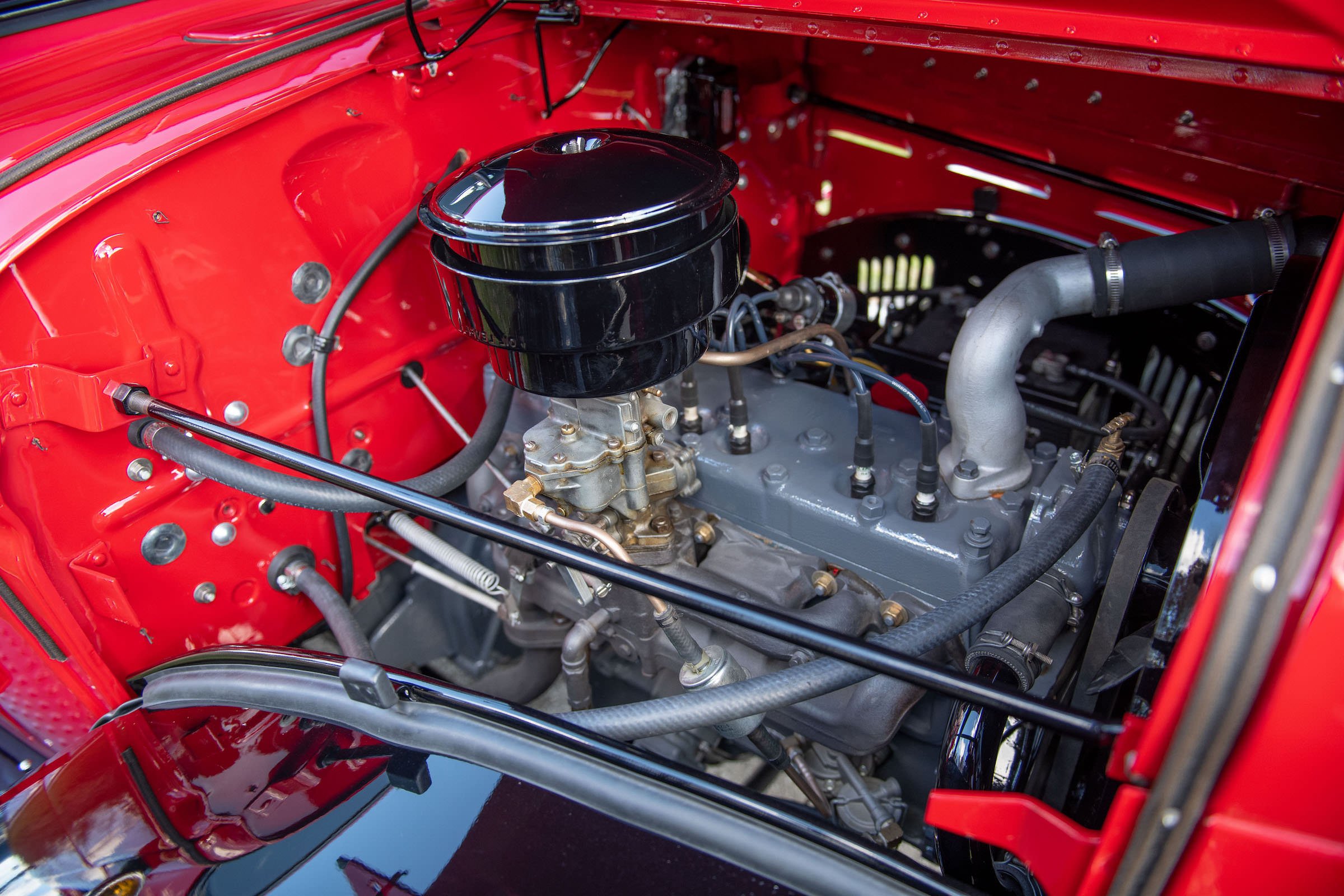
The Dodge 230 cubic inch (3.76 liter) flathead inline-six sends power back through a two-speed transfer case to a four-speed manual transmission.
A civilian version of the WC truck was developed with a fully enclosed cab, wind up windows, improved seats of the military version, and a red and black paint scheme that would become inextricably linked to the model.
They called it the Dodge Power Wagon and it was released in 1945.
The Dodge Power Wagon Shown Here
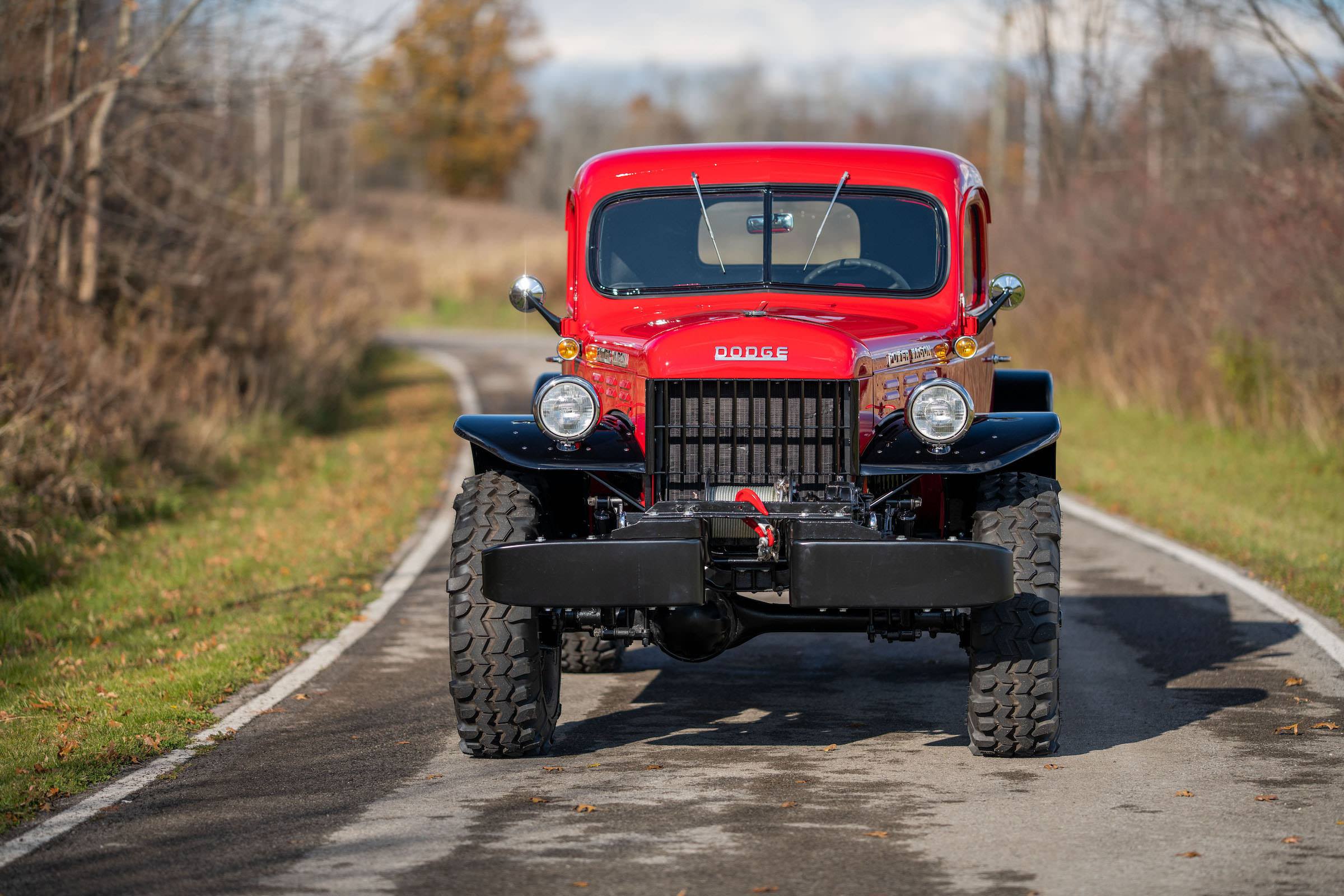
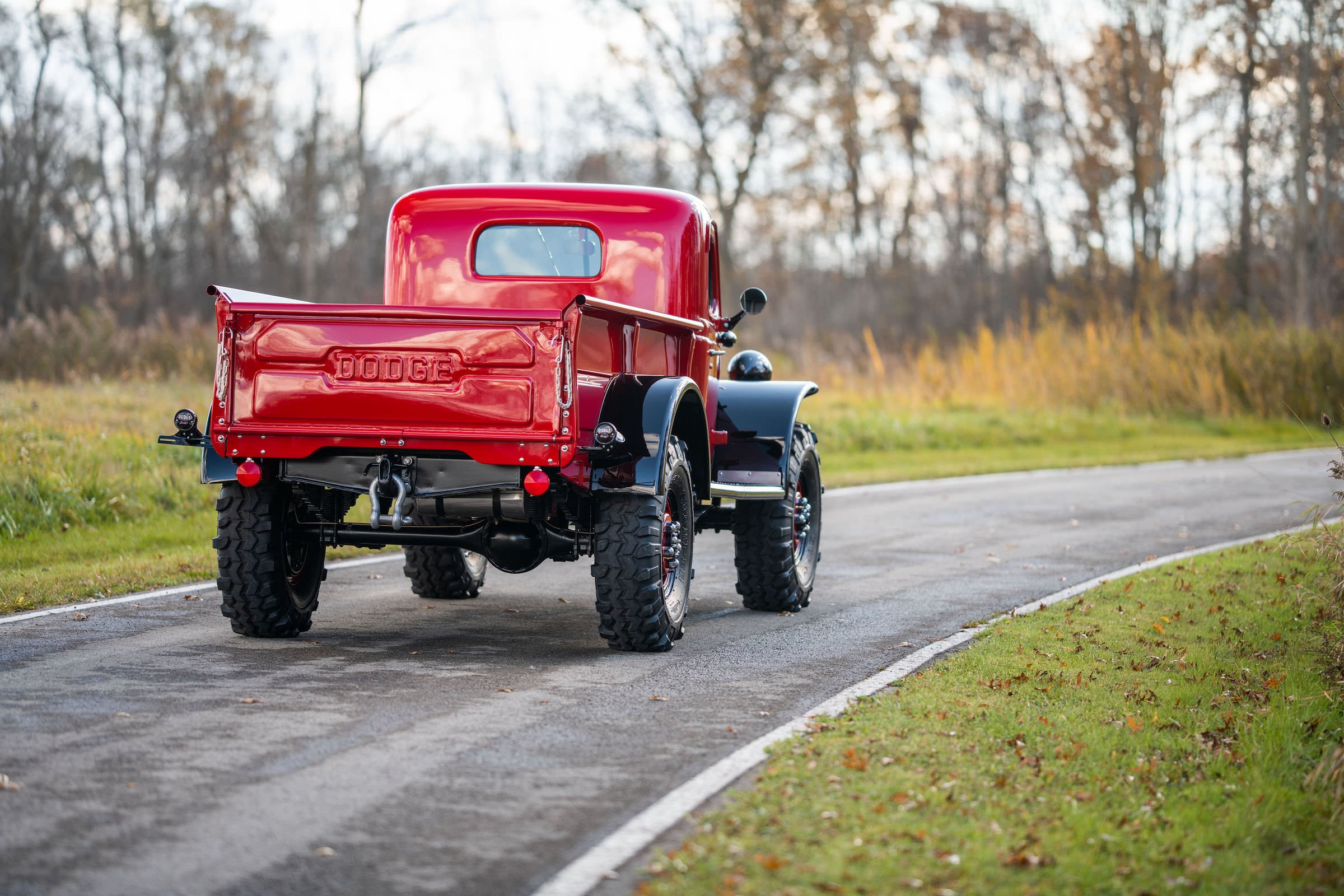
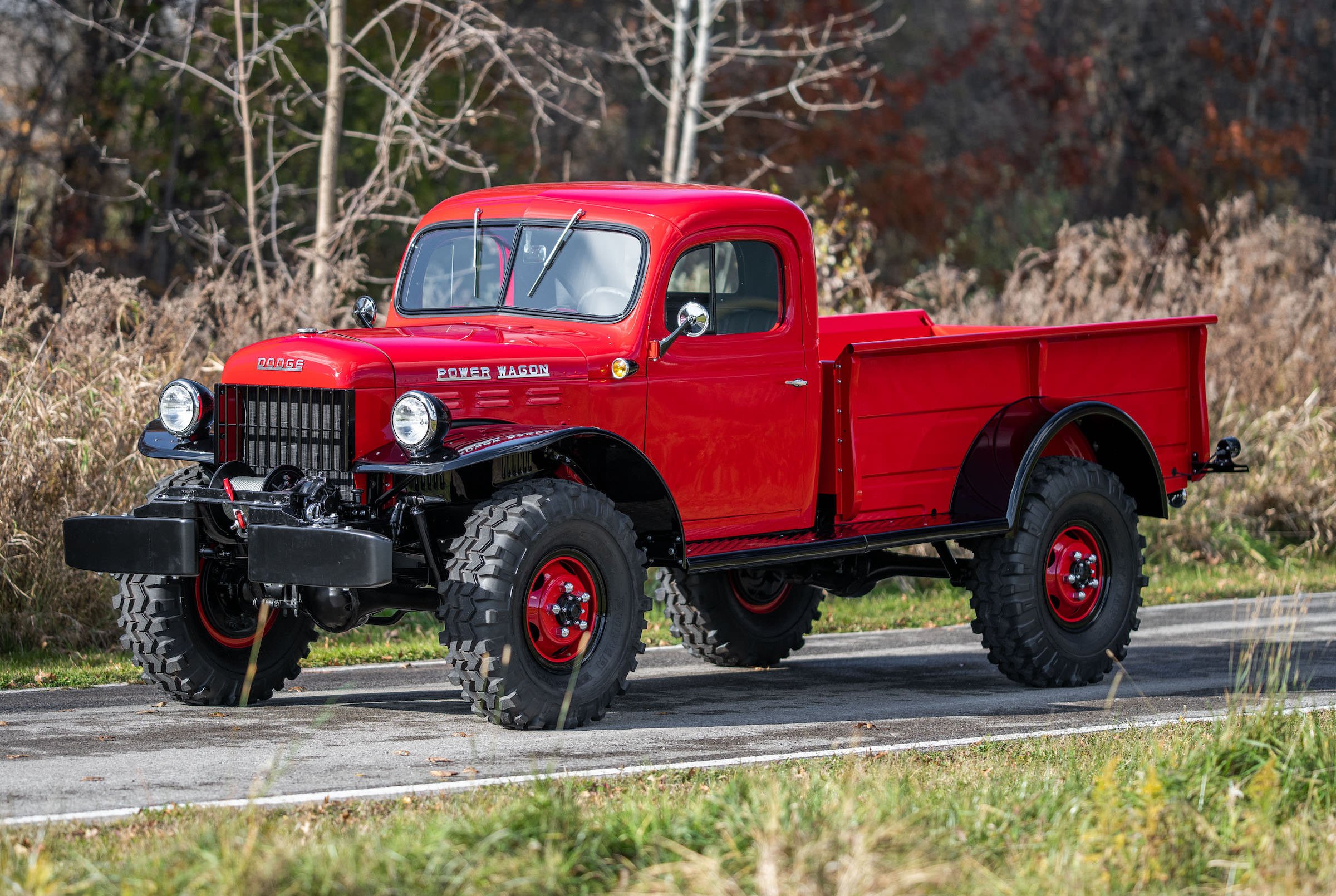
The Power Wagon you see here is a 1951 model that benefits from a comprehensive restoration back to largely original condition.
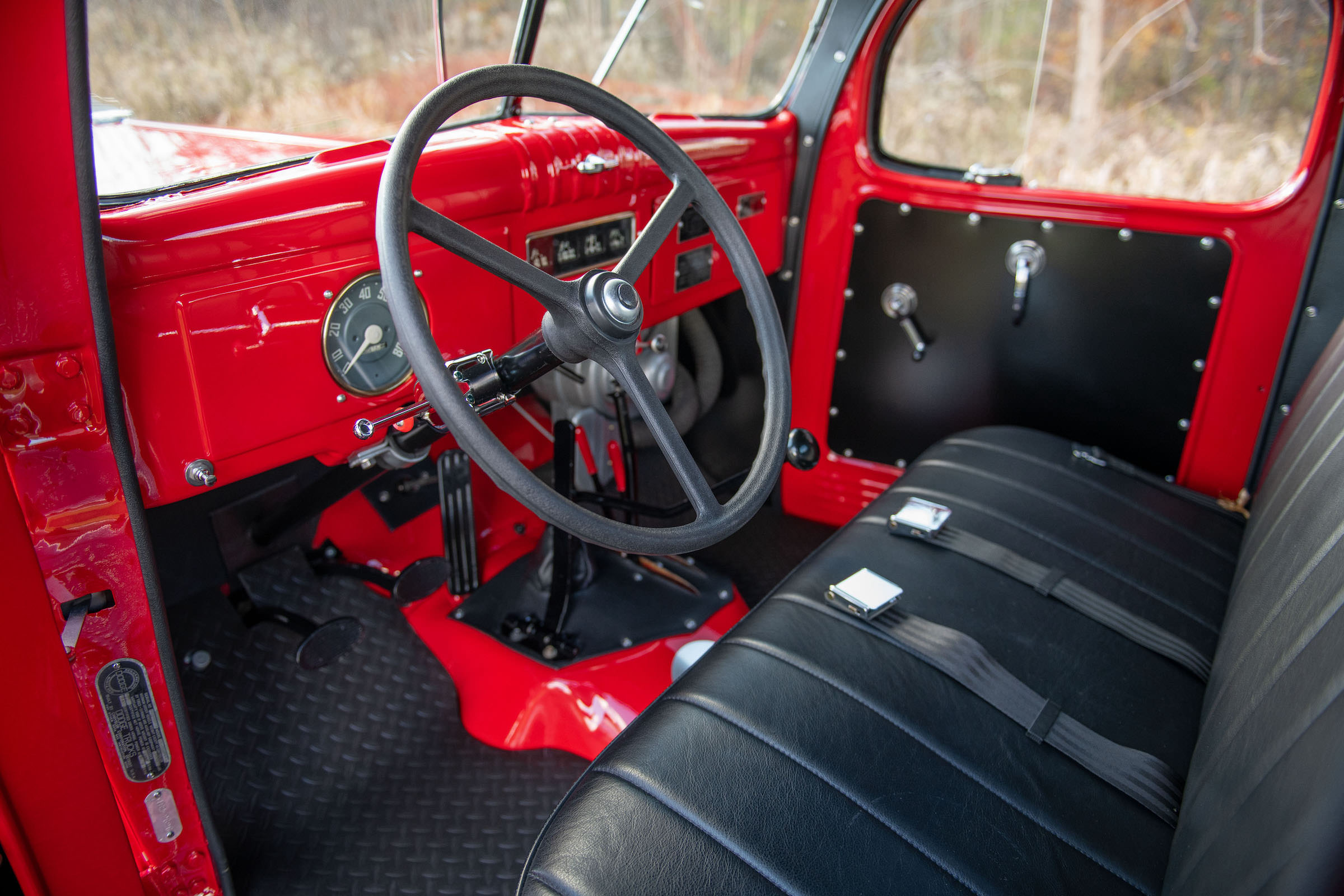
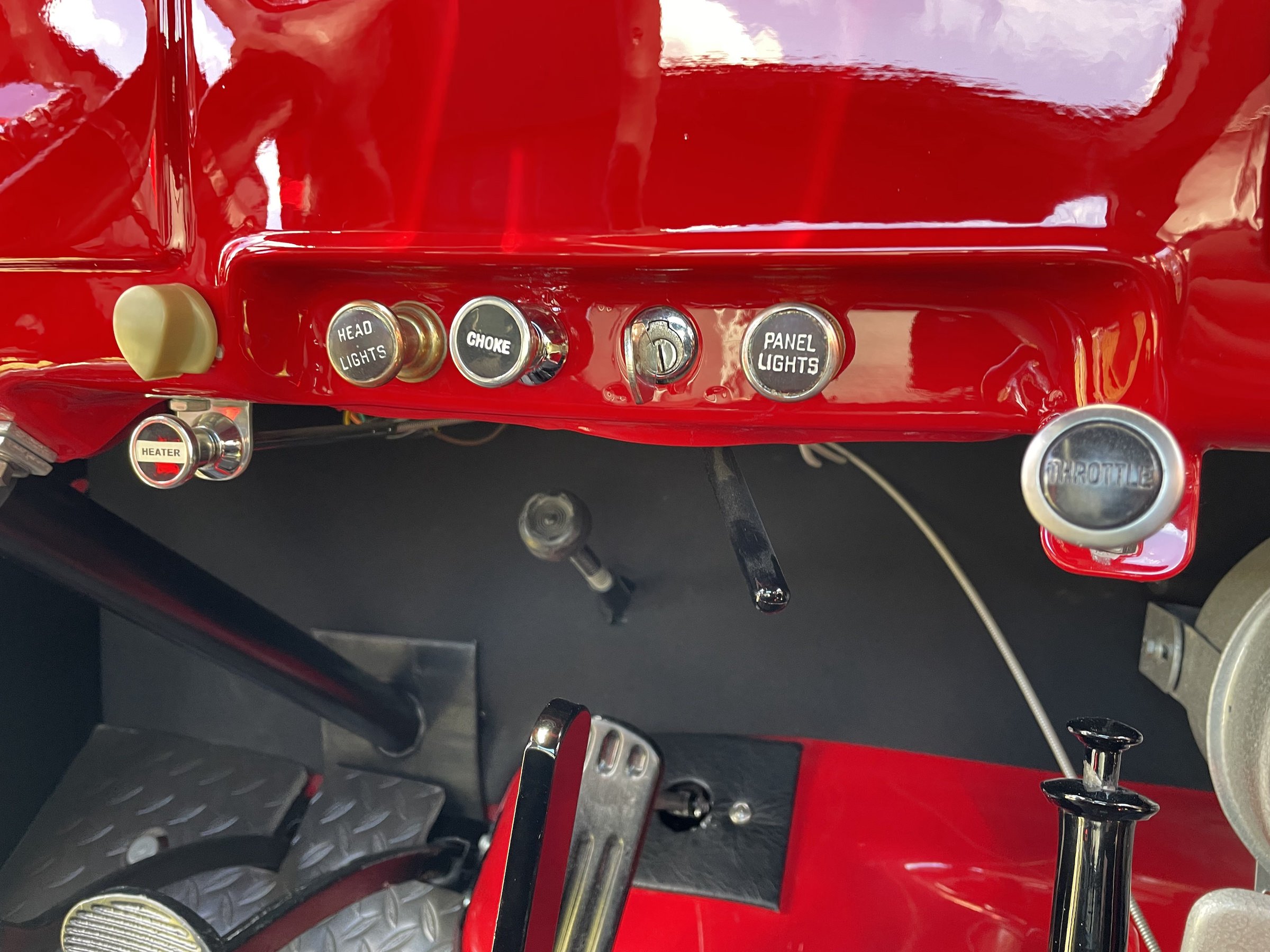
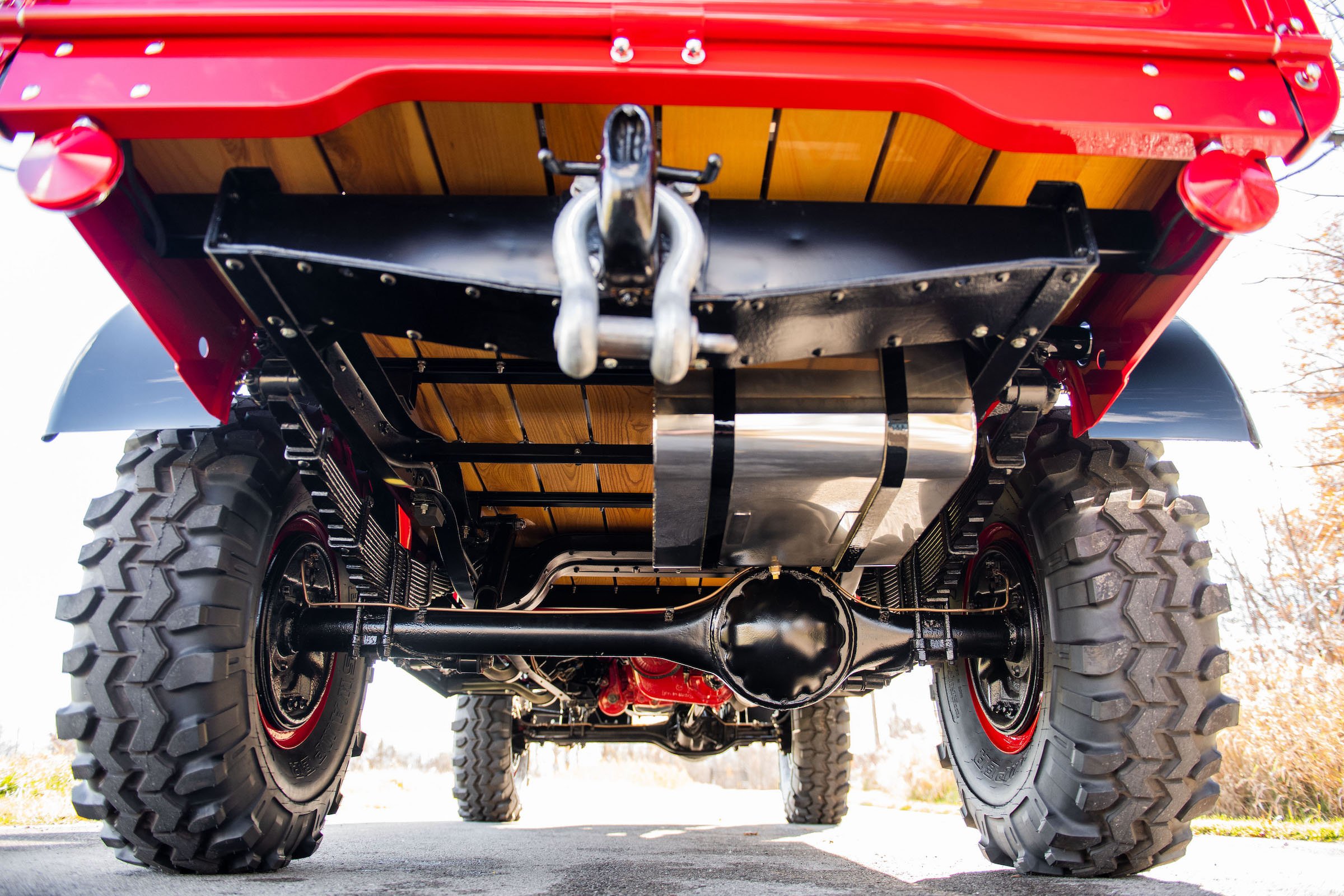
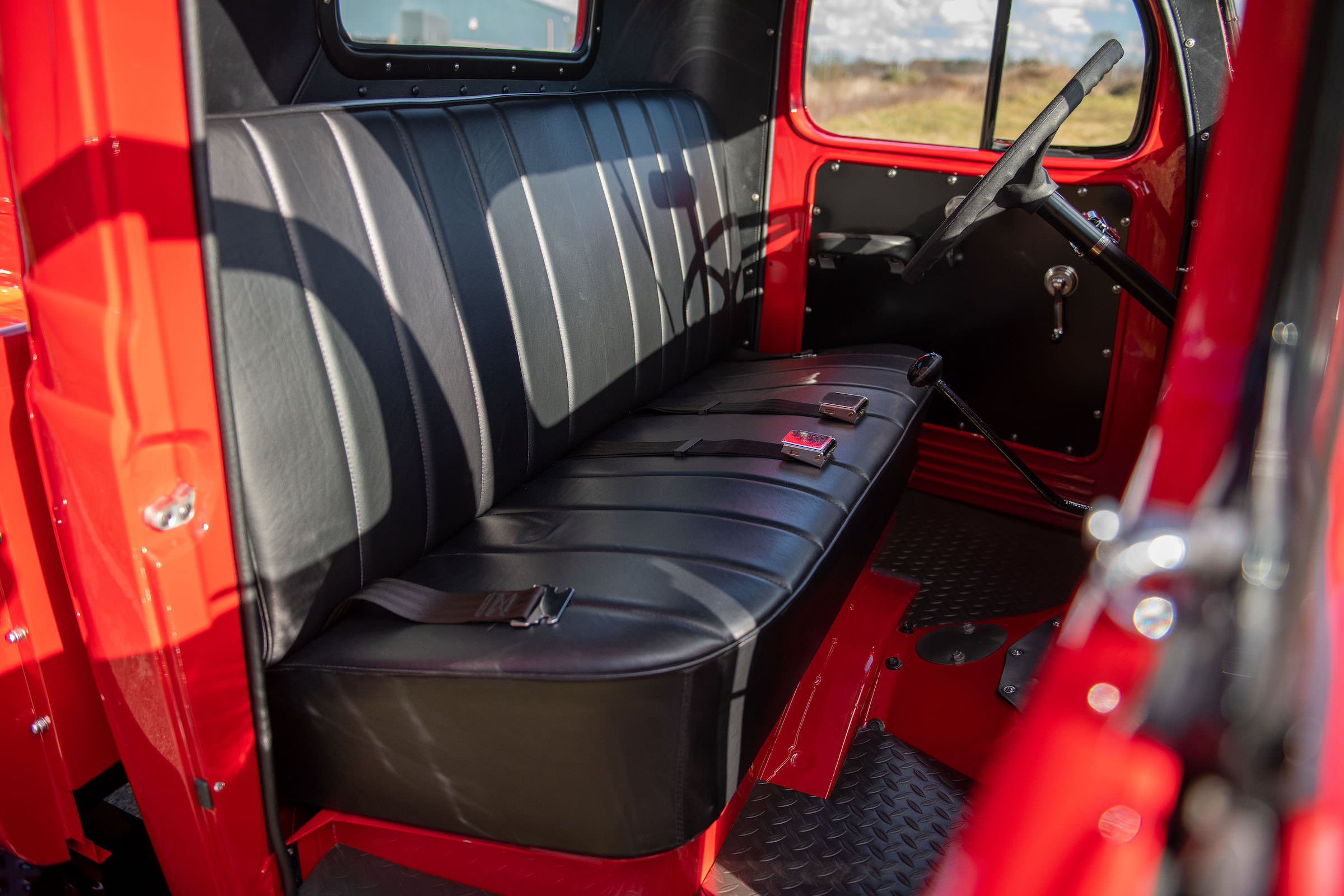
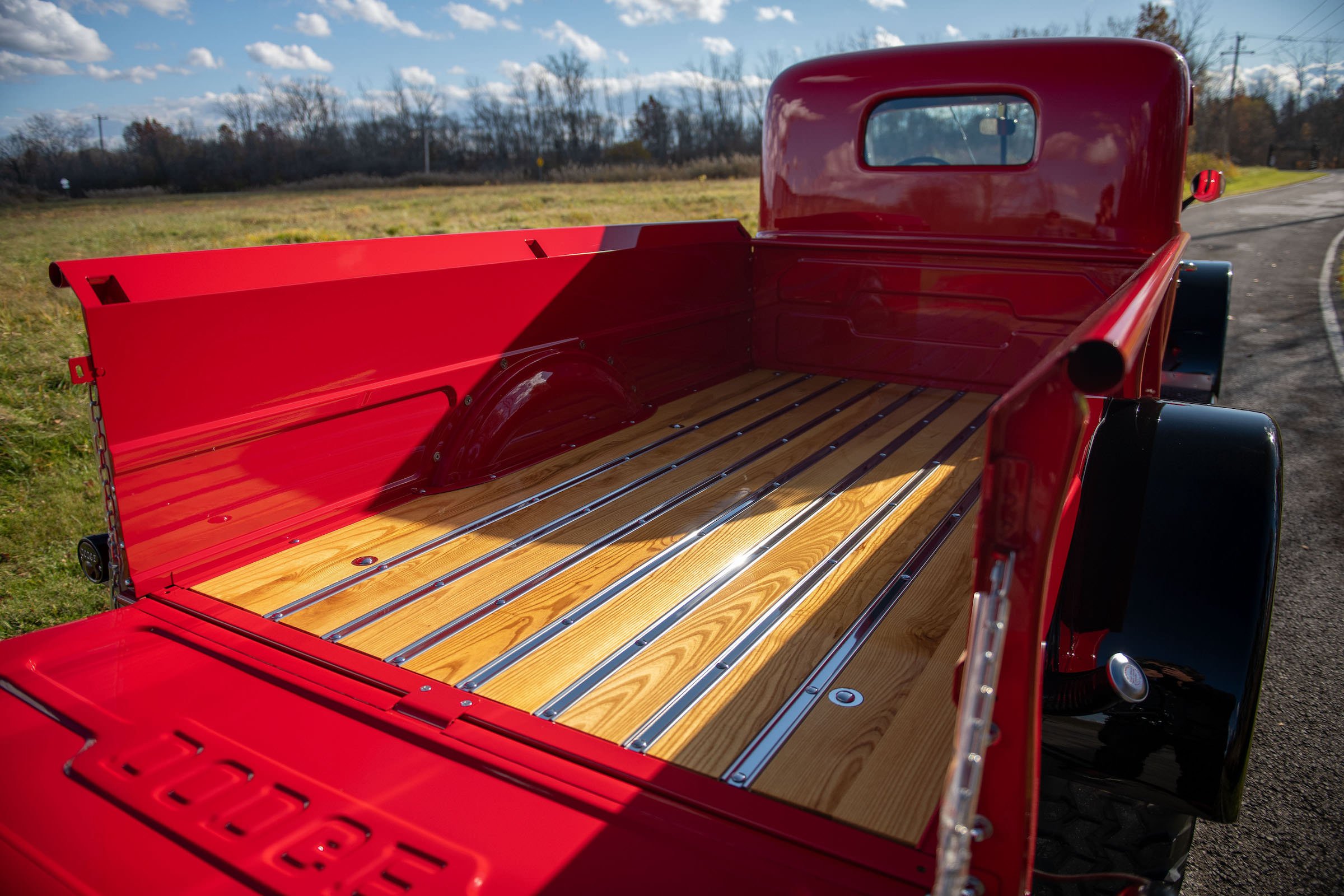
As you would expect it’s been finished in its original colors of red over black, and it has a black leather interior with matching door cards and fitted floor mats. In the rear you’ll find a truck box fitted with high-gloss wood and stainless bed strips.
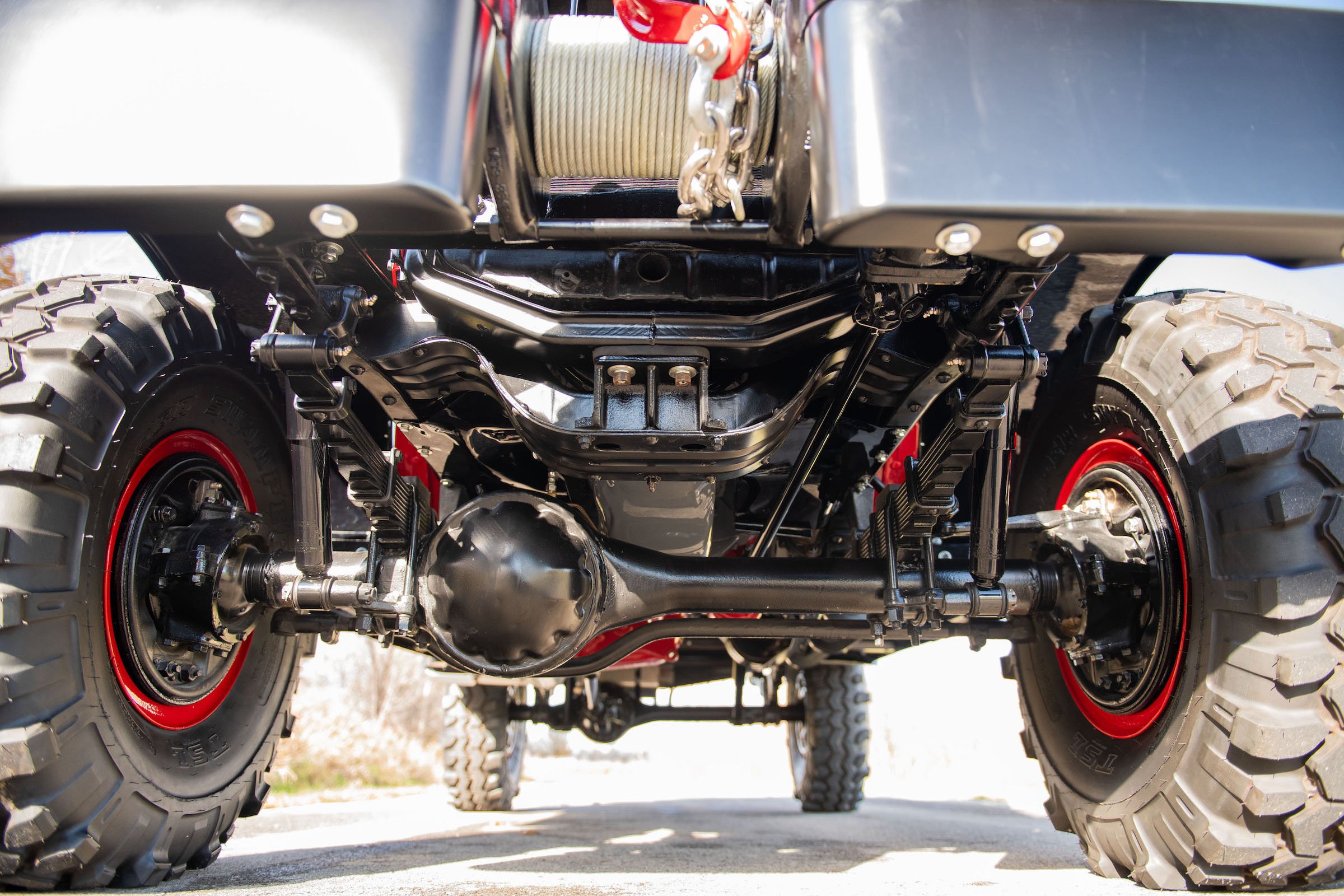
Under the hood there is a correct 230 cubic inch flathead inline-six gasoline engine sending power back through a two-speed transfer case and four-speed manual transmission. That transfer case gives the truck both high and low range gearing of course, helping to further increase the off road capabilities of the truck.
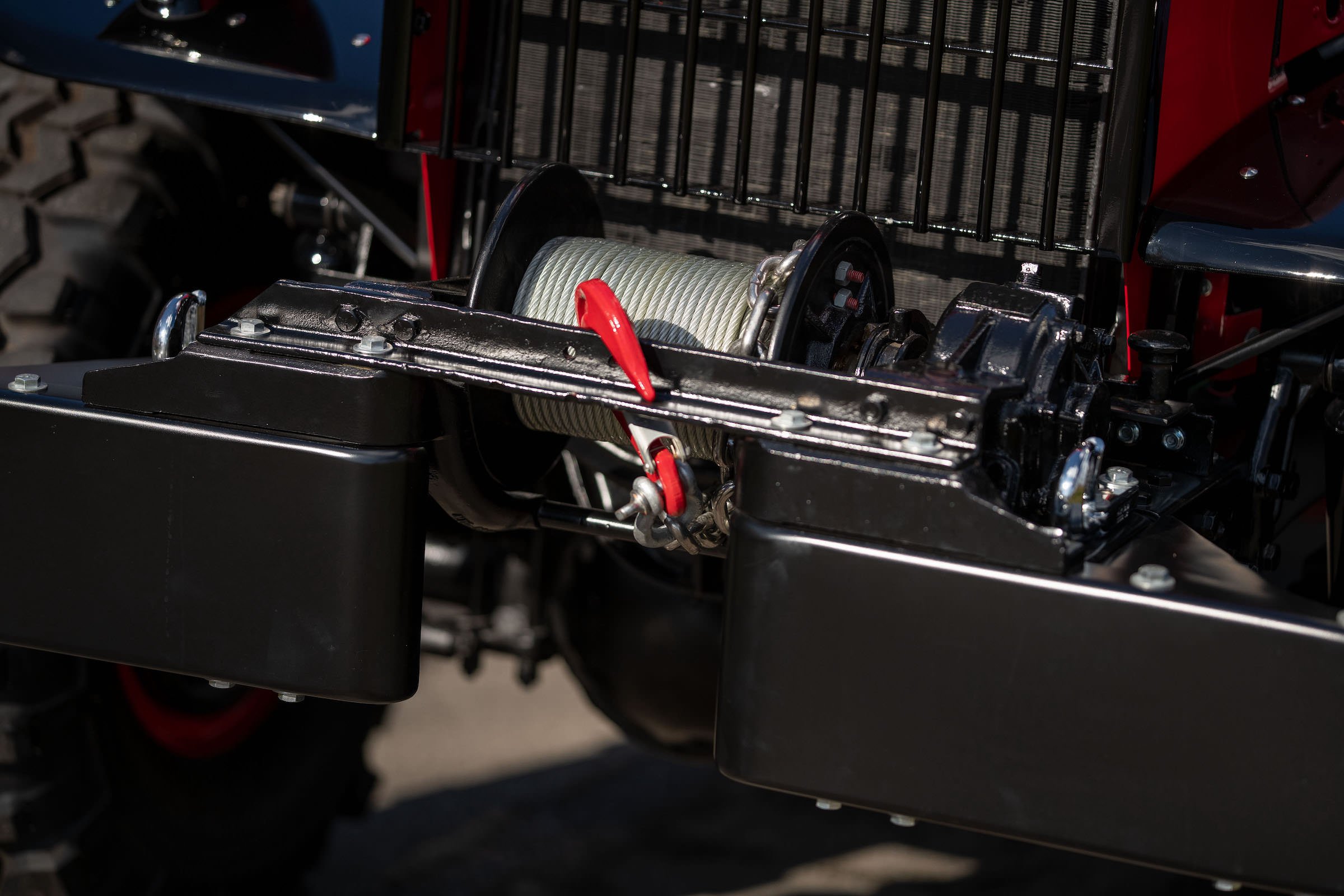
As you would expect this Power Wagon has the original front and rear power takeoff for powering machinery, and it’s fitted with Super Swamper tires.
RM Sotheby’s will be offering this truck as part of its Open Roads sale in December, the price guide is $75,000 – $85,000 USD and you can click here if you’d like to read more about it or register to bid.