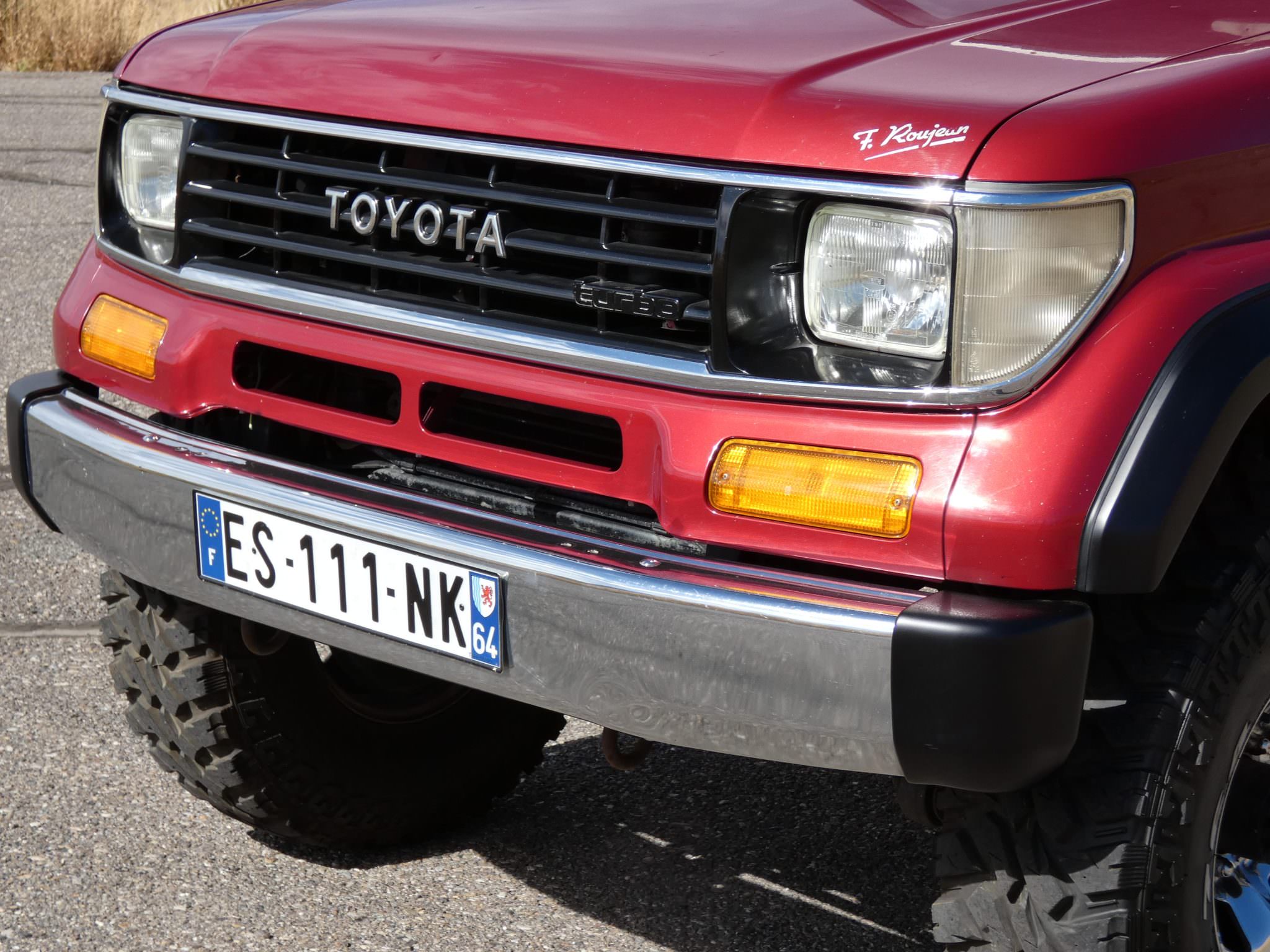
Original Survivor: A Toyota Land Cruiser LJ73 LX Turbodiesel 5-Speed

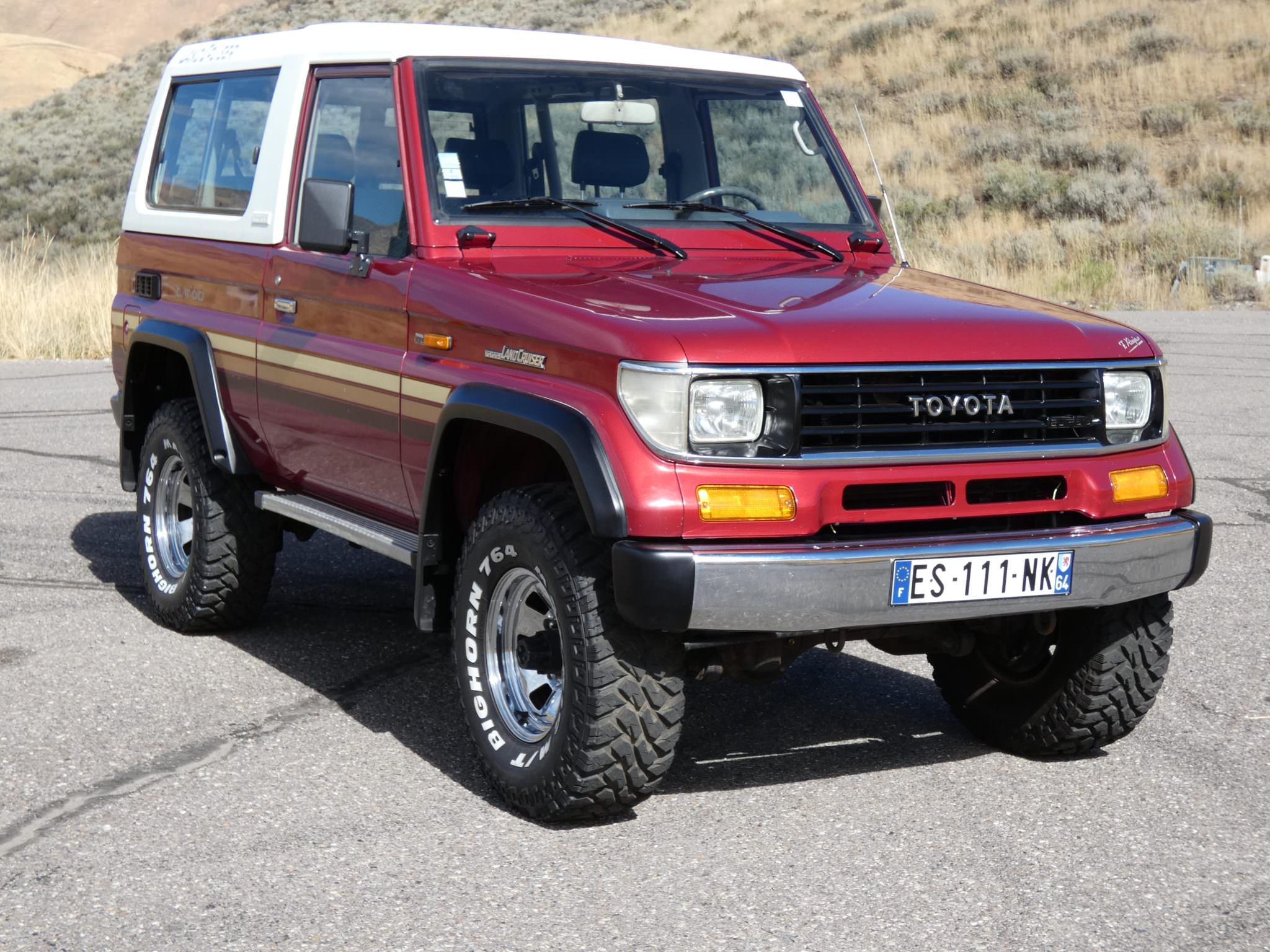
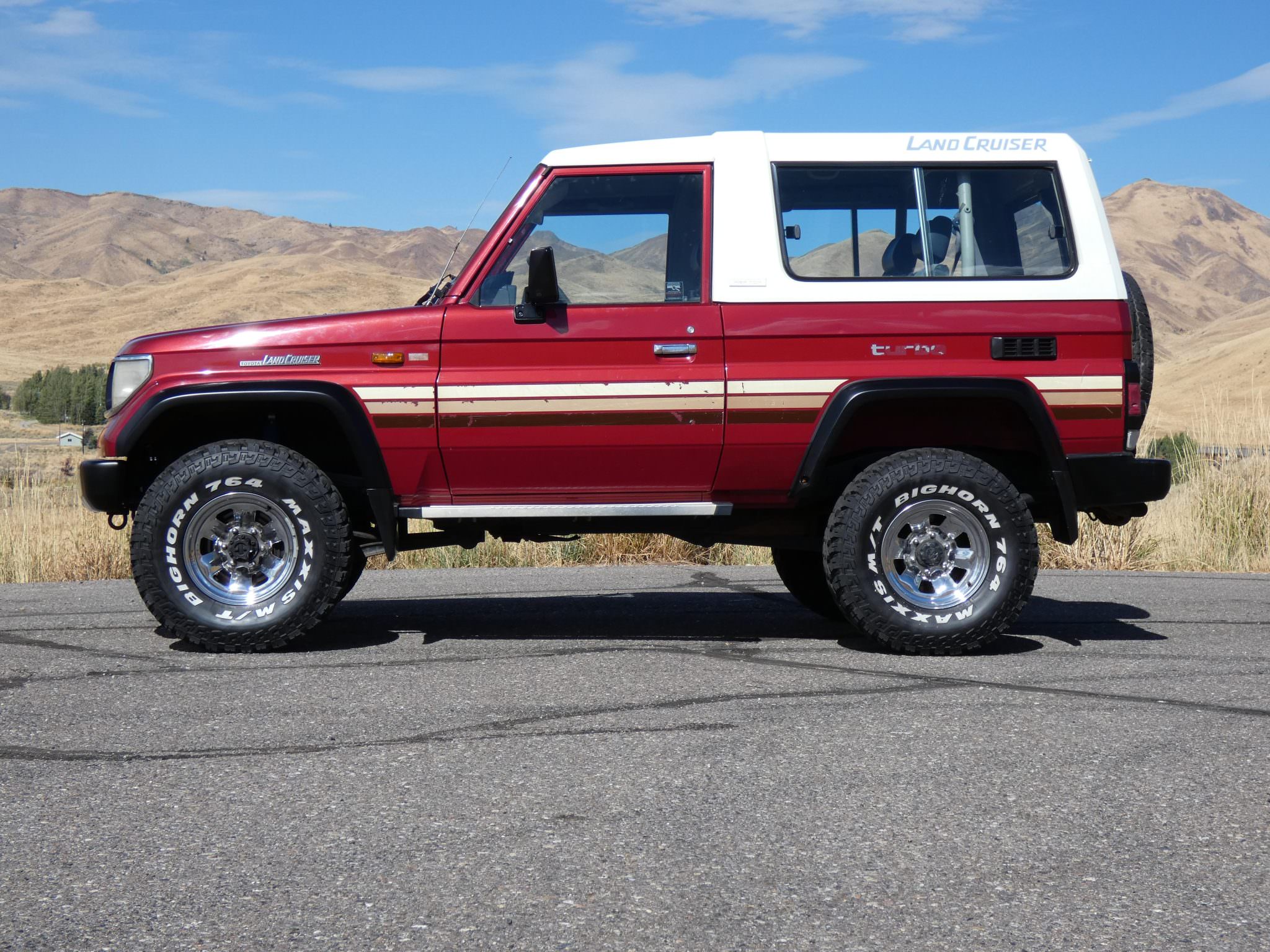
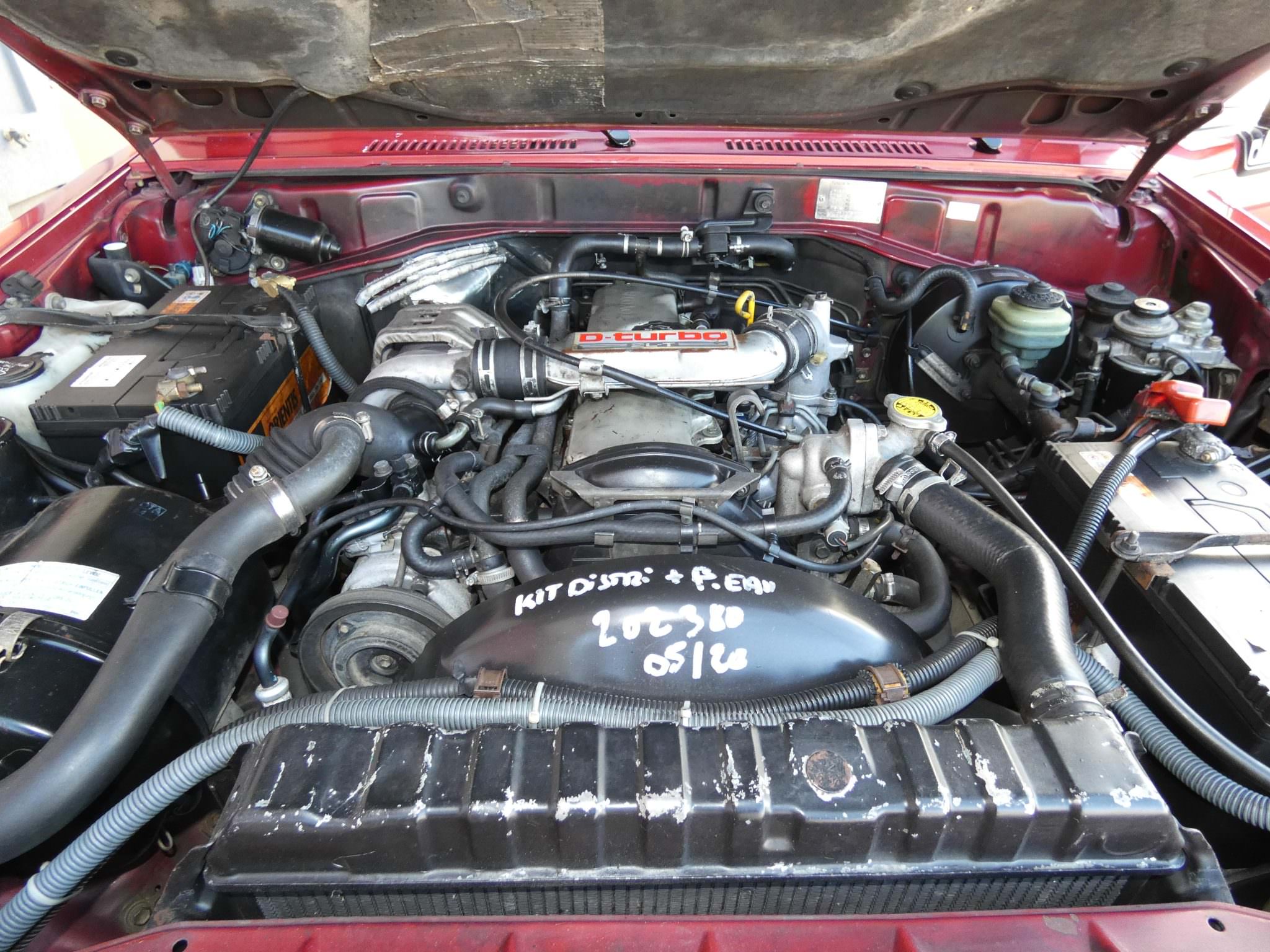
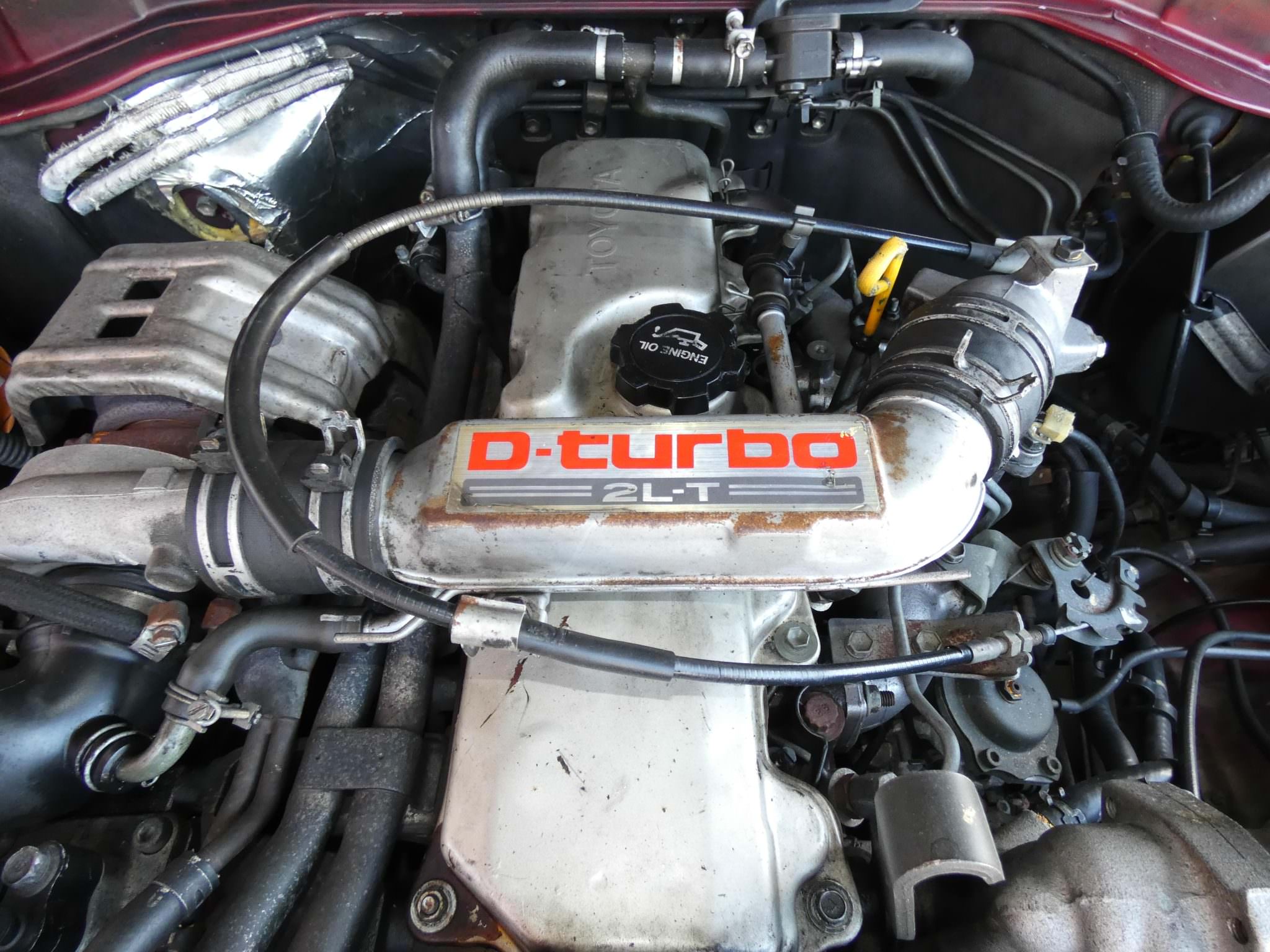
This is an original 1992 Toyota Land Cruiser LJ73 LX, it’s fitted with the bulletproof 2.4 liter turbodiesel inline-four cylinder engine which sends power back through a 5-speed manual transmission and a dual-range transfer case.

As far as indestructible vehicles go, this LJ73 sits high up on the list. It’s a member of the 70 series Land Cruiser family that has been in continuous production since 1984, making up the backbone of the agricultural, industrial, and military 4×4 fleets in nations around the world.

Fast Facts – The Toyota Land Cruiser LJ73 LX

  • The Land Cruiser LJ73 is a member of the Toyota Land Cruiser 70 series platform that has been in production for 38 years and counting, with the first examples rolling off the production line back in ’84.
  • The 70 series was developed as a replacement for the wildly popular 40 series Land Cruisers, a model range that included the venerable FJ40.
  • 70 series Land Cruisers were more of a design evolution rather than a blank slate reengineering of the 40 series, they both have steel ladder frame chassis, leaf springs front and back as well as live axles, and a simple steel body designed for toughness. Later examples of the 70 series would receive front coil springs.
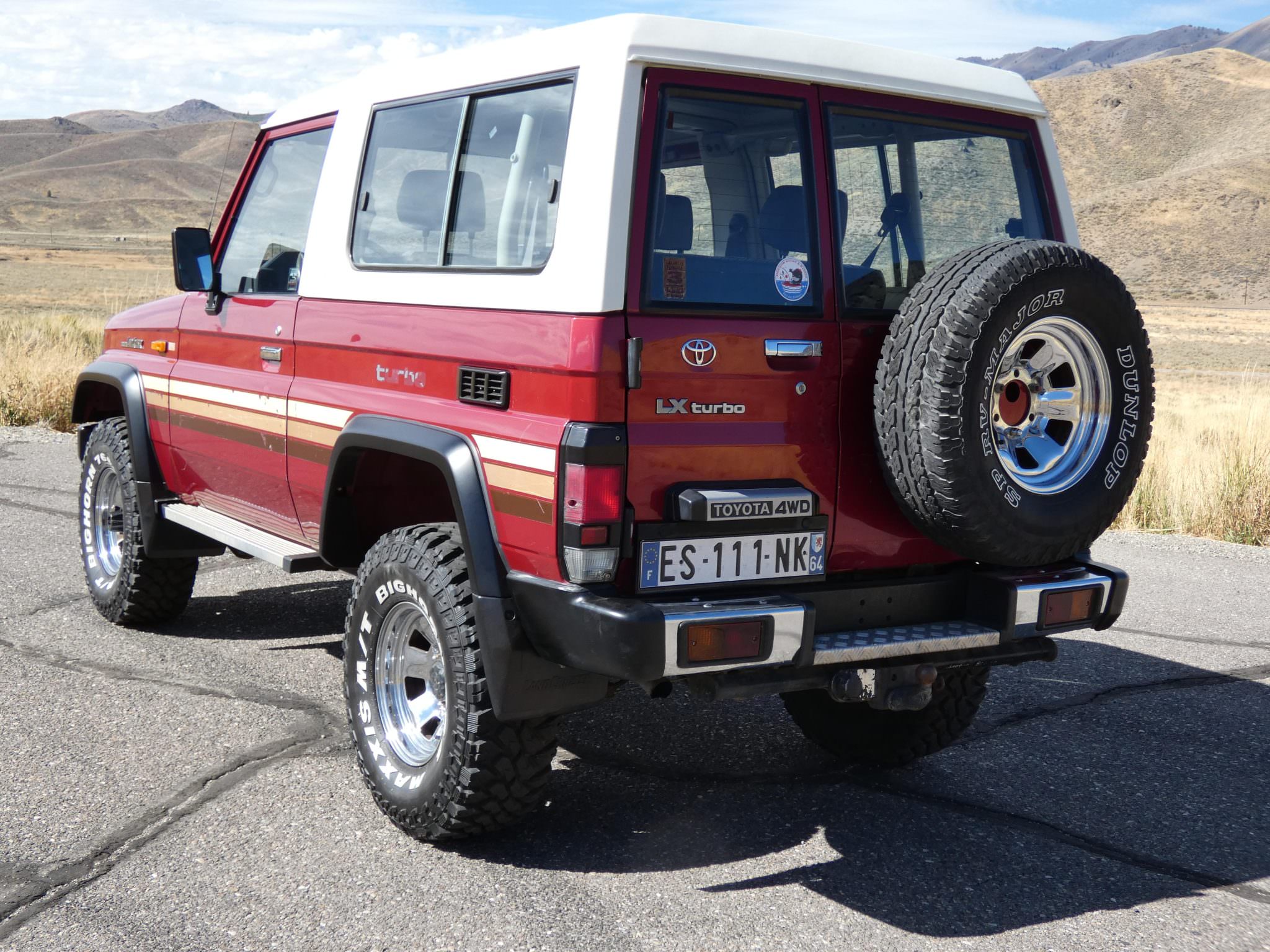
  • The Land Cruiser LJ73 LX you see here is a 2.4 liter inline-four cylinder turbocharged model, it has a 5-speed manual transmission and a two-speed transfer case. This vehicle was delivered new to France and has since been imported into the USA. It’s now being offered for sale out of Triumph, Idaho.

The 70 Series Toyota Land Cruiser

When it was released in 1984 the 70 series Land Cruiser had gigantic shoes to fill. It was tasked with replacing the 40 series Land Cruisers that had been almost singlehandedly responsible for establishing the rock solid reputation the model family had acquired.

Toyota Land Cruiser LJ73 6

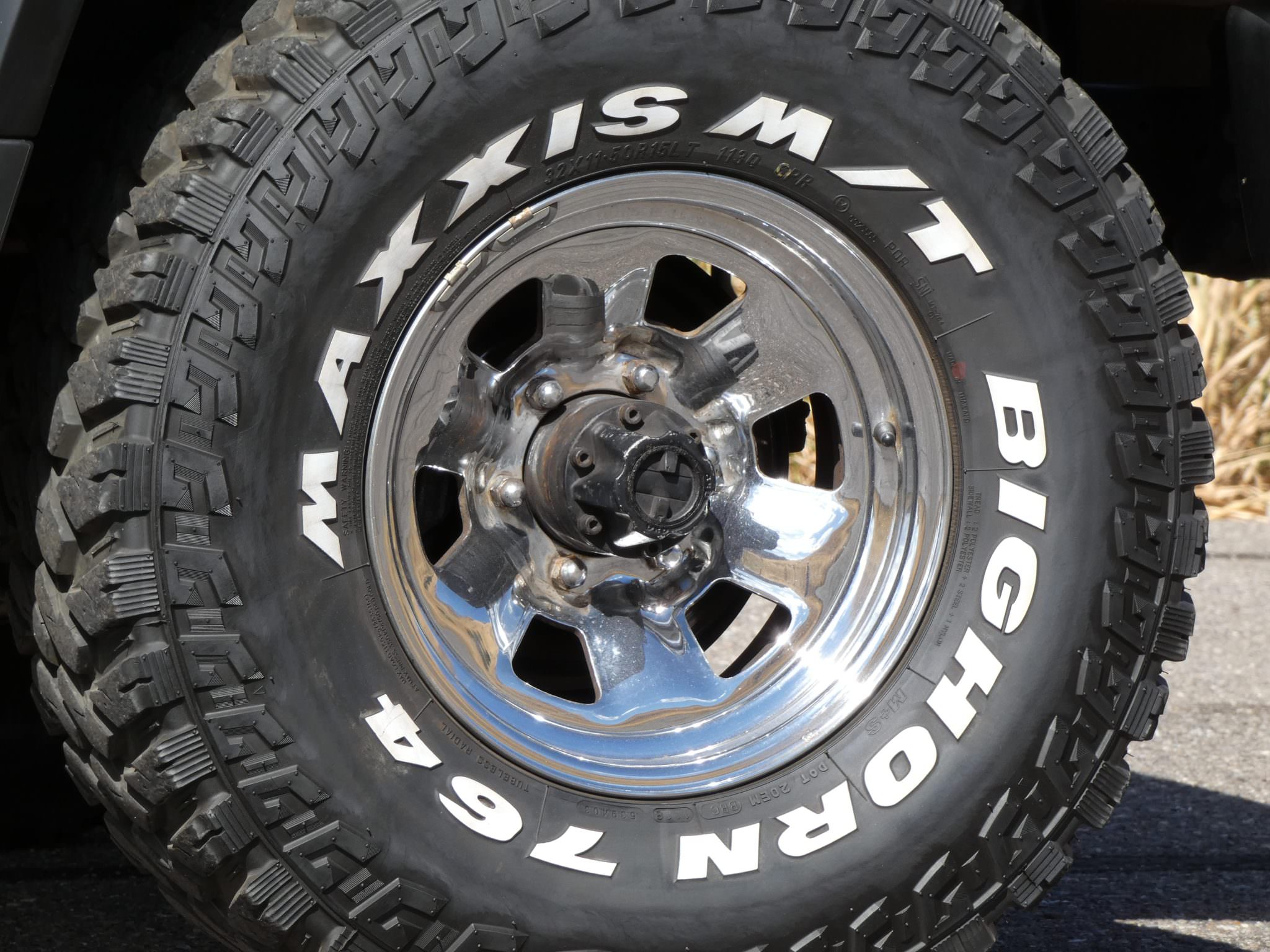
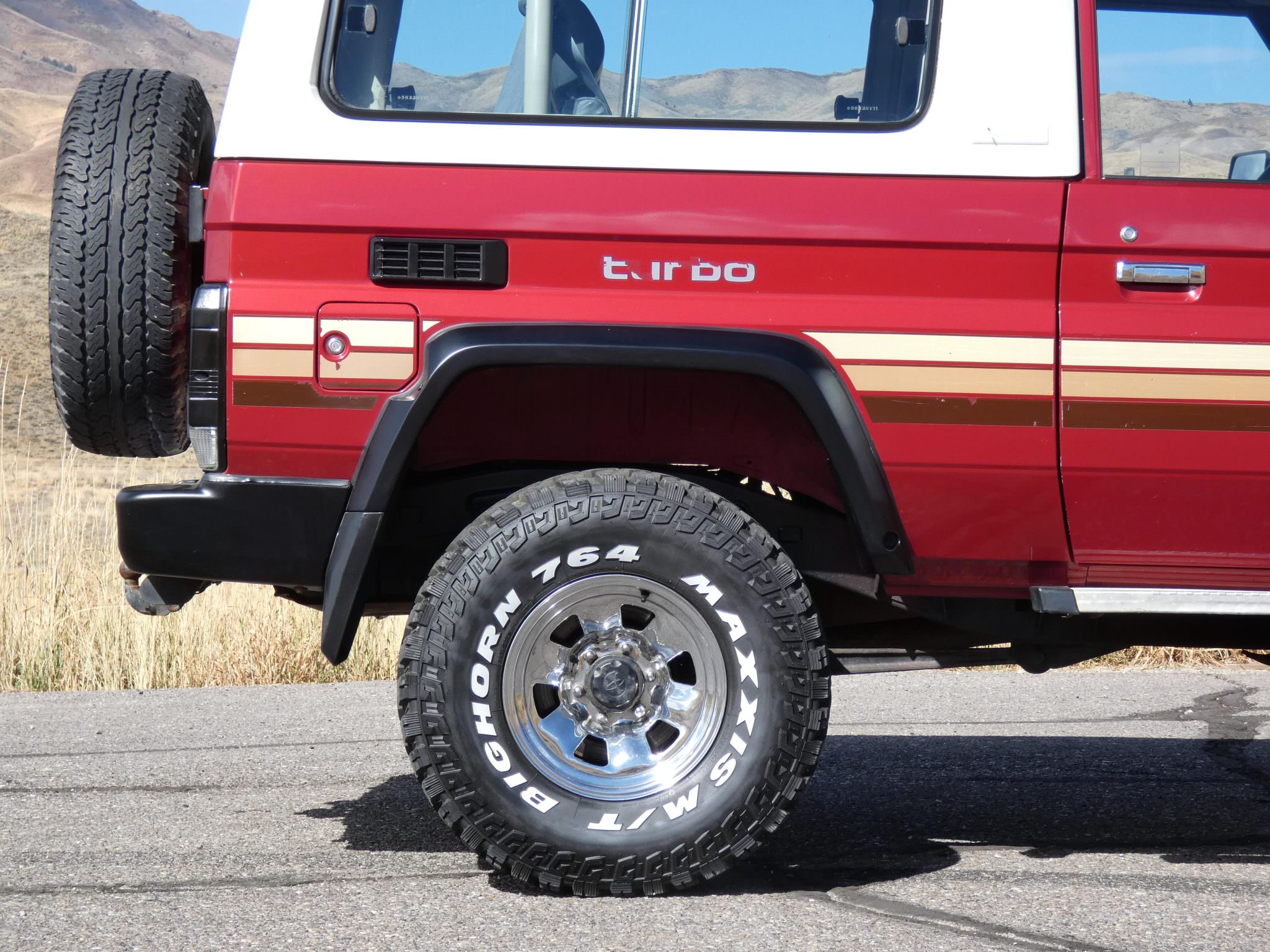
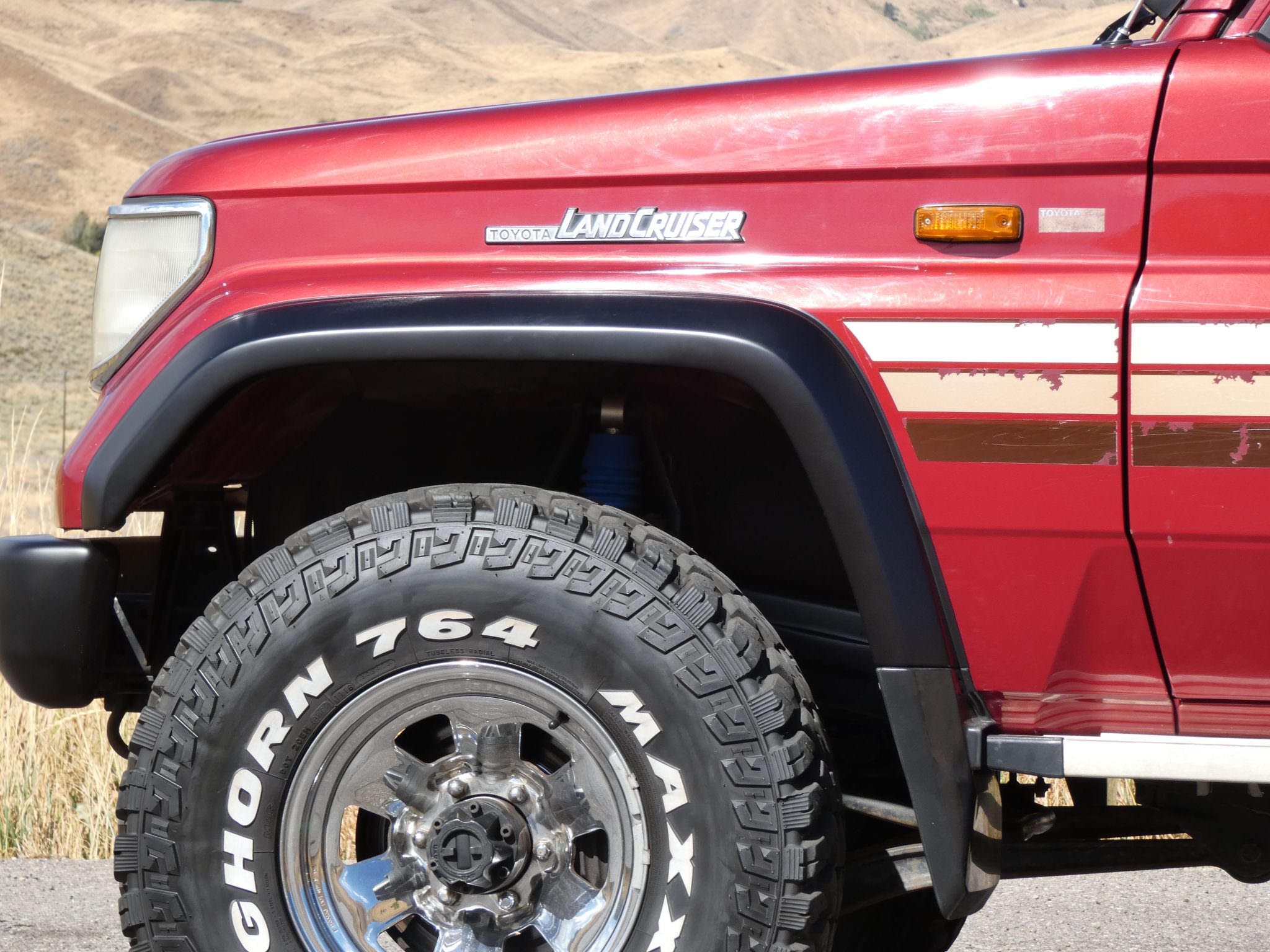
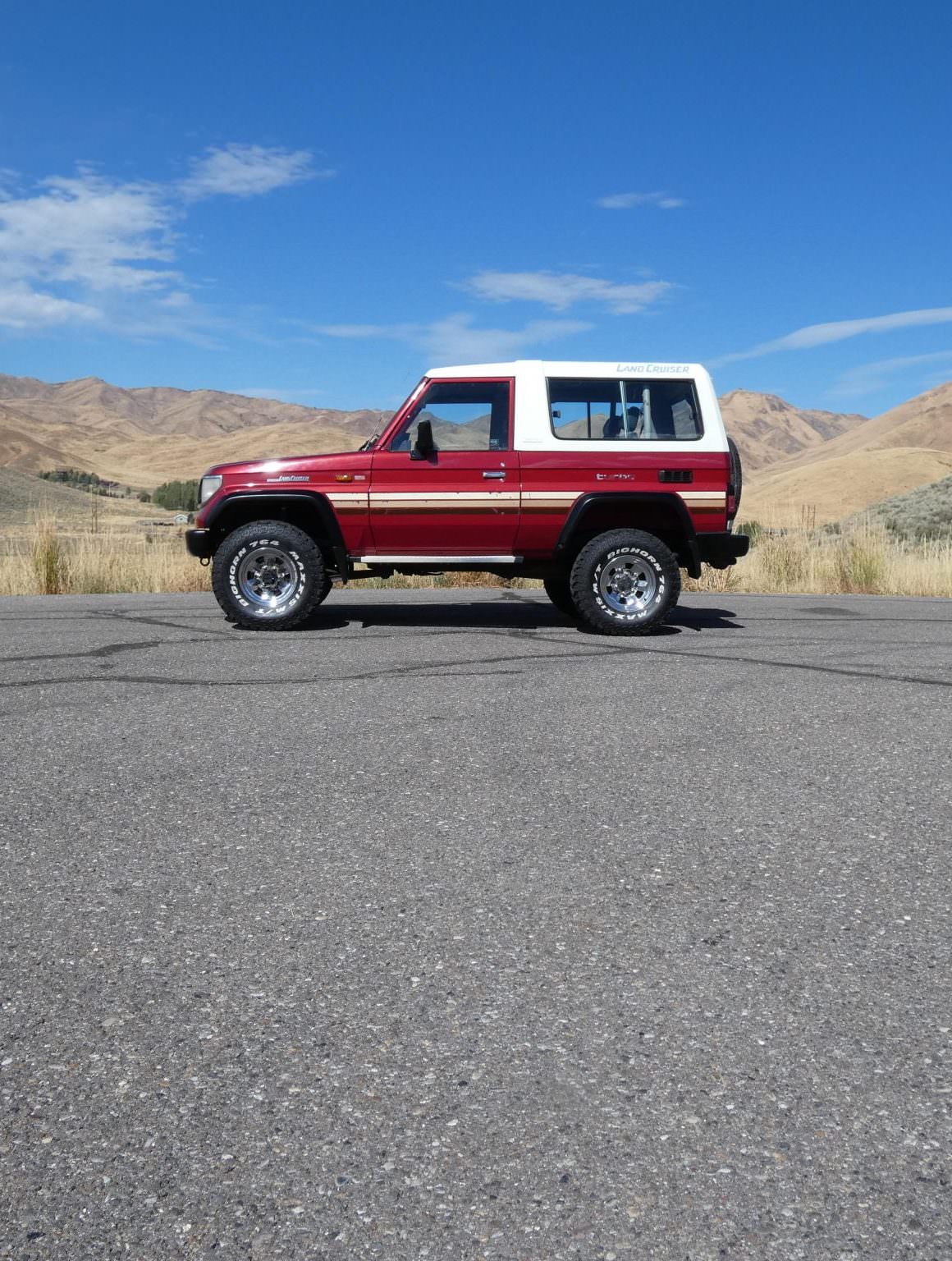
This LJ73 is fitted with chromed steel wheels and 32 × 11.50″ Maxxis Bighorn 764 M/T white-letter tires.

Rather than starting from scratch on the new design, Toyota instead took all the elements of the 40 series that had made it popular and rolled them into the new 70 series model family.

Both the 40 and 70 series would be fitted with a strong ladder frame chassis, leaf springs front and back, lives axles at both ends, with simple steel bodies and a range of indestructible engines and transmissions.

This isn’t to say that no improvements were made of course, the 40 series was 24 years old by 1984 after all and it was showing its age both inside and out.

The 70 series Land Cruiser body was far more modern and angular, it also offered more room for occupants, more comfortable interiors and much improved NVH, or noise, vibration, and harshness.

Though it wasn’t known at the time of the new model’s release, it would prove to be such a successful successor to the 40 series that it would remain in production for 38 years as of 2022, with no end in sight.
Toyota Land Cruiser LJ73 19

This is the 2.4 liter inline-four turbocharged cylinder engine, it has a reputation for incredible reliability.

One reason the 70 series isn’t particularly well known in the United States is that Toyota never officially imported it into the country, or into countries like India, Mexico, Brazil, and Korea.

This has left unofficial grey market imports very popular, as they offer Americans a chance to own what is a rare and highly desirable four-wheel drive in the United States.

The Land Cruiser LJ73 LX Turbodiesel Shown Here

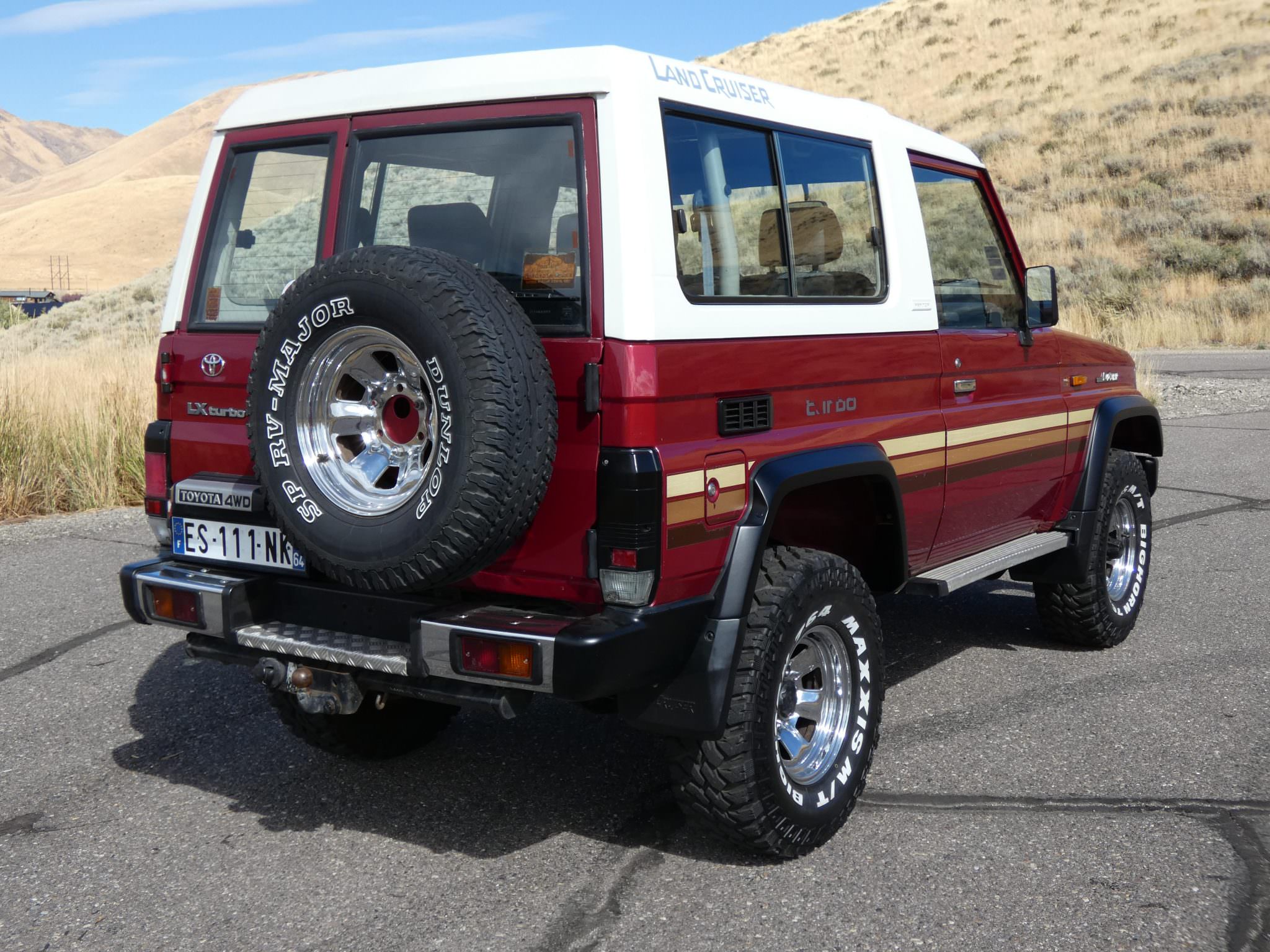
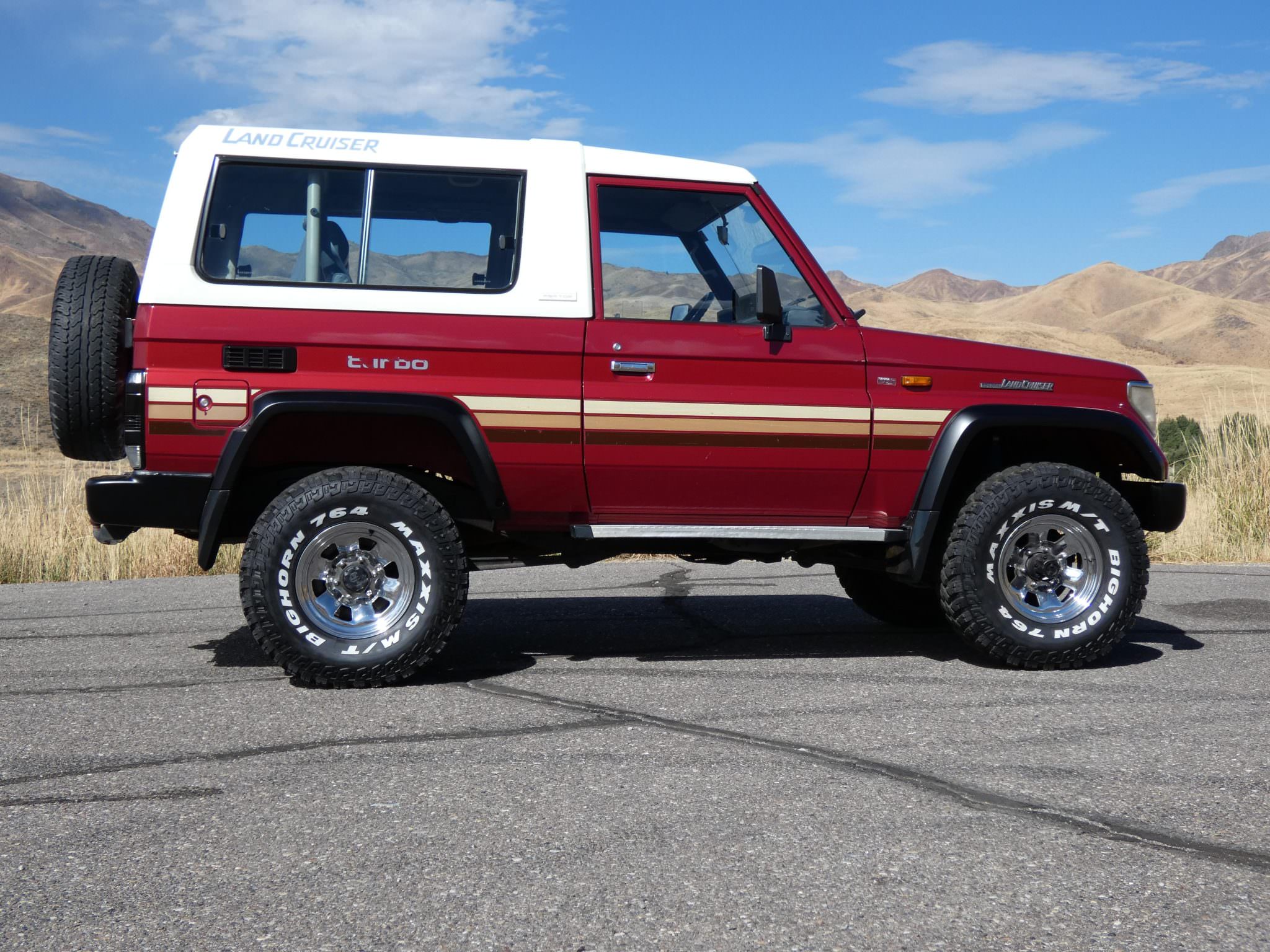
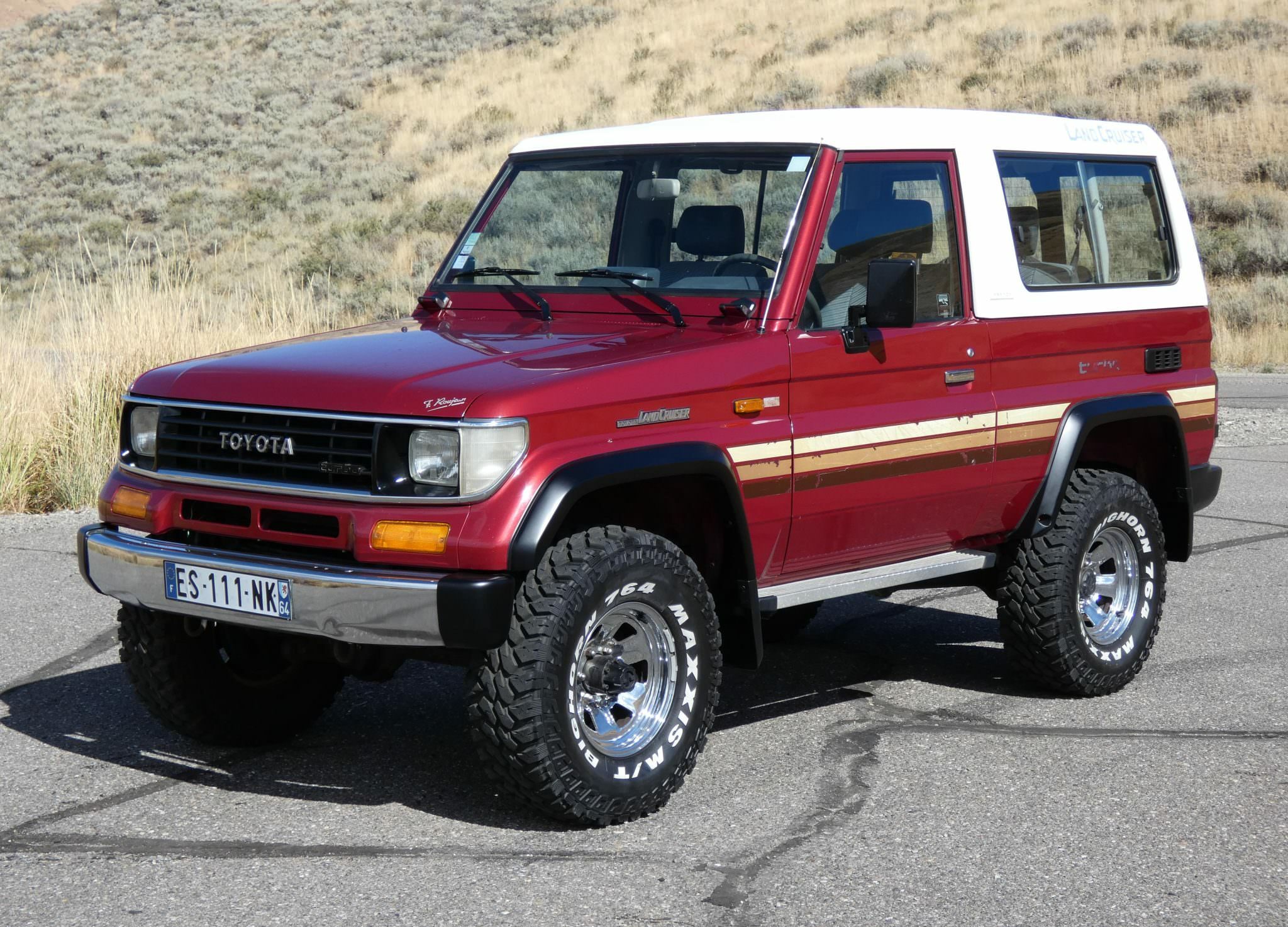
The vehicle you see here is an original 1992 Toyota Land Cruiser LJ73 LX that was delivered new to France.

As mentioned in the introduction its powered by the bulletproof 2.4 liter turbodiesel inline-four cylinder engine, which sends power back through a 5-speed transmission and a two-speed (high/low) transfer case to either the rear axle only or both the front and rear axle.
Toyota Land Cruiser LJ73 21

The L73 is one of the medium-length wheelbase versions of the 70 series, offering the convenience of a little more cargo room without losing the benefits of a shorter wheelbase.

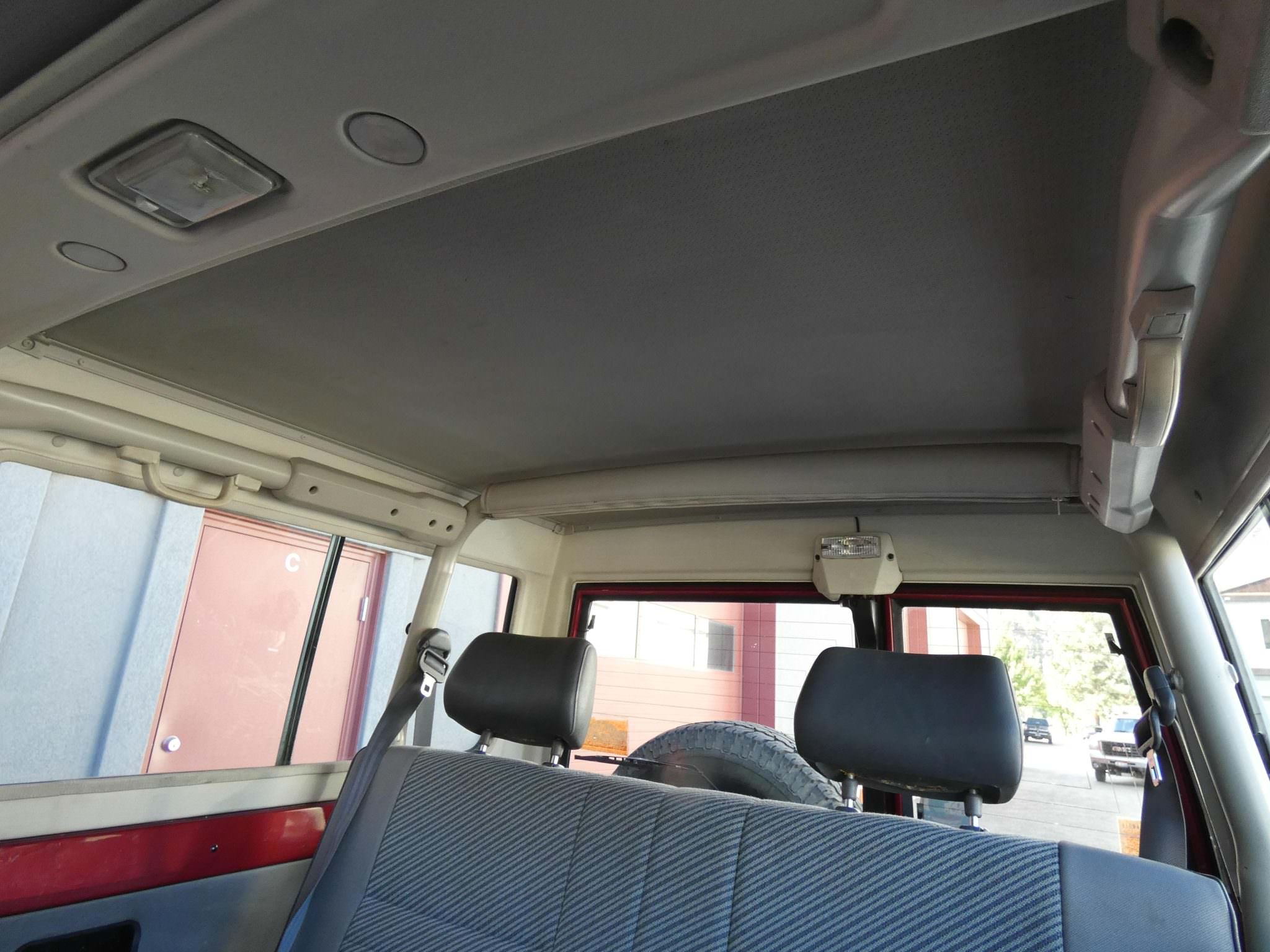
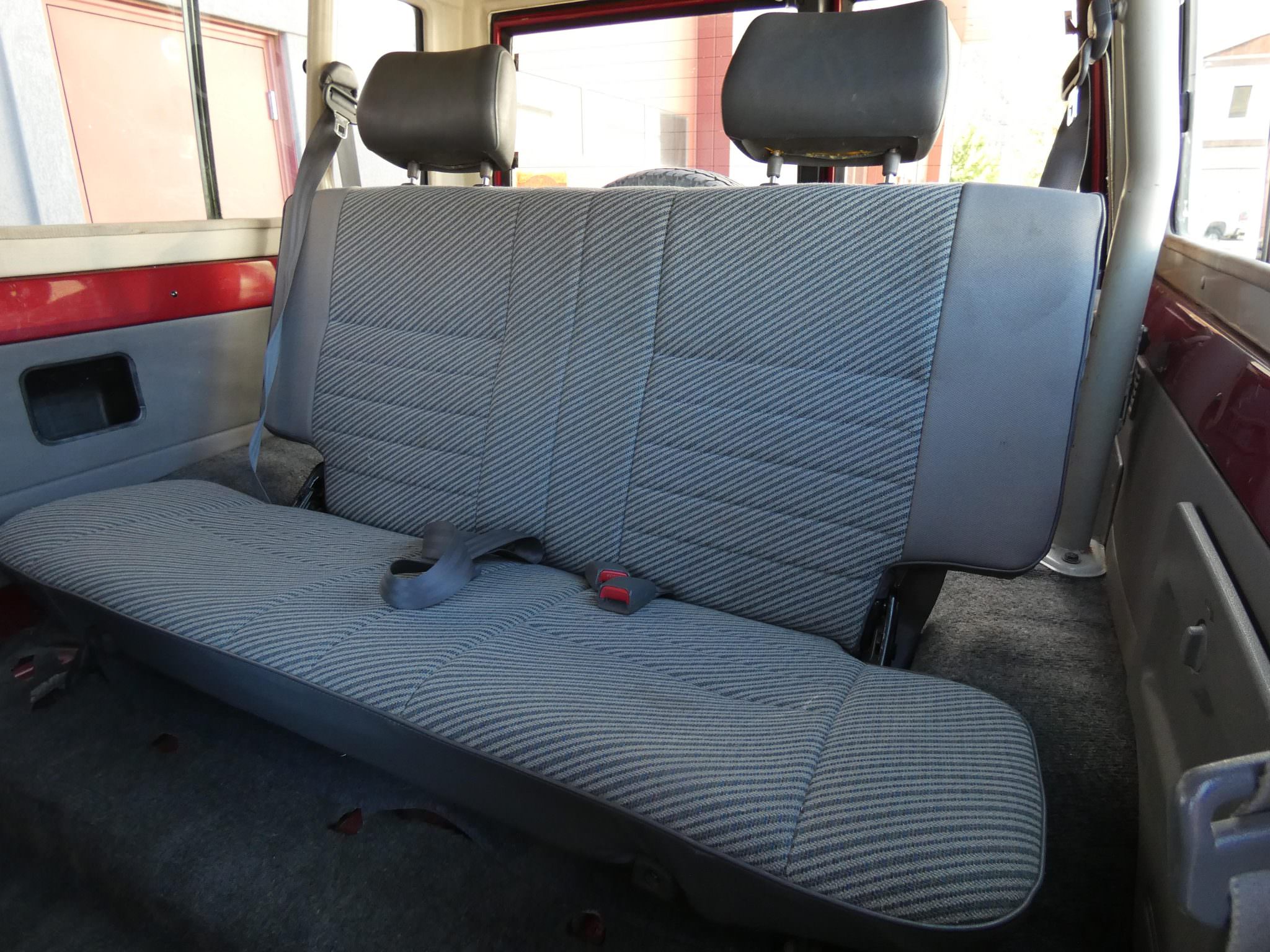
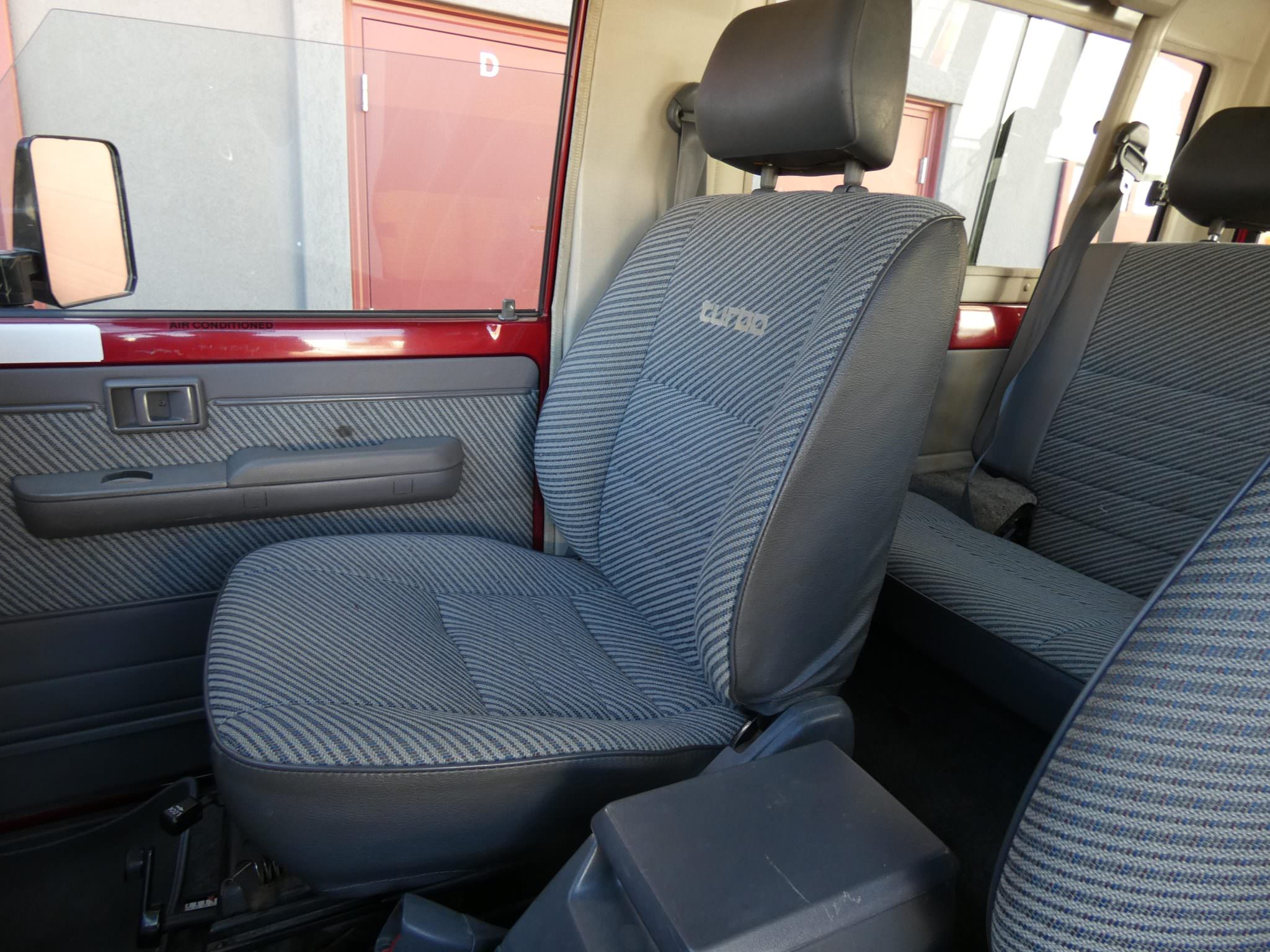
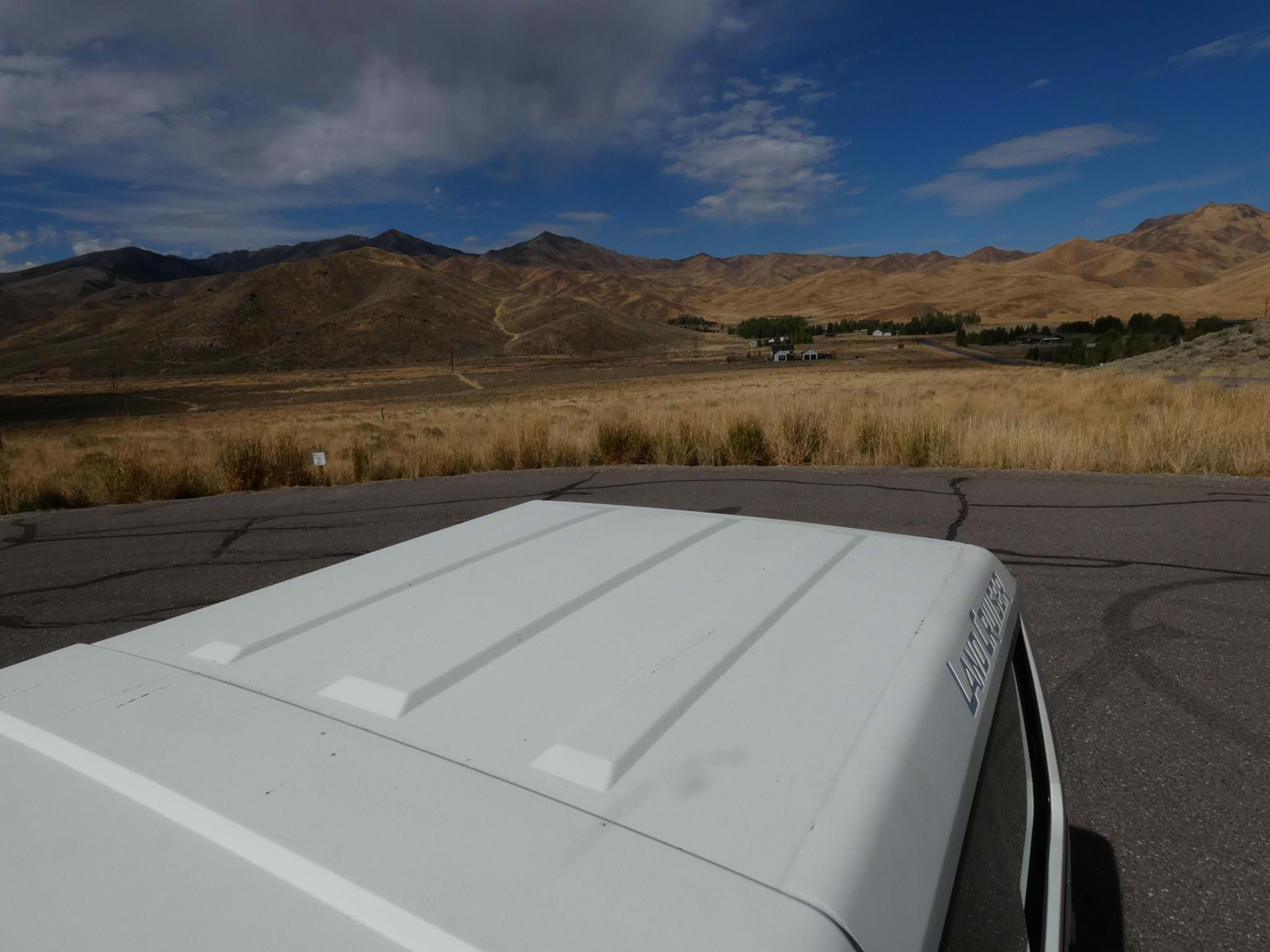
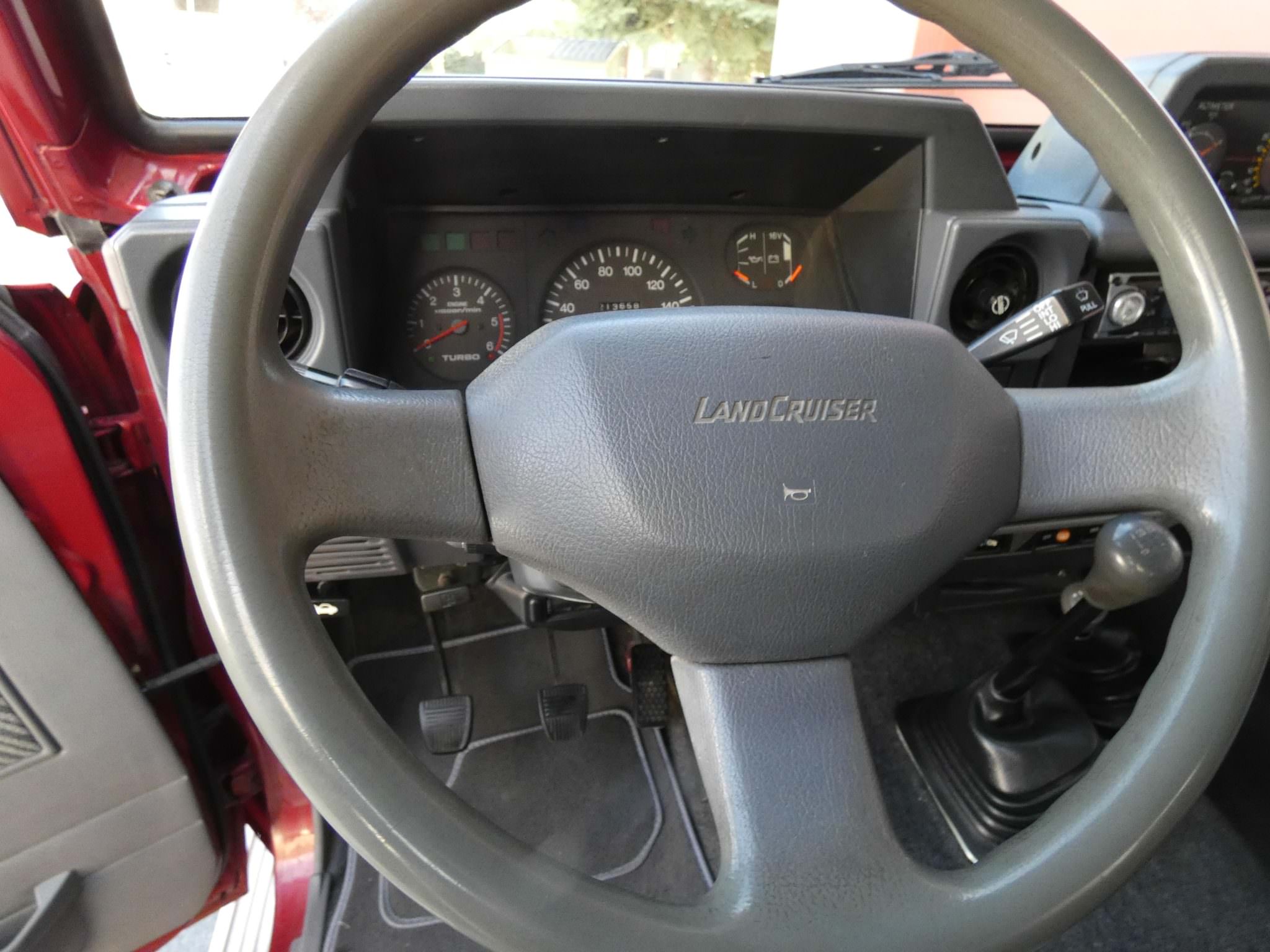
The spec sheet on this LJ73 isn’t half bad, with four wheel disc brakes, air conditioning, electric windows, a CD stereo system, power steering, 32″ tires on chrome steel wheels, an internal roll cage, and a tow hitch in the rear. It’s finished in red with a classic white roof, and tricolor stripes down each side.

This Land Cruiser is a survivor not a restored trailer queen, so it does show signs of age and use, however true fans of the model wouldn’t have it any other way.

If you’d like to read more about this LJ73 or place a bid you can visit the listing here. It’s being offered for sale out of Triumph, Idaho and not comes with importation paperwork, French-language service records, and a clean Idaho title in the owner’s name.
Toyota Land Cruiser LJ73 20 Toyota Land Cruiser LJ73 18 Toyota Land Cruiser LJ73 17 Toyota Land Cruiser LJ73 16 Toyota Land Cruiser LJ73 15 Toyota Land Cruiser LJ73 13 Toyota Land Cruiser LJ73 12 Toyota Land Cruiser LJ73 11 Toyota Land Cruiser LJ73 10 Toyota Land Cruiser LJ73 8 Toyota Land Cruiser LJ73 7 Toyota Land Cruiser LJ73 6 Toyota Land Cruiser LJ73 5 Toyota Land Cruiser LJ73 4 Toyota Land Cruiser LJ73 3 Toyota Land Cruiser LJ73 2 Toyota Land Cruiser LJ73 1

Images courtesy of Bring a Trailer
The post Original Survivor: A Toyota Land Cruiser LJ73 LX Turbodiesel 5-Speed appeared first on Silodrome.


from Silodrome https://silodrome.com/toyota-land-cruiser-lj73/
via gqrds

A Rare Sinclair C5: Still In The Factory Box After 37 Years

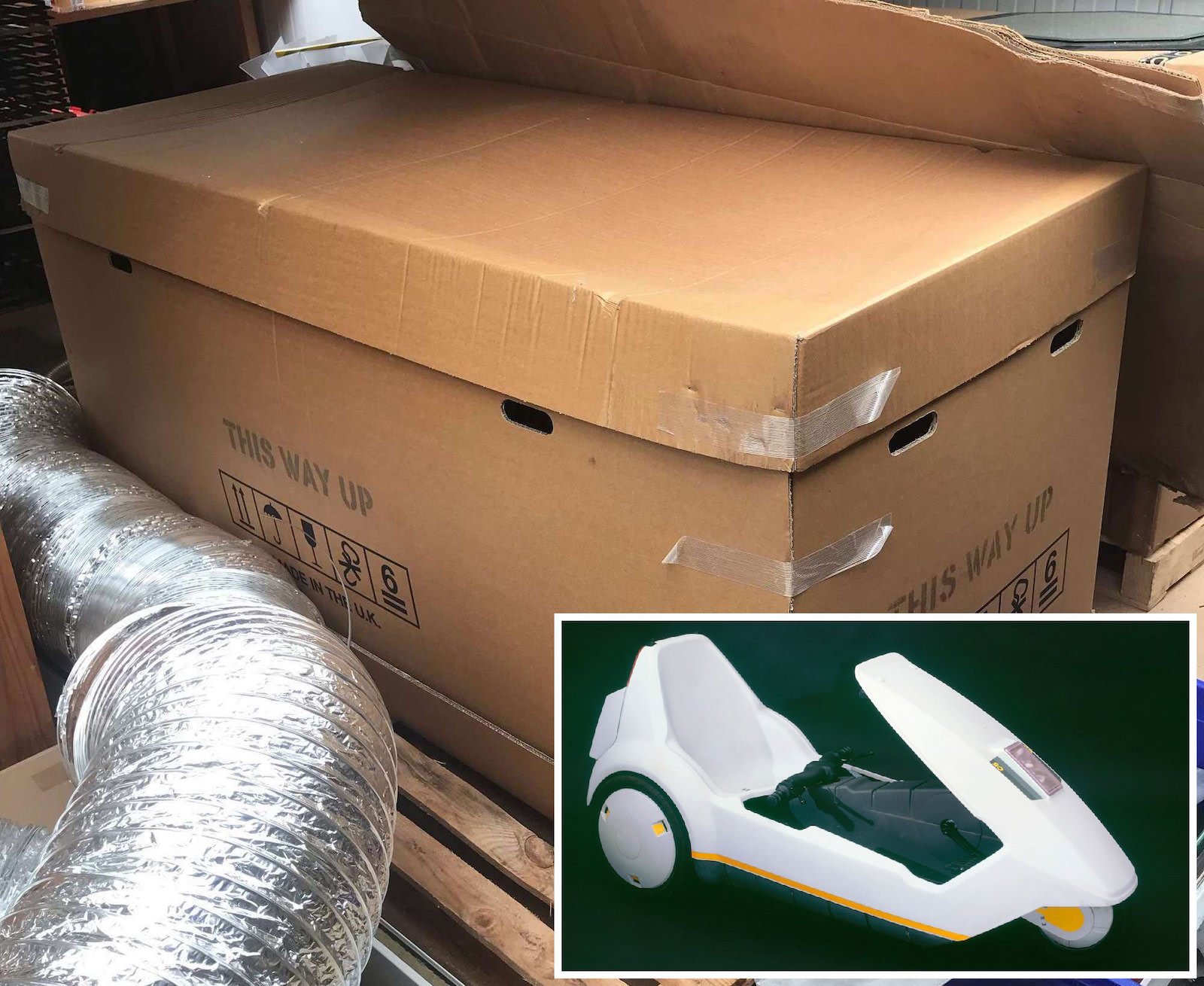
This Sinclair C5 has remained in its original factory box for 37 years and counting. It was discovered when the Hoover factory was being cleared out in the 1980s and it’s remained in storage ever since – with two keys, a battery charger, a fixing kit, and a tool kit all in the original box.

The Sinclair C5 is one of the most famous failures in modern history, it was designed as an electric personal transportation solution for urban use but sales figures were dismal and within a few months of its 1985 release production had ceased entirely.

Fast Facts – The Sinclair C5

  • Sinclair Vehicles Ltd was founded by Sir Clive Sinclair in 1983 specifically to design and build electric vehicles. The managing director was Barrie Wills, formerly of the DeLorean Motor Company.
  • Sir Clive Sinclair is a famous computing pioneer in the UK who had amassed a fortune developing and selling pocket calculators which were followed by home computers in the 1970s and 1980s.
  • The Sinclair C5 was to be his next big thing, an unusual battery-assisted electric recumbent tricycle with seating for one, and some trunk space in the rear.
  • With a range of 20 miles (32 kms) a curb weight of 45 kgs (99 lbs) and a top speed of 15 mph (24 km/h), many considered the C5 too limited for regular daily use.

Sinclair C5 – An Idea Before Its Time

The Sinclair C5 is today a notable historic lead ballon, it was hyped up nationwide before its release in January 1985 and it had the mighty weight of the Sinclair name behind it. After release the sales were dismal, from originally projected sales figures of 200,000 – 500,000 units per year just 5,000 were made before Sinclair Vehicles went bankrupt.

Sinclair C5

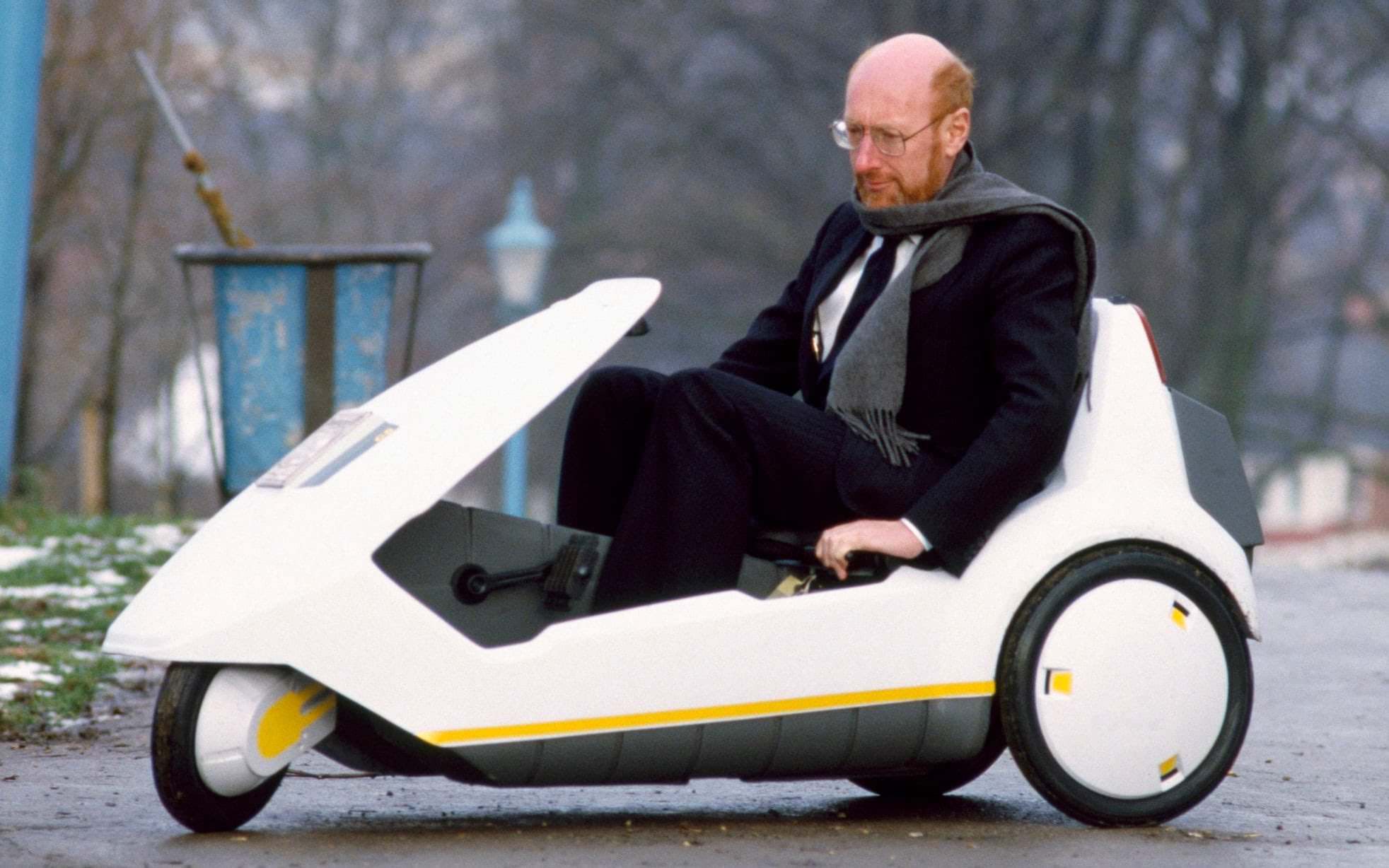
This is Sir Clive Sinclair himself demonstrating the Sinclair C5 for the British media in 1985. Image courtesy of Sinclair Vehicles Ltd.

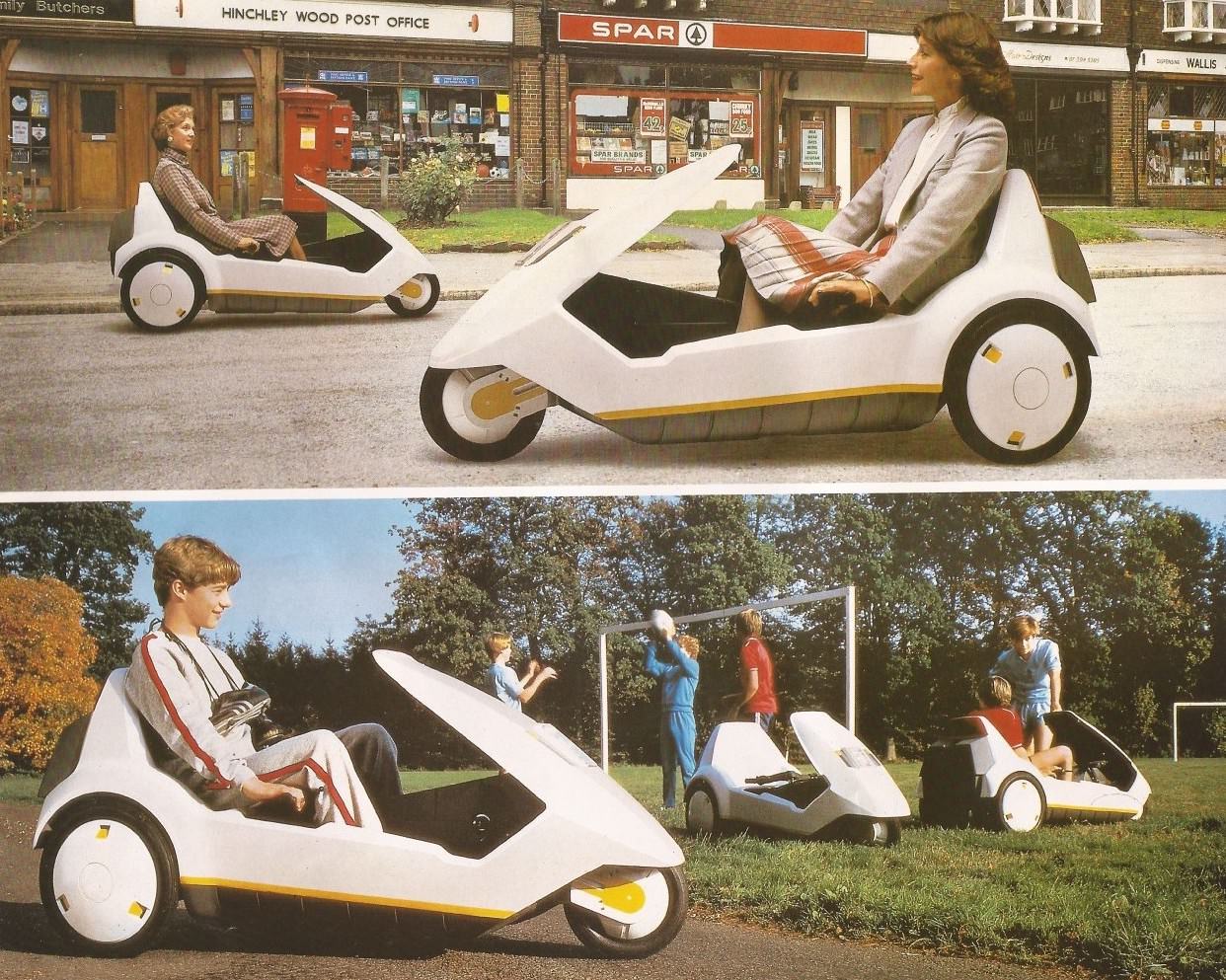
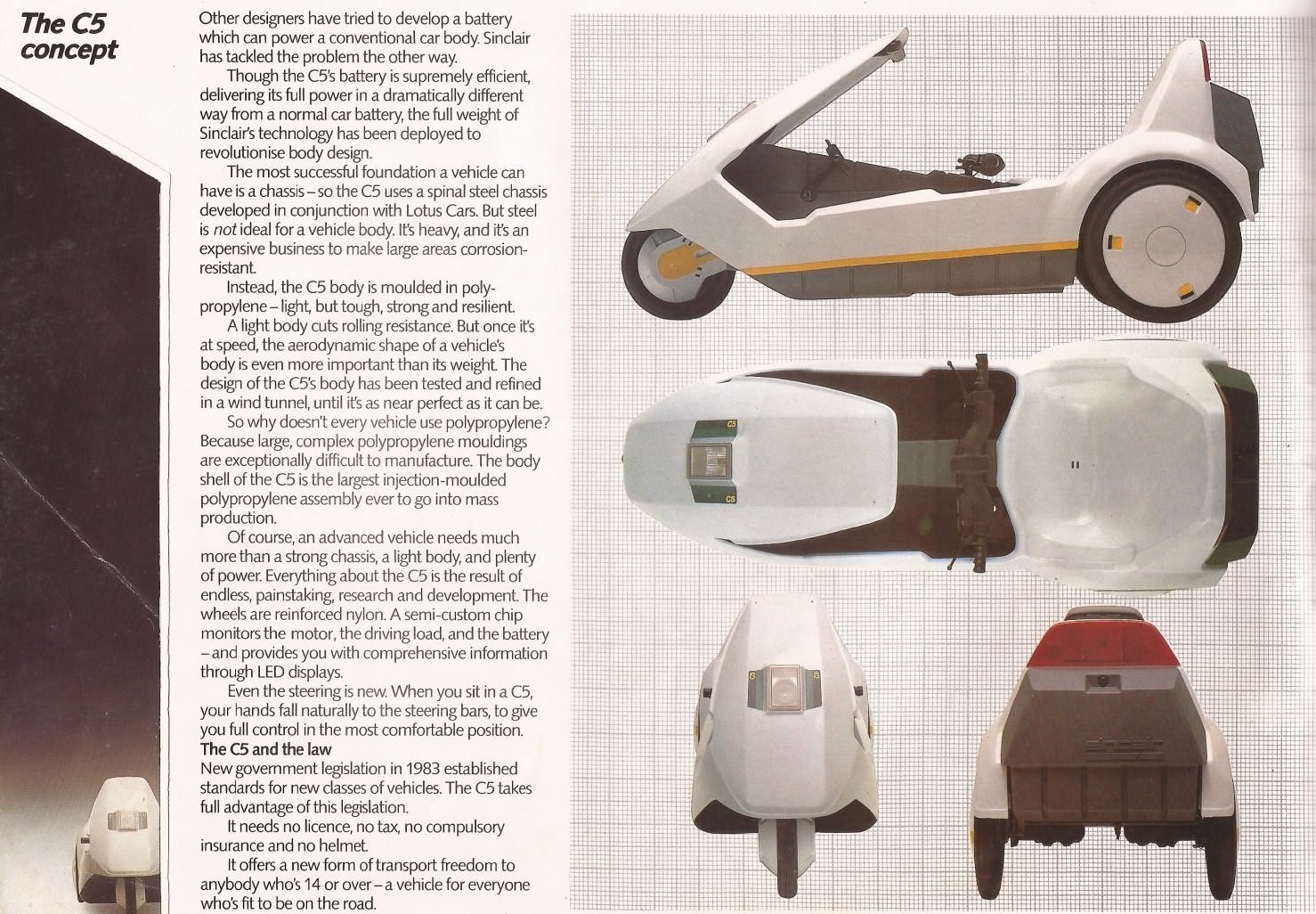
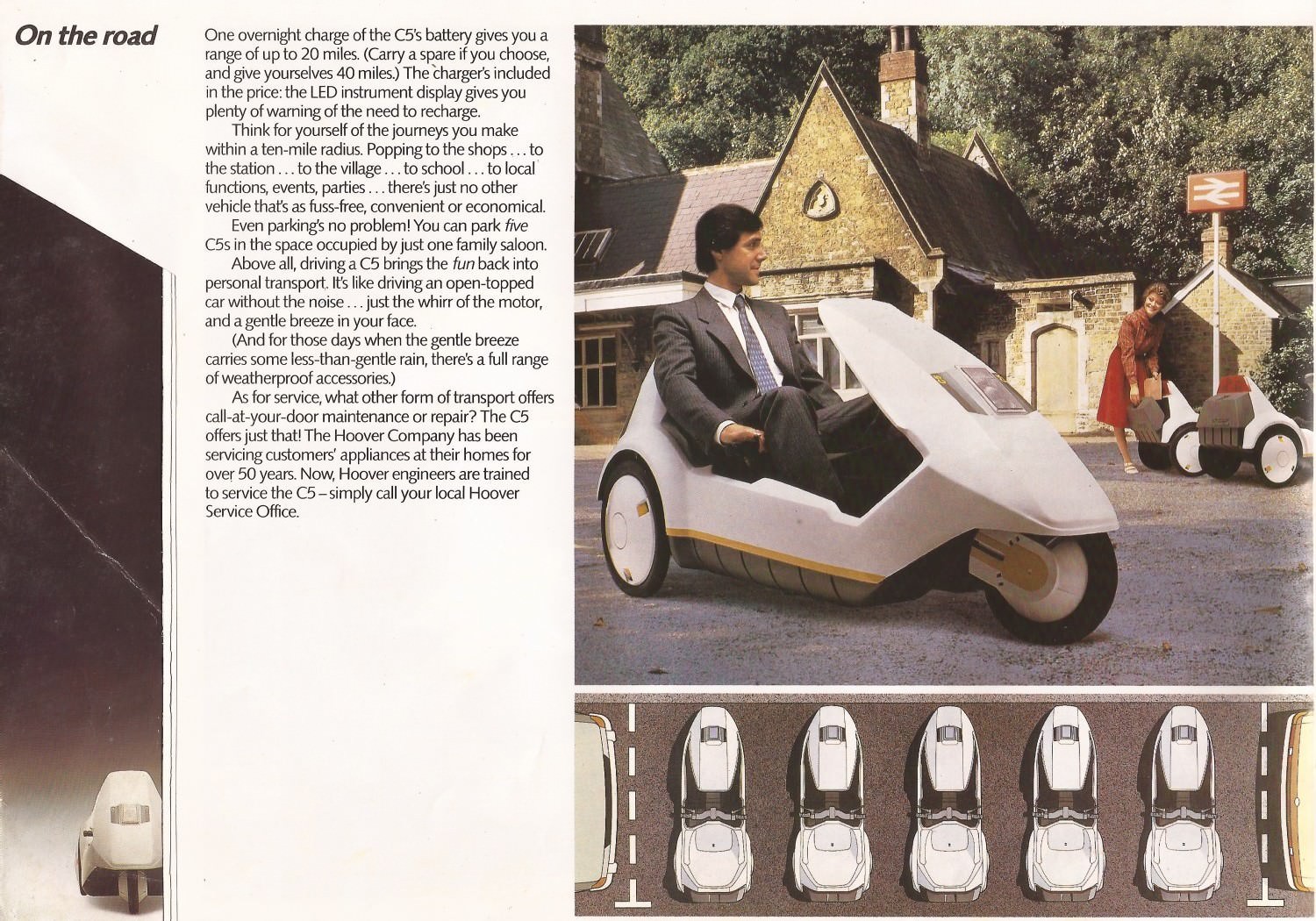
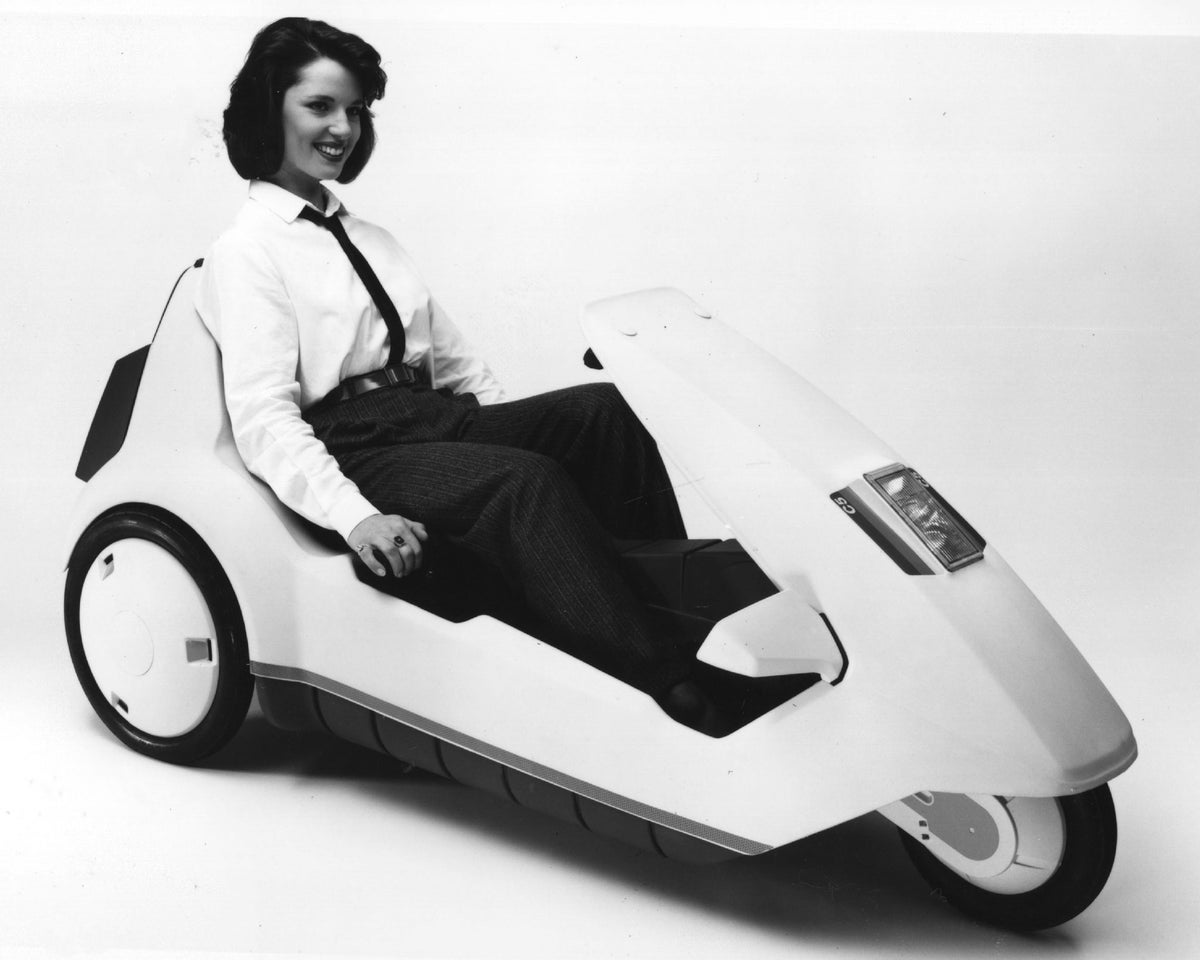
The unusual looking Sinclair C5 was essentially a recumbent electric tricycle with a body on top. The handlebars were situated under the rider’s knees with the pedals out in front, the rider had a comfortable seat and backrest, and in the rear there was a small cargo area for things like briefcases or groceries.

There were a few significant drawbacks to the design of the C5, firstly its range was limited by the lead acid battery technology of the day to 20 miles (32 kms), and the top speed of 15 mph (24 km/h) was significantly slower than the rest of the traffic on British roads.

Perhaps the largest drawback was the lack of any weather protection, a significant issue in Britain where it typically rains 148 days each year, or once every 2.4 days on average.

Skipping forward through history a few decades to the modern age and unusual electric vehicles are all the rage, particularly things like electric bicycles and electric scooters. Many have wondered if the Sinclair C5 simply arrived three decades too soon.

Sinclair C5 3

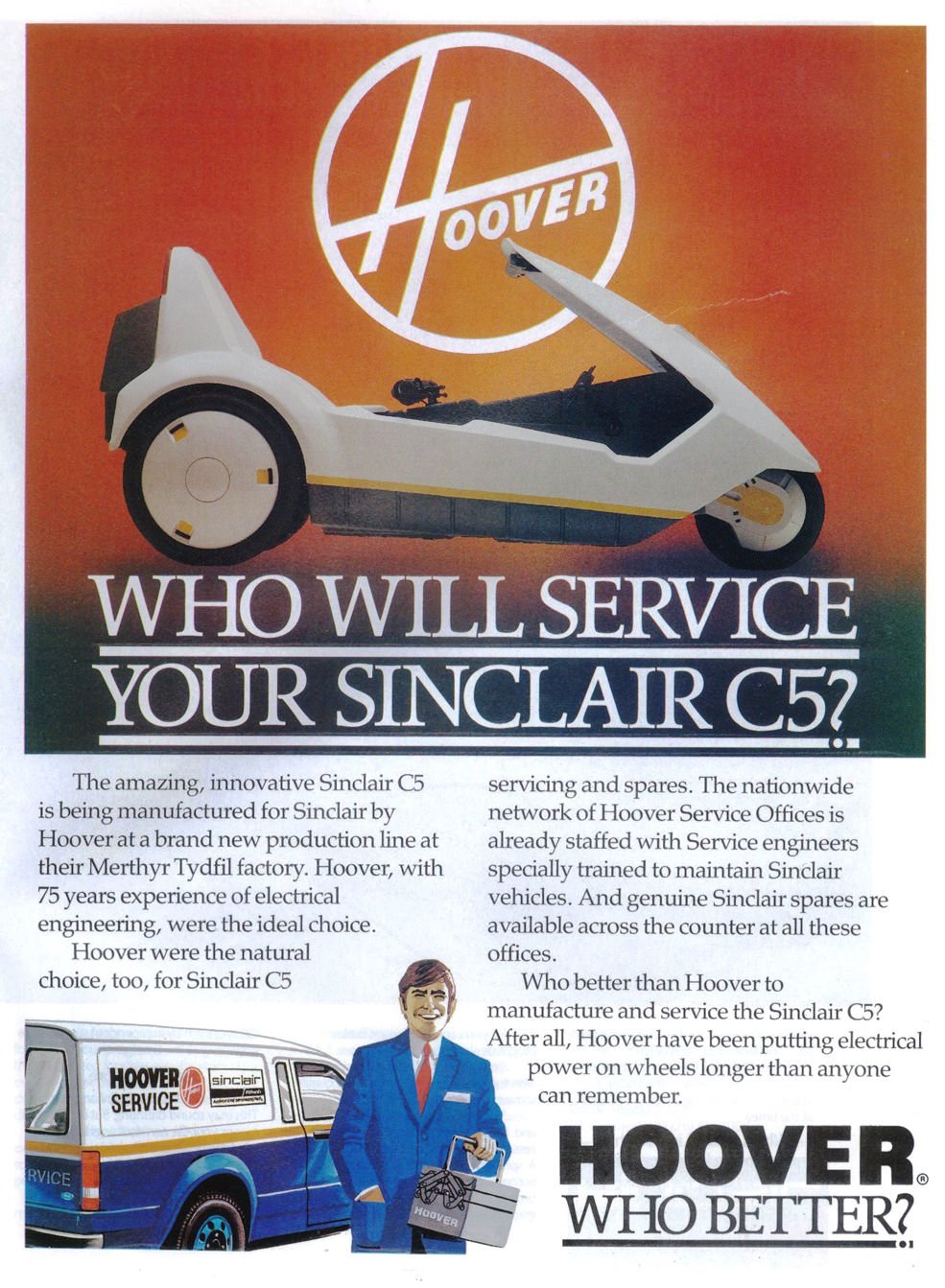
The American Hoover corporation were tasked with manufacturing the C5 and servicing it – largely due to their experience with electric appliances and their nation-wide reach.

A few years ago in 2017 Sir Clive Sinclair’s nephew Grand Sinclair unveiled his own design for a new Sinclair C5 called the Iris eTrike, this time with modern lithium-ion batteries, a top speed of 30 mph (48 km/h) and full weather protection.

The Still-Boxed Sinclair C5 Shown Here

The Sinclair C5 you see here, or rather don’t actually see, remains in its original box and has done since it was manufactured by Hoover in Britain for Sinclair over 37 years ago.

As mentioned above it comes with two keys, a battery charger, a fixing kit, and a tool kit all in the original box.

It’s now due to roll across the auction block with Silverstone Auctions on the 13th of November with a price guide of £2,000 – £3,000 or approximately $2,240 – $3,360 USD. If you’d like to read more about it or register to bid you can visit the listing here.

Above Video: In this 1985 episode of the BBC TV series “Top Gear” presenter William Woollard reviews the “electrically assisted pedal tricycle” – the Sinclair C5.

Sinclair-C5-Brochure Sinclair-C5-Brochure-2 Sinclair-C5-Brochure-1 Sinclair C5 2 Sinclair C5 1 Sinclair C5 Sinclair C5 4

Images courtesy of Silverstone Auctions, Sinclair Vehicles, and Hoover

The post A Rare Sinclair C5: Still In The Factory Box After 37 Years appeared first on Silodrome.


from Silodrome https://silodrome.com/sinclair-c5-in-box/
via gqrds
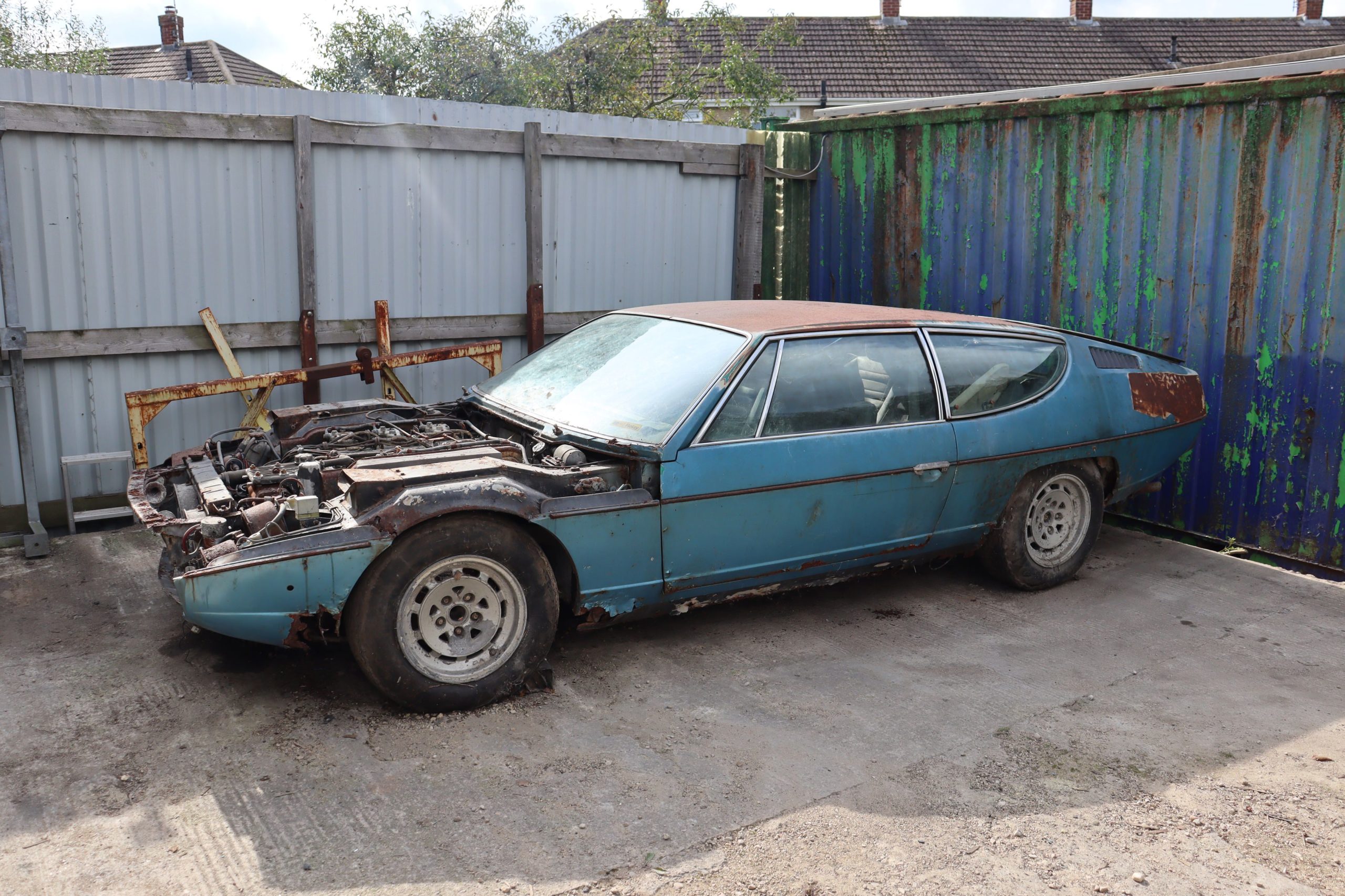
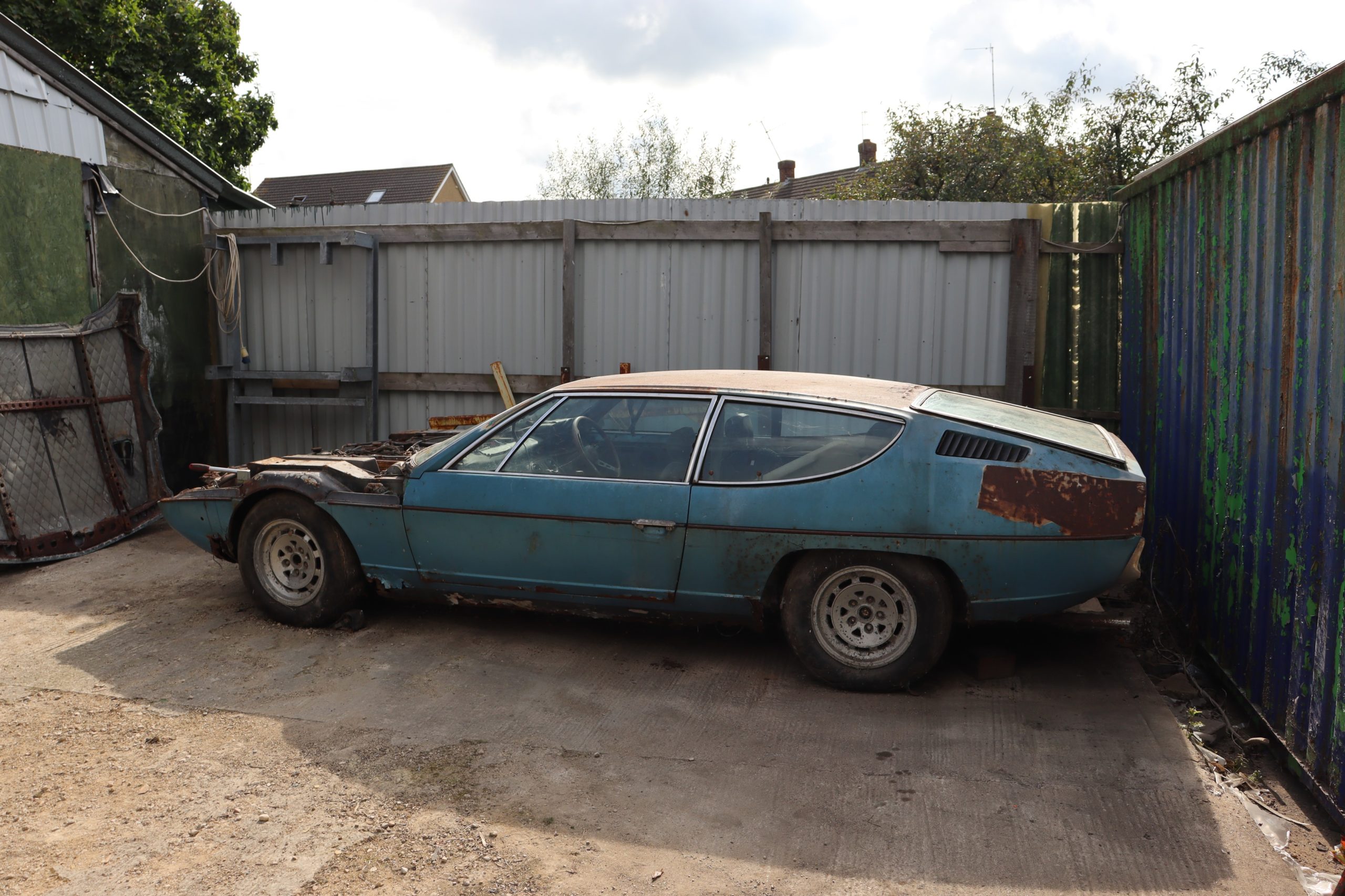
Project Car: A Derelict Lamborghini Espada V12 – $11,000+ USD

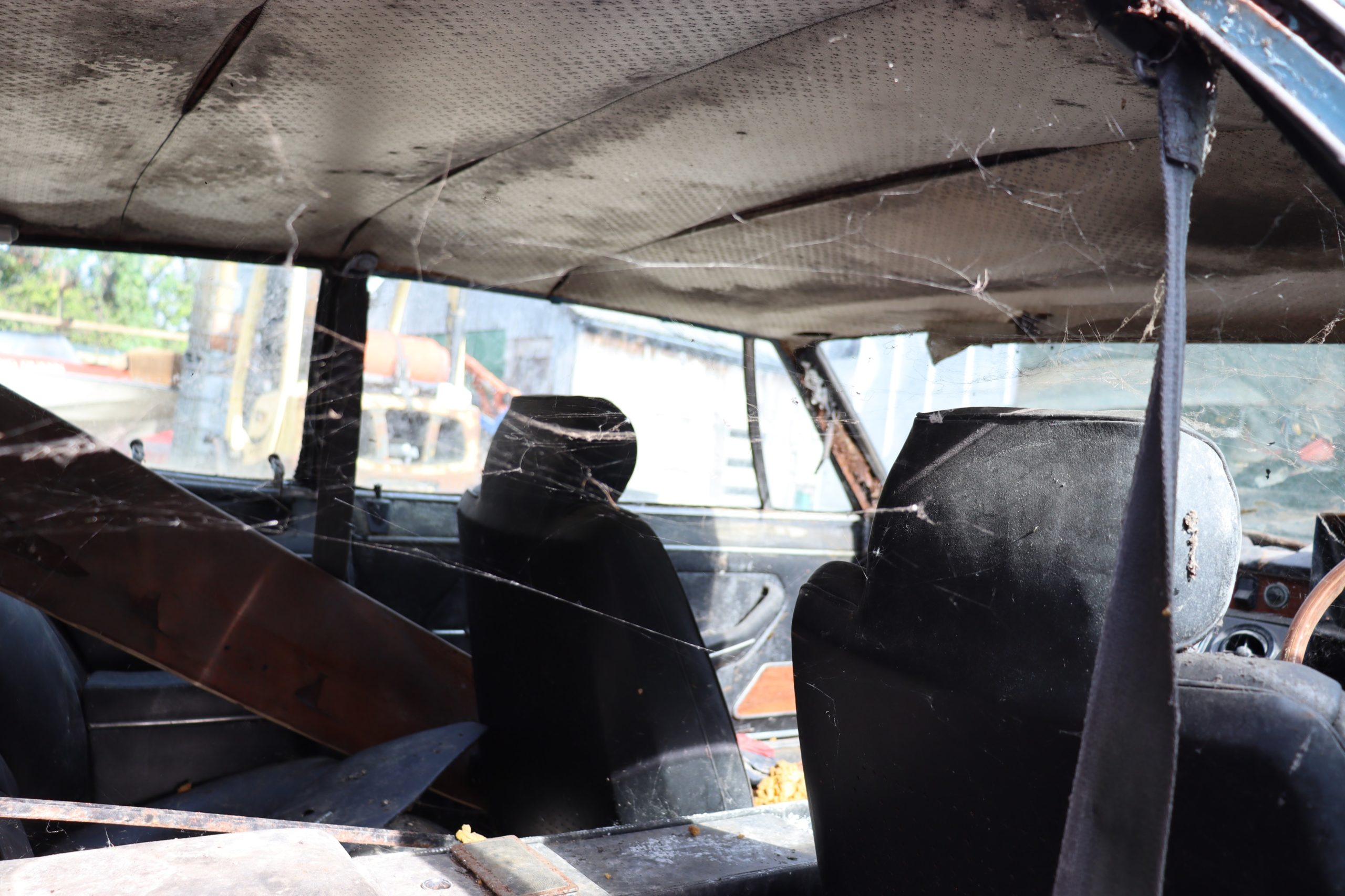
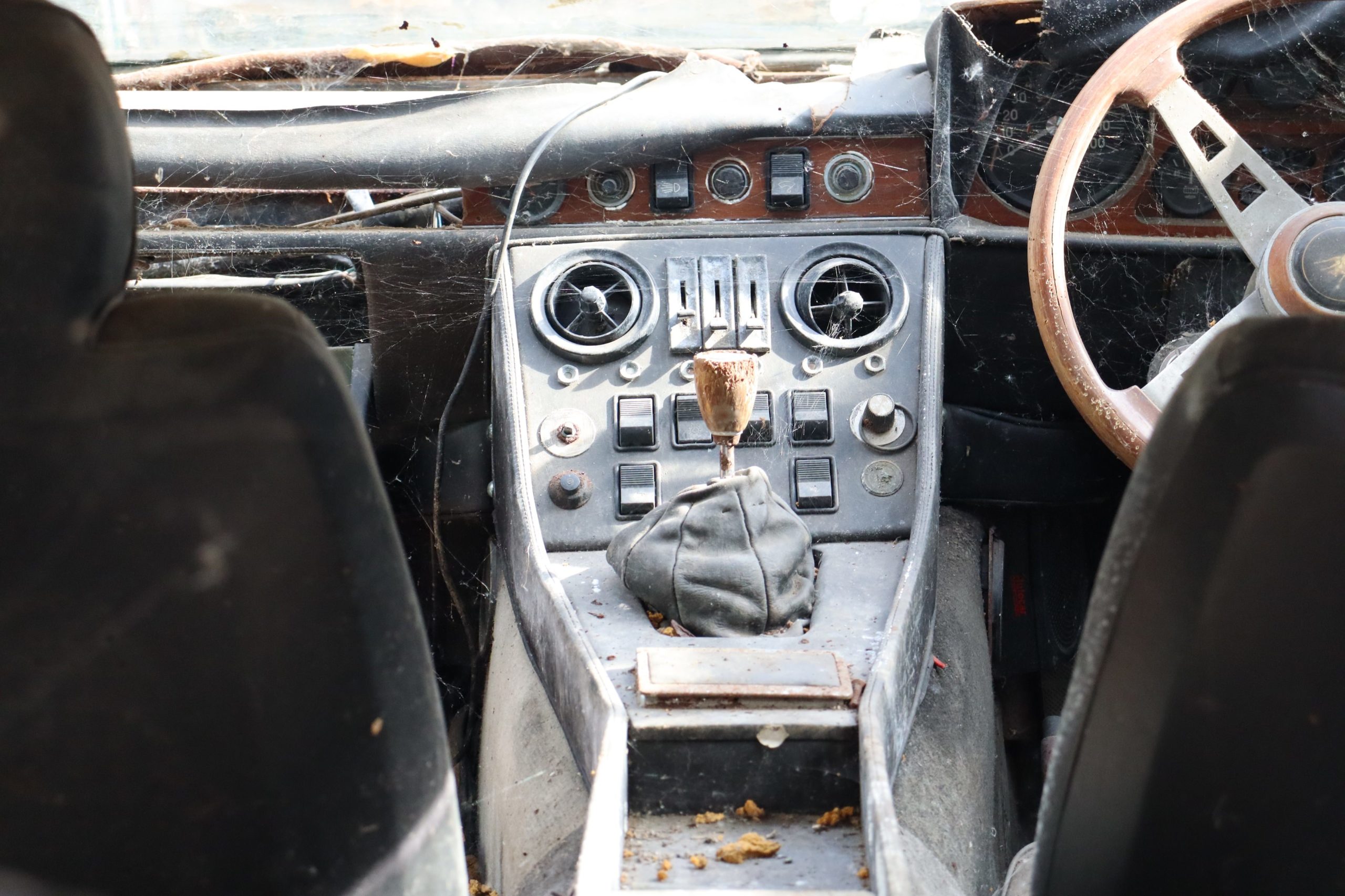
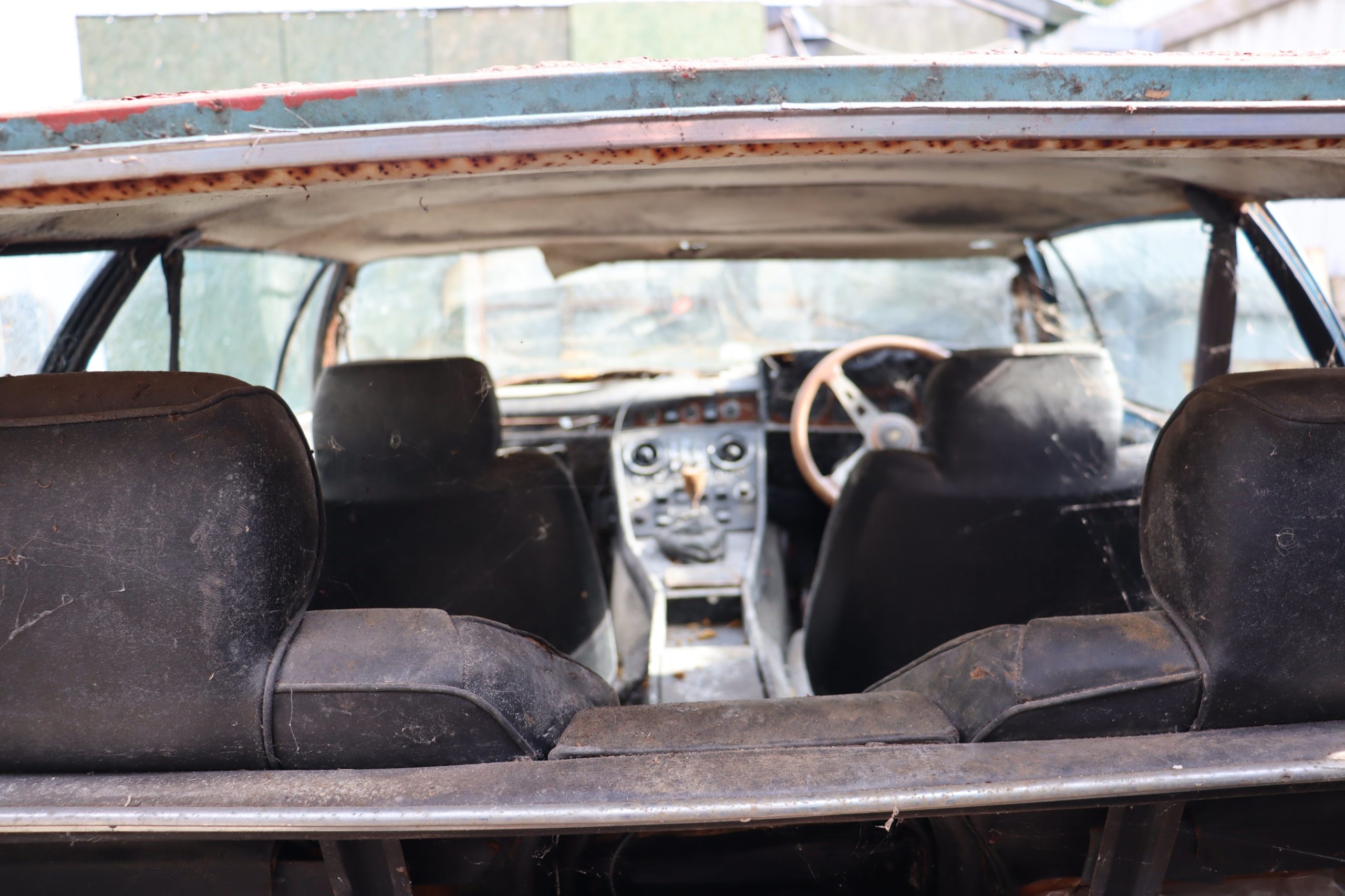
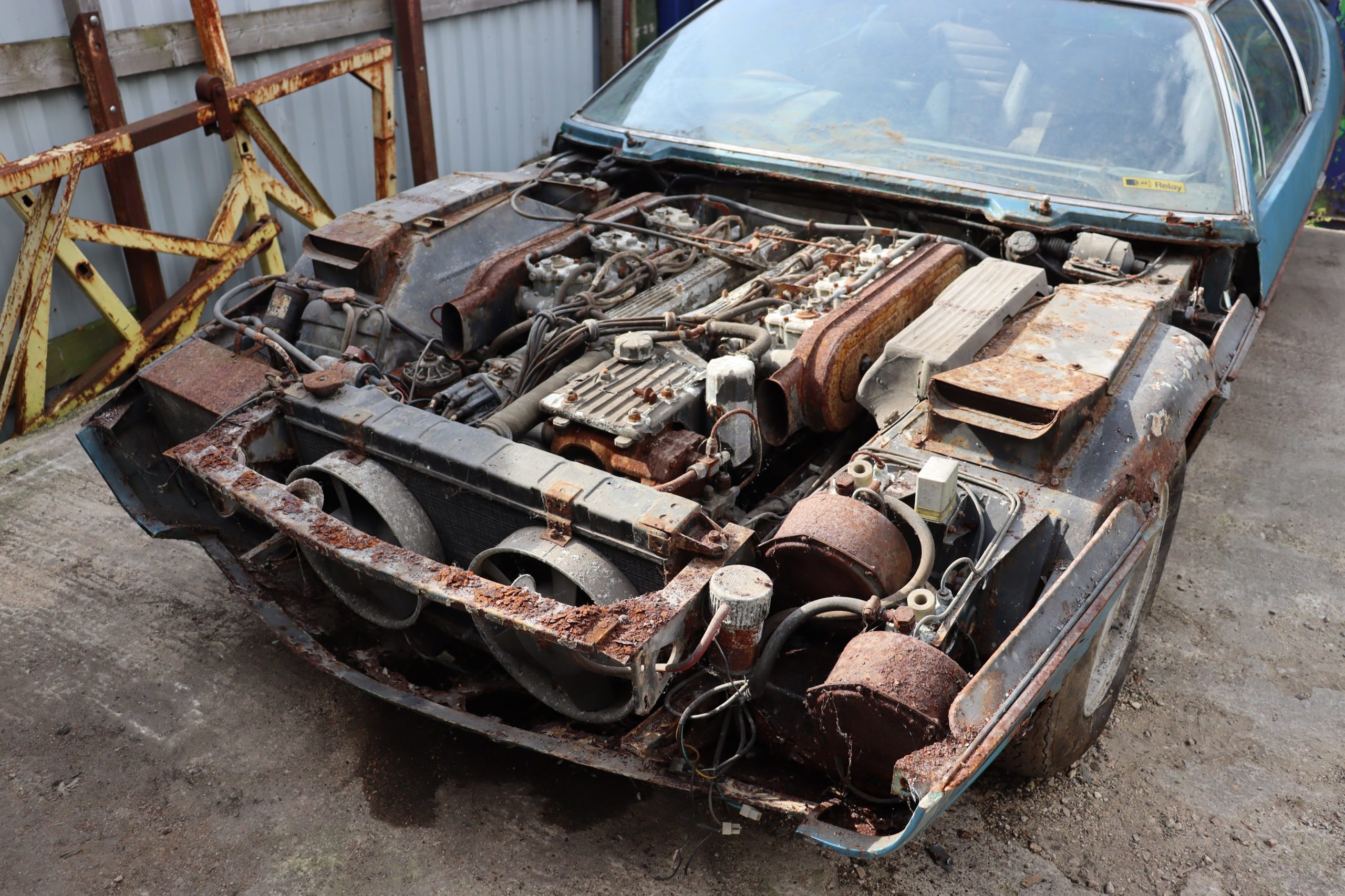
This is a Series II Lamborghini Espada from 1972, it came from the factory with the quad-cam Bizzarini-designed 3929cc V12 Lamborghini engine that’s capable of 350 bhp – when in running condition of course.

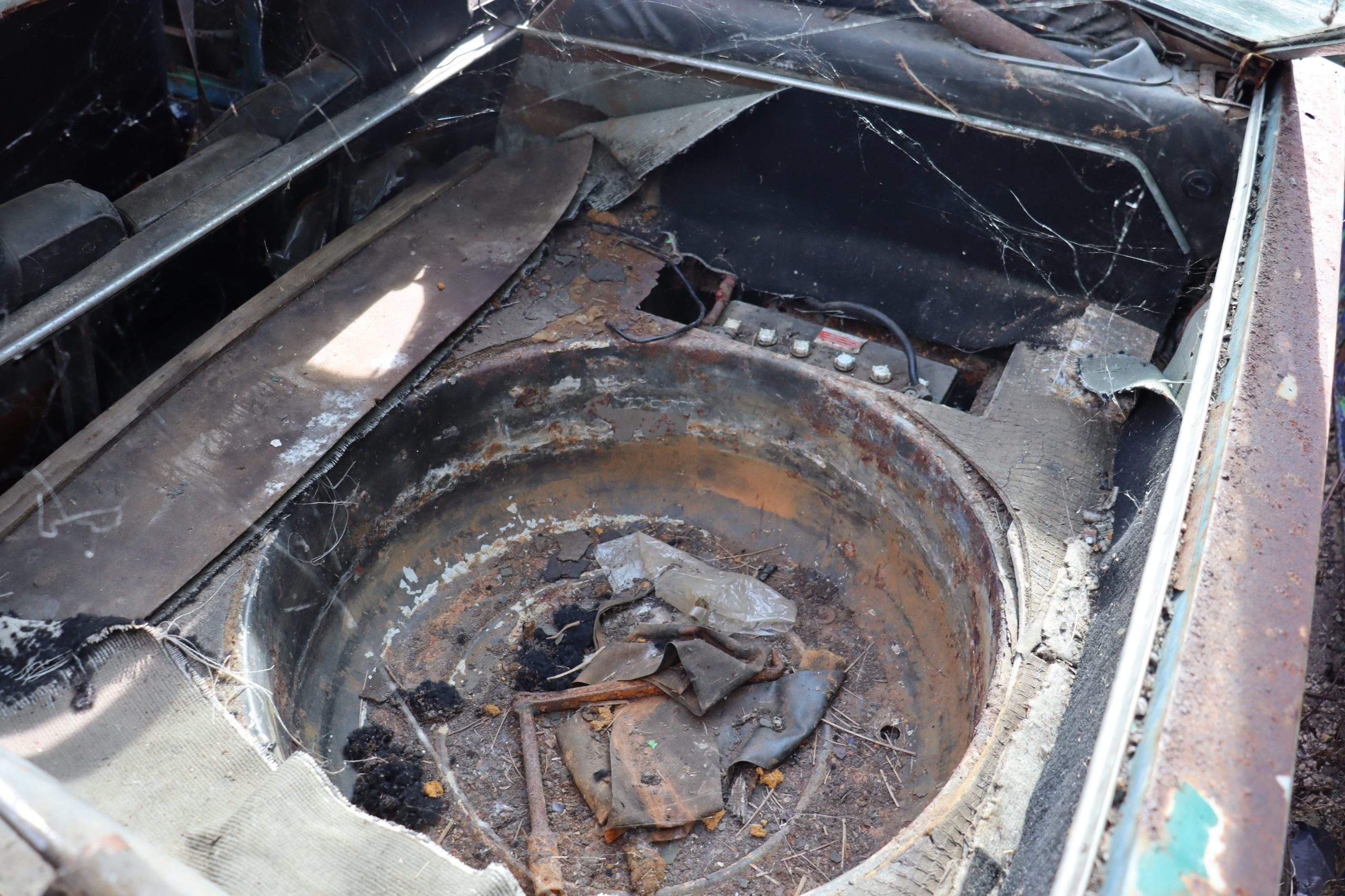
The bad news is that the car is very much a project, and it’s a project for either a wildly talented body specialist or someone who is willing to go to the trouble of re-shelling the car.

Fast Facts – The Lamborghini Espada

  • The Lamborghini Espada was unveiled at the 1968 Geneva Auto Show was an all-new four-seat V12 Lamborghini. It had been designed by Marcello Gandini of Bertone at there request of Ferruccio Lamborghini, who wanted a practical four-seater in his model line up.
  • As it turned out, Ferruccio was right. The Espada became the best selling Lamborghini for a decade between 1968 to 1978, with a total of 1,227 sold worldwide.
  • The Espada has a roomy interior, certainly when compared with other Lamborghinis, it has comfortable seating for four adults, and a well-sized trunk in the rear.
  • Power is provided by the 3.9 liter (3929cc) V12 that had originally been designed by Giotto Bizzarrini for Lamborghini to help them compete with Ferrari. In Series II form the engine was capable of 350 bhp.

The Espada: A Practical Lamborghini

With the possible exception of the Countach, the Lamborghini Miura is arguably the most famous Lamborghini of all time. It’s the car that many point to as the first supercar, and it’s the vehicle that defined the Italian automaker in the 1960s.

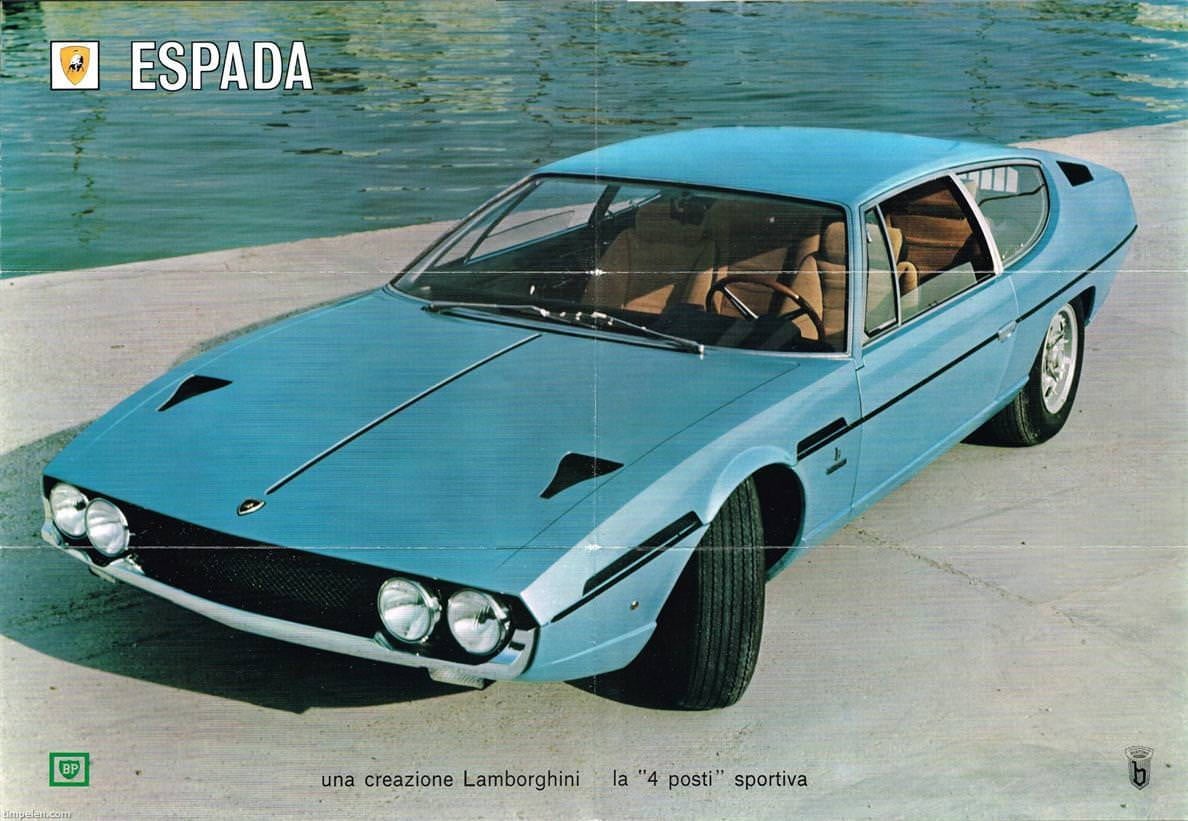
Lamborghini Espada Brochure

The Espada was one of the more avant garde designs from Marcello Gandini of Bertone, it would also become the best-selling Lamborghini from 1968 to 1978.

Despite the wild success that the Miura would eventually enjoy, Ferruccio Lamborghini wasn’t initially interested in building a high-performance, mid-engined car. He was far more interested in building luxurious GT cars that could whisk their owners at eye-watering speeds across continental Europe in leather-upholstered comfort.

Ferruccio’s love of high-performance GT cars would underpin many of the business decisions he made while heading up Automobili Lamborghini, including the creation of the car you see here – the Lamborghini Espada.

In the late 1960s the halo car for Lamborghini was undoubtably the Miura, however the Miura had only two seats and limited space for luggage. As a result the Espada and Islero were developed.

The Islero was a 2+2 GT car that was the successor to the earlier Lamborghini 400 GT. The Espada was something altogether different, its styling was based closely on two earlier avant garde show cars – the Lamborghini Marzal and the Bertone Pirana which had both been penned by Marcello Gandini at Bertone.

With its long, high roofline, prominent front end, and unusual side profile the Espada stopped people in their tracks when it was first displayed at the 1968 Geneva Auto Show. Any concerns about the car’s design being too radical were quickly allayed – it became the best-selling Lamborghini of the era shifting 1,227 units between 1968 and 1978.

Lamborghini Espada – Specifications

The Lamborghini Espada has a semi-monocoque unibody consisting of stamped steel panels and square section steel tubing, with he exception of the hood wish was made from aluminum for weight saving purposes.

Lamborghini Espada Brochure 1

Unlike many of the 2+2 GT cars that were then in production, the Espada could fit two fully grown adults in the back, and it had ample trunk space.

The car was fitted with fully independent front and rear suspension consisting of unequal length double A-arms front and back, with coil springs, telescopic shock absorbers, and anti-roll bars.

Disc brakes were fitted to all four corners, the car had worm-and-peg type steering, with both power steering and air conditioning optional until the Series III cars when they became standard.

As with any Lamborghini, the most important part is what sits in the engine bay. The Espada is powered by what is undoubtably the most important engine in the history of Lamborghini – the advanced V12 developed by Giotto Bizzarrini and his engineering team.

For the Espada this engine had a displacement of 3.9 liters (3929cc), an aluminum alloy block and heads, two camshafts per bank, two valves per cylinder, and six Weber 40DCOE side-draft carburetors.

In the Series I Espada this V12 produced 325 bhp, however this was increased to 350 bhp for the Series II and Series III vehicles. Power was sent to the rear wheels via either a 5-speed manual transmission or the optional Chrysler Torqueflite 3-speed automatic transmission that became available later in the model run.

Lamborghini Espada V12 Project Car 16

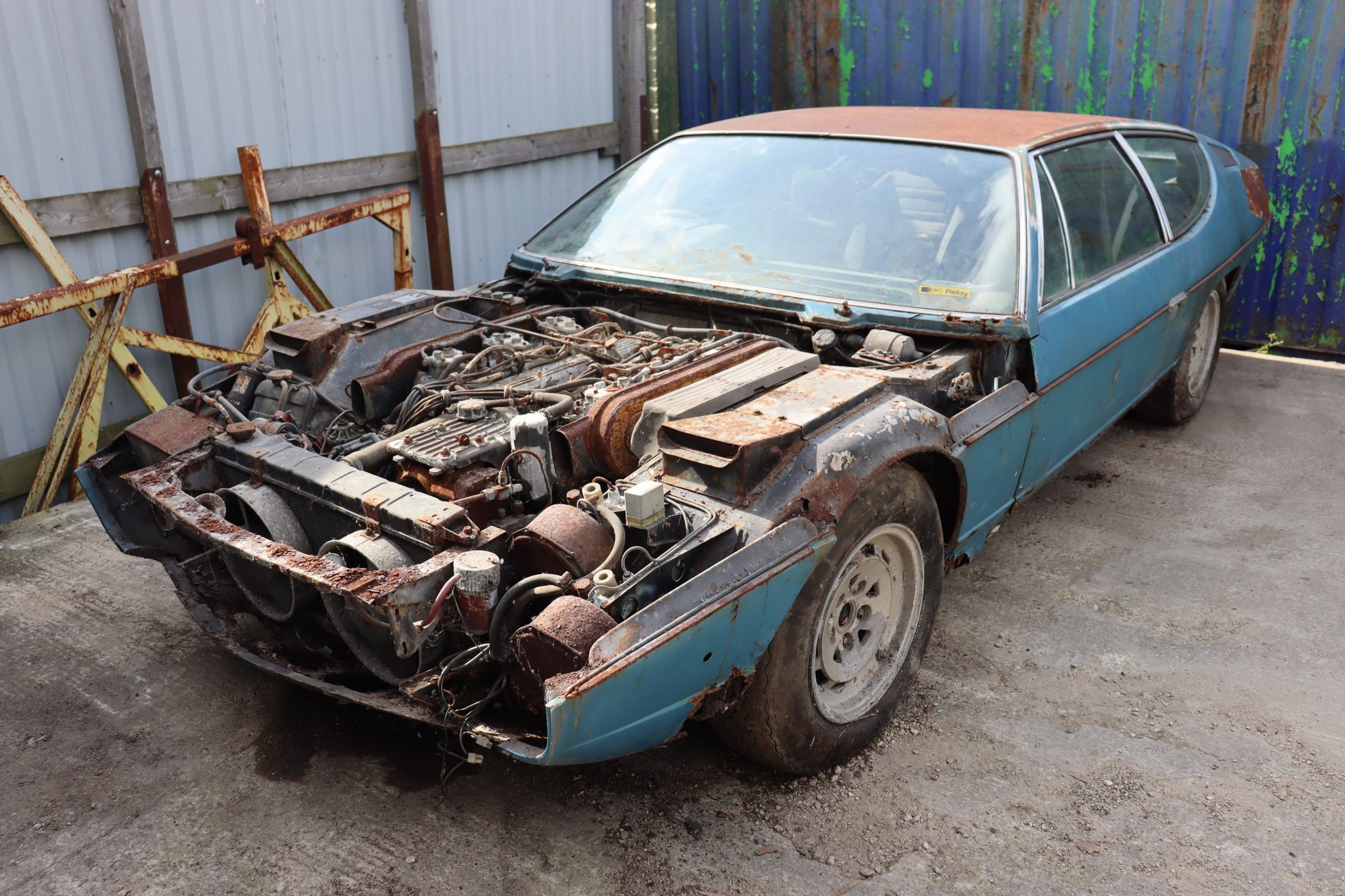
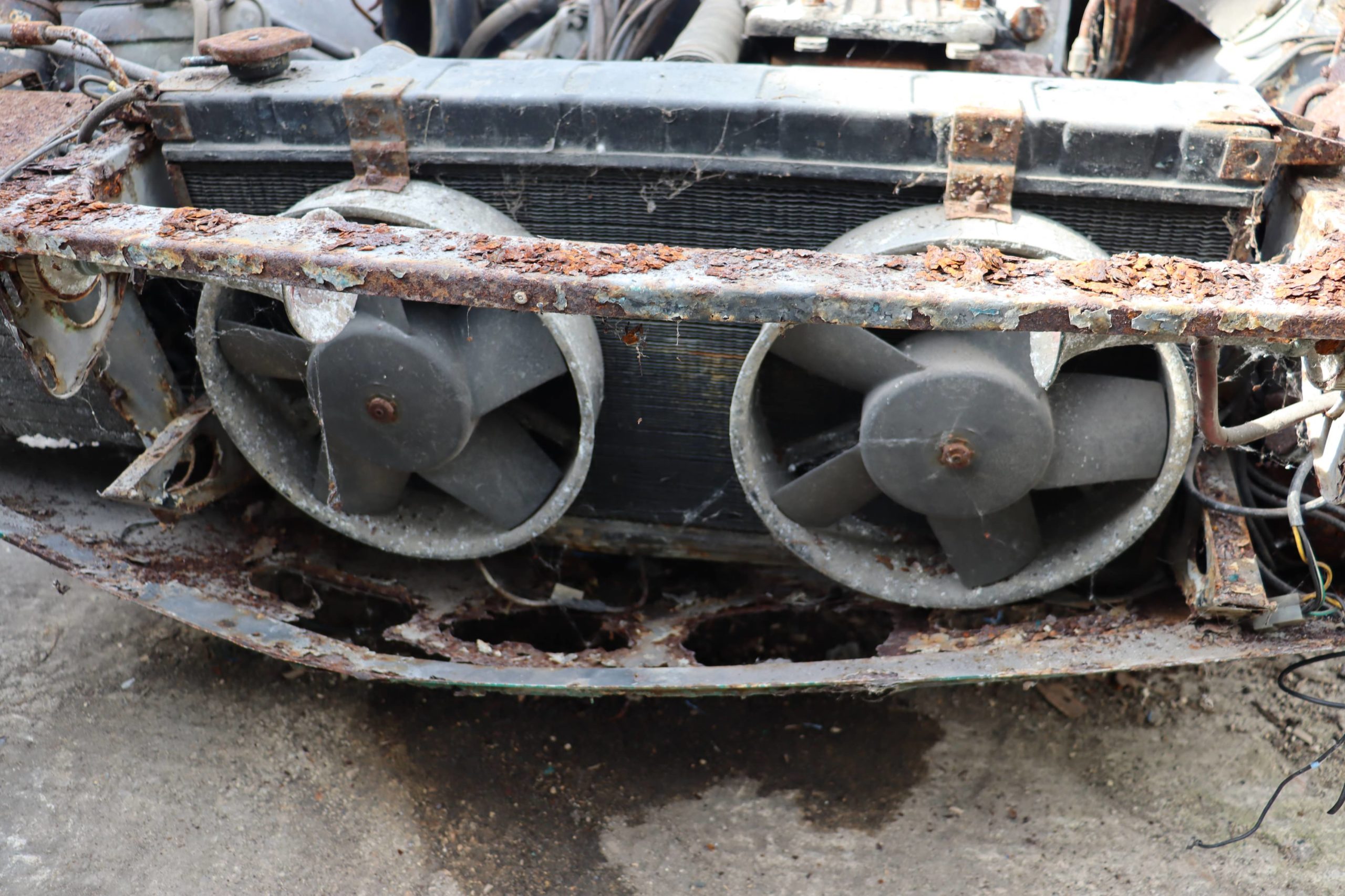
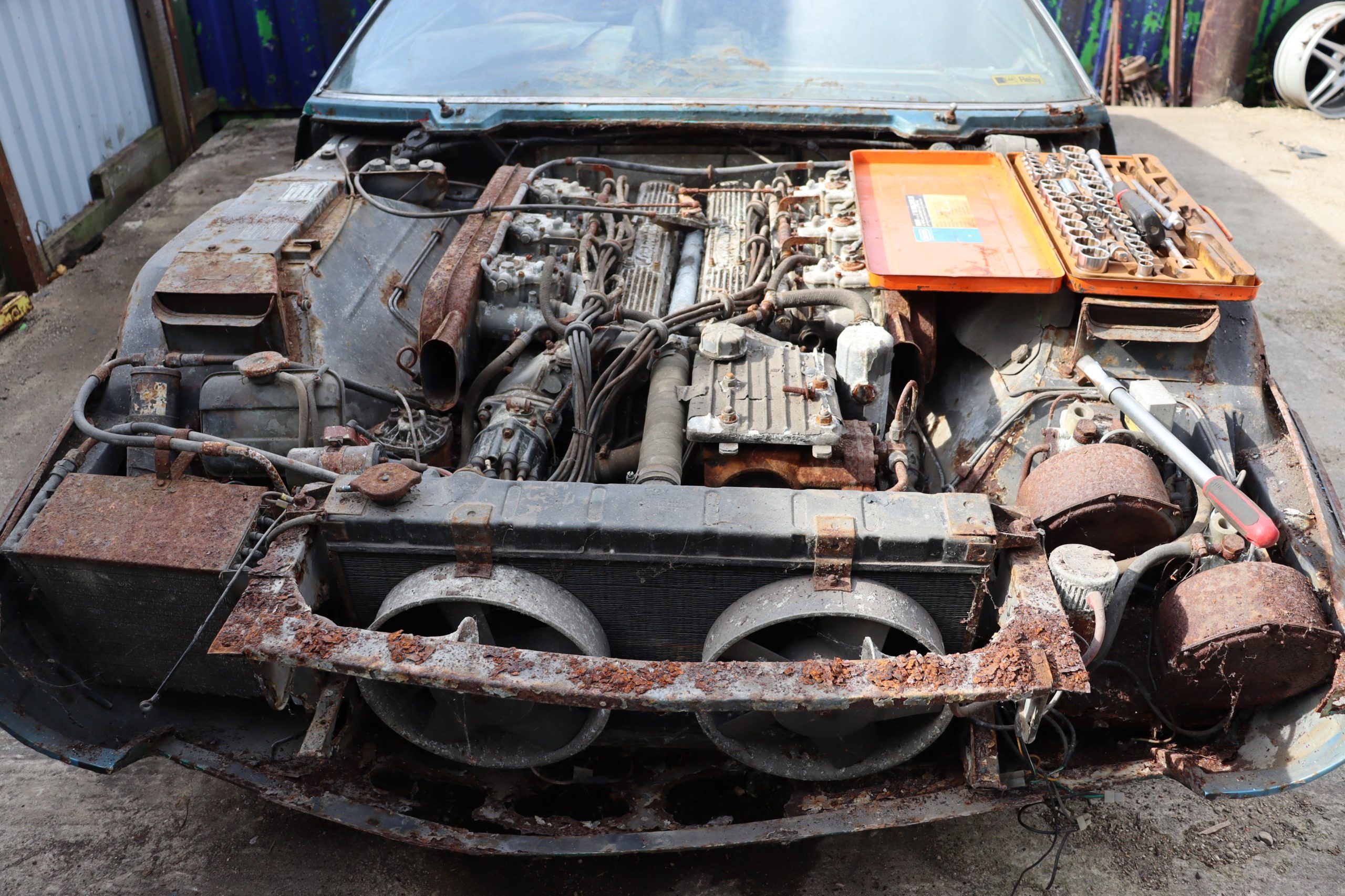
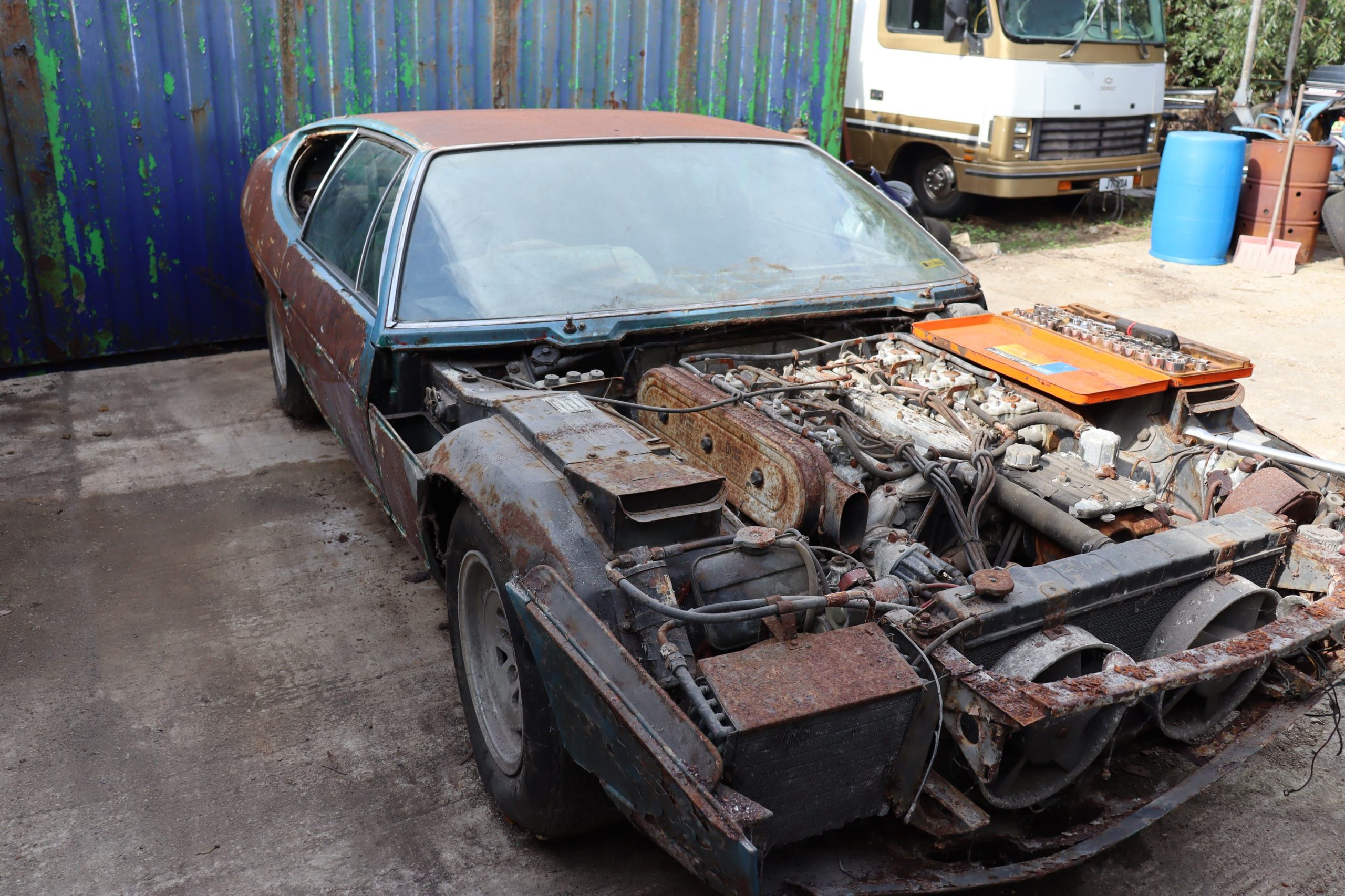
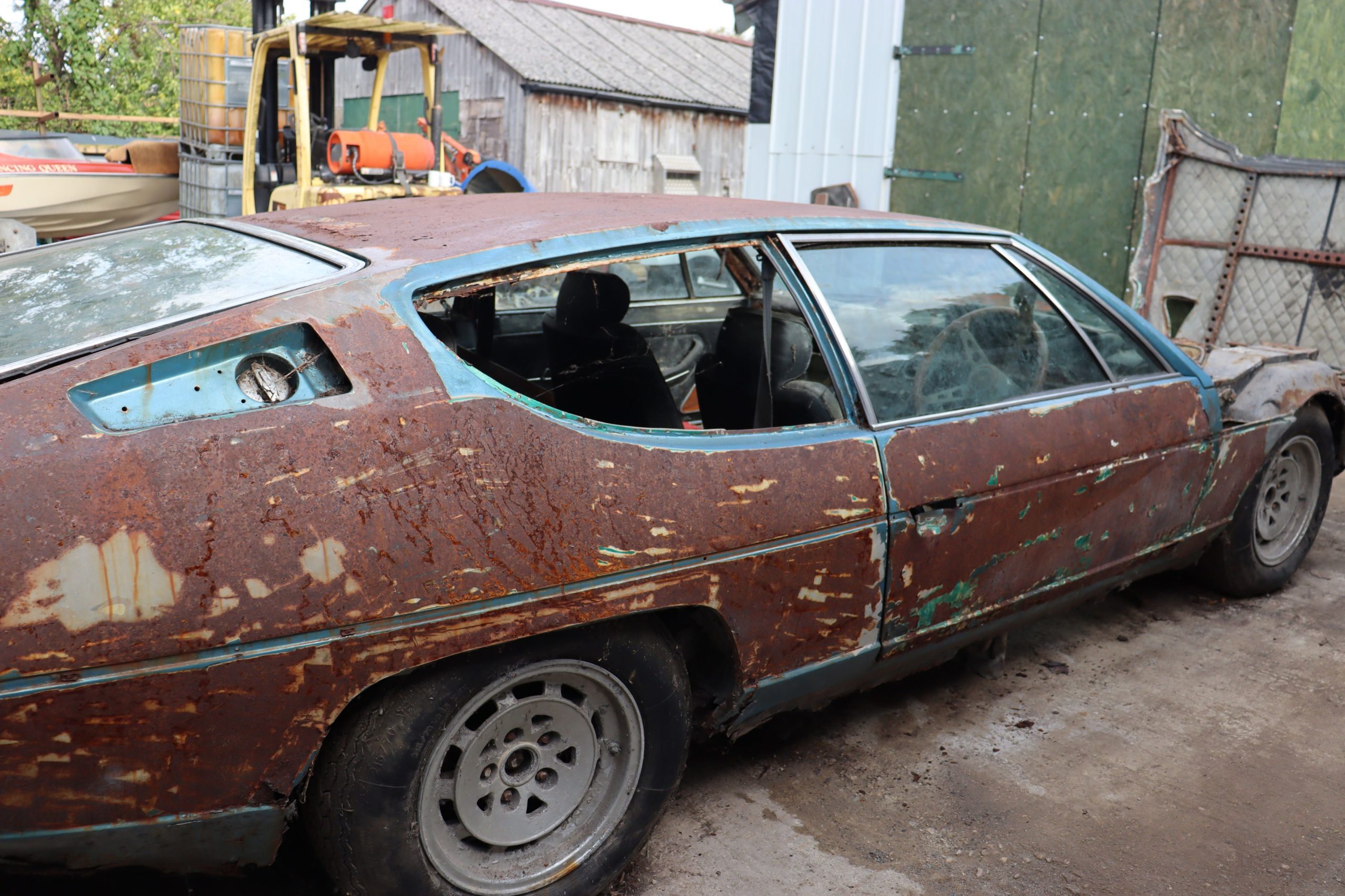
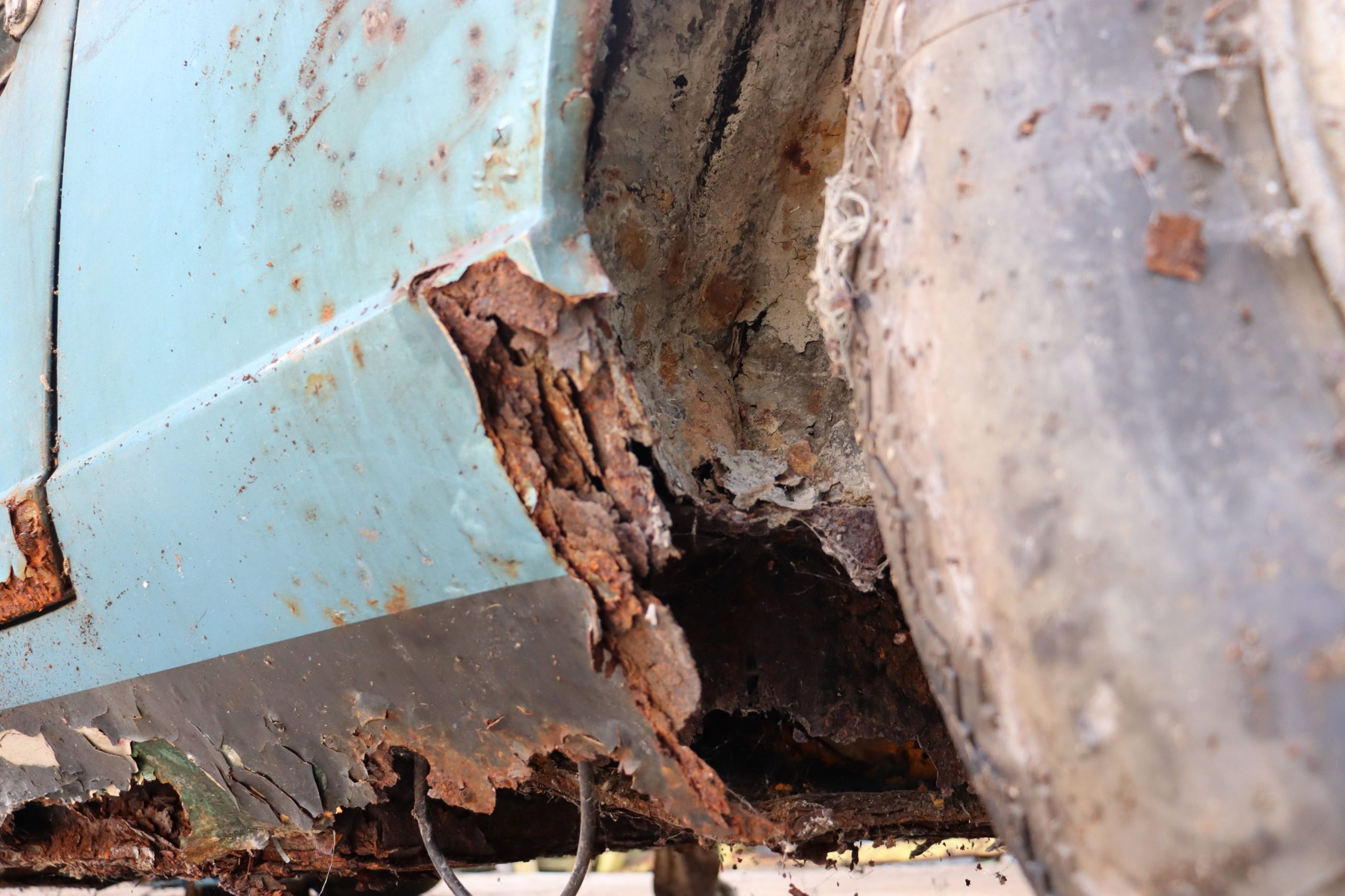
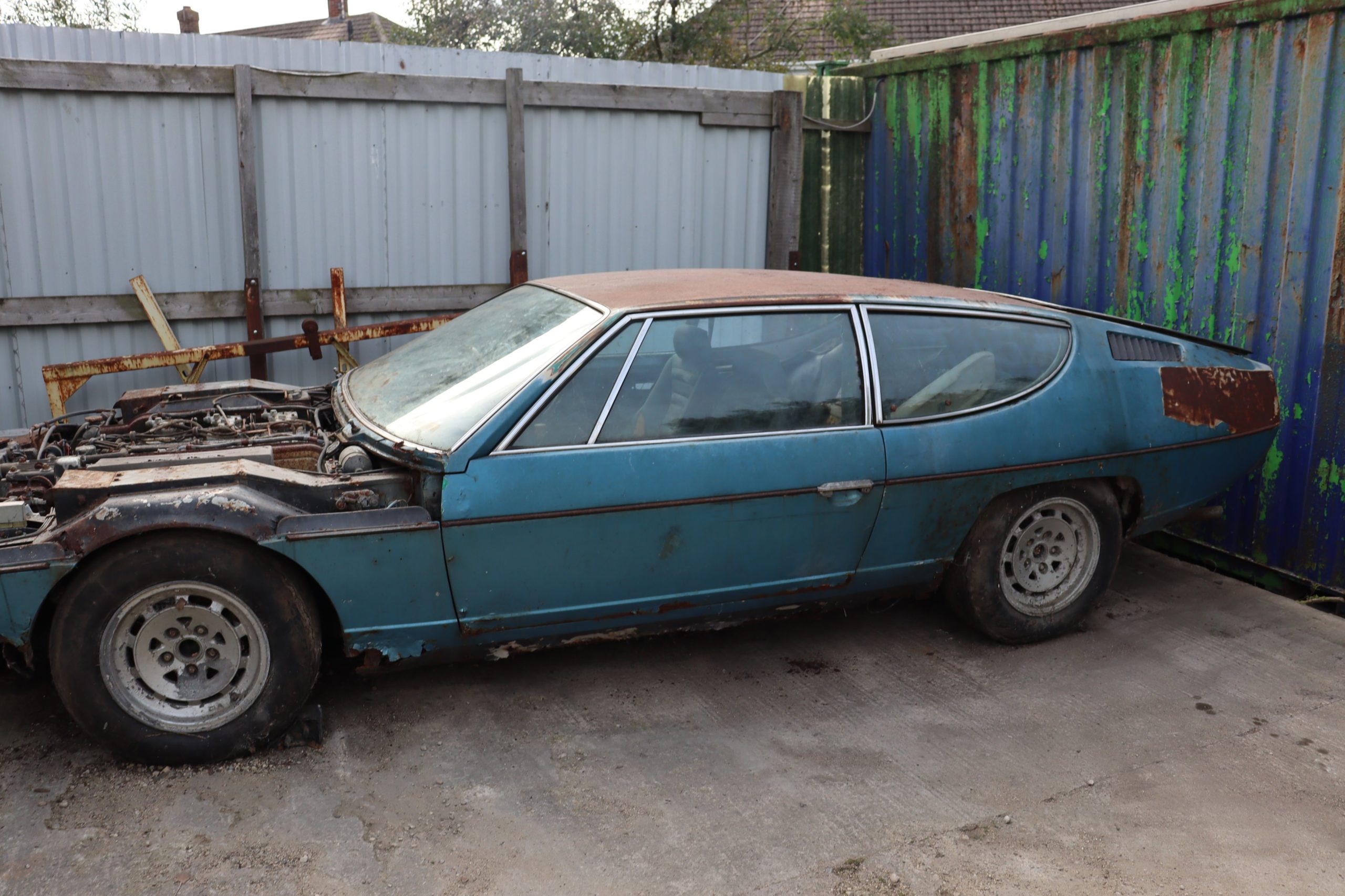
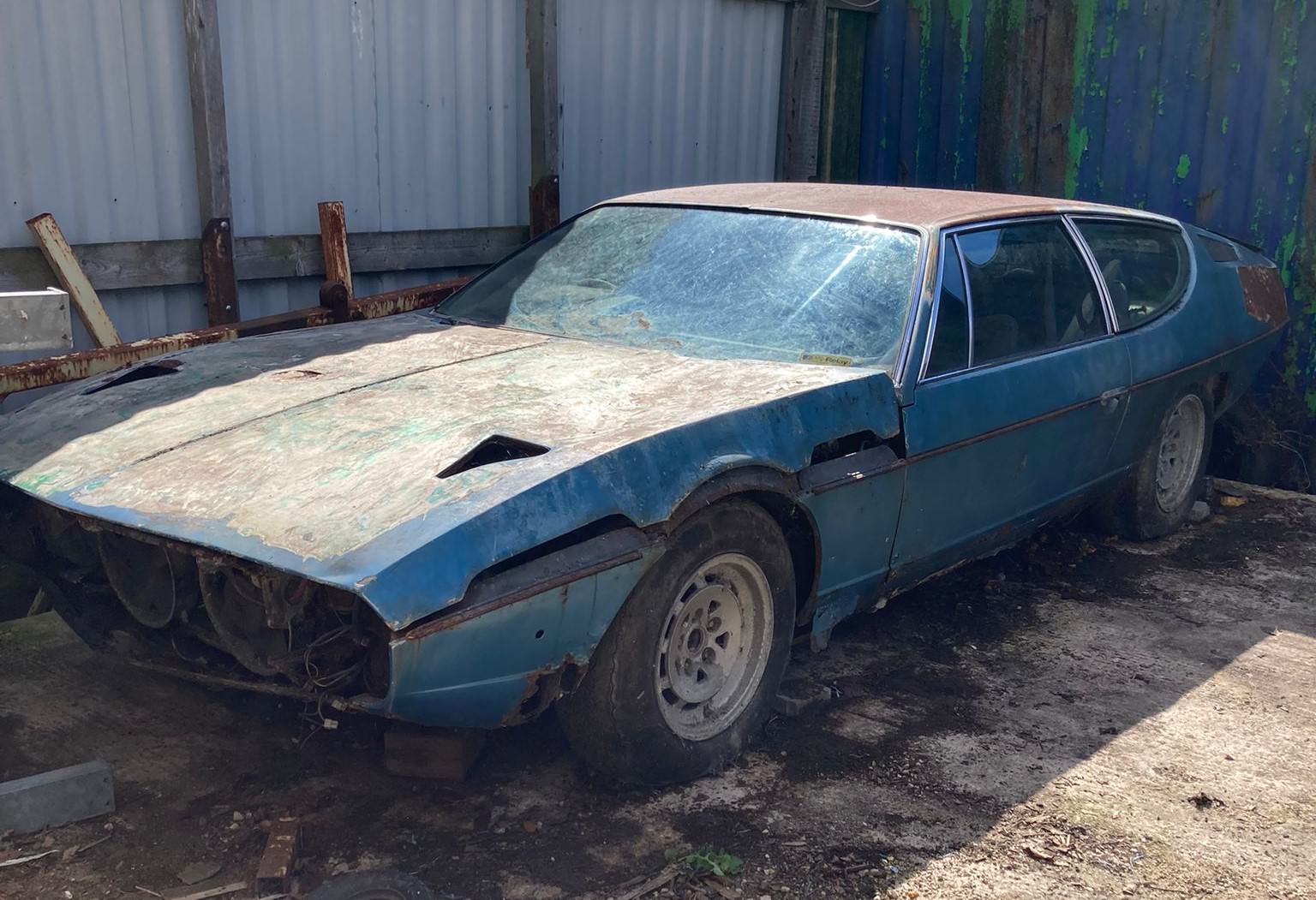
There can be no doubt that this car is a serious project, the amount of rust alone would be fatal for a less valuable vehicle.

Lamborghini listed the maximum speed of the later 350 bhp cars as 250 km/h or 155 mph.

The Lamborghini Espada Project Car Shown Here

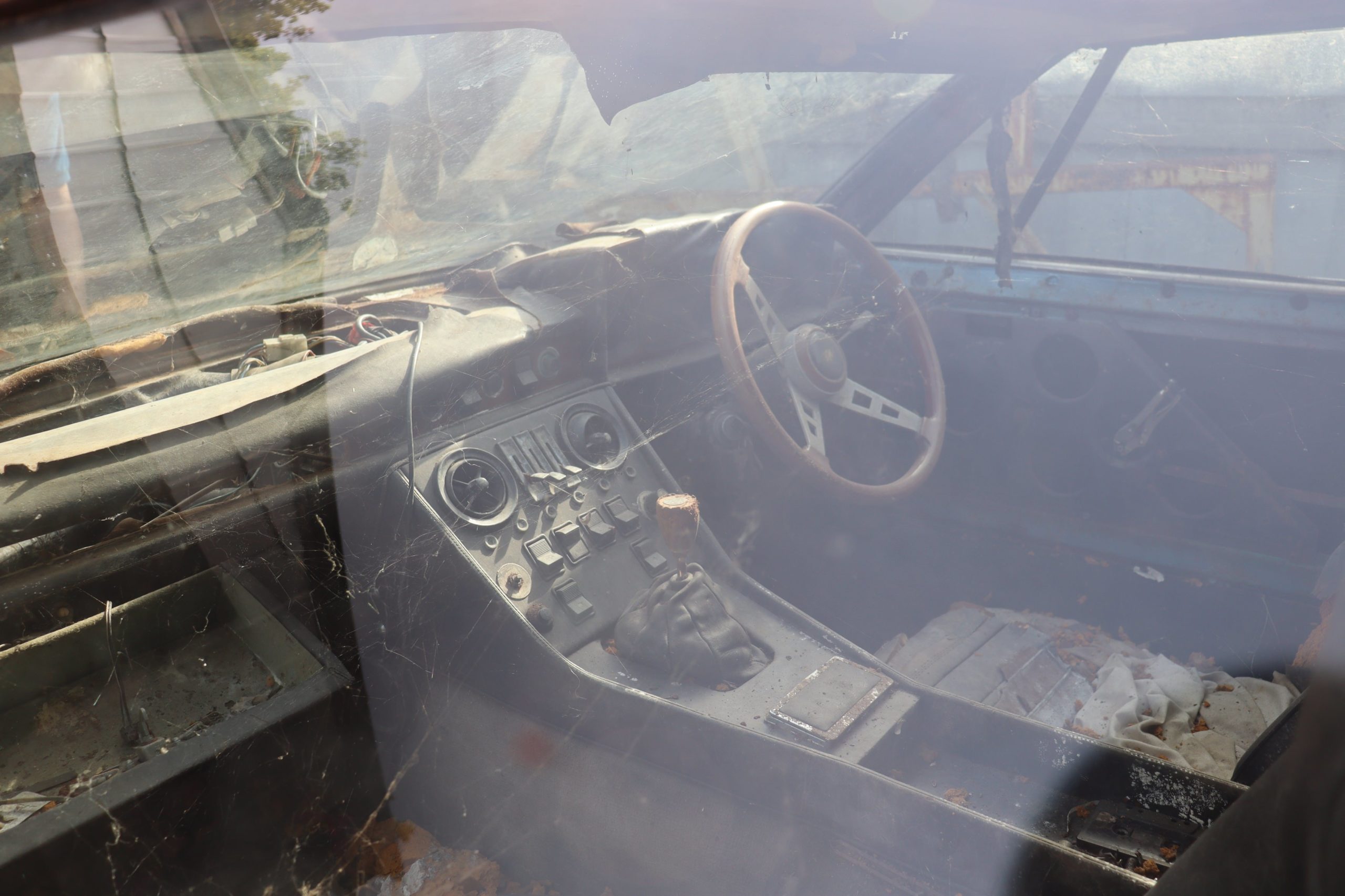
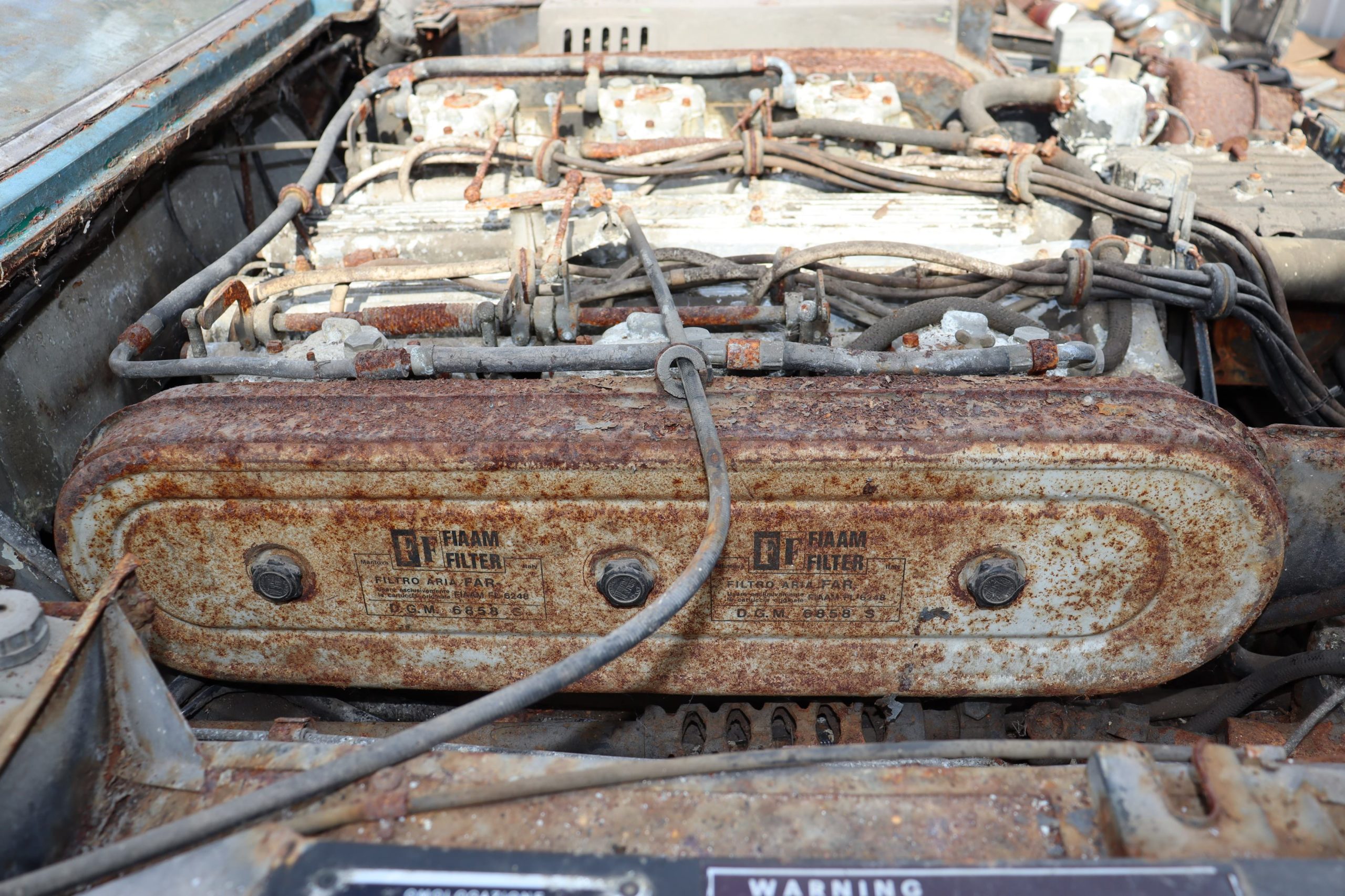
The Lamborghini Espada that you see here is a project car to say the very least. It’s clear from the images in this listing that it’s going to require a gargantuan effort to get it back on the road – largely due to the significant rust issues that can be found throughout the car.

There are three main options for this vehicle given its current condition – either it can be used for parts, it could be reshelled, or it could be restored by a team of bodywork specialists who are far better at welding and sheet metal fabrication than I’ll ever be.

The good news is that the engine turns freely and it’s a rare right-hand drive example. It’s due to roll across the auction block with H&H Classics on the 20th of October with a price guide of £10,000 – £15,000 or approximately  $11,000 – $16,600 USD and you can visit the listing here if you’d like to see more.

Lamborghini Espada V12 Project Car 17 Lamborghini Espada V12 Project Car 15 Lamborghini Espada V12 Project Car 14 Lamborghini Espada V12 Project Car 13 Lamborghini Espada V12 Project Car 12 Lamborghini Espada V12 Project Car 10 Lamborghini Espada V12 Project Car 9 Lamborghini Espada V12 Project Car 8 Lamborghini Espada V12 Project Car 7 Lamborghini Espada V12 Project Car 6 Lamborghini Espada V12 Project Car 5 Lamborghini Espada V12 Project Car 4 Lamborghini Espada V12 Project Car 3 Lamborghini Espada V12 Project Car 2 Lamborghini Espada V12 Project Car 1

Images courtesy of H&H Classics

The post Project Car: A Derelict Lamborghini Espada V12 – $11,000+ USD appeared first on Silodrome.


from Silodrome https://silodrome.com/lamborghini-espada-project-car/
via gqrds
“The Forgotten Porsche” – A 1974 Porsche 914 5-Speed

The Porsche 914 was developed in the mid 1960s as a joint project between Porsche and Volkswagen. Porsche needed a new replacement for their 912 model, VW needed a replacement for the aging VW Karmann Ghia, and so the 914 was one stone for two birds.

Despite its entry level nature the 914 is an excellent little sports car, it’s powered by a mid-mounted flat-four or flat-six, it has independent front and rear suspension, good handling by the standards of the time, and it weighed a little over 2,000 lbs with a full tank of gas.
Fast Facts – The Porsche 914

  • The Porsche 914 was released in 1969 in both Porsche and Volkswagen variants. The Porsche powered car was the 914/6 with a 911T flat-six engine, and the 914/4 was powered by a VW flat-four.
  • Porsche needed a new entry level car to replace the 912, which was basically a 911 with a smaller engine. There were fears that it was diluting the brand image and so a distinctively unique new Porsche was the order of the day.
  • For buyers in the late 1960s or 1970s who wanted an affordable mid-engined sports car with racing pedigree and sharp handling, the Porsche 914 was an obvious choice. This is, in part, why the sales of the car beat expectations with almost 119,000 of them sold between 1969 and 1976.
  • In the USA both variants of the 914 were sold as Porsches, but in Europe the earlier four-cylinder cars were sold as Volkswagen-Porsches.

The Porsche 914

The Porsche 914 is an oft forgotten car from the German marque, which seems a shame as it offered mid-engined European sports car thrills to an entire generation of people who may not have been able to afford a Porsche 911.

Porsche 914 9

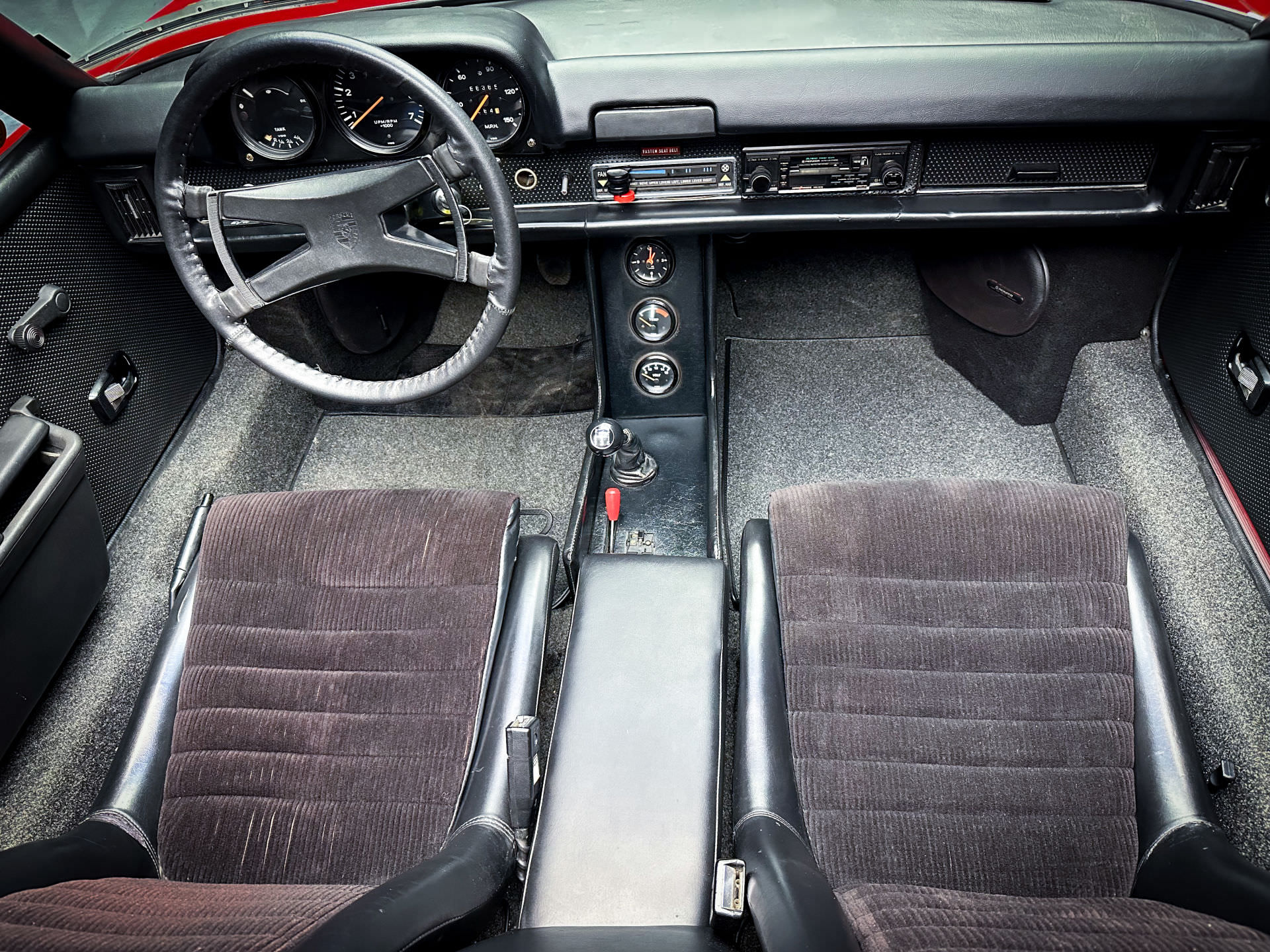
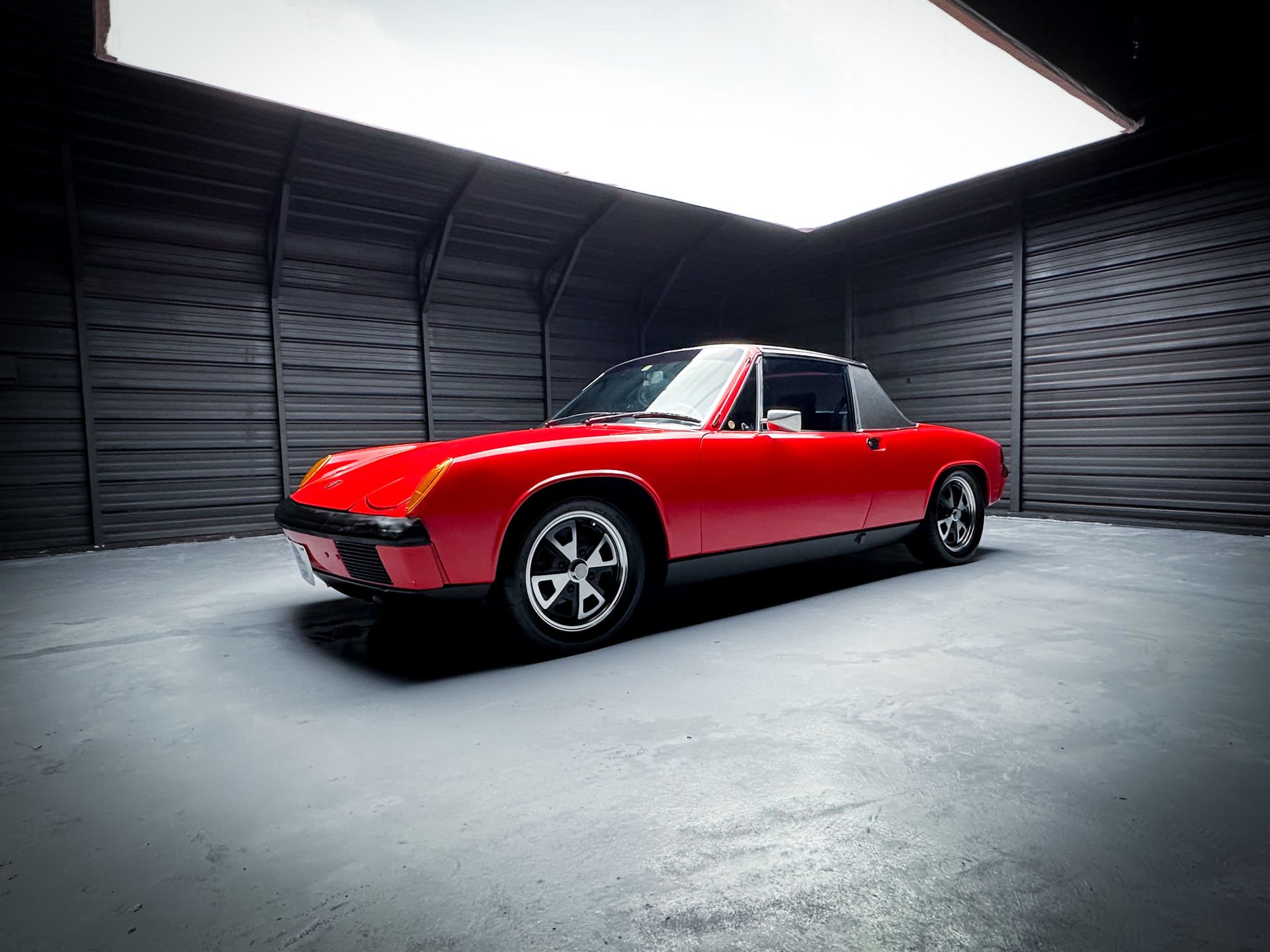
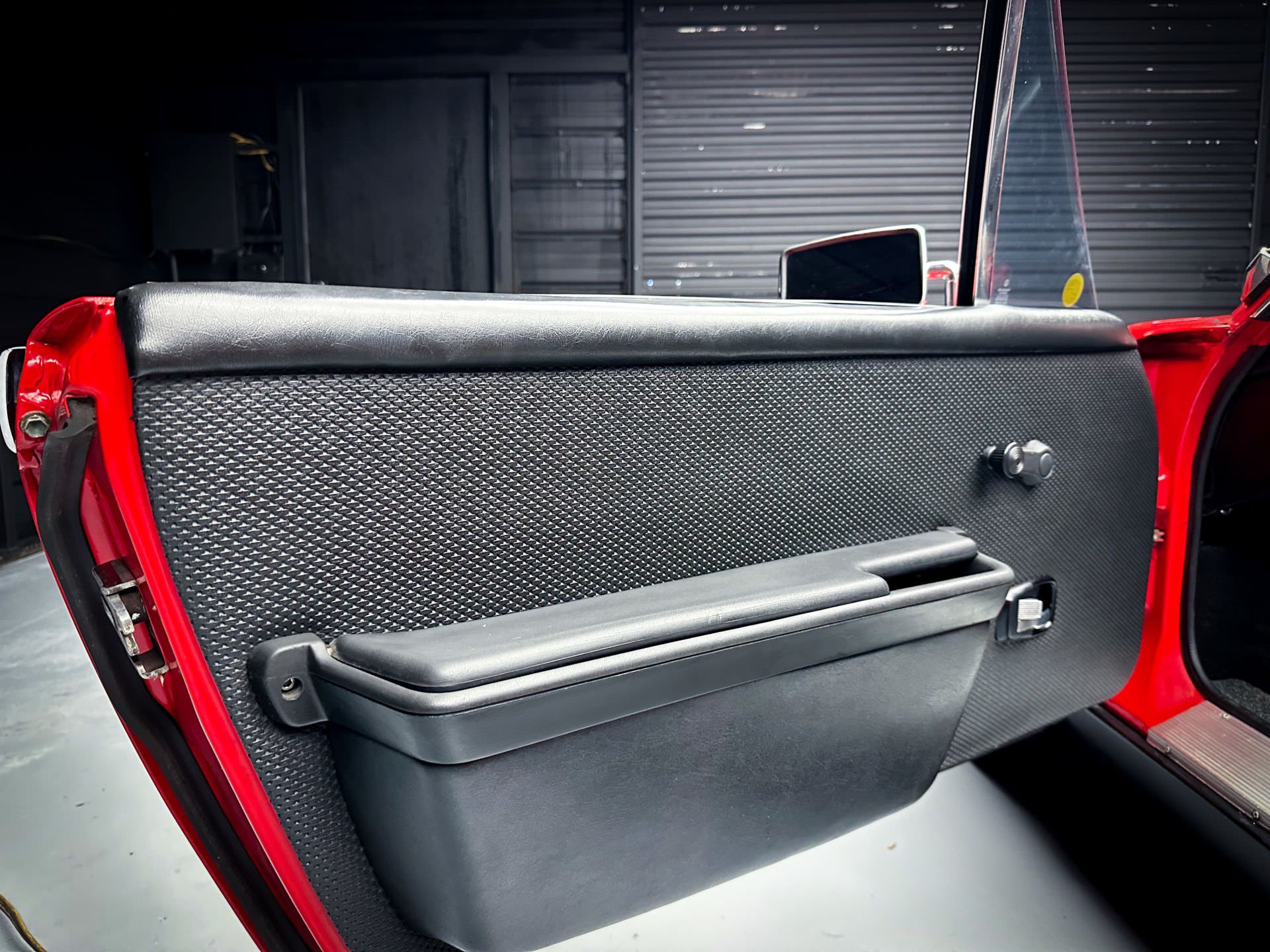
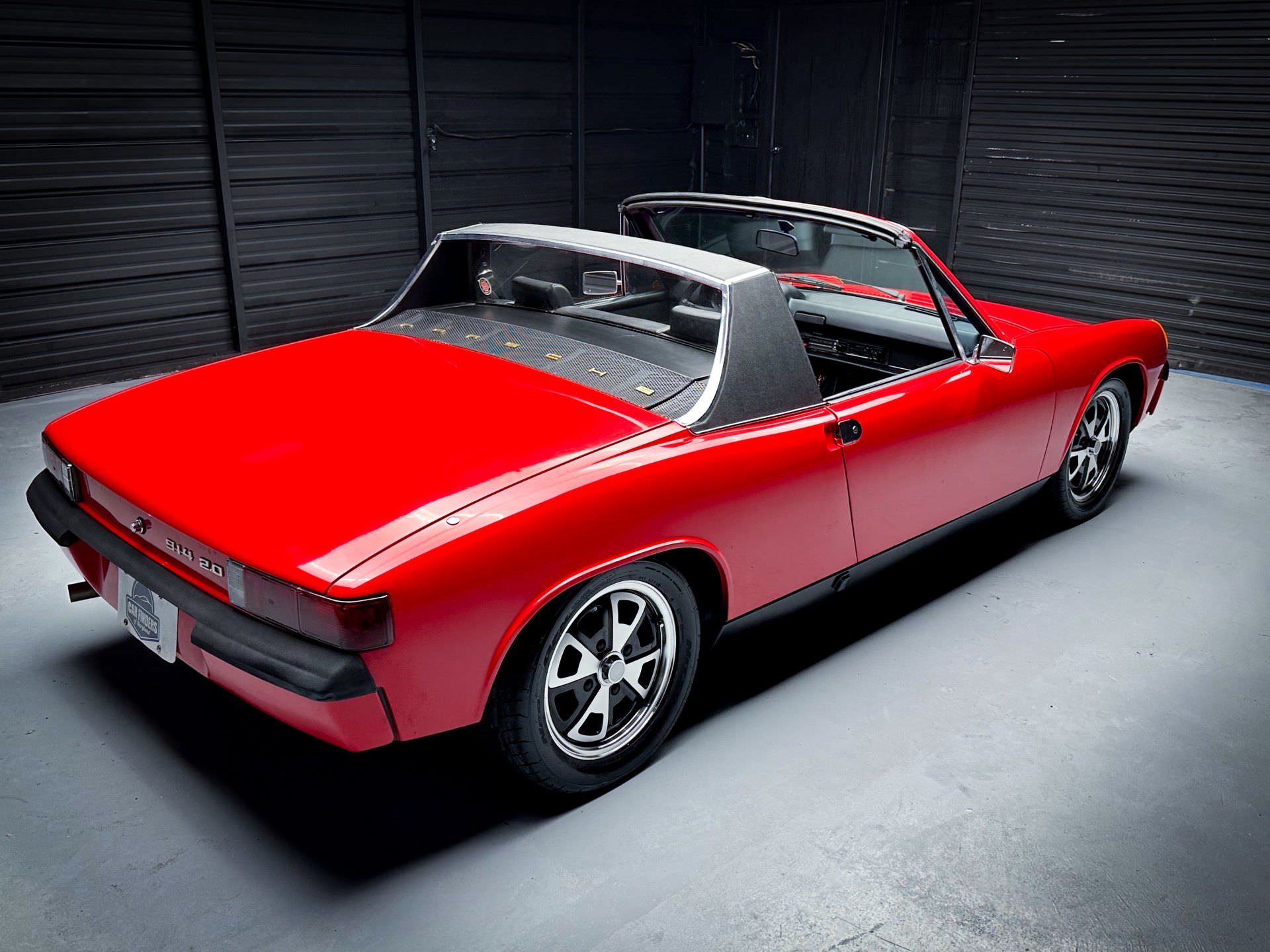
The interior of the 914 doesn’t look dissimilar to the 911 of the same era. This car is finished in Bahia Red and a black leatherette interior with corduroy inserts.

Given the expansive line up of cars now being offered by Porsche it’s easy to forget that there was a time when the company’s road-going model line up consisted of just the 911 and the closely related 912, with a few additional special racing models largely intended for competition use.

The Porsche 912 was essentially a stripped down, cheaper 911 powered by a version of the flat-four engine instead of the 911’s famous flat-six. To the untrained eye both of the cars looked more or less identical.

Porsche was handling much of Volkswagen’s development work at the time, and as noted above VW needed an all-new replacement for their Karmann Ghia. A deal was struck and Porsche engineers got to work on the new design.

The car would be released in two key iterations – 914/6 with the flat-six from the 911T and 914/4 with a variant of the VW flat-four. Despite its unusual looks the 914 would prove to be a surprise success, selling 118,900+ units between 1969 and 1976.

The 914 would also see some notable successes on the track, a 914/6 GT driven by Claude Ballot-Léna and Guy Chasseuil won its class at the 1970 24 Hours of Le Mans and came in an impressive 6th overall.

Porsche 914 16

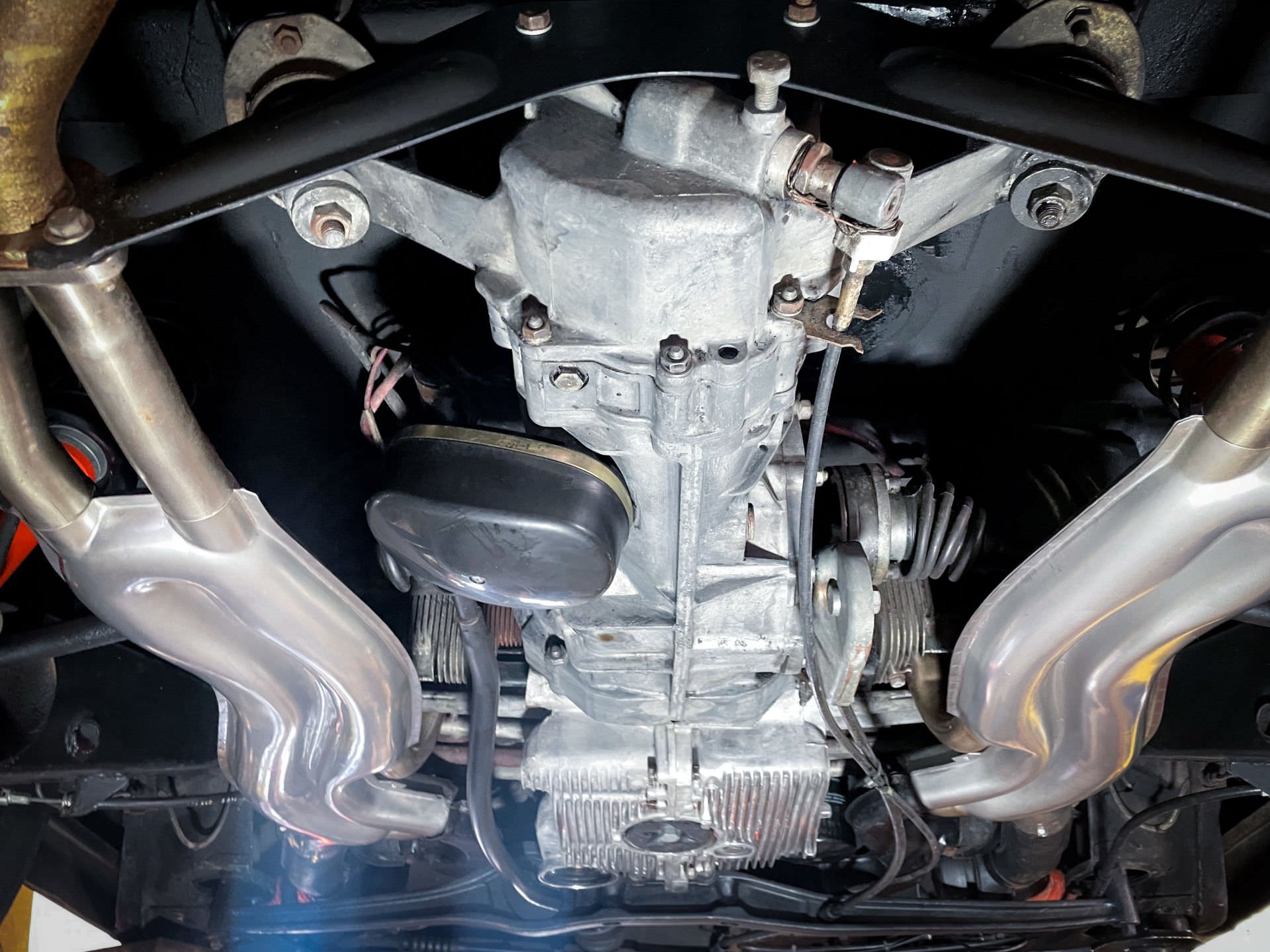
This Porsche 914/4 is fitted with a 2.0 liter VW flat-four, the engine is now wearing a pair of Weber 44 carburetors and in stock trim it would produce approximately 100 bhp at 5,000 rpm and 118 lb ft of torque. It was the largest and most powerful engine offered in the /4 production cars.

In the world of Formula 1 the Porsche 914 is remembered as the first ever safety car, it was deployed at the 1973 Canadian Grand Prix to help manage the pace of the cars as there had been a number of incidents due to inclement weather.

Surviving examples of the 914 now often change hands for very little money, particularly the 914/4 model, which continues to offer a wonderful vintage European sports car experience for very reasonable money.
The Porsche 914 Shown Here

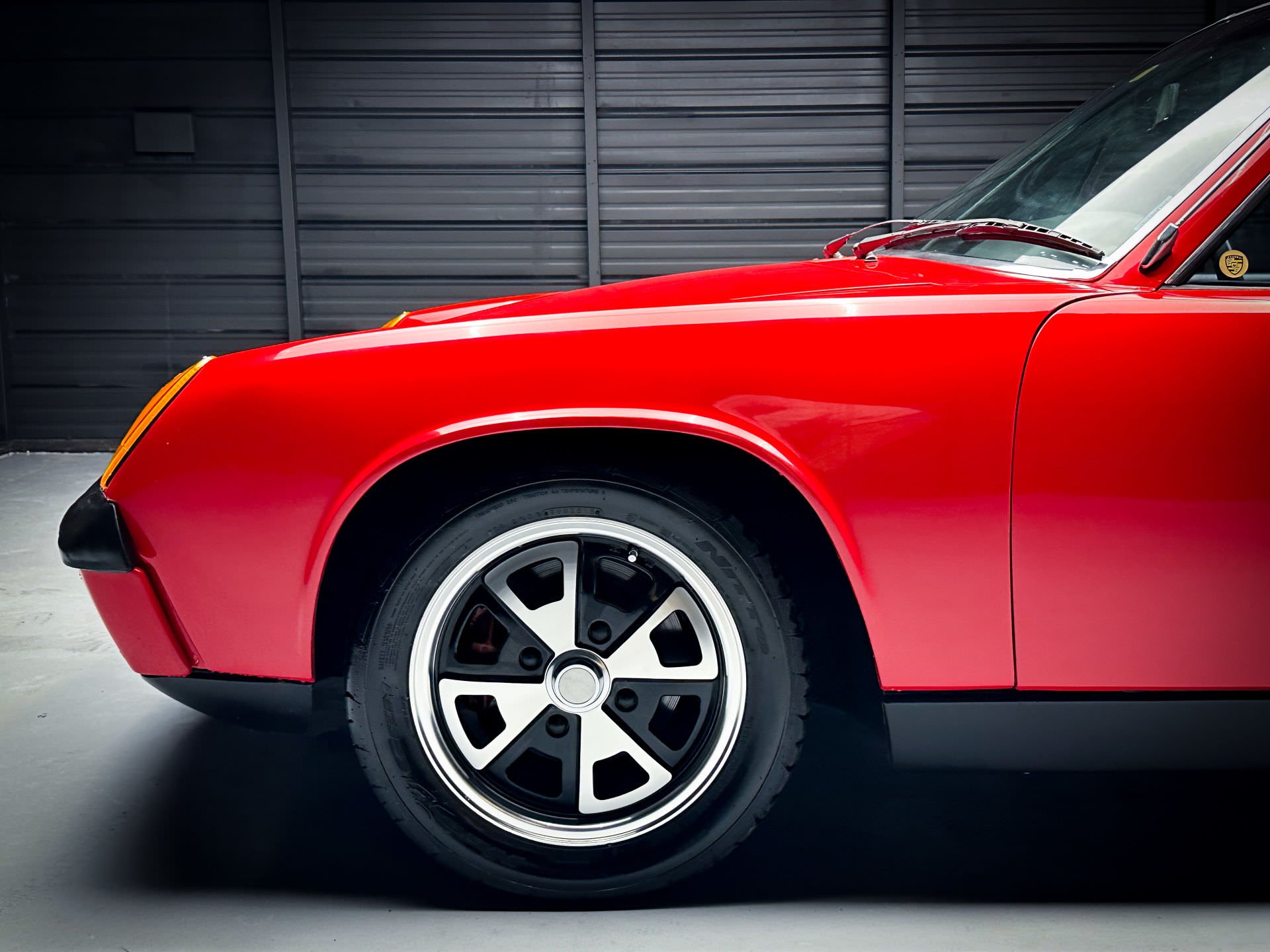
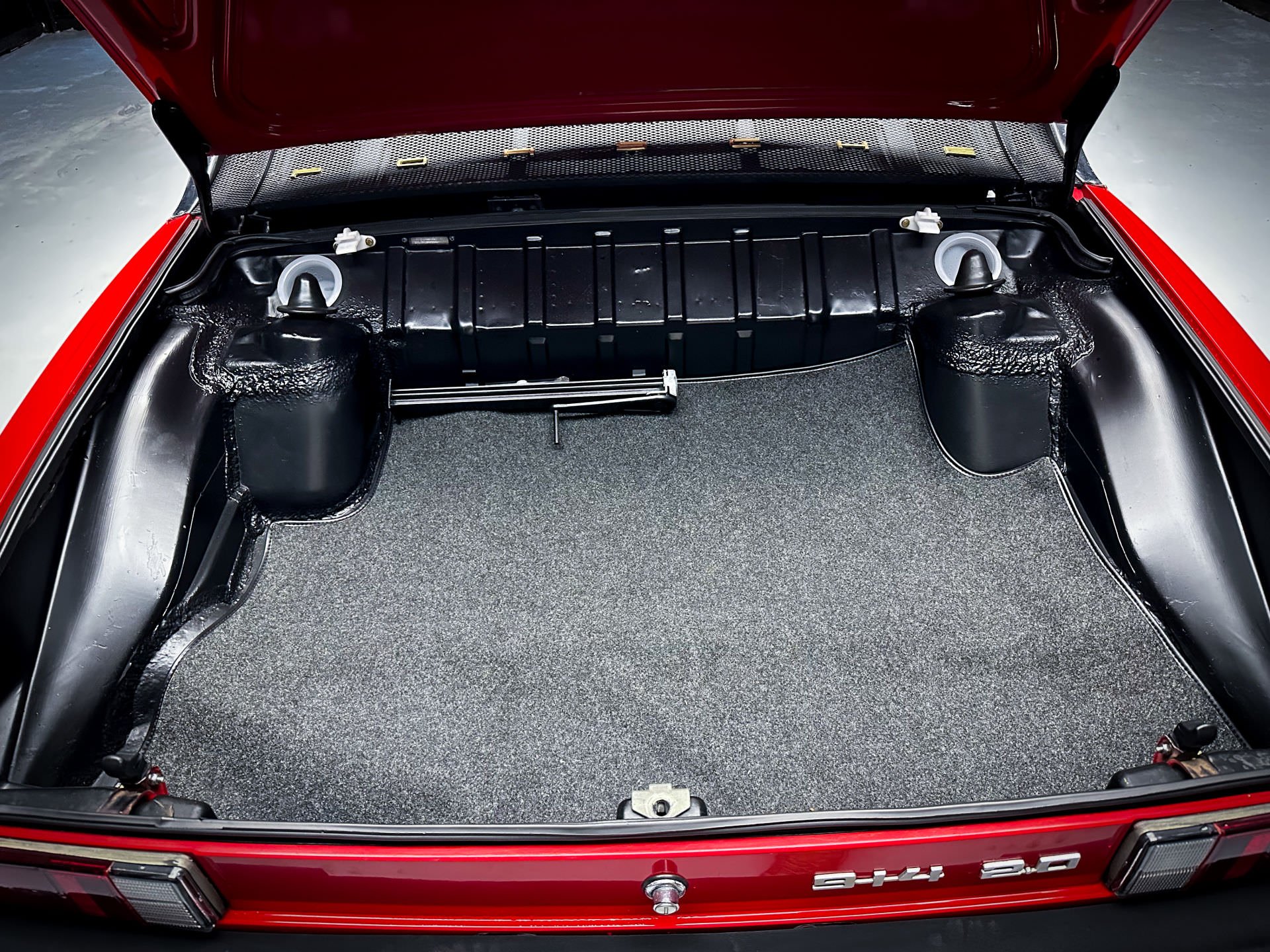
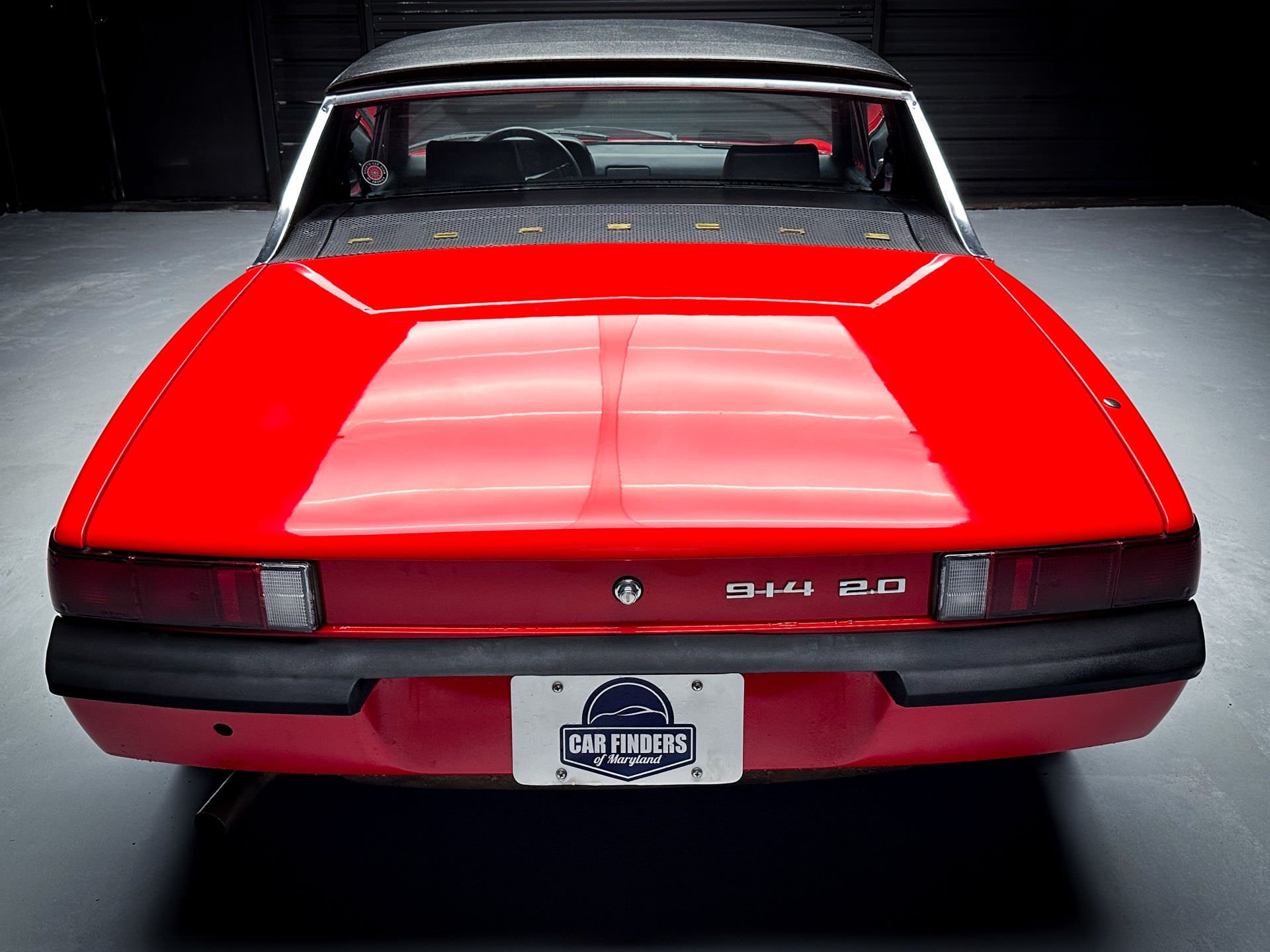
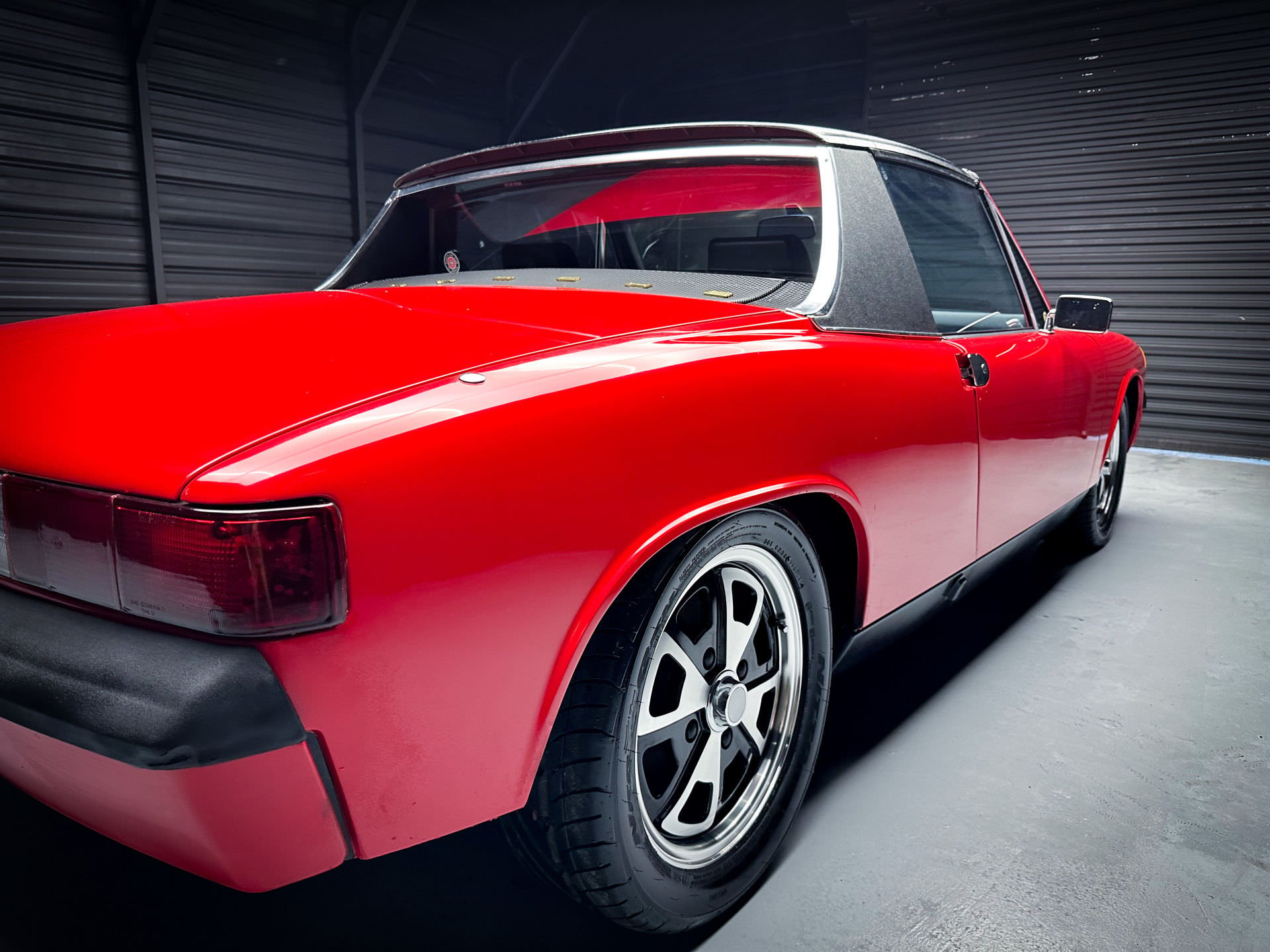
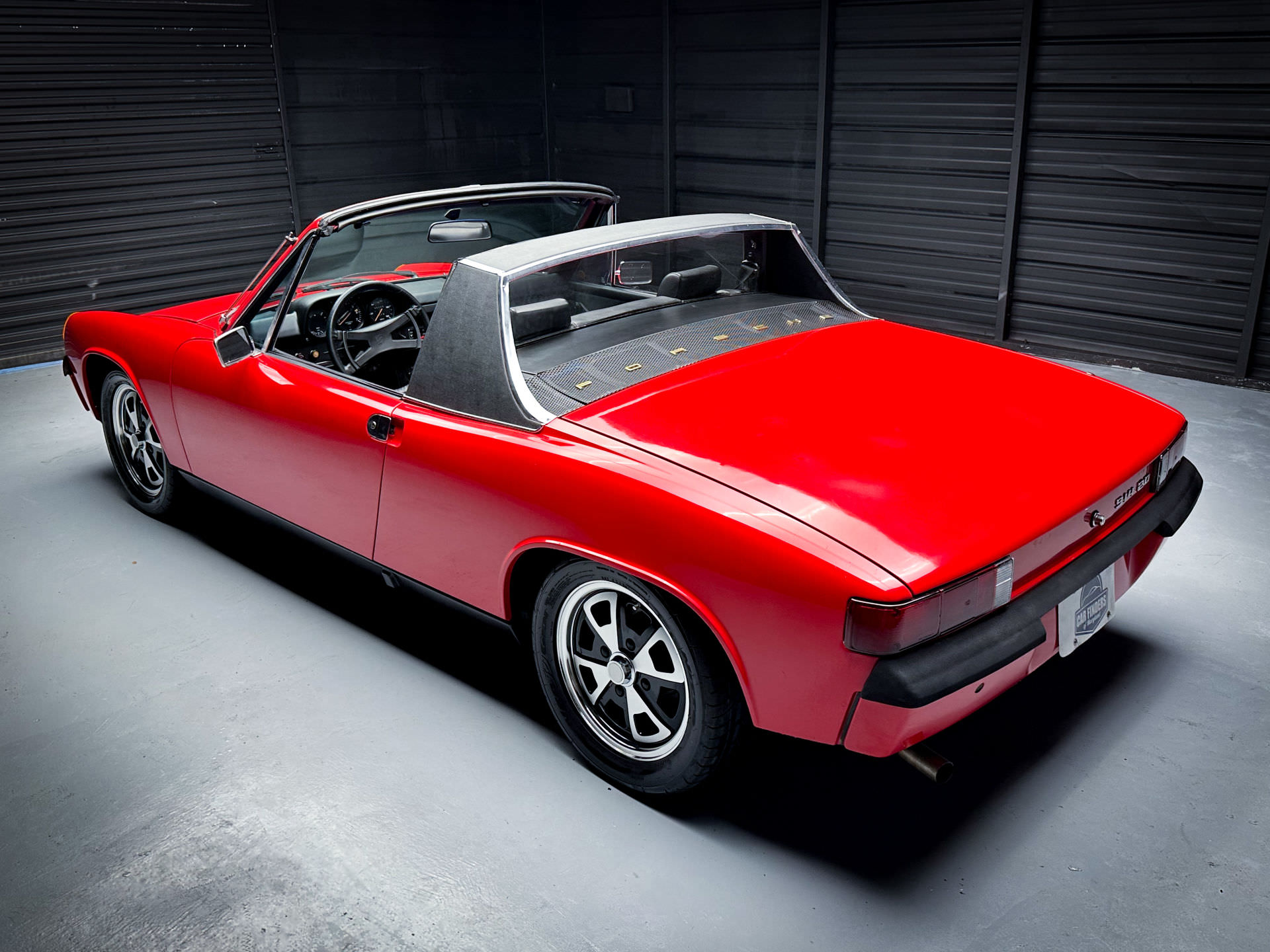
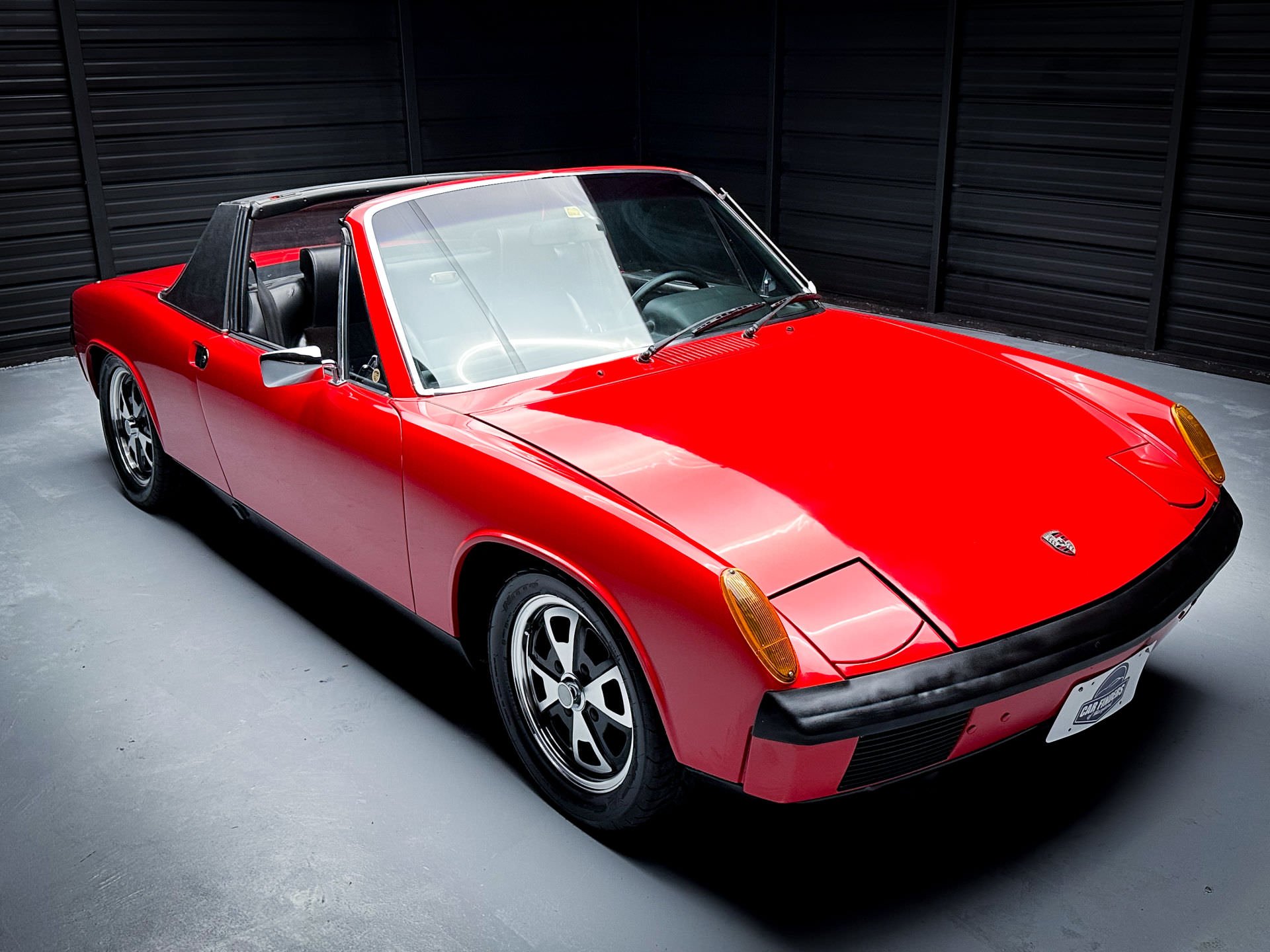
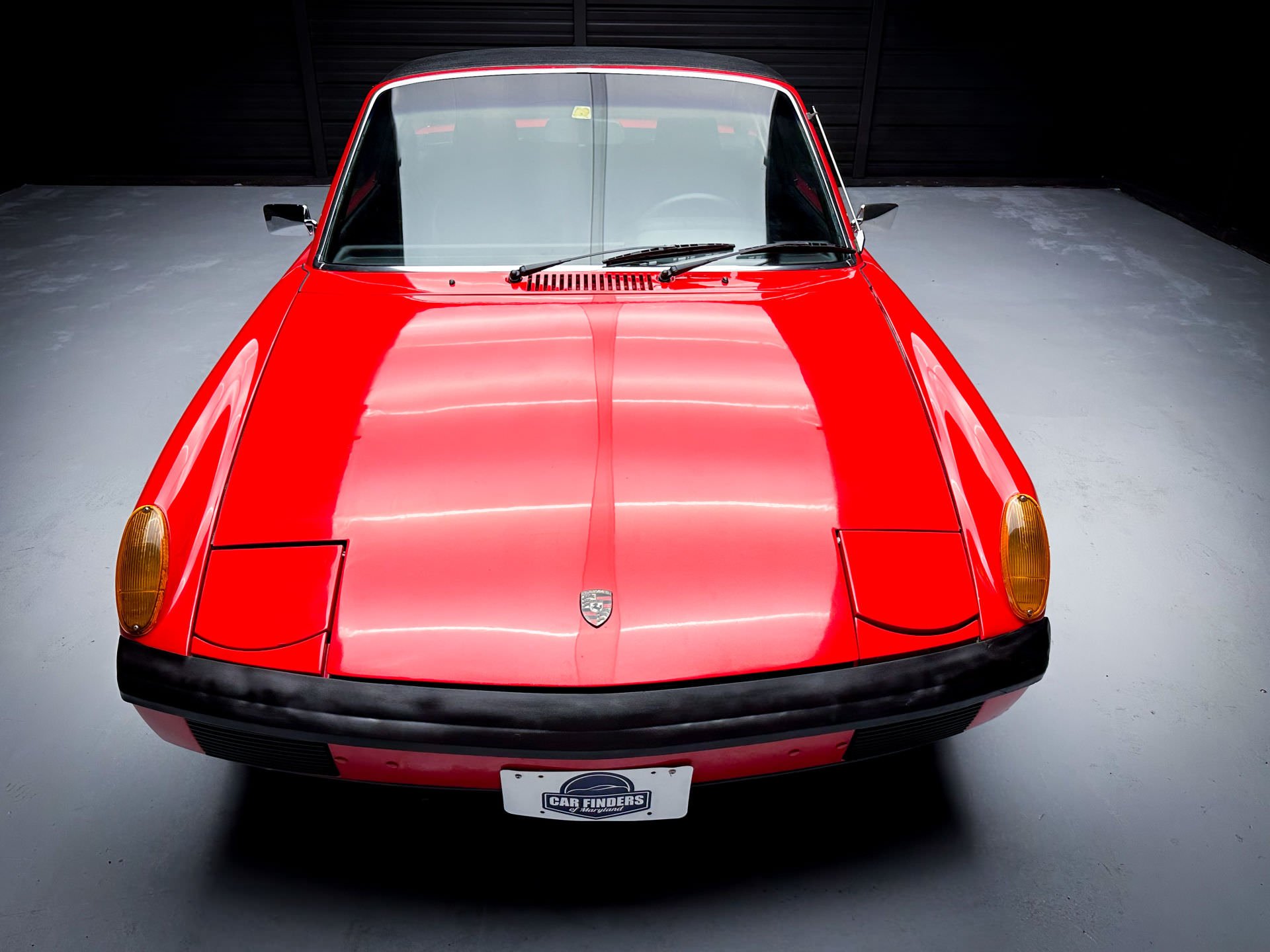
The car you see here is one of the more attainable 914/4 models, it’s a matching numbers car that benefits from a slew of improvements and some recent maintenance to the tune of over $7,800 USD.

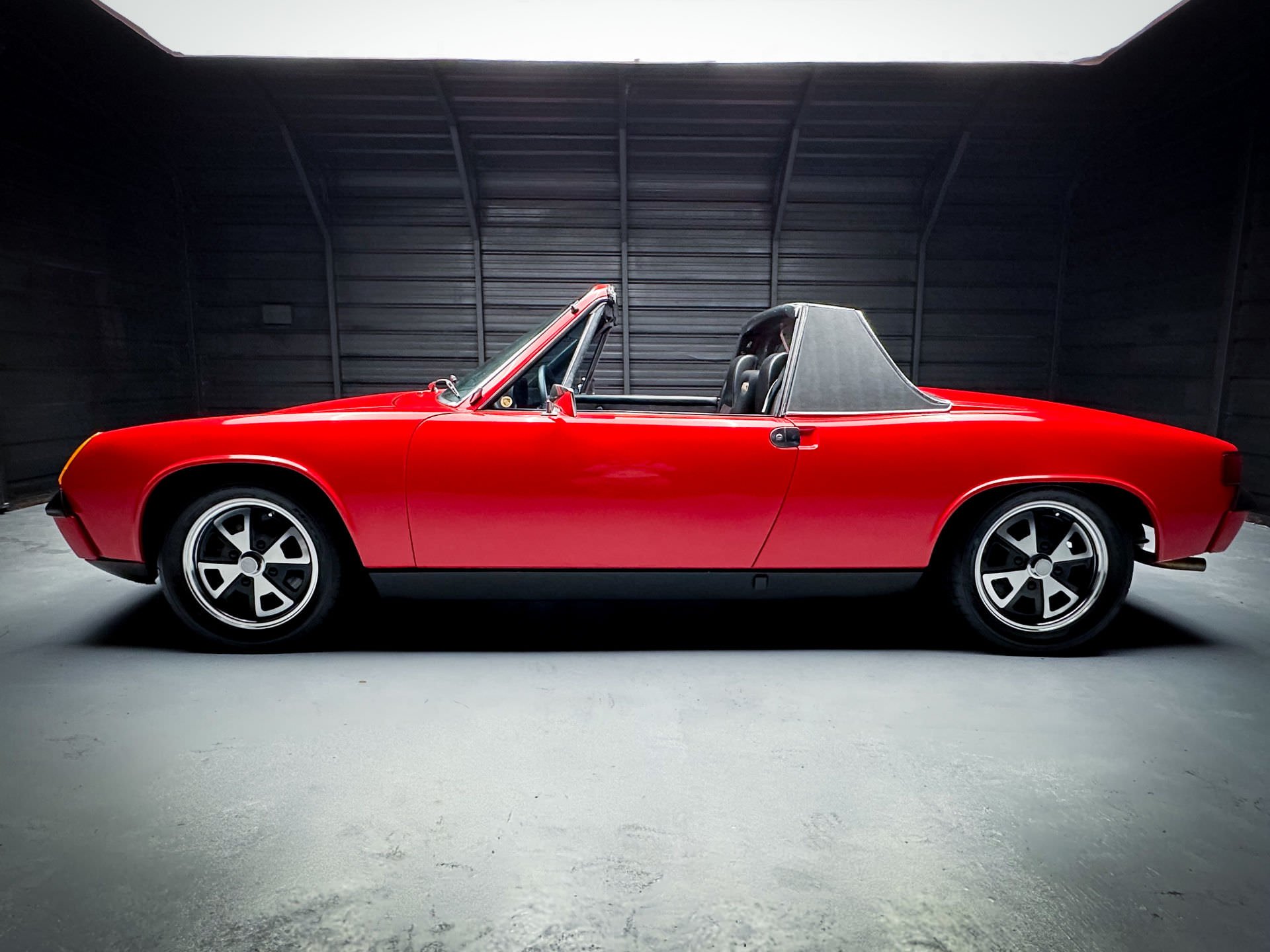
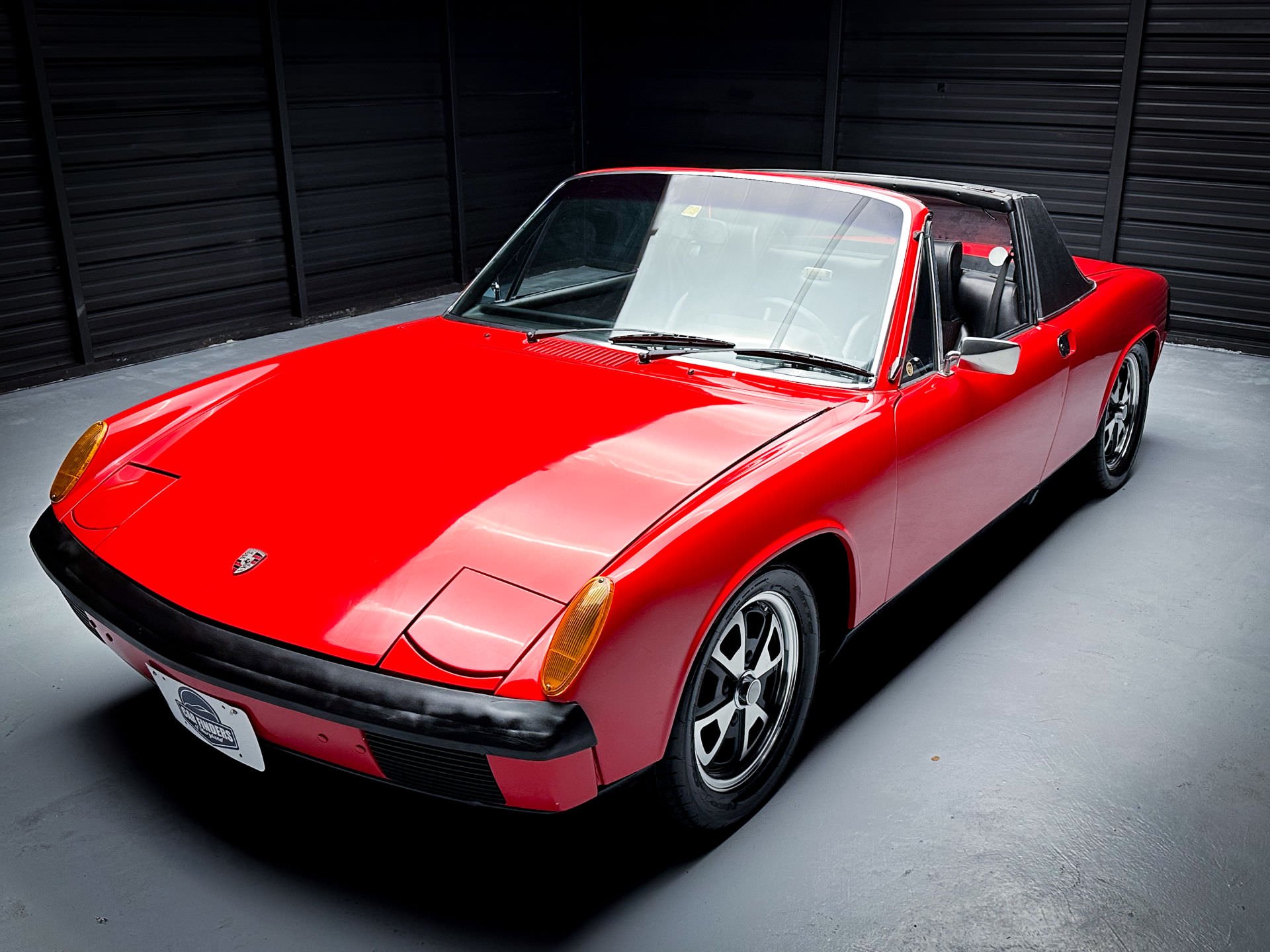
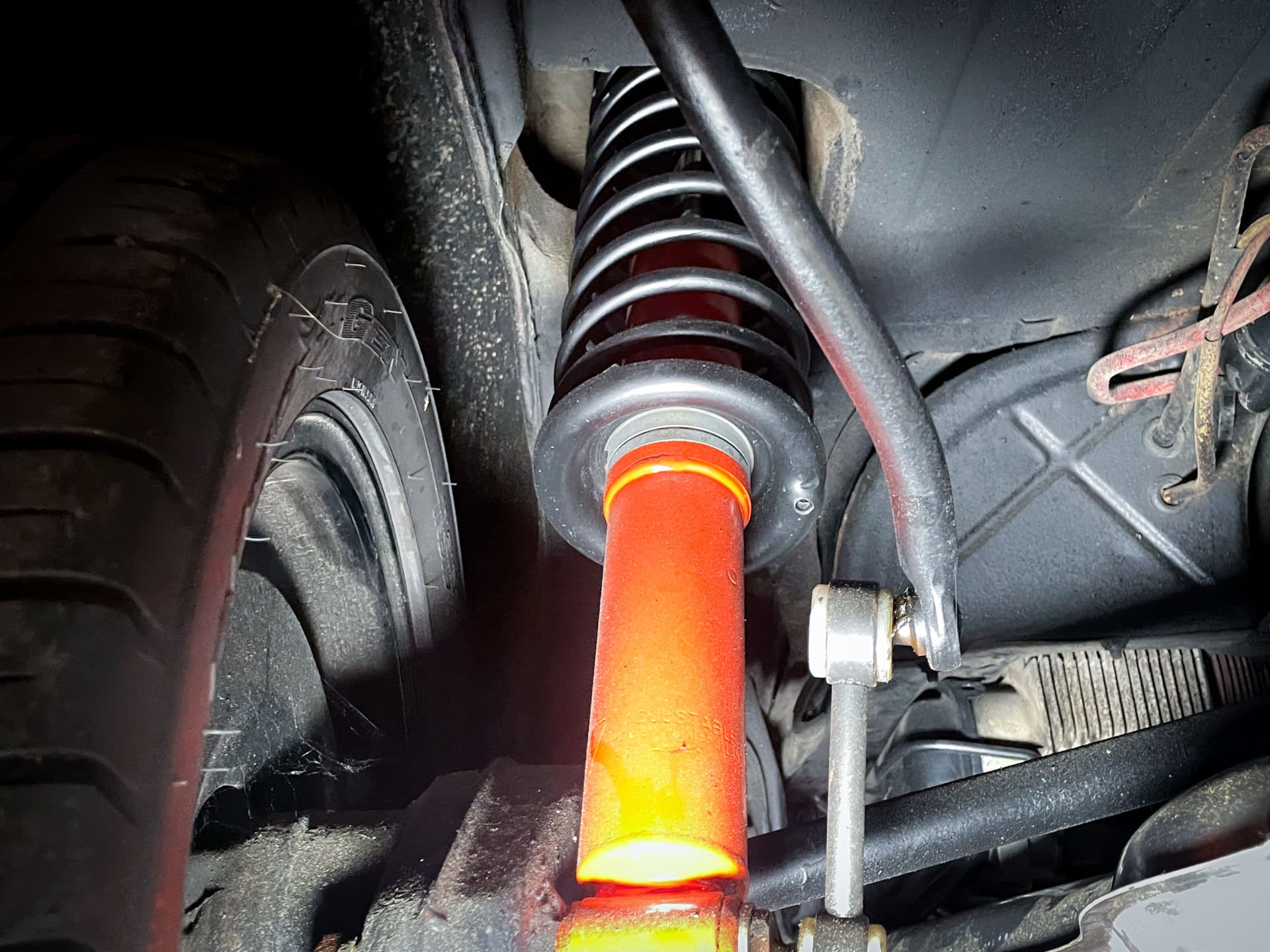
It was given a fresh coat of its correct color, an eye-catching Bahia Red, back in 2013. More recently it’s had the sail-panel, various body/window/top seals, and the dash pad replaced. It’s also now fitted with SSI heat-exchangers, new Fuchs replica alloy wheels, and Weber 44 carburetors.

Power from the 2.0 liter flat-four is sent to the rear wheels via the original 5-speed manual transmission, and the car is showing 86,400 miles on the odometer.

It’s being offered for sale out of Eldersburg, Maryland on Marqued and you can visit the listing here if you’d like to read more about it or register to bid.

Porsche 914 13 Porsche 914 Porsche 914 17 Porsche 914 15 Porsche 914 14 Porsche 914 13 Porsche 914 12 Porsche 914 11 Porsche 914 10 Porsche 914 9 Porsche 914 7 Porsche 914 6 Porsche 914 5 Porsche 914 4 Porsche 914 3 Porsche 914 2 Porsche 914 1

Images courtesy of Marqued

The post “The Forgotten Porsche” – A 1974 Porsche 914 5-Speed appeared first on Silodrome.


from Silodrome https://silodrome.com/porsche-914-forgotten-porsche/
via gqrds