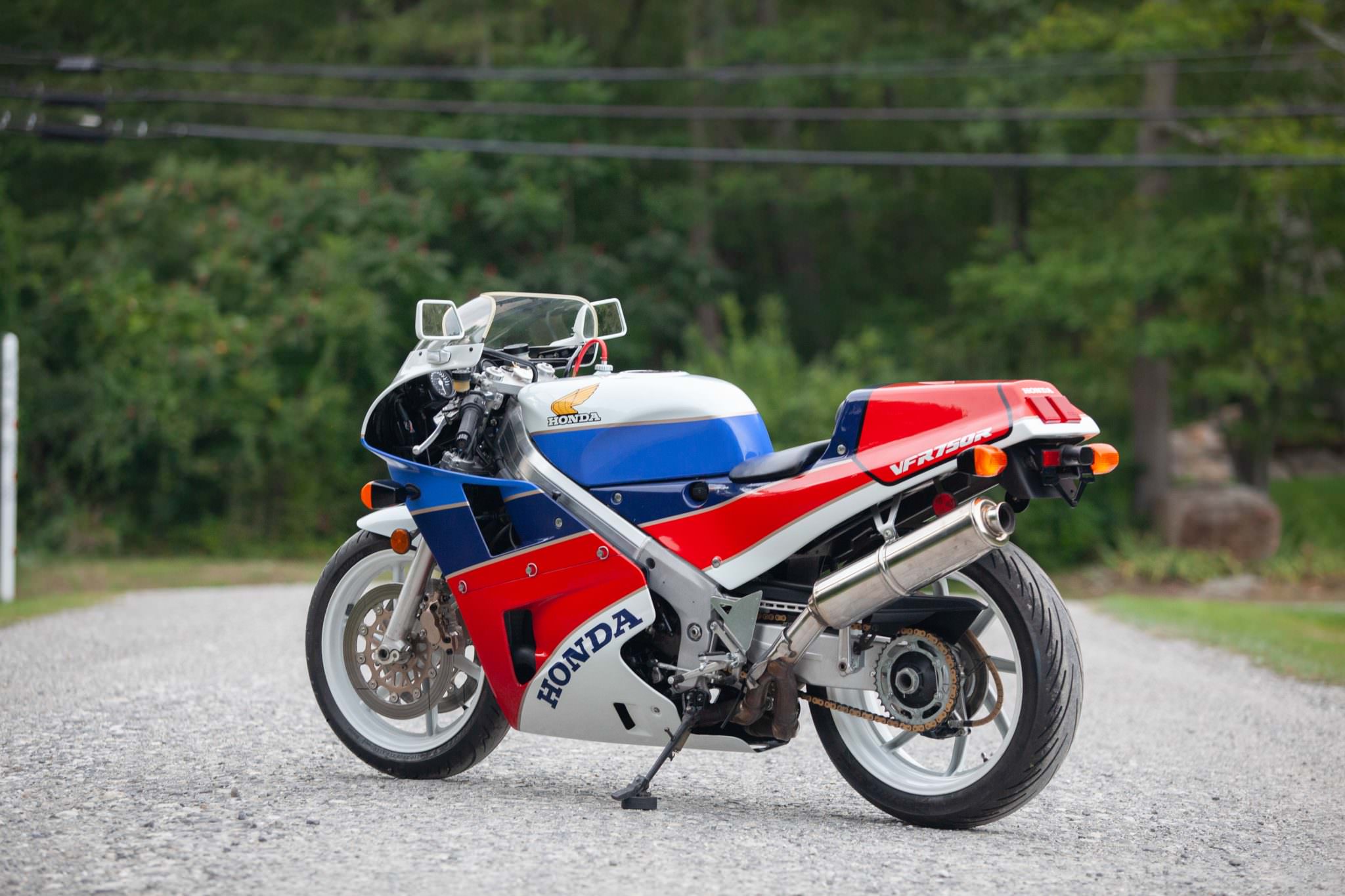
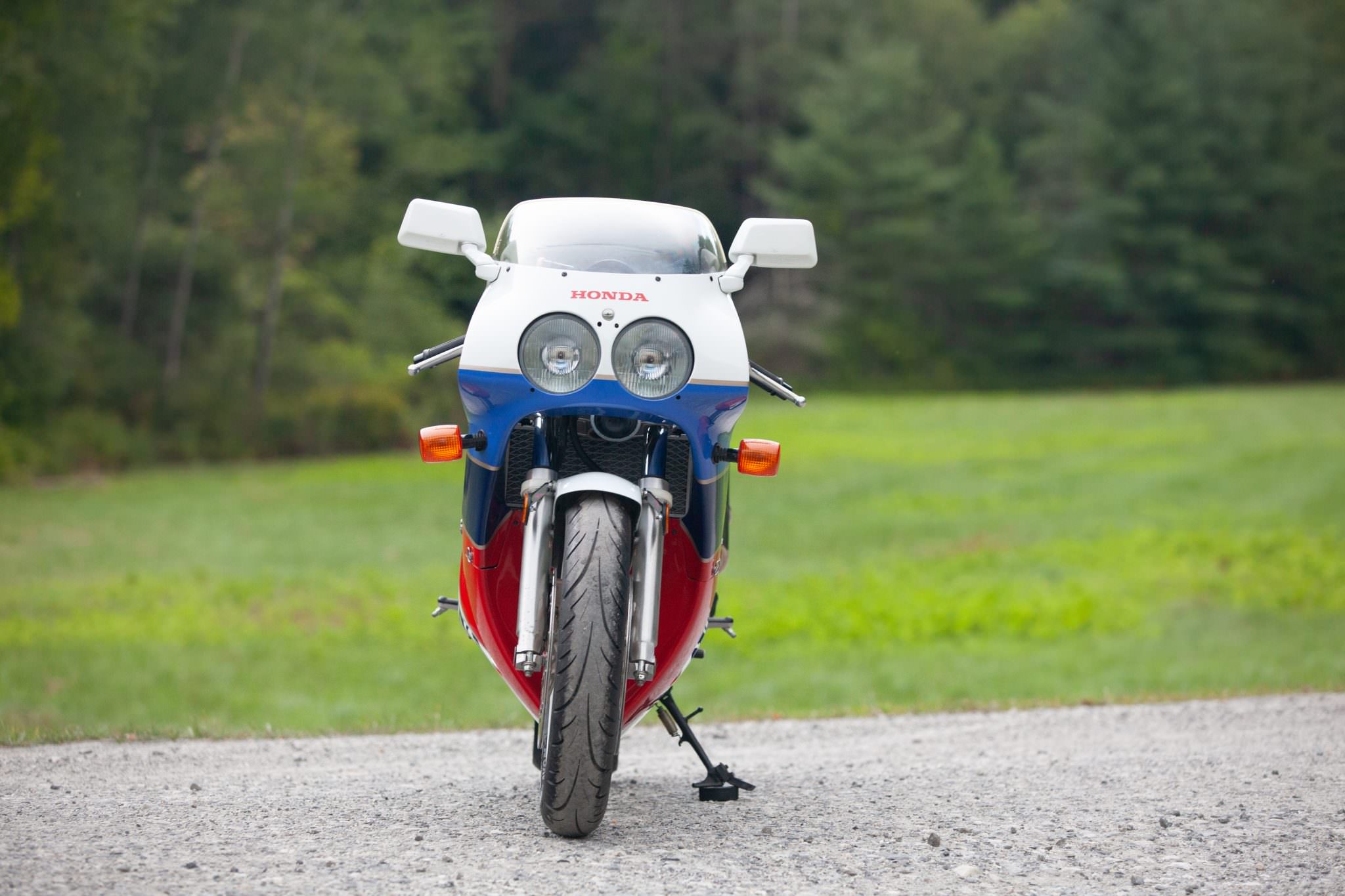
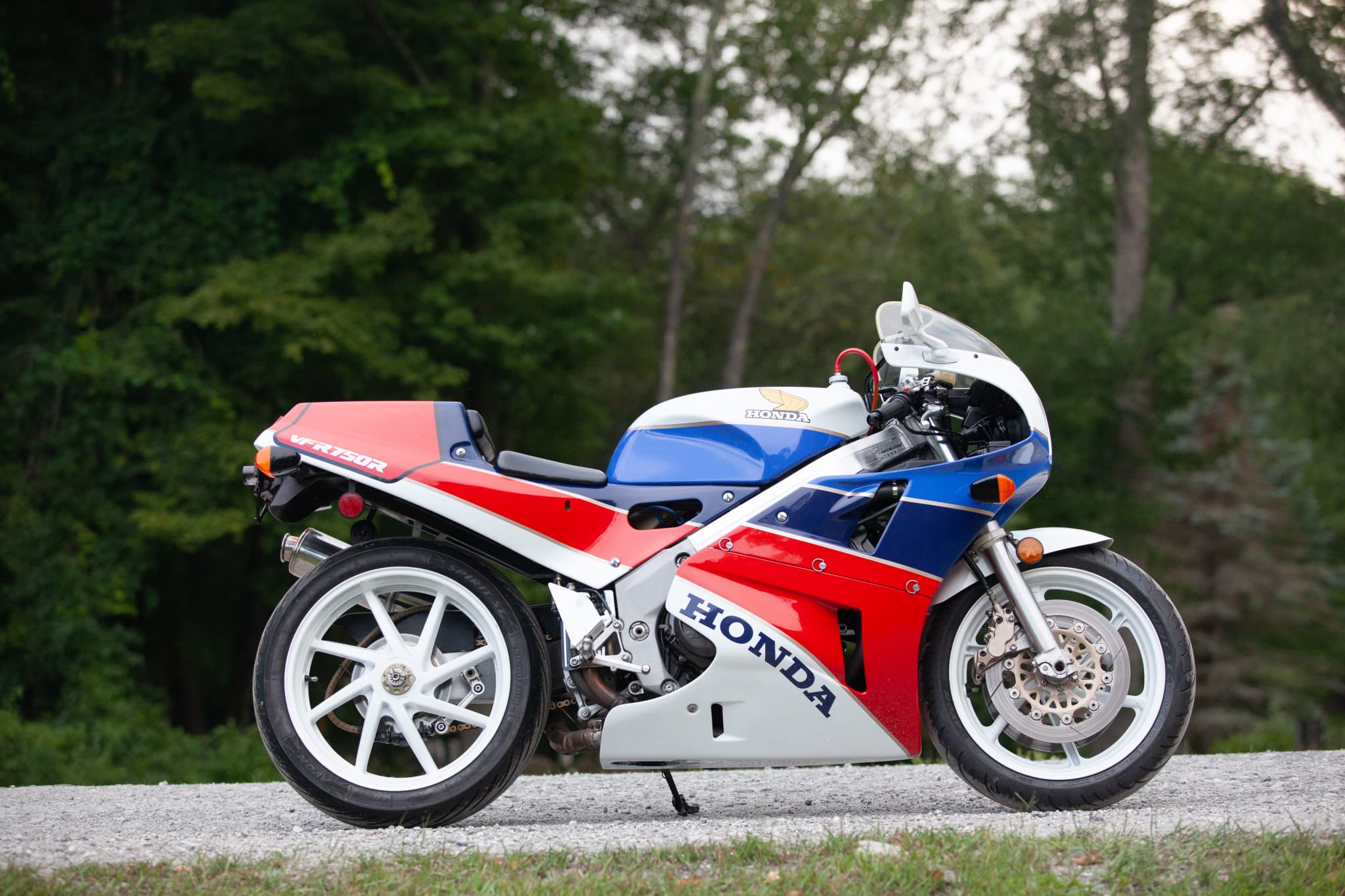
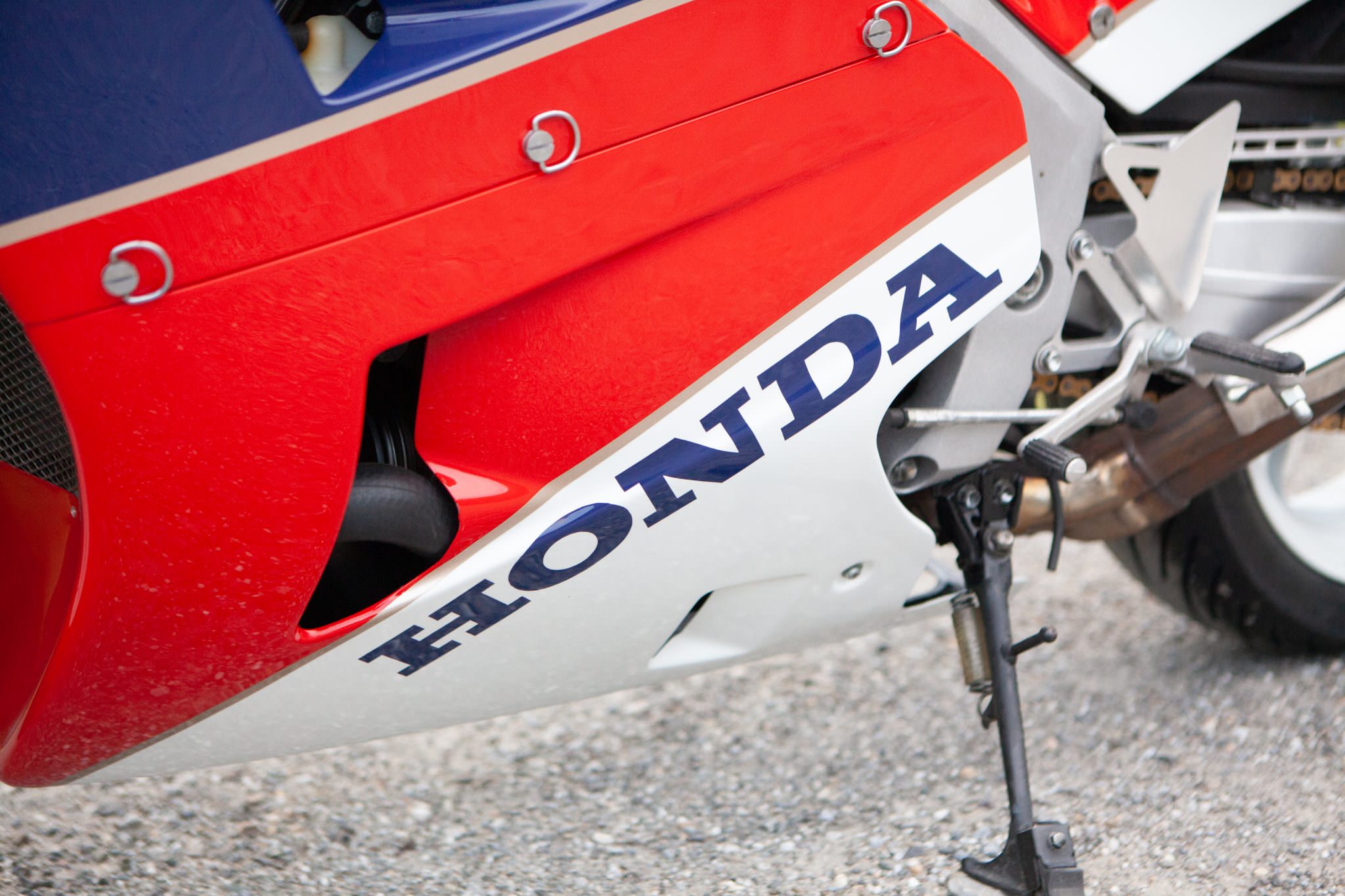
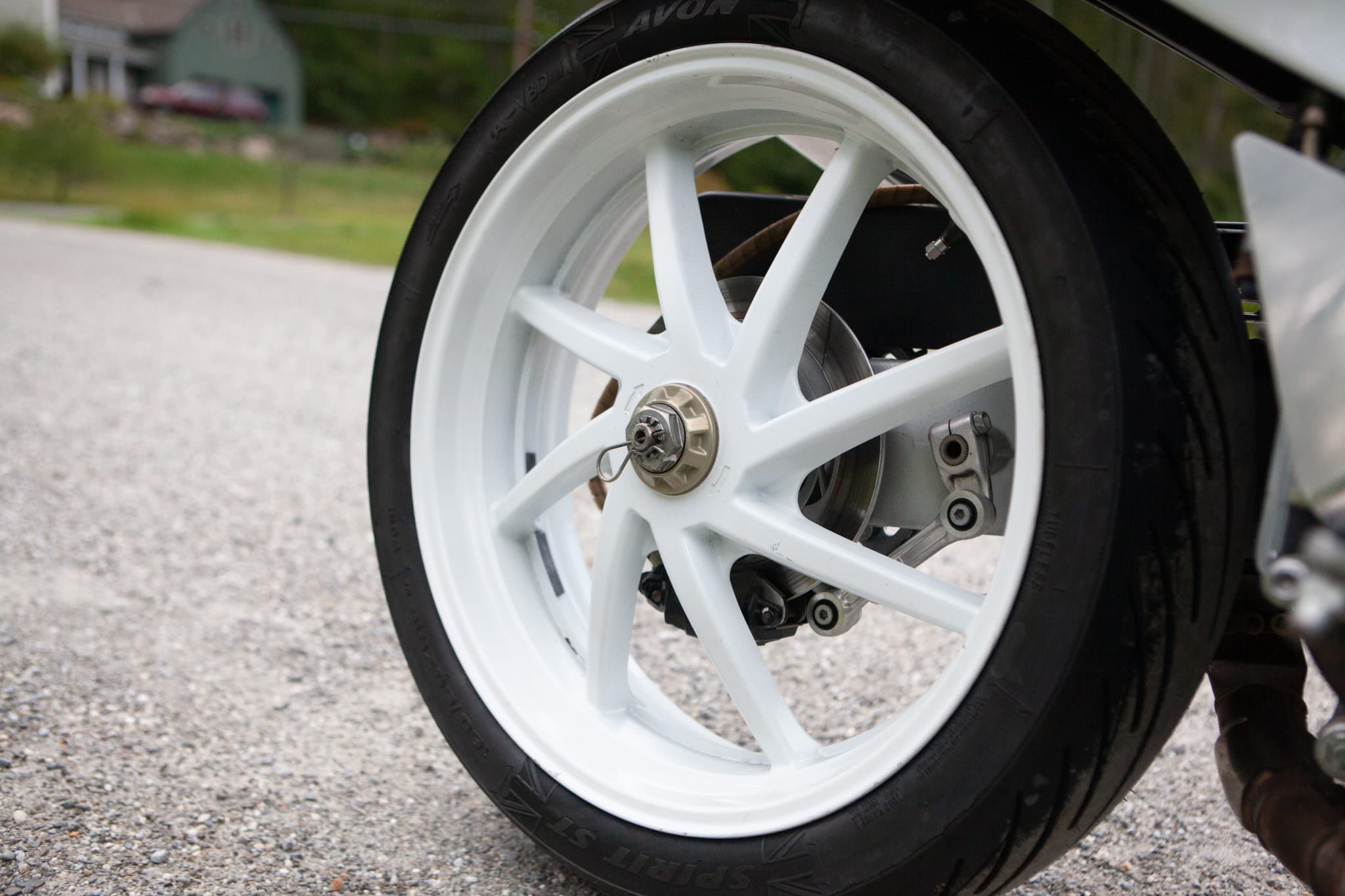
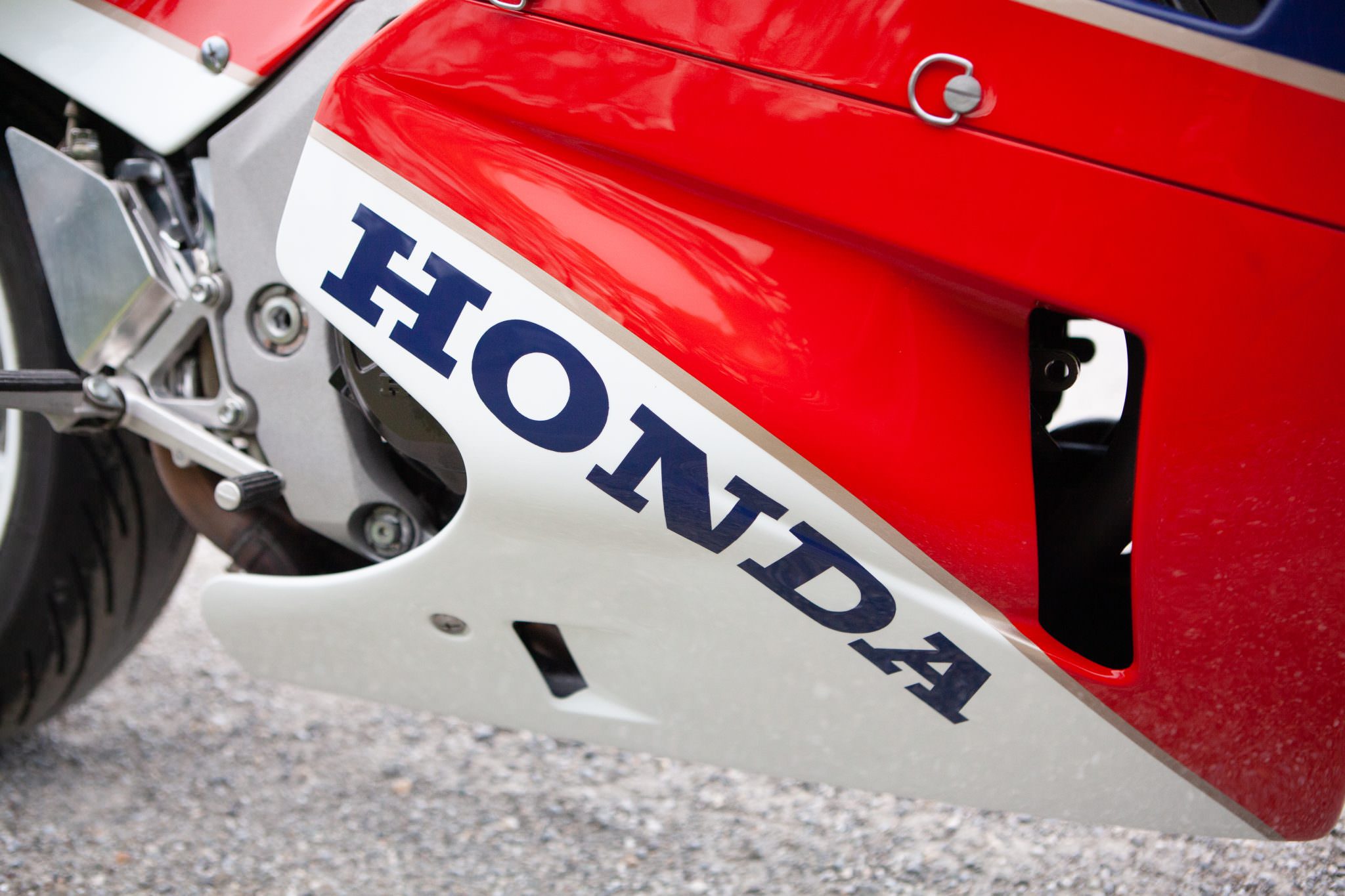
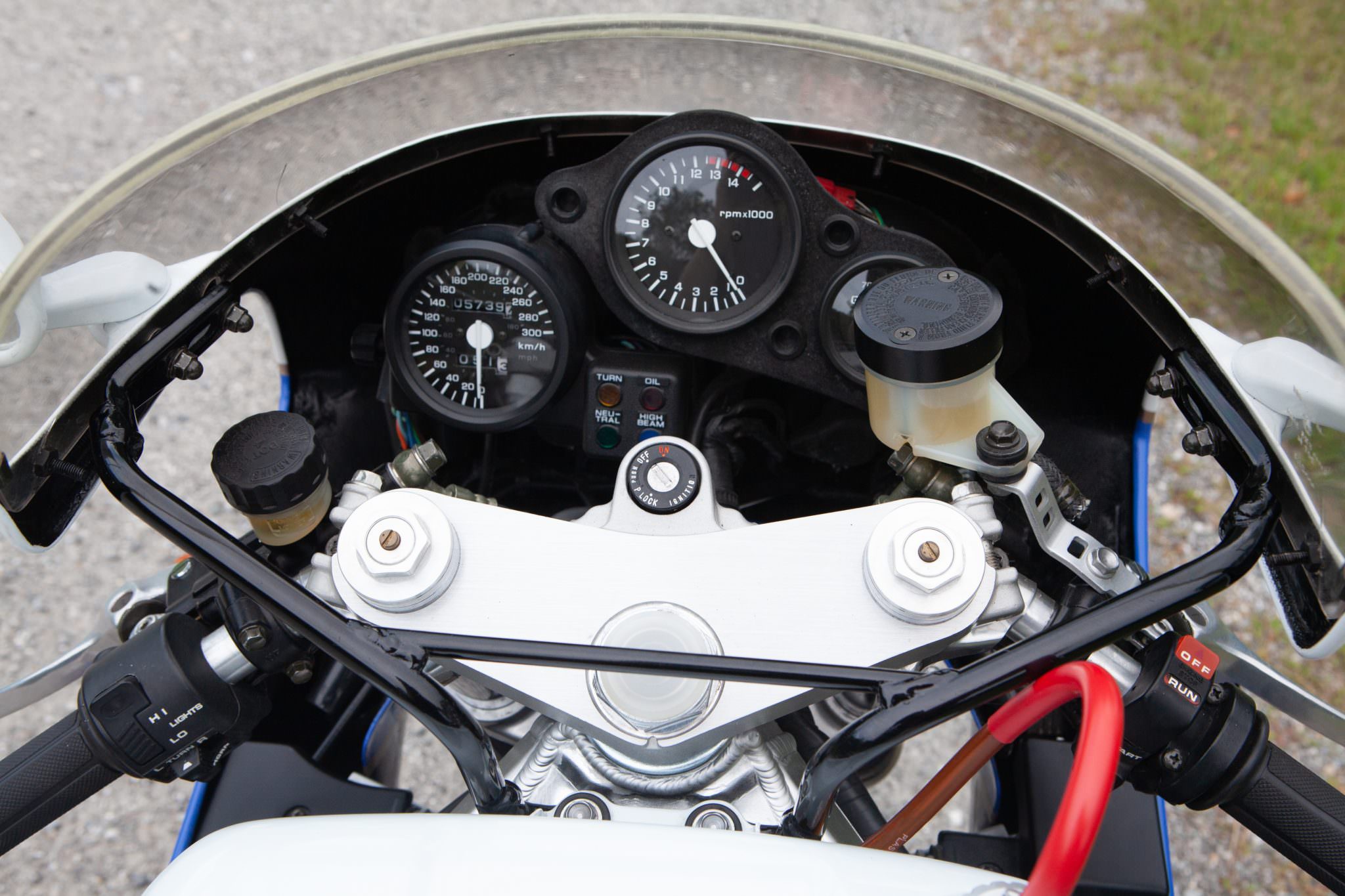
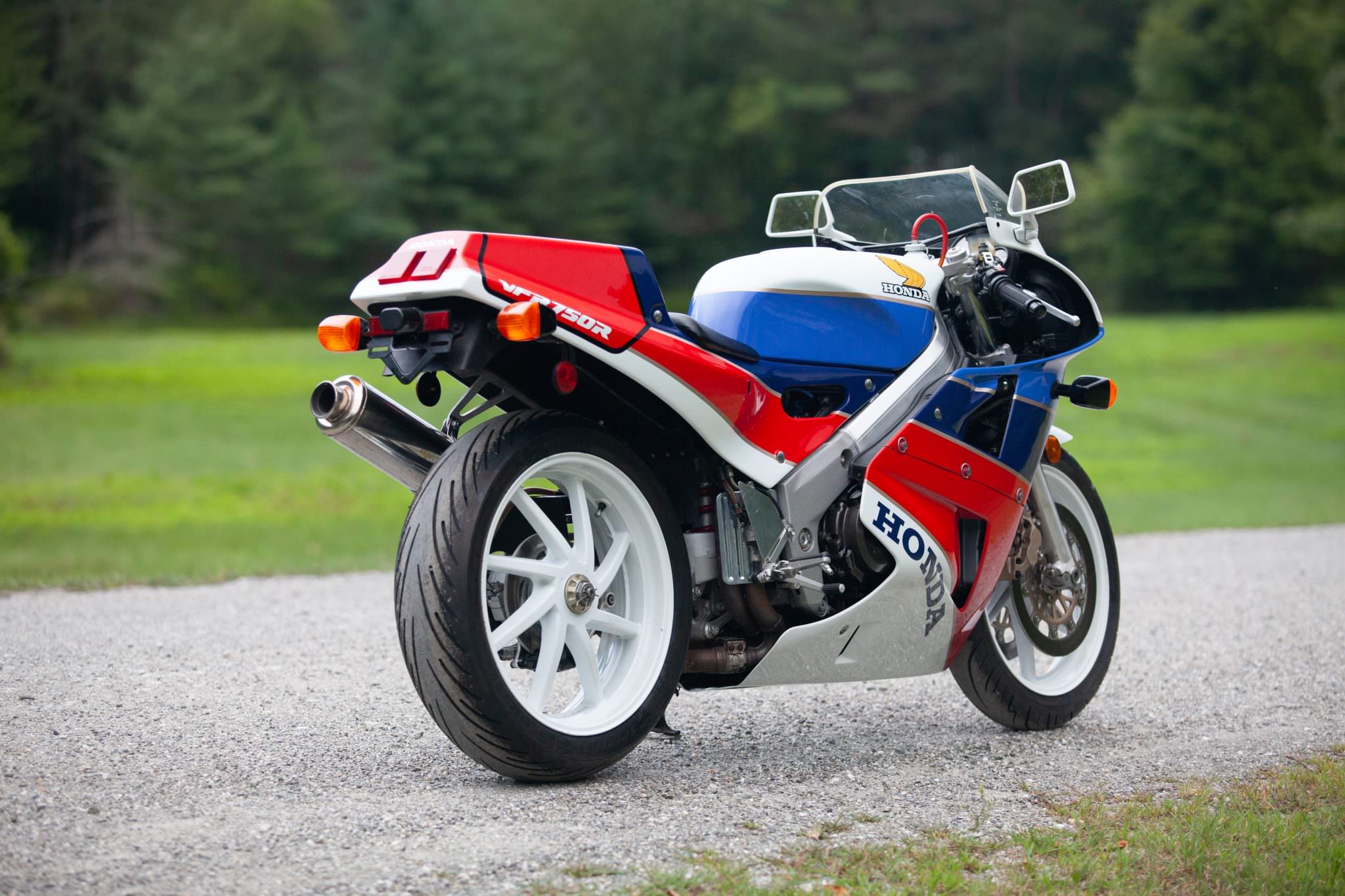
For Sale: A Honda VFR750R RC30 – King Of The 80s Superbikes

When the Honda VFR750R RC30 went on sale in 1988 it was essentially a road-legal, two-wheeled grand prix motorcycle that anyone could buy. If they could get their hands on one that is.

In its first year of competition Fred Merkel won the inaugural 1988 Superbike World Championship on his RC30, both the riders and manufacturers title. He then did it again in 1989 to prove it wasn’t a fluke. The bike would go on to become the most successful World Championship-winning four-cylinder Japanese motorcycle of all time.

Fast Facts – The Honda “RC30” VFR750R

  • When the Superbike World Championship was launched in 1988 there was a homologation stipulation that any company that wanted to compete had to produce a road-legal production run of their race bike.
  • As is often the case with homologation rules, they gifted the world with some remarkable new road-legal vehicles – in this case the RC30, one of the most important superbikes and most important Honda motorcycles of all time.
  • The RC30 was developed with what was more or less an unlimited budget, it used aerospace alloys and titanium – all back in the late 1980s when these materials were rarely seen on motorcycles (or cars for that matter).
  • The heart of the RC30 is its 748cc 90º V4, a liquid-cooled engine with double overhead cams, 16 valves, alloy pistons, titanium connecting rods that produced 118 bhp at 11,000 rpm. Given the bike’s dry weight of 180 kgs it was almost unbeatable in the late 1980s.

Superbike Royalty – The Mighty RC30

The truth of the matter is that the RC30 only exists because of homologation requirements put in place by the World Superbike Championship that forced manufacturers to offer their race bikes as road bikes, with a small number of necessary changes of course.

Above Video: This is the original Honda promotional film for the RC30. It showcases the workmanship that went into each bike, and you see parts like titanium connecting rods being individually modified for perfection.

Honda would build just 3,000 examples of the VFR750R between 1987 and 1990 to meet these requirements, and they sold them through dealers for an MSRP that was over double the price of a “normal” superbike.

Despite the cost the bikes sold just as quickly as dealers could get them in. Many were stripped of their road-legal additions – like blinkers, brake lights, and license plates so they could be raced either professionally or at a high-end amateur level.

While all of this was going on the official Honda racing team was out on track also, contesting the first ever Superbike World Championship in 1988. As noted above they dominated the series, winning the rider’s and manufacturer’s championship in 1988 and in 1989.

Elsewhere in the world of motor racing the RC30 was enjoying a similar streak of success. Robert Dunlop won the 1989 Macau Grand Prix, then Steve Hislop went and did the same a year later in 1990. In 1993 Helmut Dähne set the fastest Nordschleife lap time on a motorcycle of 7:49:710.

Over on the Isle of Man Steve Hislop set the first ever 120 mph lap on the Isle Of Man TT course on his RC30. By this time the race wins were rapidly accumulating for the white, blue, and red Honda, and its reputation as the best superbike in the world was indisputable.
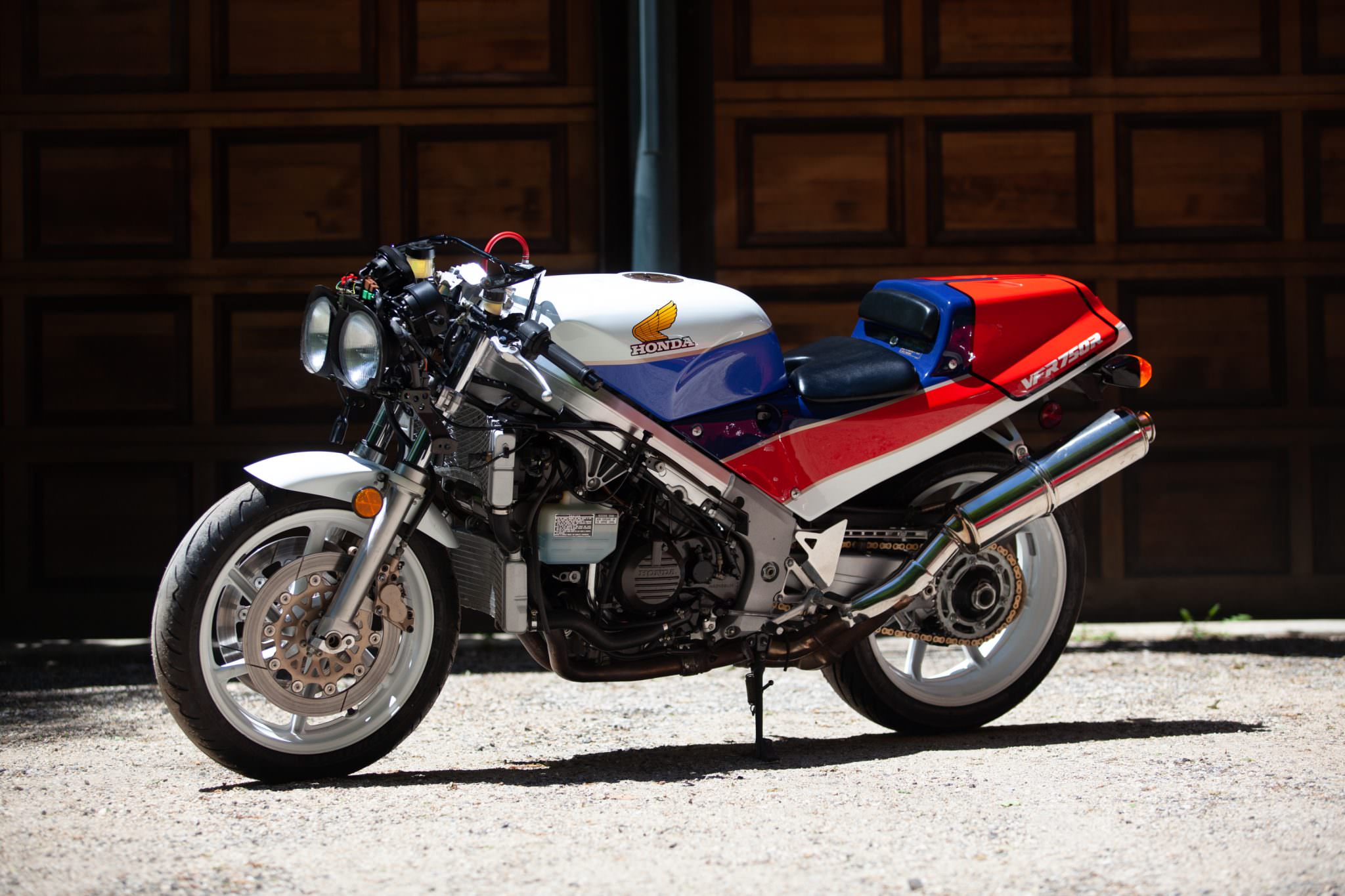
Honda VFR750R RC30 1

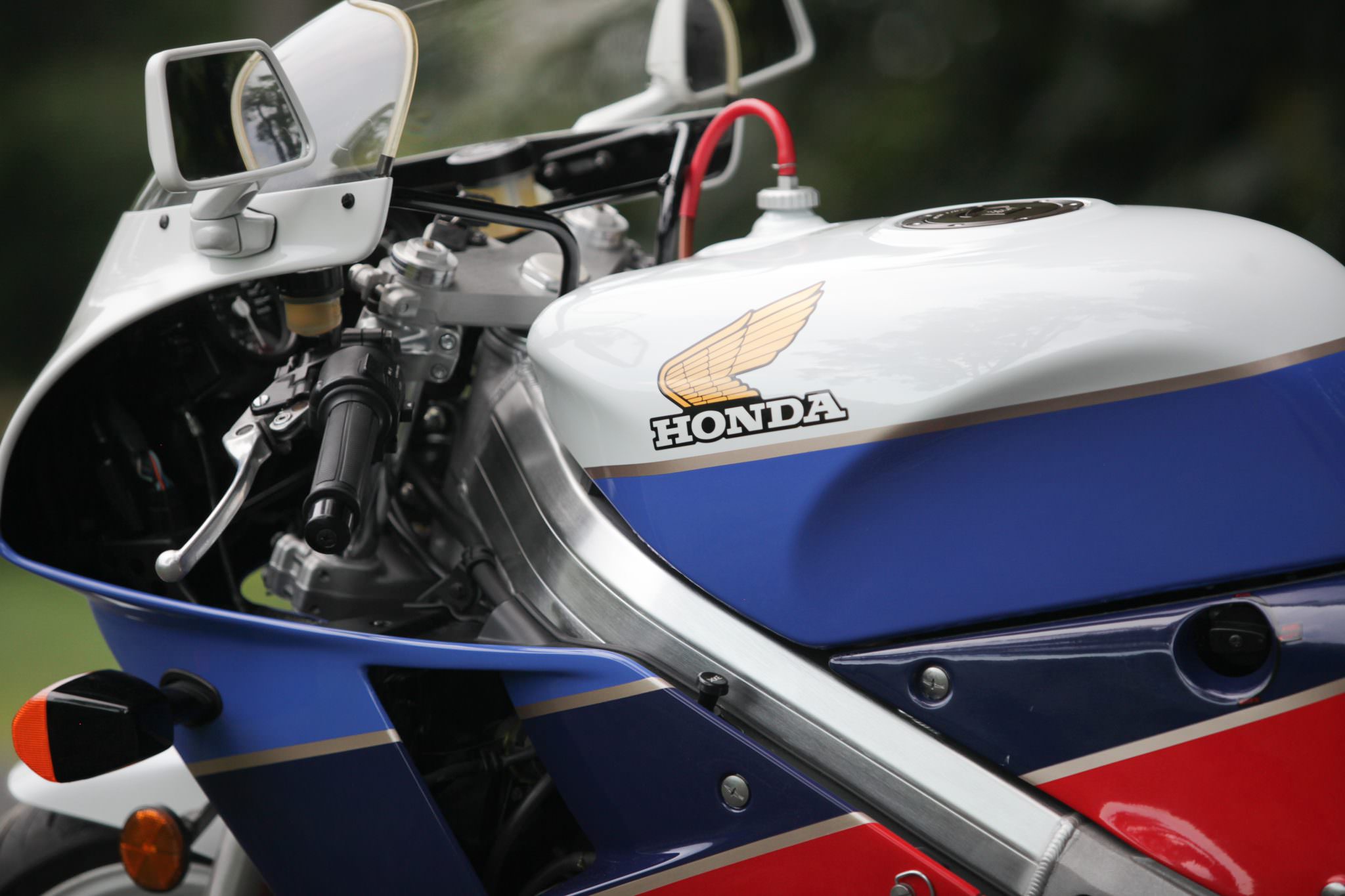
This is the RC30 with its fairing removed, showing all the parts you normally don’t get to see. Unless you’re an HRC technician of course.

It’s been estimated that 75% of the RC30s that were sold were converted for race track use, leaving only approximately 750 road-legal bikes available, and many of these are in long term private ownership.

Honda VFR750R RC30 – Specifications

  • Frame – The RC30 has an aluminum-alloy perimeter frame which directly connects the swing arm pivot point with the steering head. It also has a single-sided Pro-Arm aluminum-alloy swing arm.
  • Engine – A 748cc 90º V4, a liquid-cooled engine with double overhead cams, four valves per cylinder, lightweight alloy pistons, ultra-lightweight titanium connecting rods, and four 35mm Keihin carburetors.
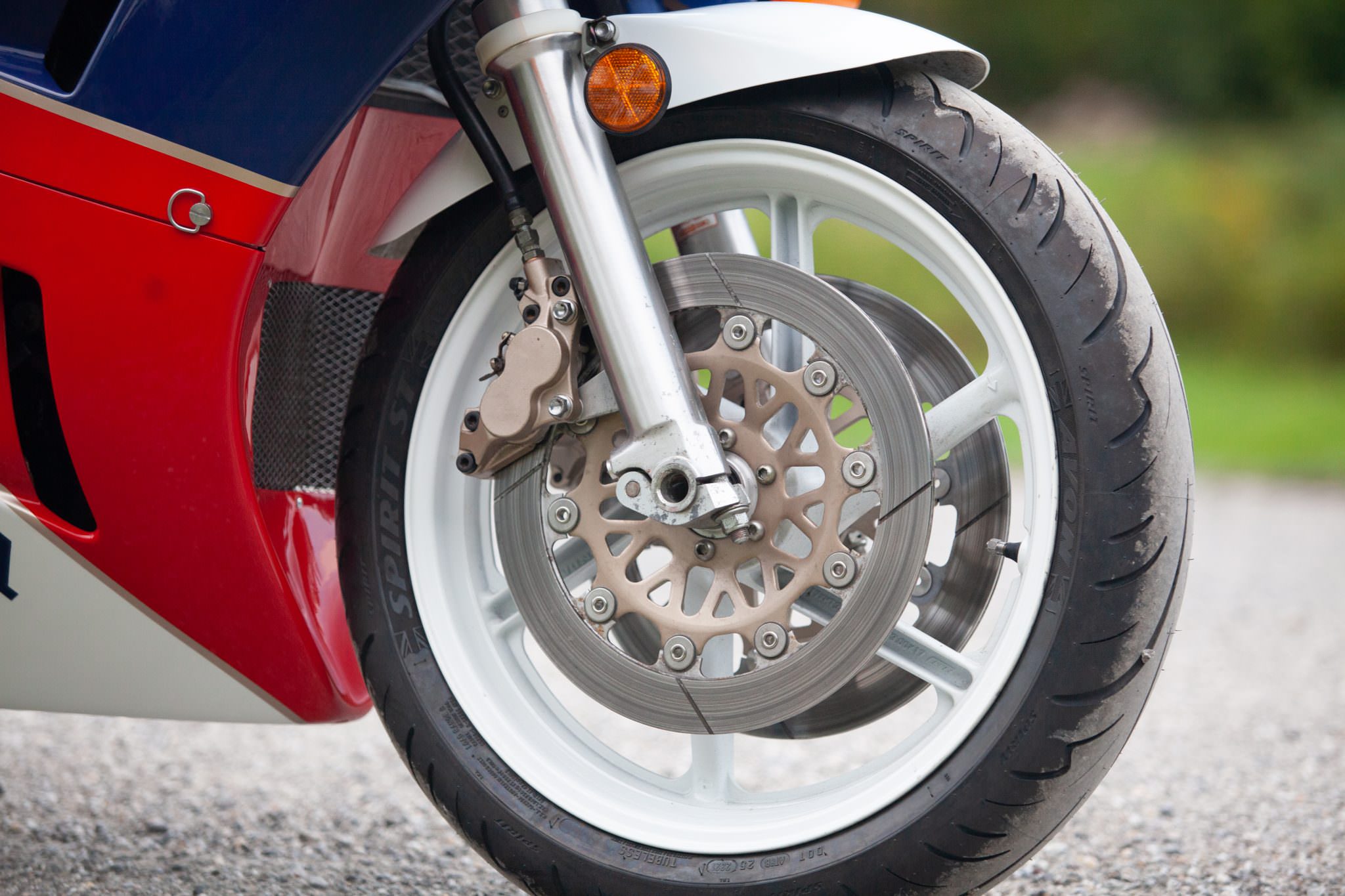
  • Brakes – Disc brakes were fitted front and rear, with twin 310mm floating discs and four piston calipers up front and a single piston unit in the rear.
  • Transmission – The gearbox is a compact 6-speed unit with close ratios, it has an unusually long first gear that can be run from 0 – 82 mph.
  • Power Output – There were two main road-legal specifications for the power output of the RC30. The Japanese bike were restricted to 76 bhp at 9,500 rpm for legal reasons and the bikes for the international markets received the full 118 bhp at 11,000 rpm.
  • Suspension – The RC30 is fitted with 43mm cartridge-type Showa forks up front with quick release mountings for the wheel. A monoshock is fitted in the rear and the rear wheel can be removed and swapped out quickly for wheel/tire changes.
  • Bodywork – The bike has an alloy fuel tank and hand-laid fiberglass bodywork.
  • Performance – The top speed of the Honda RC30 has been debated for years, very few have ever actually experienced it to speak on the subject with any certainty. Honda claimed 250 km/h (155 mph) however some believe that 246 km/h (153 mph) is a more accurate figure.
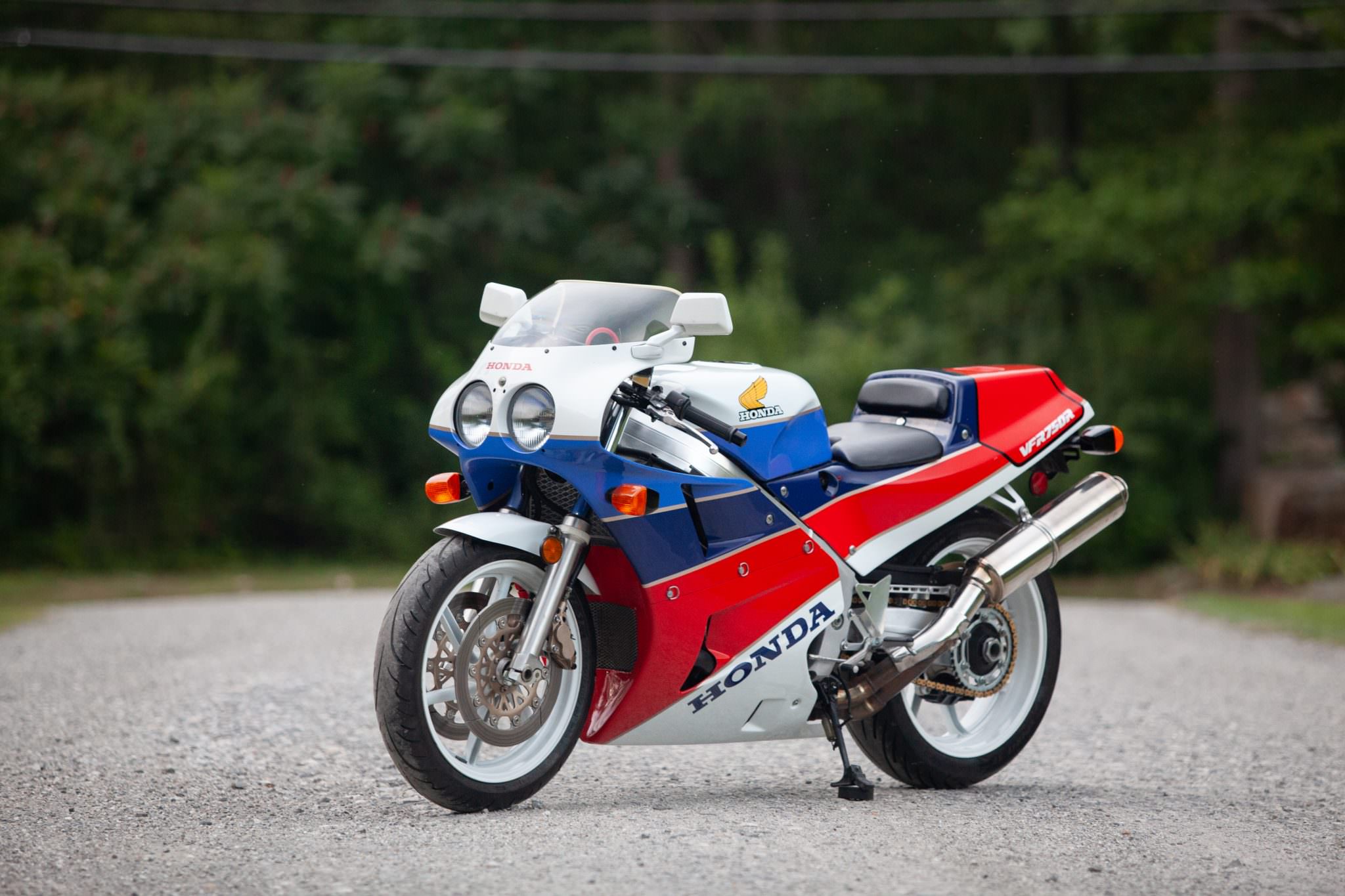
Honda VFR750R RC30 26

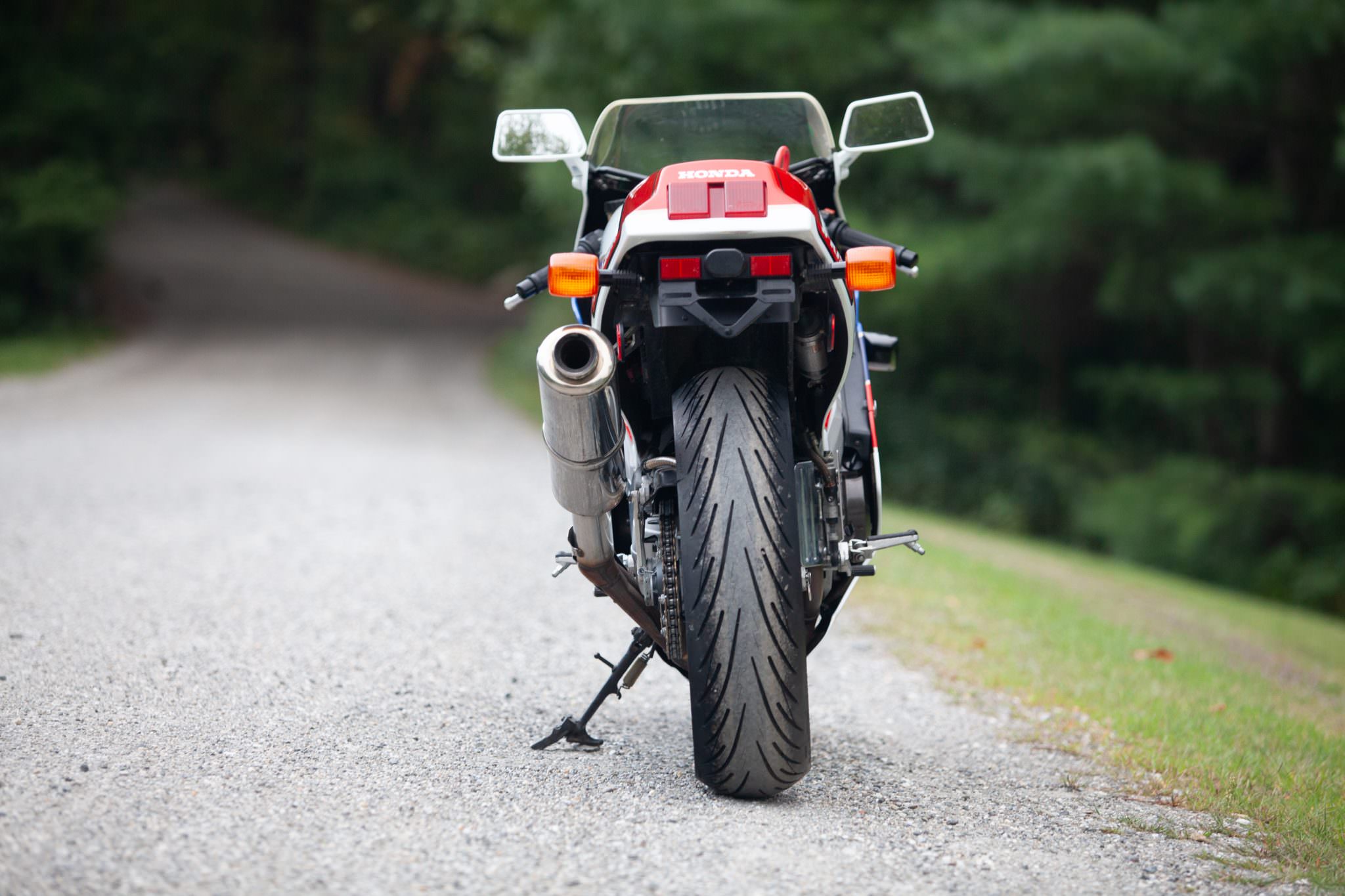
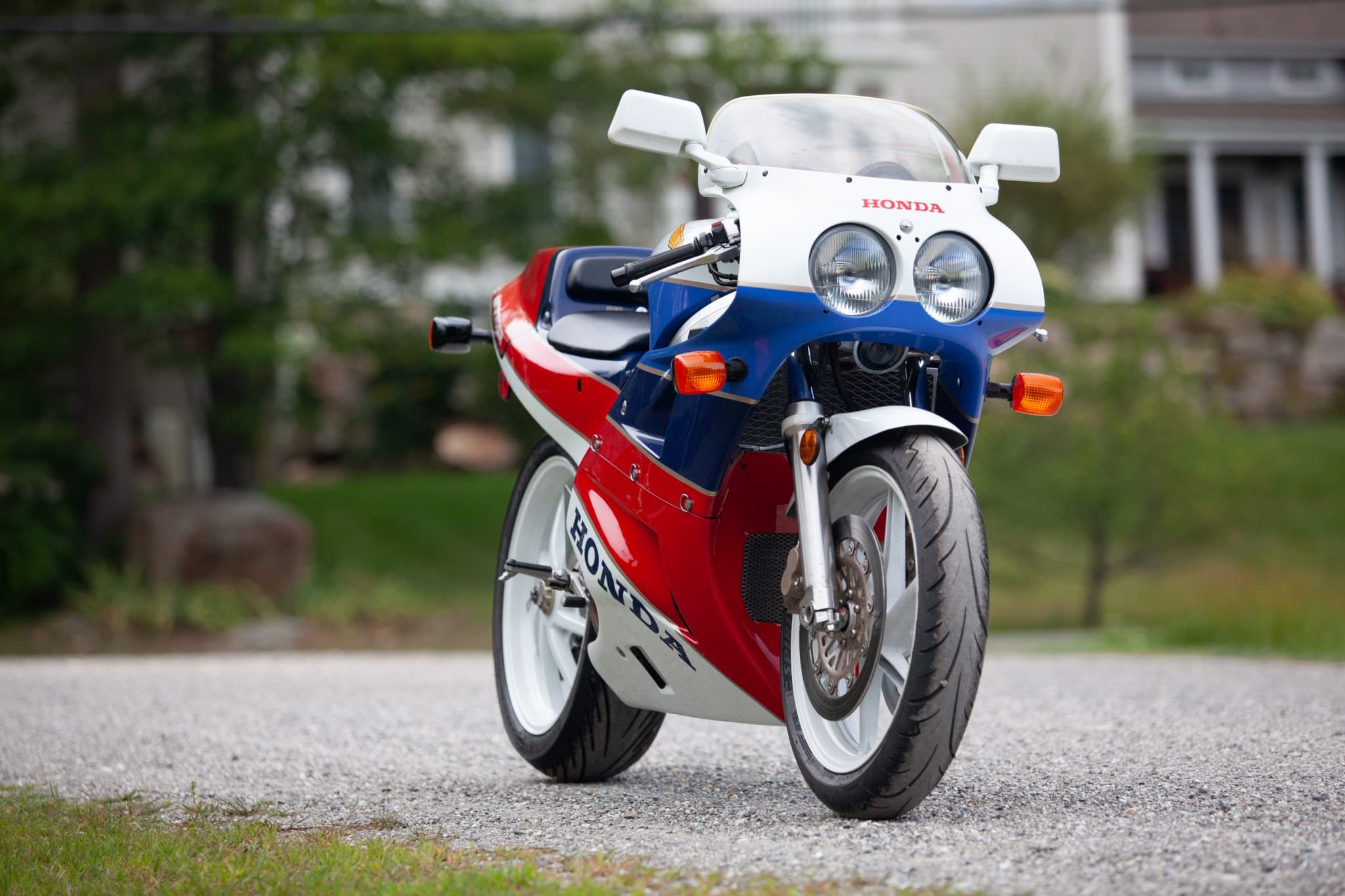
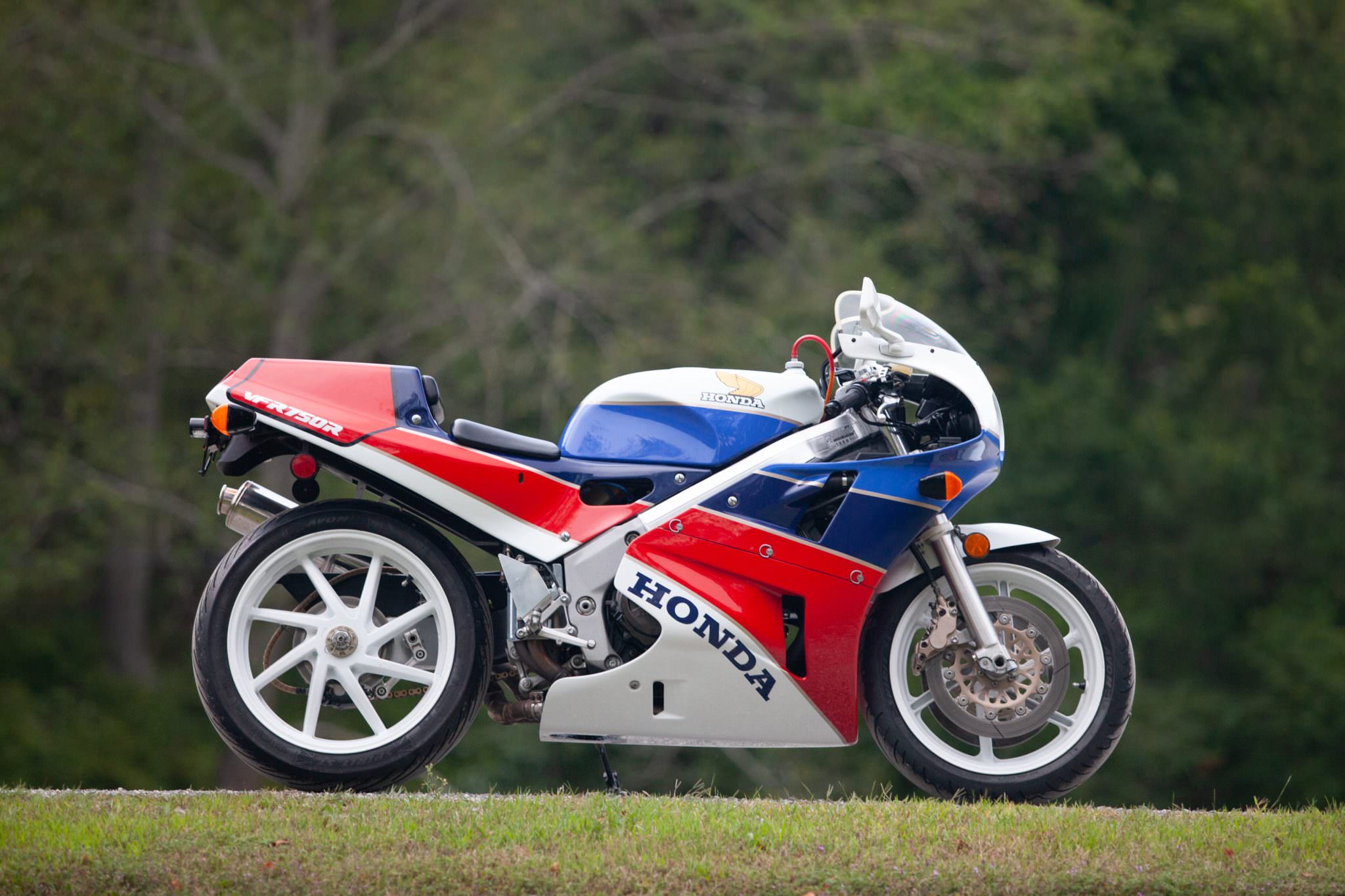
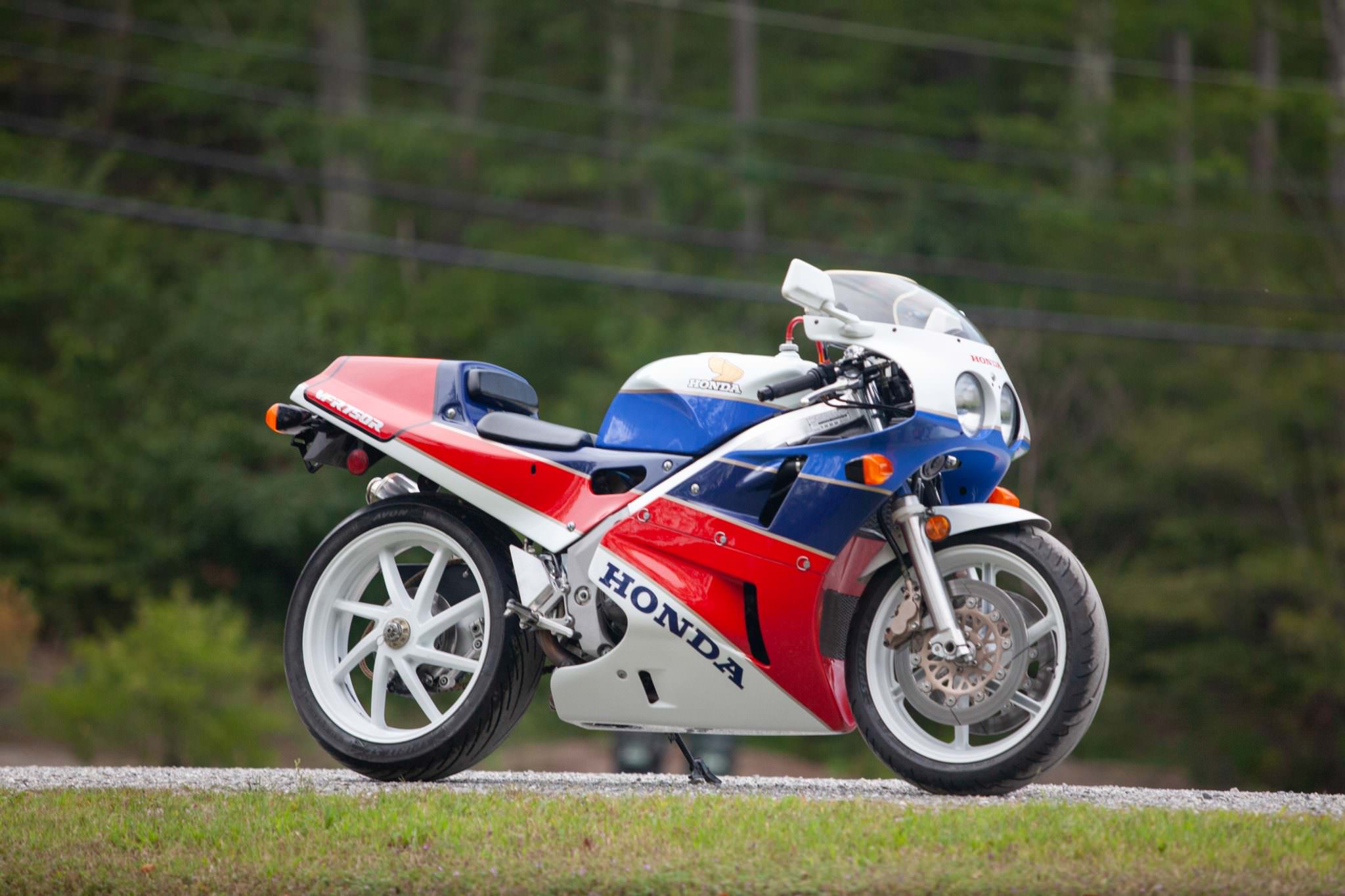
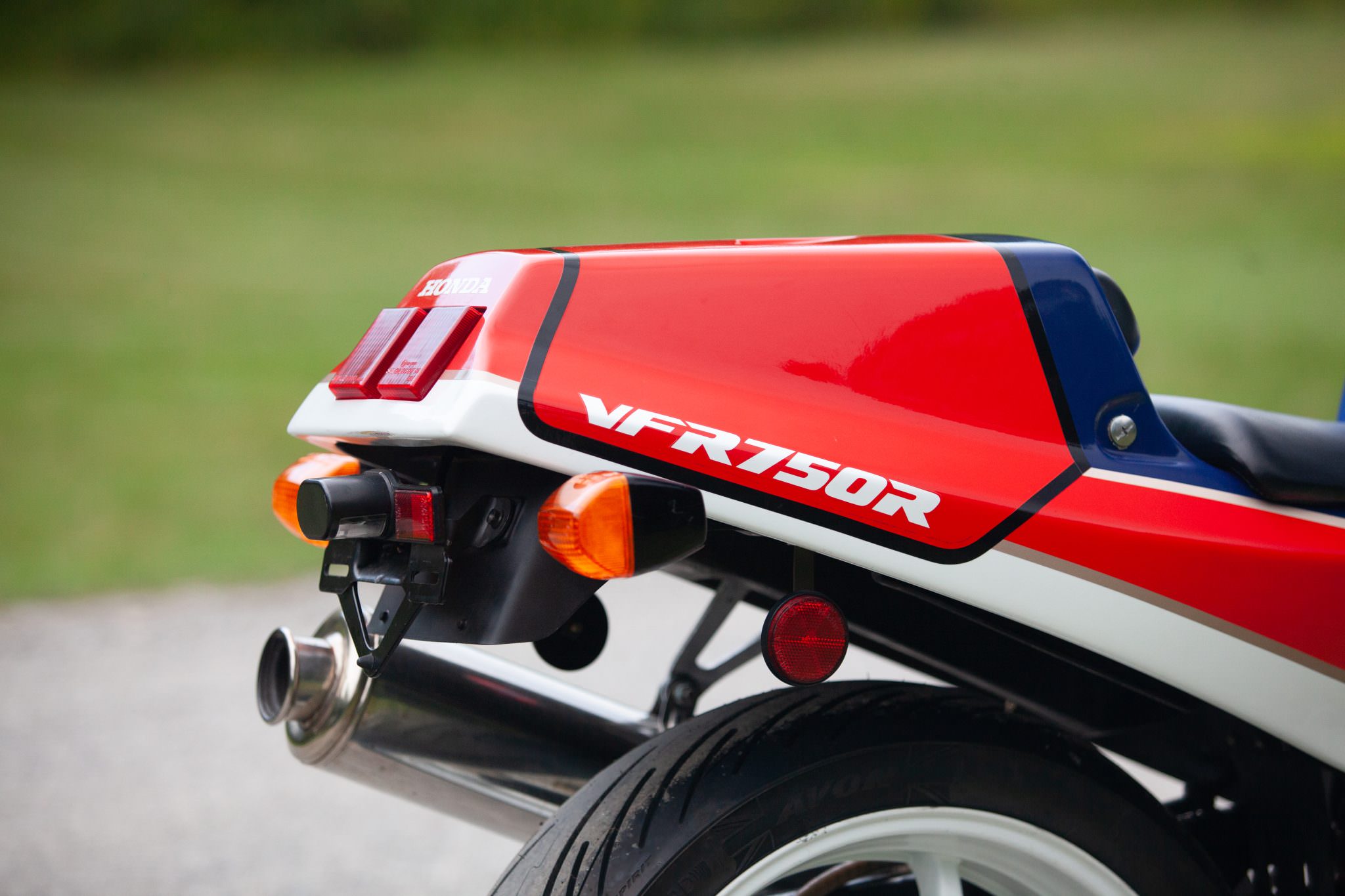
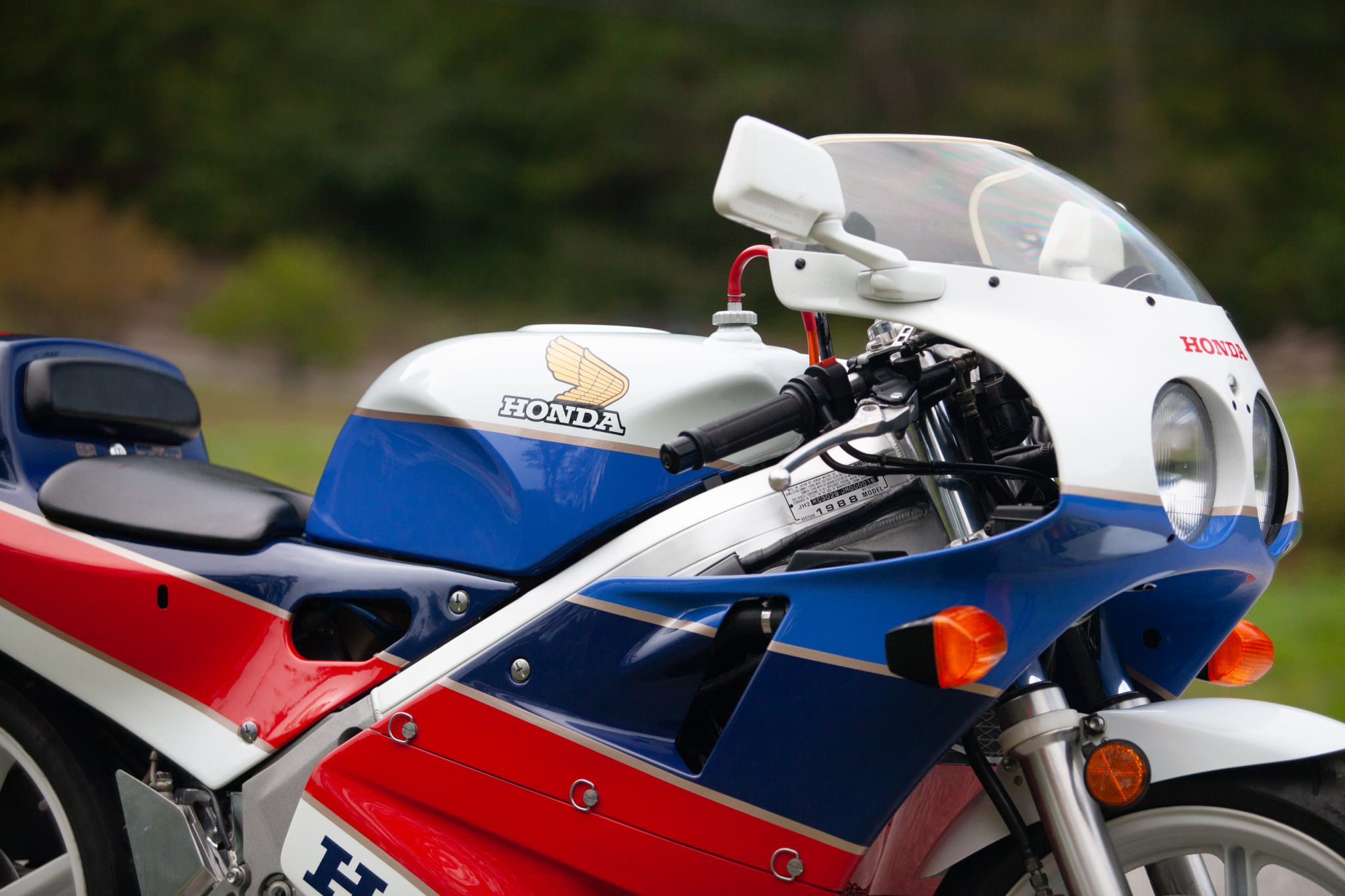
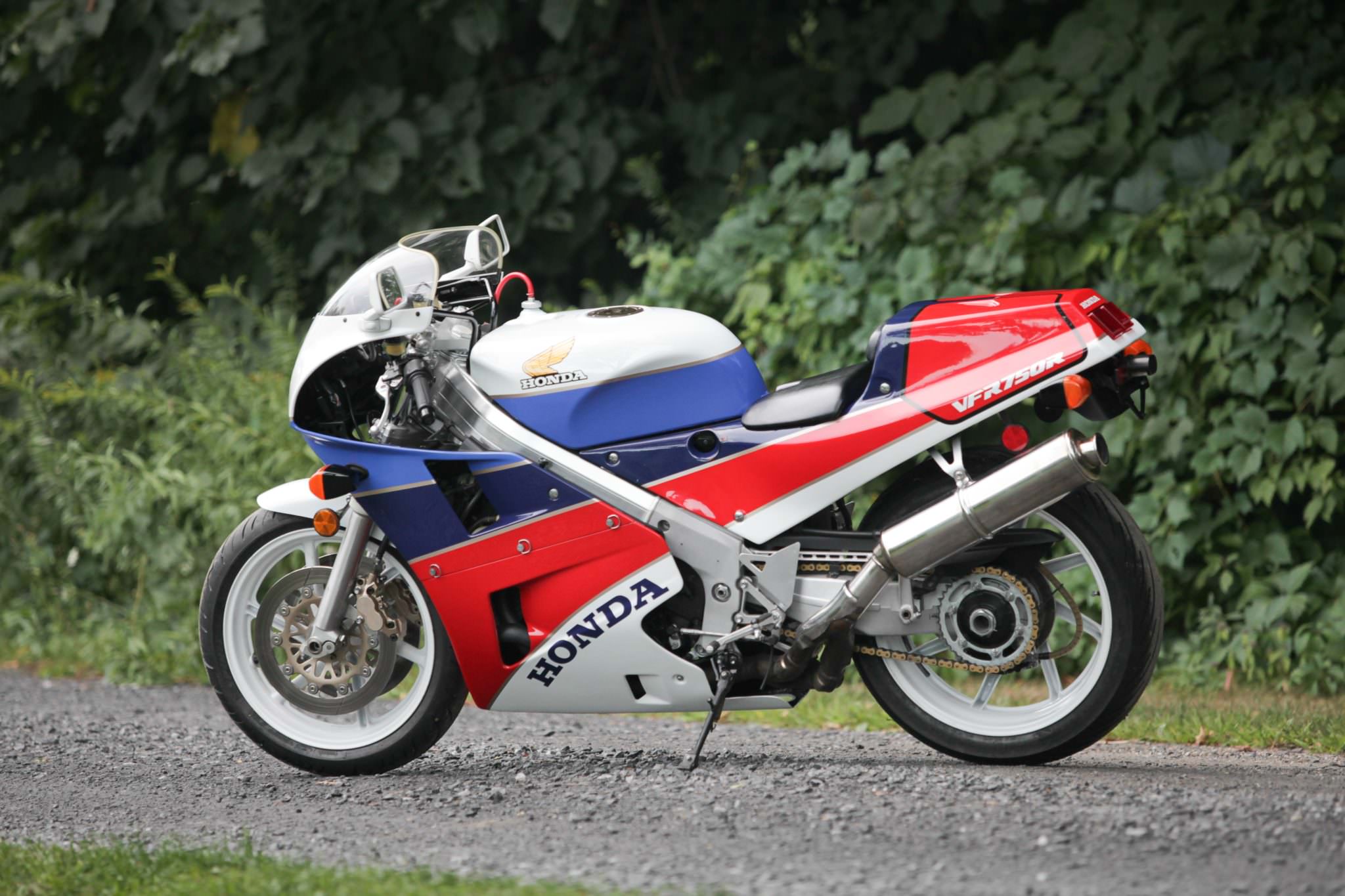
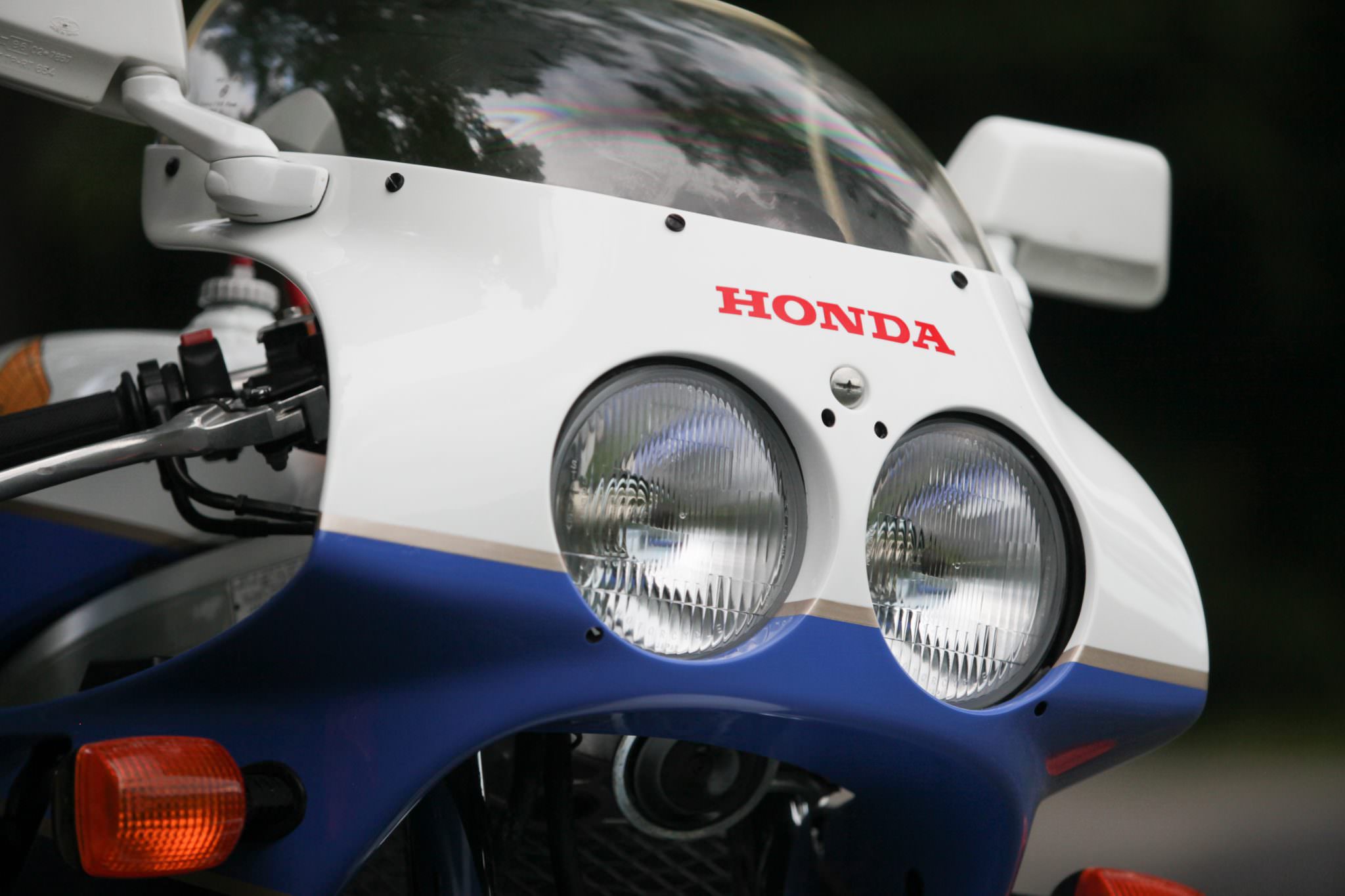
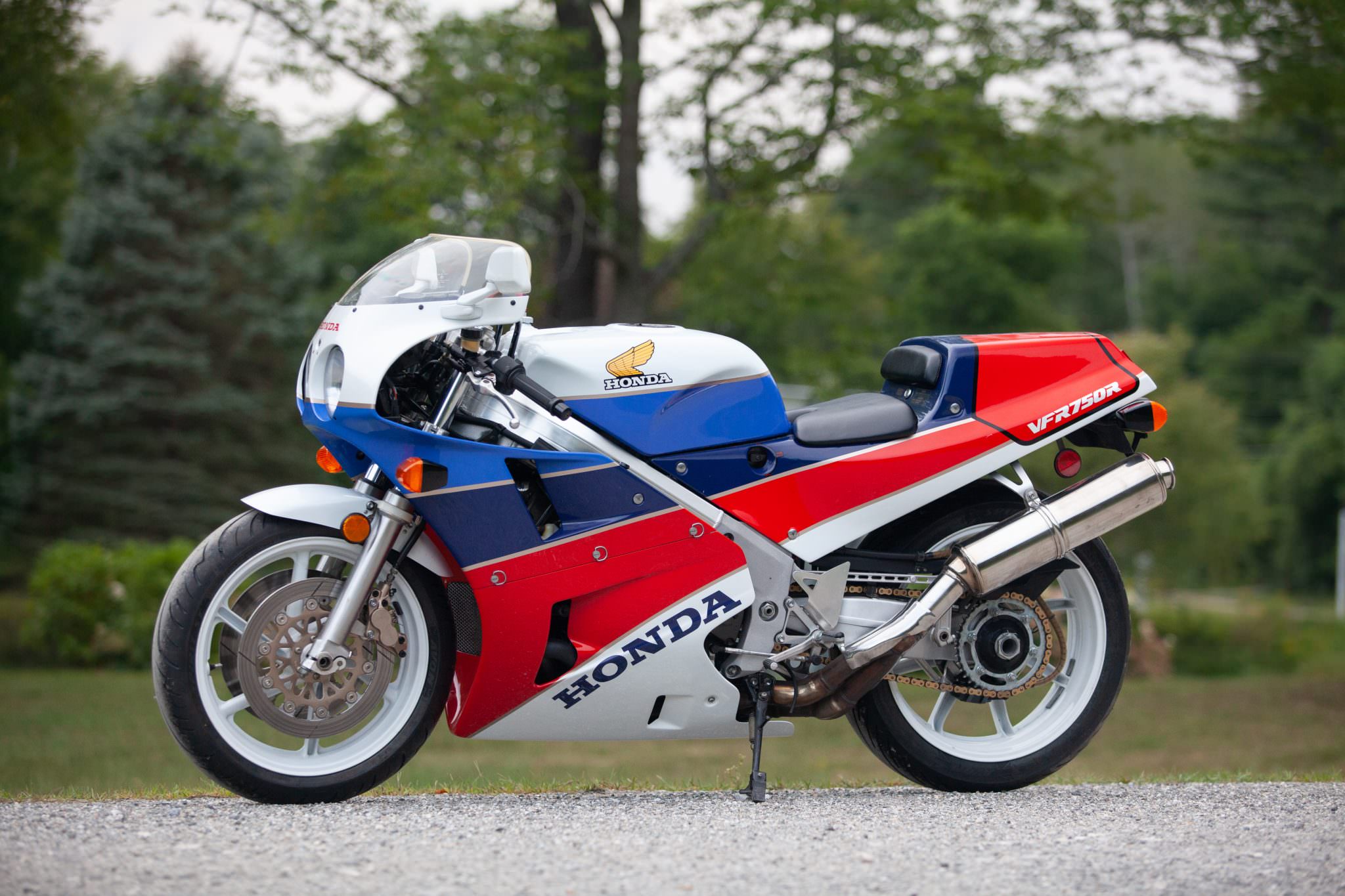
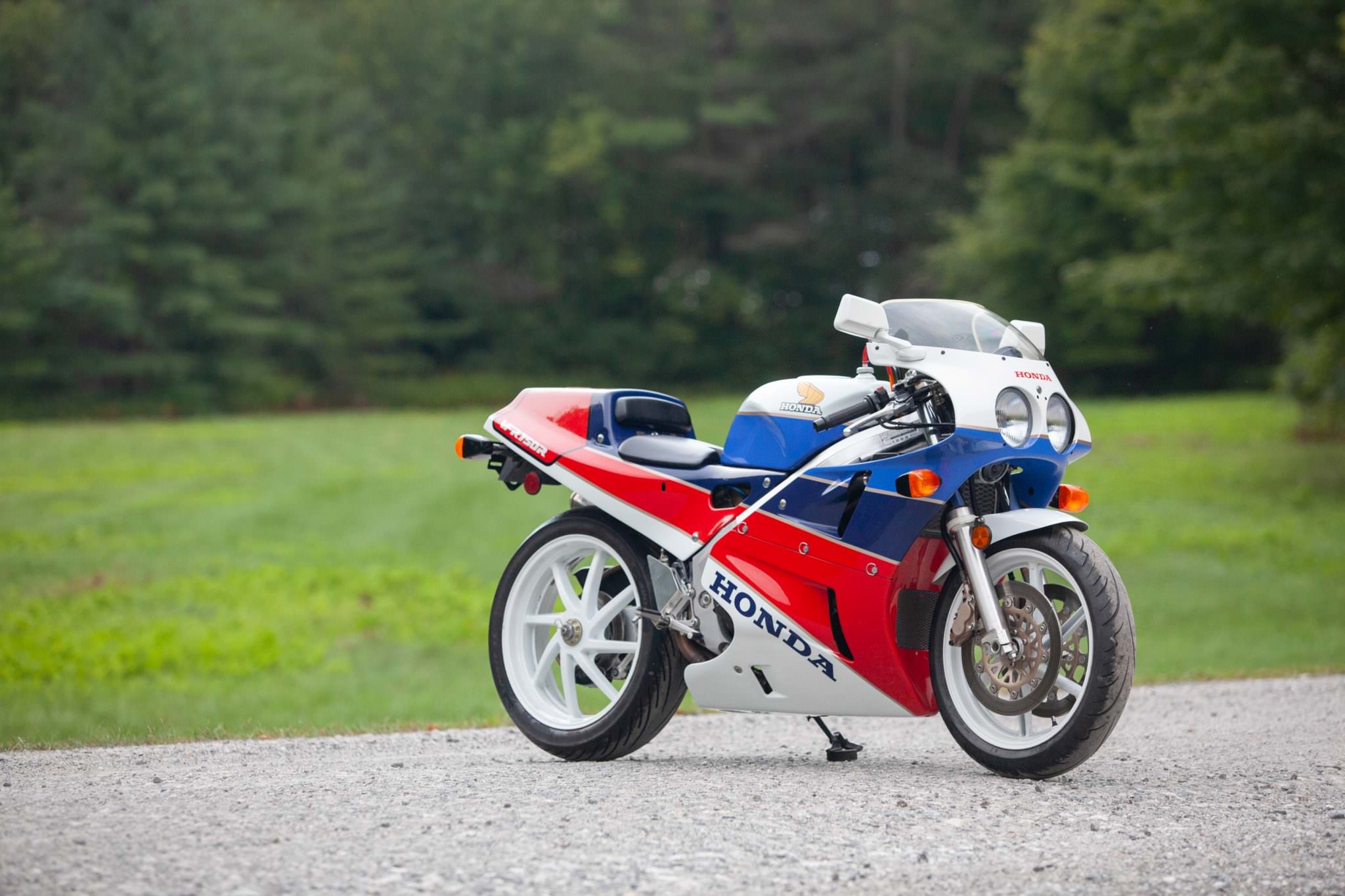
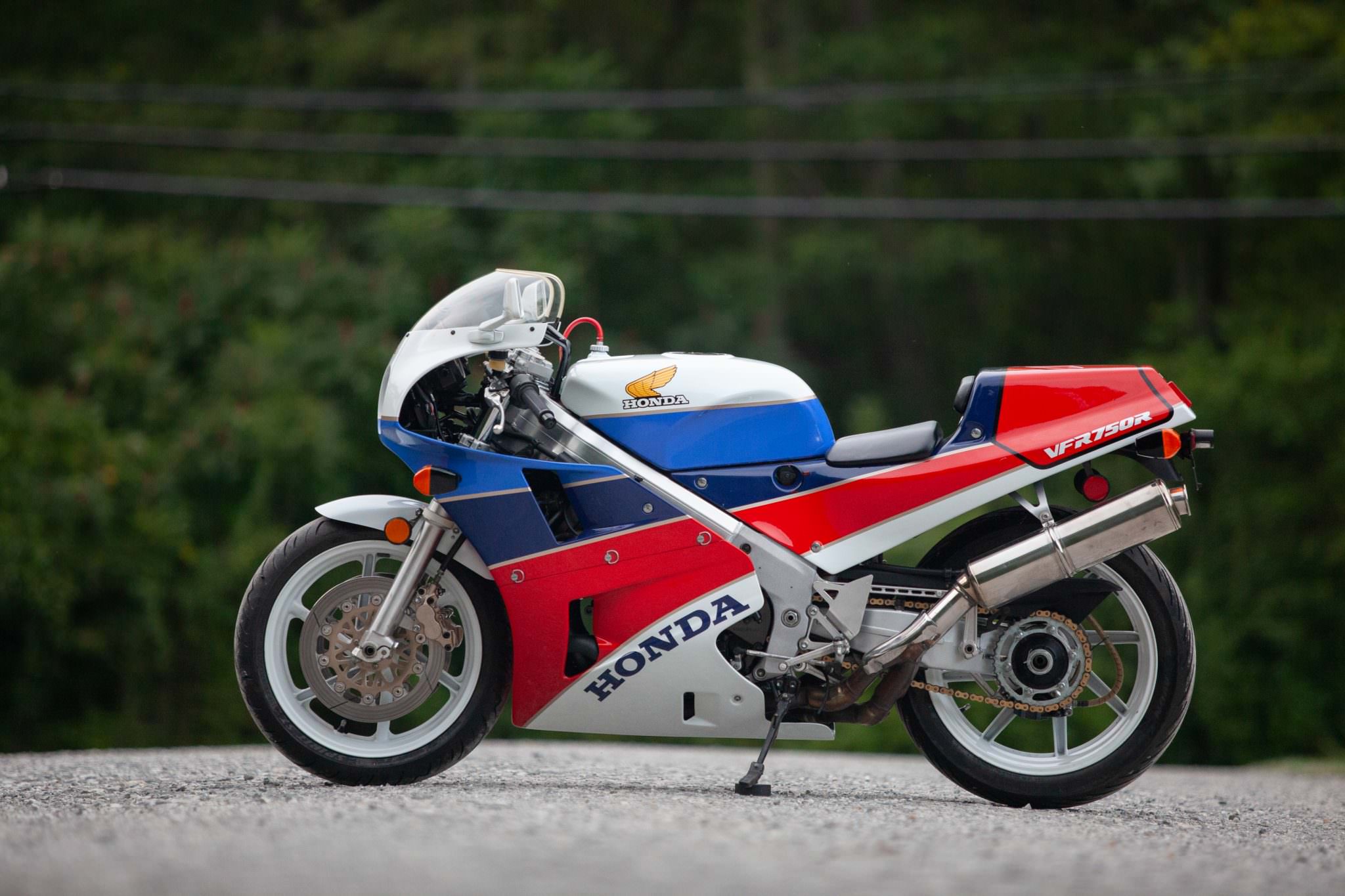
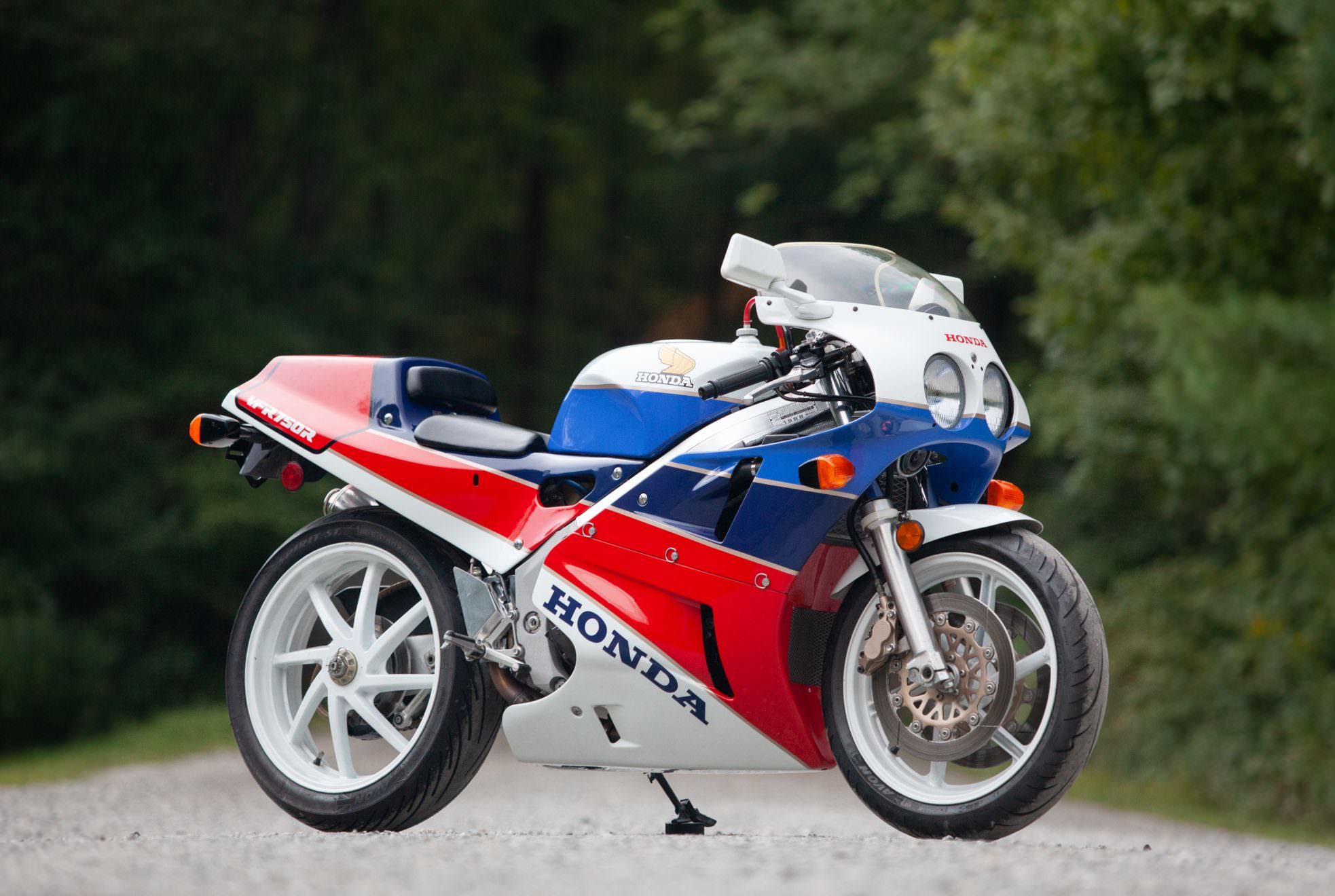
Although the bike was offered in a few different color schemes, this white/blue/red livery is the most famous.

The 1988 Honda VFR750R RC30 Shown Here

The RC30 you see here is one of just 32 that were made for the Canadian market in 1988, and one of just 3,000 made in total.

it was later sold to a collector in Massachusetts and it’s now being offered for sale after a number of maintenance tasks have been performed – these included painting the fairing, changing the oil and coolant, rebuilding the clutch cylinders, bleeding the brakes, and replacing the battery and tires.

If you’d like to read more or place a bid it’s being offered for sale on Bring a Trailer out of Great Barrington, Massachusetts with 6,000 kilometers on the odometer and you can see the listing here.
Honda VFR750R RC30 25 Honda VFR750R RC30 24 Honda VFR750R RC30 23 Honda VFR750R RC30 22 Honda VFR750R RC30 21 Honda VFR750R RC30 20 Honda VFR750R RC30 19 Honda VFR750R RC30 18 Honda VFR750R RC30 17 Honda VFR750R RC30 16 Honda VFR750R RC30 15 Honda VFR750R RC30 12 Honda VFR750R RC30 11 Honda VFR750R RC30 10 Honda VFR750R RC30 9 Honda VFR750R RC30 7 Honda VFR750R RC30 6 Honda VFR750R RC30 5 Honda VFR750R RC30 4 Honda VFR750R RC30 3 Honda VFR750R RC30 2

Images courtesy of Bring a Trailer.
The post For Sale: A Honda VFR750R RC30 – King Of The 80s Superbikes appeared first on Silodrome.


from Silodrome https://silodrome.com/honda-vfr750r-rc30-for-sale/
via gqrds

For Sale: A Volvo C303 4×4 Overland Camping Rig

This is a 1975 Volvo C303 4×4 and although it may look a little like a Unimog at first glance, it has no relation to its German peer. In 1983 a Volvo C303 won its class in the Paris-Dakar Rally – proving unequivocally how capable it is.

The C303 entered production in 1974, it was a significant design evolution over the earlier Volvo L3314 series of off-road trucks and it was largely destined for military and rescue use – that said some of them did end up in civilian hands.

Fast Facts – The Volvo C303

  • The Volvo C303 was developed in the early 1970s and released in 1974, it was essentially an evolutionary improvement over the earlier Volvo L3314 series of vehicles.
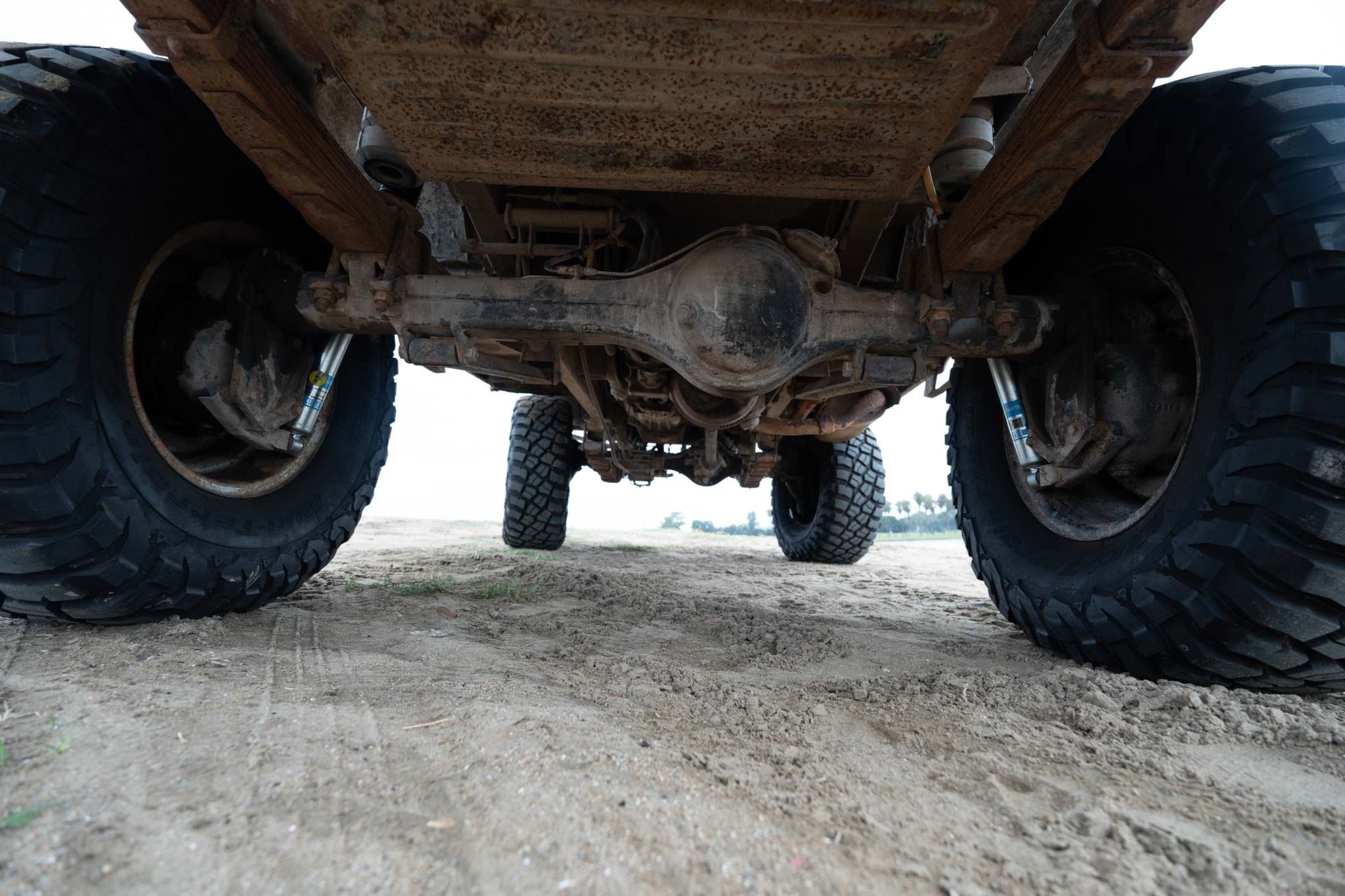
  • The C303 uses a body-on-chassis design, with live axles and leaf springs front and back. Portal axles are used which results in a ground clearance under the differentials of 15 inches.
  • The body is largely made of flat steel and all glass used on the vehicle is flat – meaning that it’s easy to replace anywhere in the world, as flat panes can be cut to size.
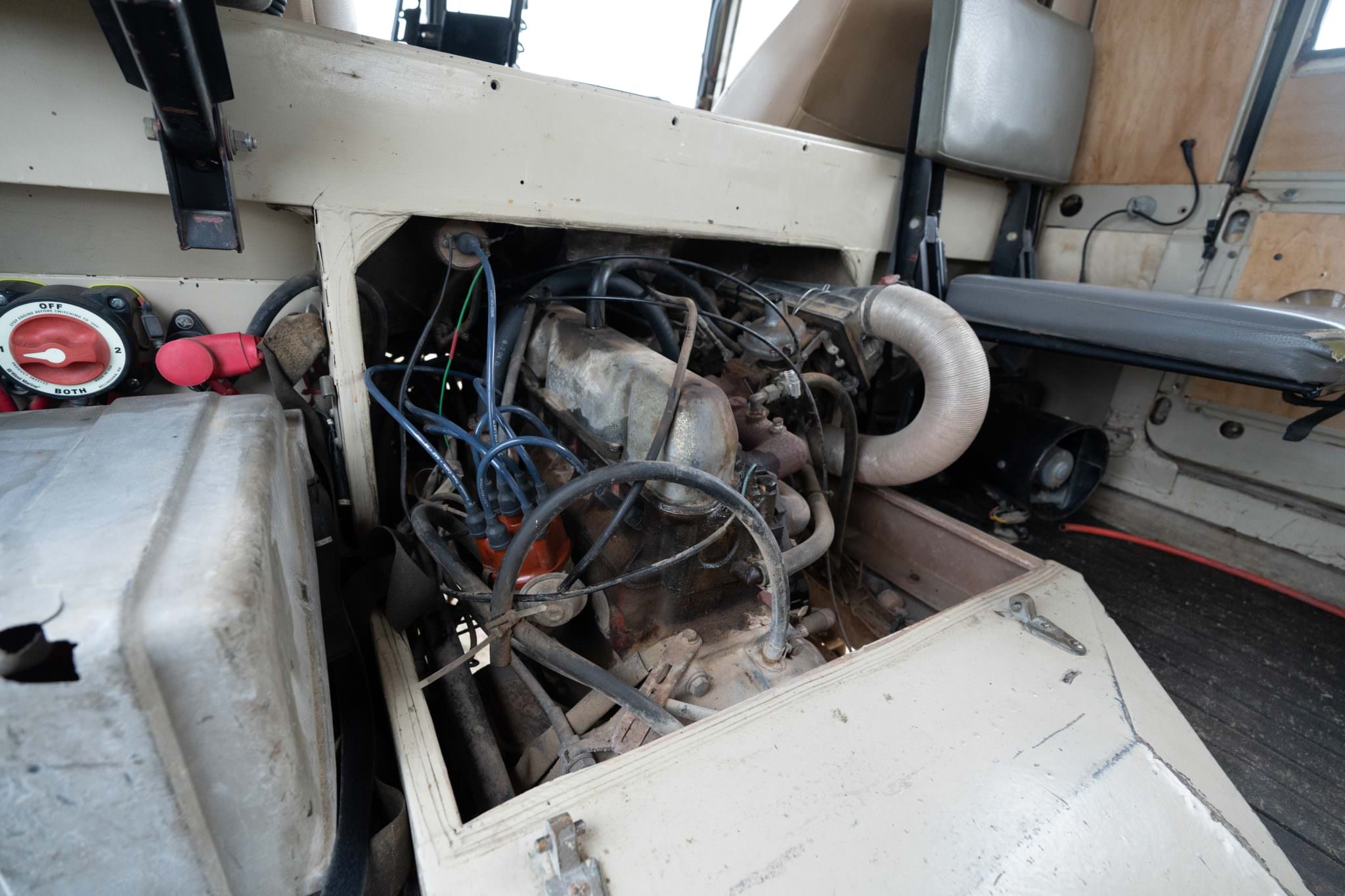
  • Power is provided by a version of the Volvo B30 petrol engine, an inline-six cylinder unit with overhead valves, a 3.0 liter displacement, and 125 hp with 162 lb ft of torque.

Origins Of The Volvo C303 “Terrängbil”

The Volvo C303 is the direct descendant of the highly-regarded Laplander series of off-road trucks developed by the Swedish automaker specifically for military use. The Laplander L3314 would be in production from 1959 until 1967, then replaced with the C303 in 1974.

Volvo C303 4×4 Paris Dakar Rally

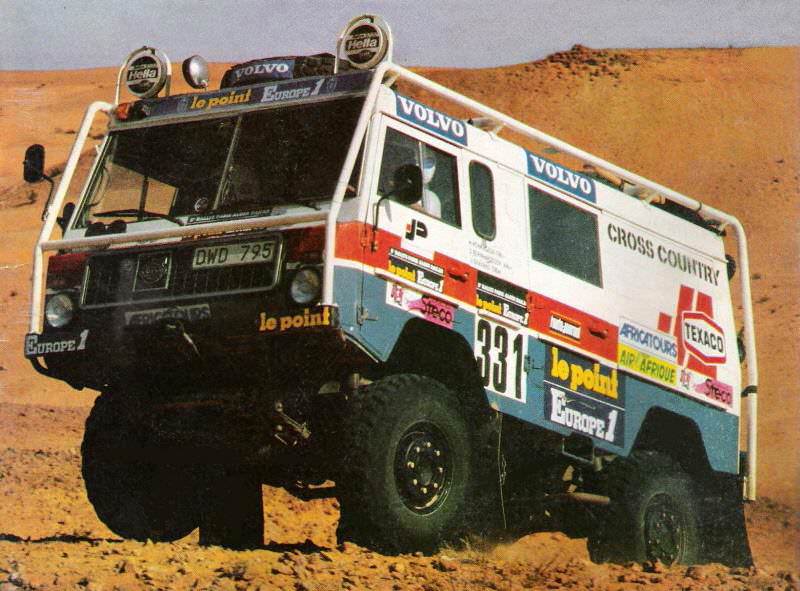
This is the modified Volvo C303 that won the under-10 ton truck class at the 1983 Paris Dakar Rally.

The C303 was both bigger and more powerful than its forebear, with a larger engine, a longer wheelbase, wider track, more internal room, and importantly, it used portal axles rather than standard live axles – significantly increasing ground clearance.

As with almost all vehicles that are designed for military use, the C303 is utilitarian, with a body made from flat steel, similarly flat windows, and few concessions for comfort or luxury.

Volvo C303 – Specifications

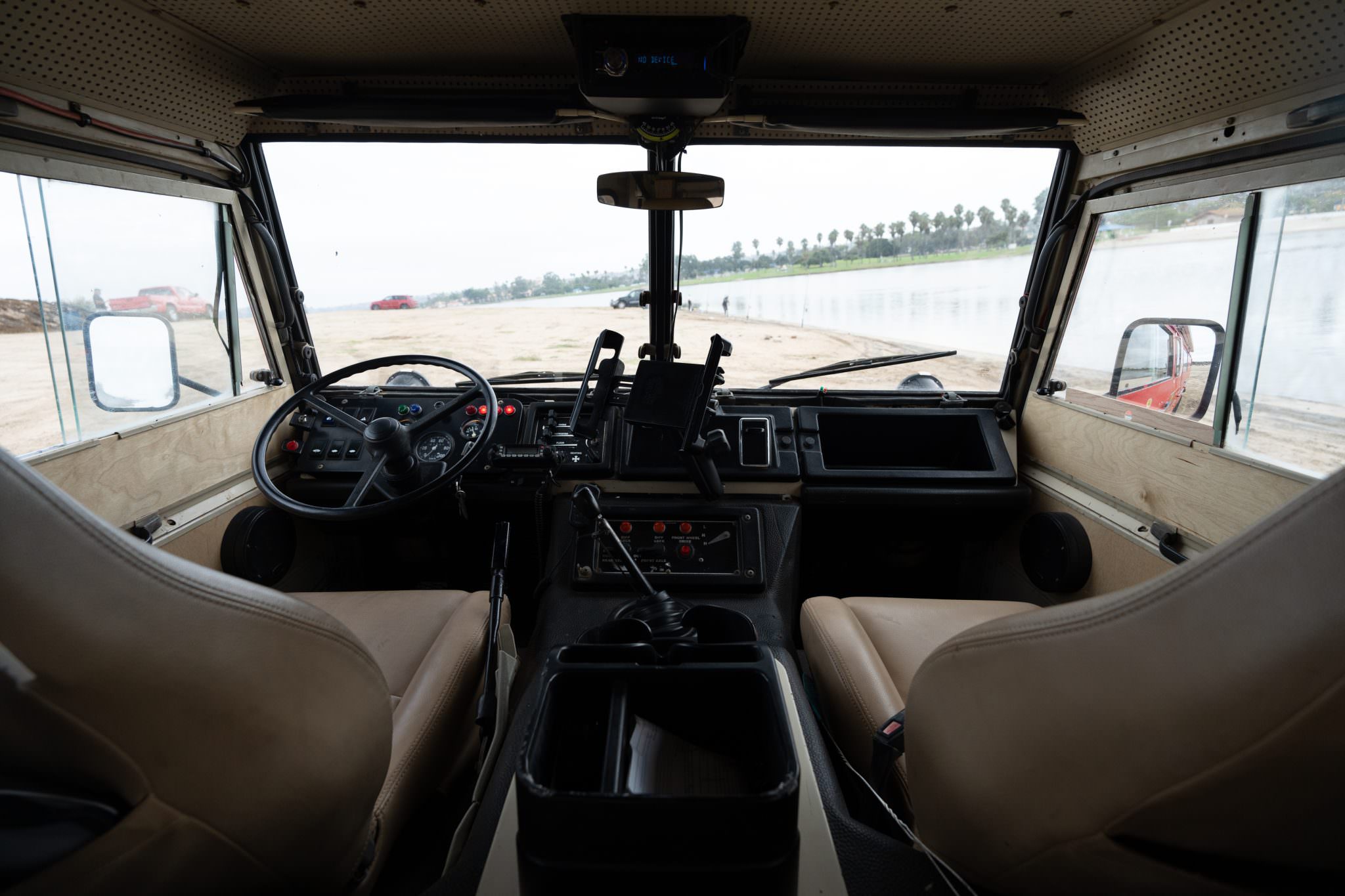
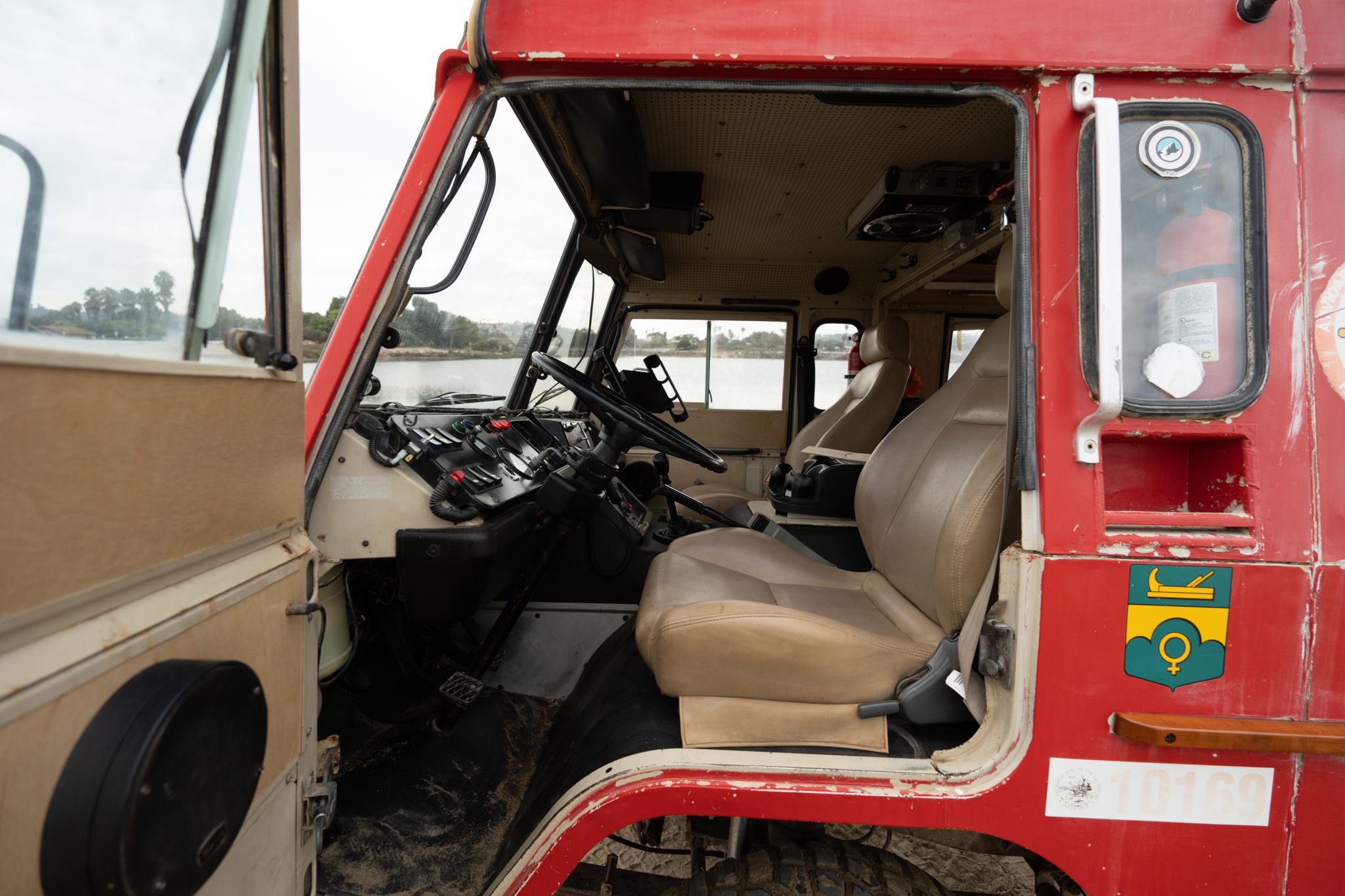
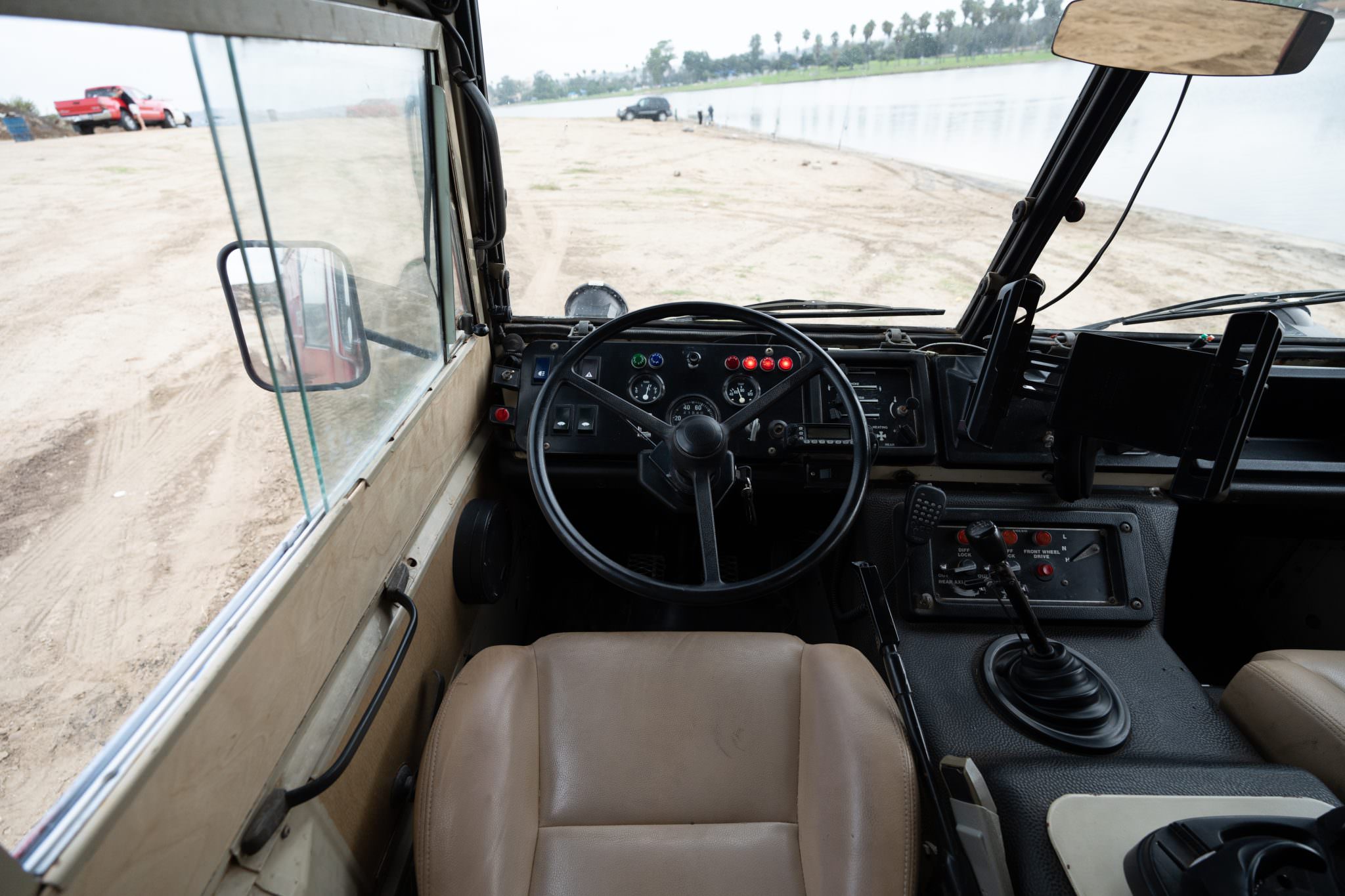
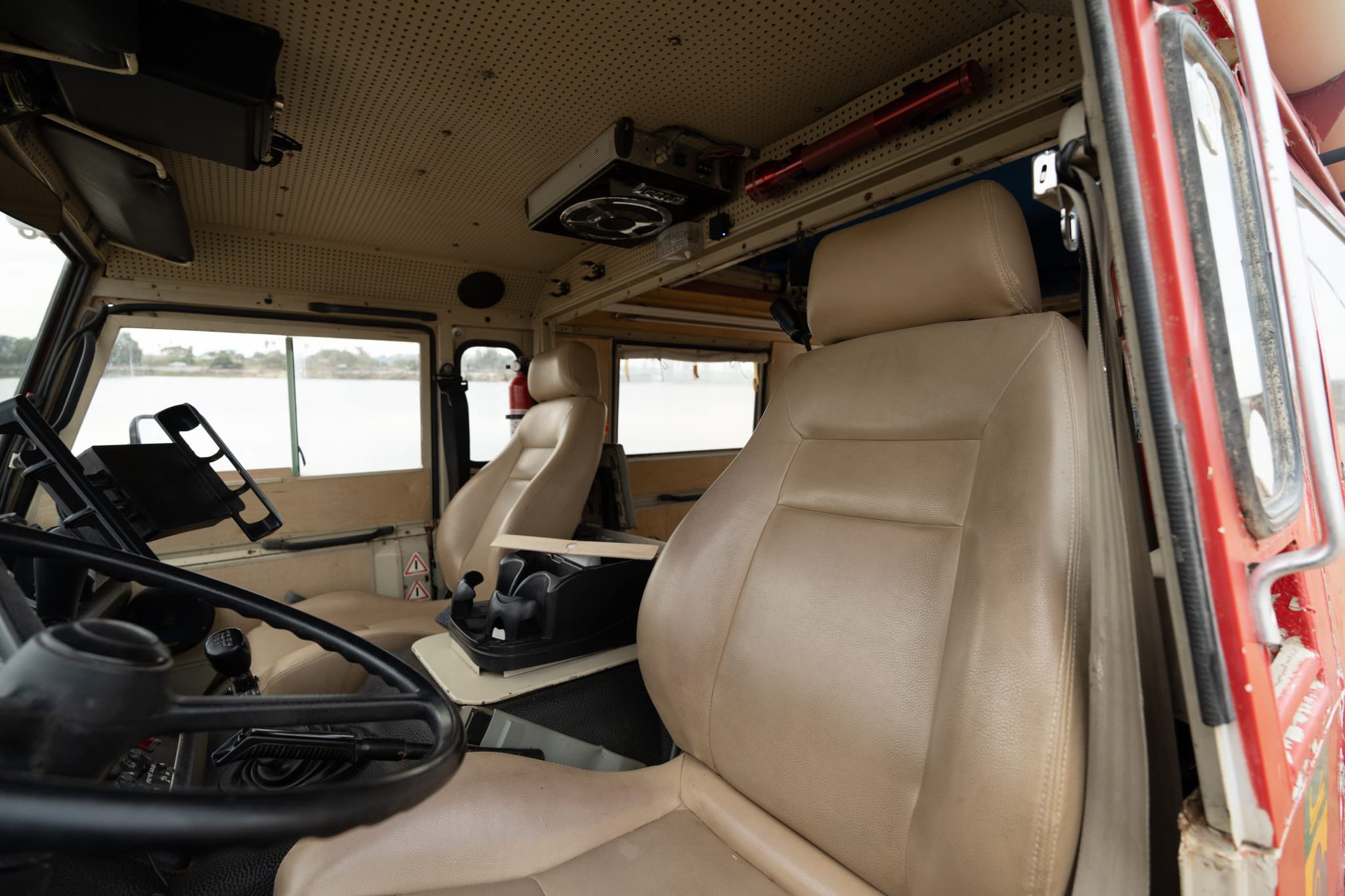
The driver and passenger sit up front in a CoE (cab-over-engine) layout to allow maximum space in the rear for cargo, as well as ensuring that the driver will always have excellent visibility of the terrain ahead.

As you would expect for an off-road vehicle from this era, the Volvo C303 uses body-on-chassis construction, and it has both leaf springs and drum brakes front and back. The use of portal axles, similar to those used on the Unimog, offers ground clearance of 15 inches under the differentials.

Volvo C303 4×4

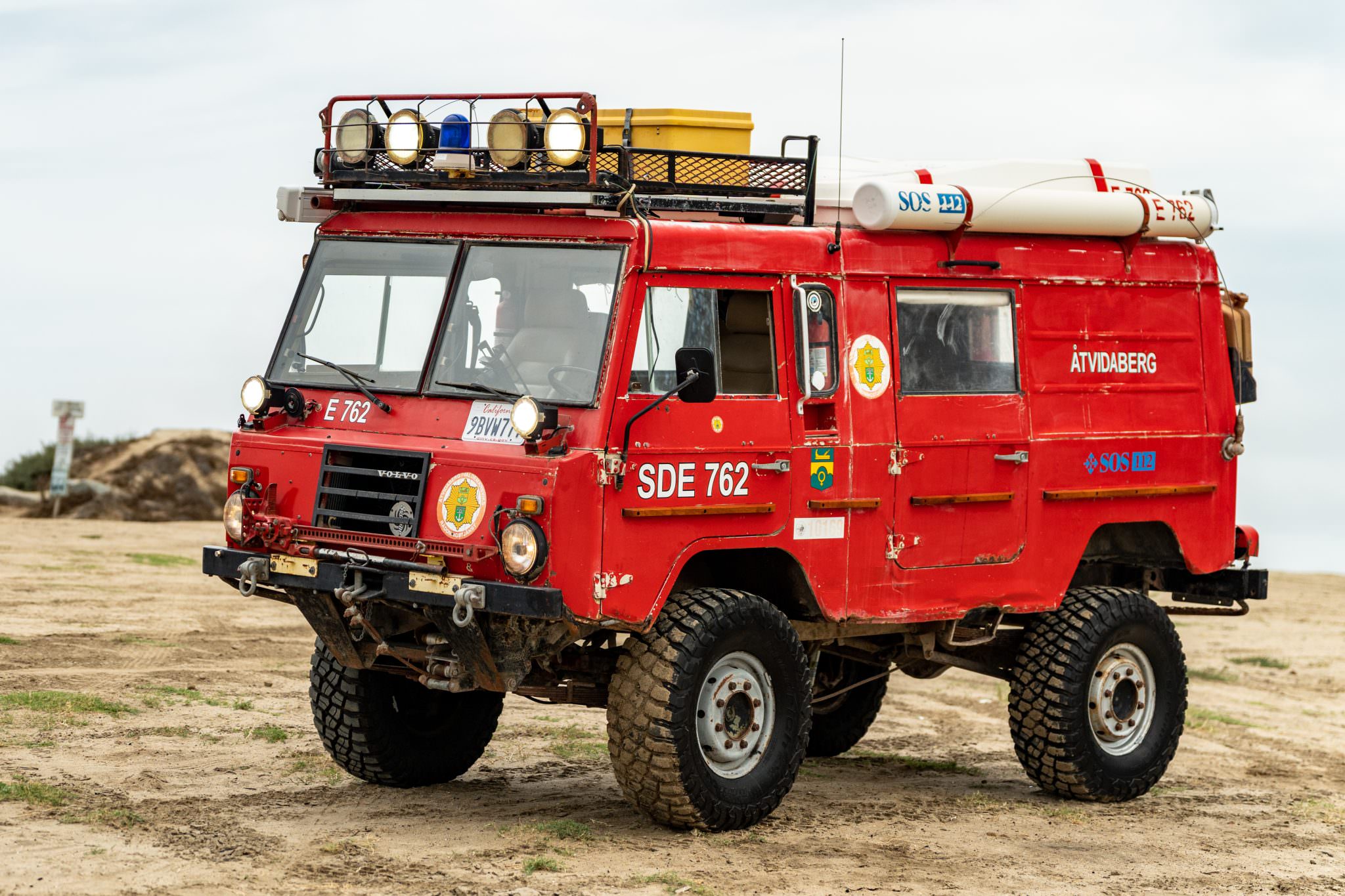
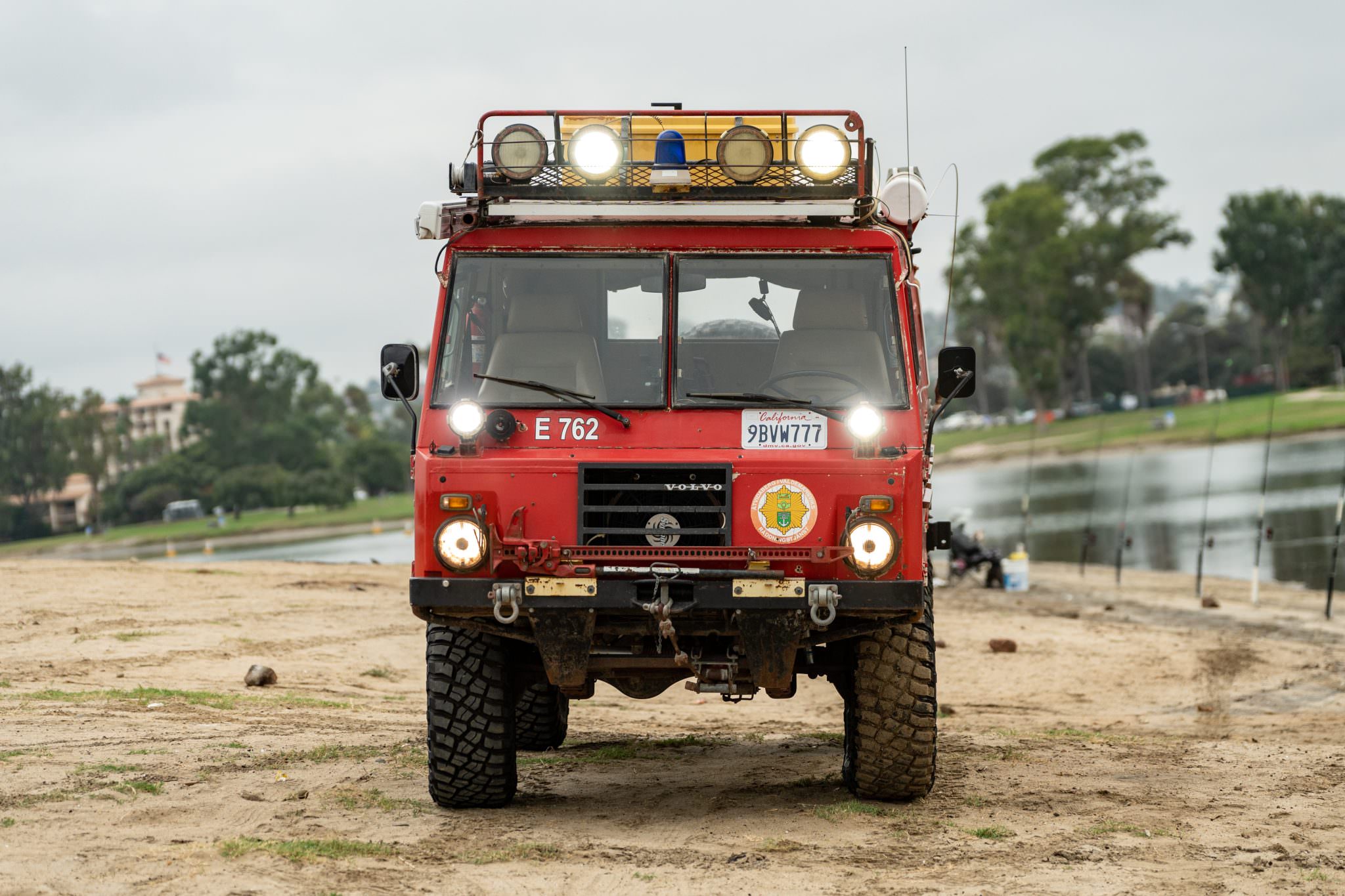
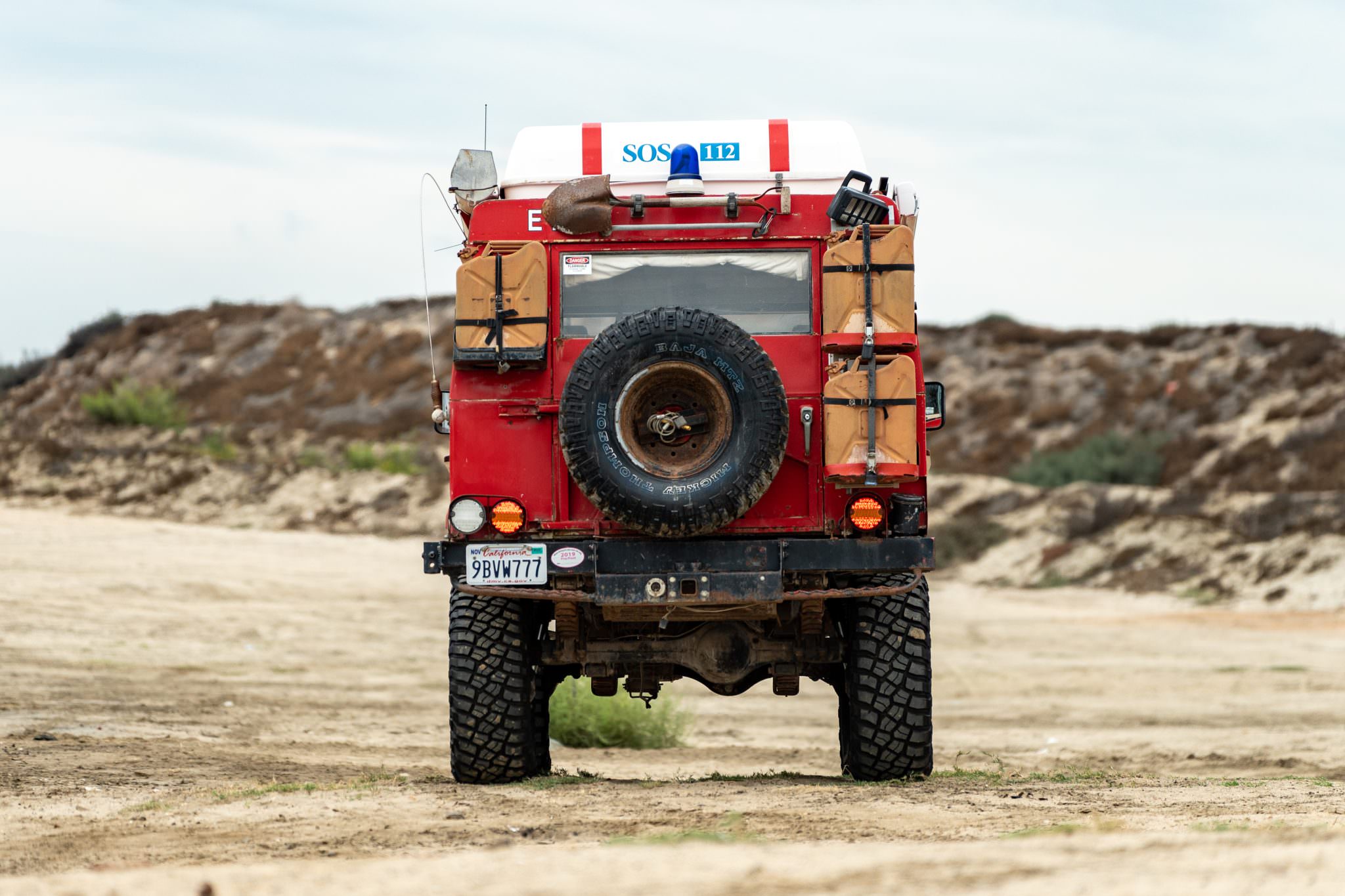
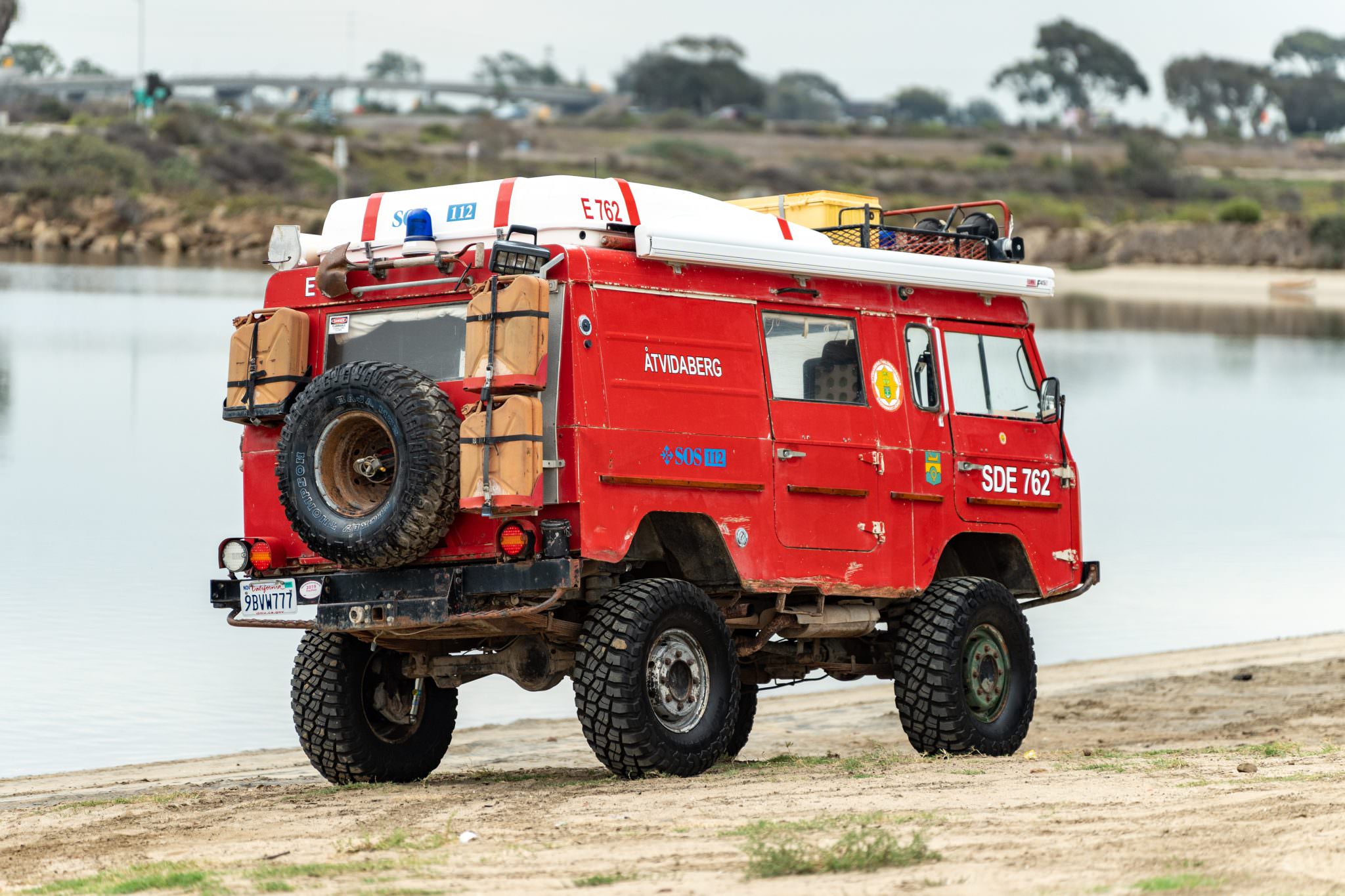
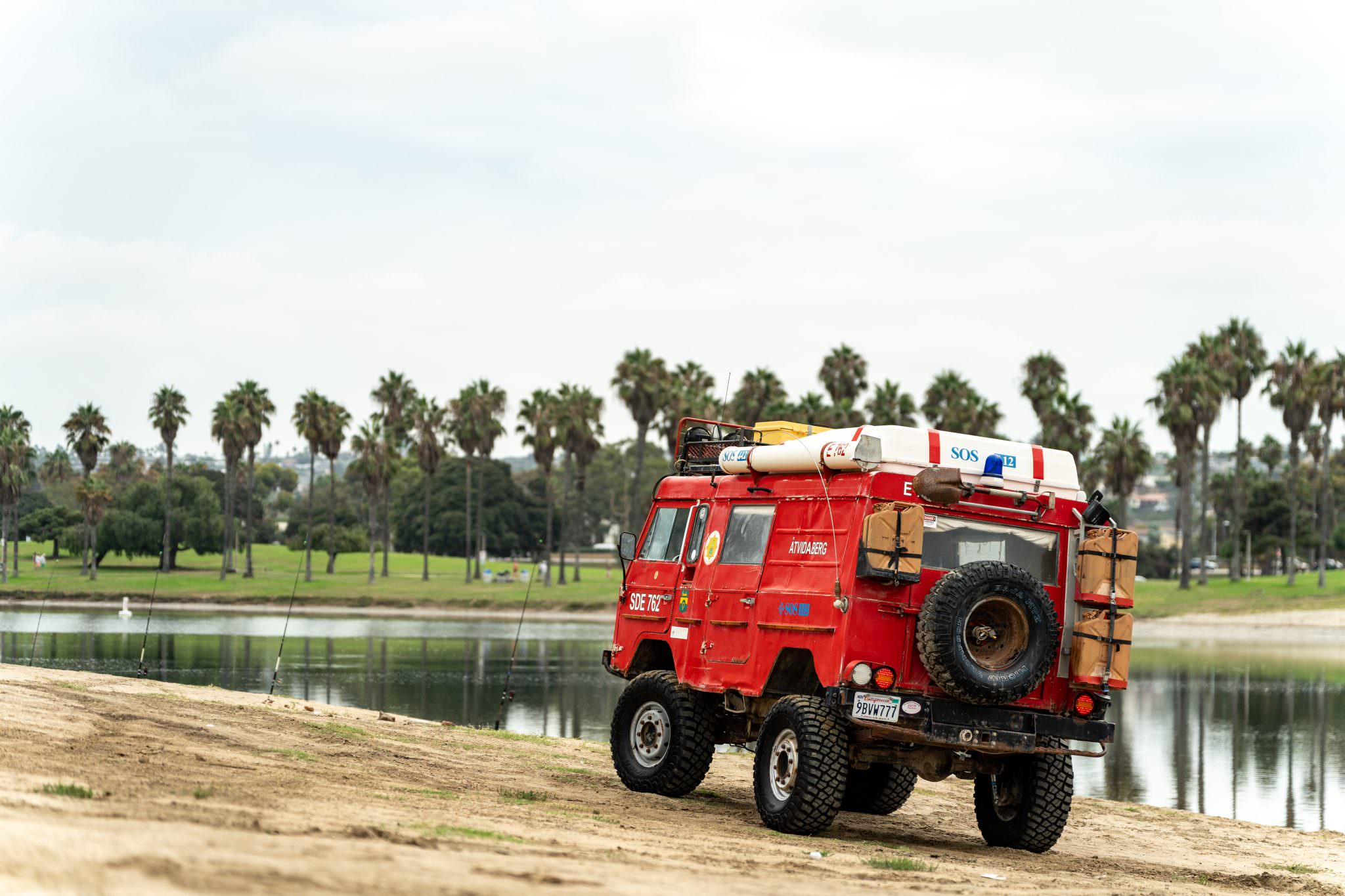
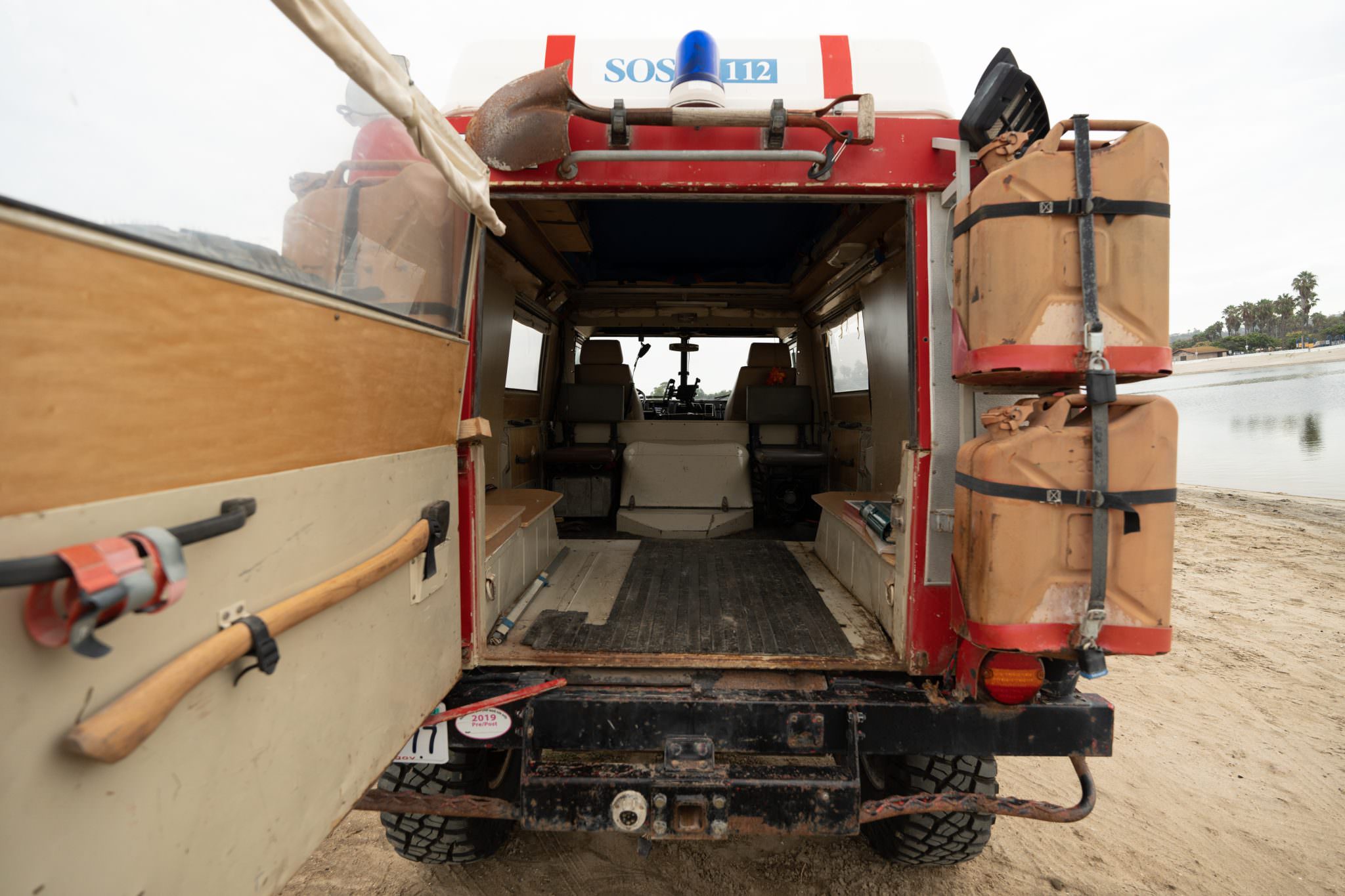
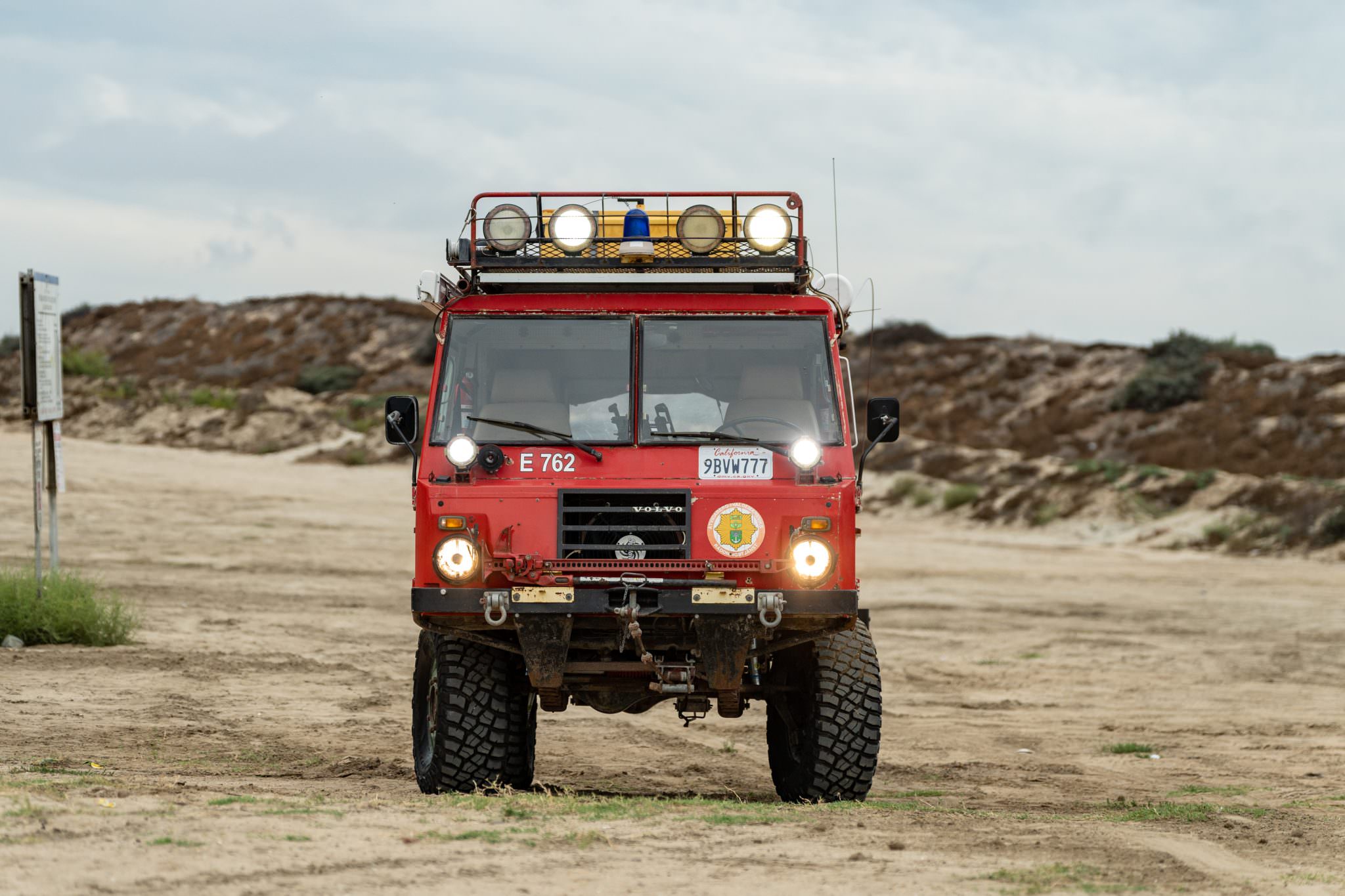
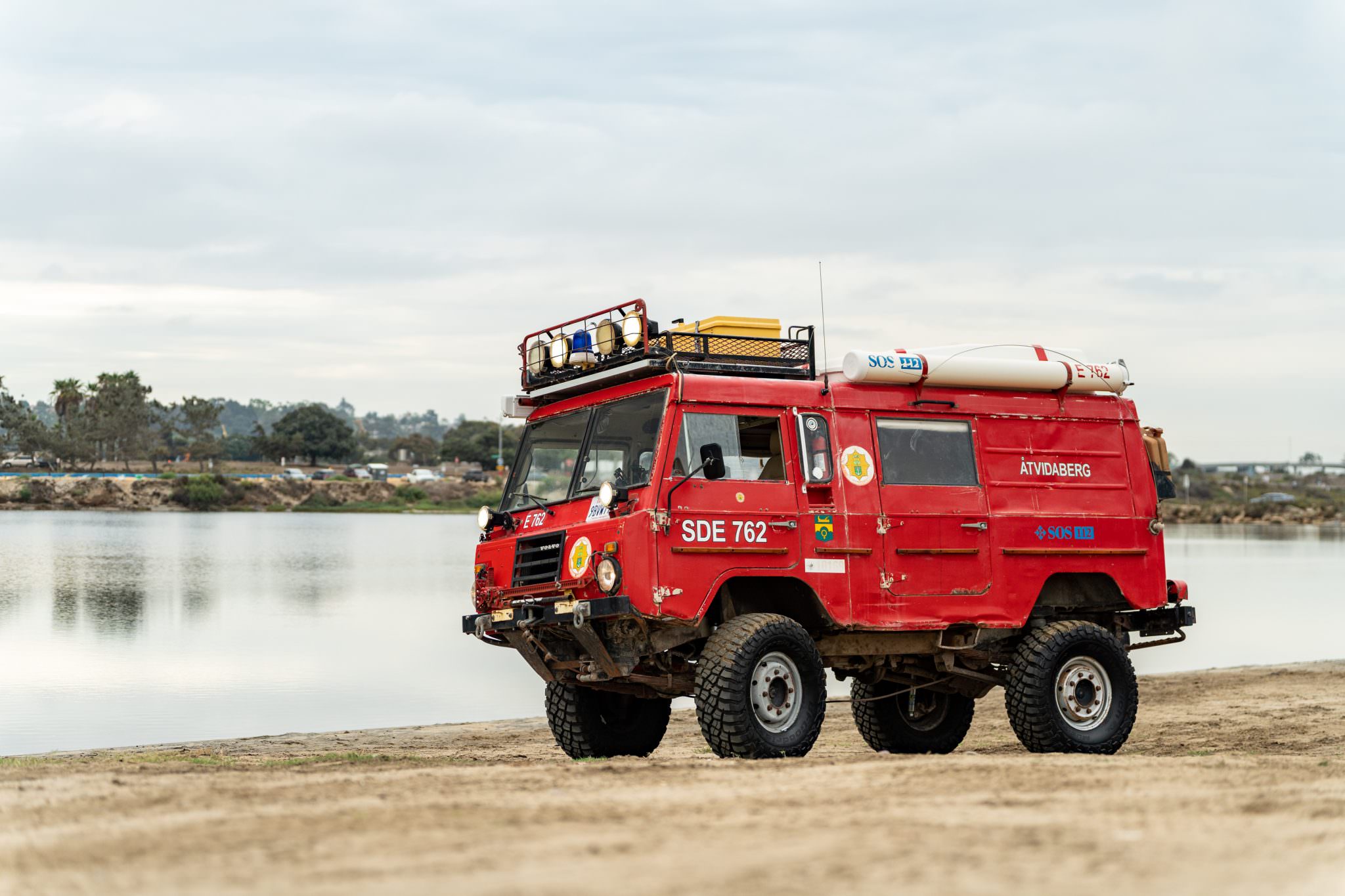
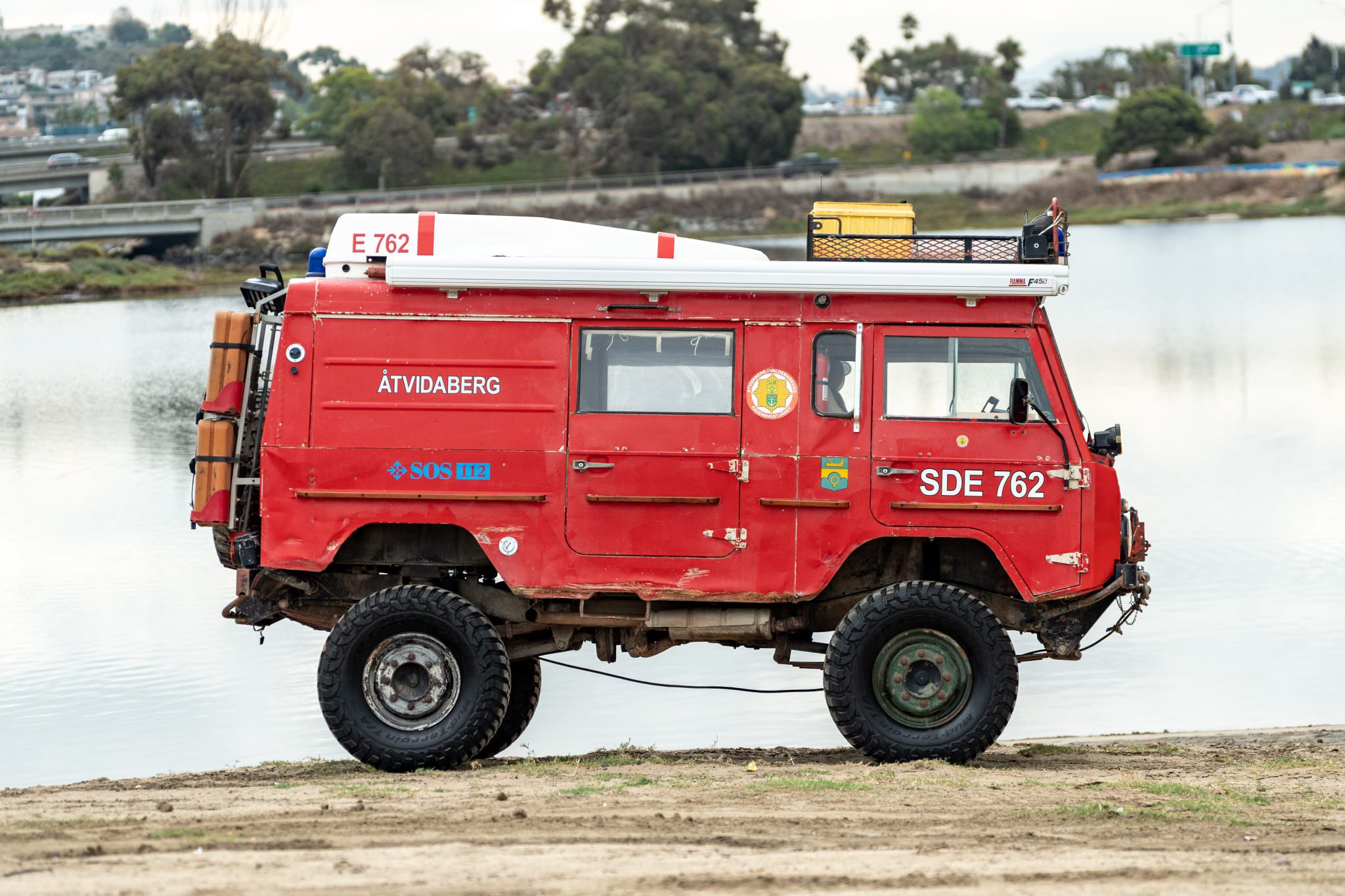
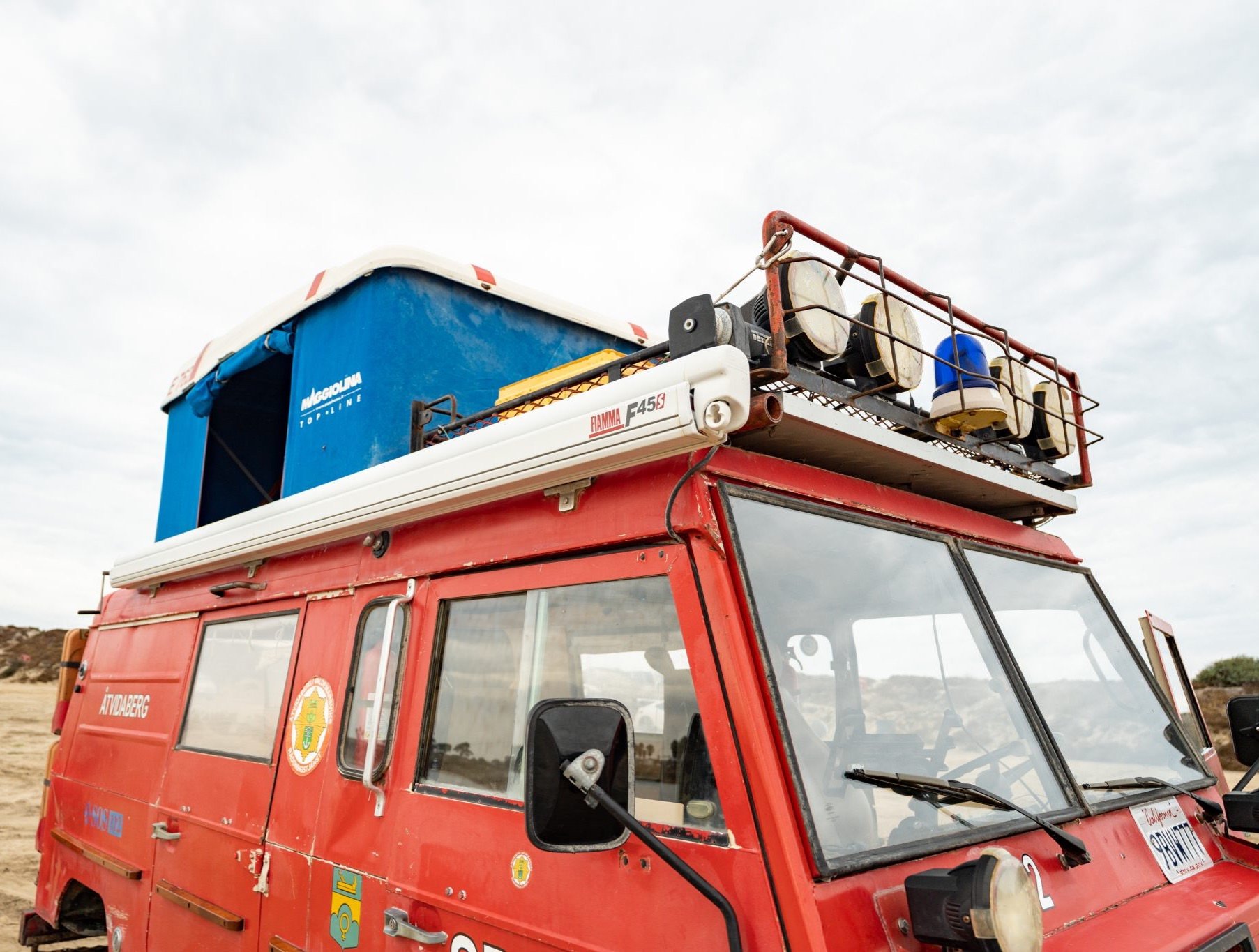
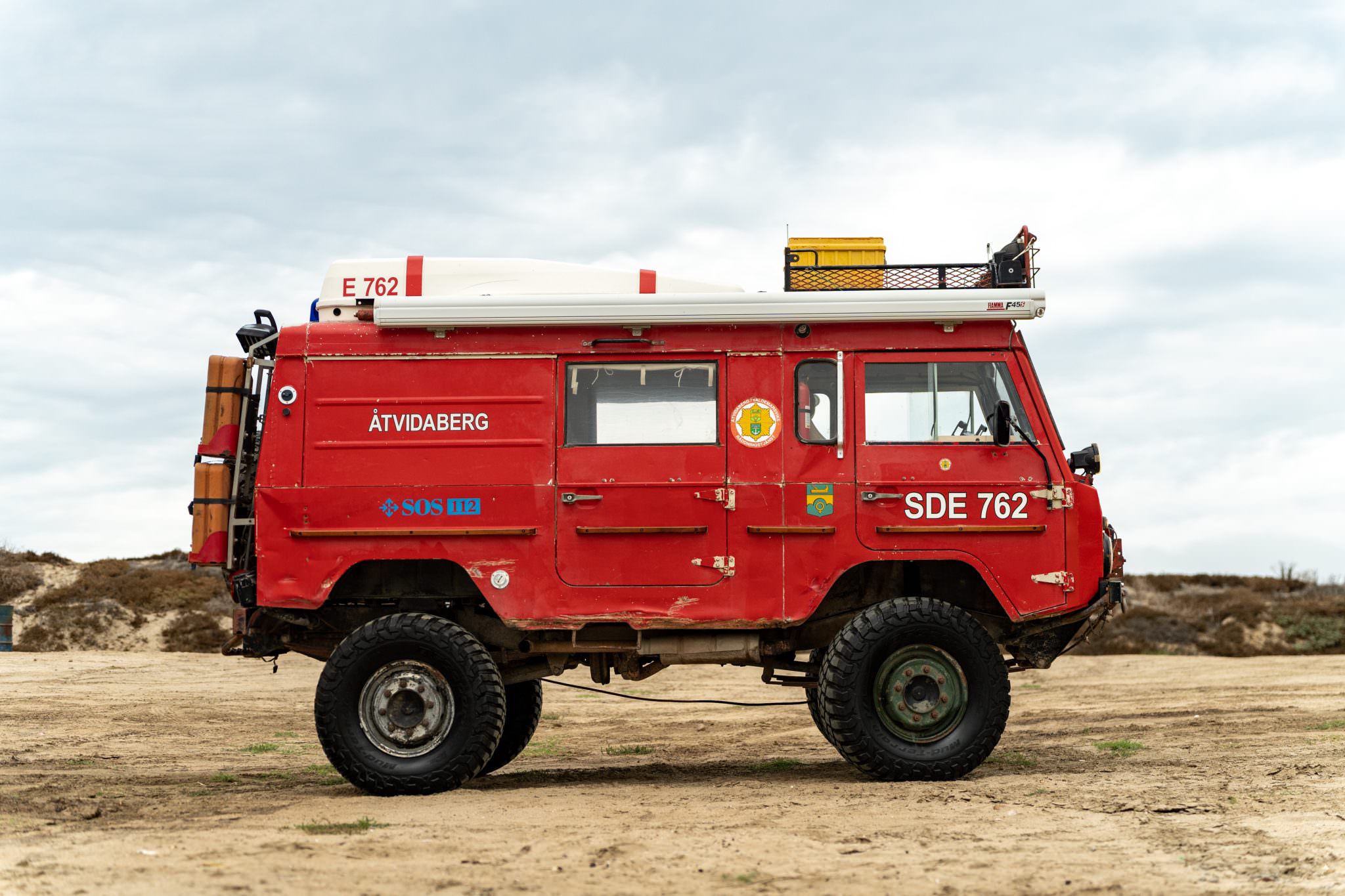
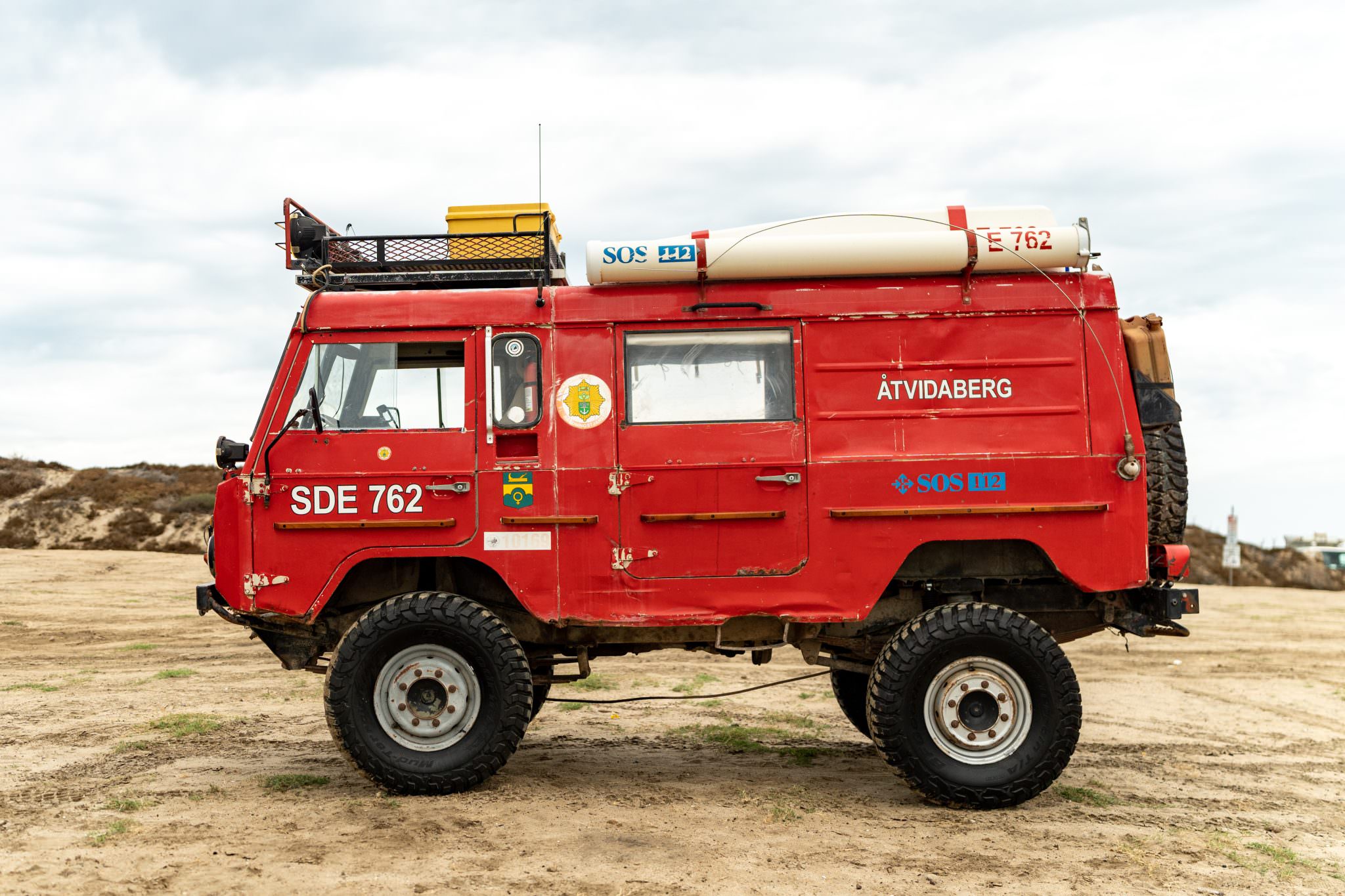
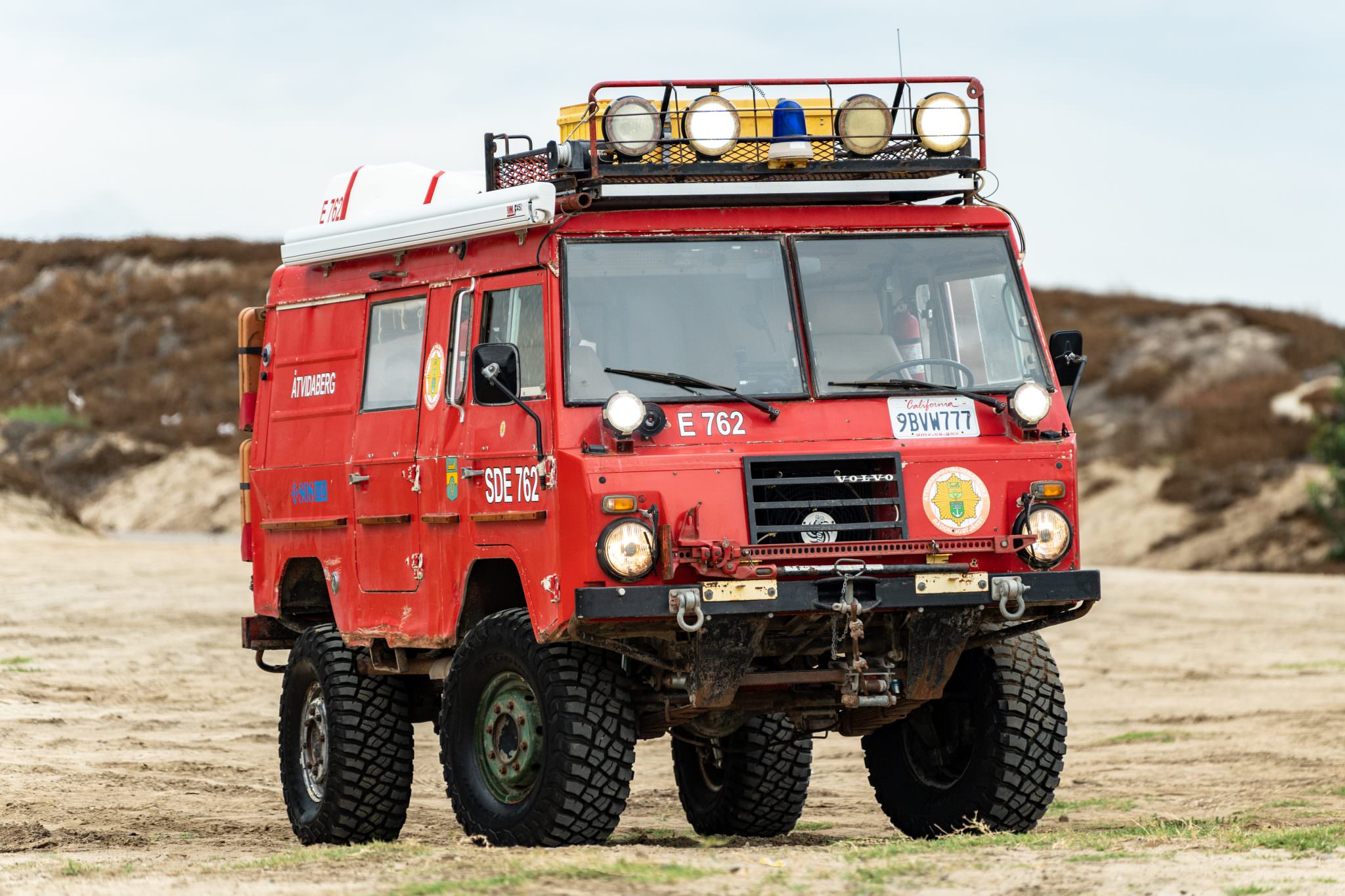
This C303 was originally used in Sweden as a fire recovery vehicle before being imported into the USA and converted into an overland camper.

Given Volvo’s popularity in the Scandinavian market it made sense for them to use one of their production car engines in the C303, both because it would be tried and tested and because spare parts availability would be excellent.

C303 Engine + Powertrain

  • They chose the Volvo B30 engine, a straight-six petrol/gasoline engine with an OHV head, two single-barrel Stromberg carburetors, a 3.0 liter displacement, a compression ratio of 8.7:1, and total power output of 125 hp at 4,250 with 162 lb ft of torque at 2,800 rpm.
  • Power is sent back through a 4-speed transmission and a 2-speed transfer case which offers both high and low range. The top speed is listed as 125 km/h (78 mph) with a cruising speed of approximately 60 mph achievable depending on total vehicle weight.
  • Most were built in 4×4 format however there were some 6×6 versions and a planned 8×8 version however it never made it out of the prototype stage as the engine was deemed not powerful enough.

Production + Military Use

Over the course of the 1974 to 1984 production run 8,718 examples of the C303 were built, with approximately 75% of them being used by the military.

C303s would be put into service mainly by the Swedish military,  but the militaries of Malaysia, Latvia, Lithuania, Estonia, and Angola all took deliveries.

Volvo C303 4×4 5

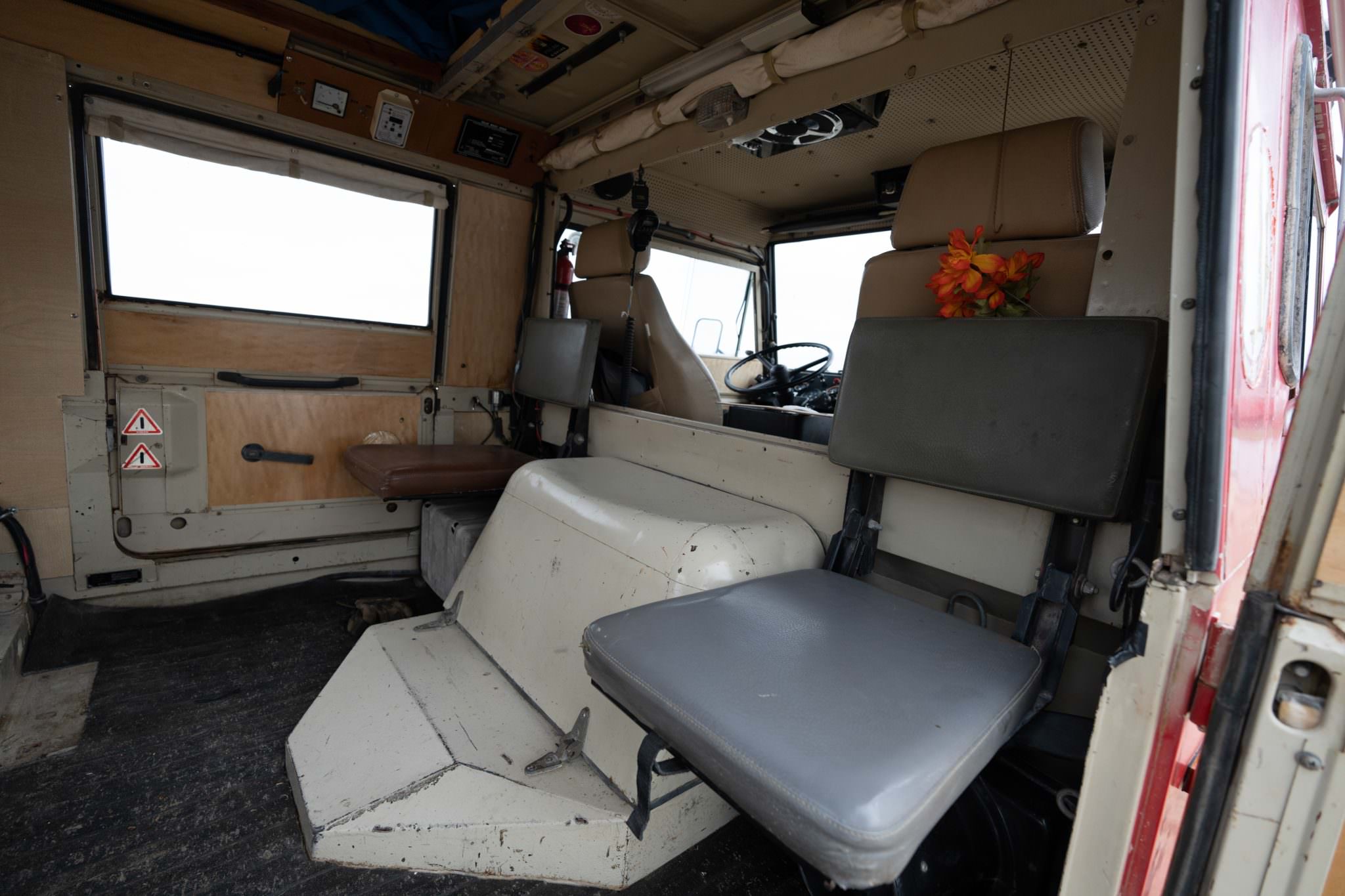
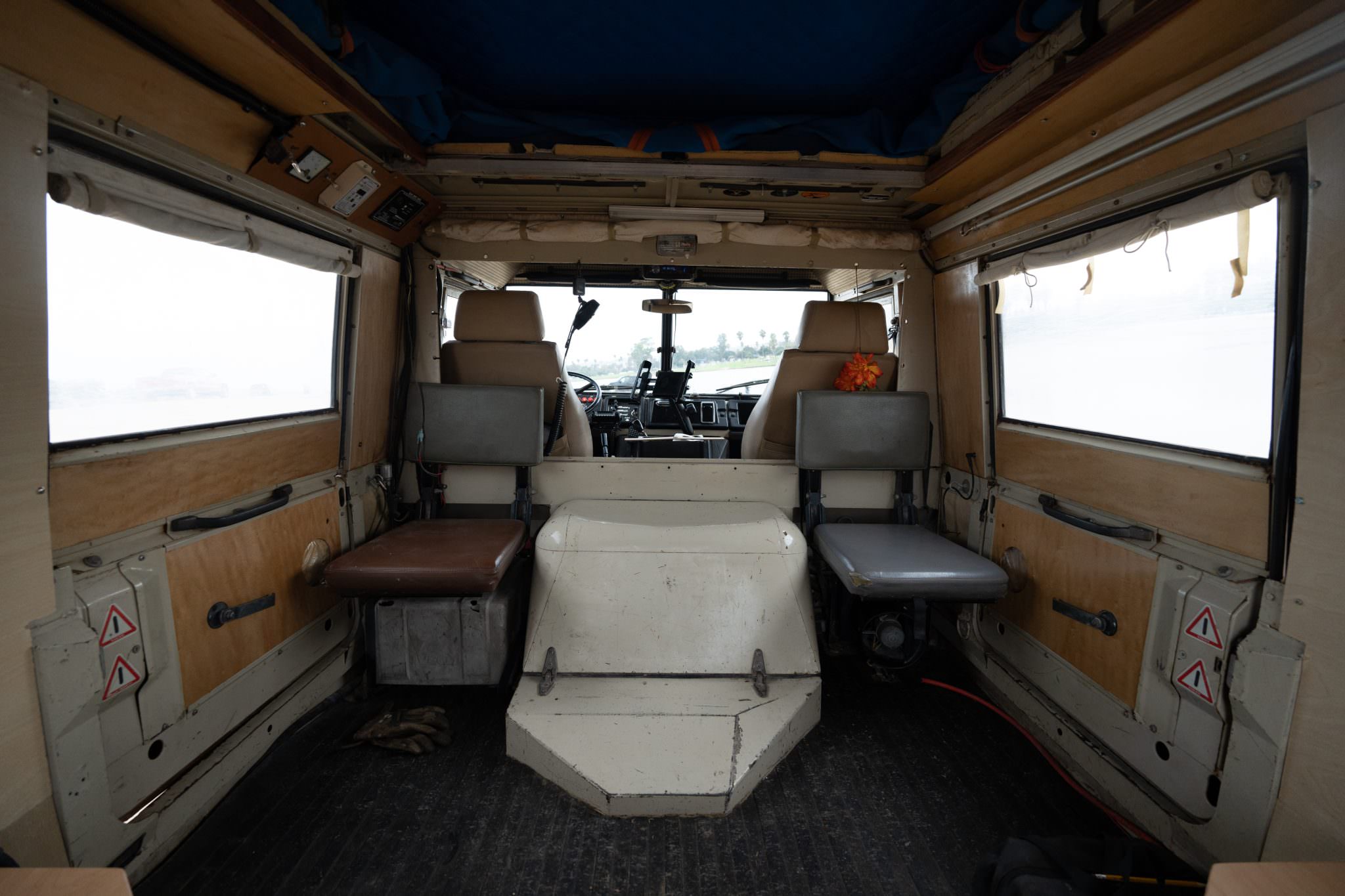
Up front there’s seating for two, with expansive forward visibility thanks to the cab-over-engine configuration.

Other non-civilian uses included fire departments, rescue services, public roads companies, and power companies. The surviving examples of the Volvo C303 are now popular on the after market for conversion into 4×4 overland campers.

The Volvo C303 Camper Shown Here

The Volvo C303 you see here spent its early life in Sweden as a fire recovery vehicle before being imported into the USA more recently.

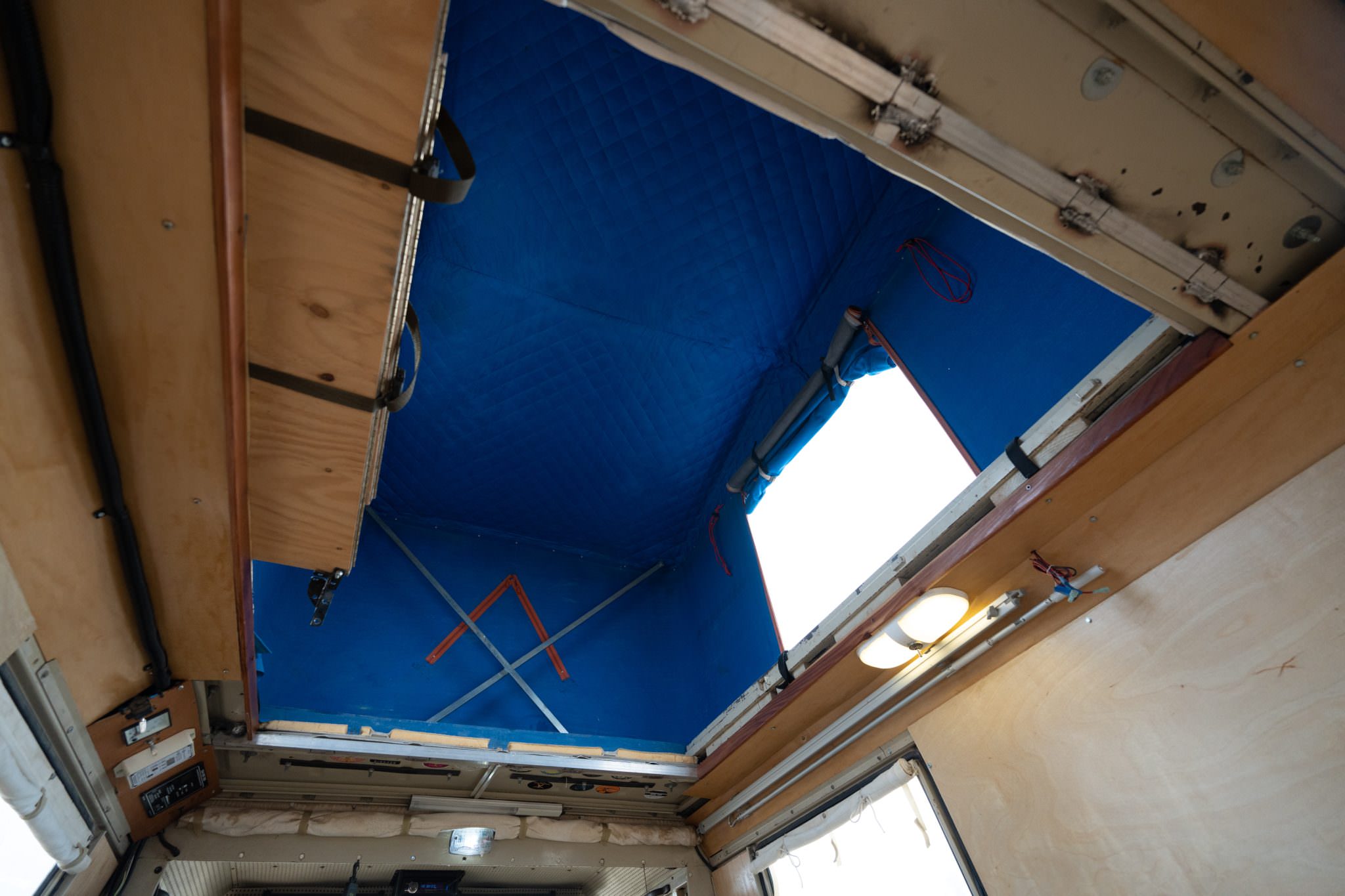
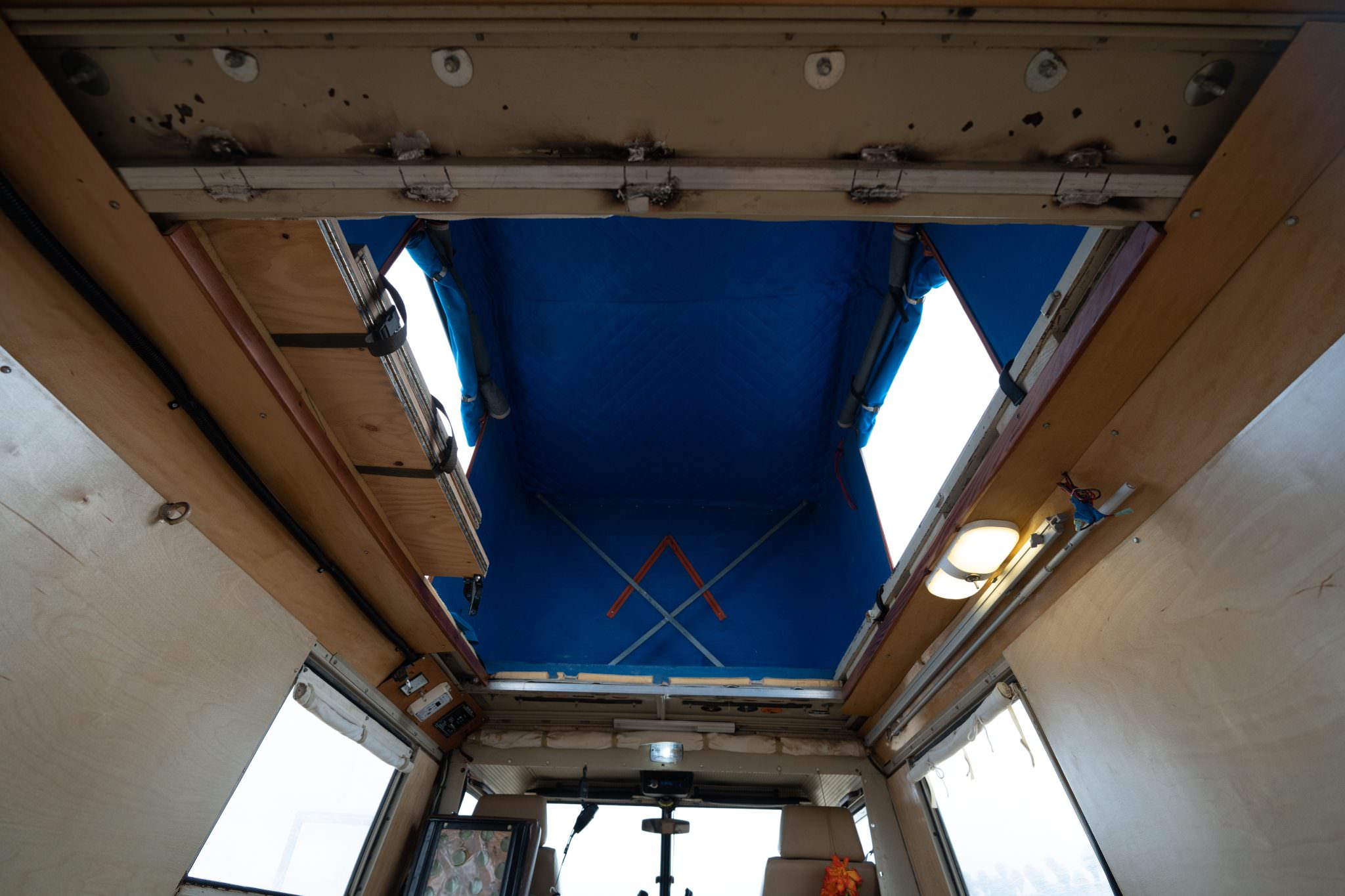
Since its arrival in the US it’s been fitted with uprated Bilstein shock absorbers, a pop-up tent, an awning, jump seats, a Kenwood stereo, and a slew of other equipment.

It’s now being offered for sale on Bring a Trailer with the service and operators manuals, spare parts, and a clean title in the seller’s name out of San Diego, California.

If you’d like to read more about it or register to bid you can visit the listing here.

Volvo C303 4×4 17 Volvo C303 4×4 26 Volvo C303 4×4 25 Volvo C303 4×4 23 Volvo C303 4×4 22 Volvo C303 4×4 20 Volvo C303 4×4 19 Volvo C303 4×4 18 Volvo C303 4×4 16 Volvo C303 4×4 15 Volvo C303 4×4 14 Volvo C303 4×4 13 Volvo C303 4×4 12 Volvo C303 4×4 11 Volvo C303 4×4 10 Volvo C303 4×4 9 Volvo C303 4×4 8 Volvo C303 4×4 7 Volvo C303 4×4 6 Volvo C303 4×4 4 Volvo C303 4×4 2 Volvo C303 4×4 1

Images courtesy of Bring a Trailer.

The post For Sale: A Volvo C303 4×4 Overland Camping Rig appeared first on Silodrome.


from Silodrome https://silodrome.com/volvo-c303-4x4-camper/
via gqrds
A Factory-Built Supercharged Triumph Thruxton R – 162 WHP

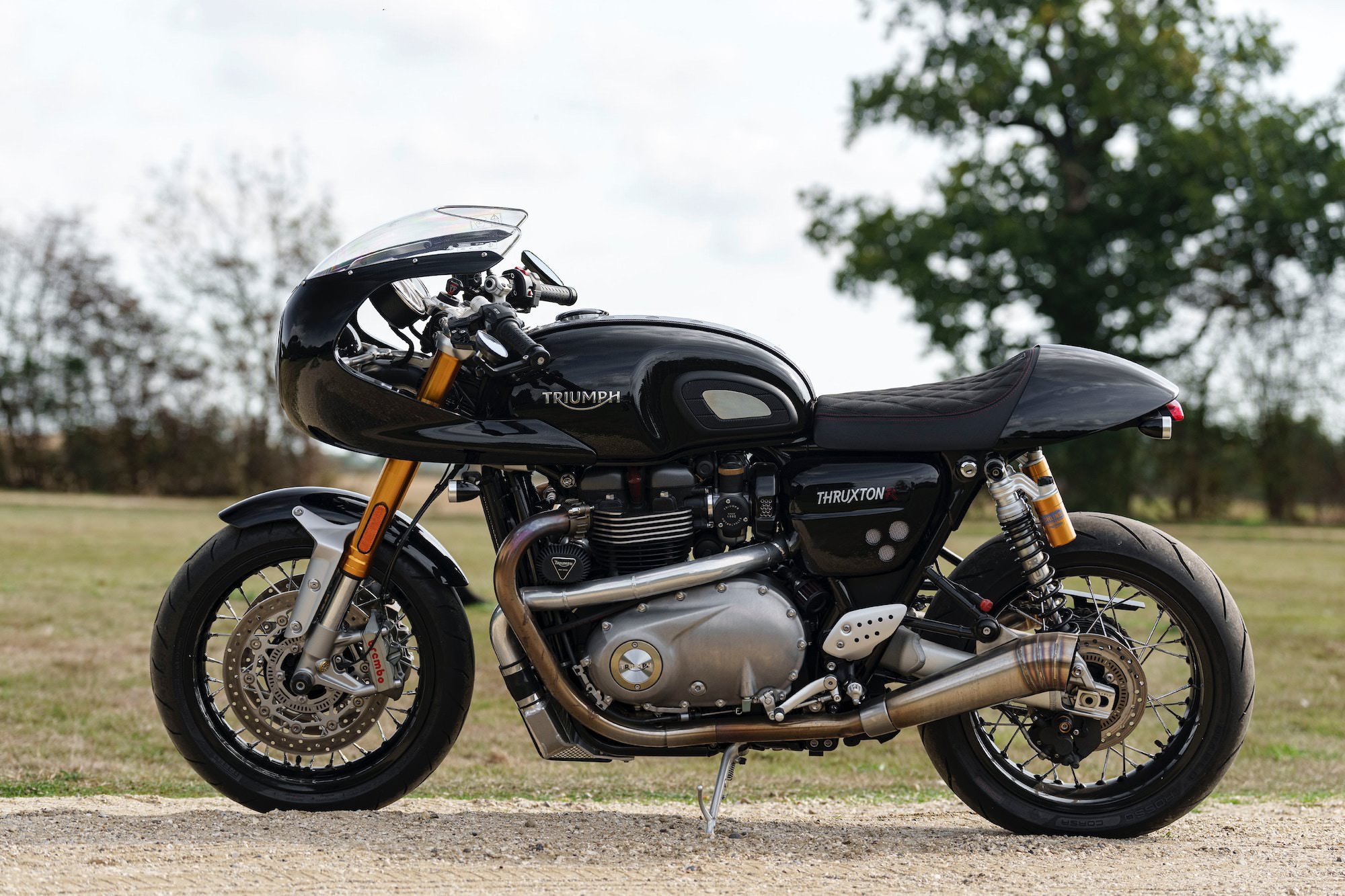
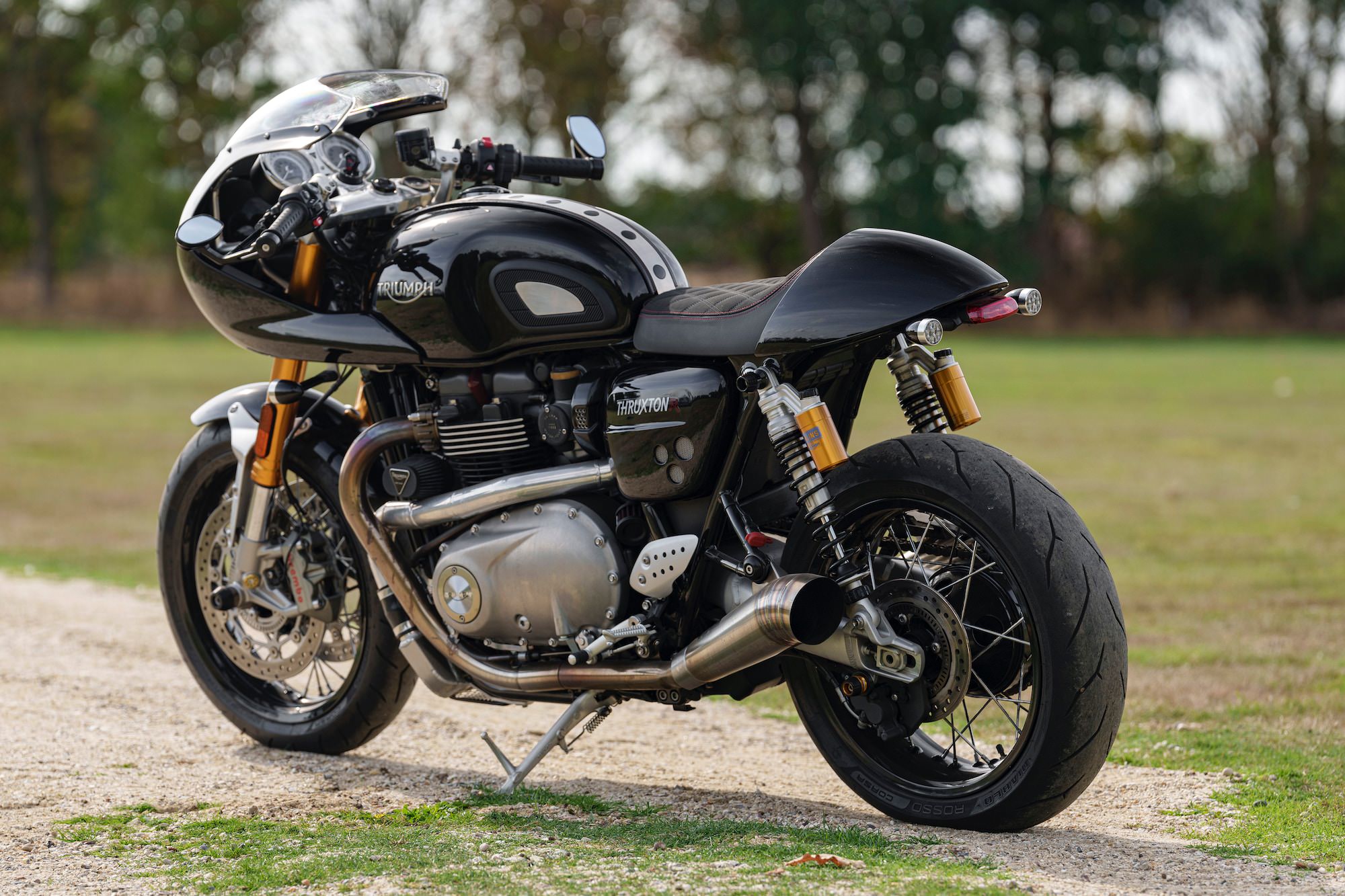
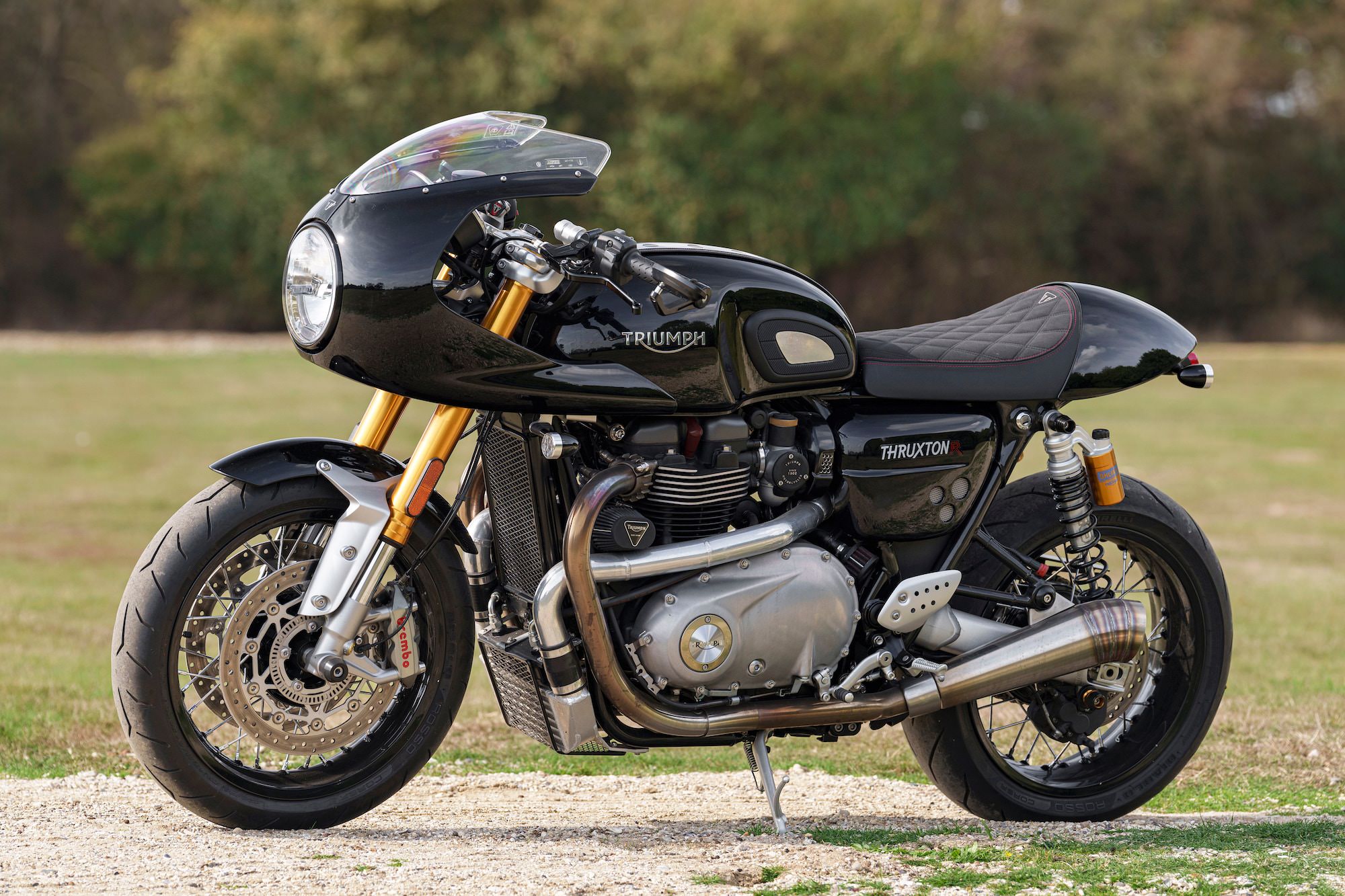
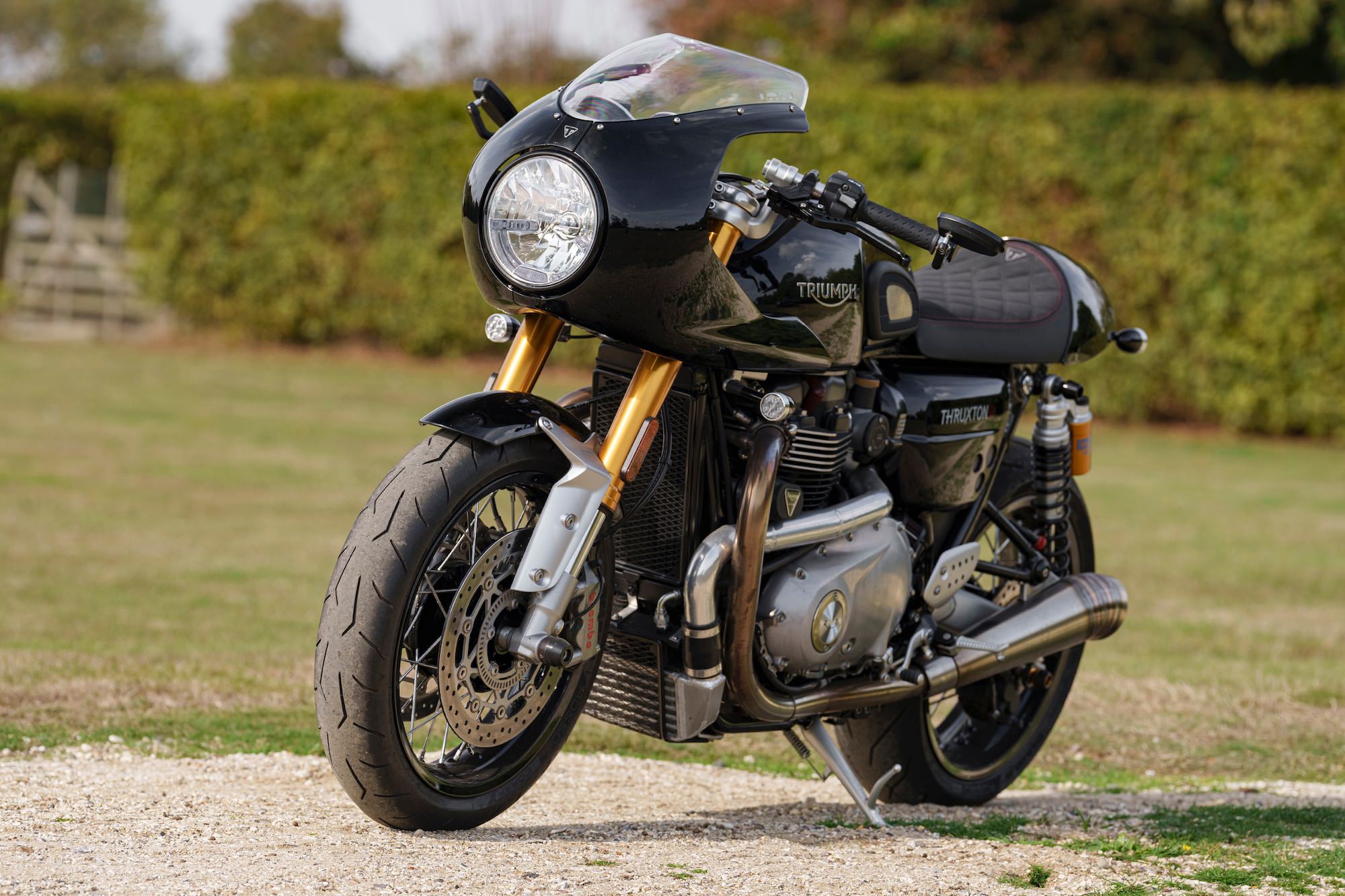
This Triumph Thruxton R is one of just three that were fitted with a Rotrex supercharger by the factory – the other two remain in the possession of Triumph Motorcycles and are on display at their headquarters in England.

Aside from the supercharger this Thruxton R also has an air-to-air intercooler, forged pistons, and Power Commander system – as a result it now makes 162 rear wheel horsepower, a significant increase over the 96 bhp of the original.

Fast Facts – A Supercharged Triumph Thruxton R

  • In preparation for their display at Germany’s Glemseck 101 Motorcycle Festival, the Triumph factory in Leicestershire, England set about building three very special supercharged versions of their range-topping Triumph Thruxton R model.
  • Each of the three special Thruxton Rs were fitted with a Rotrex supercharger, an intercooler, and a custom exhaust system which combined to increase power from 96 bhp to 139 rear wheel horsepower – a 36.5% power increase.
  • The display of these three bikes at Glemseck 101 proved wildly popular, after the event two of the bikes were taken back to Triumph headquarters to be put on permanent display and the other was sold into private hands.
  • Sometime later the motorcycle you see here, the only one in private ownership, was taken to Triumph in Portsmouth where it was given an engine oil and filter change, an inspection, new forged pistons, and an engine tuning device that increased the power output to 162 hp at the rear wheel – 51% more than the stock bike.

The Triumph Thruxton R

When the all-new Triumph Thruxton R was released in 2016 it significantly raised the bar in the world of modern classic motorcycles, it won the Motorcycle News (MCN) “Best Retro” award in 2016 and then again every year since.

Supercharged Triumph Thruxton R 9

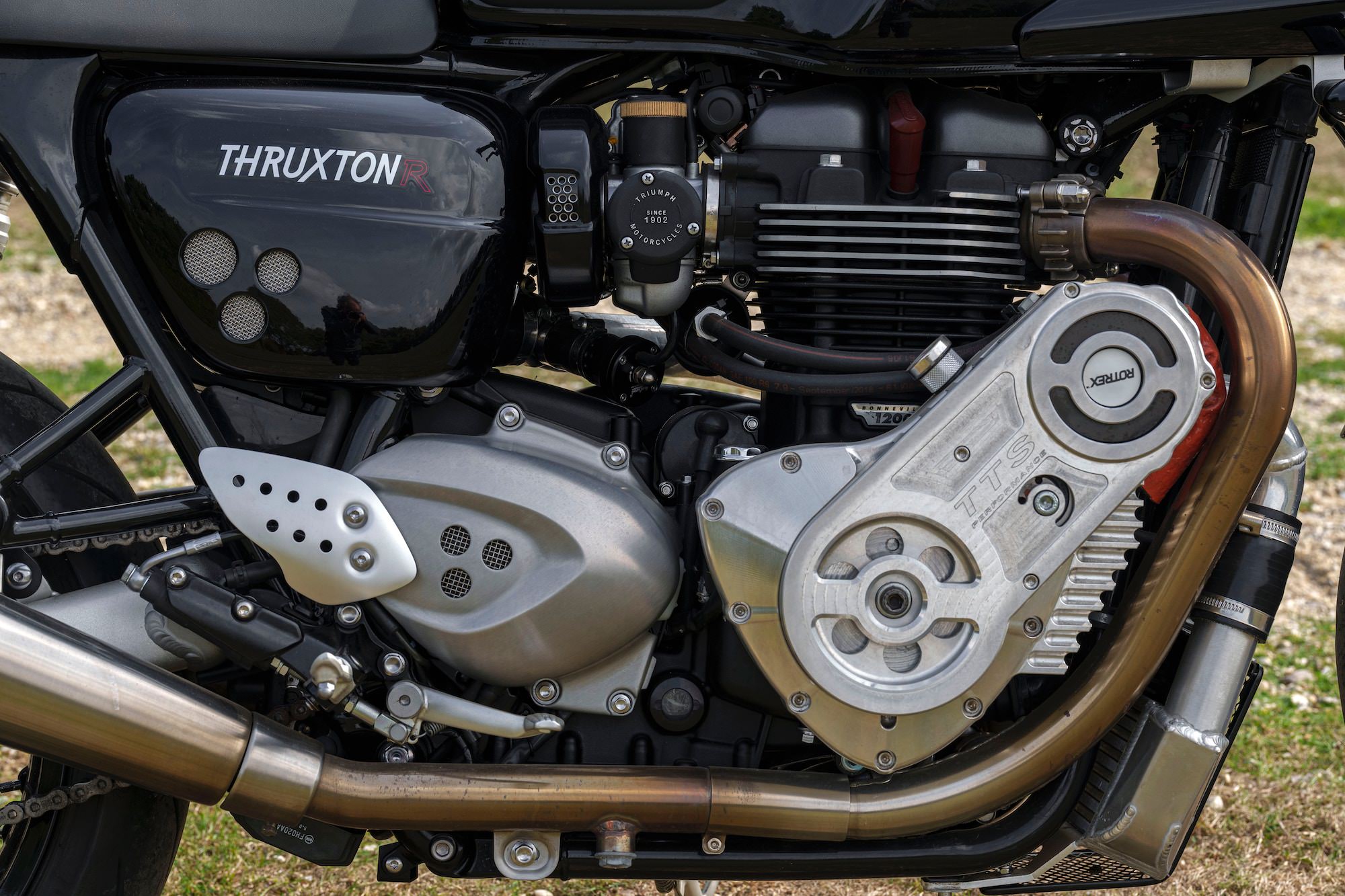
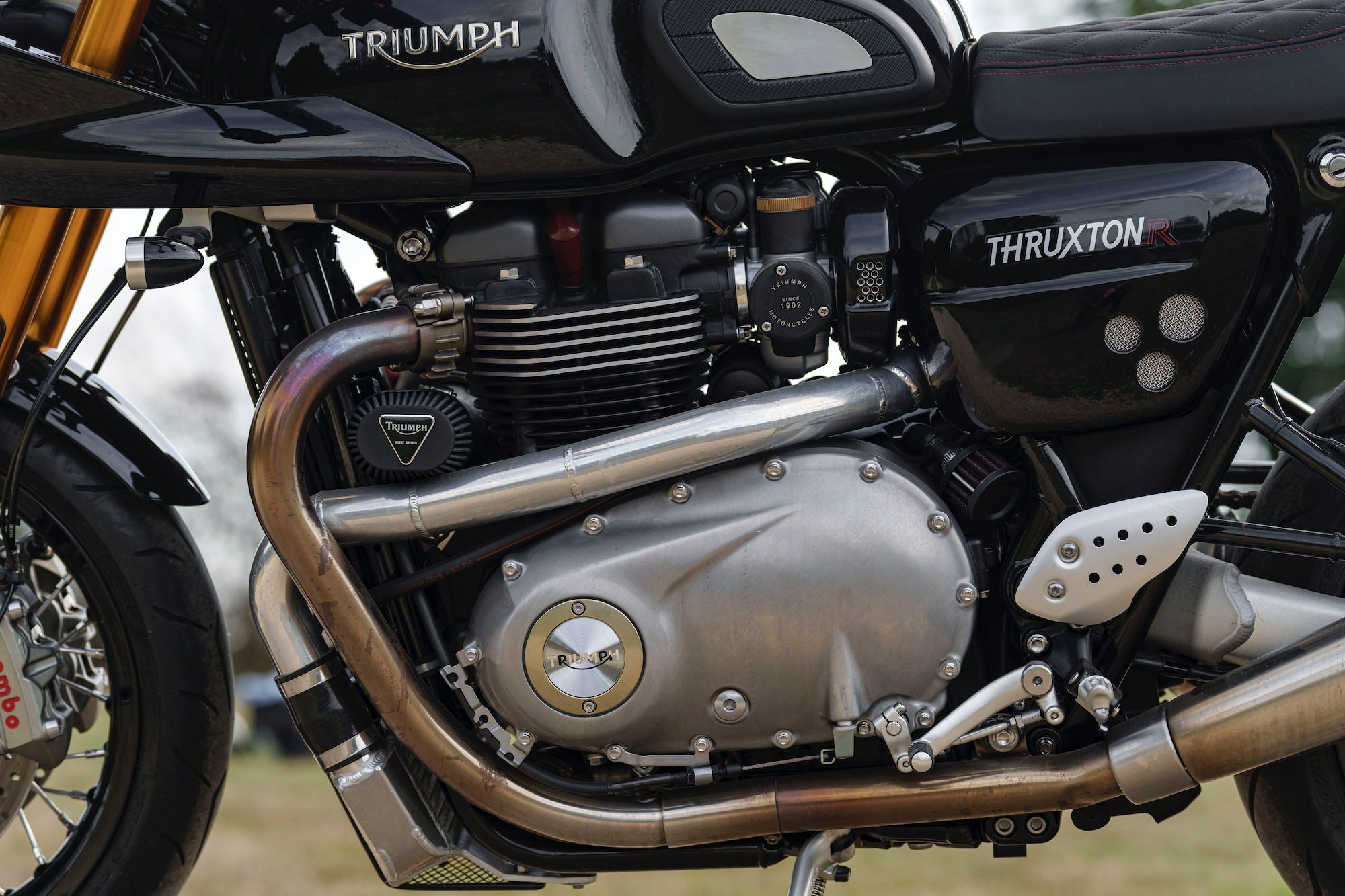
Here the Rotrex supercharger can be seen bolted on to the timing side of the parallel twin, it sends the intake charge through an intercooler and then into the engine.

When the engineers at Triumph set out to develop the Thruxton R they essentially started with a blank slate. They developed a stiff new tubular steel duplex cradle frame that uses the engine as a stressed member for improved rigidity.
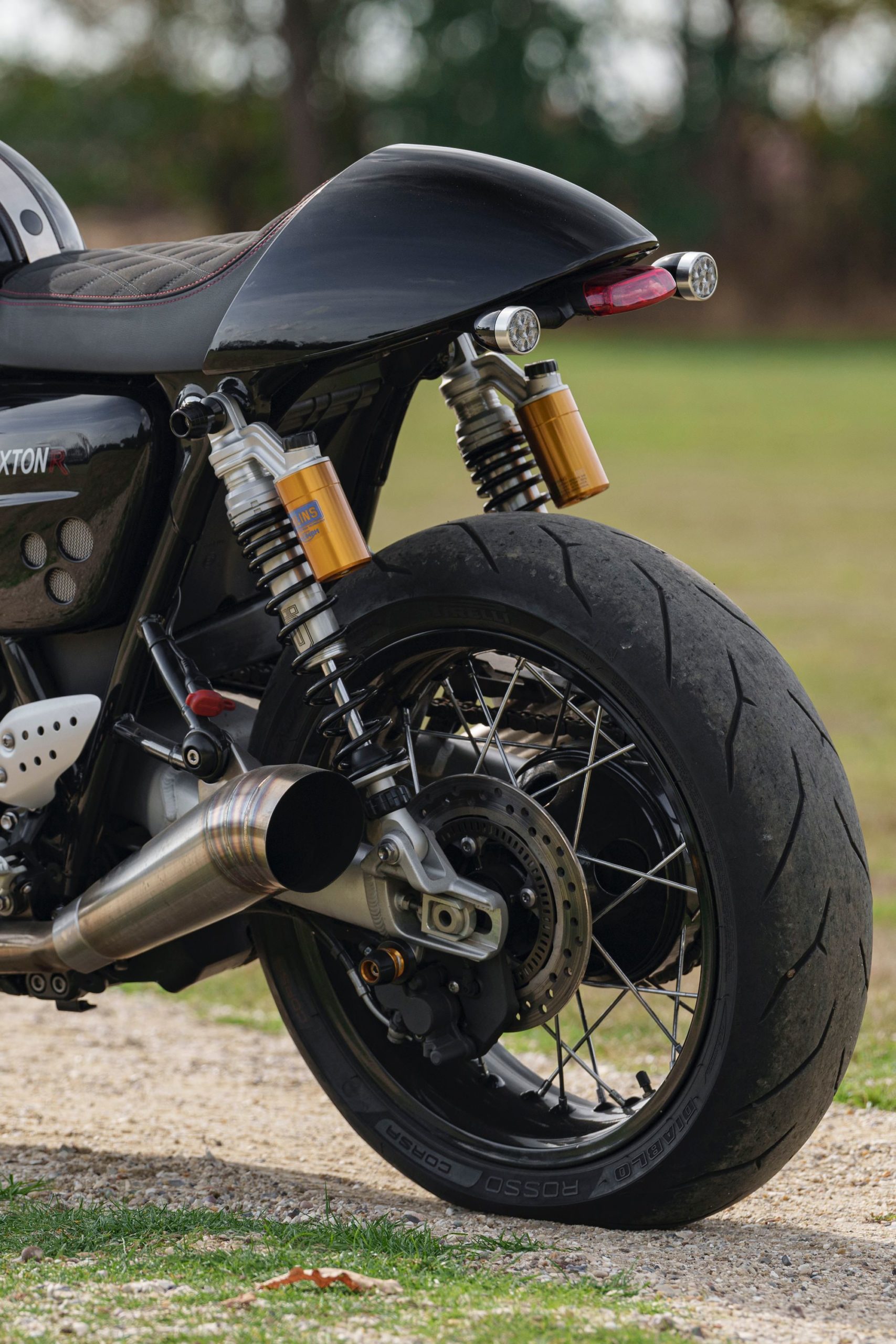
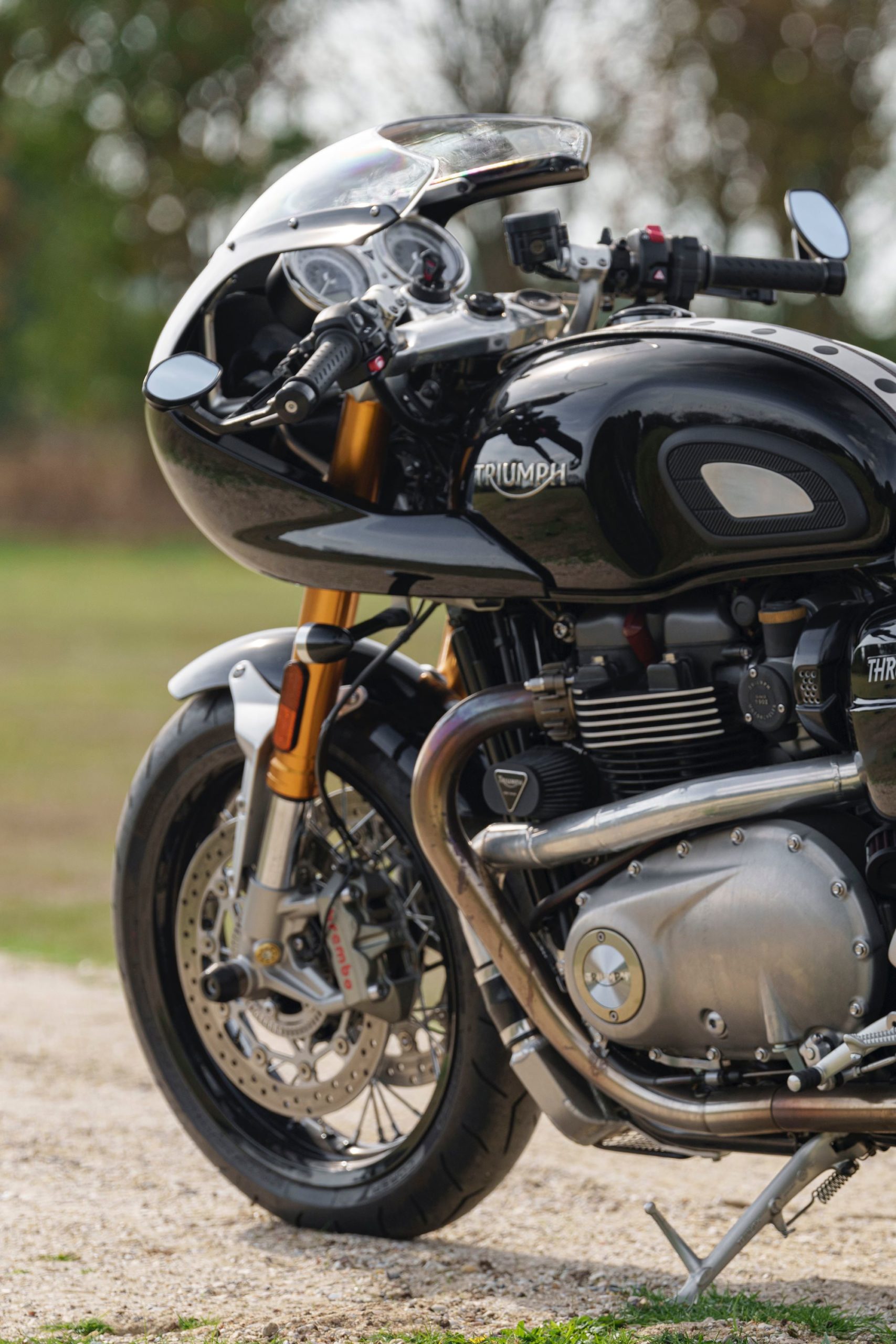
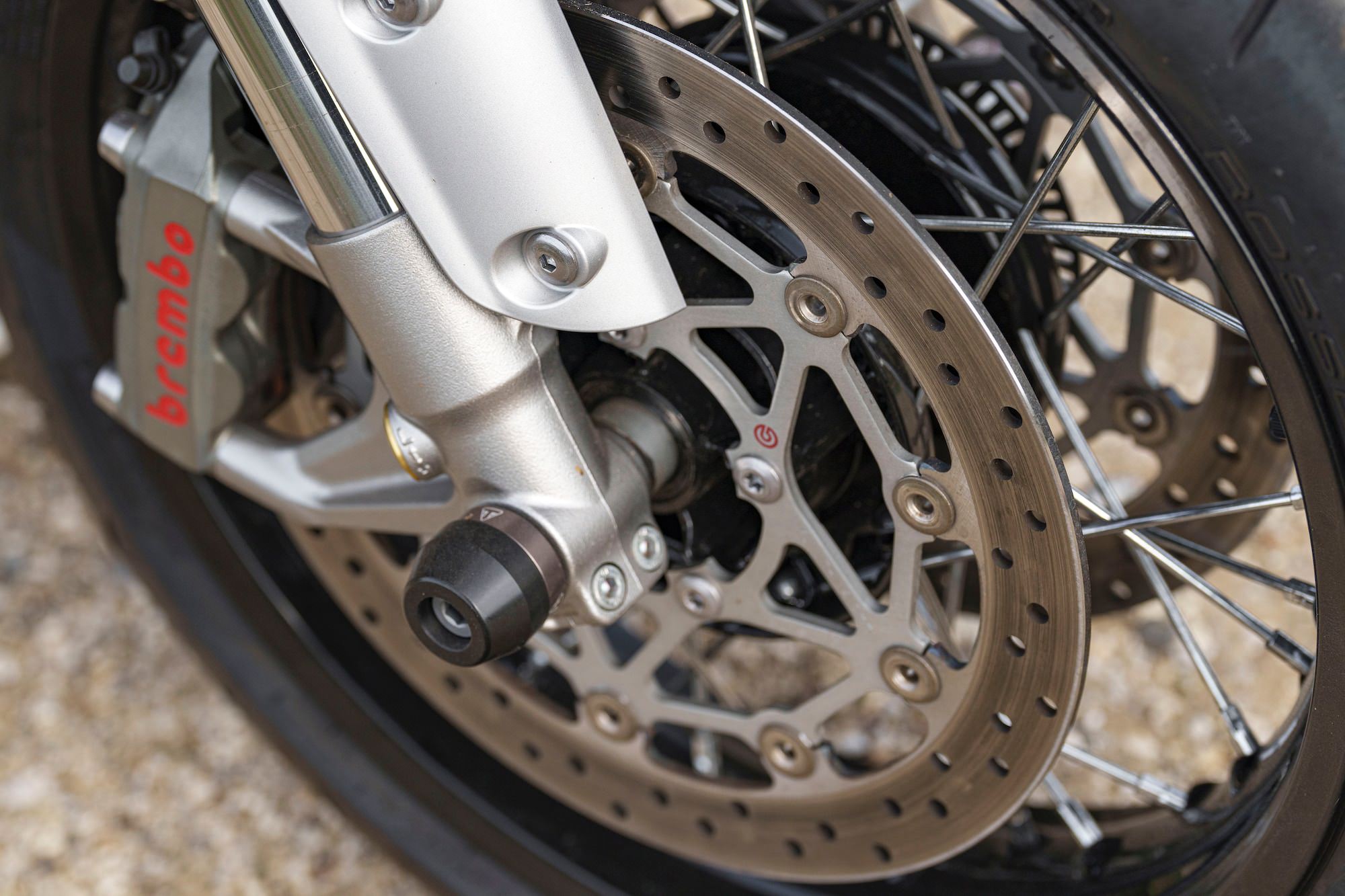
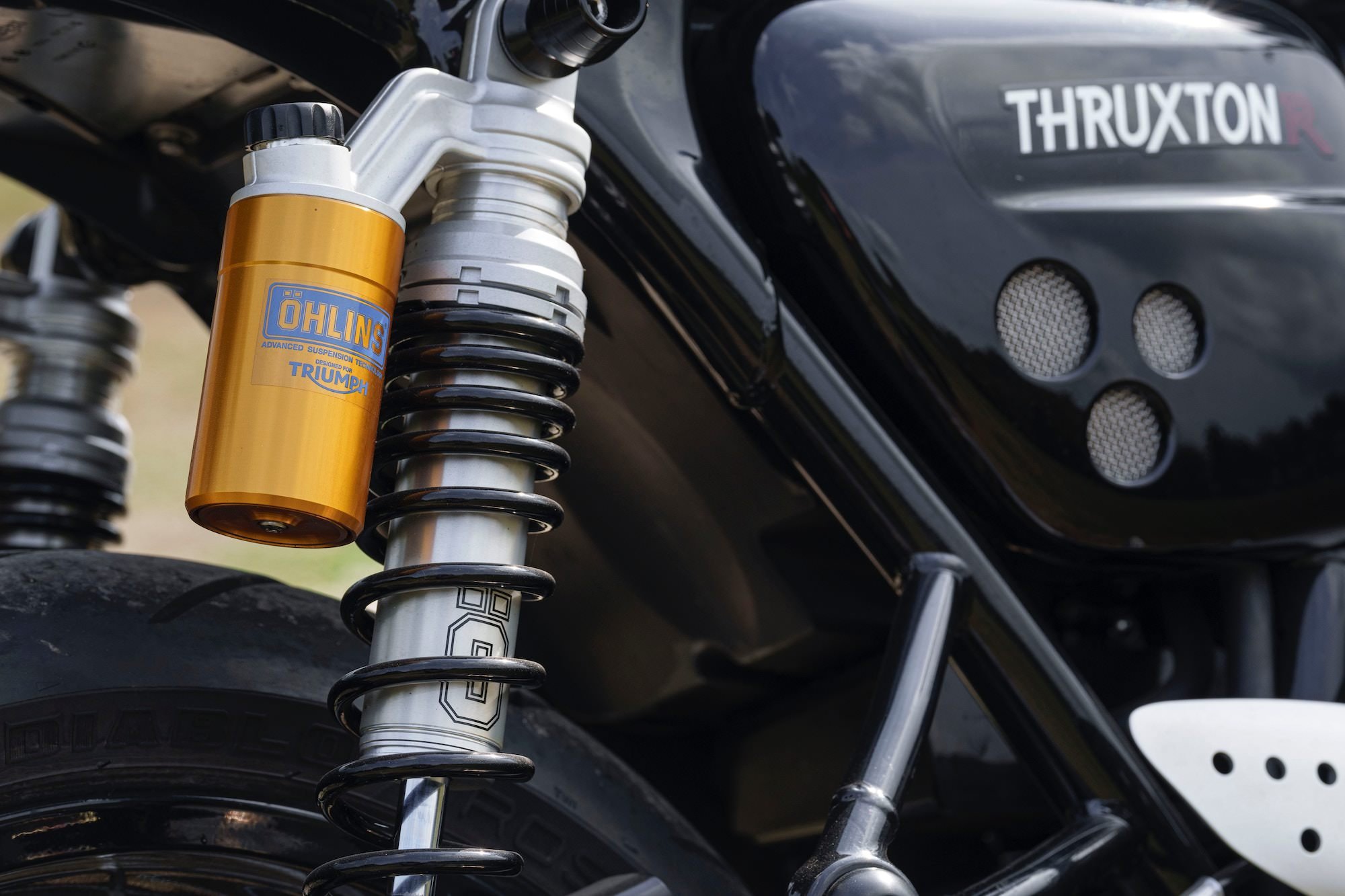
Gold anodized Showa “Big Piston” upside down forks were fitted up front, paired with twin fully adjustable Öhlins shock absorbers in the rear. Twin Brembo monobloc brakes were installed along with a single disc in the rear, and the factory fitted tire was the sticky Pirelli Diablo Rosso Corsa.

With the chassis, suspension, and brakes all sounding top shelf the only thing left to talk about is the engine. Triumph throughout their history are most famous for their parallel twins, it was Triumph’s Edward Turner who launched the Triumph Speed Twin in 1937 and popularized the engine configuration after all.

The Thruxton R was fitted with a liquid-cooled single overhead cam parallel twin with a punchy 270º crank angle and four-valves per cylinder. The displacement is 1200cc with a bore and stroke of 3.84″ x 3.15″ and a compression ratio of 11.0:1.

Supercharged Triumph Thruxton R 13

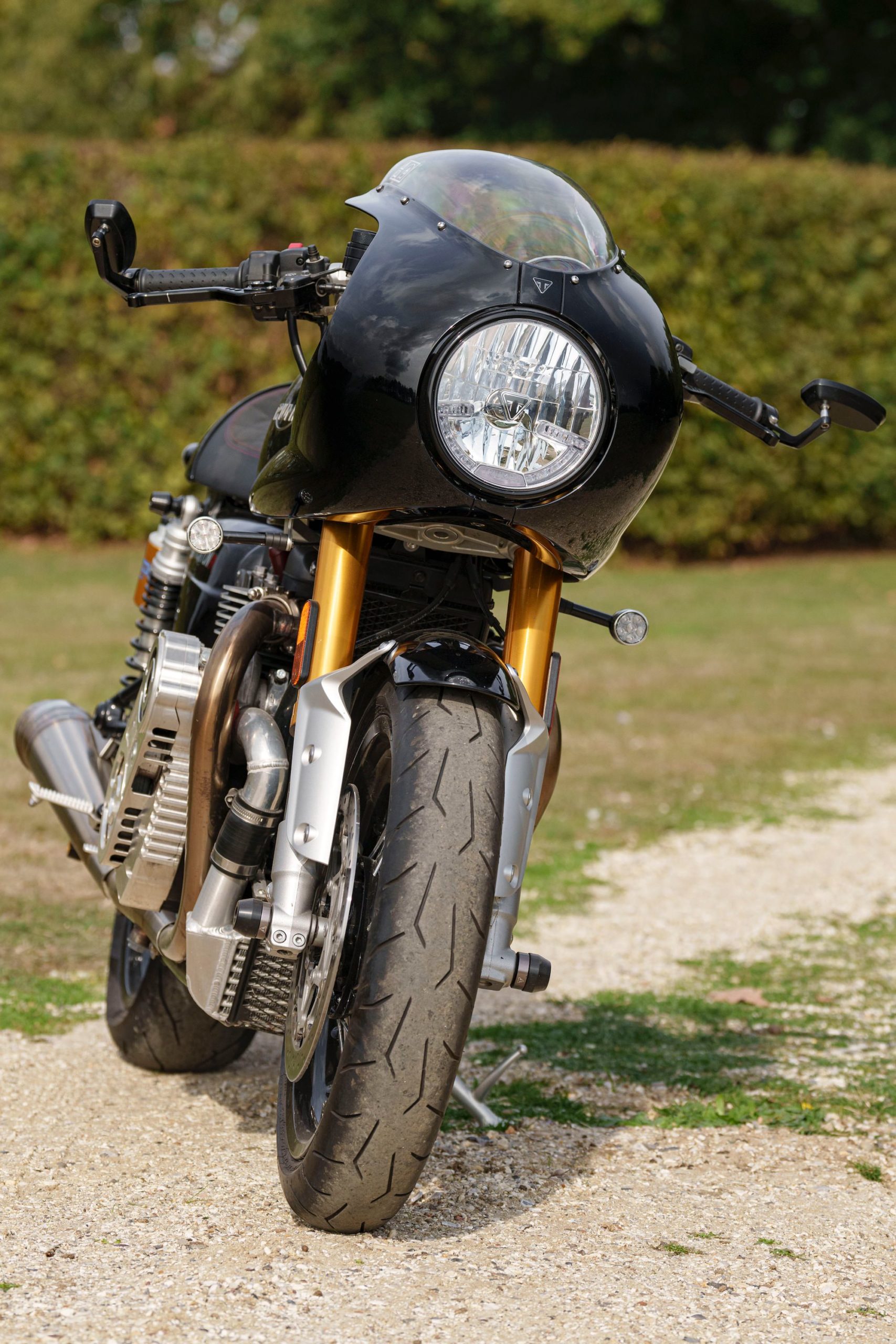
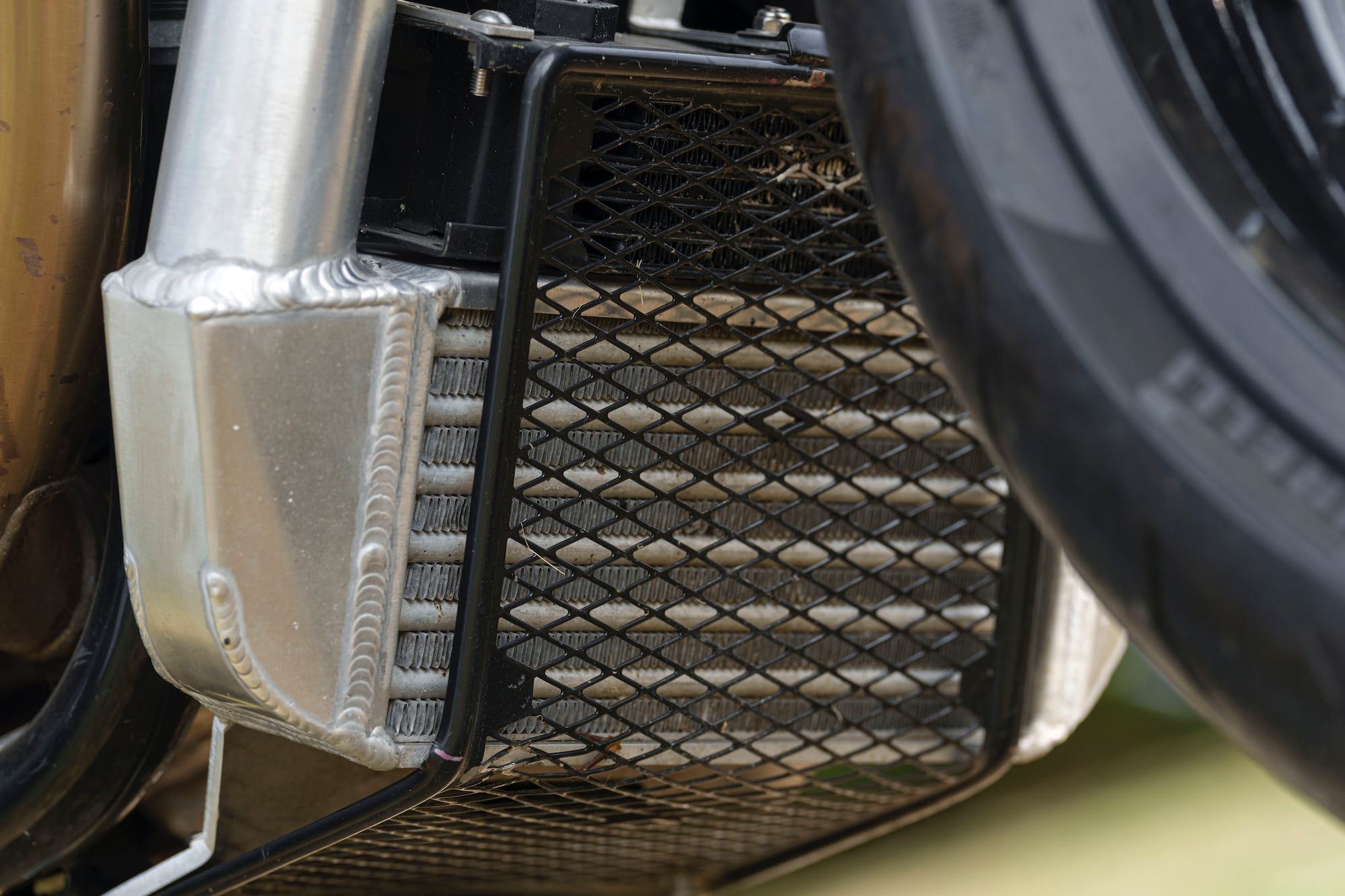
If you look under the radiator here you’ll see the discreet air-to-air intercooler that helps lower intake charge temperatures back down to more reasonable levels.

Unlike the earlier carburetor-fed engines this one has modern multipoint sequential electronic fuel injection and it produces 96 bhp at 6,750 rpm with a hefty 82.6 ft lbs of torque at 4,950 rpm.

In reviews when it was first released the Triumph Thruxton R seemed to impress everyone, even the hard-nosed superbike types who usually scoff at any motorcycle with fewer than four cylinders or 125 bhp.

The model has remained a top seller for the British motorcycle manufacturer for six years and counting, with discreet upgrades along the way to keep it up at the tip of the modern classic spear.

The Supercharged Triumph Thruxton R Shown Here

As noted in the introduction, the Thruxton R you see here is one of just three in the world that has been built to supercharged specification by the Triumph factory in England. Of those three, this one is the only one in private hands, and it’s the most powerful of them all thanks to some additional modifications that were put in place by Triumph in Portsmouth.

Supercharged Triumph Thruxton R 2

The addition of the additional components is discreet, in fact from the left side of the bike the only real giveaway is the glimpse of intercooler and its pipe to the intake.

Originally all three of the bike were fitted with Rotrex superchargers paired with air-to-air intercoolers and a bespoke exhaust that boosted power up to 139 hp at the rear wheel.

The Thruxton you see here then later had forged pistons and a Power Commander system installed that further increased power to 162 hp and a remarkable ~125 lb ft of torque – all measured at the rear wheel.

This bike is now being offered for sale in fully road-legal condition on Collecting Cars out of Essex in the United Kingdom. If you’d like to read more about it or register to bid you can visit the listing here.

Supercharged Triumph Thruxton R 14 Supercharged Triumph Thruxton R 13 Supercharged Triumph Thruxton R 12 Supercharged Triumph Thruxton R 11 Supercharged Triumph Thruxton R 10 Supercharged Triumph Thruxton R 8 Supercharged Triumph Thruxton R 7 Supercharged Triumph Thruxton R 6 Supercharged Triumph Thruxton R 5 Supercharged Triumph Thruxton R 4 Supercharged Triumph Thruxton R 1

Images courtesy of Collecting Cars – Copyright 2022© Max Earey

The post A Factory-Built Supercharged Triumph Thruxton R – 162 WHP appeared first on Silodrome.


from Silodrome https://silodrome.com/supercharged-triumph-thruxton-r/
via gqrds