John DeLorean’s “Judge” – An Original 1969 Pontiac GTO Judge

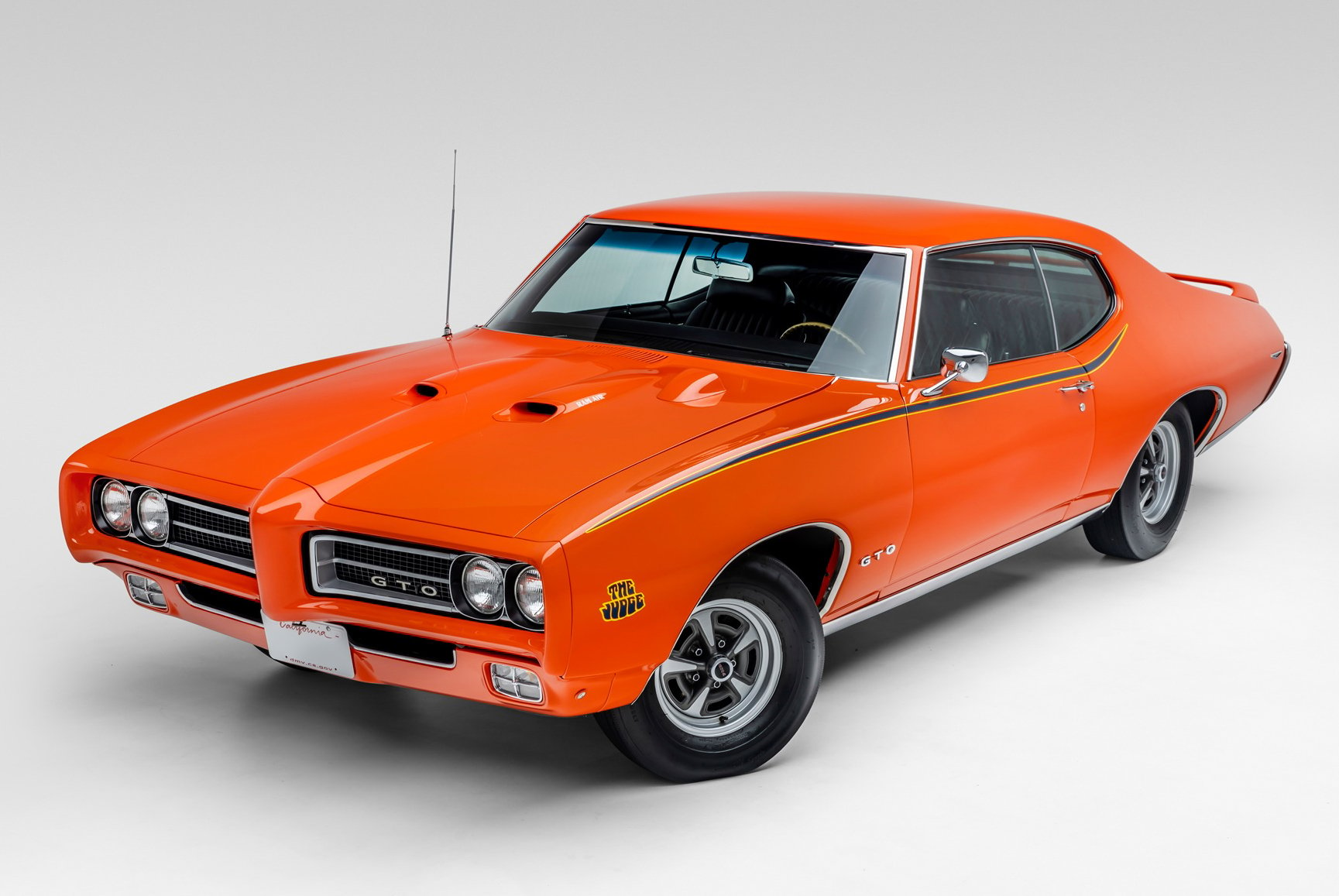
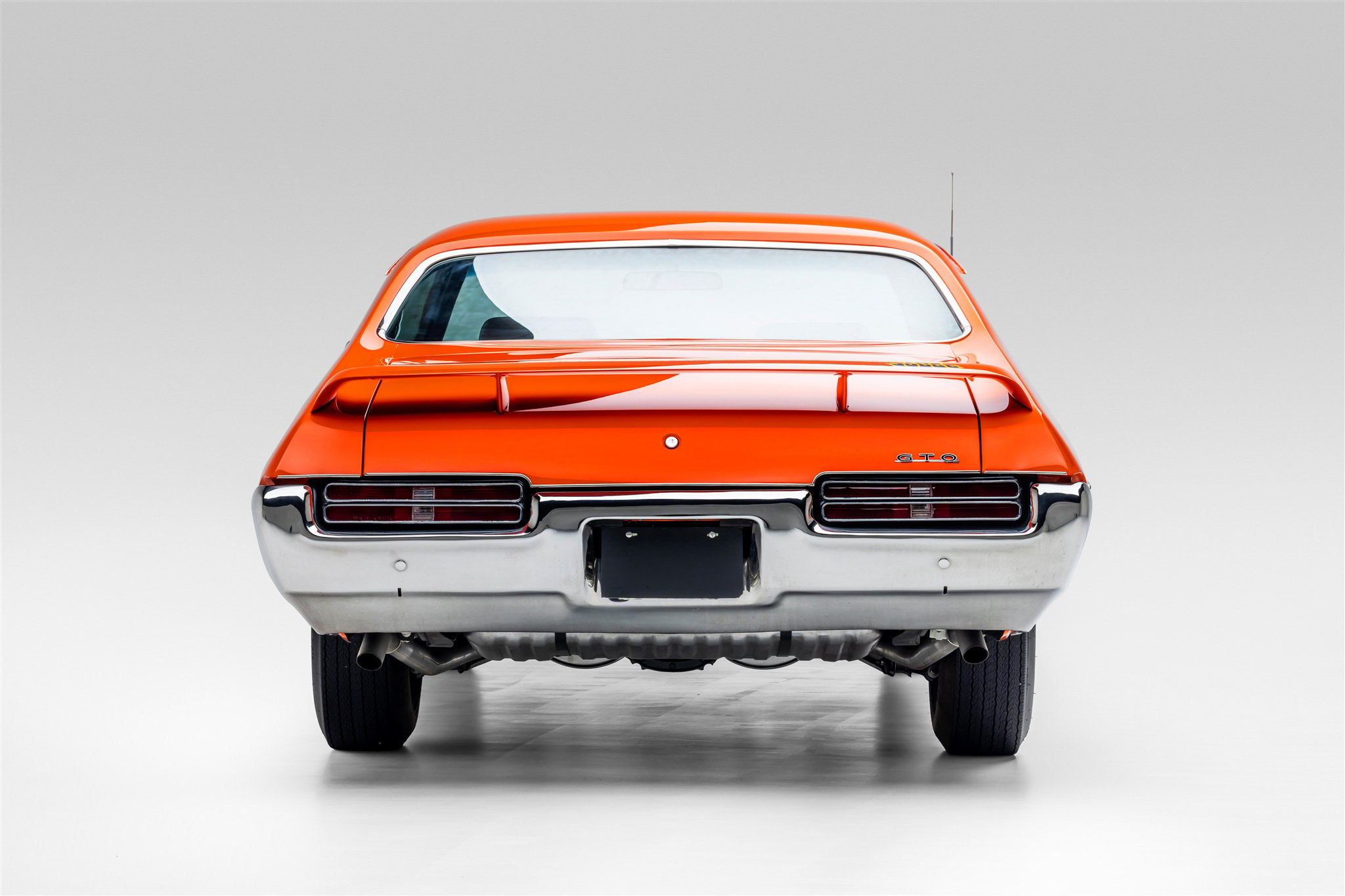
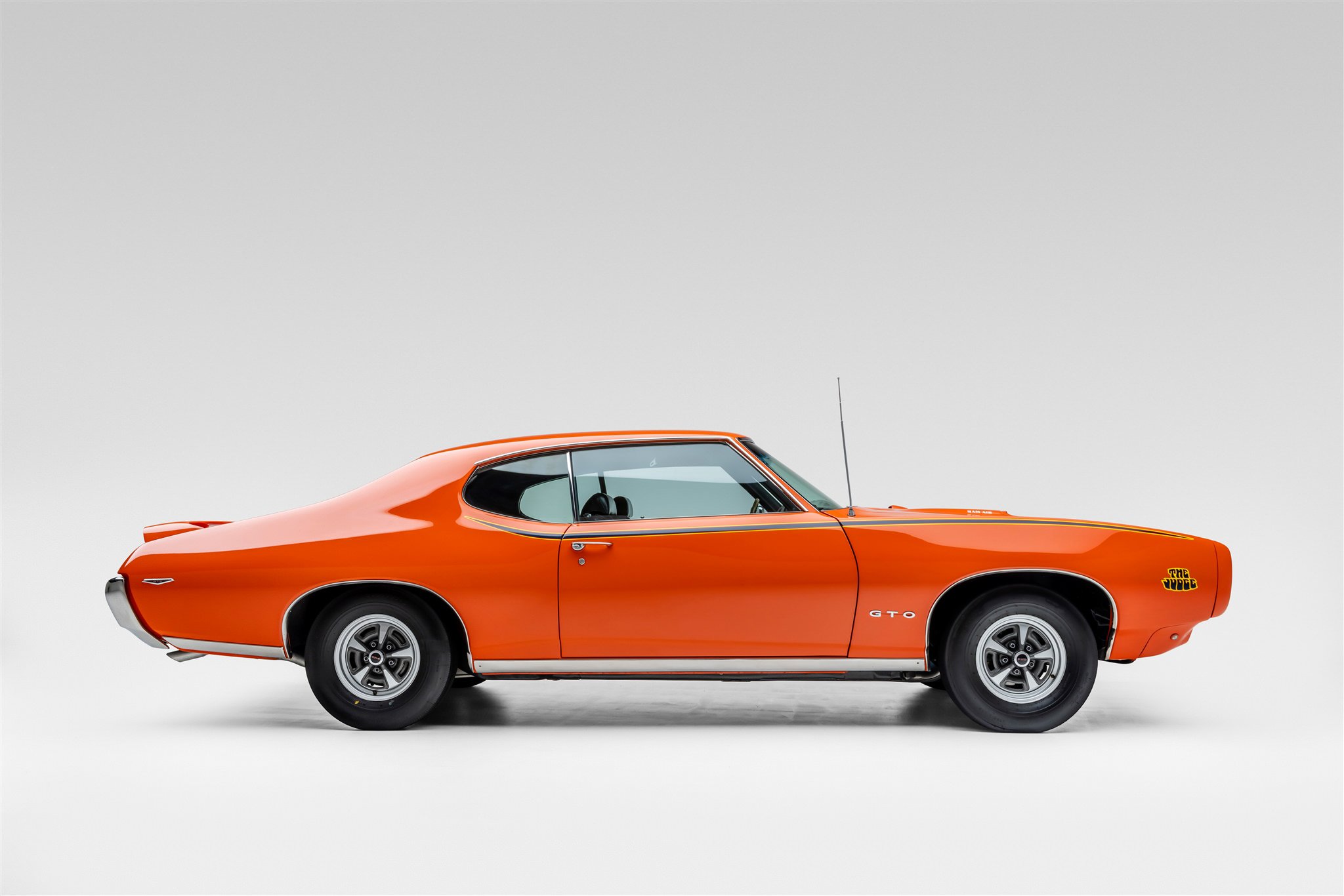
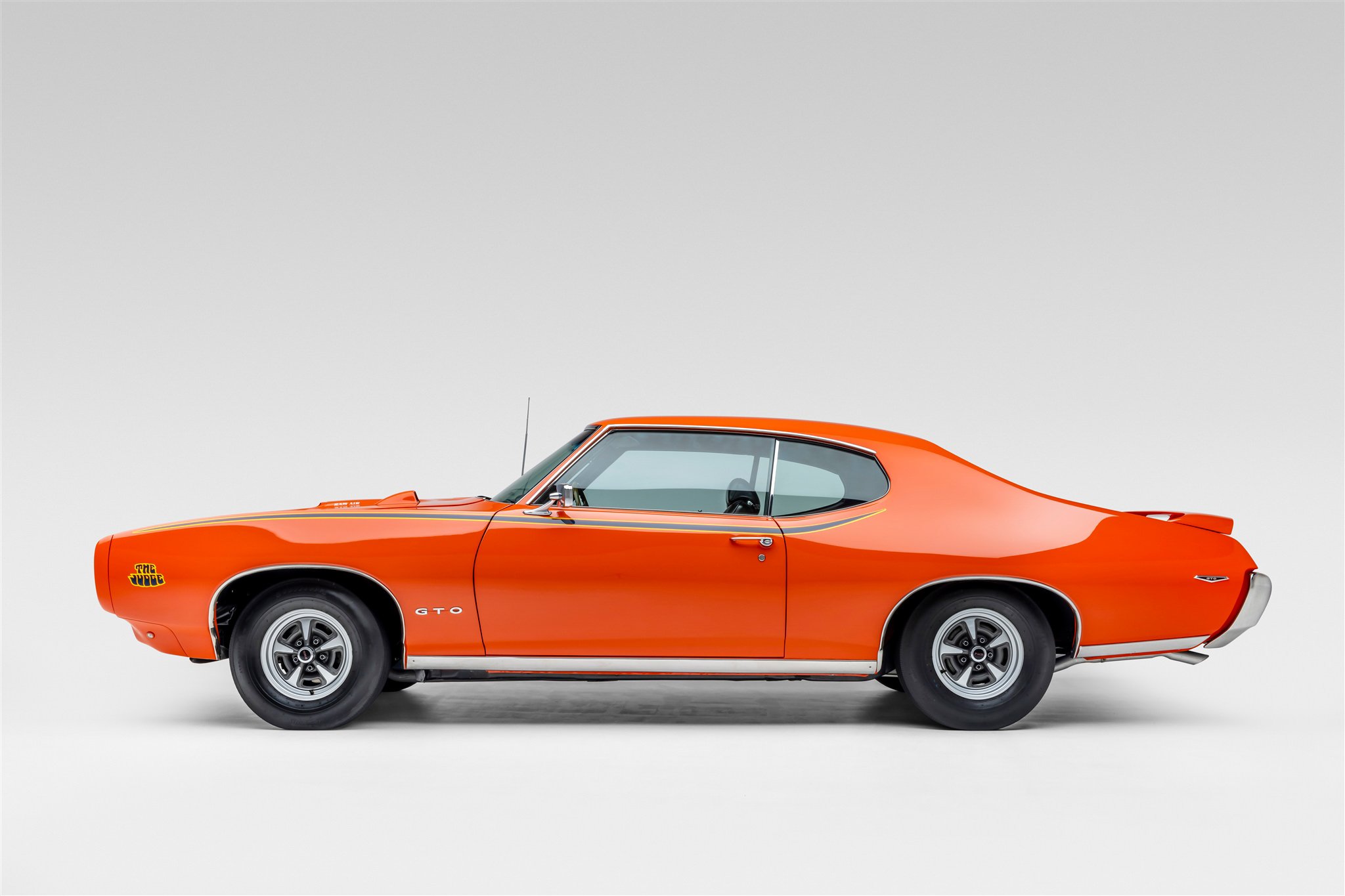
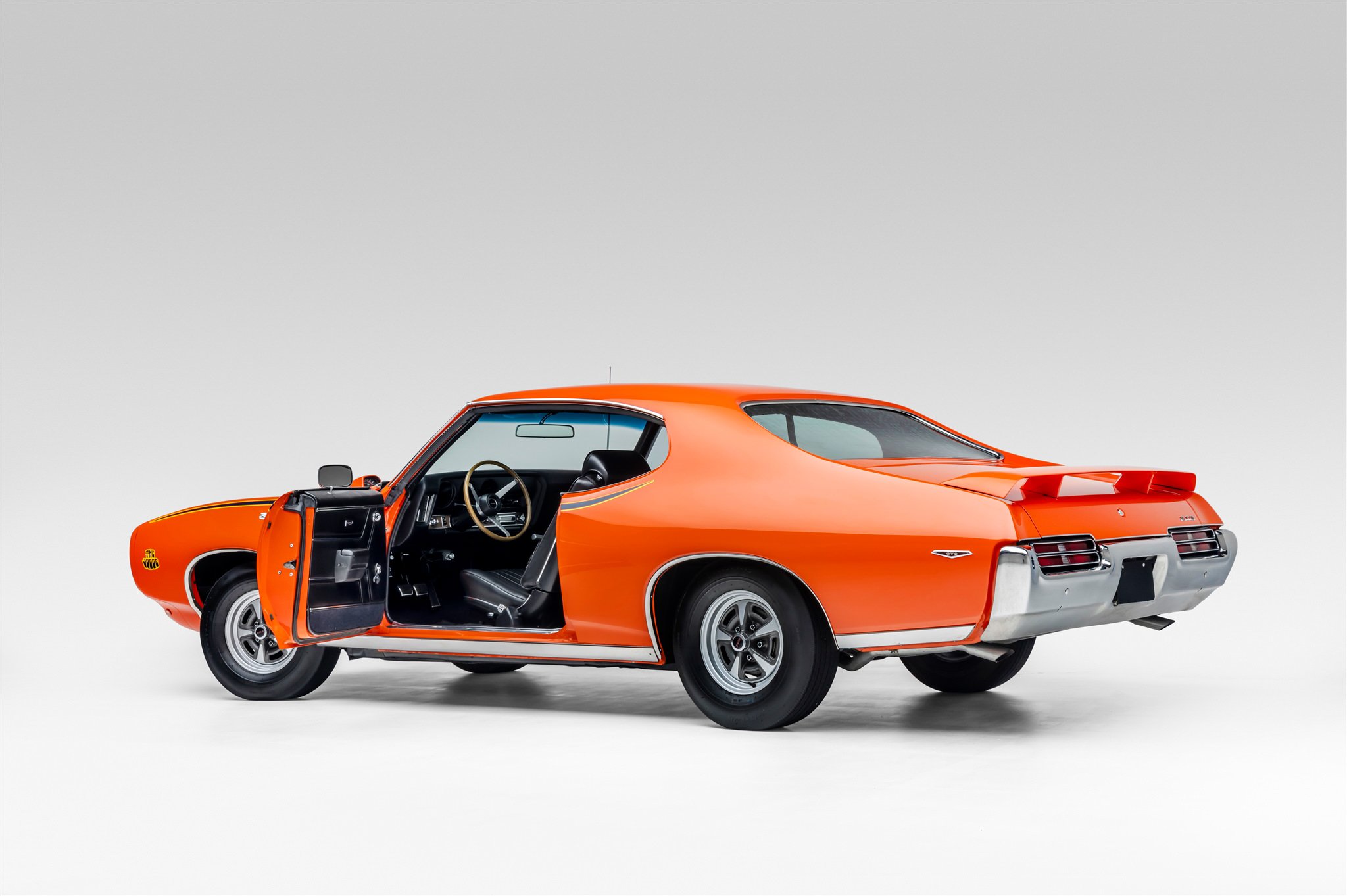
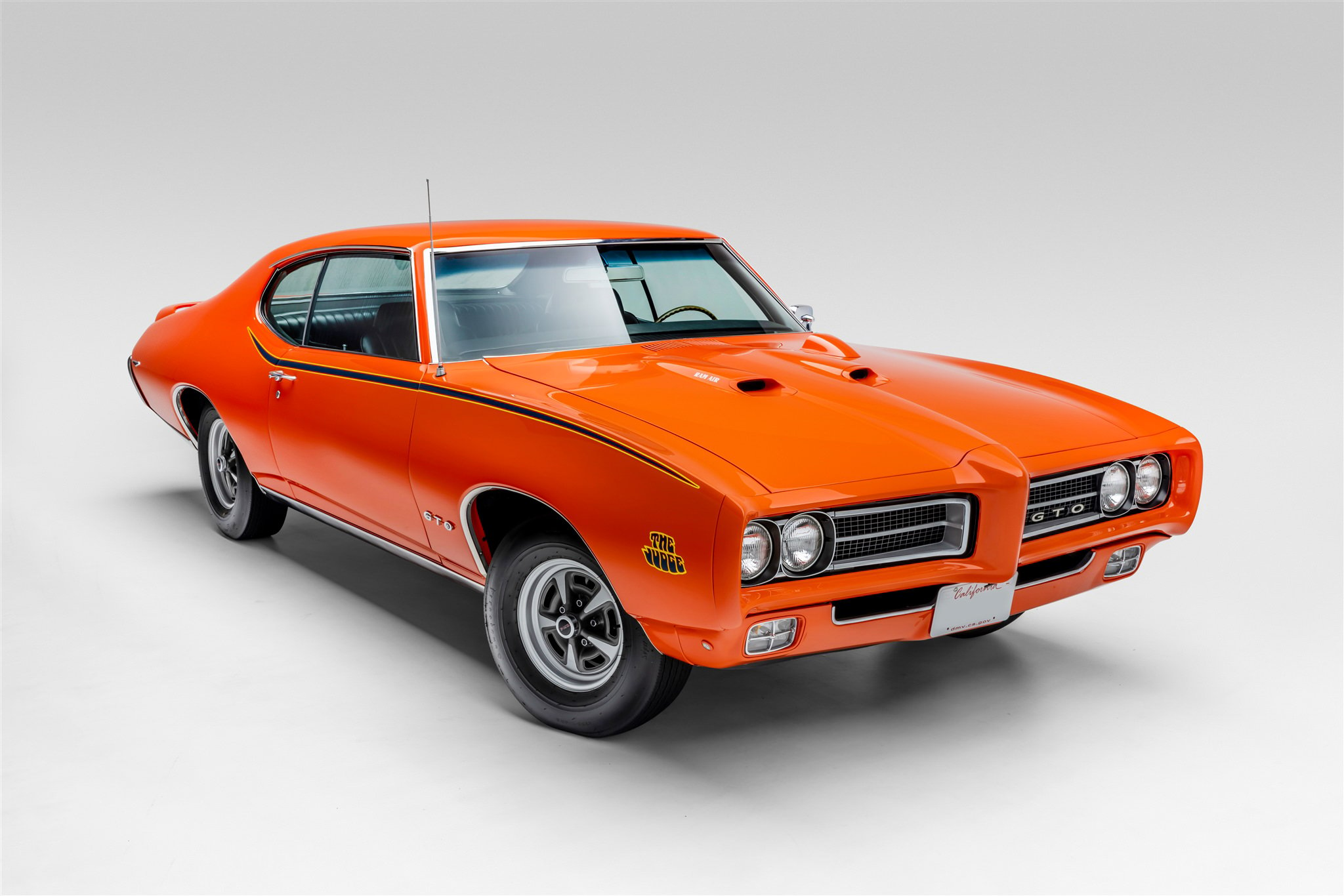
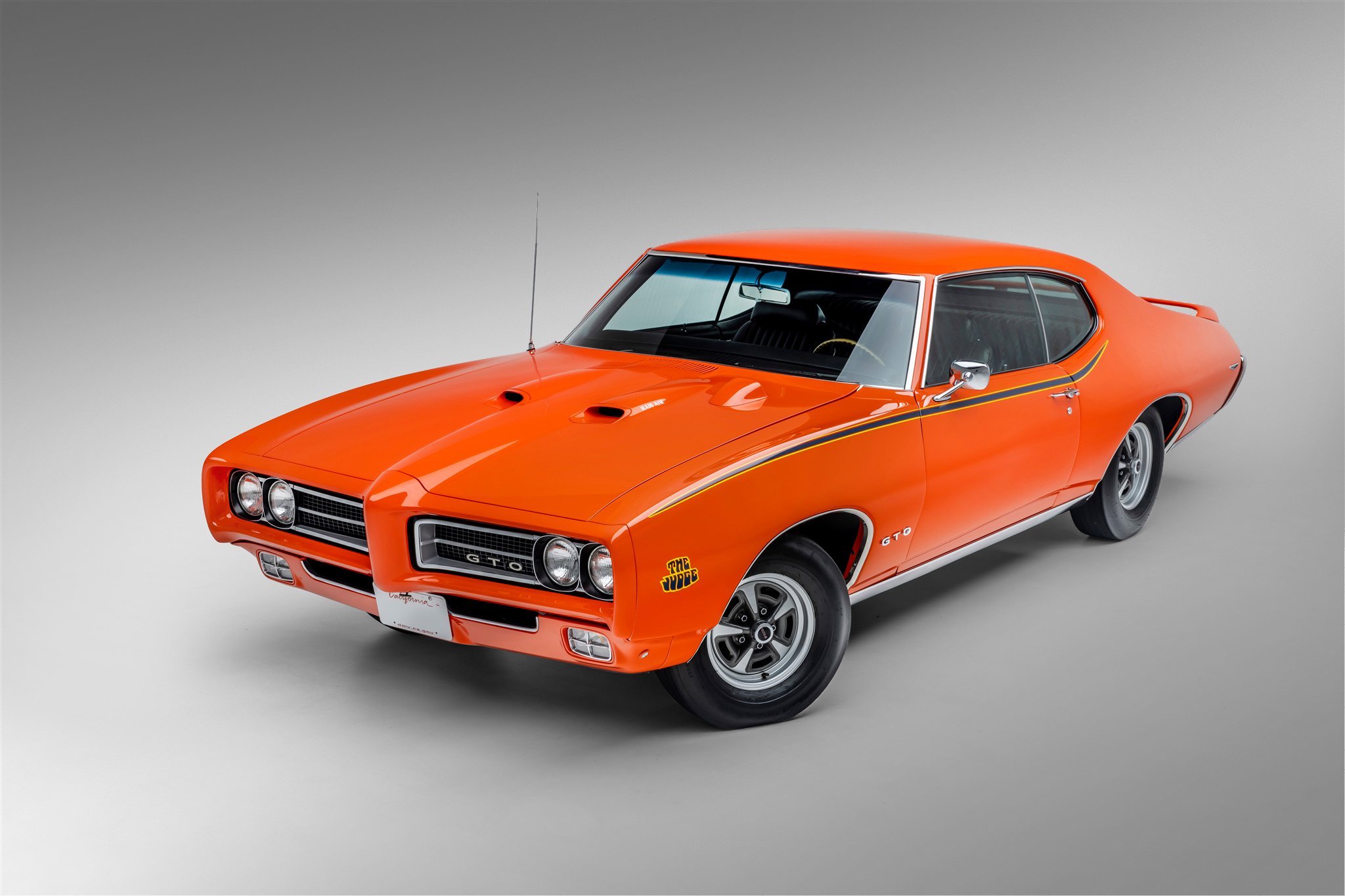
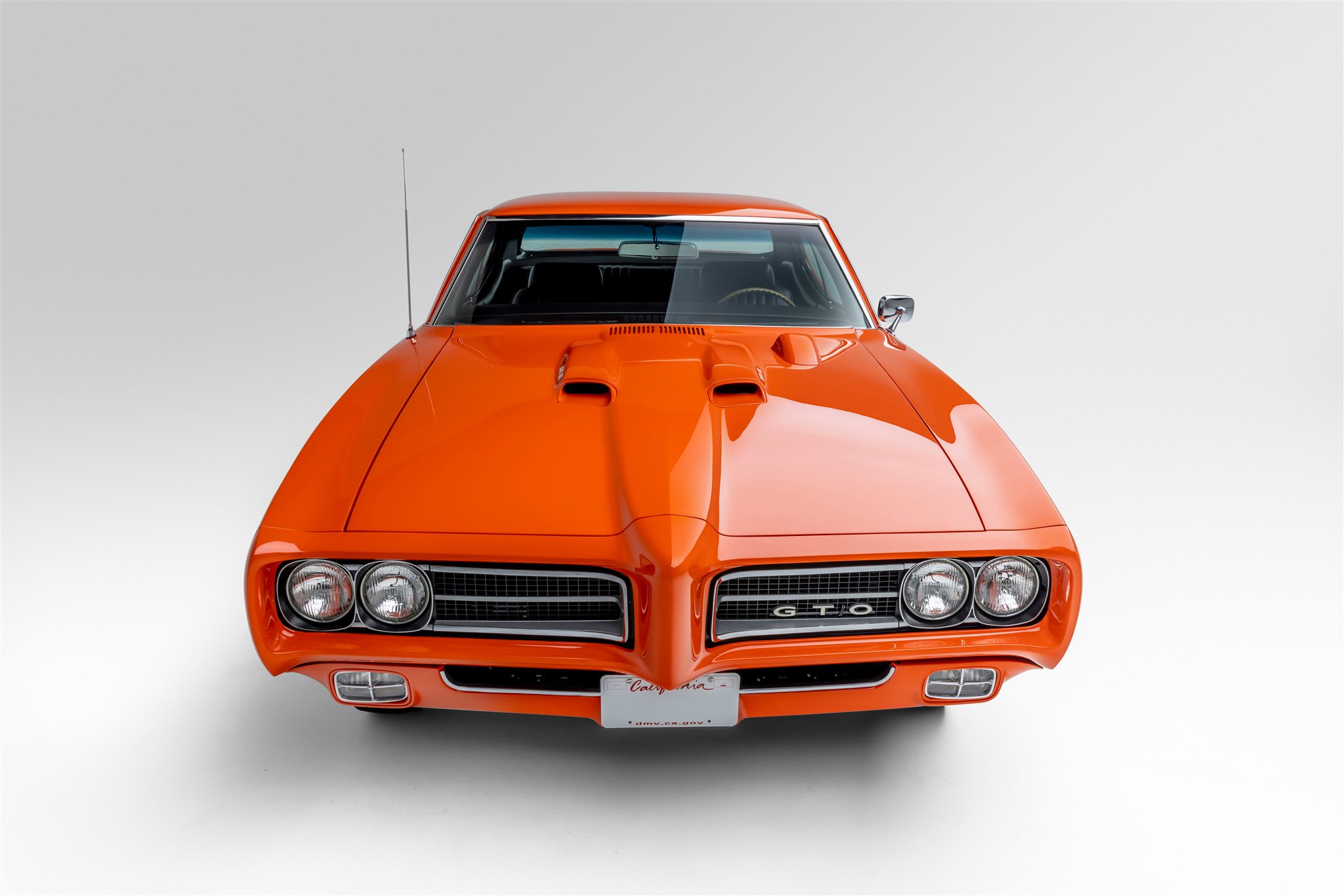
This is an original 1969 Pontiac GTO Judge, this model featured a slew of changes over the standard GTO and when it was first released you could have it in any color you wanted, so long as it was Carousel Red.

The “Judge” name came from “Here Comes Da Judge” a popular segment in the comedy television show Rowan & Martin’s Laugh-In. Pontiac GTO creator John DeLorean loved the series and chose this name instead of the original intended name of E/T.

Fast Facts – The Pontiac GTO Judge

  • The Pontiac GTO first appeared in 1963 as a performance option package for the Pontiac LeMans. By 1966 it had proven so popular that it was released as its own model line, and quickly became an American legend nicknamed the “Goat.”
  • GTO stands for Gran Turismo Omologato and it was borrowed from the Ferrari 250 GTO which had appeared just a year earlier in 1962. Interestingly Pontiac did homologate the model for European sports car racing.
  • The GTO was the brain child of John DeLorean, he was the Pontiac division chief engineer at the time, the success of the GTO helped to cement DeLorean’s fame as an automotive whizkid.
  • By the time of the release of the second generation GTO it had serious competition. DeLorean developed The Judge initially as a competitor for the Plymouth Road Runner with a unique color scheme, wider tires, decals, a Hurst shifter, and a rear spoiler.

“Here Comes Da Judge”

Sammy Davis Jr. played a recurring role in the tv sketch comedy show Rowan & Martin’s Laugh-In in the 1960s. The creator of the GTO, John DeLorean, was apparently a huge fan of the show and of Davis Jr’s role in particular – so he vetoed the original name ‘E/T” and chose “The Judge” for the new version of the GTO in 1969.

Above Video: This is one of the “Here Comes Da Judge” segments played by Sammy Davis Jr. on Rowan & Martin’s Laugh-In.

When the GTO was first released in 1963 as a high-performance options package for the Pontiac LeMans it’s doubtful that anyone, even its creator John DeLorean, could have guessed that it would become one of the most beloved American muscle cars of all time.

What started out as an options package became a stand alone model in 1966, the GTO had officially arrived and America loved it. Other automakers raced to catch up but Pontiac engineers had been hard at work themselves, and the second generation GTO appeared in 1968.

The Arrival Of The Judge

This new car had completely revised styling that was considerably more modern, competition was fierce by this time however and sales were slowing year on year.

For 1969 DeLorean developed what was originally going to be a cheaper version of the car to appeal to young people – he called it “The Judge.”
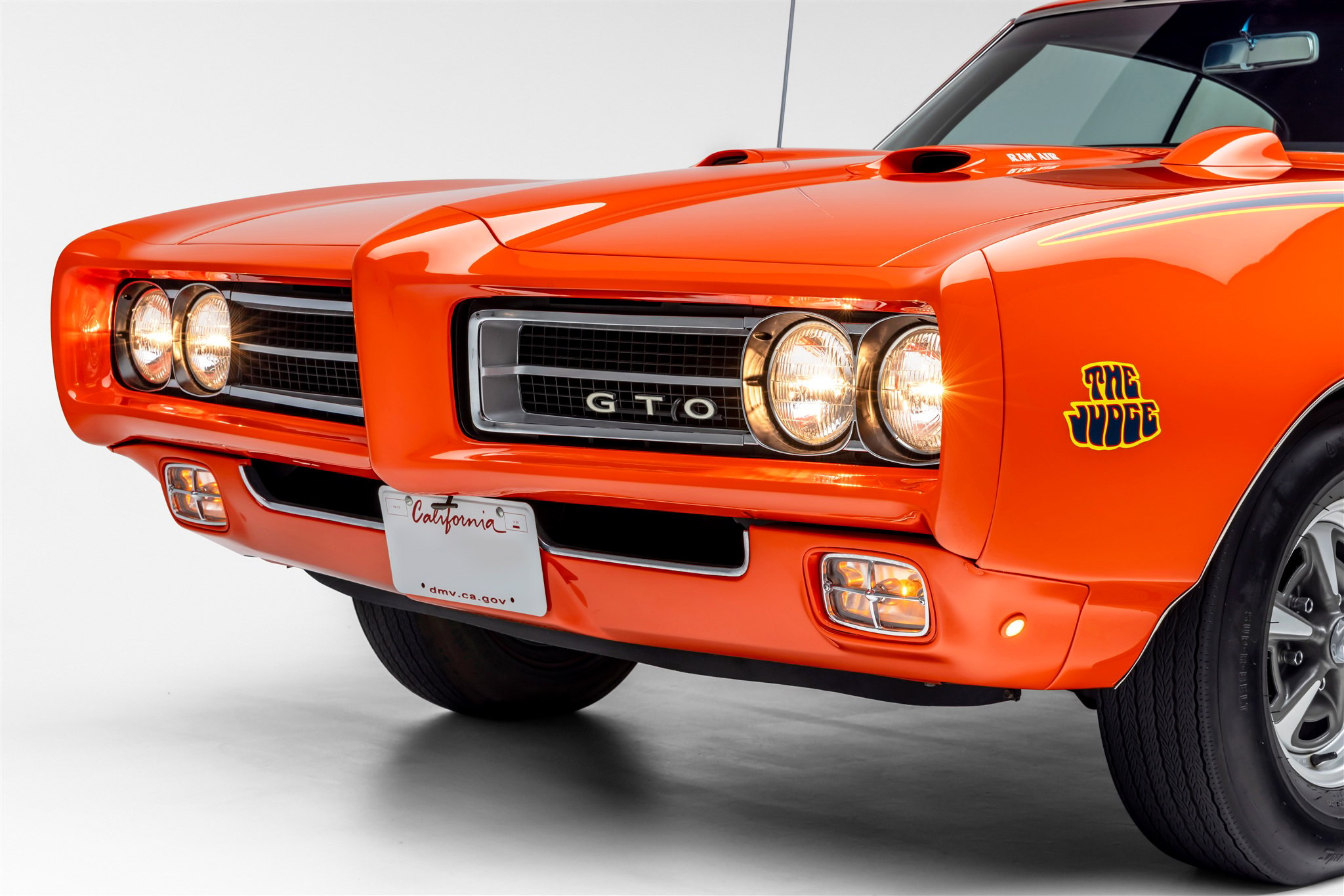
Pontiac GTO Judge 5

The combination of Carousel Red paintwork and “The Judge” decals were designed to get people’s attention in 1969, and it certainly worked.

Though it was originally supposed to be cheaper The Judge ended up being more expensive that the standard GTO by $332 USD – not an insignificant sum in 1969. When it was first released the only color available was a bright orange that was confusingly called Carousel Red.

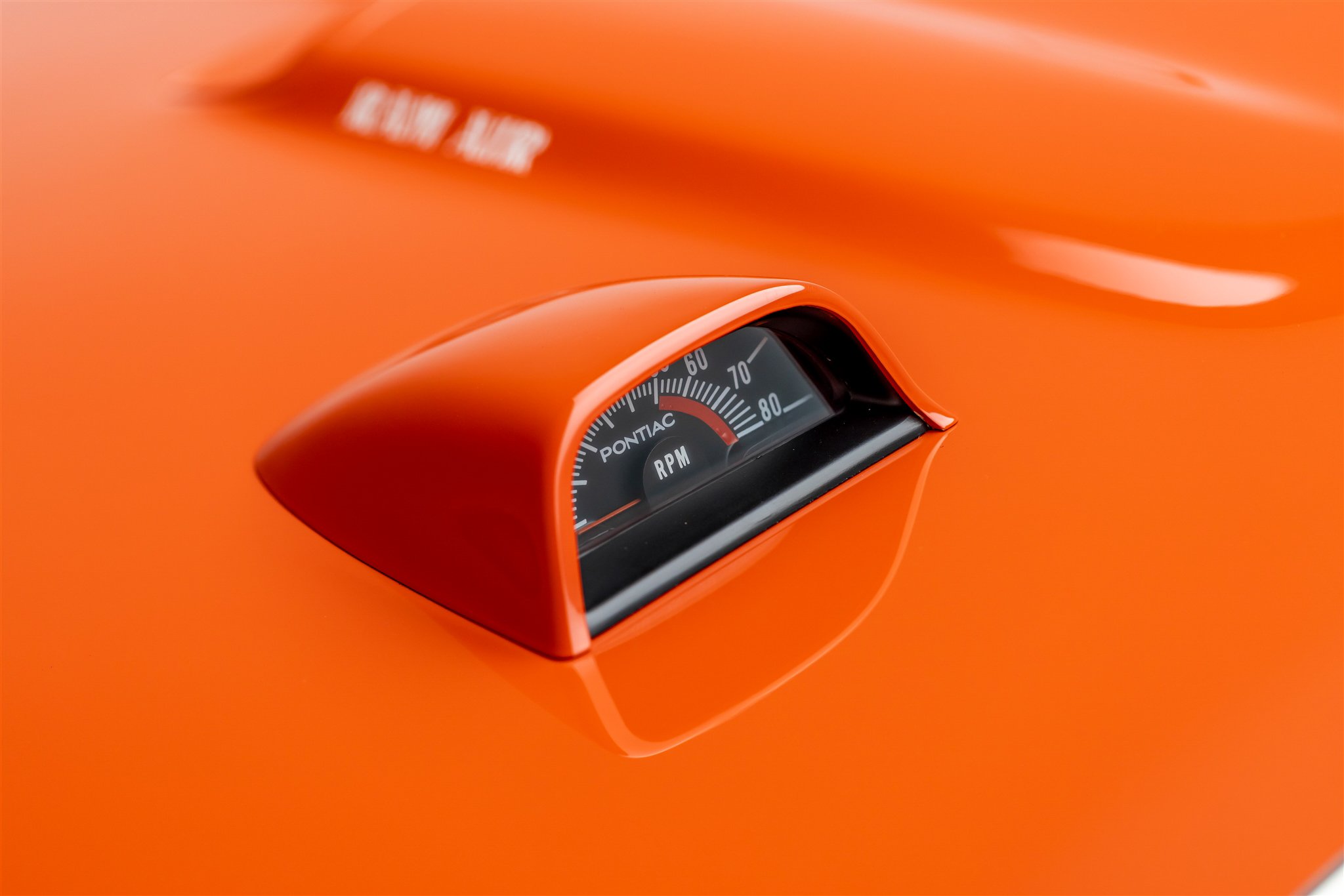
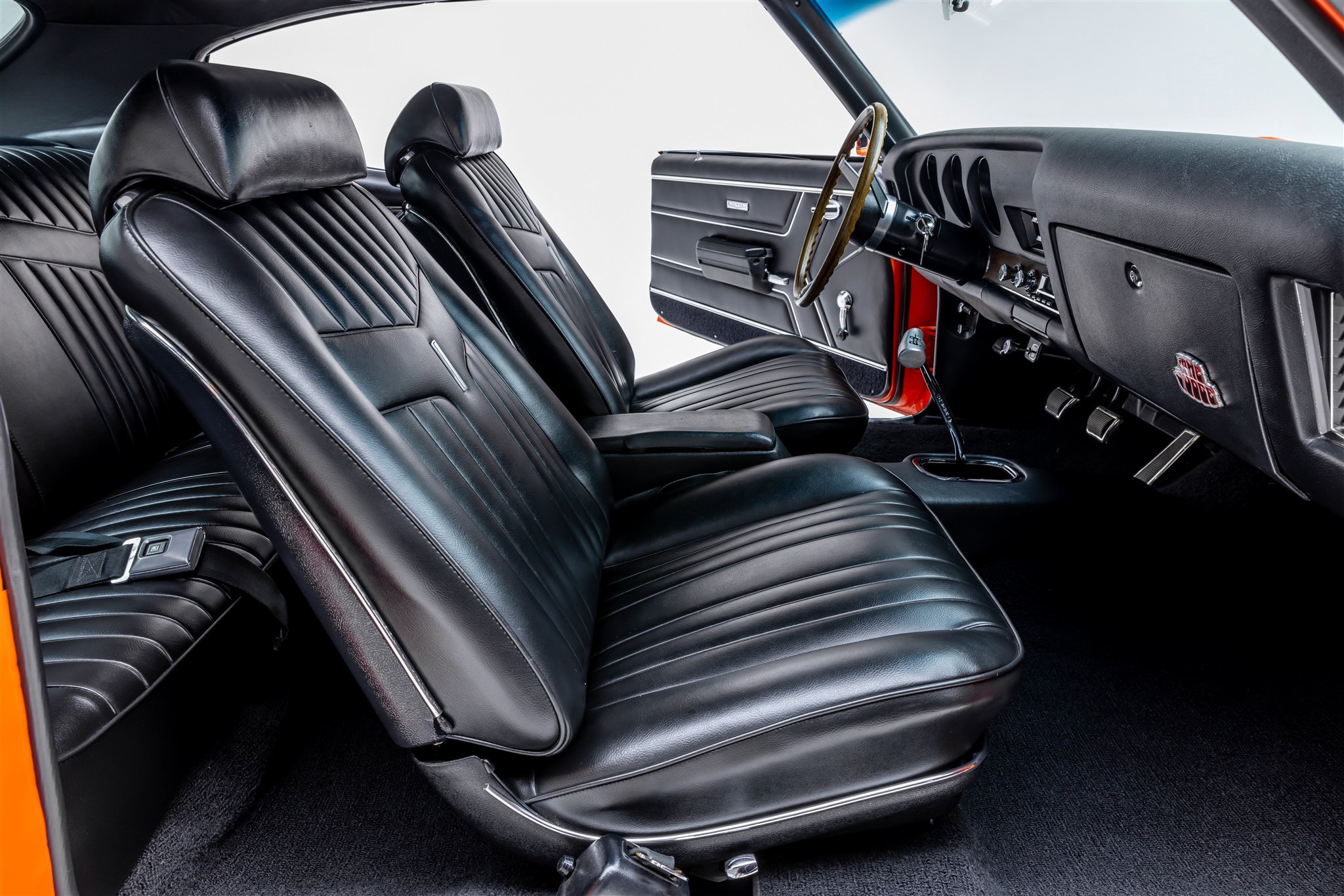
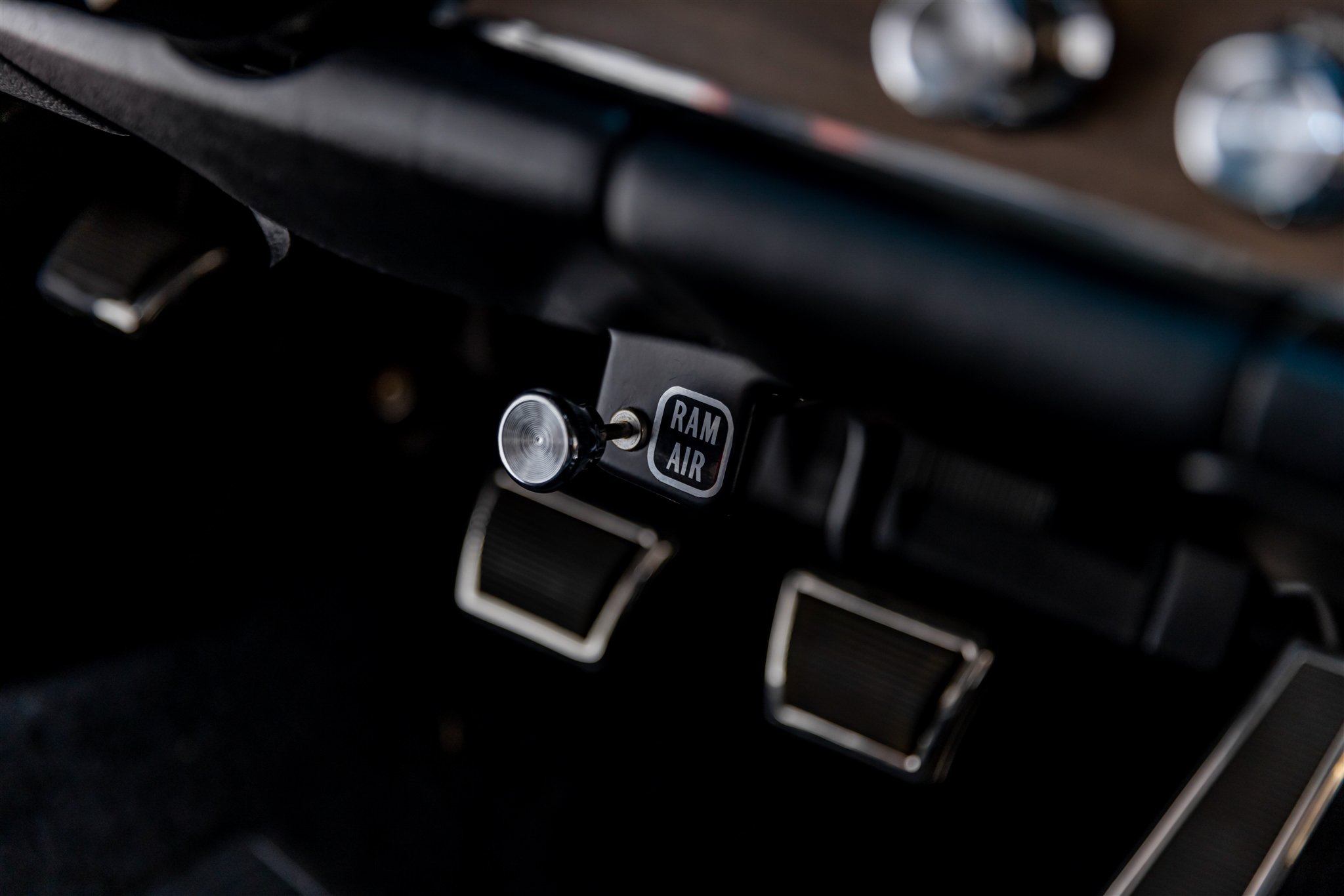
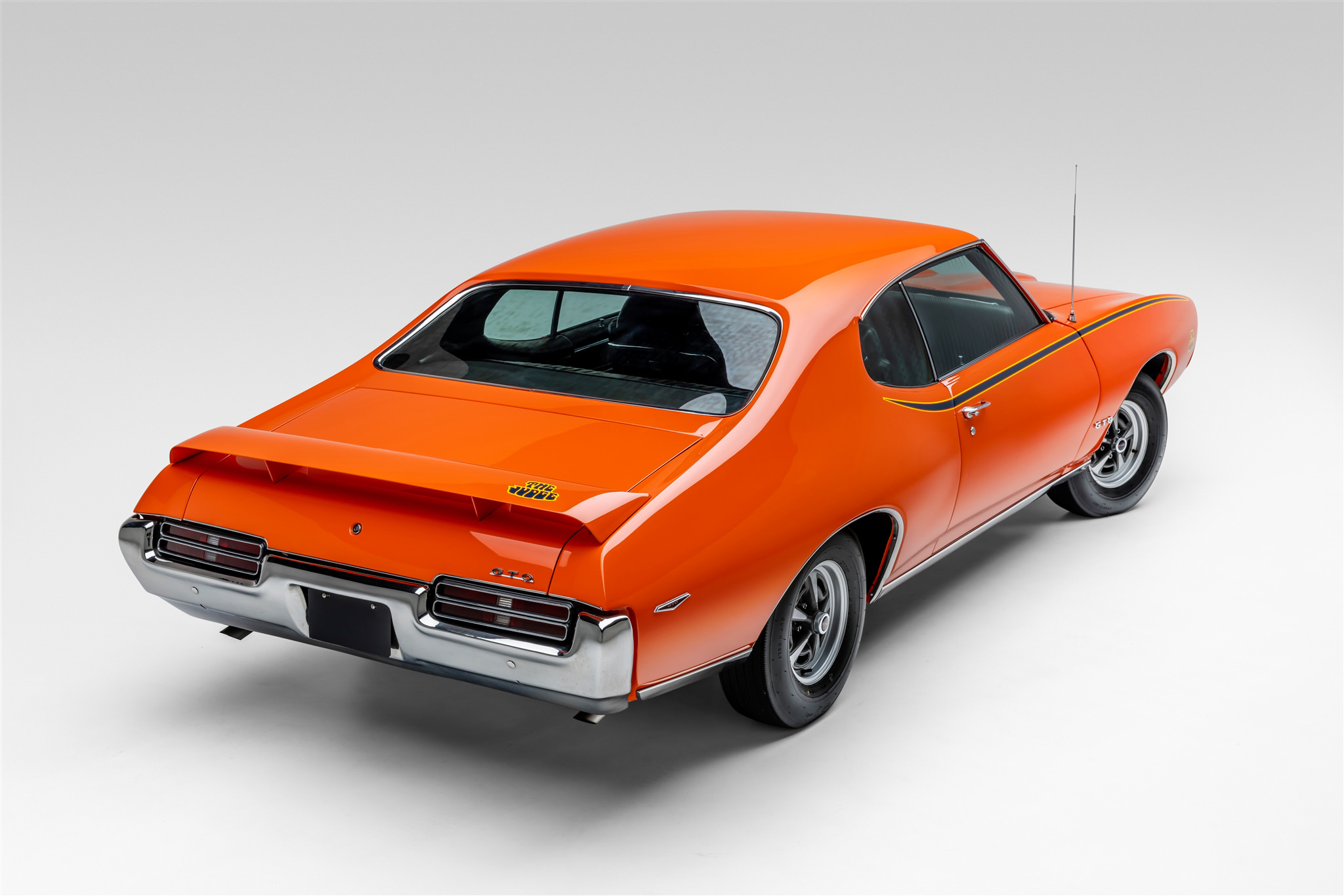
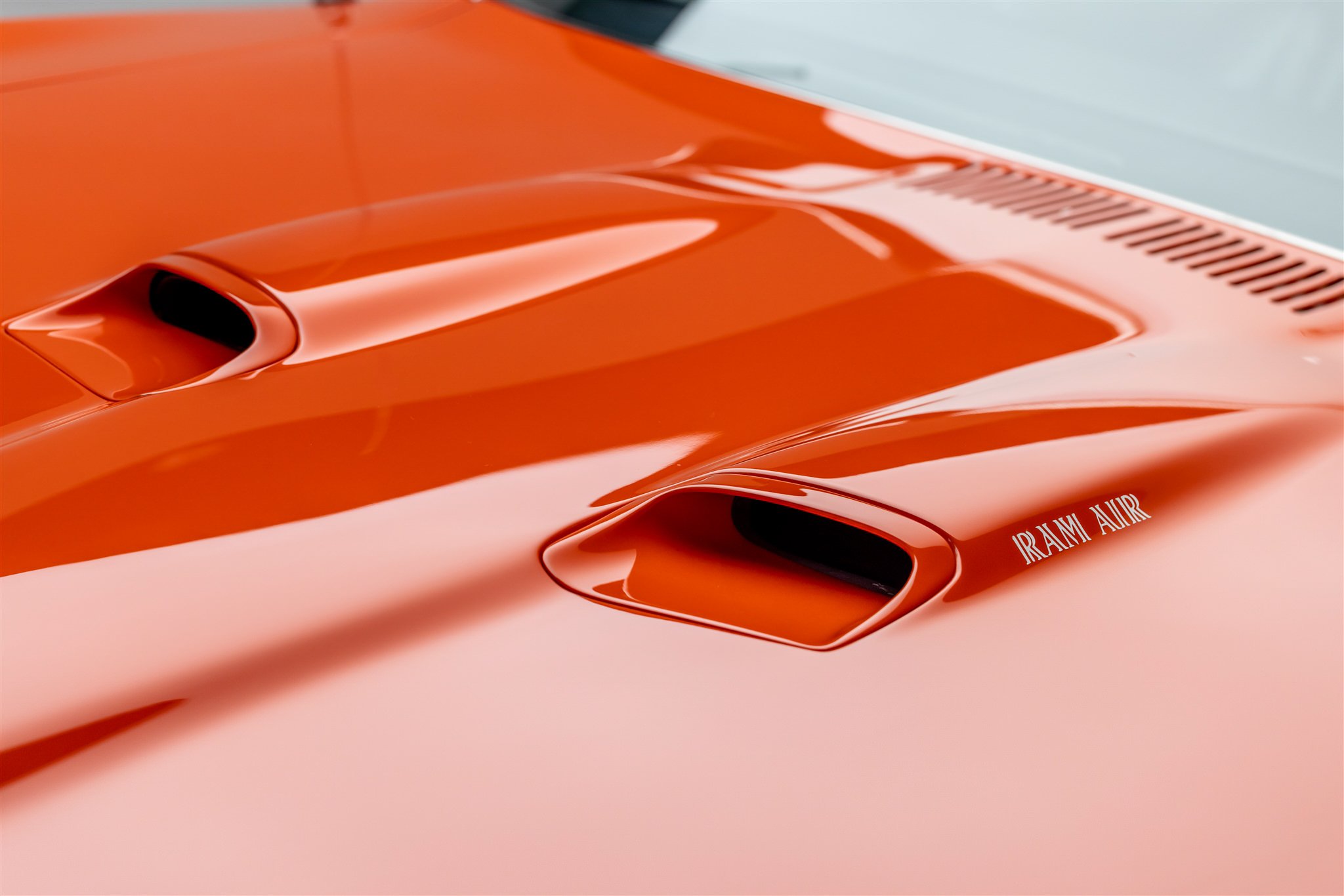
The Judge was far from just a repaint though, it also included the Ram Air 400 cubic inch V8 engine, a Hurst shifter, wider tires for better grip, Judge decals front and back, a rear spoiler (that actually produced a small amount of downforce at speed), and Rally II wheels without the trim rings.

The car was bold, bright, loud, and fast. As a result 6,833 of them sold in 1969, almost 10% of the total number of GTOs to leave the factory.

Today the 1969 Pontiac GTO Judge is considered highly collectible, particularly the earlier Carousel Red cars from the time before other colors were offered.
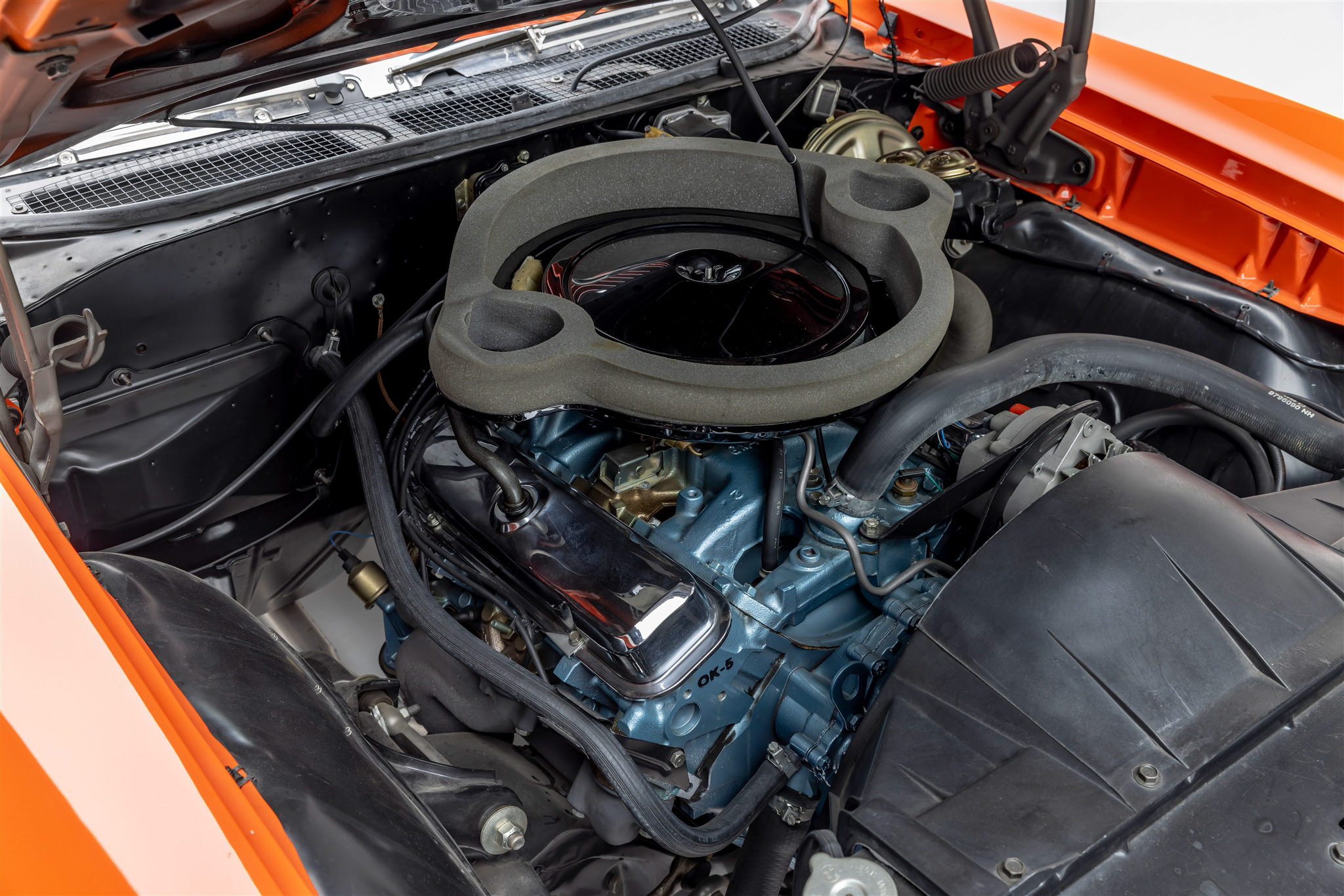
Pontiac GTO Judge 20

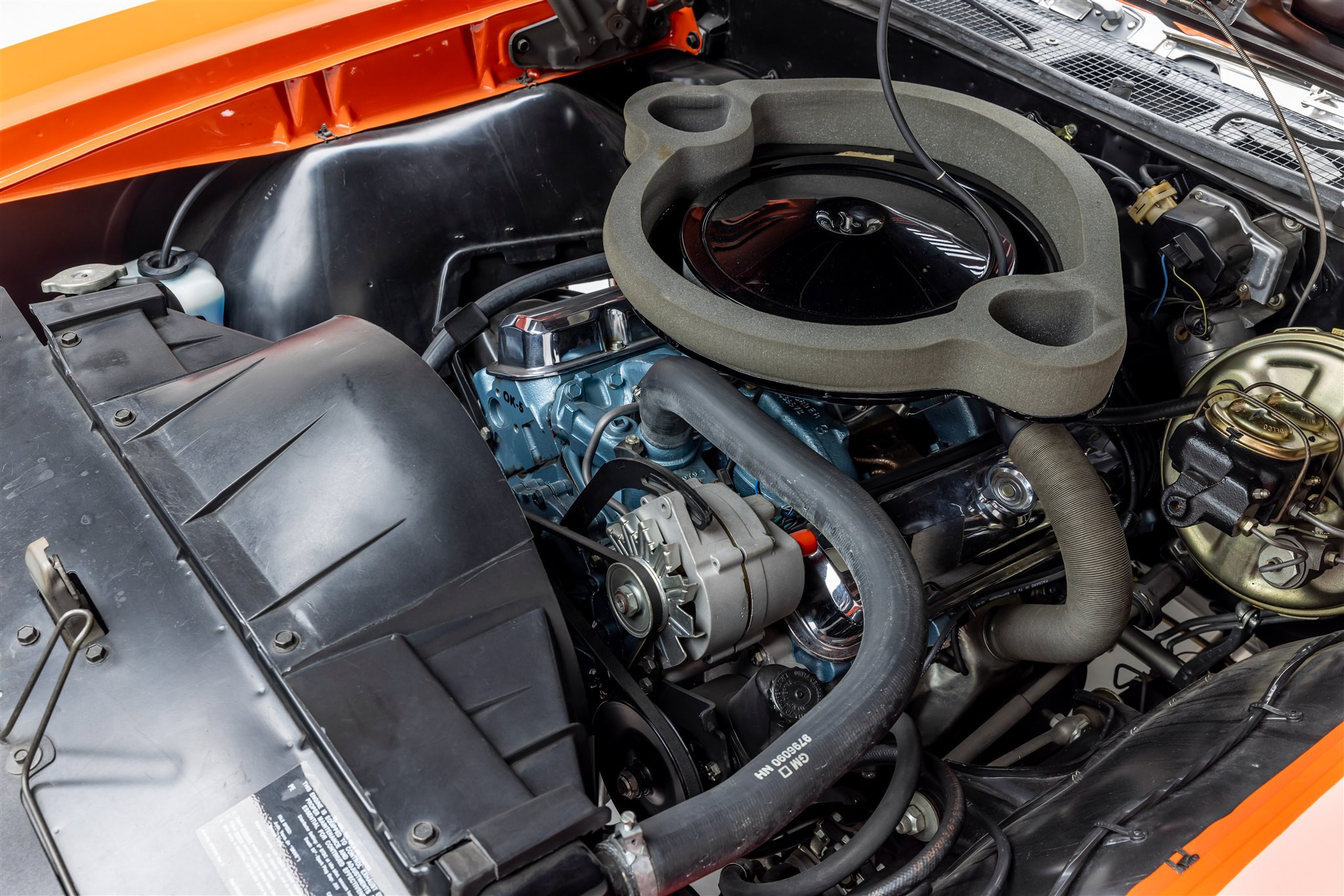
This is the 400 cubic inch Ram Air V8, it’s topped with a four-barrel carburetor and it was rated when new at 366 bhp with 445 lb ft of torque.

The 1969 Pontiac GTO Judge Shown Here

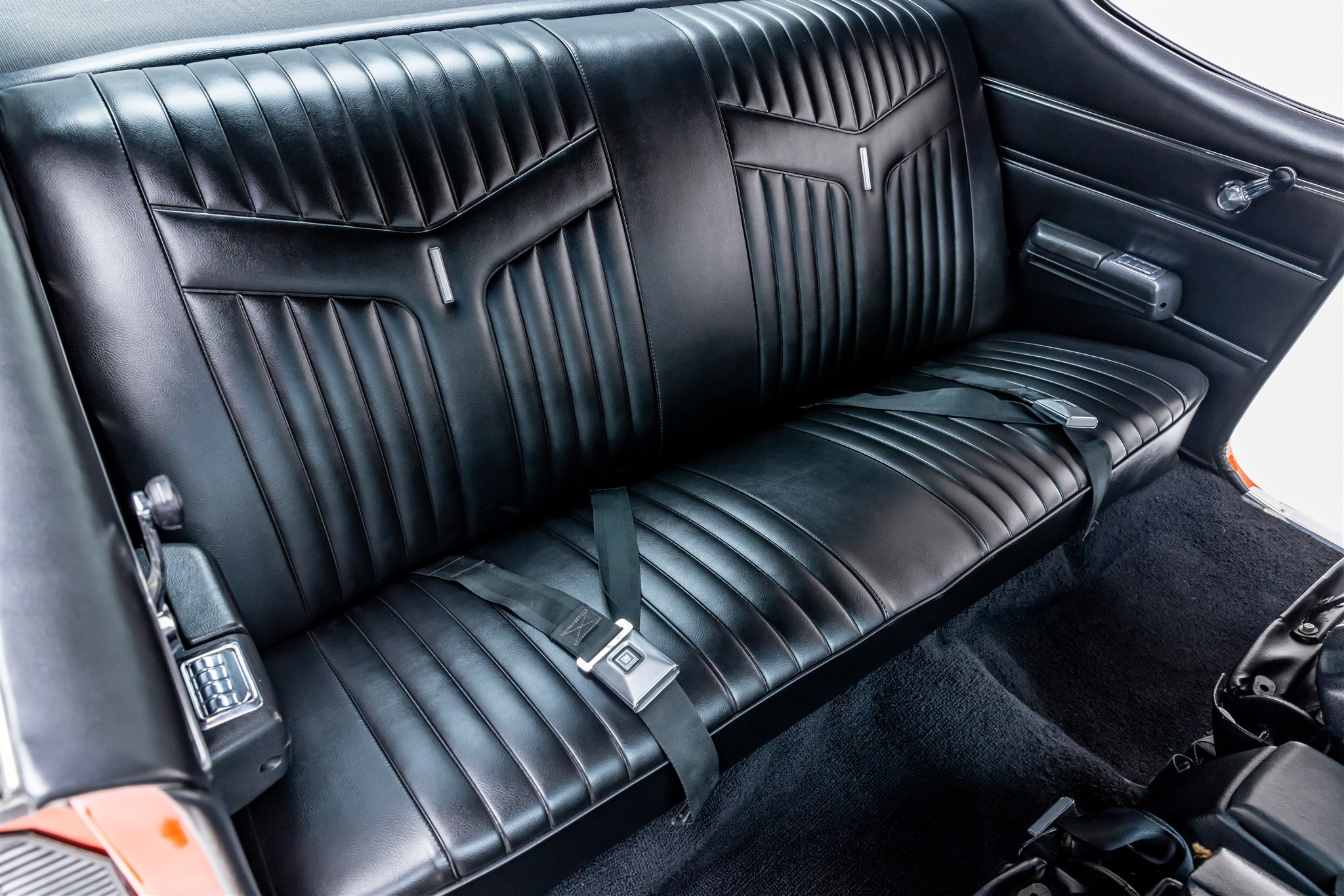
The car you see here is the one any well-researched Judge hunter is typically chasing – an original early 1969 model with a 4-speed manual transmission and a Safe-T-Track limited-slip rear differential.

This car was delivered new to Westward Pontiac of Phoenix, Arizona and more recently it underwent a refurbishment before the current owner bought it in 2020.

It’s now being offered for sale on Bring A Trailer out of Santa Monica, California with an owner’s manual, PHS report, a window sticker, and a clean California title.

If you’d like to read more about it or register to bid you can visit the listing here.

Pontiac GTO Judge 15 Pontiac GTO Judge Pontiac GTO Judge 23 Pontiac GTO Judge 22 Pontiac GTO Judge 21 Pontiac GTO Judge 19 Pontiac GTO Judge 18 Pontiac GTO Judge 17 Pontiac GTO Judge 16 Pontiac GTO Judge 14 Pontiac GTO Judge Car Pontiac GTO Judge 12 Pontiac GTO Judge 10 Pontiac GTO Judge 9 Pontiac GTO Judge 8 Pontiac GTO Judge 7 Pontiac GTO Judge 6 Pontiac GTO Judge 4 Pontiac GTO Judge 2 Pontiac GTO Judge 1

Images courtesy of Bring A Trailer

The post John DeLorean’s “Judge” – An Original 1969 Pontiac GTO Judge appeared first on Silodrome.


from Silodrome https://silodrome.com/pontiac-gto-judge-car/
via gqrds

Barry Sheene’s 1979 Suzuki Jimny Is For Sale – $22,300+ USD

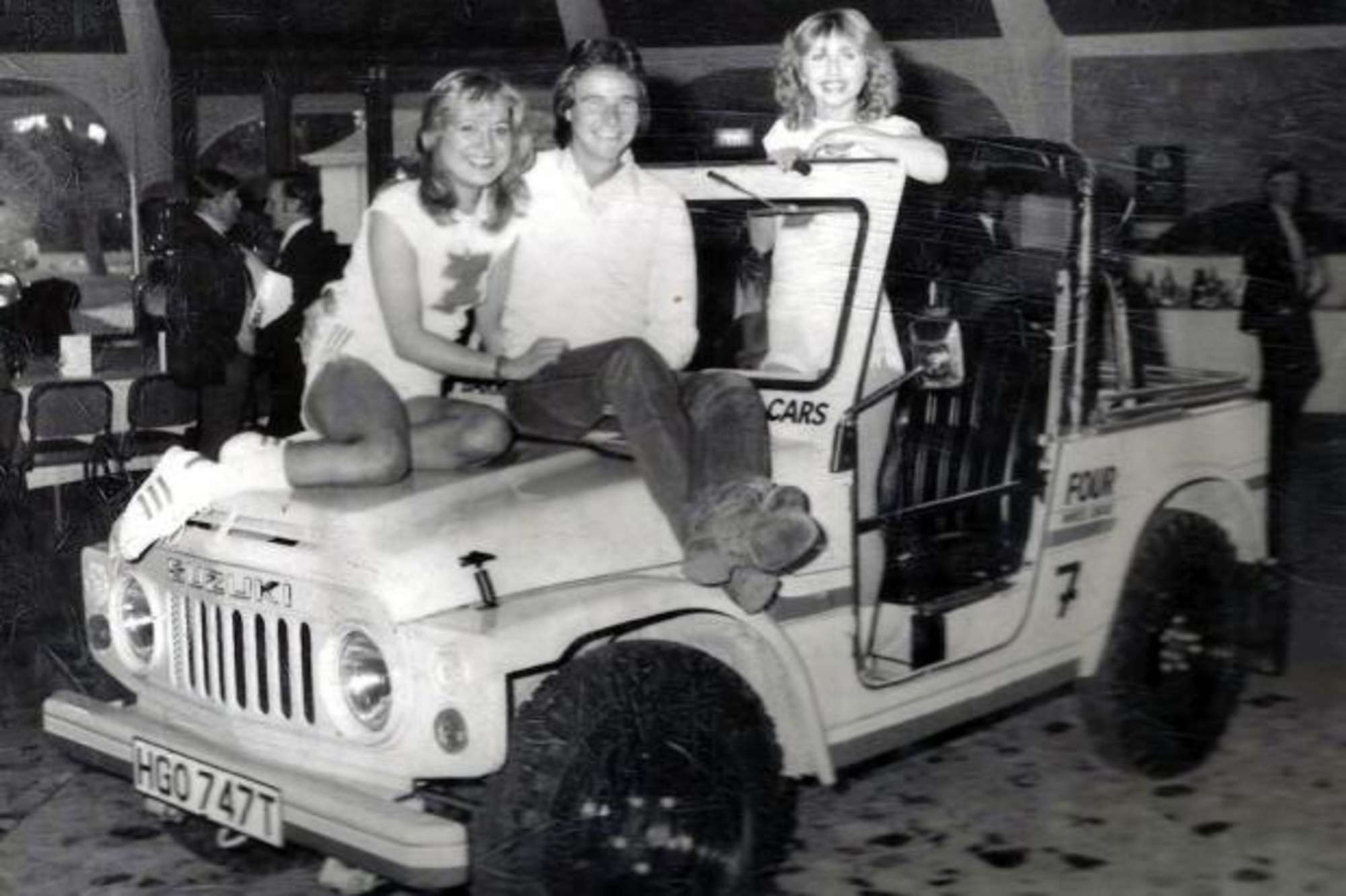
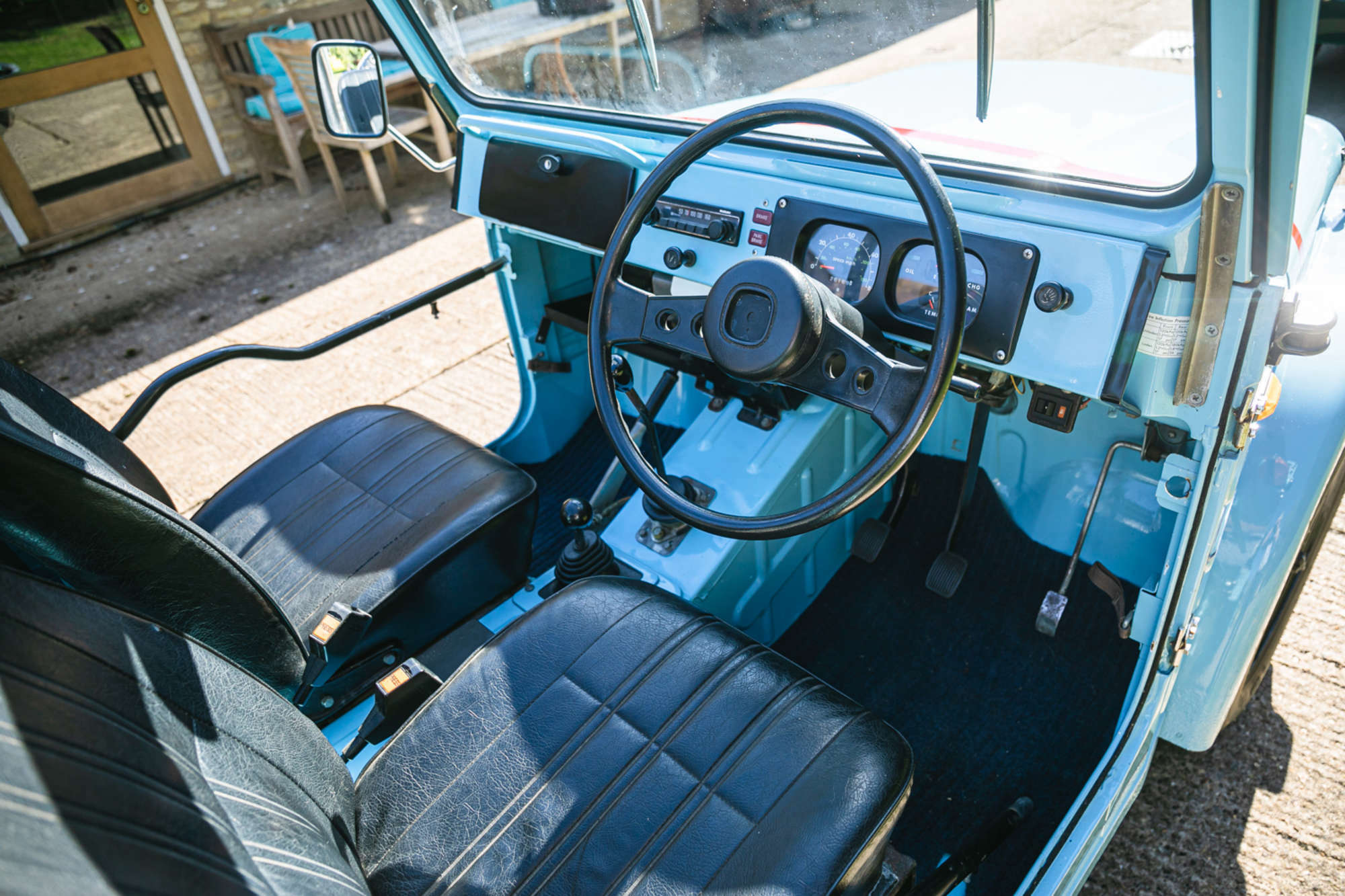
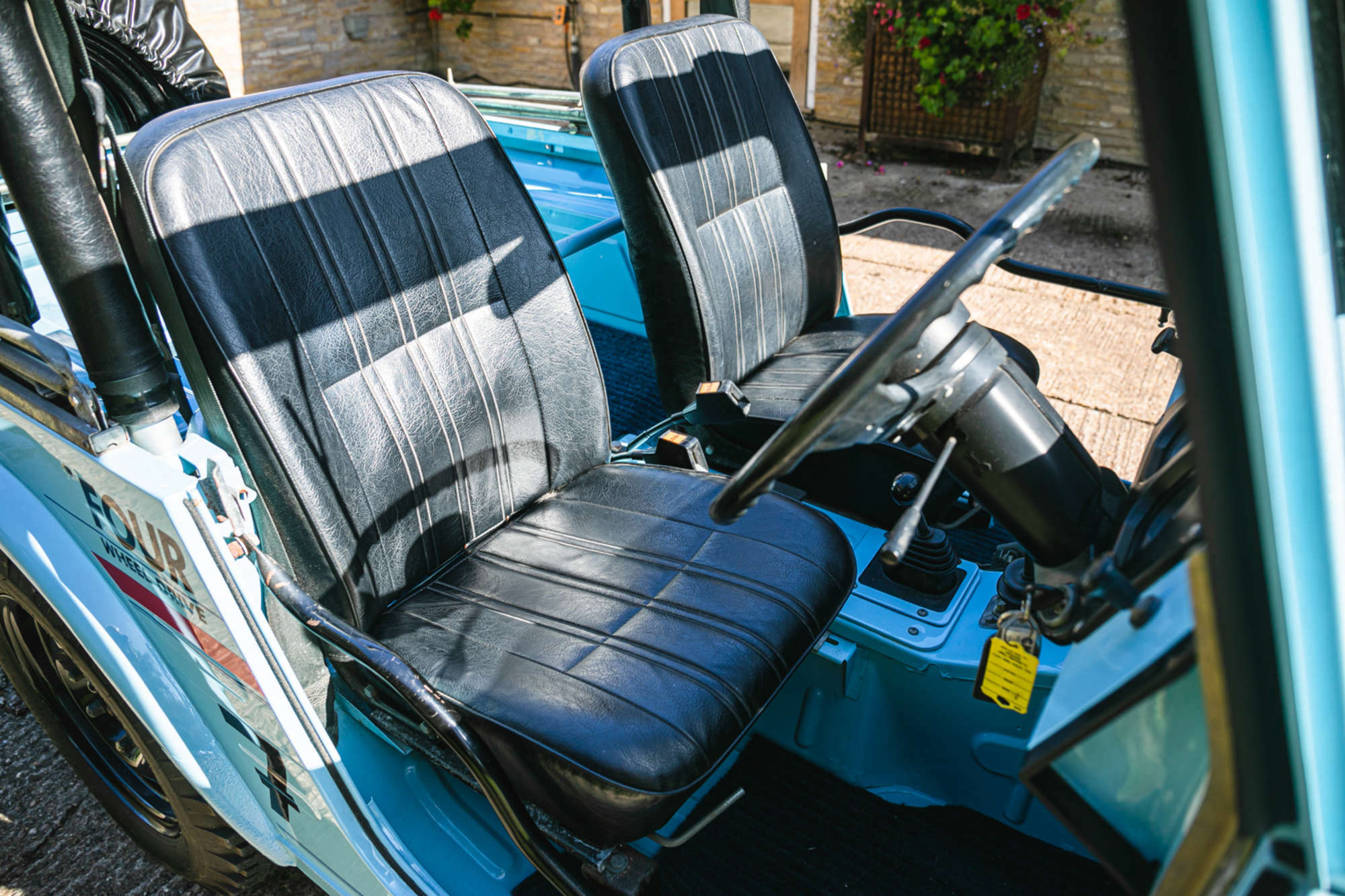
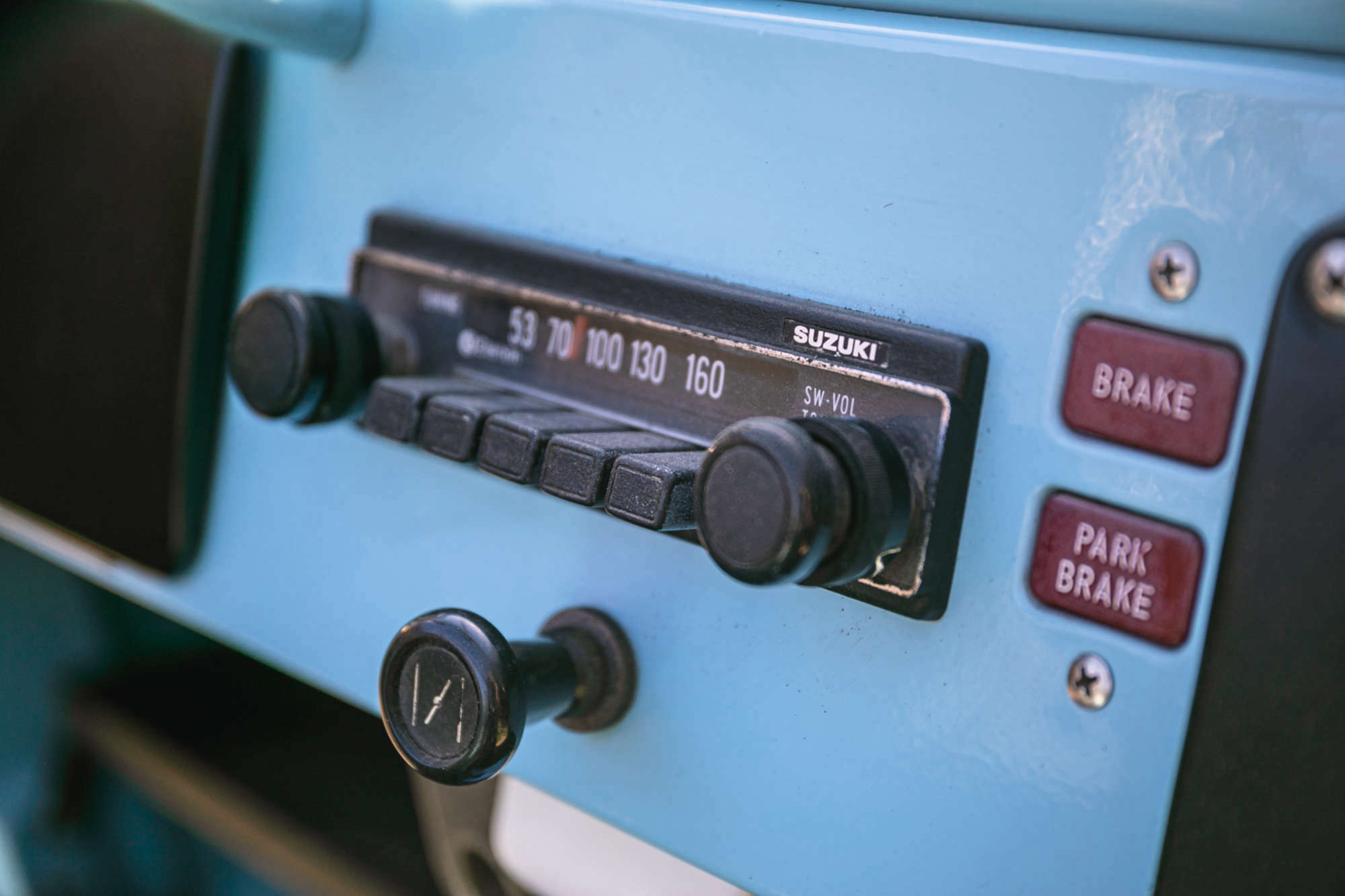
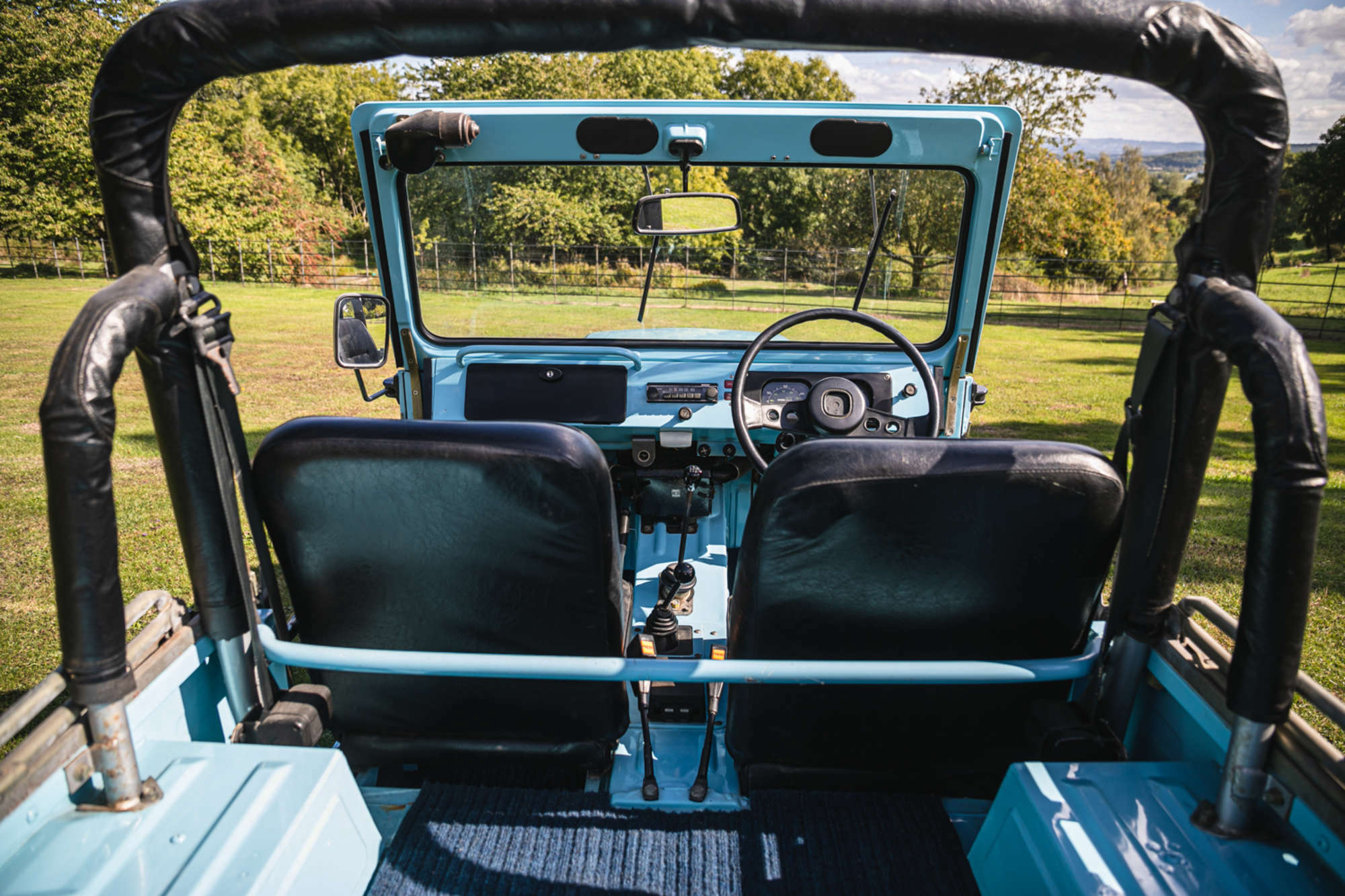
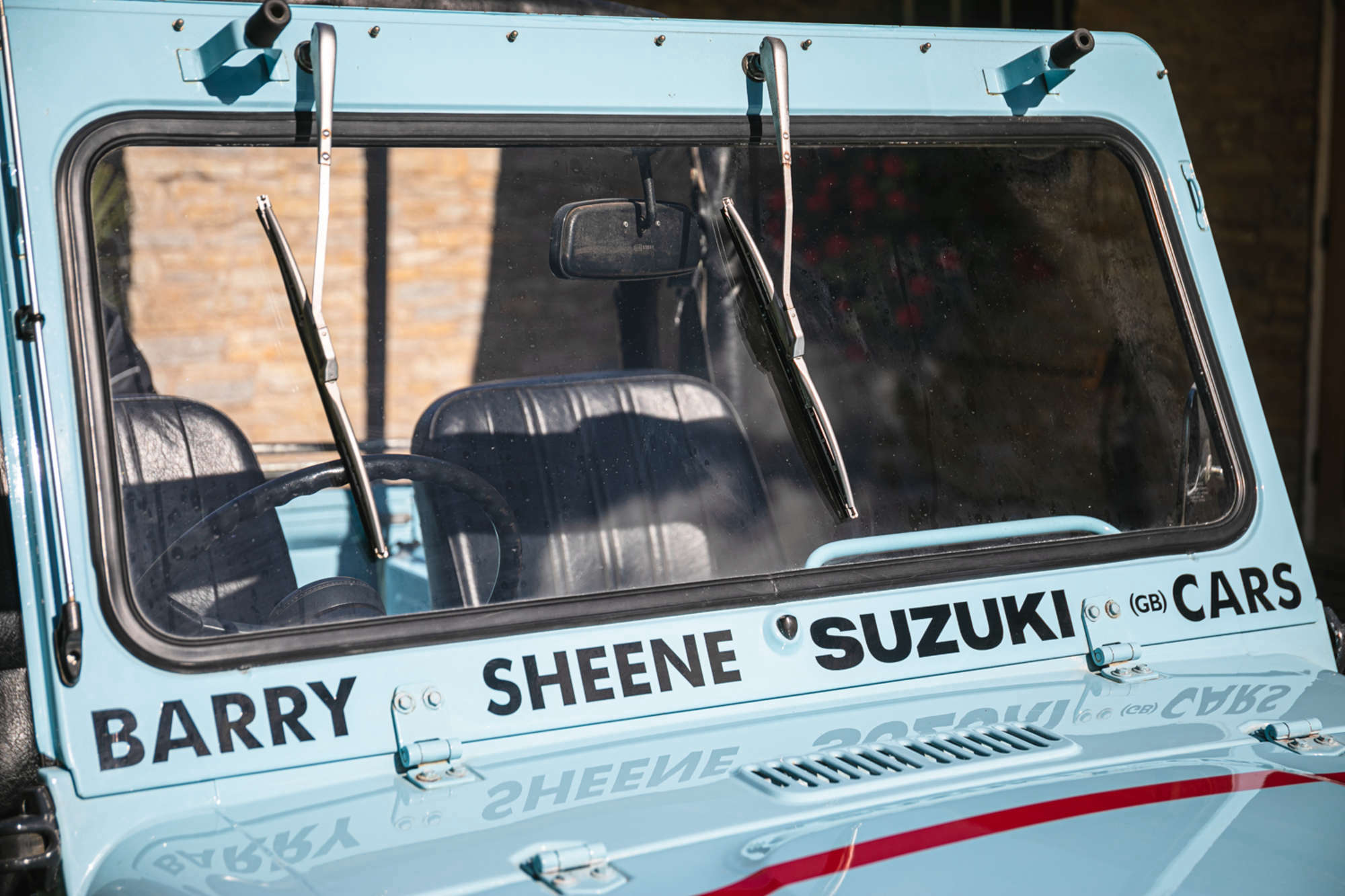
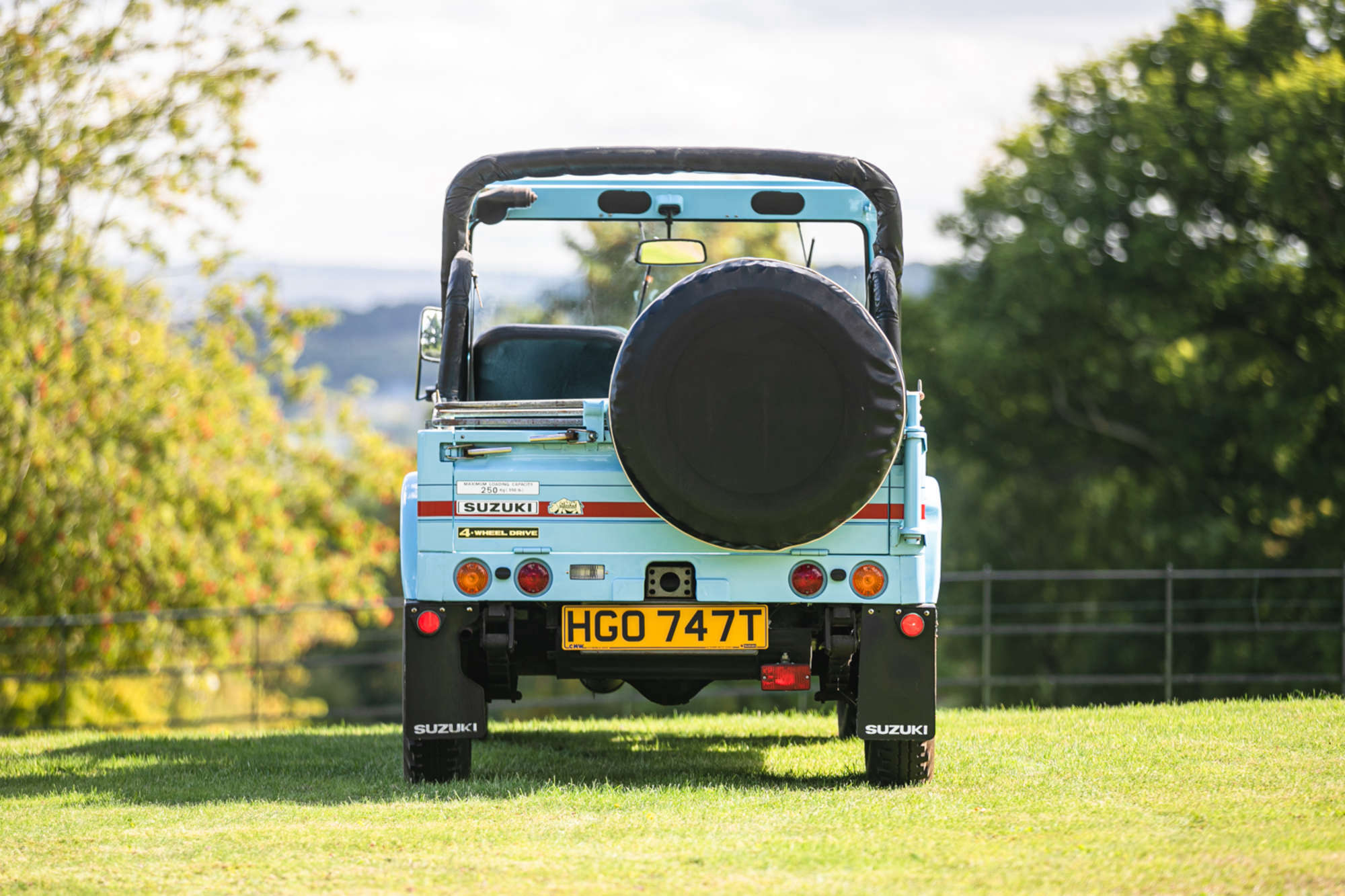
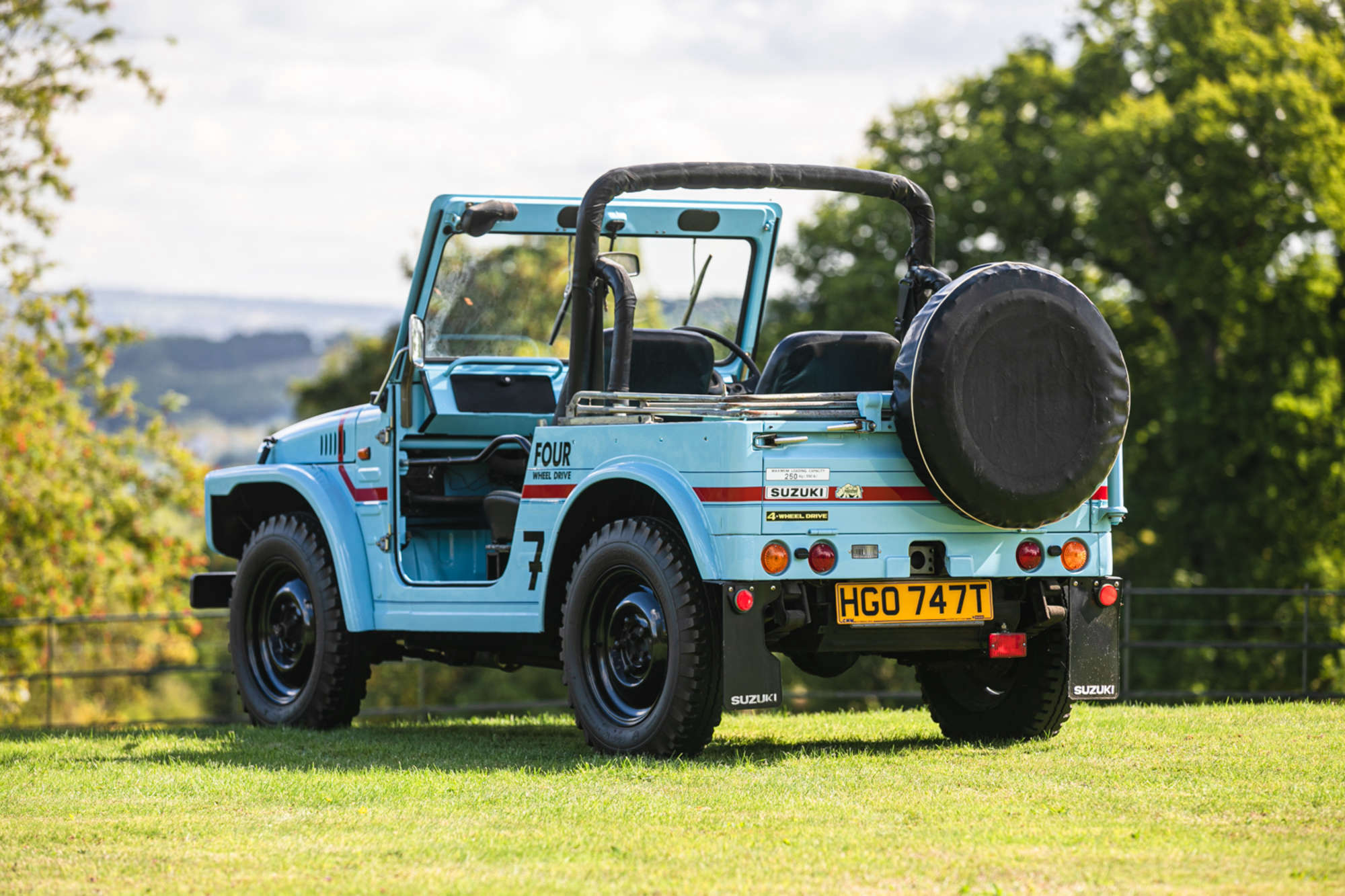
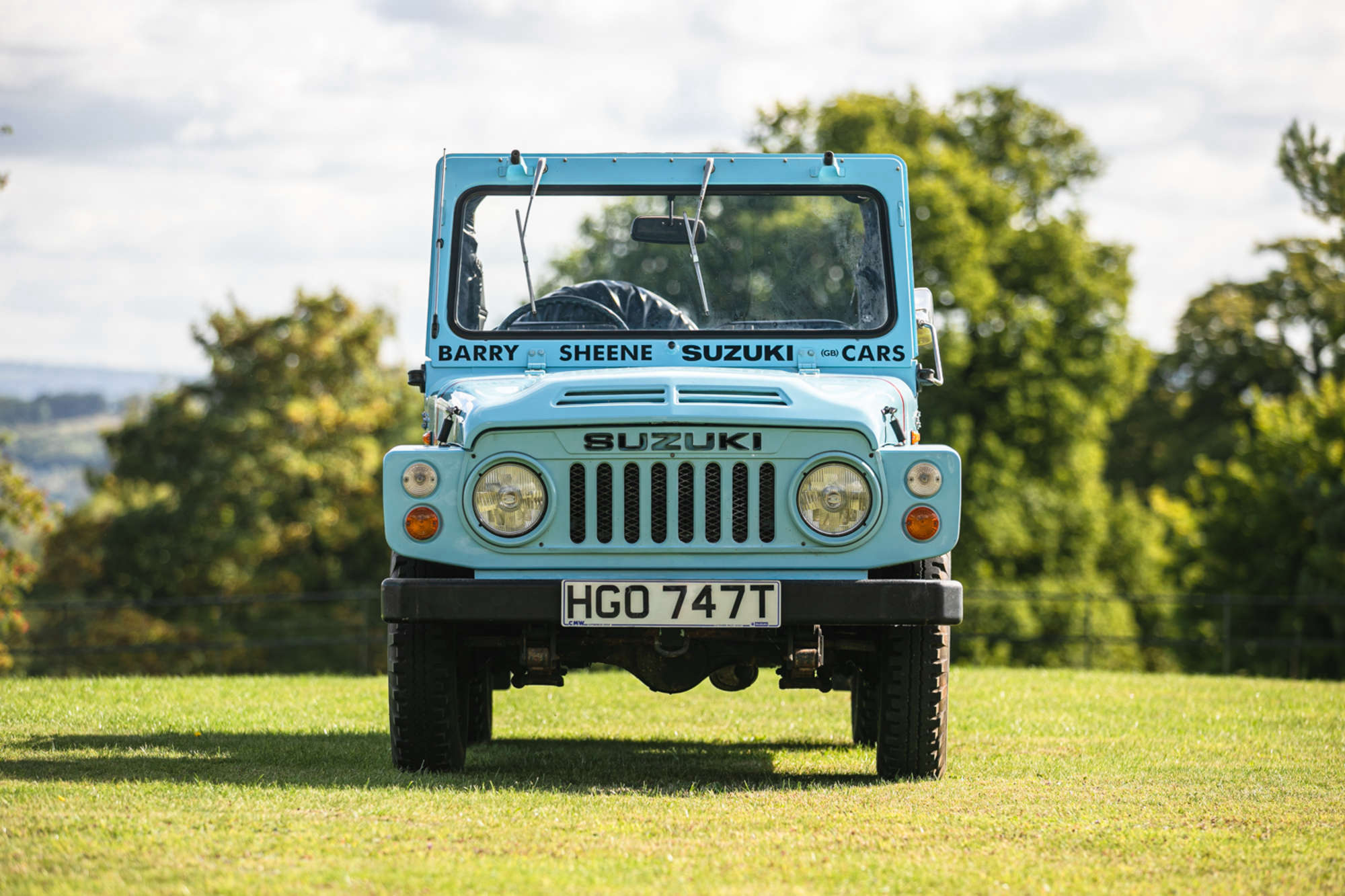
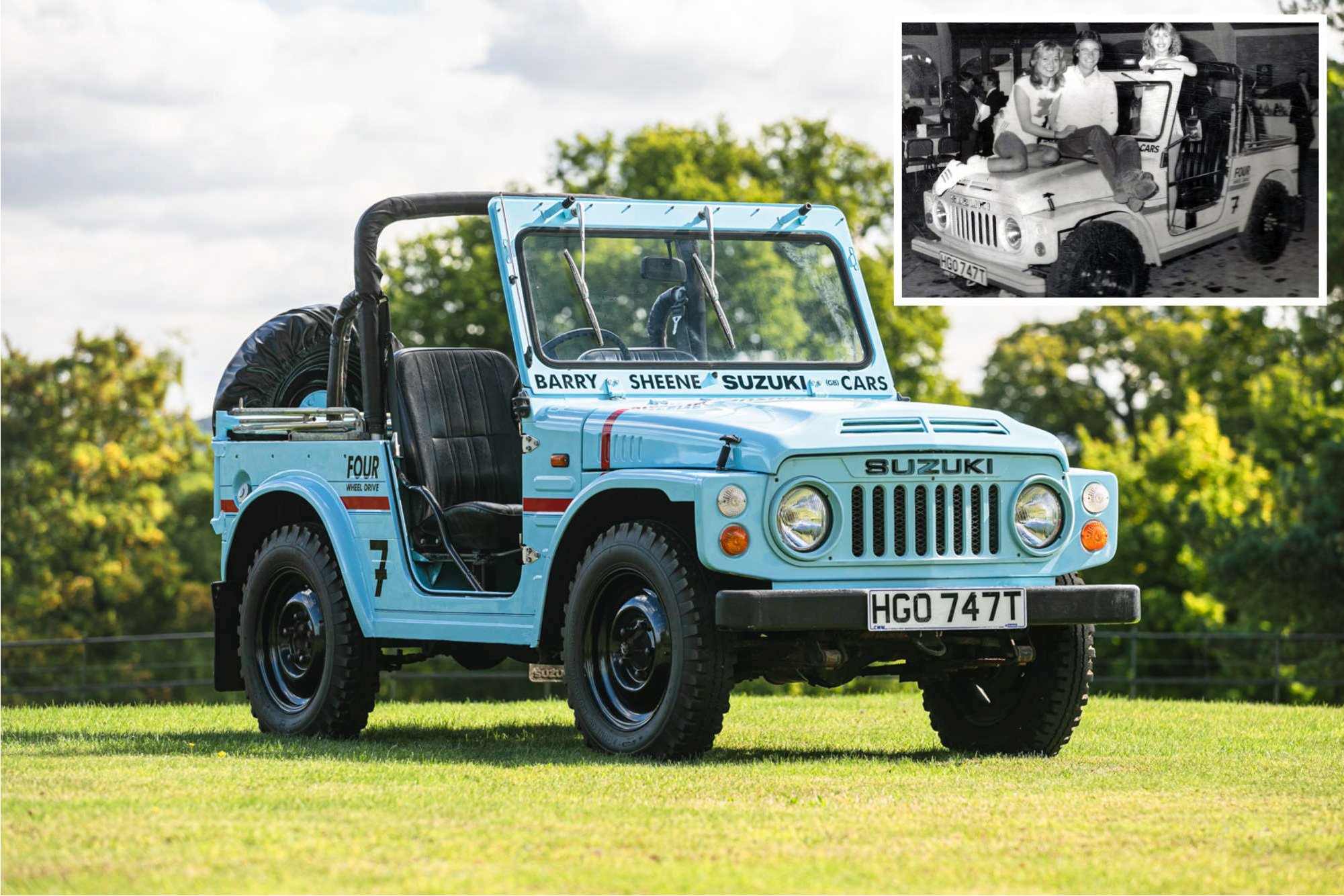
This Suzuki LJ80R was gifted to legendary motorcycle racer Barry Sheene by the Suzuki GB team as a thank you for his remarkable exploits piloting Suzuki superbikes in top tier competition.

The Jimny was Suzuki’s entry into the four-wheel drive market, it first appeared in 1970 and unlike the full-size Toyota Land Cruiser and Nissan Patrol, the Jimny was designed to be a smaller class of vehicle to meet Japan’s Kei car regulations.

Fast Facts – The Suzuki Jimny

  • The Suzuki Jimny originally started life as the HopeStar ON360, a small four-wheel drive developed by Japanese automaker Hope Motor Company. After they went bankrupt they were acquired by Suzuki.
  • The official model name of the first Jimny was the Suzuki LJ10 (Light Jeep 10), this was followed by the LJ20, LJ50, LJ80, and so on, each denoting a larger more powerful engine.
  • Each of the four generations of the Jimny have used body-on-chassis construction with live axles front and rear, selectable four-wheel drive with high and low-range, and a ruggedly simple drivetrain.
  • Barry Sheene rode for the Suzuki works motorcycle grand prix team from 1973 to 1979, he won the 500cc world championship twice for the Japanese team in 1976 and 1977, with a second place finish in 1978 and a third place finish in 1979.

Barry Sheene + Suzuki

Barry Sheene’s 1979 season-long battle with fellow racer “King” Kenny Roberts has long been viewed as one of the most consequential in the sport’s history – particularly the remarkable battle at the 1979 British Grand Prix.

Barry Sheene Suzuki Jimny 23

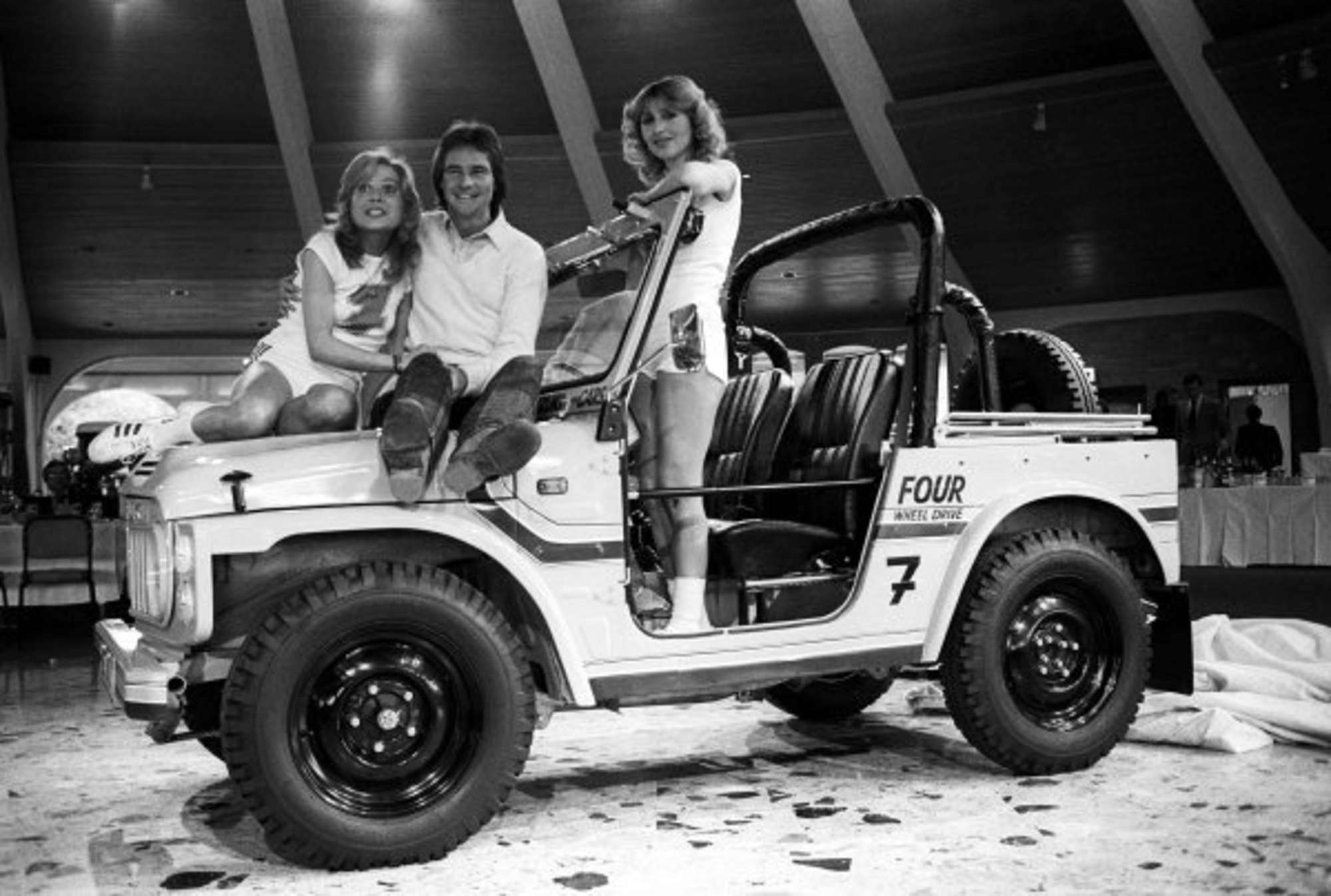
Bary Sheene was given this Jimny by Suzuki GB for his years of service to the team, which included two world championships and 21 race victories.

Sheene rode for the Suzuki works motorcycle grand prix team at the top 500cc level from 1973 to 1979, he won the 500cc world championship twice for the Suzuki in 1976 and 1977, with a second place finish in 1978 and a third place finish in 1979.

In total, Sheene would take 21 wins over both the 500cc and 125cc classes for Suzuki between 1971 and 1979. He left to race for Yamaha in 1980 but returned to Suzuki in 1983, racing with them until 1984 when a serious crash at Silverstone all but ended his career.

Barry Sheene’s Suzuki Jimny LJ80R

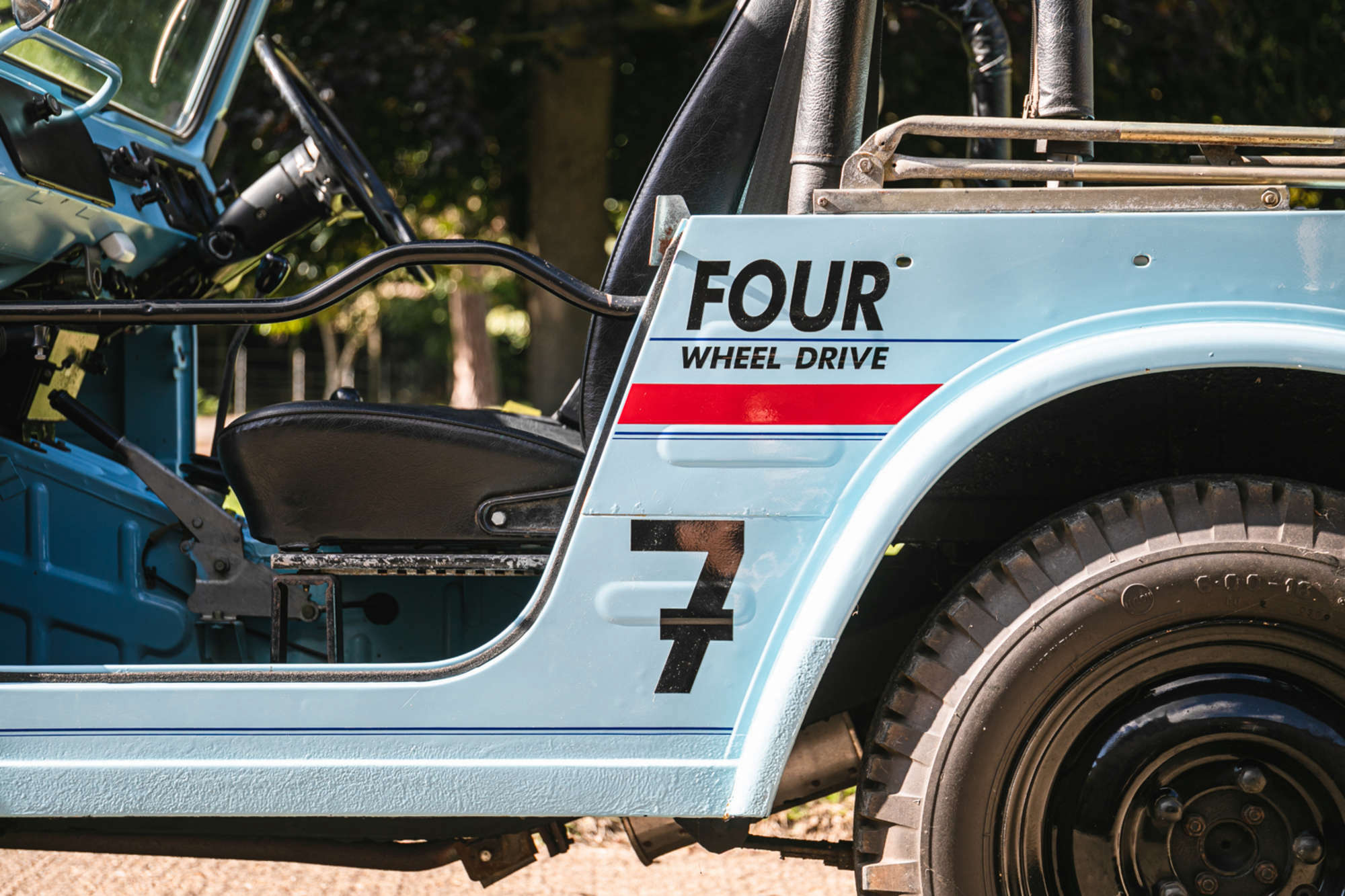
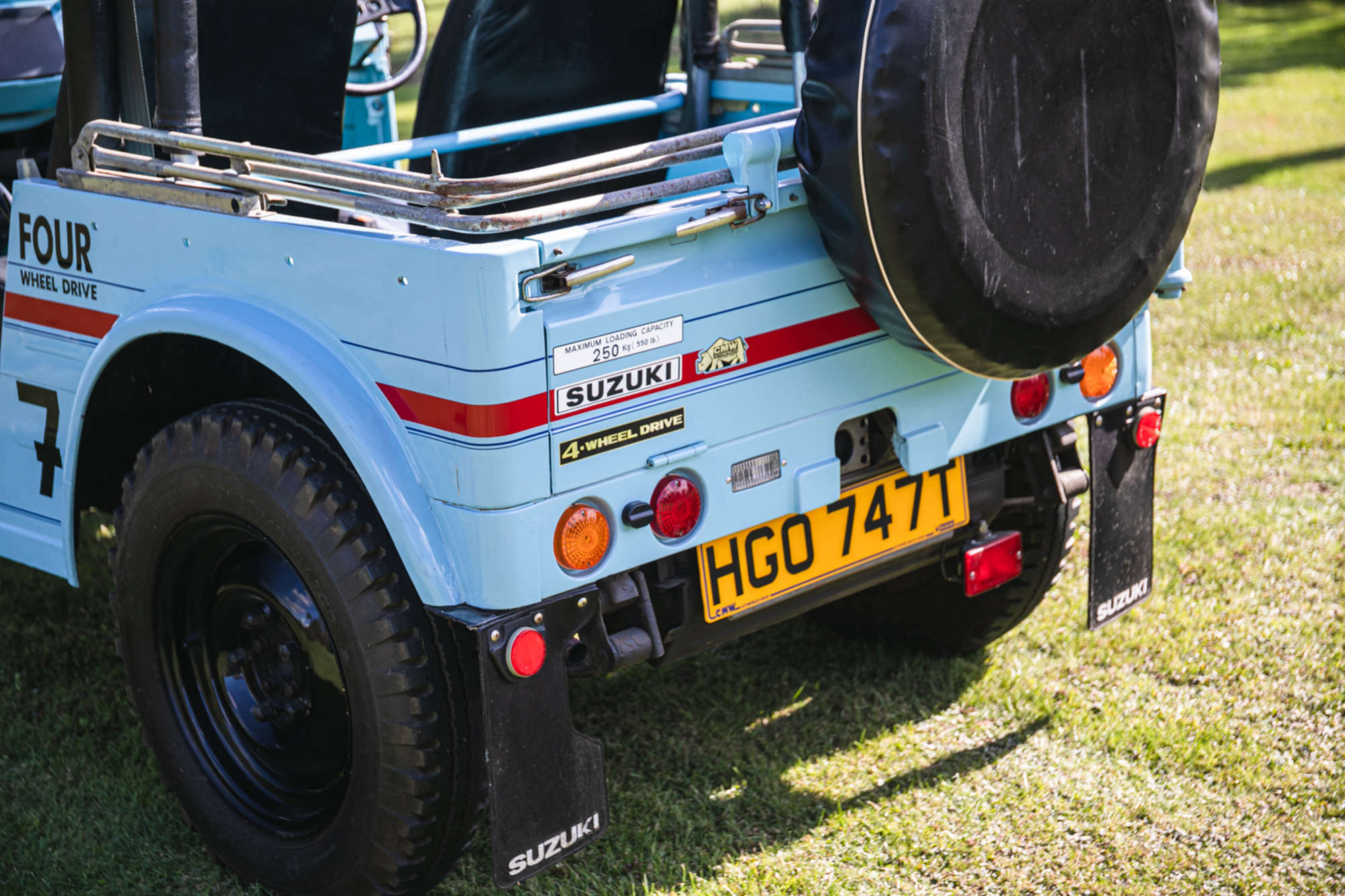
As mentioned in the introduction, this Suzuki Jimny LJ80R was gifted to Barry Sheene by Suzuki Great Britain as a thank you for his years of service with the team. It was decorated with his racing number “7” as well as his name, and some red racing stripes for good measure.

Sheene kept the car and used it often for five years – right the way through he tenure as a racer for Yamaha and into the two years that he returned to race for Suzuki. Perhaps an indication that his heart always lay with the Suzuki team.

Barry Sheene Suzuki Jimny 16

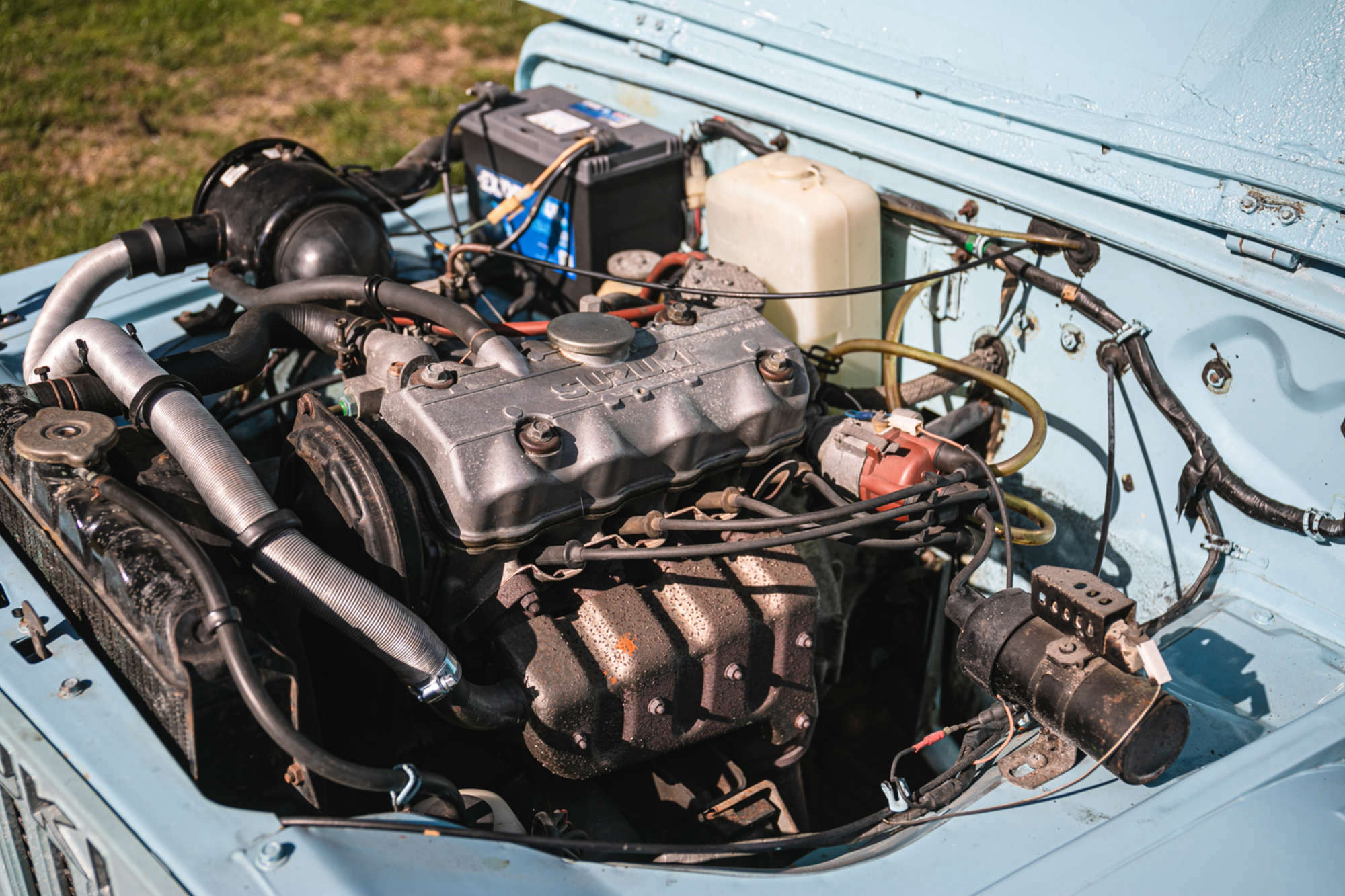
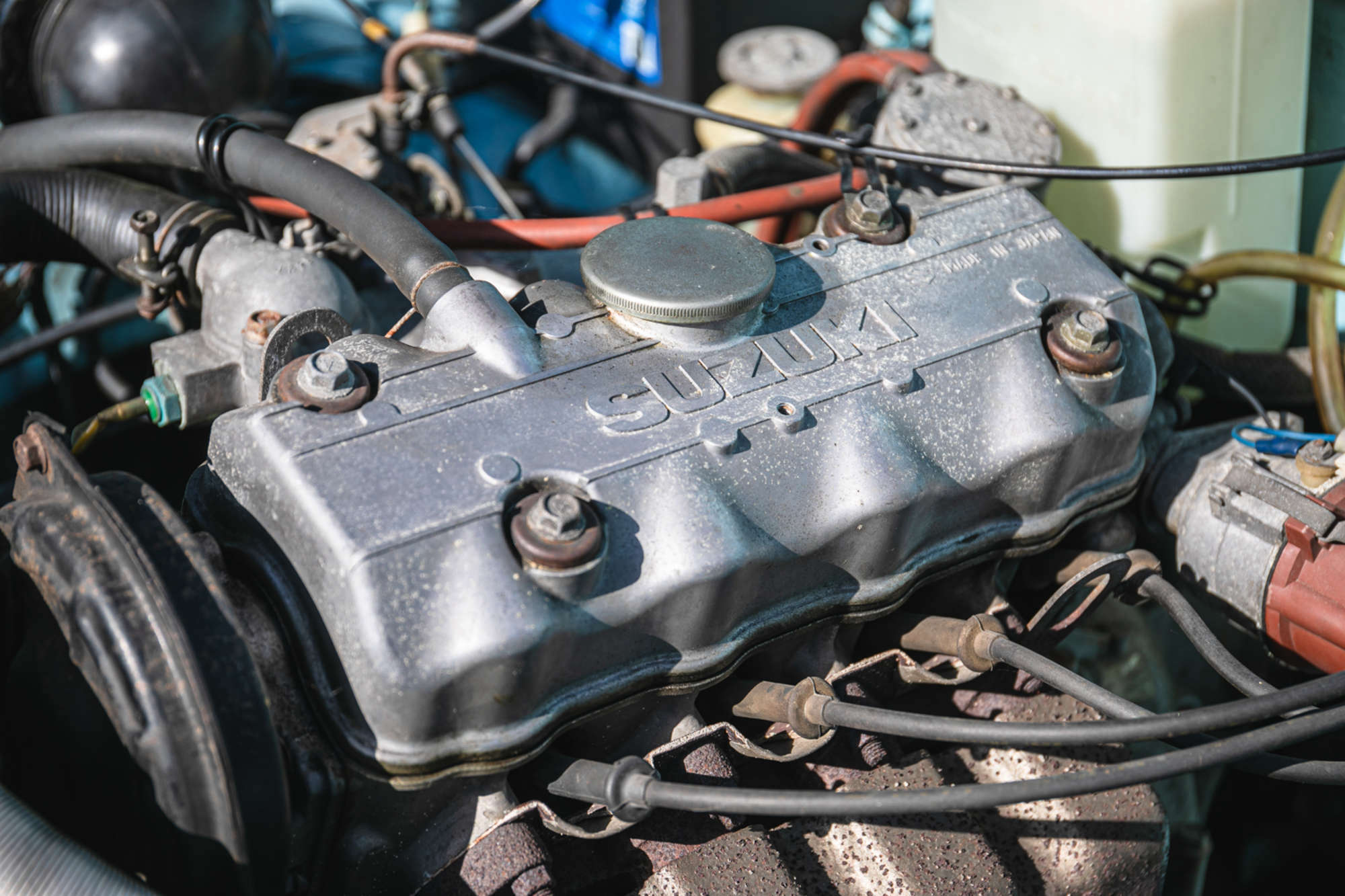
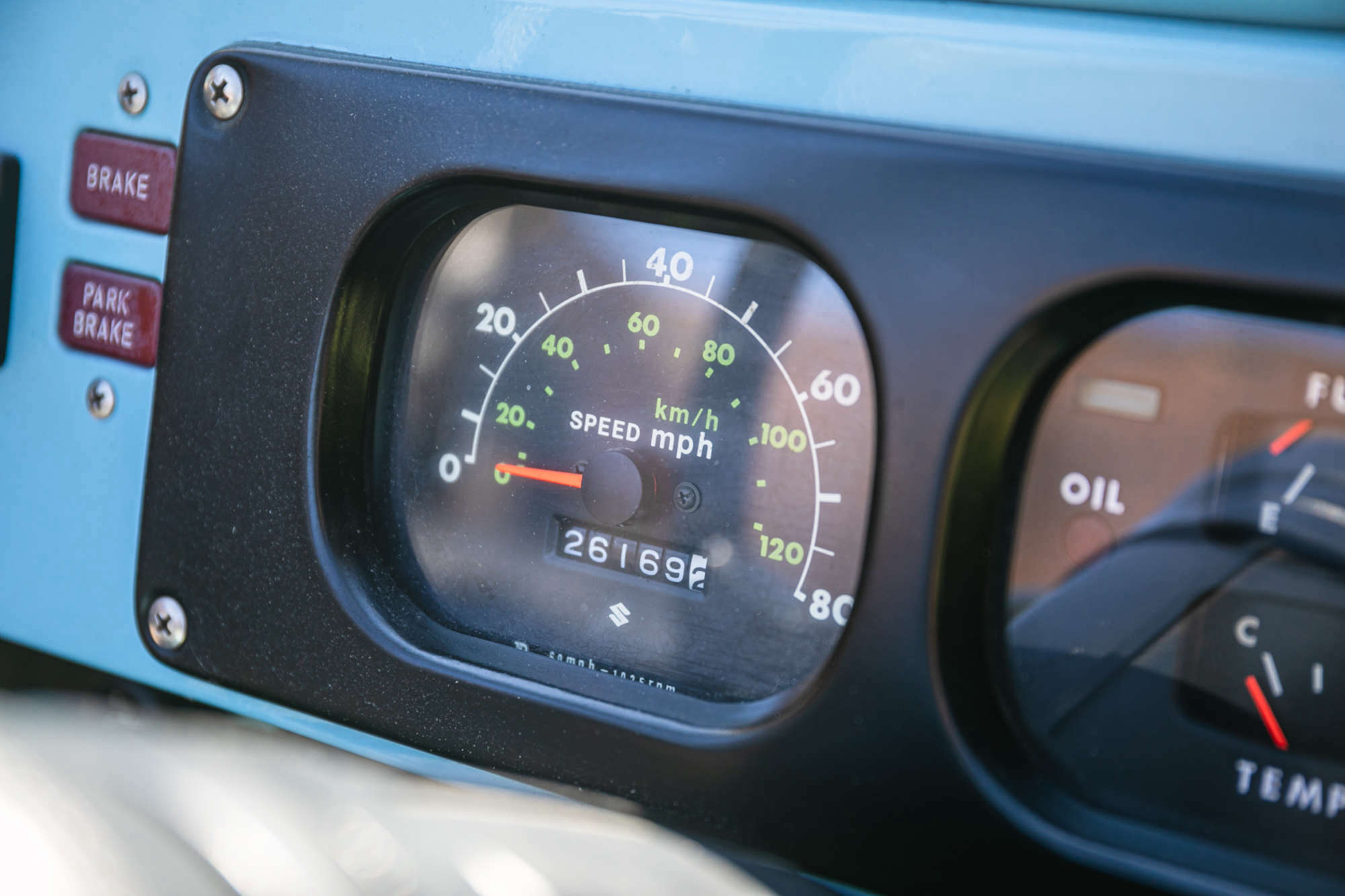
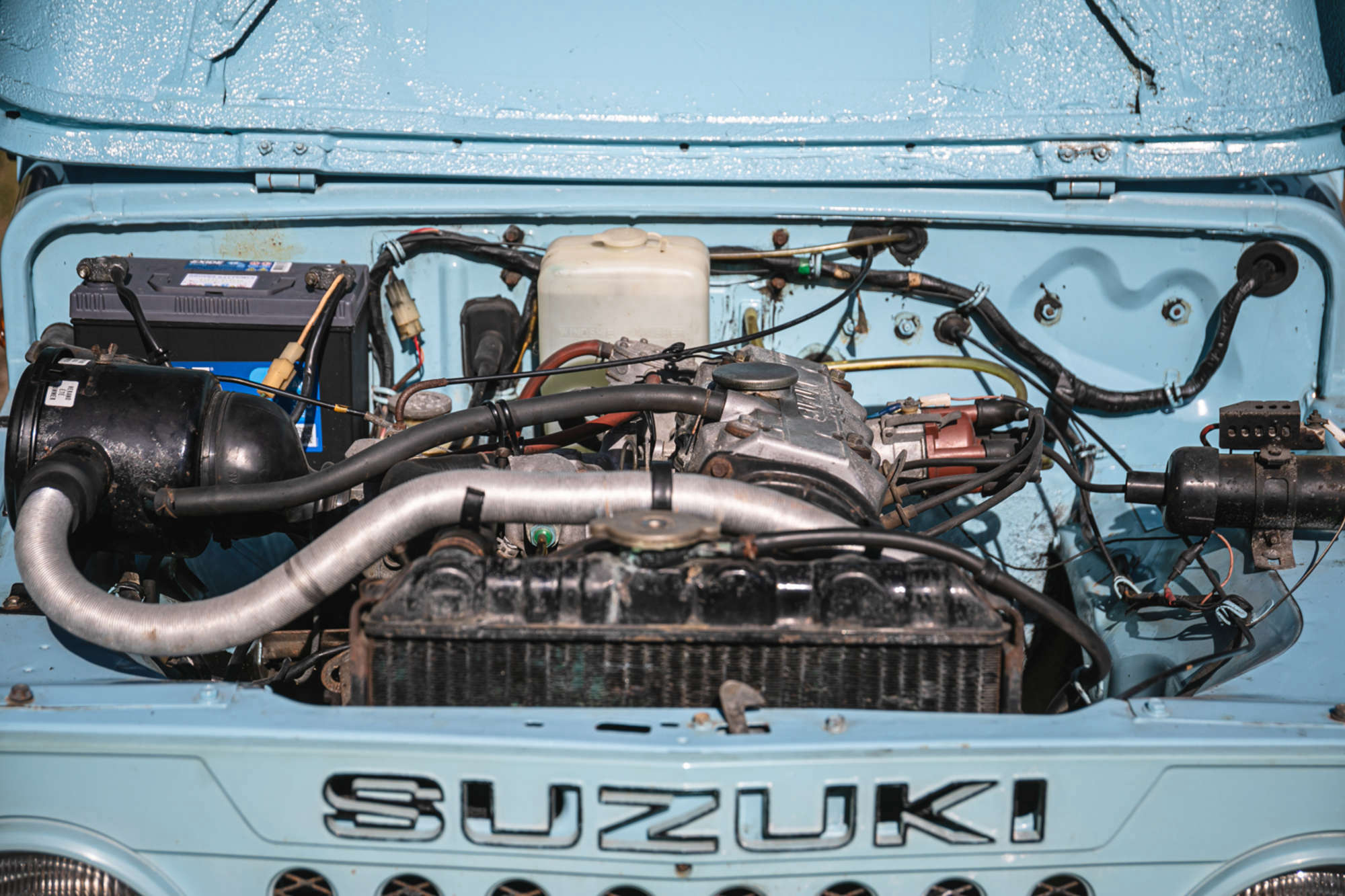
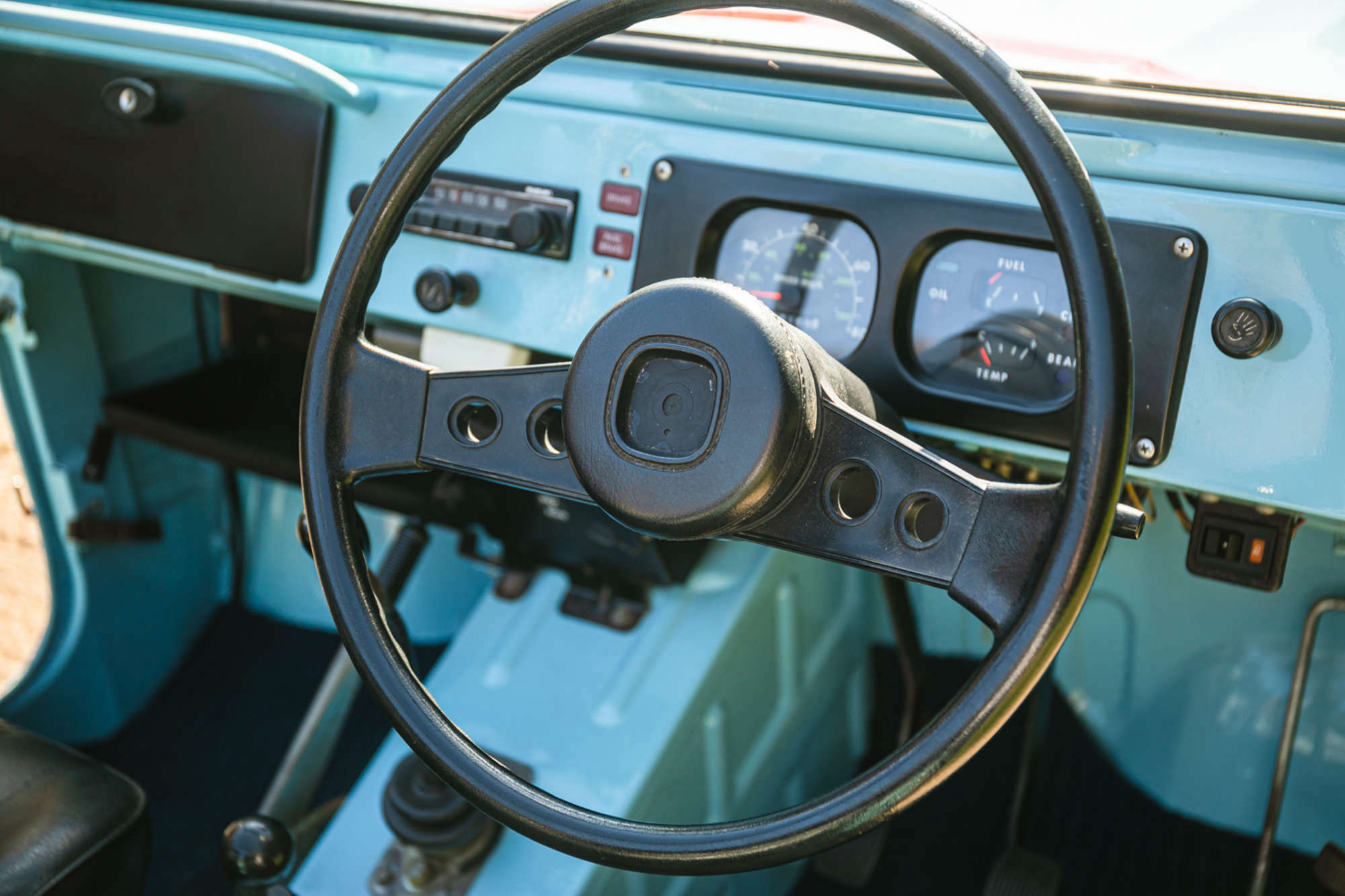
Power is provided by a SOHC 800cc, four-stroke, inline four-cylinder engine producing 42 hp.

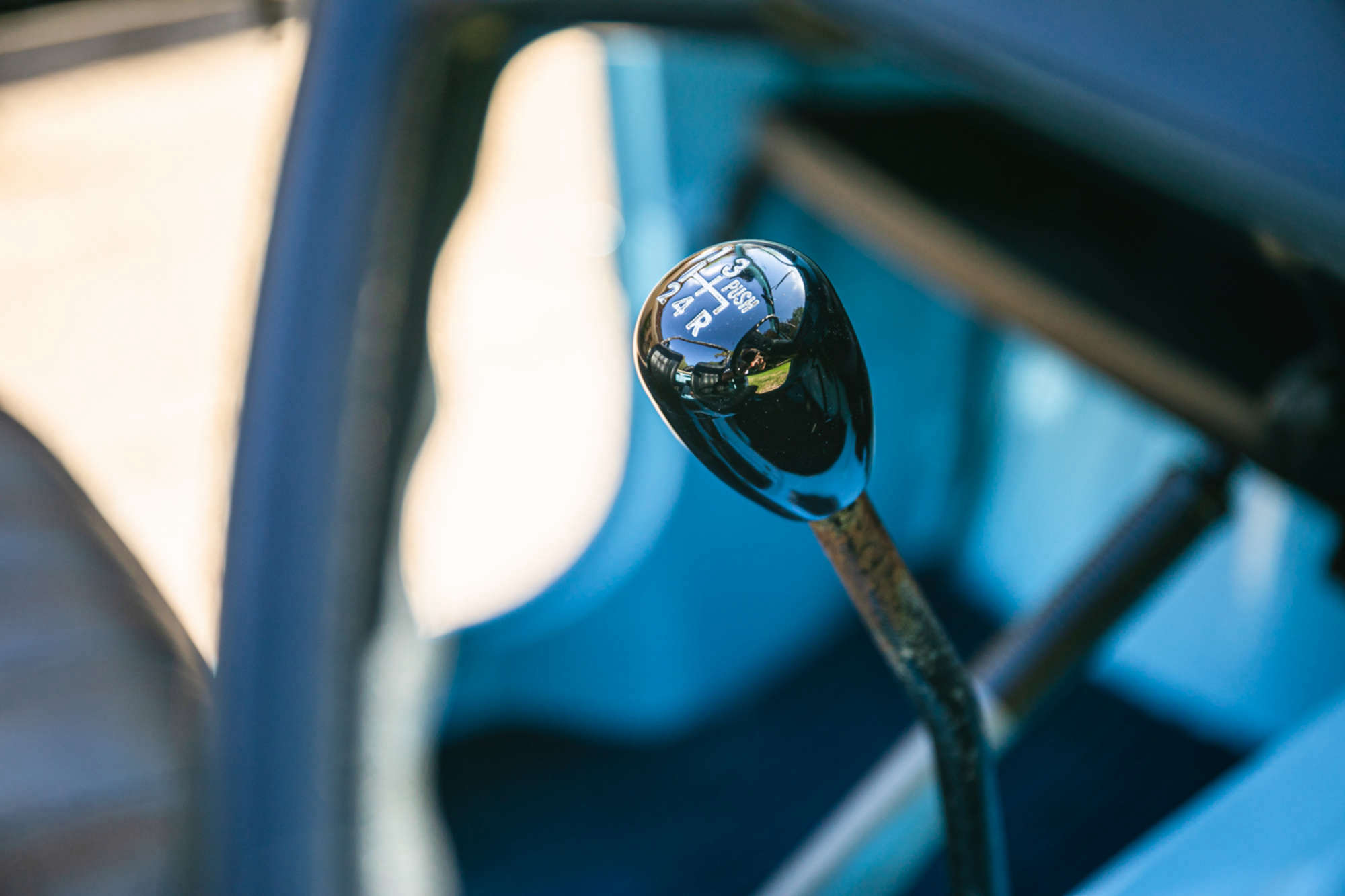
The Jimny8/LJ80 was an updated version of the earlier LJ50, it’s powered by a single overhead cam 800 cc, four-stroke, inline four-cylinder engine producing 42 hp. Power is sent to the wheels via a 4-speed manual transmission and the car tipped the scales at approximately 590 kgs (1,301 lbs).

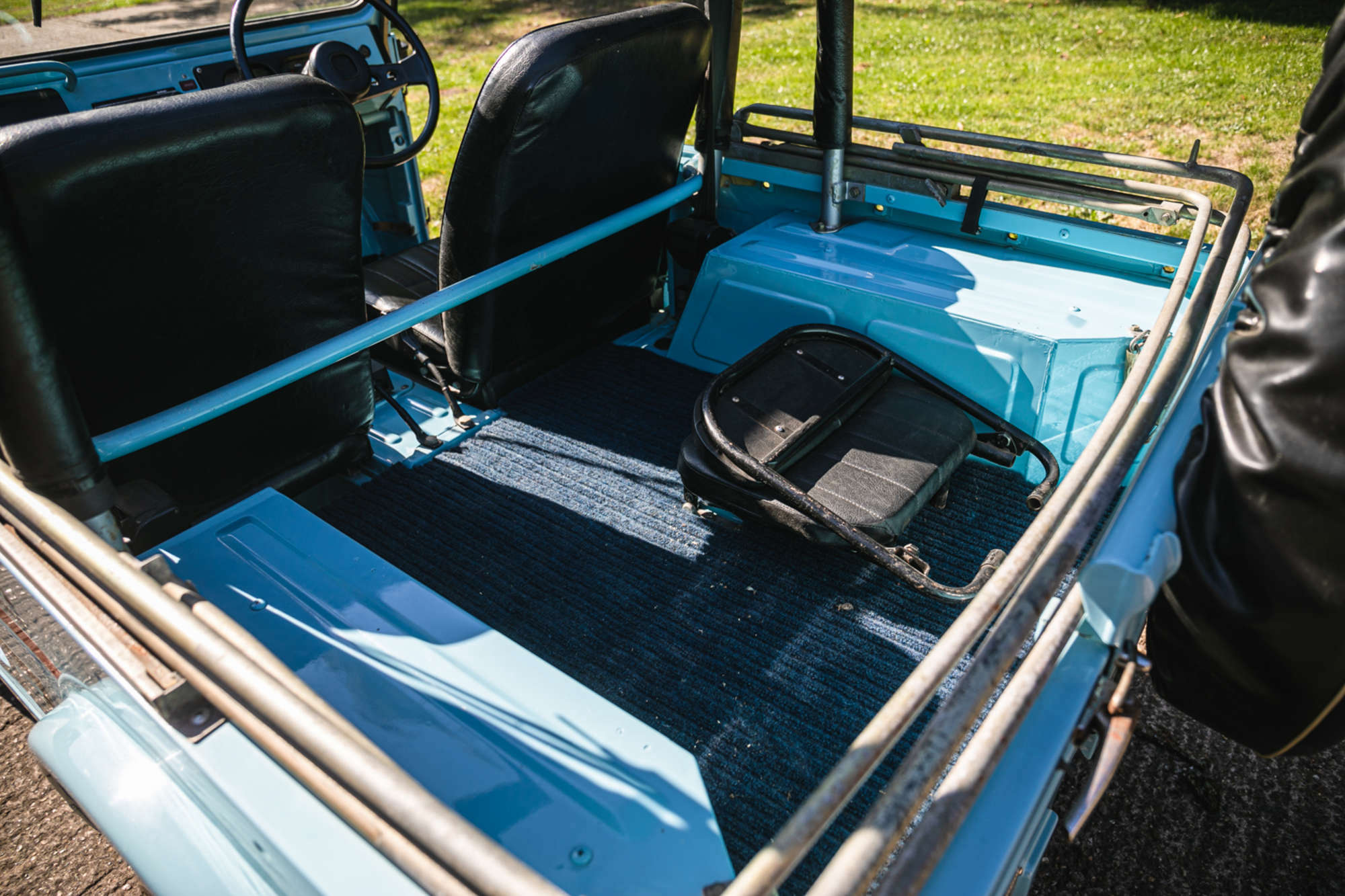
The LJ80 uses body-on-chassis construction, like all Jimnys up to the most recent generation. It rides on live axles front and back and thanks to its small size and low weight, it can get in and out of many places that larger four-wheel drives can’t.

Silverstone Auctions will be offering this Jimny for sale on the 12th of November, the current price guide is £20,000 – £30,000 which works out to approximately $22,300 – $33,400 USD. It’ll likely be very appealing to those with an interest in motorsport history and a penchant for vintage 4x4s.

If you’d like to reads more or register to bid you can visit the listing here.
Barry Sheene Suzuki Jimny 22 Barry Sheene Suzuki Jimny 21 Barry Sheene Suzuki Jimny 5 Barry Sheene Suzuki Jimny 20 Barry Sheene Suzuki Jimny 19 Barry Sheene Suzuki Jimny 18 Barry Sheene Suzuki Jimny 17 Barry Sheene Suzuki Jimny 15 Barry Sheene Suzuki Jimny 14 Barry Sheene Suzuki Jimny 13 Barry Sheene Suzuki Jimny 12 Barry Sheene Suzuki Jimny 10 Barry Sheene Suzuki Jimny 9 Barry Sheene Suzuki Jimny 8 Barry Sheene Suzuki Jimny 7 Barry Sheene Suzuki Jimny 6 Barry Sheene Suzuki Jimny 4 Barry Sheene Suzuki Jimny 3 Barry Sheene Suzuki Jimny 2 Barry Sheene Suzuki Jimny 1 Barry Sheene Suzuki Jimny 11

Images courtesy of Silverstone Auctions by Alan Kenny Photography

The post Barry Sheene’s 1979 Suzuki Jimny Is For Sale – $22,300+ USD appeared first on Silodrome.


from Silodrome https://silodrome.com/barry-sheene-suzuki-jimny/
via gqrds

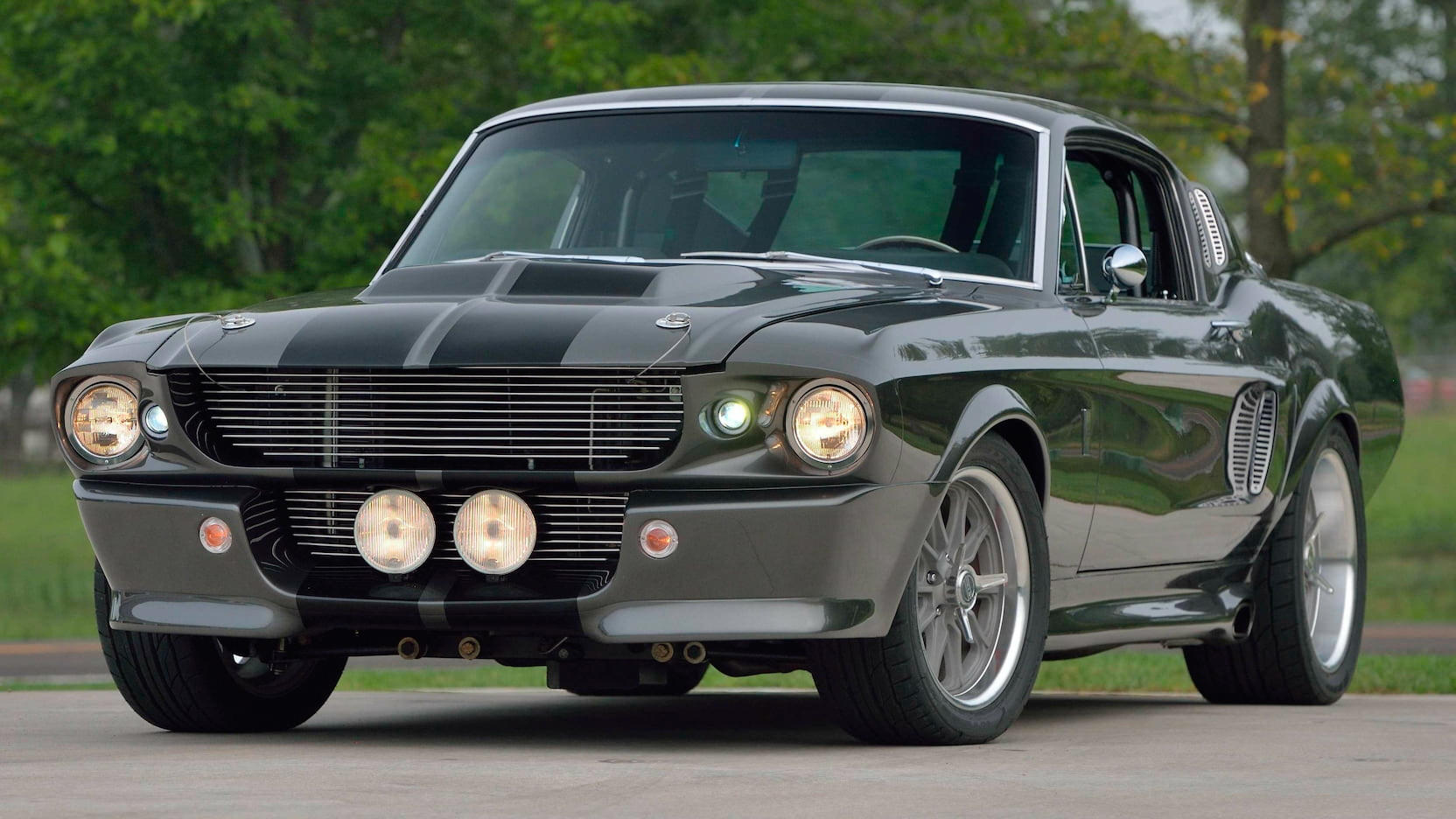
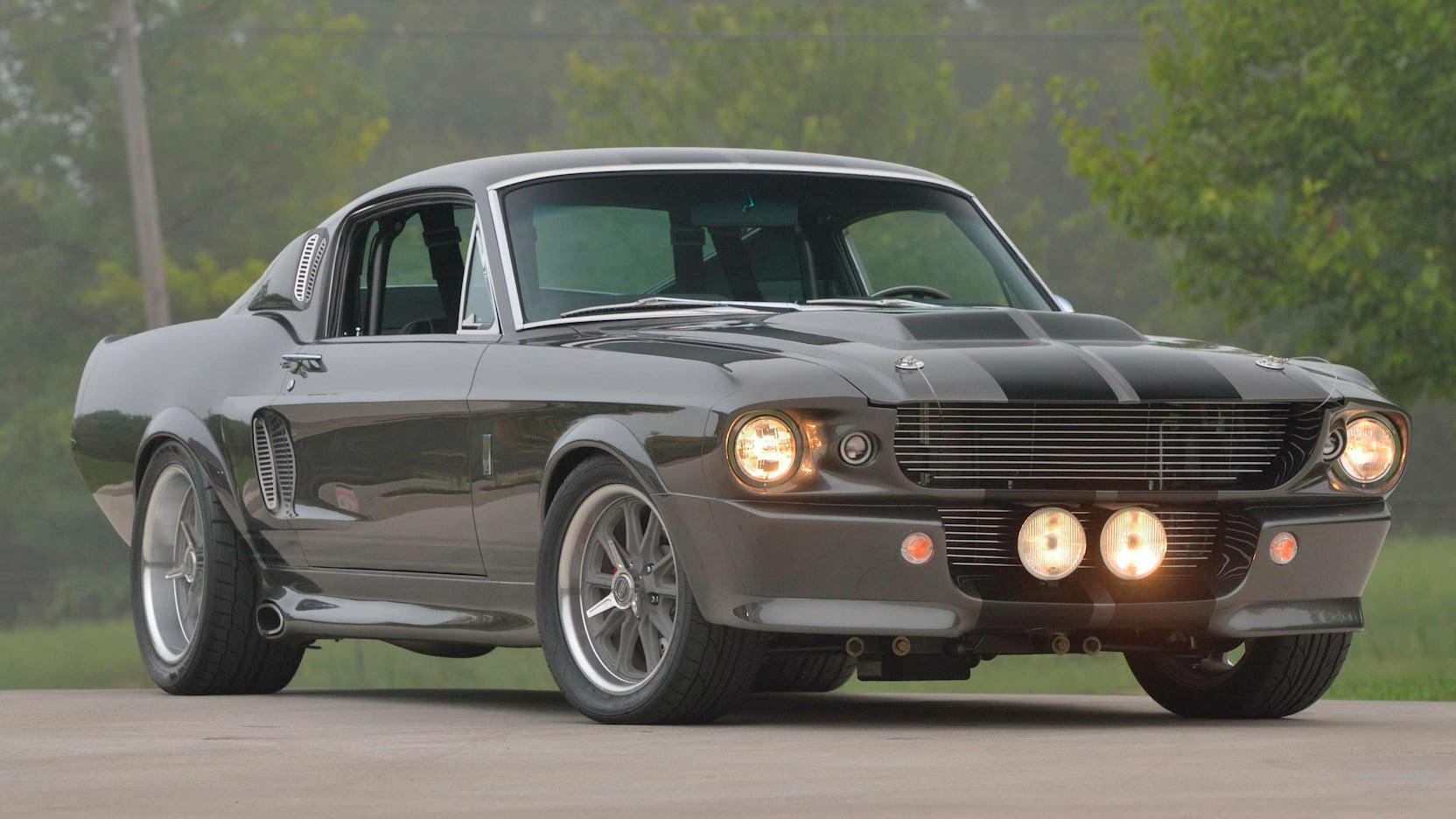
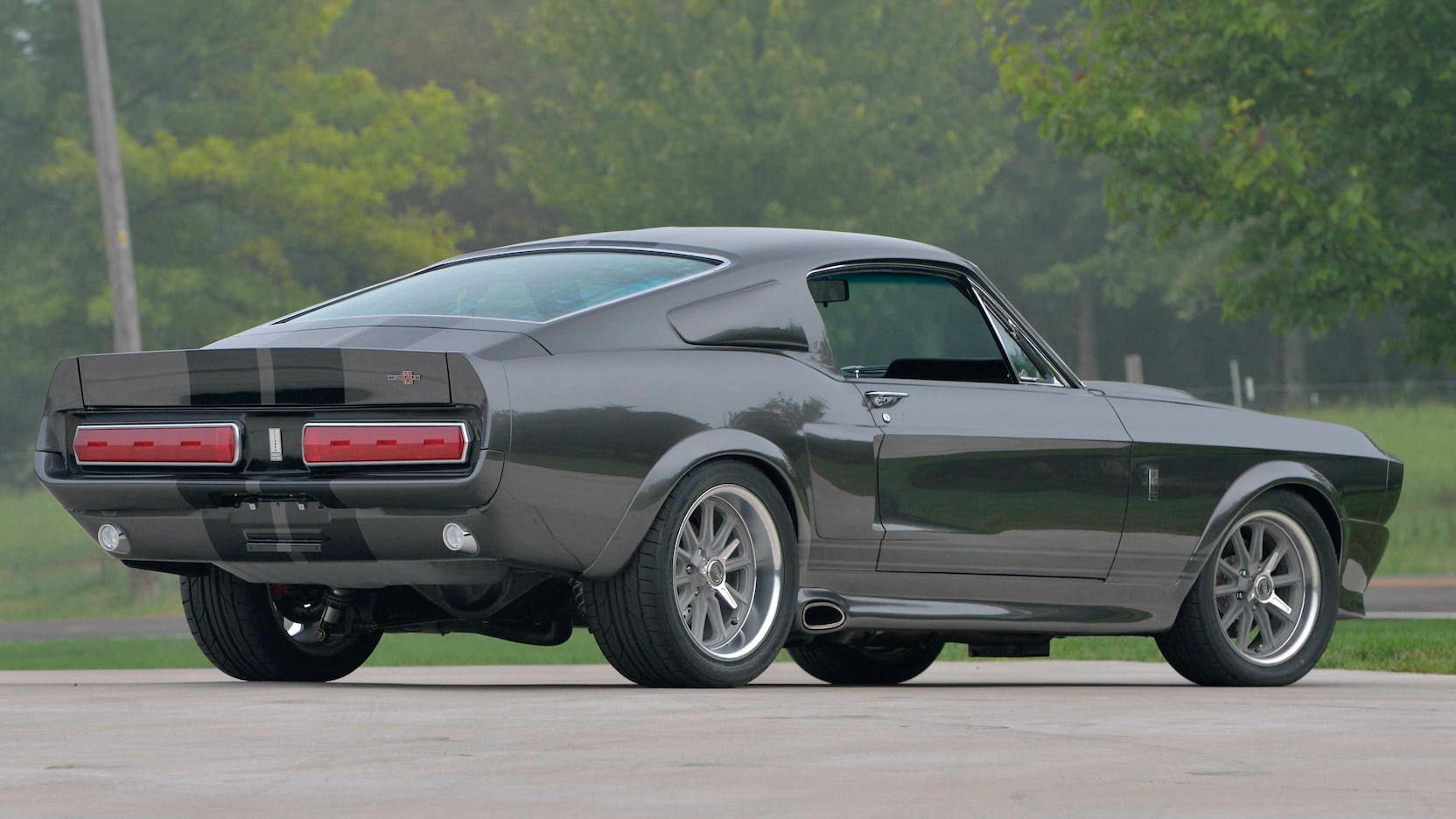
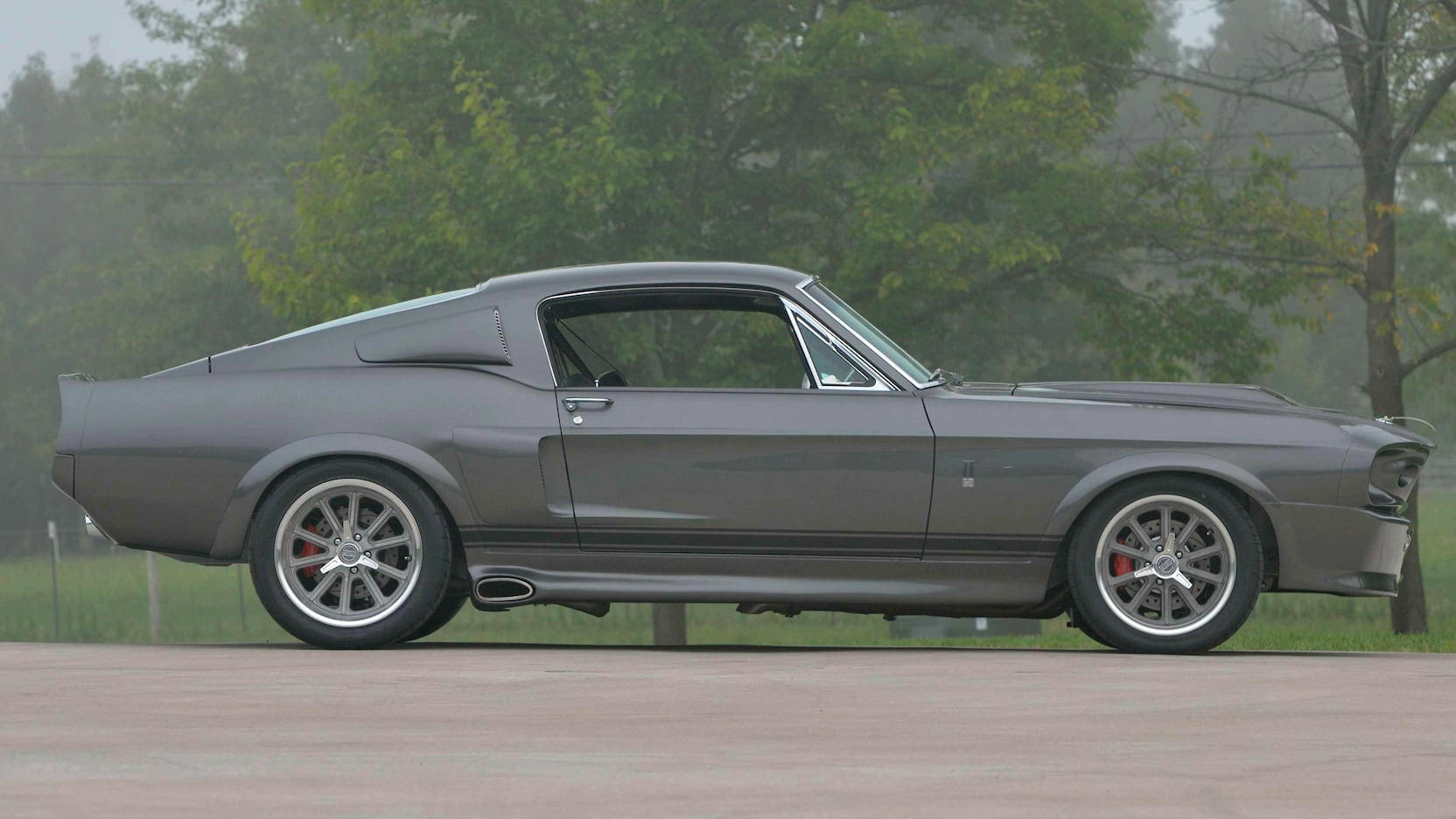
For Sale: An Official Gone in 60 Seconds “Eleanor” Ford Mustang

When the film Gone in 60 Seconds was released in the year 2000 it created a new automotive legend – Eleanor. The car became a pop culture icon, much like Mad Max’s Ford Falcon XB GT, James Bond’s Aston Martin DB5, or Doc Brown’s DeLorean.

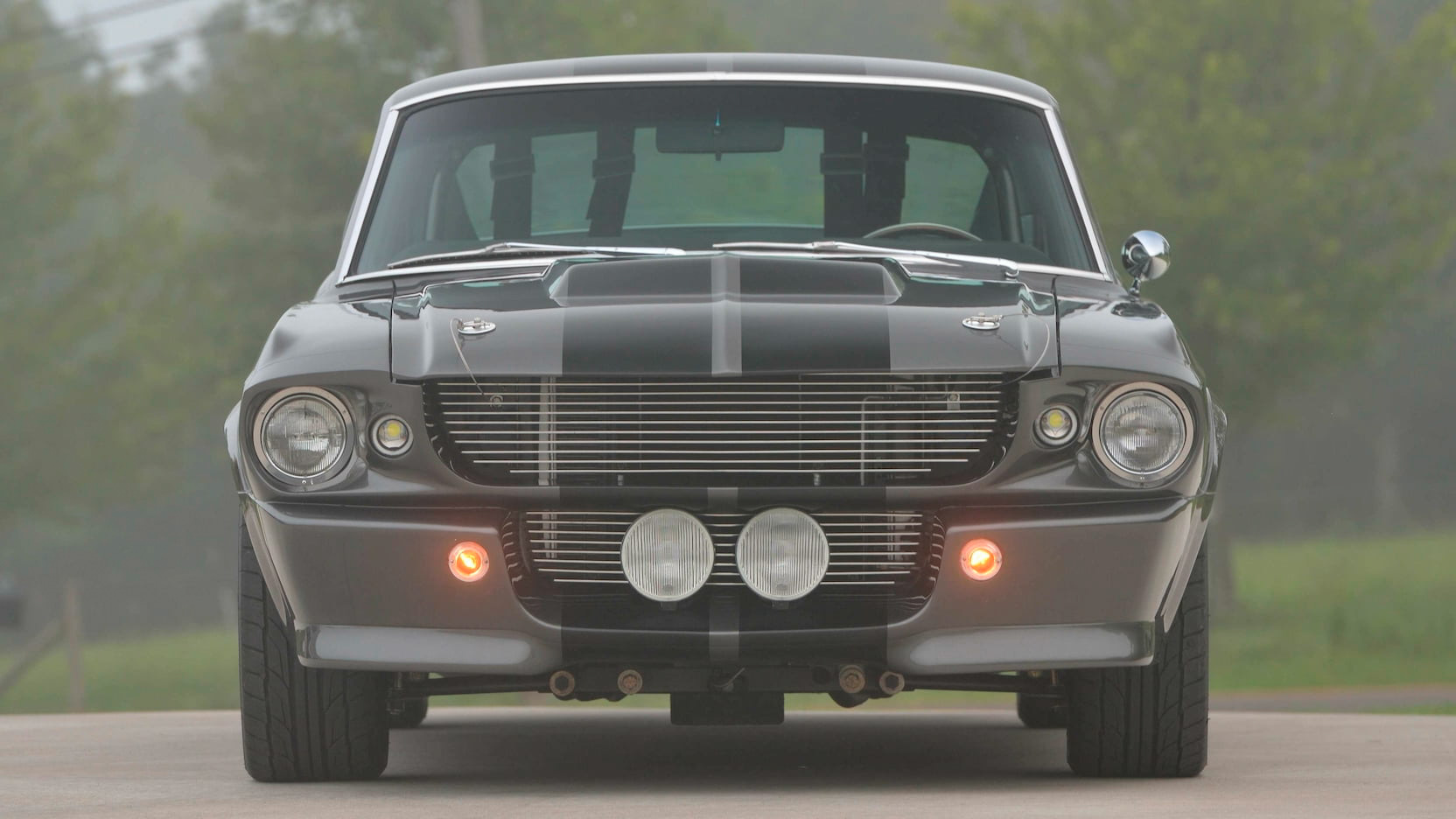
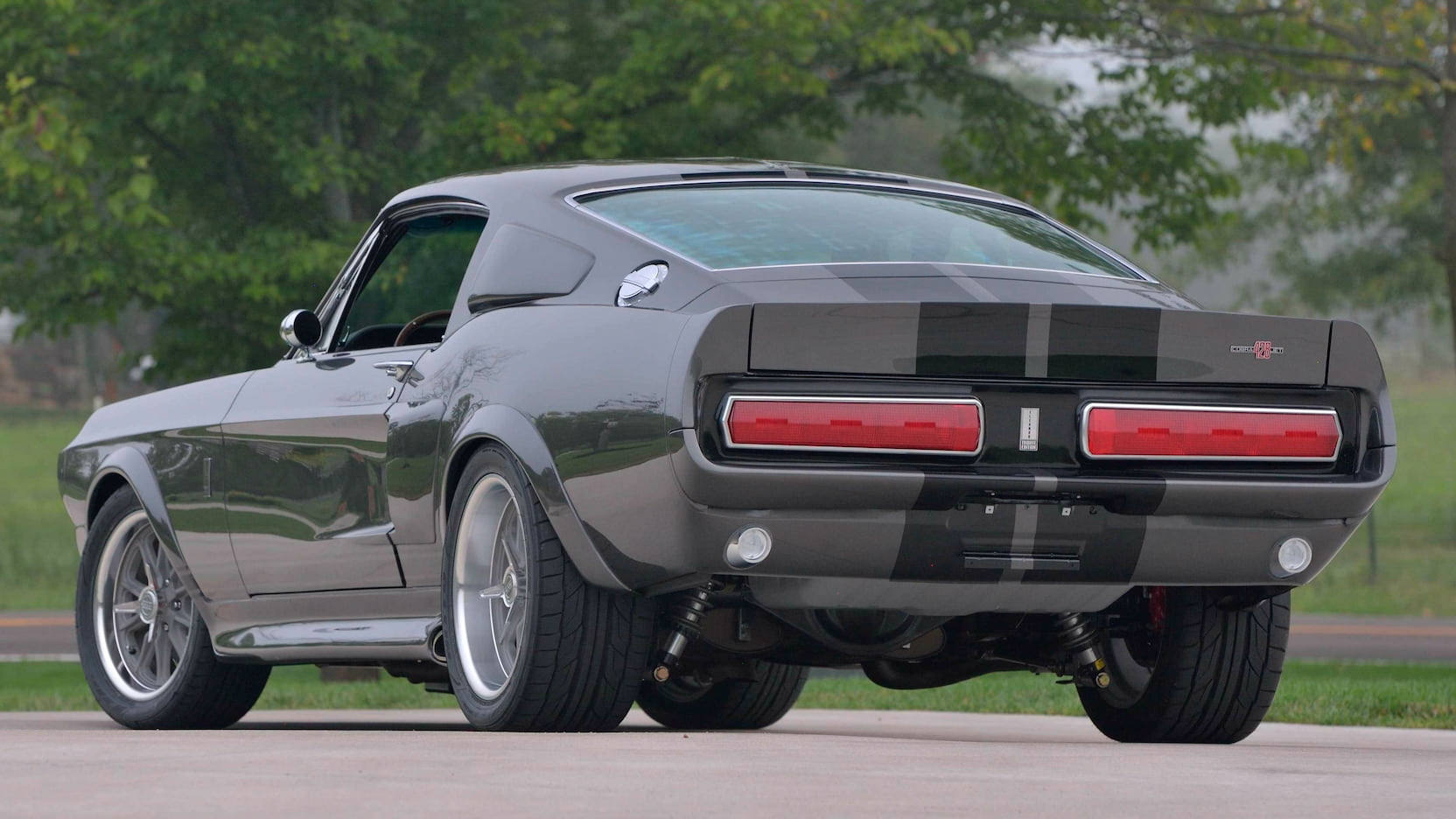
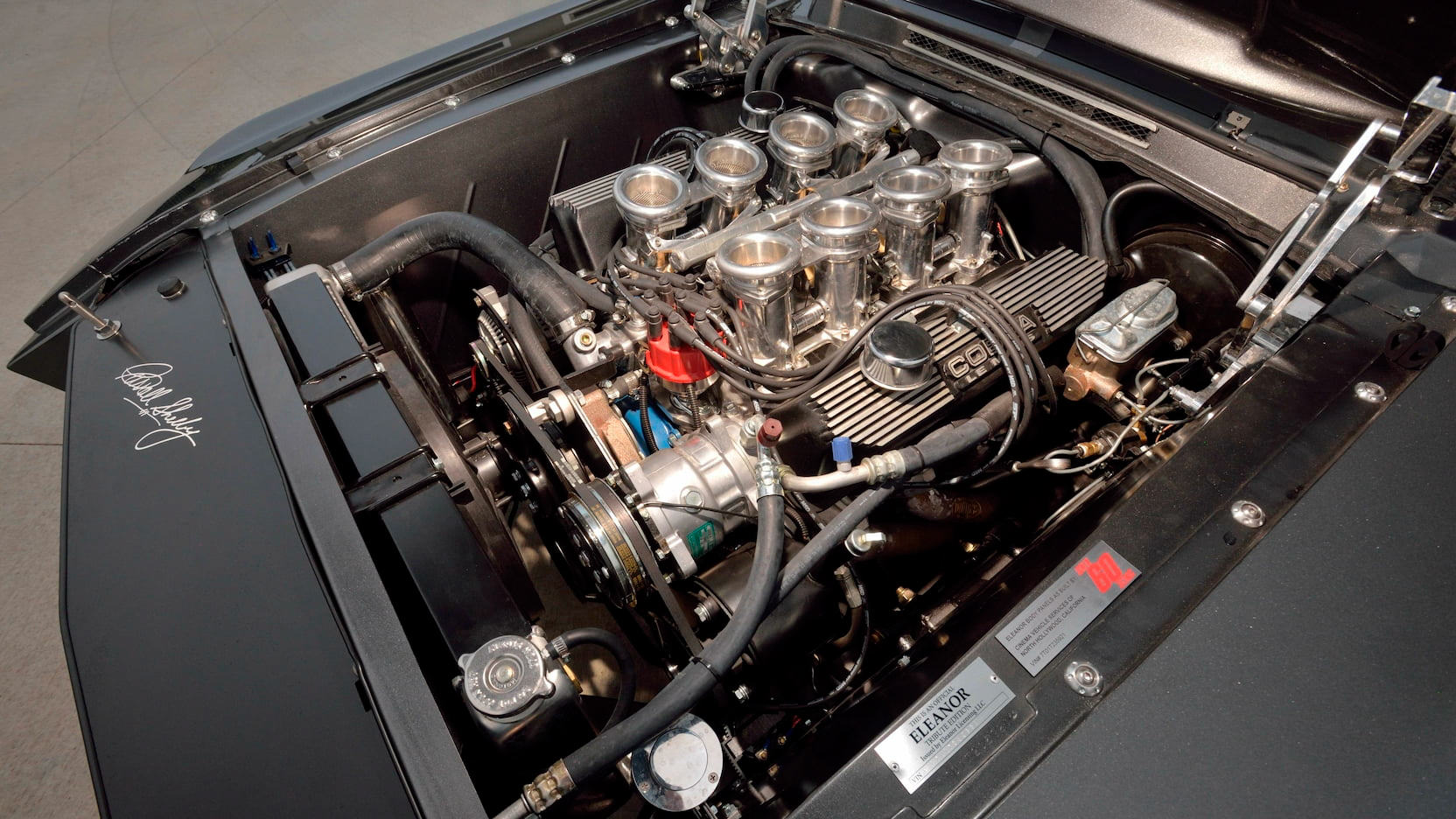
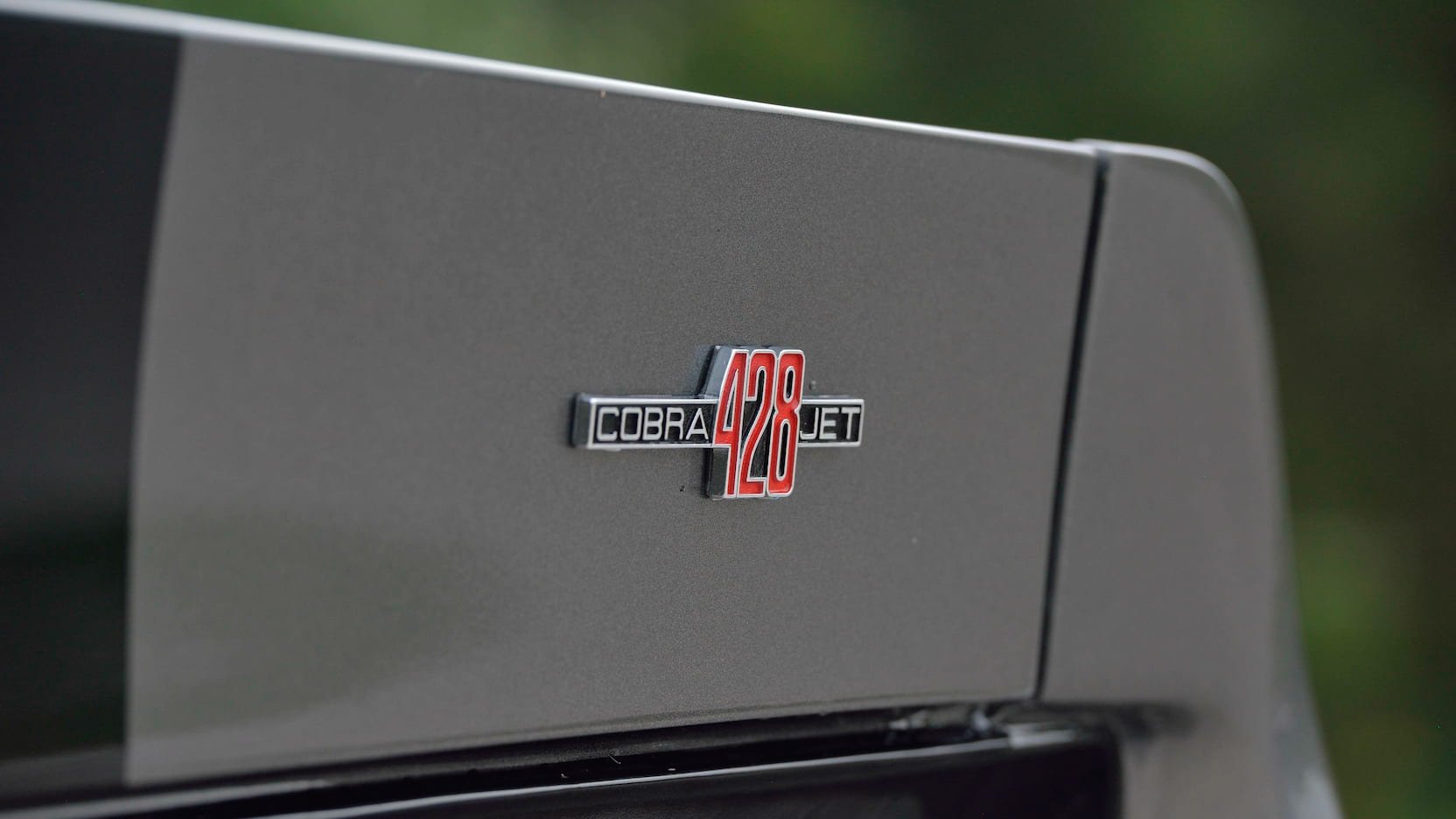
A few years after the film’s release it became possible to buy an officially licensed “Eleanor” Ford Mustang, with an Eleanor VIN plate and emblems issued by Gone in 60 Seconds® LLC, the owner of the Eleanor licensing rights.

Fast Facts – “Eleanor” From Gone in 60 Seconds

  • “Gone in 60 Seconds” was released in the year 2000 starring Nicolas Cage, Angelina Jolie, Giovanni Ribisi, Christopher Eccleston, Robert Duvall, and Vinnie Jones. The film was a commercial success, raking in almost a quarter of a billion dollars at the box office.
  • The film was a modern remake of the 1974 film “Gone in 60 Seconds” by H. B. Halicki, and the rights to it were licensed from his widow Denice Shakarian Halicki in 1995.
  • In the 2000 version of the film, the plot requires Nicolas Cage as Randall “Memphis” Raines to steal 50 very specific cars in exchange for his brother’s life. One of them is a Shelby Mustang GT500 nicknamed “Eleanor.”
  • The car you see here is one of the modern officially licensed Eleanors built with the approval of Gone in 60 Seconds® LLC and the Halicki estate.

The First Gone in 60 Seconds Eleanor

Despite what many people think, the first Eleanor wasn’t actually the modified Shelby Mustang GT500 driven by Nicolas Cage in the 2000 remake of Gone in 60 Seconds. It was actually a yellow 1973 Ford Mustang that appeared in the original 1974 film Gone in 60 Seconds by H. B. Halicki.

Above Image: The entire original 1974 version of Gone In 60 Seconds is available to watch on YouTube – including the scenes with the first Eleanor.

The original 1974 became a cult classic almost overnight when it made $40 million at the box office after costing just $150,000 to make. It was directed, written, and produced by renegade filmmaker H. B. Halicki who also played the lead role.

In 1995 H. B. Halicki’s widow Denice Shakarian Halicki licensed the rights to the film to Disney and Jerry Bruckheimer, and she was an executive producer on the film.

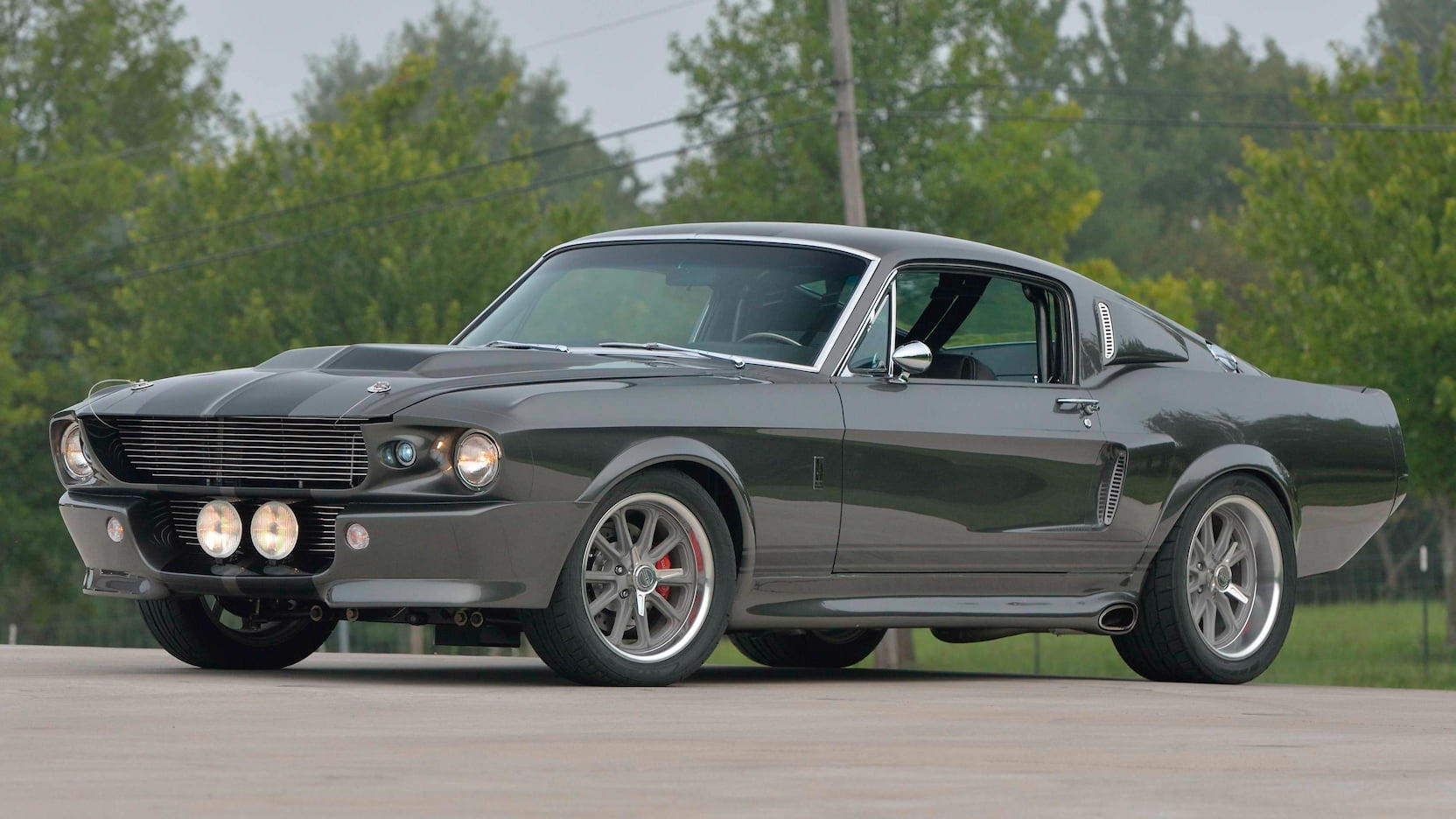
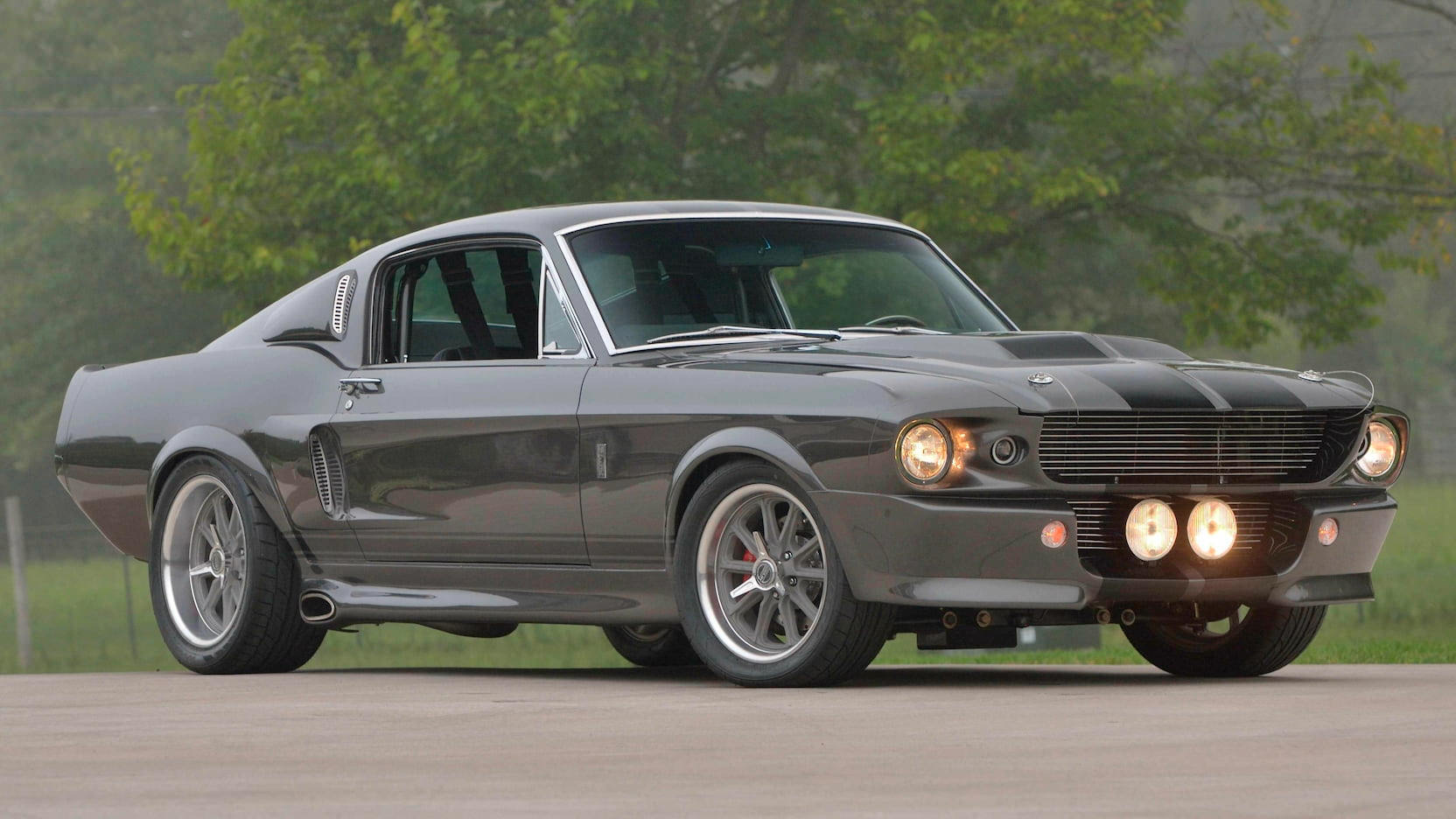
In the 2000 remake Randall “Memphis” Raines played by Nicolas Cage had to steal 50 very specific cars in order to save the life of his brother Kip Raines played by Giovanni Ribisi. One of these cars was the new Eleanor – a significantly modified 1967 Shelby Mustang GT500.

Eleanor played a significant role in the film and left an indelible mark on movie goers, even today 22 years after the release of the film people still remember it clearly, long after the specifics of the plot have evaporated from memory.

The Officially Licensed Production Eleanor

Upon seeing Eleanor on the silver screen for the first time many young viewers made a pact with themselves to buy one when they grew up, and those viewers are now well and truly into their adult lives.

Gone in 60 Seconds Eleanor Ford Mustang 16

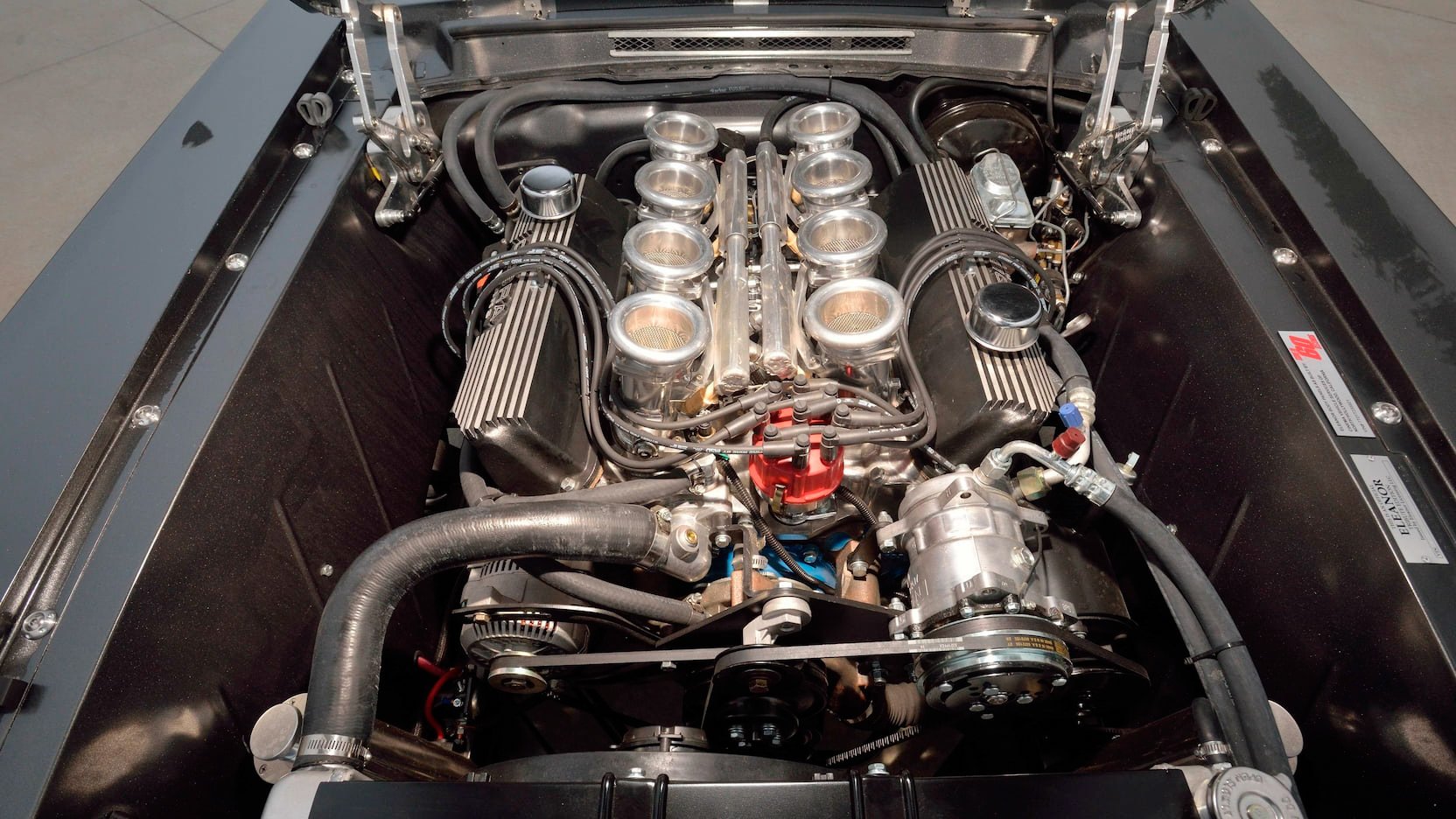
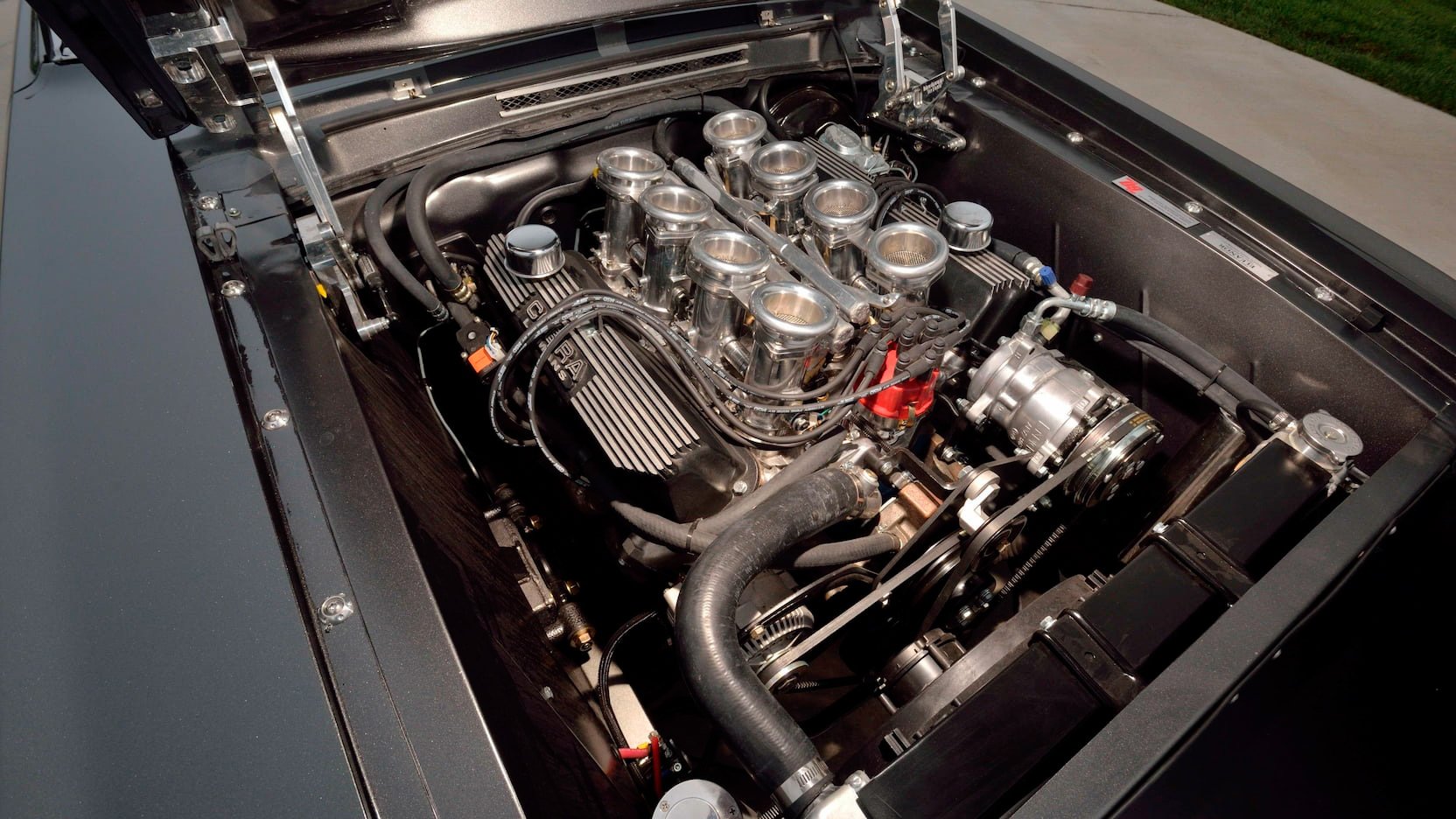
This Eleanor is powered by a fuel-injected Ford FE 428 V8 and power is sent back through a 4-speed Toploader manual transmission with Hurst shifter into a 9″ Ford rear end.

Demand for Eleanor clones has always been high but Denice Halicki, H.B. Halicki’s widow, has been strict with the intellectual property rights, preventing unlicensed Eleanors from being made. There have been two officially licensed, limited volume production runs, the most recent of which is still underway now for those with pockets deep enough.

Each of these “new” Eleanors is based on a new Ford-licensed Mustang replacement body, however the company can use your own Mustang if preferred, or they can find an original 1967 shell if required.

An entirely new front subframe assembly is added with independent front suspension on coil overs and modern disc brakes. Engine choices range from the standard Ford Coyote with 435 bhp up to a 1,000 bhp twin-turbo 427 cubic inch V8.

Power is sent back through either a 4, 5, or 6 speed manual transmission depending on specification, and an automatic transmission with overdrive is on offer also. The rear end is a Ford 9″ with a modern multilink arrangement on coil springs, with a matching disc brake.

Gone in 60 Seconds Eleanor Ford Mustang 13

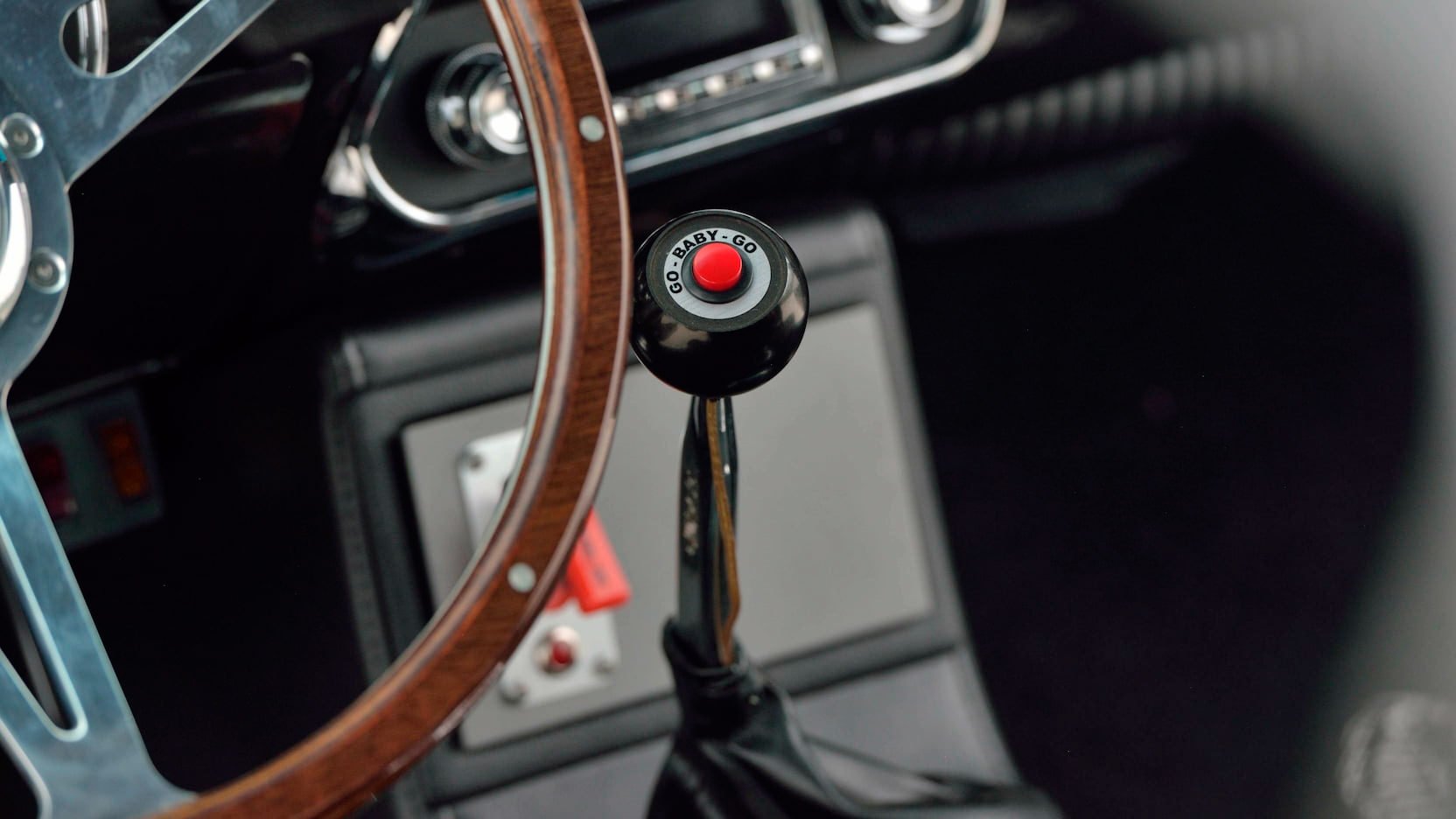
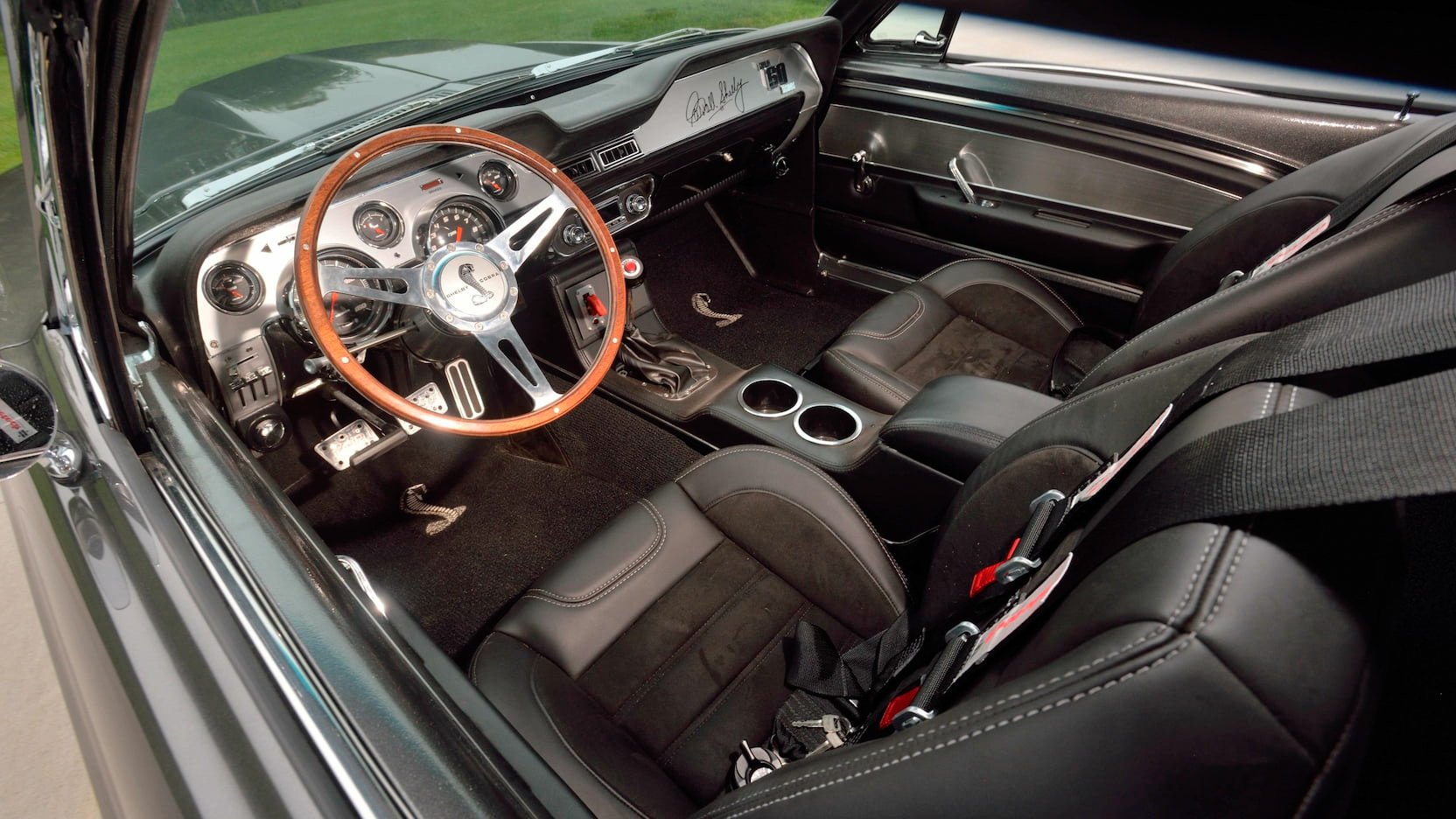
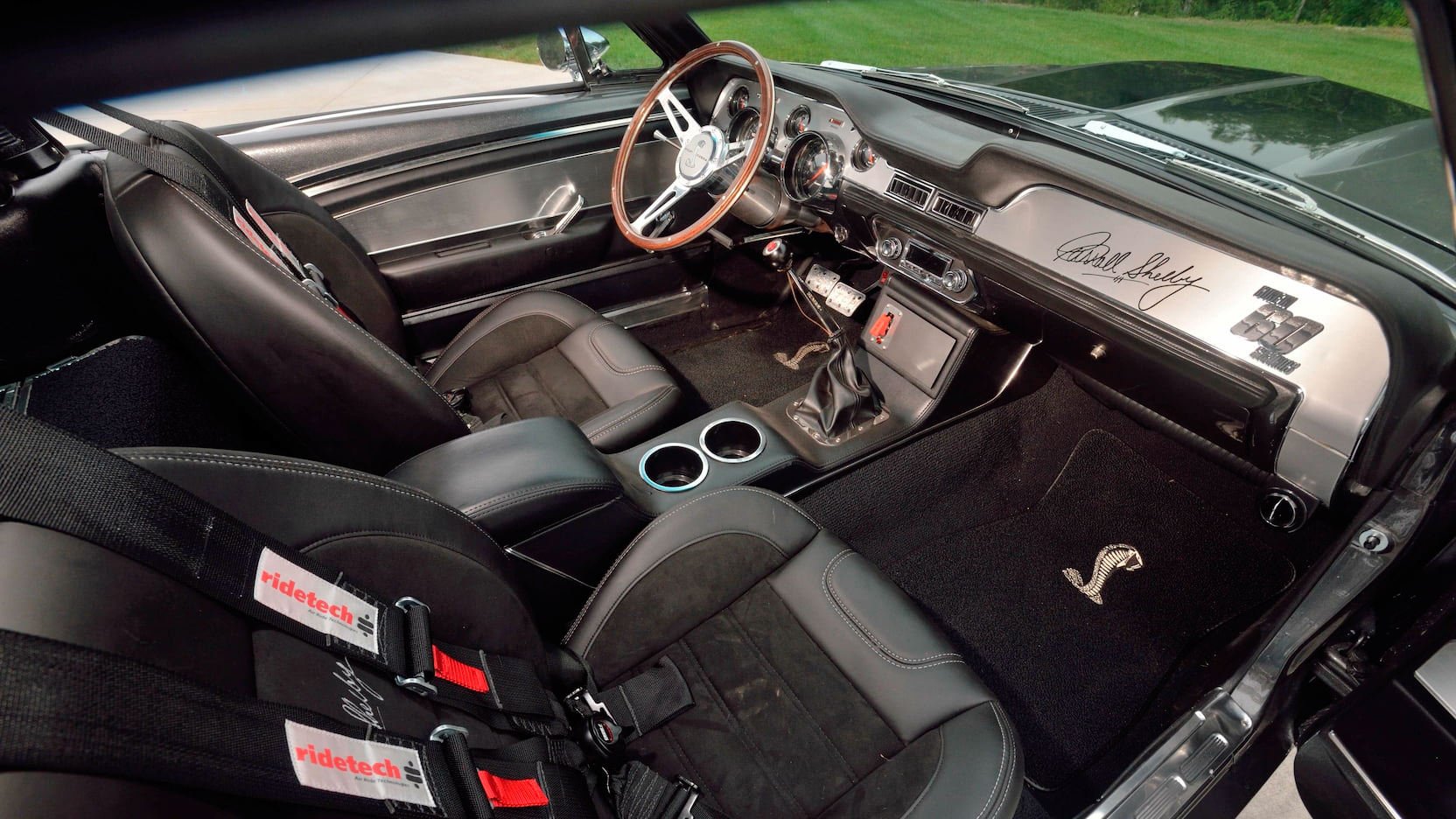
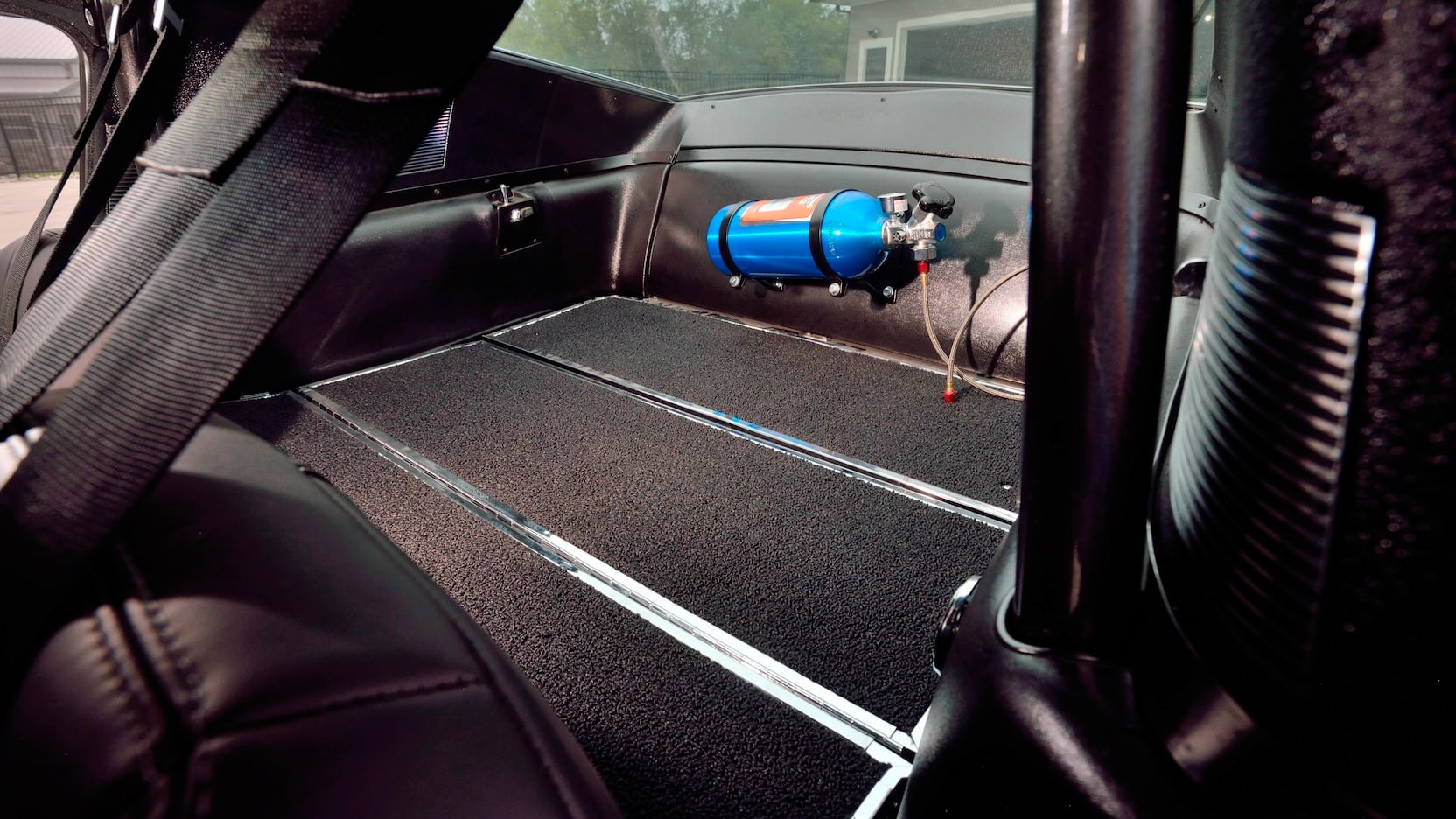
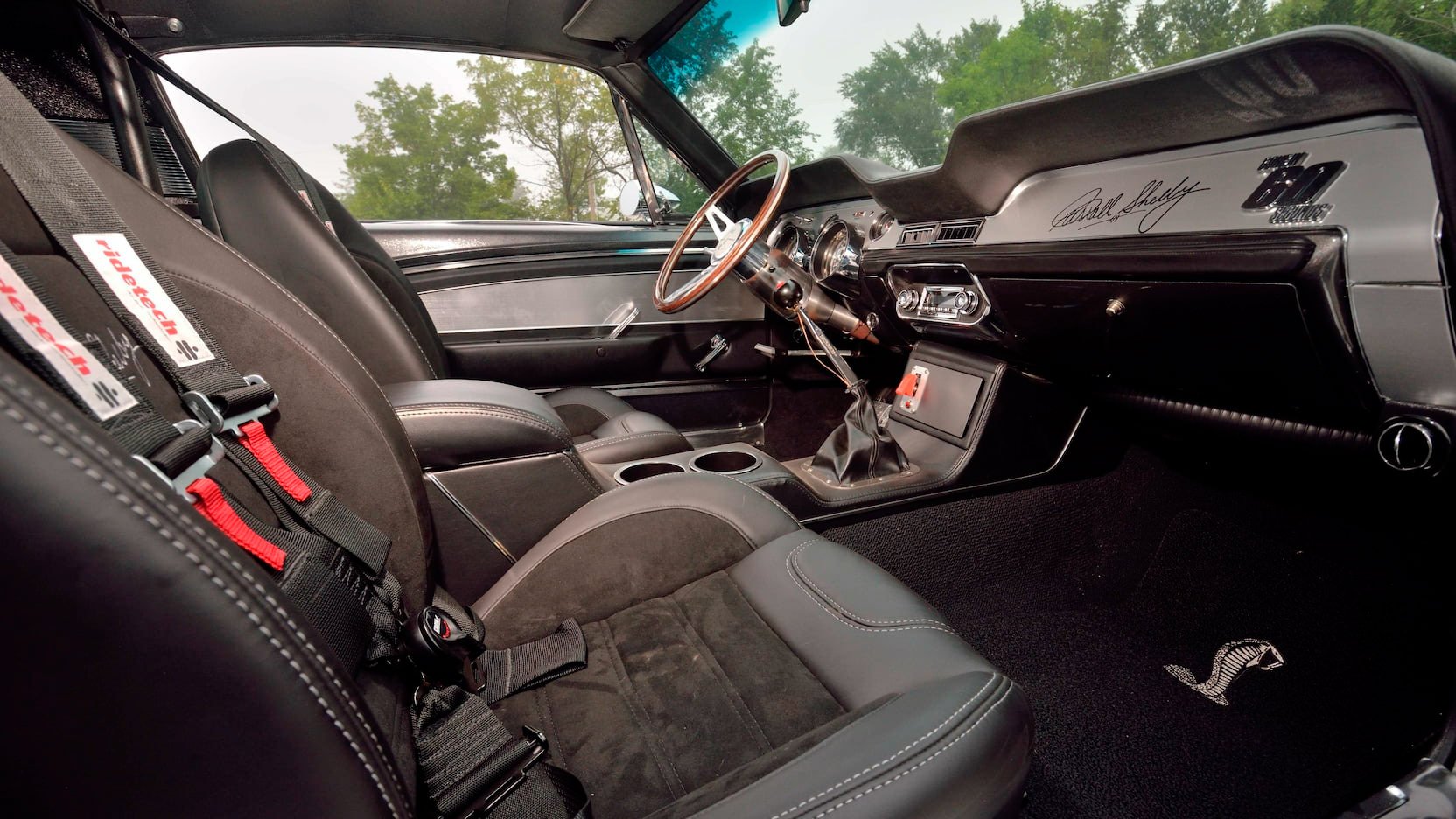
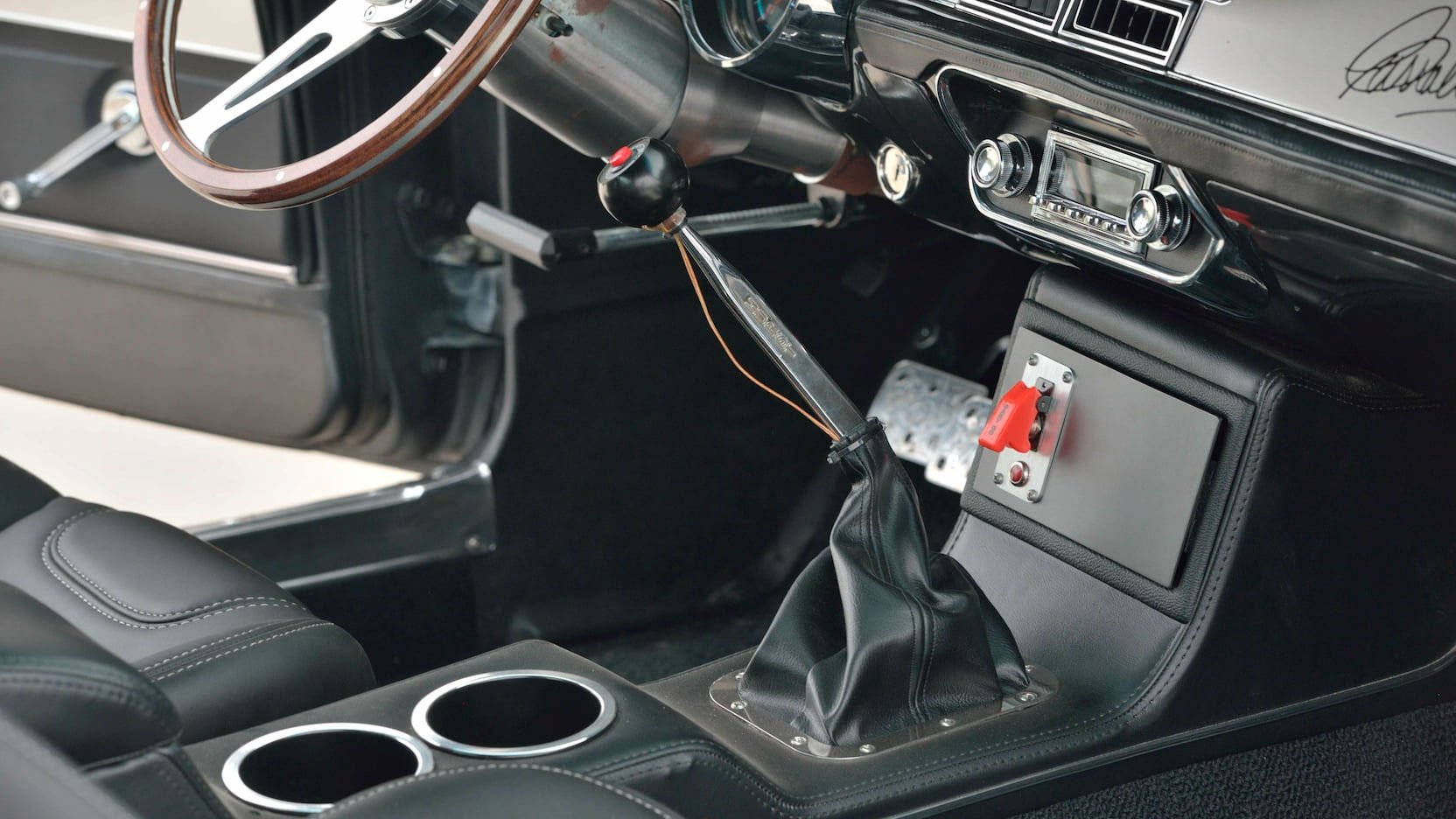
As you would expect, the car is fitted with the famous Go-Baby-Go nitrous button on the shifter, which is plumbed into a (currently non-functioning) NOS system.

A great deal of care goes into getting the exterior and interior of the car to look right and remain true to the stunt cars used in the film, and certain concessions are made for modernity, like air conditioning, power brakes, and power steering.

The Eleanor you see here is now due to roll across the auction block with Mecum in early November, it comes with all the official paperwork, it’s powered by a fuel-injected Ford FE 428 V8, it has the Go-Baby-Go NOS button on the gear lever, and it even has an Eleanor Nitrous bottle (currently non-functional).

If you’d like to read more about it or register to bid you can visit the listing here.
Gone in 60 Seconds Eleanor Ford Mustang 3 Gone in 60 Seconds Eleanor Ford Mustang 19 Gone in 60 Seconds Eleanor Ford Mustang 18 Gone in 60 Seconds Eleanor Ford Mustang 17 Gone in 60 Seconds Eleanor Ford Mustang 15 Gone in 60 Seconds Eleanor Ford Mustang 14 Gone in 60 Seconds Eleanor Ford Mustang 12 Gone in 60 Seconds Eleanor Ford Mustang 11 Gone in 60 Seconds Eleanor Ford Mustang 10 Gone in 60 Seconds Eleanor Ford Mustang 9 Gone in 60 Seconds Eleanor Ford Mustang 8 Gone in 60 Seconds Eleanor Ford Mustang 7 Gone in 60 Seconds Eleanor Ford Mustang 6 Gone in 60 Seconds Eleanor Ford Mustang 5 Gone in 60 Seconds Eleanor Ford Mustang 4
Images courtesy of Mecum

The post For Sale: An Official Gone in 60 Seconds “Eleanor” Ford Mustang appeared first on Silodrome.


from Silodrome https://silodrome.com/gone-in-60-seconds-eleanor-ford-mustang/
via gqrds