The Lamborghini Countach was created as the successor to the Miura, which was the car that effectively changed Ferruccio Lamborghini’s vision for his company.
Lamborghini became committed to being a creator of high performance supercars and thus the Countach was made as the supercar successor to the Miura and the design foundation for the Lamborghinis that would come after it.
Fast Facts – The Lamborghini Countach
- The Lamborghini Countach was named after a Piedmontese expression “Countach” which loosely translates as contagious or infectious, but is now used as an exclamation of surprise. It was used by one of the workers on the Countach prototype when he first saw the design.
- The Countach marked a turning point in Ferruccio Lamborghini’s attitude to the sorts of cars he wanted to make. Lamborghini’s vision had been to make luxurious touring cars and his early models reflect this. But the popularity of the Miura showed him that making high performance supercars was going to be much more profitable. So the market set the direction for the company.
- The Countach was to be based on the Bizzarini designed V12 DOHC 4.0 litre engine that Lamborghini had used for all its previous models. However the plan was to increase that engine’s power significantly. This proved not to be possible in the short term so the Countach first went on sale fitted with the same basic engine as the Miura.
- Development of the more powerful version of the V12 culminated in the creation of a 5.2 litre DOHC V12 with quad valves (four valves per cylinder).
The Origins Of The Countach
The Lamborghini Miura forged the concept of the supercar: a car that provided extraordinary performance and combined it with luxurious interior comfort, and in so creating the supercar Lamborghini got its rivals busy trying not only to play catch-up, but determined to make something better.
As Ferrari in particular got busy on this Ferruccio Lamborghini and his team that had created the Miura found themselves in an “arms race” with the pressure on to create a new model, one that would address the shortcomings of the Miura and improve on its performance.
The first thing the engineers looked at was the Miura’s chassis, which had been a masterpiece, but the use of a transverse engine, while good in theory, had created some problems with regard to weight distribution and maintenance.
So the decision was made to change to a longitudinally mounted engine, paradoxically with the clutch and gearbox mounted on the front of the engine yet still driving the rear wheels.
When we first look at this it seems a bit odd: rear-mid-engine cars normally have a longitudinally mounted engine with the clutch and transaxle at the rear to more directly reach the rear wheels.
Lamborghini’s engineers realized however that to balance the weight distribution between front and rear it was advantageous to move the weight of the gearbox forward to bring the front to rear weight distribution more closely to an ideal 50/50, as opposed to the Miura’s 45/55 with a full tank of fuel, and more uneven as that front mounted tank emptied.
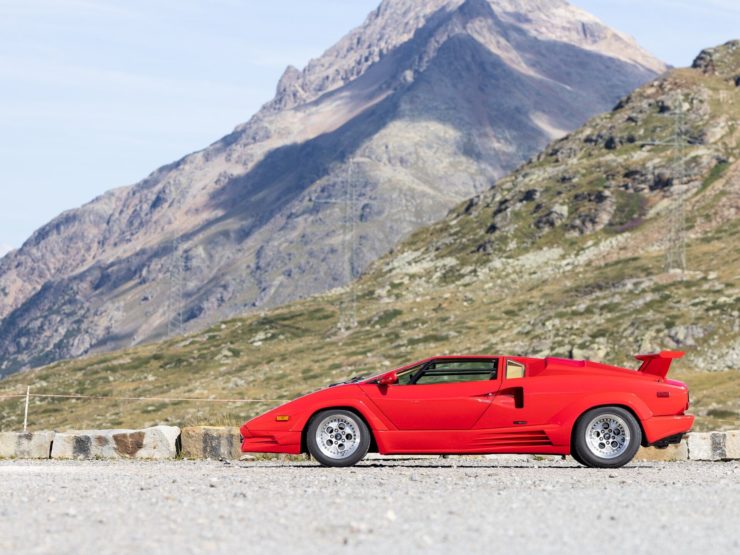
The aerodynamics of the new Countach were created to optimize high speed stability.
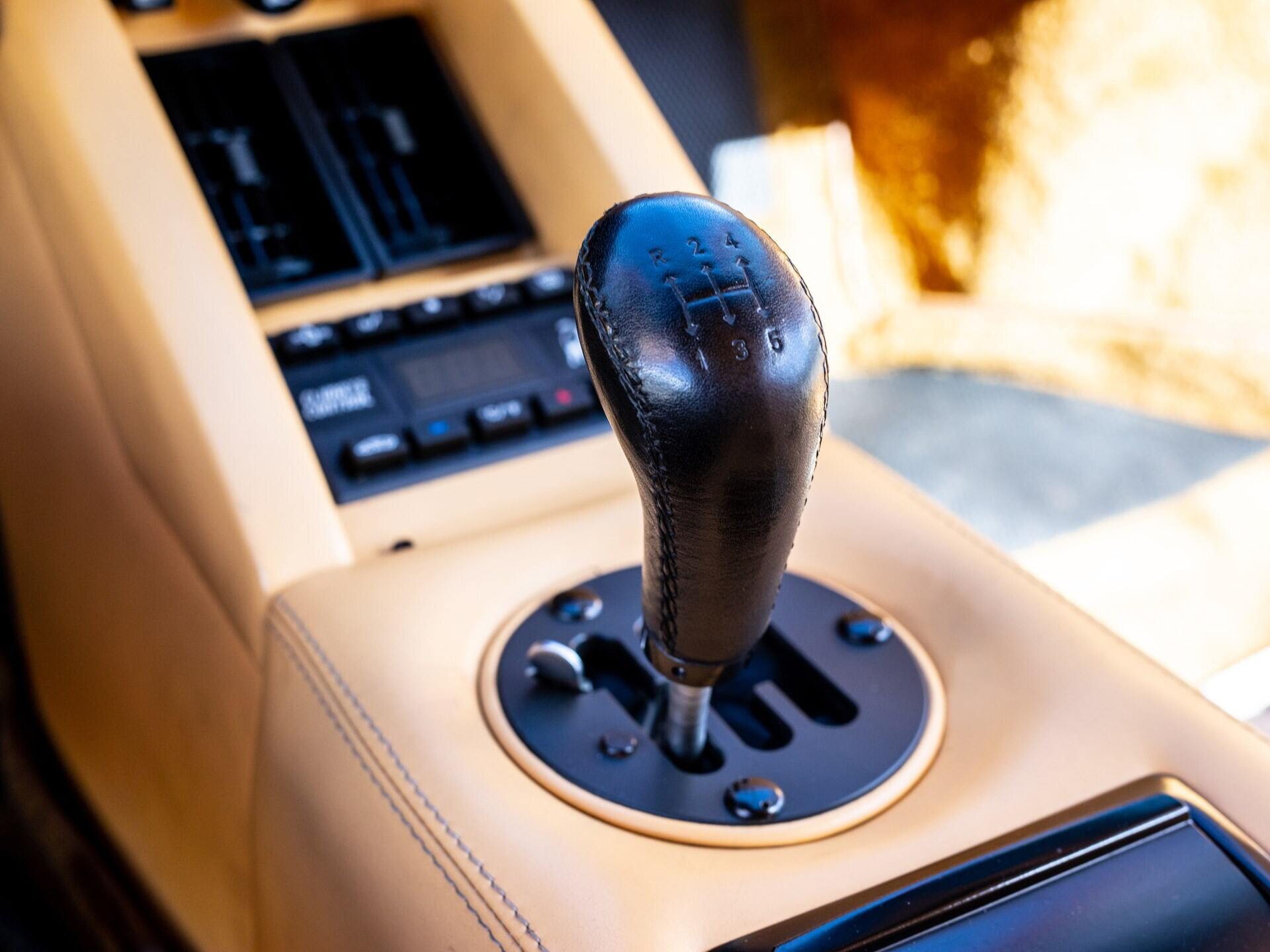
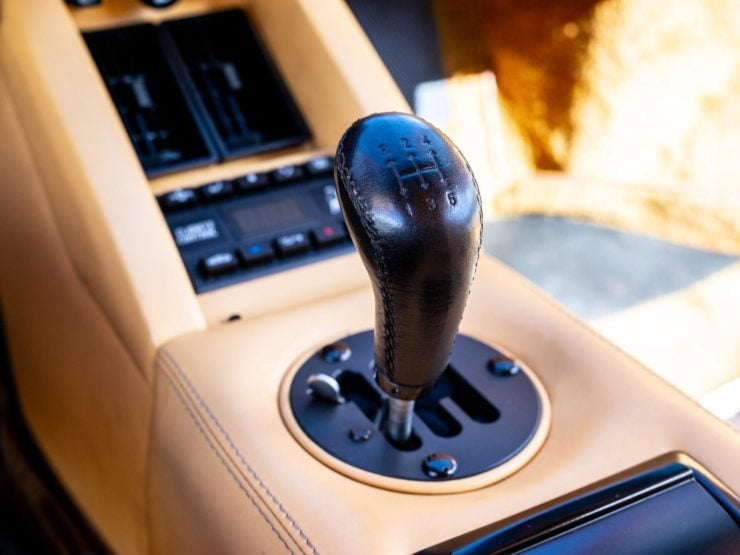
The added advantage of this was to make the gear change linkages very short providing the best gearchange experience possible.
To get the drive from the gearbox to the rear wheels required a shaft that passed through the crankcase to the rear differential and wheels.
To go with this new and improved chassis design the new car would need a radically new body design that both identified the car as something completely new, and completely different from its competitors: but not just that, the car needed to address the performance shortcomings of the Miura dealing with its aerodynamic characteristics.
When the Miura was designed back in the 1960’s designers were not as aware of the effect of lift under the front of a car at high speed as they are now.
Racing cars and high speed road cars such as Jaguar’s D-Type and E-Type allowed air to sweep under the front of the car and in so doing created uplift which reduced the effect of the steering. The car would respond to the increased air pressure under the car by lifting – an effect that could be measured by measuring the increase in ride height as the speed increased.
The solution to this problem was to install an “air-dam” under the front of the car’s body which prevented excess air pressure from building up, and in fact could create a reduced air pressure under the front of the car literally sucking it down onto the road.
In the early 1970’s high performance production cars began using a front air-dam, the Australian Ford Falcon GT being one of the early examples.
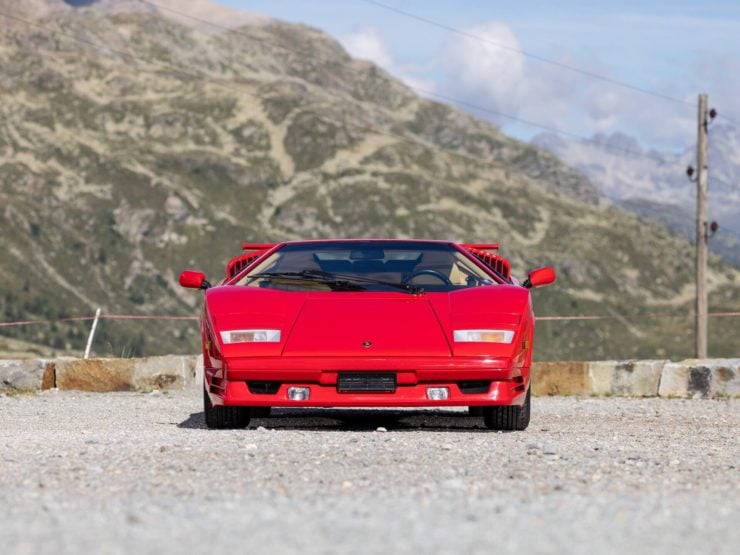
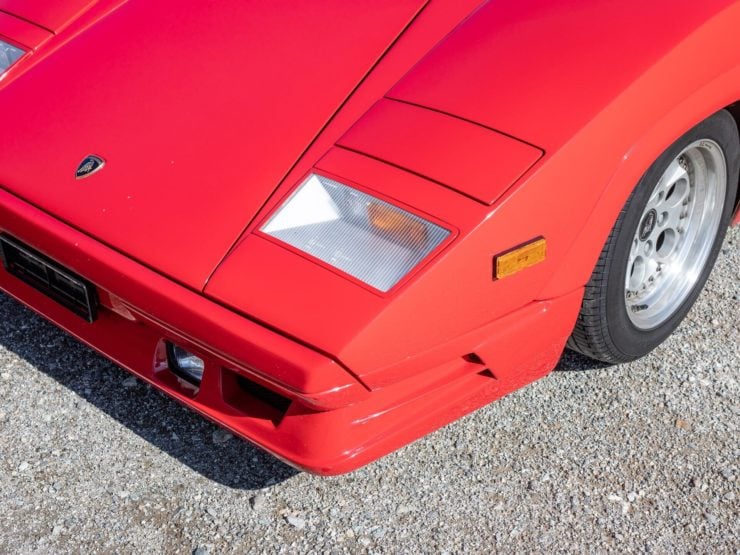
The combination of front integrated air-dam and wedge shape contribute to the Countach having excellent high speed stability.
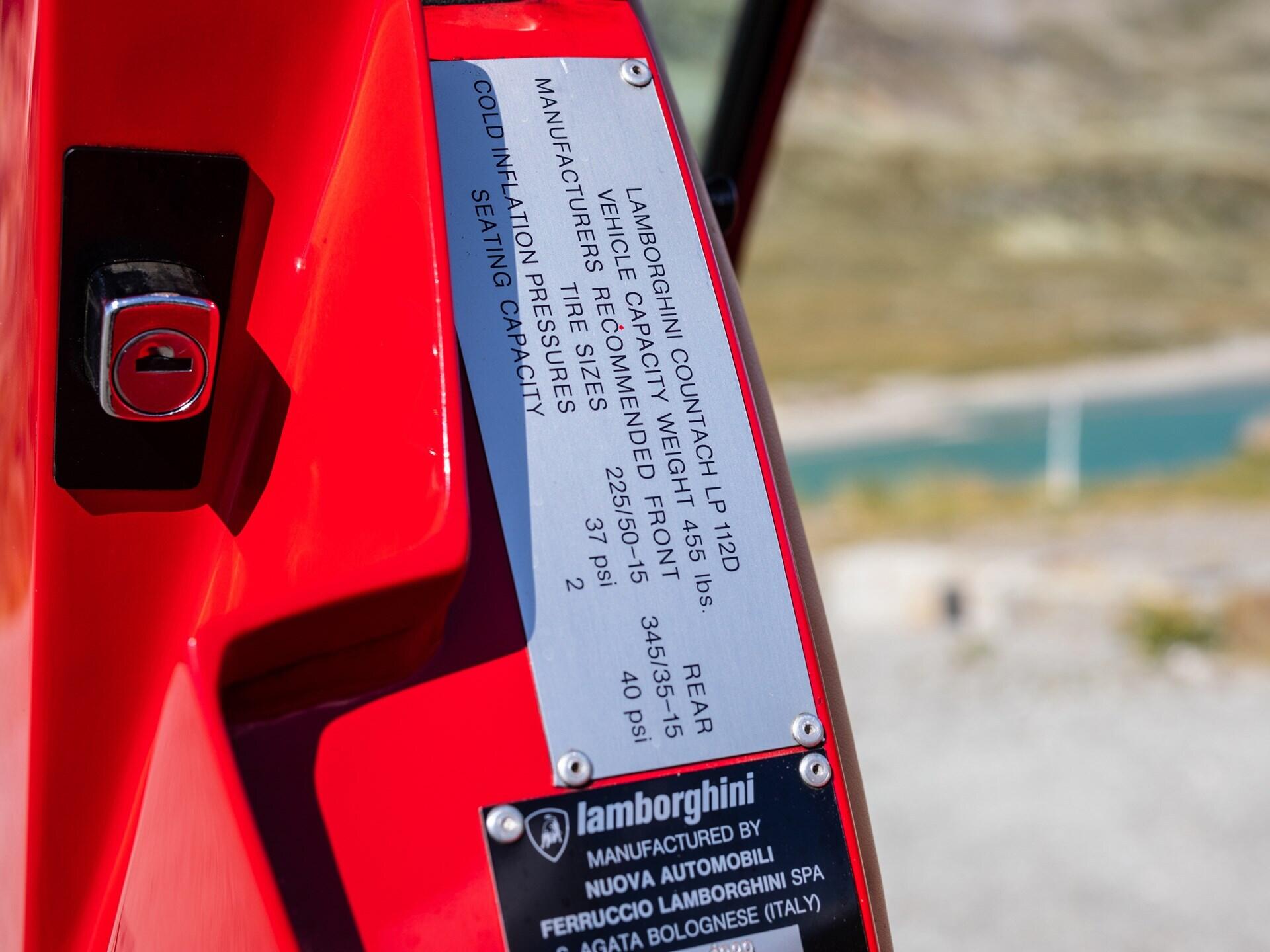
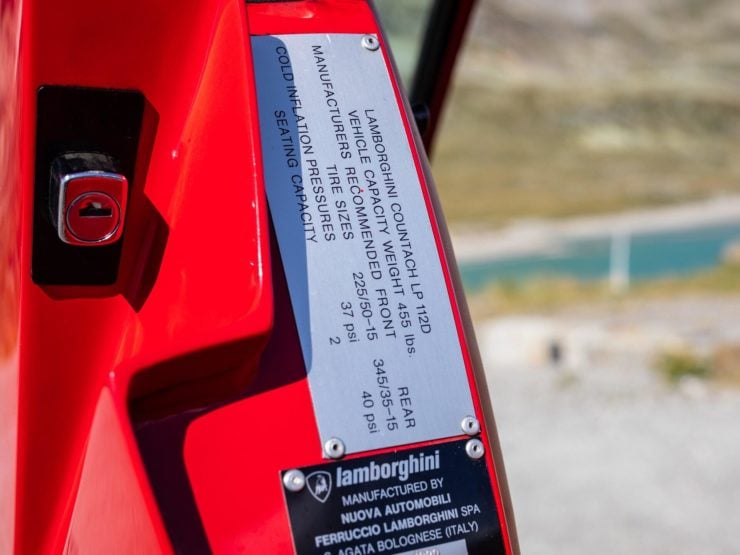
In its design phase the new Lamborghini was named project LP112, the “LP” standing for “longitudinale posteriore,” in Italian and translated into English as “longitudinal rear”, referring to the engine orientation and location.
The name by which this new car would become known to the world was coined by a worker on the project from the Piedmont area of Italy, who spoke almost no Italian.
One day when people were looking at the new design he exclaimed “countach!” with great enthusiasm – which is a Piedmontese exclamation a bit like the English exclamation “Wow.”
Its literal meaning is something like “contagious” or “infectious” in a good way. The name stuck, and it became the name for the production car.
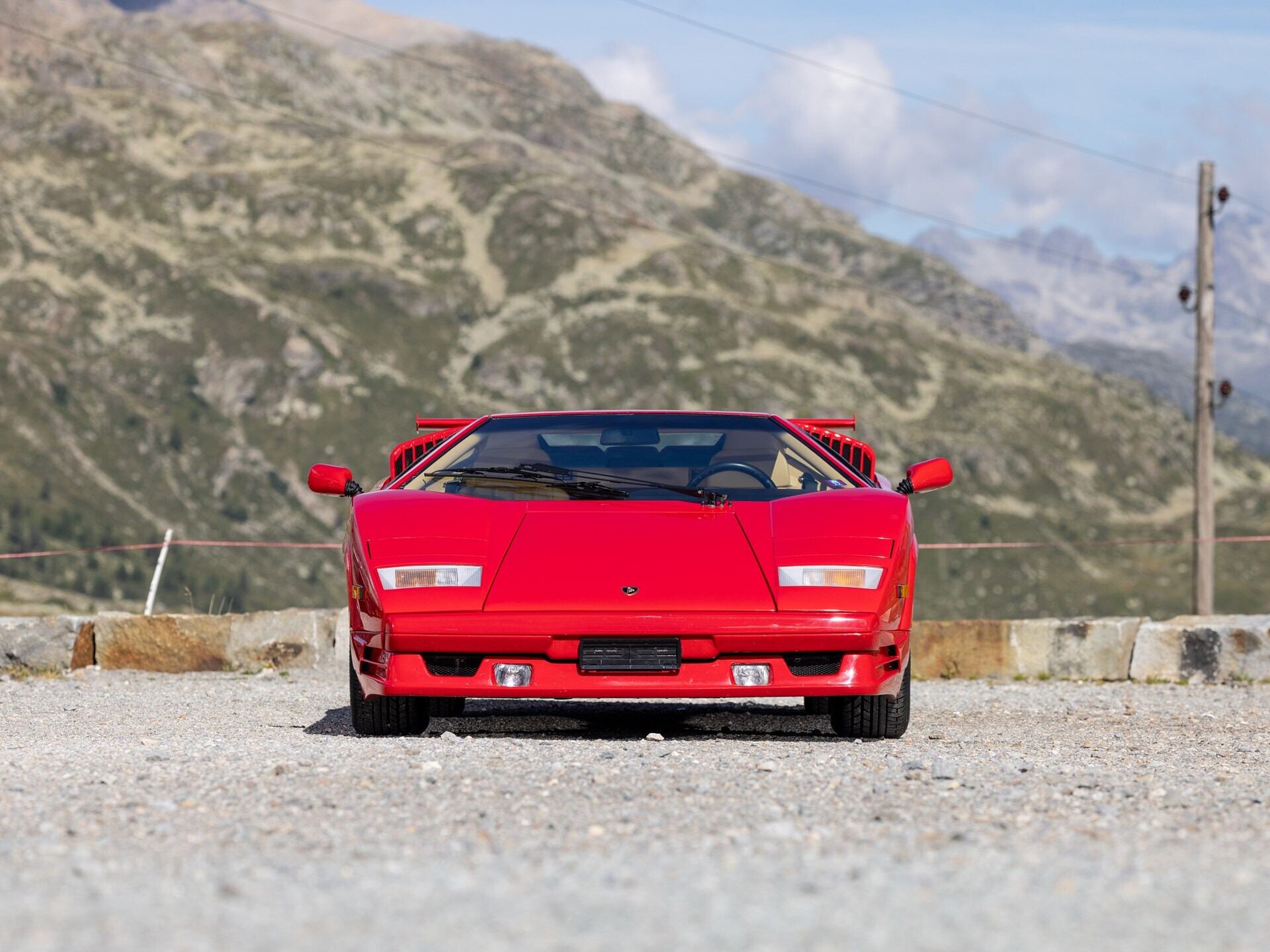
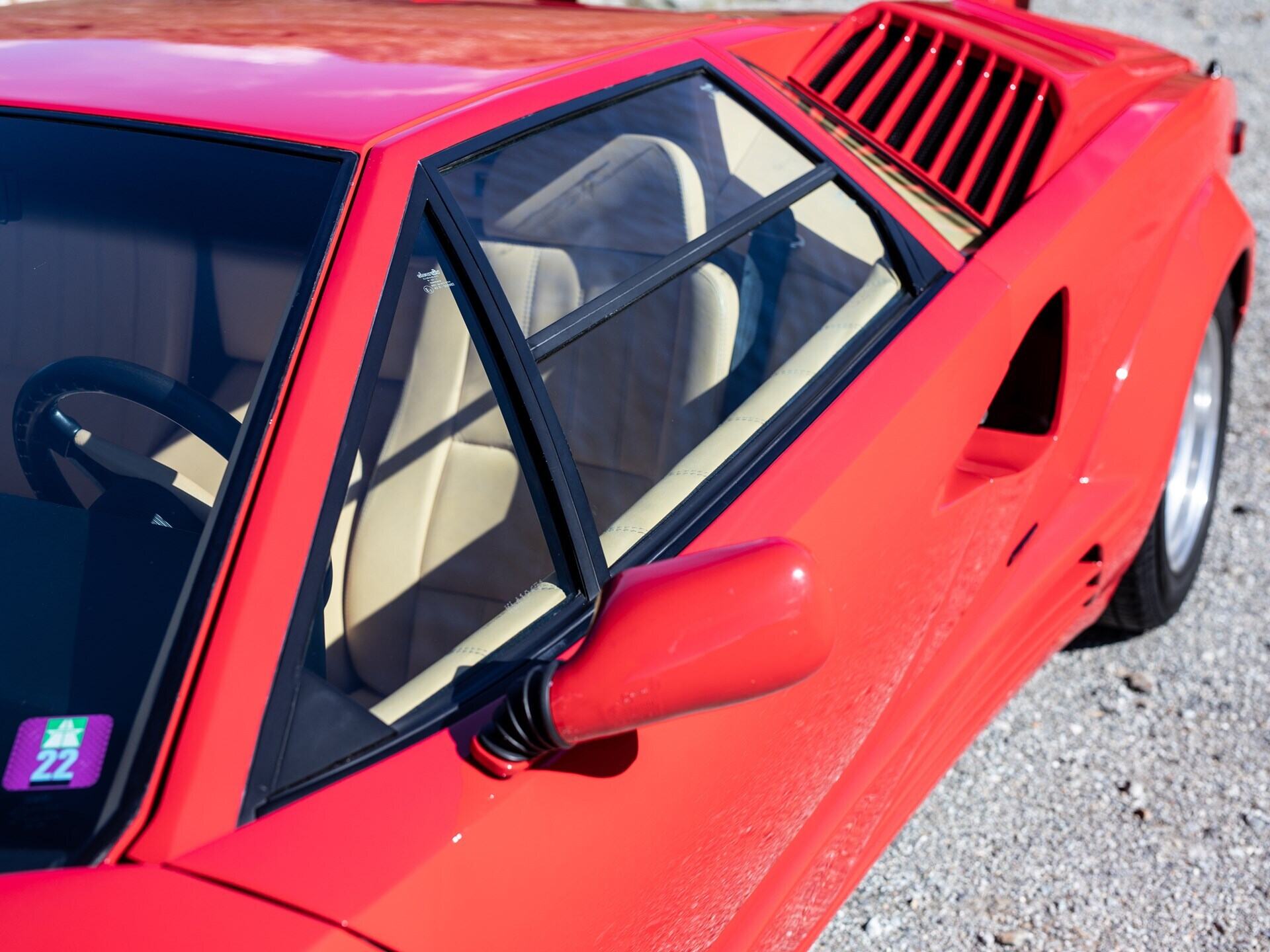
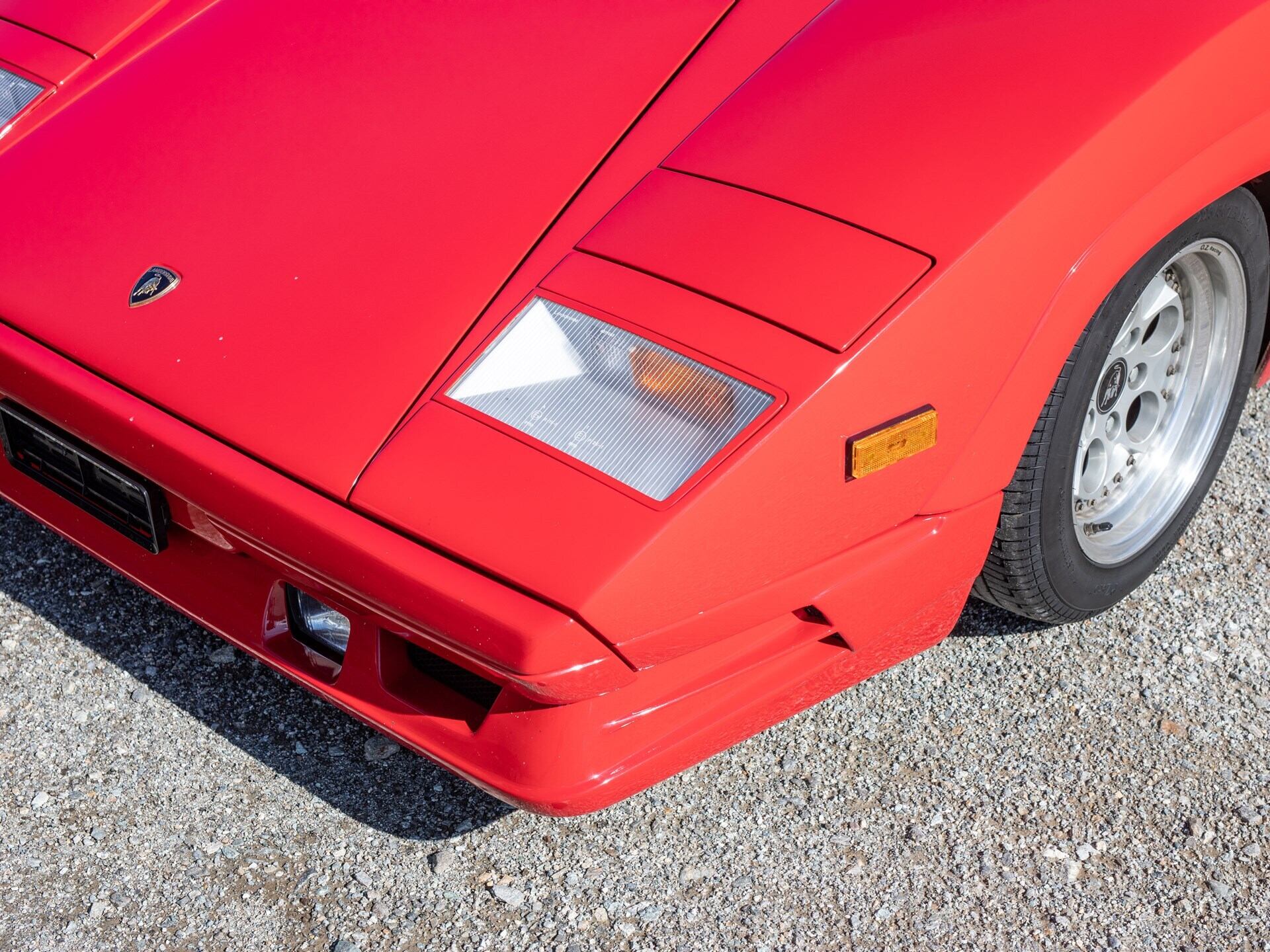
The new body style for the Lamborghini Countach incorporated the best of aerodynamic design features of the 1970’s and this meant it had a wedge shaped front with a low air-dam incorporated into the body.
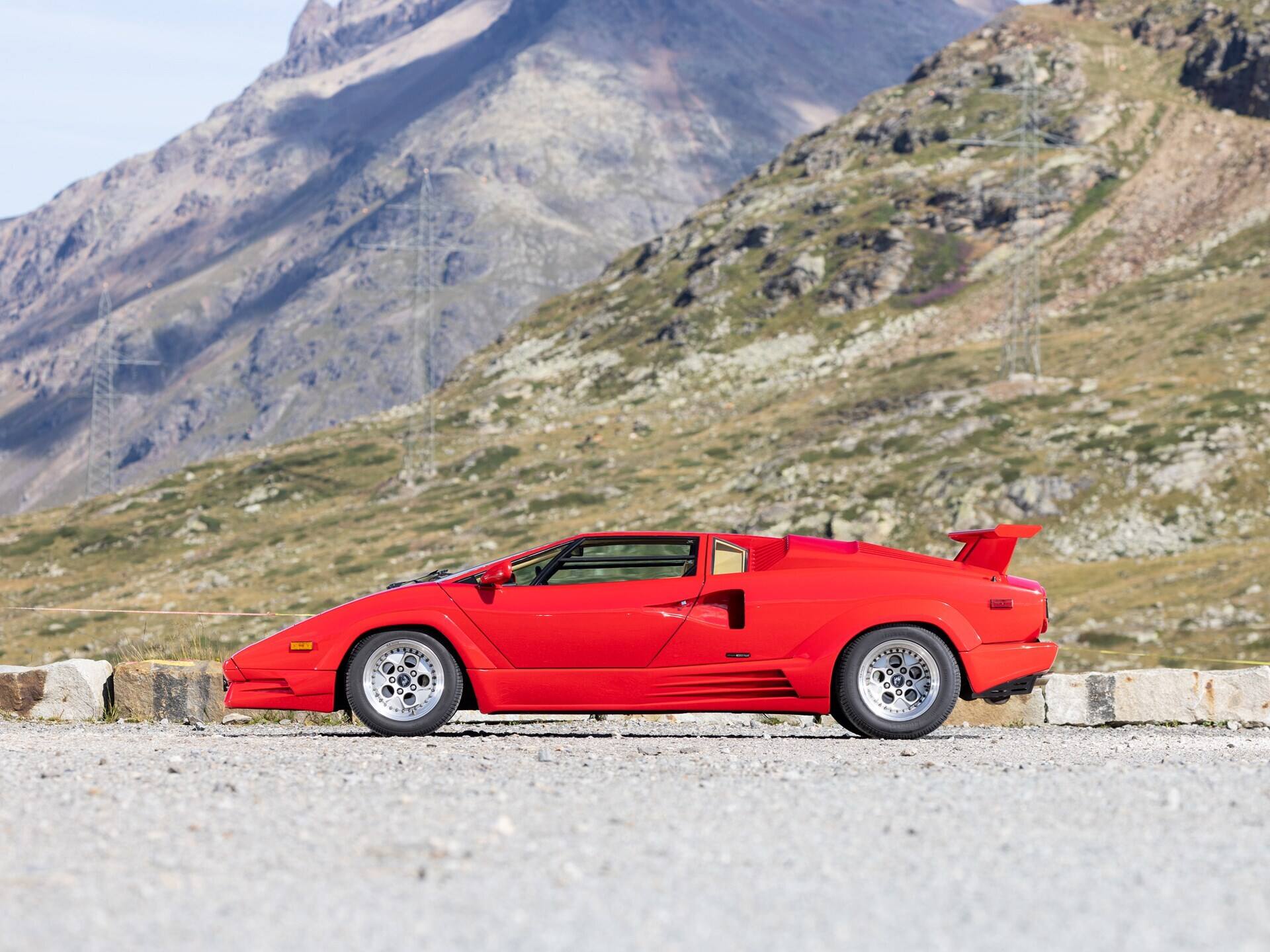
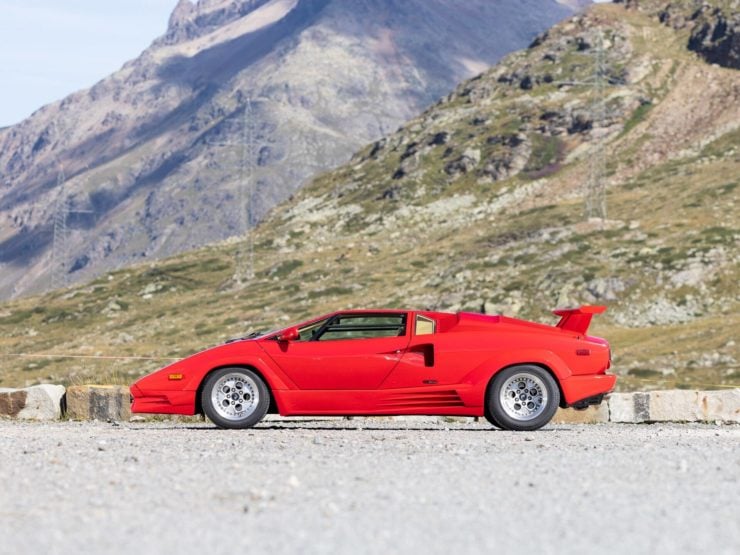
Unlike the curved lines of the Miura, the Countach was given an angular and aggressive look that characterized the high performance cars of the 1970’s and beyond. It was made to look like something that could eat Ferraris and Porsches for breakfast, which was of course appropriate.
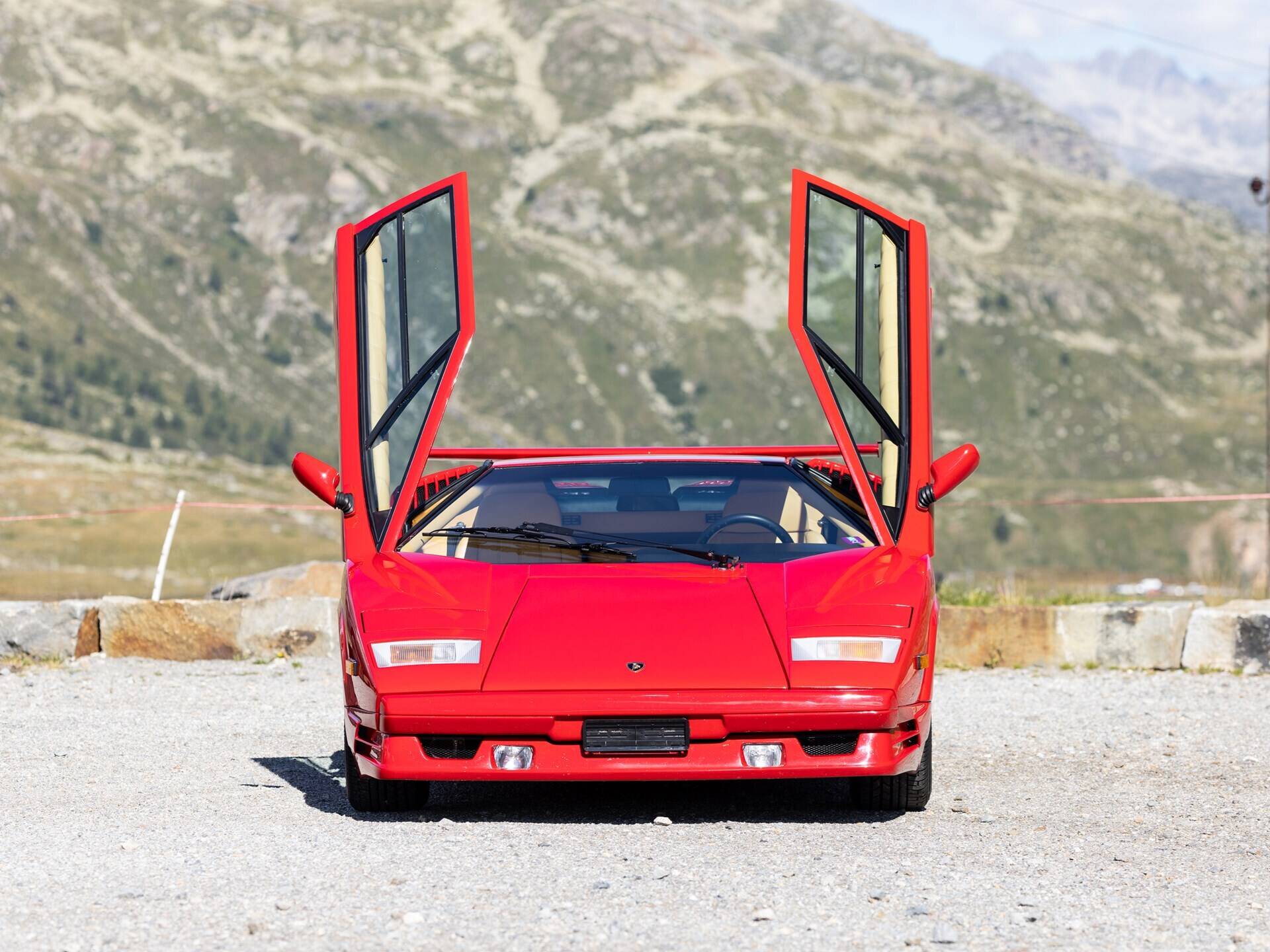
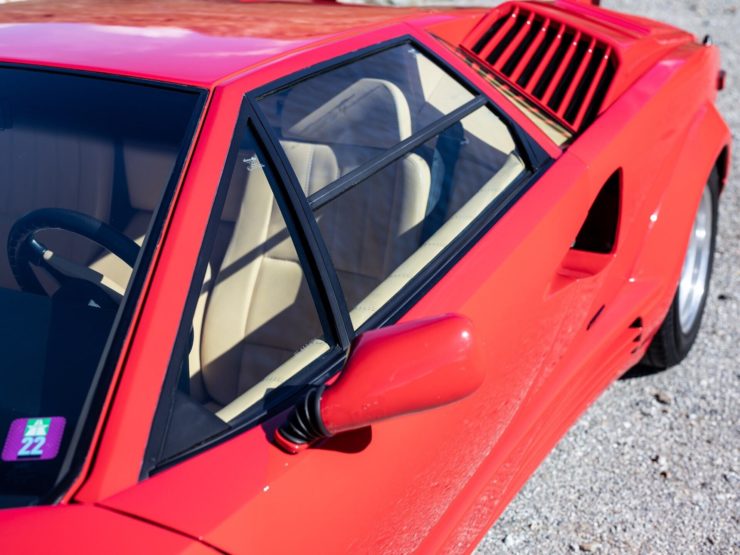
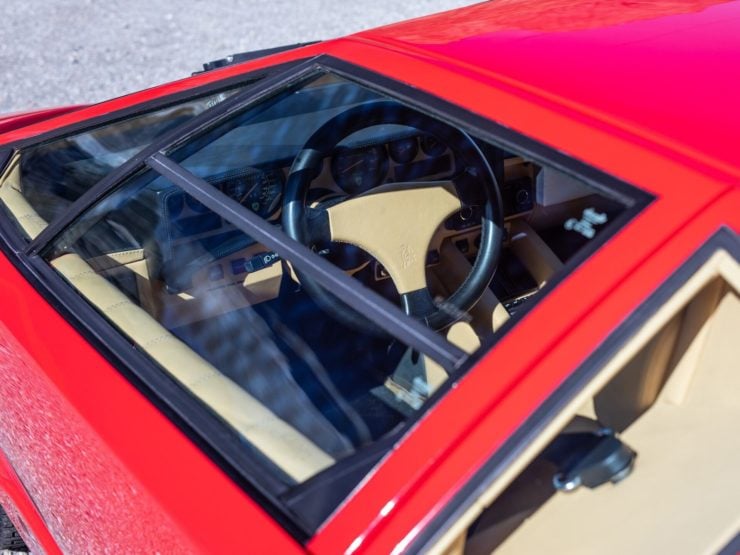
The body design was done by Marcello Gandini, who had previously created the Miura and to permit the easiest possible entry and exit from the car he incorporated “scissor” doors that folded up and away.
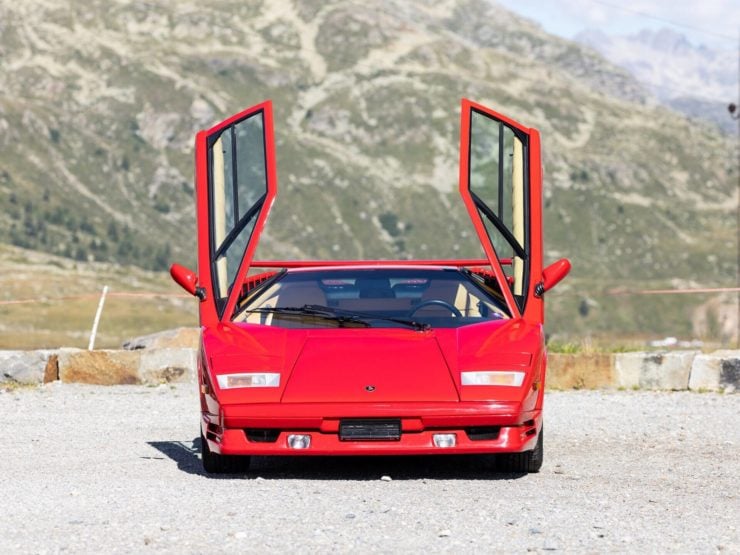
To permit the easiest entry and exit into the Countach Gandini used scissor type doors. They are also very eye-catching.
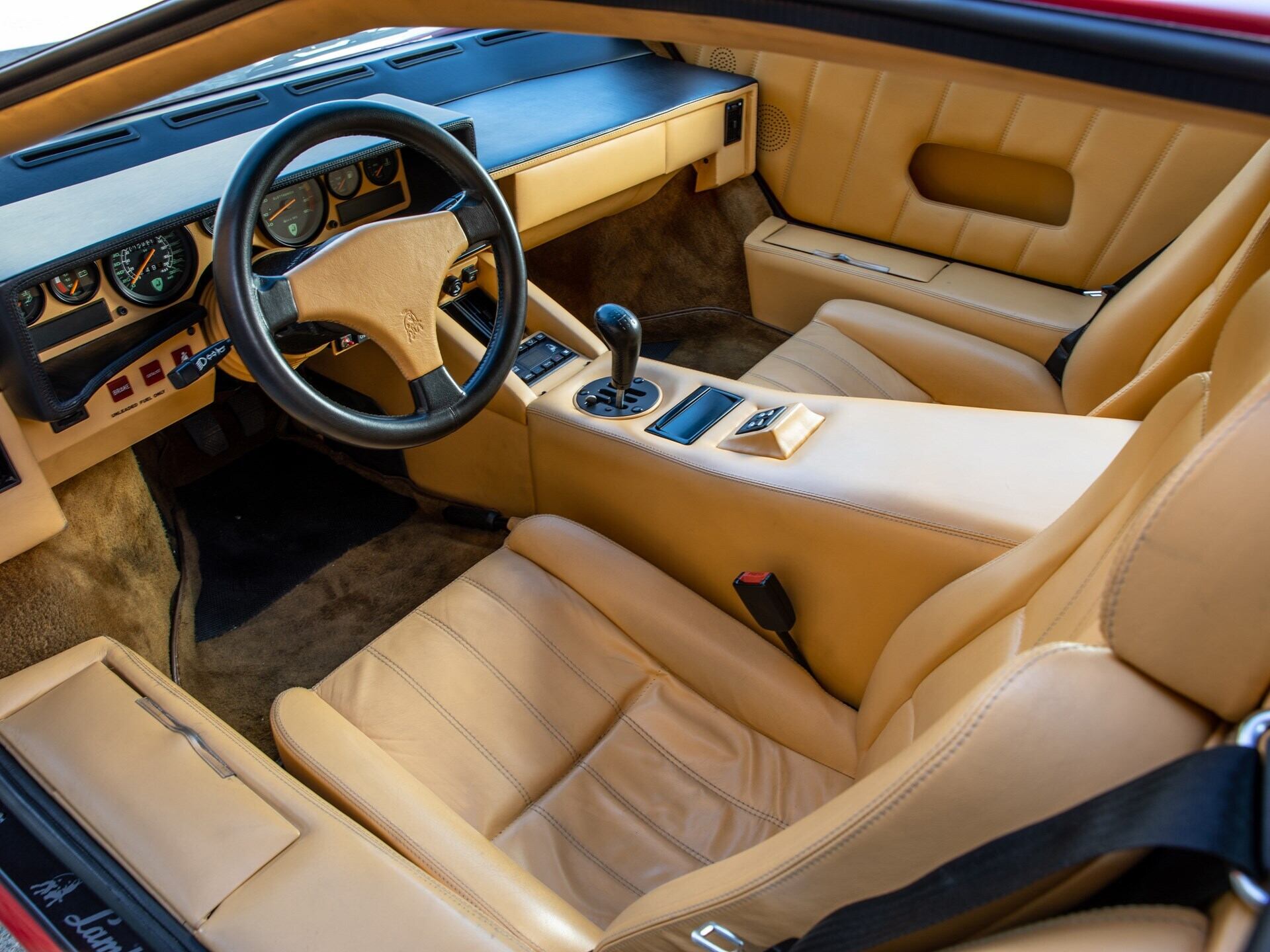
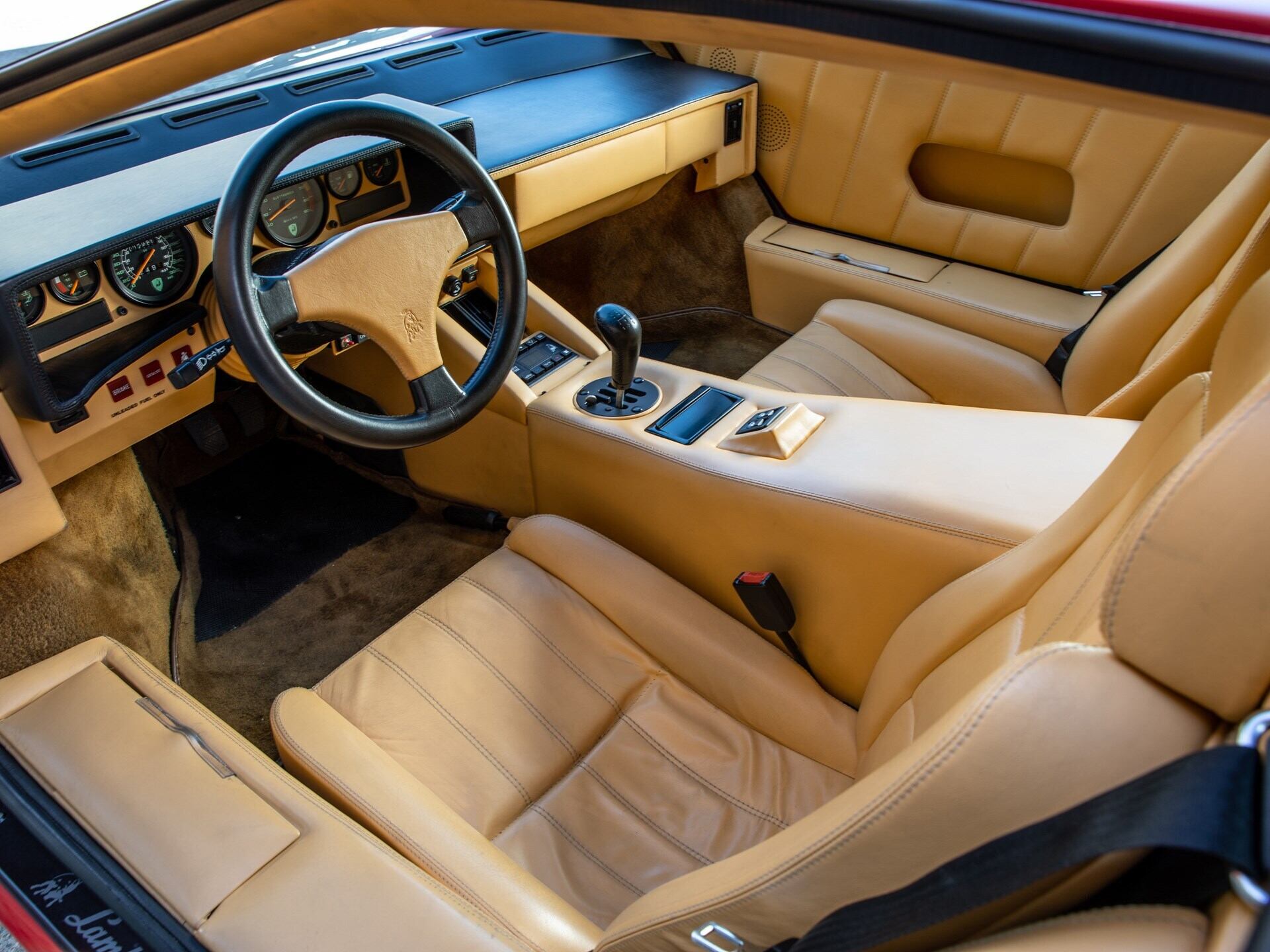
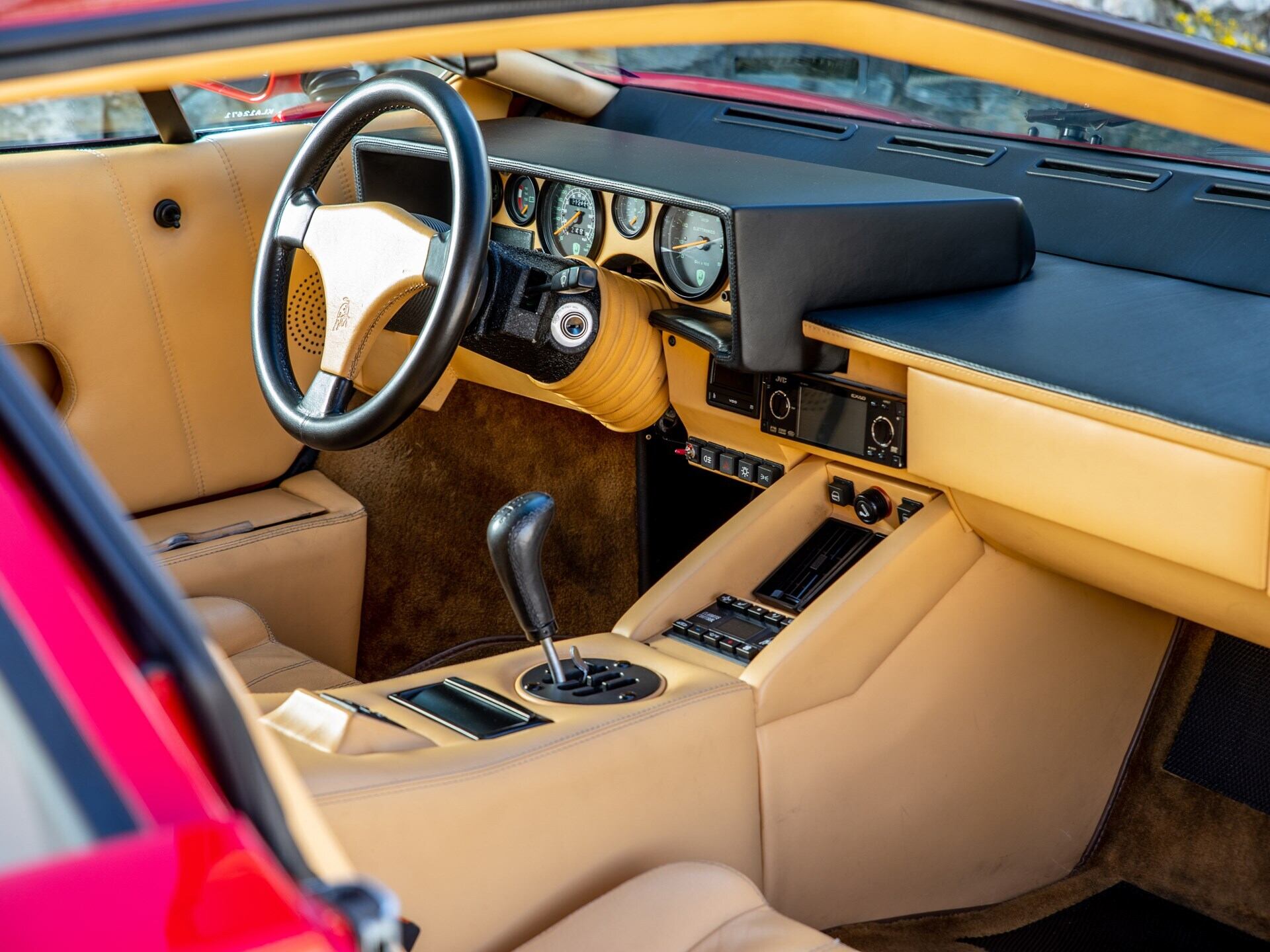
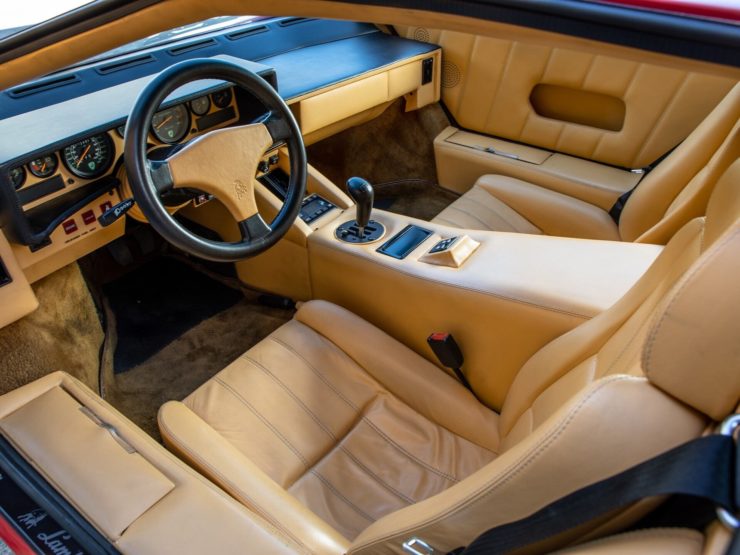
Gandini’s initial designs for the Countach’s interior were rather space age and its probably a good thing that many of his initial ideas did not get incorporated into the final design.
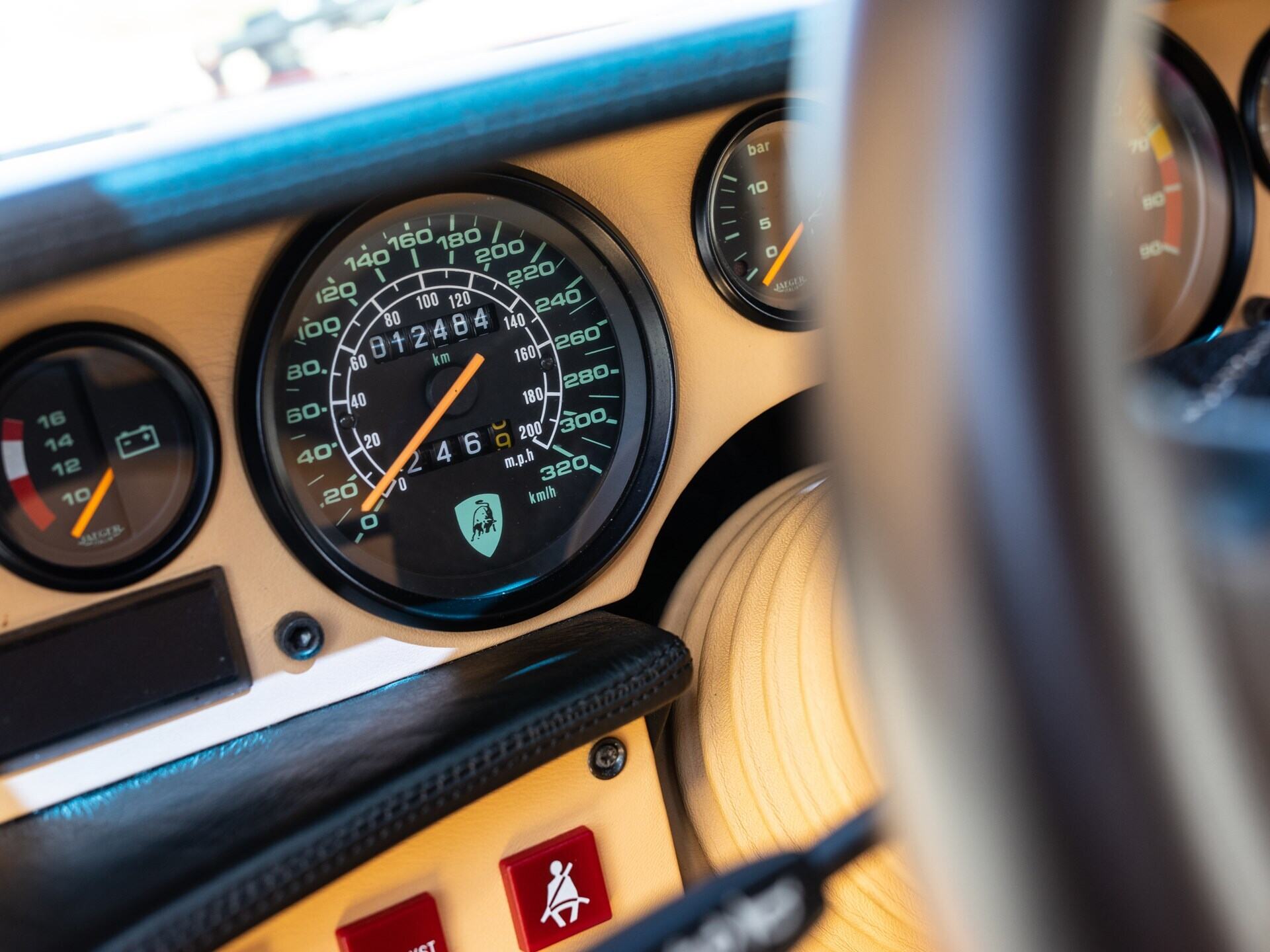
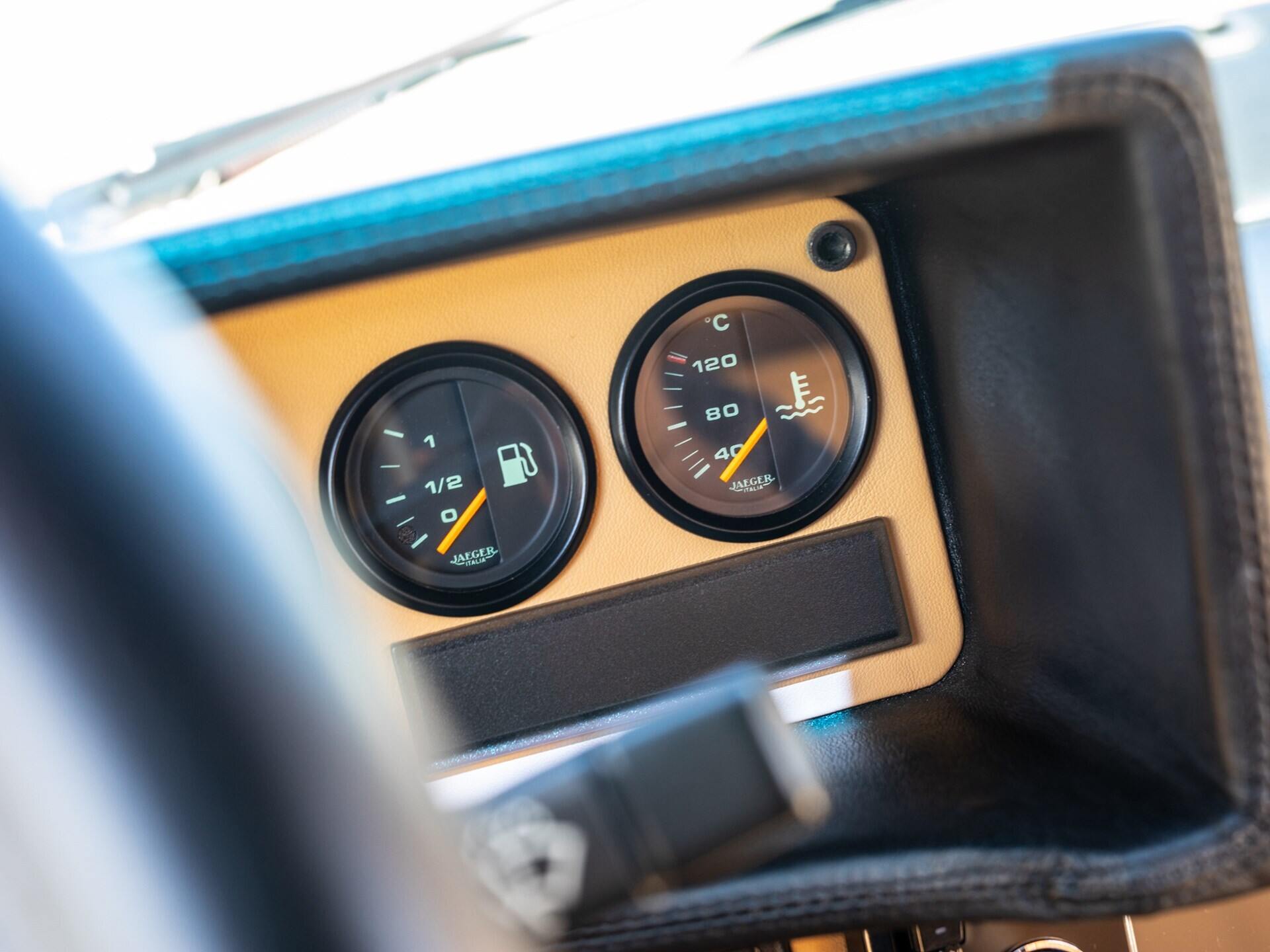
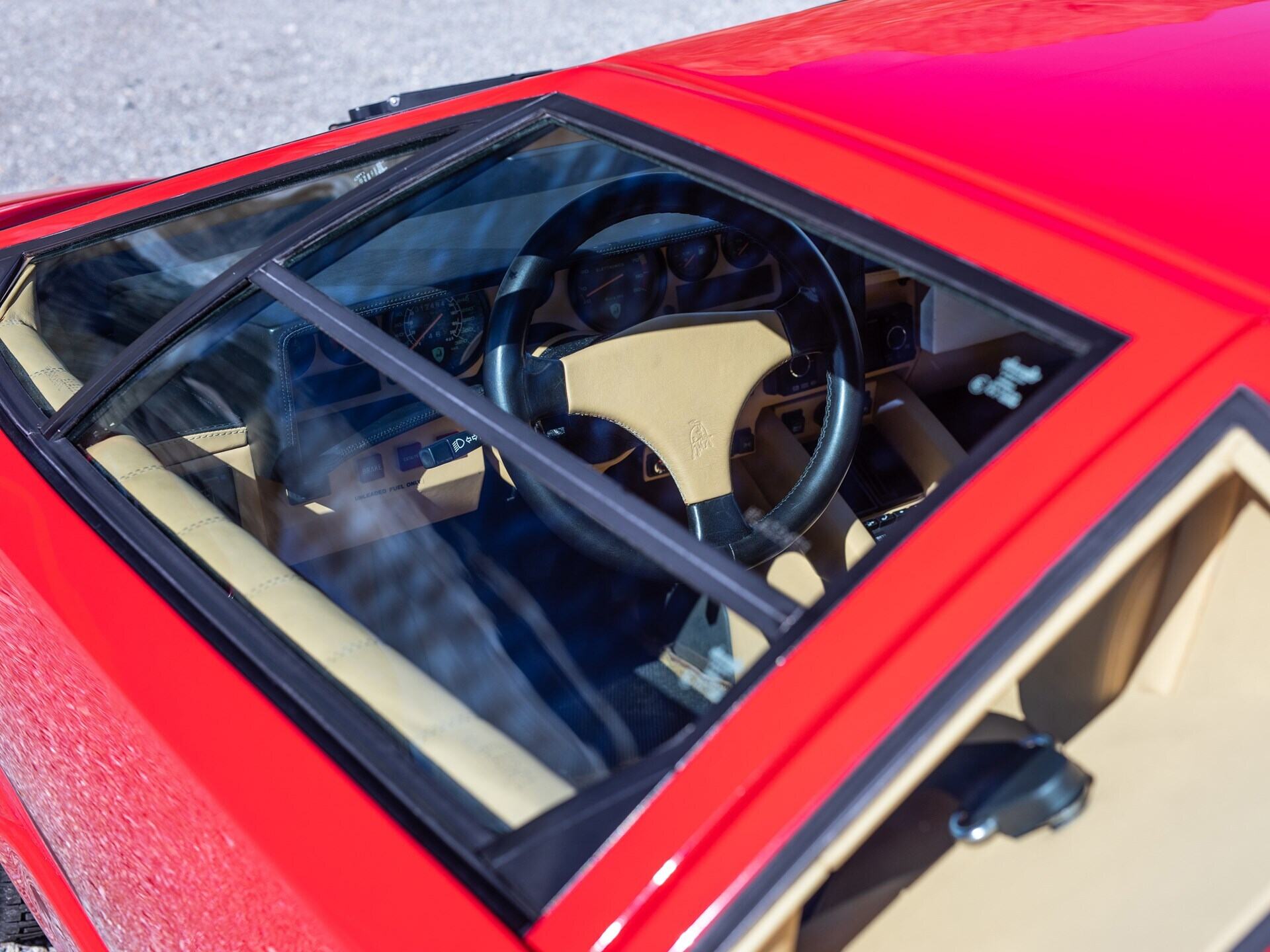
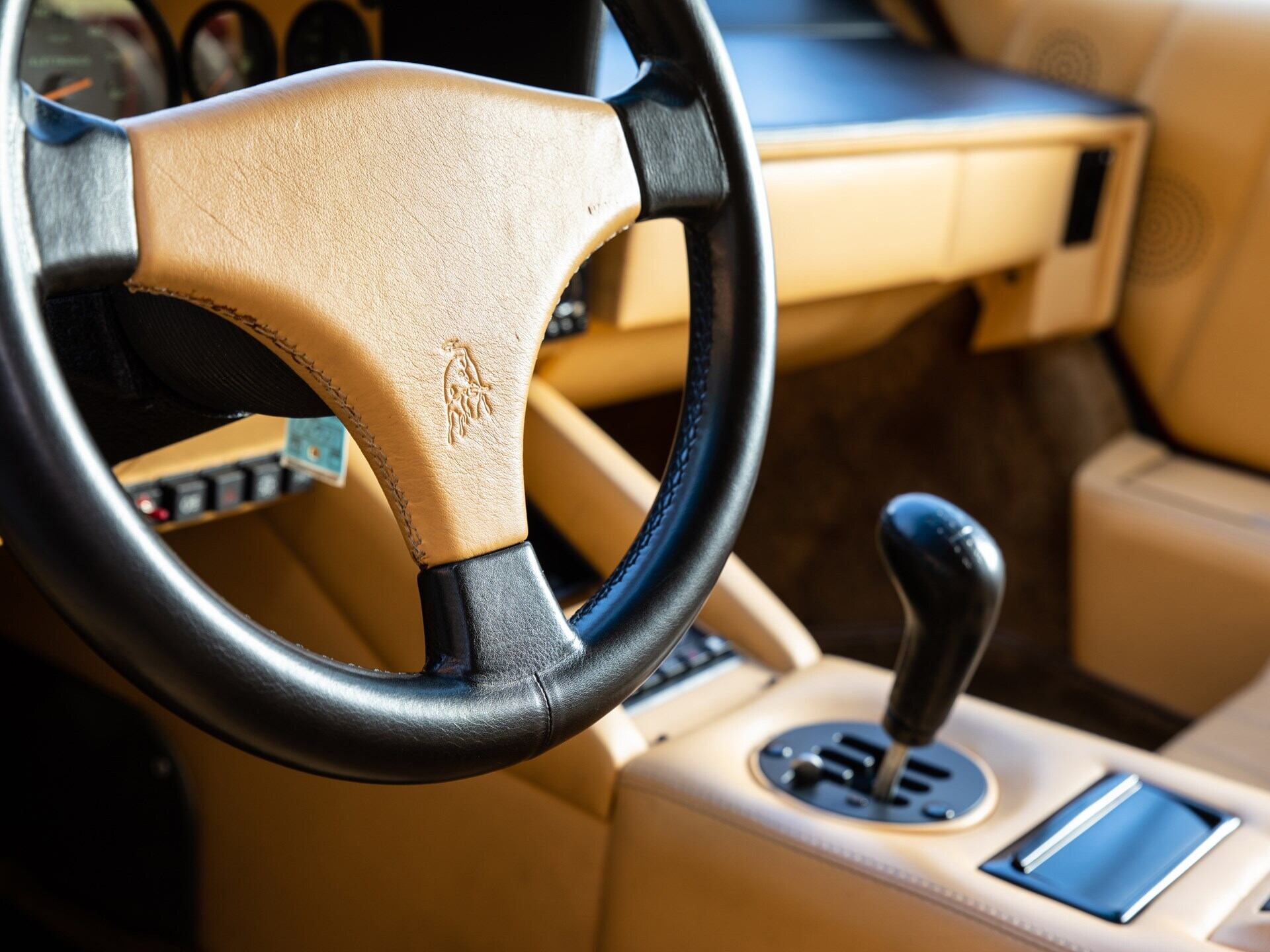
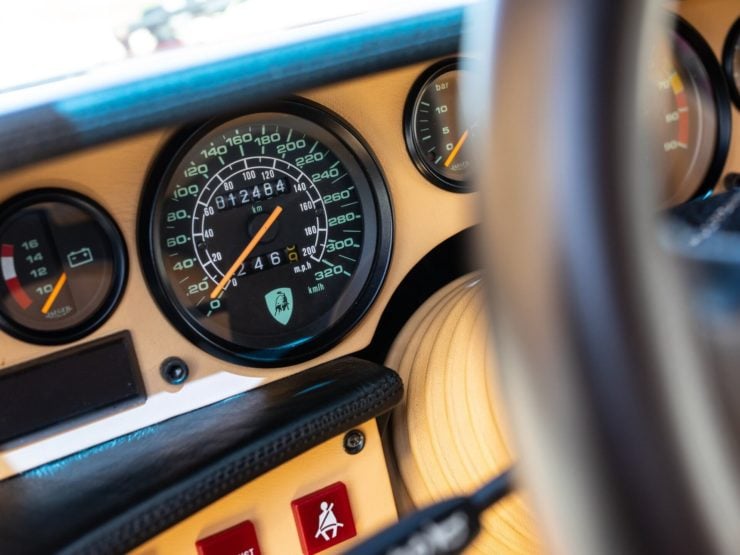
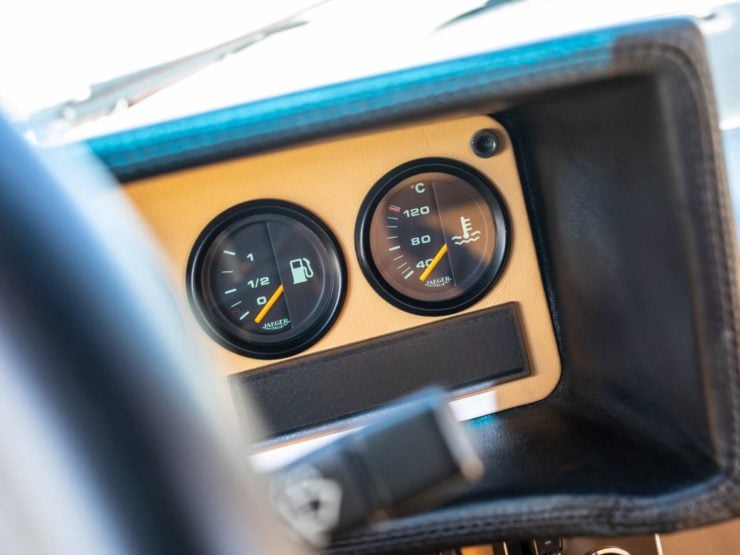
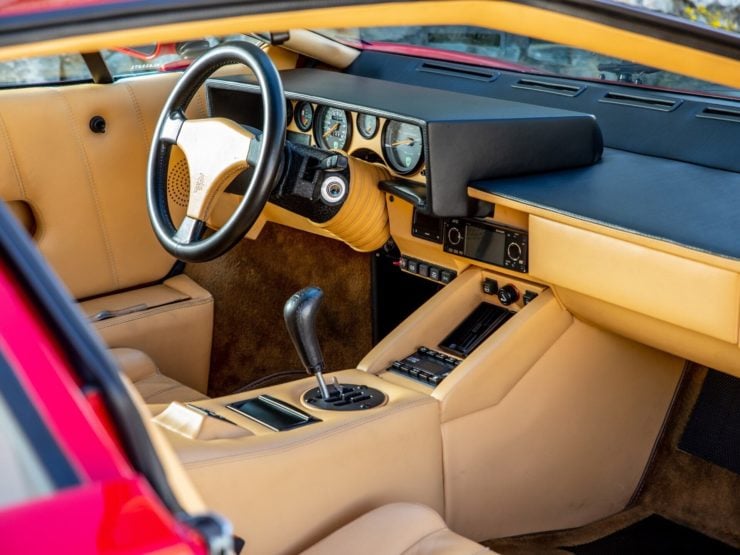
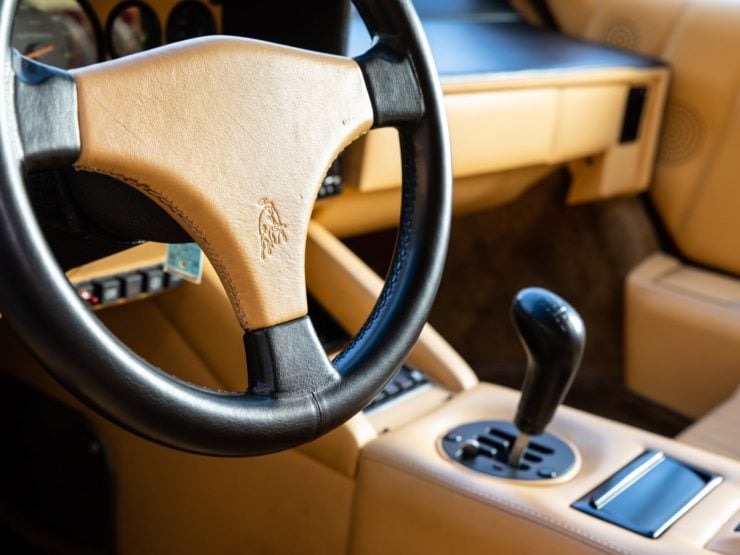
So the single spoke steering wheel was replaced with a three spoke one and the instrumentation was made conventional and easy to read under all conditions.
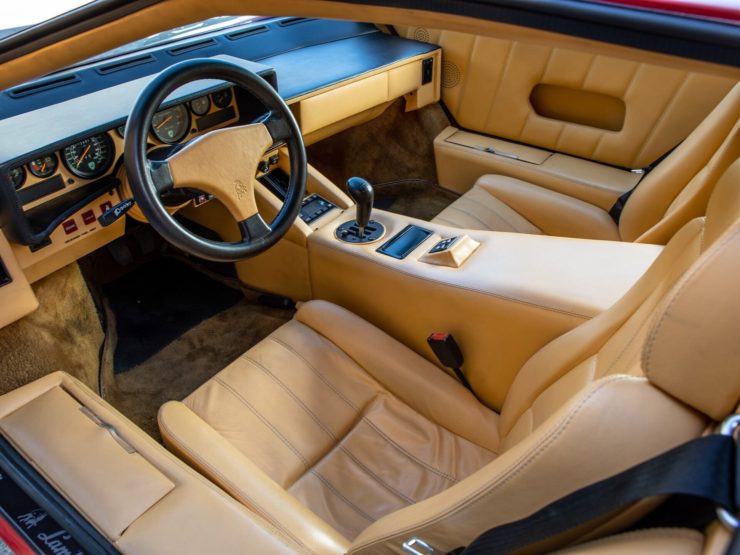
The interior of the 25th Anniversary Countach is conventional, restrained and beautifully understated.
The pre-production Countach was called the LP500, for “longitudinale posteriore 5 litri” or longitudinal rear mounted 5 litre engine: and it was the intention of the design team to create a 5 litre version of the Bizzarinni designed V12 that had been the mainstay of all the Lamborghini cars that came before the Countach.
To make the Lamborghini V12 exceed 400 hp the engineers worked on boring out the Bizzarrini original from 3.921 cc to get to five litres or more.
One experimental engine even incorporated magnesium alloy components by the name of “Elektron”, an alloy that had been used by Jean Bugatti in the 1930’s when he built the bodywork for his Aérolithe show car.
But that engine blew up during testing and so not only was that a “back to the drawing board” moment, but it was the decider that the first model Countach would be fitted with the engine in much the same form as was fitted to the Miura, except with side-draft Weber 45 DCOE carburetors which dropped the power a little to 370 hp at 8,000 rpm.
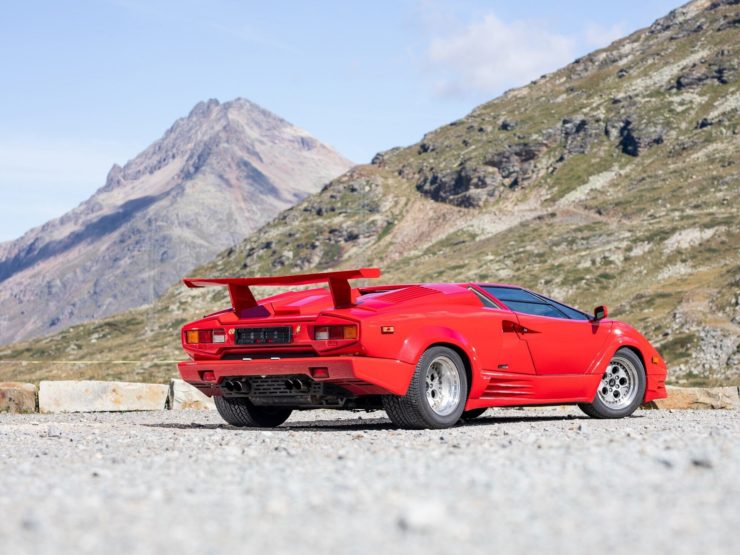
The Countach’s body was designed with aerodynamics and high speed stability in mind. In its initial design phase the body produced too much down-force over the front wheels which caused instability in high speed braking – so the body design was altered to cure that fault.
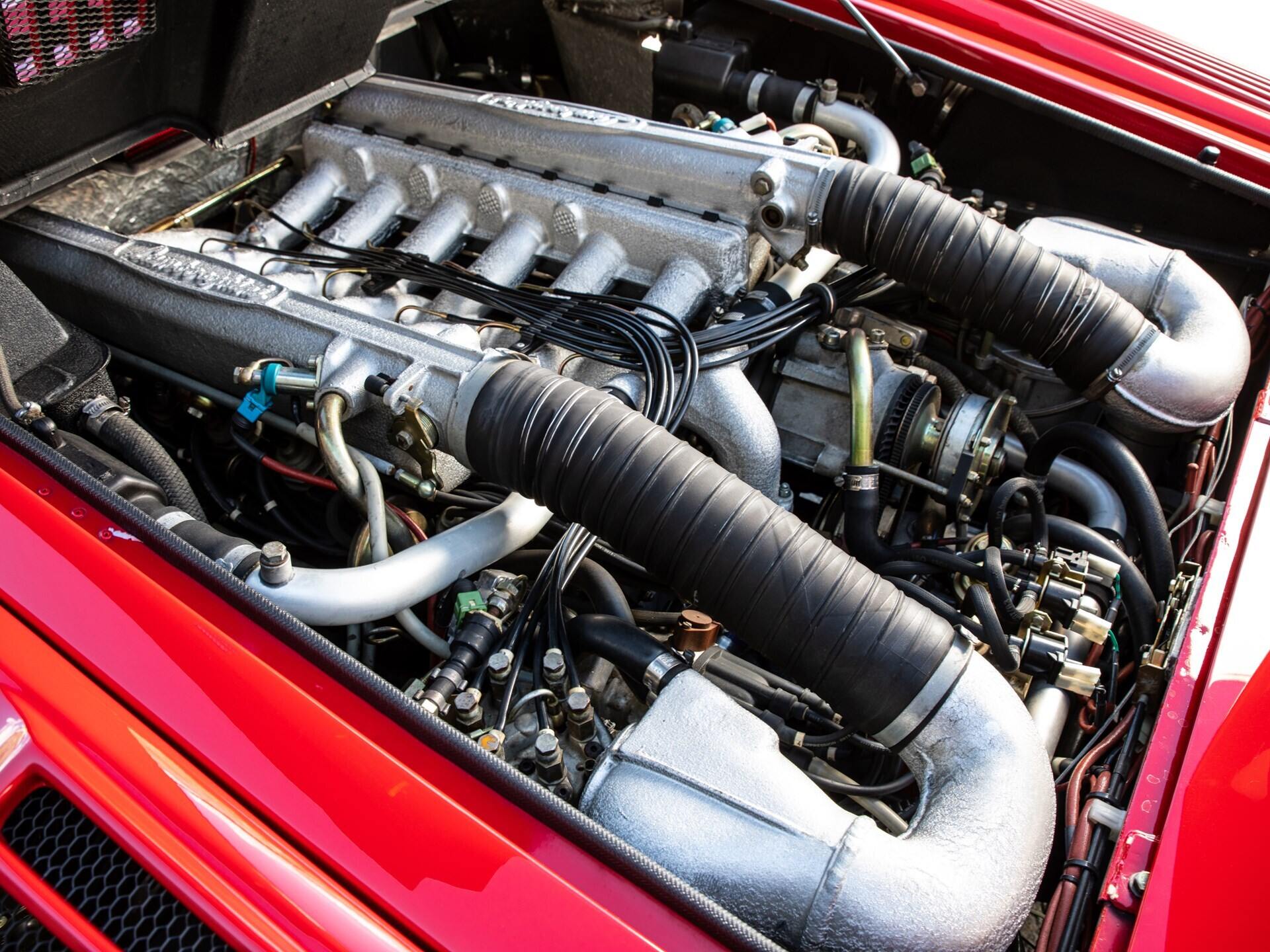
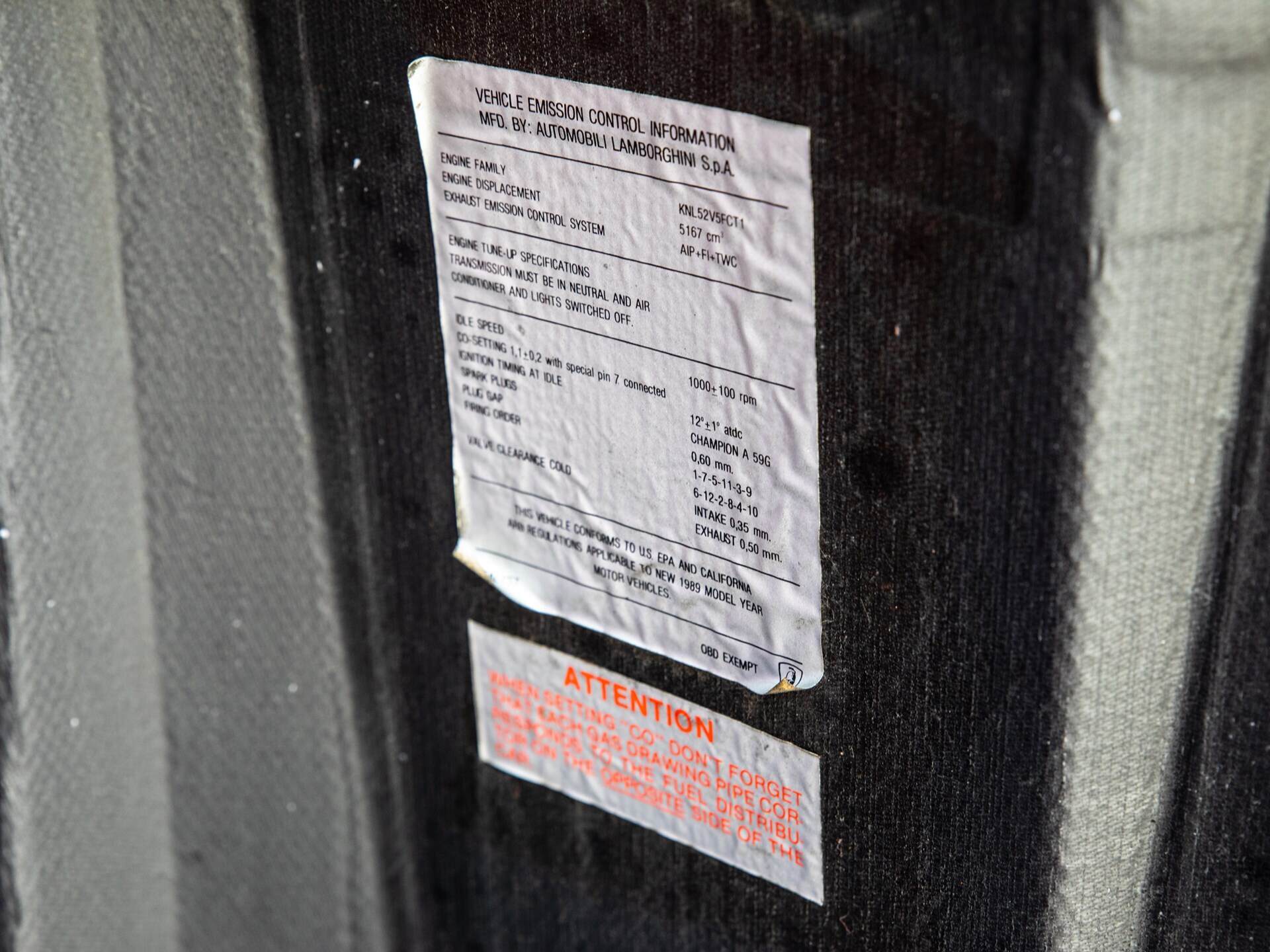
The increases in engine capacity and power came in two stages, first to a 4,754 cc (4.8 litre) in the 1982 LP500S, and then the 5,167 cc (5.2 litre) double valve LP5000QV (quattrovalvole/four valve) engine fitted with six Weber side-draft carburettors for non-US markets and Bosch K-Jetronic fuel injection for North American market cars.
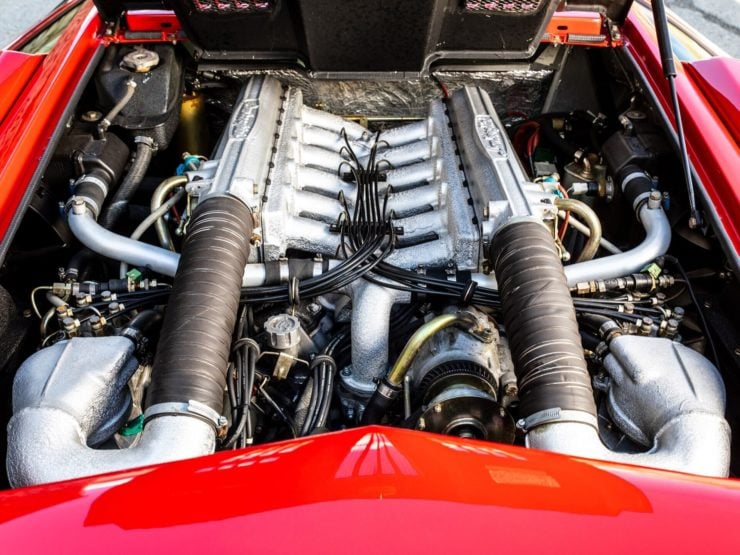
The Lamborghini Countach LP5000QV V12 engine as fitted to the 25th Anniversary model.
There were a number of models of Countach produced; The LP400 and LP400S fitted with the 4.0 litre V12, the LP500S fitted with the 4,754 cc (4.8 litre) engine, and the LP5000 Quattrovalvole fitted with the 5,167 cc (5.2 litre) quad valve engine.
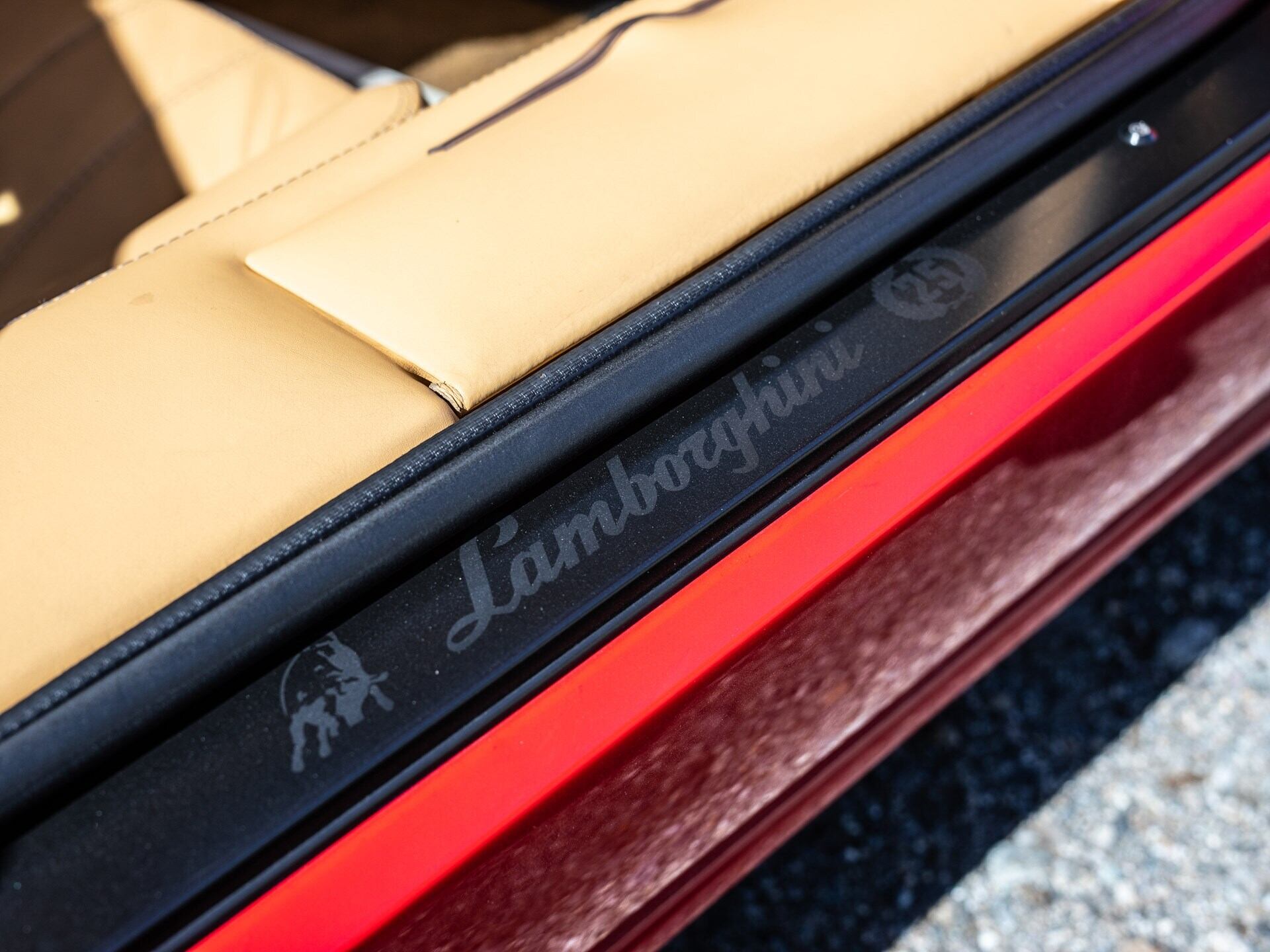
The last model was the much sought after 25th Anniversary Edition which is regarded as the most refined and arguably quickest of all the Countach made.
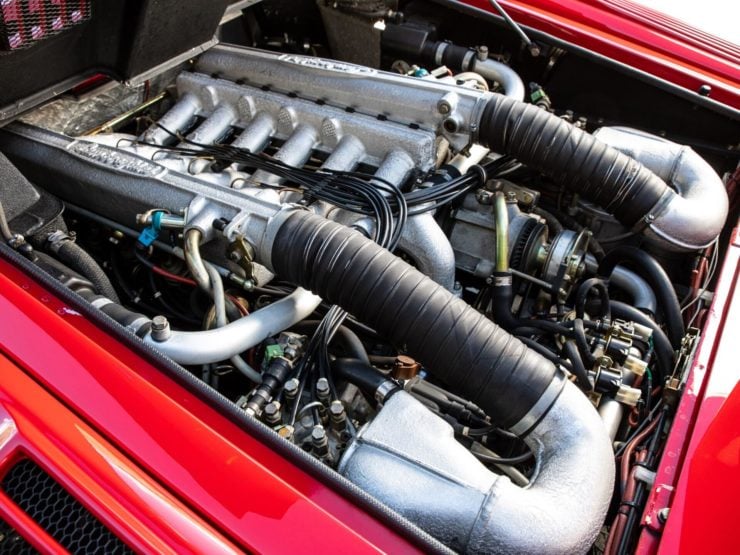
The LP5000QV Quattrovalvole V12 engine as fitted to the 25th Anniversary Edition Countach.
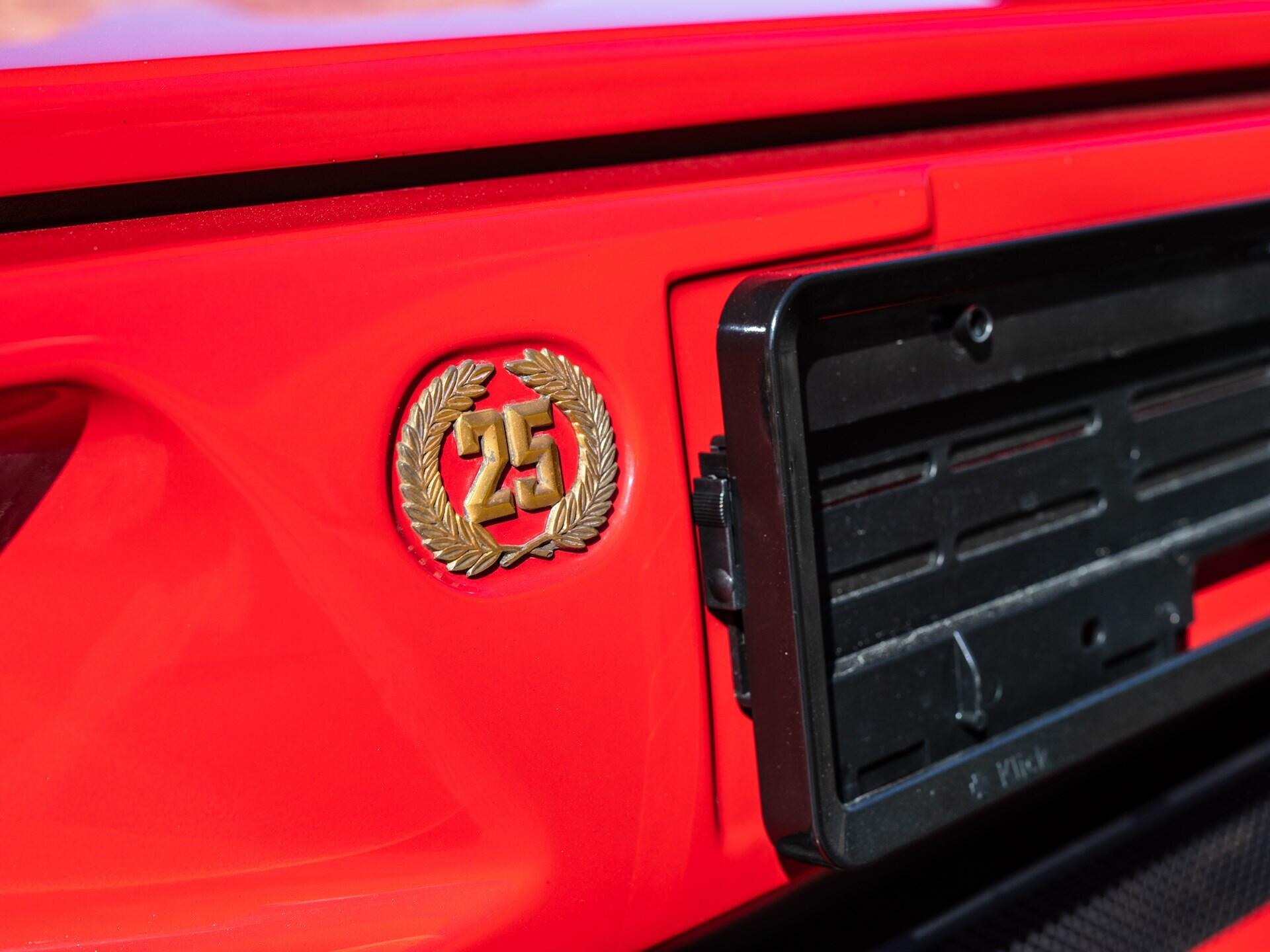
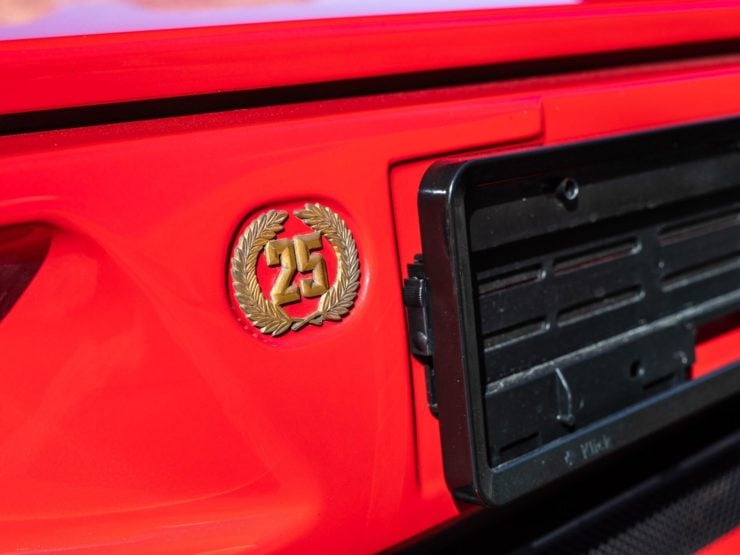
The 25th Anniversary Edition Lamborghini Countach was a refined and subtly re-styled LP5000QV.
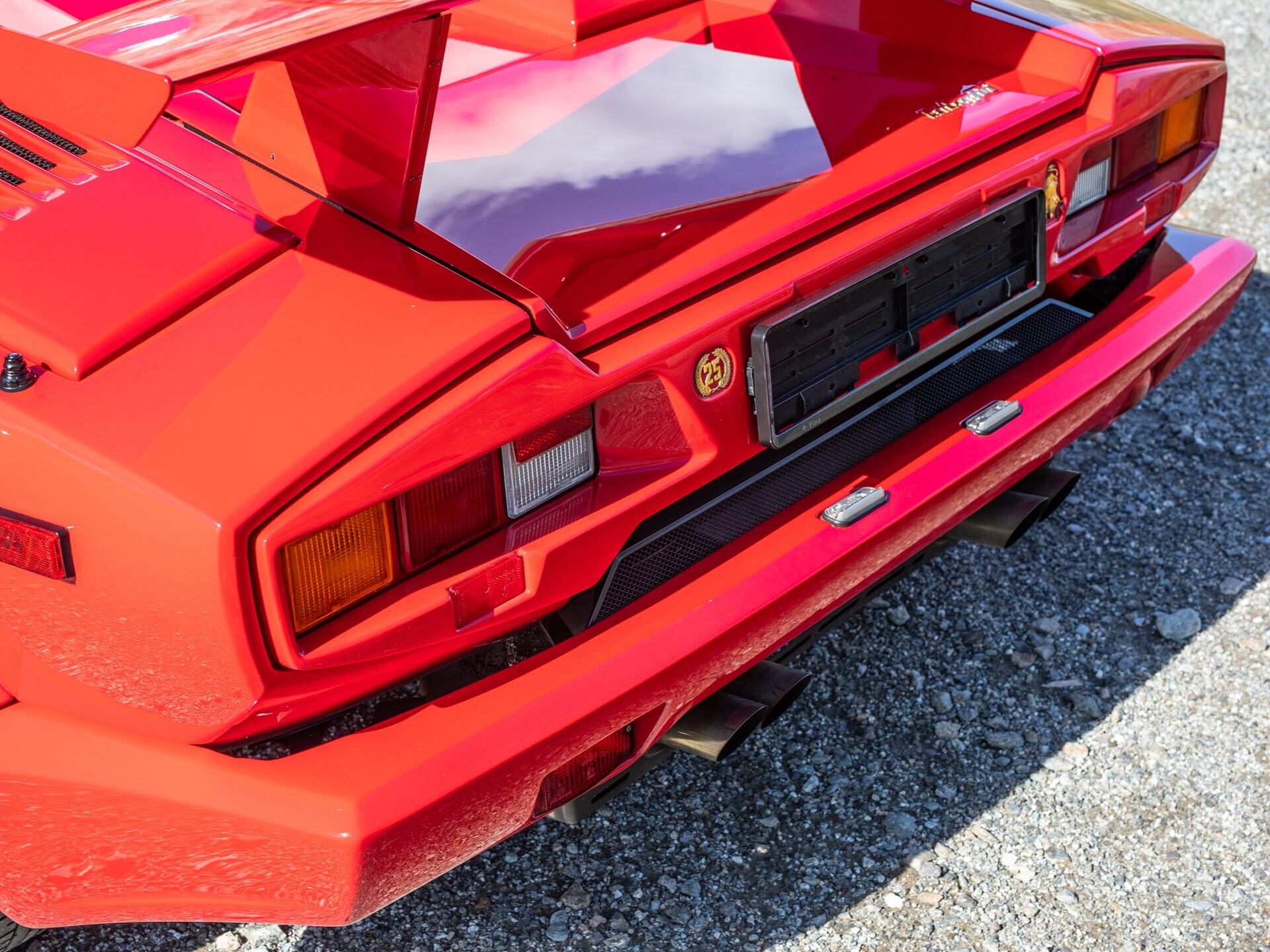
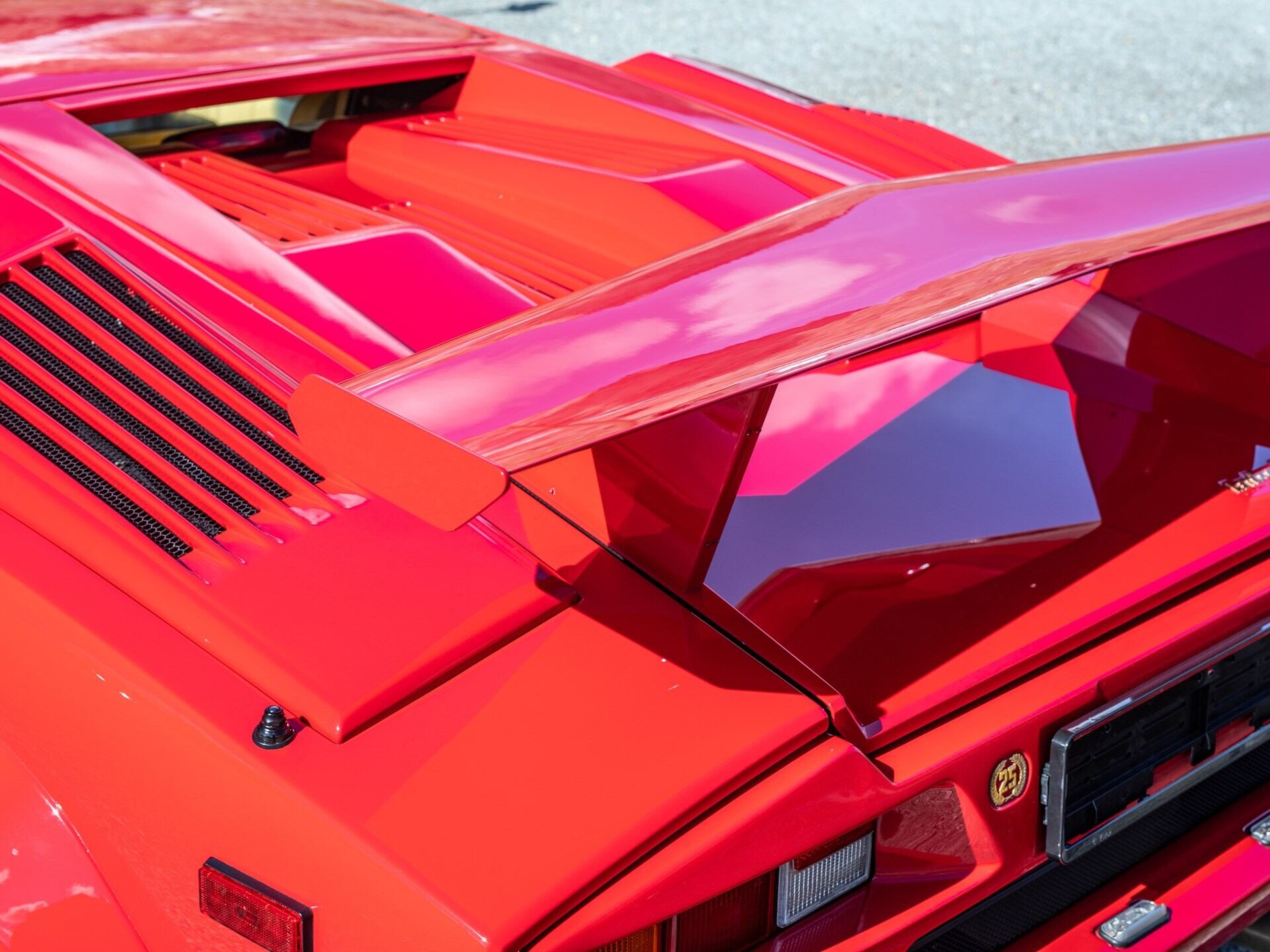
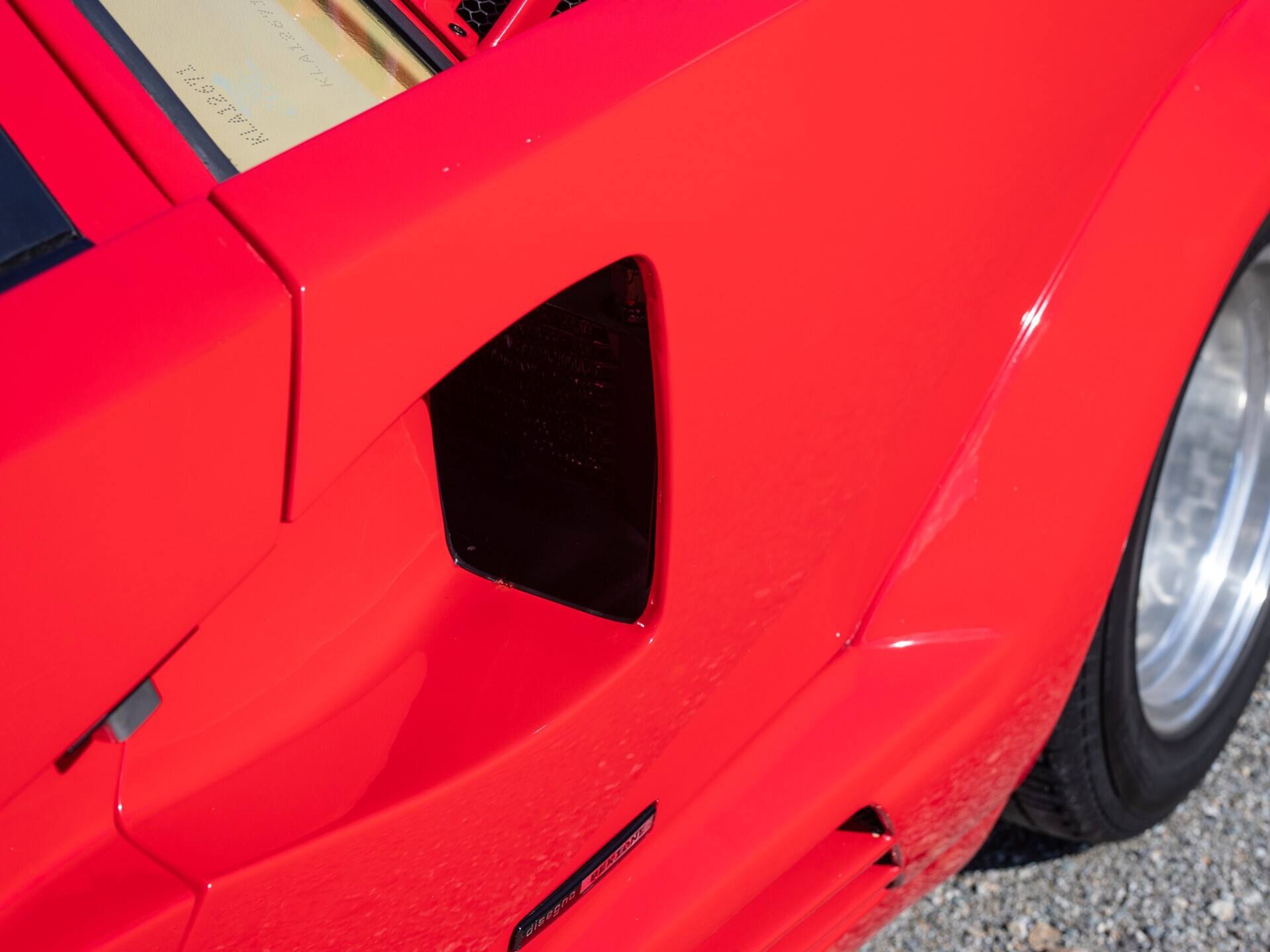
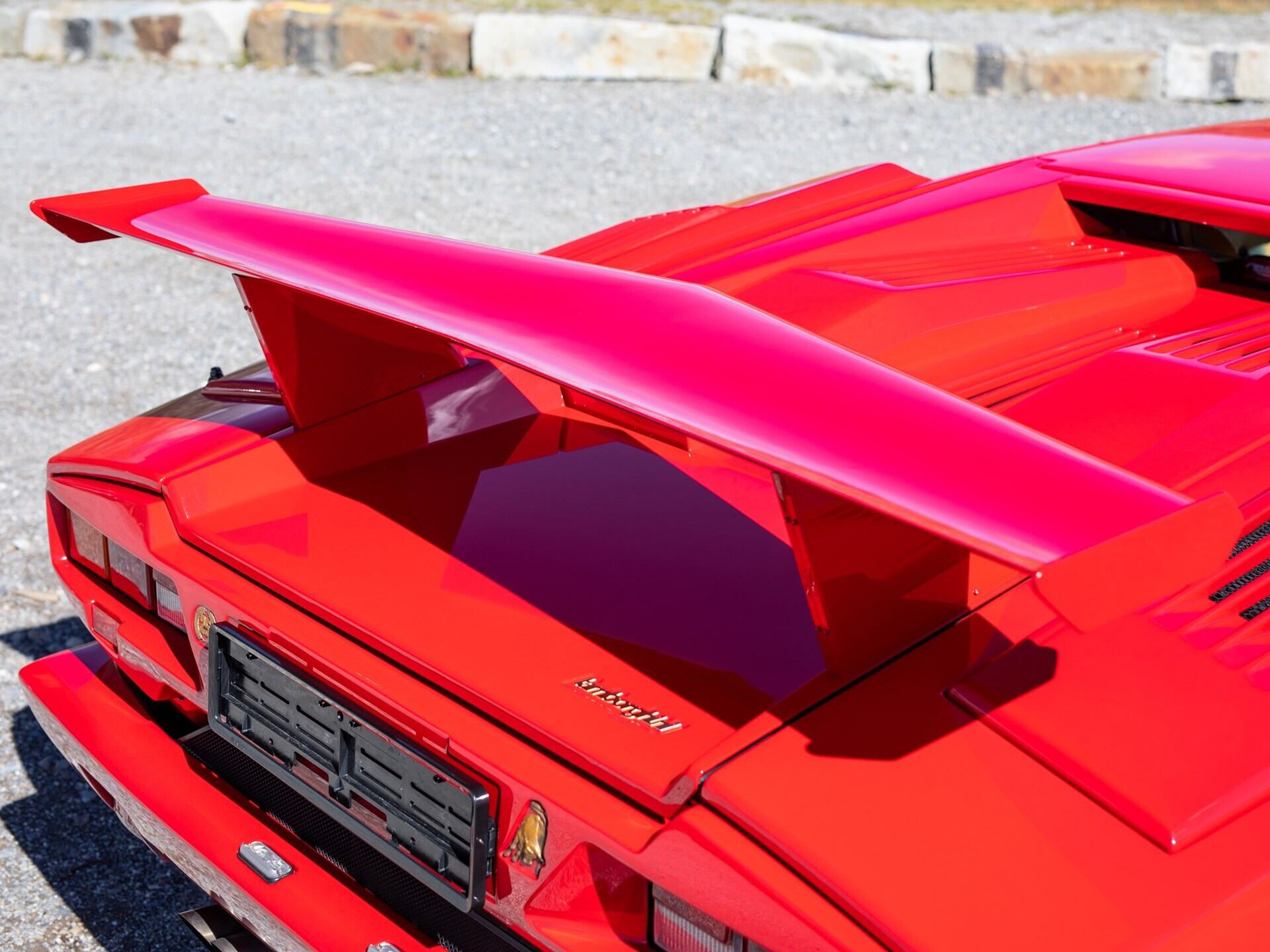
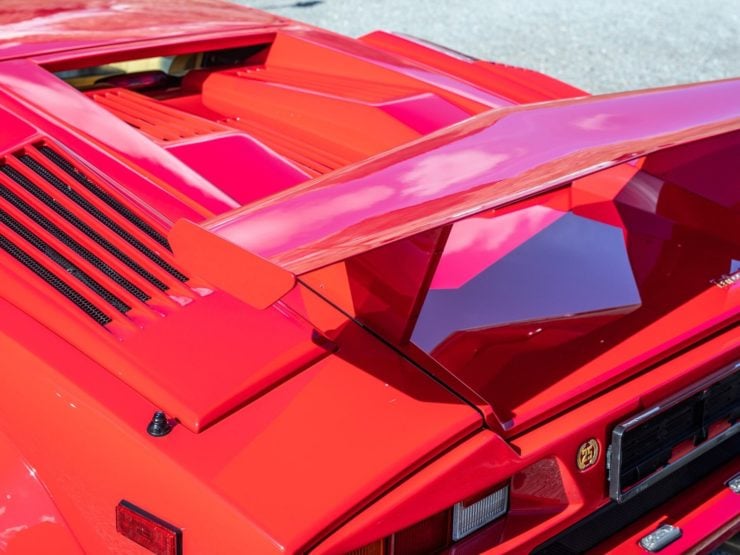
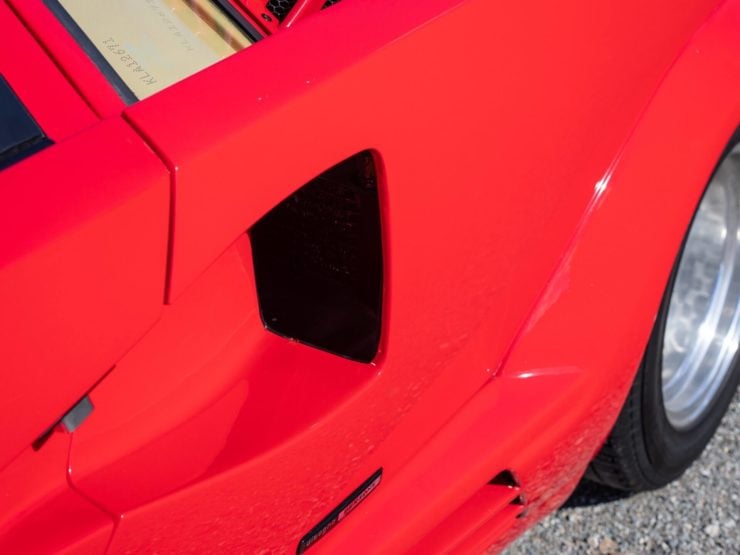
The styling was refined by Horacio Pagani. Pagani changed the air ducting to improve the flow of cooling air through the radiators and elsewhere, subtle and important revisions.
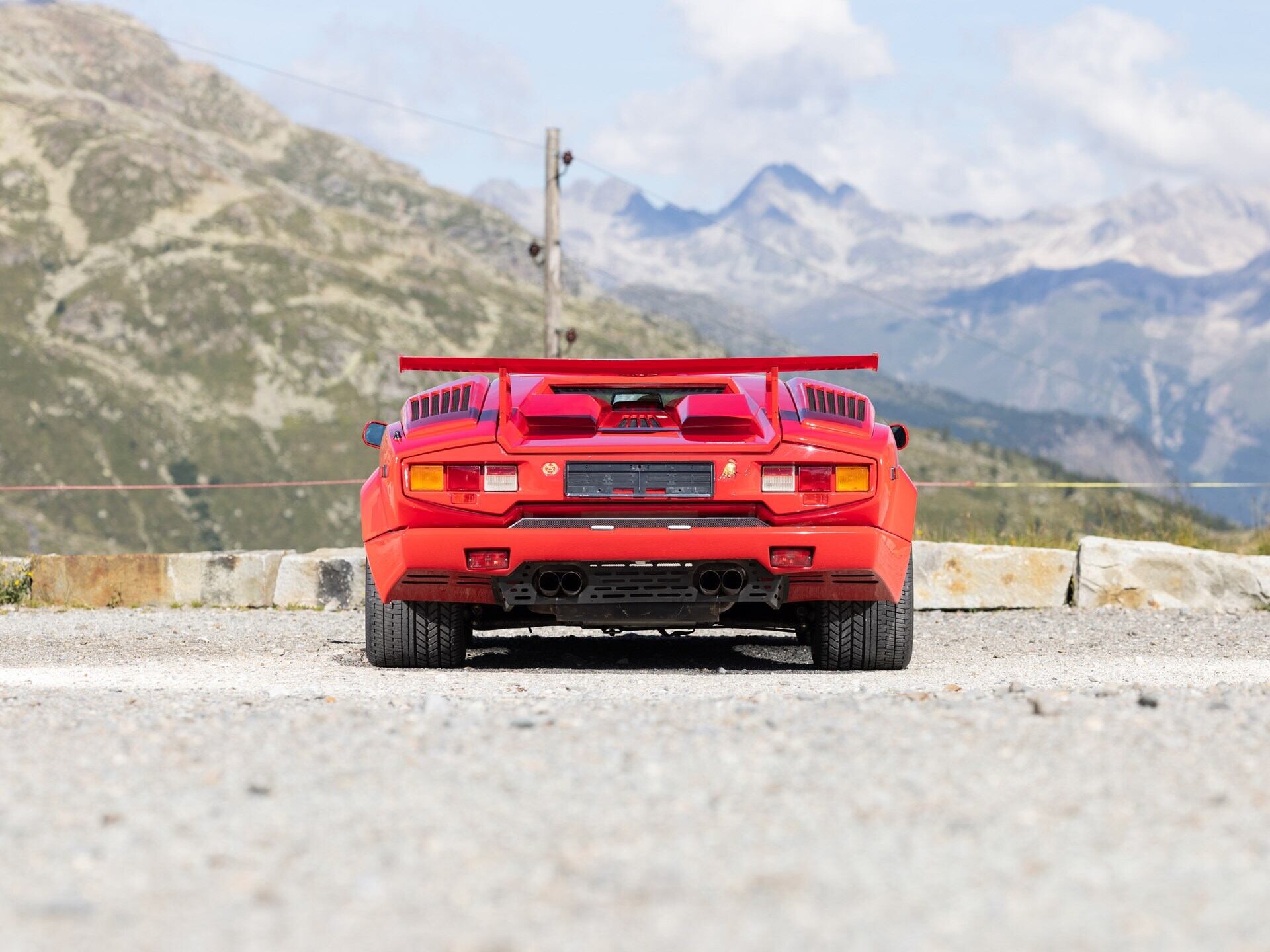
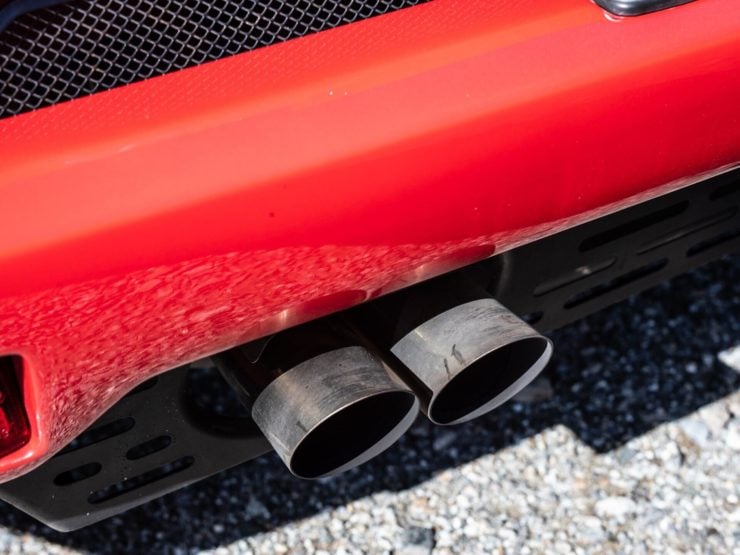
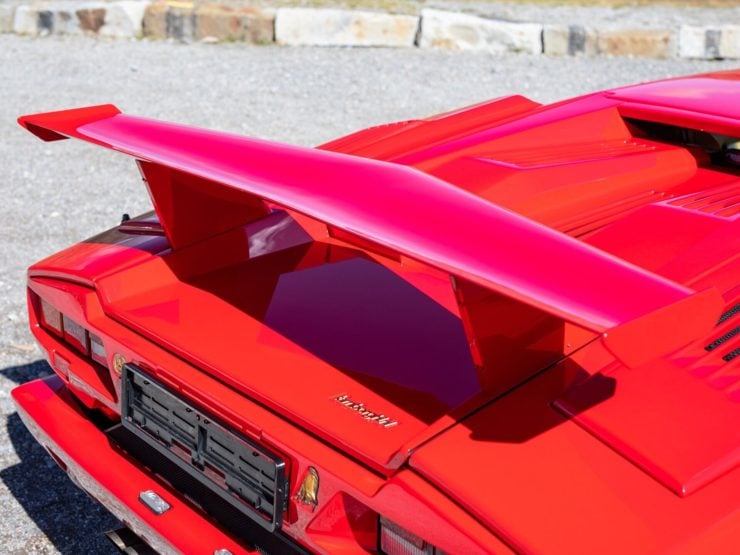
Pagani also added a rear bumper that extended out below the rear of the car.
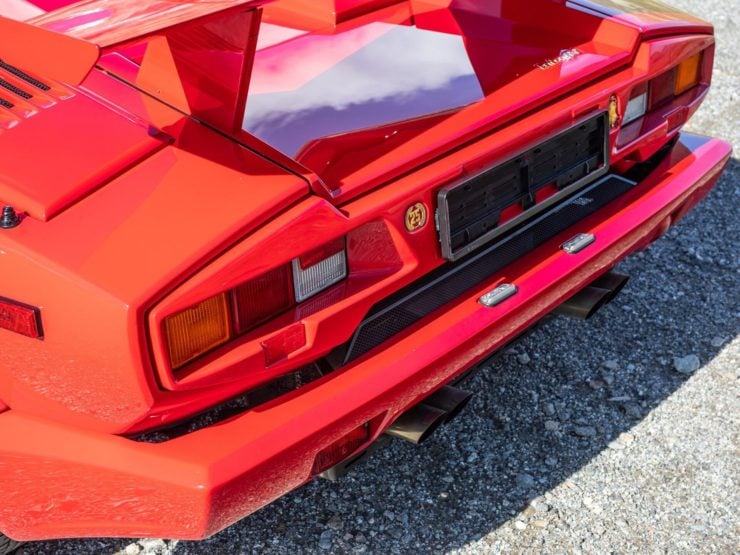
Horacio Pagani’s re-styling of the rear of the 15th Anniversary Edition included a bumper that extended out below the rear of the car.
The 25th Anniversary Edition’s four valve V12 produces 449 hp at 7,000 rpm with torque of 369 lb/ft at 5,200 rpm, giving the car a standing to 100 km/hr time of about 4.5 seconds – sufficient to make the driver feel like Star War’s Han Solo in the Millenium Falcon making the shift into hyperspace.
Top speed is 183 mph (295 km/hr) at which velocity the driver is pretty much guaranteed to feel like they are traveling in hyperspace.
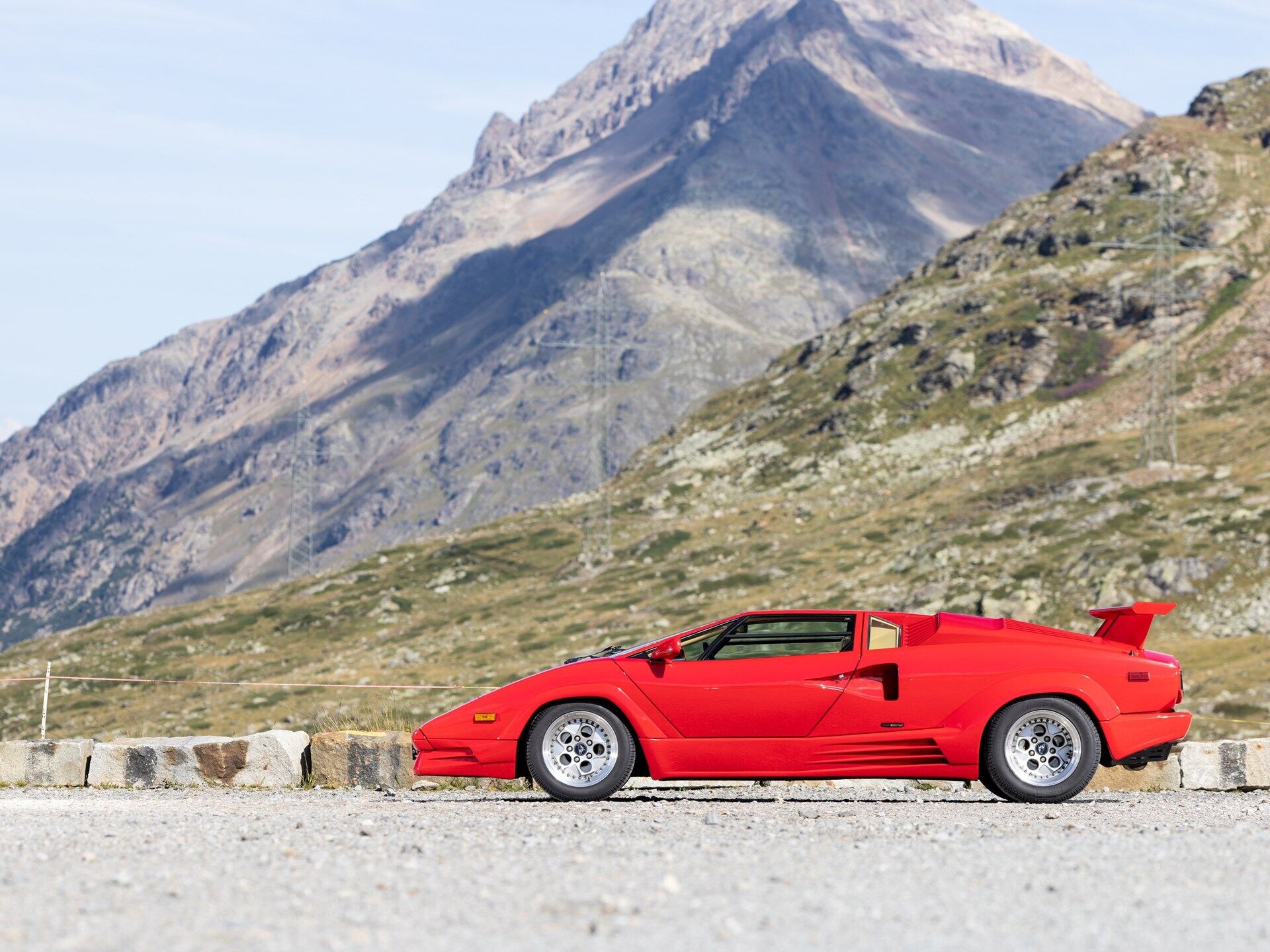
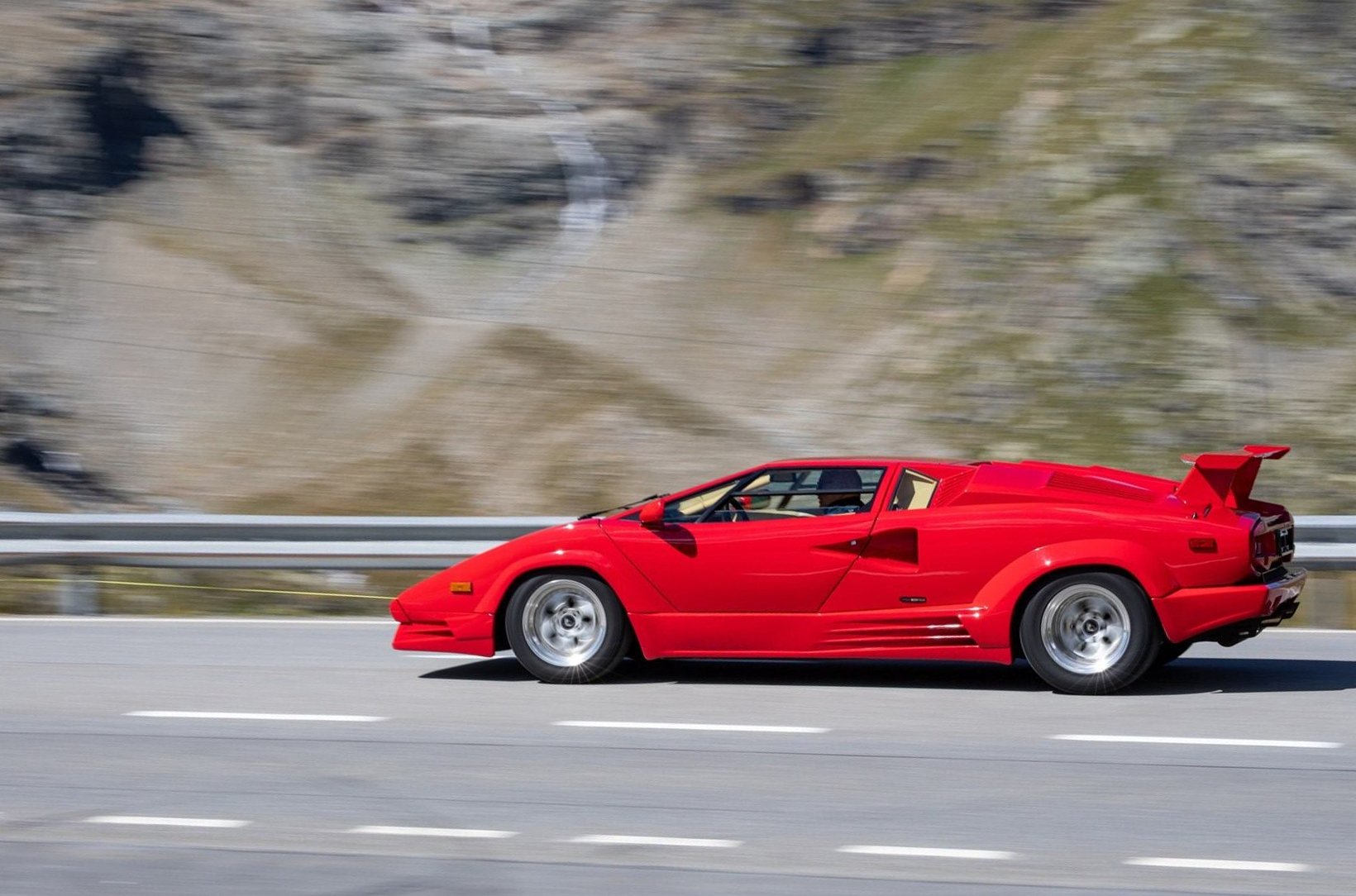
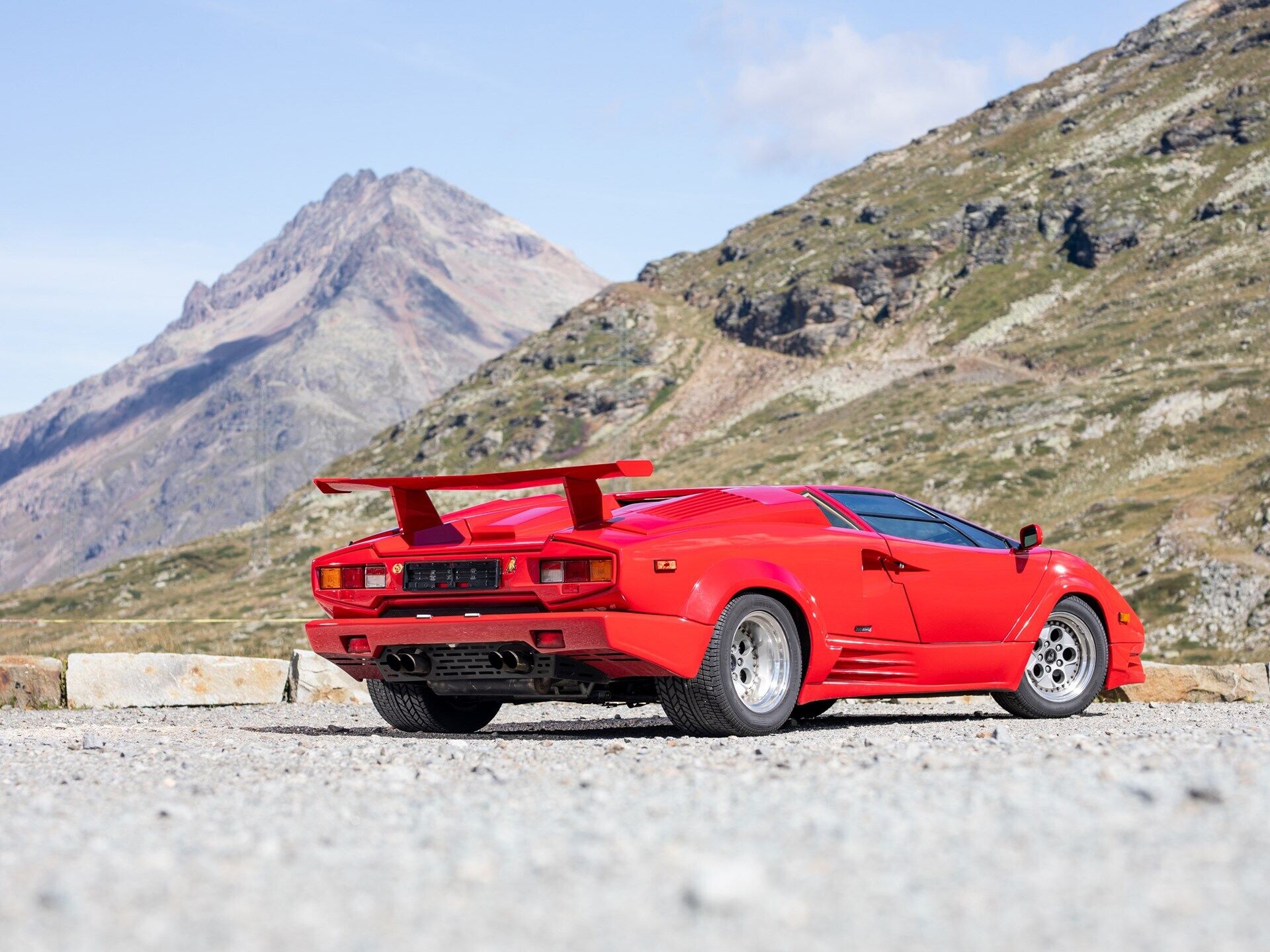
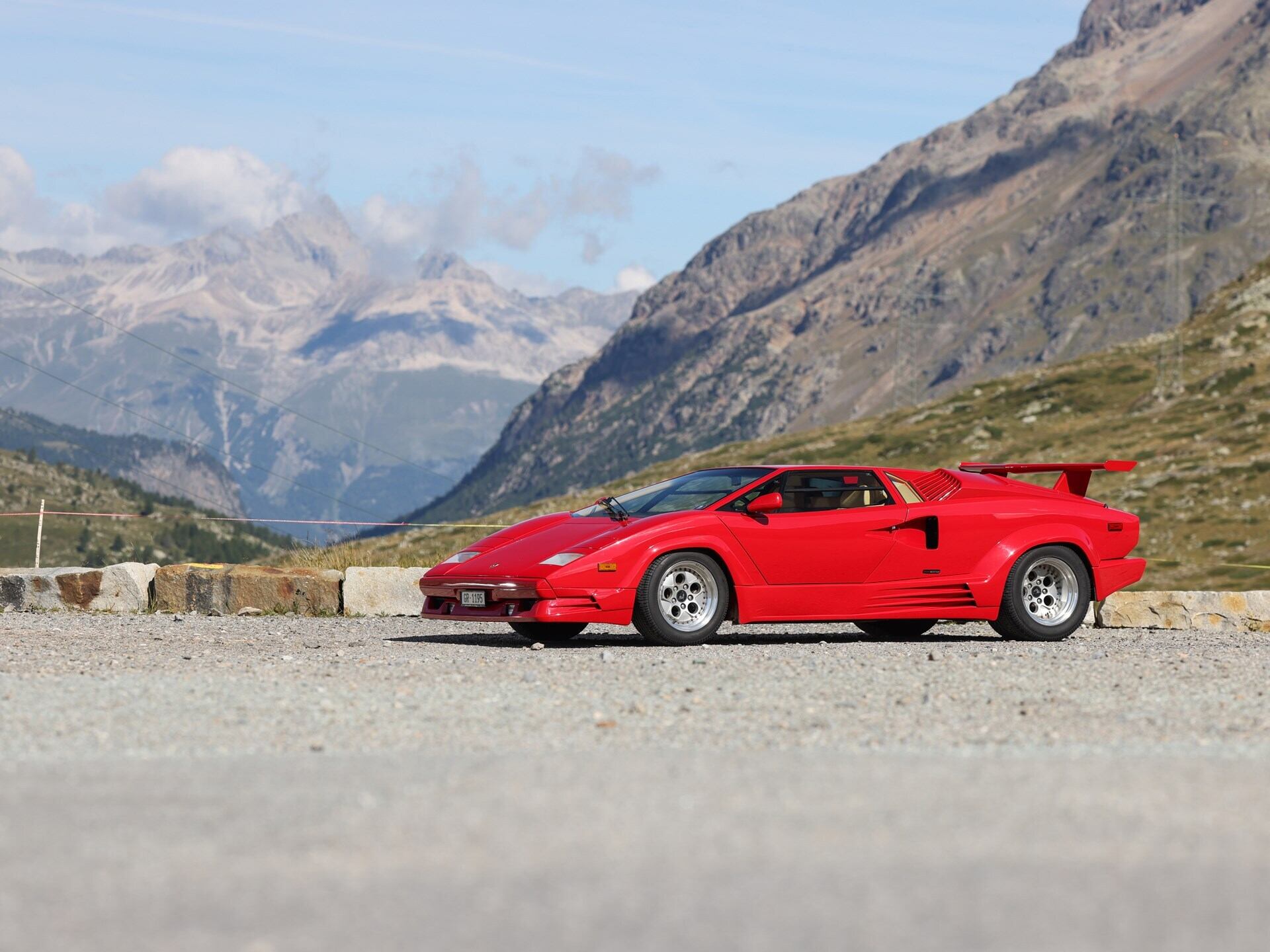
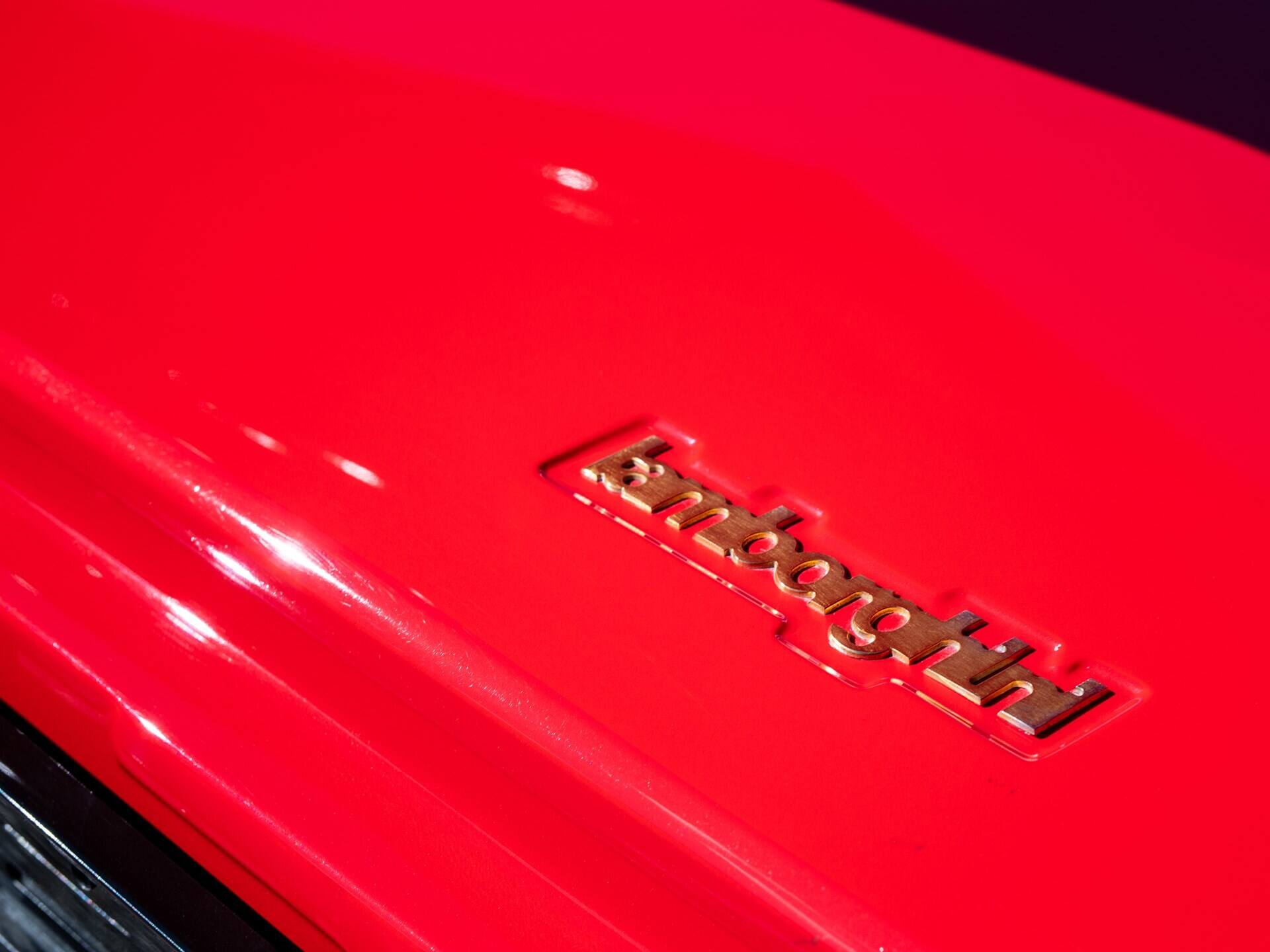
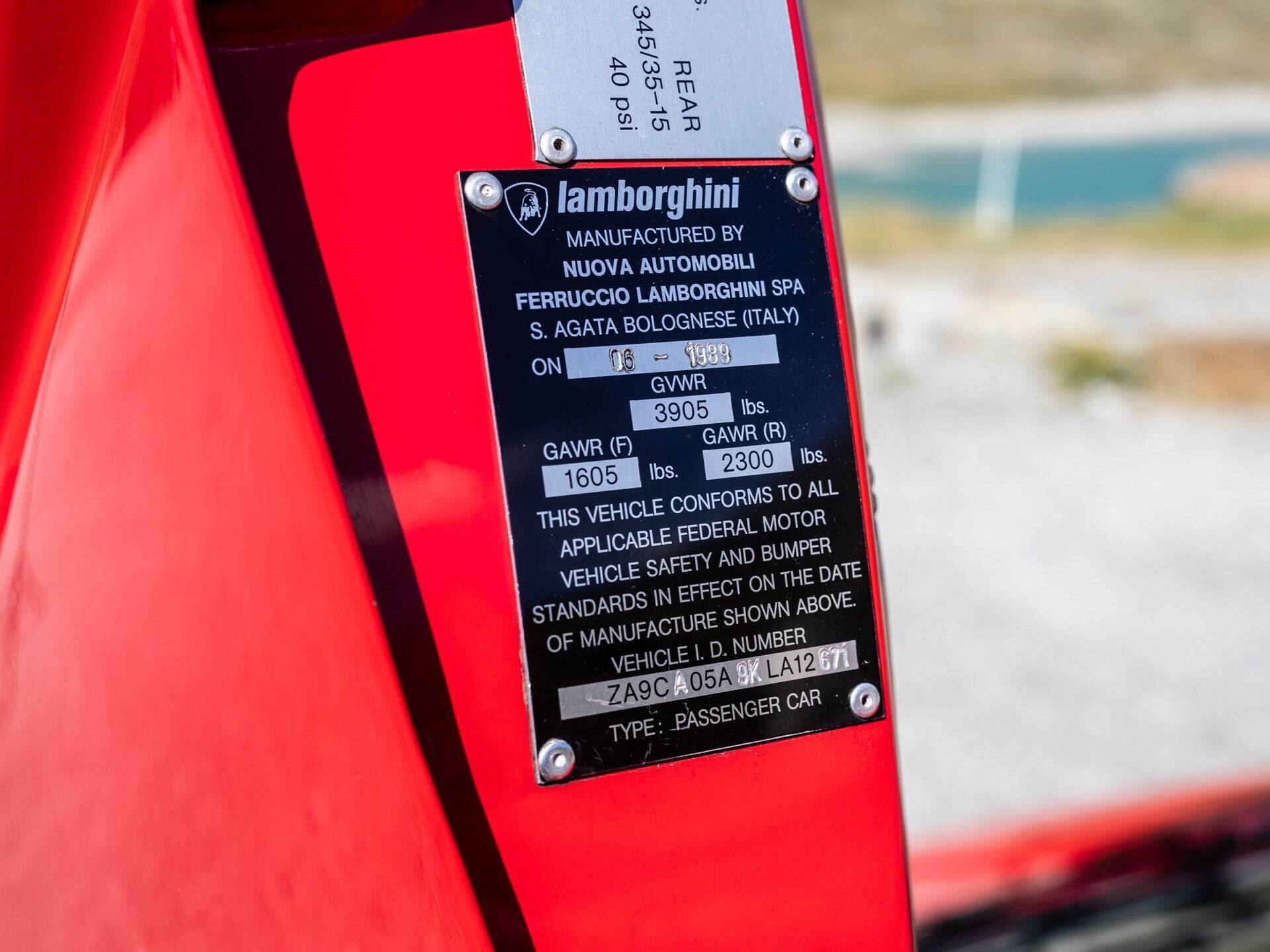
The 1989 Lamborghini Countach Shown Here
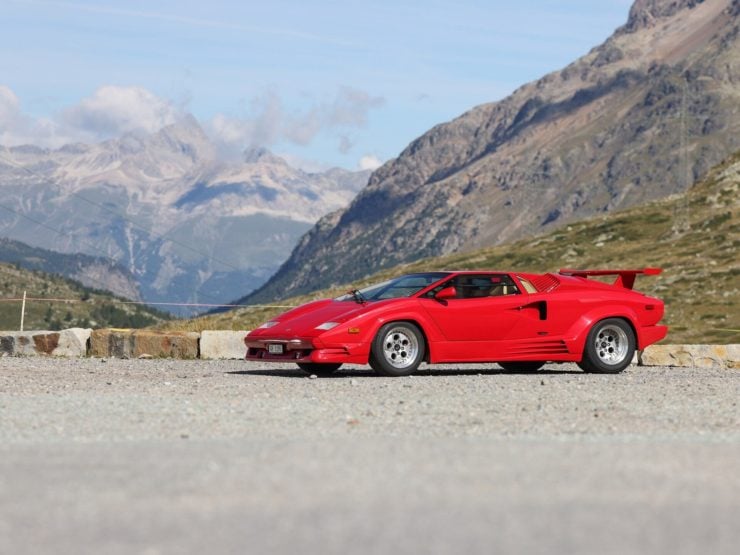
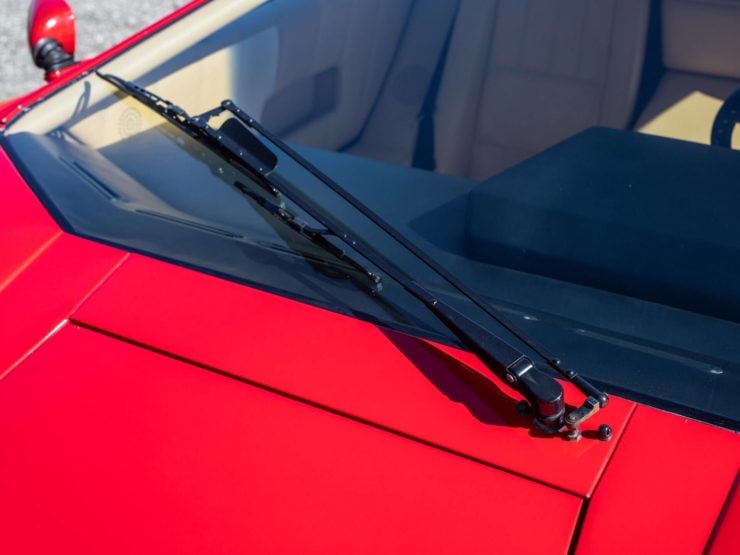
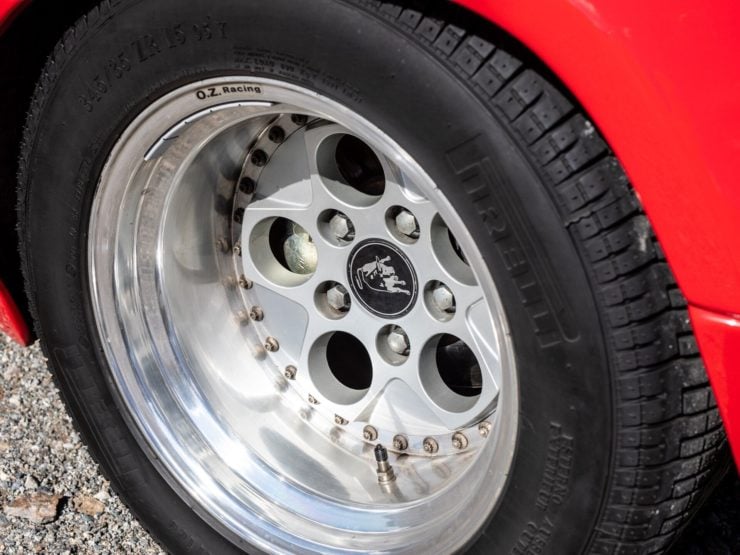
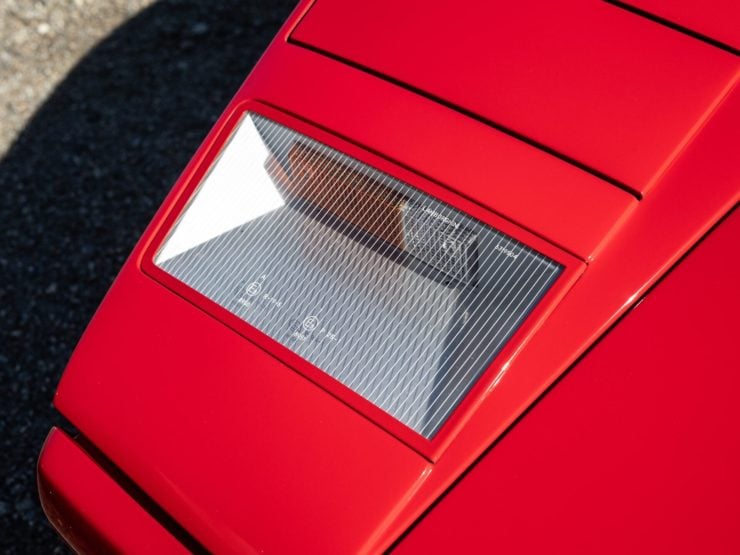
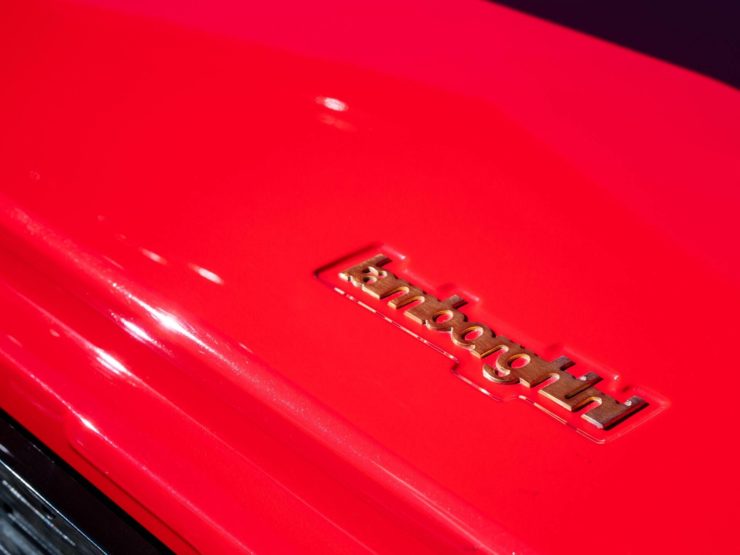
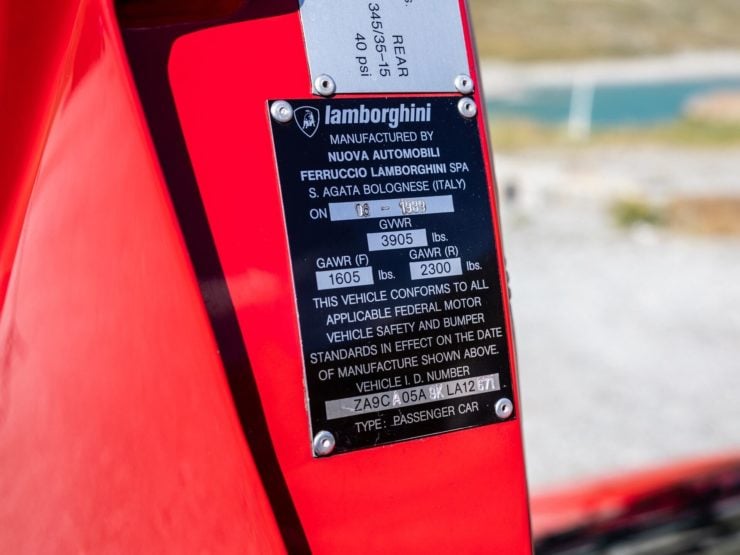
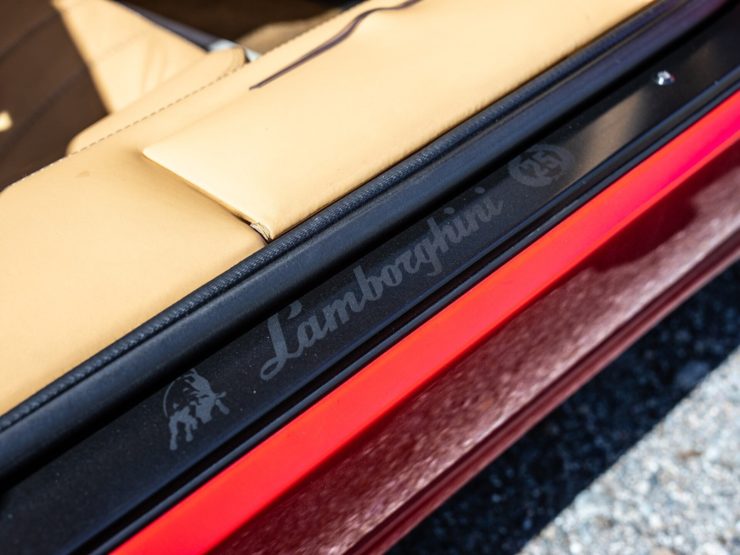
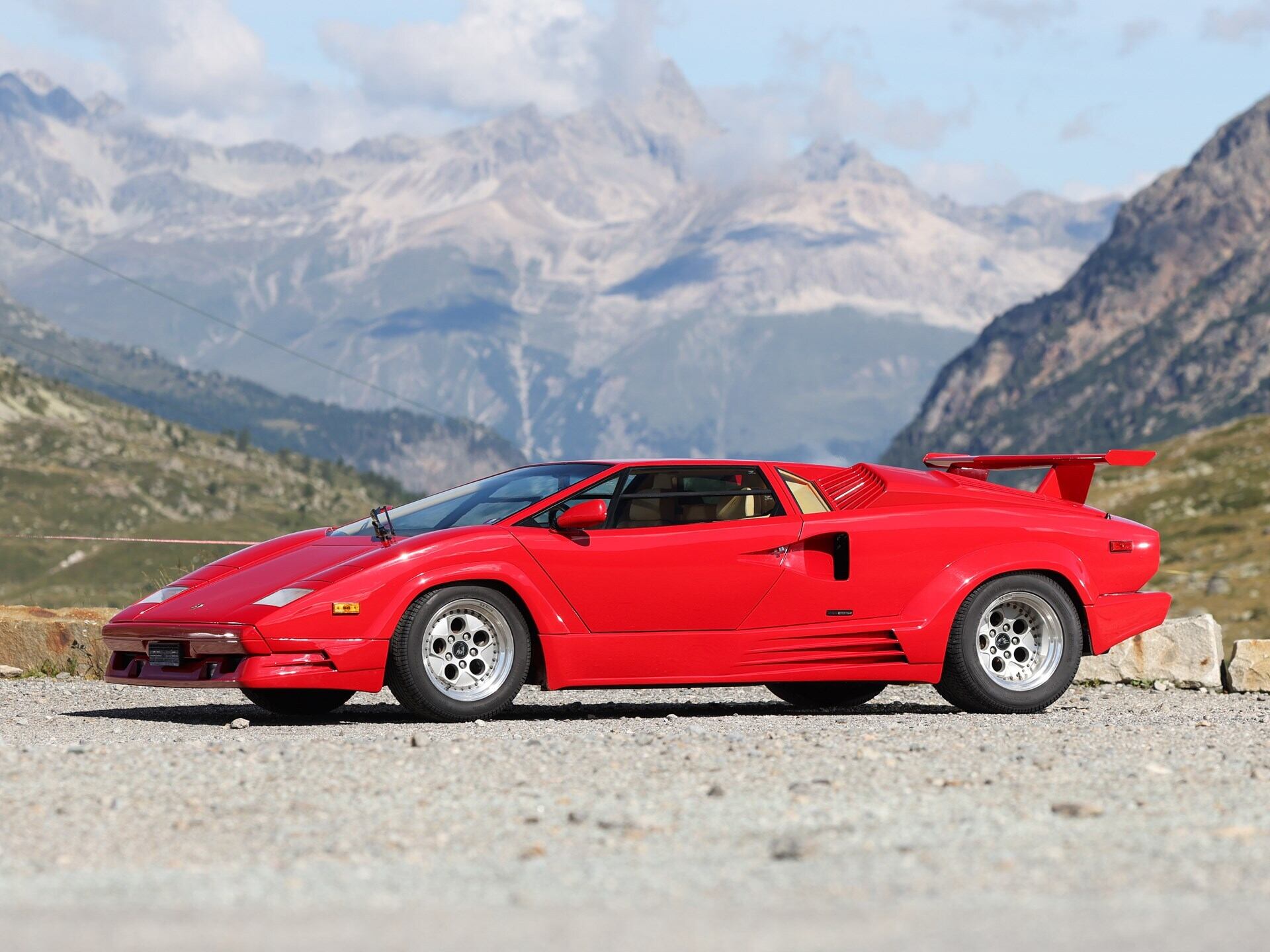
The 1989 Lamborghini Countach 25th Anniversary pictured in this post is coming up for sale by RM Sotheby’s at their St. Moritz, Switzerland auction to be held on 9th September 2022.
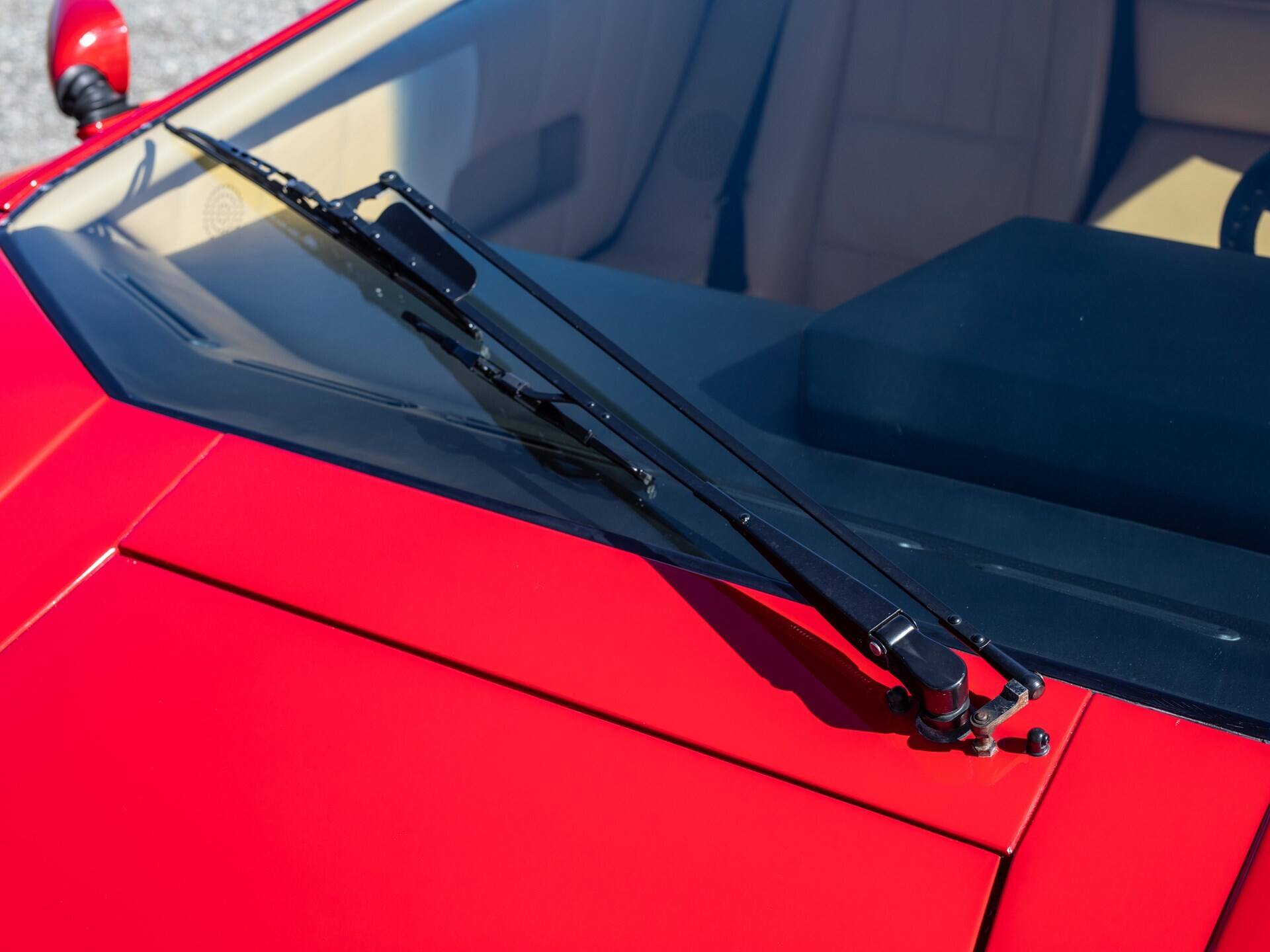
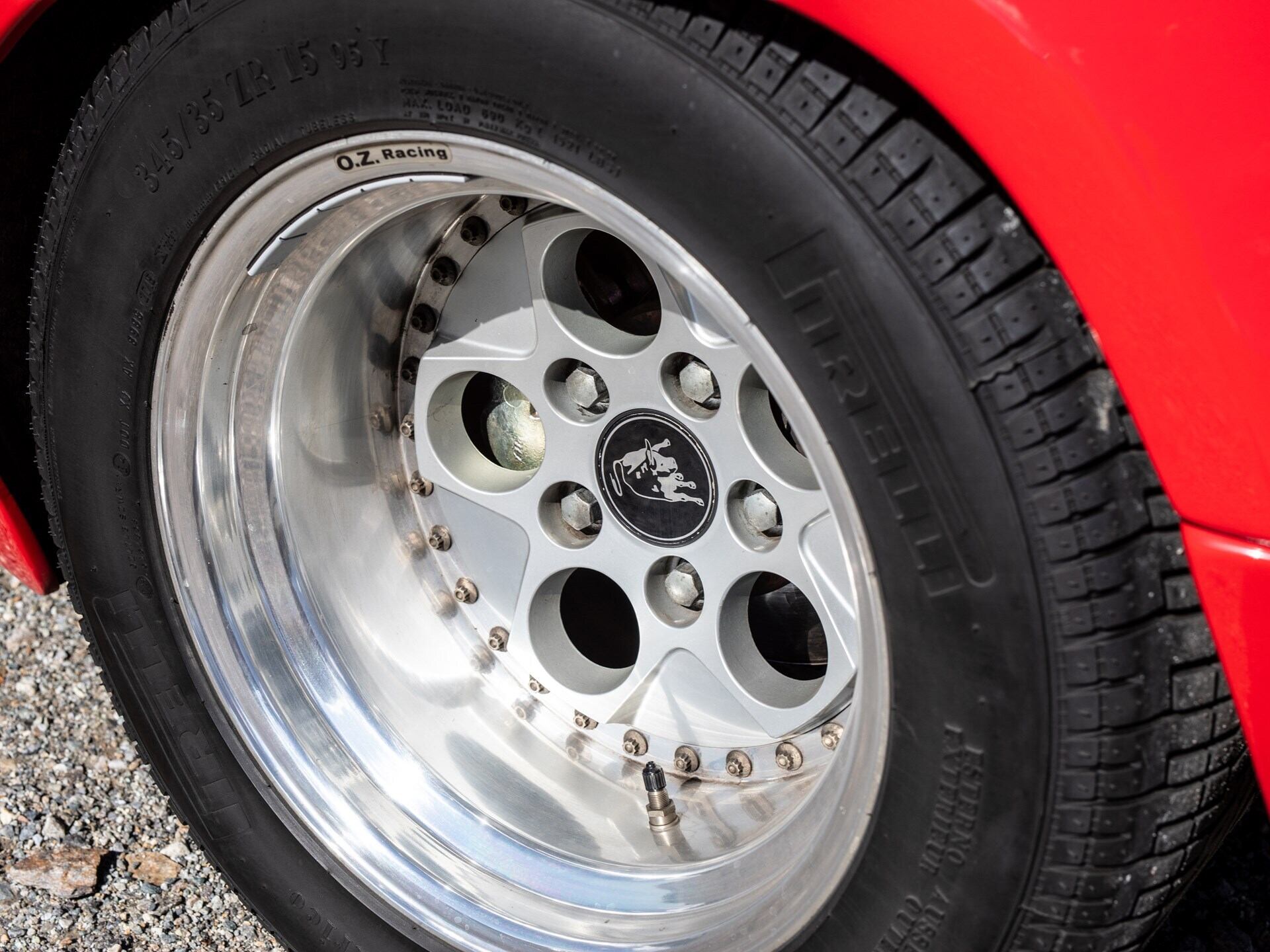
This car was originally delivered to the United States when new although it now is fitted with the attractive European style bumpers.
The car was first registered for road use in Pennsylvania in July 1997 and was regularly serviced in Pittsburgh.
The car has had owners in Pennsylvania, Illinois, and Texas before being shipped back to Europe in October 2017. It has only 12,484 km at the time of its recent cataloguing by RM Sotheby’s prior to this upcoming sale.
Made in the second last year of Countach production, which ended in 1990 to make way for its successor, this is an example of the most refined version of the Countach one could hope for.
If you would like to find out more details about this car you can visit the RM Sotheby’s sale page here.
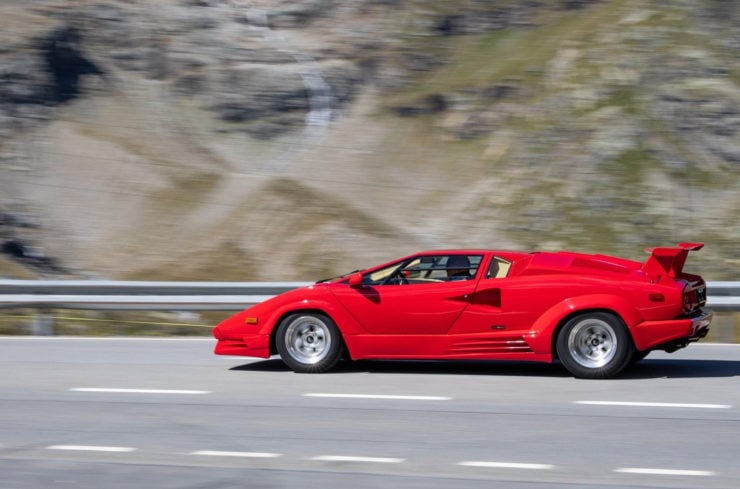
The last and most refined of all the Countach models.
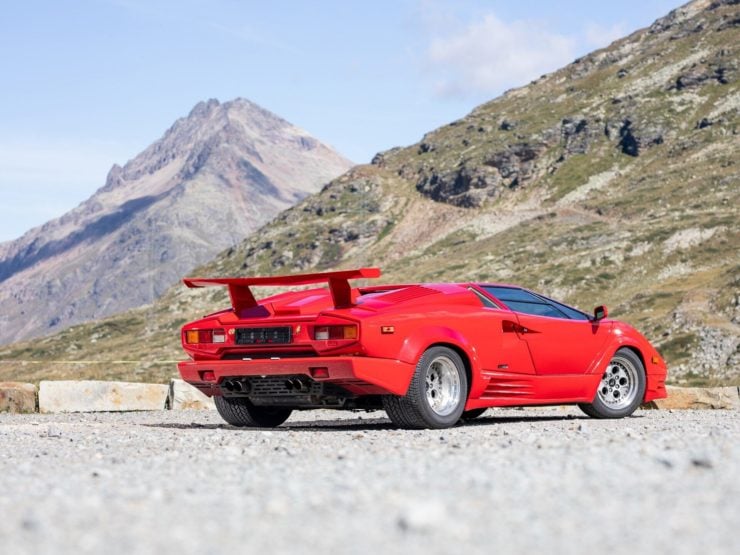
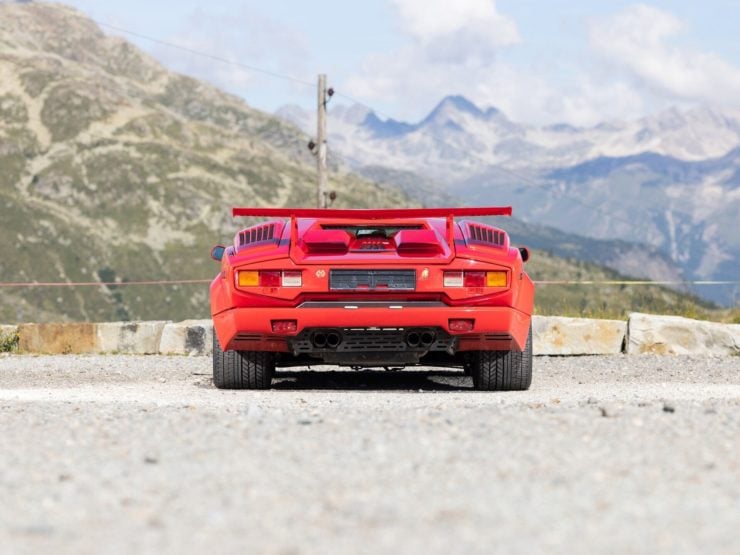

Picture Credits: Neil Fraser ©2022 Courtesy of RM Sotheby’s.
The post 1989 Lamborghini Countach 25th Anniversary appeared first on Silodrome.
from Silodrome https://silodrome.com/lamborghini-countach-25th-anniversary/
via
gqrds