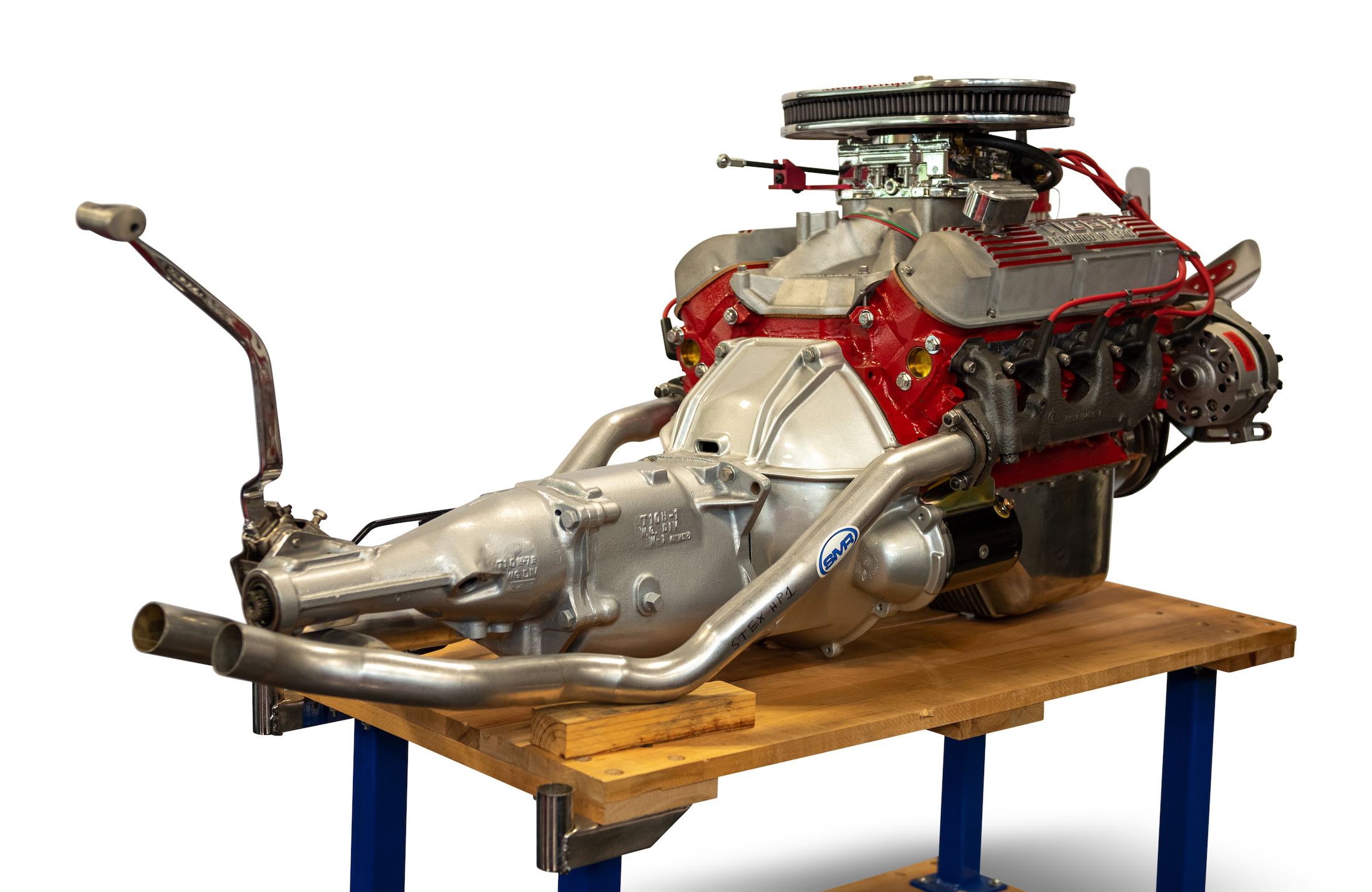
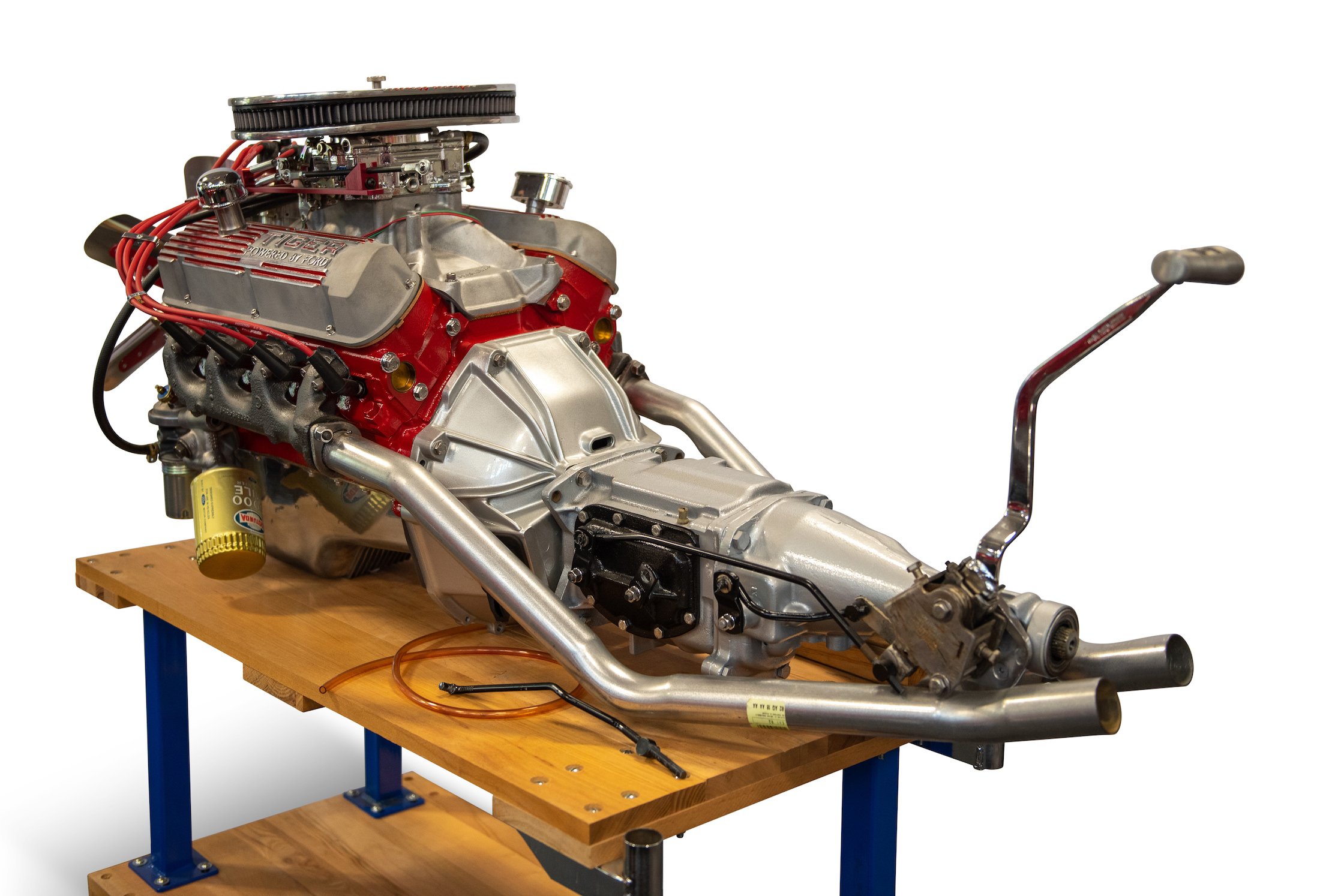
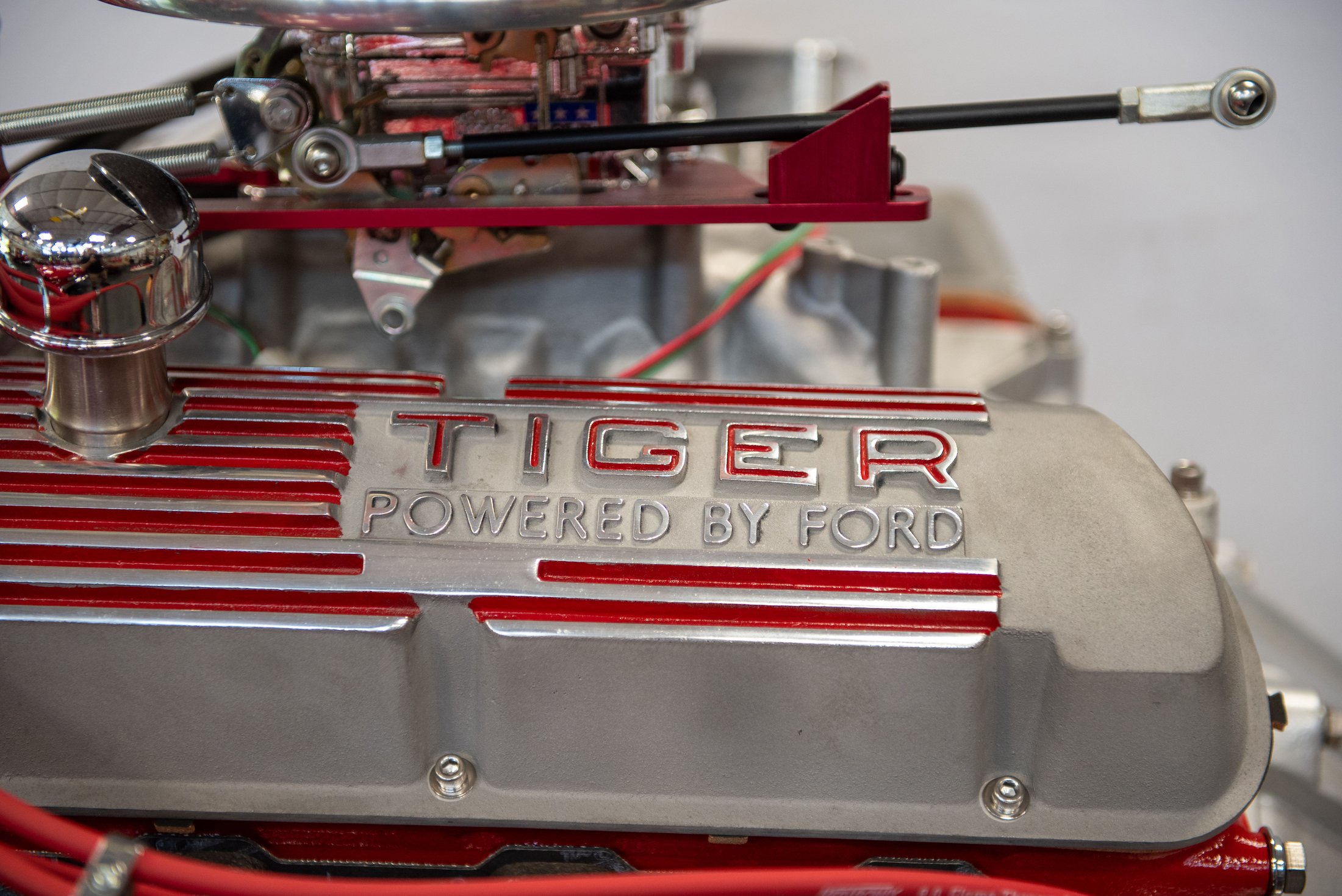
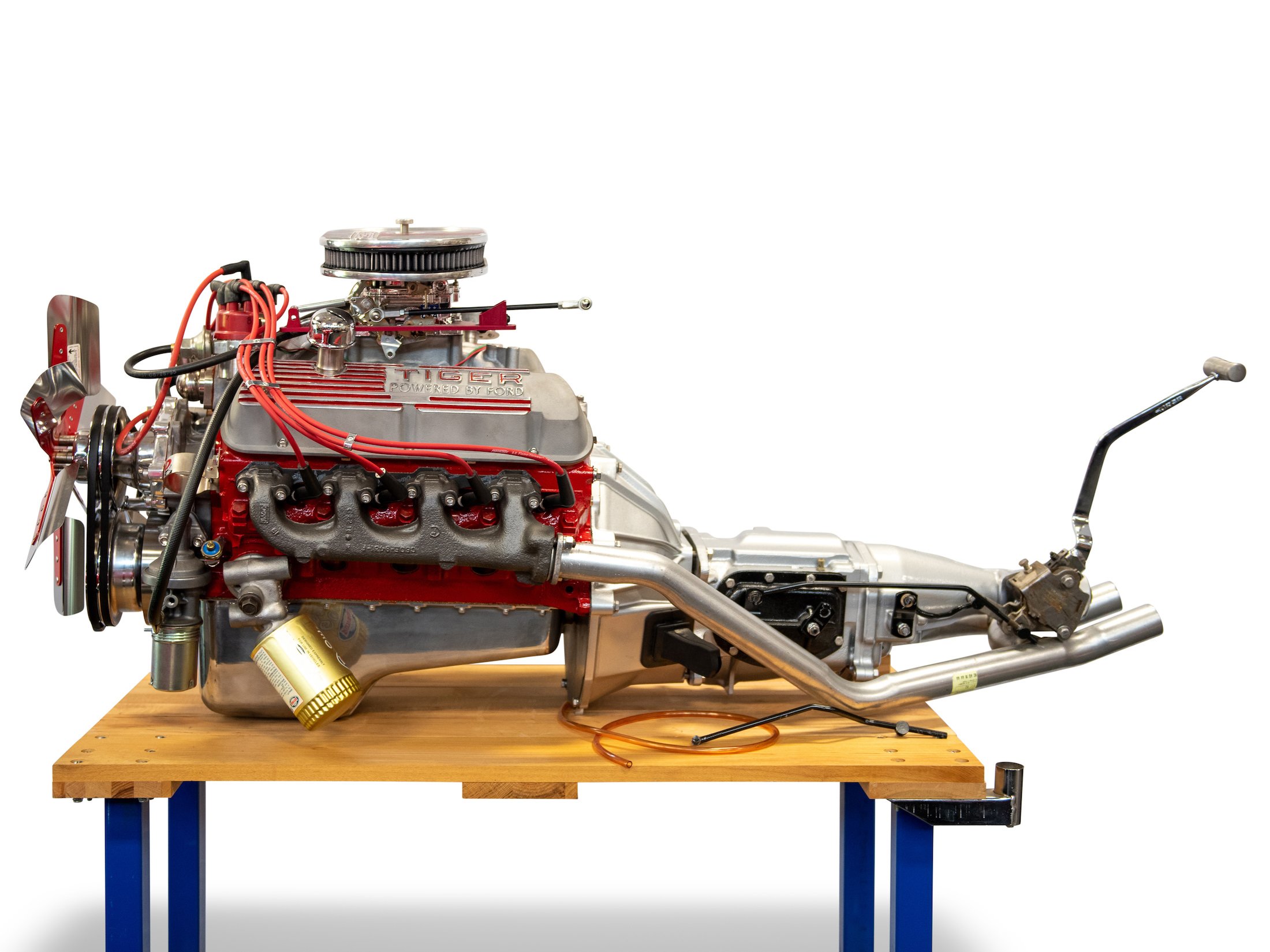
This is an original Ford V8 from a Sunbeam Tiger, it’s mated to a 4-speed transmission, it has a Hurst shifter fitted, and it comes on a trolley to make moving around nice and easy.
The Sunbeam Tiger was a high performance version of the Sunbeam Alpine, a small British roadster that was a period competitor for cars like the MGB and the Triumph TR4.
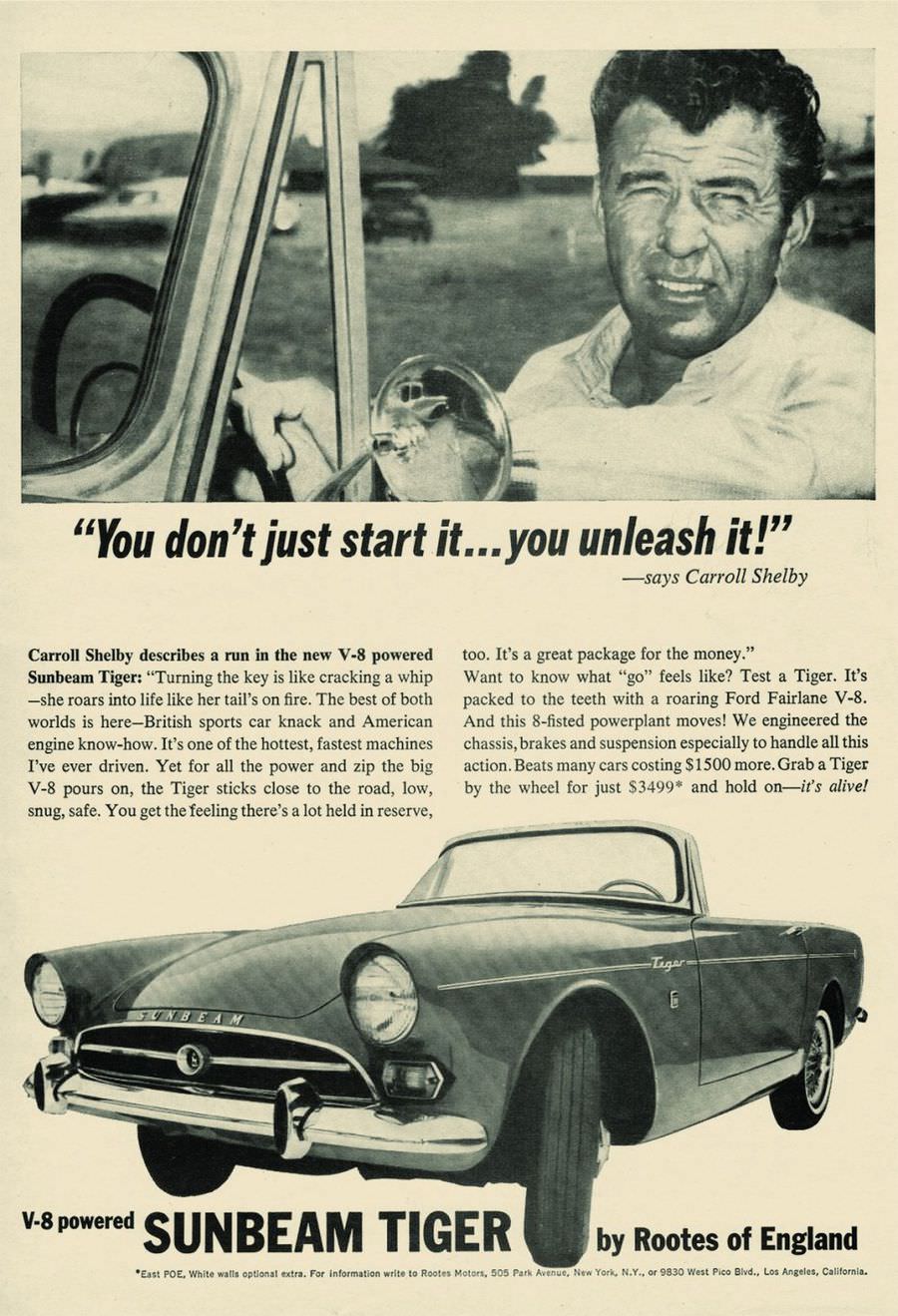
Performance was markedly increased by having a Ford V8 installed in place of the original inline-four. This conversion was done by Carroll Shelby in California, using priciples he’d already mastered on his Shelby Cobra – another small British roadster that he’s shoehorned an American V8 into.
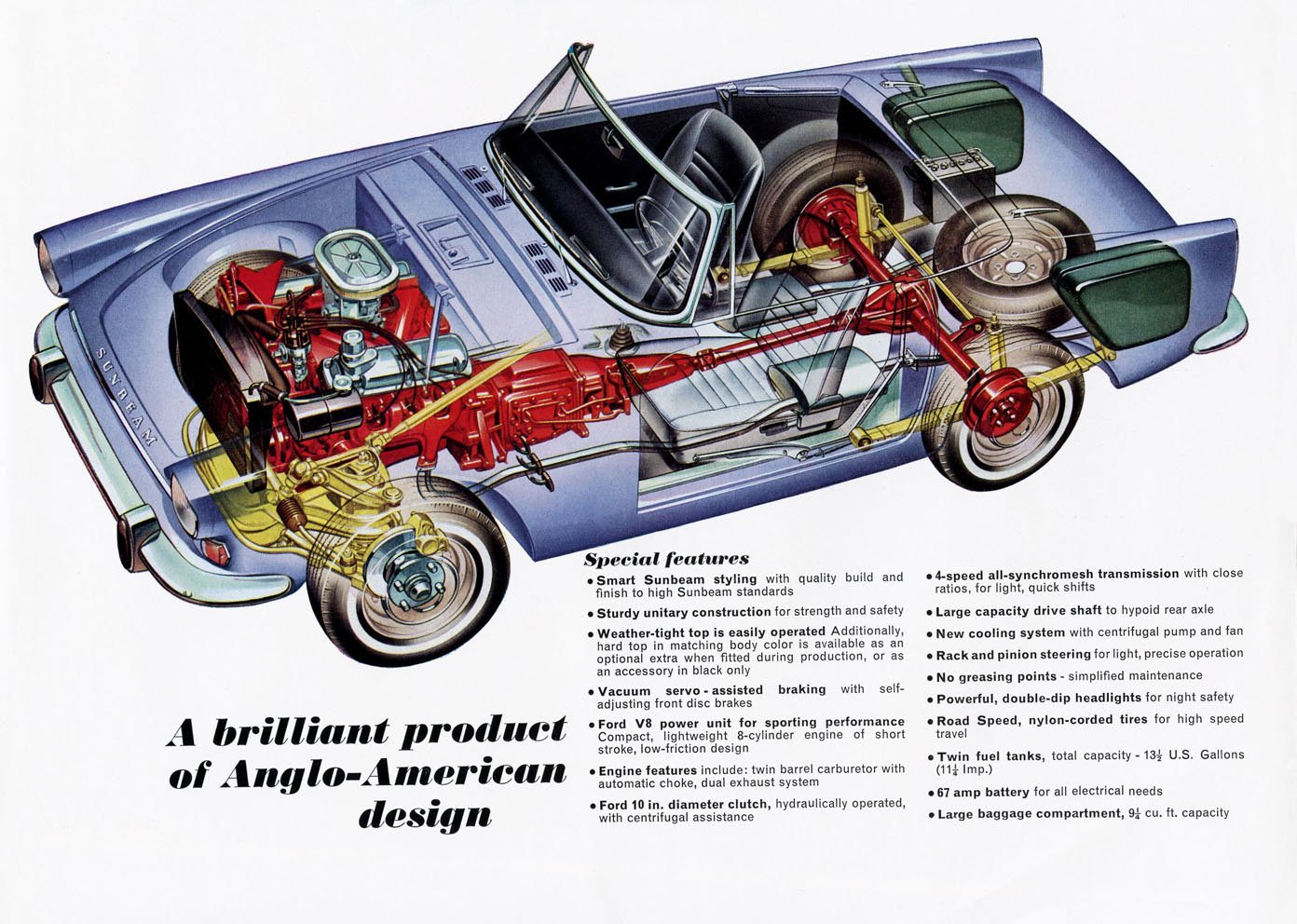
This cutaway illustration of the Sunbeam Tiger shows how much engine needed to be installed into the relatively small engine bay of the Alpine.
Once Shelby had worked out how to get the V8 into the Alpine, which was a major feat given the small engine bay, the production of the cars was given to Jensen Motors in England with Carroll Shelby receiving a commission from each car that was built.
Rather than just a straight engine swap a series of suspension modifications were made to ensure the car would cope with having its power doubled. The heavier engine required stiffer springs up front and a Panhard rod was added in the rear to help ensure good axle location.
The Sunbeam Tiger was built over two primary versions, the Mark I and the Mark II. The Mark I was built from 1964 to 1967 with 6,450 made in total. These cars received the Ford 260 cubic inch V8 producing 164 bhp at 4,400 rpm. They could do the 0 to 60 mph sprint in 8.6 seconds and reach a top speed of 120 mph (193 km/h).
Carroll Shelby developed the Tiger in California but was disappointed when Sunbeam (owned by Rootes Group) opted to have Jensen build them in England rather than give him the production contract. He was instead paid a commission for each one sold.
The later Mark II cars received the 289 cubic inch V8, the same engine used in the Ford Mustang, the Ford Fairlane, and most of the the pre-427 versions of the Shelby Cobra.
It produced 195 bhp at 4,400 rpm giving the car a quicker 7.5 second 0 – 60 mph time and a slightly higher top speed of 122 mph (196 km/h).
The engine and transmission you see here is due to roll across the auction block with RM Sotheby’s in late September and it’s being offered with no reserve. If you’d like to read more about it or register to bid you can visit the listing here.
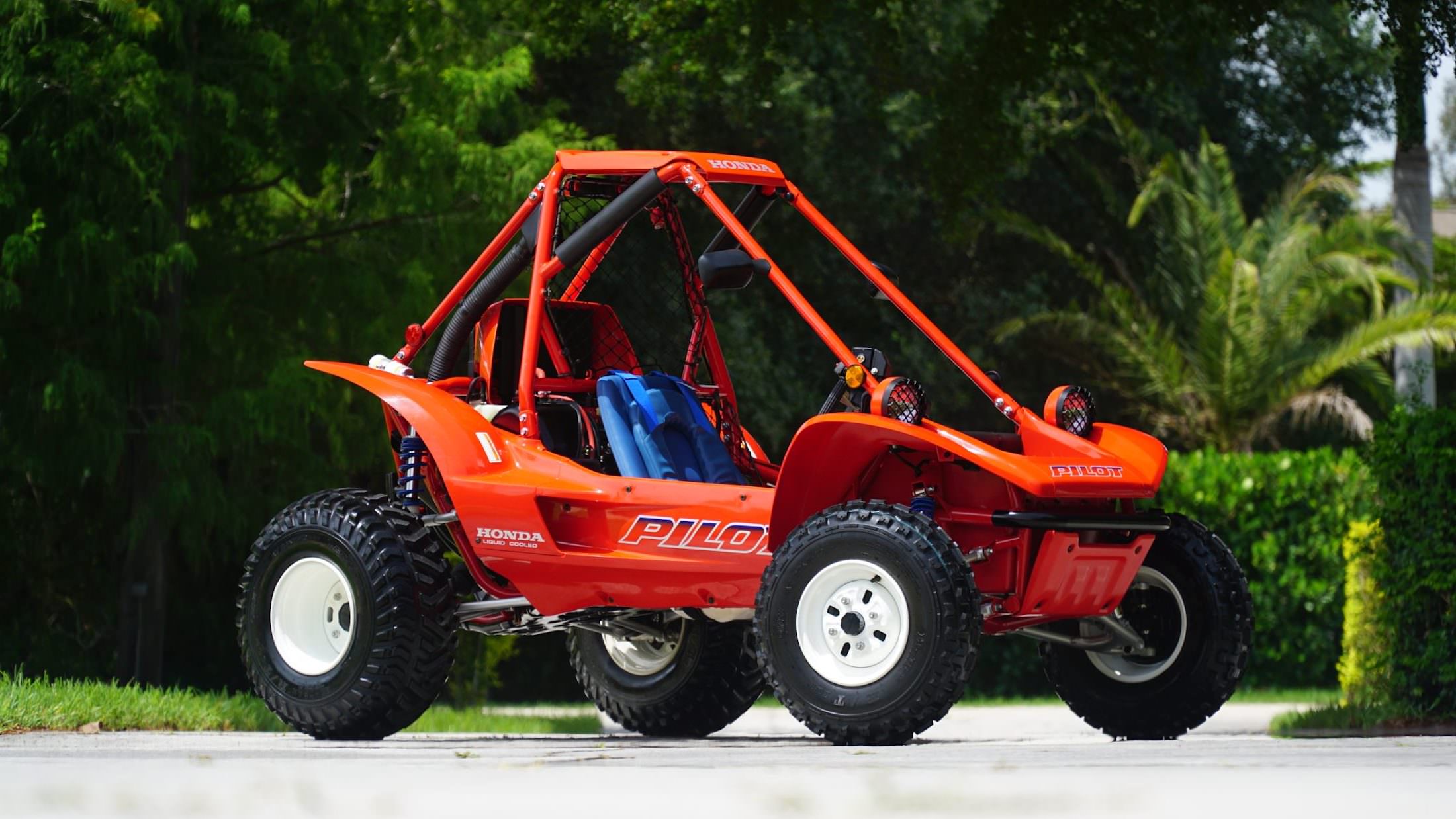
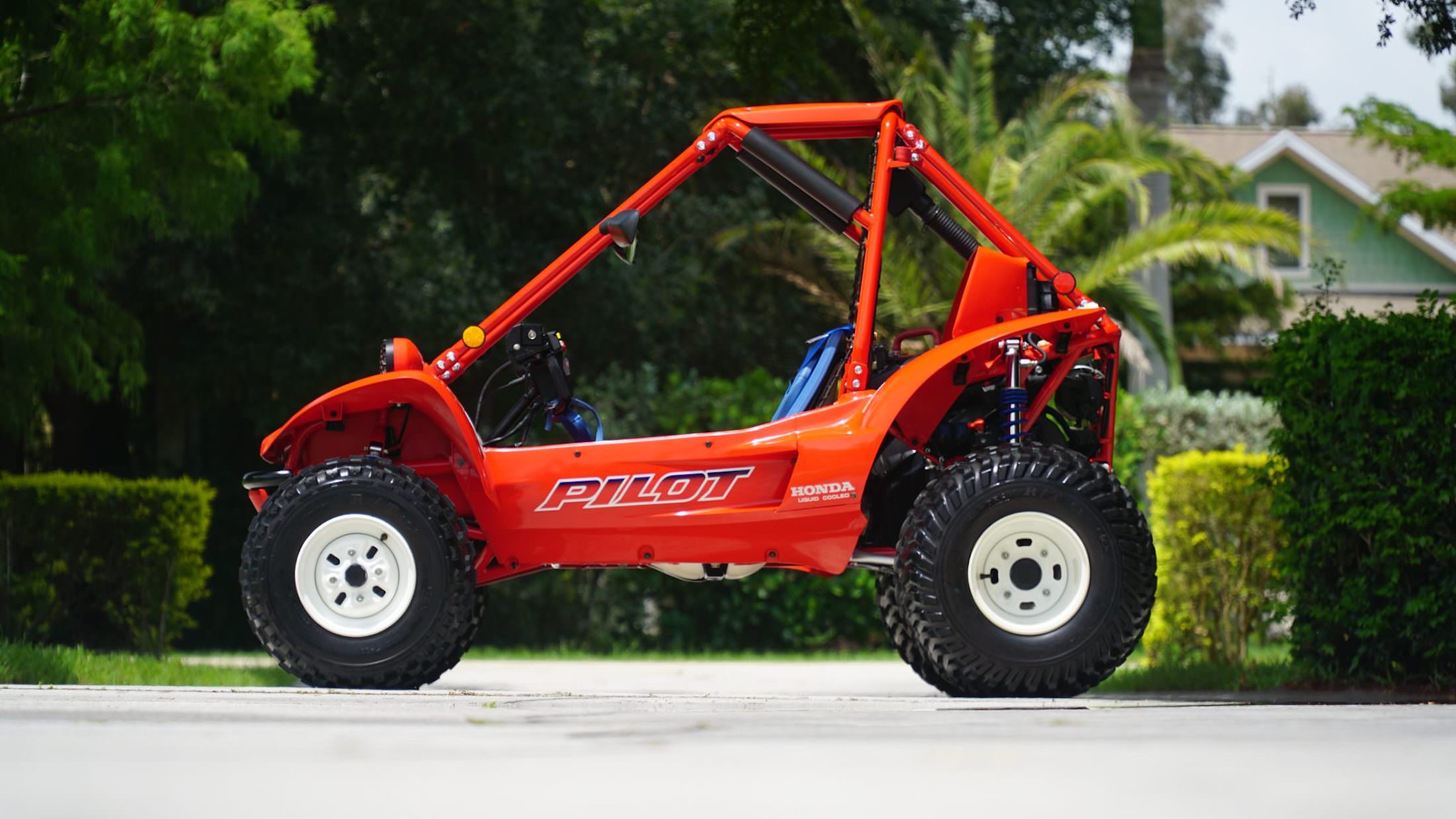
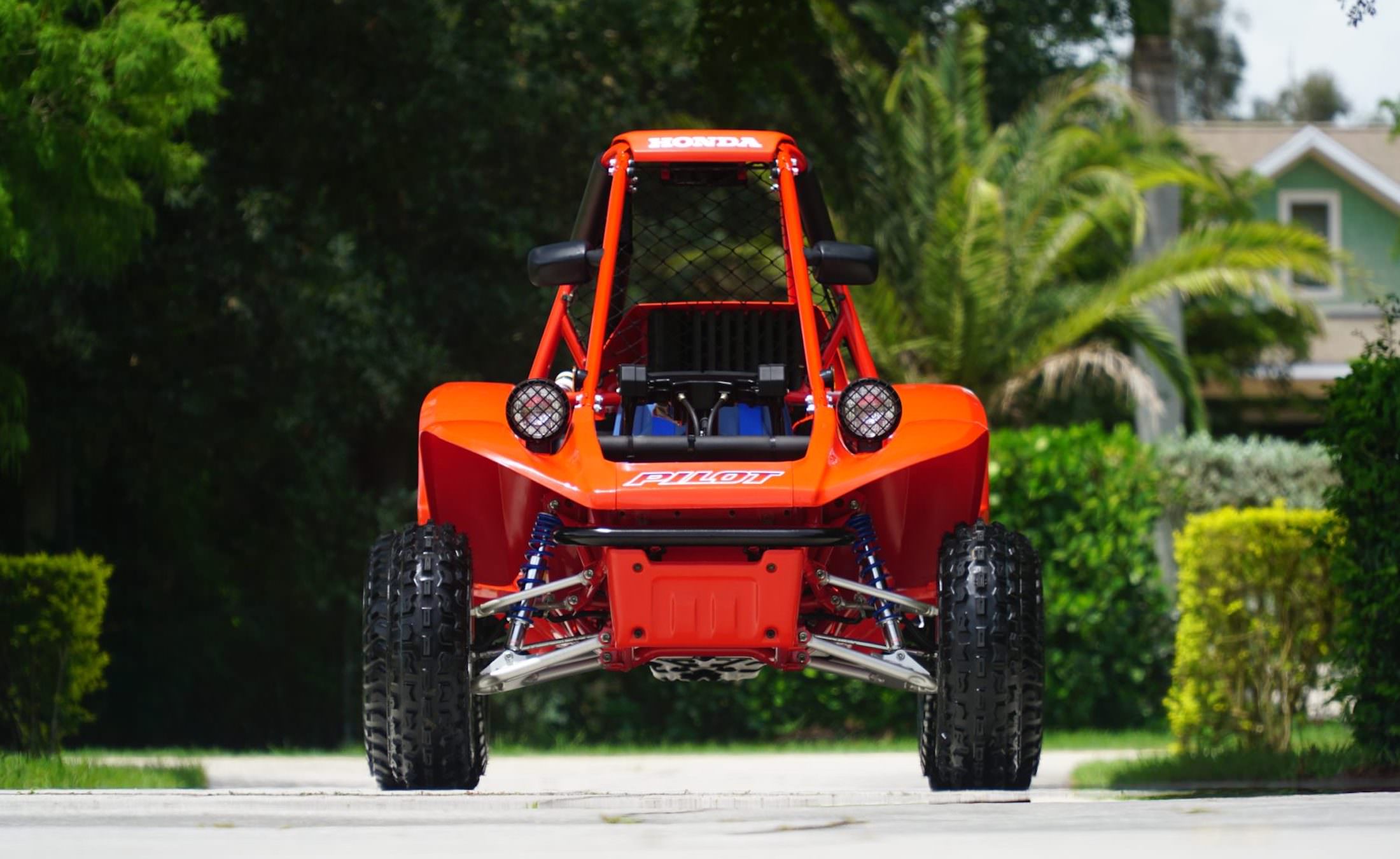
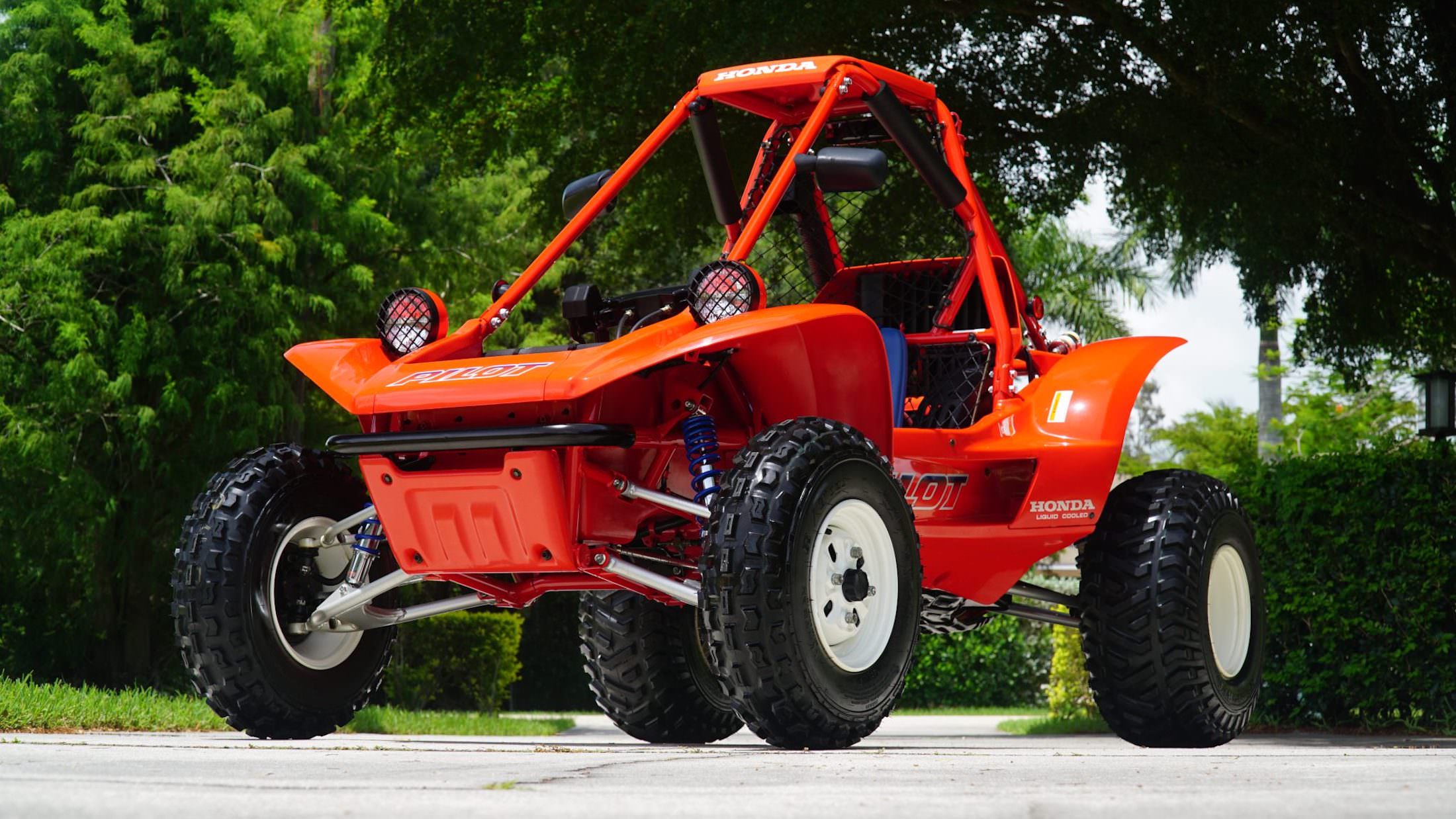
The Honda Pilot was developed by the Japanese company in the late 1980s and released in 1989. At the time it was the only UTV (utility terrain vehicle) in production by a major manufacturer.
The slew of features that had been baked into the Honda Pilot were impressive and it became an influential UTV within the still young genre. Honda only kept the model in production for two years and now they’re highly collectible.
Fast Facts – The Honda Pilot
The Honda Pilot was released in 1989 as the successor to the earlier Honda Odyssey line of off-road buggies, known as ATVs or UTVs depending on who you talk to.
The 1980s were a tumultuous time in the ATV world, constant accidents had led to the shutdown of three-wheel ATV sales and manufacturers were looking for the next big thing.
Honda had pioneered the original three-wheeler craze and they wasted no time in developing both four-wheel “quad” ATVs and buggy-like ATVs like the Honda Odyssey and Honda Pilot series.
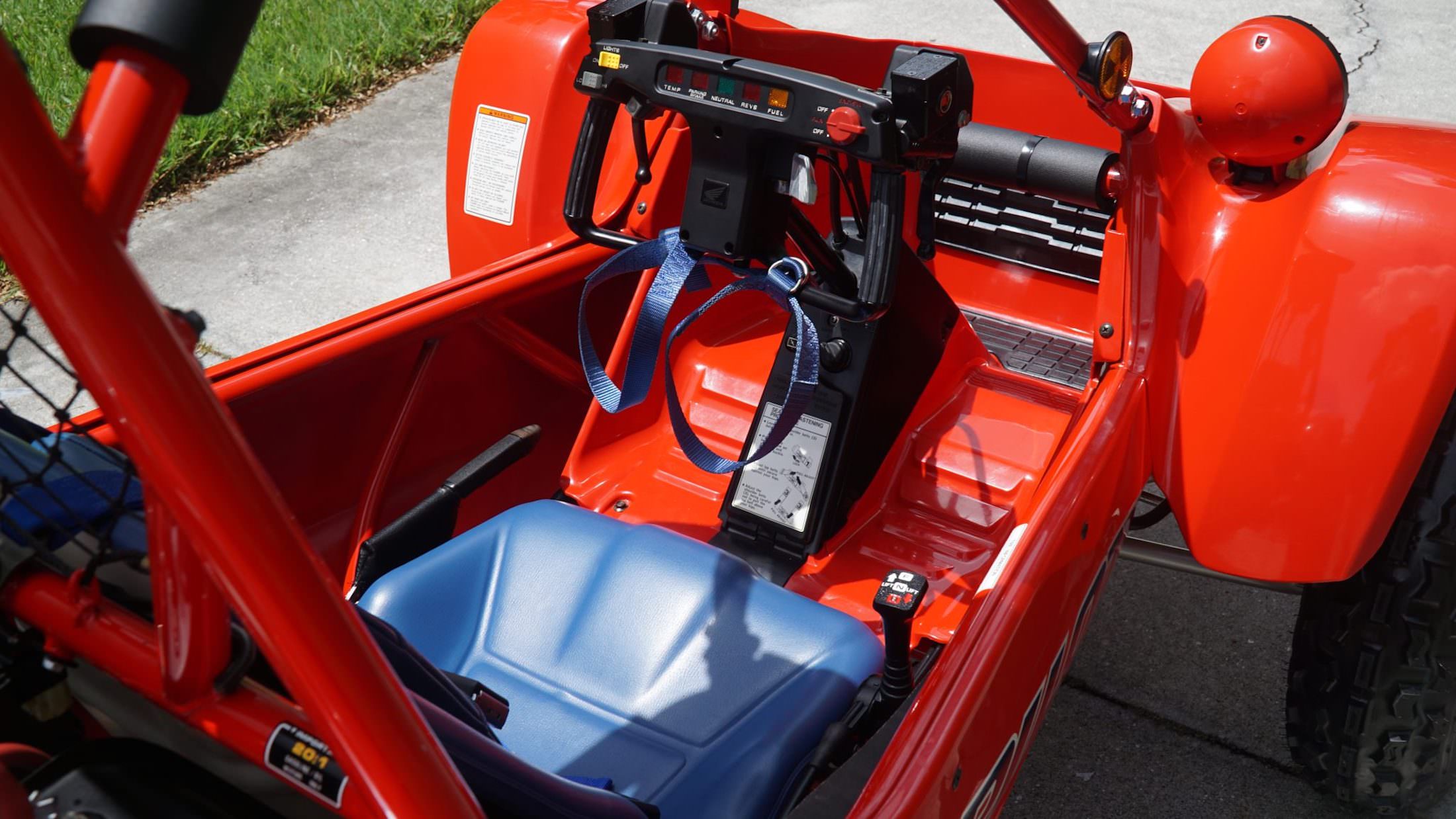
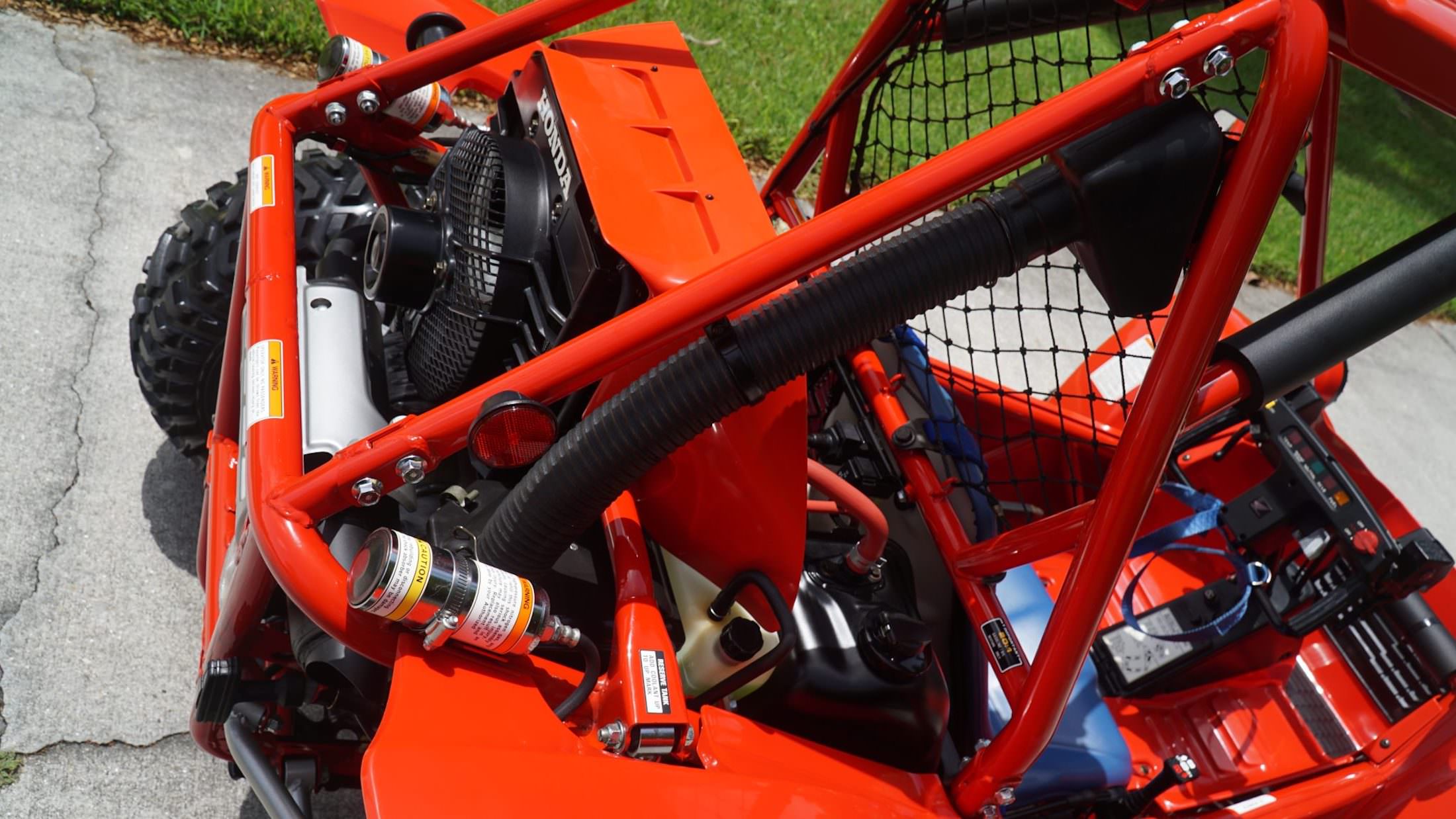
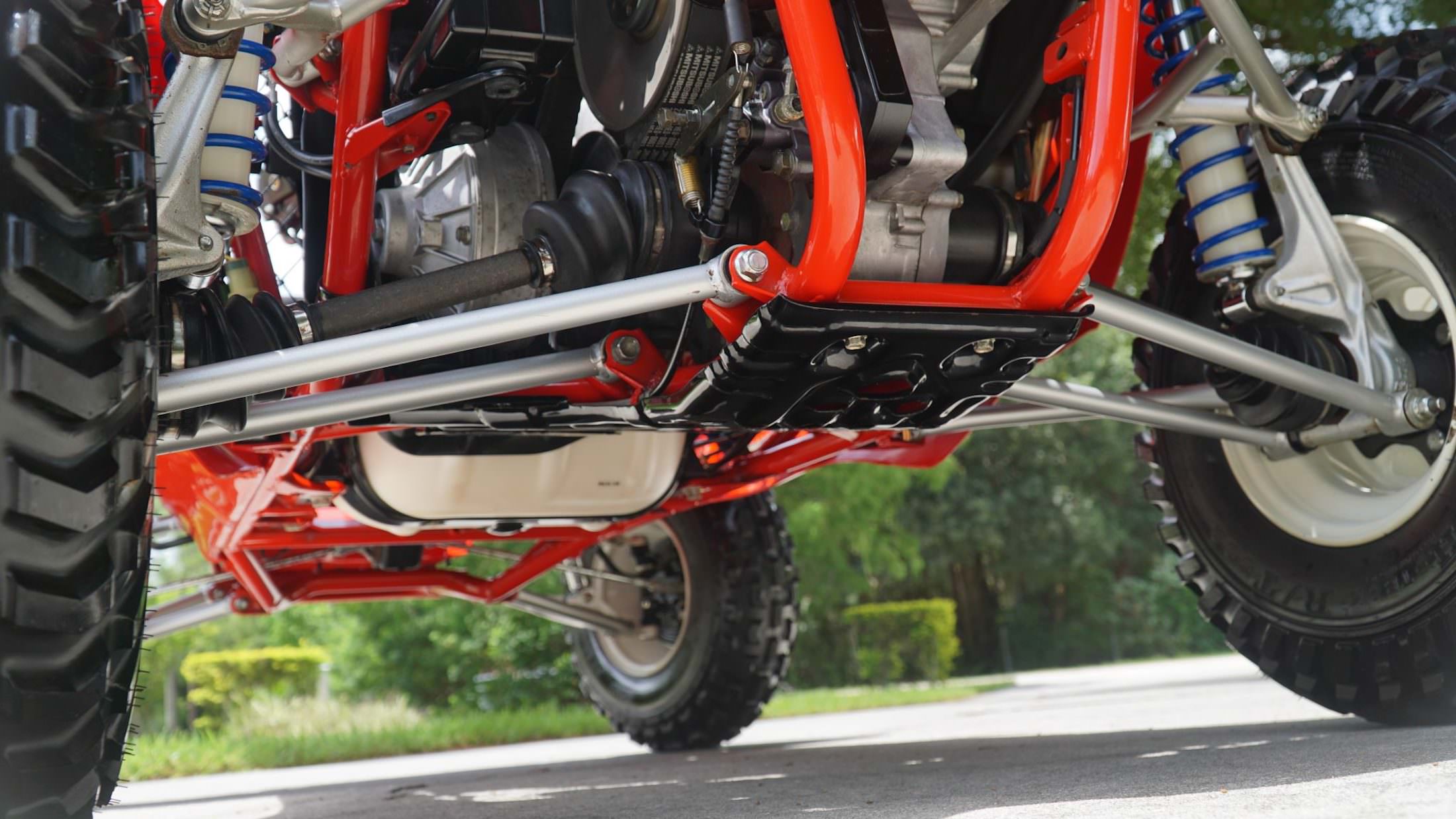
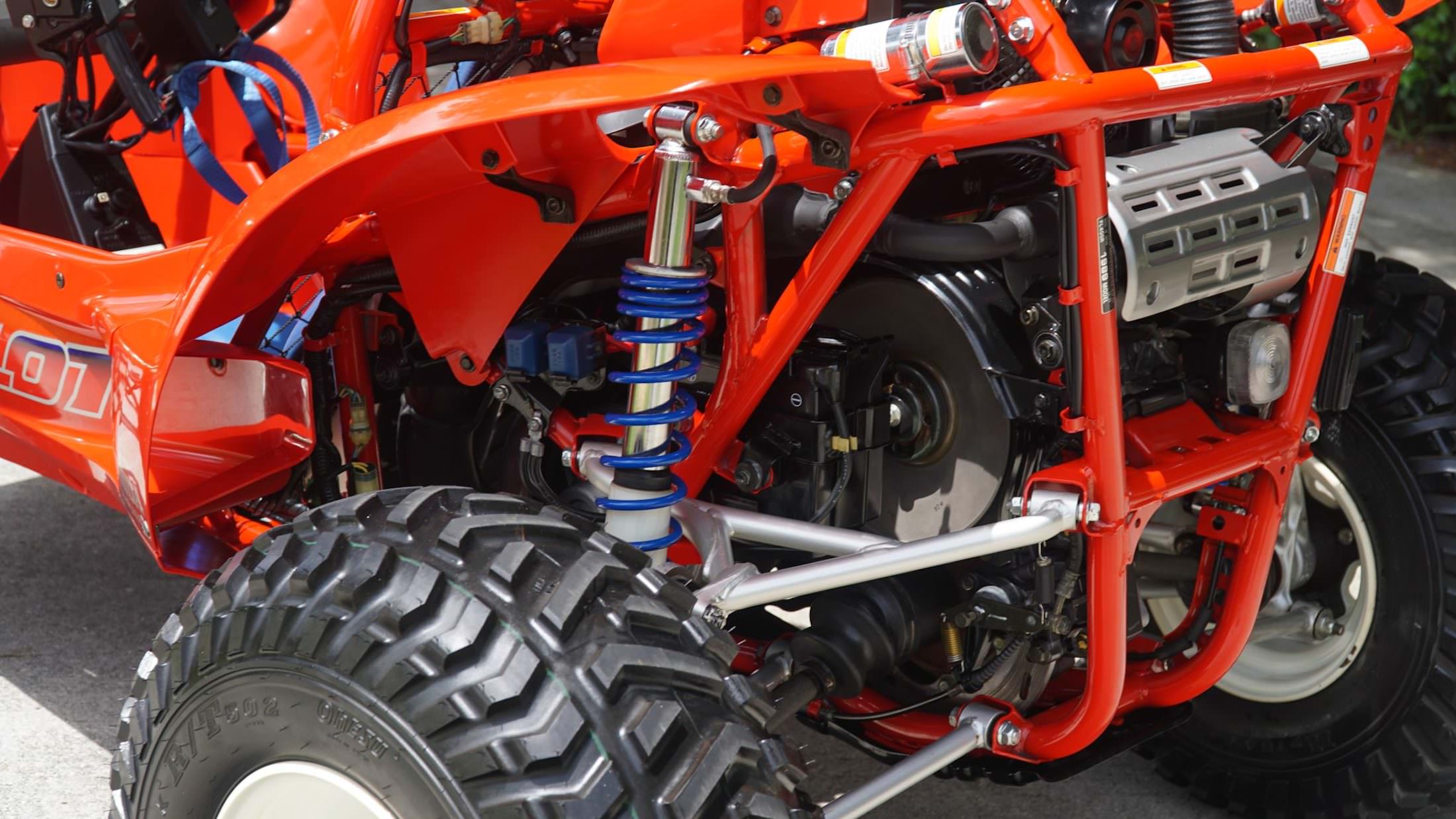
The Honda Pilot is powered by a 400cc two-stroke engine, it has a fully automatic CVT with forward, neutral, and reverse, independent front and rear suspension, and a steering yoke that controls all driving functions (there are no pedals).
The ATV Is Dead – Long Live The ATV
By the mid-1980s the rising death and injury toll attributed to three-wheeled ATV had ensured that the very existence of the ATV may be in question. Ultimately the manufacturers would agree to cease production and shift their focus to safer types of all-terrain vehicles – like the quad bike.
With a weight of under 600 lbs and a 400cc two-stroke engine providing plenty of motive power, the Honda Pilot was a quick little buggy.
Honda had been the key earlier pioneer of the three-wheeler and the largest manufacturer of them, so they stood to lose significant revenue following the demise of the market.
They had already developed a line of quads of course, but these were only somewhat safer than three-wheelers, and there were concerns that public sentiment may swing against them in the not too distant future.
With all of this in mind it was decided to develop what might have been the safest production ATV (or UTV) available for sale in the United States, if not the world – The Honda Pilot.
The Short Life Of The Honda Pilot
The Honda Pilot was developed with two key criteria in mind – performance and safety.
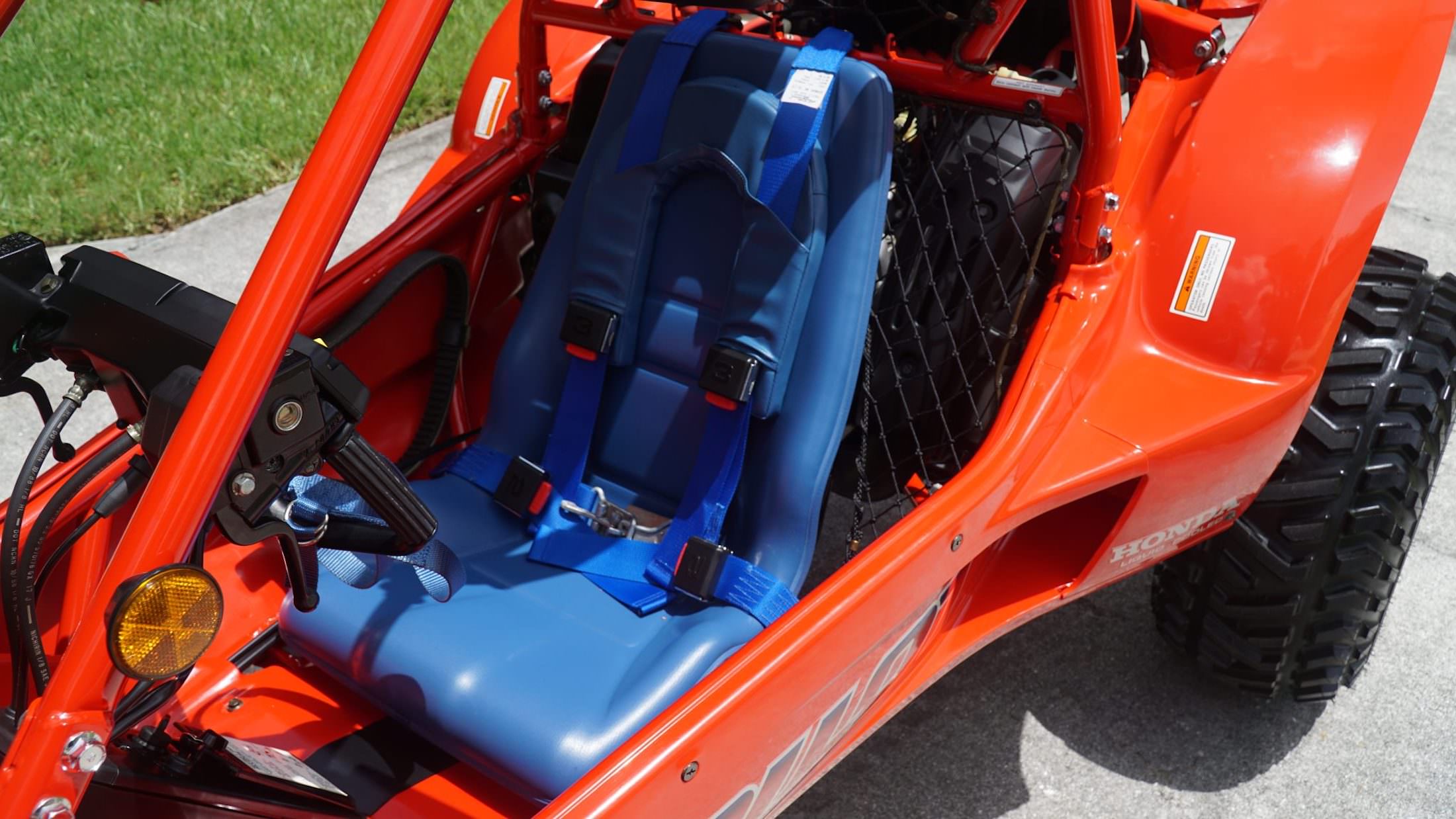
Safety would be such a paramount concern that the steering yoke was even fitted with two wrist tethers – so your hands would stay attached to it in the event of a roll over accident and not go flying out the sides where they could be crushed by the roll cage.
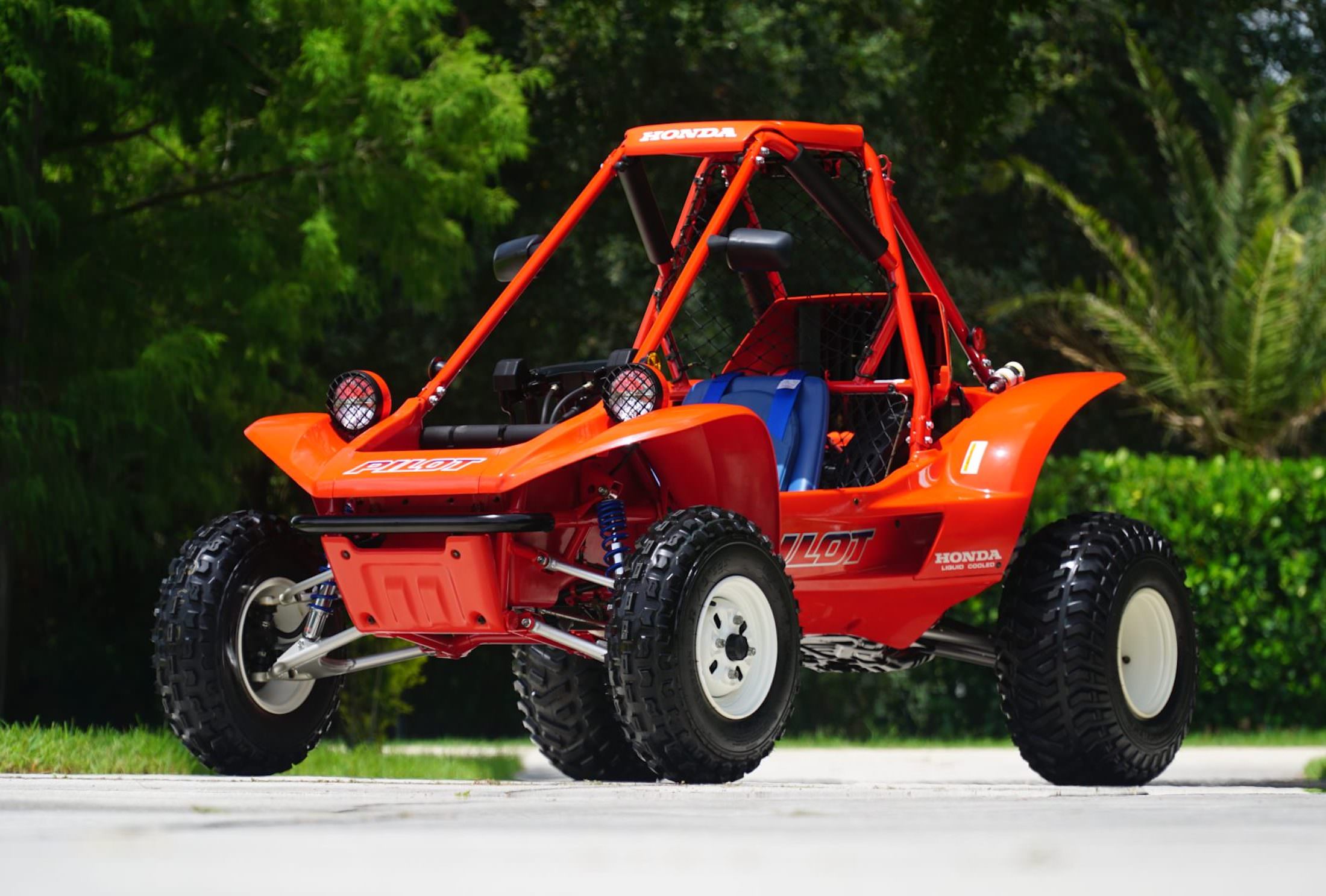
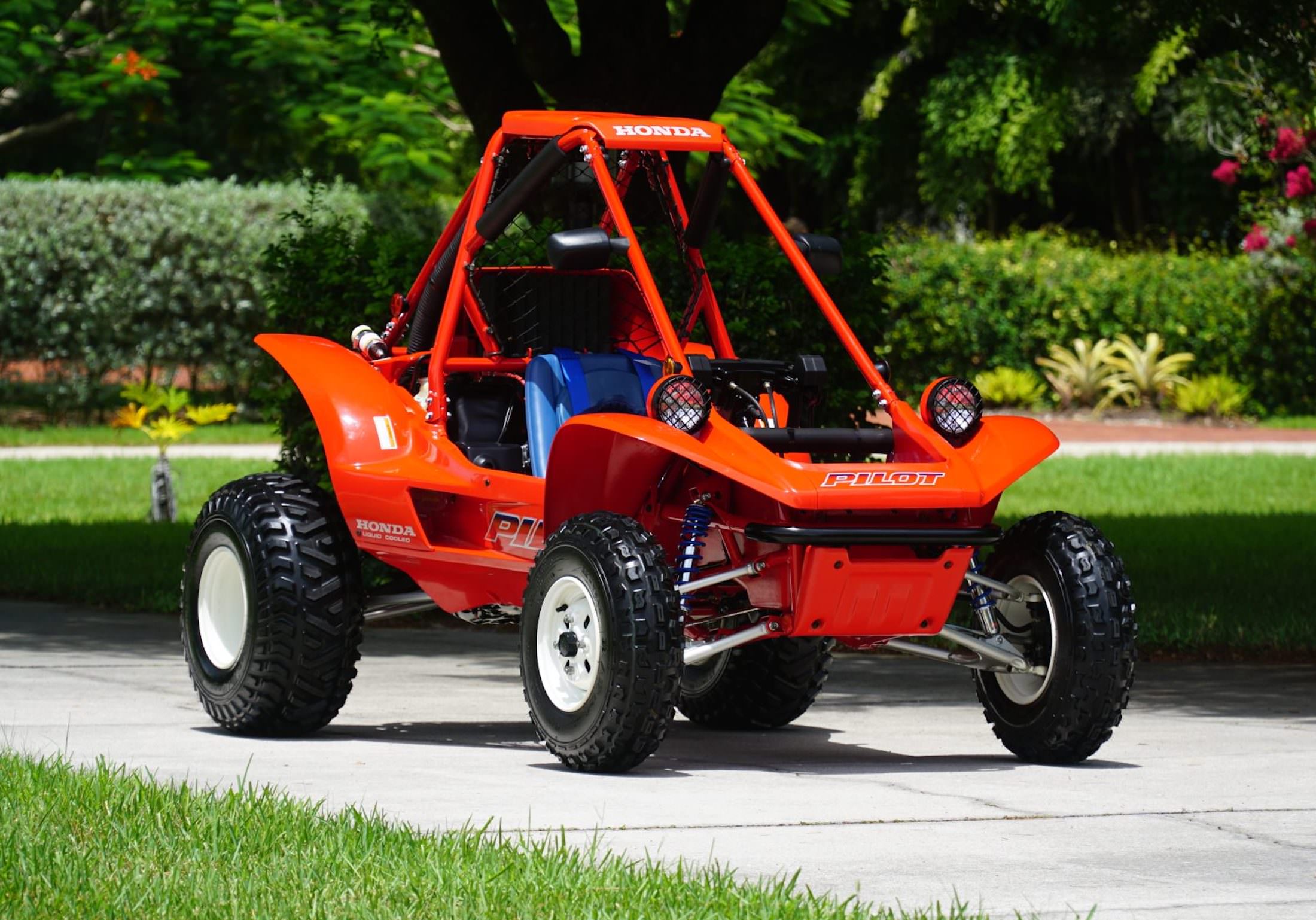
Note the blue tethers on the steering yoke, they’re designed to keep your hands secure in the event of a roll over event so they don’t get crushed.
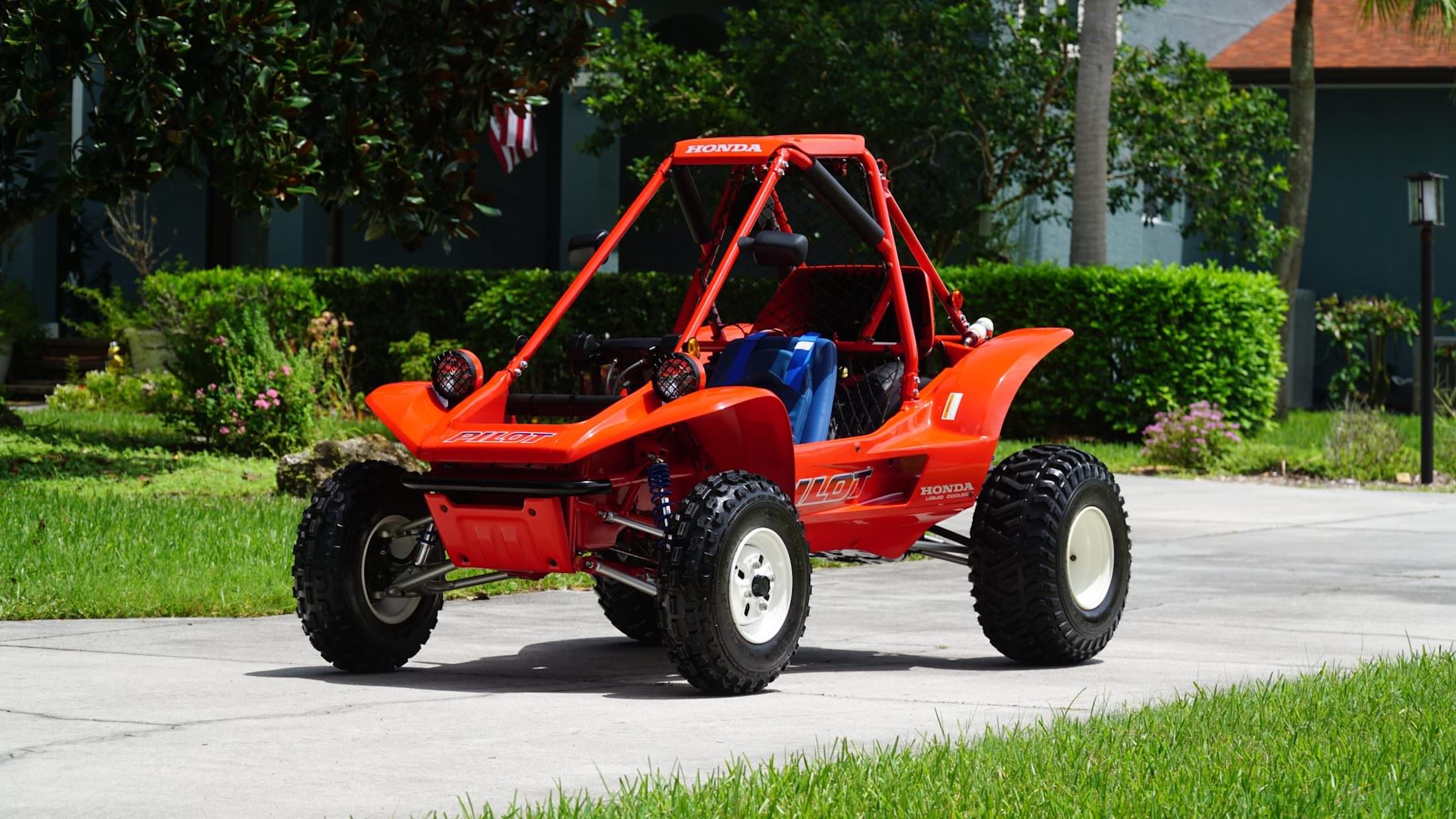
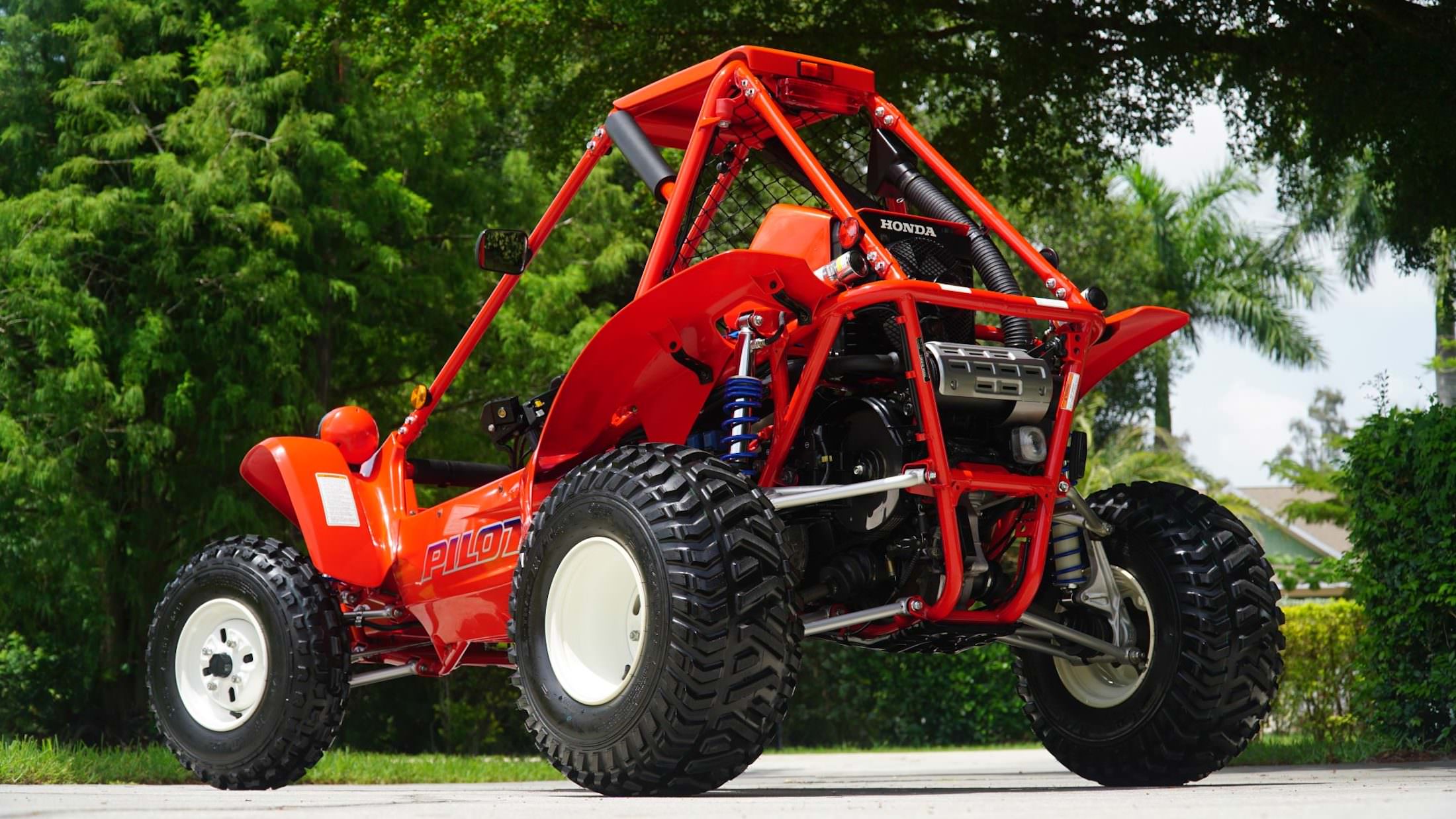
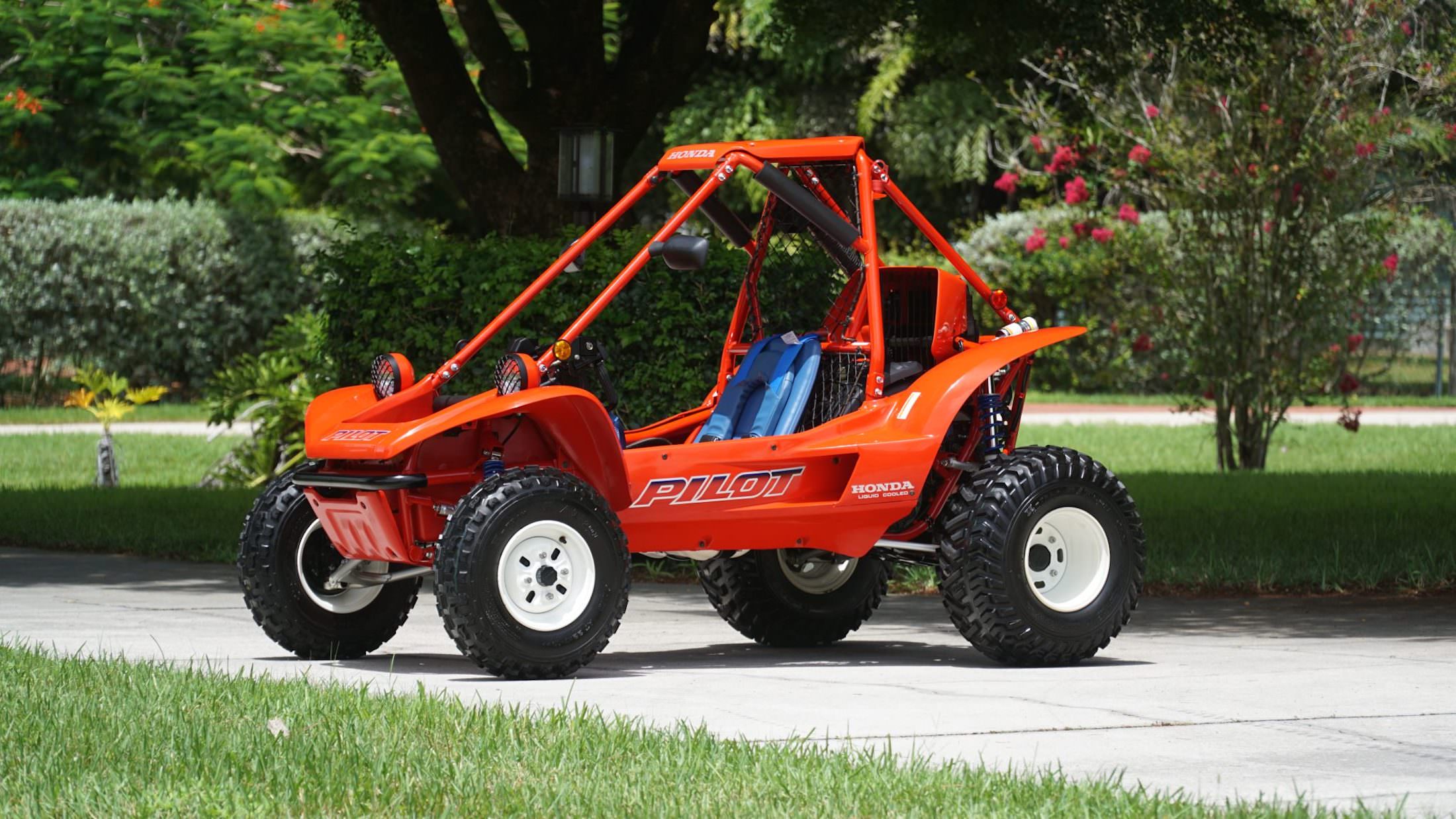
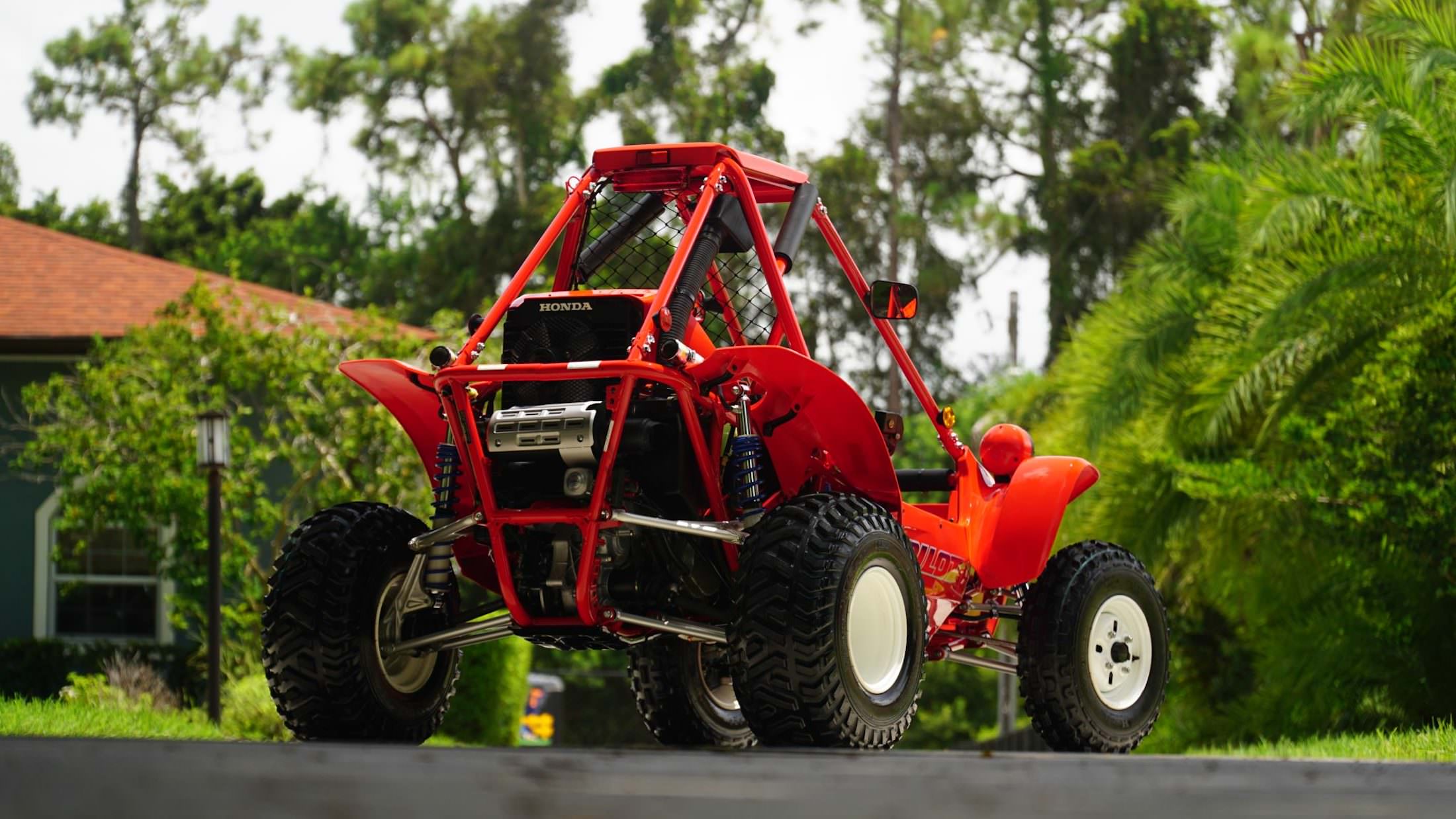
Honda engineers developed a tubular steel frame for the Pilot with a full roll cage for maximum protection. Plastic body panels were used to help keep weight down, and relatively advanced suspension was used.
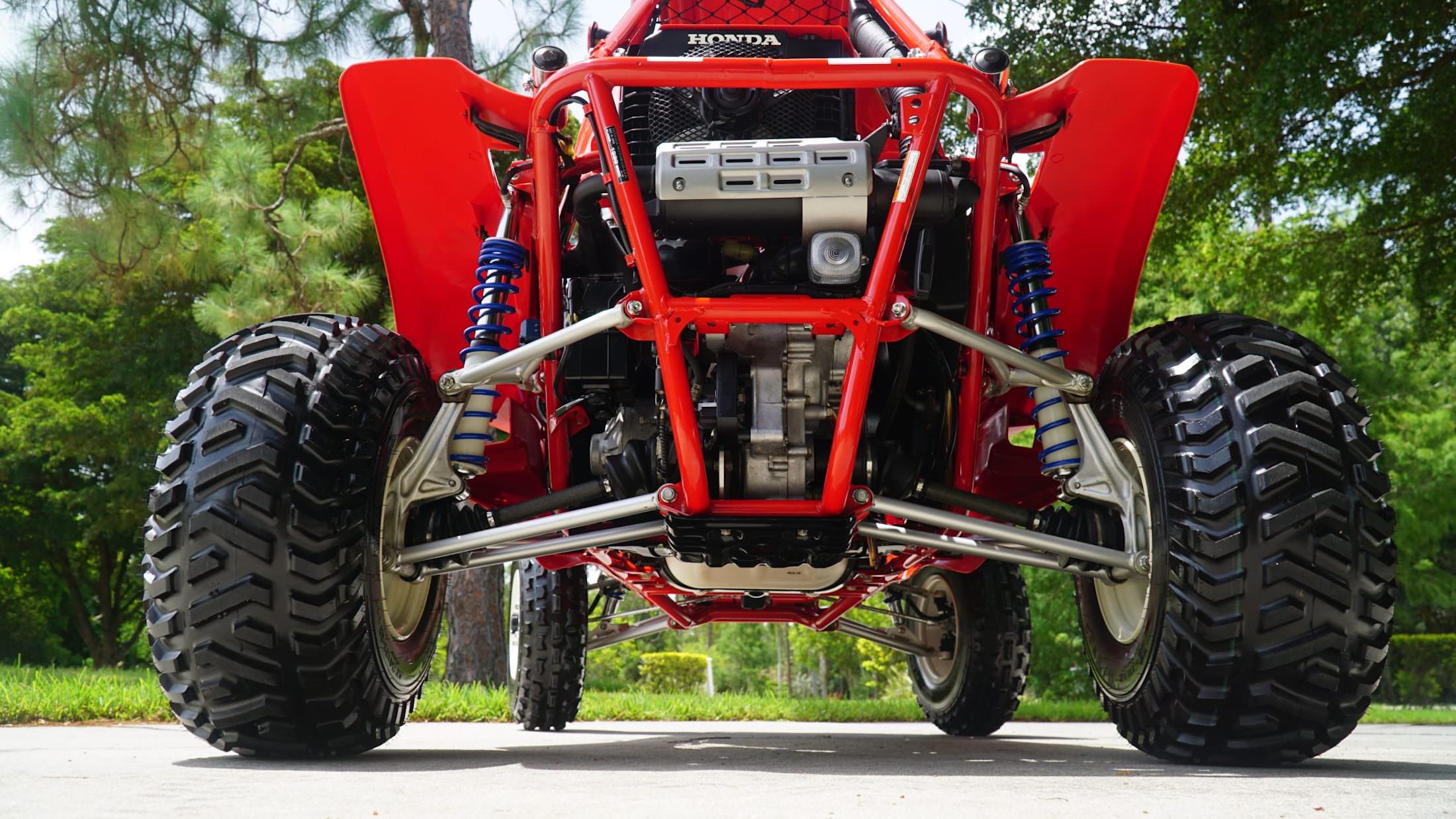
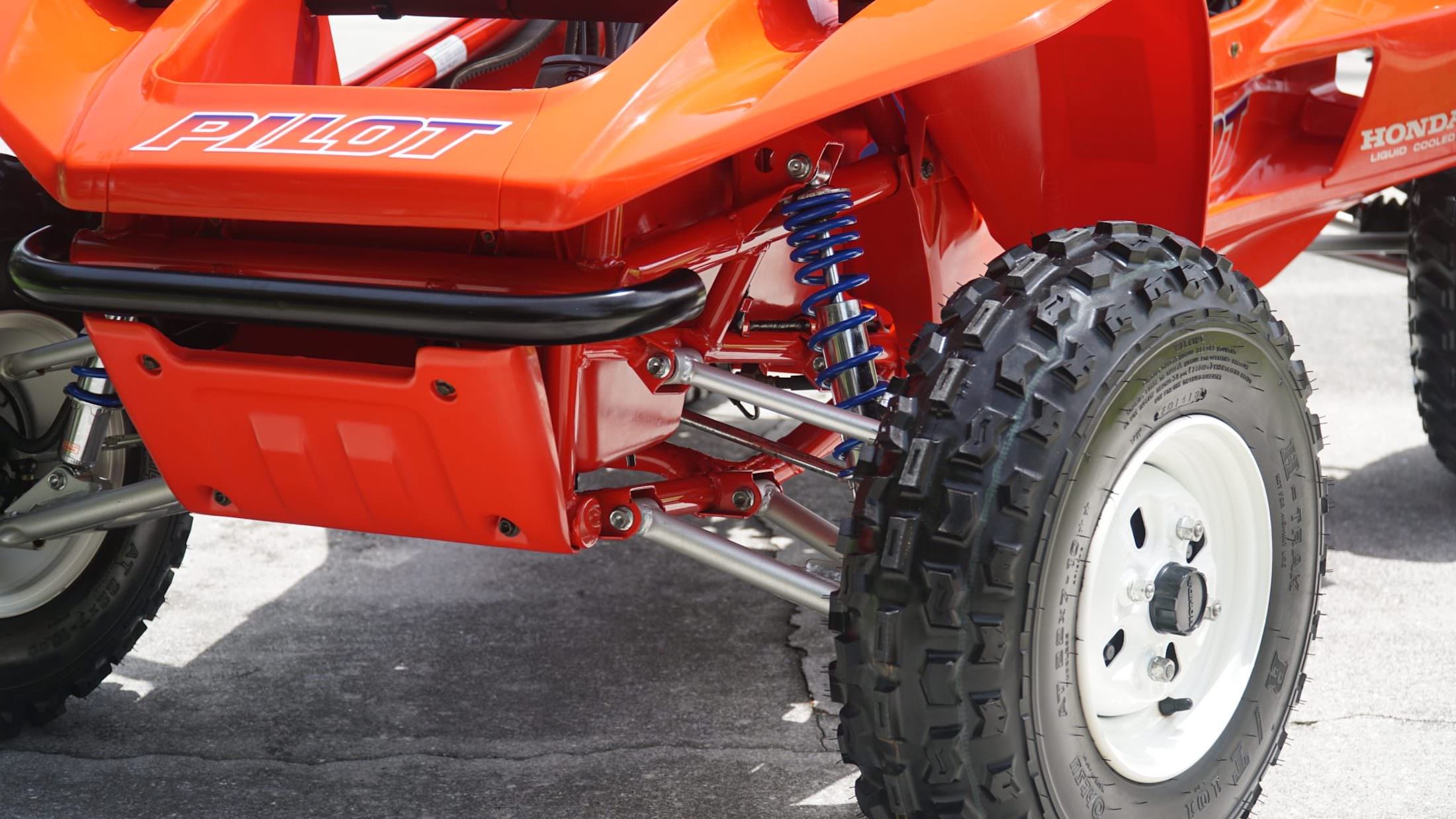
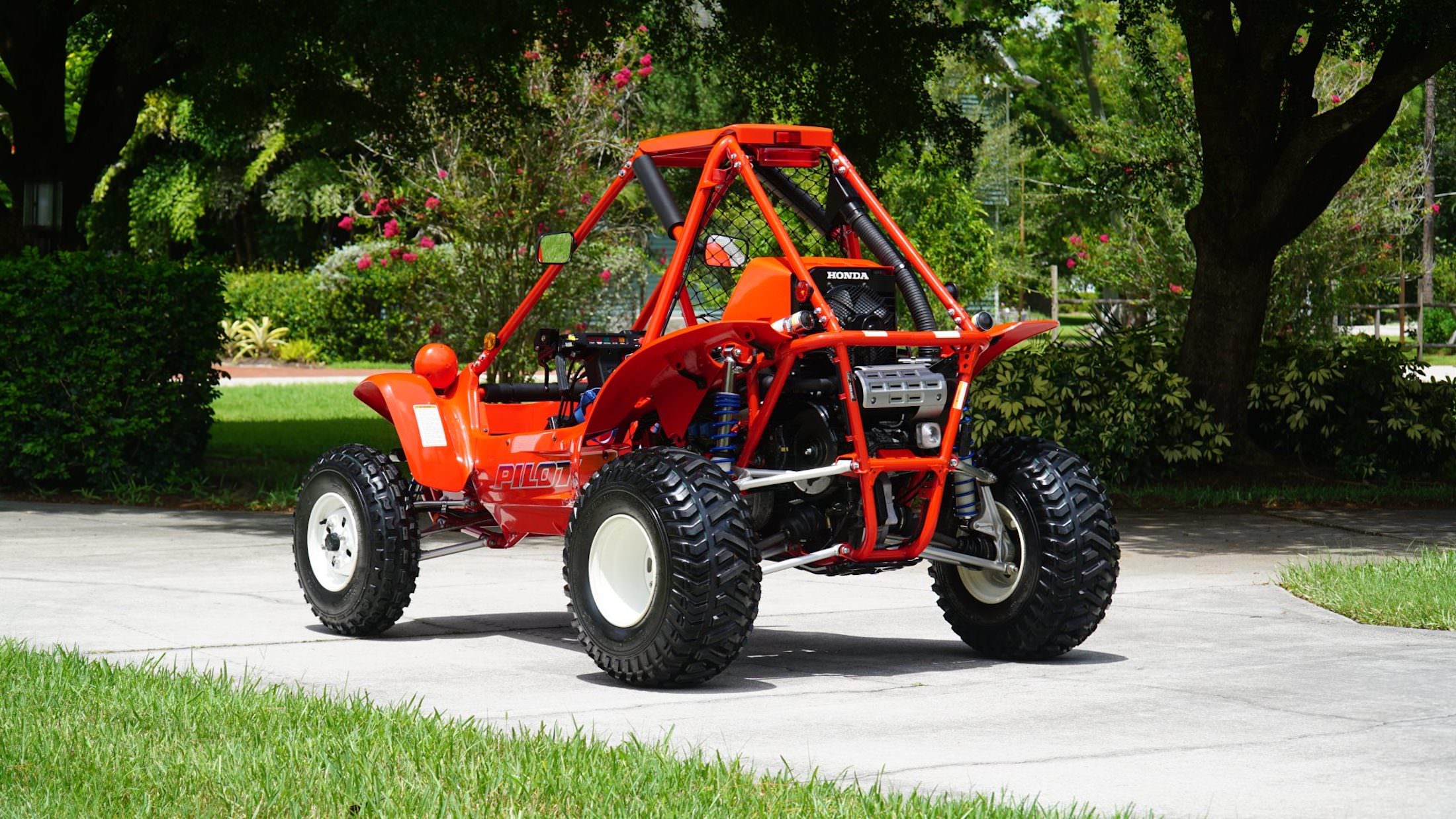
Most small buggies at the time used either no suspension at all or primitive suspension, the Honda Pilot used double A-arms front and back with coilover shock absorbers offering 5.9” of front travel and 7.1” of rear travel.
Accessibility was seen as an important factor so a CVT (constantly variable transmission) was chosen due to its automatic nature and its clutch-free operation.
Instead of pedals all of the controls were fitted to the steering yoke, more like a quad bike perhaps, and the seat was fitted with harnesses to keep the driver firmly in place.
With its liquid-cooled 397cc two-stroke engine driving the rear wheels the 592 lb Honda Pilot was a quick little buggy. It’s not known why Honda kept it in production for just two years but after the 1989 and 1990 production it was discontinued.
The relatively long travel double A-arm suspension front and back with adjustable coilovers was an advanced feature for the time.
The 1989 Honda Pilot Shown Here
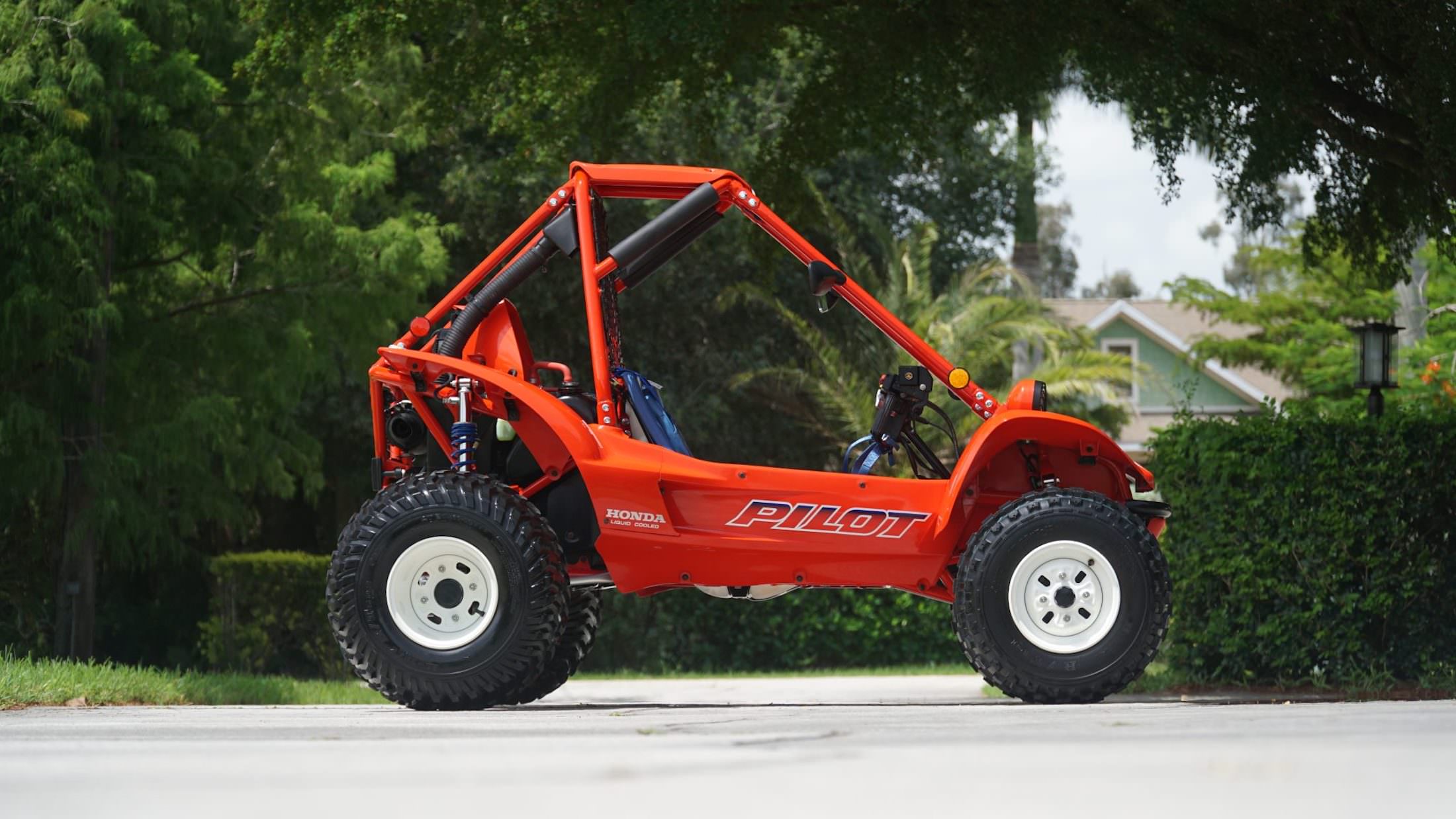
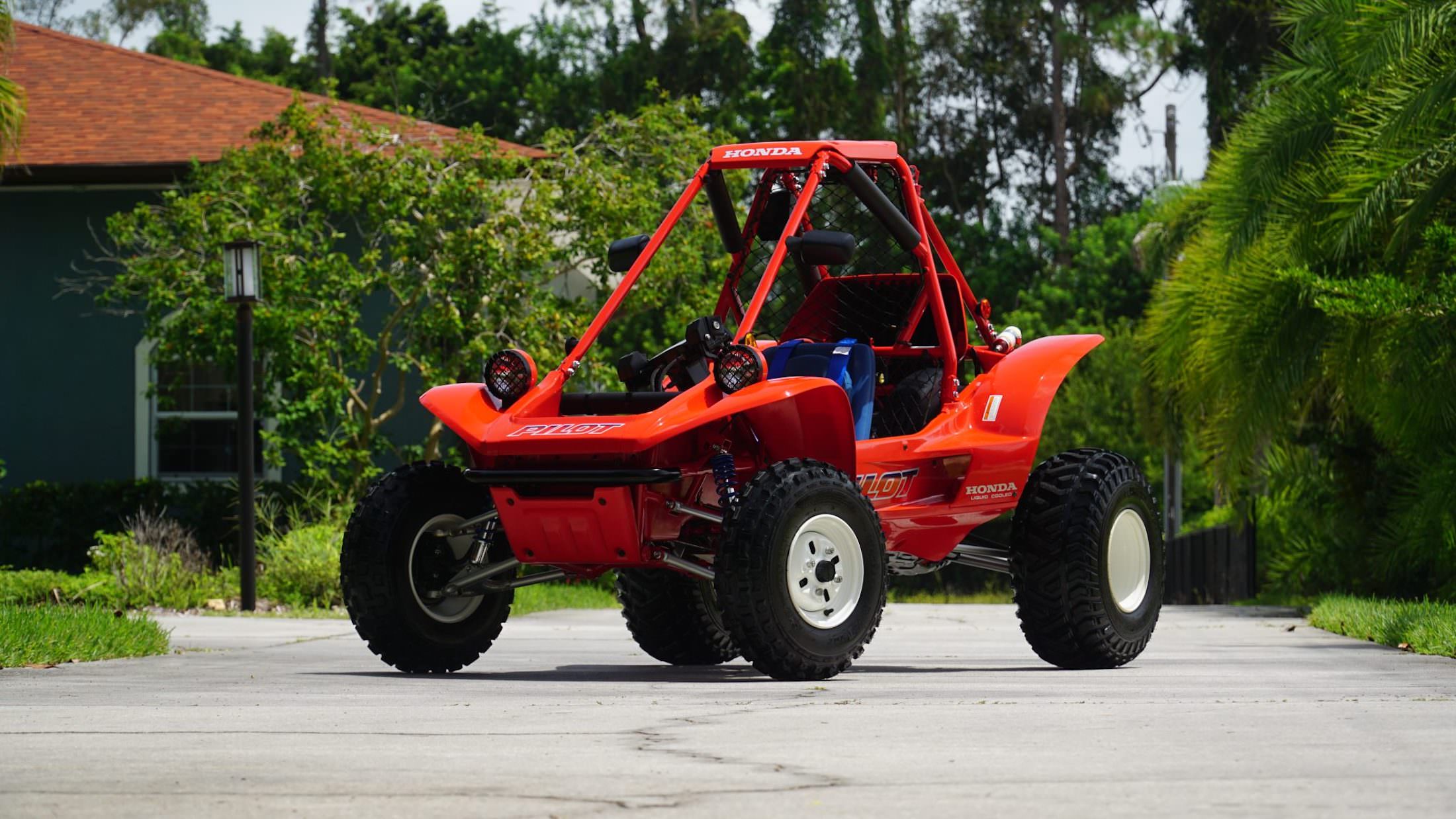
The 1989 Honda Pilot you see here is from the first year of production, there wasn’t actually much that changed between the two years of production however – apparently just some decal changes to freshen things up.
This Pilot is almost certainly the most pristine example we’ve ever seen, in fact it looks new from most angles with only the faintest signs of use – this is unusual for a vehicle that was designed specifically to go out and get as filthy as possible.
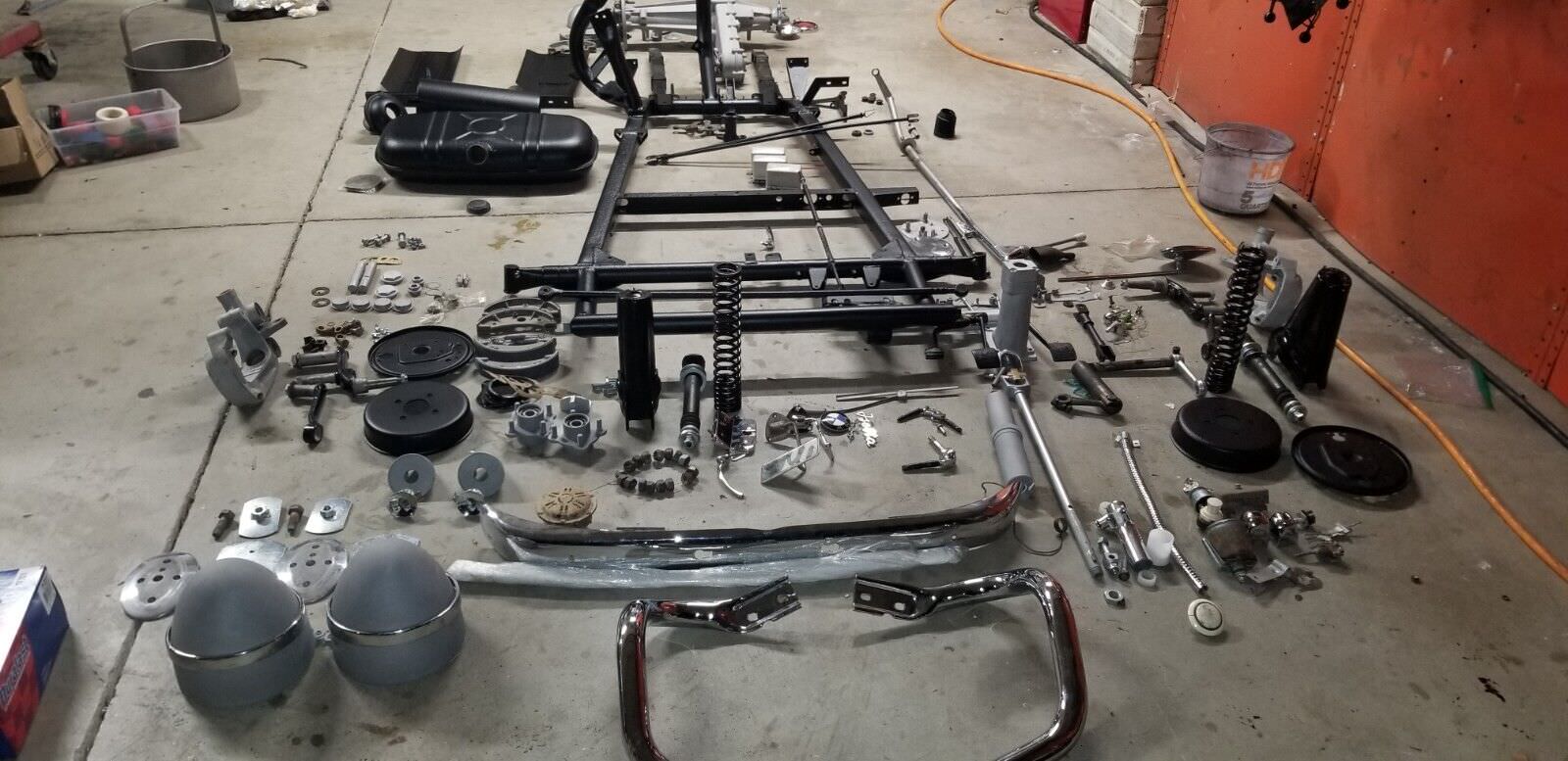
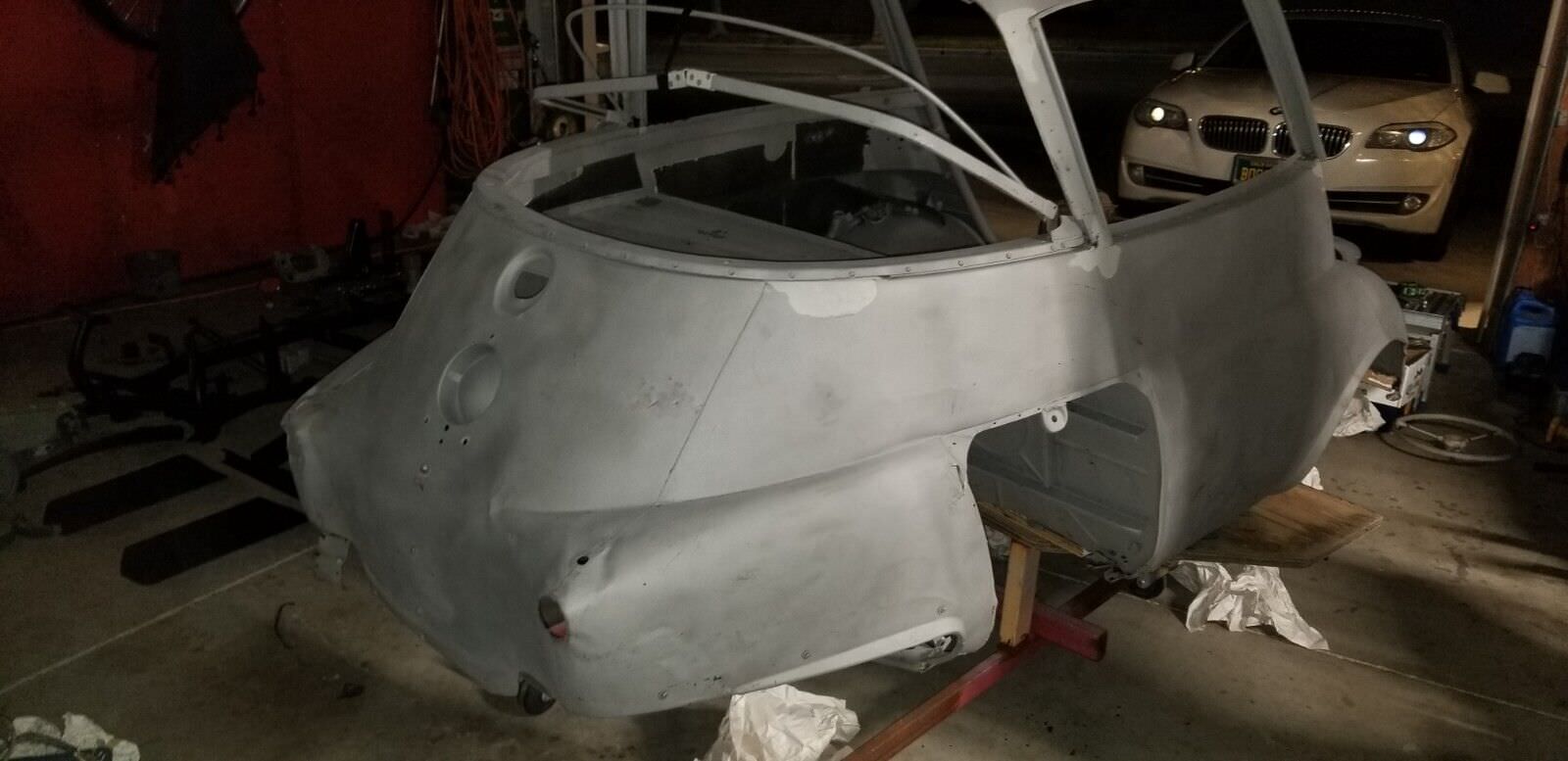
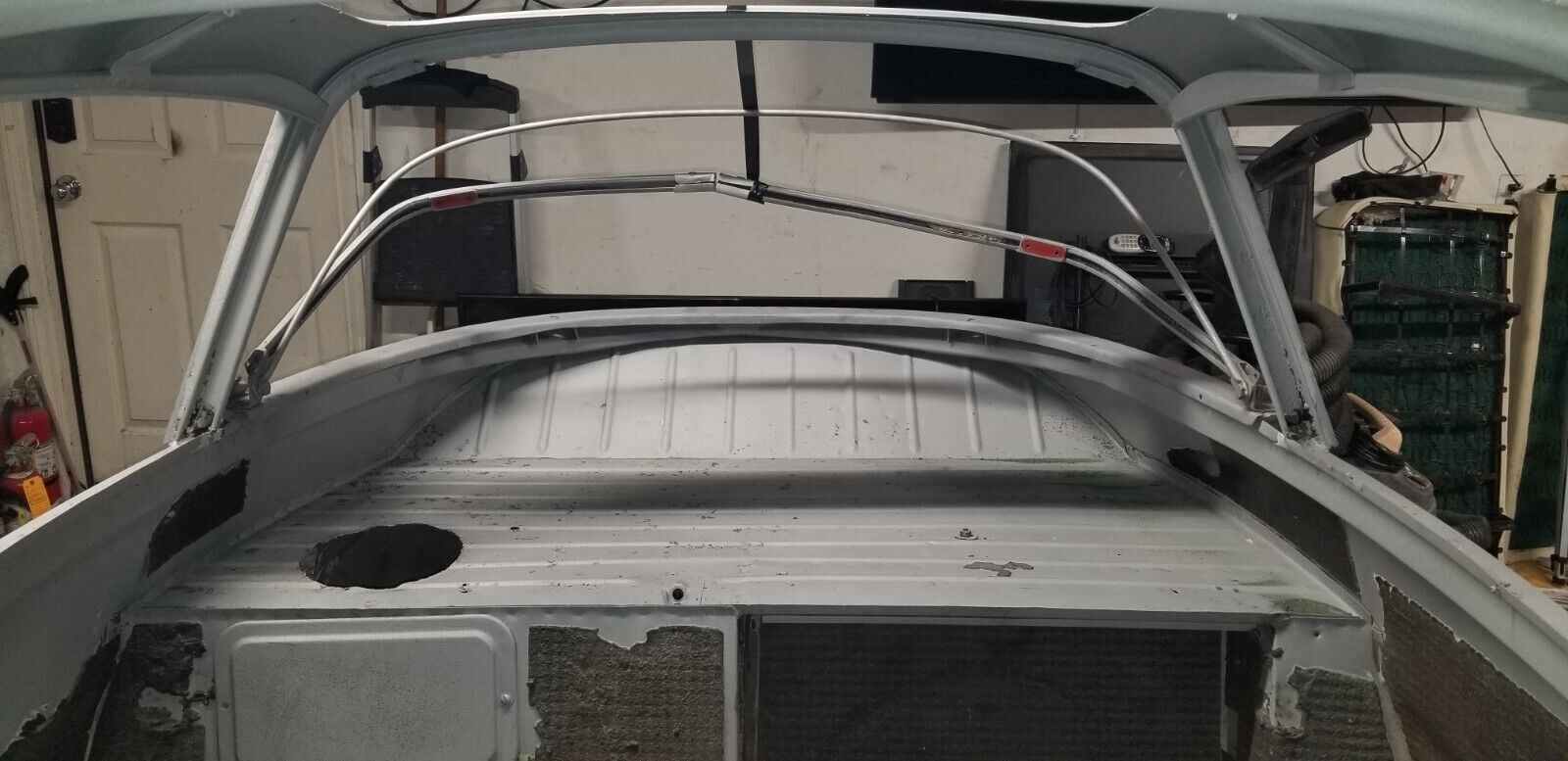
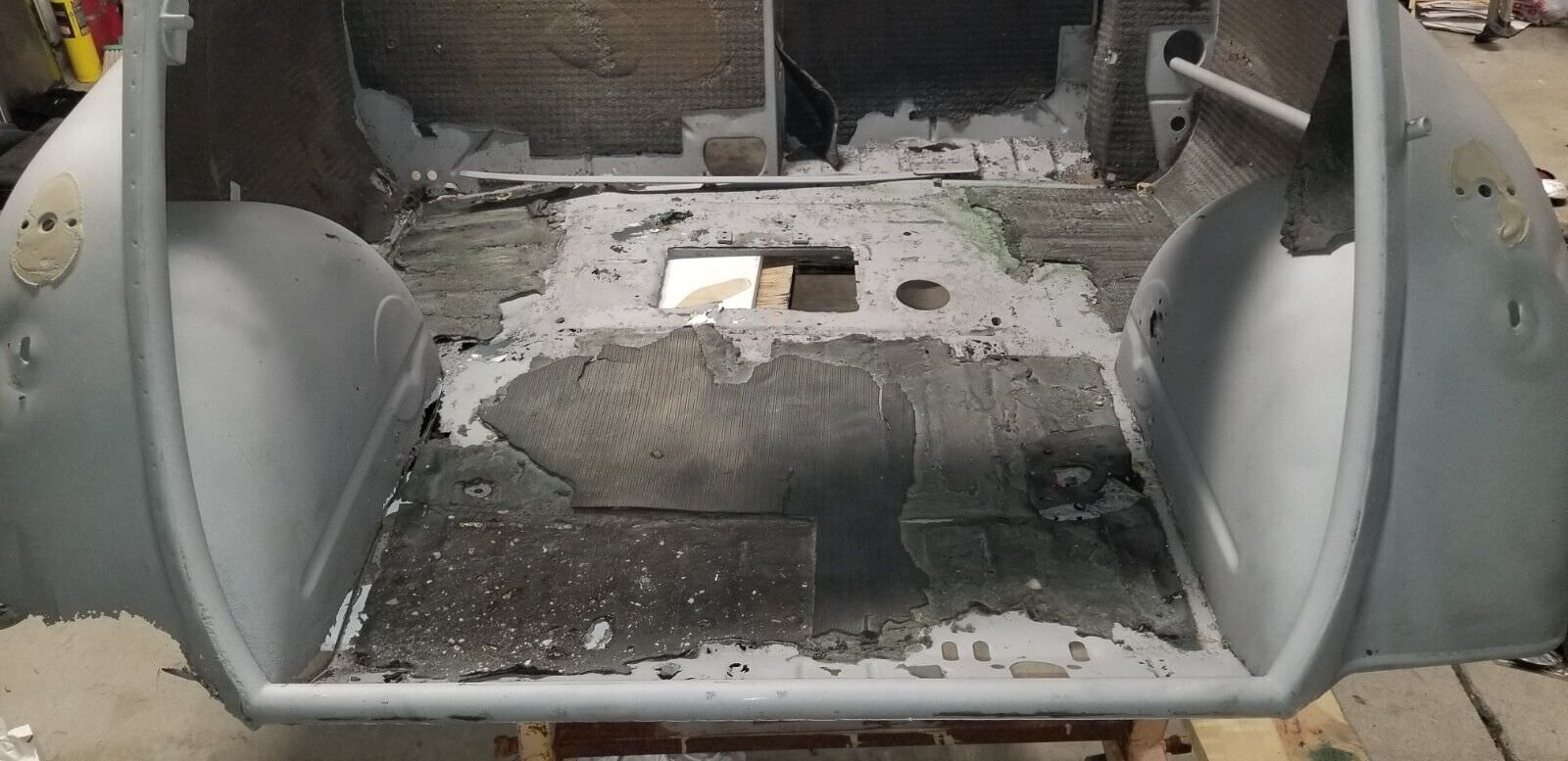
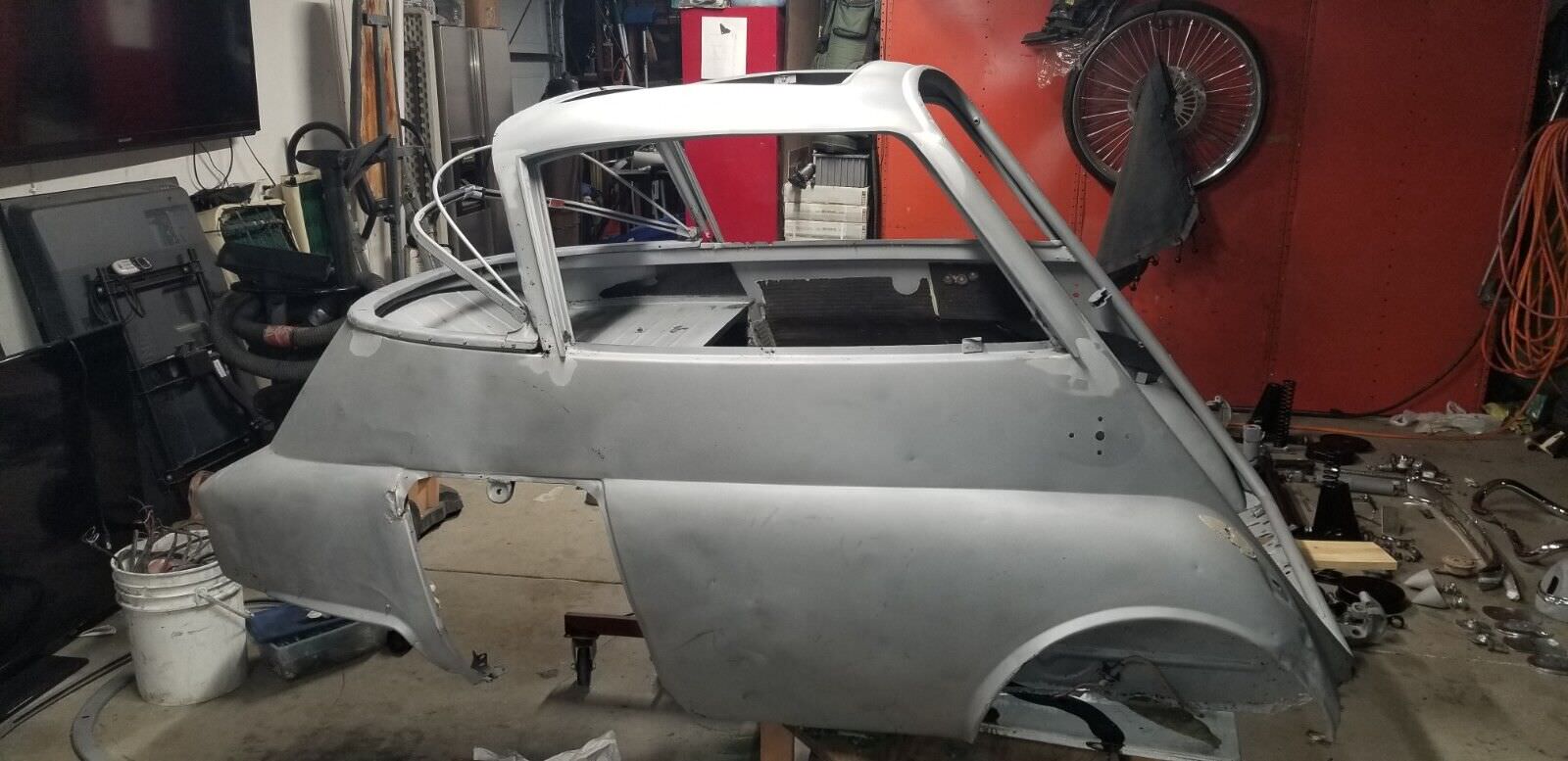
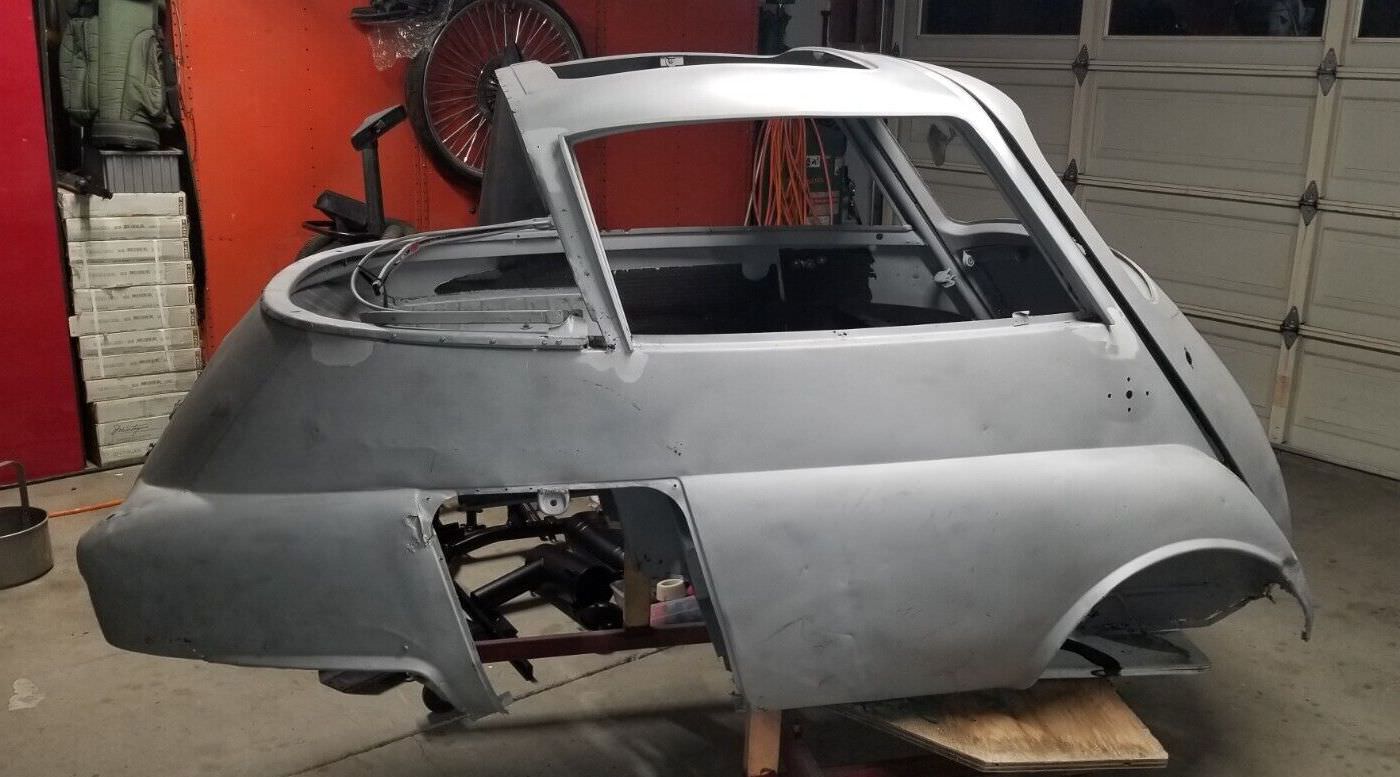
This is a partially restored BMW Isetta 300, interestingly it’s one of the rarer “cabriolet” models which came with a folding rear roof section coupled with the standard folding soft top sunroof.
BMW built over 161,000 examples of the Isetta, the small cheap “bubble car” helped the country get back on its feet after WWII when money, fuel, and materials were in short supply.
Fast Facts – The BMW Isetta 300 Cabriolet
The BMW Isetta design originated in Italy as the Iso Isetta, the bubble car design was licensed by a number of other manufacruers and the car was built in Spain, France, Germany, Argentina, Brazil, and of course in its native Italy.
BMW would be the most prolific of the Isetta manufacturers, they built over 161,000 of them in total over two major model variants – the Isetta 250 (250cc) and the Isetta 300 (300cc).
In the years shortly after WWII much of Europe was gripped by austerity, raw materials were in short supply – as was money. This meant that for a brief period bubble cars were the only automobiles that many people could afford.
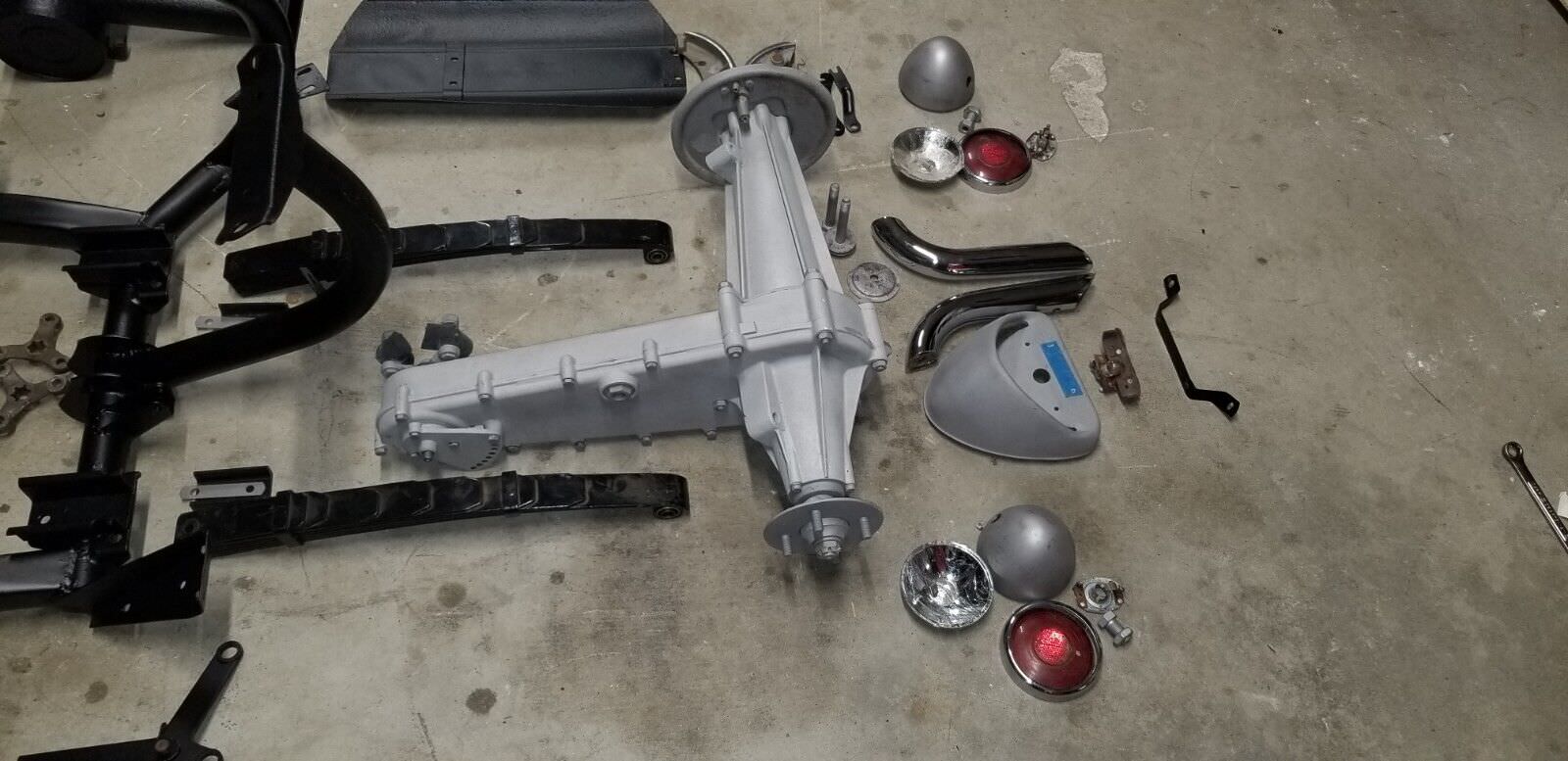
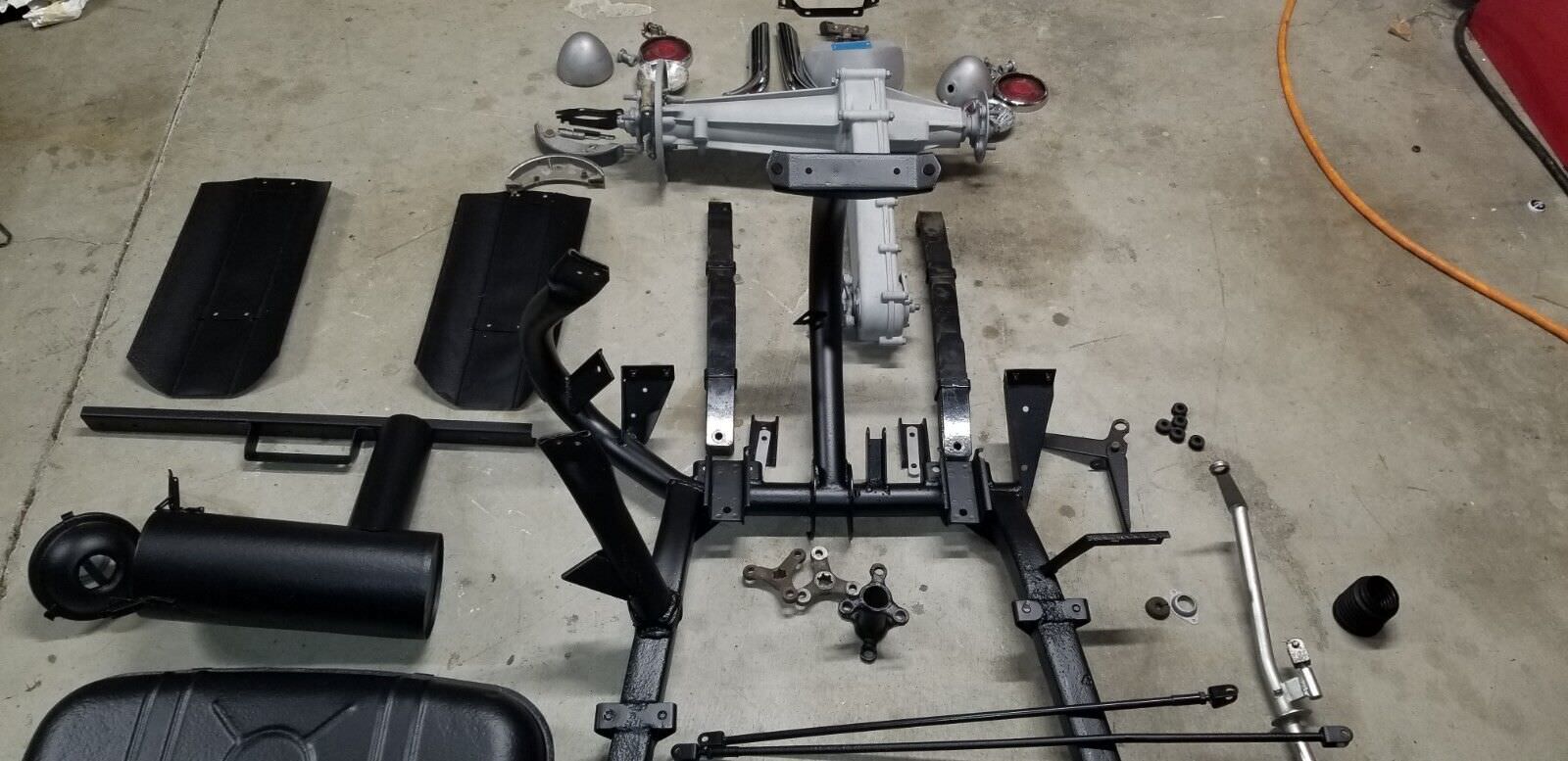
The BMW Isetta 300 you see here is part was through a restoration and it’s being sold with most of the parts needed to finish the job, the current asking price is $13,000 USD and it’s being offered out of Corona, California.
Iso Isetta: The Bubble Car King
The Iso Isetta “bubble car” was developed by Italian engineers Ermenegildo Preti and Pierluigi Raggi under the direction of Iso company owner Renzo Rivolta in the early 1950s.
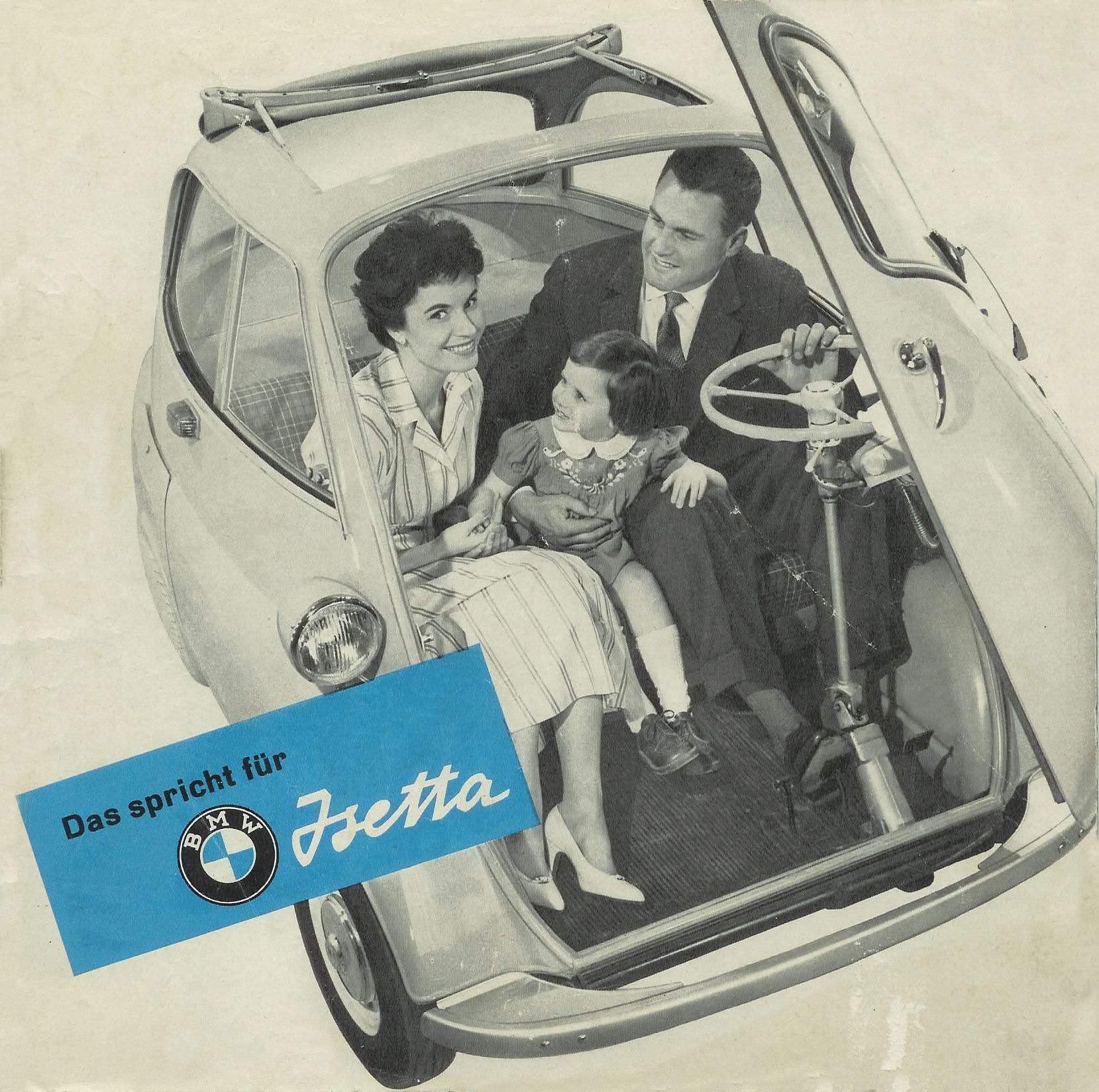
The Isetta has an unusual front-opening door, this necessitated the fitment of a fabric sunroof to allow occupants an escape route if the door is jammed shut in an accident.
With the Second World War having ended just a few years prior in 1945. Italy and much of the rest of Europe was in the grip of crippling economic austerity, and materials like steel, rubber, glass, and gasoline were hard to come by.
This meant that the ideal car would made using as little steel, rubber, and glass as feasible, and that it would consume as little gasoline as possible. These shortages led to the rise of the bubble car, also known as the micro car.
The design of the Iso Isetta used a simple steel chassis with a stamped steel body, a 236cc 9.5 hp two-stroke engine, a 4-speed transmission, and it offered seating for two with a small amount of groceries or cargo. For those who needed a car to get to work in urban environments like towns and cities the Isetta made a lot of sense.
The top speed was understandably mild-mannered, just 47 mph or 75 km/h and that was perhaps a little ambitious. It took the Iso Isetta 30 seconds to reach 31 mph (50 km/h), but on the plus side the car offered fuel economy of 42 mpg‑US or 5.6 L/100 kms.
The concept proved popular in Italy and it attracted attention from around the world. Before long the little Isetta was being produced en masse in factories in France, Spain, Argentina, Brazil, and in Germany where it was produced by BMW.
Period advertisements for the Isetta were perhaps a little optimistic given the 13 bhp engine and 53 mph top speed.
With the release of the Fiat 500 in Italy in 1957 sales of the Isetta largely dried up, as the 500 was essentially a full-featured automobile at a similar price point. Sales of the model would continue in Germany until 1962, the car became a cult classic in Europe and today they’re highly sought after.
The BMW Isetta
The Germans truly made the Italian Isetta their own. When BMW bought the tooling and rights for the car in 1955 they largely reengineered it and as a result very few parts are interchangeable between the Italian and German Isettas.
BMW offered two main versions of the Isetta, the 250 and the 300. As is common practice with BMW the model number designations tell you the engine size, in this case in centiliters.
The BMW Isetta 300 was faster and more powerful than its Italian forebear, offering 13 bhp and a top speed of 53 mph (85 km/h). The engine was also a more advanced four-stroke design that offered better fuel economy of up to 78 mpg‑US or 3 L/100 kms.
One of the rarer sub-types of the BMW Isetta is the “cabriolet” version though it wasn’t a true convertible, perhaps more of a targa. The fabric sunroof could also be opened of course, this was also a safety feature in case the front opening door was jammed.
In the cabriolet models the rear window was replaced with a fold down fabric cover, allowing good airflow through the cabin and helping to solve the heat problems that drivers could encounter on hot sunny days due to the open greenhouse design of the cabin.
Above Video: One of the most memorable on-screen appearances of the BMW Isetta was in the classic American sitcom “Family Matters,” in which Steve Urkel learns to drive (or almost learns) in a 1960 model.
The 1957 BMW Isetta 300 Cabriolet Shown Here
The partially restored BMW Isetta 300 Cabriolet you see here is being offered for sale out of Corona, California by an Isetta restoration specialist.
In the listing he explains than the car comes with most of the parts needed to complete the job, and he provides a list of outstanding parts that will still be required.
If you’d like to read more about this unusual German/Italian project car or make him an offer you can visit the listing here. The current Buy It Now price is $13,000 USD.
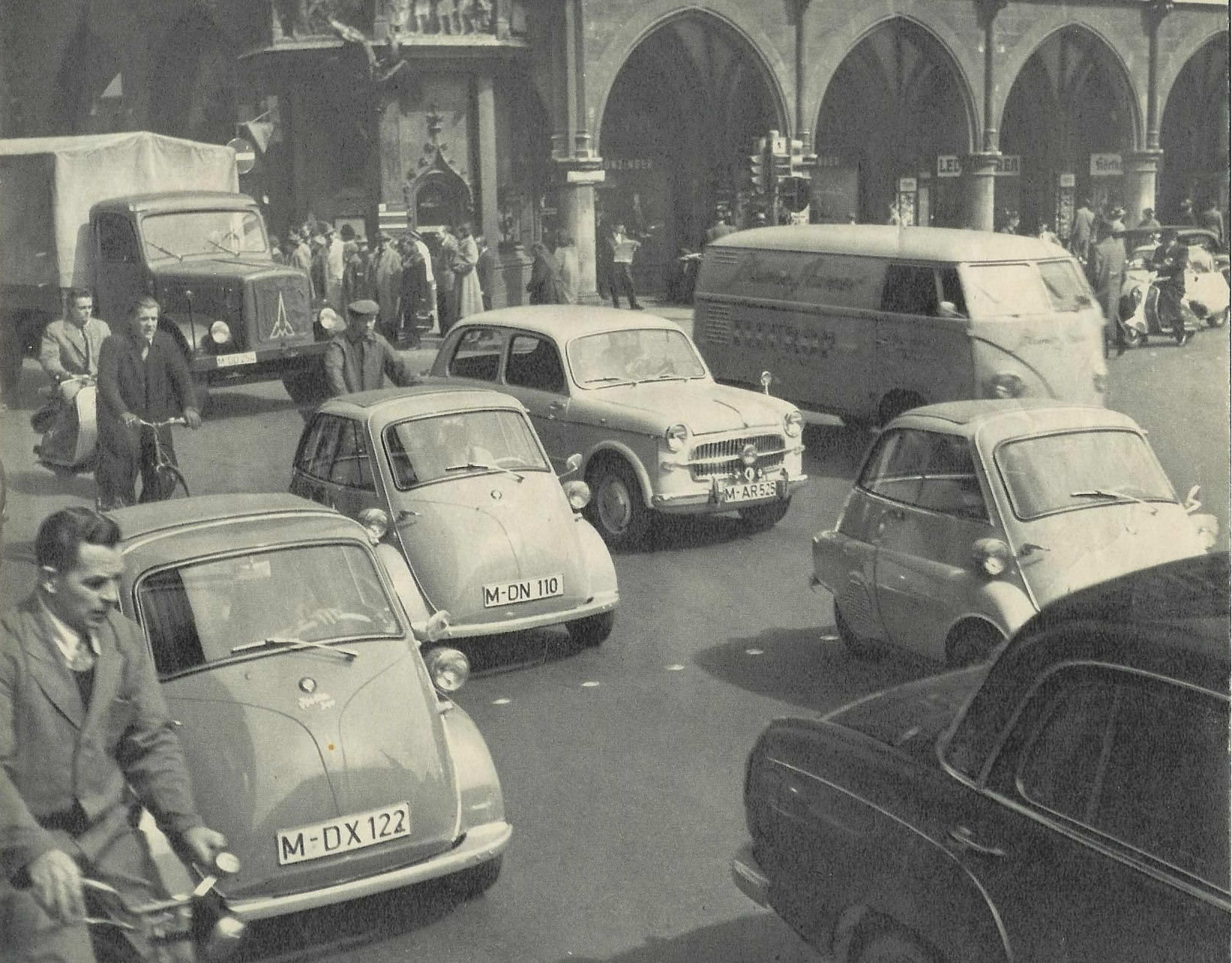
This image from an old BMW Isetta brochure shows Isettas mixing it with other vehicles on German streets back in the 1960s. Over 161,000 Isettas were made by BMW and so they were a common sight in the 1950s.
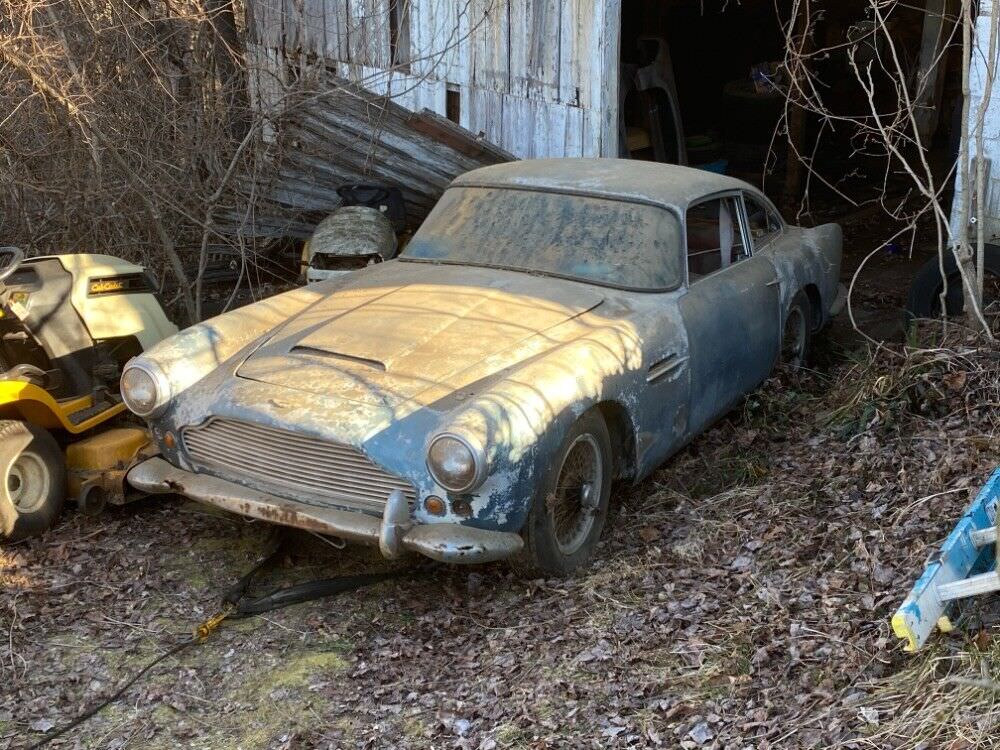
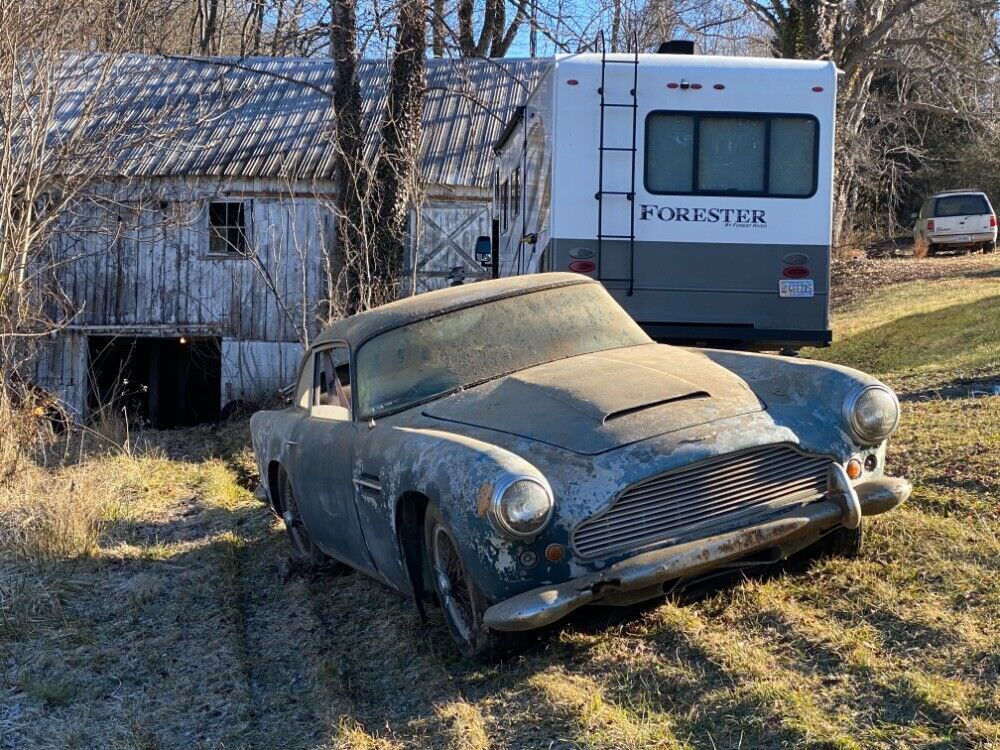
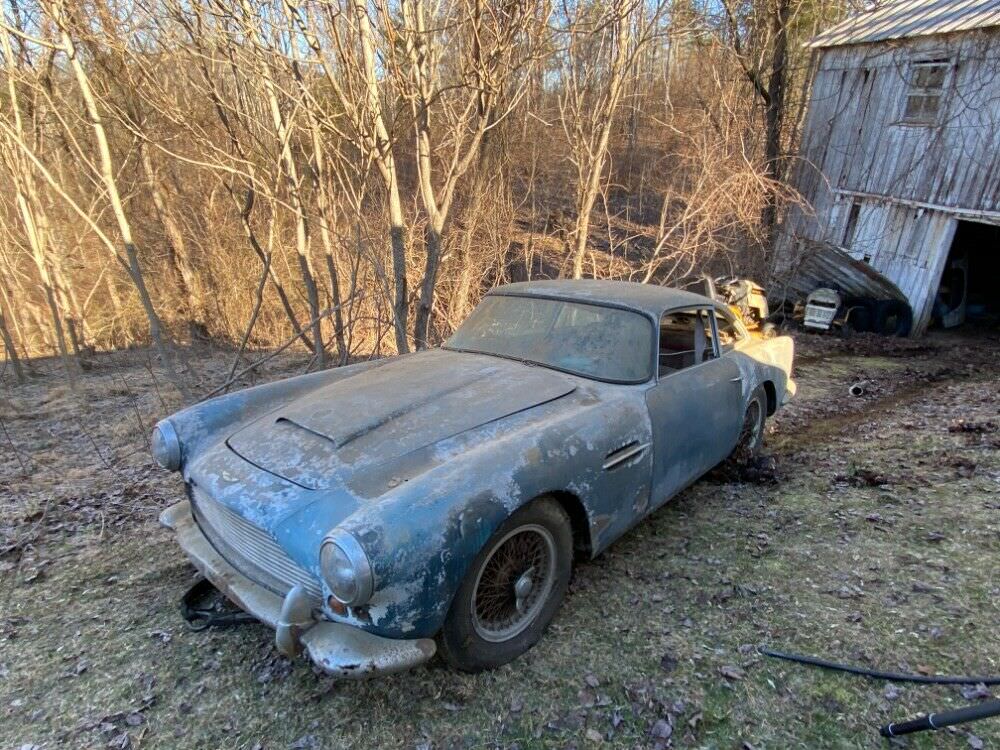
Amazingly this Aston Martin DB4 was given to its current owner in exchange for a few weeks of body repair work on another vehicle. This exchange took place over 30 years ago when the value of the DB4 was vastly lower than it is today.
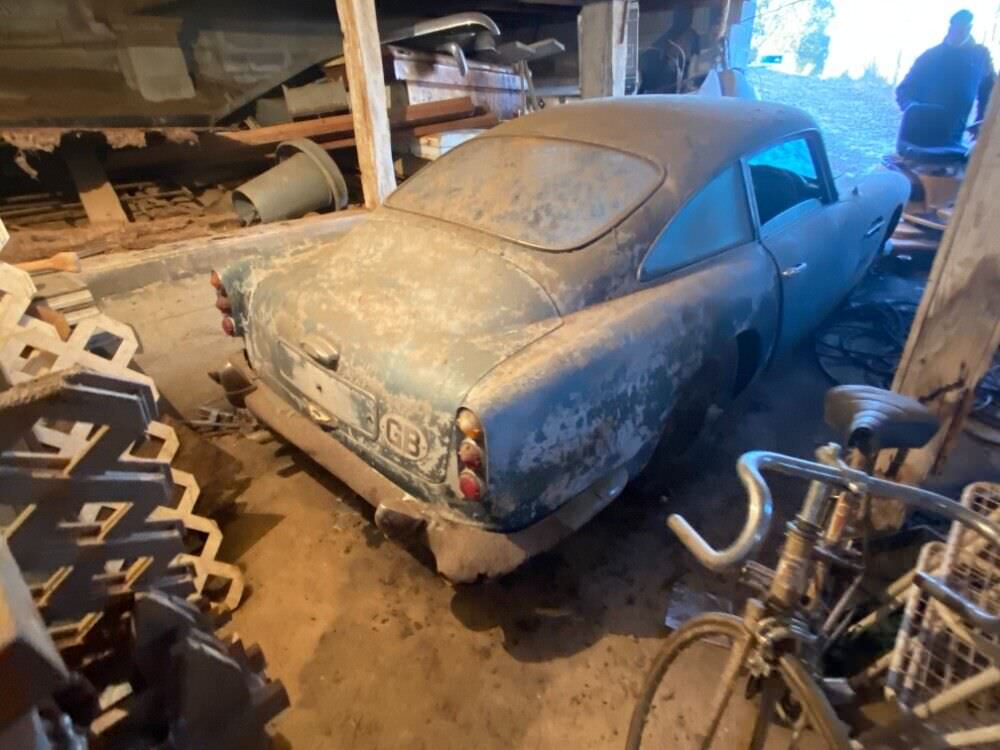
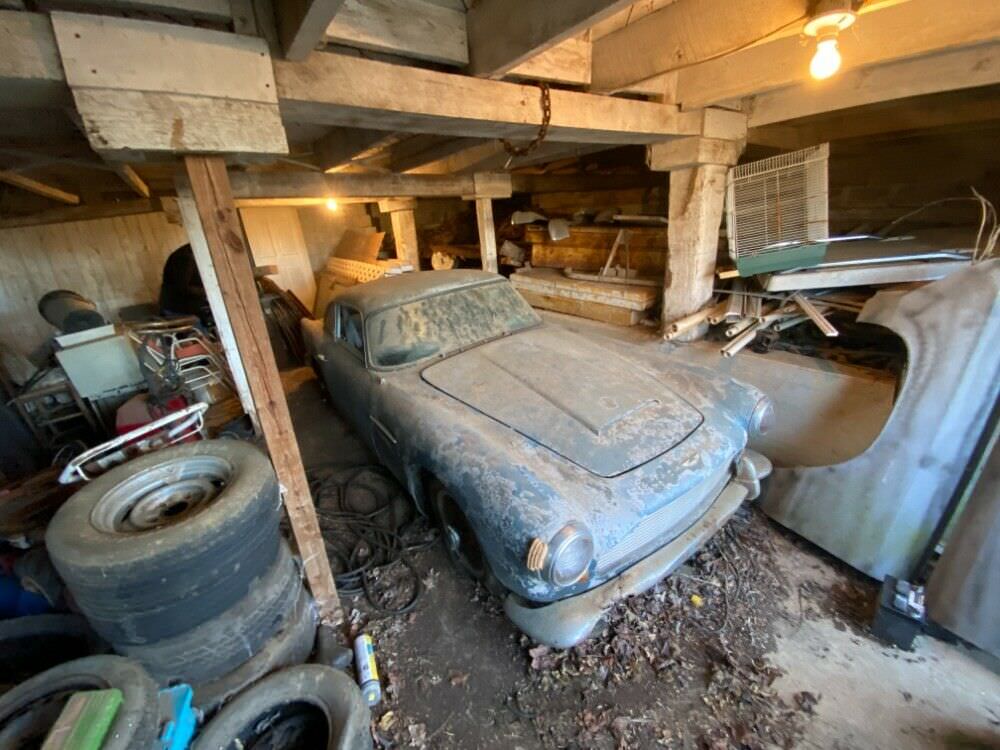
After receiving the car the owner put it into a barn with every intention of restoring it, as if often the case life got in the way and the car remained in untouched, hidden away, and gathering dust. It’s now been rediscovered and it’s being offered for sale out of Astoria, New York.
Fast Facts – The Aston Martin DB4
The Aston Martin DB4 was introduced in 1958 as the first all-new Aston developed under the ownership of David Brown, the man for whom the “DB” prefix was added to Aston model names.
The DB4 was an advanced car by the standards of the 1950s, it had a new chassis, a new lightweight Superleggera body from Touring of Milan, and perhaps most importantly, a new straight-six designed by Tadek Marek and capable of 240 to 300+ bhp.
Later versions of the DB4 would then be evolved into the Aston Martin DB5 – the car that became a global sensation after it was chosen as James Bond’s preferred car in the early 007 films.
The DB4 you see here was given as payment for some auto work done over 30 years ago, since then it’s remained preserved in a barn and it’s now being sold for restoration.
The Aston Martin DB4
David Brown had bought Aston Martin in 1947, saving the company in the process, and over the next few years he would return it to profitability.
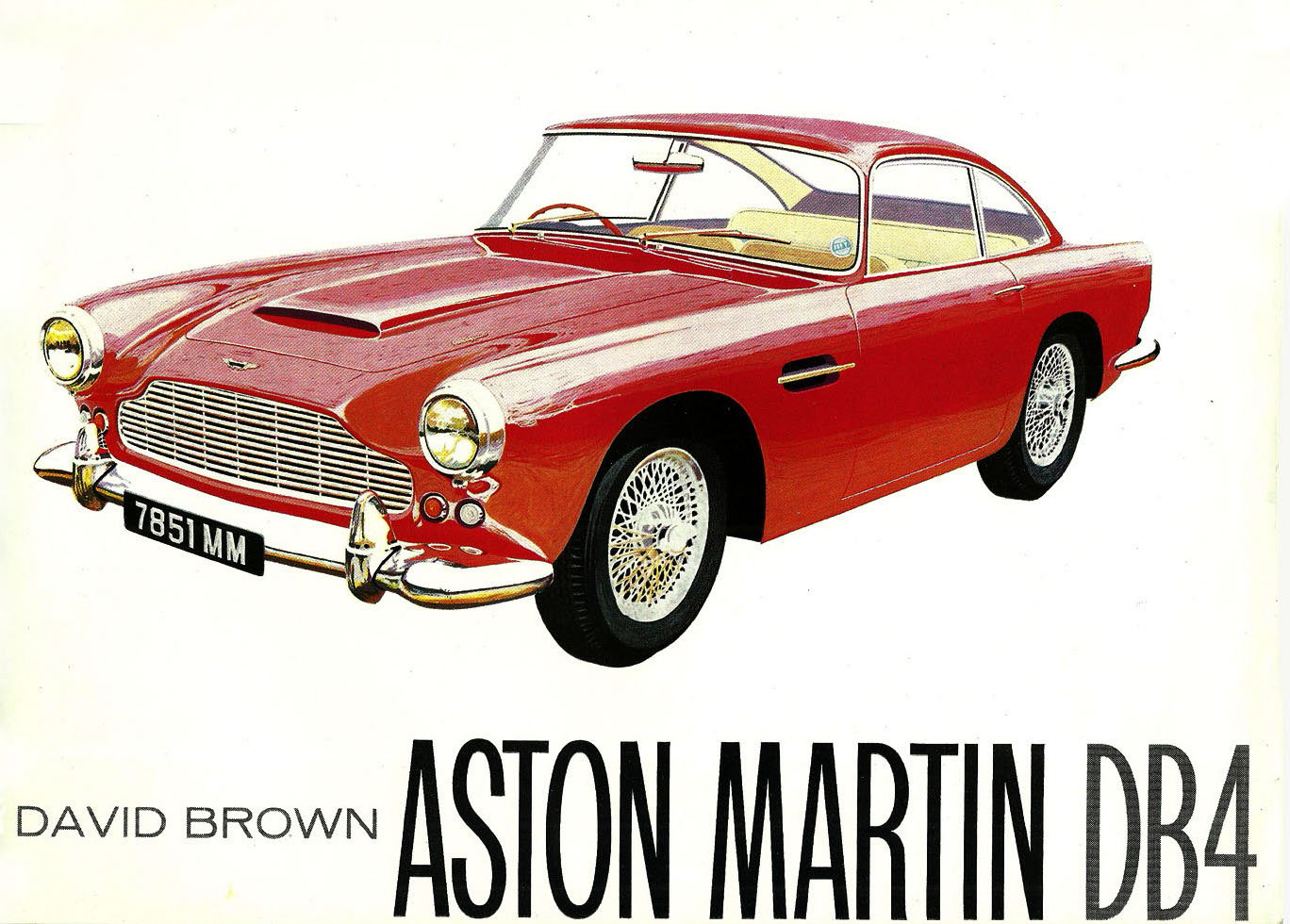
This illustration of the Aston Martin DB4 from a 1950s brochure for the model shows what it would have looked like when new.
It’s no exaggeration to say that, with the exception of the original company founders, David Brown was the single most influential person in the British automaker’s history. As a result of this, many Astons even today still carry his initials as a “DB” suffix in their model names.
The DB4 was developed in the late 1950s on a relatively short development cycle, the chassis alone is said to have been designed in just six weeks in 1957. This would be the first all-new Aston developed by the company under David Brown’s ownership, and it would set the stage for the many Astons that would follow.
This new chassis would be paired with a new body designed by Touring of Milan in Italy. The body is constructed using the Superleggera technique, essentially a lightweight metal framework with alloy panels over the top.
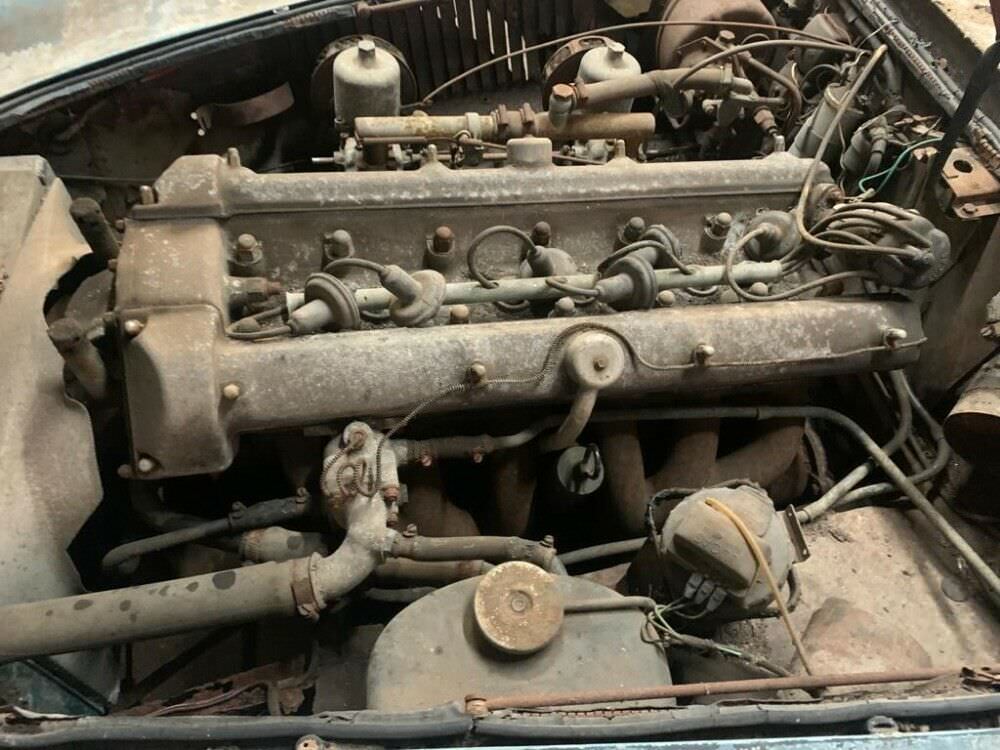
With the chassis and body featuring all new designs the engine was obviously going to need to be something special. Polish engineer and former racing driver Tadek Marek developed a straight-six with double overhead cams, using a block and head made from R.R. 50 – a special aluminum alloy developed by Rolls-Royce for their high-performance aircraft racing engines.
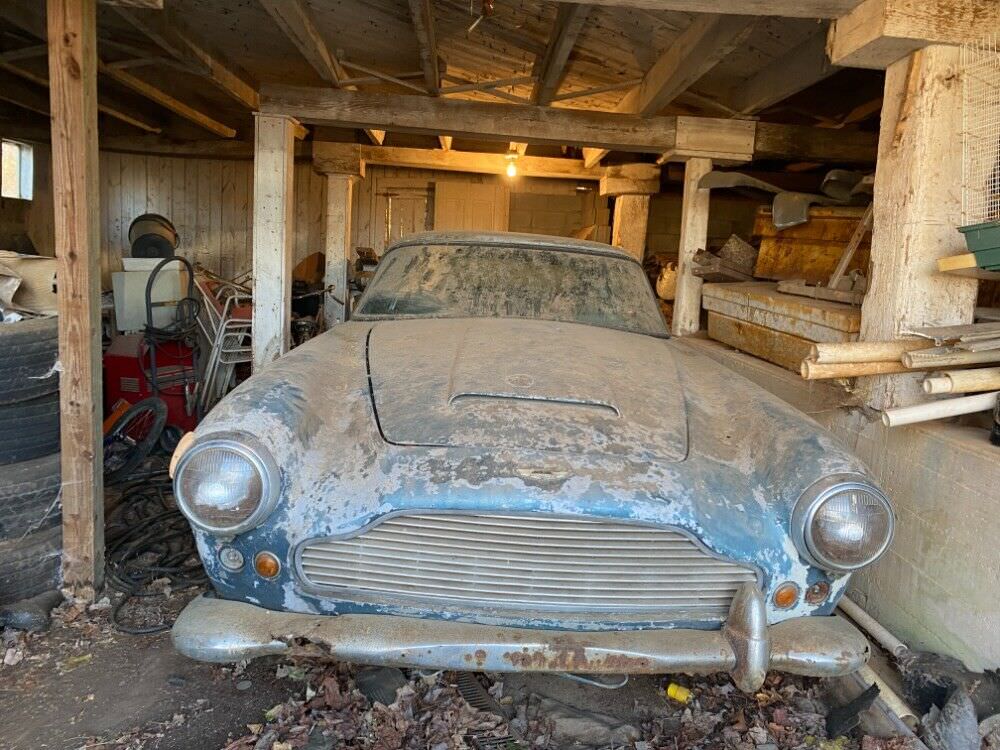
The interior does appear to be complete, however it’s clear that a full restoration is going to be needed inside and out.
This new engine was a performance powerhouse, turning out 240 bhp in factory trim and over 300 bhp in later high-performance versions. The relatively low curb weight of 1308 kgs (2,883 lbs) resulted in spritely performance, the DB4 was able to reach 139 mph in period tests with a 0 – 60 mph time of 9.3 seconds.
The Aston Martin DB4 would be produced over five series, each carrying a number of updates. The Series V cars looked almost indistinguishable from the later Aston Martin DB5 to everyone except marque experts, and this styling would be carried on through to the DB6 as well.
The Barn Find Aston Martin DB6 Shown Here
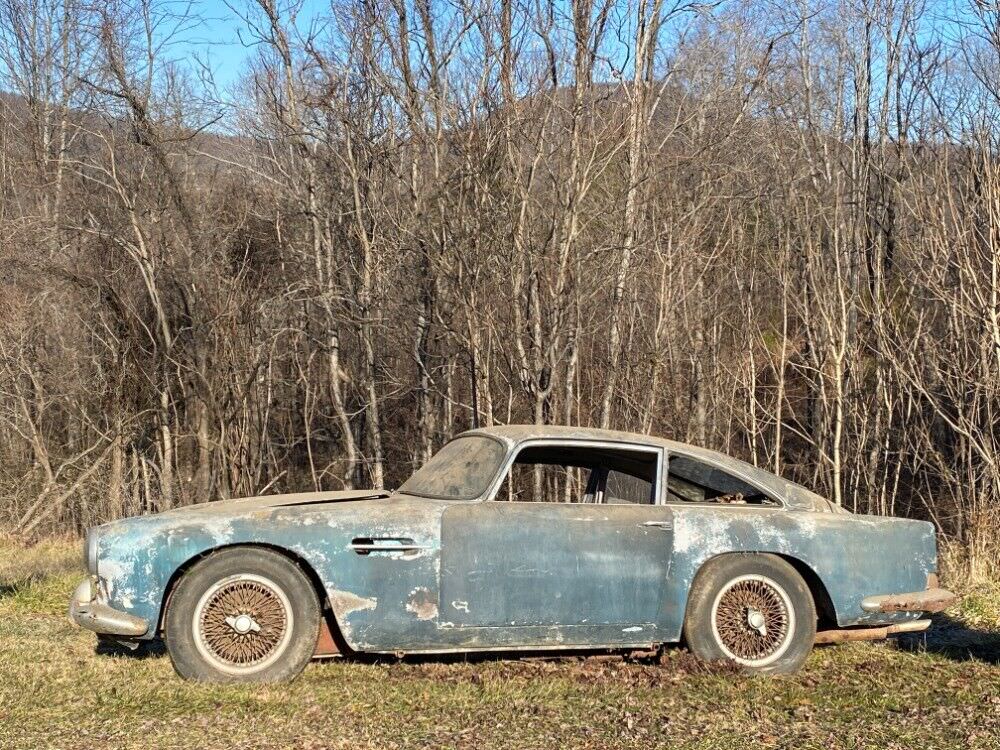
The Aston Martin DB4 you see here is a numbers-matching example that has spent over 30 years sitting tucked away in a barn protected from the elements but not from time itself.
Perhaps the most important thing about the car is that it retains its original chassis, body, and engine – a critical ingredient in the classic car world.
It’s now in tattered and dusty condition but its originality is likely to be very appealing to a certain class of vehicle restoration expert.
As mentioned further up, this car was given as payment for a few weeks of automotive bodywork to a body man who had recently returned after his tour of duty in Vietnam. He’s said to have spent time after work fixing one of his bosses cars and this DB4 was given to him in lieu of cash.
He tucked the DB4 away in a barn with the intention of restoring it, but he never got around to it and the years rolled on. The car is now being offered for sale out of Astoria, New York with an asking price of $325,000 USD on eBay.
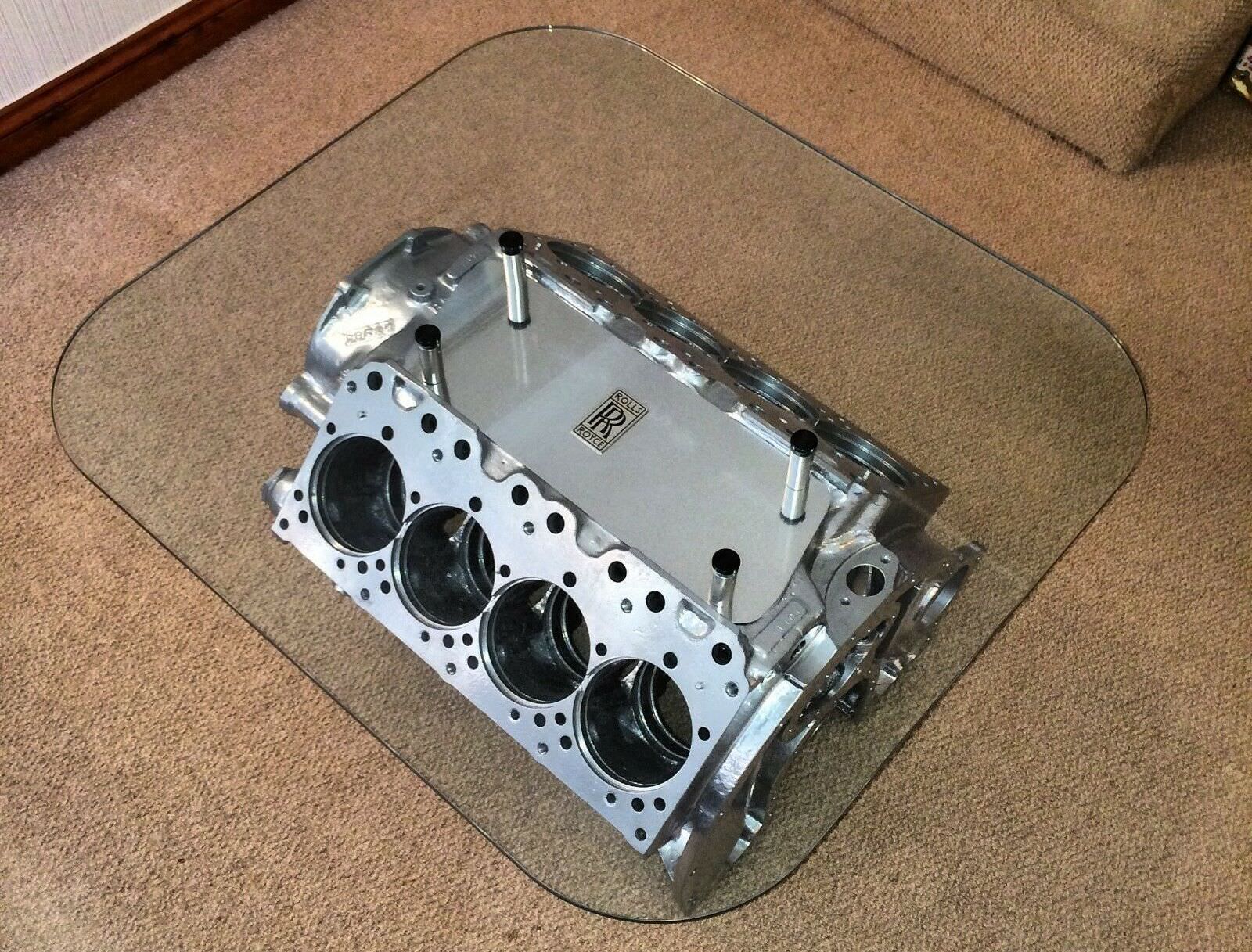
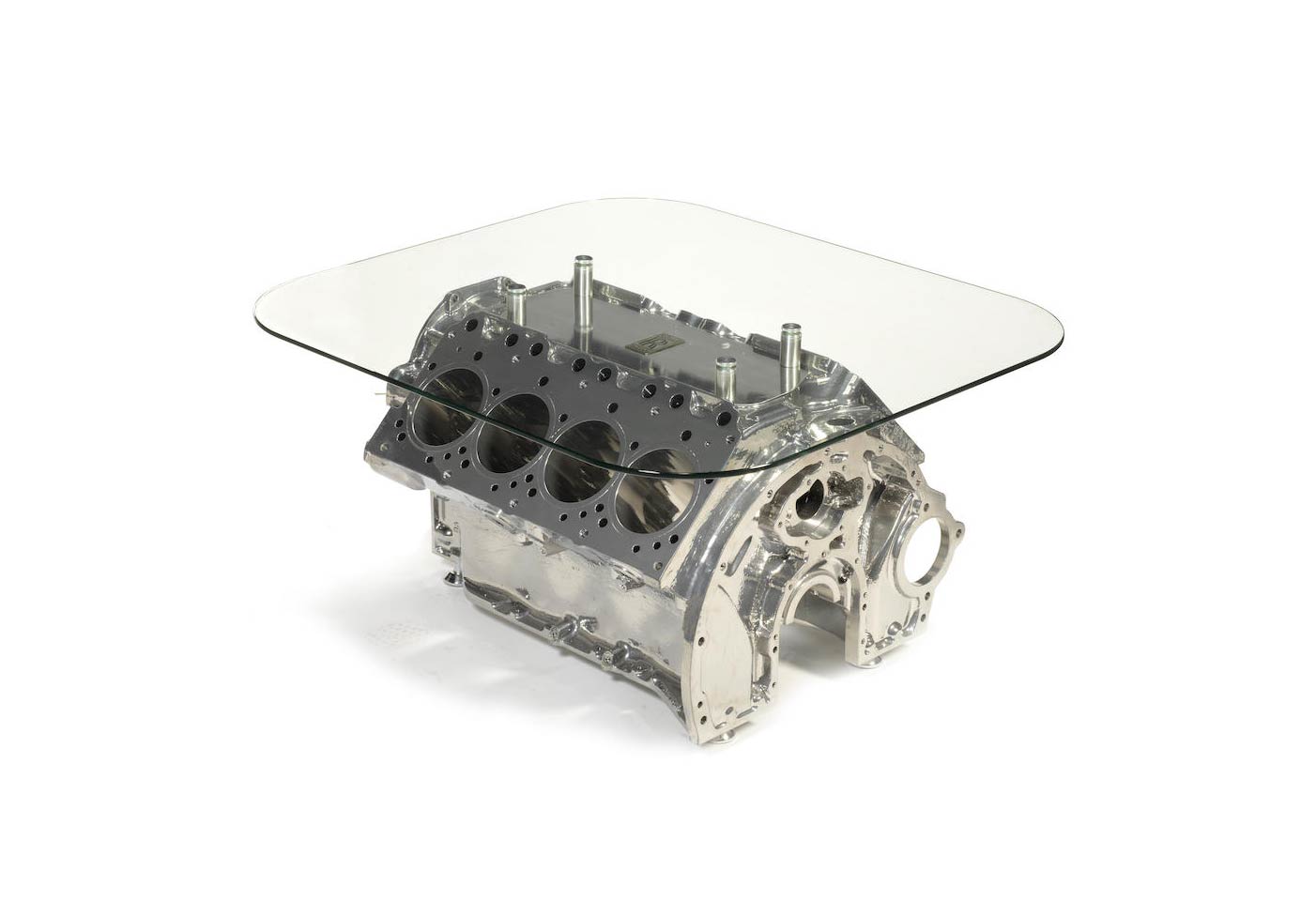
This glass-topped coffee table is made using a 6.75 liter Rolls-Royce V8 engine block as its base. The toughened glass top sits on four chromed columns and the block rests on four feet that are designed to not mark or scuff your floors.
The Rolls-Royce L-series V8 was also used by Bentley, the engine had a remarkably long 61 year production life, having entered service in 1959 and remaining in use as a power unit until it was replaced in the year 2020.
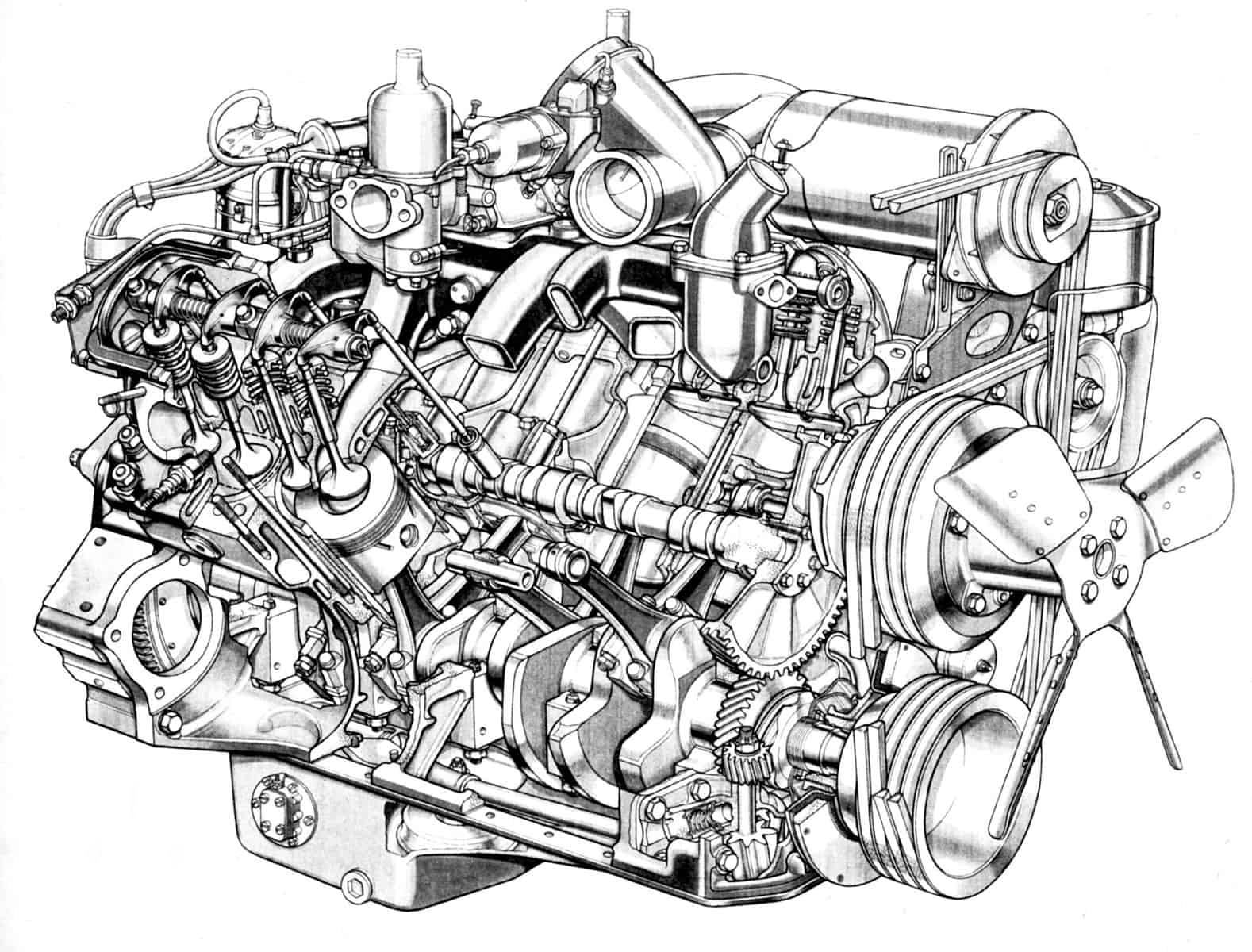
This illustration shows the inner workings of the Rolls-Royce L-series V8. Note that this is an early version of the engine with carburetors and no turbocharging.
The L-series V8 entered development in the early 1950s as a replacement for the British automaker’s previous straight-six, straight-eight, and V12 engine designs.
Interestingly Rolls-Royce had designed and built the first V8 engine ever used in a production automobile back in 1905, so in manner of speaking the new L-series engine was a return to their roots. The design of the L-series was relatively standard for the 1950s, it has a camshaft in the block with pushrods actuating two overhead valves per cylinder.
Early cars were carburetor fed but this was changed to fuel injection over time, later cars would remove turbocharging followed by turbocharging and intercooling combined. Rolls-Royce spent countless millions on development to keep the L-series relevant over the decades – ensuring it would meet increasingly stringent emissions regulations.
When ordering you can choose between Rolls-Royce and Bentley badging – as the same engine was used by both automakers.
The coffee table you see here is made from a chromed L-series Rolls-Royce engine block, the company that builds them is suitably called “Engine Tables” and they produce a wide variety including tables made from Aston Martin, Jaguar, Cosworth, Range Rover, Porsche, Mercedes-Benz, BMW, Bentley, and of course, Rolls-Royce.
Each table comes four legs designed to not mark or damage flooring, and the toughened glass top is made to British Standards BSEN12150. The overall height of the table you see here is 500mm and it weighs approximately 50 kilograms.