The Fiat 8V was one of the great surprises of the early 1950’s. This was a two litre V8 sports car with a semi-monocoque chassis, fully independent suspension, offering excellent performance – it won the Italian GT Championship for five consecutive years from 1954 to 1958.
While the name Fiat was predominantly associated with small utilitarian cars with small engines of anemic power, this new car broke the mould. In 1952 Road & Track magazine called the Fiat 8V “the biggest surprise of the year.”
Fast Facts – The Fiat 8V Supersonic
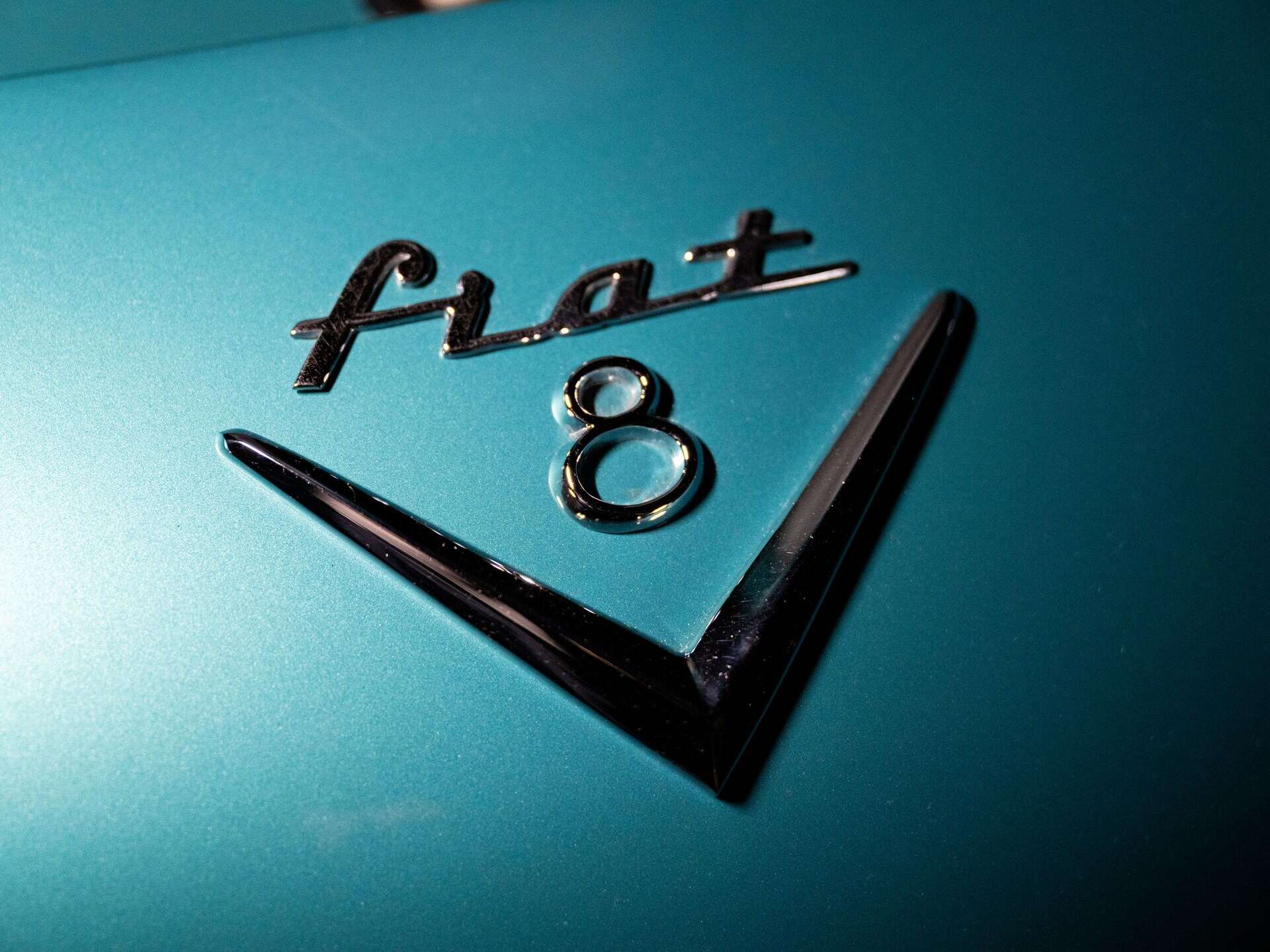
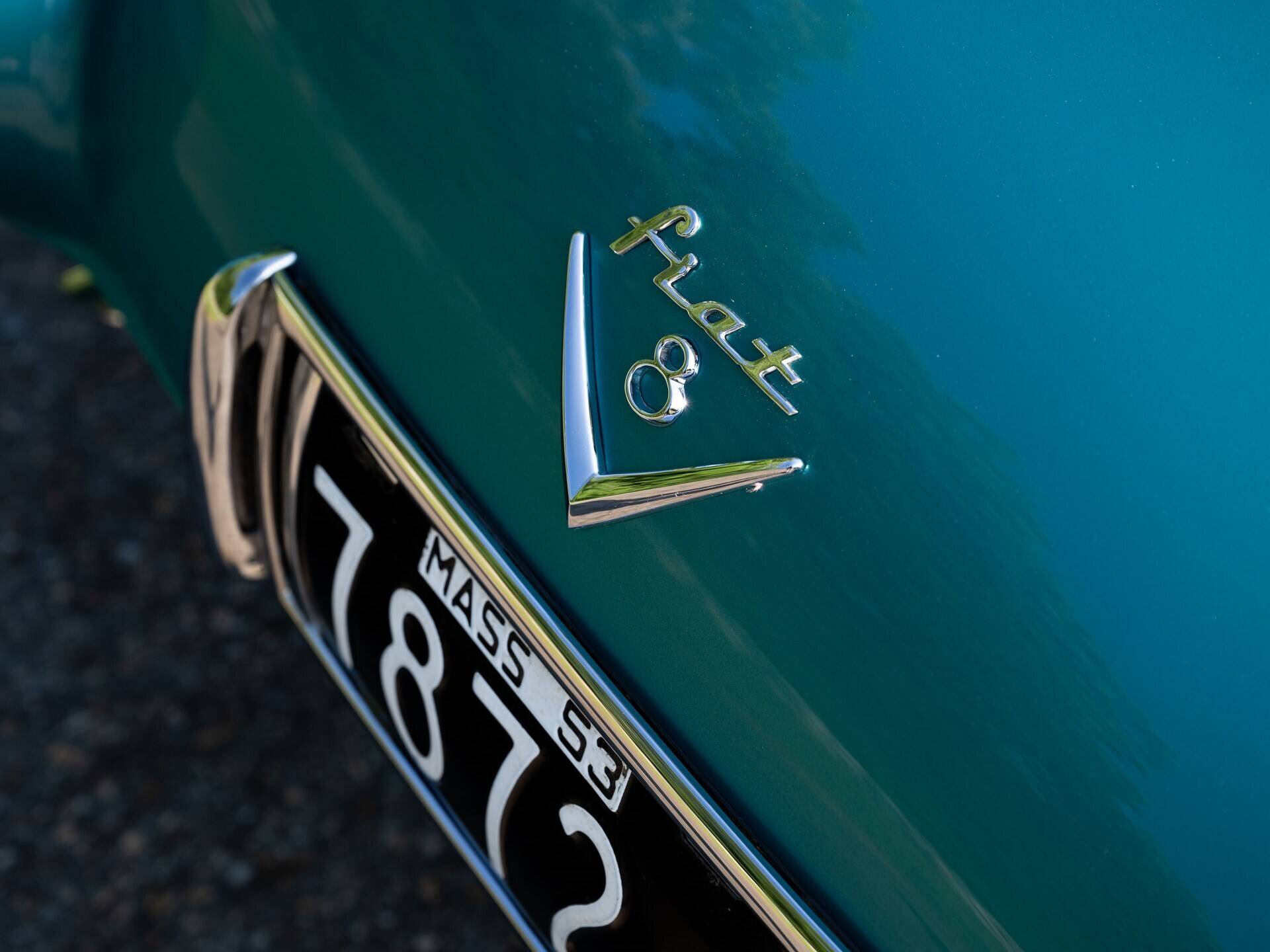
- The Fiat 8V was originally going to be called the Fiat V8, but Fiat believed that the name “V8” was already trademarked by Ford and so they called their new V8 the 8V.
- The engine from the Fiat 8V was the same engine that was installed in Steve McQueen’s Siata 208, which he nicknamed his “Little Red Ferrari.”
- The 8V was called the Otto Vu in Italian and it was built on a semi-monocoque chassis which allowed Italy’s custom coachbuilders to create custom bodywork for it.
- Perhaps the most famous of all the “Otto Vu” Fiats was the Jet Age “Supersonic” created by Giovanni Savonuzzi of Ghia.
Fiat And The Revolutionary “Otto Vu”
Back in the 1950’s the name “Fiat” conjured up visions of a small car, like the Fiat Topolino or 500 Bambino, with a small engine and exceedingly unexciting performance.
But by the beginning of the 1950’s the management at Fiat were becoming aware that they could make cars for the US market, and in fact Fiat had a long history of making cars in the United States, manufacturing having begun in 1909.
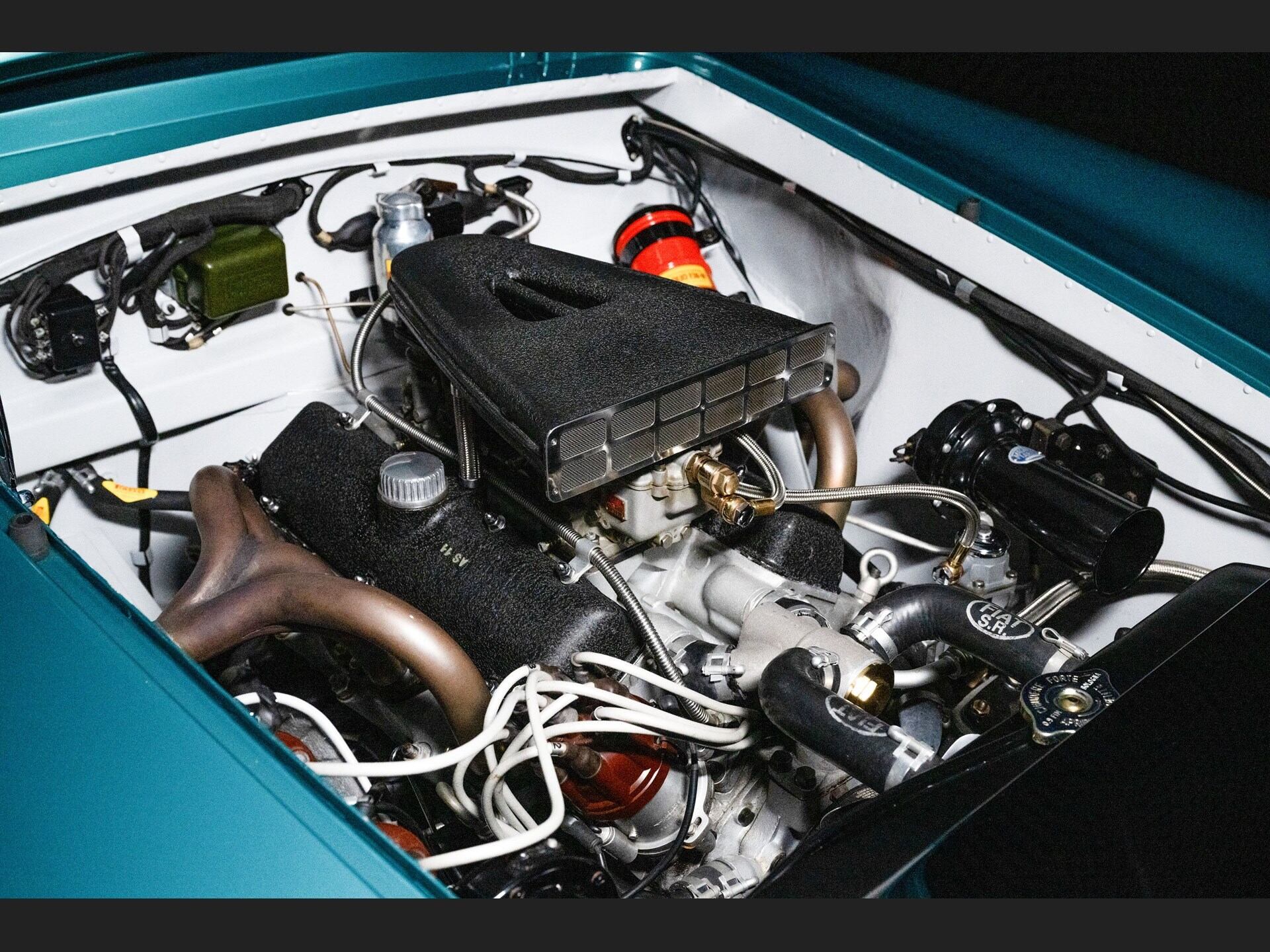
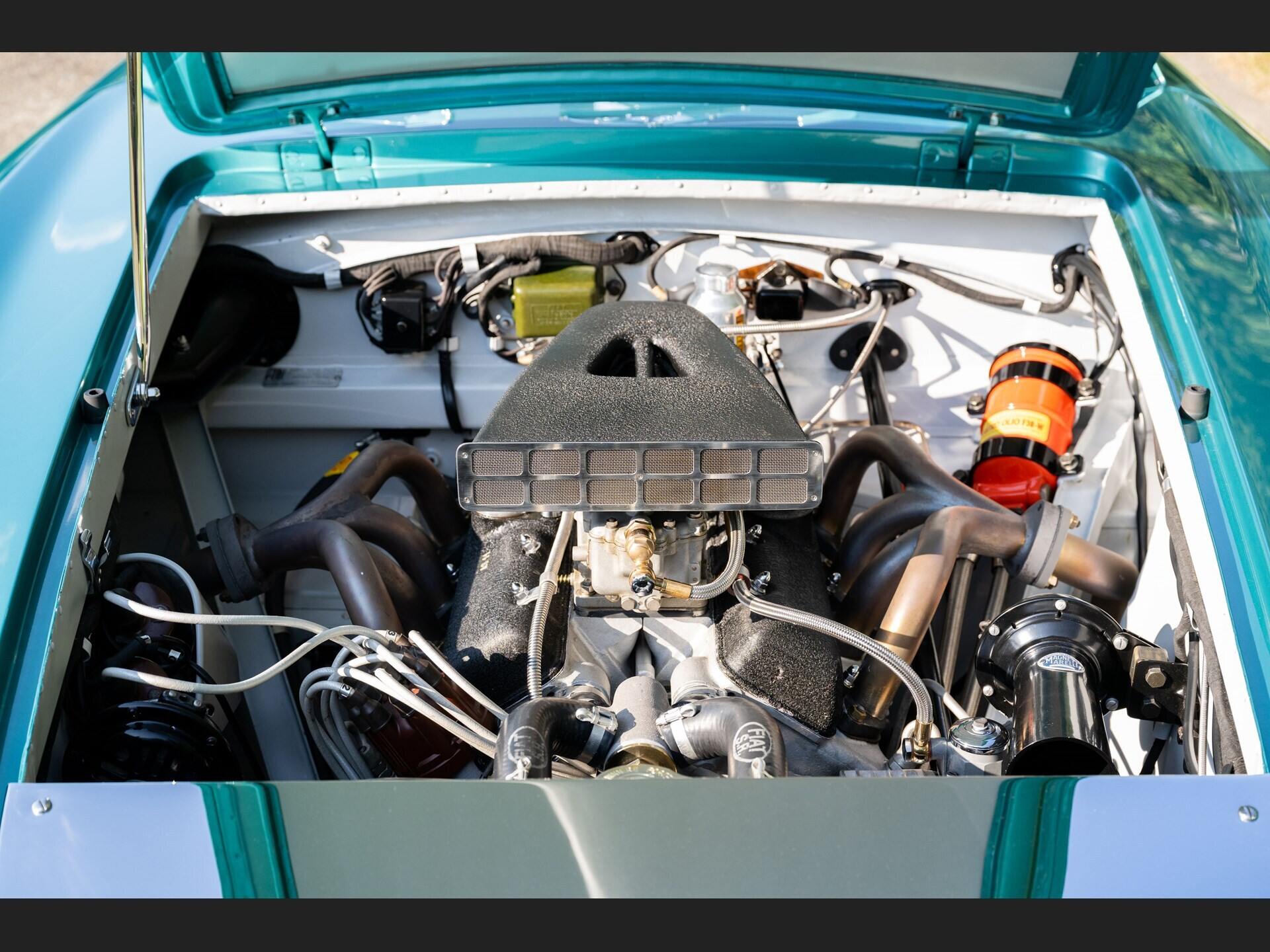
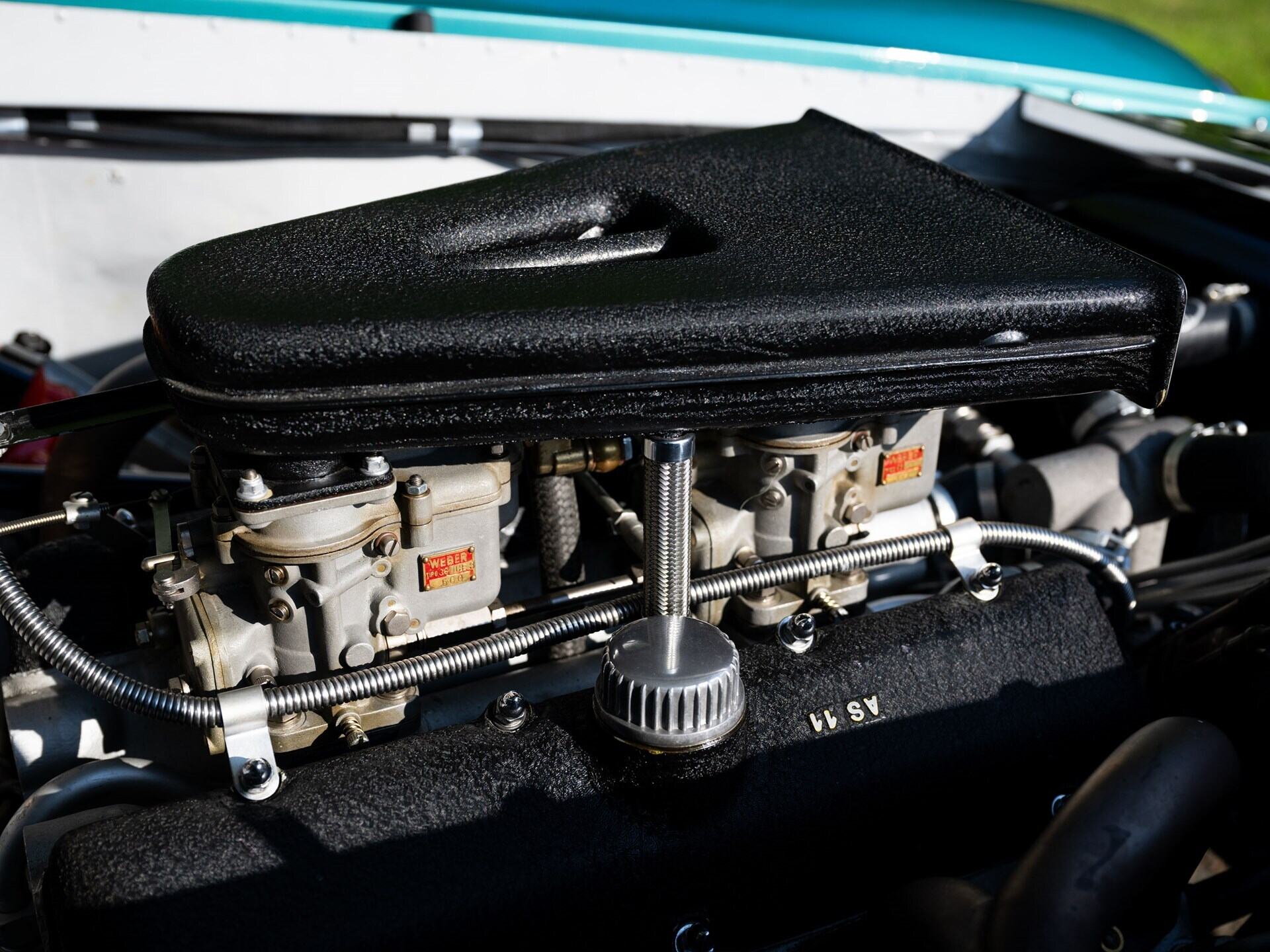
This is the unique Fiat 8V 2.0 litre V8 engine. The only V8 Fiat made and still one of the stand-out production car V8 designs of the era.
There were great differences between design of a car for the Italian and European market, and for the United States market. The licensing in Europe favoured small cars with small engines – the Fiat Topolino’s engine was of 569 cc capacity and produced a not at all exciting 13 bhp – this was a car that didn’t so much accelerate as gain momentum over time.
However the Americans were used to full size six cylinder engines and V8s in regular mass production cars. Ford had been making their flathead V8 since 1932 and they were popular in the United States, but such a car would be the province of the rich in post-war Italy. In fact the Ford V8 was known to be so popular that Fiat’s management assumed that Ford must have a copyright over the term “V8.”
In considering their strategy with which to break into the US market Fiat imagined that they would create a sedan powered by a modest capacity six cylinder engine – it was a cautious plan to test the waters.
Discussion between Fiat’s President and Italy’s Prime Minister in 1947 got the wheels in motion and work was begun on a berlina sedan design for the US market.
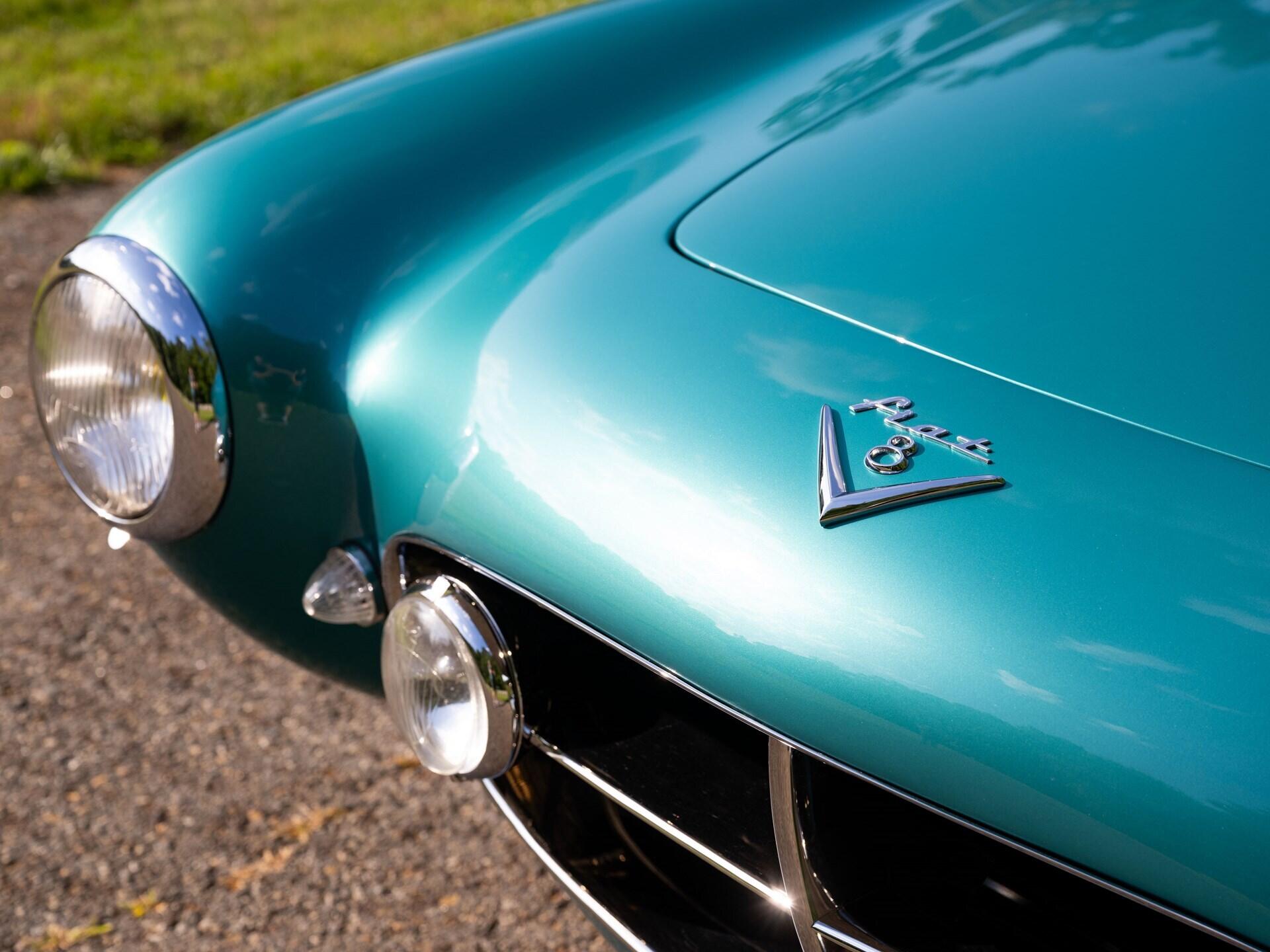
The idea of using a six cylinder engine was ultimately scrapped with a more daring approach adopted – it morphed into a V8. Believing that Ford owned the rights to the “V8” name Fiat swapped it around to “8V” – believing that this would get around the trademark.
A trademark they would later learn didn’t exist.
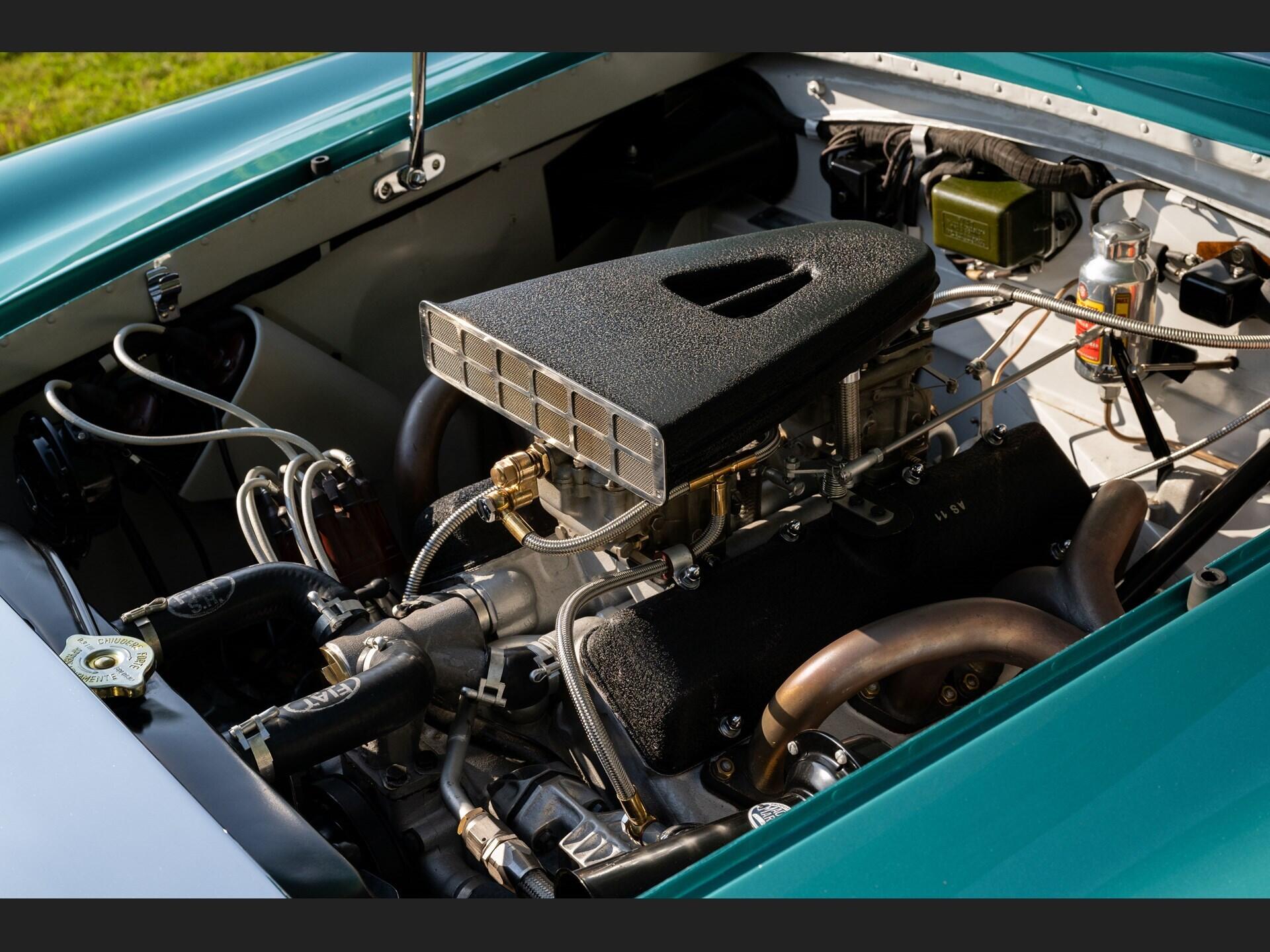
The 8V engine was fed air via a top mounted air intake, the engine features a cross-flow head design, with the exhaust ports exiting either side as is common with many V8 and V6 engines.
The design work on the 8V berlina sedan was done under the leadership of Fiat’s design engineer Dante Giacosa and progressed to the construction of a fully functional prototype. However, after all that work, management and engineers decided to scrap the project and salvage what they could.
They kept the type 104 V8 engine, and the type 106 chassis from the sedan, and started on something new and exciting based on these two design elements that showed great promise.
By the early 1950s the US sports car market had strengthened, with sports cars from Britain, Germany, and Italy having become much sought after.
It seems to have occurred to Fiat’s decision makers that if Alfa Romeo, Lancia, Maserati and Ferrari could make a go of selling sports car to Americans then Fiat could too – and having deeper pockets they could potentially create cars superior to all their competitors.
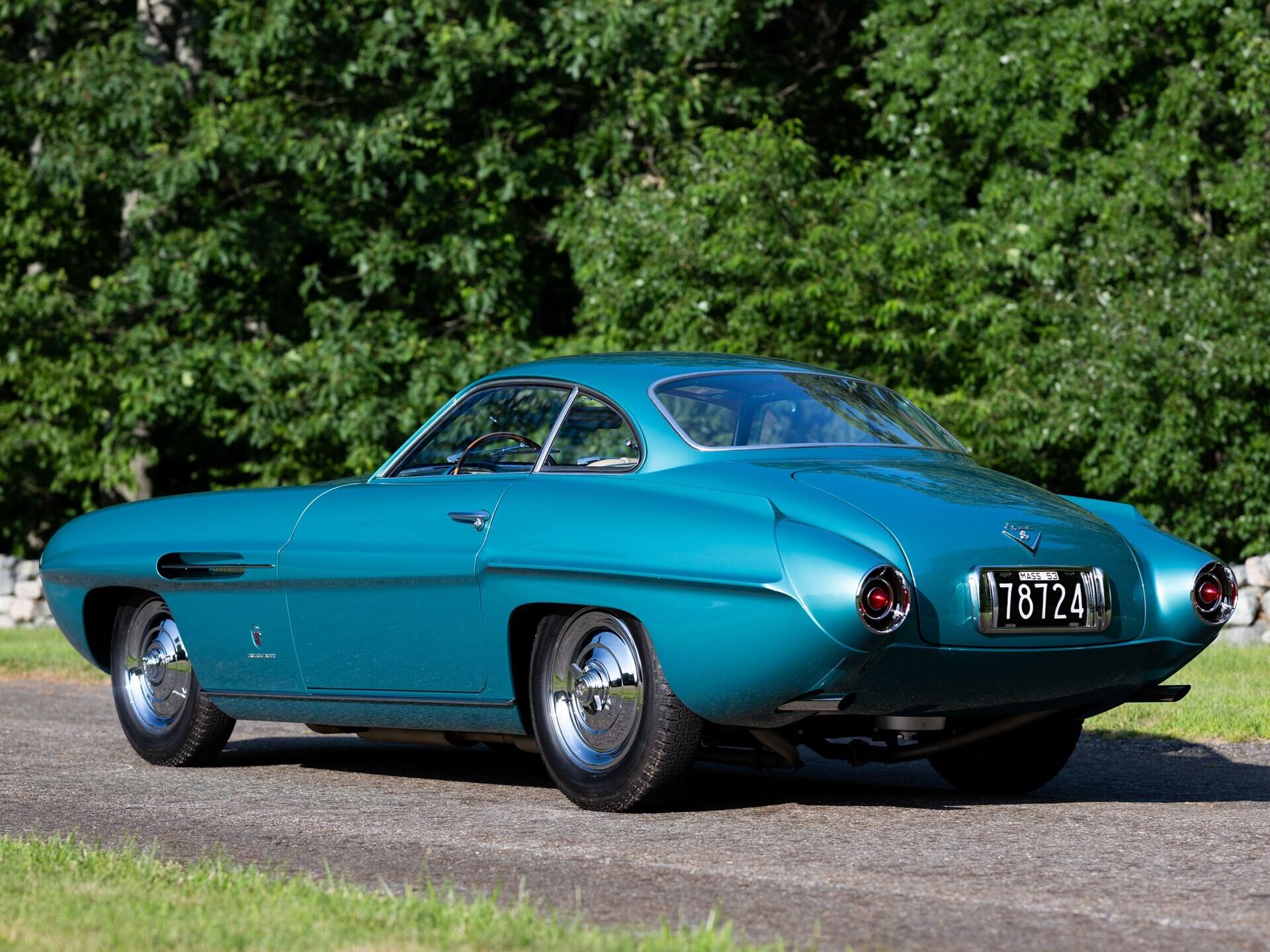
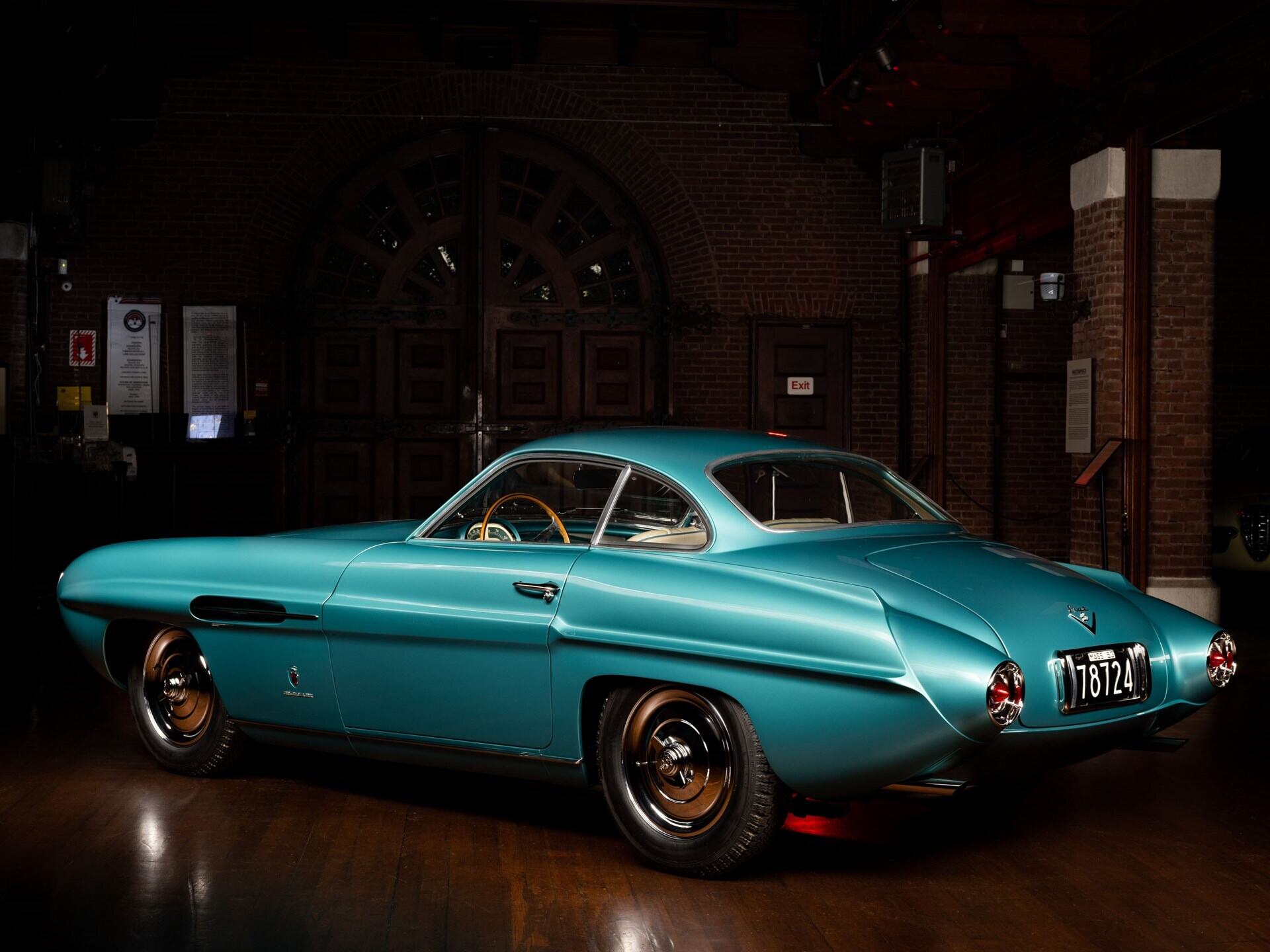
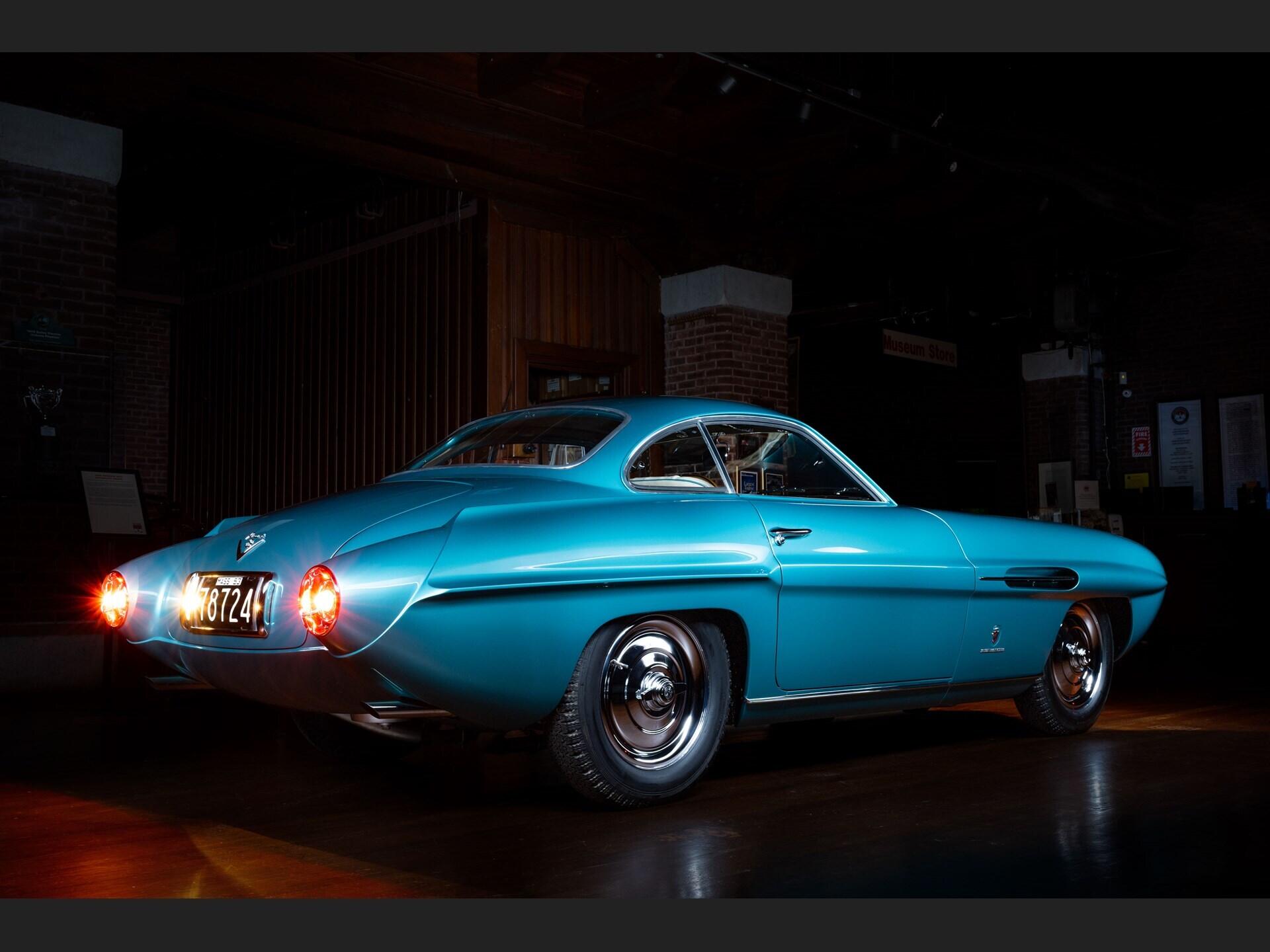
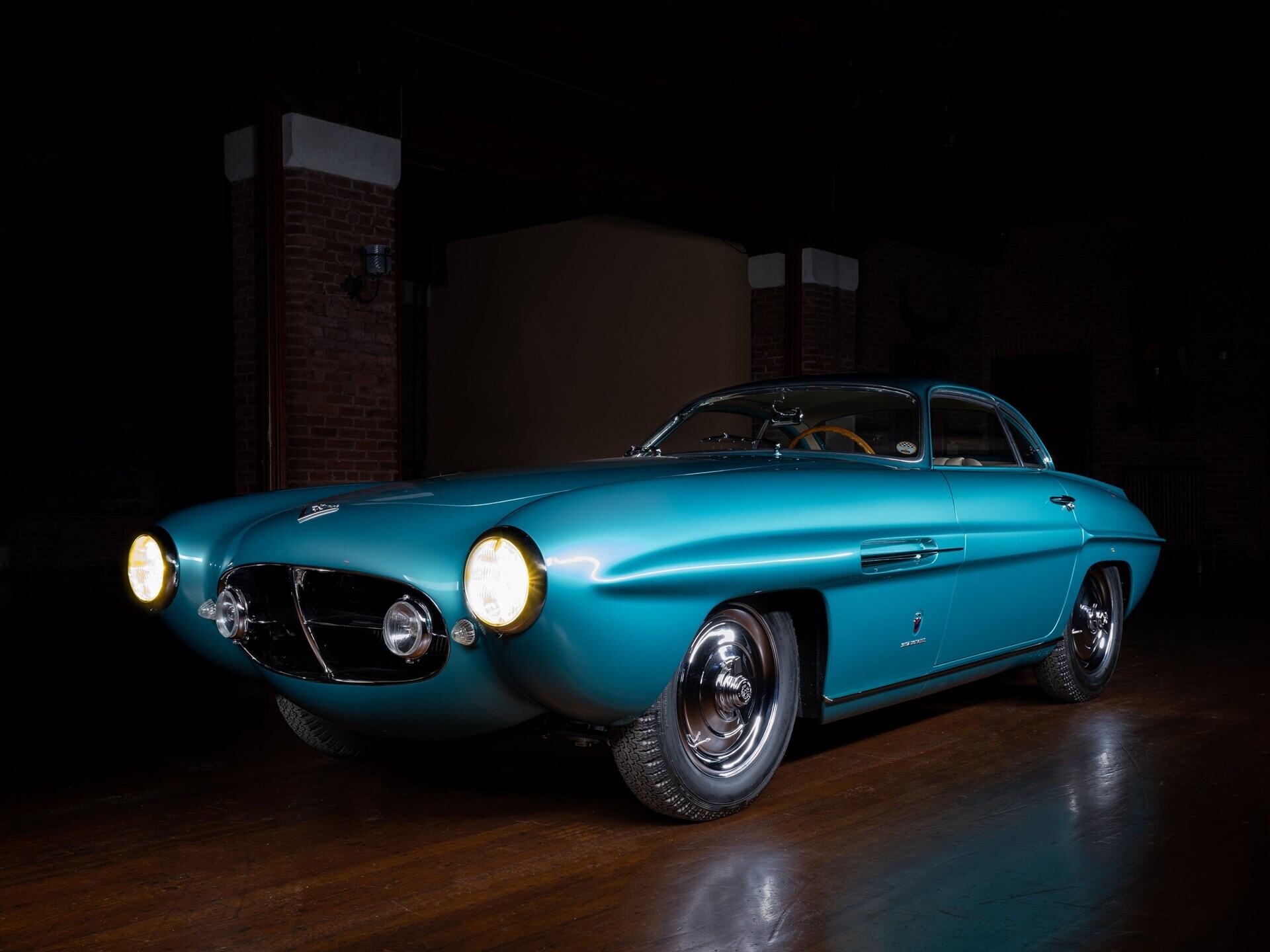
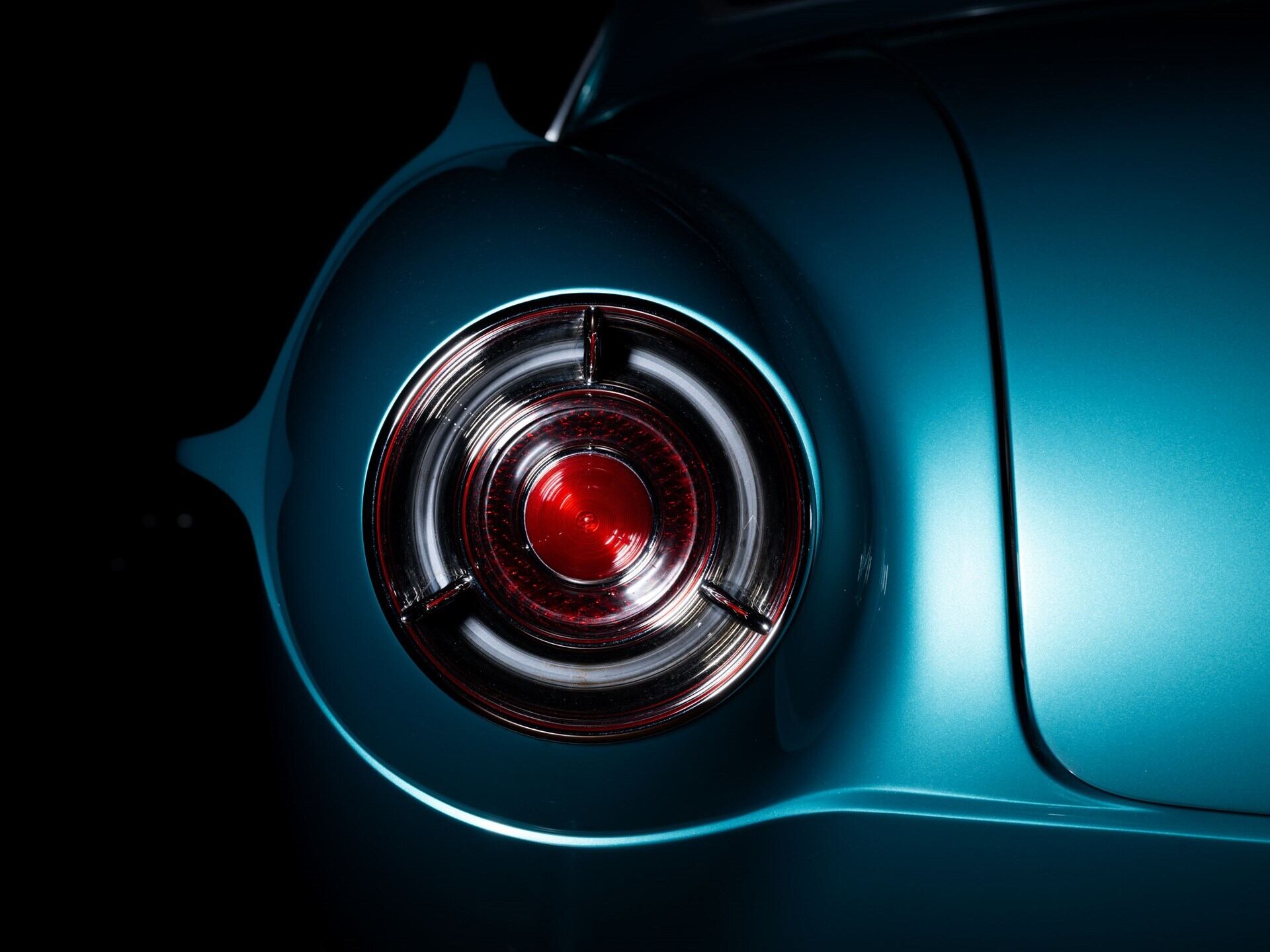
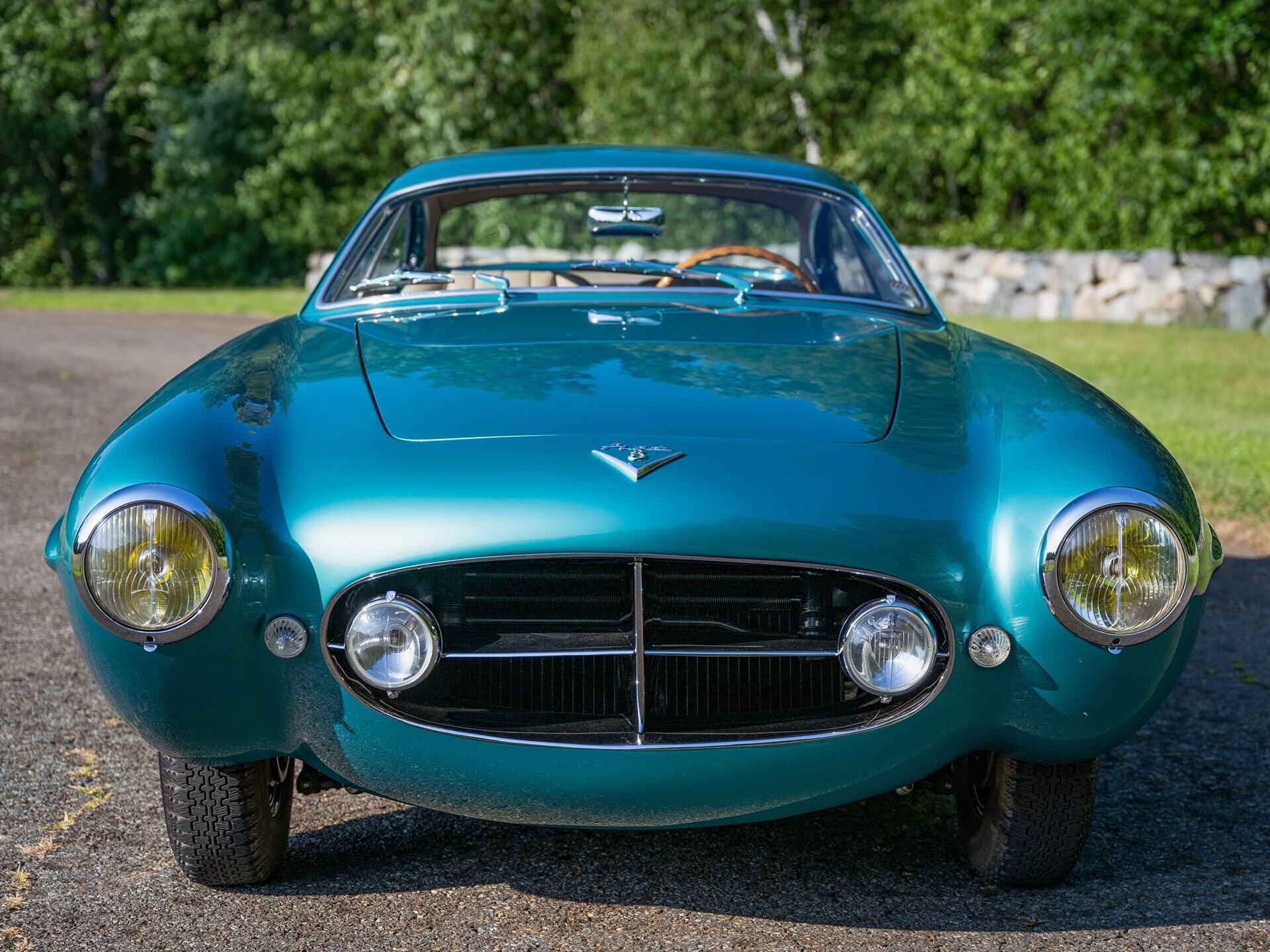
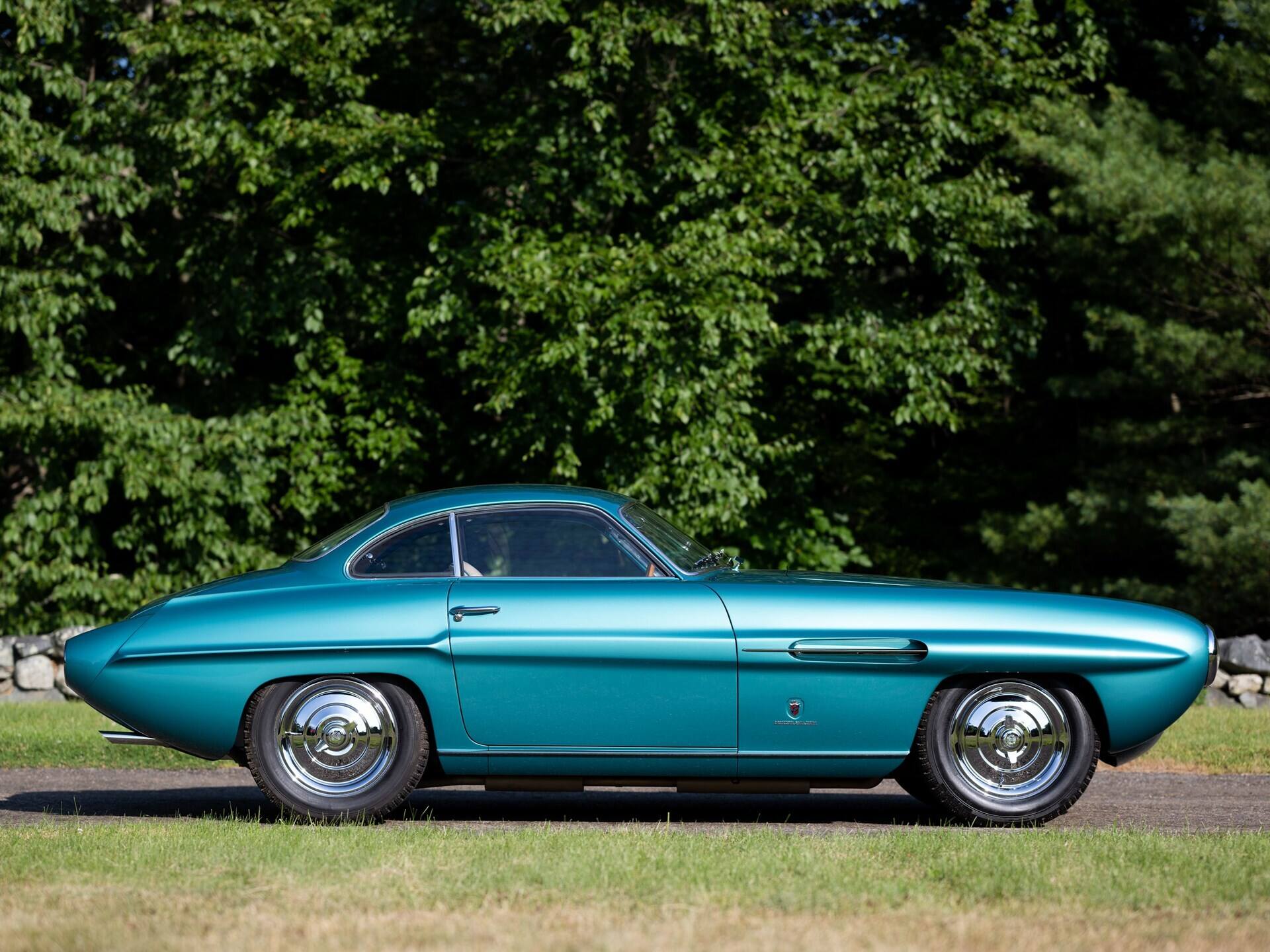
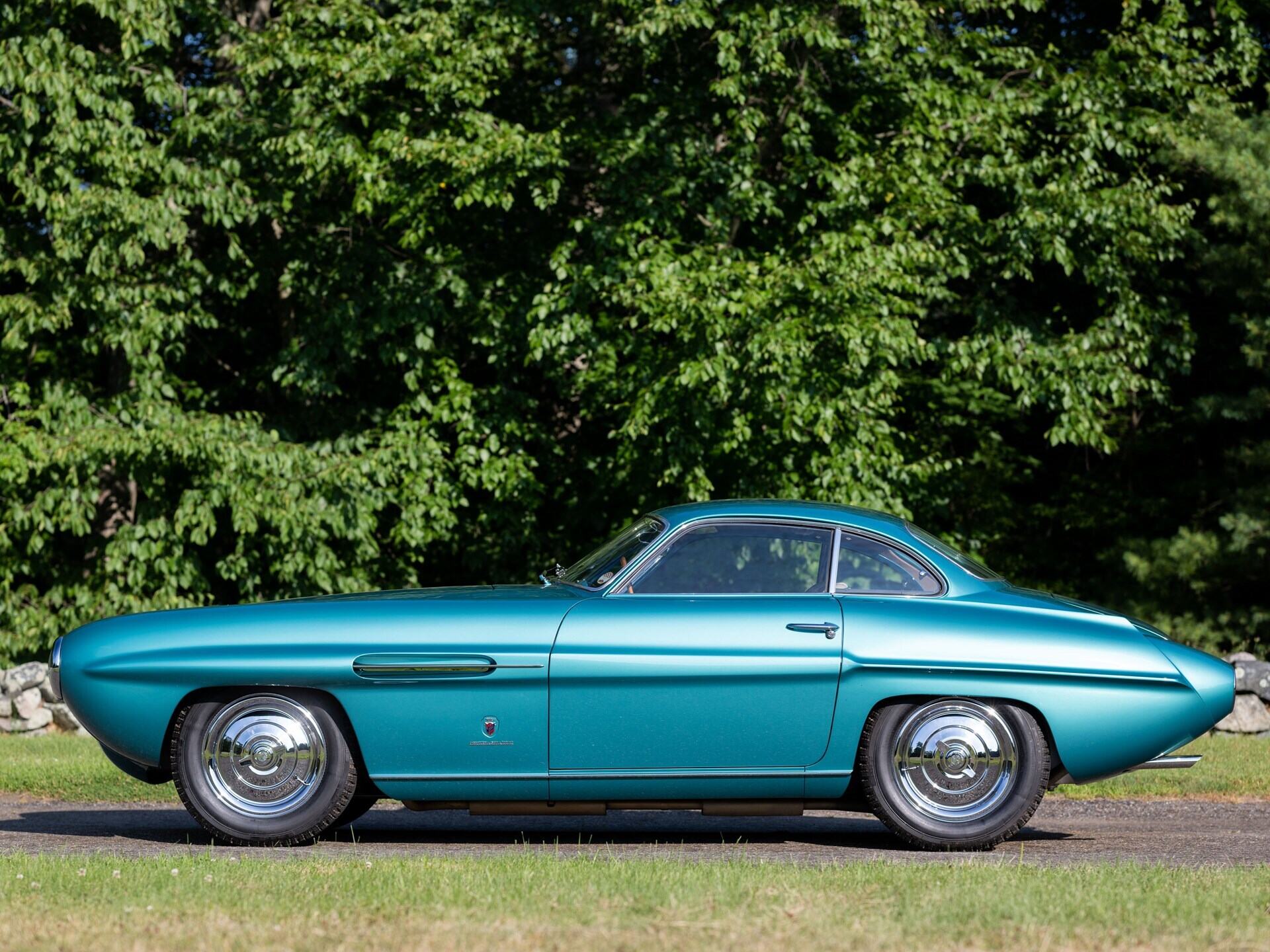
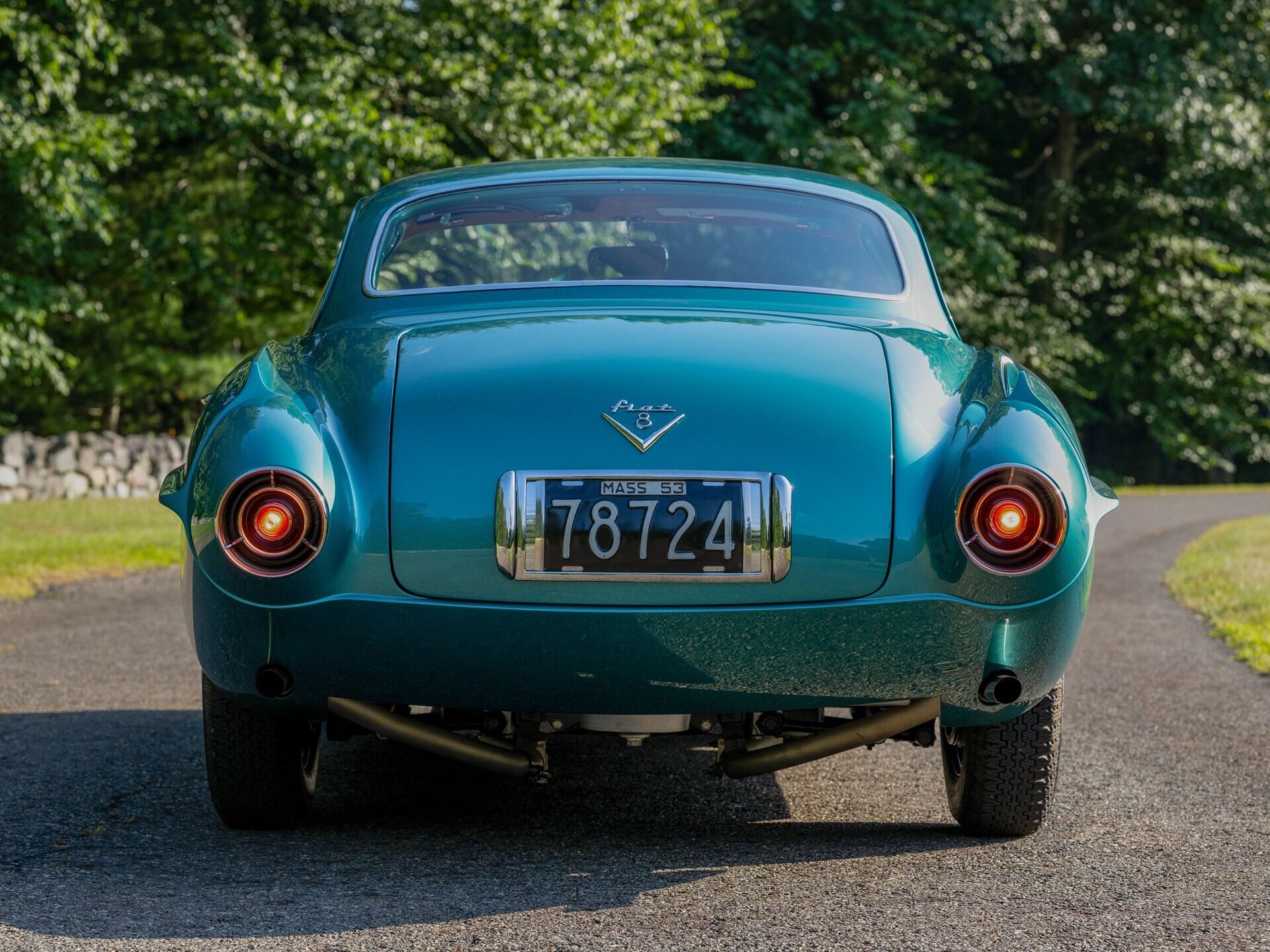
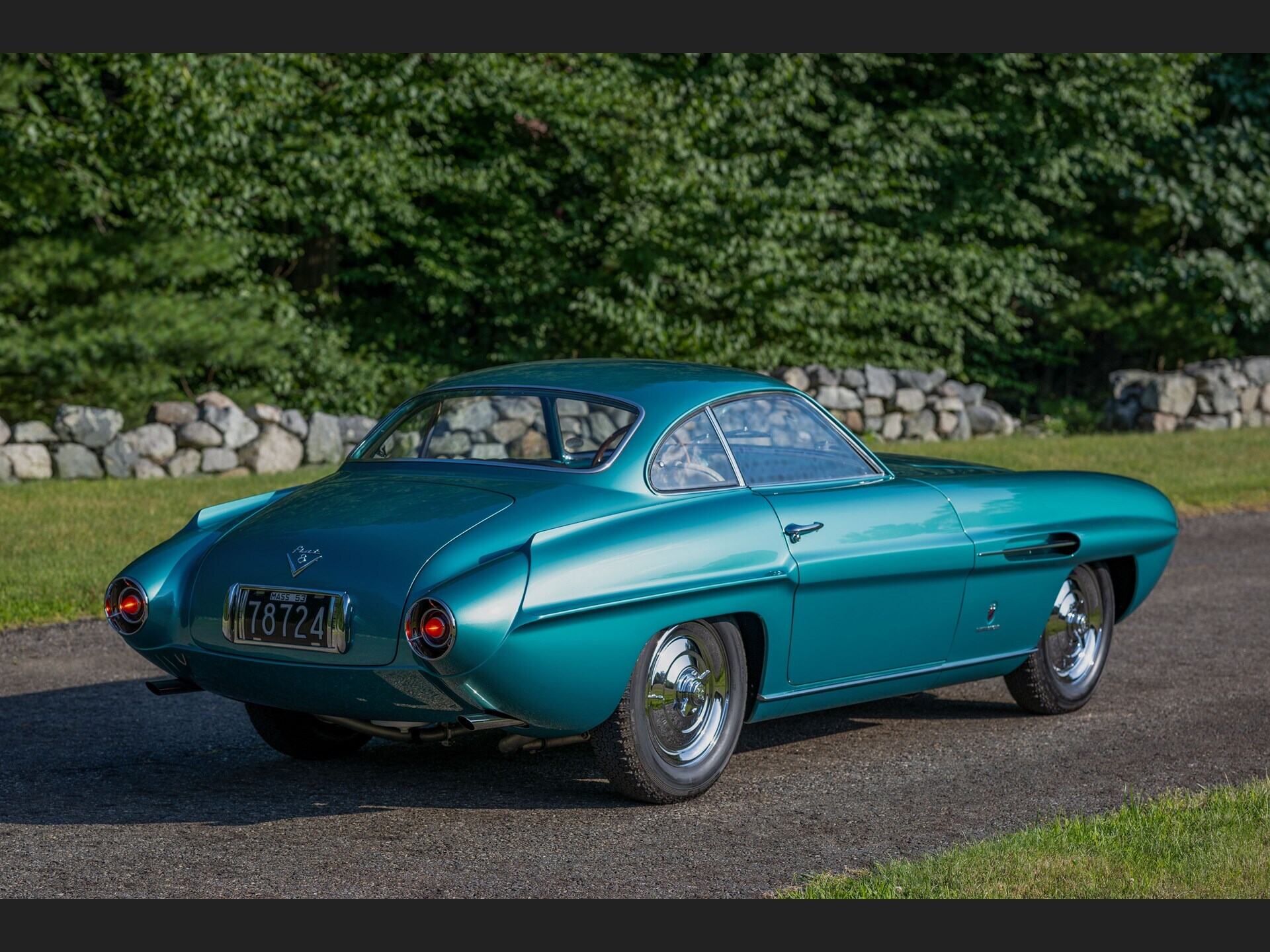
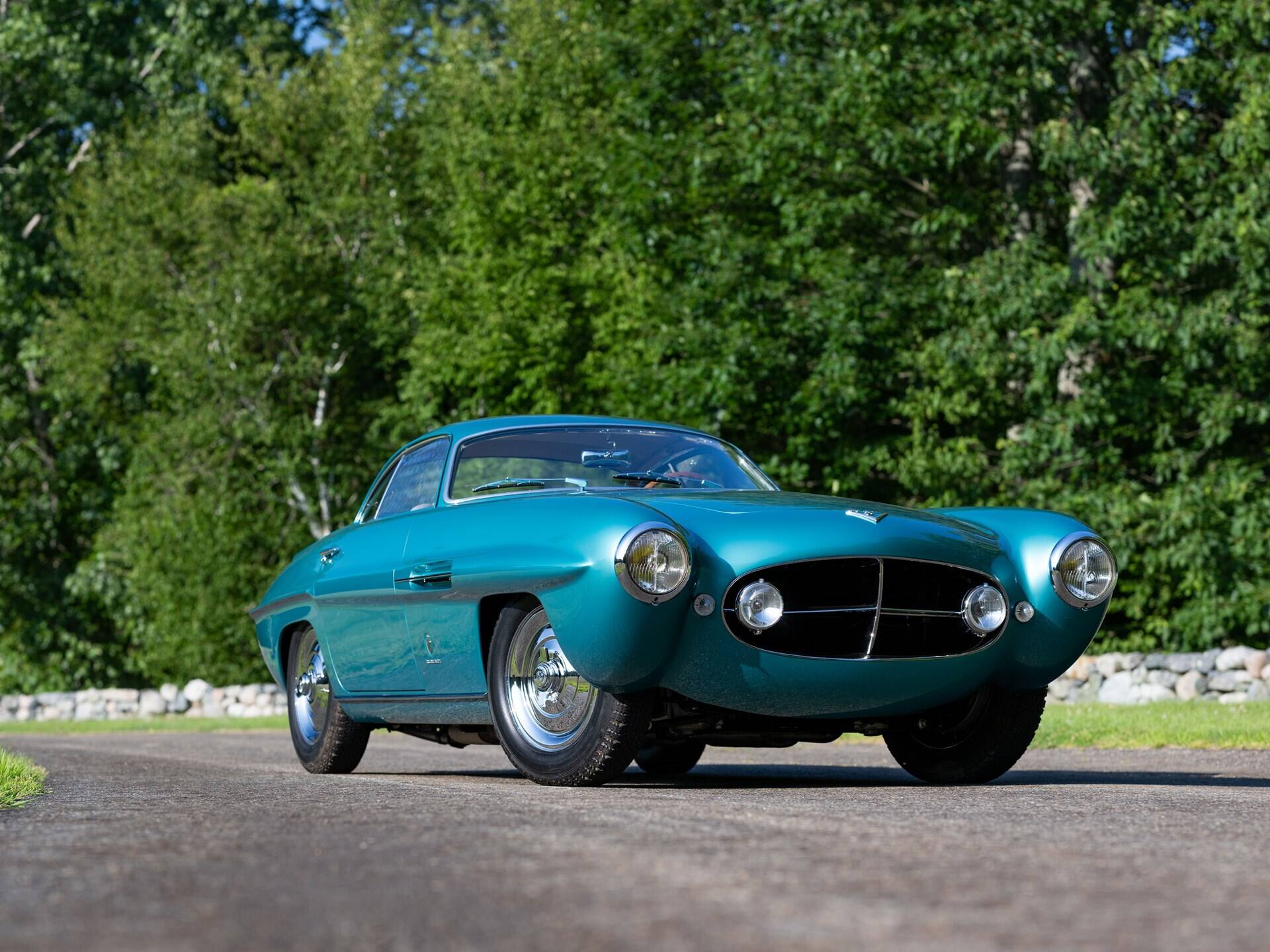
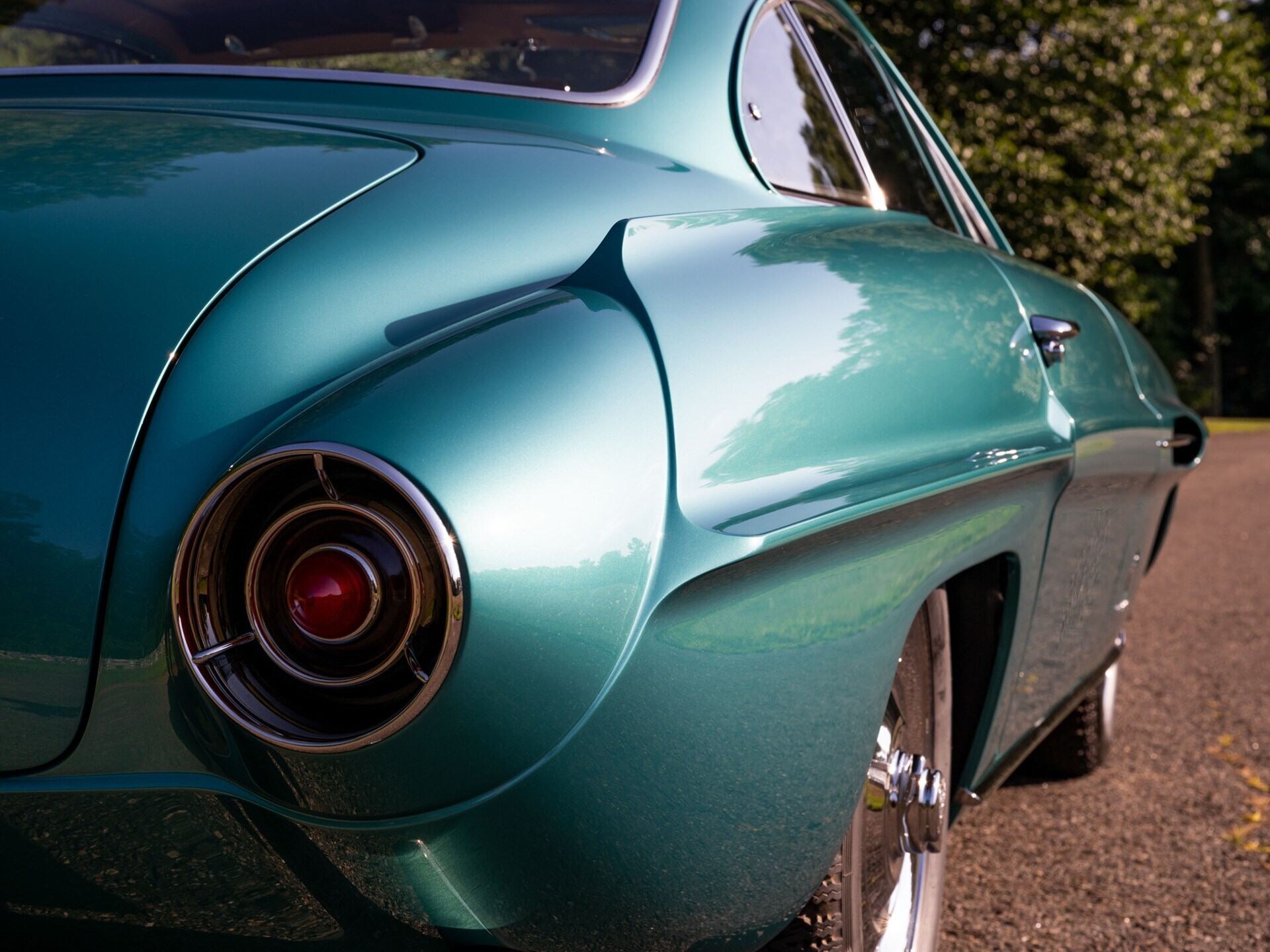
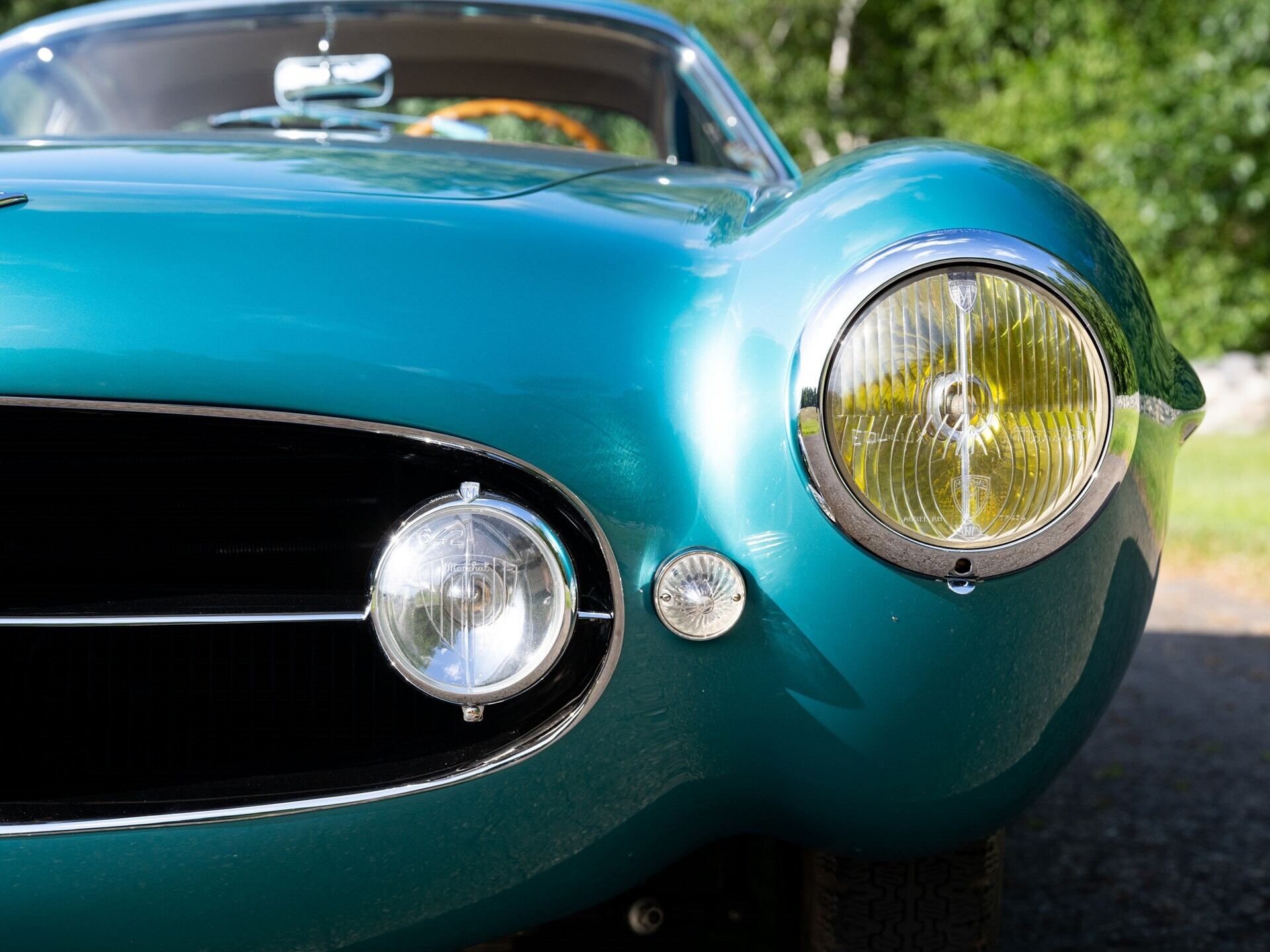
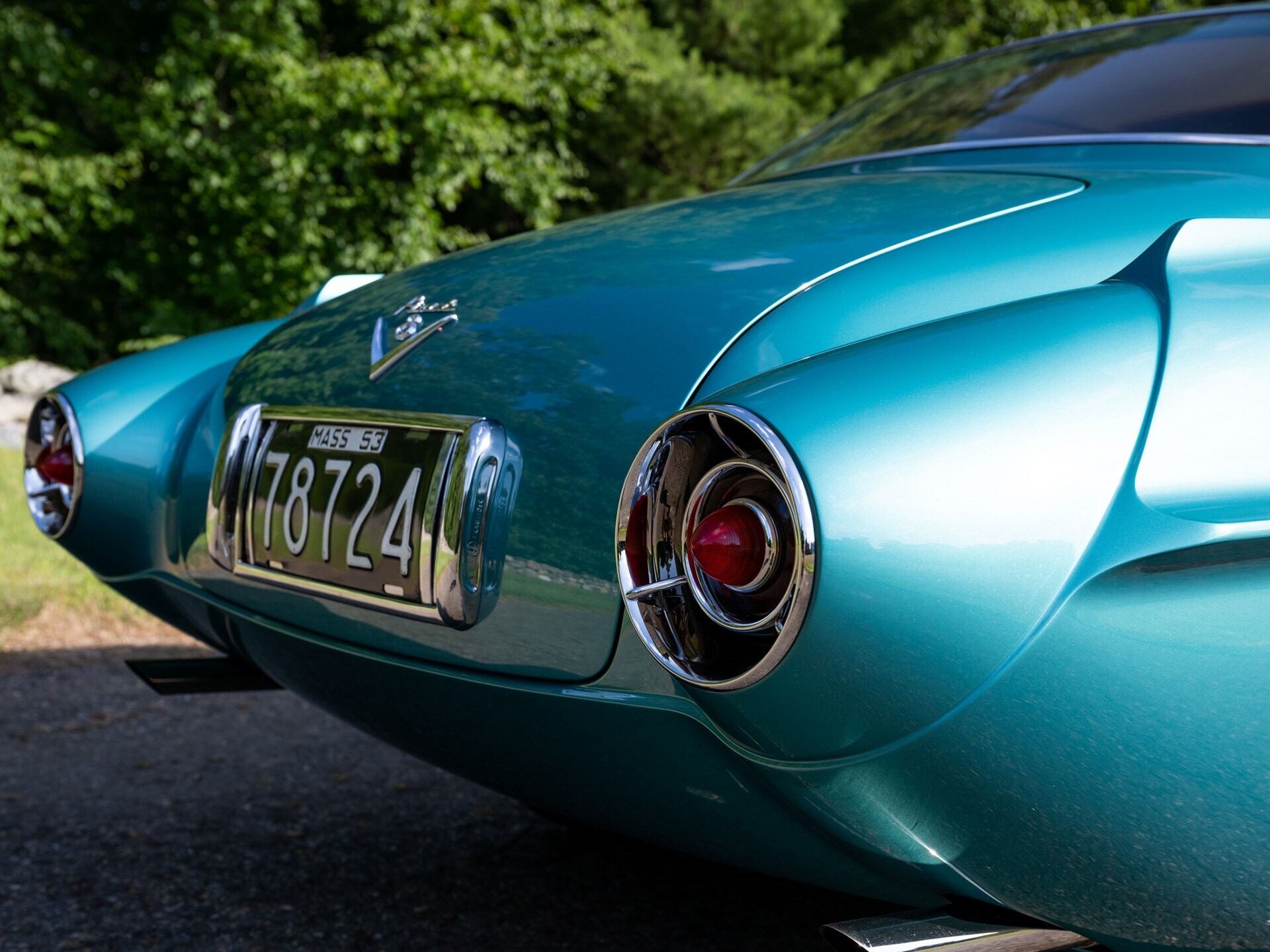
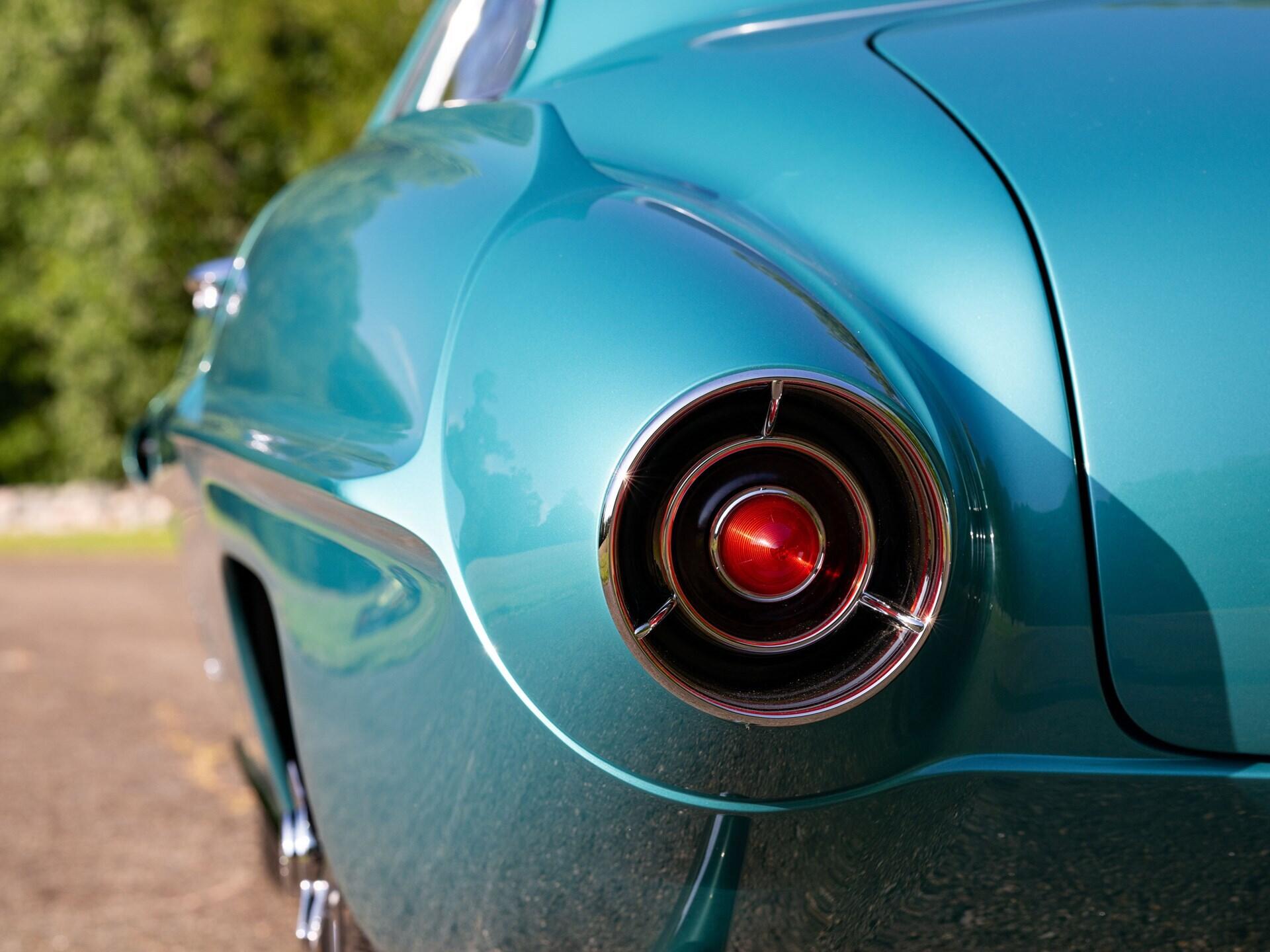
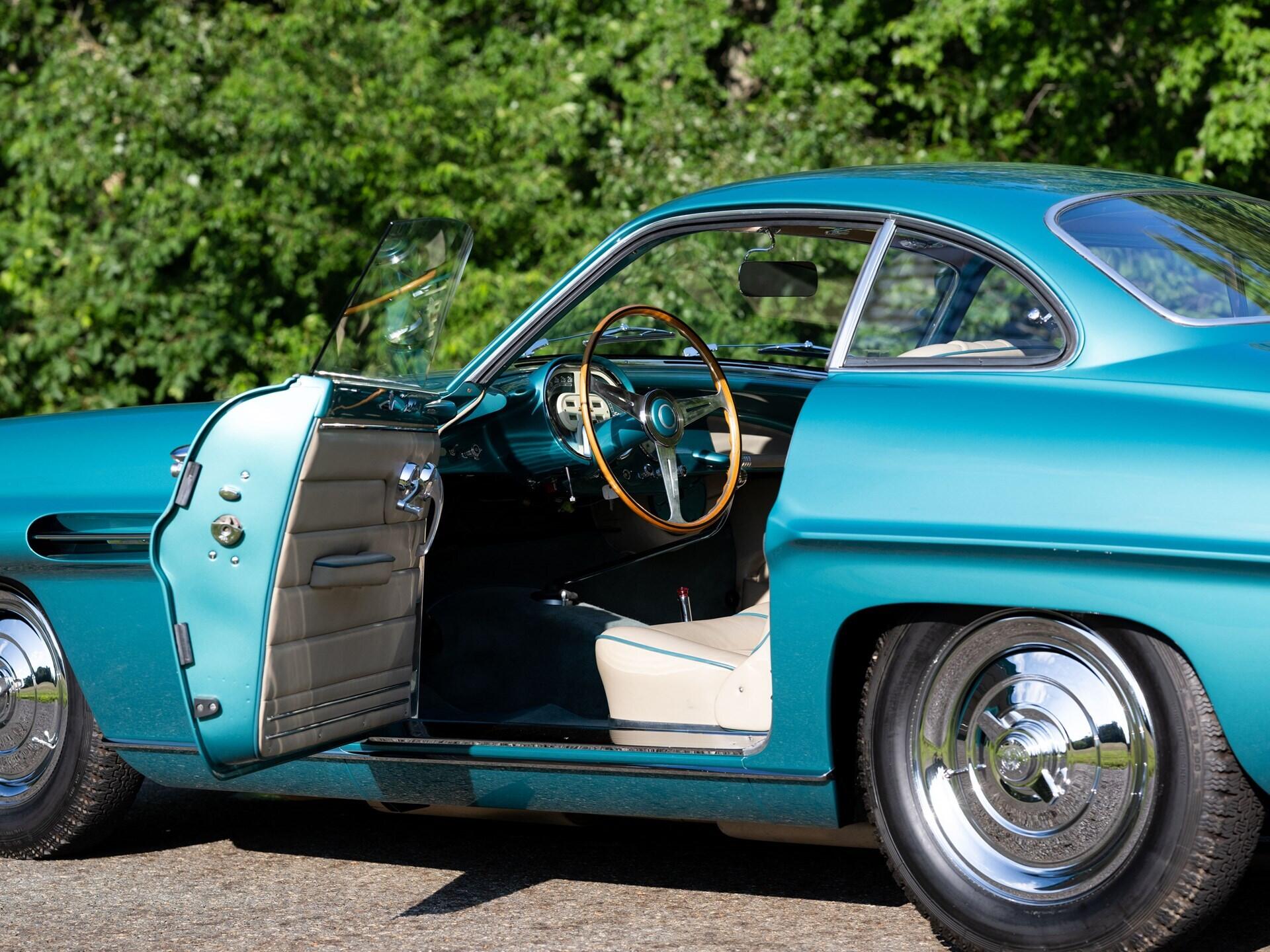
This is the Ghia bodied version of the 8V known as the Jet Age supersonic. It’s been lauded widely as one of the most beautiful cars of its time.
The plan was for a V8 two seater berlinetta coupe and Fabio Luigi Rapo – Fiat’s Head of Design – was charged with creating it. The type 106 chassis was a semi-monocoque consisting of a central floor pan welded to a tubular steel frame: the floor pan being a stressed member.
The wisdom of this was that Italy had a number of highly respected artistic coachbuilders and the semi-monocoque would provide advantages of unibody construction – especially in providing light weight – and still permit custom coachwork to be created. The kerb weight of a complete 8V was just 997 kgs (2,198 lbs), a weight achieved in part through the use of aluminium body panels.
Because of the pressure of regular car production there wasn’t facility space in which to construct the 8V cars so this work was sub-contracted out to Siata.
The 8V was given fully independent suspension both front and rear, and because disc brakes were new cutting edge technology the 8V had drum brakes all around. Just to put things into perspective the first use of Dunlop developed disc brakes was on the Jaguar C Type used at Le Mans 24 Hours in 1953. Other competitors had conventional drum brakes.
The engine to power this new Fiat sports car was the first and only V8 Fiat had built. It was a 1,996 cc 70° V8 with cast iron block and cast aluminium cylinder heads. In typical American style the crankshaft was located between the cylinder banks and actuated the valves by pushrods.
Compression ratio for the first version was 8.5:1 and the engine was equipped with two, twin choke Weber 36 DCF 3 carburettors. With this specification this type 104.000 engine delivered 104 hp at 5,600 rpm and could propel the 8V up to 118 mph (190 km/hr).
The engine drove the rear wheels via a four speed manual gearbox.
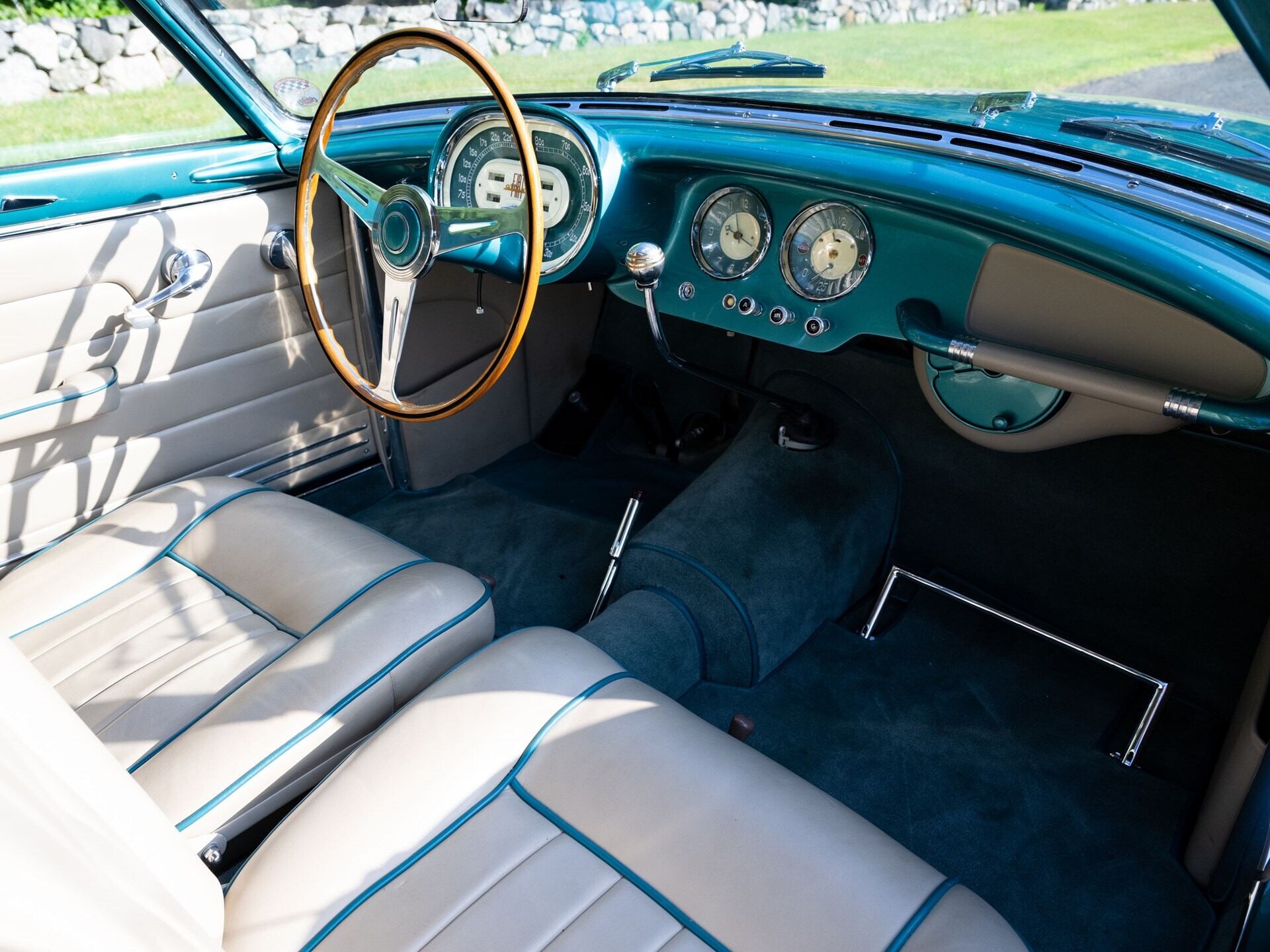
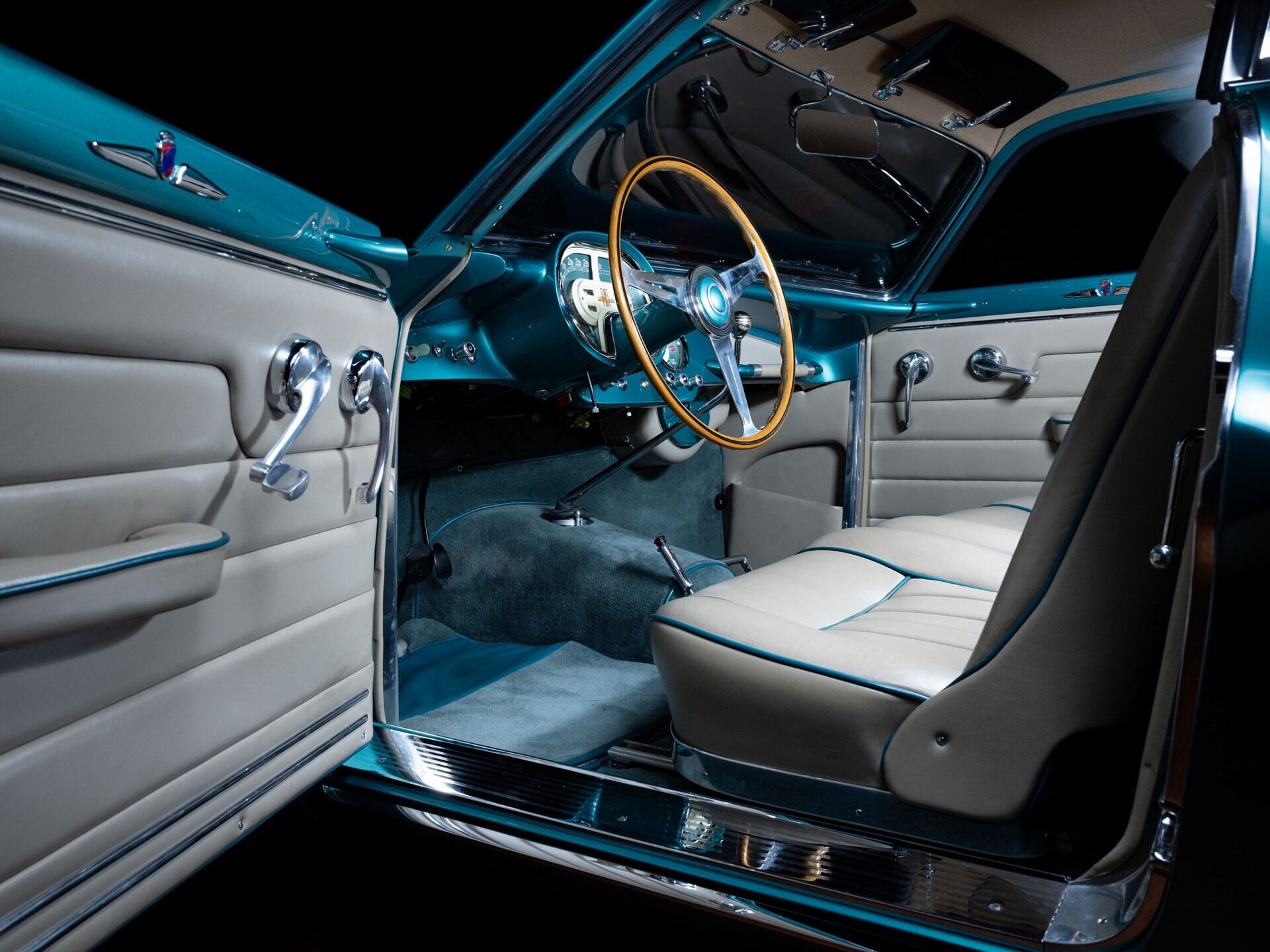
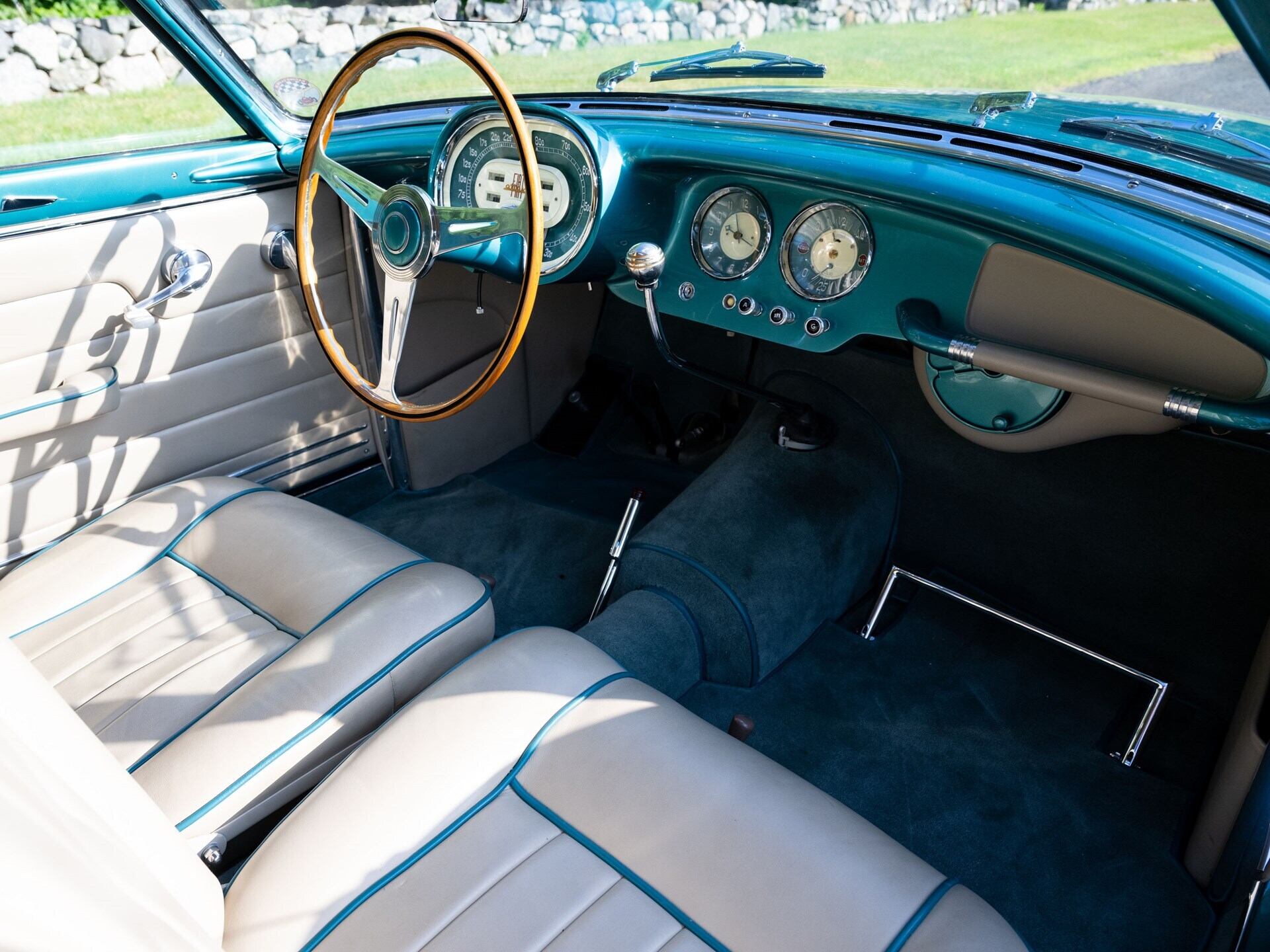
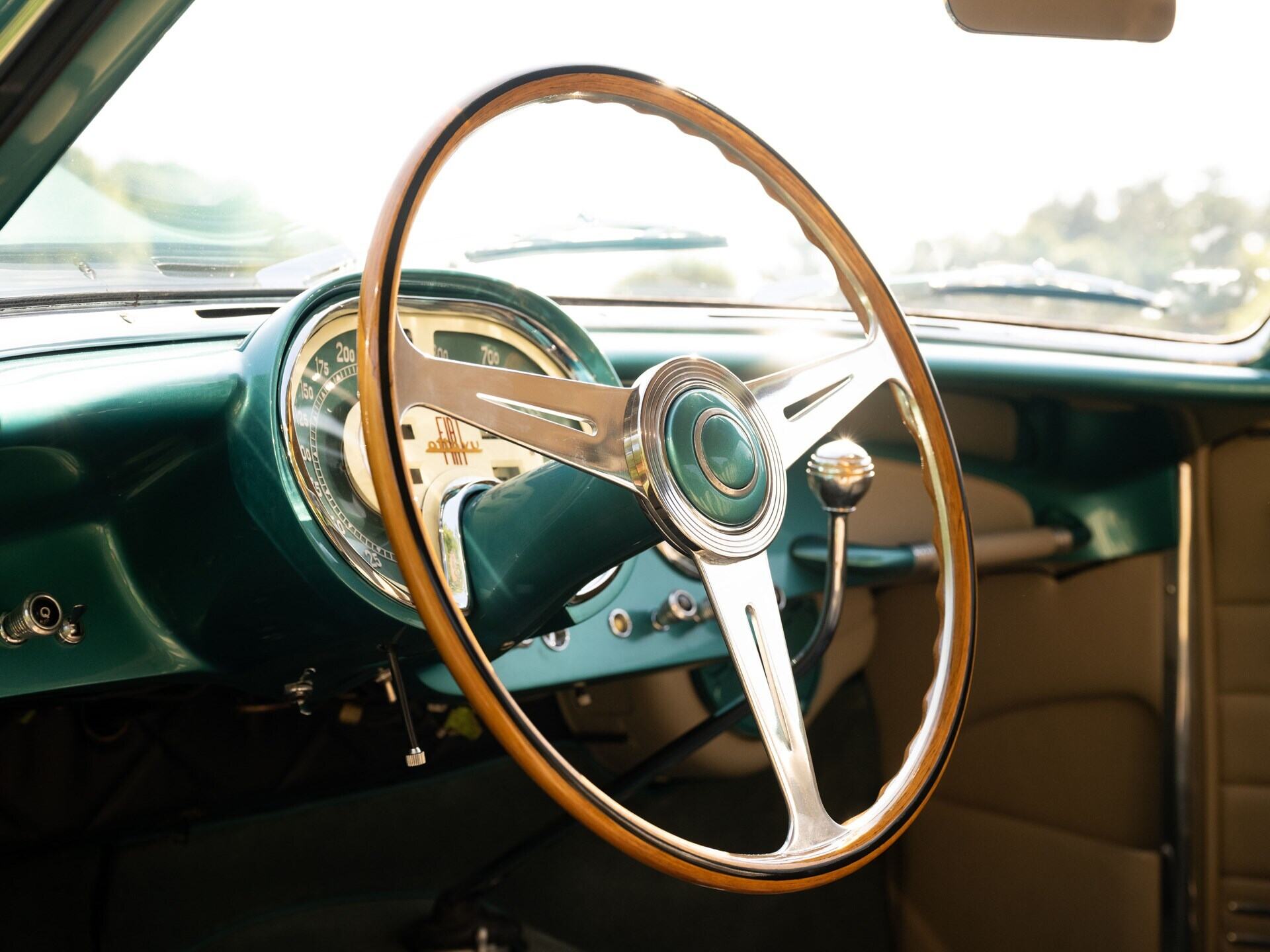
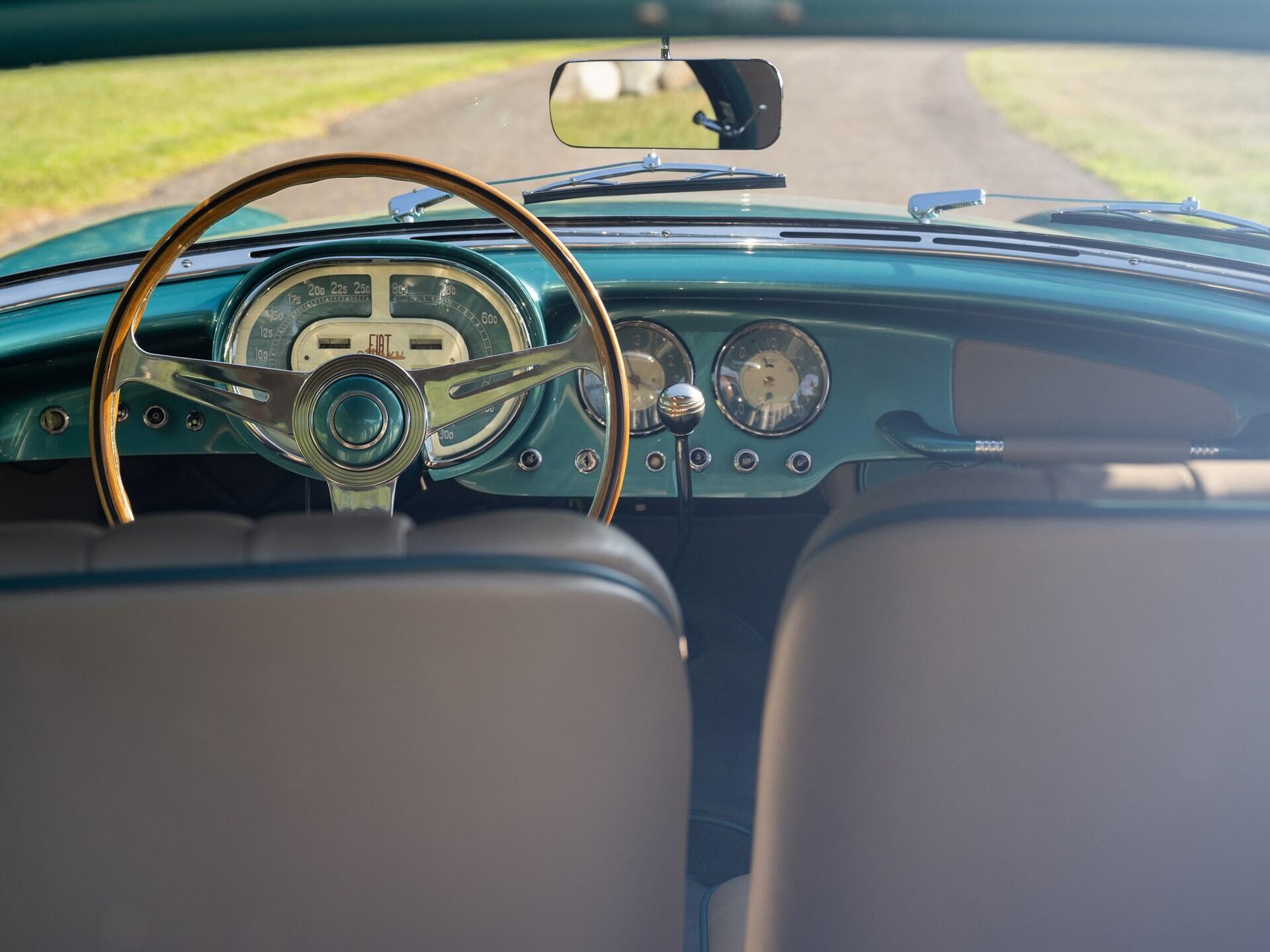
The interior is classic 1950’s Italian and a masterclass in 1950s industrial design.
It didn’t take long for Fiat’s engineers to assess that the first version of the engine was satisfactory, and could do with a bit more power, so the next version, type 104.003, was created. This engine was given improved camshaft timing which boosted its power to 113 hp @ 6,000 rpm.
The last version of the engine was the type 100.006 which had the compression ratio increased to 8.75:1. The camshaft timing was again adjusted for more power and the fuel system received some improvements resulting in a respectable 125 hp @ 6,500 rpm.
For a 1950s two litre engine this proved to be quite respectable as evidenced by the 8V becoming the weapon of choice for the two litre class of the Italian GT championship in which an 8V stormed to victory for five consecutive years from 1954 to 1958 inclusive.
The 8V became quite popular for racing not only in Italy but elsewhere. The engine of the 8V was also desirable and Fiat supplied fifty of them to Siata who installed them in a bespoke car of their own, the Siata 208. One of these Siata 208 was purchased by a young American actor named Steve McQueen who delighted in it, nicknaming it his “Little Red Ferrari.”
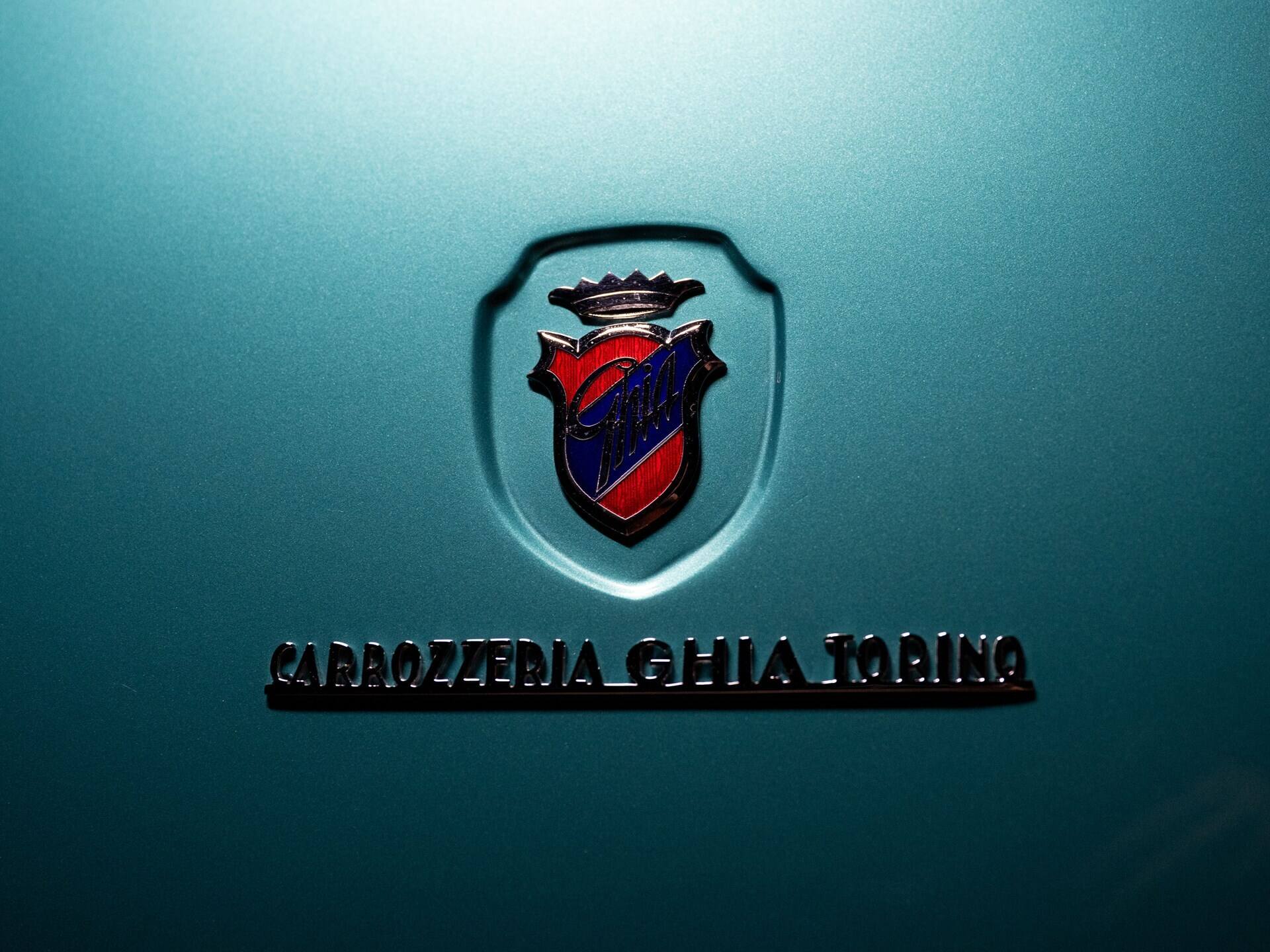
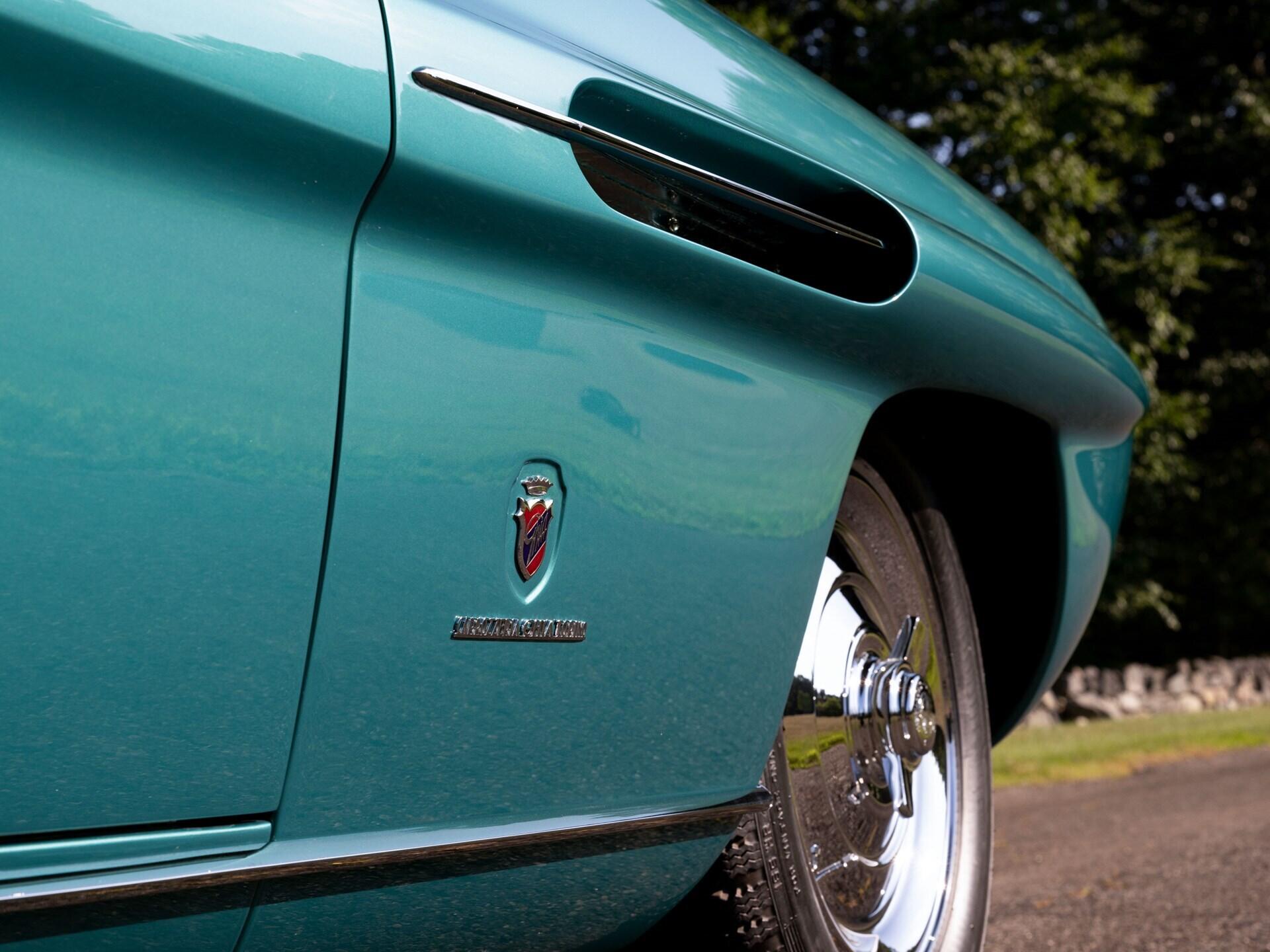
As production progressed Fiat began supplying the 8V as a rolling chassis to coachbuilders and indeed Zagato created most of the cars that attained victory in the Italian GT 2.0 litre class. But the most famous of all the 8V “Otto Vu” Fiats was the Jet Age “Supersonic” created by Giovanni Savonuzzi of Ghia.
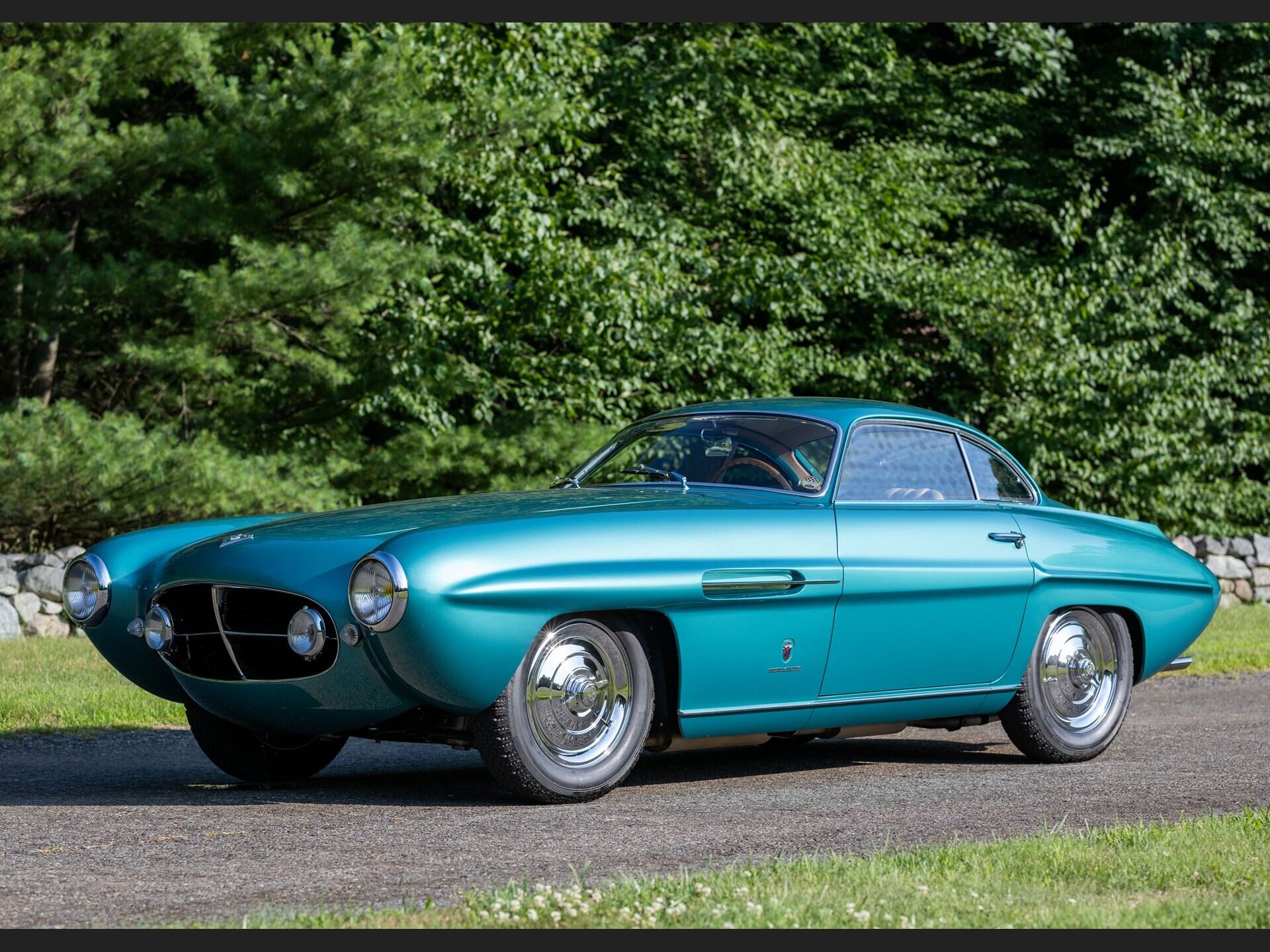
Later cars like the Volvo P1800 have been influenced by the design of the Supersonic, it’s an excellent example of 1950s Jet Age automotive design.
The Giovanni Savonuzzi Jet Age, Supersonic body style was not only used on the Fiat “Otto Vu” (8V in Italian) but also on a small number of Jaguar XK120 and Aston Martin vehicles.
The Jet Age Ghia body was used on a number of cars that were imported into the United States. It was such an attention grabbing design that it became perhaps the best known of all the Fiat 8V variants in the United States.
The tenth (chassis number 000049 and engine number 000085) of these cars was displayed at the 1954 Geneva Auto Salon and then believed to have been brought to the United States by Chrysler chairman K.T. Keller. Keller kept the car for a little while and then sold it to Lou Fageol, a powerboat racer who had won the Gold Cup three times, earning himself the nickname “The Speed King”.
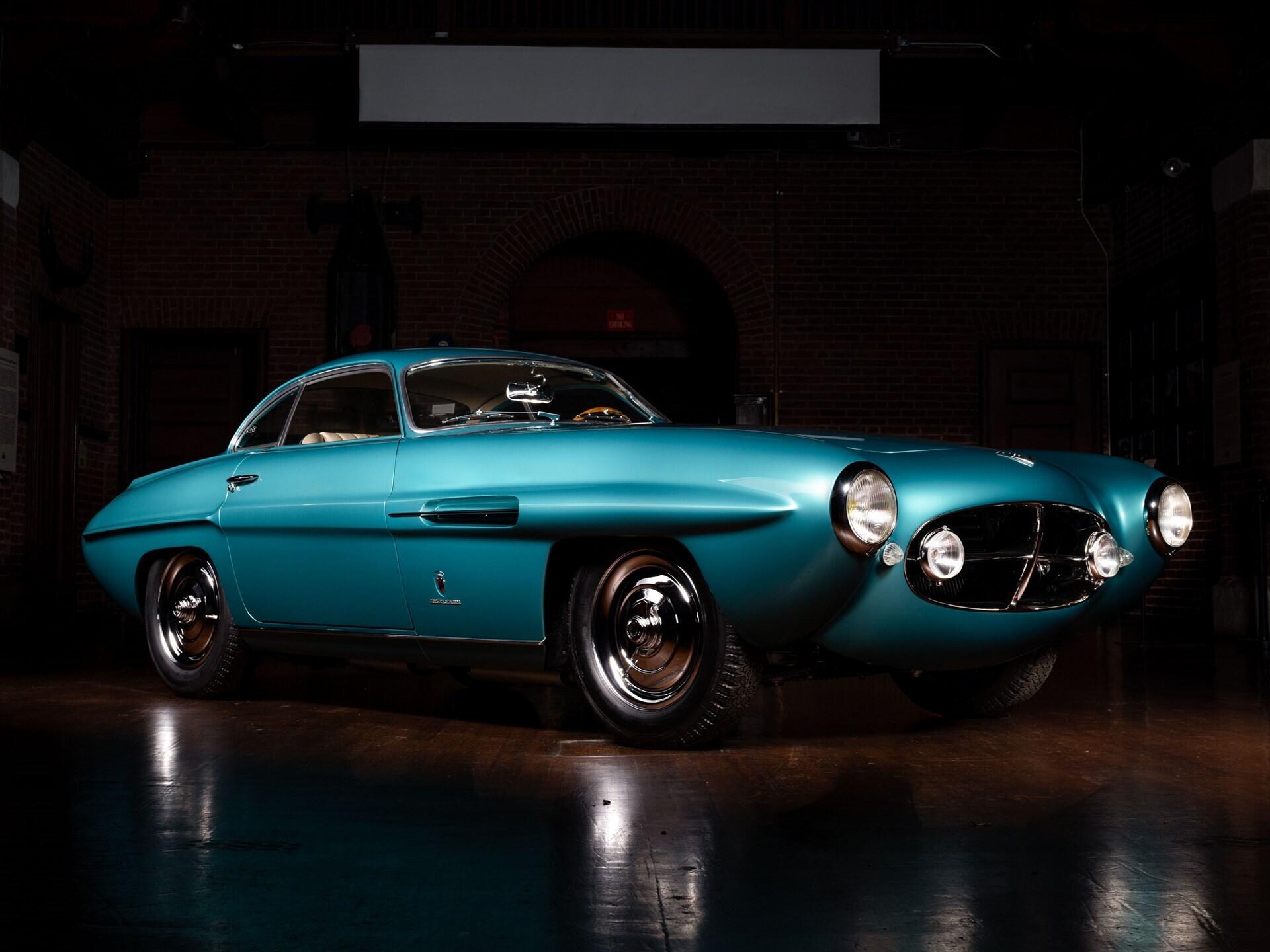
The alloy body panels used on the Supersonic were all shaped carefully by hand, by Ghia’s skilled craftsmen.
Lou Fageol was also a sports car racing aficionado and part owner of the Twin Coach bus company. He exhibited the car at the 7th Annual Pebble Beach Concours d’Elegance in Class D, “European Sports Cars over $10,000.”
Lou Fageol kept the car until he passed away, at which point in its history it was sold and cared for by a number of enthusiast owners, being treated to a well researched restoration in March 2007.
After that work the “Otto Vu” was entered in the Classic Sports Sunday at Mar-a-Lago in January 2016 and was judged Most Unique. Two months later the car received the People’s Choice Award at the Amelia Island Concours d’Elegance.
This beautiful example of the Ghia bodied “Otto Vu” is coming up for sale by RM Sotheby’s at their Monterey sale to be held from 18-22 August 2022.
If you’d like to read more about this car’s remarkable history or register to bid you can visit the listing here. The price guide is set at $1,700,000 – $2,000,000 USD.


The post The Impossibly Beautiful Fiat 8V Supersonic By Ghia appeared first on Silodrome.
from Silodrome https://silodrome.com/fiat-8v-supersonic-ghia/
via gqrds