A Road-Legal Le Mans Winning Supercar: The Rare 1991 Jaguar XJR-15

In 1982 when Jaguar entered into a partnership with Tom Walkinshaw Racing to form JaguarSport they probably didn’t anticipate creating a road-legal sports car that would be a modern throwback to the Le Mans-winning Jaguar D Type.

But after a number of 24 Hours of Le Mans wins a high performance Le Mans winning car became the foundation of the road-legal XJR-15 – one of the most desirable supercars of its time.

Fast Facts – The Jaguar XJR-15

  • After Jaguar’s three decade break from motorsport they formed a partnership with established racing company TWR (Tom Walkinshaw Racing) to ease back in for a season or three and test the waters.
  • The resulting partnership gained Jaguar a renewed and respected place in modern sports car racing and included prestigious Le Mans 24 Hours wins in 1988 and again in 1990.
  • As a result of JaguarSport’s successes not only at Le Mans but in sports car racing internationally there were a significant number of sufficiently wealthy people who had the desire to own and drive the closest thing to a Le Mans car they could get, not just for the racetrack, but also on ordinary roads.
  • It was for these people that the road-legal Jaguar XJR-15 supercar was created.

The Quest To Win Again At Le Mans

In 1922 when Sir William Lyons founded his “SS” Swallow Sidecar company, the original ancestor of Jaguar Cars, he had a vision for building cars that exemplified beauty.

In 1934 the company morphed to become SS Cars and then at the end of the Second World War it needed to change name again. This was due to the very negative connotations of the name “SS” caused by the Nazi “SS” organization.
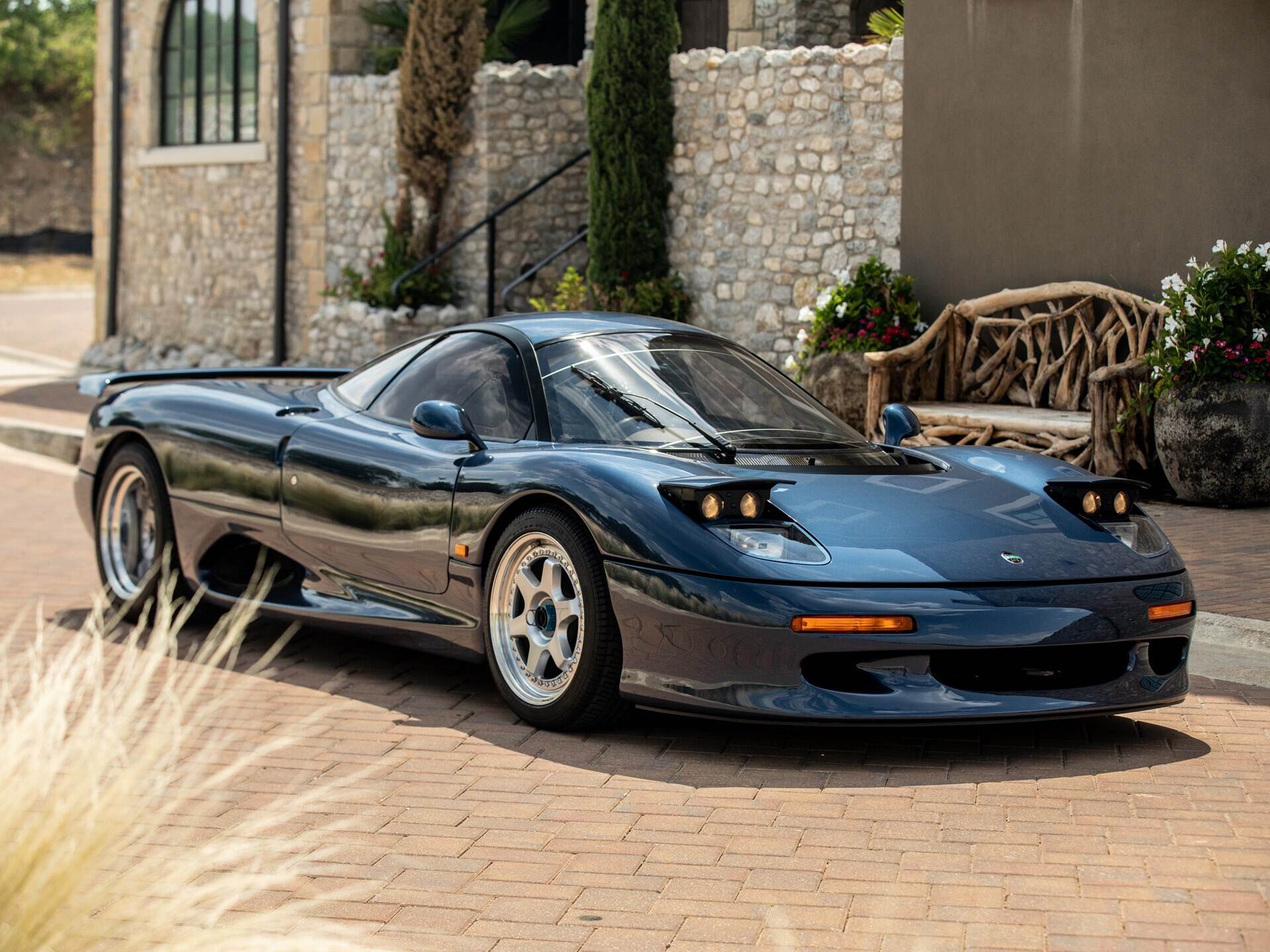
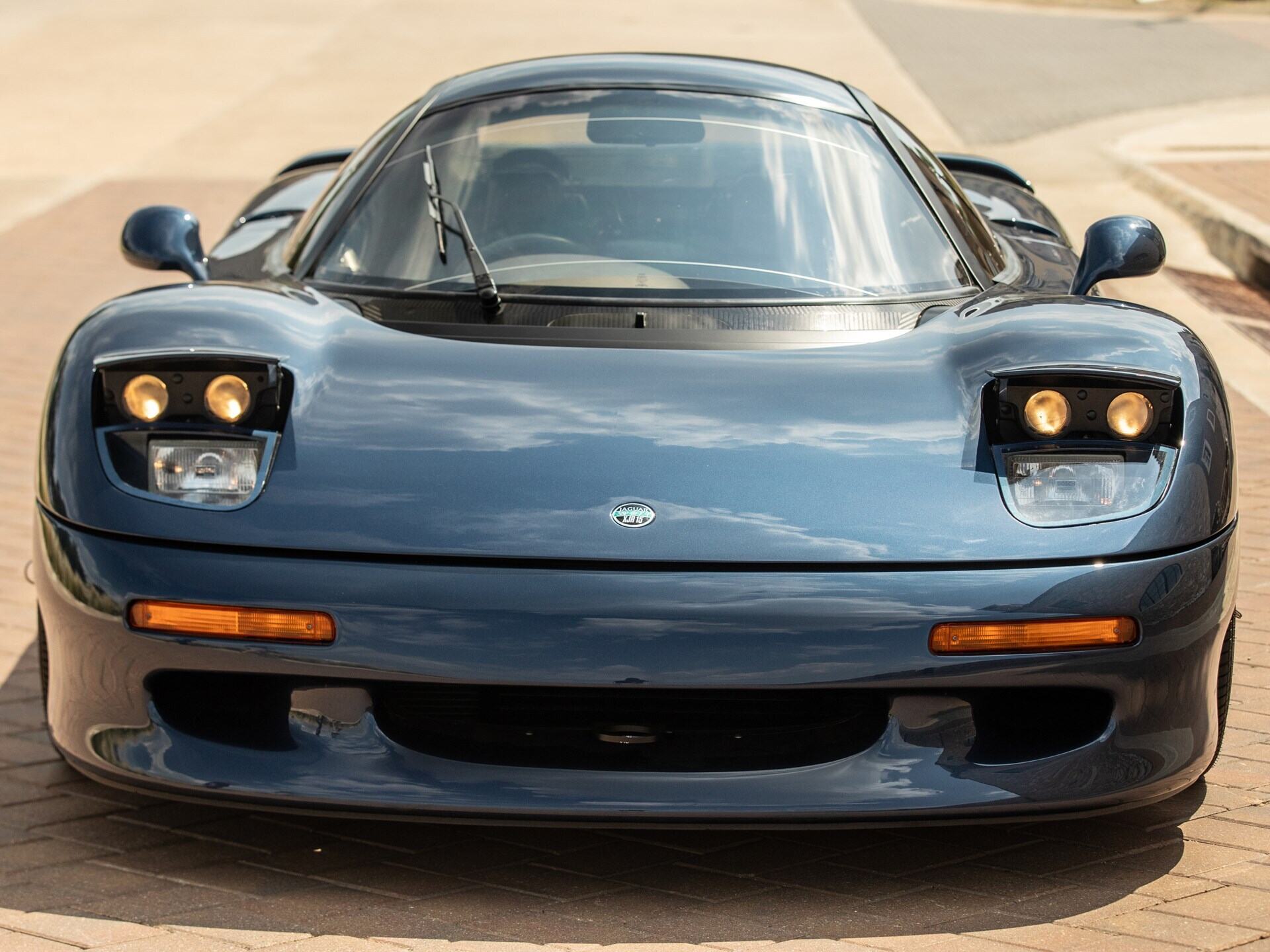
Jaguar XJR15

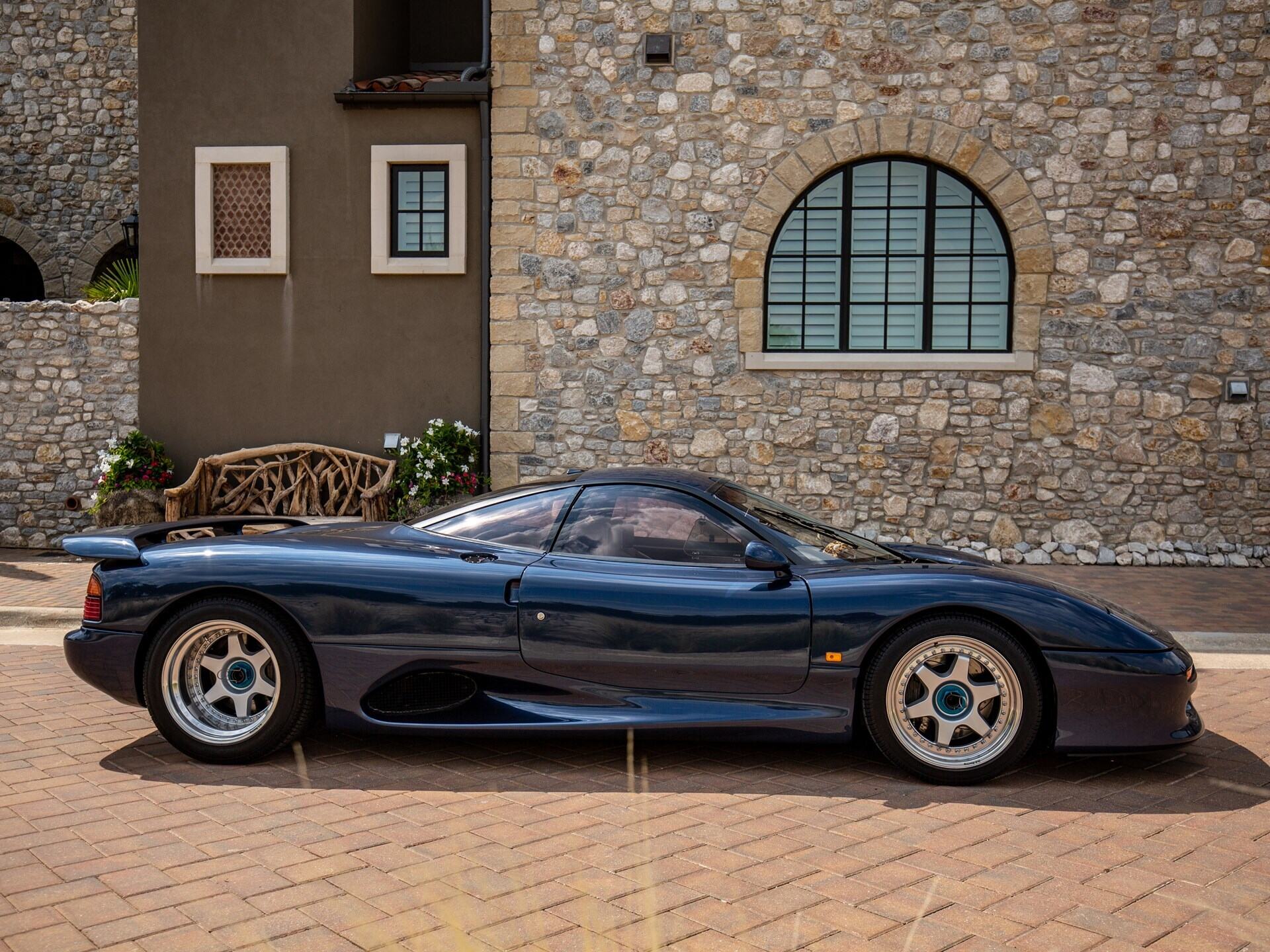
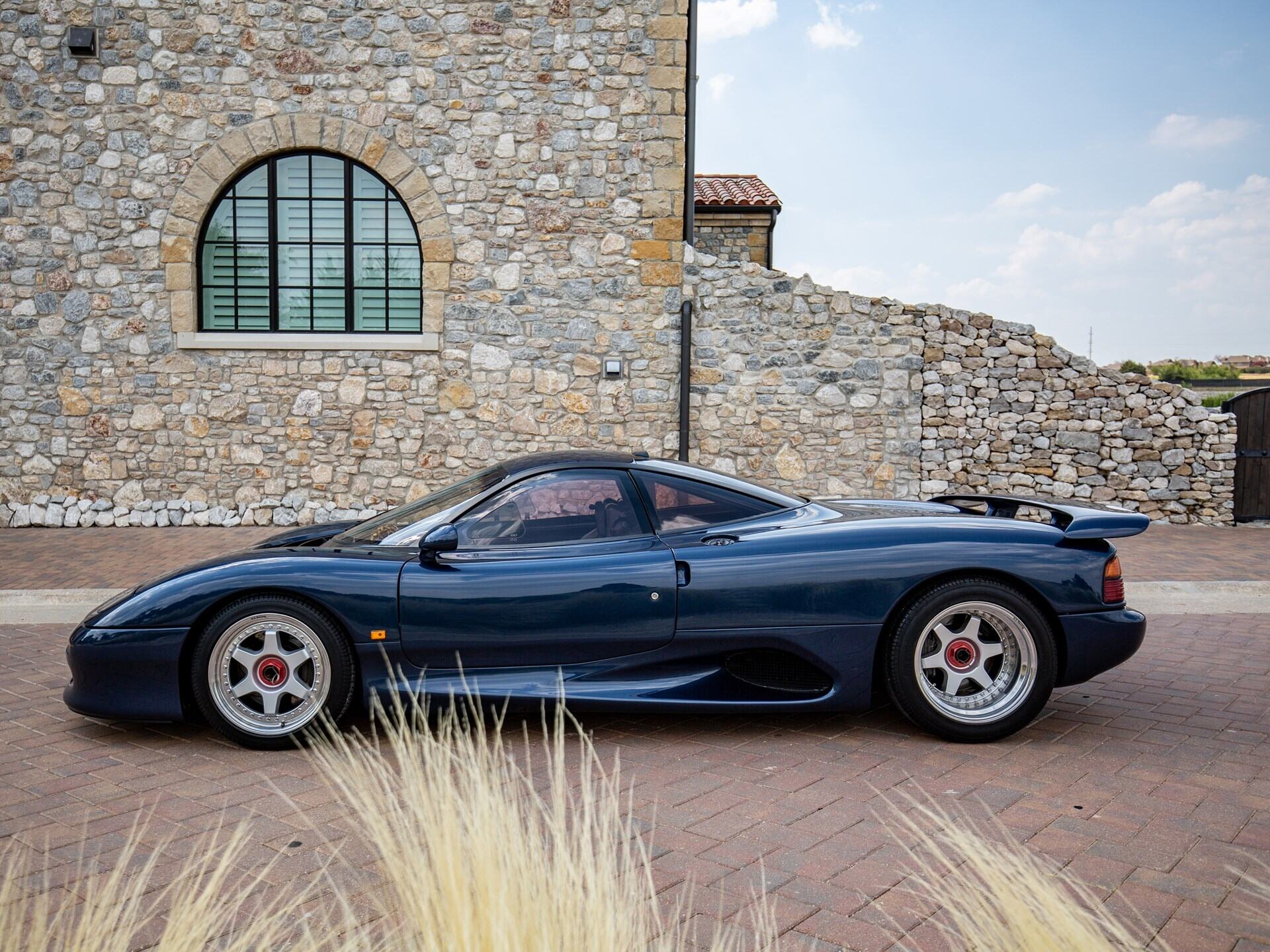
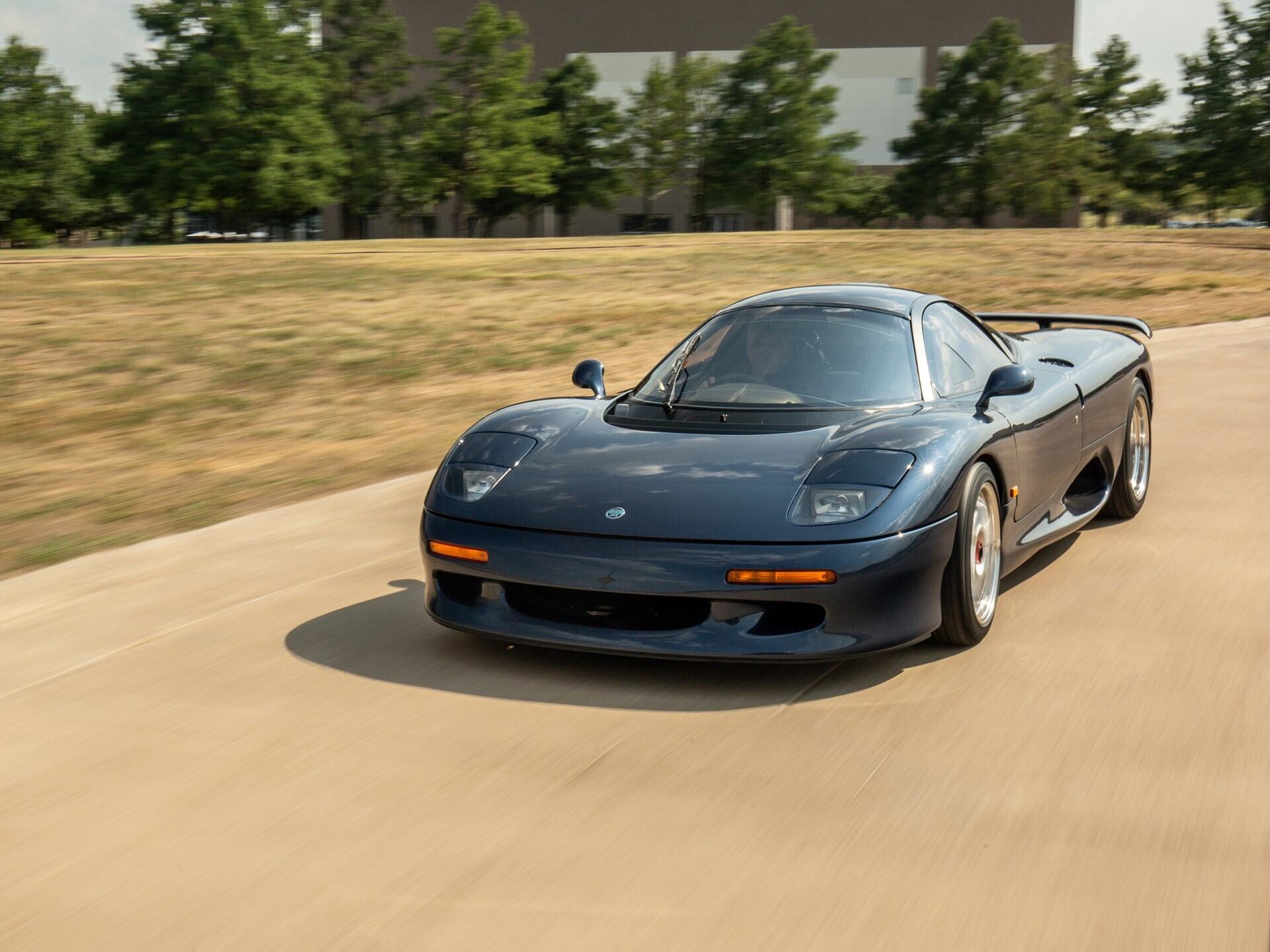
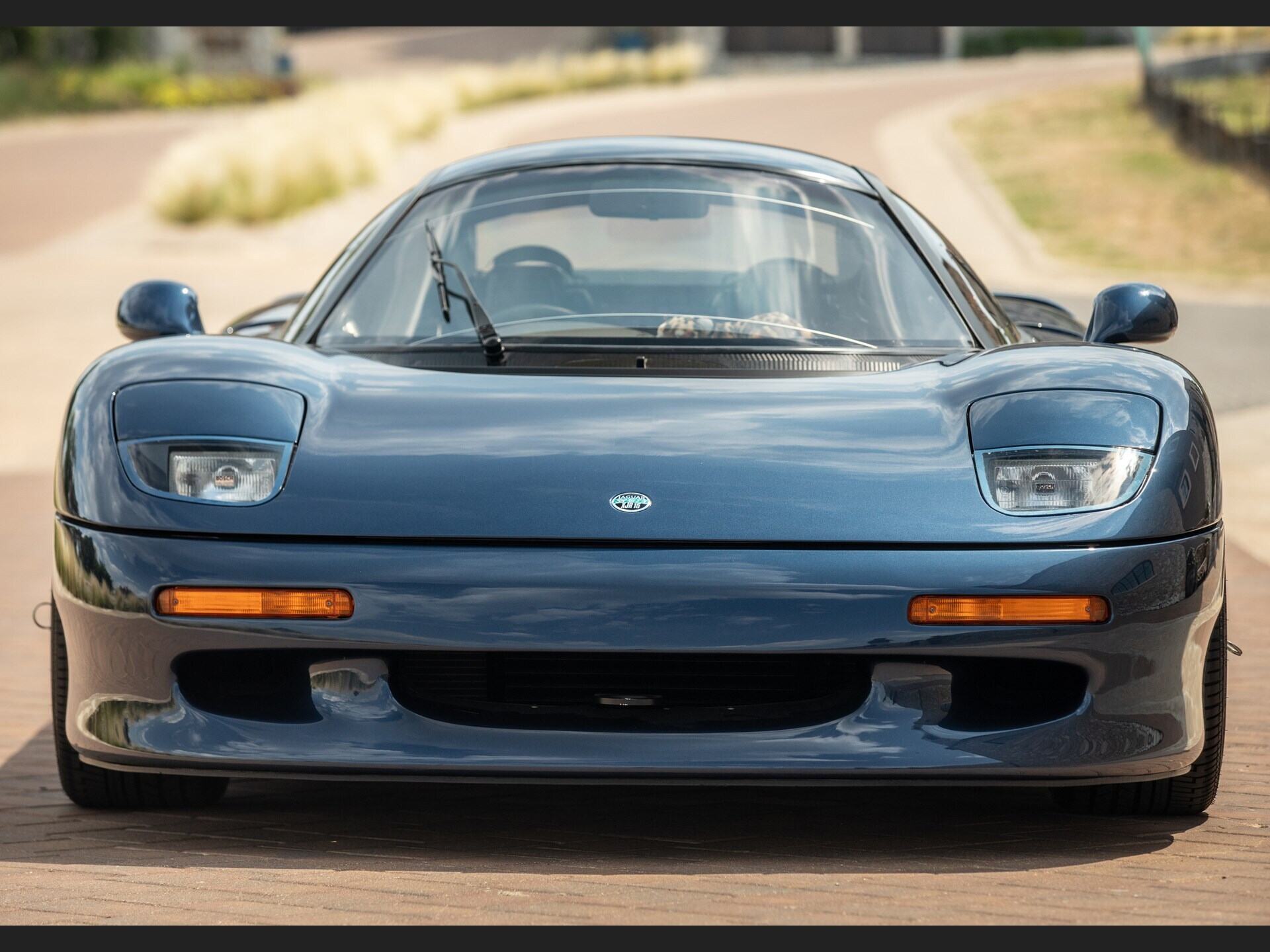
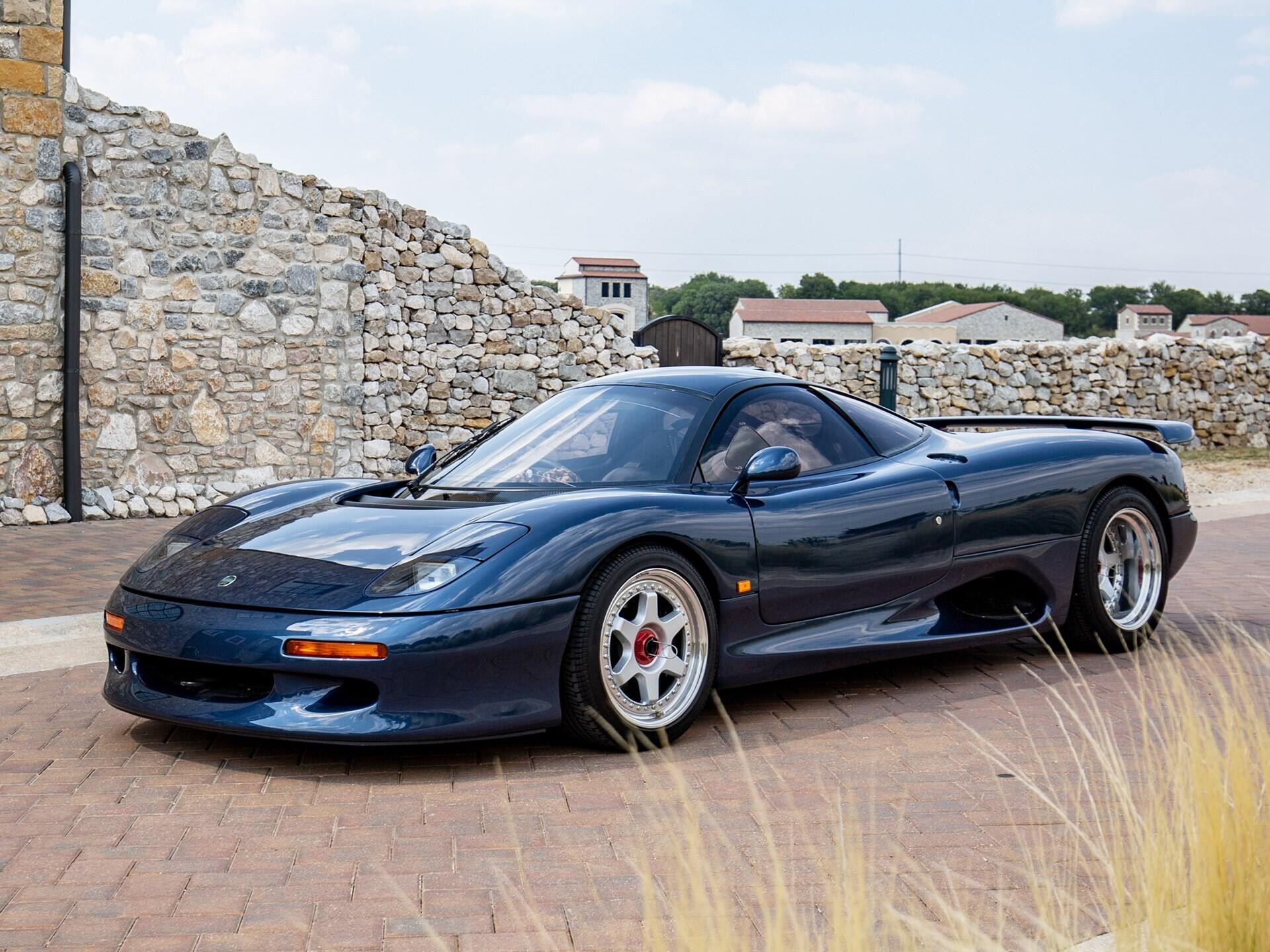
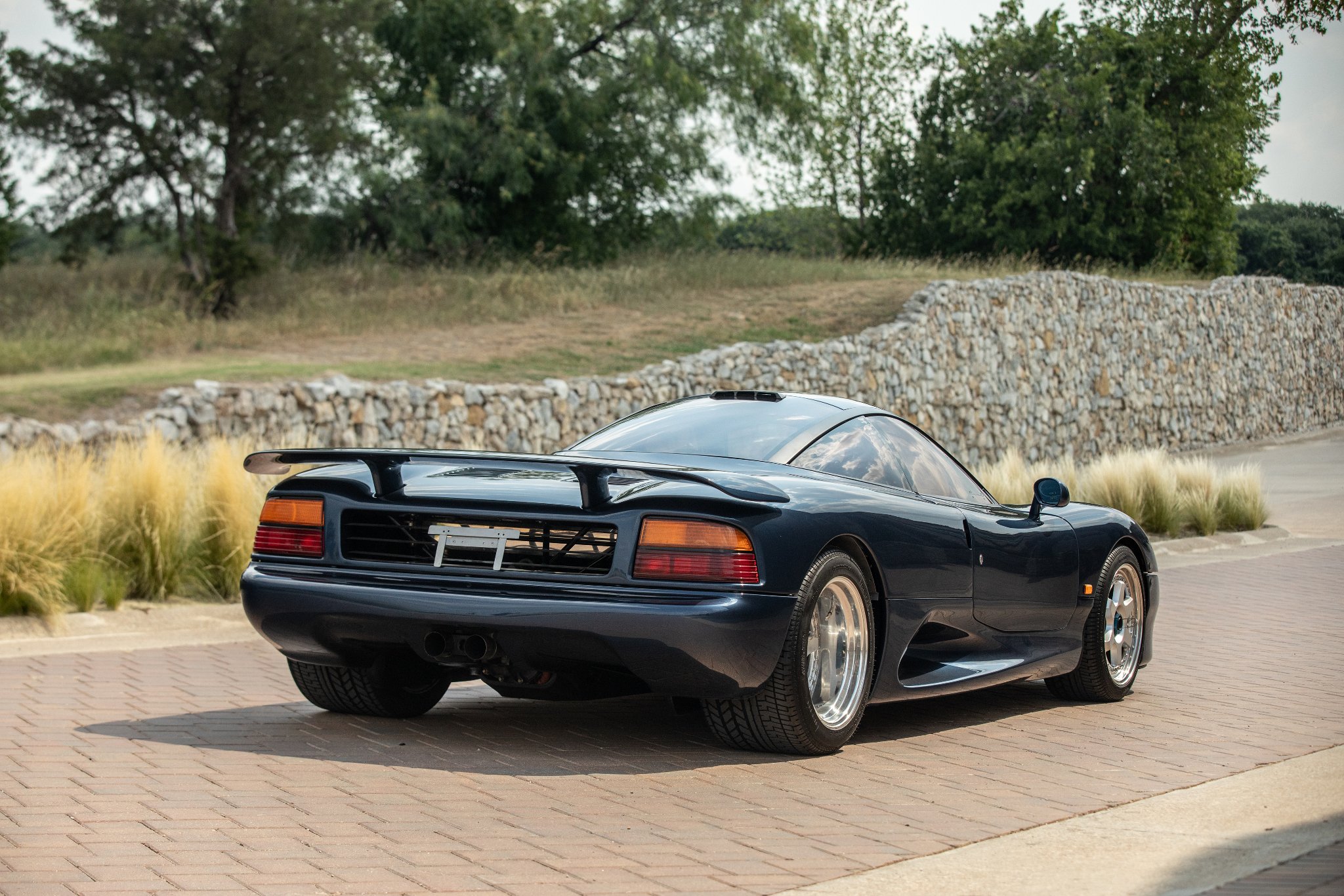
Peter Stevens design created a car that is at once both functional and stunningly beautiful.

Sir William spent some time considering what to rename his company to be and decided that the Jaguar being a svelte, beautiful and fast moving cat, would be the right name and best connotation for his company. It was his aim to create svelte, beautiful and fast moving motor cars – and Sir William had a deep appreciation of both beauty and performance.

The name Jaguar had been used on a pre-WWII SS production model, and so after the war the model name became the marque name, giving the company some continuity.

By the 1950’s Jaguar had established both its aesthetic and performance credentials and its racing cars – the Jaguar C Type and then D Type had racked up a series of wins in the prestigious Le Mans 24 Hours race in France.

Jaguar ended their participation after 1957, and turned their full attention to road cars. In 1961 Sir William Lyons team created what Enzo Ferrari confessed was the most beautiful car in the world – the Jaguar E Type, a high performance road car inspired by the company’s earlier racing cars.

Jaguar would not again engage in tackling the Le Mans race for thirty years, and it would not be Jaguar’s own independent instigation that would return them to the Circuit de la Sarthe, the impetus came from Tom Walkinshaw Racing (TWR), which had been founded in 1976 by Scotsman Tom Walkinshaw.
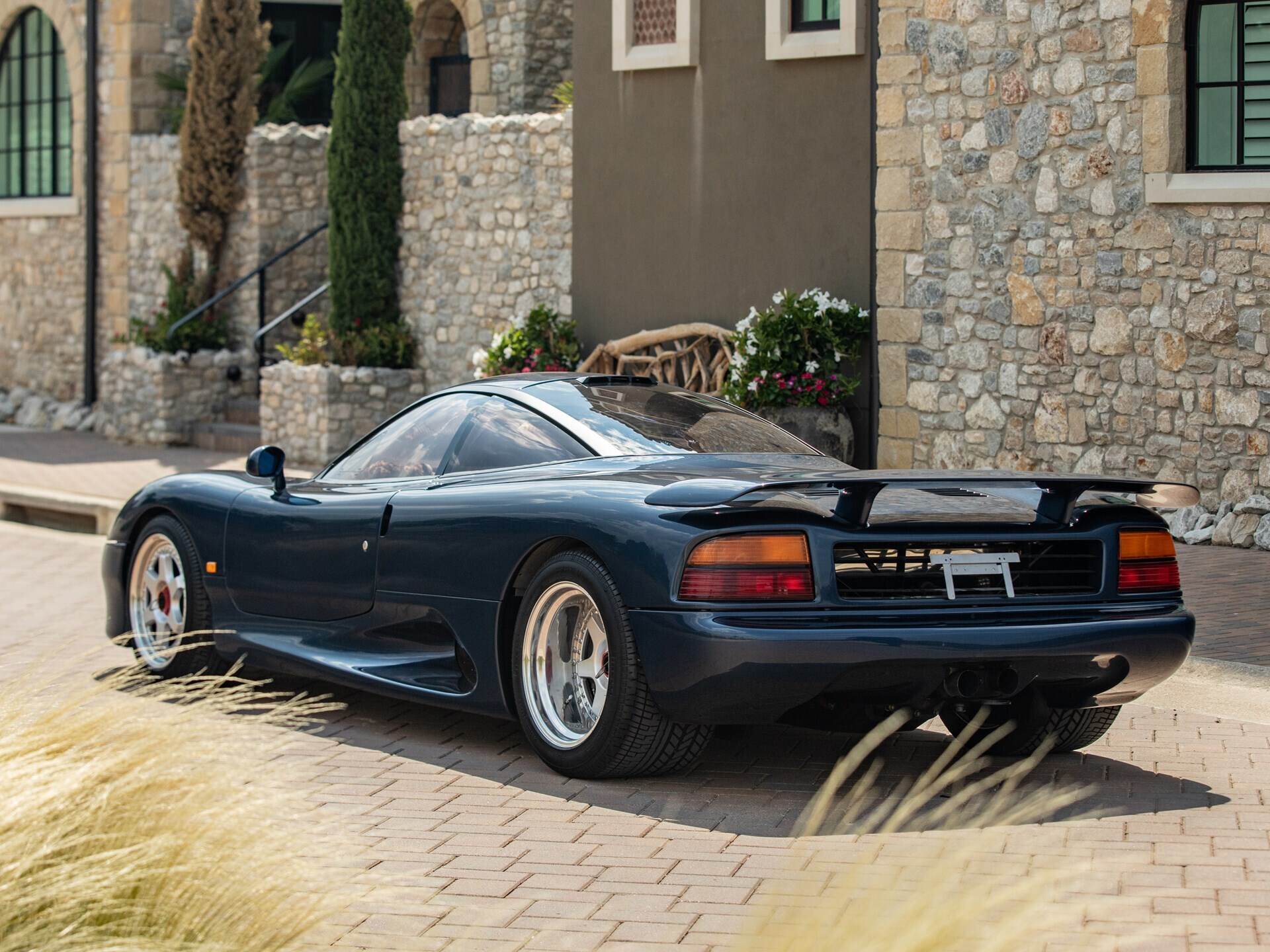
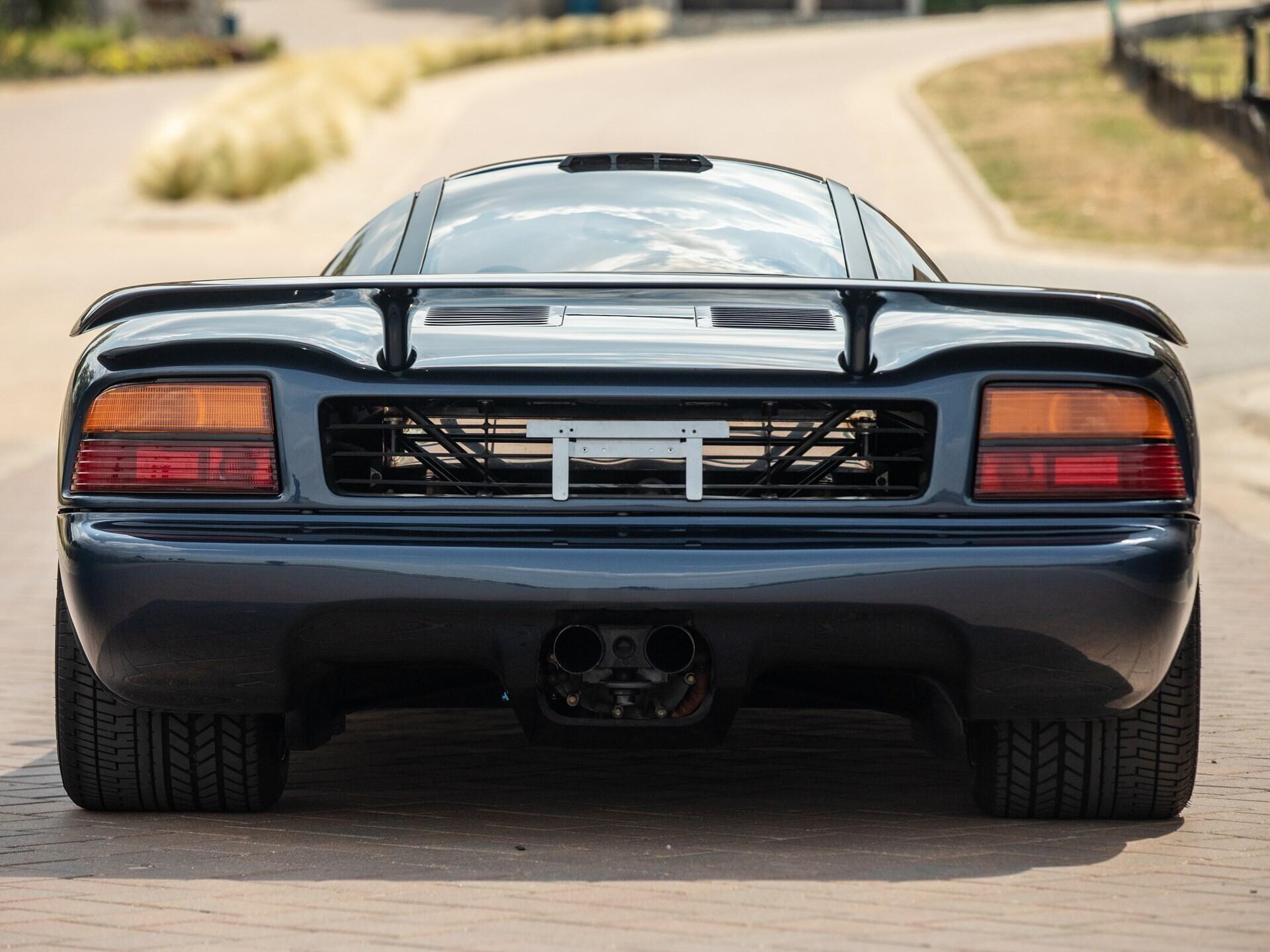
Jaguar XJR-15

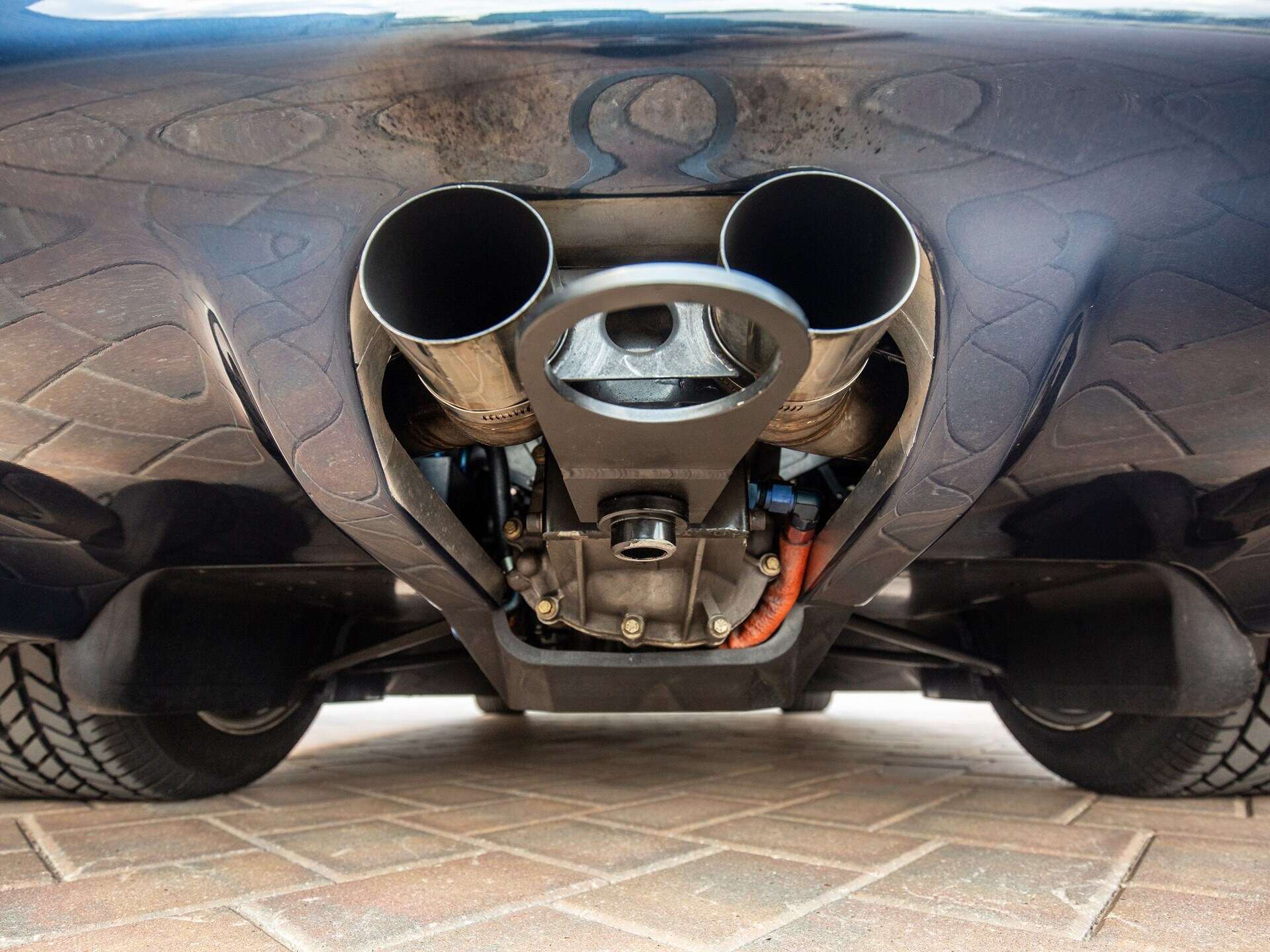
The rear view of the XJR-15 shows the car’s clean aerodynamic lines over the monocoque tub chassis created by Jim Router and Dave Fullerton.

TWR established a working relationship with Jaguar Cars called JaguarSport in 1982 which led first to the entering of a Jaguar XJS in the European Touring Car Championships, in which campaign they racked up a number of wins, beginning the process of rebuilding Jaguar’s performance car street cred, something that had fallen by the wayside in the thirty years since the Jaguar C type and D Type had wowed the crowds at Le Mans.

In 1985 TWR created the Jaguar XJR-6 as a weapon with which to tackle the World Sportscar Championship, and then in 1986 they replaced it with a new design, the Jaguar XJR-8, which was installed with a modified Jaguar V12 engine that was increased in capacity to 7 litres and delivered not less than a transmission shattering 720 hp (540 kW).

Two of the three XJR-8 cars entered into the Le Mans race of 1987 failed to finish while the third car managed to soldier on despite transmission problems to finish a respectable fifth.

The XJR-8 had proved its potential however with wins in the 1987 World Sportscar Championship races at Silverstone, Nürburgring, and Spa-Francorchamps.

With the sweet aroma of success in the air TWR and Jaguar saw the potential for victory at Le Mans and the kudos it would bring to Jaguar and TWR, so the commitment was made to develop a new car as a weapon with which to campaign in that race.

Wins At Le Mans

The successor to the XJR-8, the XJR-9 was the car that brought victory at Le Mans for the JaguarSport partnership of Jaguar and TWR in 1988. TWR created a purpose built version of the XJR-9, called the XJR-9 LM.

Above Video: This is the official highlights reel of the 1988 24 Hours of Le Mans.

This car was designed with Le Mans specific aerodyamics to take full advantage of the potential of the Mulsanne straight, for which a very low drag design with very high speed stability was essential. Top speed on Mulsanne was of the order of 220 mph.

This success would be repeated again in 1990 with a revised XJR-9 design, the XJR-12, still using a heavily modified Jaguar V12 engine.

The XJR-15 Is Born

JaguarSport’s Le Mans successes, and their impressive list of other victories at events like the 24 Hours of Daytona awakened an interest from well-heeled sports car enthusiasts.

There were people in the world who really wanted a road-legal Jaguar Le Mans car – despite the obvious fact that such a thing would be ridiculously impractical, no luggage room, limited ground clearance so unable to negotiate potholed country roads, and regular conversations with traffic policemen when you forget to keep an eagle eye on the speedometer as one inevitably would.

No doubt there were many thousands of people who would have whipped out their credit card to buy such a car – but there would be very few indeed who could actually stump up with the cash to make their dream a reality.

Tom Walkinshaw guessed that there might just be enough buyers for a fifty car production run, the cars being priced at half a million British Pounds apiece.
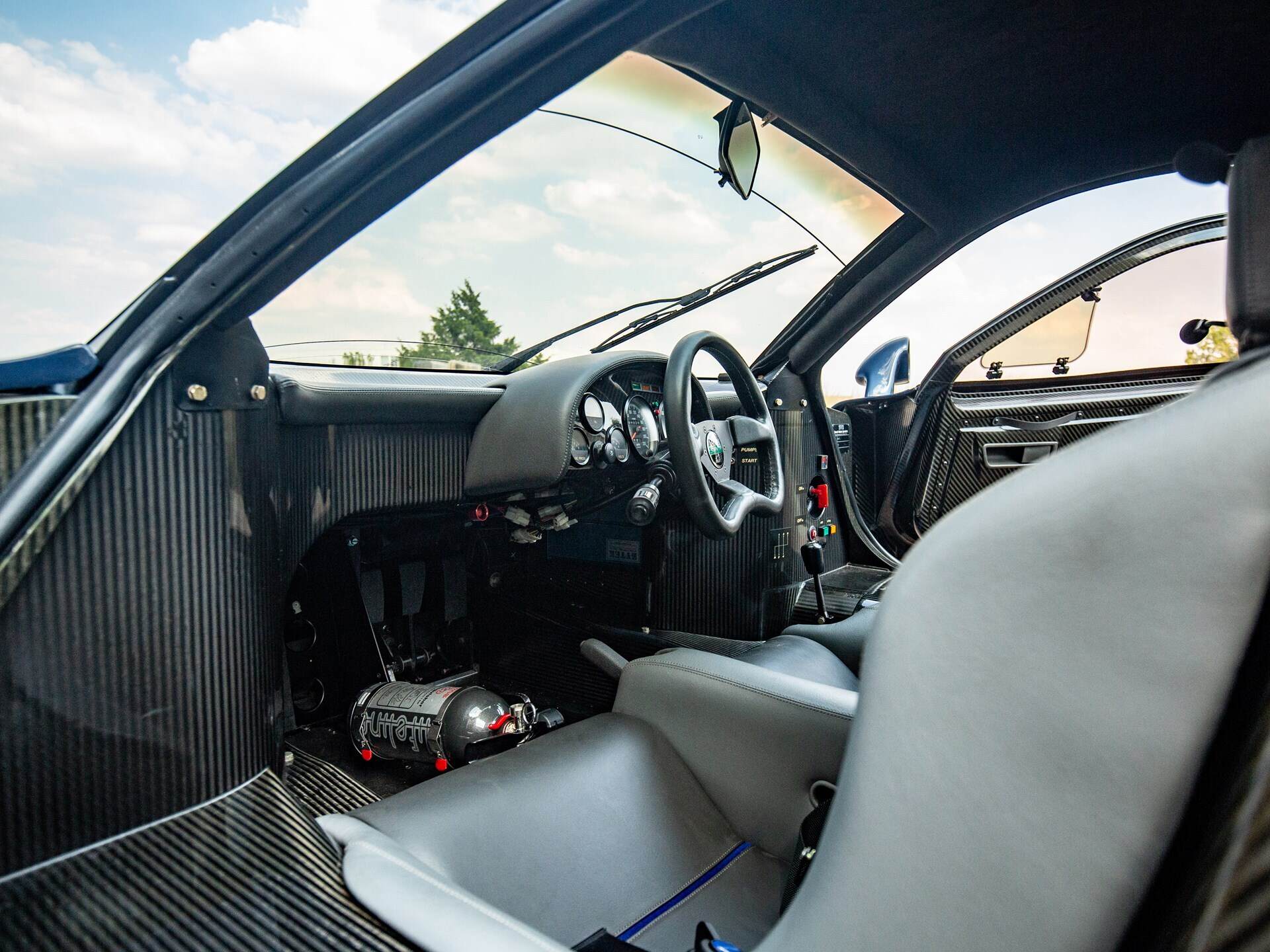
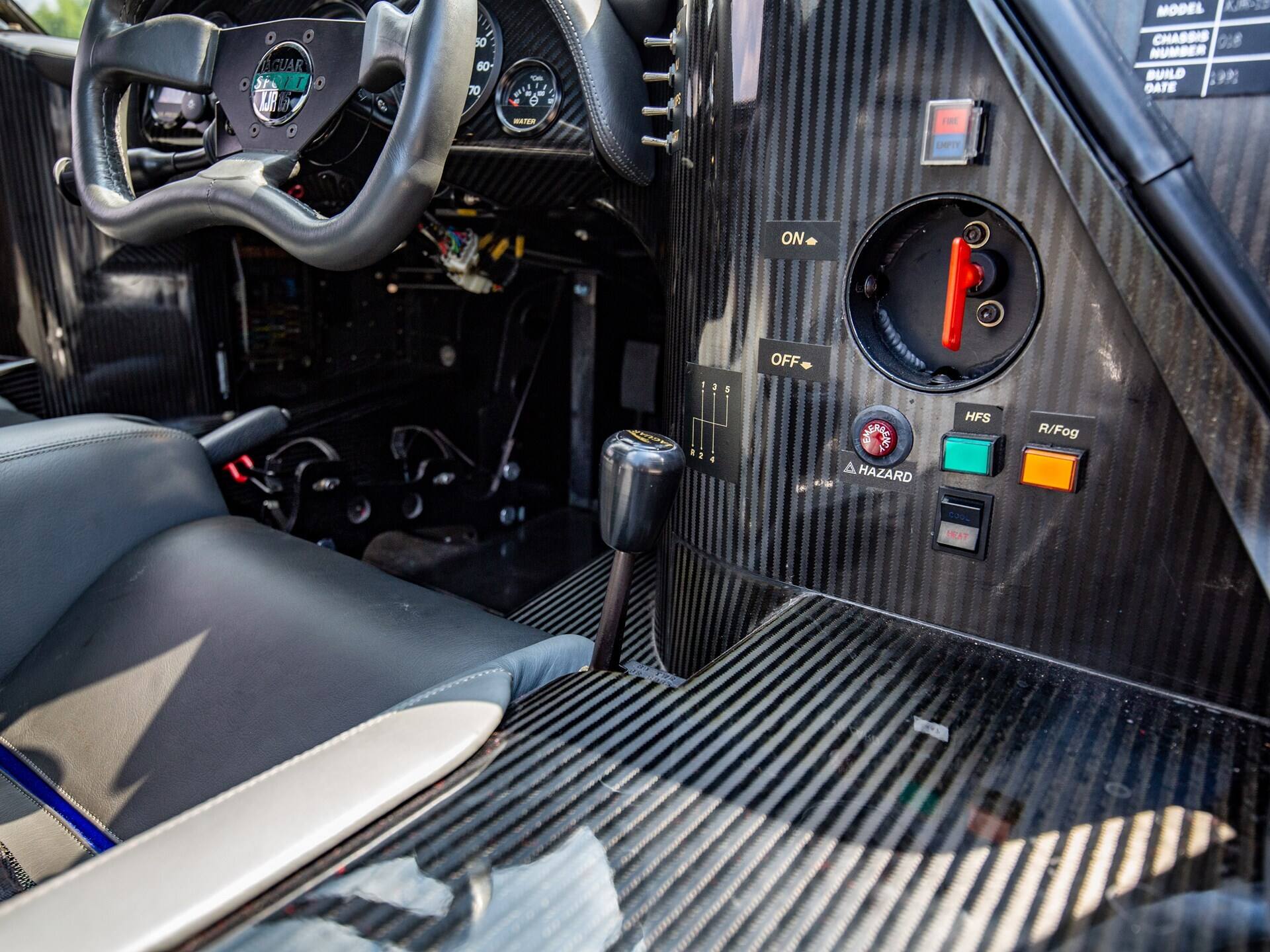
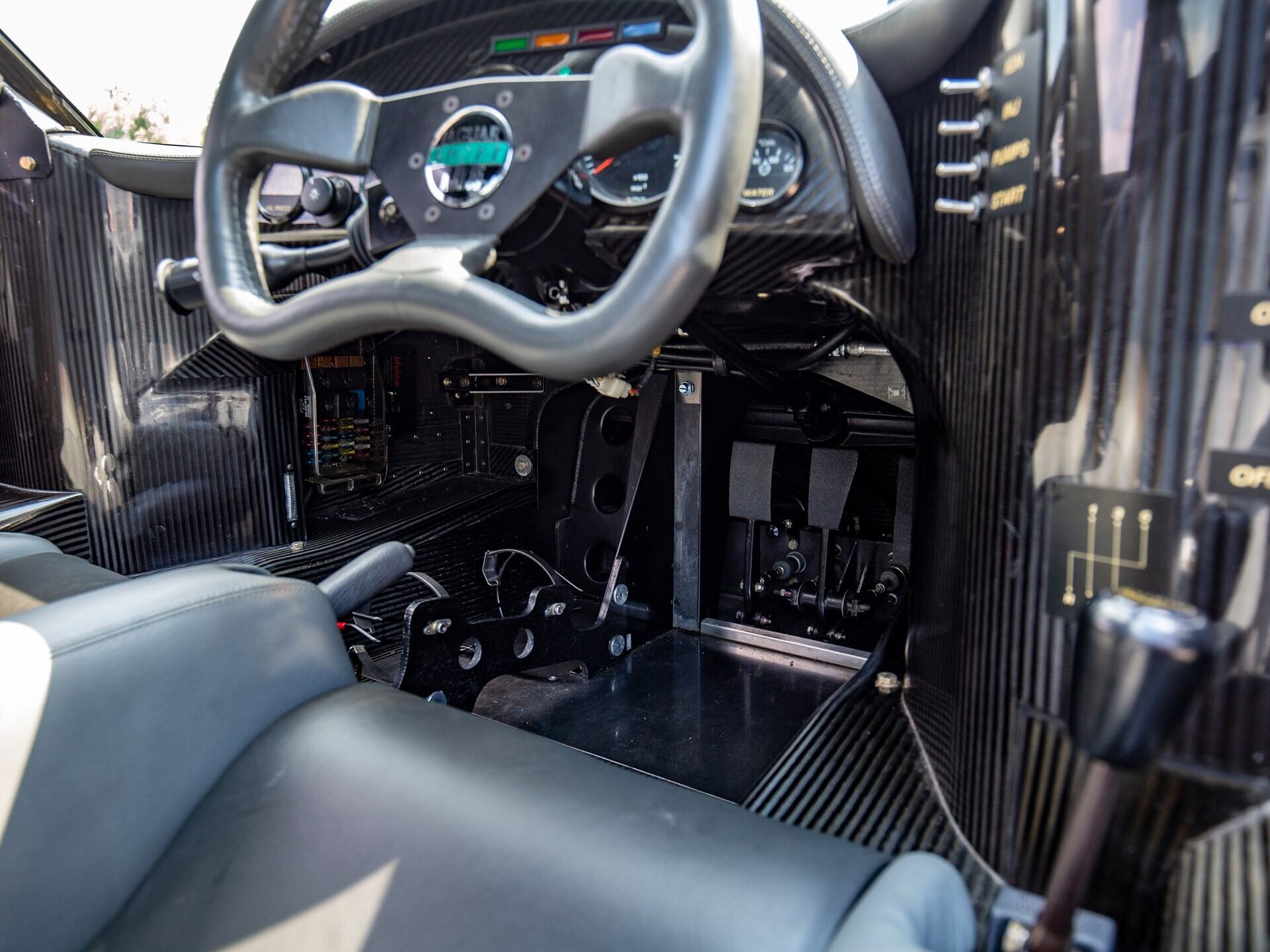
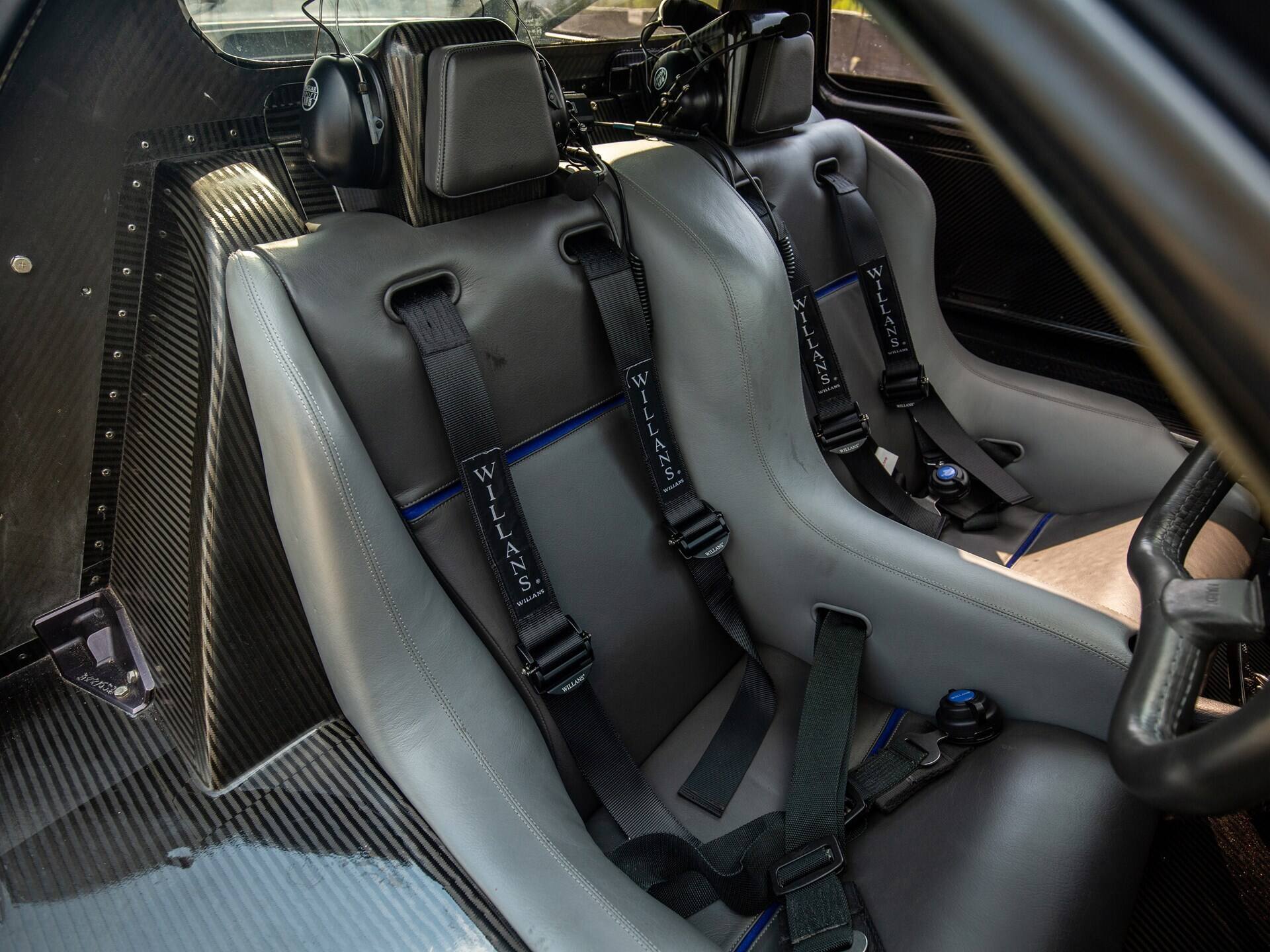
Jaguar XJR-15 cockpit

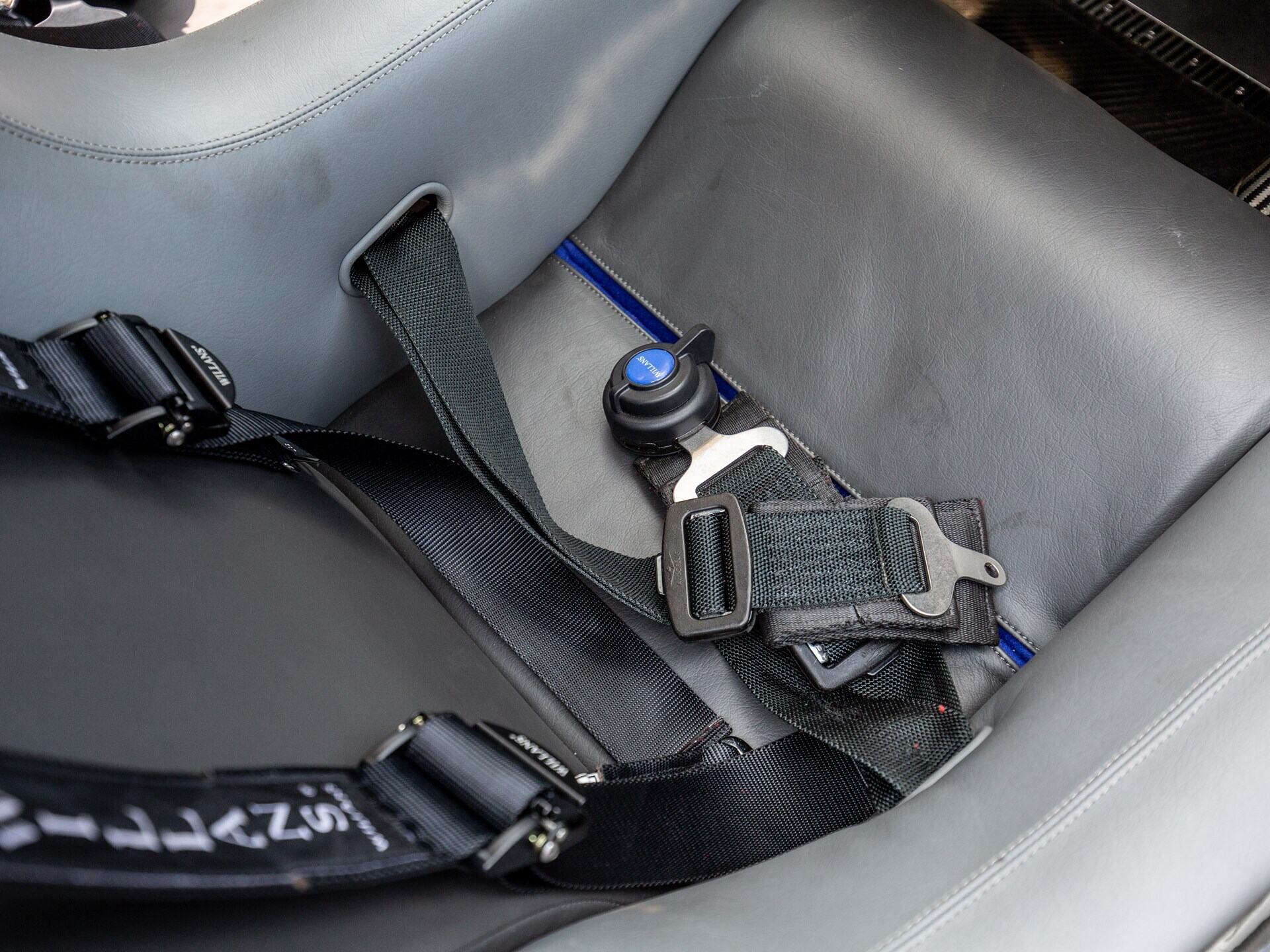
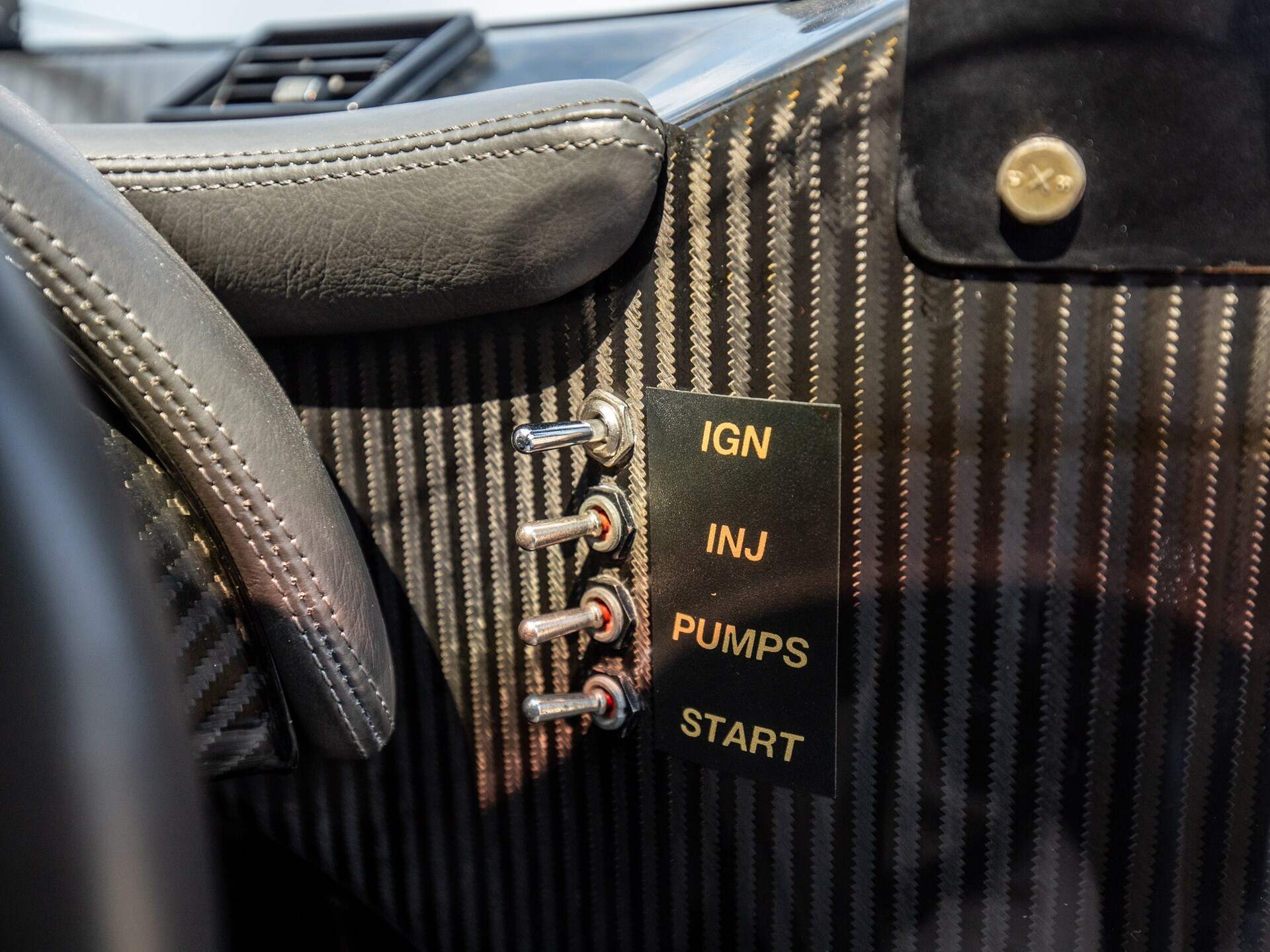
The cockpit is snug, Spartan, and highly focussed on performance above all else.

This was a great risk but Tom Walkinshaw did his due diligence to assess demand and got the TWR design and engineering team busy on creating what would be the only TWR car created to be able to be licensed and used on public roads.

The design team started out basing this new car – to be called the XJR-15 – on the Le Mans winning XJR-9 and XJR-12.

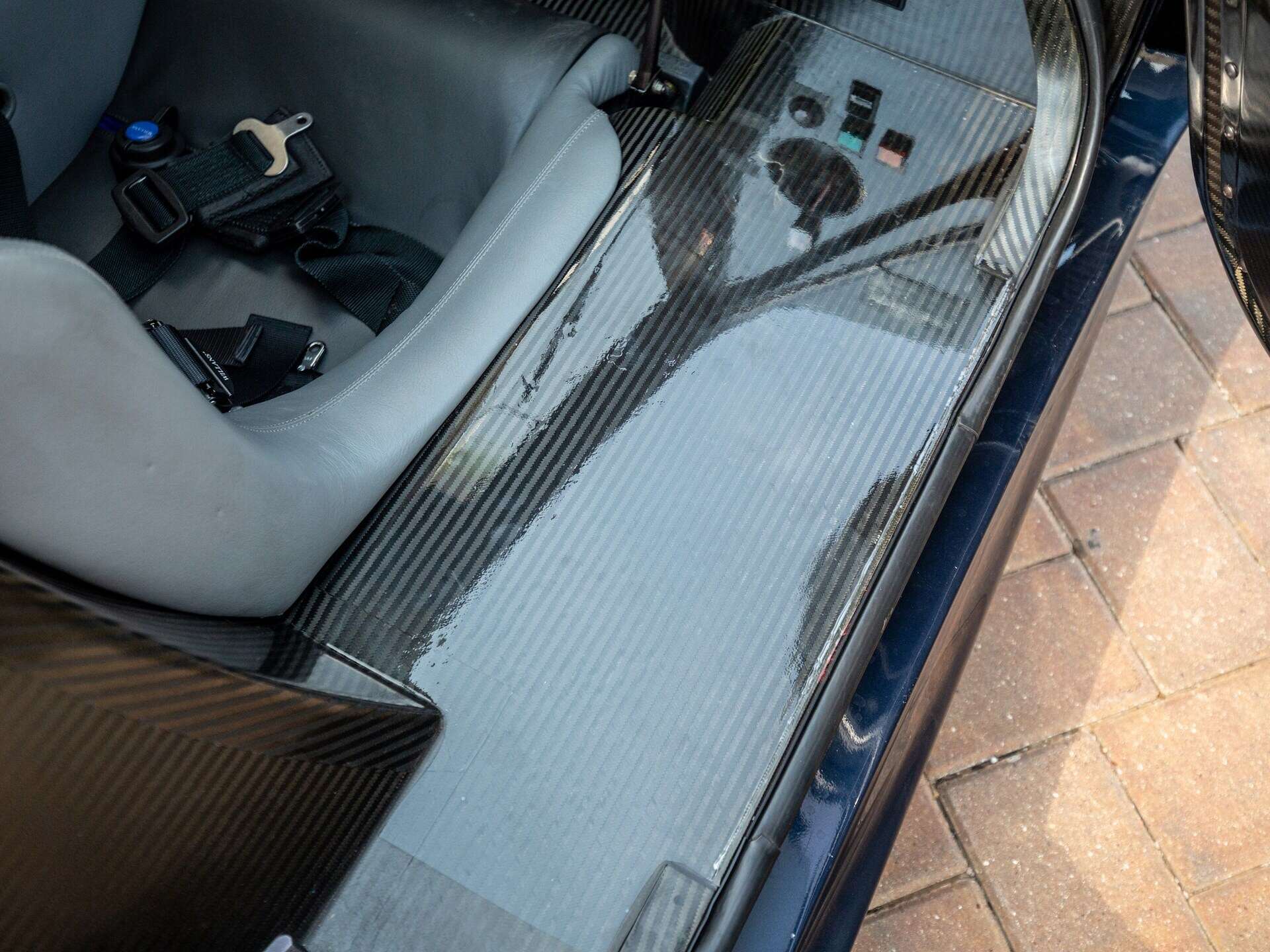
The foundation of the car was a central monocoque chassis tub like that of the XJR-9 but with its dimensions altered to make the car suitable to be licensed and used on public roads.

The body design was by Peter Stevens (who also designed the body for the McLaren F1) with an emphasis on aerodynamics and high speed stability. Not only that but in deference to Sir William Lyons legacy Stevens made it beautiful – a car that stops people in their tracks as they admire it.

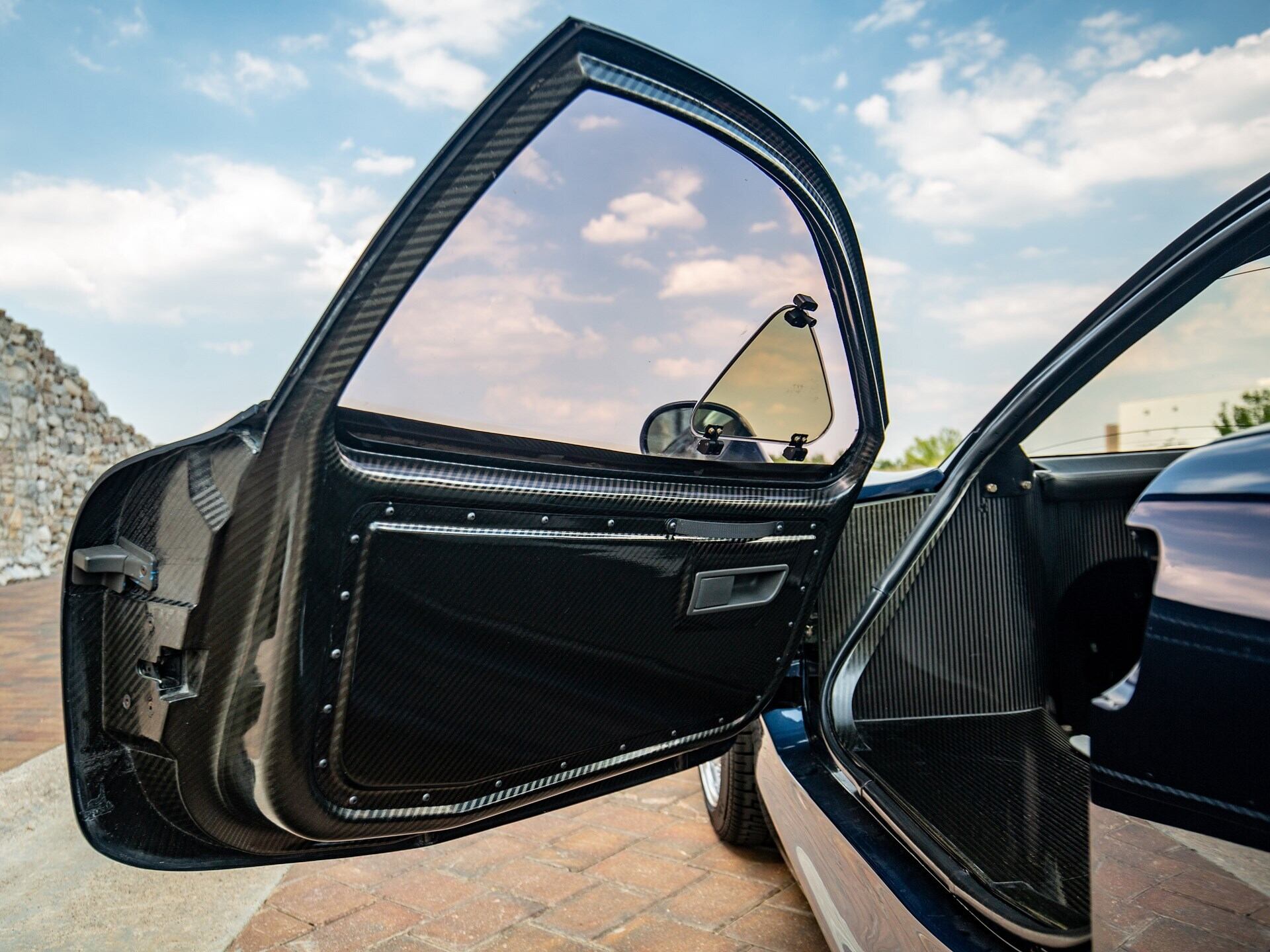
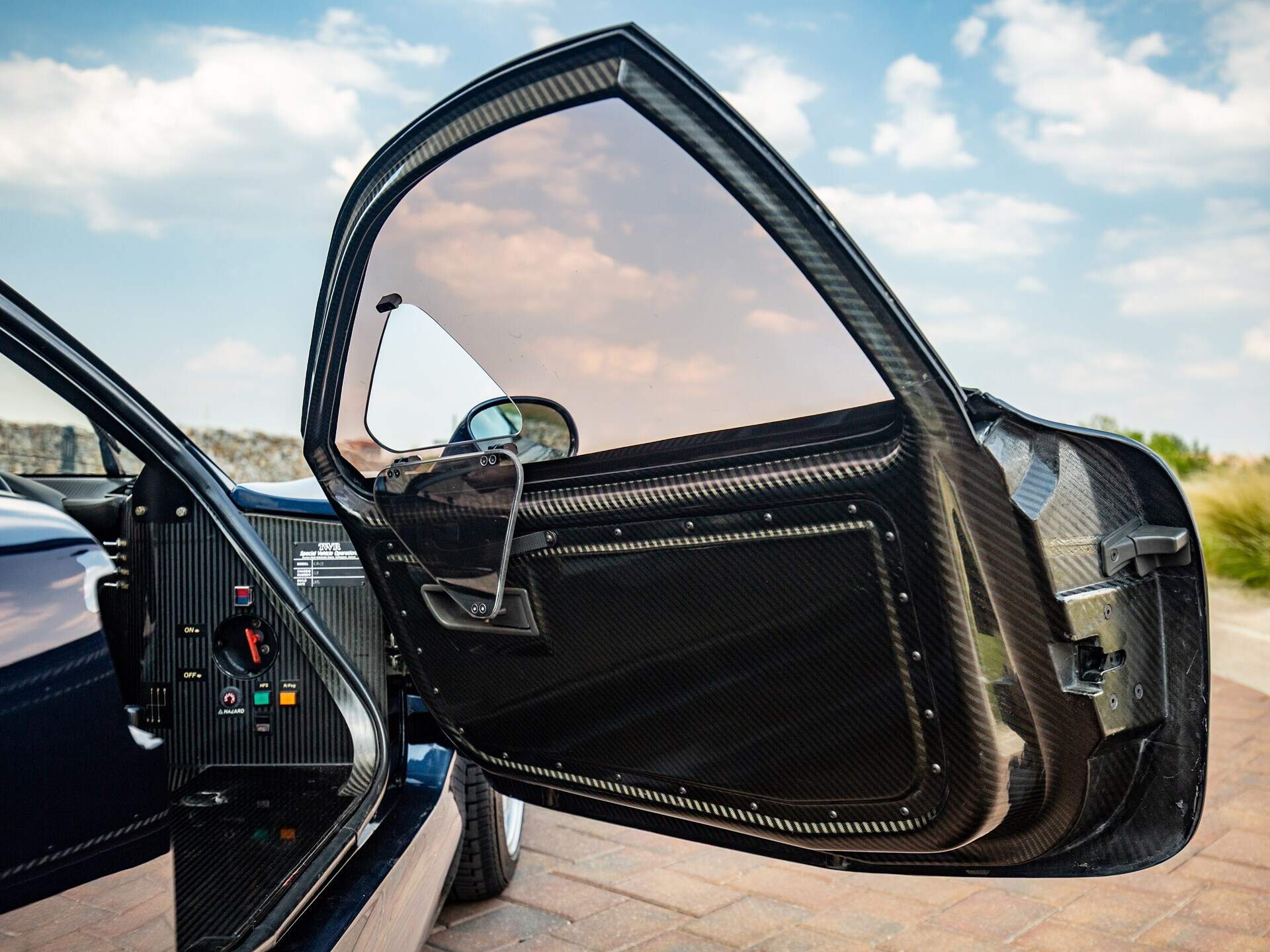
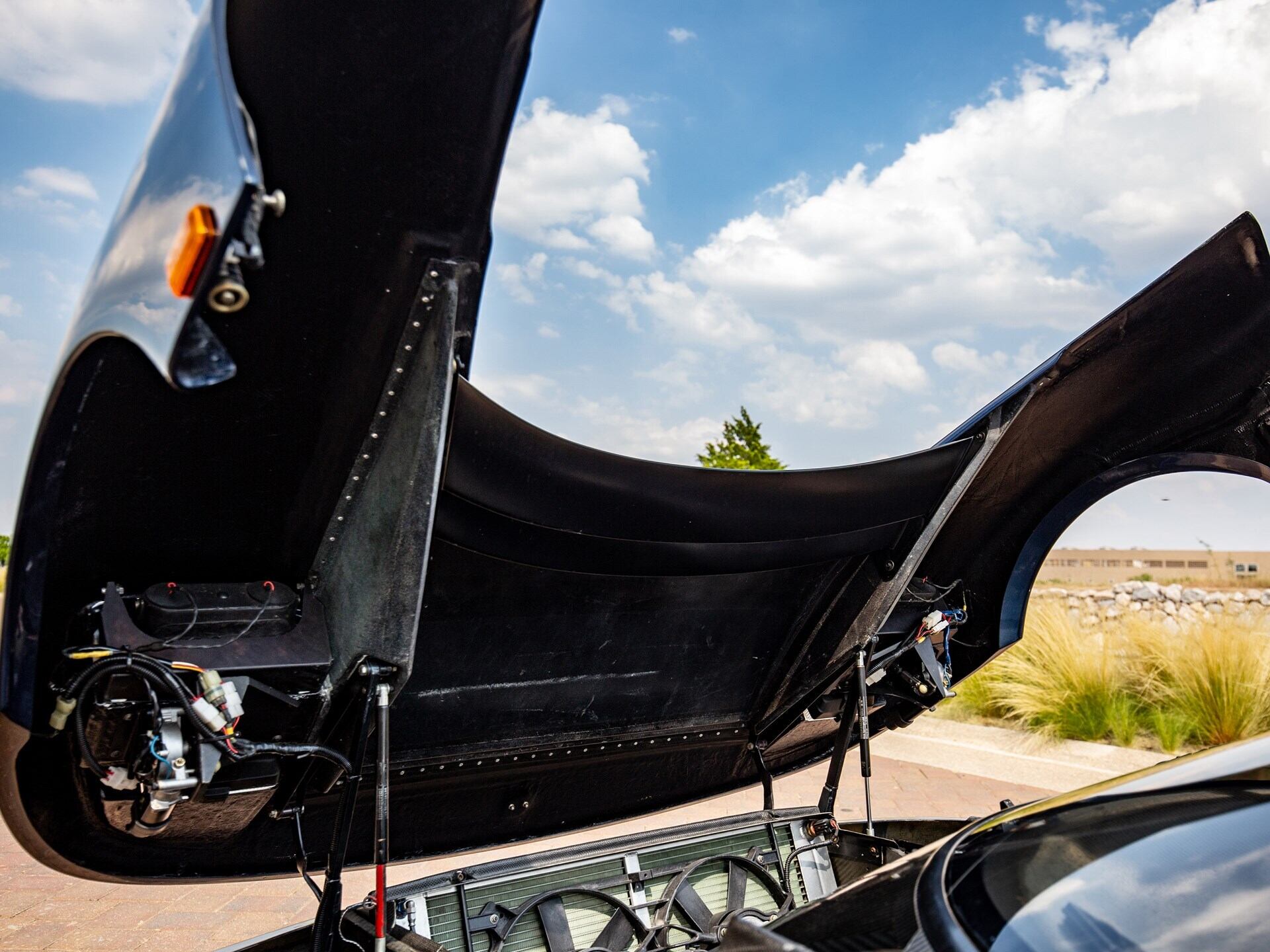
The construction was of Kevlar and carbon fibre and the suspension components custom fabricated with wishbones for front and rear. The front suspension featured horizontal push-rod spring dampers and coil springs at the rear.

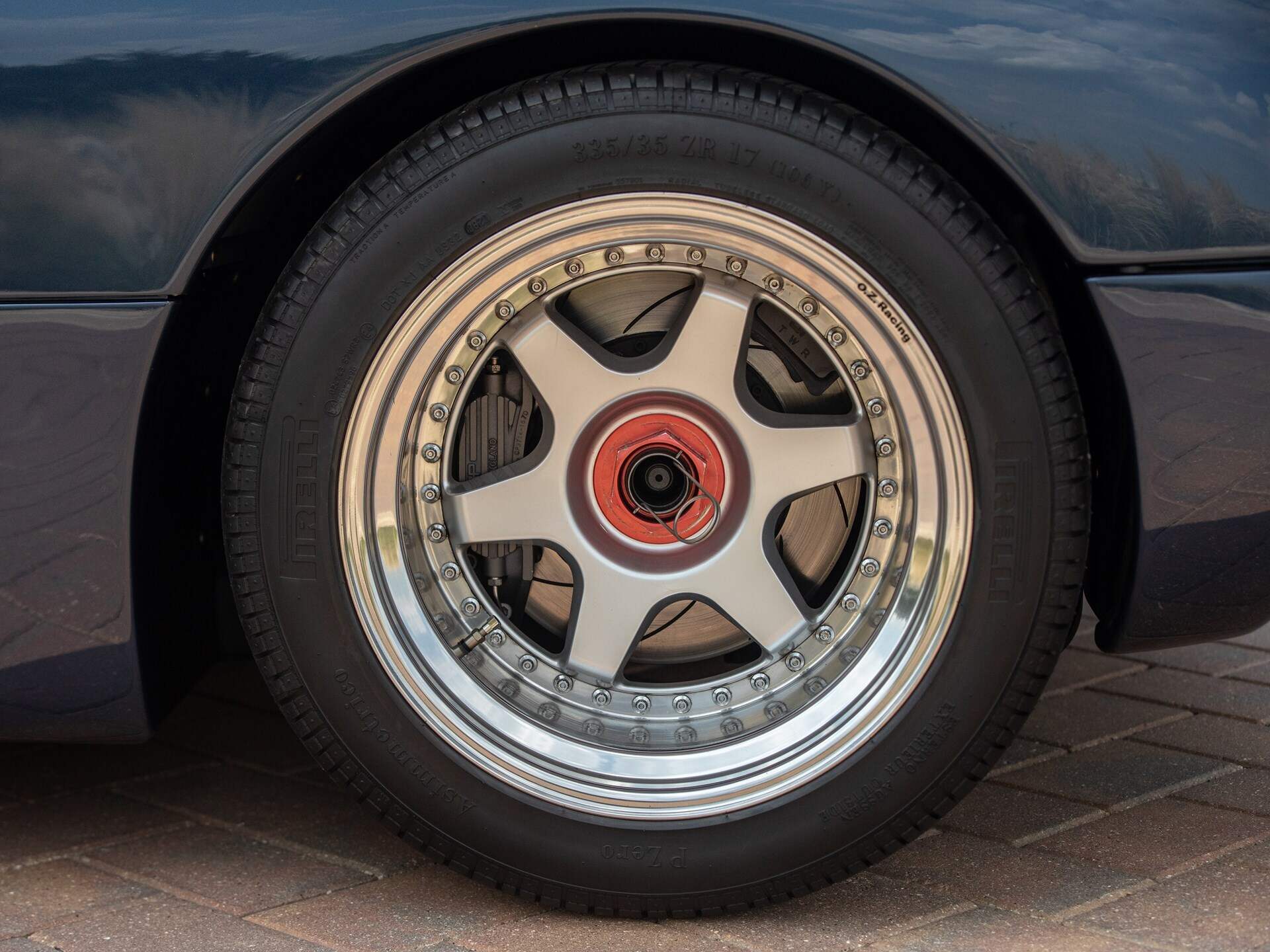
The brakes were steel discs with AP four piston calipers all contained within the wide wheels.
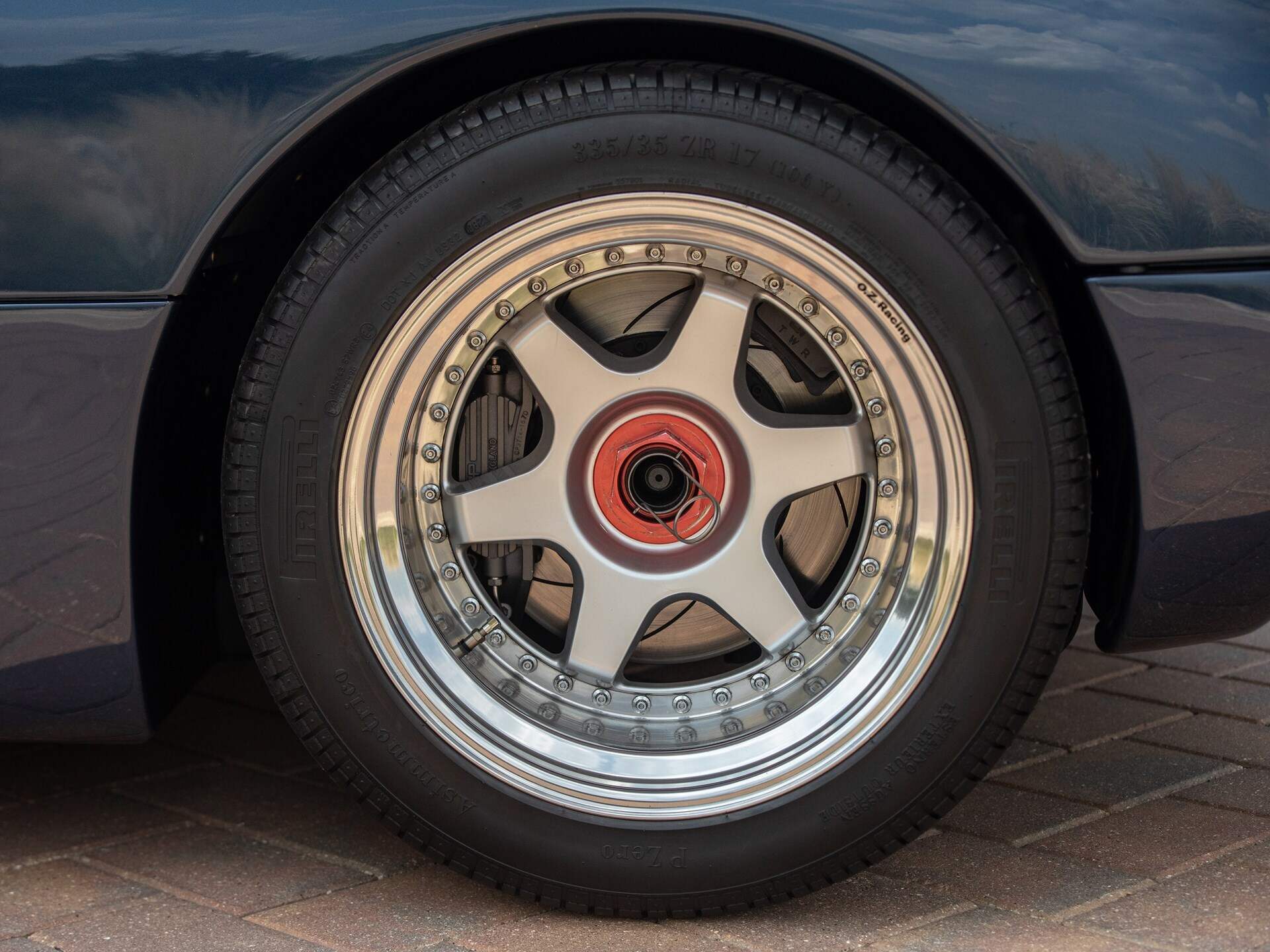
Jaguar XJR-15 wheels tyres six-spoke, 17-inch O.Z. Racing alloy wheels Pirelli P-Zero tyres

Wheels are six-spoke, 17 inch O.Z. Racing alloy wheels shod with Pirelli P-Zero tyres.

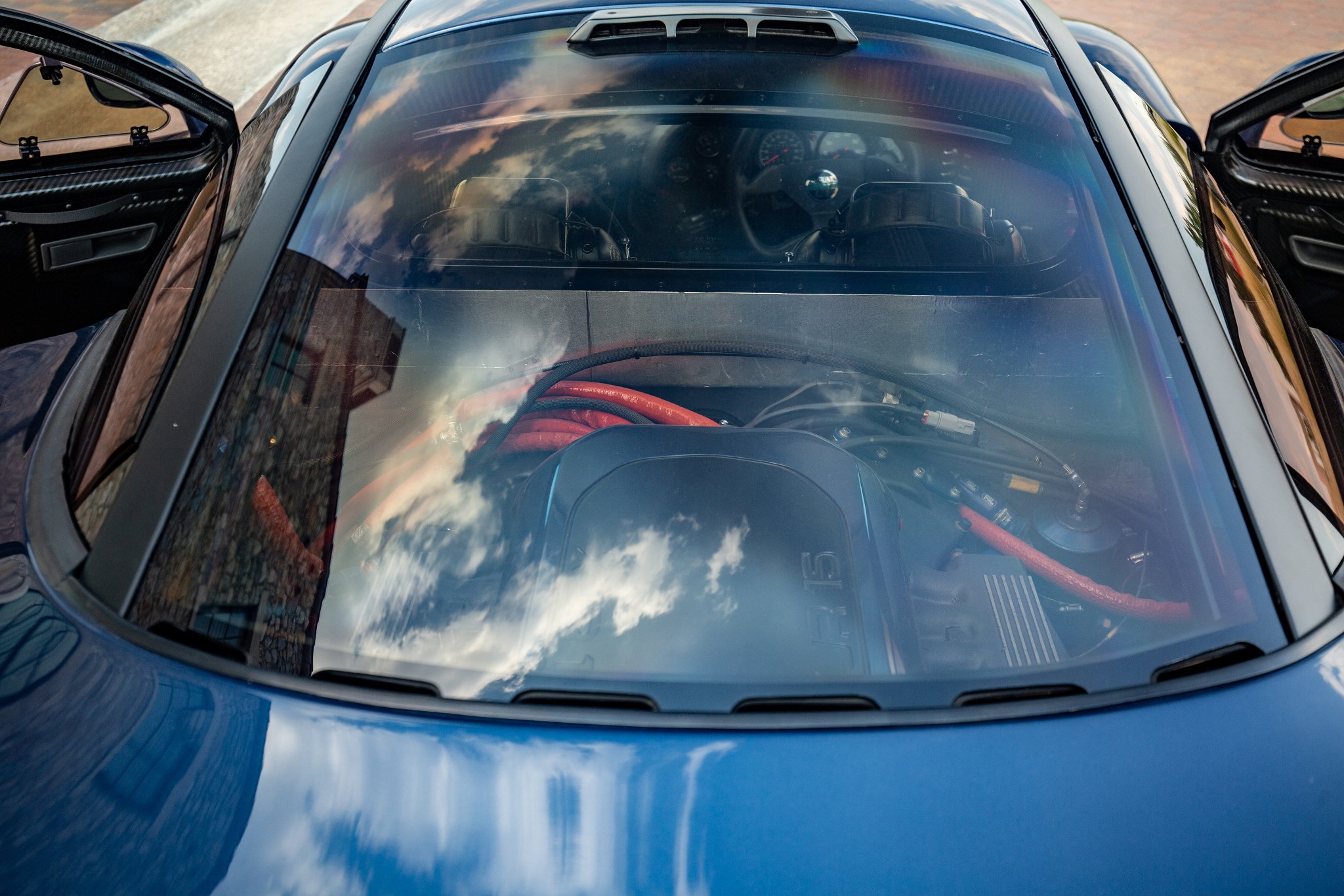
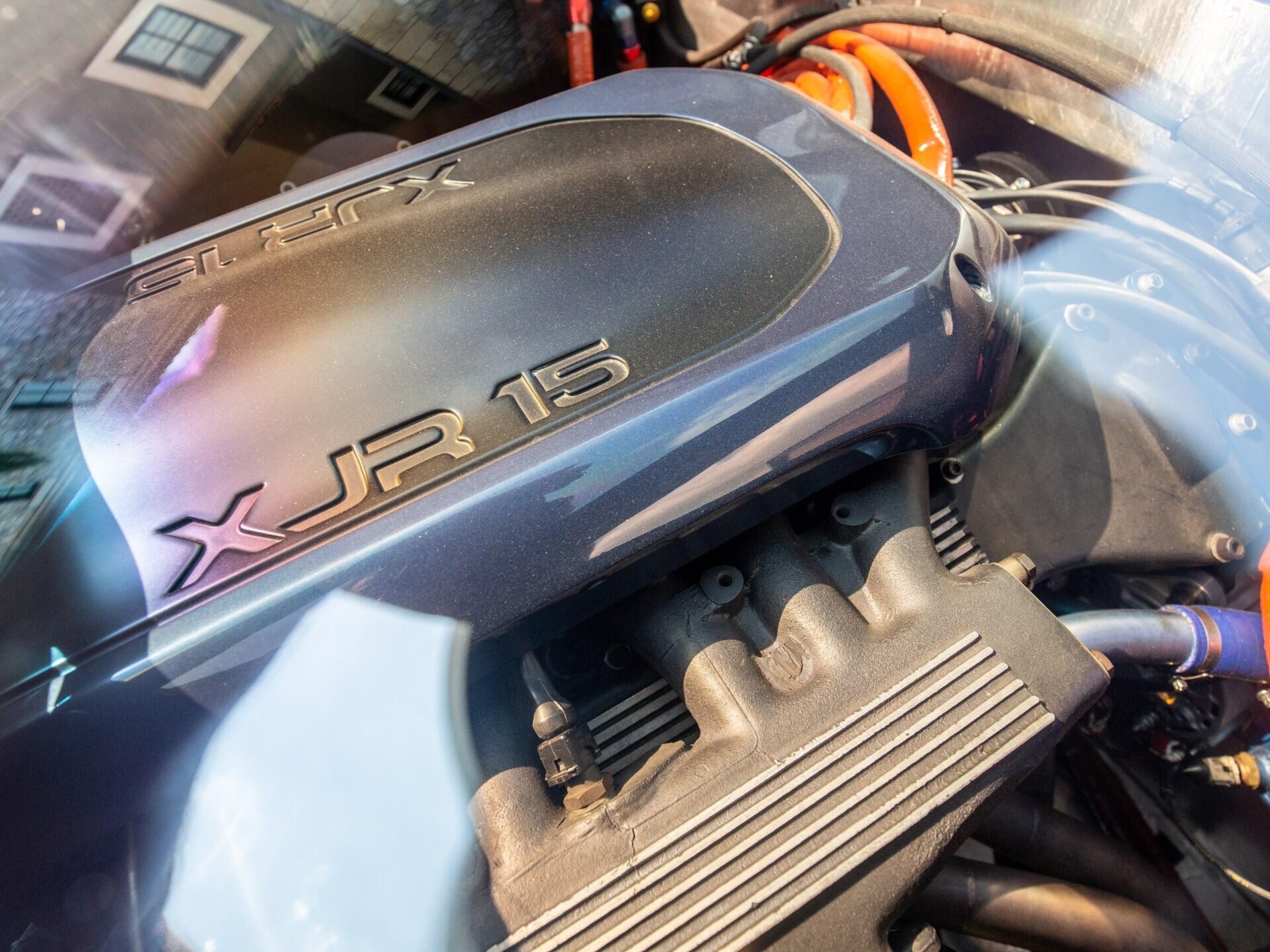
The engine was made to meet Group C specifications for racing and was an all aluminium V12 of 6 litres capacity with a dry sump. Its crankshaft and connecting rods were by Cosworth and were forged steel while the pistons were of aluminium.

The fuel was controlled by Zytec electronically controlled sequential fuel injection and the power output was 450 bhp: rather less than the 720 bhp of the Le Mans race cars but it’s an engine that was controllable on public roads, and entirely able to provide a Mr. Hyde satisfying, adrenaline pumping rush on the track.

Two options were offered for the car’s transmission to send that 450 bhp to the rear wheels: a full race style six speed non synchromesh racing gearbox with straight cut gears, or a full synchromesh five speed manual for more civilized driving.

Of the fifty produced cars twenty seven were built with the five speed all synchromesh gearbox.
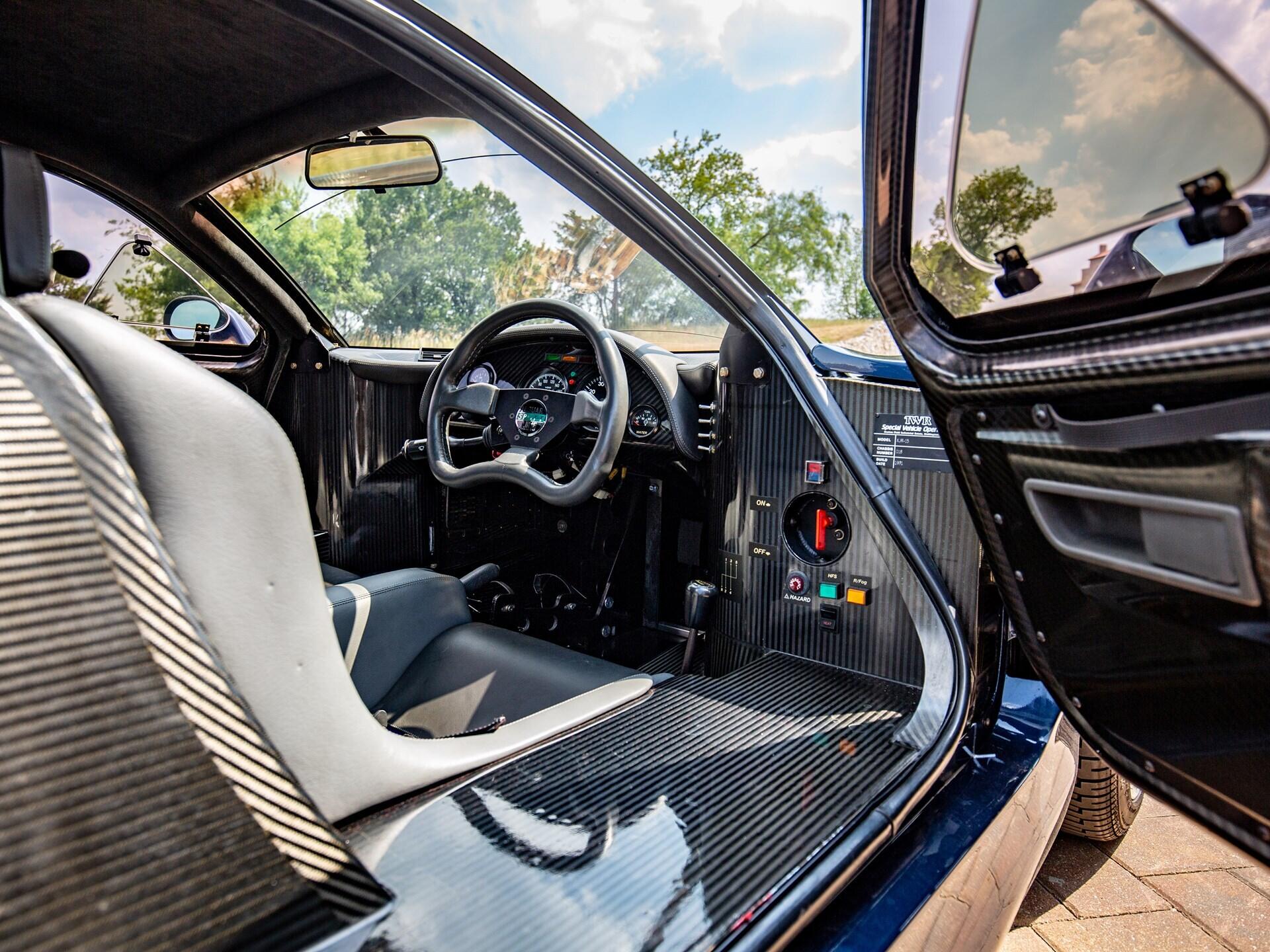
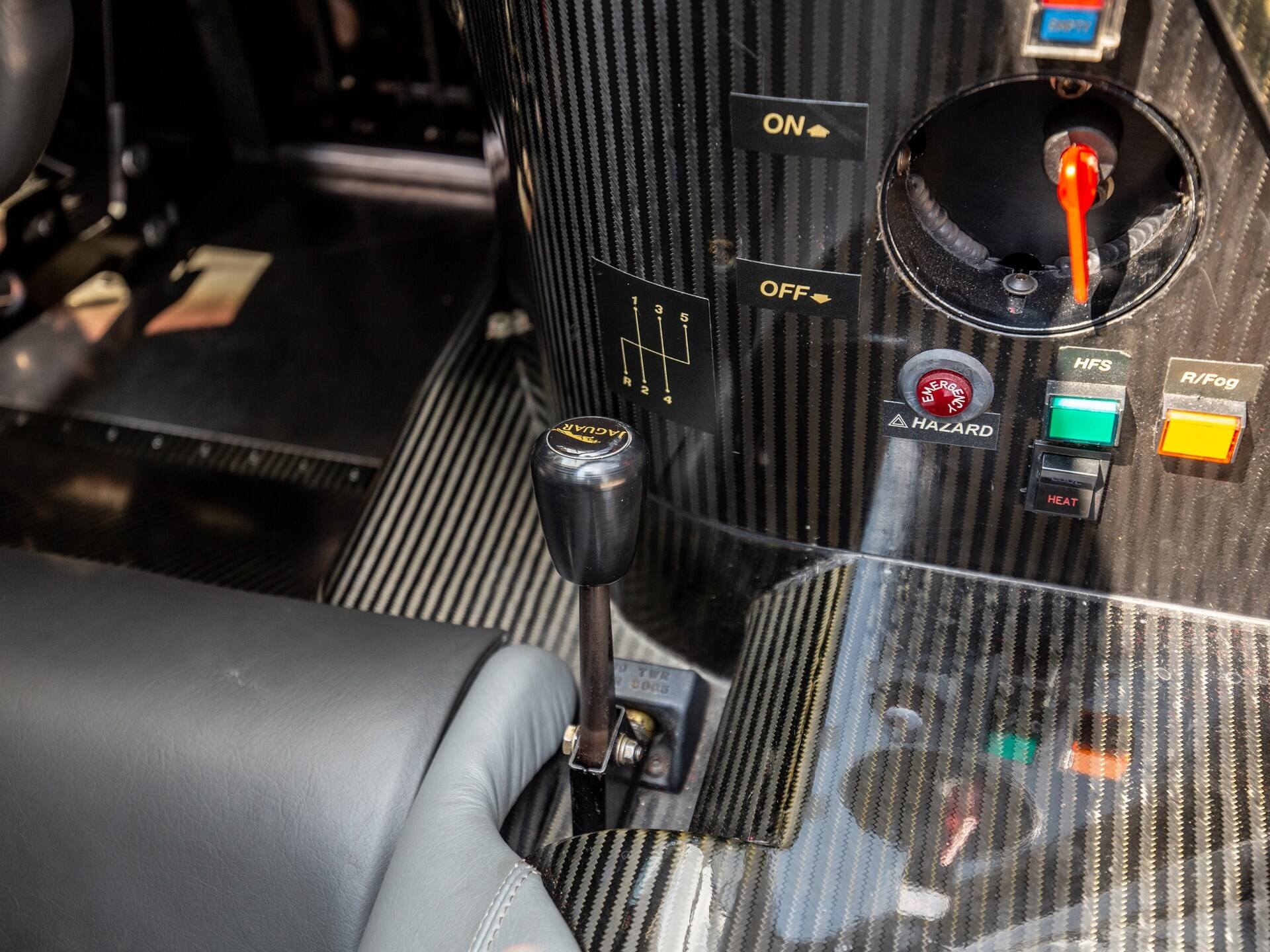
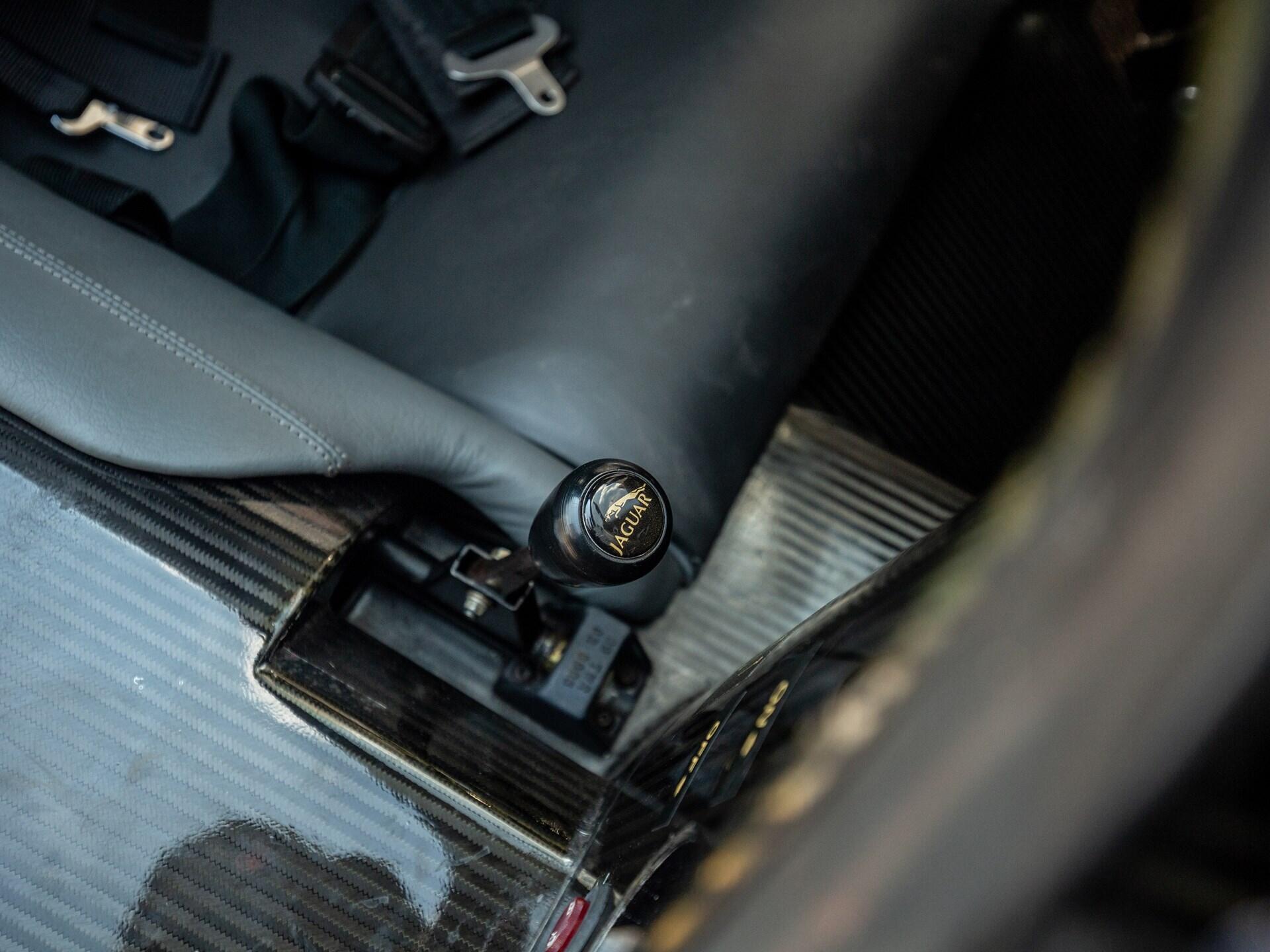
Jaguar XJR-15 cockpit

Entry to the cockpit requires a bit of contortion as one would expect. The gear lever for the all synchromesh gearbox is visible to the right of the steering wheel.

The XJR15 was light, racing car light, tipping the scales at just 2,315 lb. So with 450 bhp propelling it and a highly aerodynamic body with which to slip through the air the car’s top speed was 220 mph.

In 1991 JaguarSport ran the Jaguar Intercontinental Challenge, supporting F1 races at Monaco, Silverstone and Spa for owners of XJR15s.

This series of races provided owners with the opportunity to drive their cars in the way they were designed to be driven, very fast indeed. The winner was Armin Hahne who took home a cool half million US dollars. But those who did not win no doubt got a huge amount of enjoyment fulfilling a dream of racing a Le Mans car: and of course they were not limited to the Intercontinental Challenge events but as they owned their car they could enjoy it whenever they wished.

As there are so few in existence it is unusual for a Jaguar Sport XJR15 to come up for sale. For those who would are looking for one, there is a Jaguar XJR-15 to be offered by RM Sotheby’s at their Monterey Auction which will be held between 18-20 August 2022.
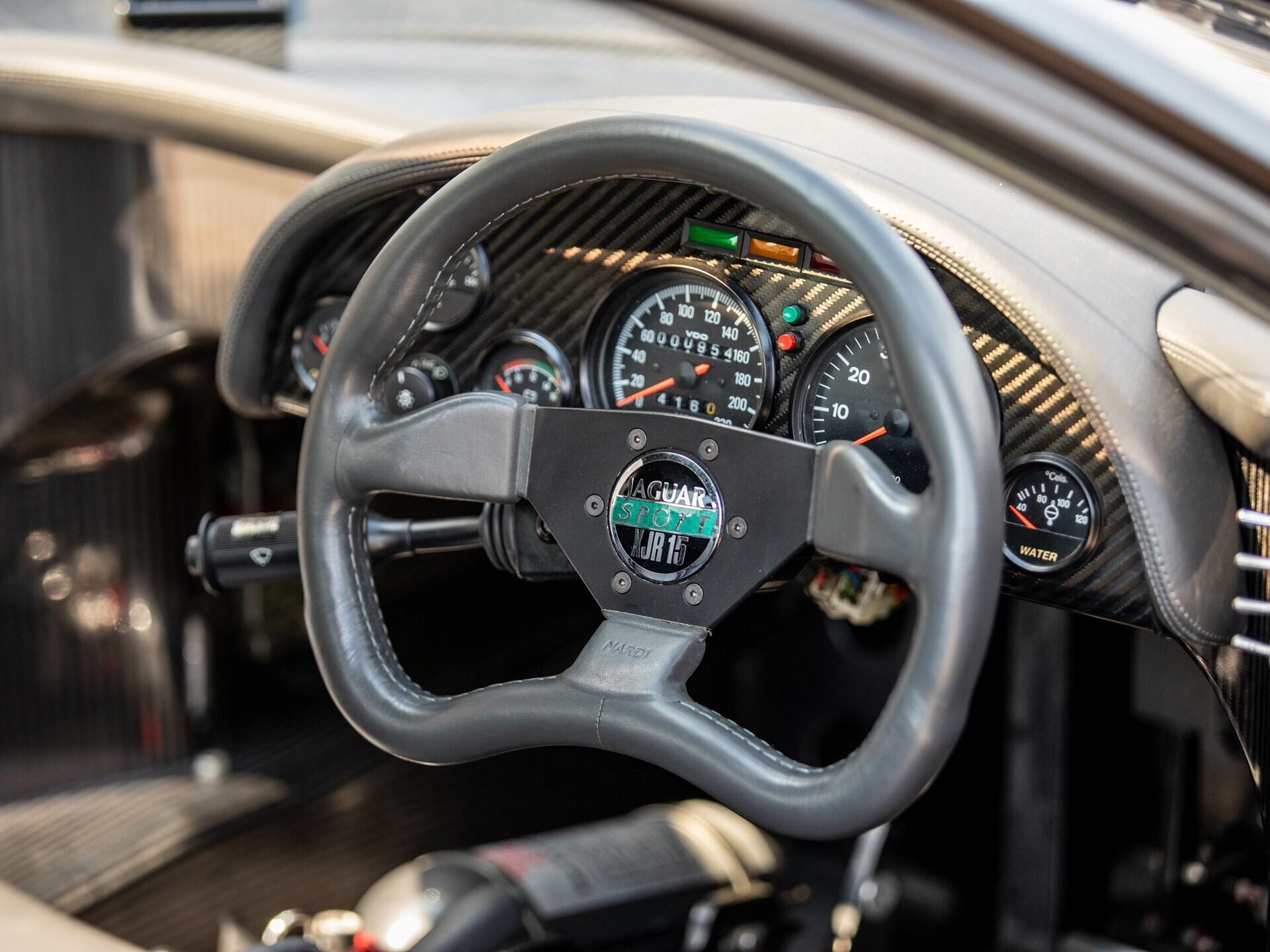
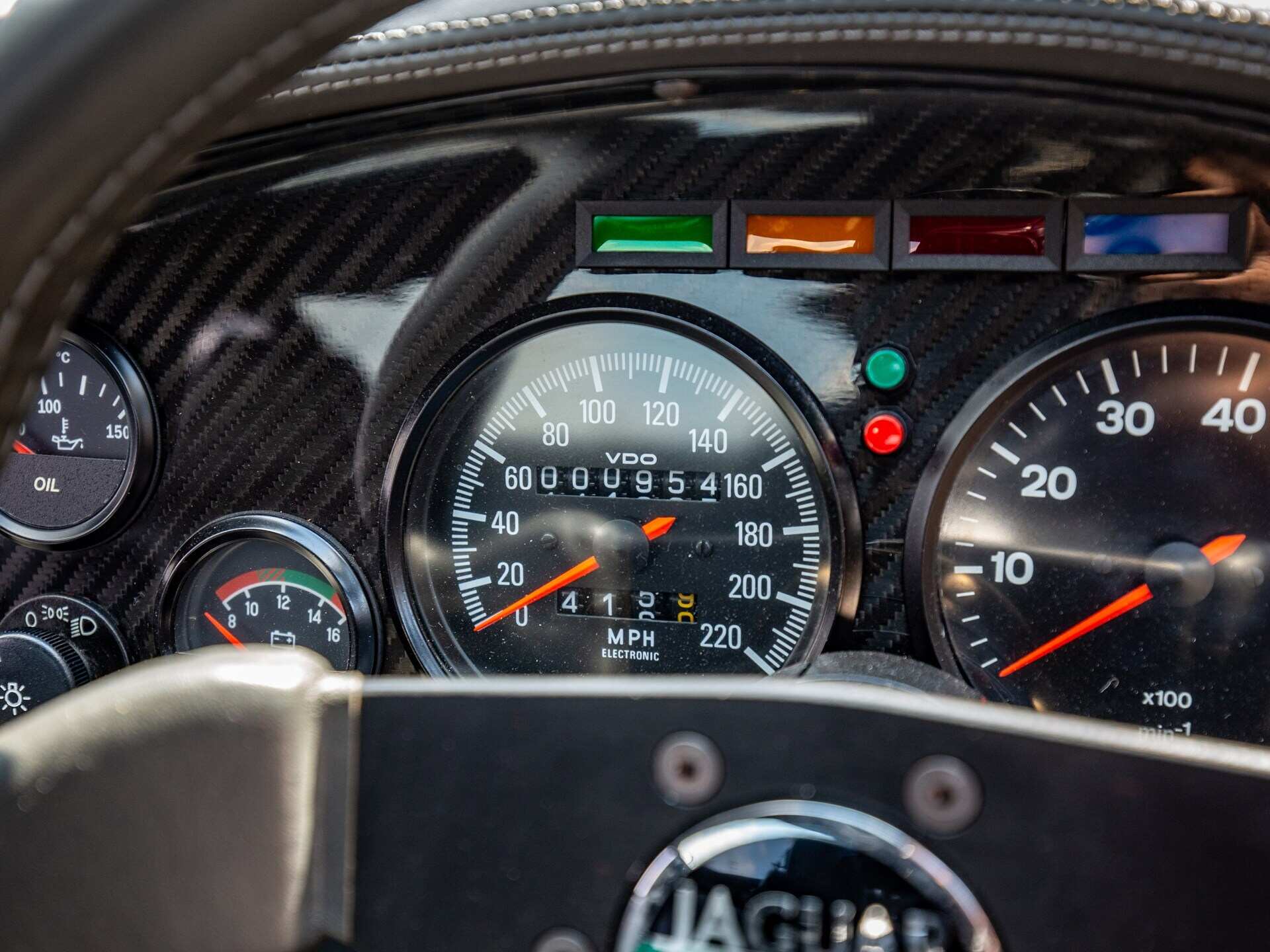
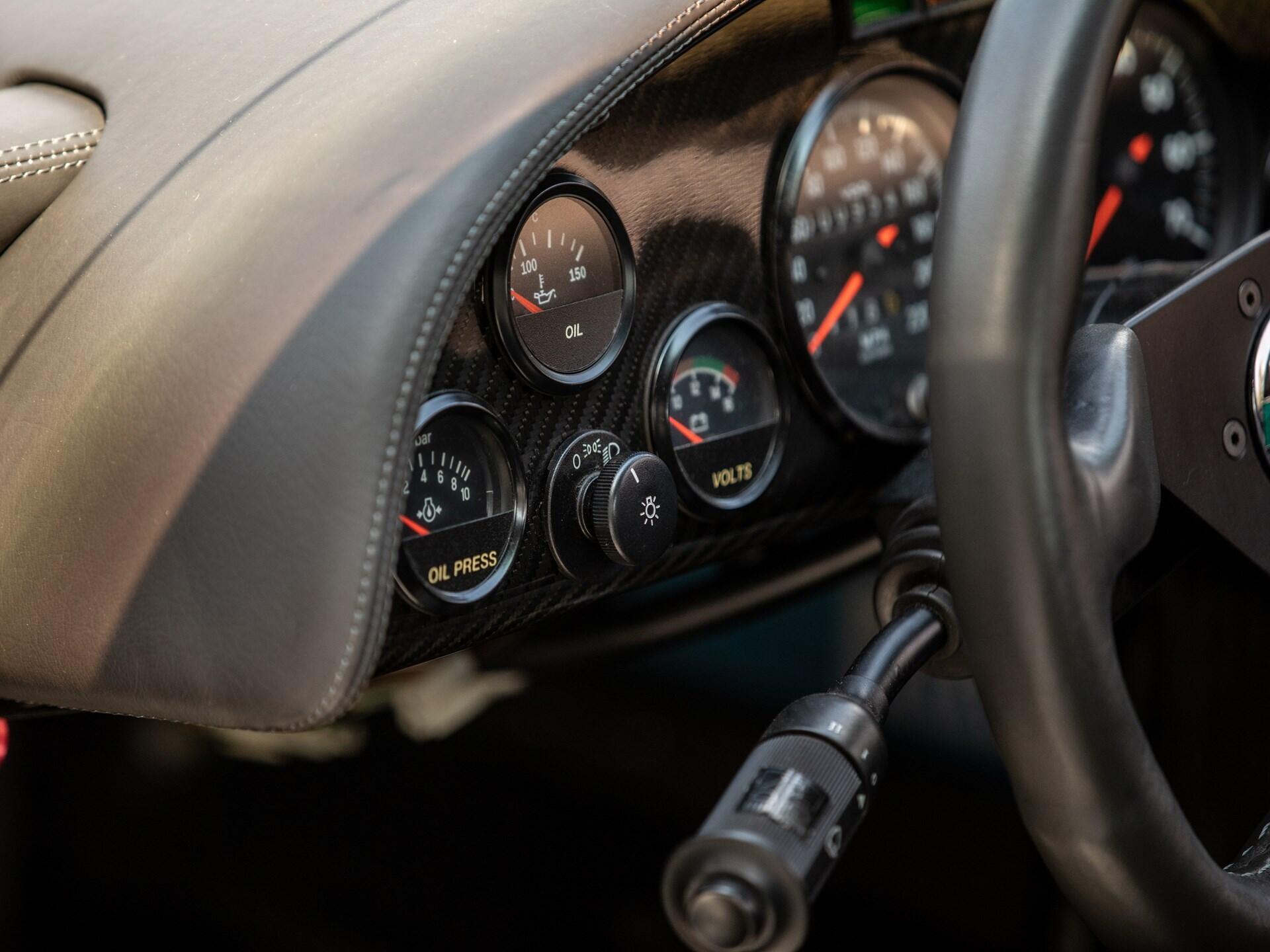
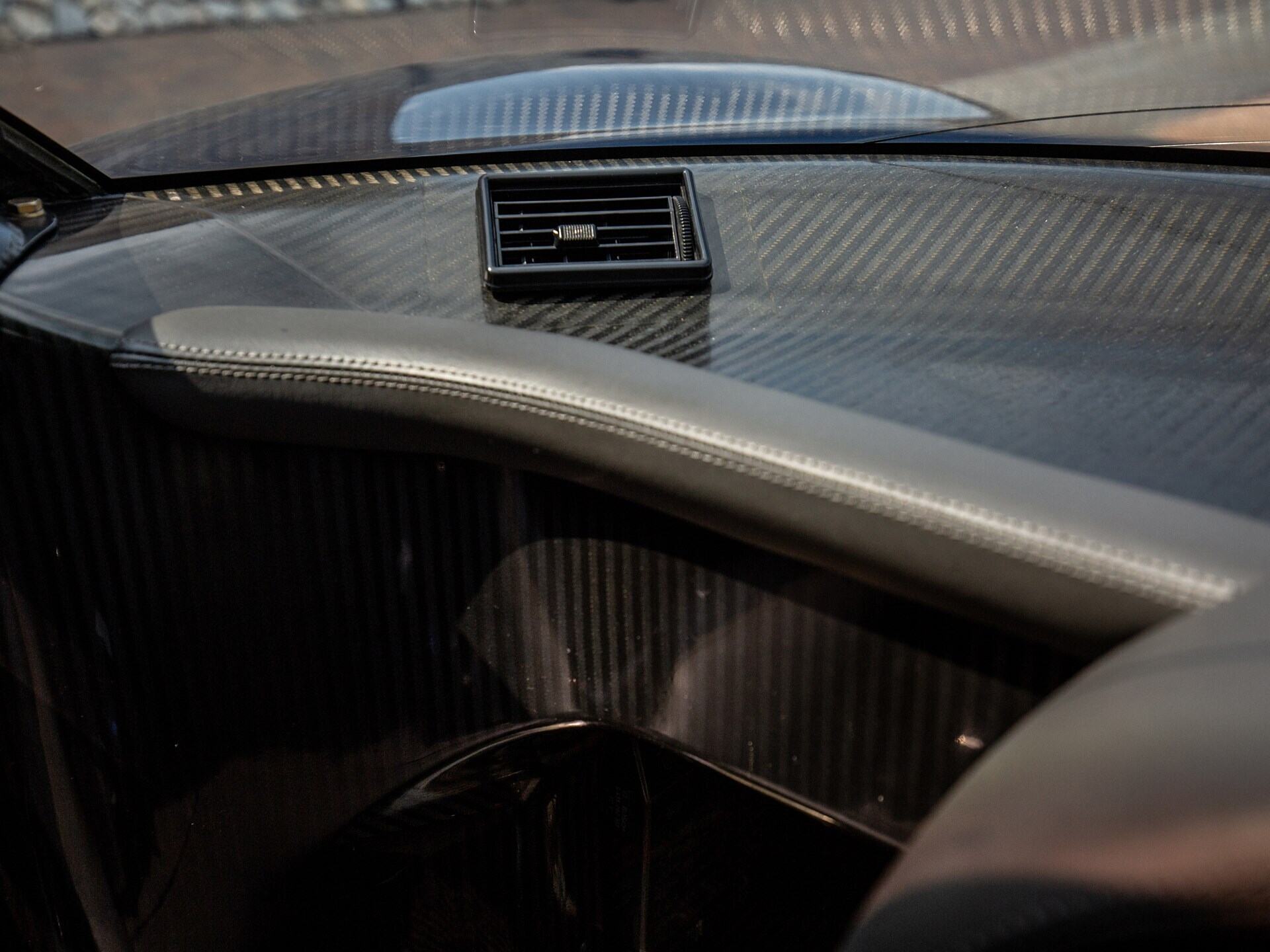
Jaguar XJR-15 dashboard

The instrumentation is all analogue, easy to read, classic and functional.

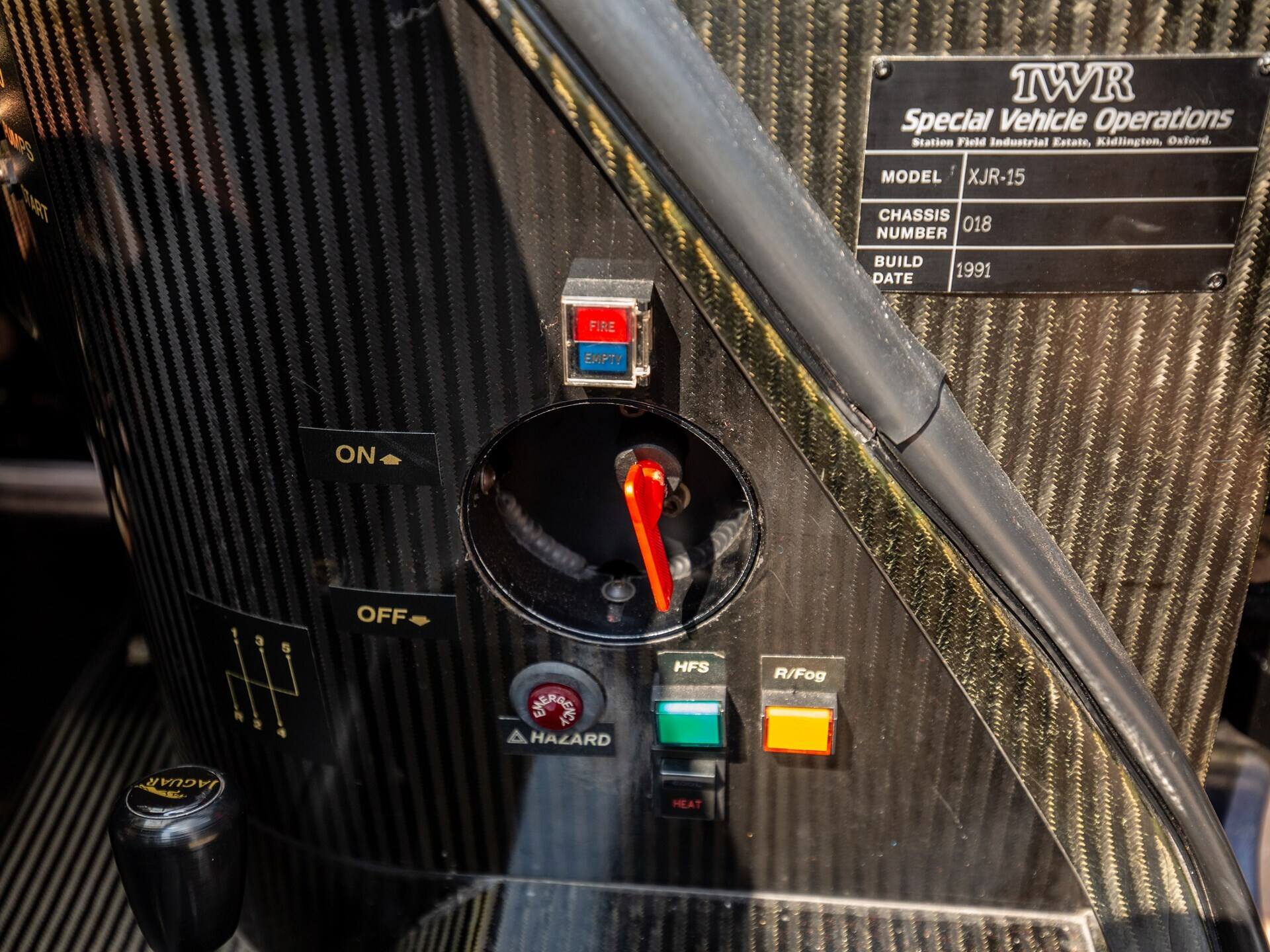
The car being offered is serial number 018 and it is in the road going specification fitted with the five speed all synchromesh gearbox.

A unique feature of this car is that it is the “Japan Study Car” that was used for aerodynamic studies and testing of hybrid energy recovery systems by a former Nismo Racing engineer.

It has since been restored back to its original specification by Bespoke Motors in Australia, who are marque experts, in 2015.

If you would like to read more about this car or register to bid you can visit the listing here. The price guide is set at 1,200.000 to 1,400,000 USD.
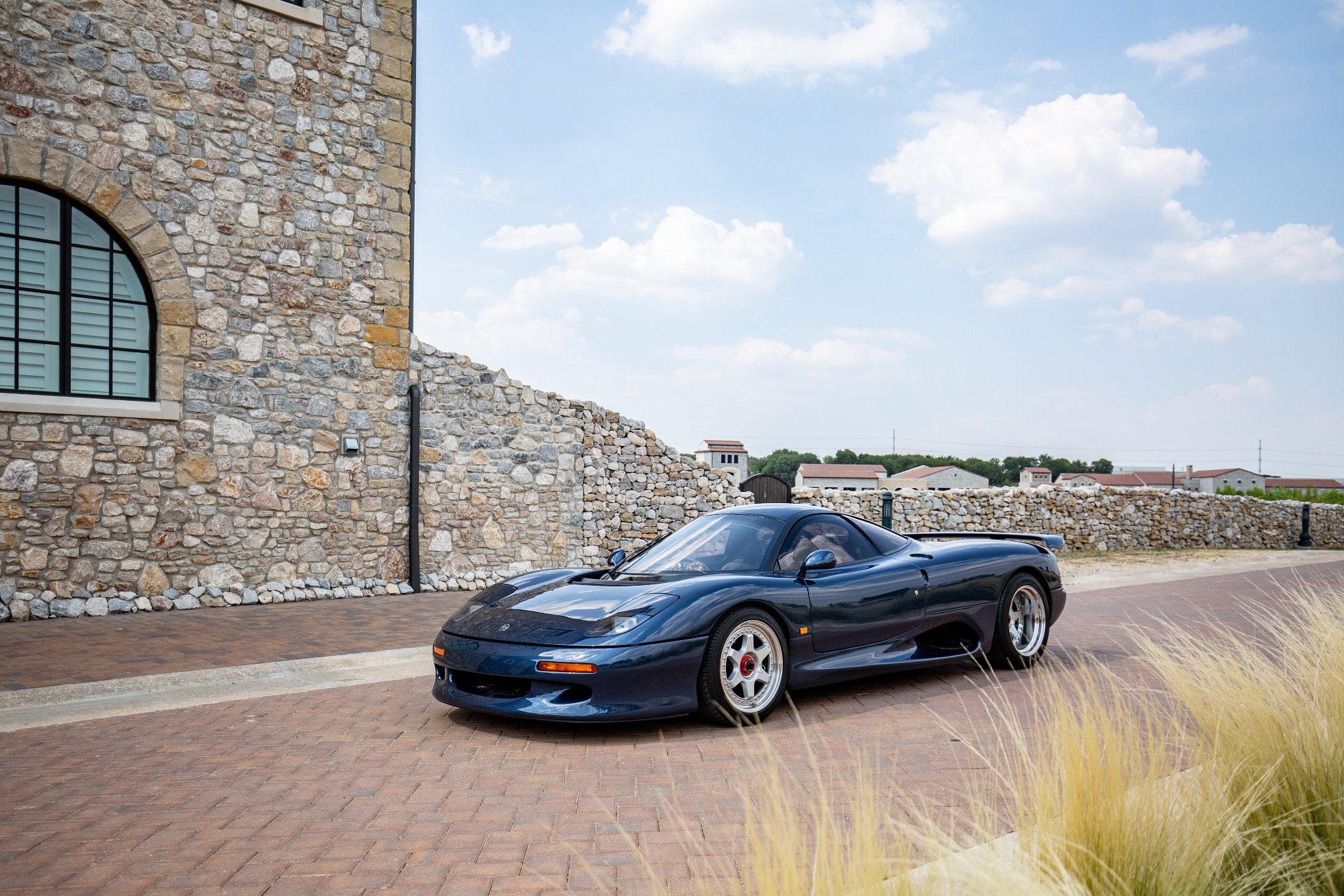
Jaguar XJR-15 sports racing car Jaguar XJR-15 sports racing car Jaguar XJR-15 sports racing car Jaguar XJR-15 sports racing car Jaguar XJR-15 sports racing car Jaguar XJR-15 sports racing car Jaguar XJR-15 sports racing car Jaguar XJR-15 sports racing car Jaguar XJR-15 sports racing car Jaguar XJR-15 sports racing car Jaguar XJR-15 sports racing car Jaguar XJR-15 sports racing car Jaguar XJR-15 sports racing car Jaguar XJR-15 sports racing car Jaguar XJR-15 sports racing car Jaguar XJR-15 sports racing car Jaguar XJR-15 sports racing car Jaguar XJR-15 sports racing car Jaguar XJR-15 sports racing car Jaguar XJR-15 sports racing car Jaguar XJR-15 sports racing car Jaguar XJR-15 sports racing car Jaguar XJR-15 sports racing car Jaguar XJR-15 sports racing car Jaguar XJR-15 sports racing car Jaguar XJR-15 sports racing car Jaguar XJR-15 sports racing car Jaguar XJR-15 sports racing car Jaguar XJR-15 sports racing car Jaguar XJR-15 sports racing car Jaguar XJR-15 sports racing car Jaguar XJR-15 sports racing car Jaguar XJR-15 sports racing car Jaguar XJR-15 sports racing car Jaguar XJR-15 sports racing car Jaguar XJR-15 sports racing car Jaguar XJR-15 sports racing car


Jaguar XJR15 sports racing car Tom Walkinshaw Jaguar

The post A Road-Legal Le Mans Winning Supercar: The Rare 1991 Jaguar XJR-15 appeared first on Silodrome.


from Silodrome https://silodrome.com/jaguar-xjr-15/
via gqrds

The Volkswagen Thing: A European Answer To The Jeep

The Volkswagen Thing, internally named the Volkswagen Type 181, was developed by the German automaker as a Jeep-like vehicle for the West German Army as the proposed “Europa Jeep” was then still under development.

The Europa Jeep would never see the light of day and as a result the Type 181 remained in production from 1968 till 1983 with over 90,000 built in total for both military and civilian use.

Fast Facts – The Volkswagen Thing

  • The Volkswagen Thing started out as a stop-gap military vehicle to perform as a European Jeep while the official “Europa Jeep” was still in development.
  • Though it was only intended for short term use, the Thing (known as the Kurierwagen in Germany) remained in production from 1968 to 1983.
  • Military versions of the vehicle used portal axles, much like the Unimog, to gain additional ride height and ground clearance while also lowering the effective gearing.
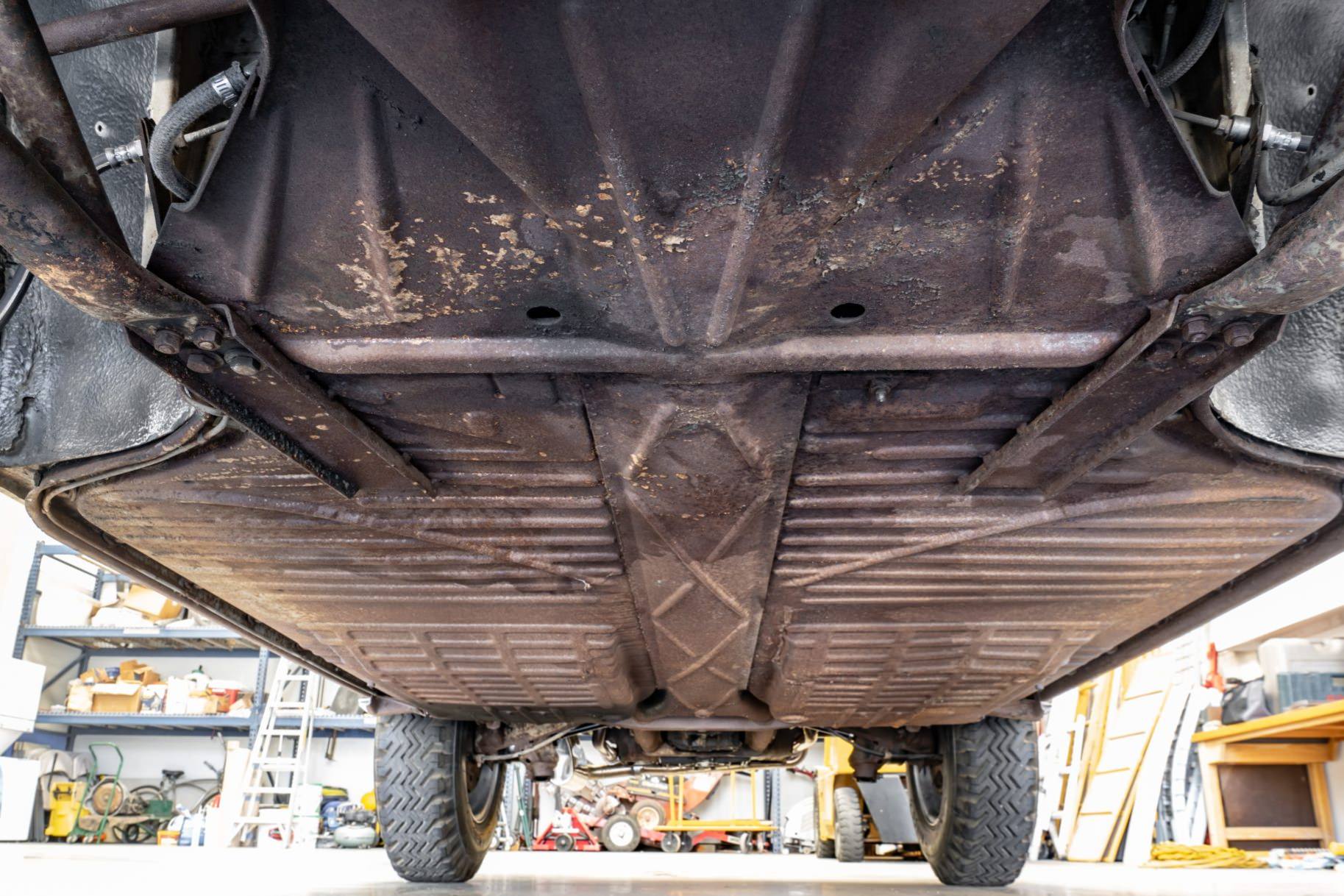
  • Internally known as the Type 181 by Volkswagen, the vehicle was made by combining the floorpan of the Type 1 Karmann Ghia, its mechanicals with the Volkswagen Beetle, and some of the suspension elements of the Volkswagen Transporter.

The Kübelwagen “Bucket Car”

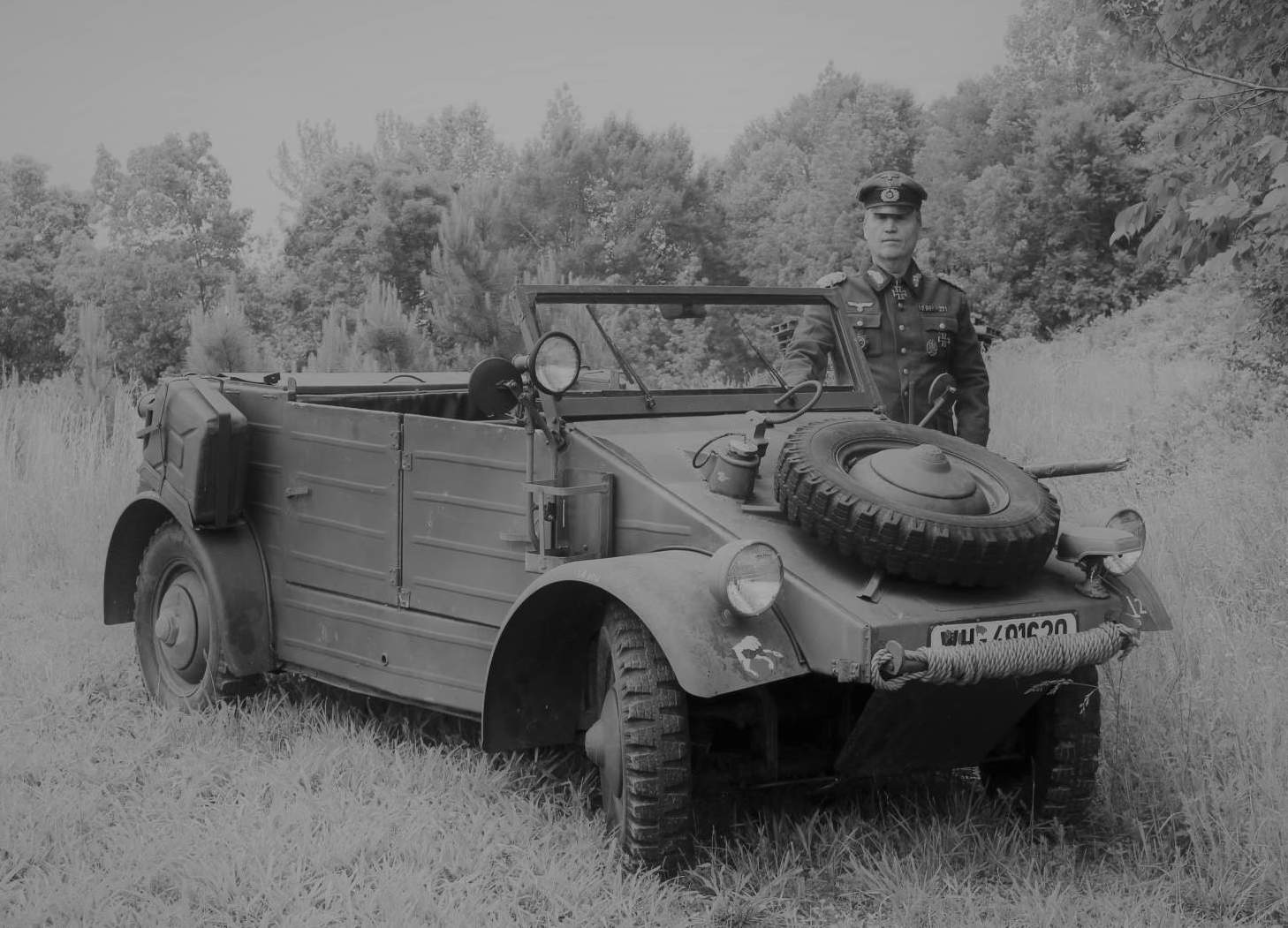
The Volkswagen Type 181 has its roots in the design of the WWII-era Type 82 Kübelwagen, an off-road military vehicle designed by Ferdinand Porsche and largely based on the underpinnings of the Volkswagen Beetle.

Kübelwagen

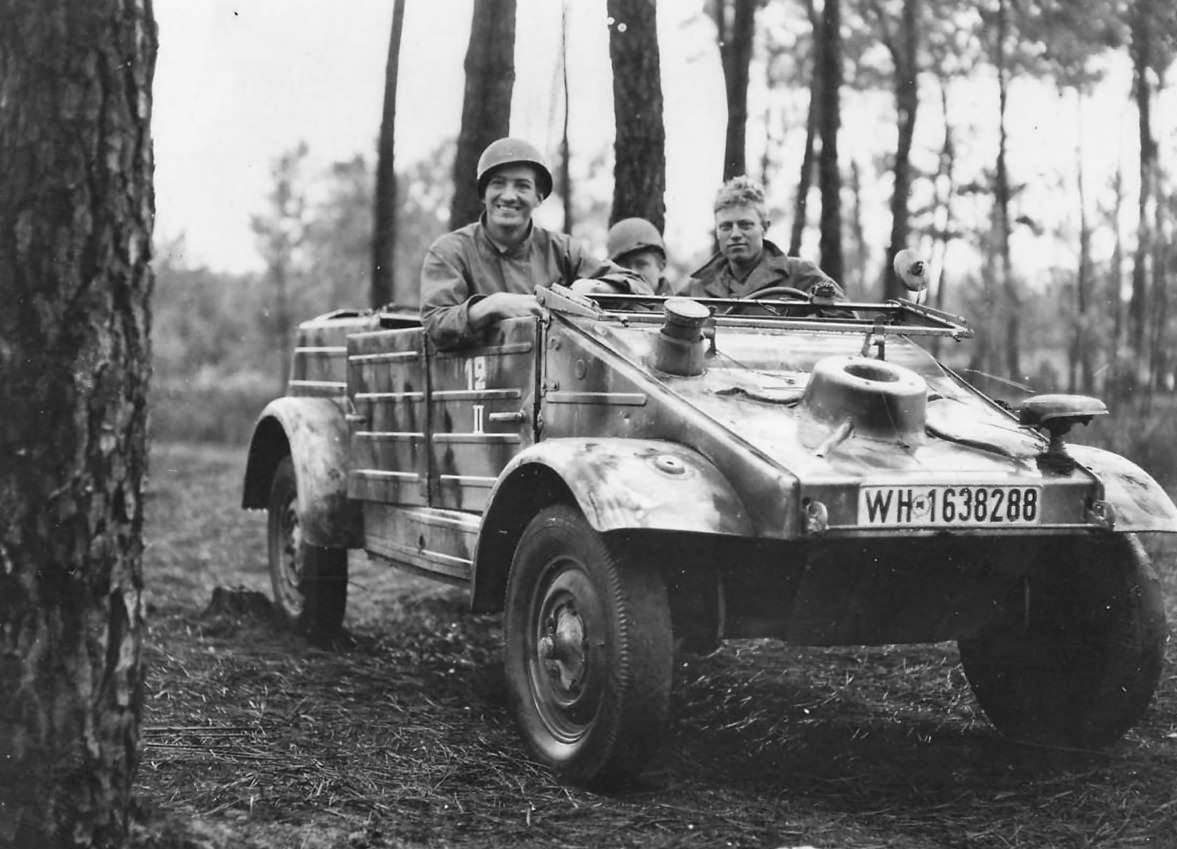
This is a Kübelwagen, the similarity to the VW Thing is clear from the outset although the two vehicles are said to have no shared body panels.

Although the Kübelwagen was rear-wheel drive only it proved reasonably capable off-road, in part because it was so lightweight at 725 kgs (1,598 lbs) that its passengers could simply get out and manhandle it around and over obstacles when needed.

The name Kübelwagen is German for “bucket car” and it was typically referred to by German troops simply as the Kübel or “bucket.”

53,000 were made in total, as the war progressed and the Allies made their way across Europe many Kübelwagens were captured and used by Allied troops – sometimes even with the correct markings painted on so they wouldn’t be mistaken for the enemy band fired upon.

The Volkswagen Thing – Type 181

In the early 1960s a number of European countries began to collaborate on the development of a vehicle that was known as the “Europa Jeep.” Its was planned to be a lightweight, amphibious military four-wheel drive somewhat analogous to the American Jeep of WWII.

American Troops In A Kubelwagen

American troops in a captured German Kübelwagen, this vehicle is showing signs of damage and is missing its headlights, windscreen glass, and front-mounted spare tire.

As the Europa Jeep was in development it was clear that a stopgap vehicle was going to be needed, Volkwagen was approached with this requirement and although they’d turned down a similar request in the 1950s they accepted it in the 1960s.

The reason for this change of heart was that VW’s lucrative Mexican market had been asking for a vehicle that was tougher and better suited for use on rough roads. This sentiment was shared by essentially all VW distributors in emerging markets.

Added to this was the success of the Meyers Manx beach buggy in the United States – a shortened VW floorpan with a fiberglass body that was proving wildly popular.

VW executives assigned a team of engineers to the new car, internally named the Type 181, with instructions to use as many pre-existing parts as possible to minimize production costs.

They developed a vehicle that was significantly influenced by the earlier Kübelwagen. It used the platform of the Type 1 Karmann Ghia as it was slightly wider than the Beetle platform. Early rear suspension was provided by the Volkswagen Transporter, and many of the drivetrain components came directly from the Beetle.

Volkswagen Thing 21

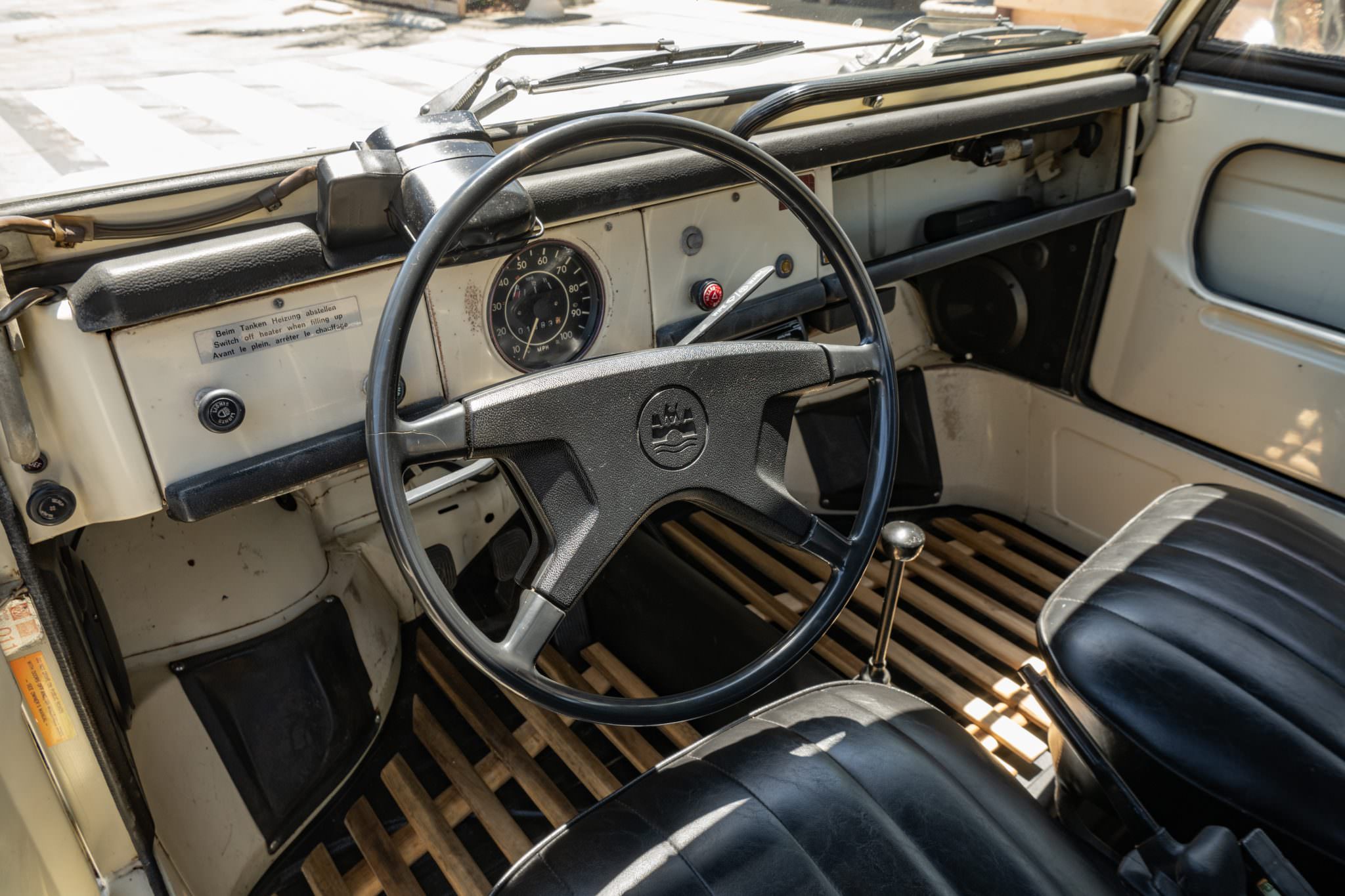
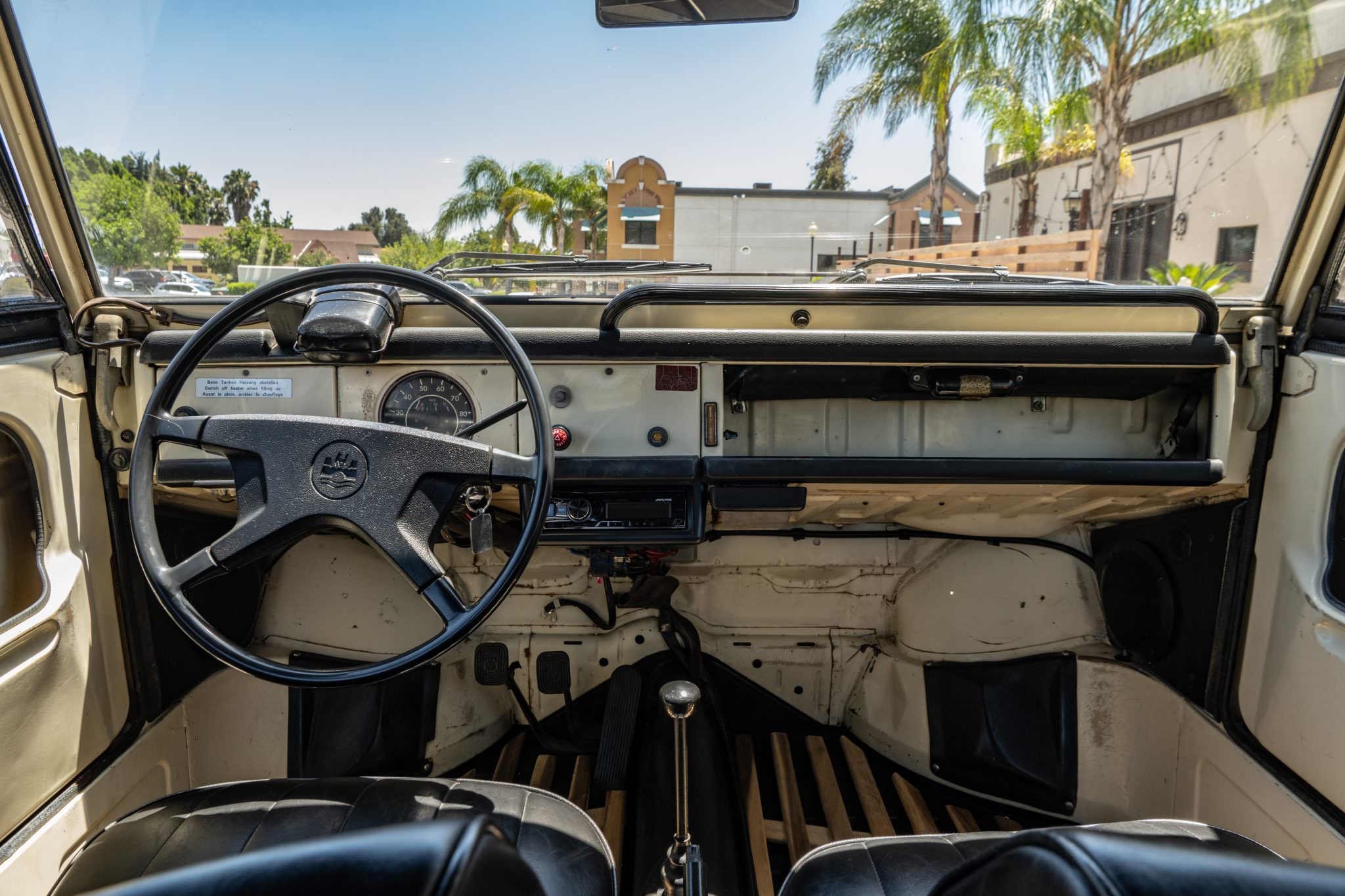
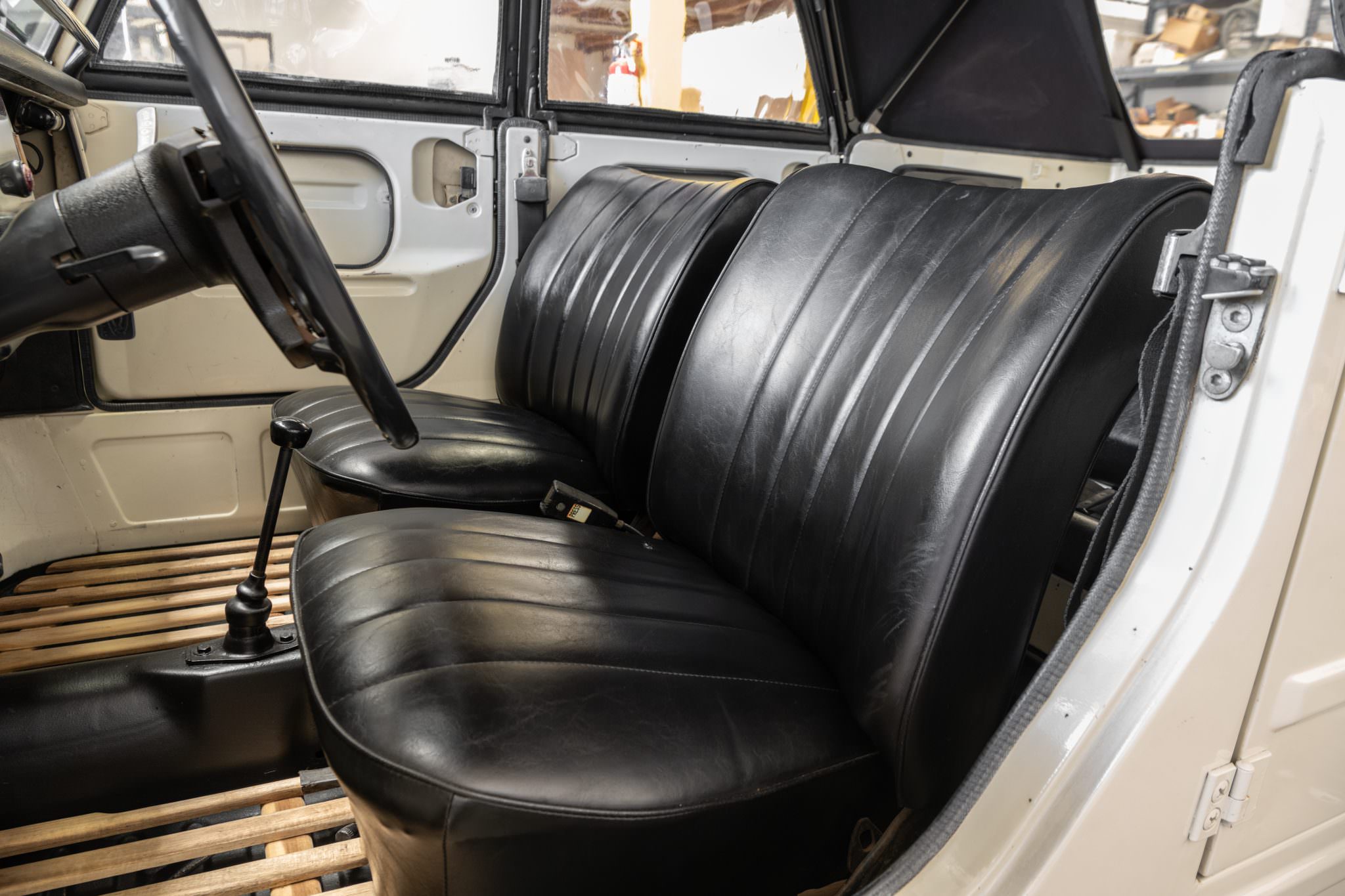
Here you can see the utilitarian interior of the VW Thing including the duckboard floors, designed to keep water, mud, and beach sand out of your way and to be easy to clean.

Both military and civilian versions were developed, with the military versions getting portal axles to gain additional ride height and ground clearance while also lowering the effective gearing. This also lowered the top speed and so they weren’t used on civilian cars.

Different names were used for the Type 181 in different world markets, in the USA it was called the VW Thing, in Germany it was the Kurierwagen, in the UK it was the Trekker, it was known as the Safari in Mexico and South America, and the Pescaccia in Italy.

By the late 1970s the Europa Jeep project had completely fallen apart and the Type 181 had been there to pick up the pieces, with over 50,000 of them having been delivered to NATO military forces.

The Volkswagen Thing Shown Here

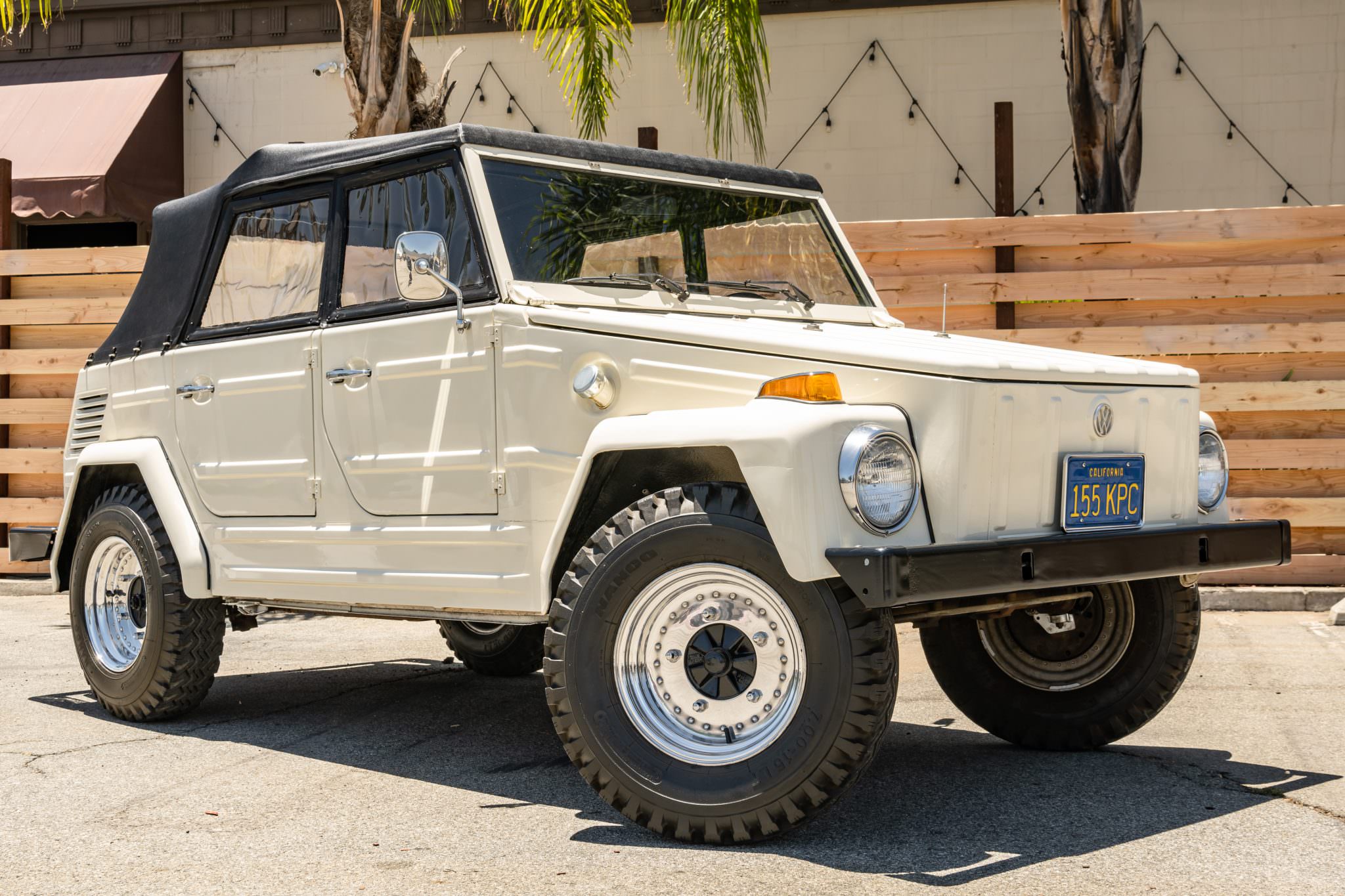
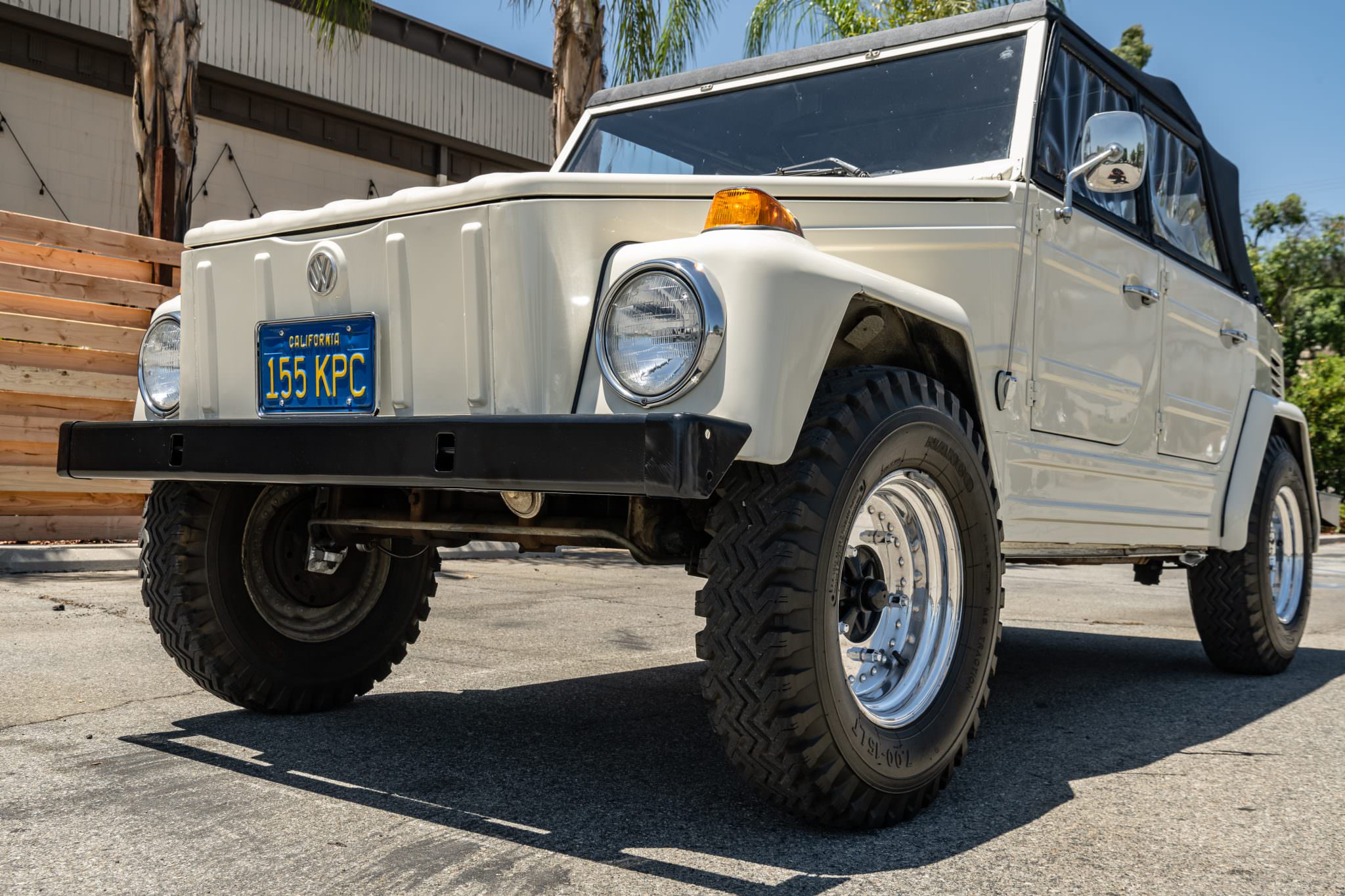
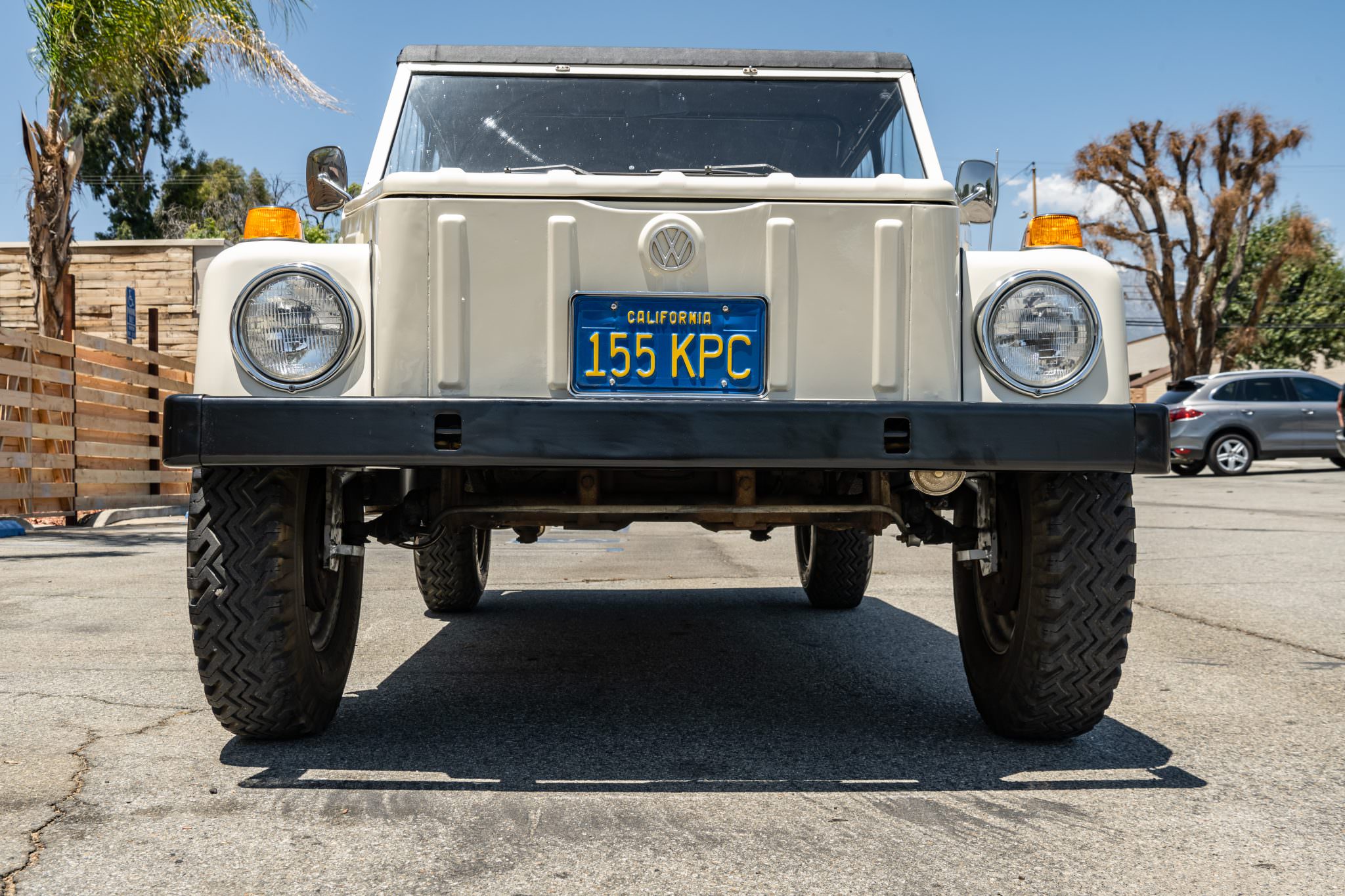
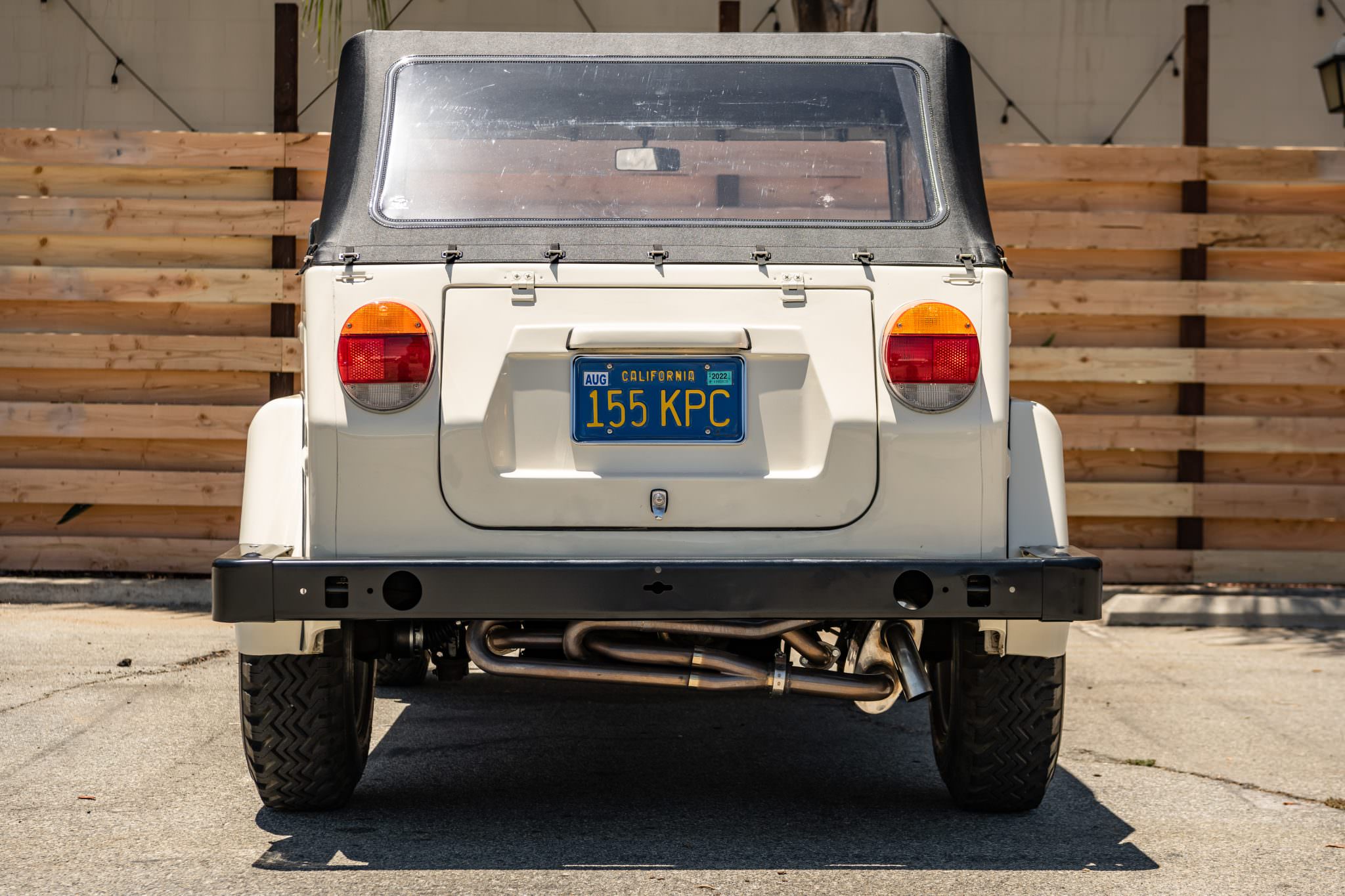
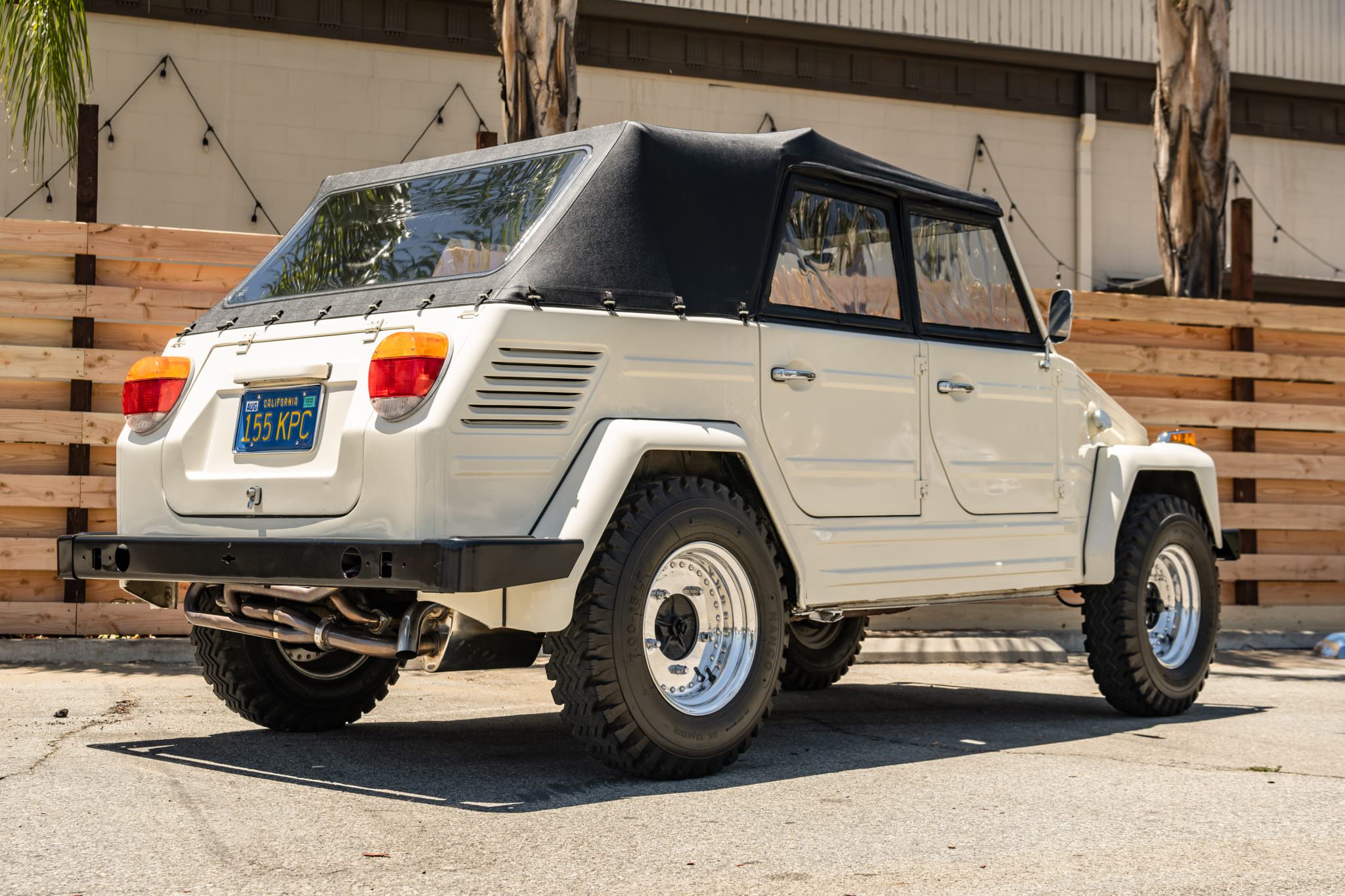
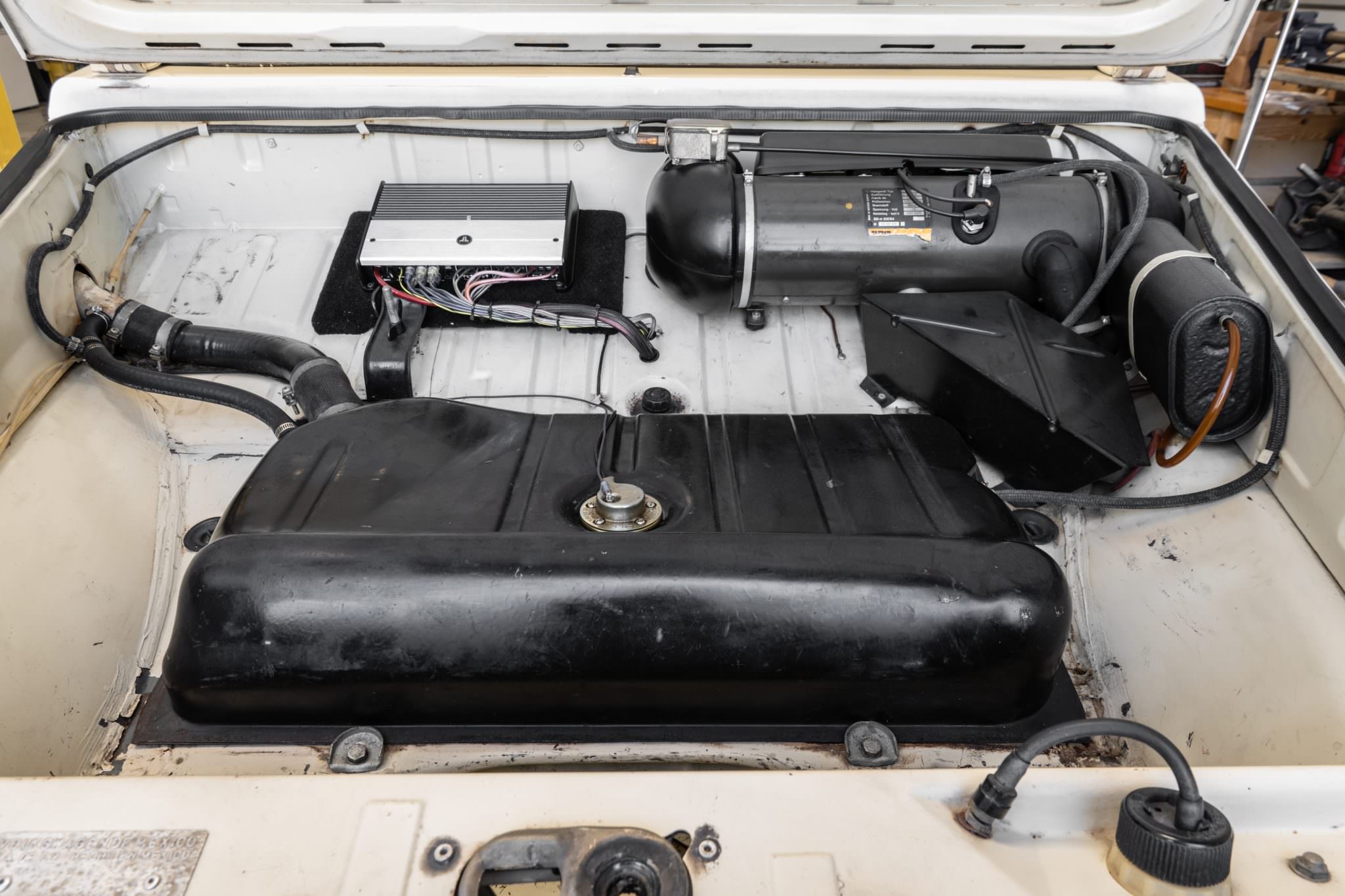
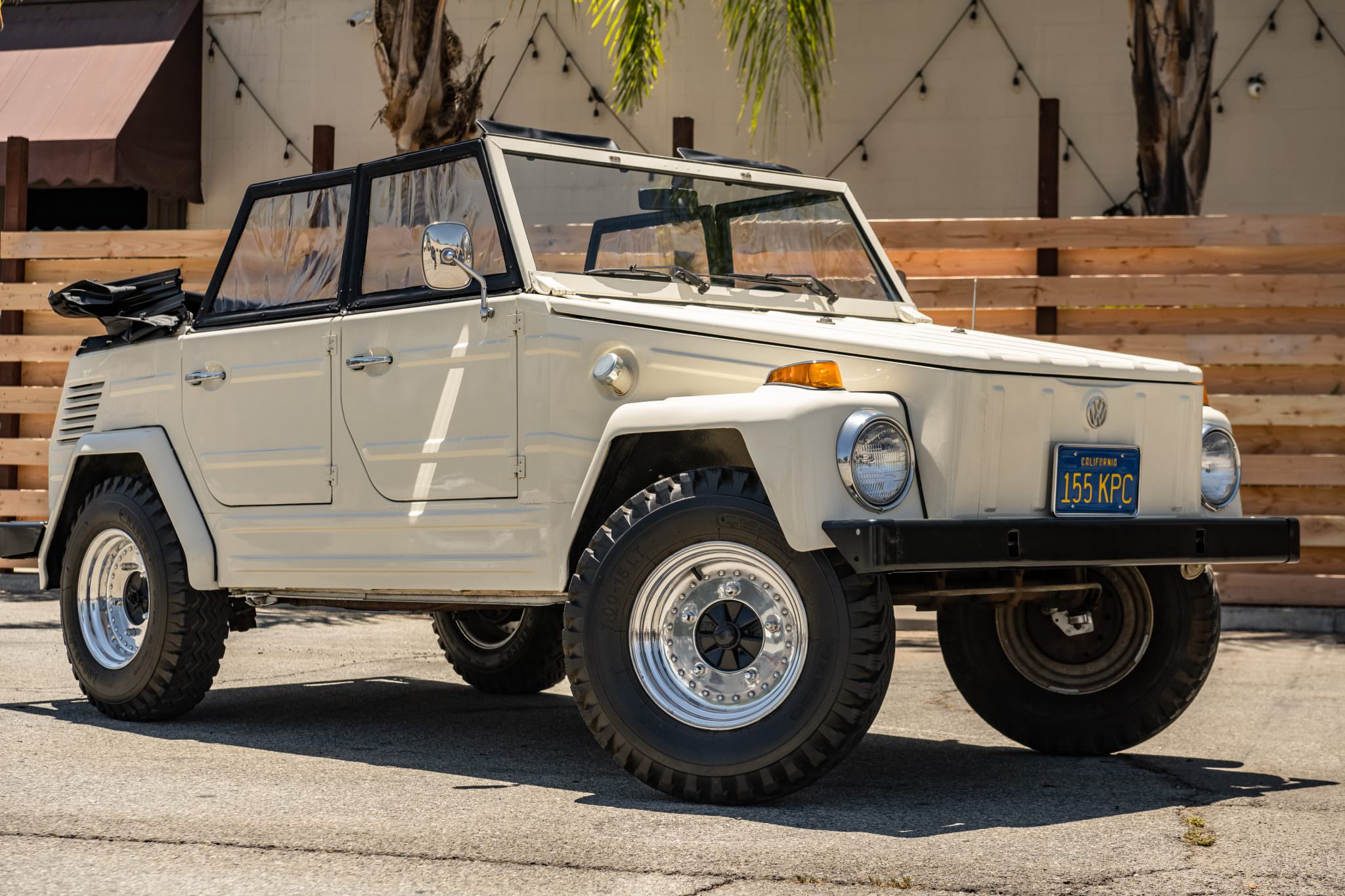
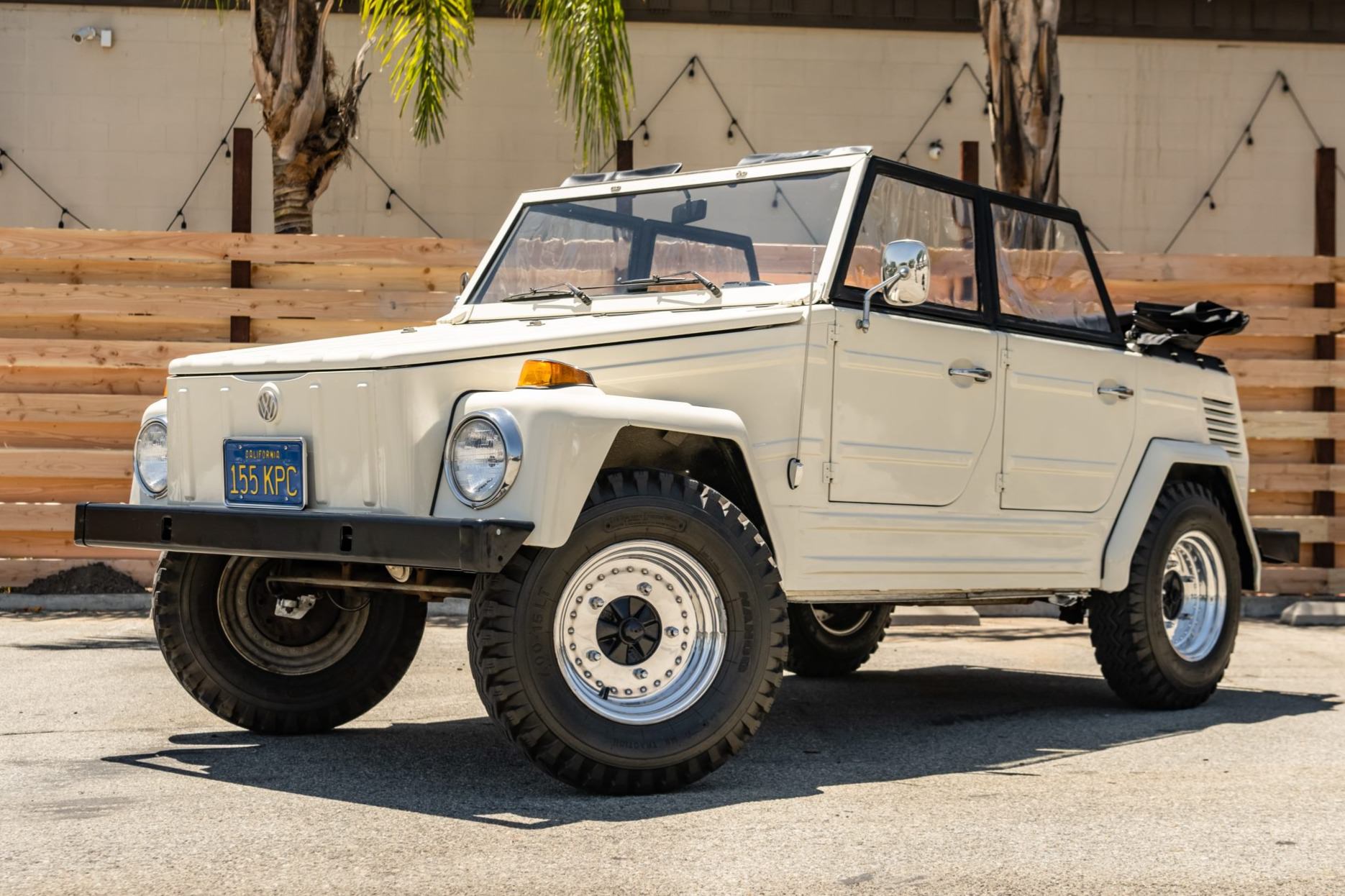
The Volkswagen Thing you see here is a 1973 model that has belonged to the current owner for 27 years. In their ownership it’s been repainted in white and a new black folding soft top has been fitted.

Volkswagen Thing 9

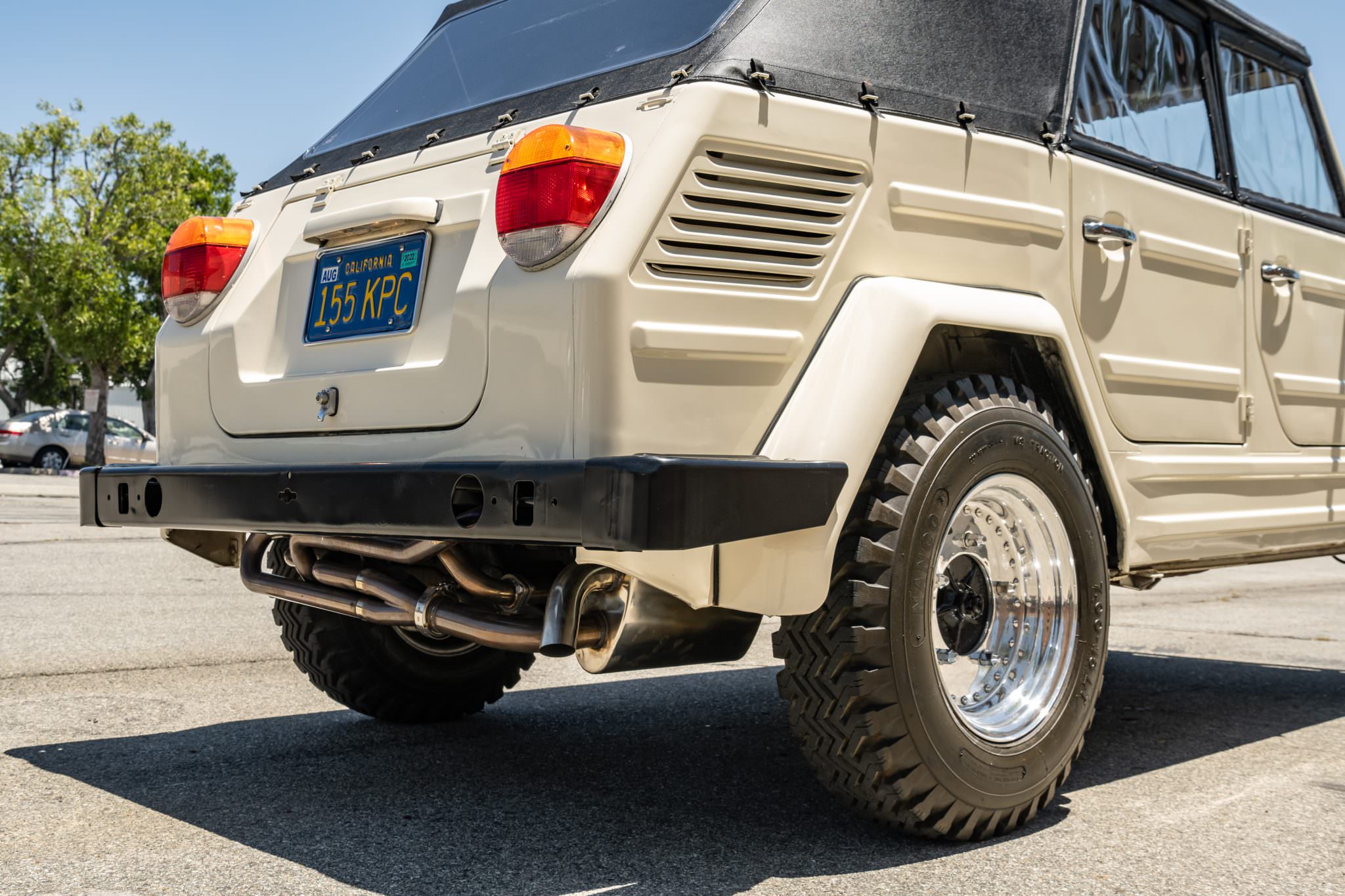
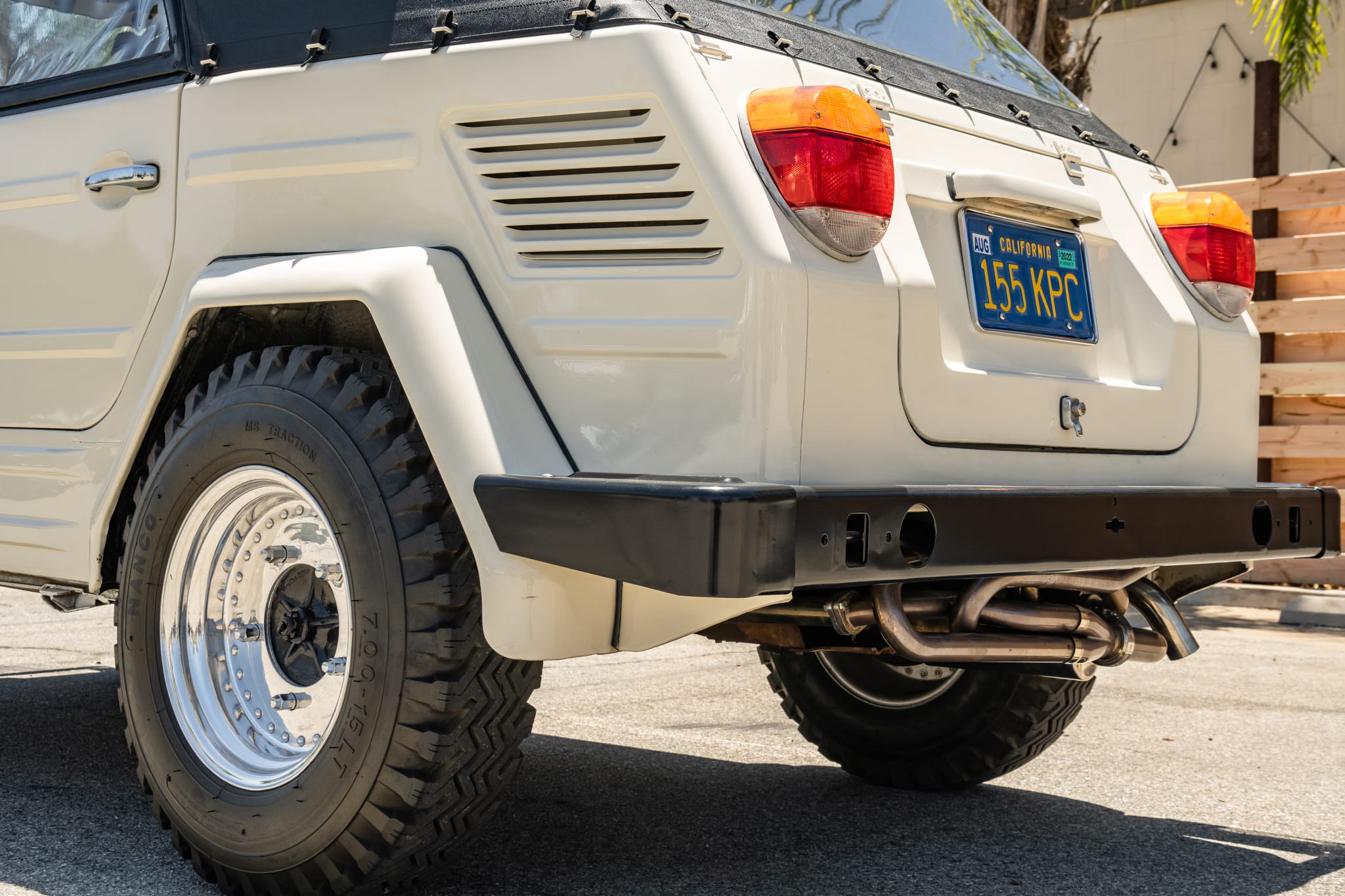
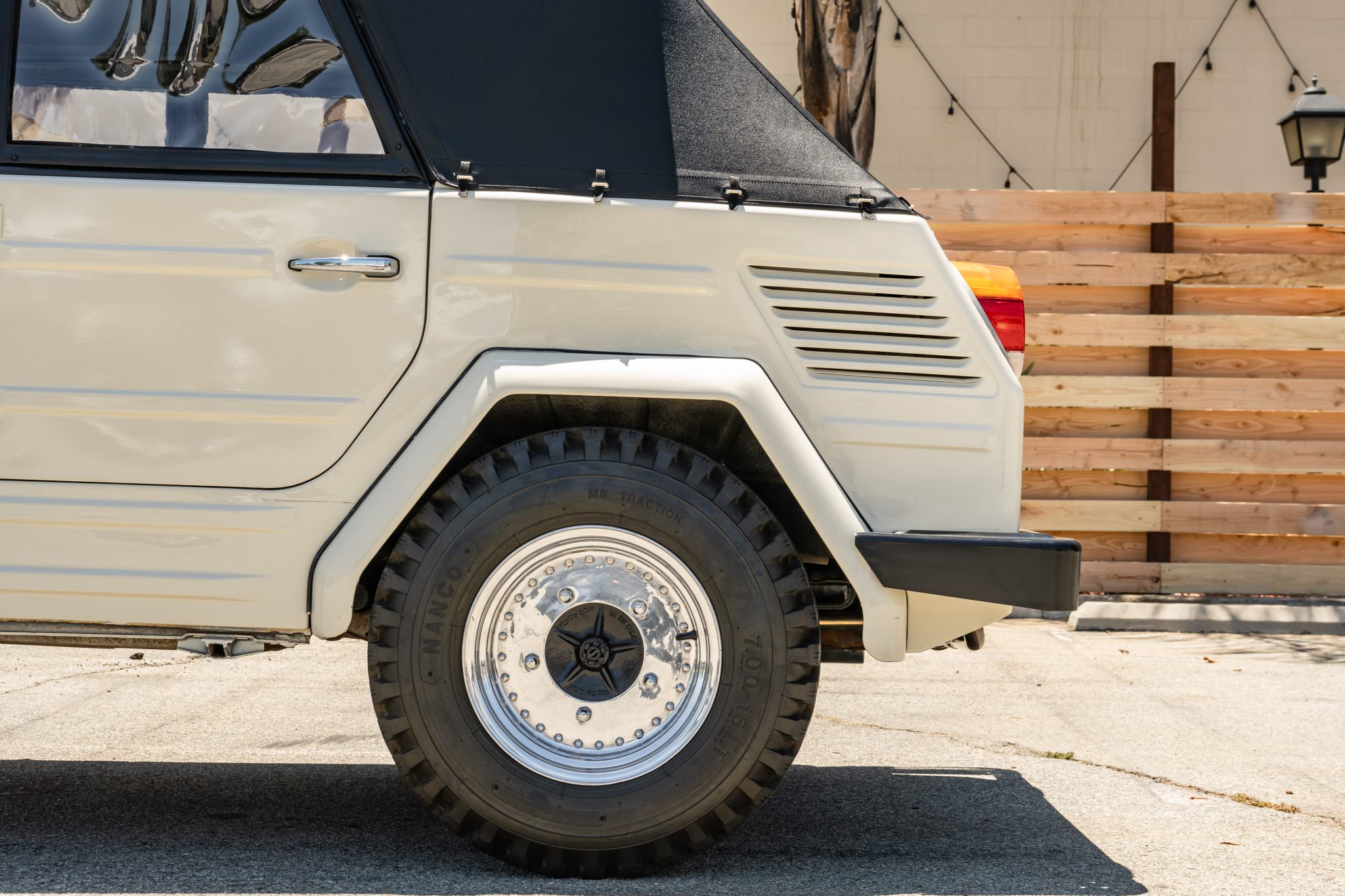
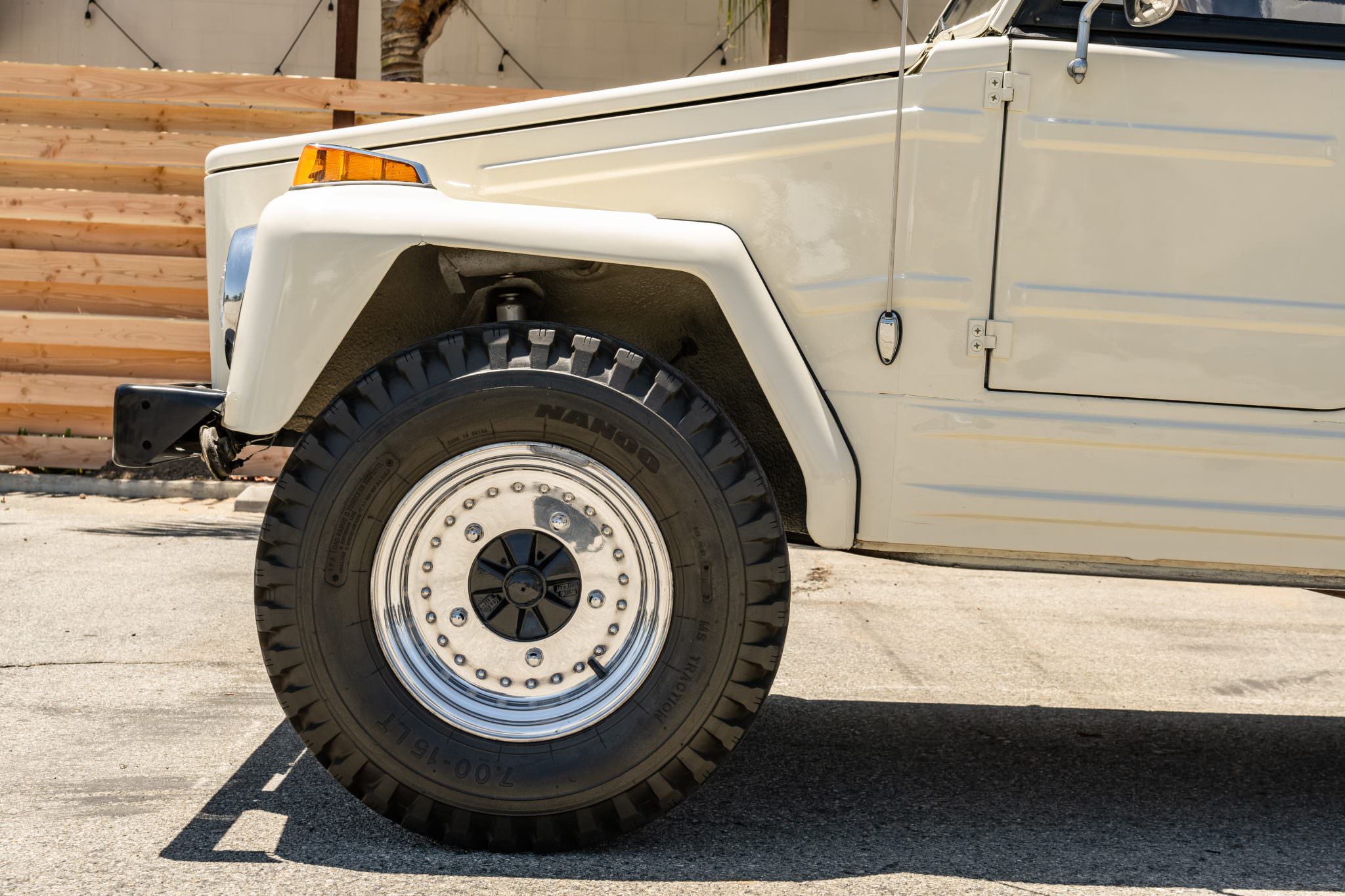
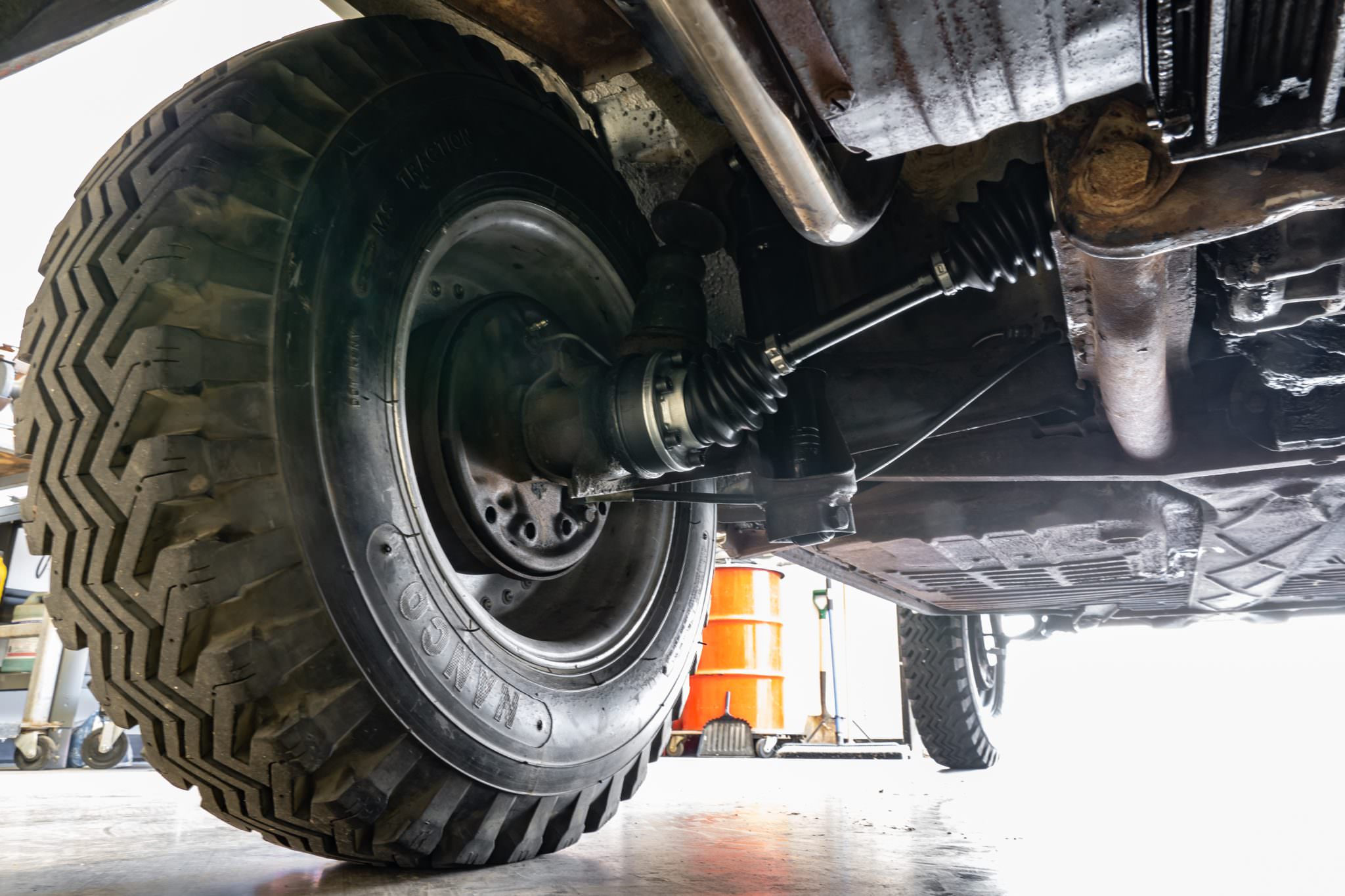
This VW Thing has been repainted in white and given a new black vinyl soft top and black vinyl interior, it also has lifted suspension and off-road Nanco tires.

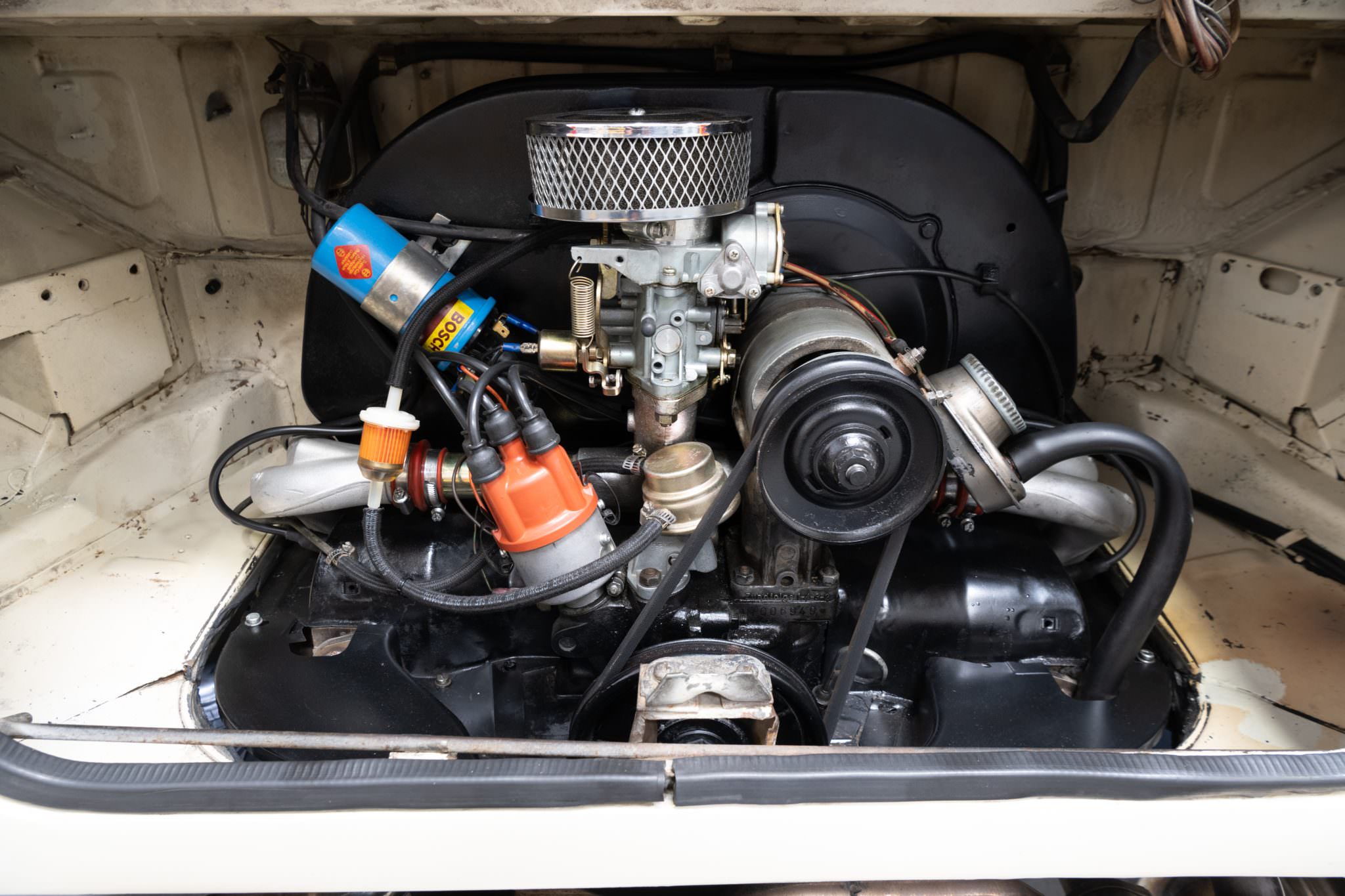
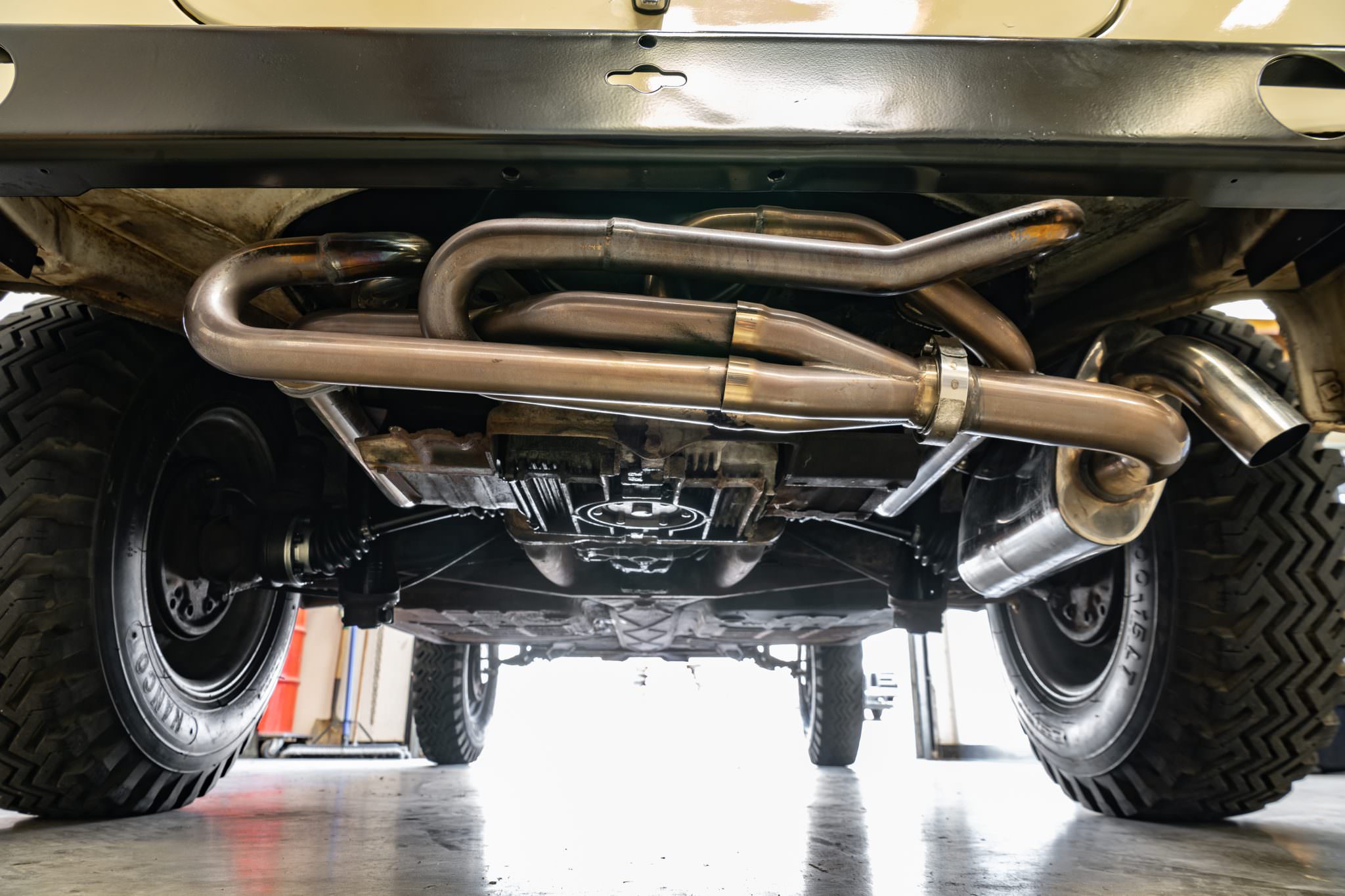
Power is provided by a 1.6 liter VW flat-four engine, air-cooled and rear-mounted of course, mated to a 4-speed manual transaxle sending power to the rear wheels.

Inside you’ll find a back vinyl interior to match the black soft top, an Alpine AM/FM CD stereo, duckboard floors, and a simple dashboard with a speedometer and not a whole lot else.

This example has been fitted with a suspension lift kit for better off-road ability, and it rides on polished 15” Centerline wheels mounted with chunky Nanco tires.

This Thing is now being offered for sale on Bring A Trailer out of Upland, California and you can visit the listing here if you would like to read more or register to bid.

Volkswagen Thing 3 Volkswagen Thing 22 Volkswagen Thing 20 Volkswagen Thing 19 Volkswagen Thing 18 Volkswagen Thing 17 Volkswagen Thing 16 Volkswagen Thing 15 Volkswagen Thing 14 Volkswagen Thing 13 Volkswagen Thing 12 Volkswagen Thing 11 Volkswagen Thing 8 Volkswagen Thing 7 Volkswagen Thing 6 Volkswagen Thing 5 Volkswagen Thing 4 Volkswagen Thing 2 Volkswagen Thing 1

Images courtesy of Bring A Trailer

Volkswagen Thing

The post The Volkswagen Thing: A European Answer To The Jeep appeared first on Silodrome.


from Silodrome https://silodrome.com/volkswagen-thing-custom/
via gqrds
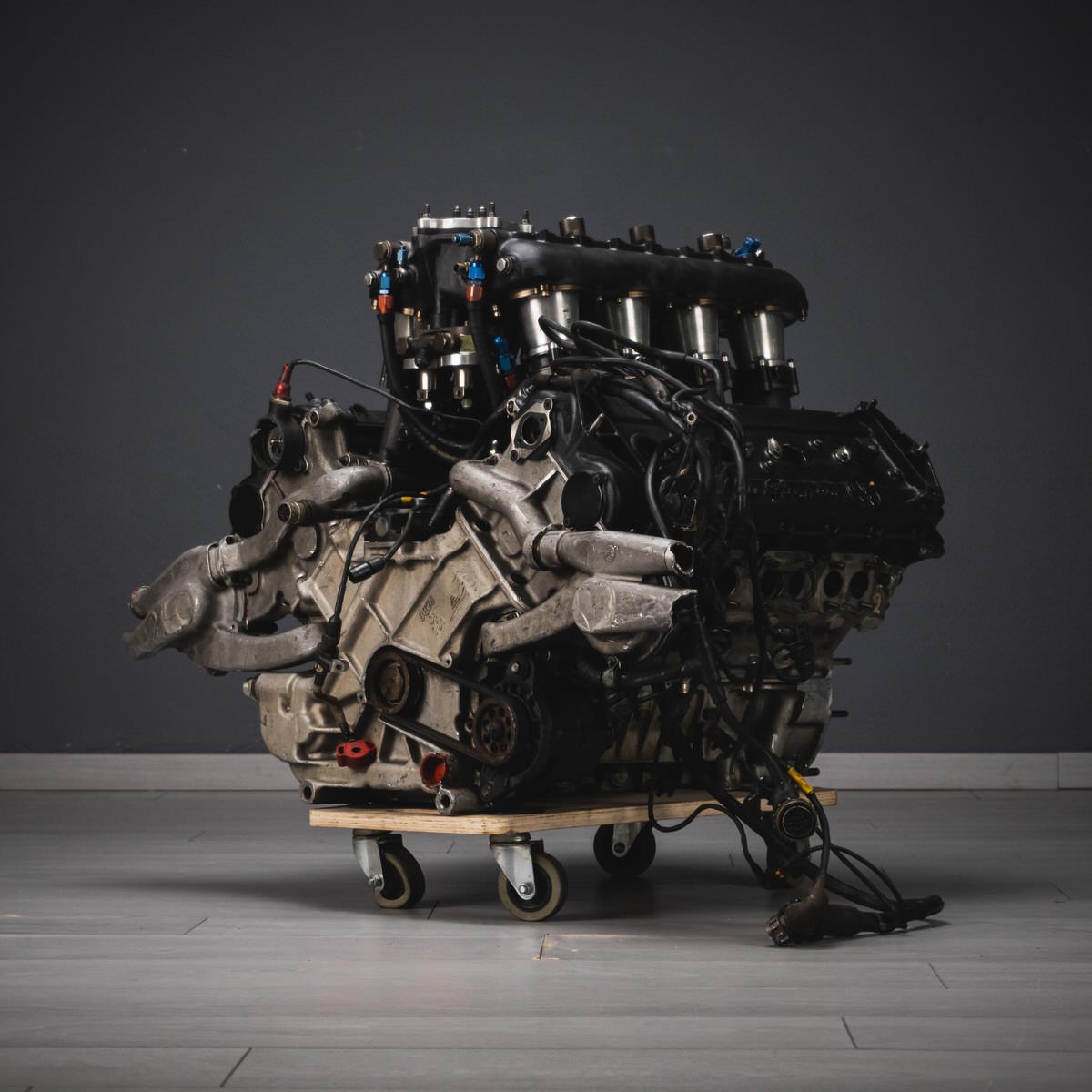
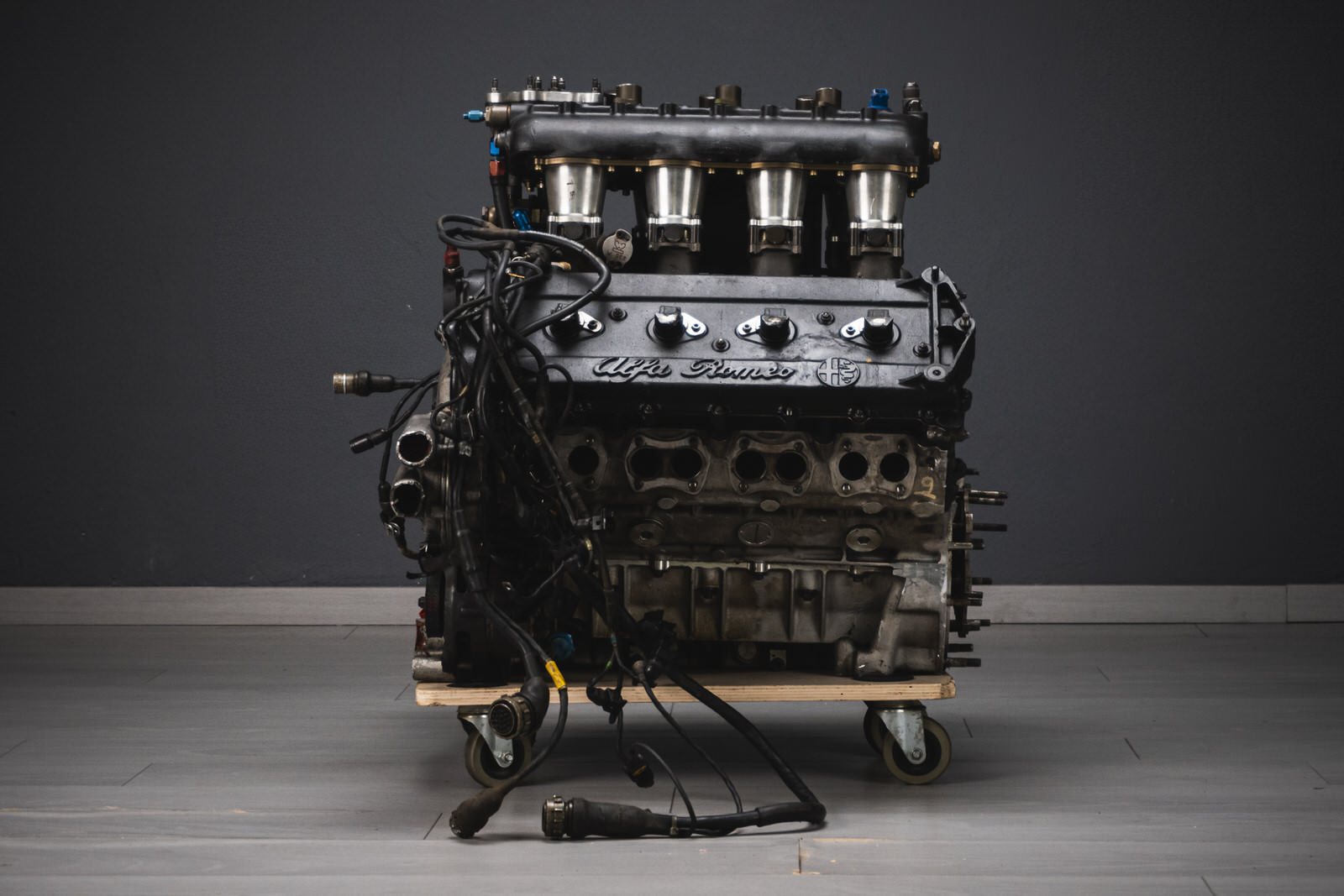
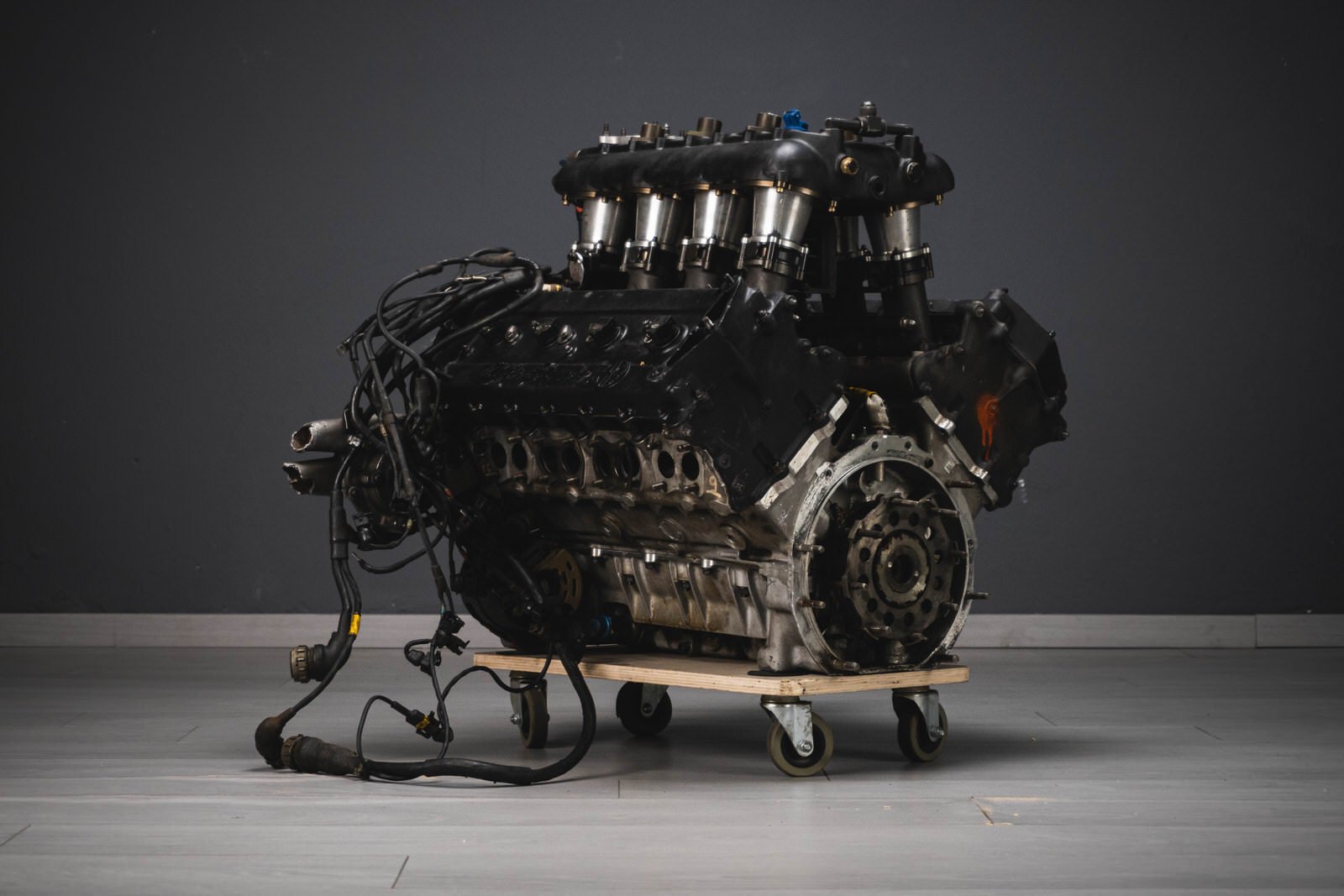
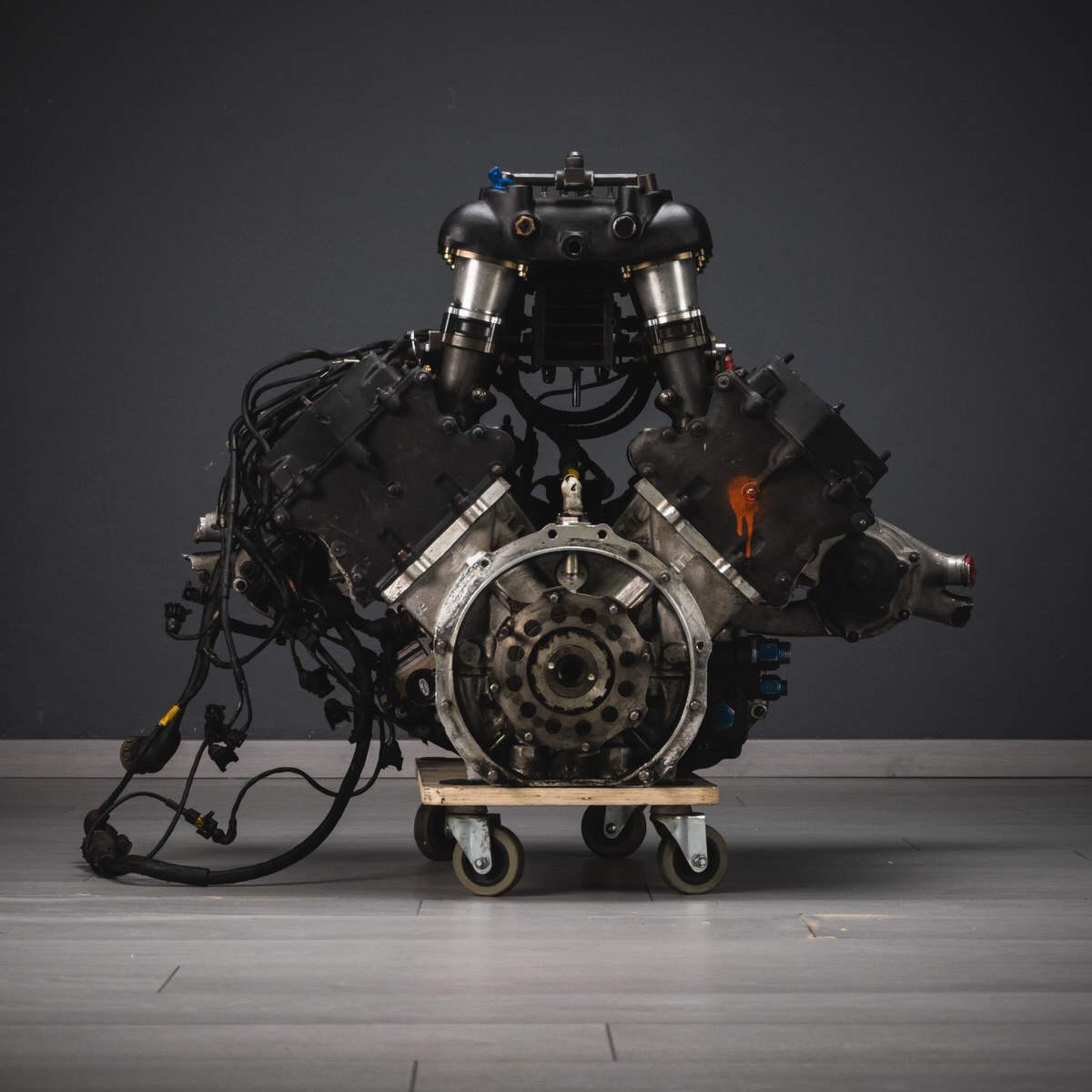
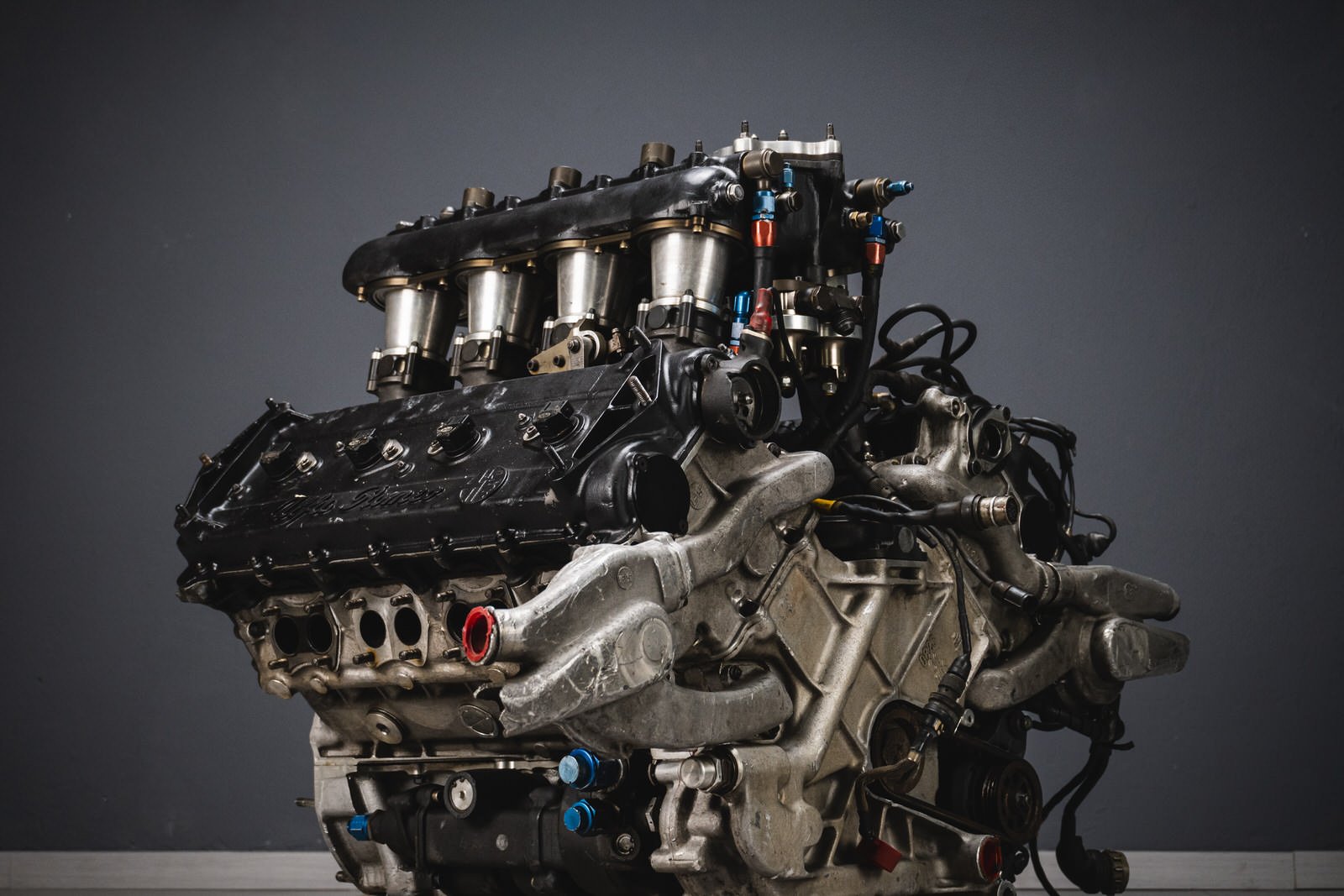
For Sale: A 720 BHP Alfa Romeo 2.6 Liter V8 Indy Car Engine

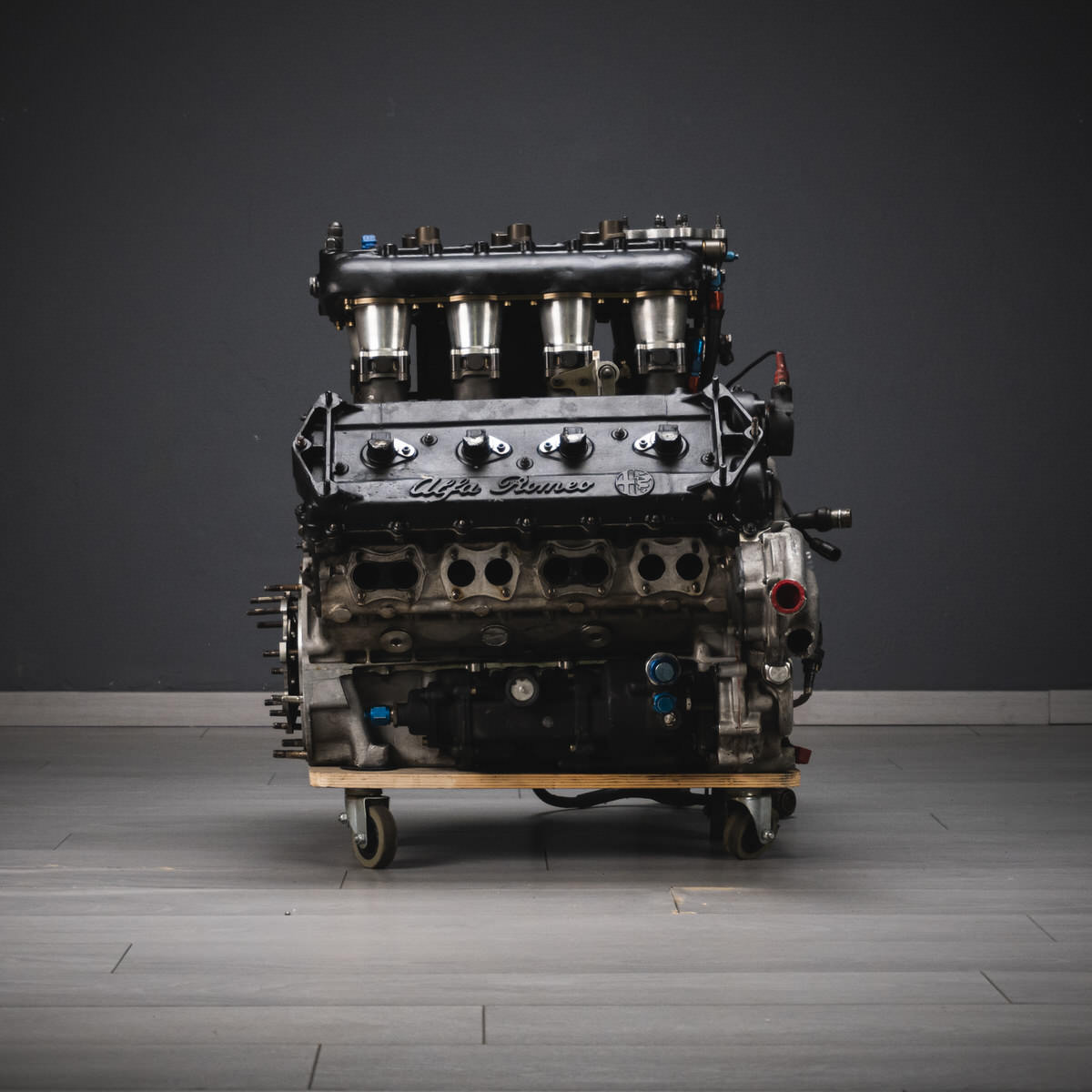
This Alfa Romeo 2.6 Liter V8 was developed by the Italian automaker for their brief foray into the CART IndyCar racing that started in 1989 and concluded in 1991.

Alfa Romeo has taken a few swings at racing in the Indy 500 over the years, an Alfa Romeo Type 8C competed in 1937 with Rex Mays at the wheel and a decade later after WWII an Alfa Type 308 contested the race.

In the 1980s with the Alfa Romeo 164 and the Alfa Romeo Milano being sold in the US market the decision was made to once again race in America’s premier open-wheeled series, then called the CART PPG IndyCar World Series Championship.

Alfa Romeo 2.6 Liter V8 Indy Car Engine 7

With the potential to make 720 bhp at 11,800 rpm in full race trim, this 2.6 liter V8 was quite the potent package back in the day.

The hope was that the cars would enjoy some success on track, and drive sales of road-going Alfas whilst also improving the somewhat tarnished reputation the marque had acquired due to issues with lax quality control.

Due to time and budget constraints the decision was made that Alfa Romeo would develop the engine in-house, and partner with specialist outside partners who would build the chassis.

In-keeping with the rules at the time, an all-new turbocharged 2.6 liter V8 was developed, it had an aluminum ally block and heads, cast iron liners, double overhead cams per bank, four valves per cylinder, a methanol injection system, eight individual throttle bodies, and titanium connecting rods.

Alfa Romeo 2.6 Liter V8 Indy Car Engine 5

In its current form it would need a full rebuild before any operation was attempted, the buyer would also need to source a suitable turbocharger and have new exhaust manifolds made.

With up to 720 bhp at 11,800 rpm this engine had great promise, unfortunately a series of issues with other car components like rear wing failures and suspension problems robbed the team of any potential podium places or wins.

Alfa had entered the series and left again by 1991, achieving some relatively high finishes capped off by a 4th in Australia in 1991. Today just a few of these Alfa Romeo CART cars and engines remain.

The engine you see here is being offered out of Portland, Oregon on Bring A Trailer sans its turbocharger and exhaust system. If you’d like to read more about it or register to bid you can visit the listing here.

Alfa Romeo 2.6 Liter V8 Indy Car Engine Alfa Romeo 2.6 Liter V8 Indy Car Engine 8 Alfa Romeo 2.6 Liter V8 Indy Car Engine 4 Alfa Romeo 2.6 Liter V8 Indy Car Engine 3 Alfa Romeo 2.6 Liter V8 Indy Car Engine 2 Alfa Romeo 2.6 Liter V8 Indy Car Engine 1

Images courtesy of Bring A Trailer

Alfa Romeo 2.6 Liter V8 Indy Car Engine 6

The post For Sale: A 720 BHP Alfa Romeo 2.6 Liter V8 Indy Car Engine appeared first on Silodrome.


from Silodrome https://silodrome.com/alfa-romeo-2-6-liter-v8-indy-car-engine/
via gqrds