For Sale: The 1968 AMC Javelin “Bonneville Speed Spectacular” World Record Setter

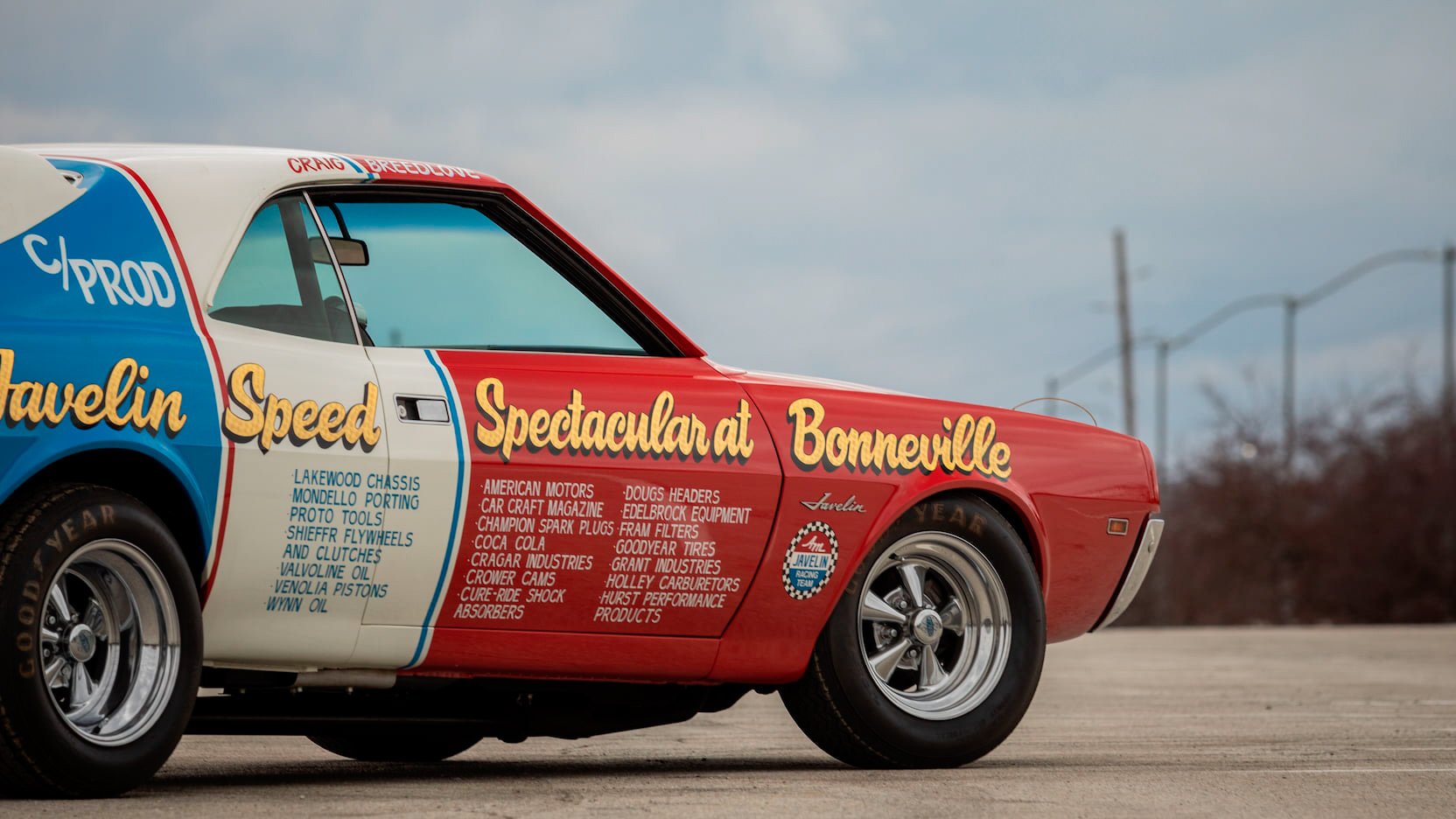
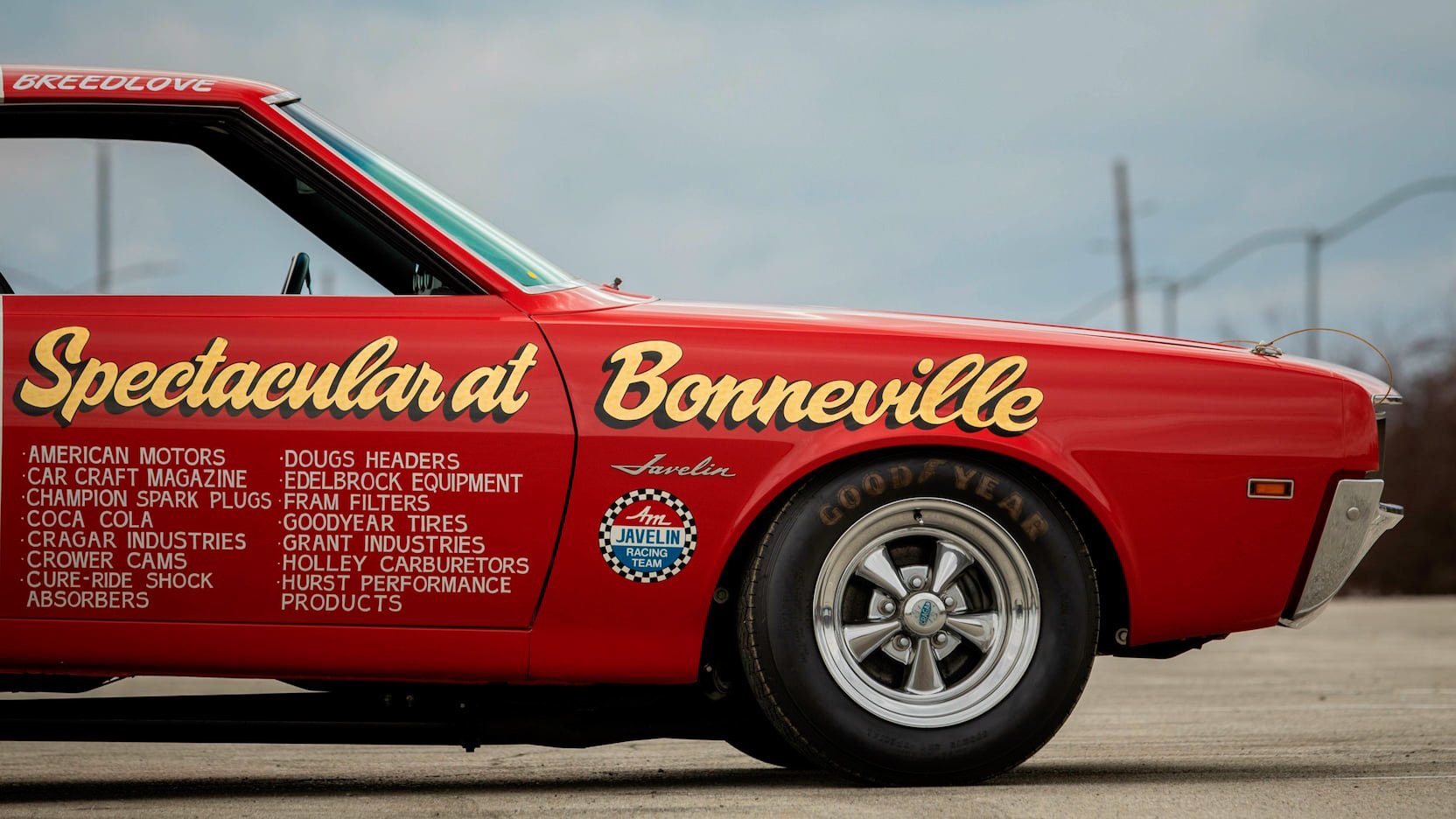
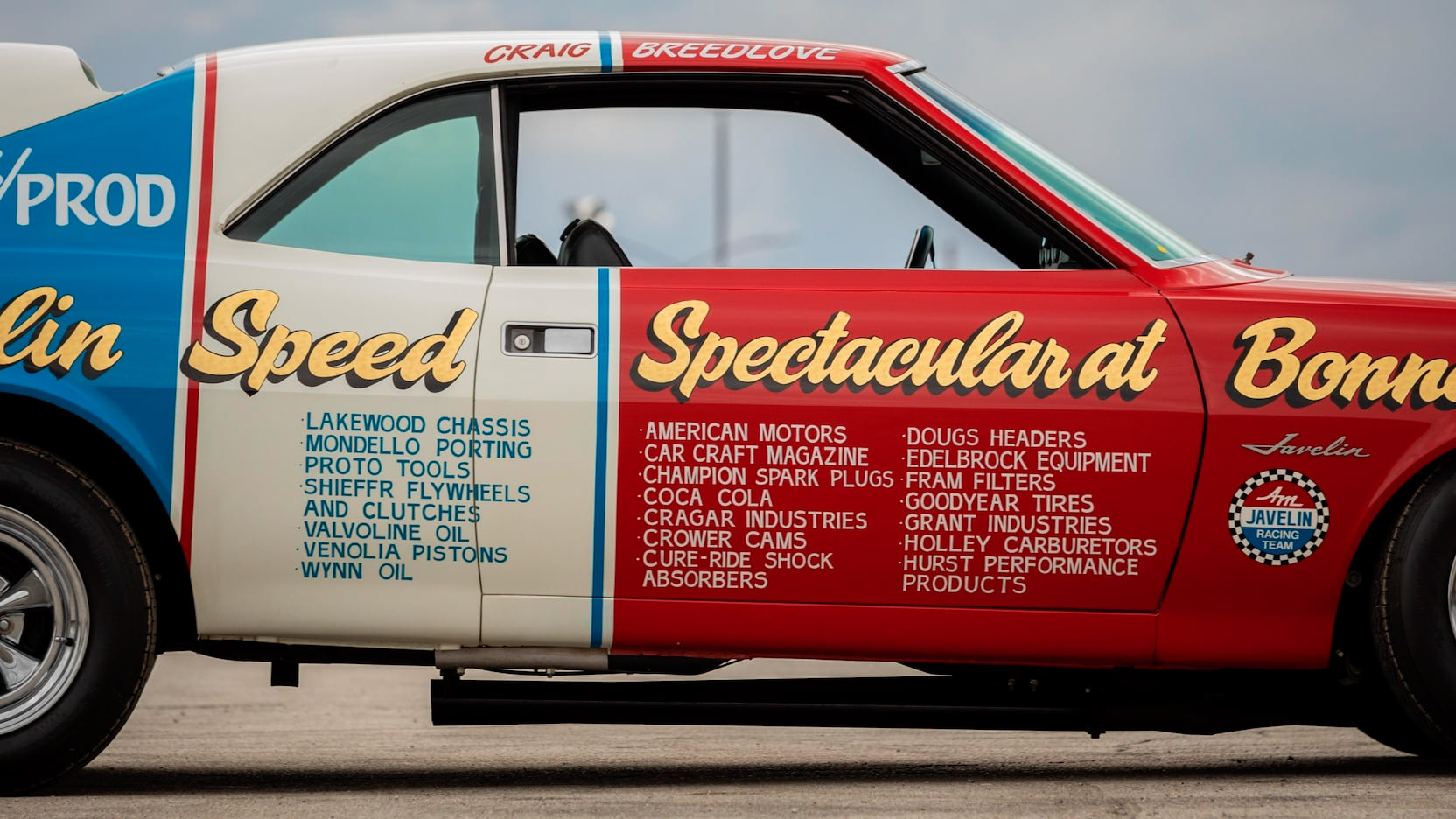
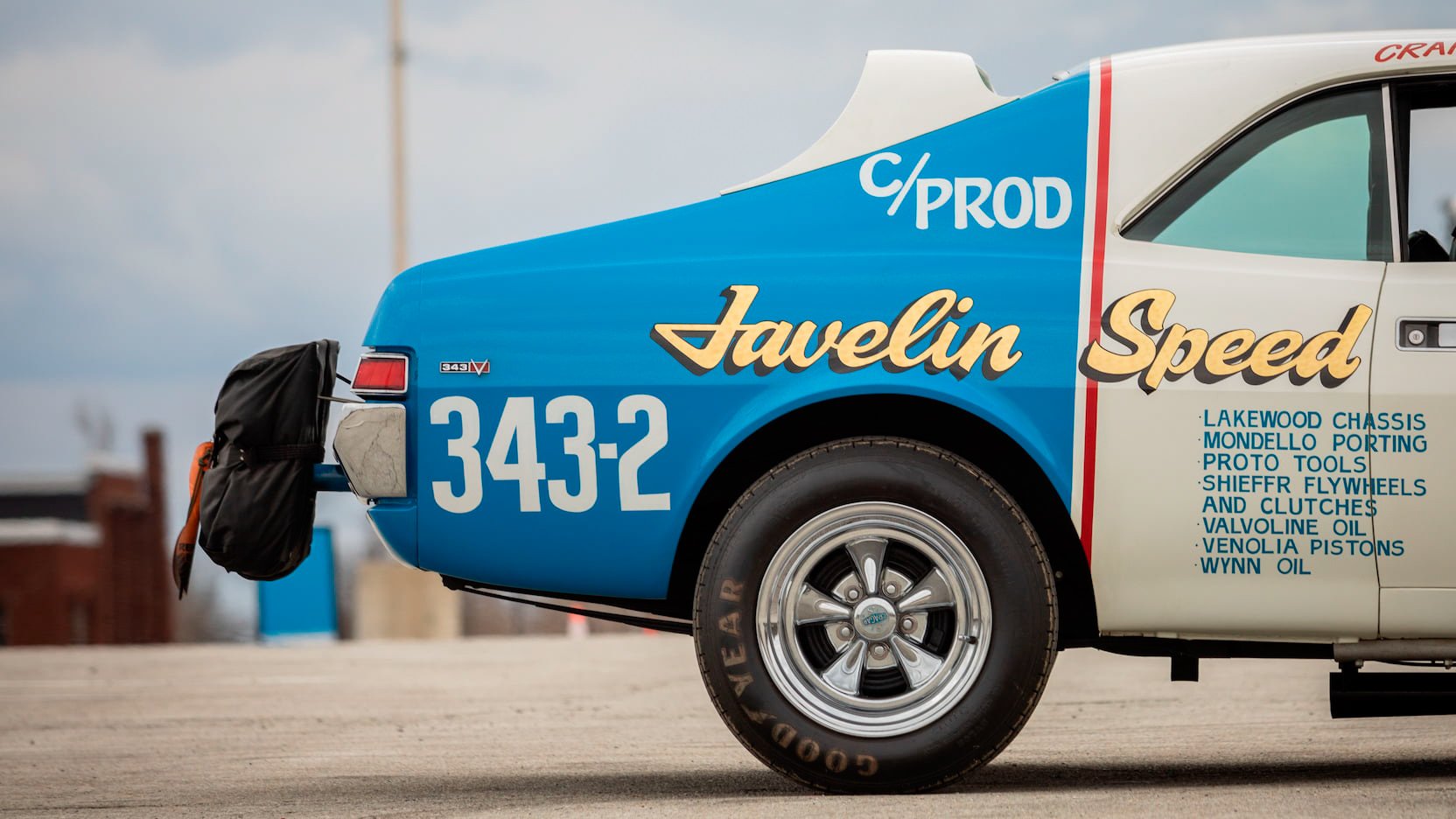
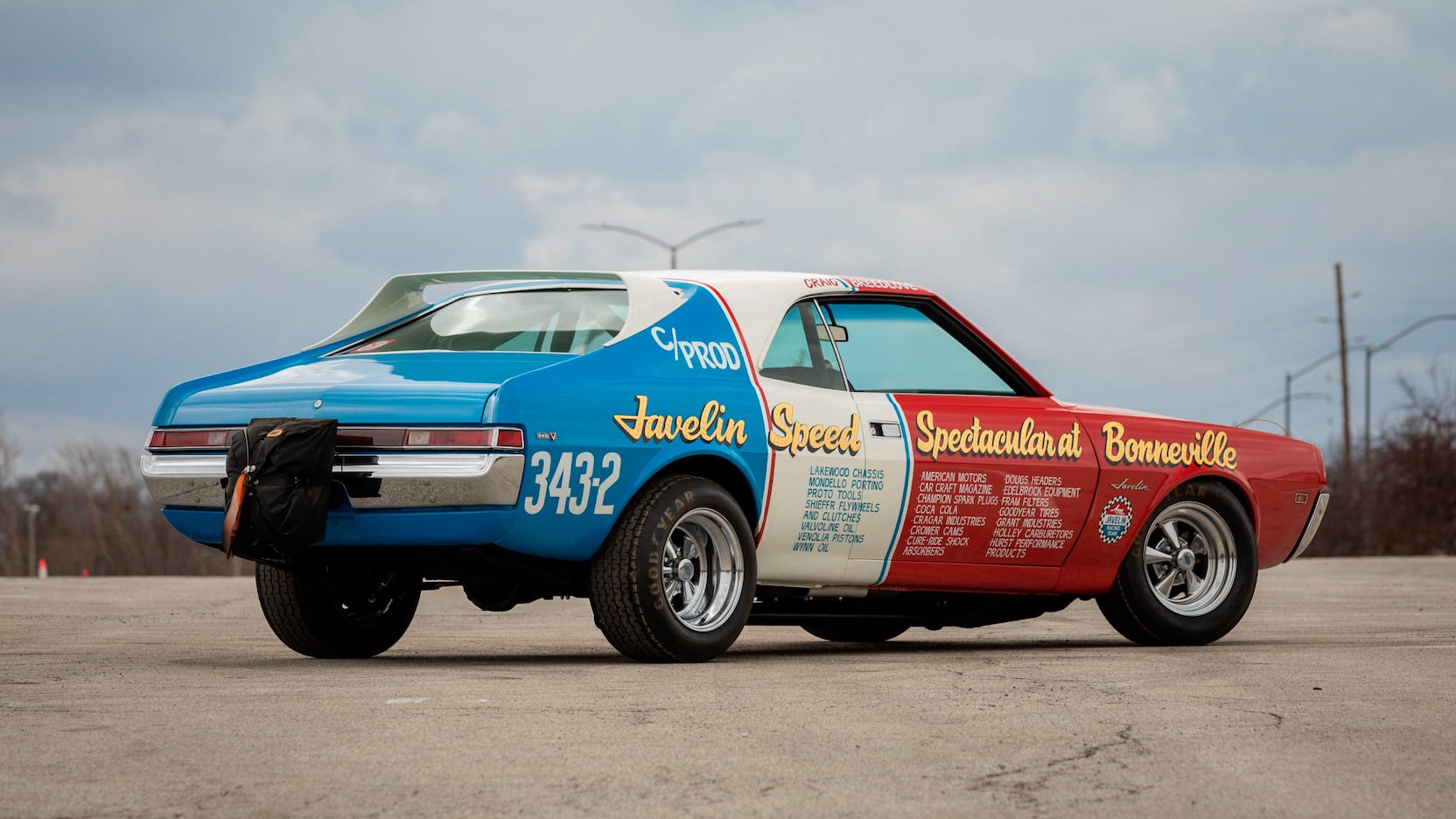
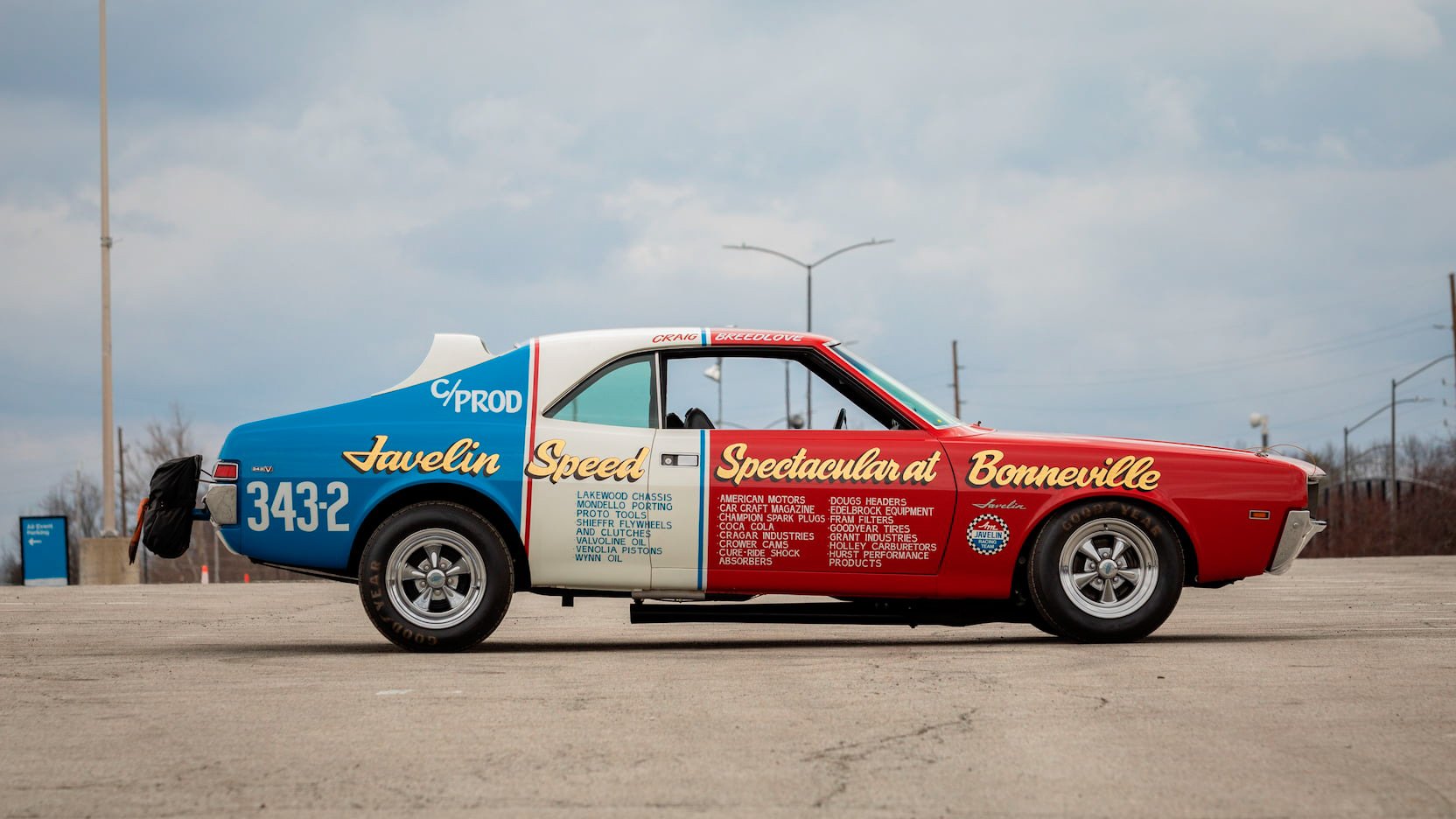
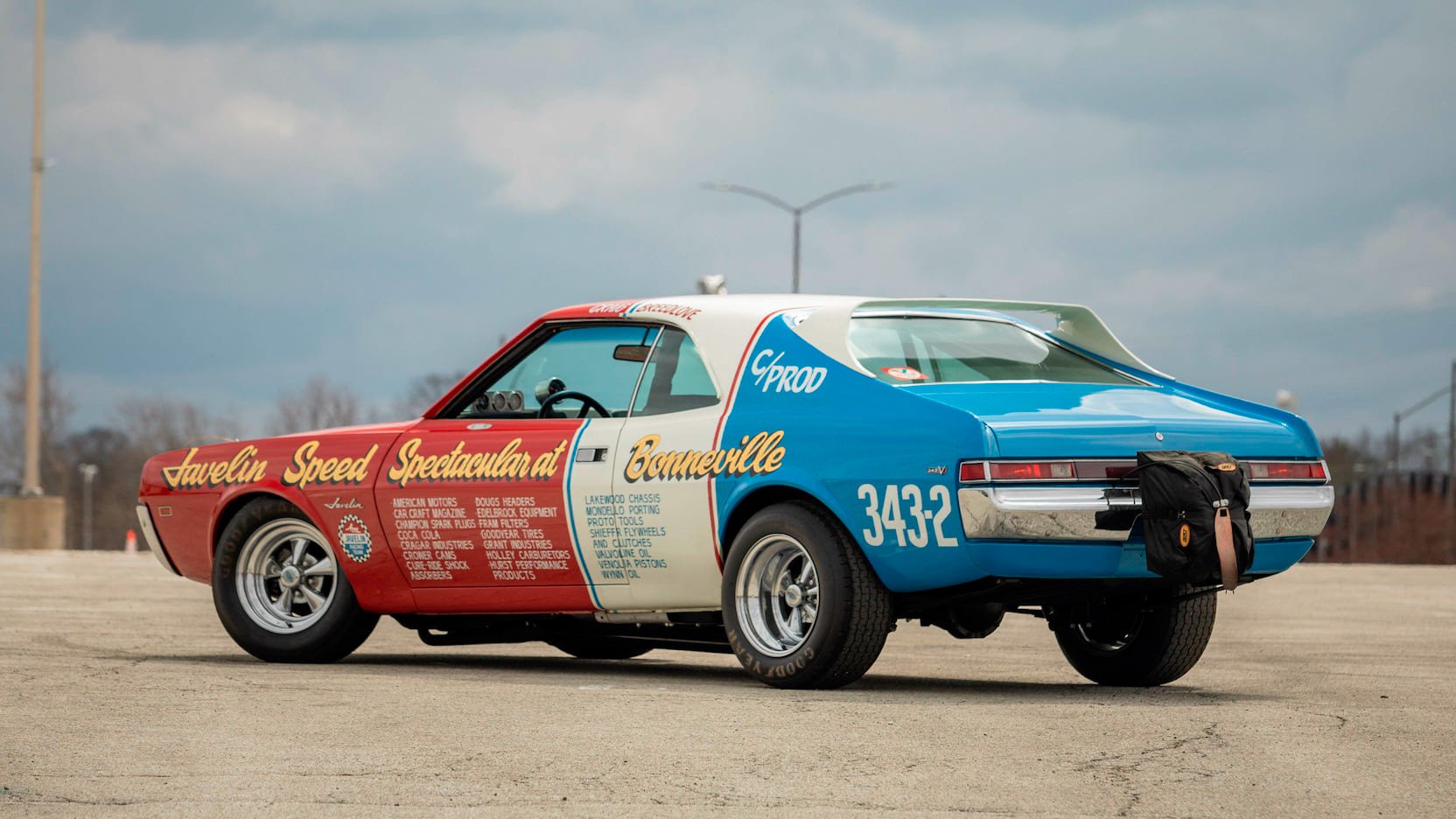
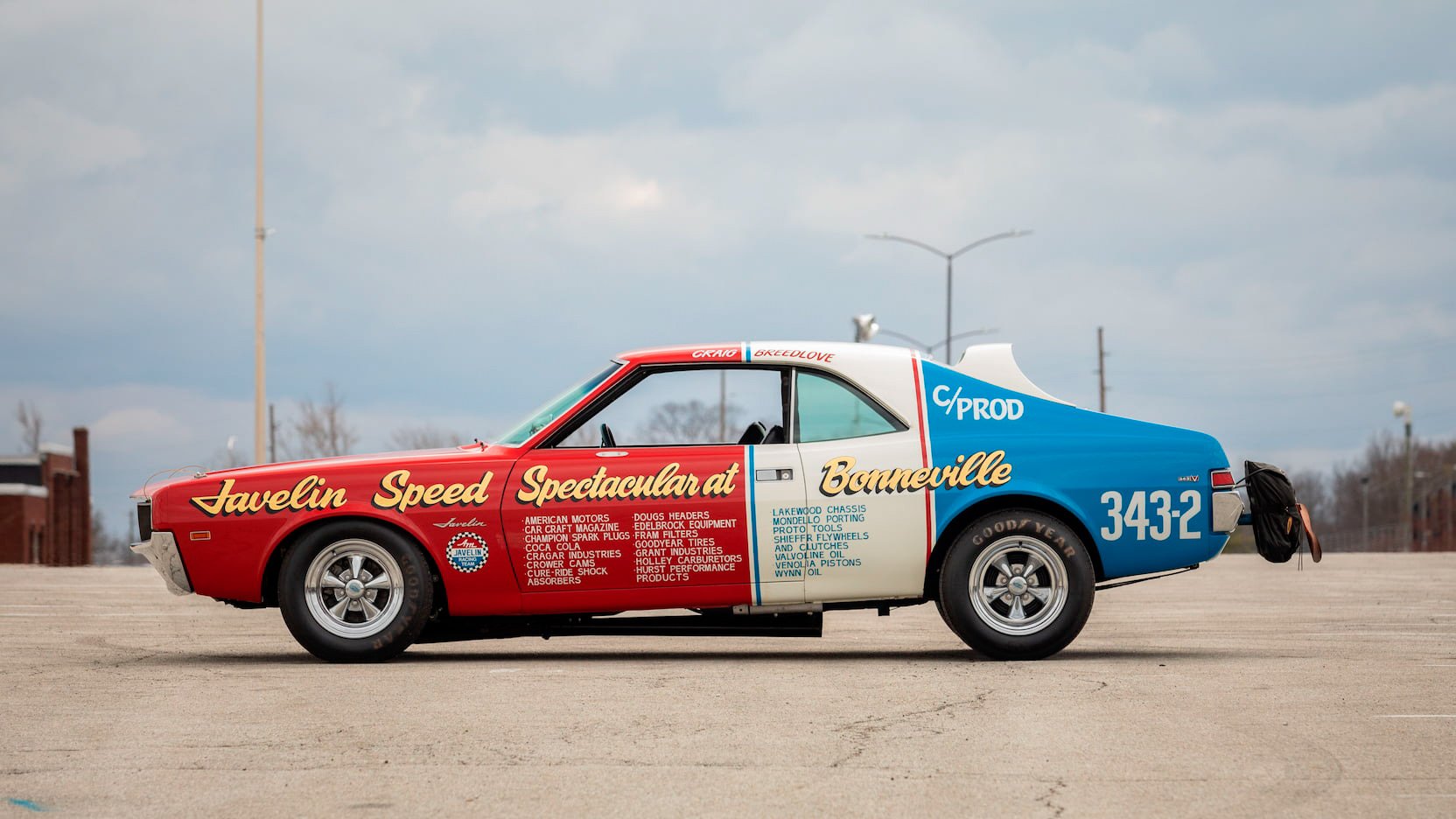
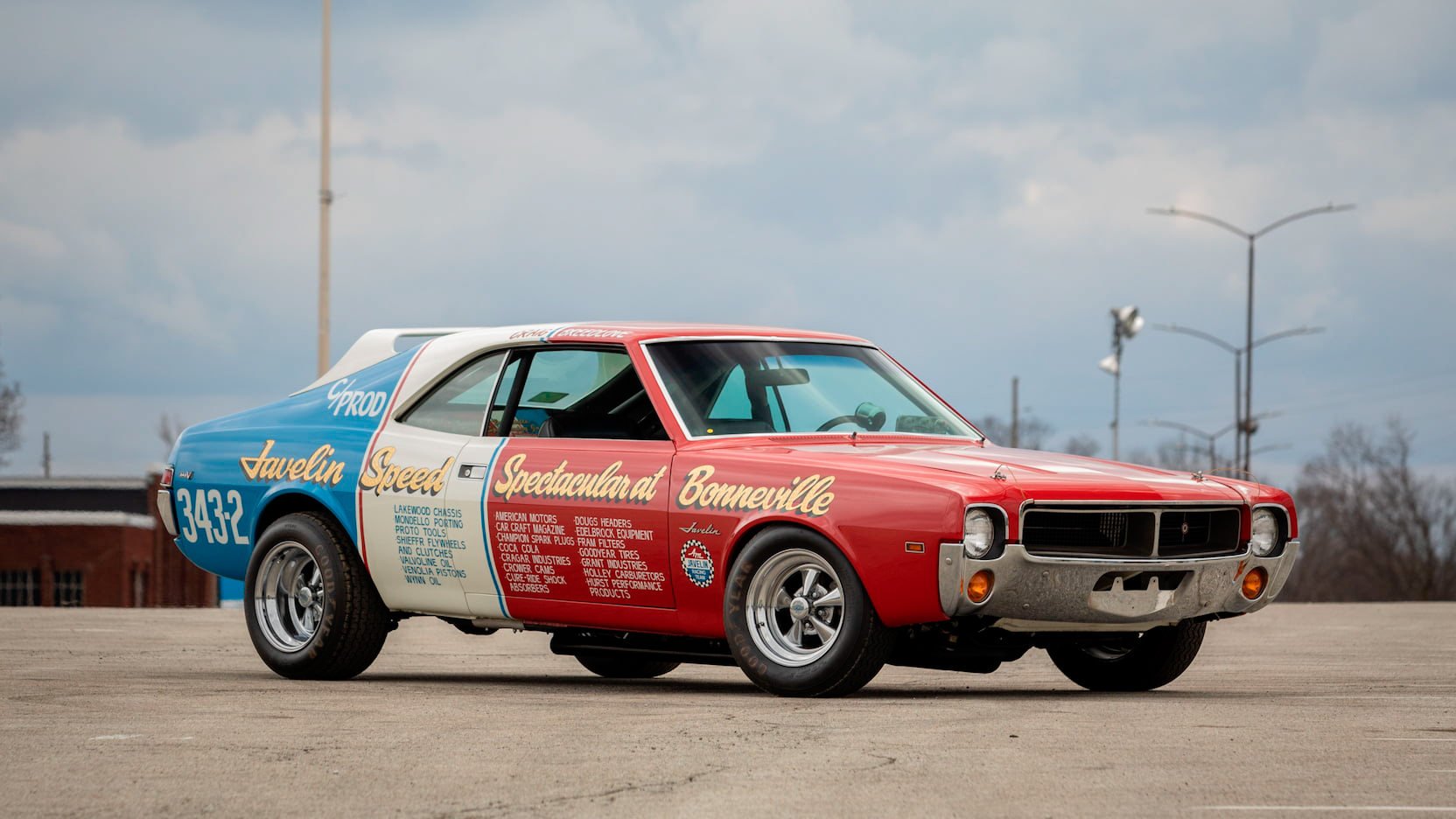
This was the AMC Javelin that won the “Bonneville Speed Spectacular,” setting a new C-Production class record of 161.733 mph at the Bonneville Salt Flats with Craig Breedlove at the wheel in 1968.

The competition was sponsored by AMC and CarCraft Magazine. They took three Javelins and assigned them to three separate three-man teams who had applied to enter the contest. The team with the fastest car then won all three cars – one for each man.

Fast Facts – A “Bonneville Speed Spectacular” AMC Javelin

  • The name Craig Breedlove needs to introduction to anyone even vaguely familiar with land speed record racing. He’s a five-time world land speed record holder and the first person in history to reach 500 mph and 600 mph on the ground.
  • The car you see here is the winner of the 1968 “Bonneville Speed Spectacular,” a competition that was held at the Bonneville Salt Flats. This car set a C-Production class record of 161.733 mph.
  • Three 1968 AMC Javelins were entered in total, each was modified by a team of three contestants, the winning team with the fastest car then won all three cars – one each.
  • The AMC Javelin was developed as an answer to the Ford Mustang and the wildly popular “Pony Car” genre. The Javelin was released in 1968, and the “Bonneville Speed Spectacular” was developed to drum up publicity for the new car.

The 1968 Bonneville Speed Spectacular

In 1968 with the release of the Javelin, AMC set to work creating a publicity stunt that would win the company coverage from coast to coast, and permanently link the new pony car challenger with two things: a world speed record at Bonneville and the Craig Breedlove – the national hero and famous land speed record setter.
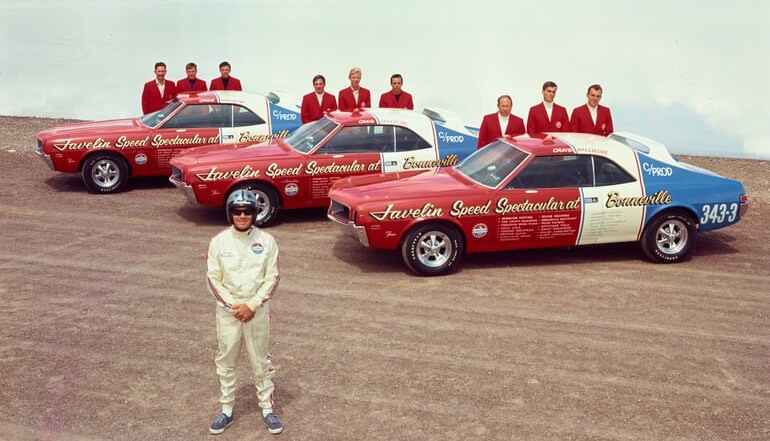
1968 AMC Javelin “Bonneville Speed Spectacular”

This image shows Craig Breedlove (front) with the contestants and their cars. From left to right, Team #2: (winners) Charlie Seabrook, Pete Darnell, and Matt Strong; Team #1: Carl Tracer, Alynn Luessen, and Bruce Nottingham; Team #3: Bill Tinker, Jim Riley, and Larry Lechner. Image courtesy of Car Craft Magazine.

This competition was co-sponsored by Car Craft Magazine. Readers of the magazine were invited to enter a competition to join one of three teams that would be modifying three Javelins in the hope of setting a new C-Production class record.

The Three Teams

Each applicant had answer some true or false questions and write a paragraph selling their mechanical aptitude. Nine winners were selected and divided into three teams, they were: Carl Tracer, Alynn Luessen, and Bruce Nottingham on Team #1.

Charlie Seabrook, Pete Darnell, and Matt Strong on Team #2, and Bill Tinker, Jim Riley, and Larry Lechner on Team #3.

Interestingly, Pete Darnell of the winning team was flown in from the Vietnam War to compete.

Each of the teams modified their AMC Javelins to the best of their abilities and Breedlove drove each of them down a marked course on the Bonneville Salt Flats in November of 1968.

1968 AMC Javelin “Bonneville Speed Spectacular” 23

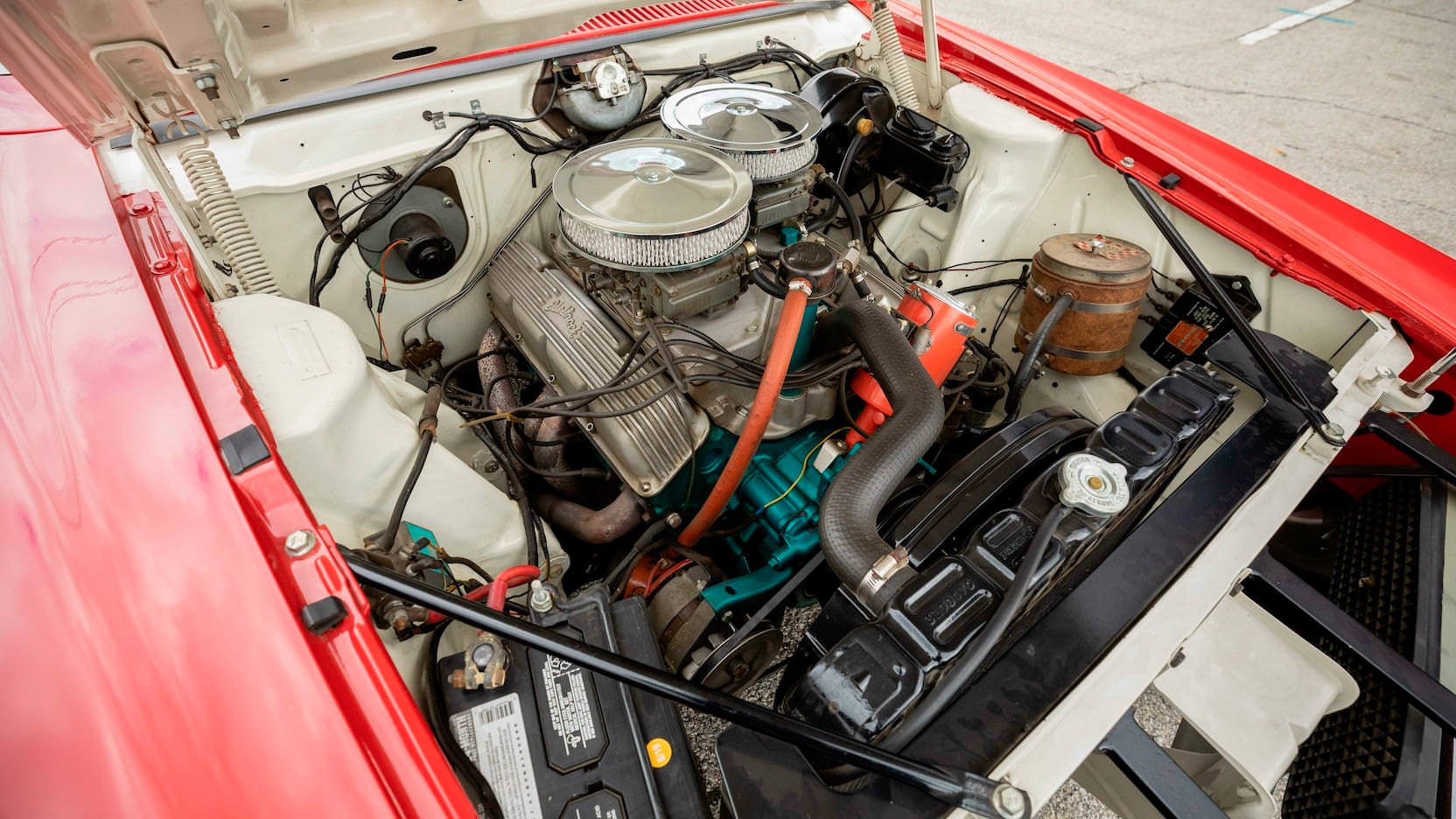
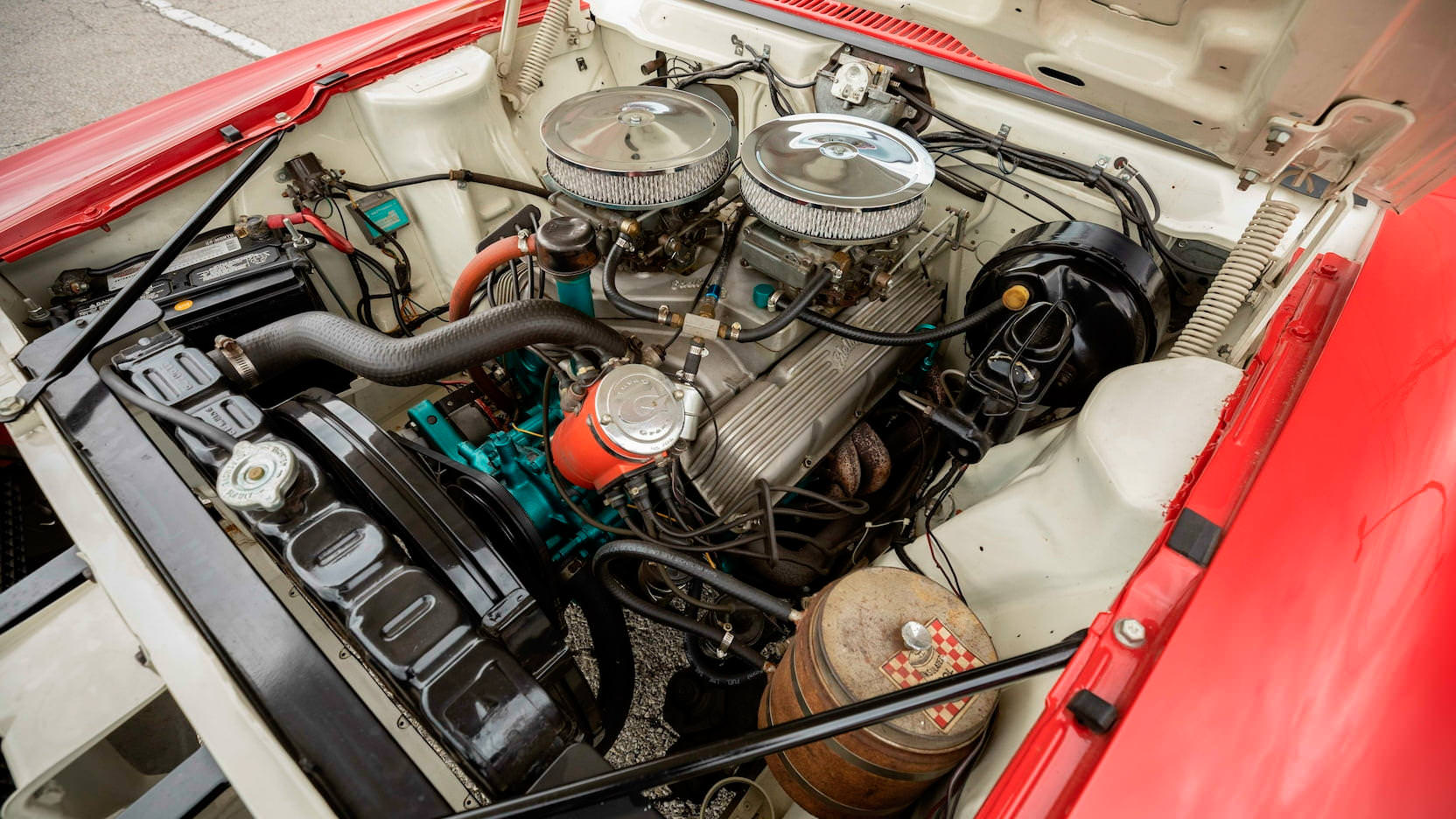
The engine remains in original condition, still including all of the modifications made to the car by the team who won the competition and set the new record.

Team #2 would end up winning, with a combined top speed of 161.733 mph, setting a new C-Production class record that stood for many years. The three cars were then given to the members of Team #2, the winning car (shown here) has remained in private hands ever since.

The 1968 Record-Setting AMC Javelin Shown Here

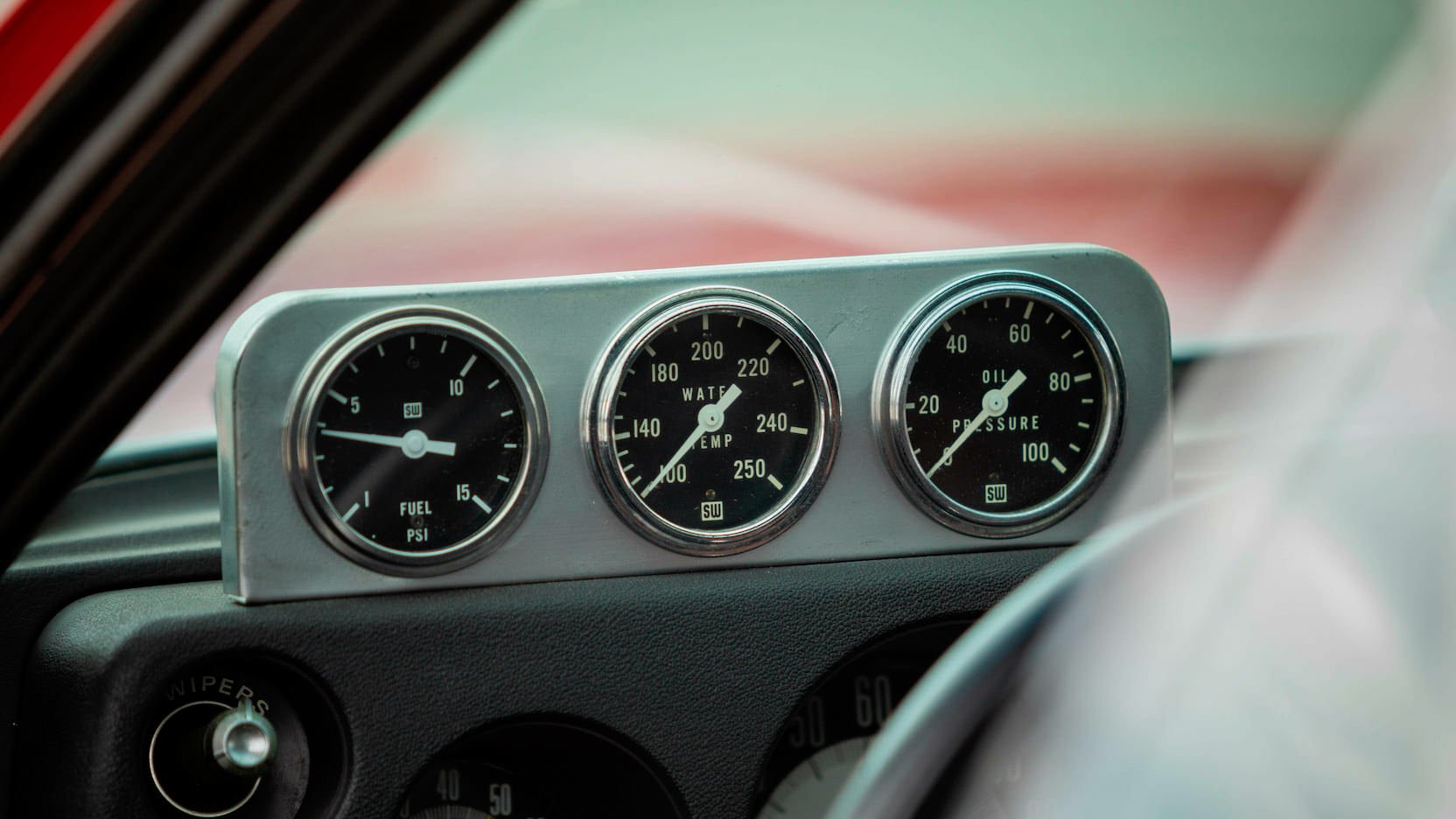
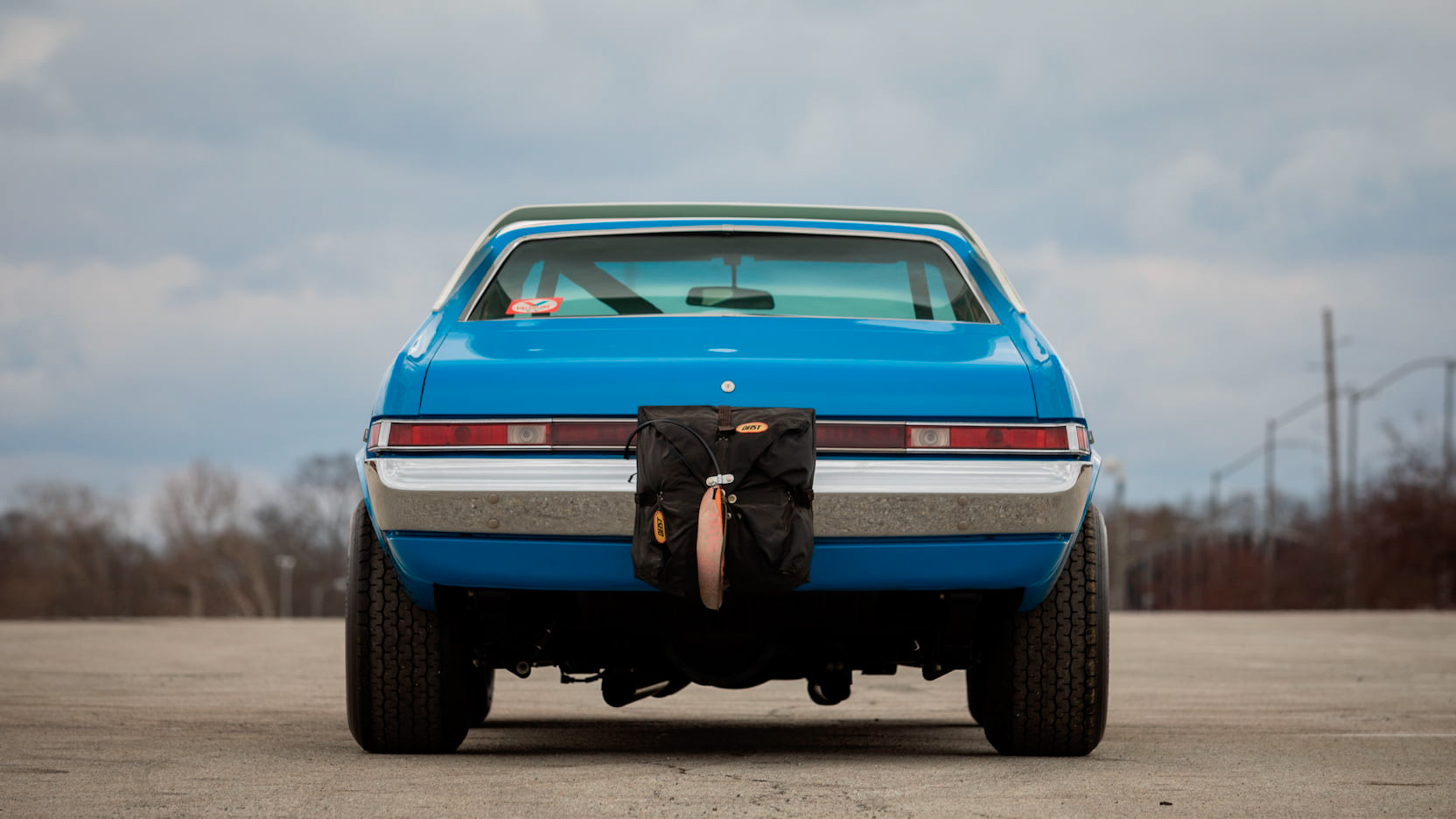
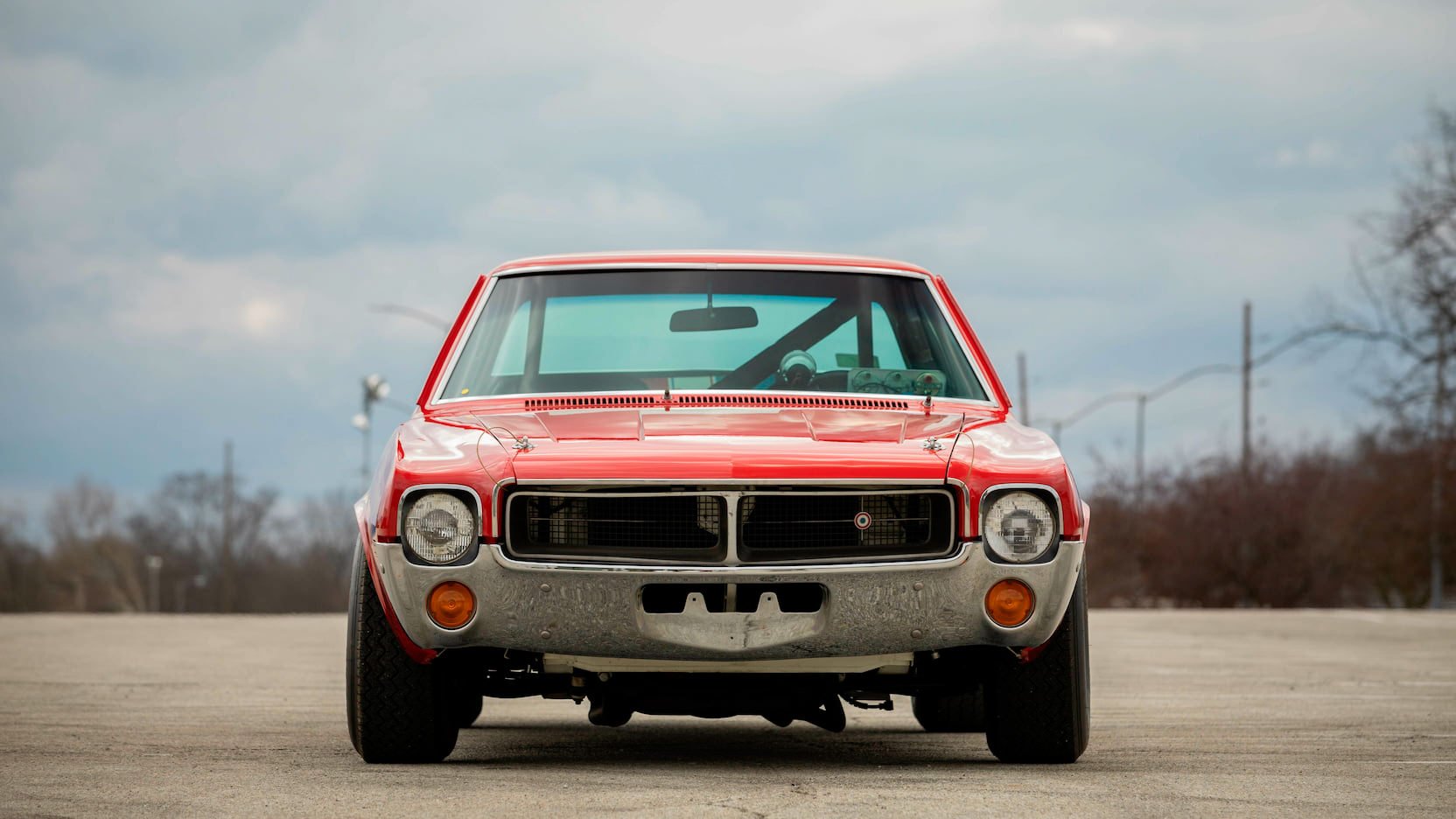
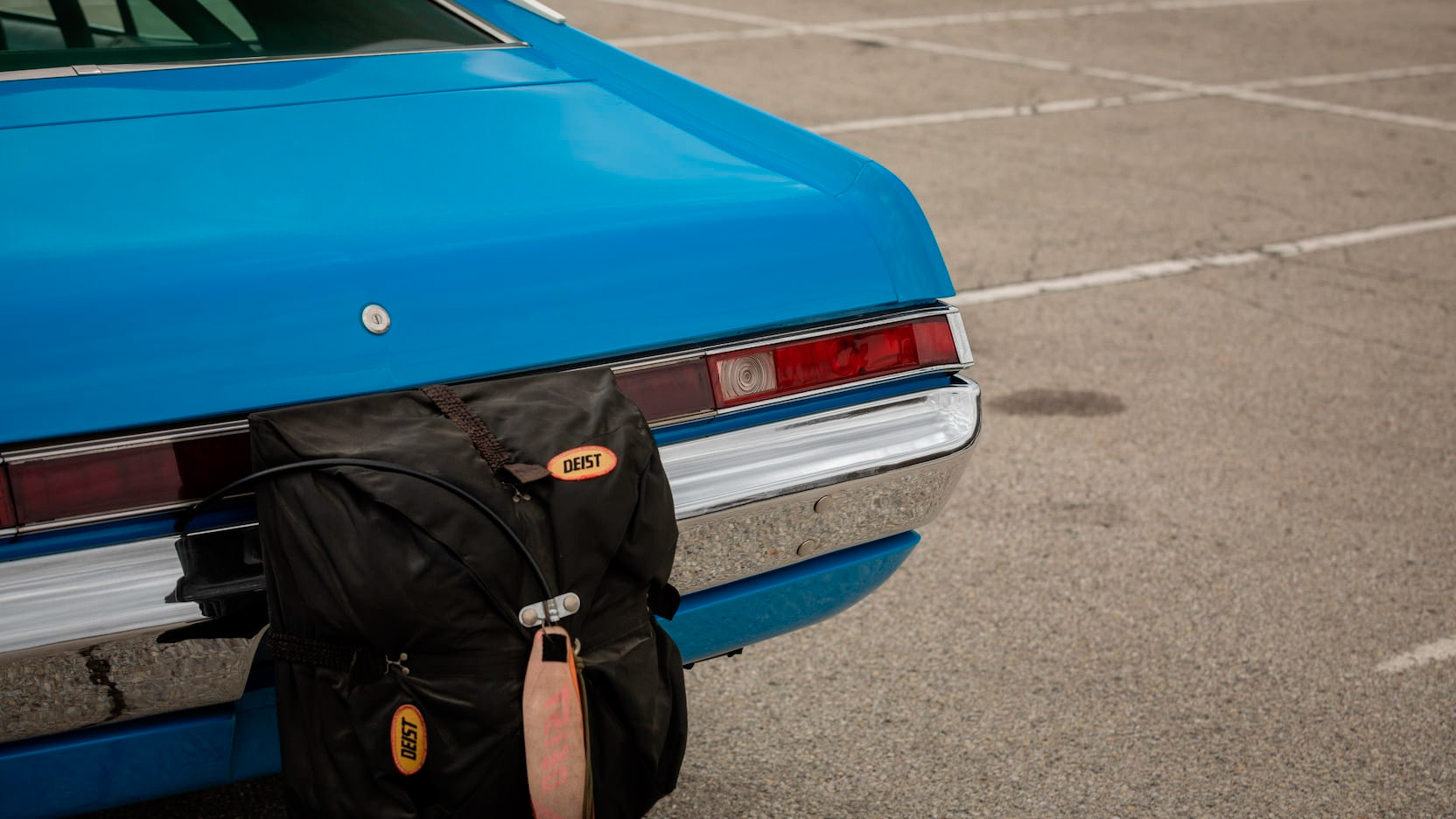
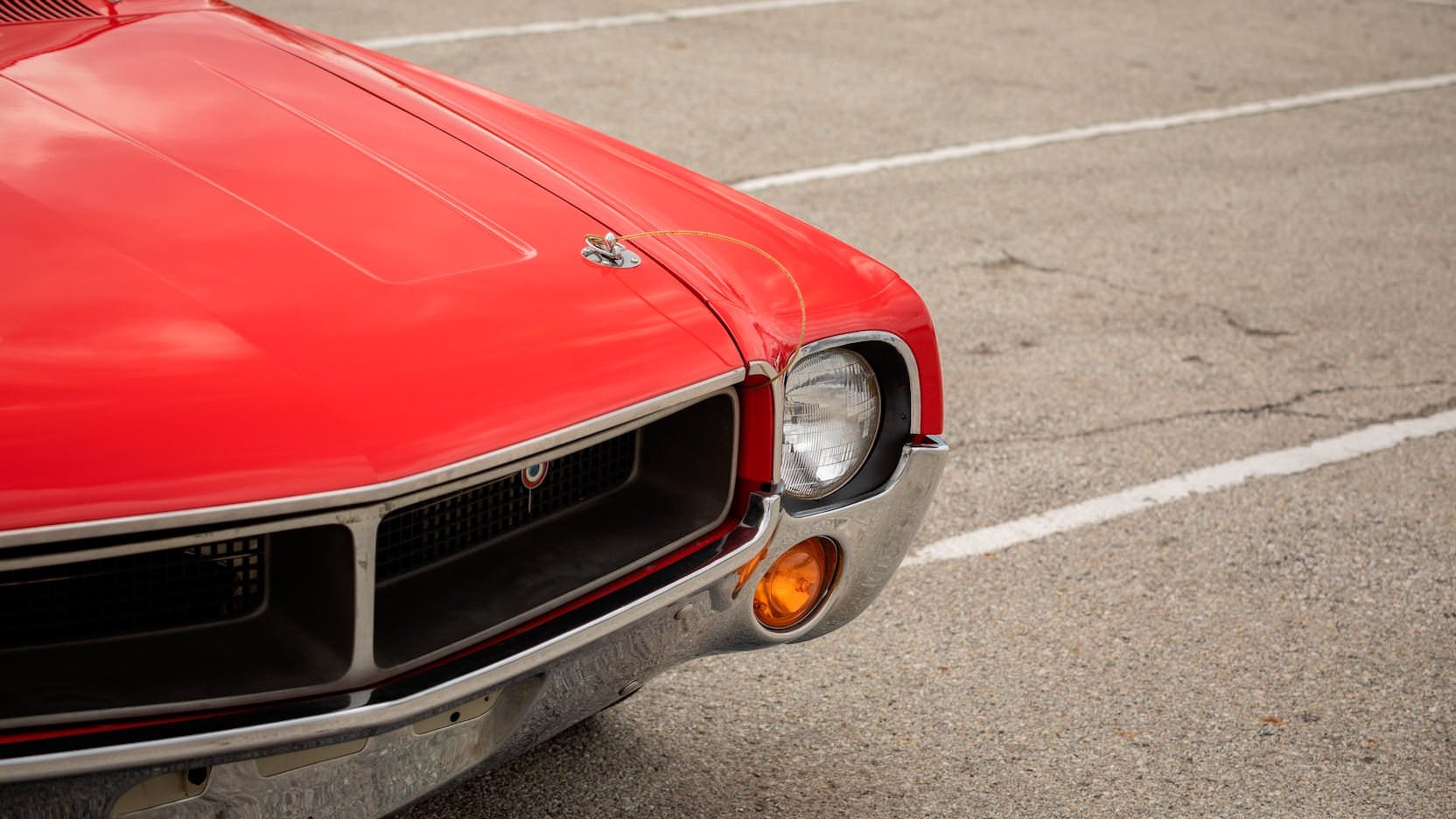
The car you see here is the Team #2 car that set the new C-Production class record in 1968. Interestingly it’s only ever done 19 miles of driving – all of which occurred on the salt.

The car was new when the project began, it was trailered to and from Bonneville, so the only miles on the odometer were put there by Breedlove himself.

A number of modifications were made to the chassis and some safety modifications were added by Breedlove’s garage. The car is powered by a modified 304 cubic inch AMC V8 engine fitted with a Vic Edlebrock-designed special prototype 2 x 4-barrel aluminum intake manifold.

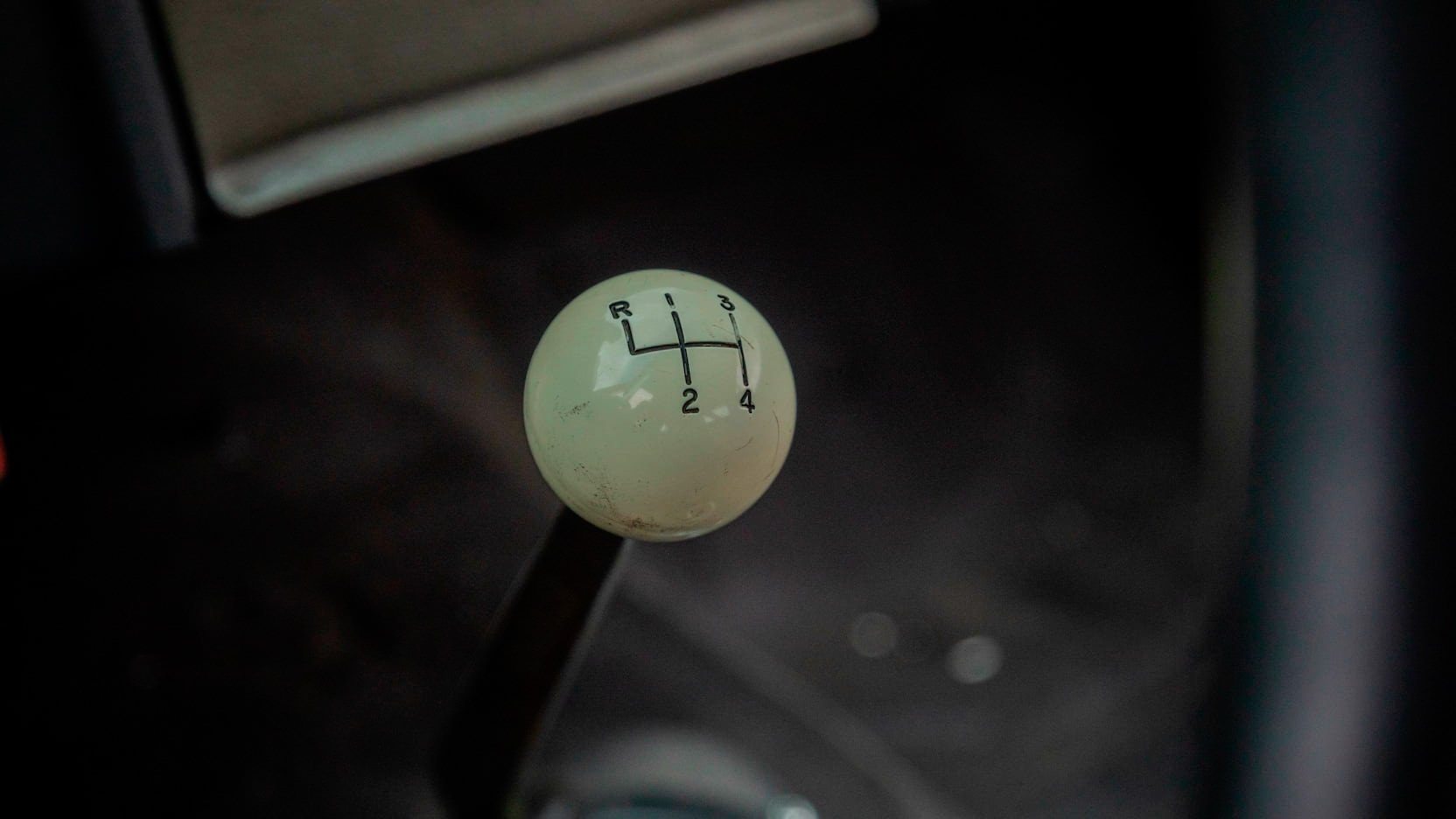
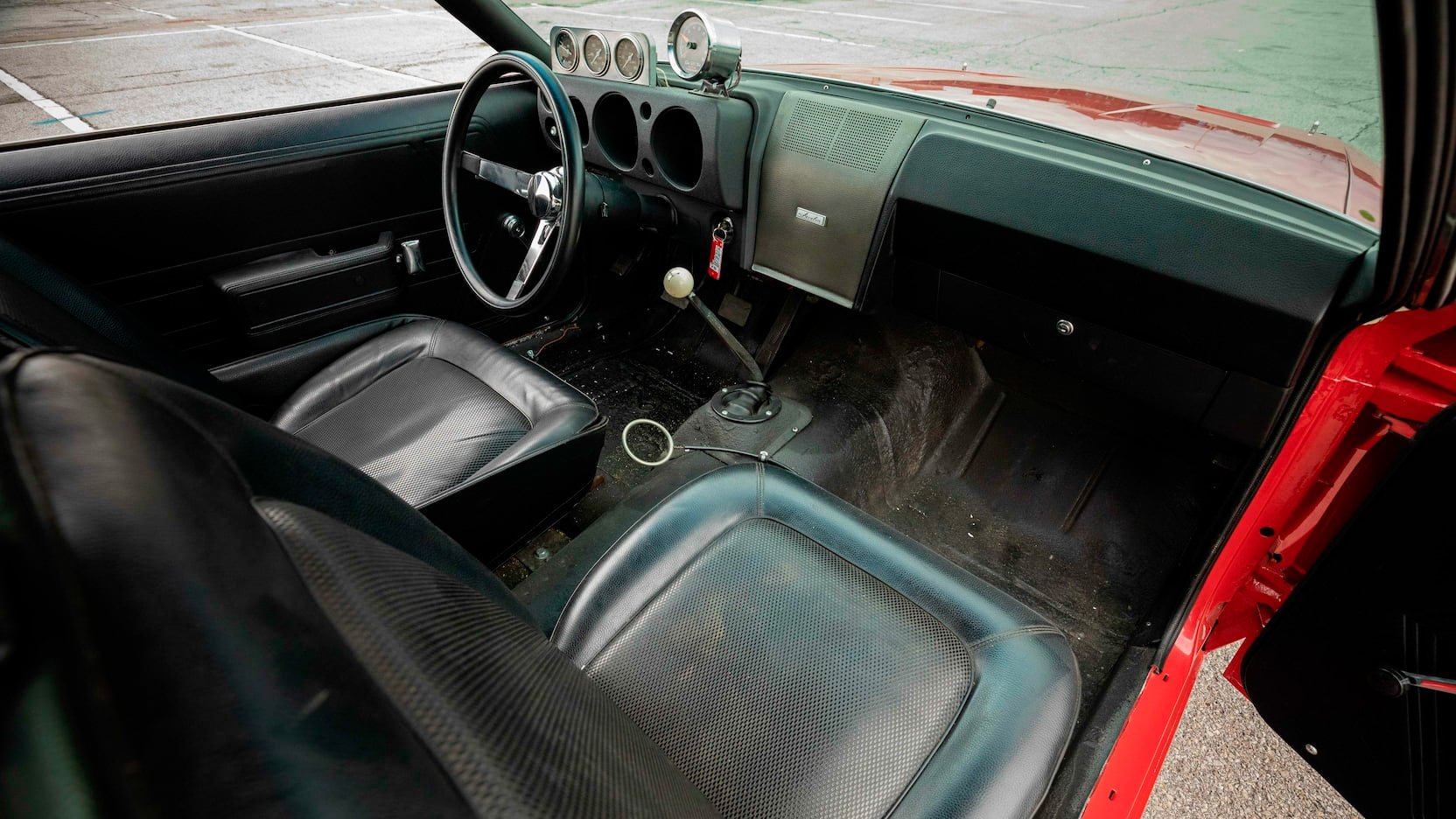
It has special heads built by Joe Mondello, a 4-speed manual transmission, and a signature Red, White and Blue exterior with a Back interior.

This car was featured in several issues of “Car Craft” magazine in 1968, the April 1970 issue of “Hot Rod” magazine, and later in the October 1998 issue of “Car Craft” magazine.

It’s currently due to be auctioned by Mecum at the Indy Auction in mid-May, and at the time of writing there is no price guide listed, you can click here to visit the listing.

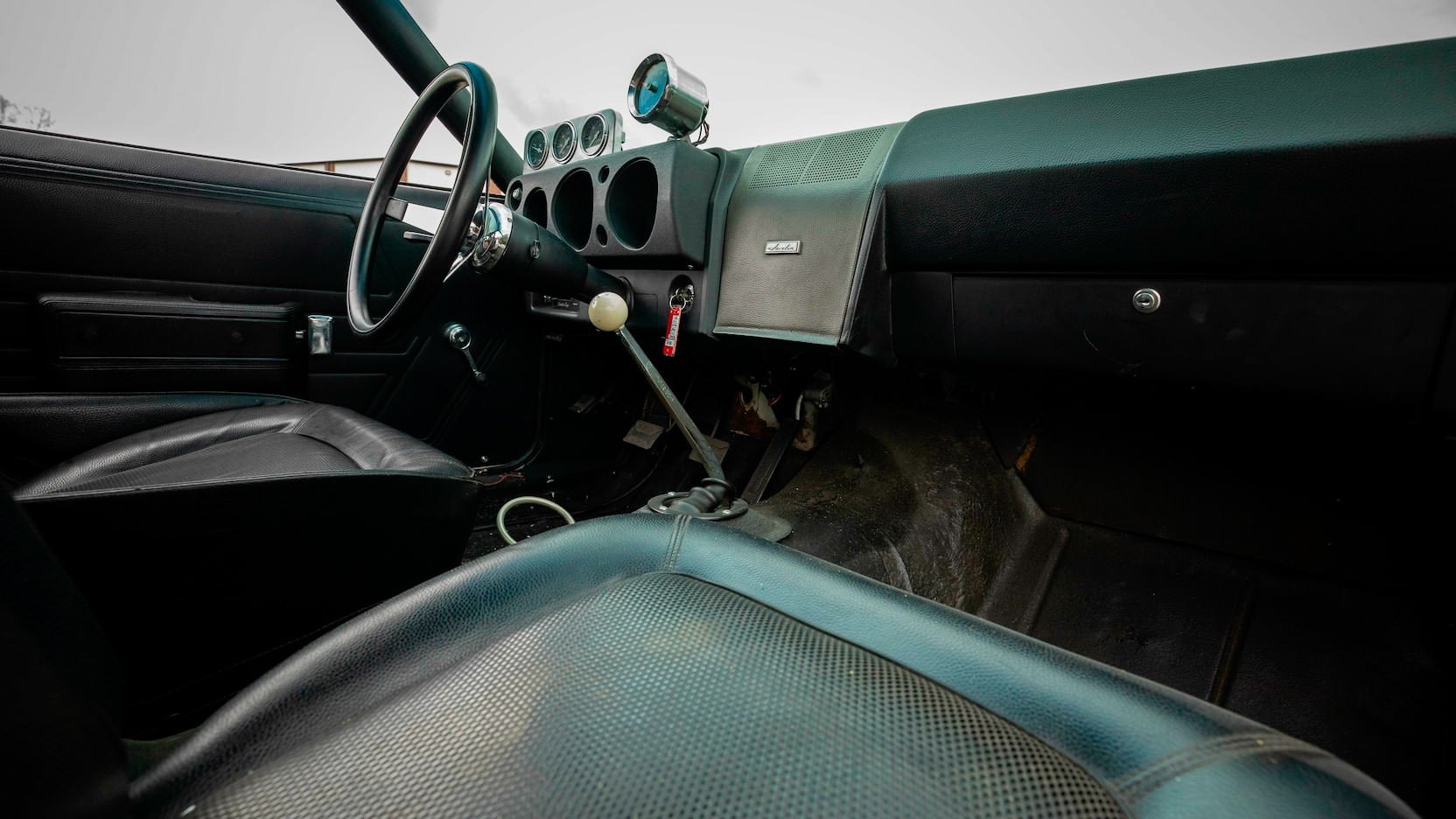
1968 AMC Javelin “Bonneville Speed Spectacular” 4 1968 AMC Javelin “Bonneville Speed Spectacular” 22 1968 AMC Javelin “Bonneville Speed Spectacular” 21 1968 AMC Javelin “Bonneville Speed Spectacular” 20 1968 AMC Javelin “Bonneville Speed Spectacular” 19 1968 AMC Javelin “Bonneville Speed Spectacular” 18 1968 AMC Javelin “Bonneville Speed Spectacular” 17 1968 AMC Javelin “Bonneville Speed Spectacular” 16 1968 AMC Javelin “Bonneville Speed Spectacular” 15 1968 AMC Javelin “Bonneville Speed Spectacular” 14 1968 AMC Javelin “Bonneville Speed Spectacular” 13 1968 AMC Javelin “Bonneville Speed Spectacular” 12 1968 AMC Javelin “Bonneville Speed Spectacular” 11 1968 AMC Javelin “Bonneville Speed Spectacular” 10 1968 AMC Javelin “Bonneville Speed Spectacular” 9 1968 AMC Javelin “Bonneville Speed Spectacular” 8 1968 AMC Javelin “Bonneville Speed Spectacular” 7 1968 AMC Javelin “Bonneville Speed Spectacular” 6 1968 AMC Javelin “Bonneville Speed Spectacular” 5 1968 AMC Javelin “Bonneville Speed Spectacular” 3 1968 AMC Javelin “Bonneville Speed Spectacular” 2 1968 AMC Javelin “Bonneville Speed Spectacular”

Images courtesy of Mecum
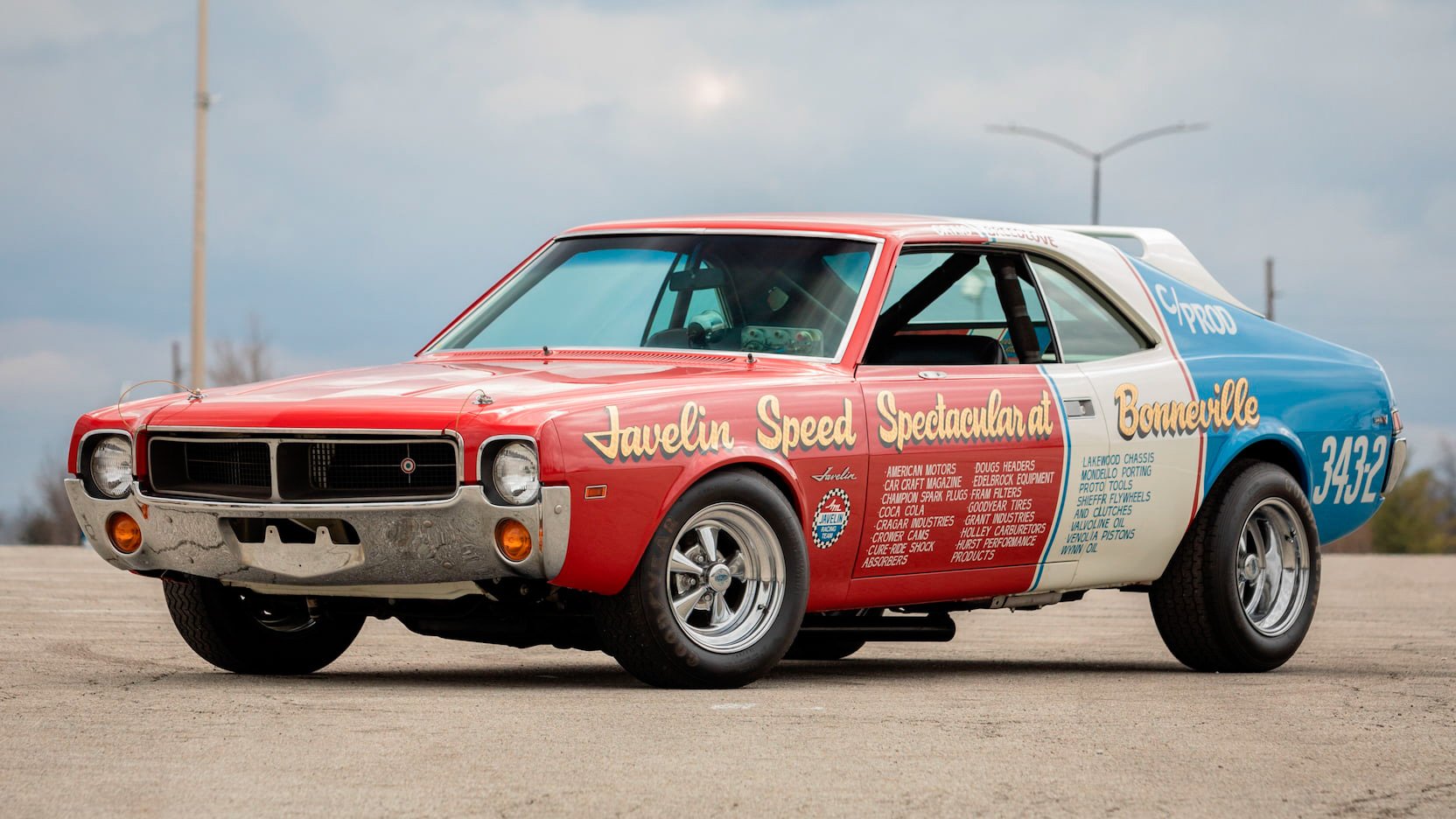
1968 AMC Javelin “Bonneville Speed Spectacular” 1

The post For Sale: The 1968 AMC Javelin “Bonneville Speed Spectacular” World Record Setter appeared first on Silodrome.


from Silodrome https://silodrome.com/amc-javelin-bonneville-speed-spectacular/
via gqrds

The Unusual Muntz Jet: 1 Of 198 Made

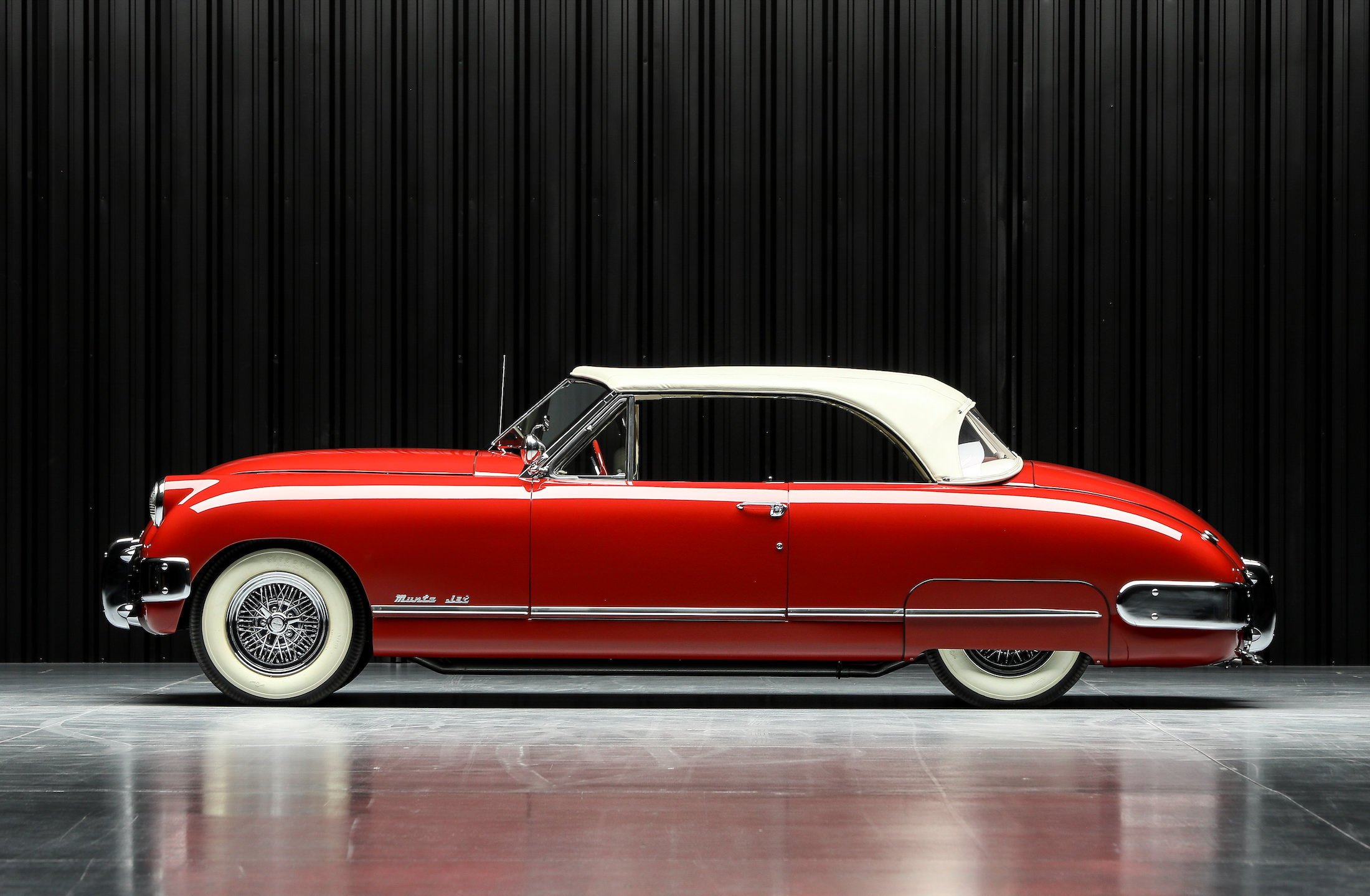
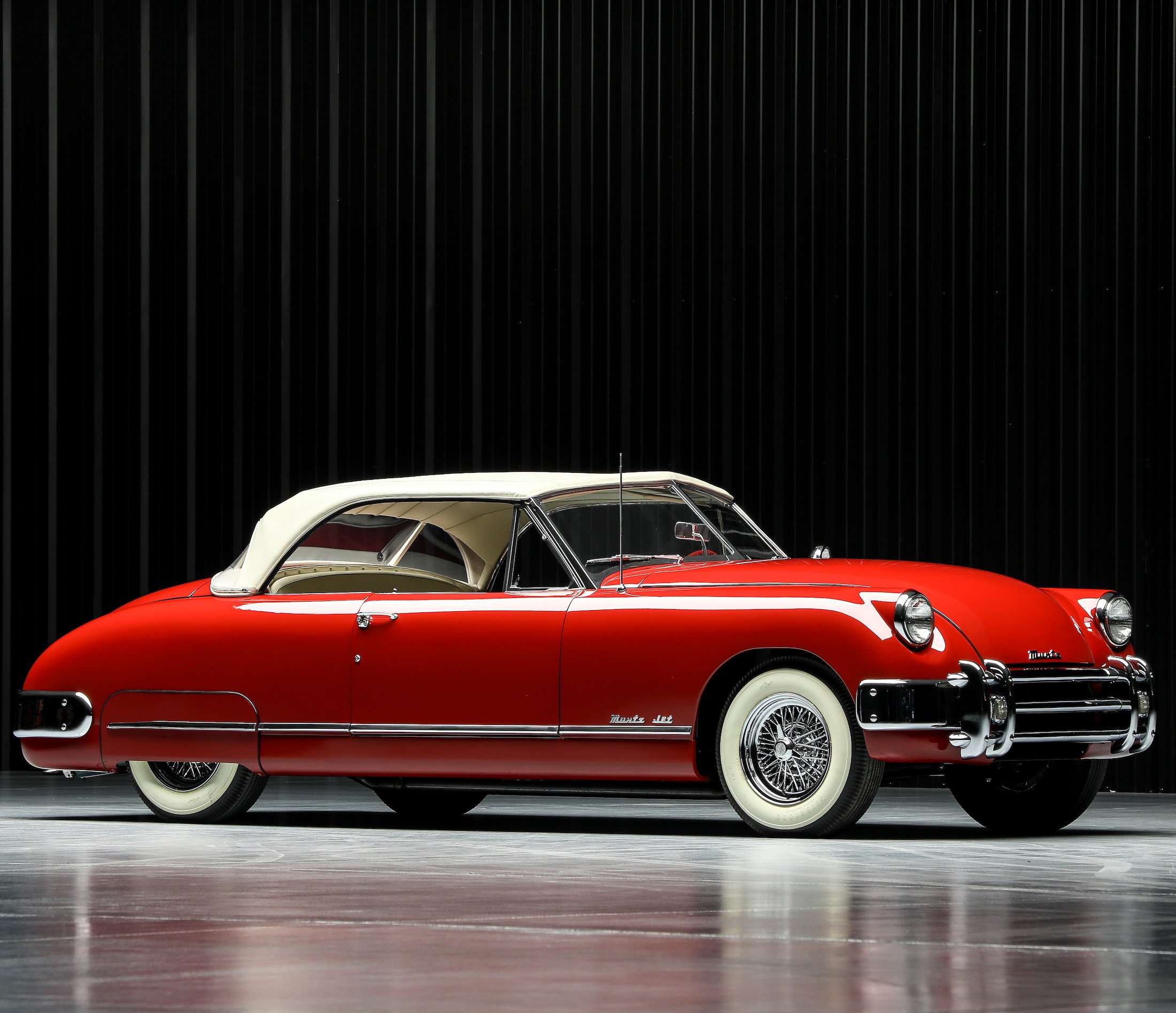
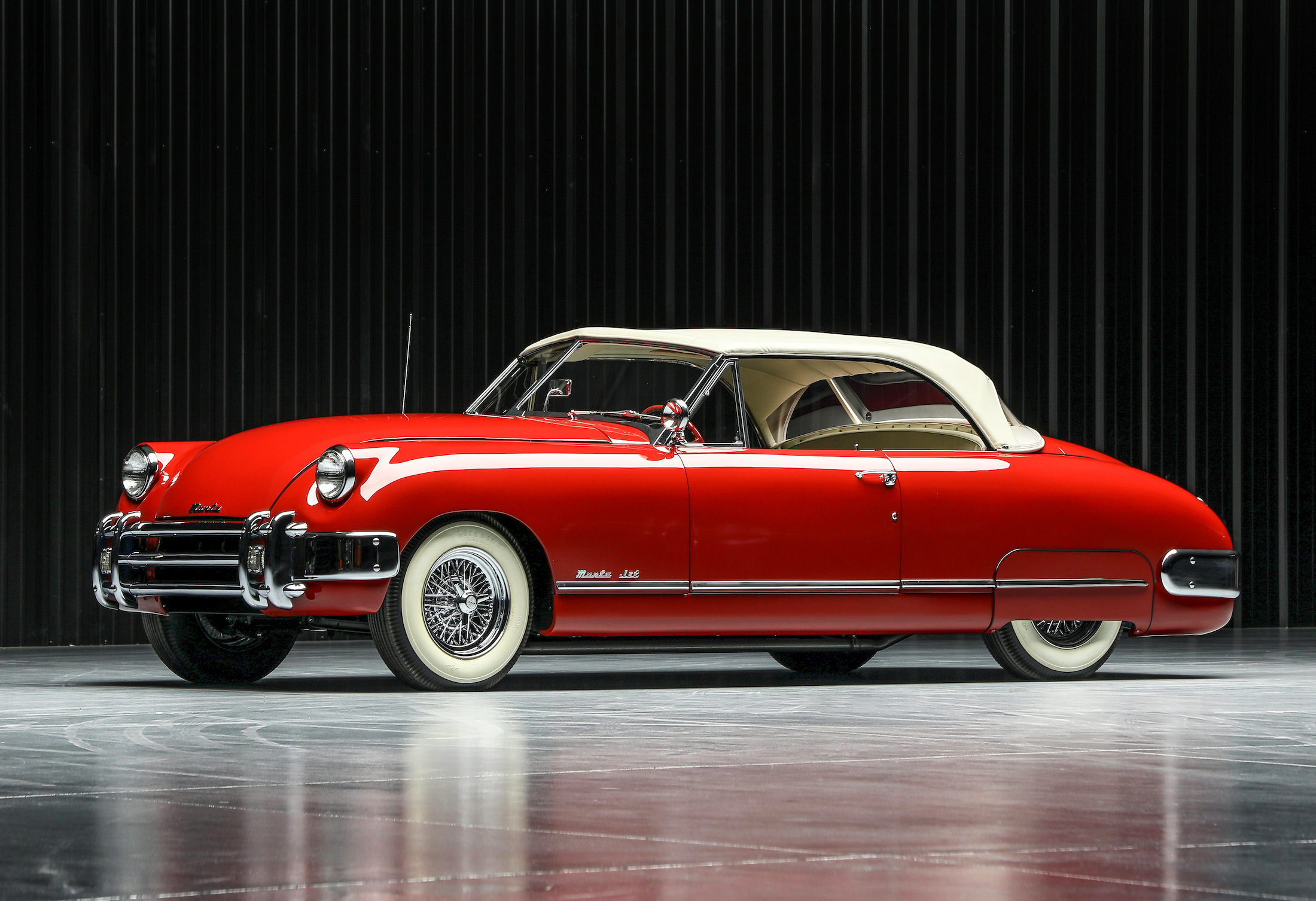
When it was released in 1949 the Muntz Jet was one of the most unusual production cars in the USA during its production run. It was fast for the era, capable of 112+ mph, and when ordering you could choose options that included a liquor cabinet and an ice chest under the armrests.

The Muntz Jet was the brainchild of Earl “Madman” Muntz, a successful entrepreneur who made and lost many fortunes over the course of his life. The Jet was based on the Kurtis Sport Car (KSC), a vehicle developed by Frank Kurtis – a well-known racing car designer.

Fast Facts – The Muntz Jet

  • The Muntz Jet was created by serial entrepreneur Earl “Madman” Muntz, he had bought the rights and tooling for the Kurtis Sport Car (KSC) from Frank Kurtis, then modified the car before putting it into production.
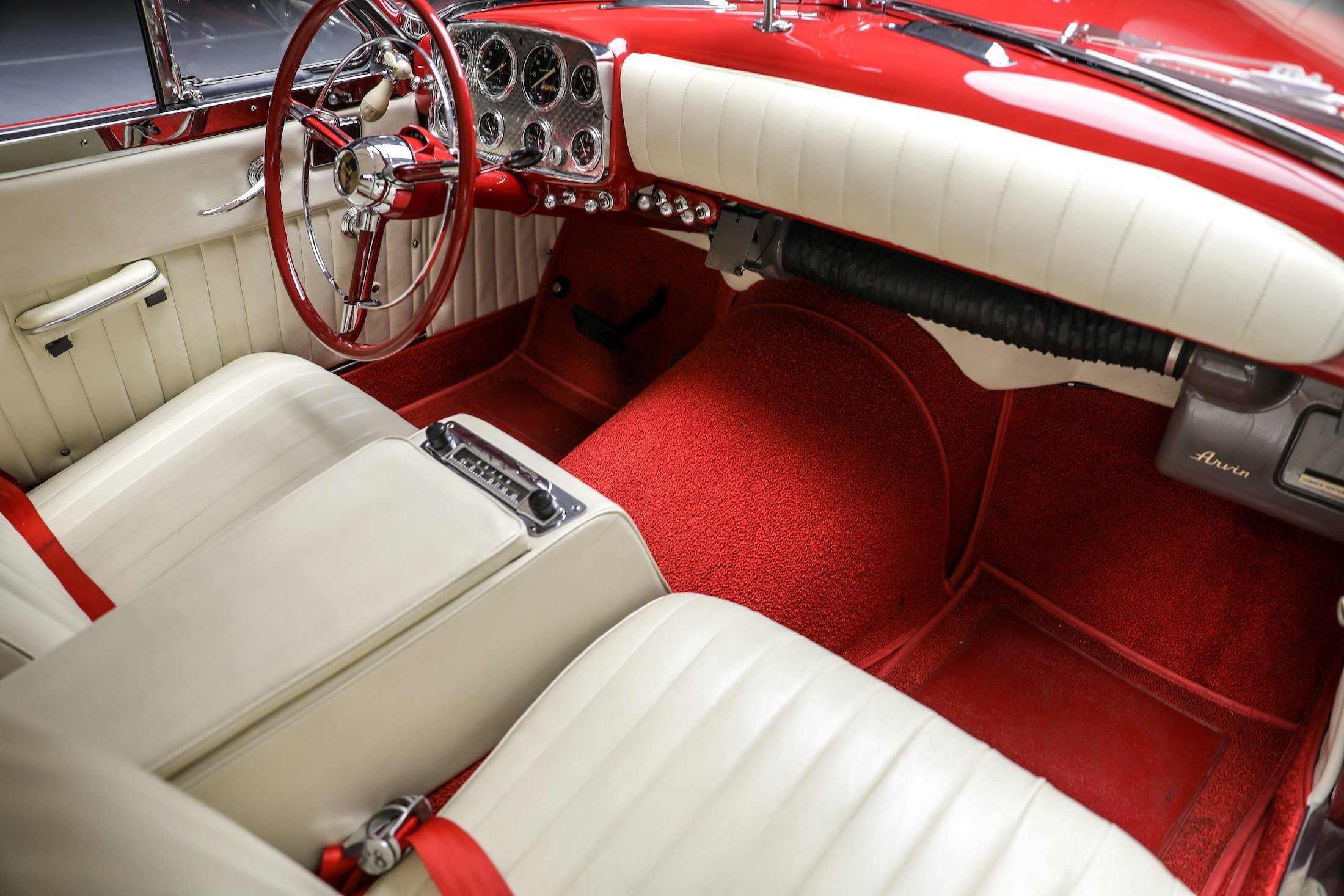
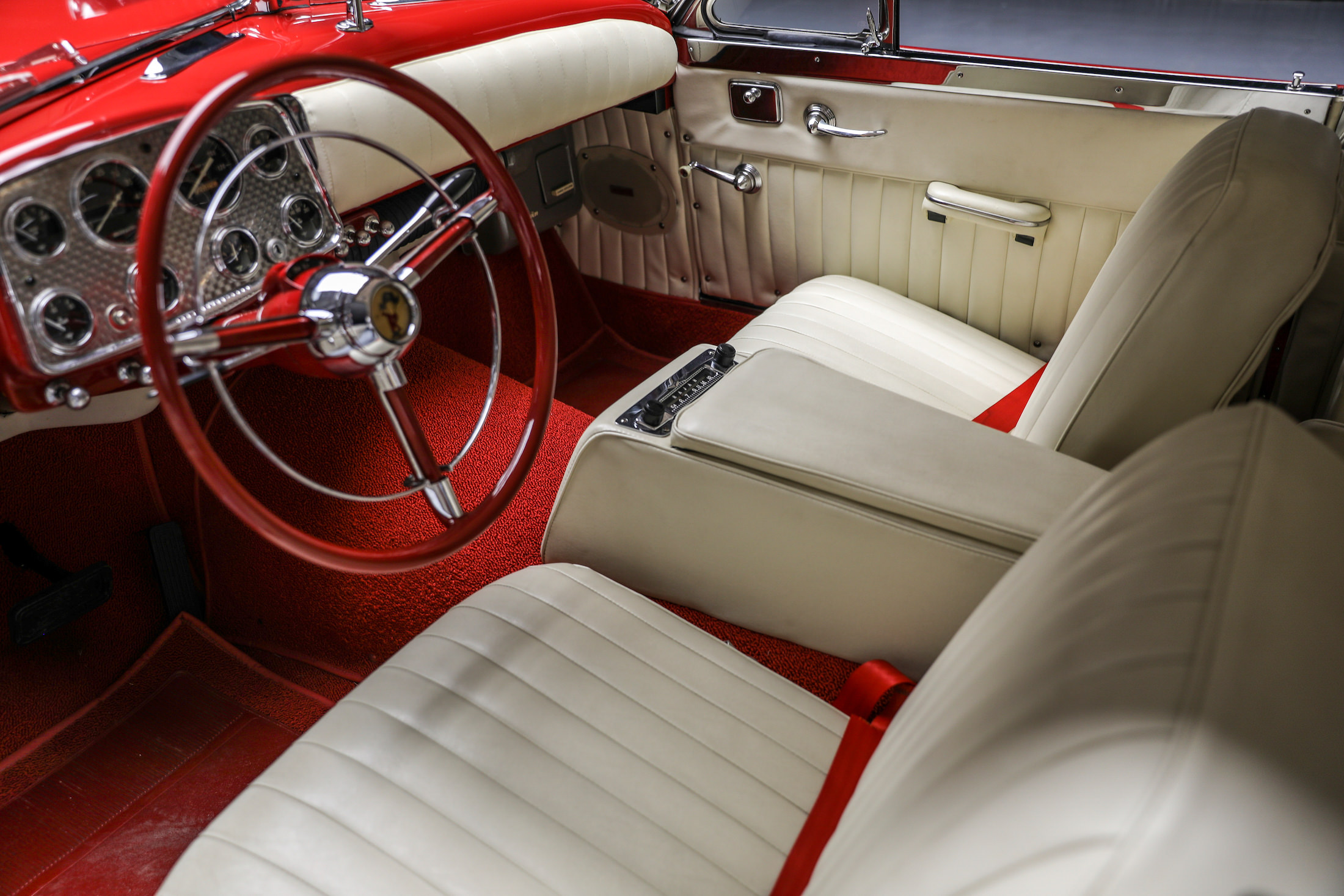
  • Unlike the more sports-oriented KSC, the Jet was intended to be more of a personal luxury car. It was powered by a 160 hp American V8, it had seatbelts, a padded dashboard, an opulently appointed interior, additional options included a liquor cabinet and an ice box for cooling drinks.
  • The Jet has been called the first personal luxury car, beating the Ford Thunderbird by six years. Muntz himself claimed the Thunderbird was directly inspired by the Jet.
  • The Muntz Jet was built with body-on-frame construction, it had independent front suspension, a live axle rear, and hydraulic drum brakes at each wheel. Power was provided by either a Cadillac or Lincoln V8, both of which produced 160 hp.

Earl “Madman” Muntz

Earl “Madman” Muntz was indisputably one of the most interesting men in the automotive world of the mid-20th century. Muntz was an American businessman and engineer who made a name for himself selling both cars and consumer electronics from the 1930s well into the 1980s.

Earl Madman Muntz

Earl “Madman” Muntz became a celebrity across California at first, then across the whole country thanks to his whacky TV and radio advertisements.

One of his most enduring legacies is almost certainly his quirky “Madman” television persona that he would use in advertisements, a persona that has been copied widely around the world. He also invented the concept of “Muntzing” – simplifying complex electronic devices to reduce their cost.

Muntz had started his first used car dealership at the age of 20 in Elgin, Illinois. He became a remarkable success, eventually moving his operations to California at the age of 26. He created his “Madman” character while selling used cars and became a celebrity in the process.

He had a lifelong fascination with electronics and electronic devices. He developed the simple but effective Muntz TV in 1946 and offered it for sale from 1947 onwards. It was the first TV to sell for less than $100, the cheapest model previously had retailed for $445.

Muntz would later invent the Muntz Stereo-Pak 4-track tape cartridge, the original predecessor of the Stereo 8 cartridge, better known as the 8-track.

Muntz Jet Car 4

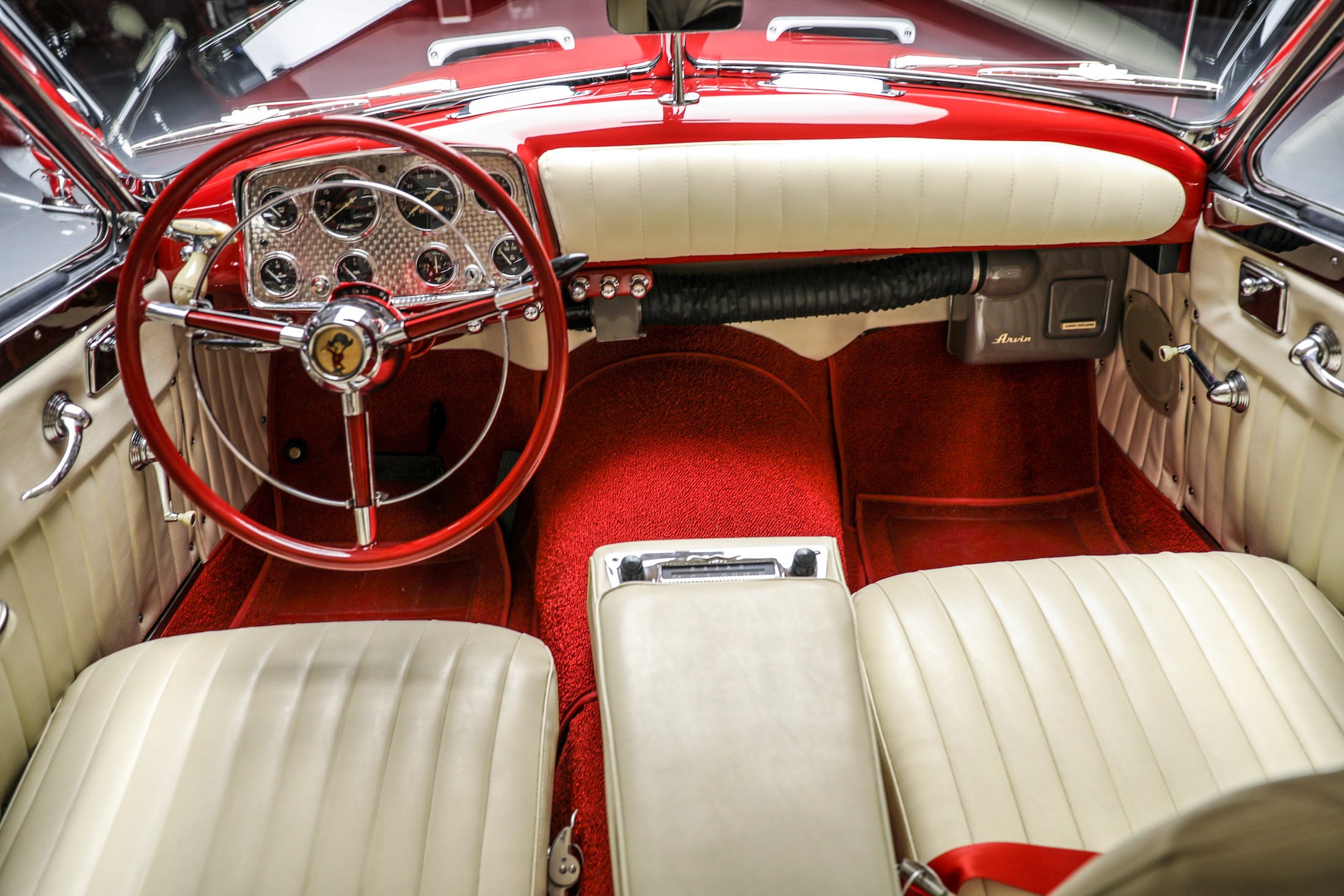
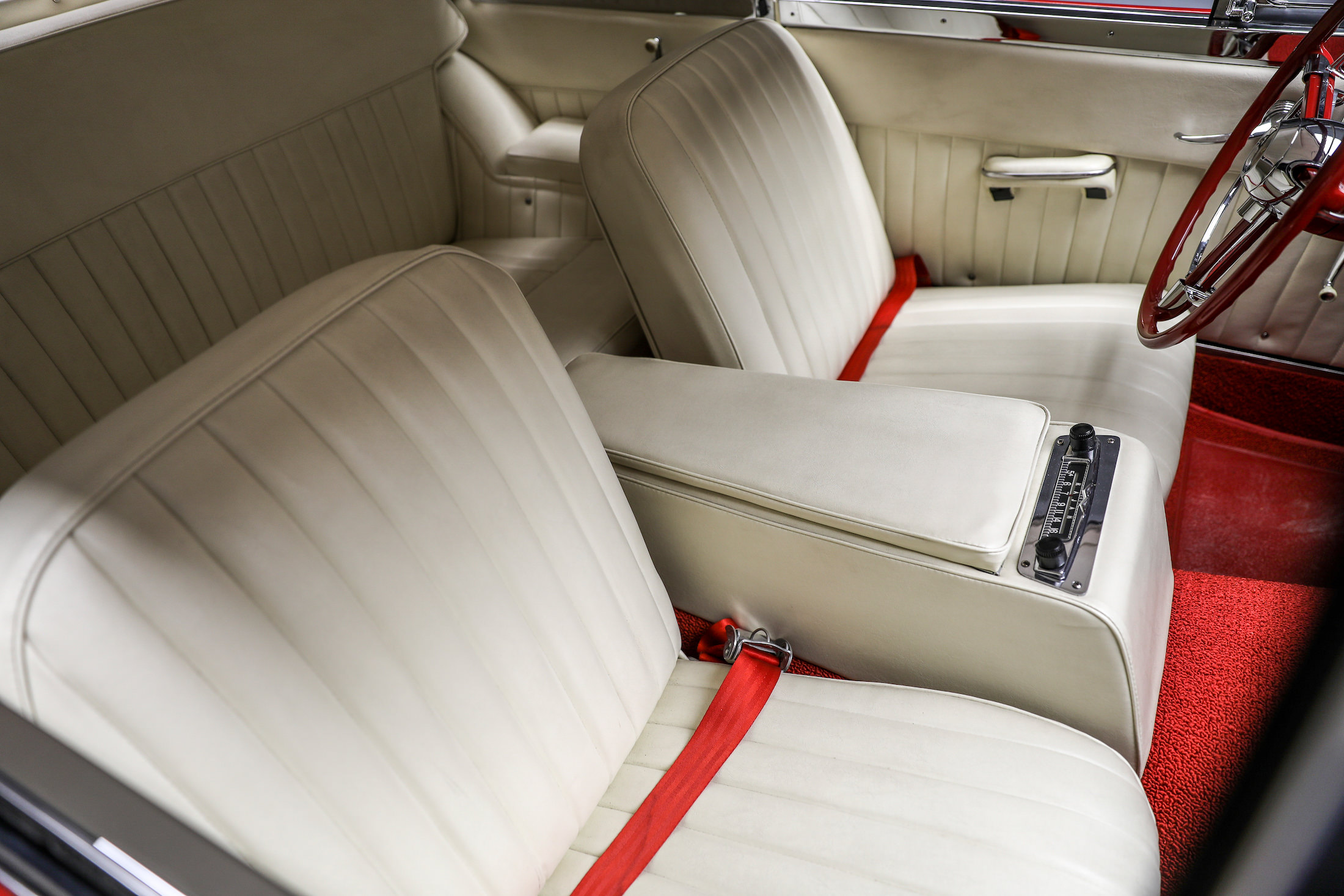
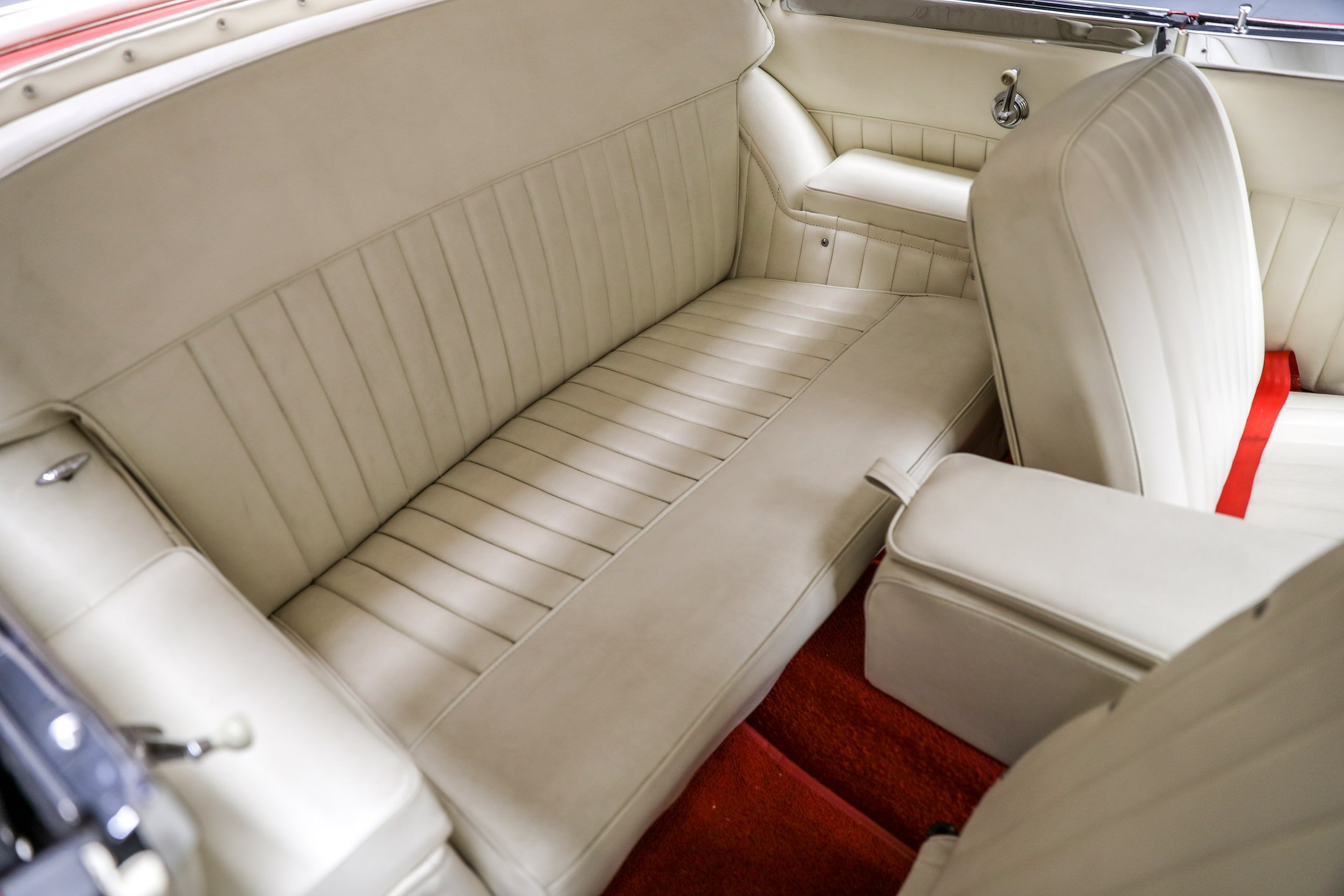
The interior of the car is beautifully appointed, it’s as good as any other mass-production car in the United States at the time.

By the 1980s Muntz had become the leading retailer of cellular phones in Los Angeles, a good indication of his ability to adapt to new industries and technologies.

The Kurtis Sport Car (KSC)

Given the importance that cars had had in the life of Earl Muntz it wasn’t surprising that he harbored a dream of developing and selling his own car. He already had the funding and the advertising acumen, then in 1949 when he met Frank Kurtis and saw his unusual Kurtis Sport Car (KSC) he realized he could take it over and fulfill his dream.

The Kurtis Sport Car (KSC) had been developed after WWII, it was a high-performance two-seat sports car developed by Frank Kurtis and the team at Kurtis Kraft, a company better known for their open-wheel racing cars.

The difficulties of selling low-volume sports cars profitably had nearly financially crippled Kurtis, so when Muntz appeared offering him $200,000 for the right and tooling to the design it must have seemed too good to be true.

Muntz Jet Car 19

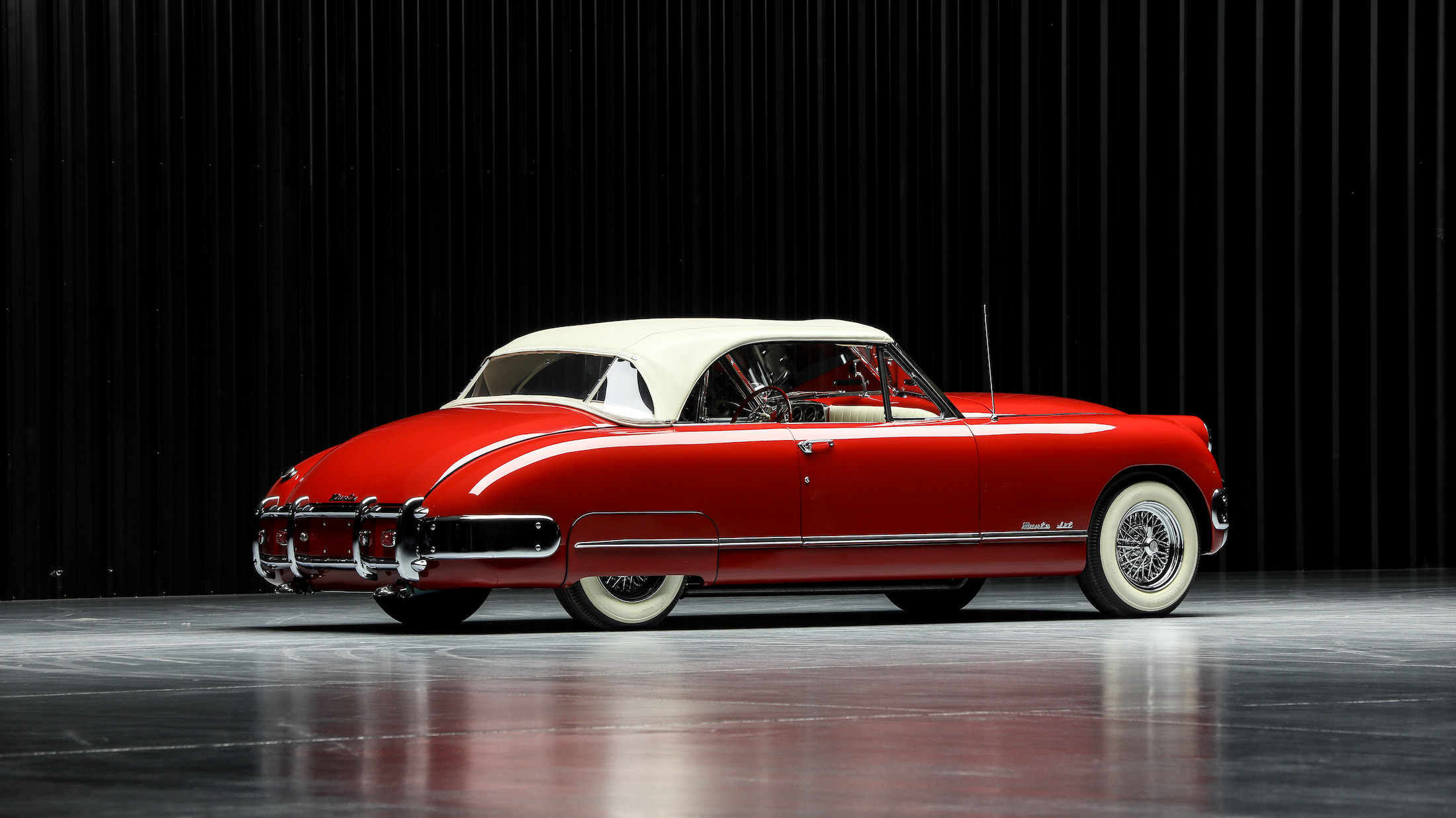
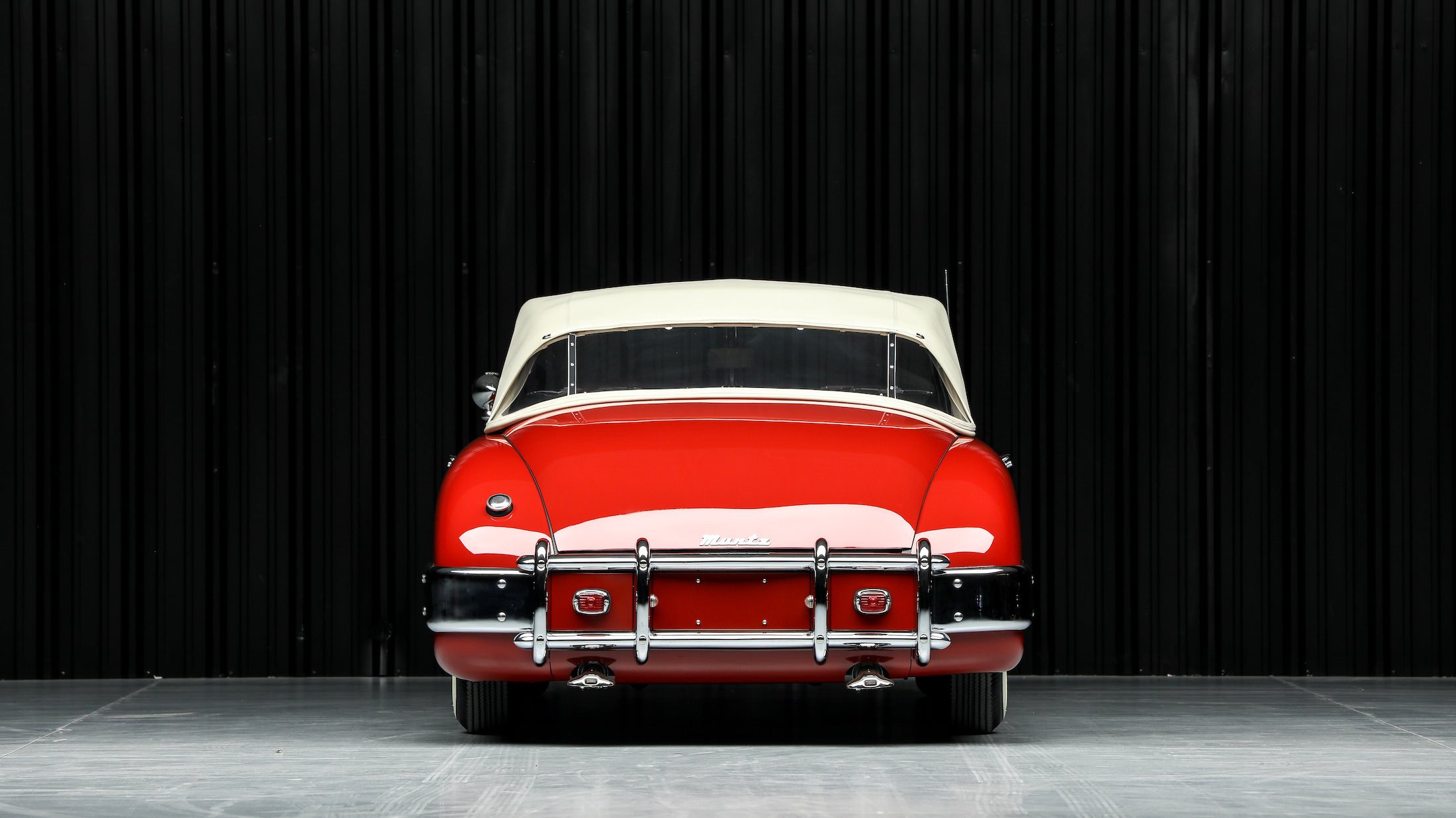
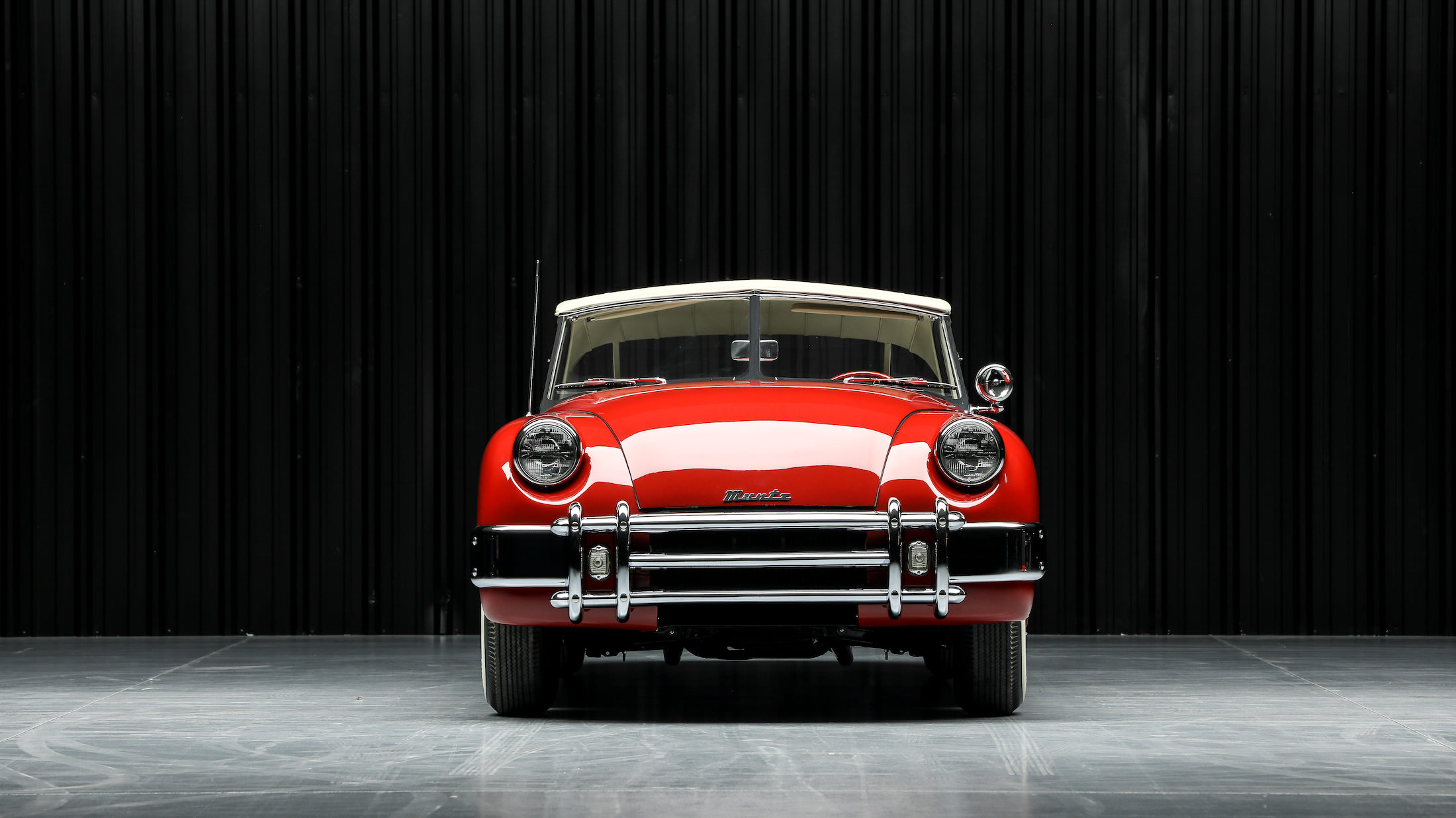
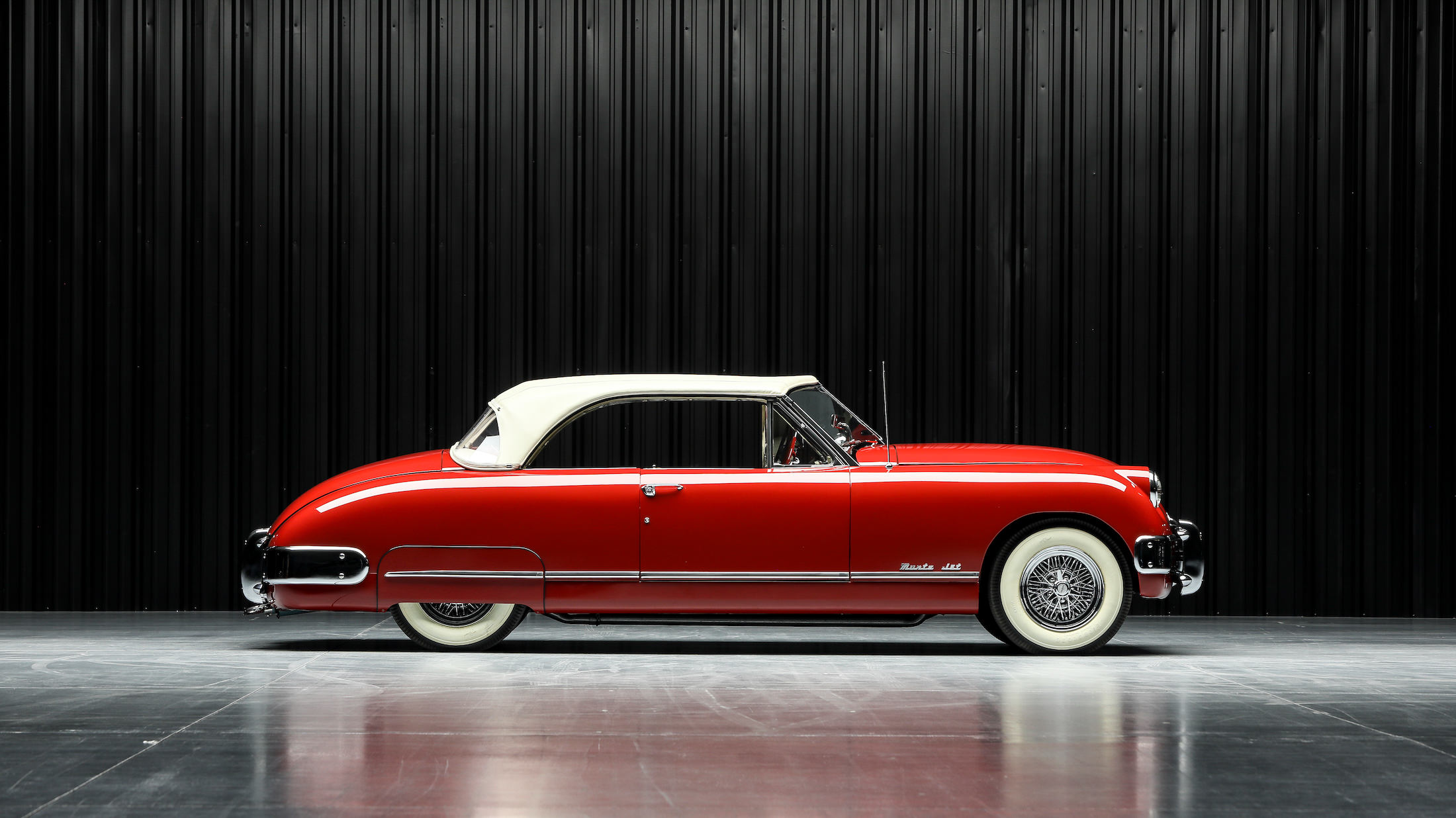
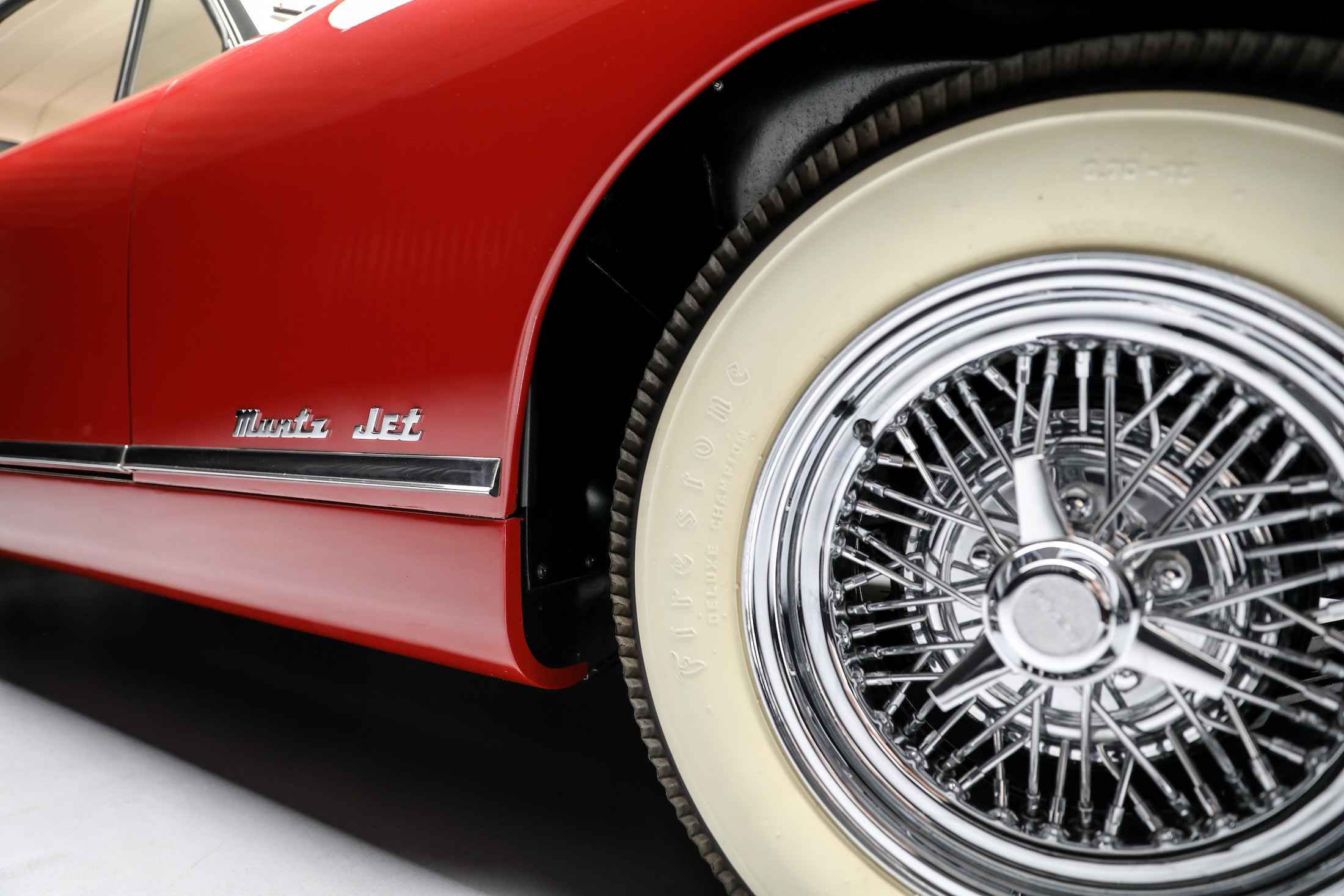
The styling was closely based on the Kurtis Sport Car (KSC), though the Muntz Jet had a longer wheelbase and was notably more luxurious.

The Muntz Jet

Muntz realized that the two-seater layout of the KSC would restrict the sales potential of the car, so he lengthened the wheelbase by a few inches and added a second row of seats. Ultimately the Muntz Jet would be 400 lbs heavier than the KSC, but it was more roomy and luxurious which appealed to a certain clientele.

The first Muntz Jets were built in Glendale, California before production moved to Evanston, Illinois. The first series of cars were fitted with a 160 hp Cadillac V8, with later cars getting the Lincoln V8, also capable of 160 hp.

Power was sent to the live axle rear end via either a General Motors Hydramatic automatic transmission  or a 3-speed Borg-Warner manual transmission. Front suspension was independent with A-arms and coil springs, the live axle in the rear rode on leaf springs, and the car had hydraulic drum brakes on all four corners.

The Jet was said to be capable of 112+ mph, Earl Muntz claimed the car could reach 150 mph but he was known to exaggerate a little here and there, particularly when marketing was involved.

The Jet was exceedingly costly be the standards of the day, retailing for $5,500 when you could buy a new Cadillac convertible for $3,987 or a Lincoln for $3,600.

Muntz Jet Car 12

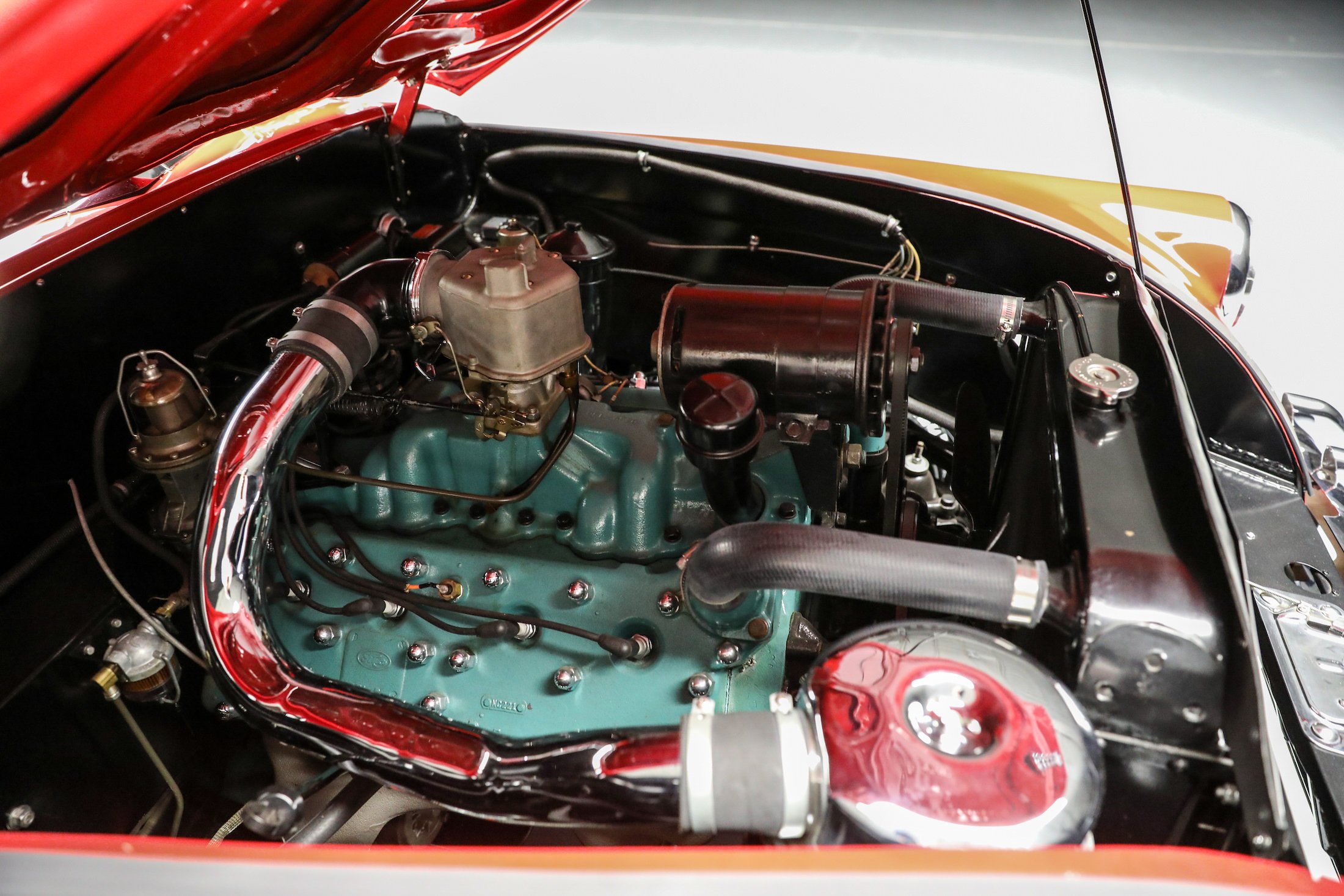
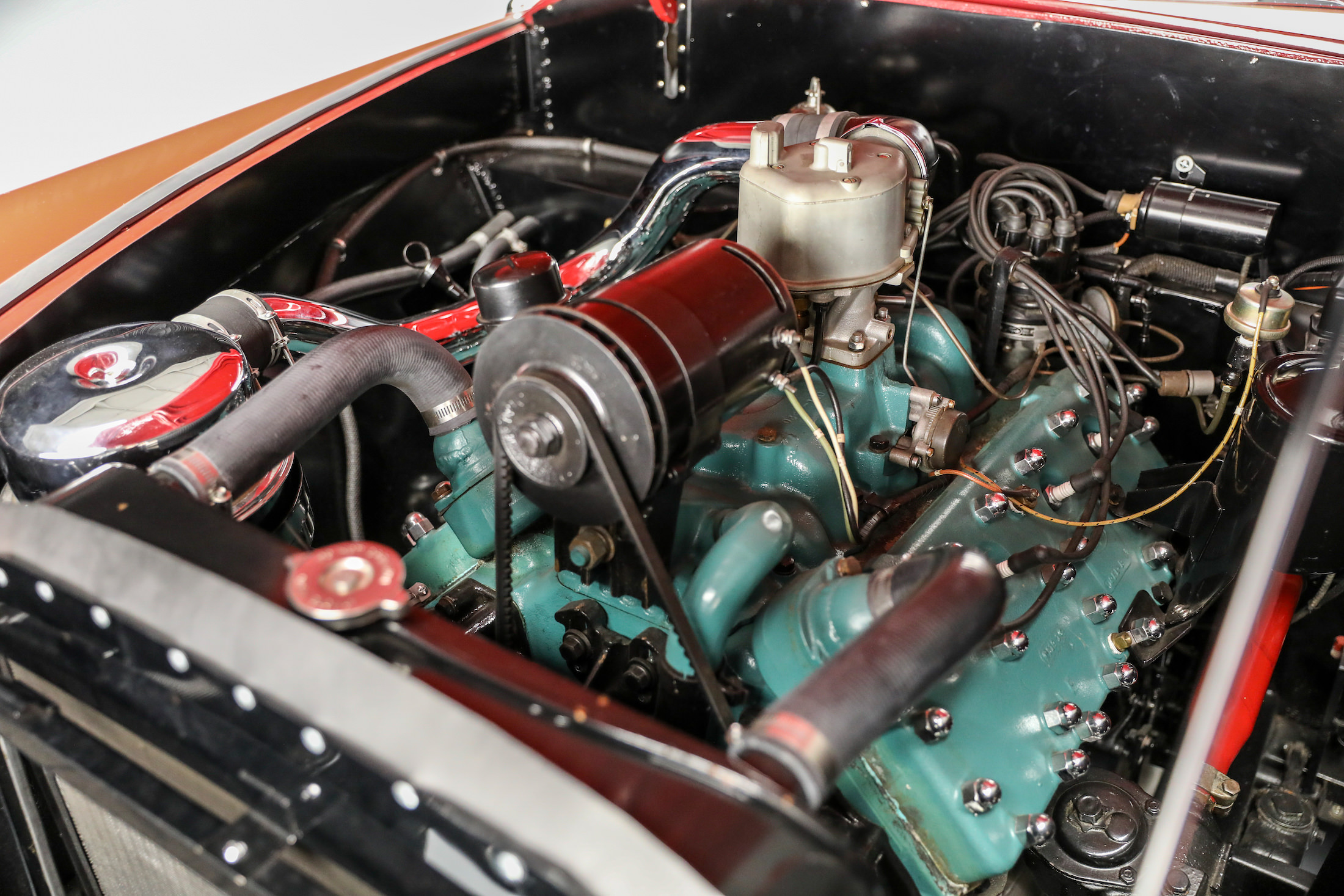
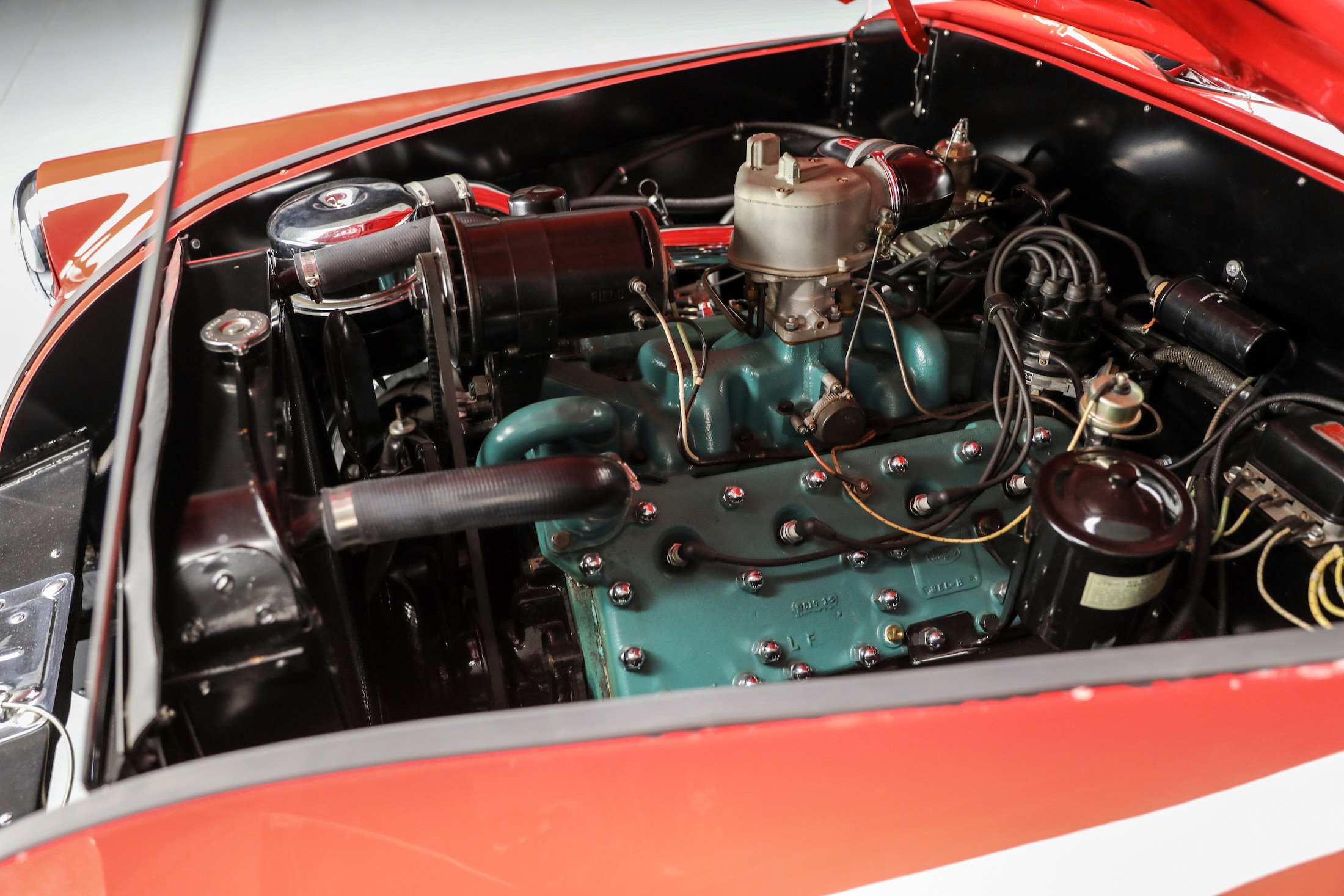
The car is powered by a Lincoln flathead V8 producing 160 hp, it gave the Jet a top speed of over 110 mph – a heady figure at the time.

Earl Muntz realized that he was losing over $1,000 per car, as they actually cost closer to $6,500 to build. He kept the Jet in production from 1949 until 1954, though he claimed to have made over 400 of them its believed that closer to 198 were actually made, and at least 125 of them have survived to the modern day.

The 1952 Muntz Jet Shown Here

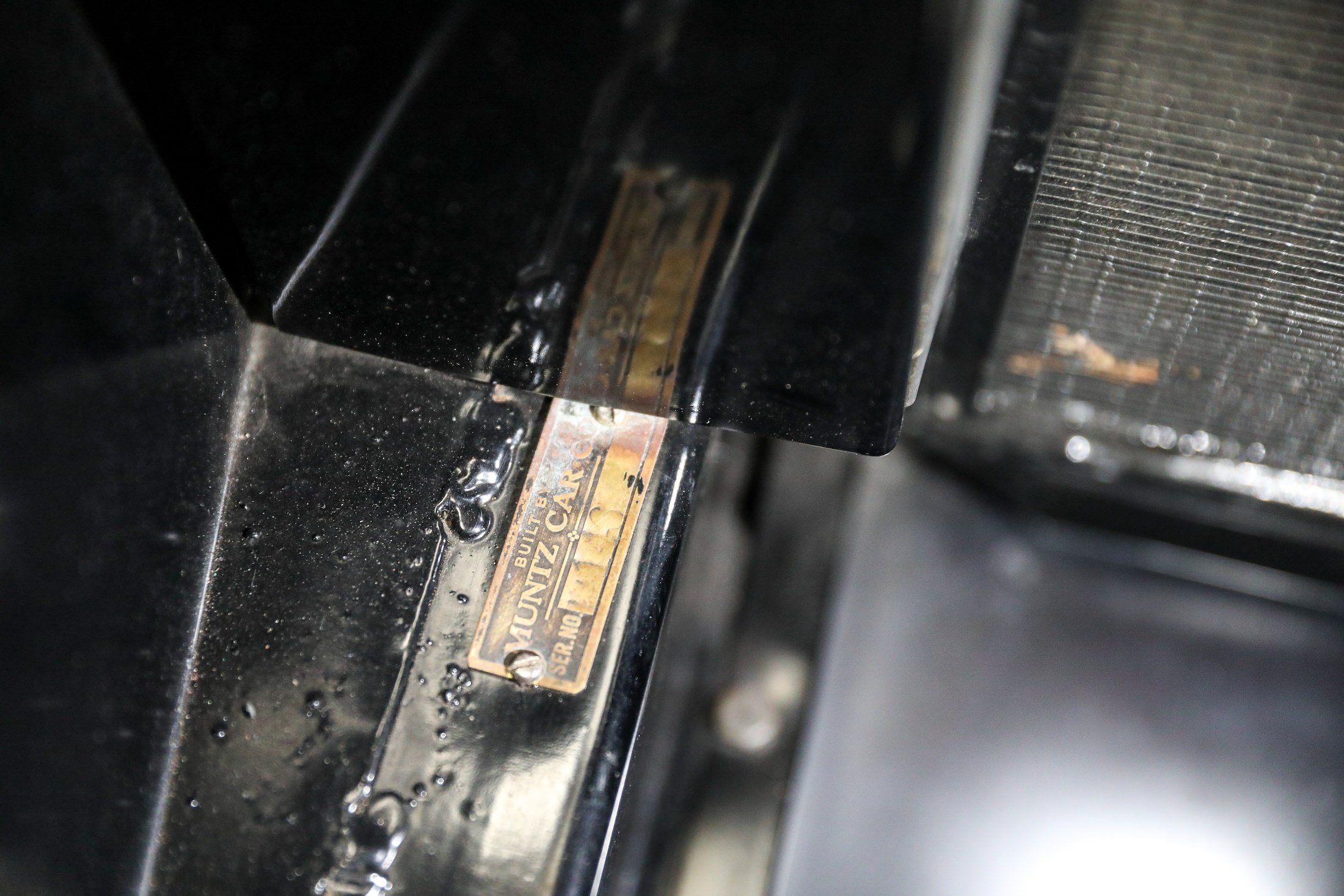
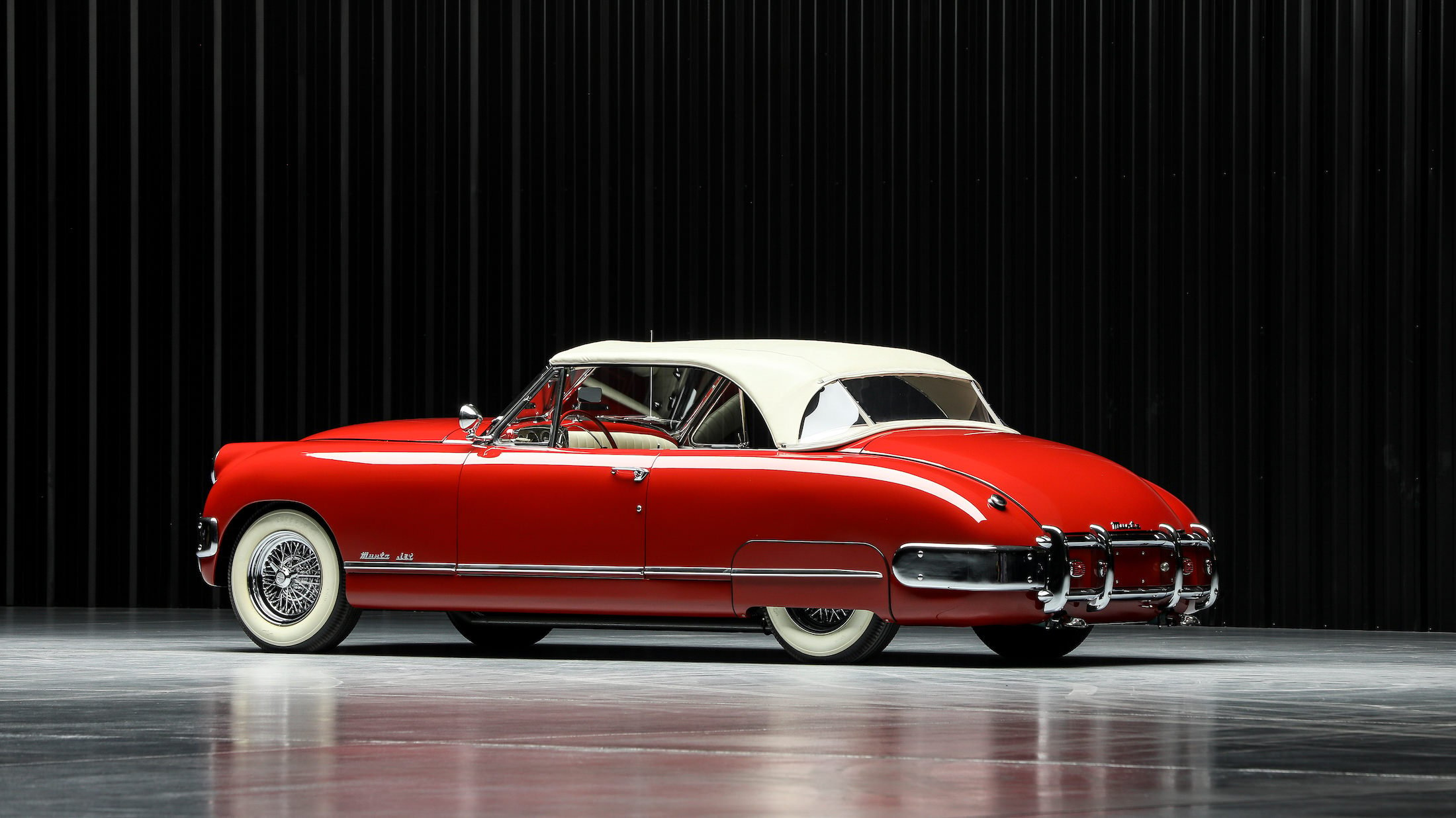
The car you see here is a 1952 Muntz Jet that was discovered in the back of a barn in New Castle, Pennsylvania. The man who discovered it wasn’t even there looking for a Jet, he had been planning to inspect a Lincoln Zephyr, but he left with all the Muntz Jet parts on a trailer after striking a deal.

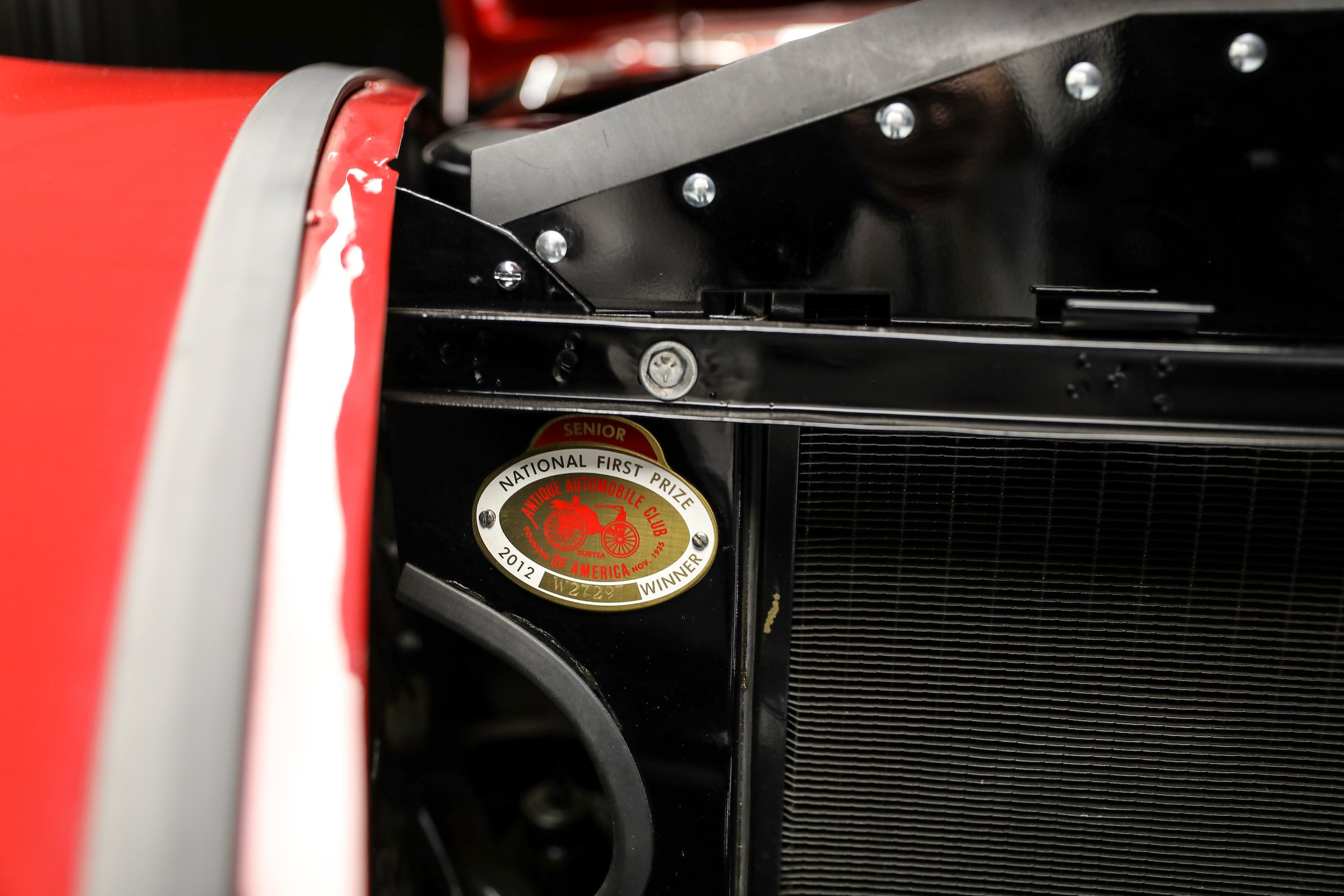
The car kept its original chassis, engine, and gearbox. Many of the body panels had rusted significantly and needed a lot of work, but the car eventually came back together and was finished in the original color of Colorado Red over a Snow White vinyl interior.

The car is now due to roll across the auction block with Worldwide Auctioneers in late April in Auburn, Indiana. The car is being offered with no reserve and you can click here if you’d like to read more about it or register to bid.

Muntz Jet Car 1 Muntz Jet Car 21 Muntz Jet Car 20 Muntz Jet Car 18 Muntz Jet Car 17 Muntz Jet Car 16 Muntz Jet Car 15 Muntz Jet Car 14 Muntz Jet Car 13 Muntz Jet Car 11 Muntz Jet Car 9 Muntz Jet Car 8 Muntz Jet Car 10 Muntz Jet Car 7 Muntz Jet Car 6 Muntz Jet Car 5 Muntz Jet Car 3 Muntz Jet Car 2

Images courtesy of Worldwide Auctioneers

Muntz Jet Car

The post The Unusual Muntz Jet: 1 Of 198 Made appeared first on Silodrome.


from Silodrome https://silodrome.com/muntz-jet-car/
via gqrds
Full Documentary – Fiero: A Car is Born

Fiero: A Car is Born is a film from 1984 about the development, testing, and construction of the first Pontiac Fiero – a mid-engined American sports car that today enjoys a cult following in the United States.

This film offers unique insight into the Pontiac Fiero including period interviews with project manager Hulki Aldikacti, a number of the project’s engineers, and some of the people who worked on the production line actually building the final car.

Given the fact that this film was paid for by Pontiac and used for promotional purposes it can be a little fawning in places, it was actually originally released as a laser disc in the 1980s that dealerships would play on the showroom floor.

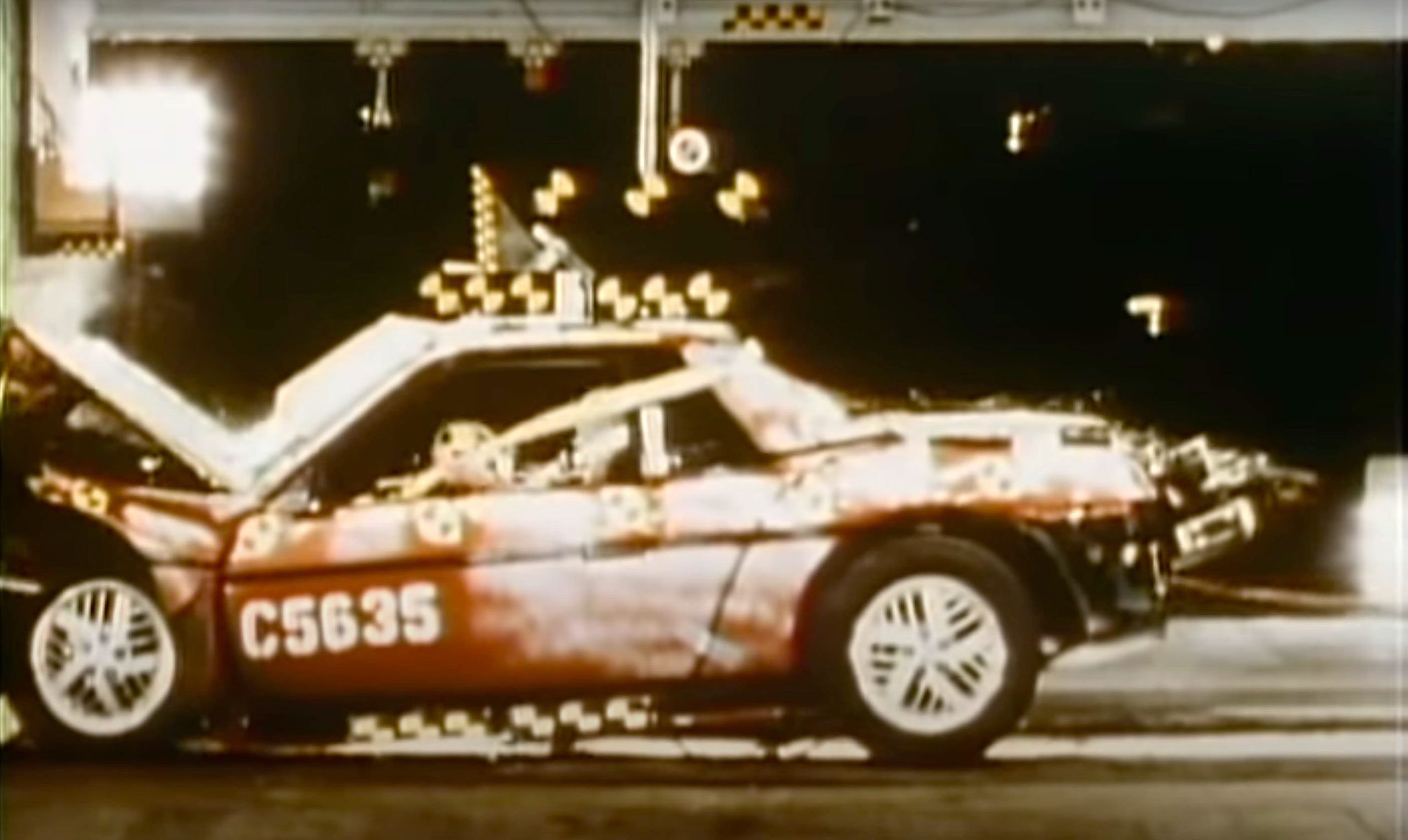
Pontiac Fiero Crash Test

The film includes a slew of behind the scenes footage, including scenes from the crash testing program.

The Pontiac Fiero remains a somewhat controversial car, it was originally developed as an economical and sporty commuting car with two-seats – partially as an answer to the market’s changing demands after the 1973 Oil Crisis.

Historically the Fiero remains significant, it was the first two-seater Pontiac since the 1930s and the first mass-produced mid-engine sports car by an American manufacturer. Cars of this type almost always came from Europe, typically from Italy or Britain.

General Motors would keep the Fiero in production for just five years, selling over 370,000 of them between 1984 and 1988. For a sports car these are good sales figures, by way of an example Toyota sold just 163,000 MR2s in its first five years.

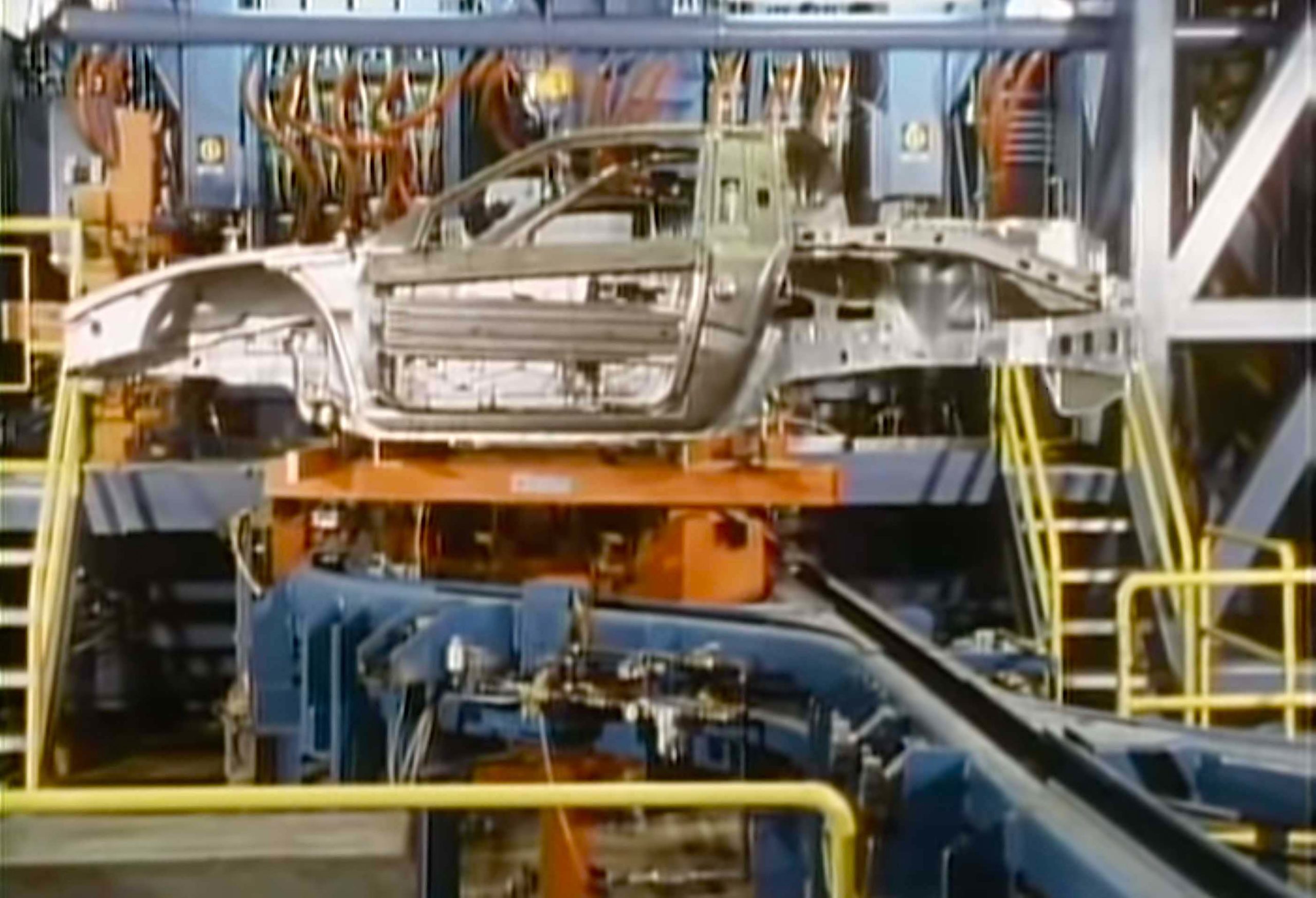
Pontiac Fiero Factory

The Fiero has a unibody spaceframe and it relied on composite outer body panels to help keep weight down and reduce future rust issues.

Today, decades after it left production, the Fiero has become a cult classic. For many years it was the unloved Pontiac step child and many were scrapped or turned into low-budget Ferrari replicas. For many, the small, lightweight nature of the Fiero combined with its unusual styling and sports car handling make it an ideal retro classic.

The shortcomings that the Fiero had, engine reliability and handling issues, have largely been addressed and the aftermarket has developed a slew of upgrades and performance parts for the model.

Pricing now varies from under $9,000 up to over $20,000 USD depending on year, mileage, and condition – with the 1988 manual V6 cars typically commanding the highest prices.

If you’d like to see the Fieros currently for sale on Hemmings you can click here, and if you’d like to read more about the history of the car you can click here.

Full Documentary – Fiero A Car is Born Pontiac Fiero Crash Test

The post Full Documentary – Fiero: A Car is Born appeared first on Silodrome.


from Silodrome https://silodrome.com/fiero-a-car-is-born-film/
via gqrds
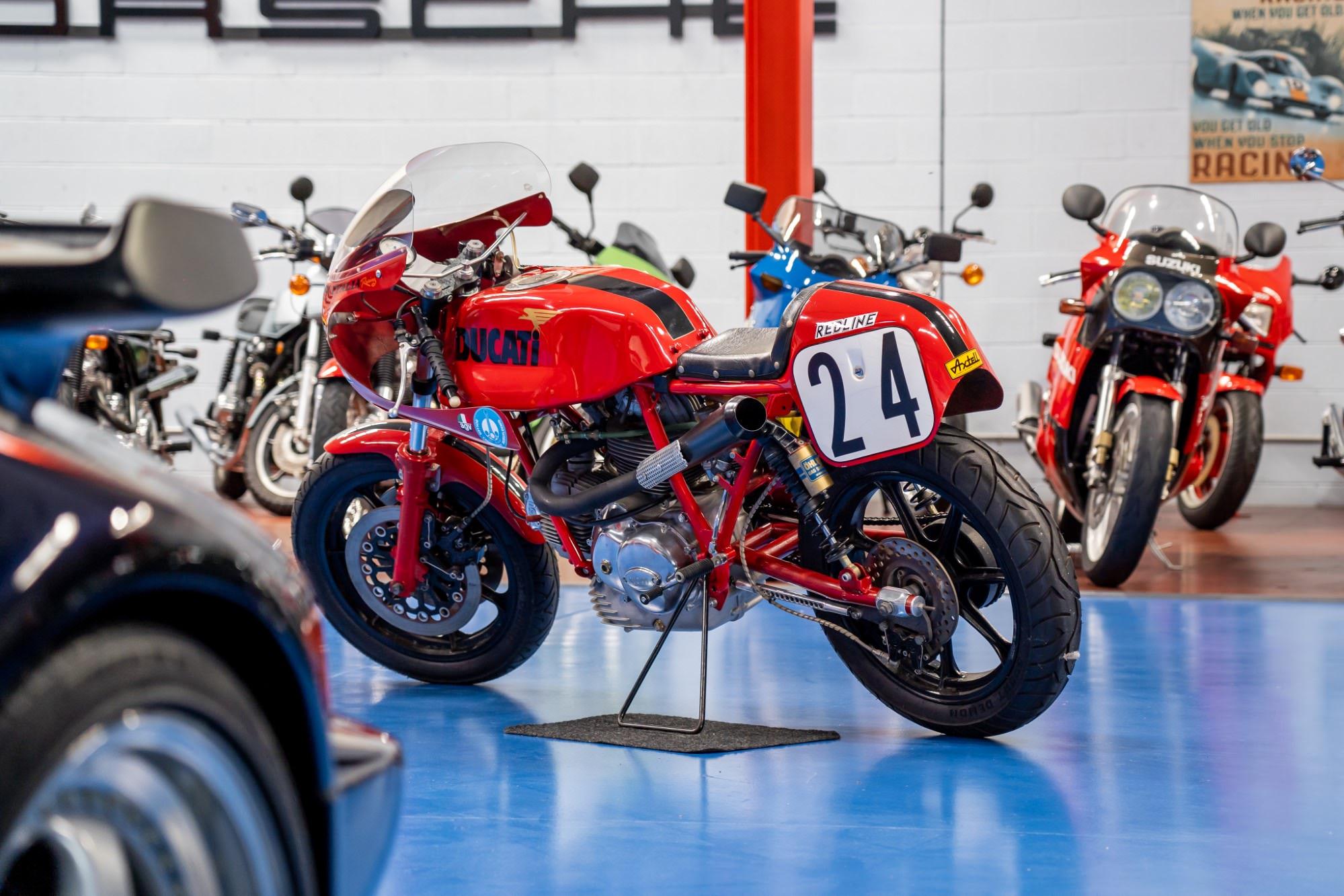
The Ducati 750SS: The Superbike That Saved Ducati

This Ducati 750SS, or 750 Super Sport, is a rare breed. Just 401 were made in 1974, the first year of production, as road-legal replicas of the bikes that took first and second place at the 1972 Imola 200 with Paul Smart and Bruno Spaggiari behind the dials.

To say that the 1-2 finish at the Imola 200 saved Ducati is almost undeniable. It made the Ducati 740 one of the most desirable superbikes in the world, and gave the Italian motorcycle manufacturer a fighting chance against the onslaught of Japanese competition.

Fast Facts – The Ducati 750SS “Super Sport”

  • During the late 1960s and early 1970s Ducati was a company attempting to recreate itself to better compete on the global stage. Fortunately for them, they had hired Italian engineer Fabio Taglioni who would almost single-handedly turn the company around with a new motorcycle design in 1972.
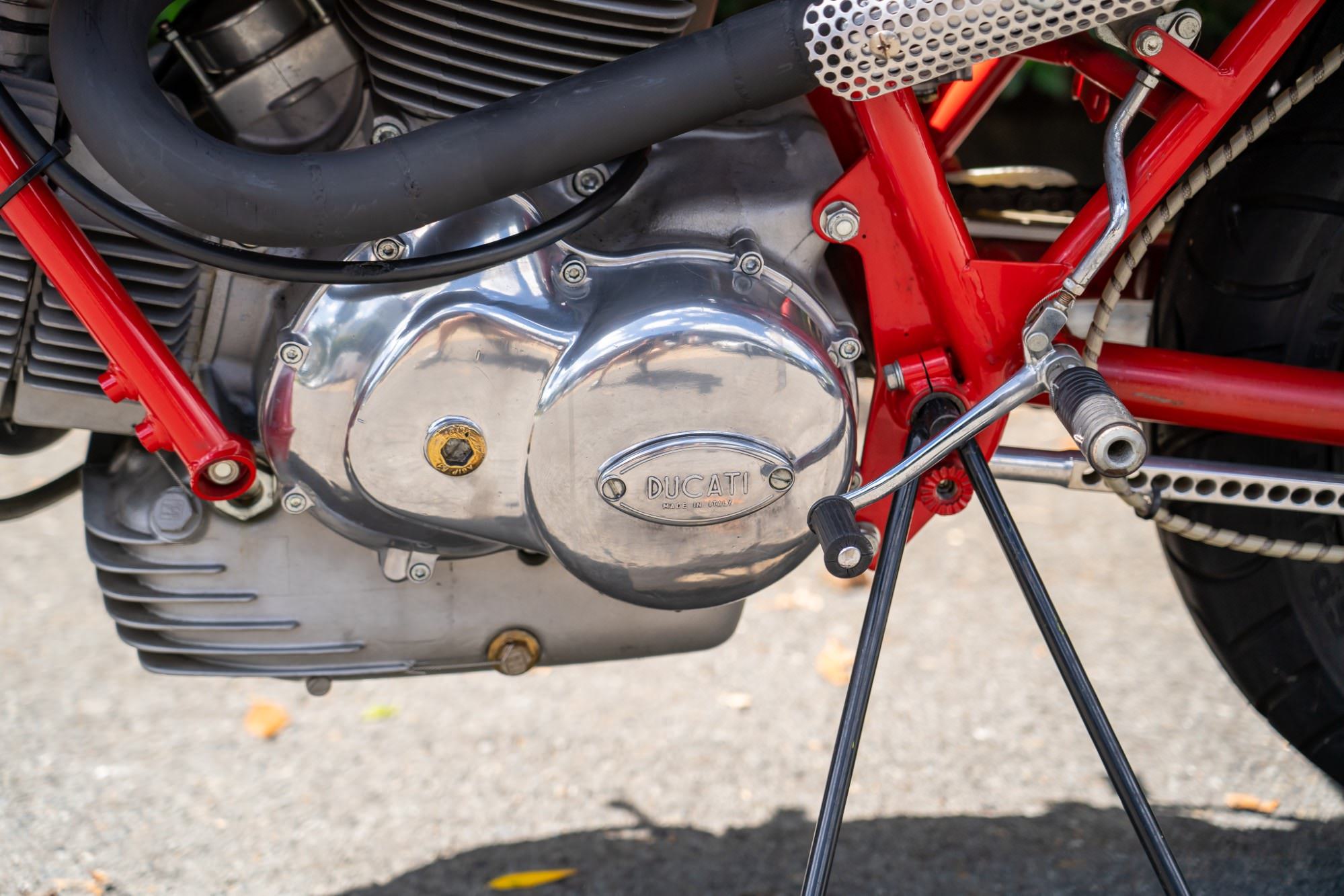
  • Taglioni’s now legendary design included a new 90º L-twin engine with a single overhead cam per cylinder, a desmodromic valve train, a displacement of 748cc, 72 bhp at 9,500 rpm, and 5-speed gearbox.
  • This new engine had its work cut out for it, it was set to compete with superbikes from MV Agusta, BSA, Norton, Yamaha, Kawasaki, Triumph, and Suzuki.
  • In 1972 at the Imola 200 Ducati shocked the motorcycle world when Paul Smart and Bruno Spaggiari took a dominant 1-2 victory on their Ducati 750 GTs. In late 1973 the road-legal Ducati 750SS was shown to the world and sales began in 1974 – just 401 were made that year.

Ducati – From Radios To The Cucciolo

It isn’t widely known that Ducati started out in 1926 making vacuum tubes, condensers, and other radio parts.

Ducati 750SS Super Sport. 5

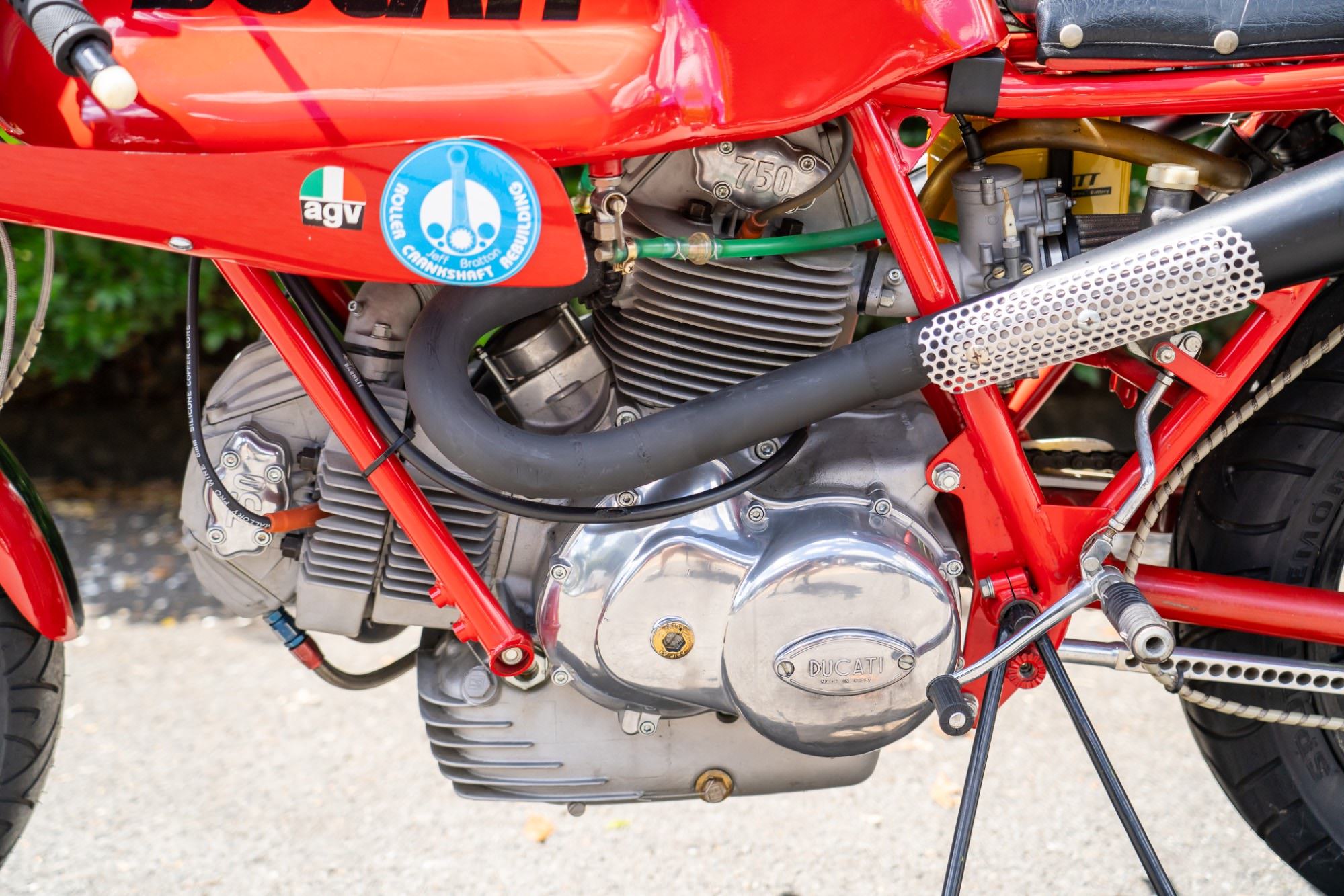
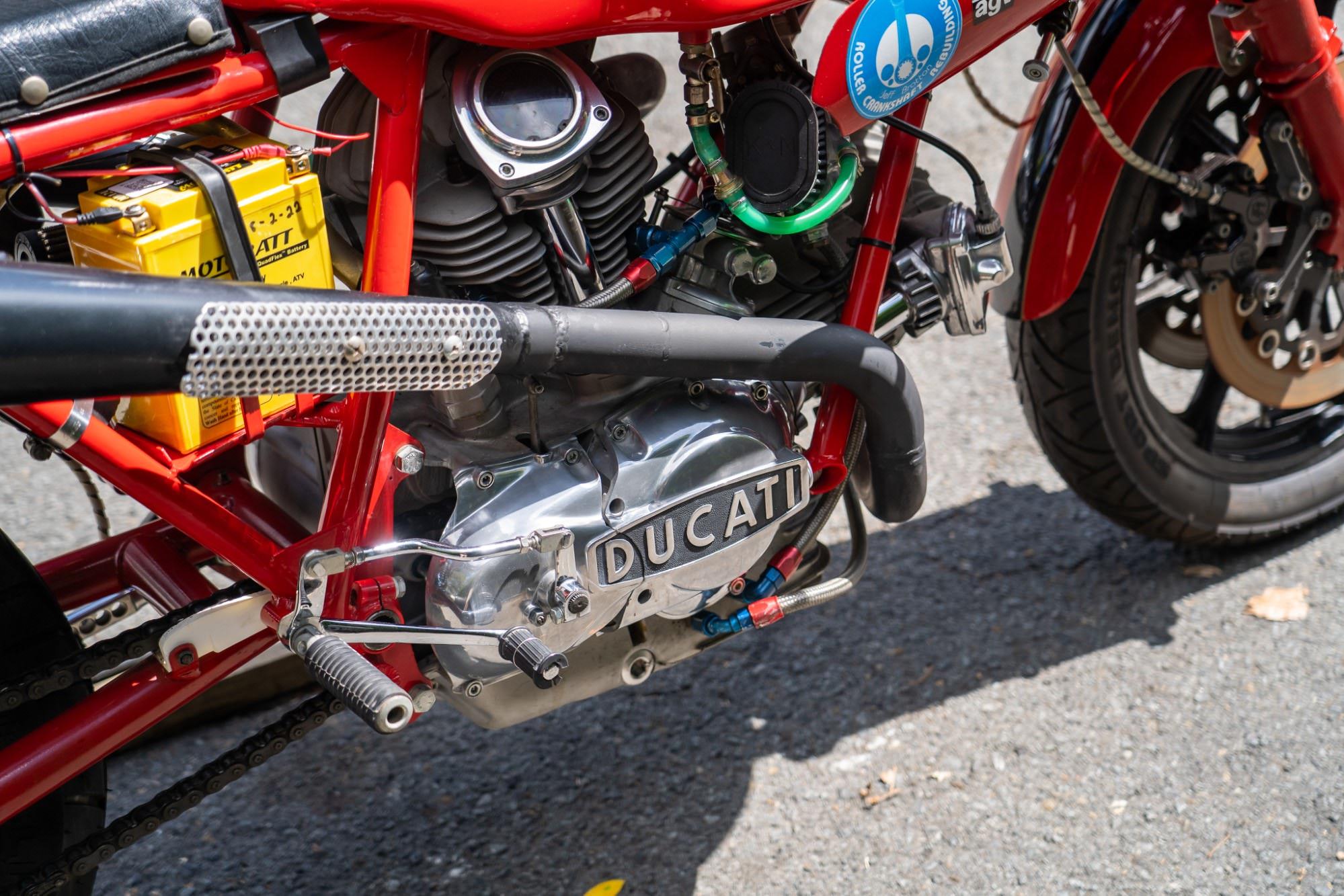
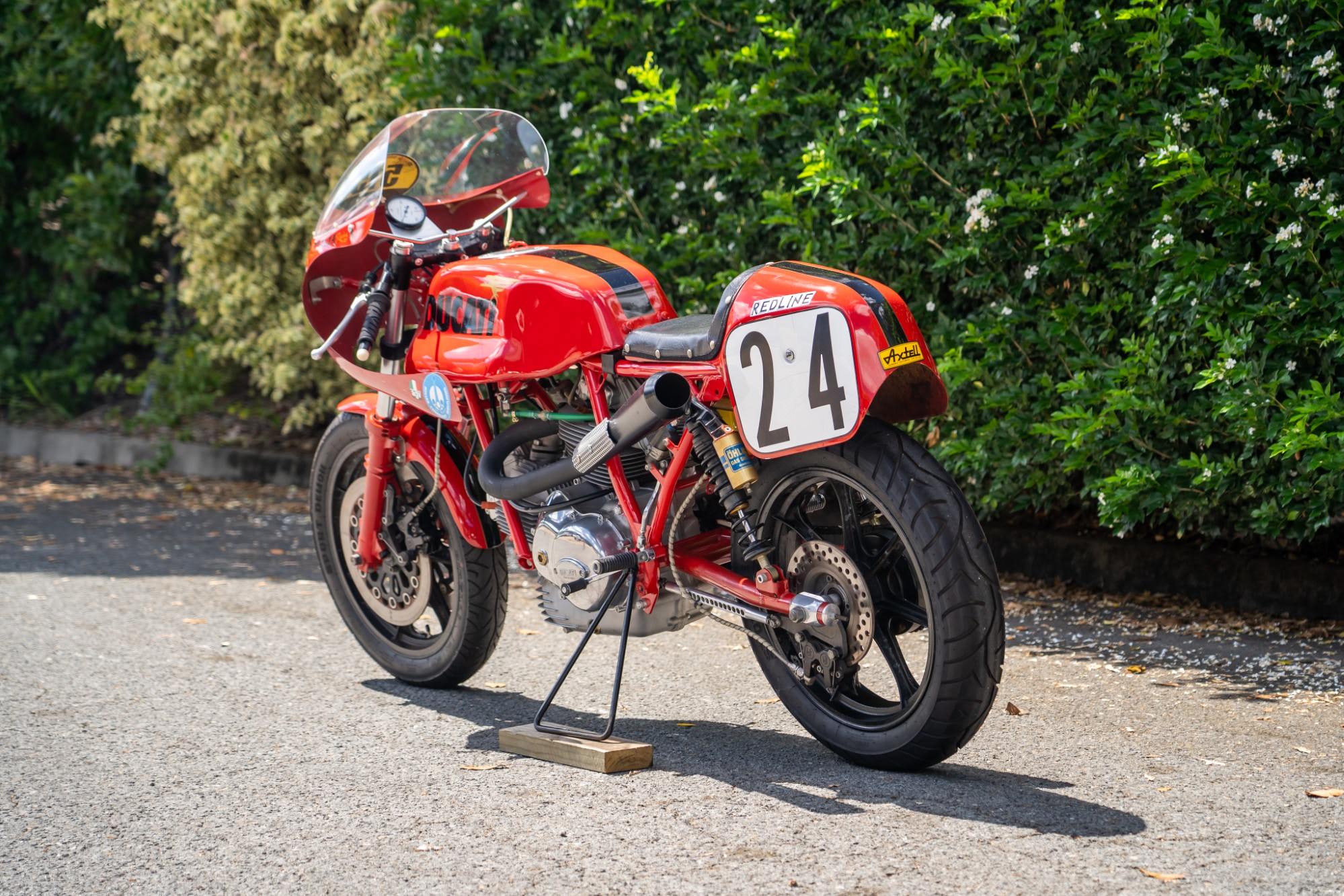
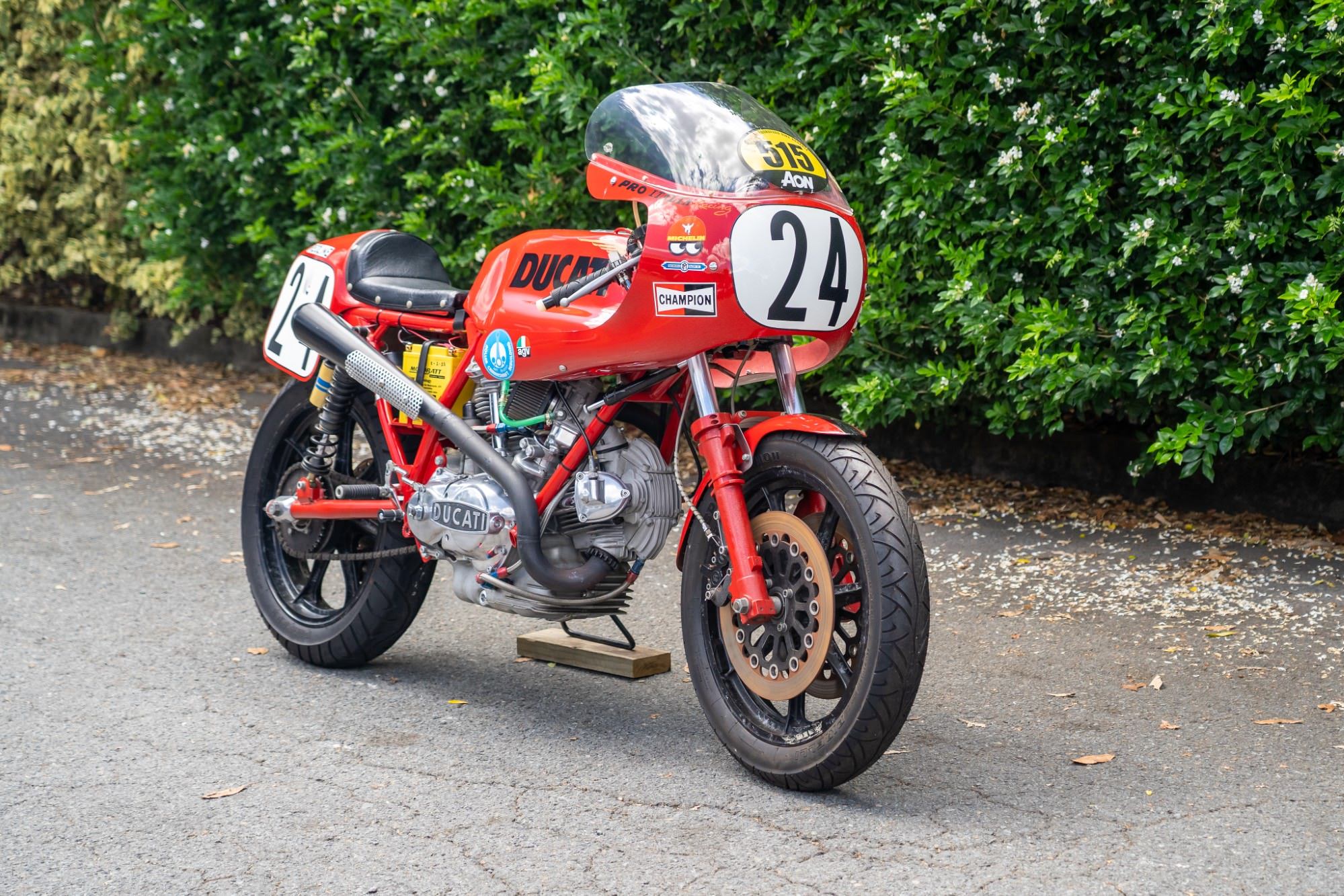
This 750SS was modified in-period with a slew of go-faster parts. It now produces 90 hp at the rear wheel, significantly more than the 72 bhp of the original.

During WWII the company was frequently targeted by Allied bombers due to the importance of radio communications on the battlefield, and the fact that Ducati was supplying many of the critical components for Italian radio manufacturing.

No one knew it at the time of course, but less than 30 years later the Allied nations would still be fighting with Ducati, though this time on the race tracks of Europe and North America.

Five years after the war had ended Ducati would release their first motorcycle. Companies were springing up across Italy and the rest of Europe offering cheap scooters, small motorcycles, and small cars.

Demand for motorized transportation was high but European economies were struggling, so it was the smaller, cheaper, and more fuel efficient motorcycles that tended to sell in the highest numbers.

Ducati’s first motorcycle was the Cucciolo, it was essentially a motorized bicycle with a bought-in 48cc “Cucciolo” engine – the Italian word for “cub” or “puppy.”

Ducati 750SS Super Sport. 4

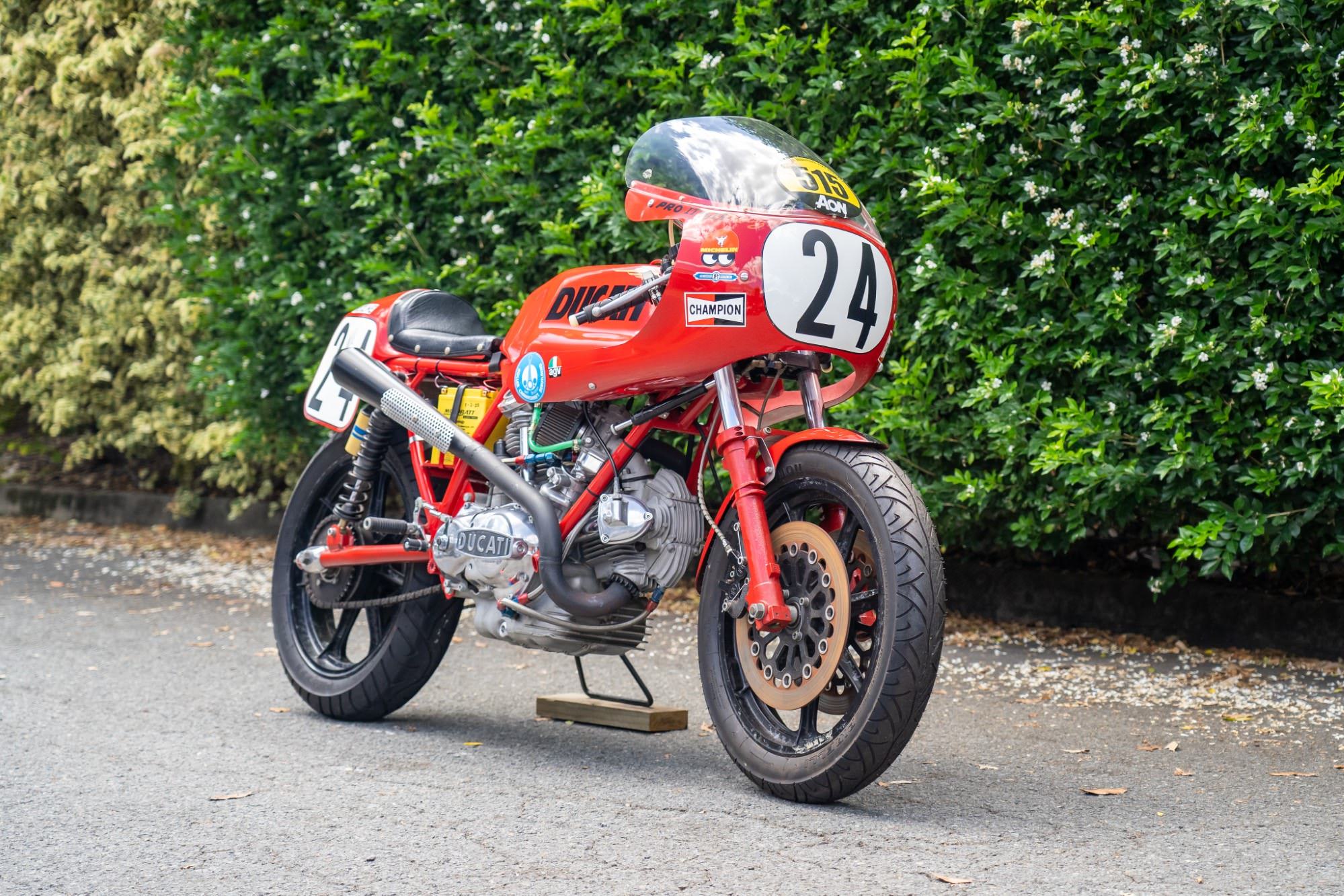
This Ducati was ridden to wins by Tony Guest at Road America and in the Daytona BOTT Amateur Modified class.

Over the coming years Ducati would develop their own engines in-house, and release larger and more complex motorcycles.

The Ill-Fated Apollo And A New “L-Twin”

By the early 1960s they were working on a Fabio Taglioni-designed 1200cc V4-engined motorcycle with over 100 bhp. It was going to be called the Ducati Apollo but tragically the project was cancelled after just a few prototypes had been made.

Rising from the ashes of the Apollo project was a new Fabio Taglioni design, it used some of the design concepts from the V4 but instead used a narrower V-twin design.

Ducati would call this engine layout the “L-twin” to because the engine has a 90º V-angle – also because they wanted to differentiate themselves from the American V-twins from across the Atlantic.

Unusually for V-twin designs at the time, this new Ducati engine used a desmodromic valvetrain – no springs were needed to close valves as both the opening and closing of both valves is controlled by the cam directly.

This does add a certain amount of complexity to the engine, it was chosen due to the fact that metallurgy was less advanced then than it is today.

Ducati 750SS Super Sport. 15

Ducati call this 90º V-twin engine design an L-twin, to help differentiate it from the narrower and more well-known American V-wins.

Getting small motorcycle valve springs that could handle a redline in excess of 9,000 rpm reliably was a genuine challenge – the use of a desmodromic system eliminated the issue all together.

The Ducati 750SS “Super Sport”

After Paul Smart and Bruno Spaggiari’s now legendary 1-2 finish at the 1972 Imola 200 Ducati was inundated with demand for a road-legal version of the race bike. Work was already underway in 1972 and by late 1973 the production-ready design was shown to the world at the Milan Motor Show.

Ducati wasn’t a particularly large motorcycle manufacturer at the time and so they struggled to build the bike in numbers that would even come close to satiating demand. It’s believed that just 401 were made for 1974, the design changing significantly from 1975 onwards.

Fabio Taglioni’s design for the 750SS was every bit as clever as his earlier design for the Imola 200-winning race bikes.

It featured a tubular steel frame that used the engine as a stressed member, the engine was oriented with the forward cylinder almost vertical to the ground as it helped provide better cooling for the rear cylinder and it lowered the center of gravity.

This 748cc L-twin engine has a single overhead cam per cylinder operating two valves, as a desmodromic system the cam has lobes and rocker arms for both opening and closing the valves, removing the need for springs.

Ducati 750SS Super Sport. 11

The 1974 750 Super Sport is known as the “Round Case.” A new version appeared in 1975 with a “Square Case” design and a slew of other changes – the earlier Round Case bikes are more highly sought after by collectors.

This engine is of unit construction with a 5-speed gearbox included. Power was rated at 72 bhp at 9,500 rpm and the top speed was listed as 220 km/h (137 mph).

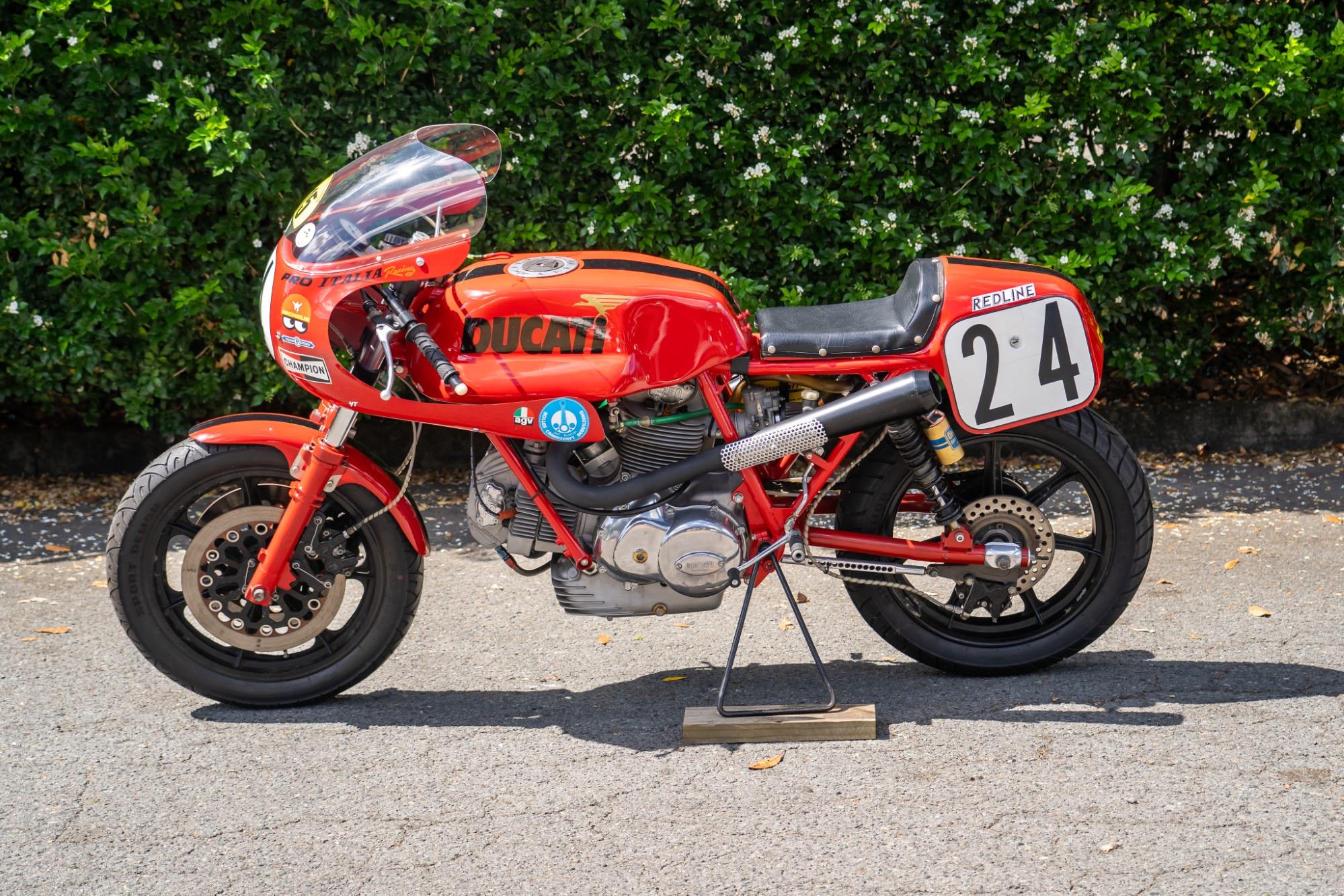
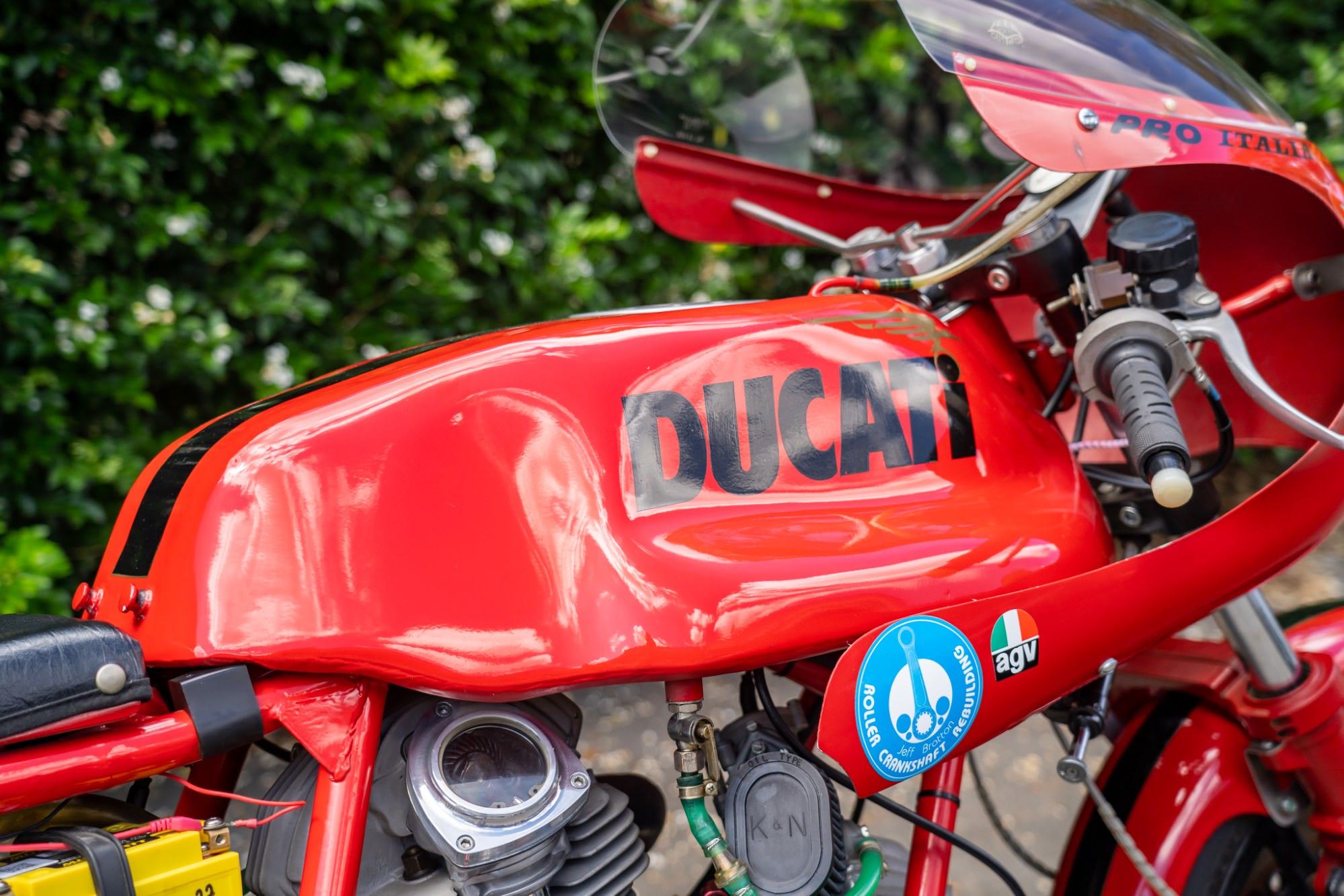
Unusually for the time the 750SS featured twin front disc brakes and a single rear disc, together offering exceptional stopping power by the standards of the era. A distinctive fuel tank design similar to the Imola bikes was used, along with a half faring, and a single seat with a small rear cowl.
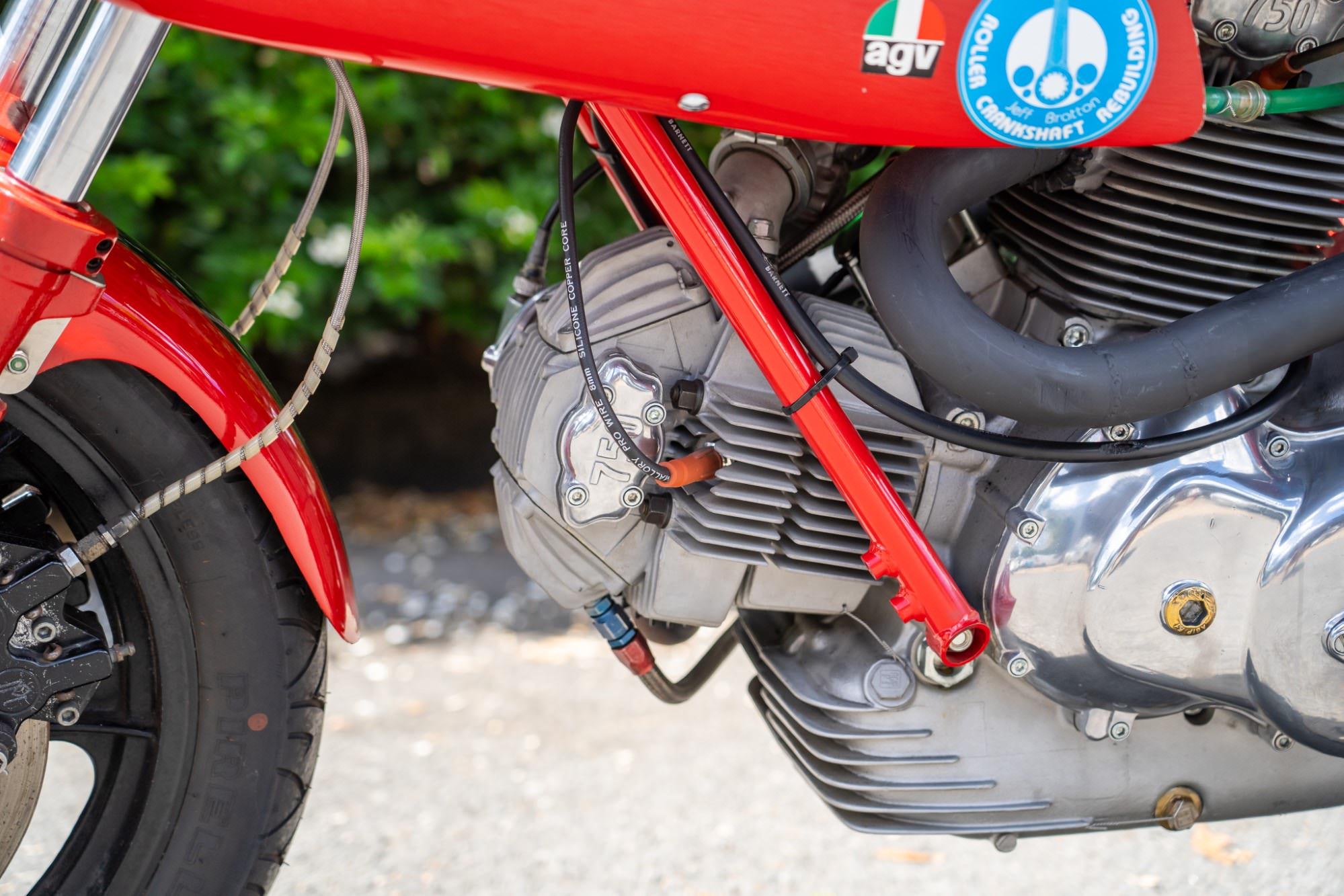
The Ducati 750SS was so close to the race bikes that many modified them for competition and won races on them. The fact they could also be ridden on the road made them all the more appealing.

The 1974 Ducati Super Sport Shown Here

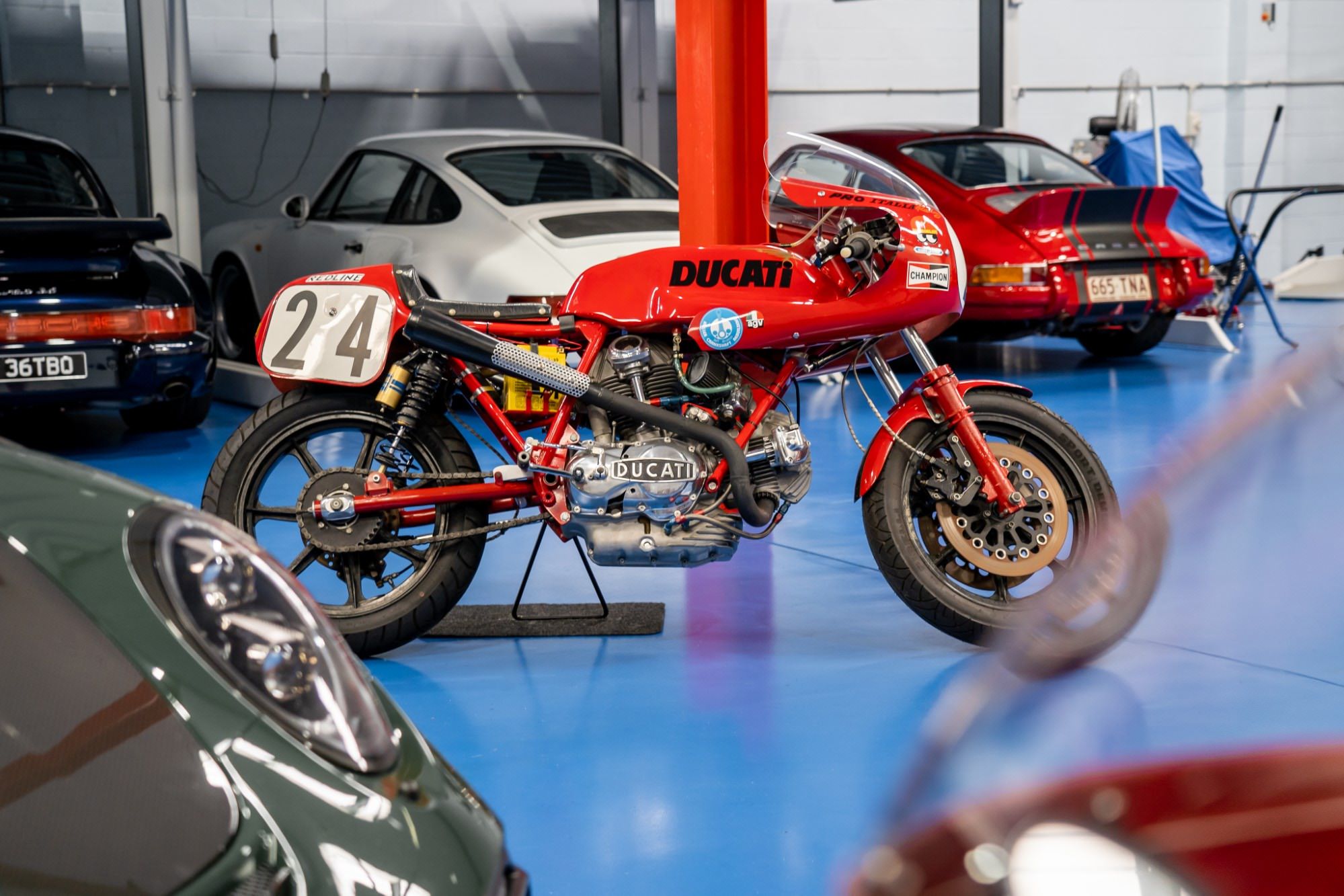
The bike you see here is one of those examples that was modified for racing in period. It was remarkably successful too, competing in the AMA “Battle of the Twins” (BOTT) during the 1970s and 1980s claiming a number of victories in the process.

Rider Tony Guest rode this machine to wins at Road America and in the Daytona BOTT Amateur Modified class. It was later purchased by Jerry Roman, going on to win several Concours events.

This bike was modified in-period by the Woods Motor Shop, it has a 905cc big-bore conversion, an 11.5:1 compression ratio, modified 40mm Dellorto carburetors, Imola high-lift cams, cylinder heads ported by C.R. Axtell, and a total output of 90 hp at the rear wheel.

If you’d like to read more about it or register to bid you can click here to visit the listing on Collecting Cars.

Ducati 750SS Super Sport Ducati 750SS Super Sport. 18 Ducati 750SS Super Sport. 17 Ducati 750SS Super Sport. 16 Ducati 750SS Super Sport. 14 Ducati 750SS Super Sport. 13 Ducati 750SS Super Sport. 12 Ducati 750SS Super Sport. 10 Ducati 750SS Super Sport. 7 Ducati 750SS Super Sport. 3 Ducati 750SS Super Sport. 2 Ducati 750SS Super Sport. 1

Images courtesy of Collecting Cars

Ducati 750SS Super Sport. 6

The post The Ducati 750SS: The Superbike That Saved Ducati appeared first on Silodrome.


from Silodrome https://silodrome.com/ducati-750ss-motorcycle/
via gqrds