A Custom Land Rover Defender With A Factory-Fitted 3.5 Liter V8

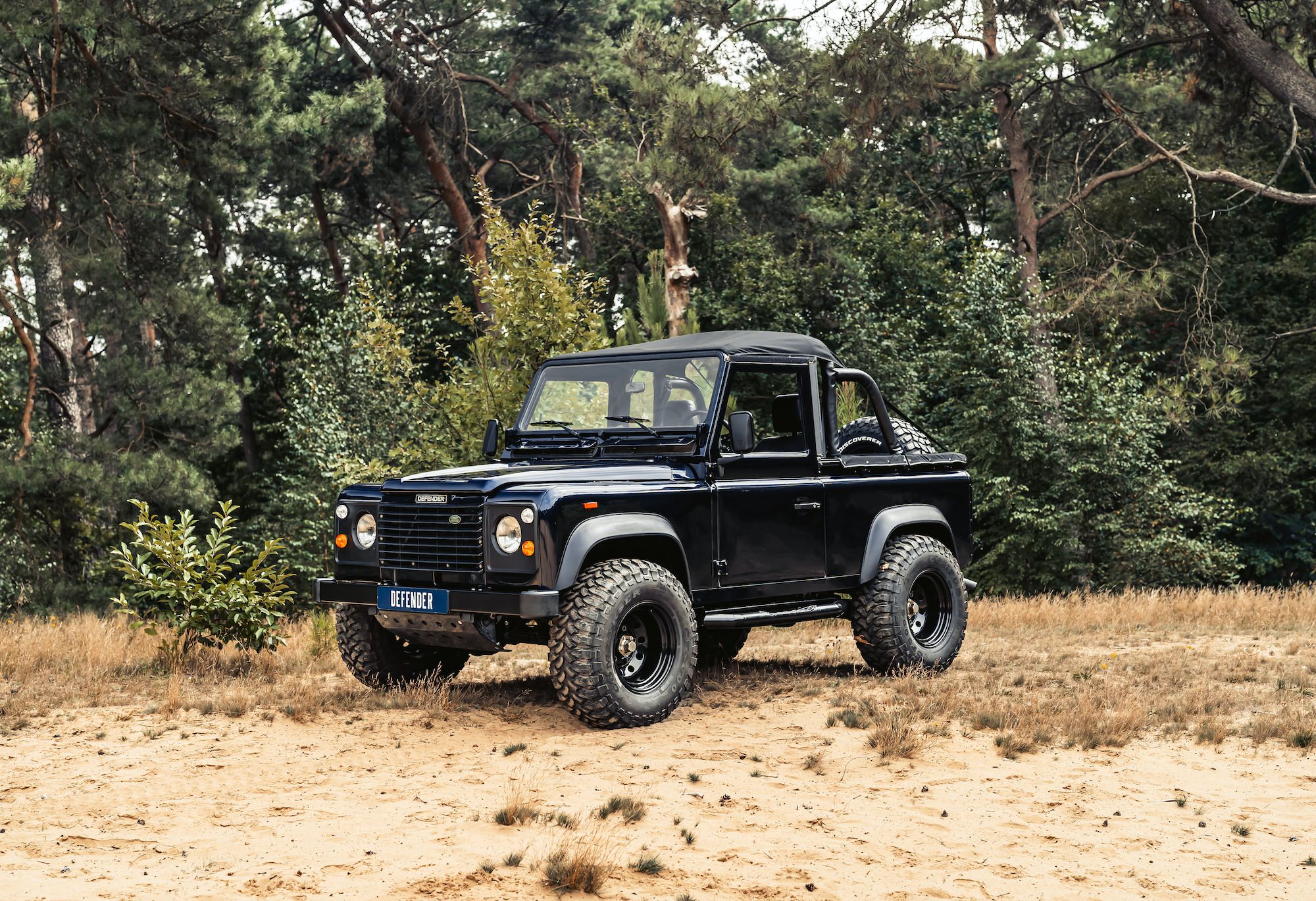
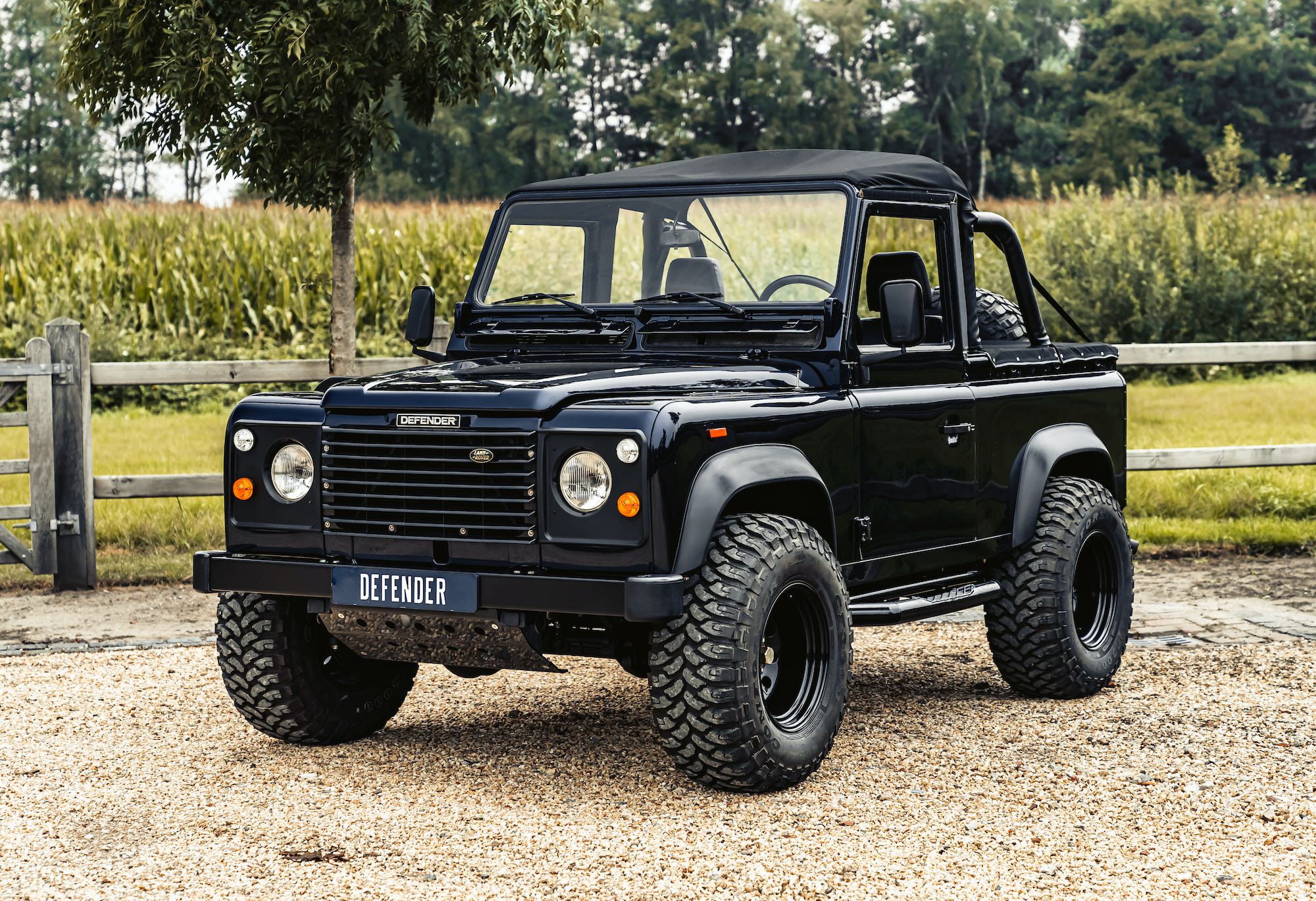
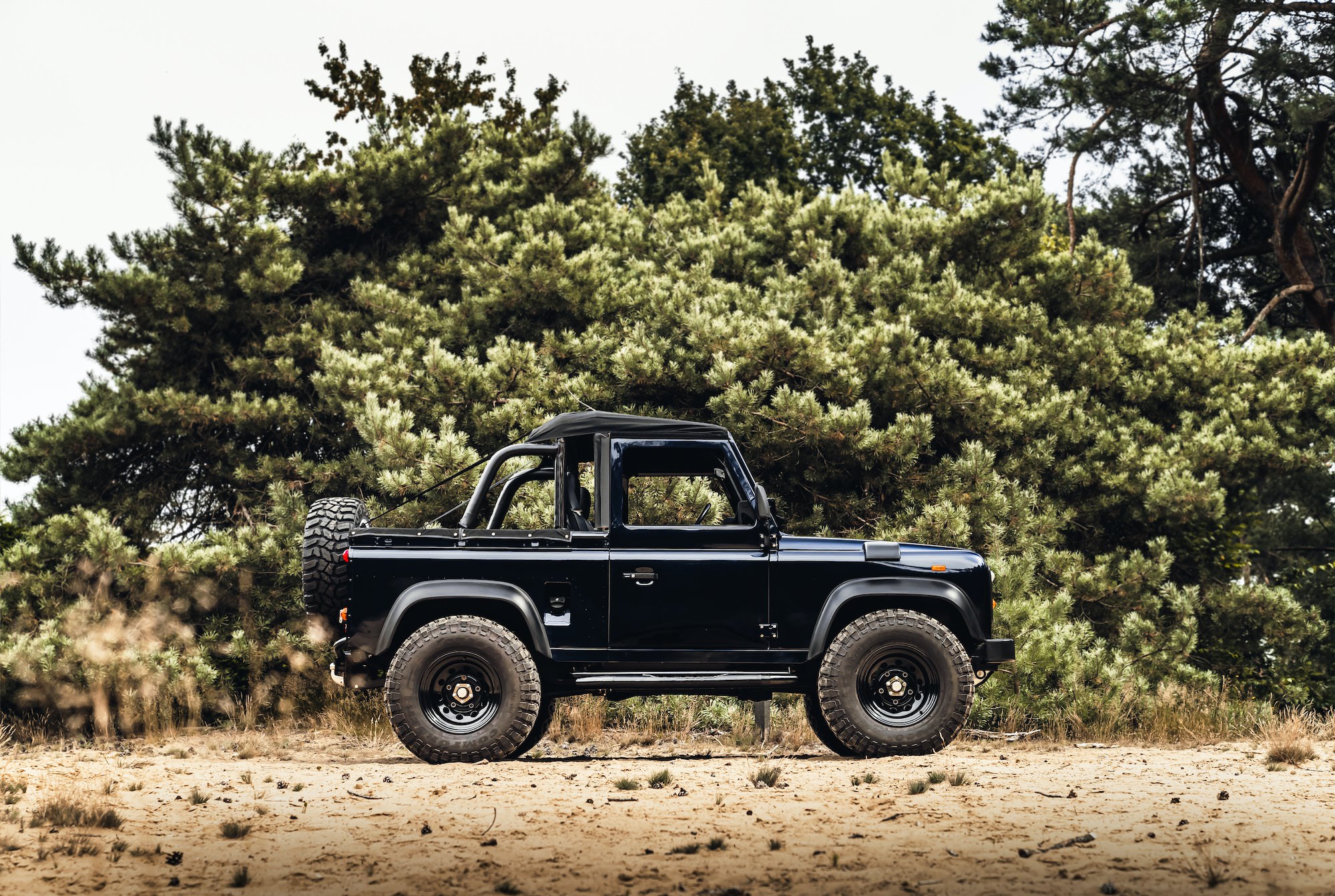
This is a 1989 Land Rover Defender that was fitted with a 3.5 liter over V8 from the factory, it’s not one of those popular aftermarket conversions. It also came from the factory with a soft top fitted, and the desirable 5-speed manual transmission.

The vast majority of Land Rover Defenders that were built were fitted with one of the company’s turbodiesel engines, the 3.5 liter V8s are more rare, and thanks to their considerably higher power output they’re a lot of fun to drive both on road and off.

Fast Facts – A V8 Land Rover Defender

  • The Land Rover Defender first appeared in 1983, though it was originally badged as the “Land Rover One Ten” and the “Land Rover Ninety.” After the release of the Discovery in 1989 Land Rover needed to differentiate their model lines, and so the name Defender was chosen, going into use in 1991.
  • The Defender was a significantly upgraded version of the Series 3 Land Rover that had come before it, with new coil spring suspension instead of leaf springs, permanent four-wheel drive, a more modern interior, a taller windscreen made of a single pane of glass, and more modern engines and transmissions.
  • Releasing a new Land Rover is always challenging, as Land Rover enthusiasts are often life-long owners with strong ideas about what a real Land Rover is. The Defender proved wildly successful, and it remains so today years after production ended.
  • The Land Rover Defender you see here was factory-fitted with the Rover V8. A 3.5 liter petrol engine that has its roots in the 215 cubic inch alloy Buick V8 from the 1960s. It offers excellent power and torque output for its relatively low weight.

The Rover V8 And The Defender

The story of how the Rover V8 came to be is fascinating, it started out as the Buick 215 cubic inch V8 that had originally been released in 1961.
Land Rover Defender V8 13

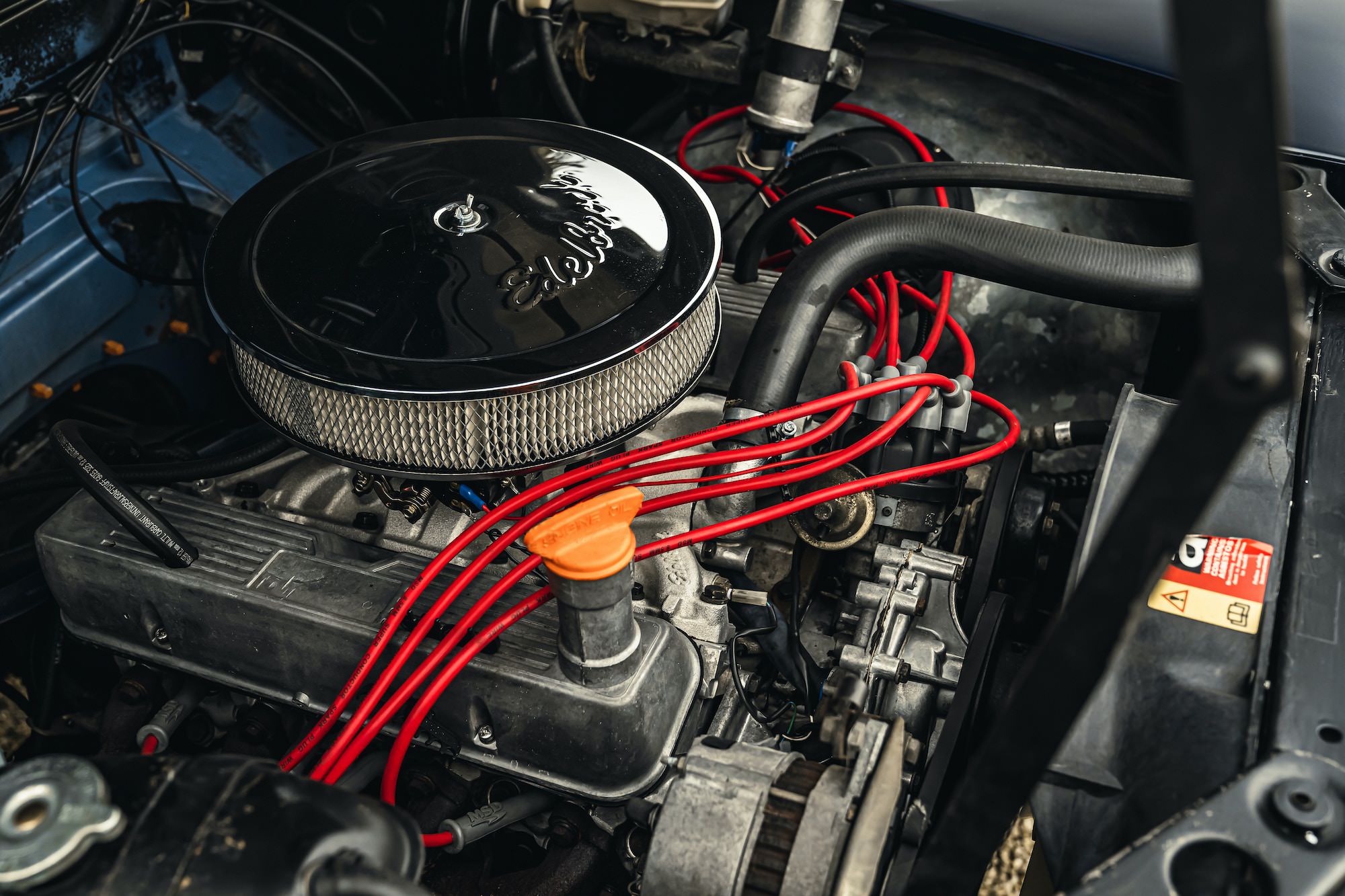
The 3.5 liter Rover V8 has an aluminum-alloy block and heads, making it lighter than many comparable V8s but no less powerful.

It was an unusually small and lightweight V8 thanks to its aluminum-alloy block and heads, and its displacement of 3.5 liters, much smaller than most comparable American V8s.

Interestingly Buick only kept the engine in production until 1963, when it was replaced by a similar engine with an iron block, then later by engines with an iron block and heads.

British automaker Rover was looking for a more powerful engine for upcoming production cars and so a deal was struck with General Motors to buy the tooling and rights to the defunct Buick 215 V8. Rover engineers largely reengineered the engine to make it stronger, then released it in a passenger car in 1967.

They can’t have known it at the time, but the Rover V8 would become one of the most important performance engines in British history. It powered everything from Range Rovers and Land Rovers to race cars and high performance sports cars built by companies like TVR, MG, Morgan, and many others.
Land Rover Defender V8 12

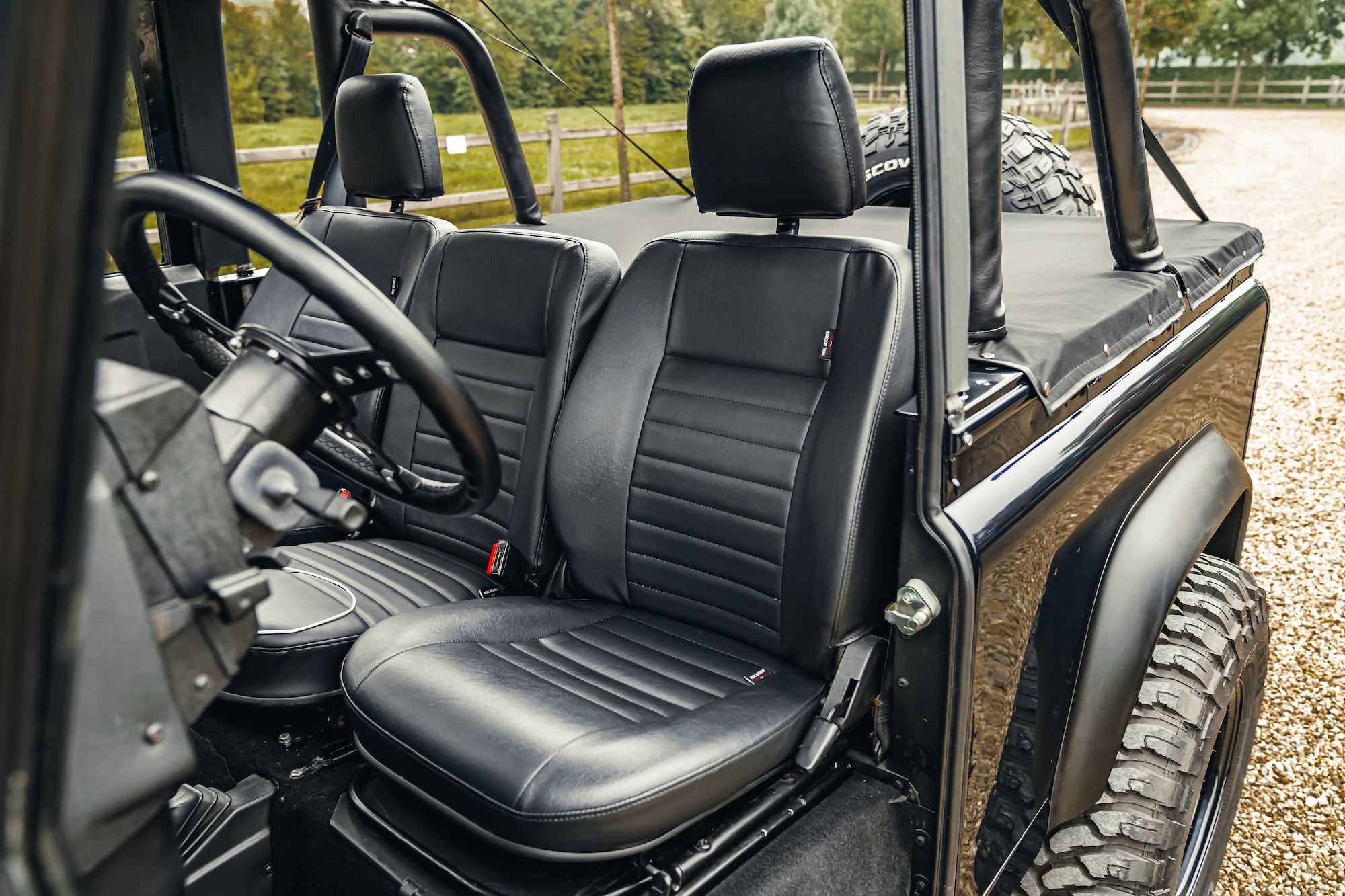
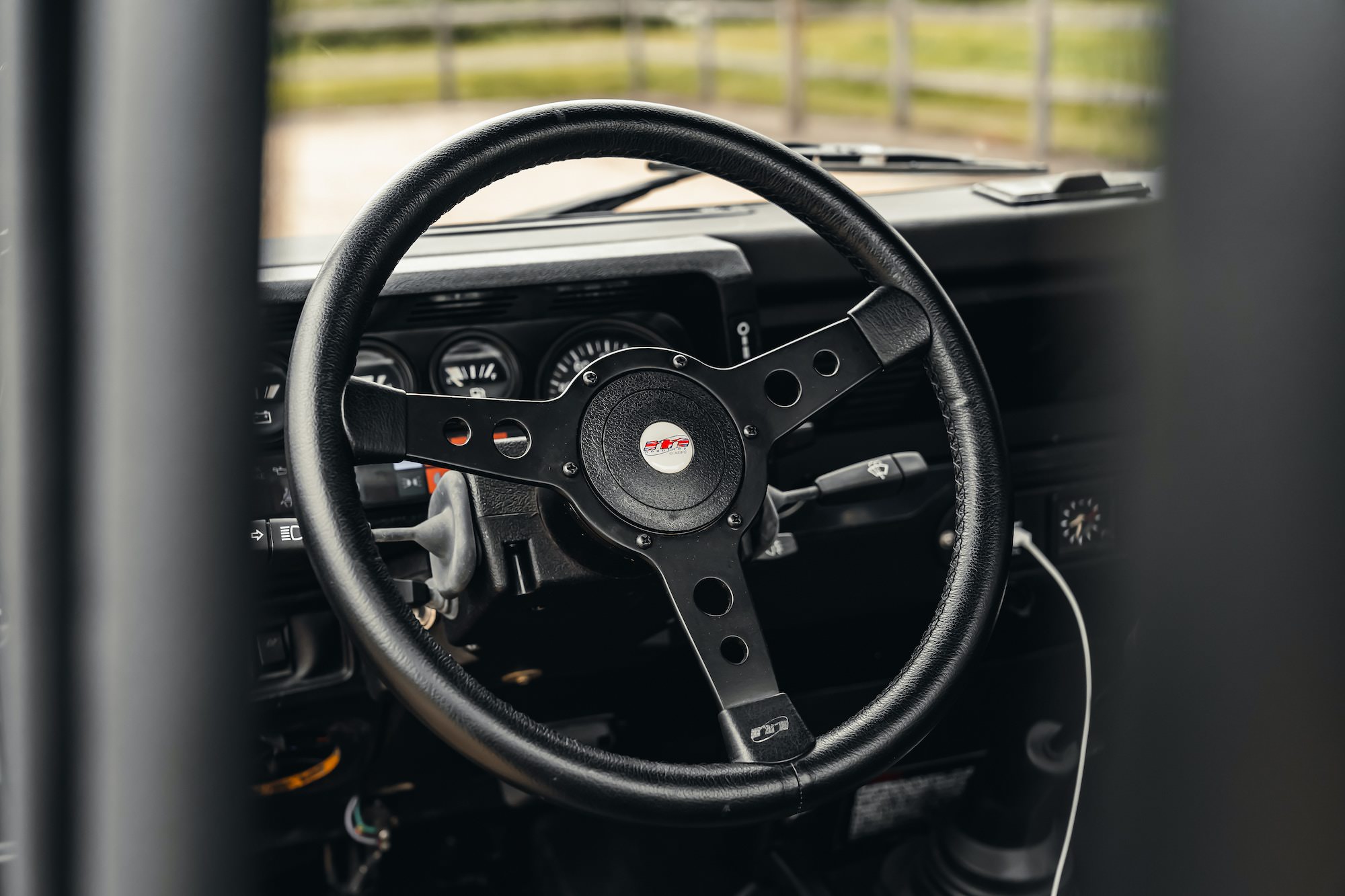
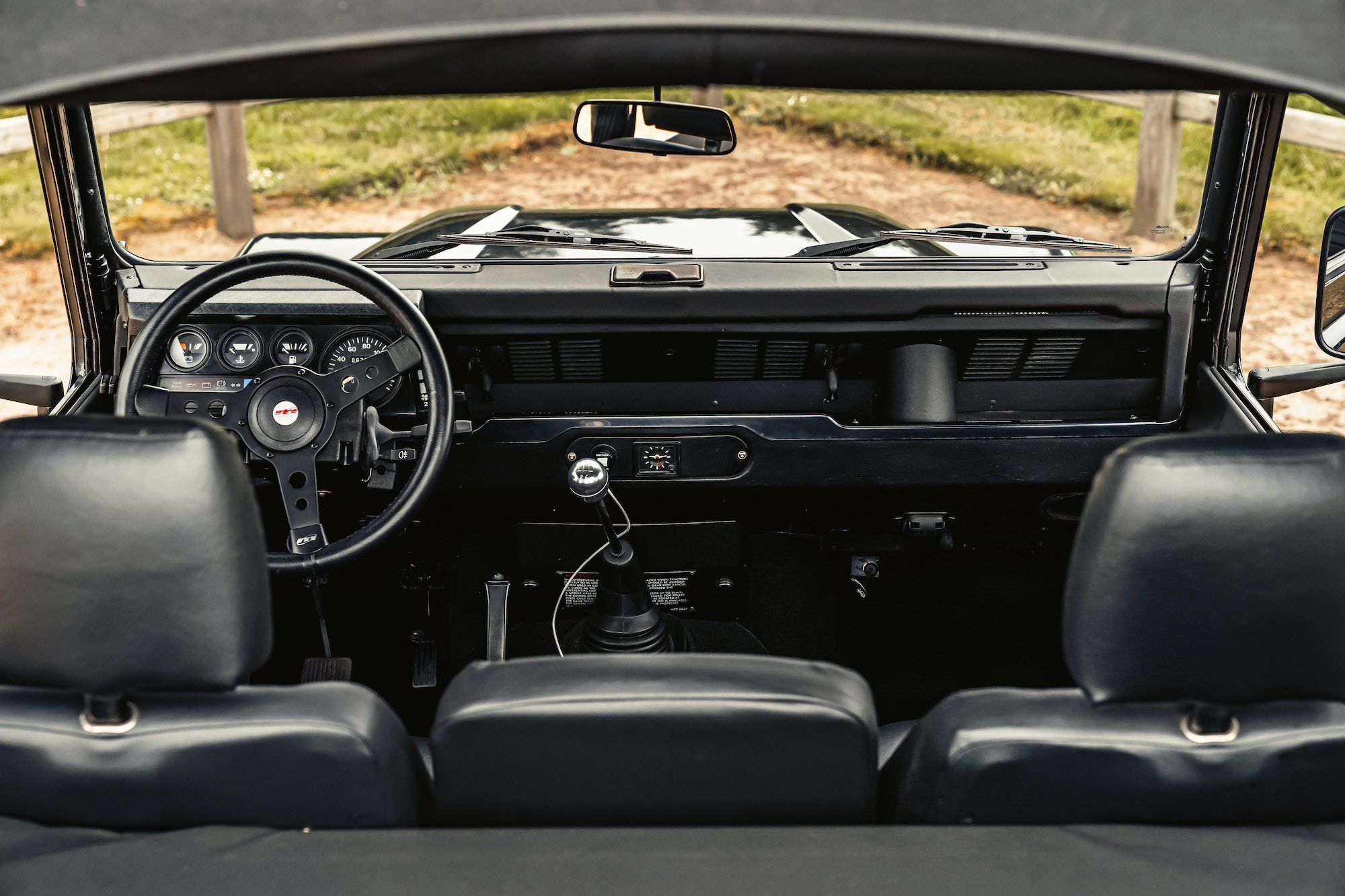
The interior of this Defender now benefits from new black leather Exmoor Trim upholstery, a Mountney Classic steering wheel, and a smart USB output.

The engine’s low weight, good torque characteristics, reliability, and simplicity made it ideal for use in four-wheel drive applications like the Defender – so much so that many aftermarket conversions have been completed over the years. But collectors always tend to prefer factory-built examples.

The 1989 Land Rover Defender V8 Shown Here

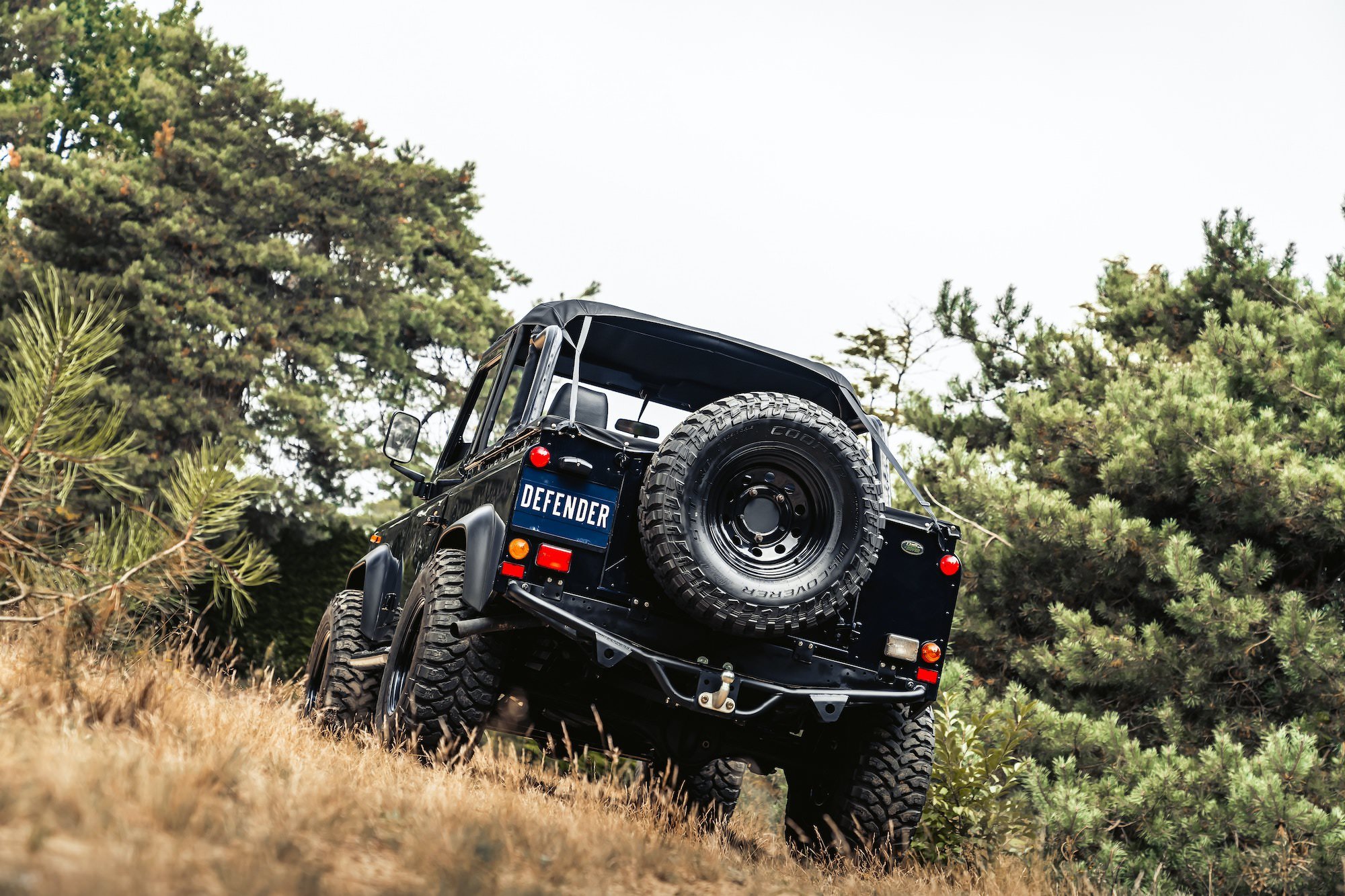
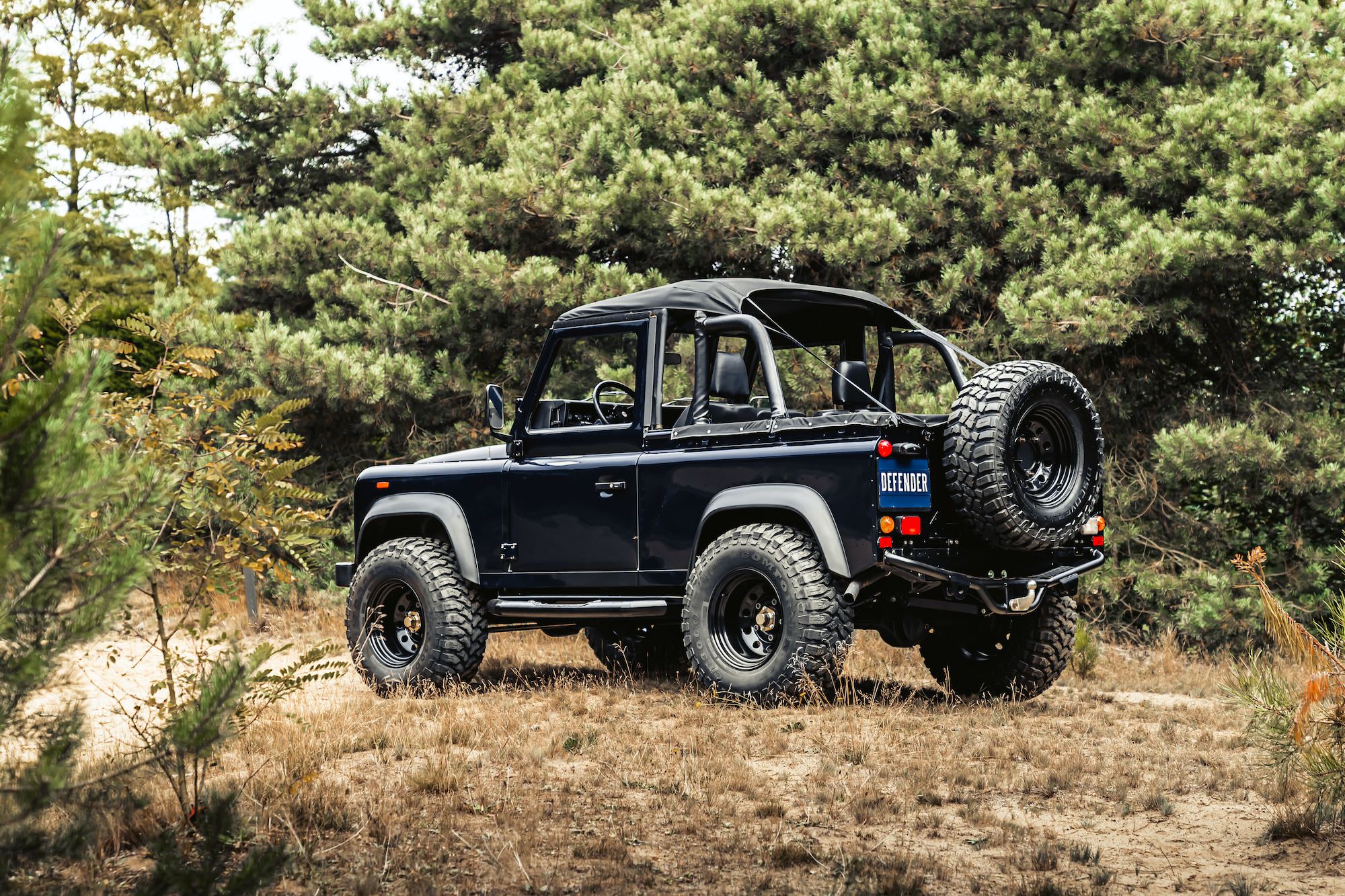
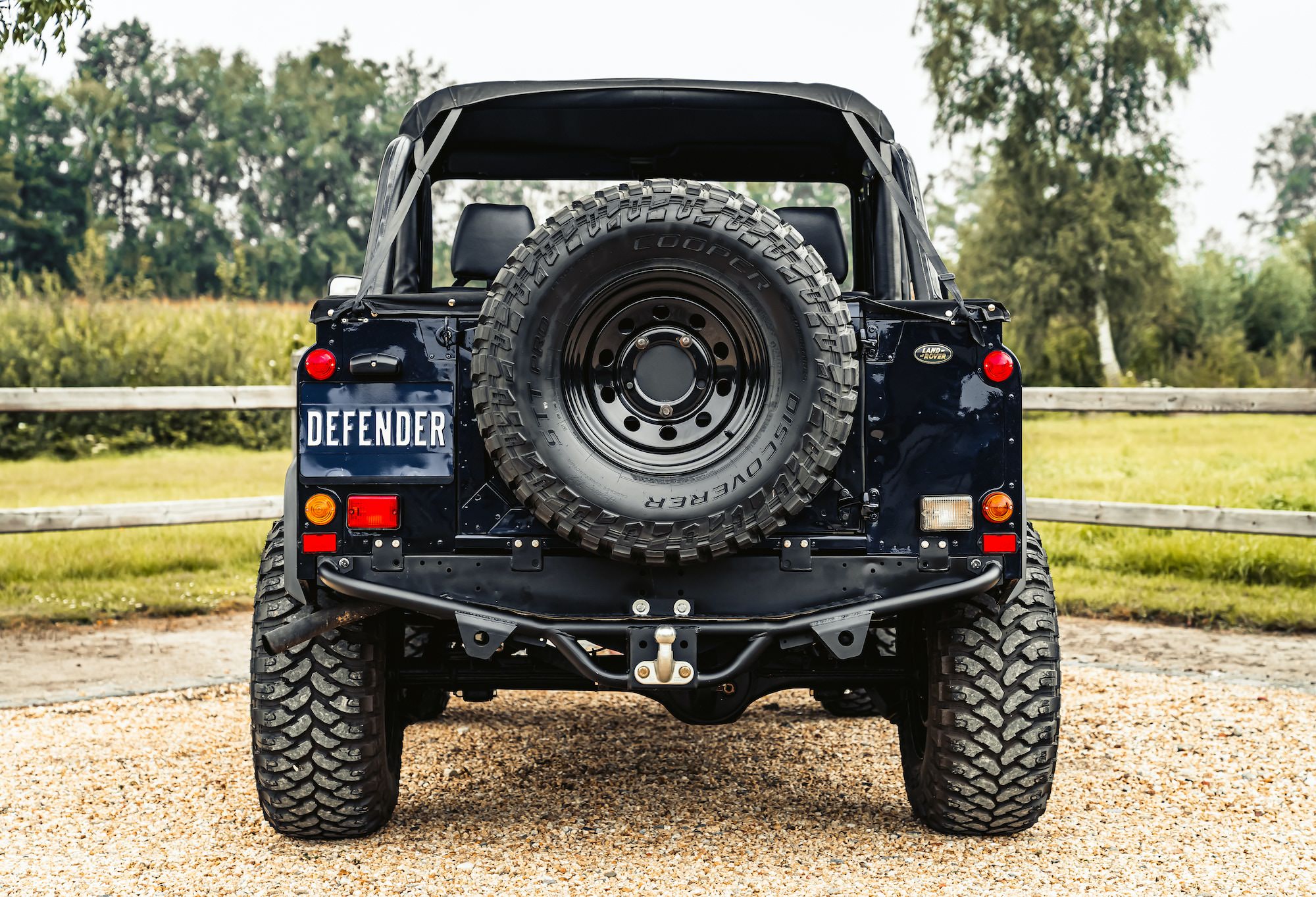
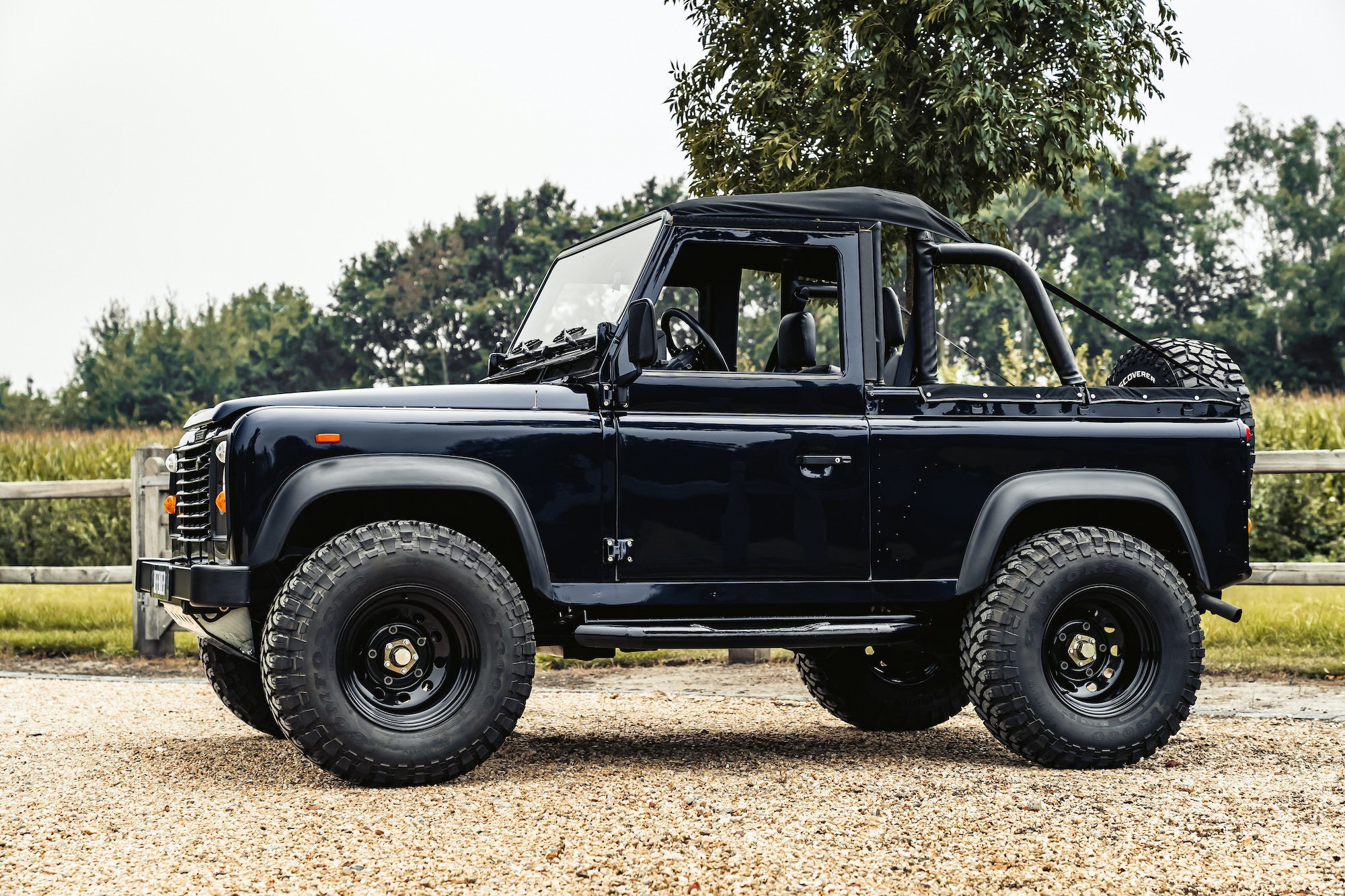
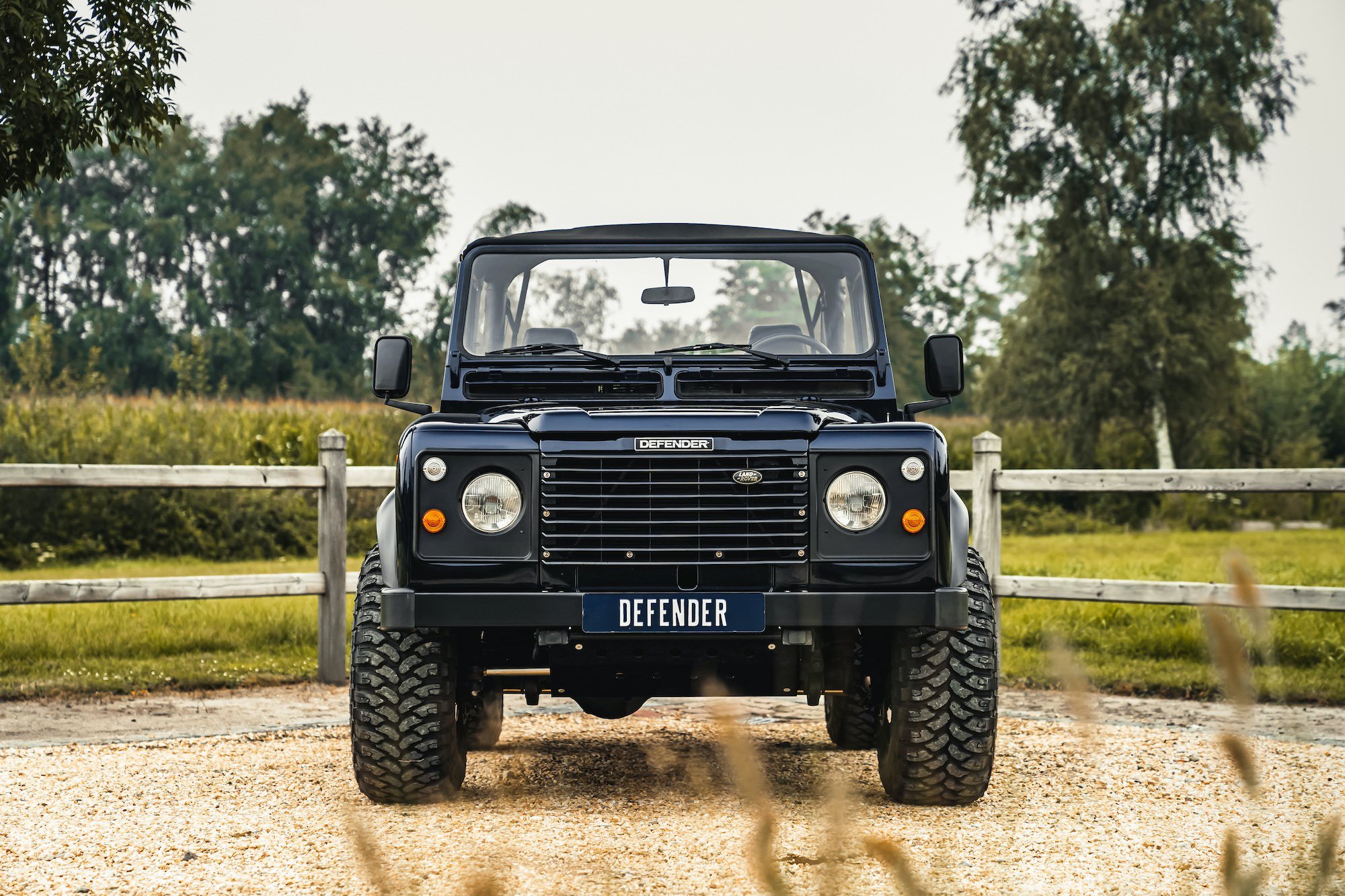
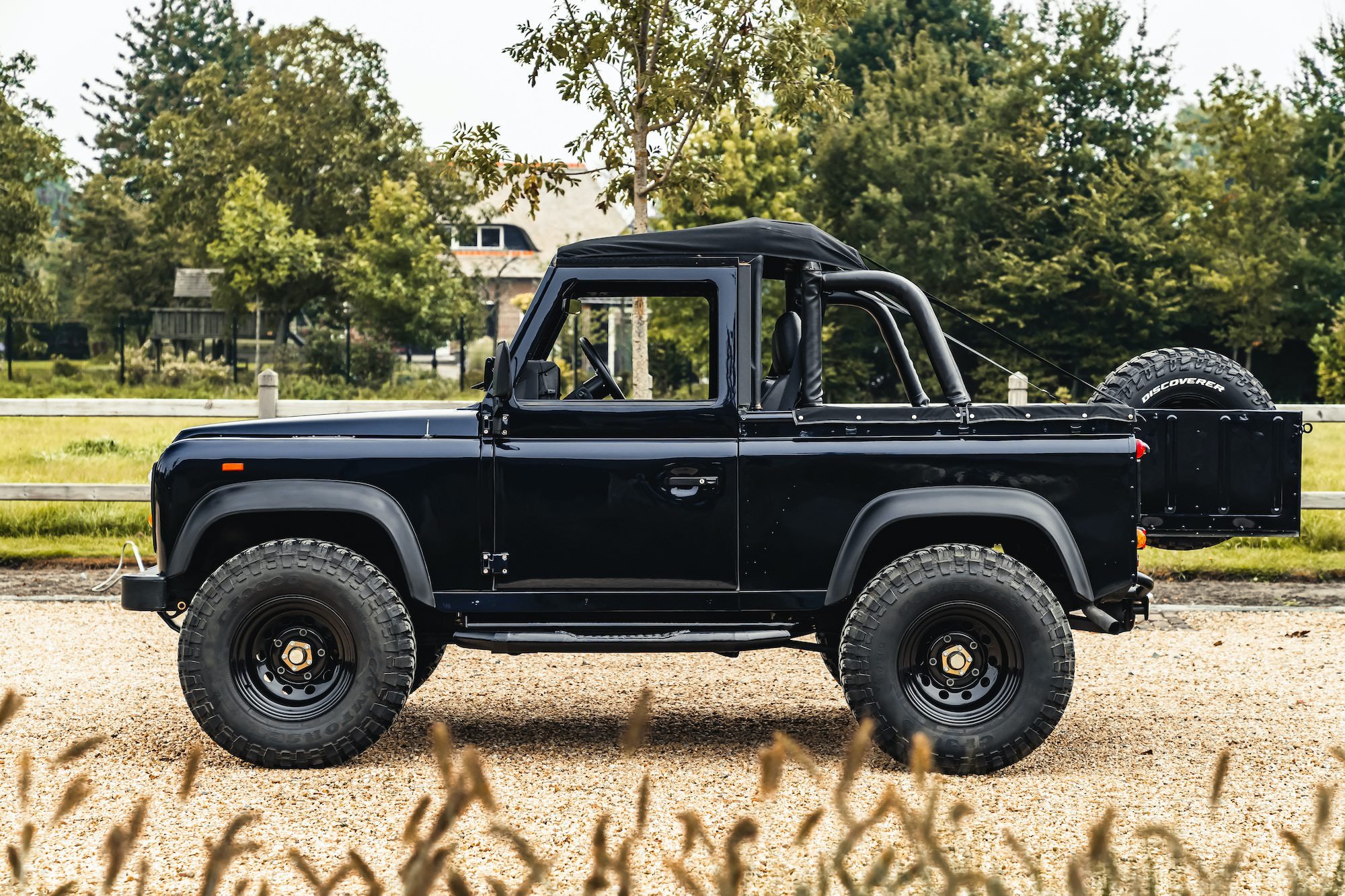
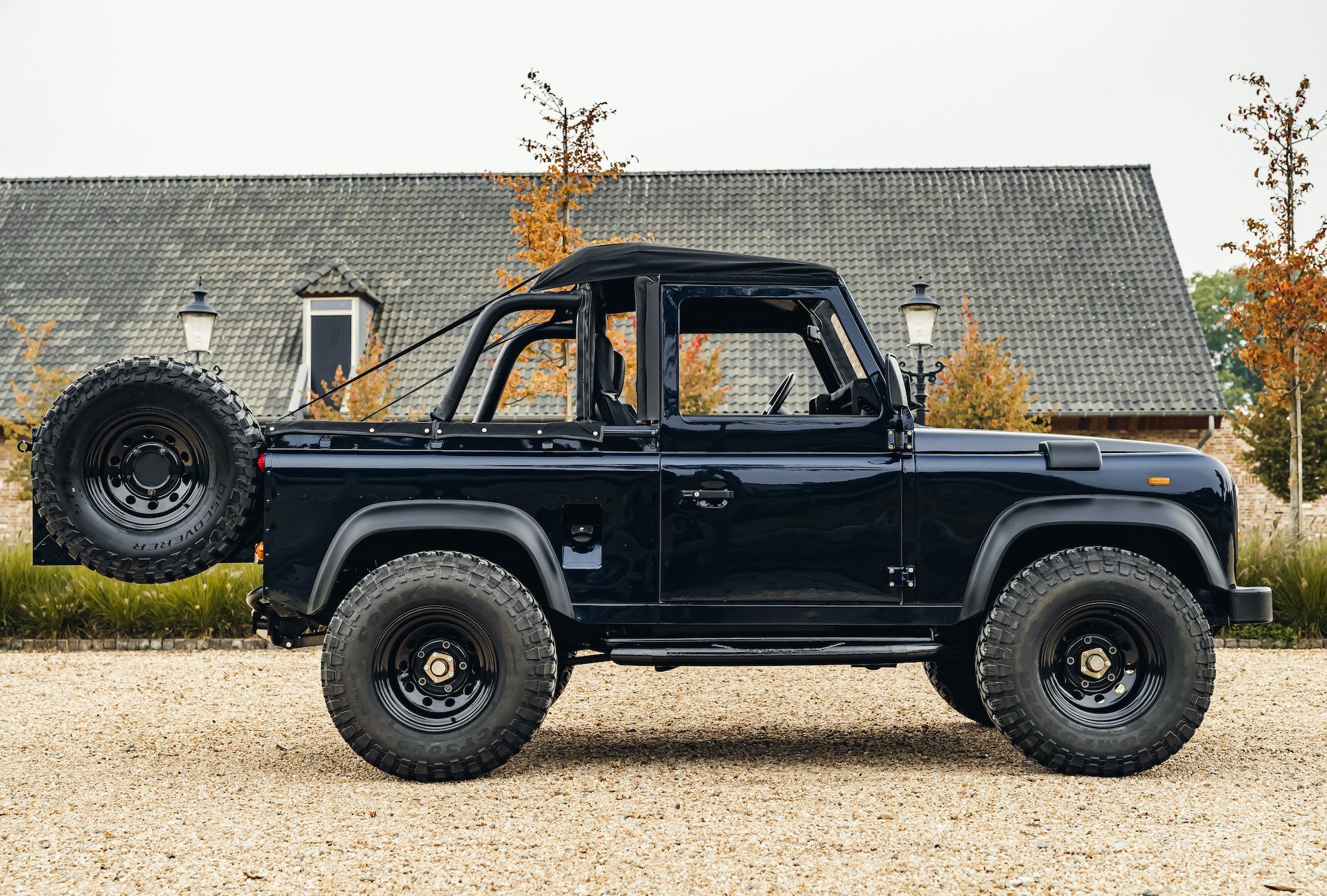
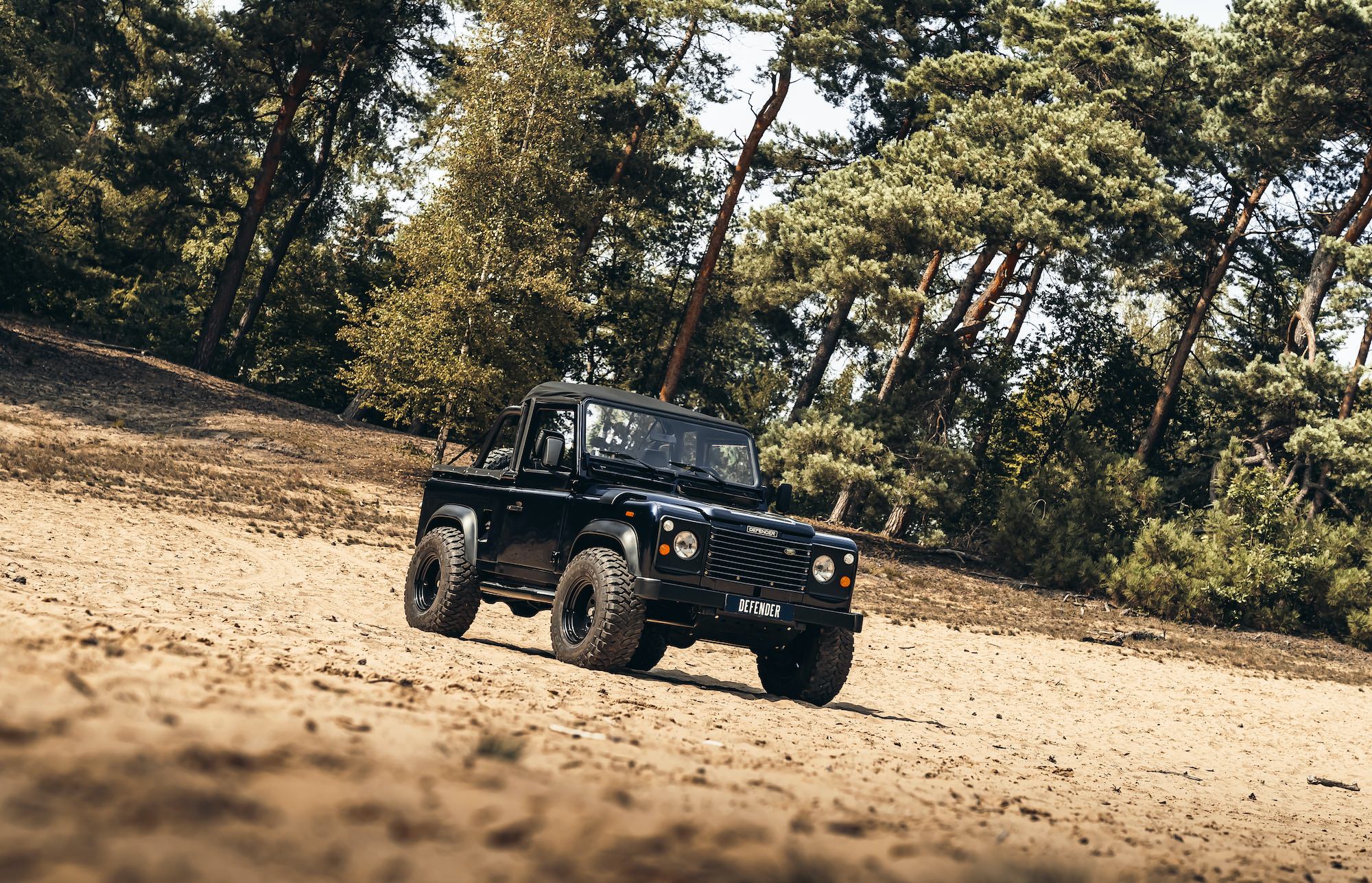
The vehicle you see here is an upgraded 1989 Land Rover Defender V8, as mentioned above this vehicle came from the factory with this engine installed, but a number of other improvements have been undertaken to bring it up to a modern standard.

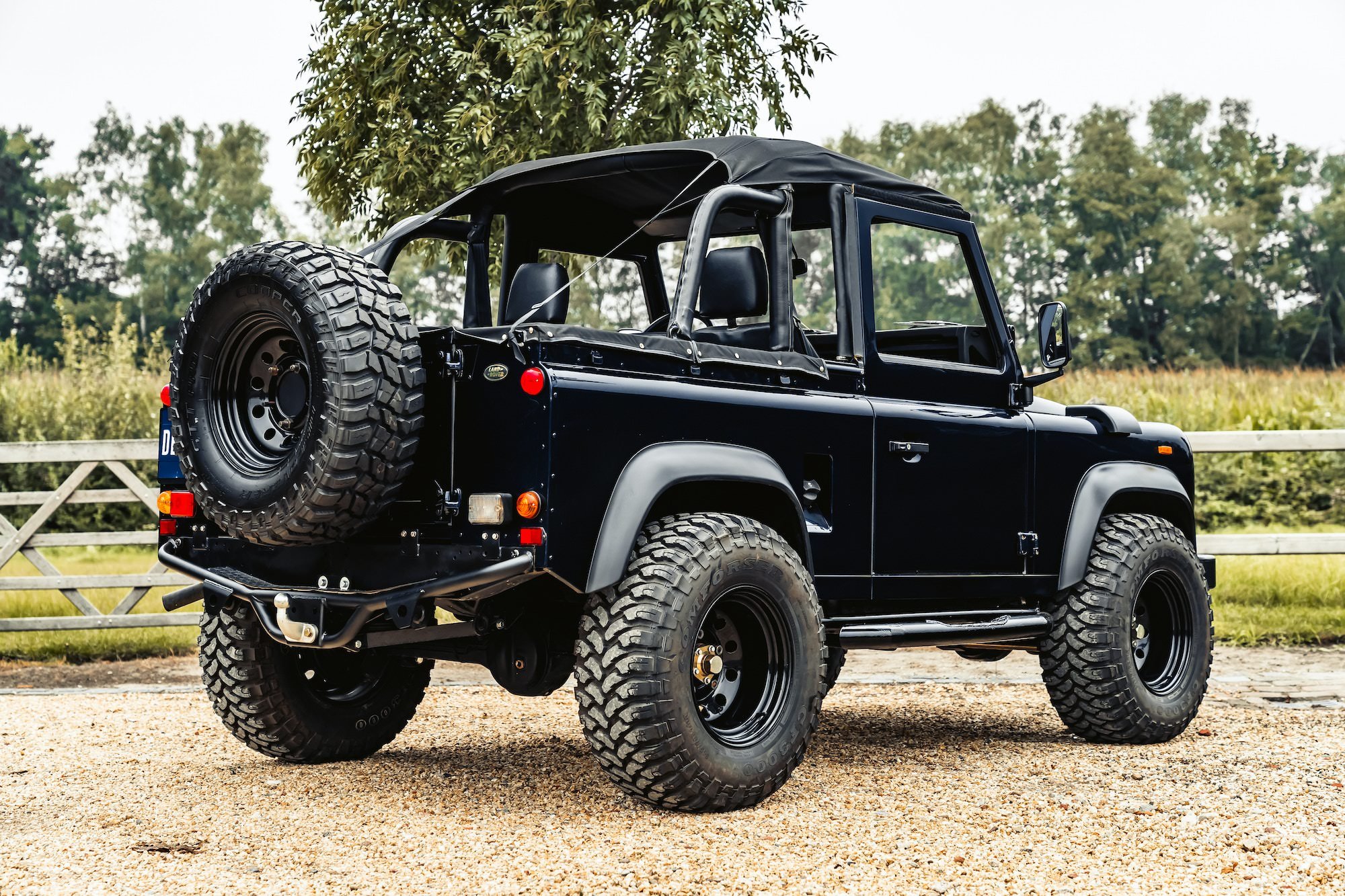
This Defender is also an original soft top model, a rarer option than the standard hard top and another common aftermarket conversion.

Among the upgrades that have been applied to this vehicle is a retrimmed interior with black leather Exmoor Trim upholstery, a Mountney Classic steering wheel, a smart USB output, an Edelbrock carburetor on a new intake manifold, and the paintwork has been resprayed in the original Midnight Blue.

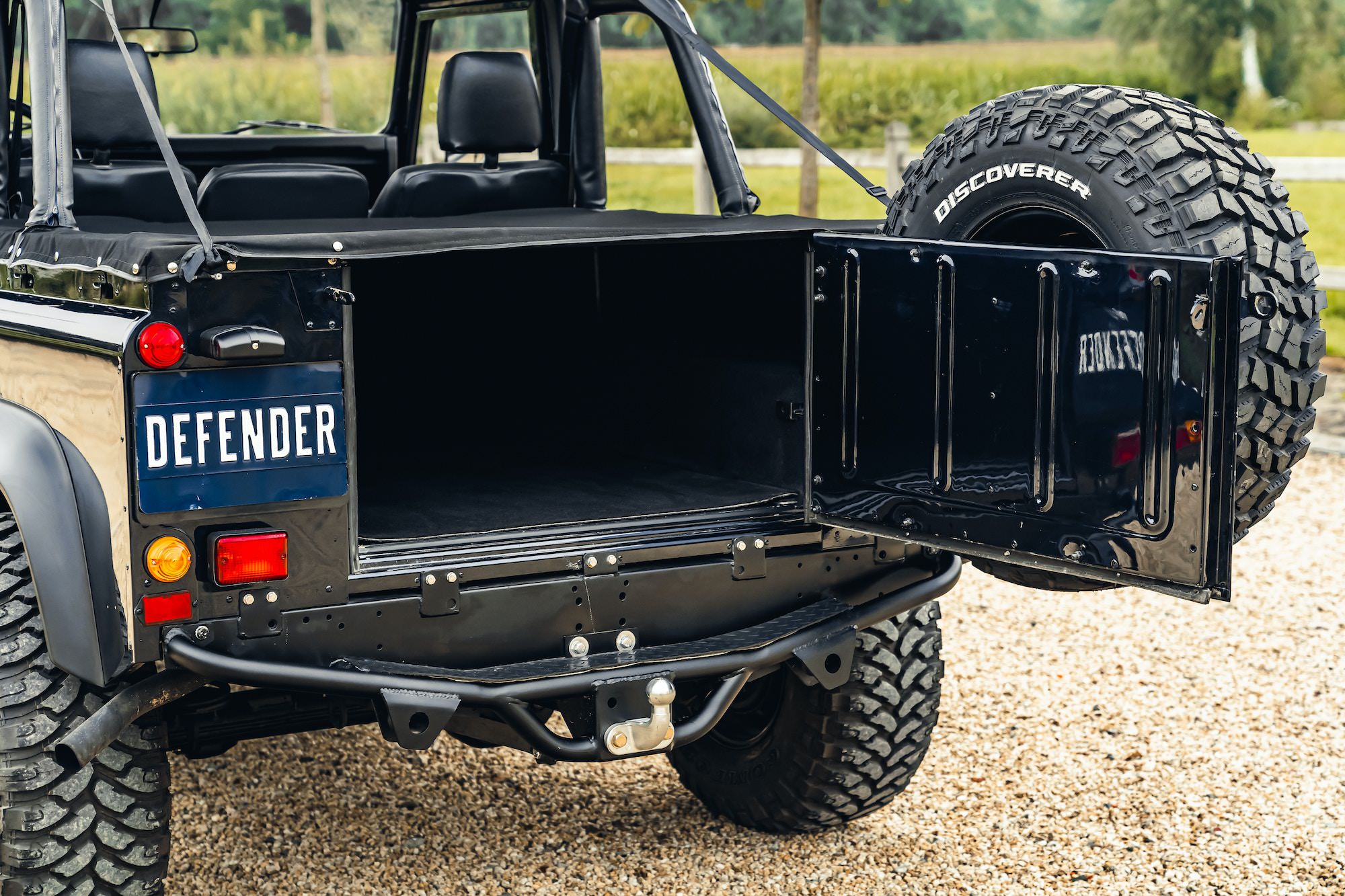
It’s now riding on 16 inch steel wheels with gold centre caps wrapped with knobby Comforser CF3000 mud tires. A tubular steel rear bumper has been fitted, as has a tow ball, and there are rocker guards mounted on either side.

The car is currently for sale on Collecting Cars in a live online auction, if you’d like to read more about it or register to bid you can click here to visit the listing.
Land Rover Defender V8 19 Land Rover Defender V8 18 Land Rover Defender V8 17 Land Rover Defender V8 16 Land Rover Defender V8 15 Land Rover Defender V8 14 Land Rover Defender V8 11 Land Rover Defender V8 10 Land Rover Defender V8 9 Land Rover Defender V8 8 Land Rover Defender V8 7 Land Rover Defender V8 6 Land Rover Defender V8 5 Land Rover Defender V8 4 Land Rover Defender V8 3 Land Rover Defender V8 2 Land Rover Defender V8 1

Images courtesy of Collecting Cars

Land Rover Defender V8

The post A Custom Land Rover Defender With A Factory-Fitted 3.5 Liter V8 appeared first on Silodrome.


from Silodrome https://silodrome.com/land-rover-defender-rover-v8/
via gqrds

For Sale: An Upgraded 1983 Toyota Hilux Pickup Camper 5-Speed 4×4

The Toyota Hilux, better known as the Toyota Pickup in the USA, is one of the most lauded four-wheel drives ever made. Their blend of reliability and toughness has seen them become a favorite of everyone from American weekend adventurers to Middle Eastern warlords and everyone in-between.

Since its introduction in 1968, the Hilux has been built in eight distinct generations. While the earliest examples of the model were two-wheel drive it would be the four-wheel drive versions that first appeared in 1978 that would define the truck, and ensure its ongoing success.

Fast Facts – The 1983 Toyota Hilux Pickup 5-Speed 4×4

  • The Toyota Hilux was first released in 1968 as a small, rear-wheel drive pickup truck. A decade later in 1978 the first four-wheel drive version would be announced as part of the model’s third generation.
  • The most famous Hilux in popular culture was almost certainly the black 1985 model featured in the “Back To The Future” film trilogy. This truck has been credited with turning the Hilux into a desirable vehicle, rather than just a workhorse pickup truck.
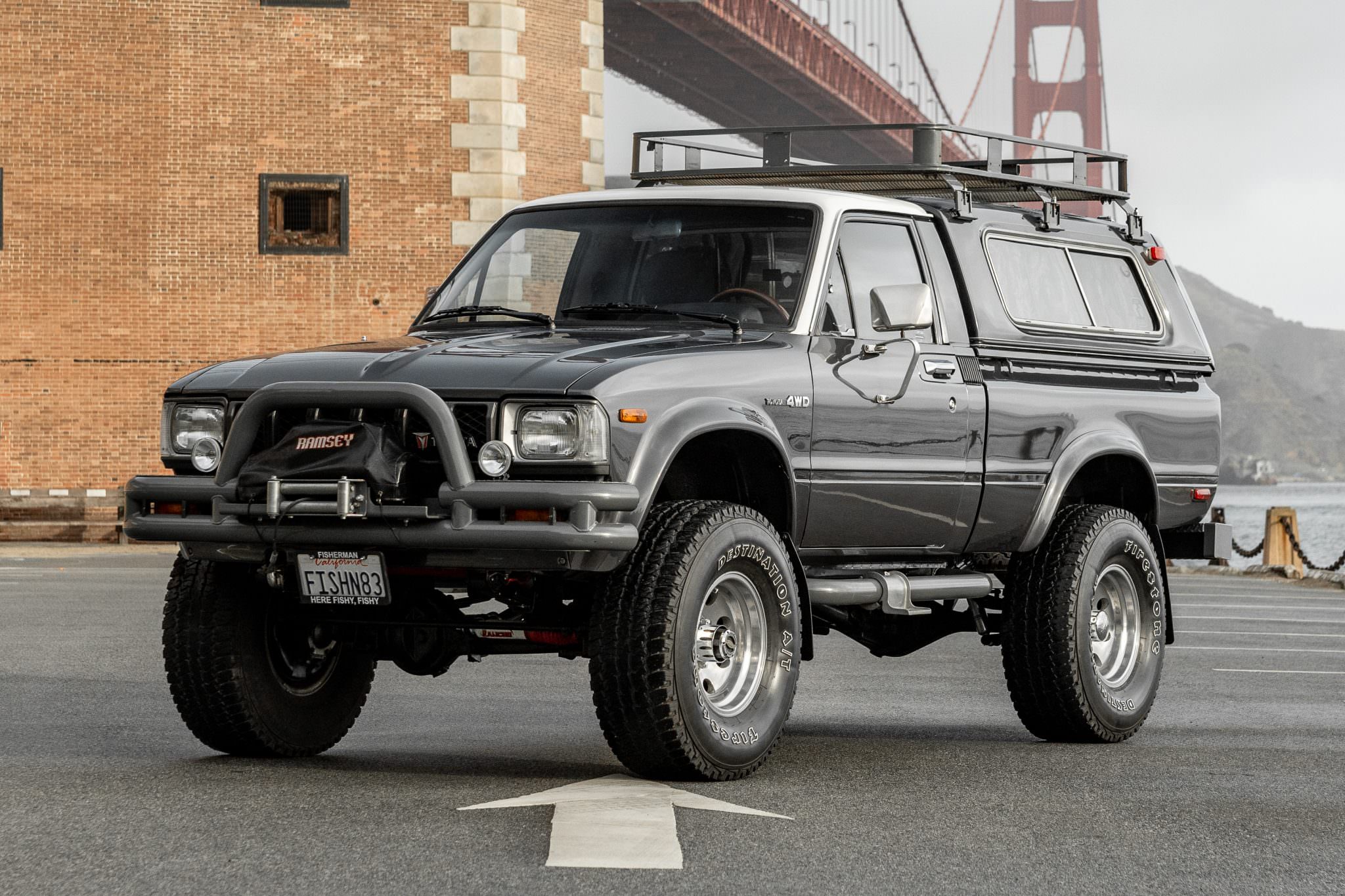
  • The 1983 Toyota Pickup you see here is from the third generation, it’s powered by the 2.4 liter inline-four cylinder gasoline engine, sending power to the wheels via a dual-range transfer case and a five-speed manual transmission.
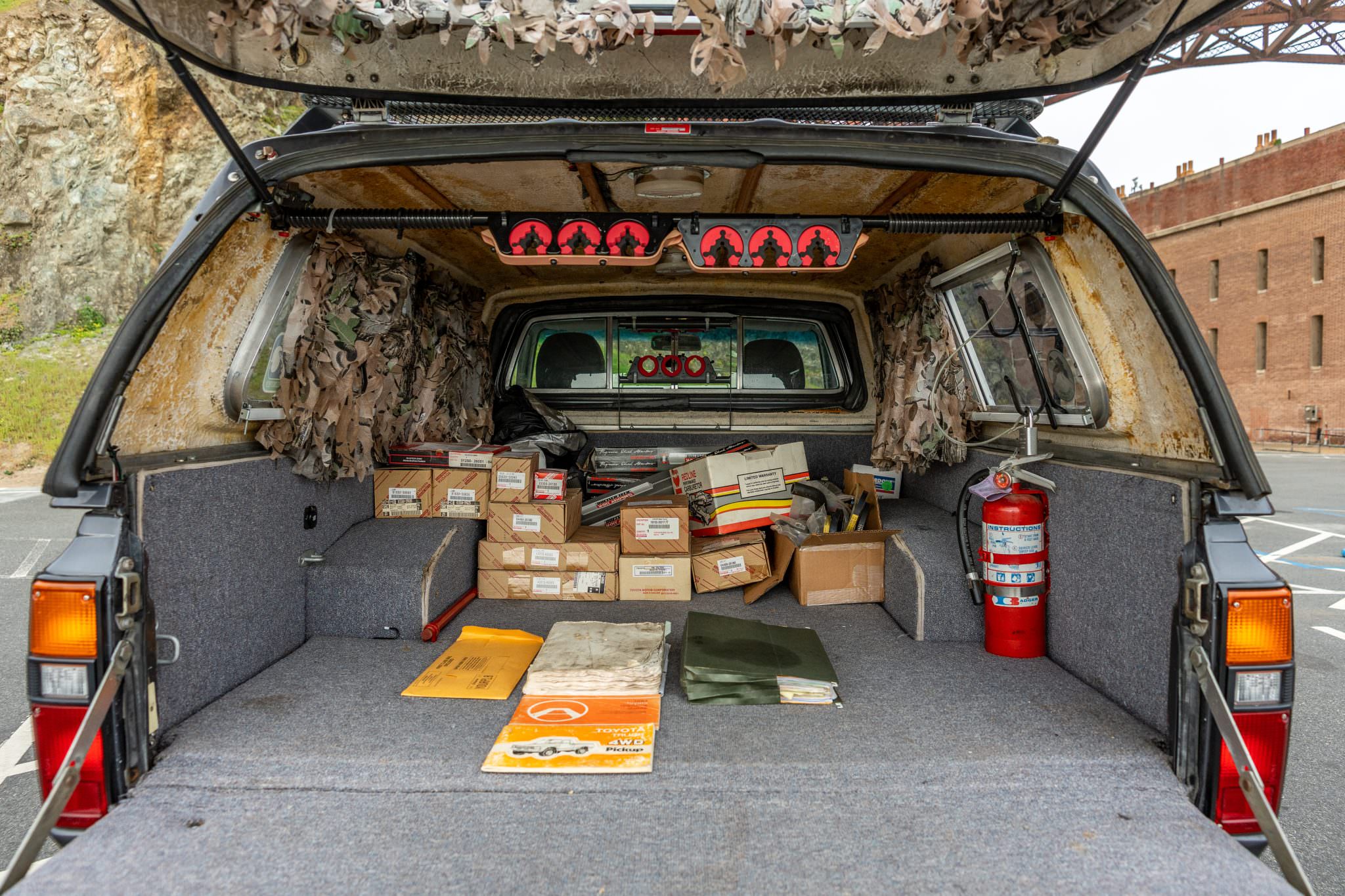
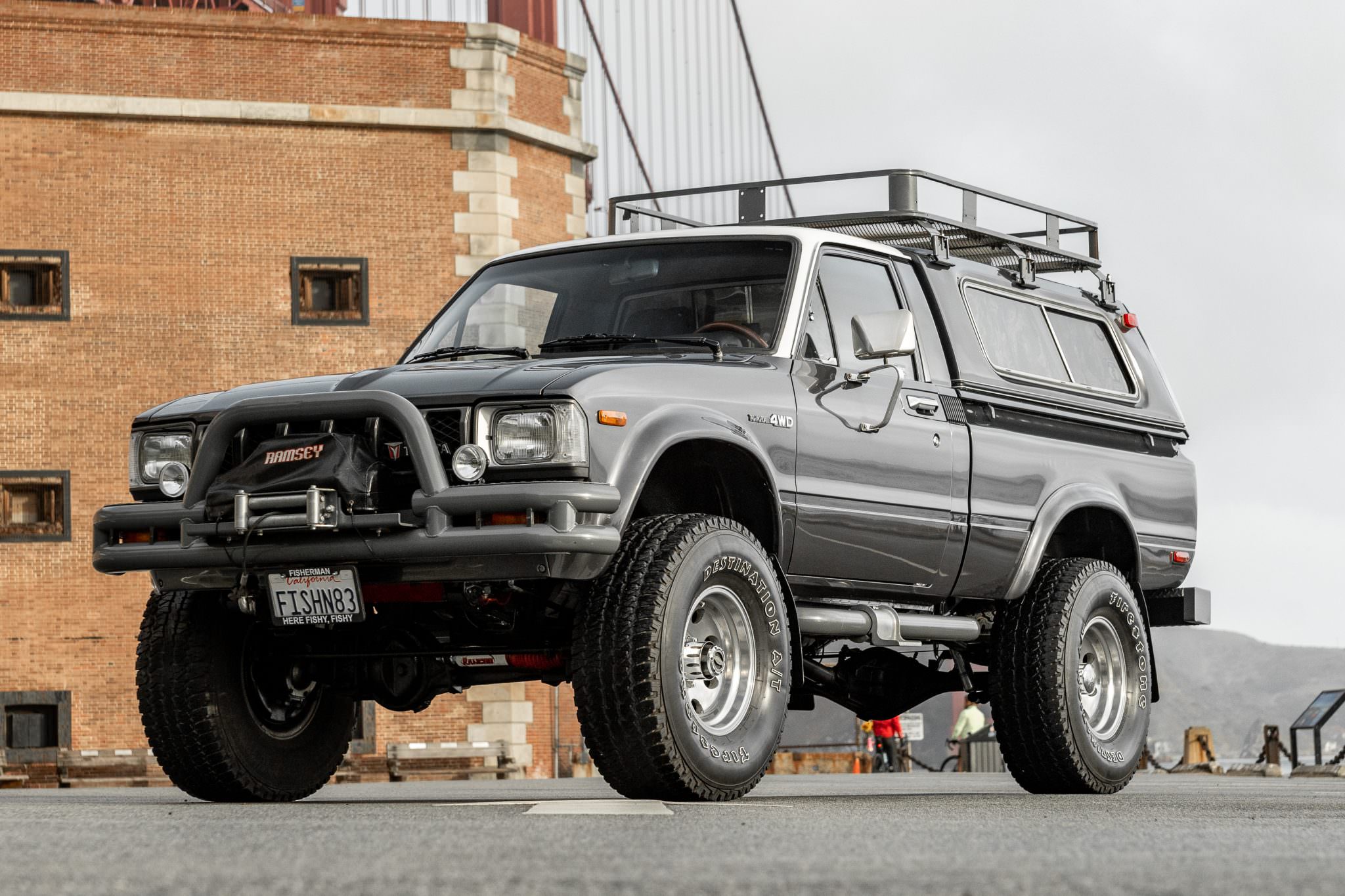
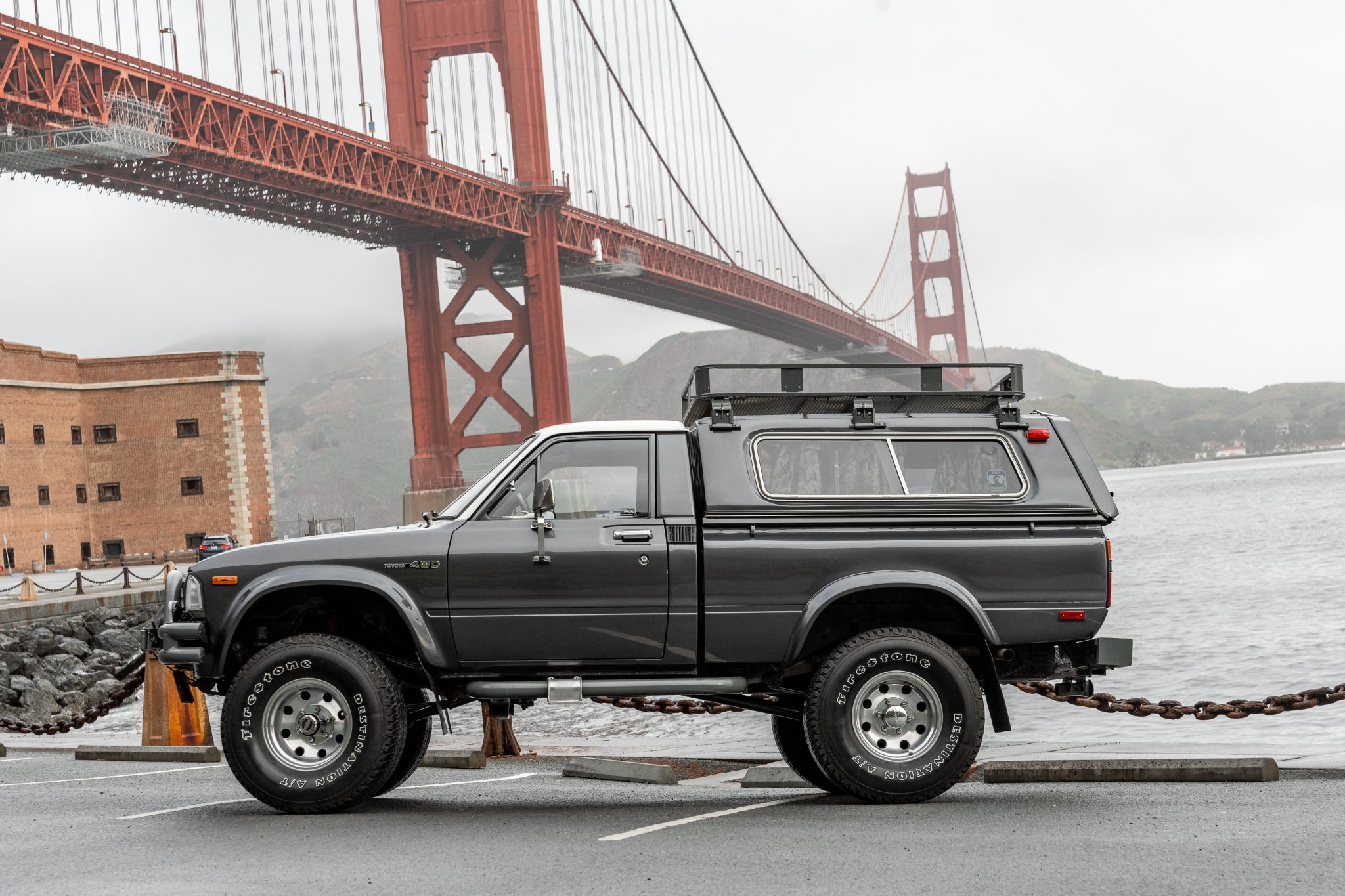
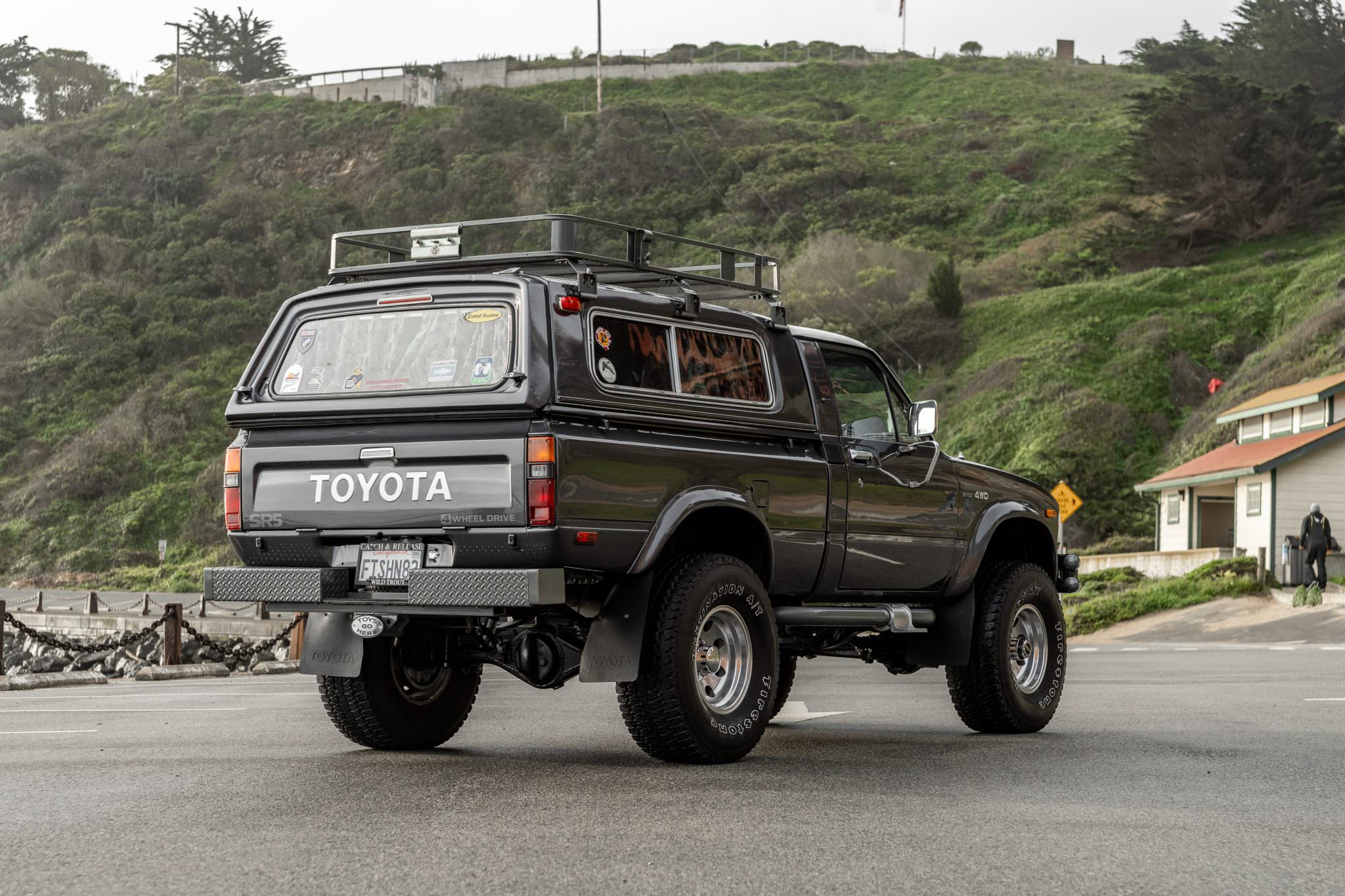
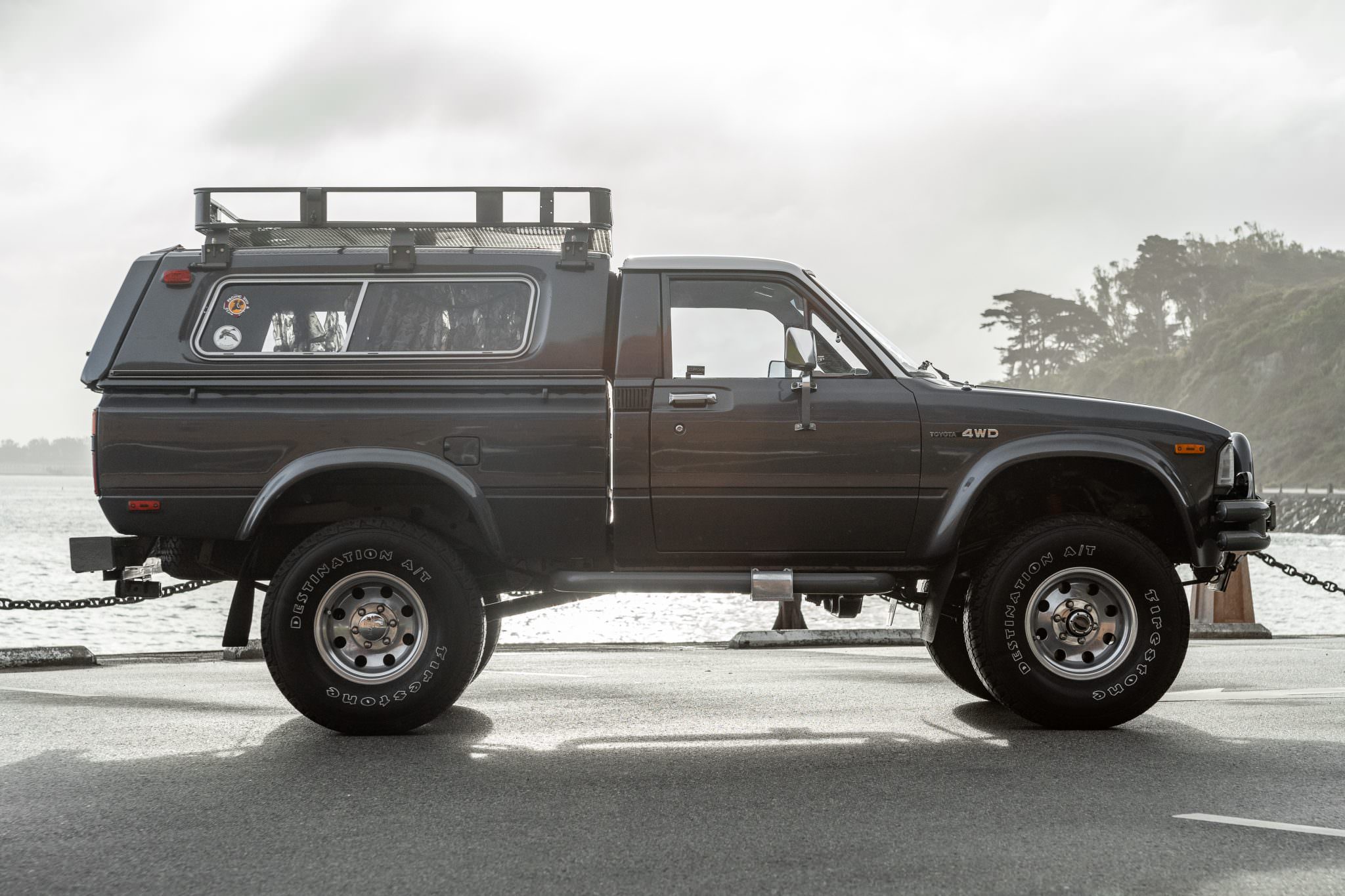
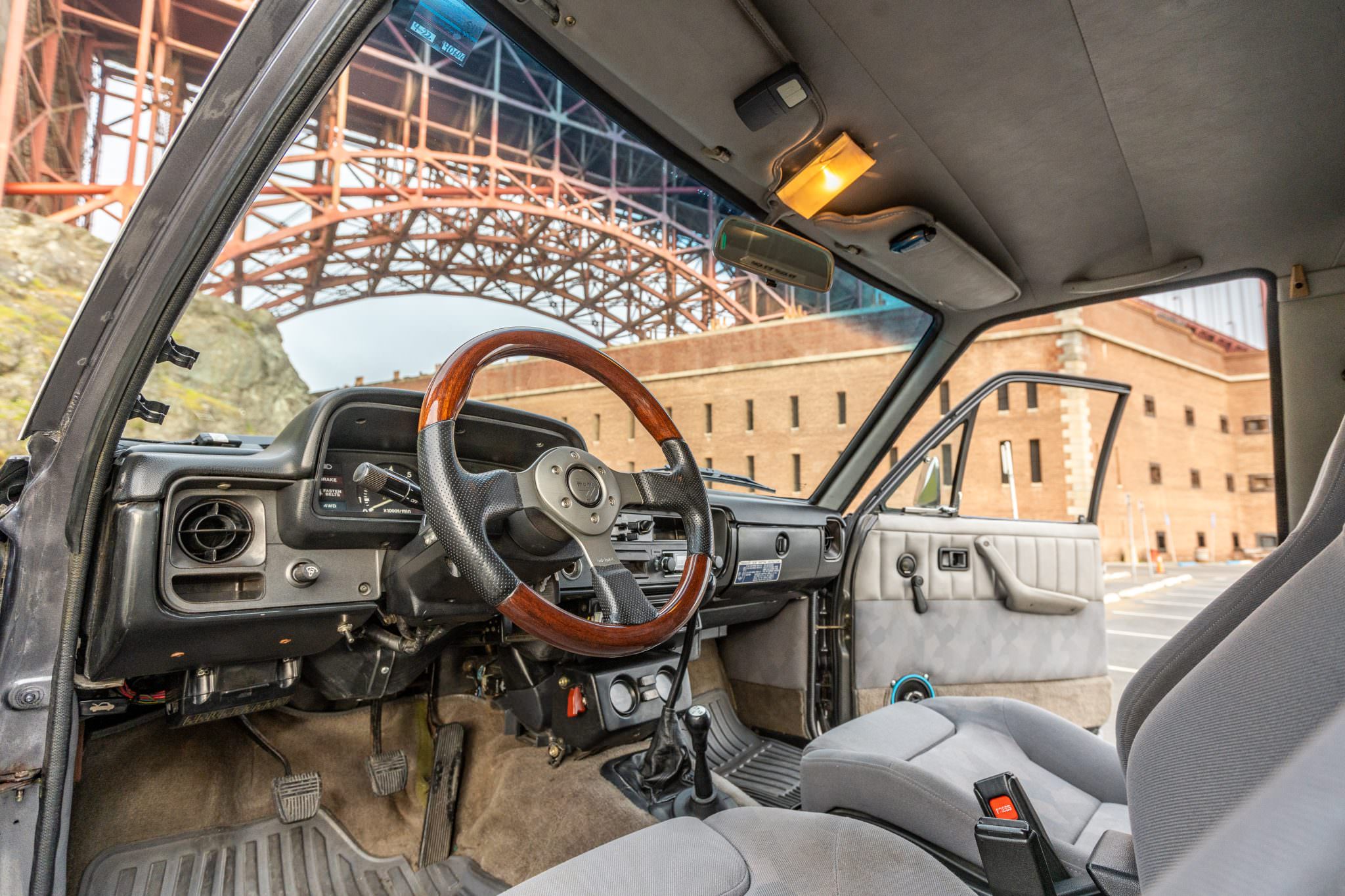
  • This truck has been given a series of upgrades including Detroit Truetrac locking differentials, an aftermarket exhaust header, a two-inch lift kit, a a Ramsey winch, Recaro seats, and a camper shell on the back.

The Mighty Hilux

When Toyota first released the Hilux in 1968 it was a small, cheap pickup truck offered with rear-wheel drive only. It was destined to compete with the likes of the Datsun Truck, at the less-expensive end of the pickup truck market.

Toyota Hilux Pickup 5-Speed 4x4 13

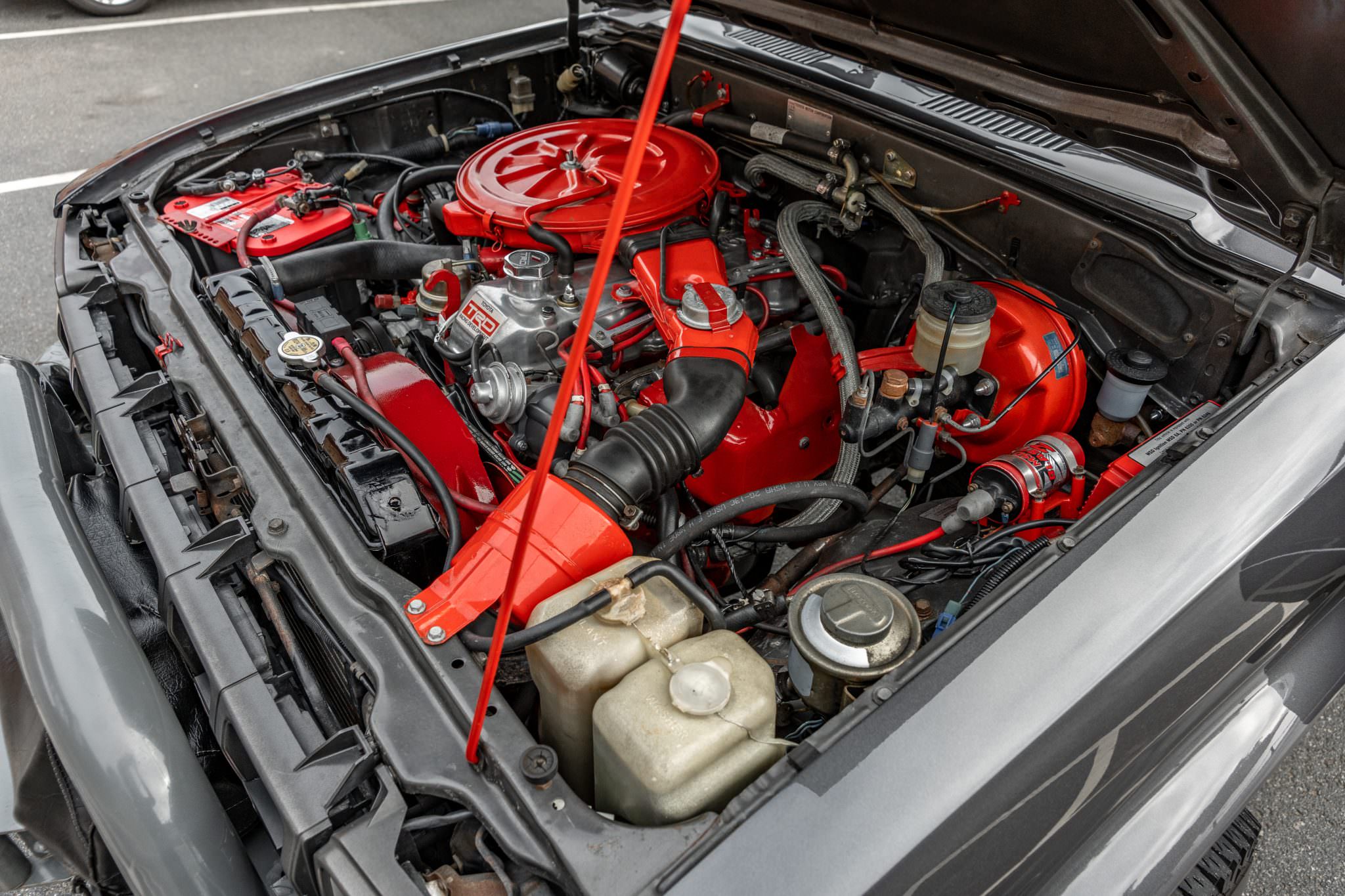
This Hilux has the 2.4 liter Toyota inline-four cylinder gasoline engine, it’s fitted with aftermarket headers and an MSD ignition.

The second generation Hilux appeared in 1972, it further refined the basic concept but it still only offered rear wheel drive.

In 1978 the third generation version appeared – this would be the model that formulated the DNA of all the Hiluxes that would follow, with its optional four-wheel drive system, increased ground clearance and more modern styling.

The fourth generation Hilux appeared for the 1984 model year, this would arguably become the most famous of all thanks to its prominent inclusion in all three Back To The Future movies as a key plot point in the various timelines.

So popular was this truck that a company was formed recently specifically to build replicas for fans of the film.

Toyota Hilux Pickup 5-Speed 4x4 2

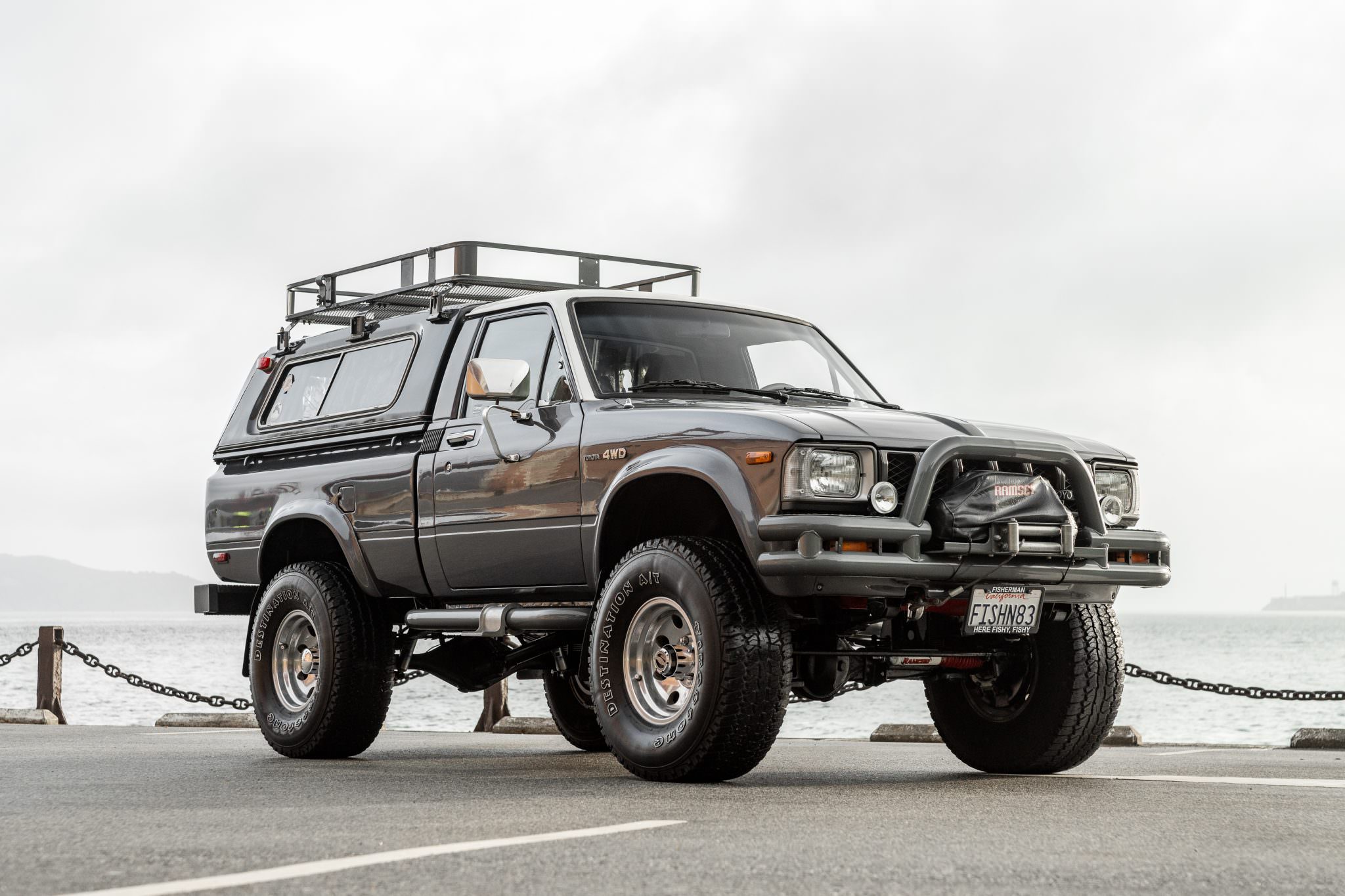
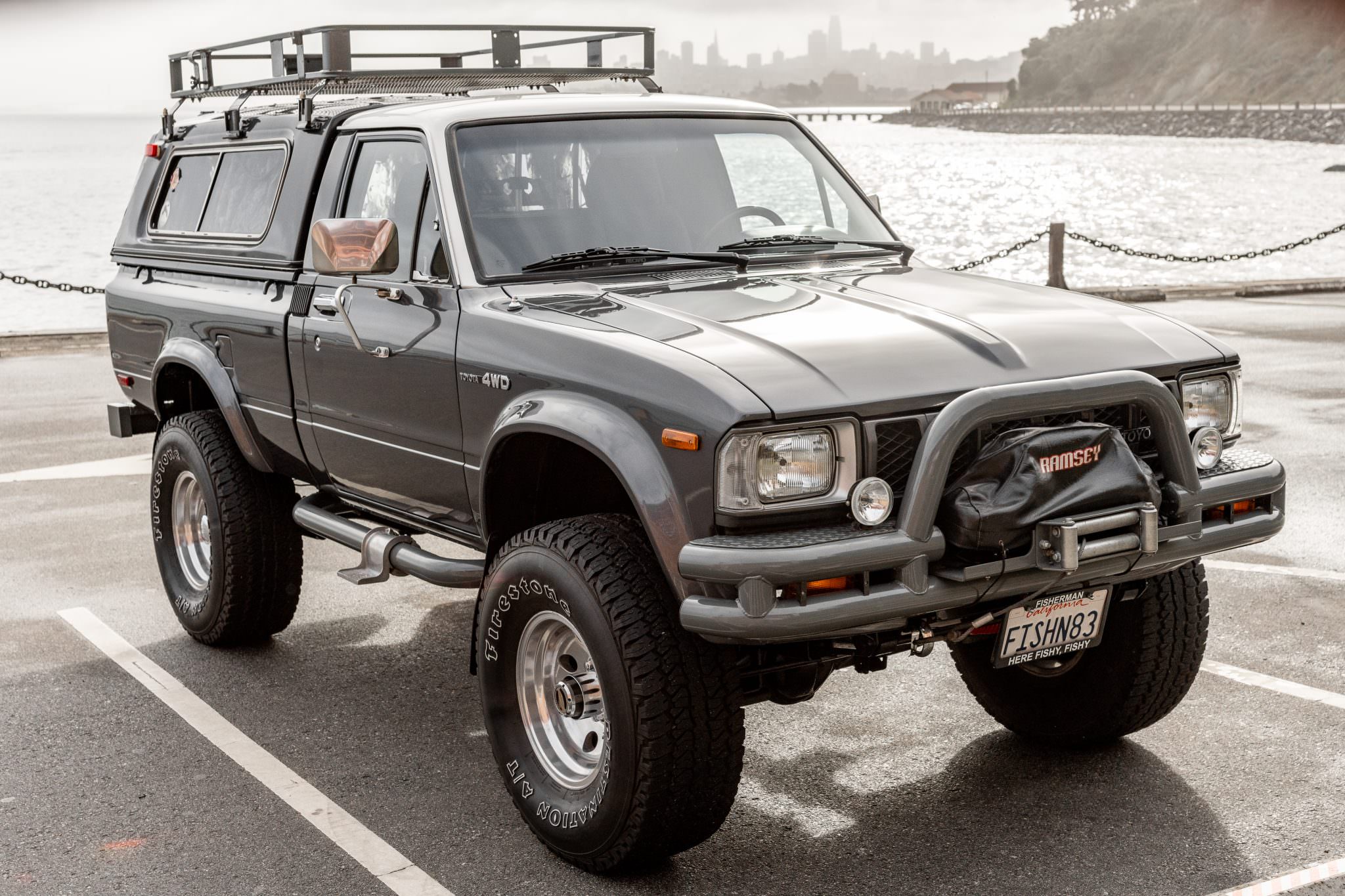
This Pickup has Detroit Truetrac locking differentials and a 2″ lift, it rides on 15″ alloy wheels fitted with 33 × 12.5 Firestone Destination A/T tires.

The 1983 Toyota Hilux Pickup 5-Speed 4×4 Shown Here

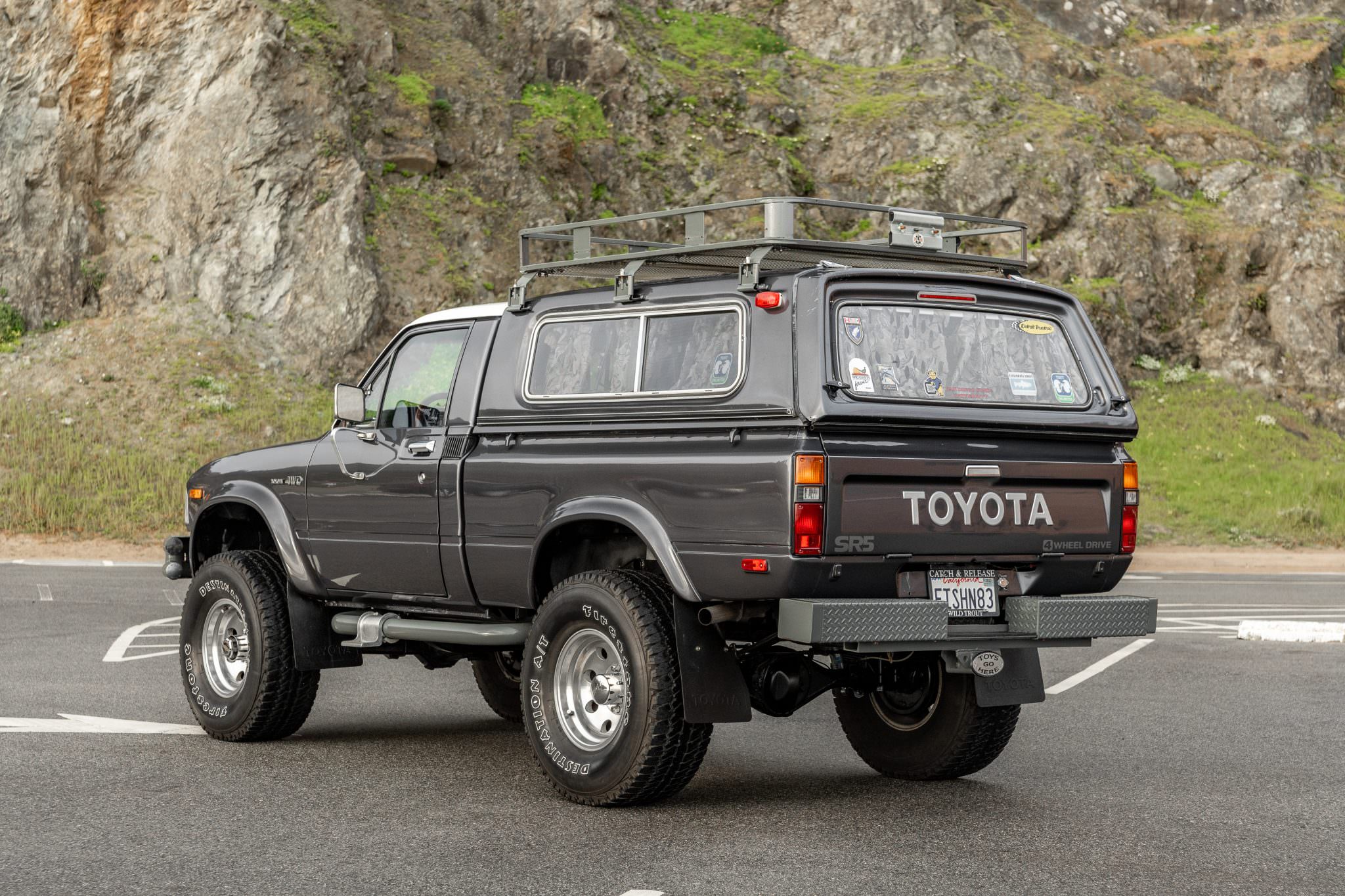
The truck you see here is a 1983 Toyota Pickup with the 5-speed manual transmission.

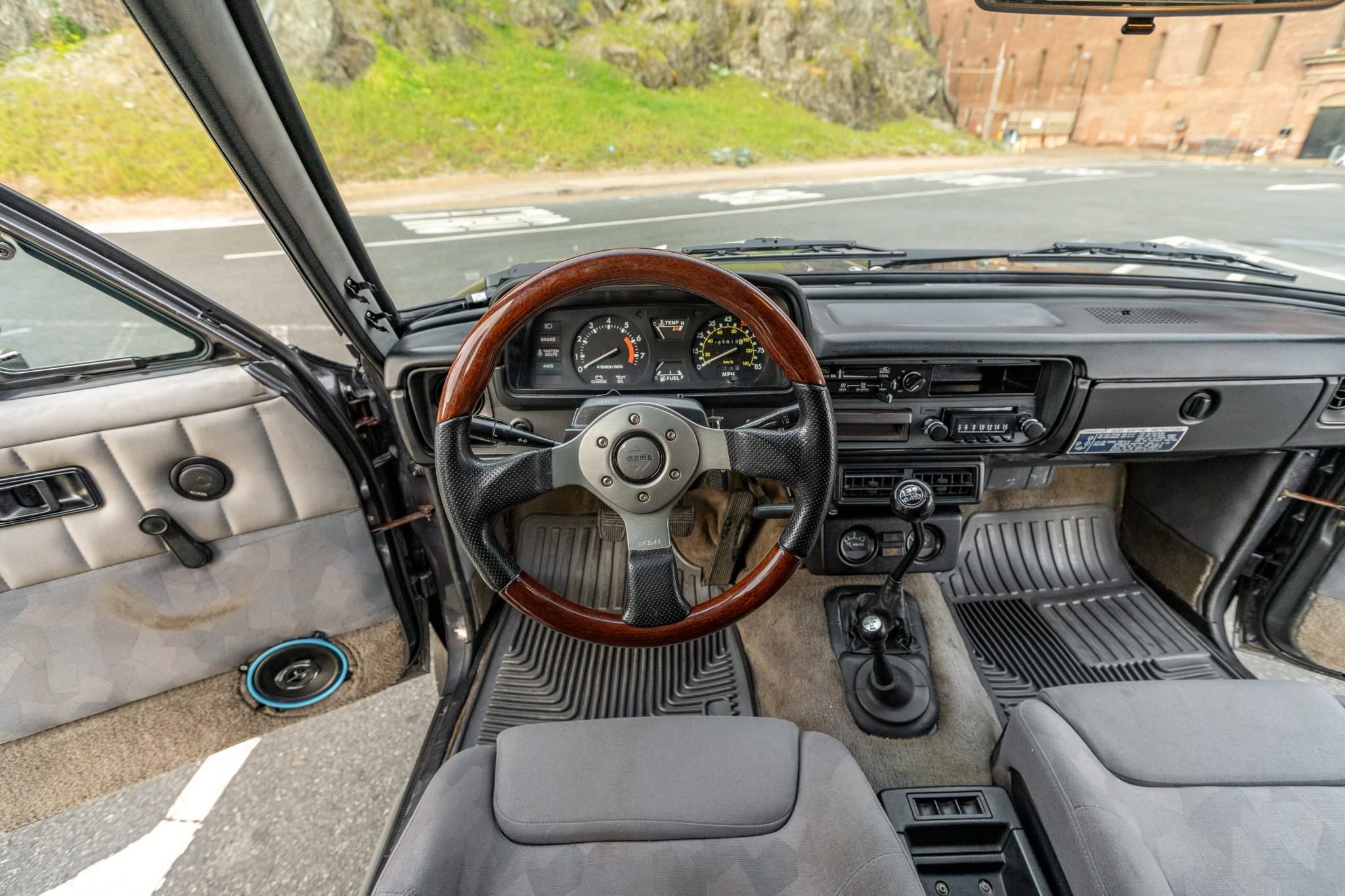
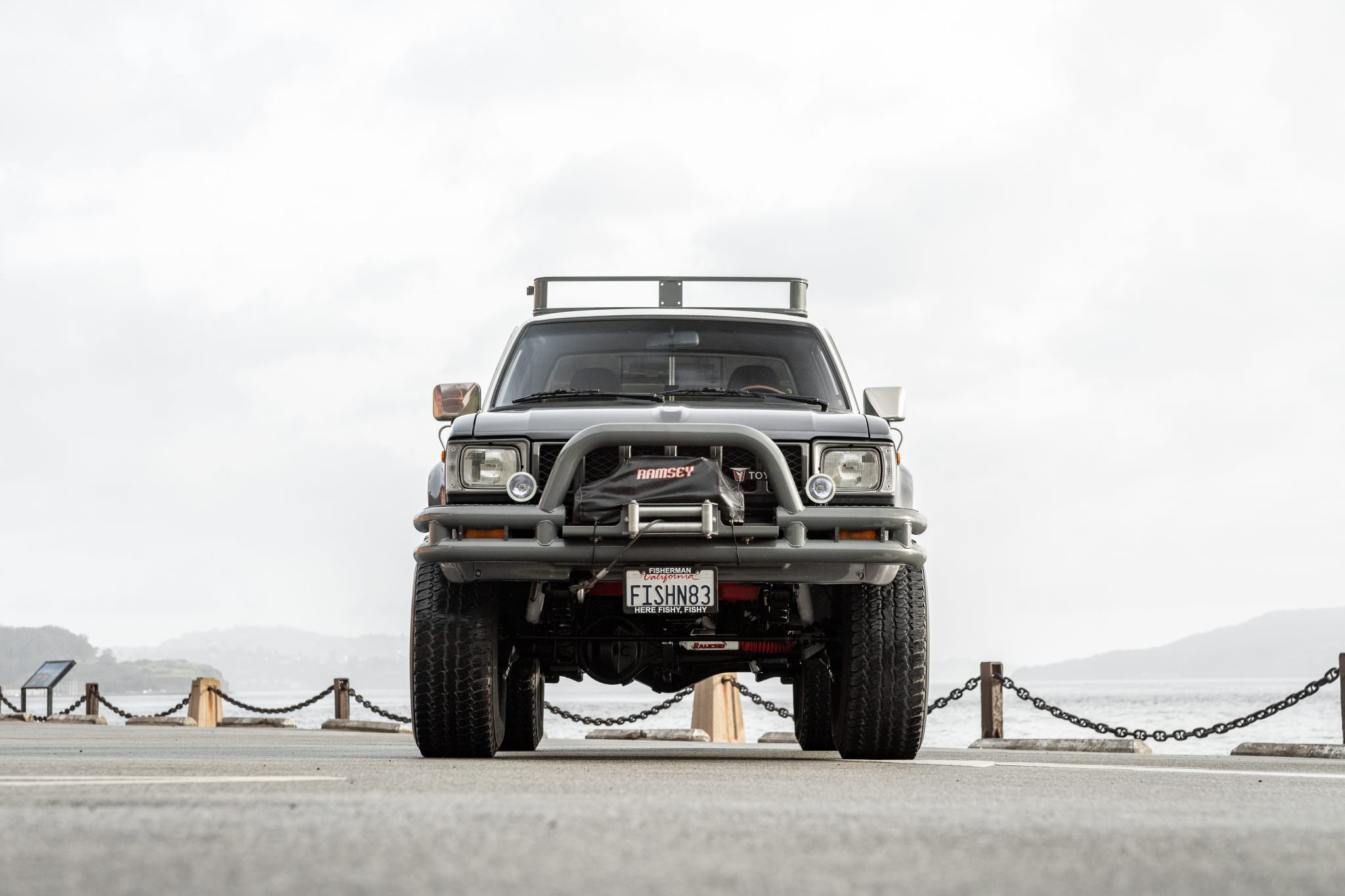
It features a slew of upgrades over the original, including Detroit Truetrac locking differentials, an aftermarket exhaust header, a two-inch lift kit, a camper shell on the back, a roof rack, steel bumpers, an 8,000 lb Ramsey winch, a receiver hitch, Recaro seats, air-conditioning, and an aftermarket stereo.

It’s now riding on polished 15″ alloy wheels which are fitted with 33 × 12.5 Firestone Destination A/T tires. Power is provided by the reliable 2.4 liter Toyota inline-four cylinder engine, with power sent to all four wheels via the dual speed transfer case and 5-speed gearbox.

This truck is currently being auctioned live on Bring A Trailer and at the time of writing there are still a few days left to bid. If you’d like to read more about it or register to bid you can click here to visit the listing.

Toyota Hilux Pickup 5-Speed 4x4 15 Toyota Hilux Pickup 5-Speed 4x4 9 Toyota Hilux Pickup 5-Speed 4x4 16 Toyota Hilux Pickup 5-Speed 4x4 8 Toyota Hilux Pickup 5-Speed 4x4 6 Toyota Hilux Pickup 5-Speed 4x4 5 Toyota Hilux Pickup 5-Speed 4x4 4 Toyota Hilux Pickup 5-Speed 4x4 3 Toyota Hilux Pickup 5-Speed 4x4 1 Toyota Hilux Pickup 5-Speed 4x4 17 Toyota Hilux Pickup 5-Speed 4x4 14 Toyota Hilux Pickup 5-Speed 4x4 12 Toyota Hilux Pickup 5-Speed 4x4 11 Toyota Hilux Pickup 5-Speed 4x4 10 Toyota Hilux Pickup 5-Speed 4x4 7

Images courtesy of Bring A Trailer

Toyota Hilux Pickup 5-Speed 4x4

The post For Sale: An Upgraded 1983 Toyota Hilux Pickup Camper 5-Speed 4×4 appeared first on Silodrome.


from Silodrome https://silodrome.com/toyota-hilux-pickup-camper/
via gqrds

Nigel Mansell Is Selling His Race-Winning 1989 Ferrari 640 Formula 1 Car

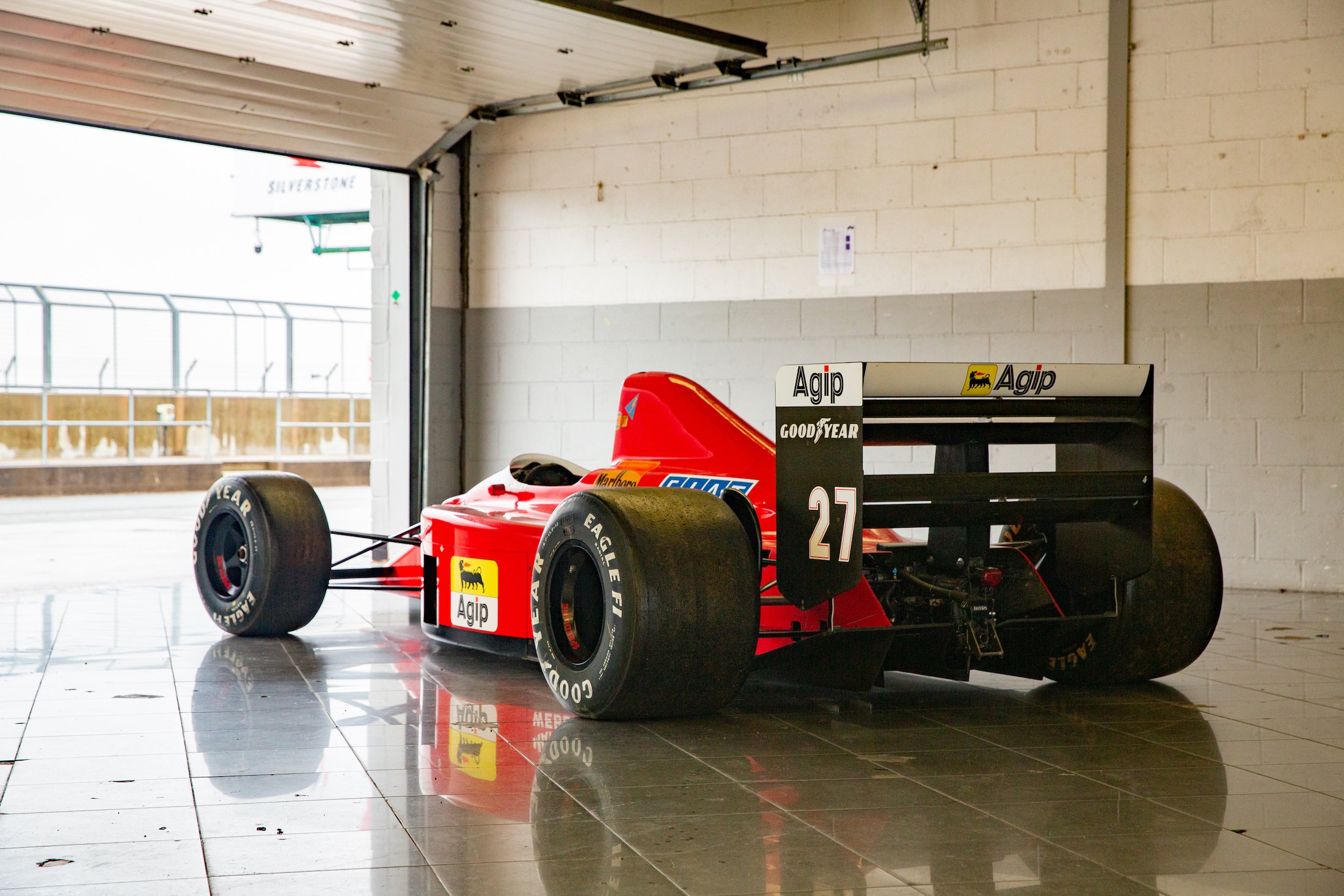
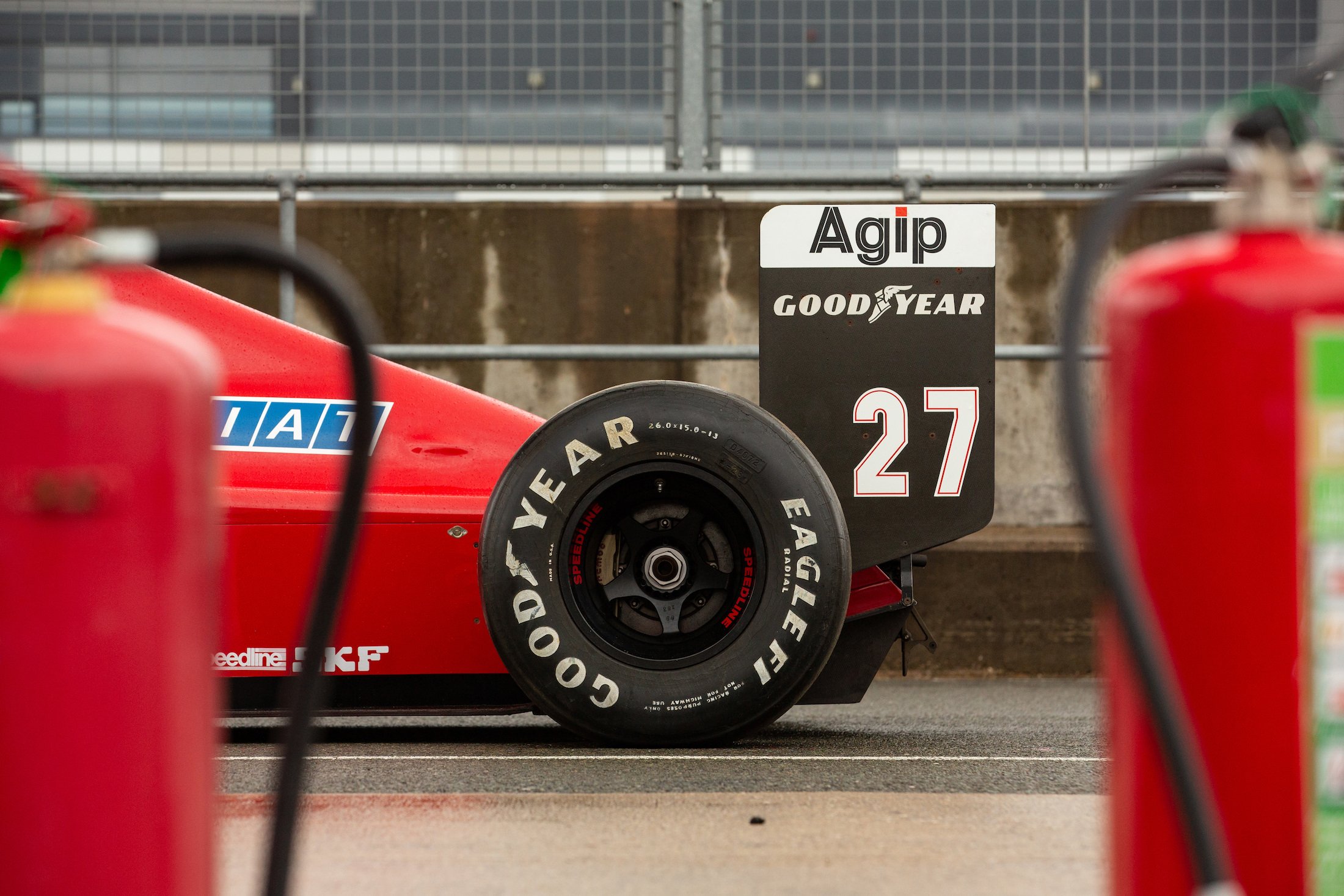
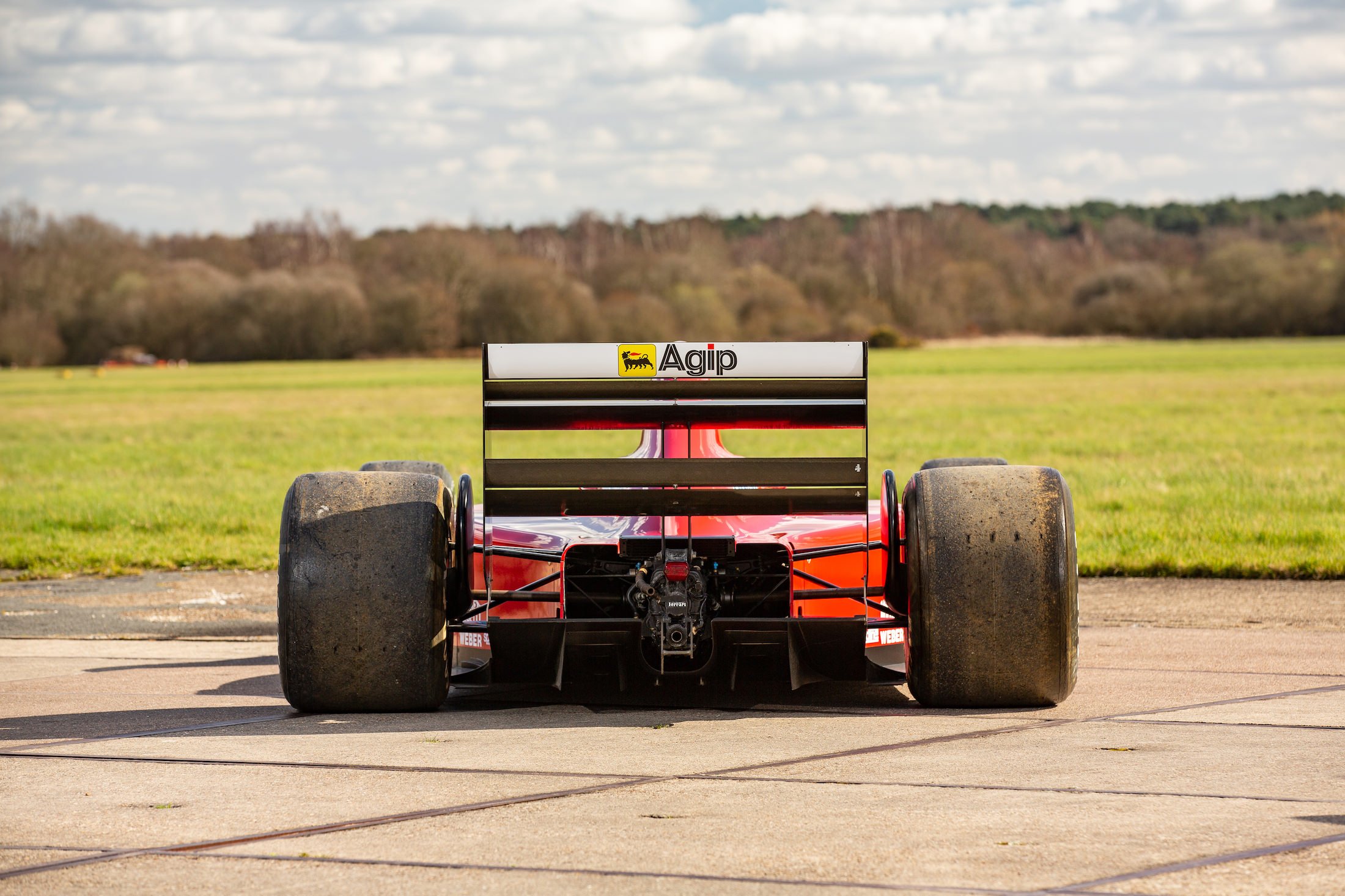
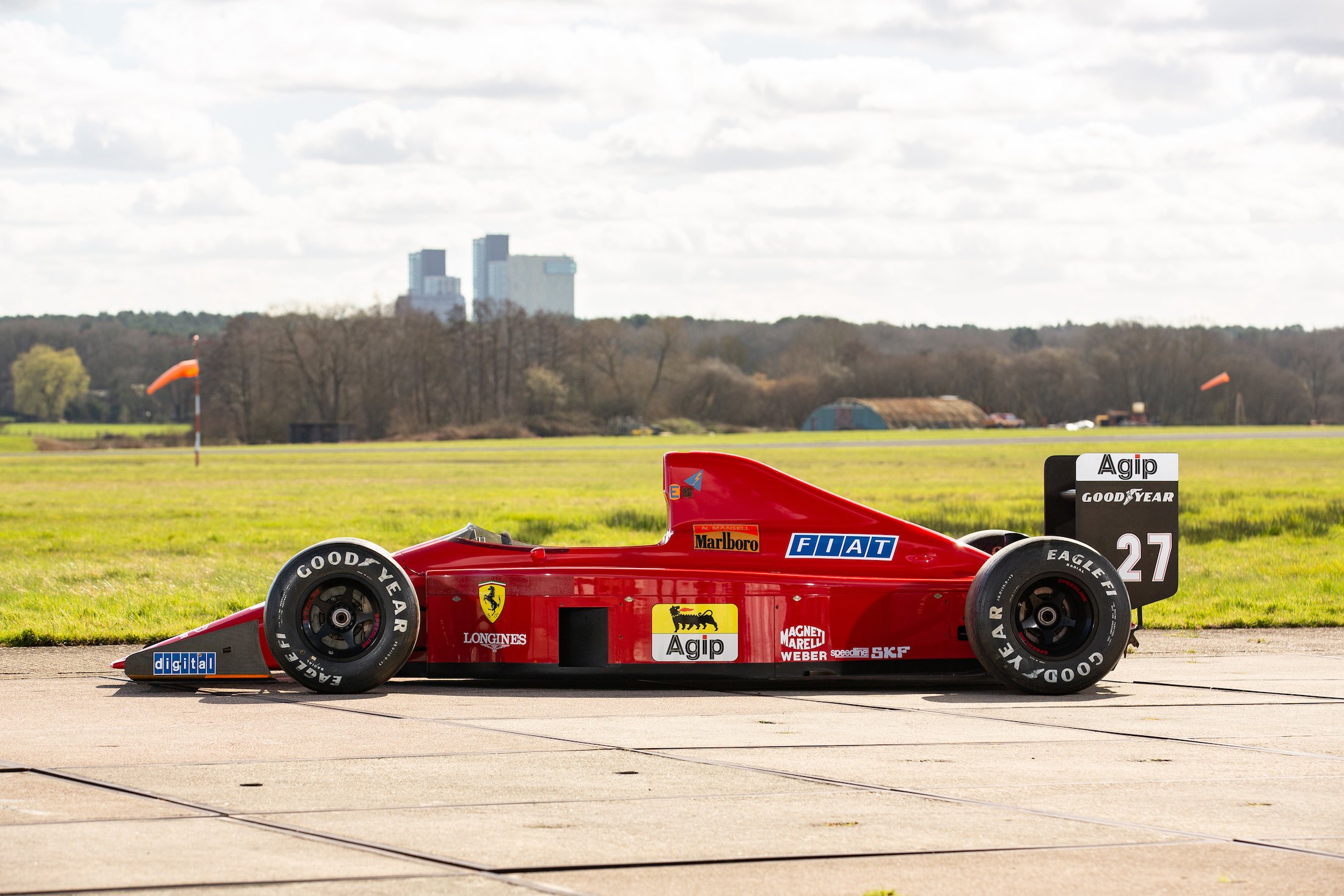
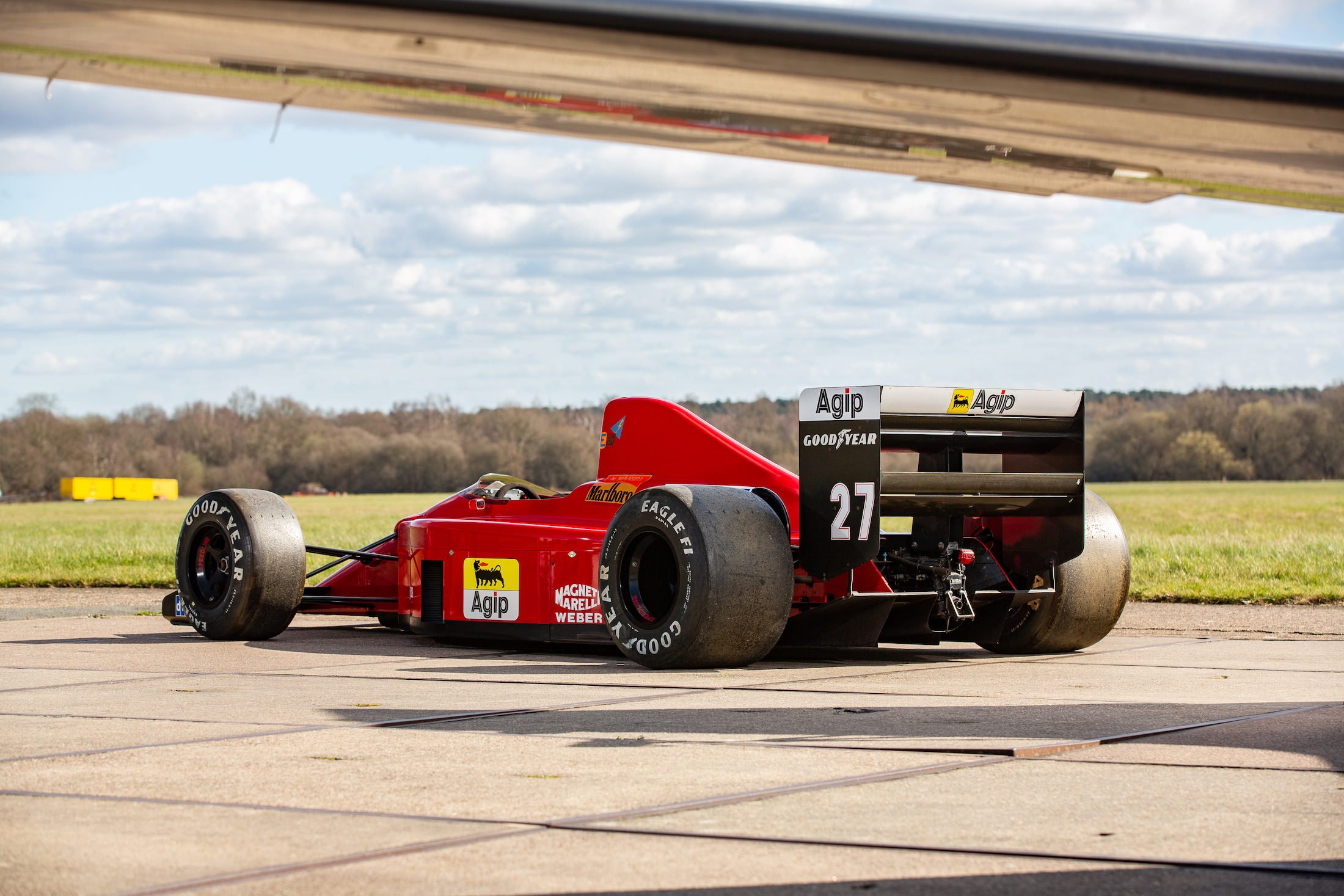
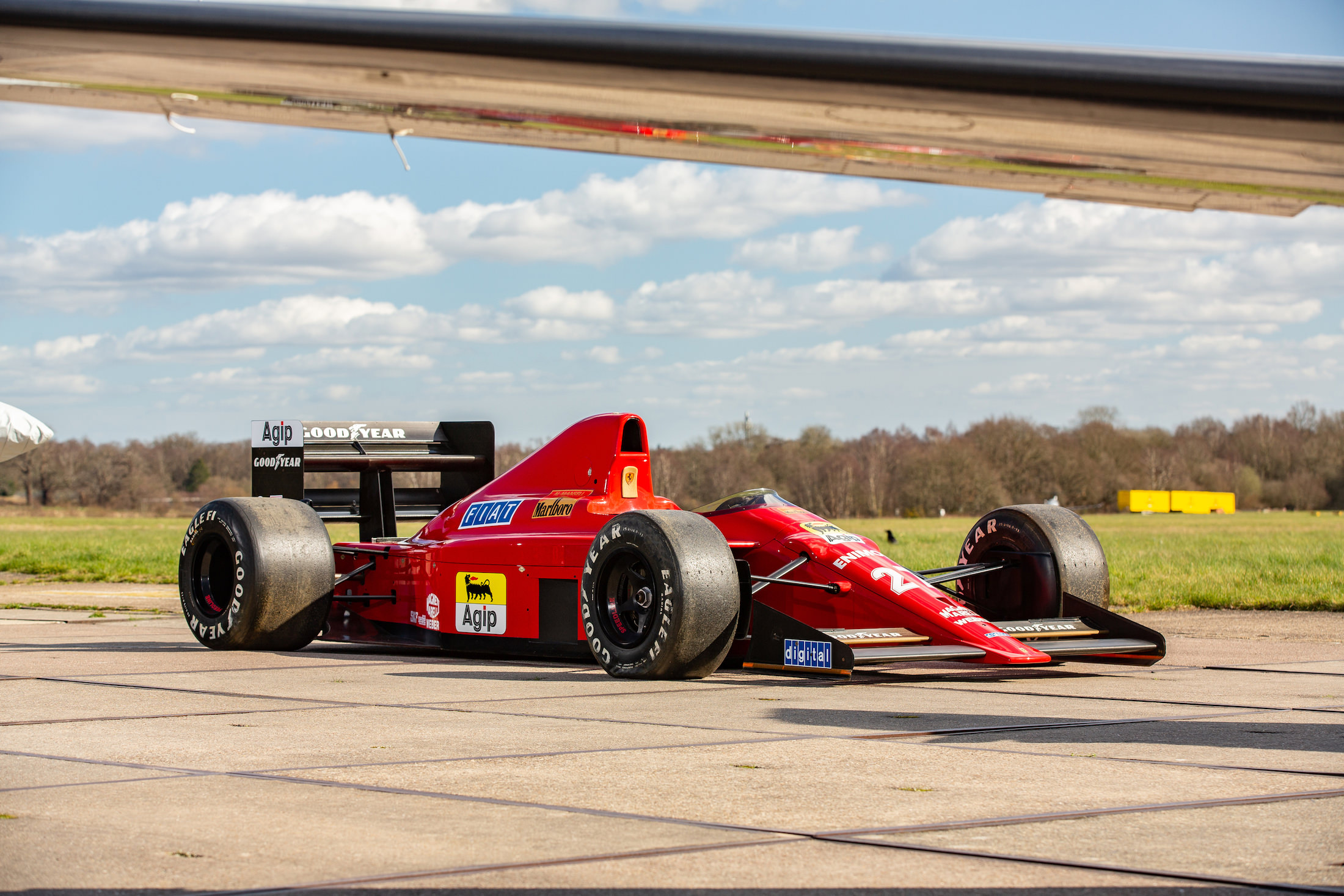
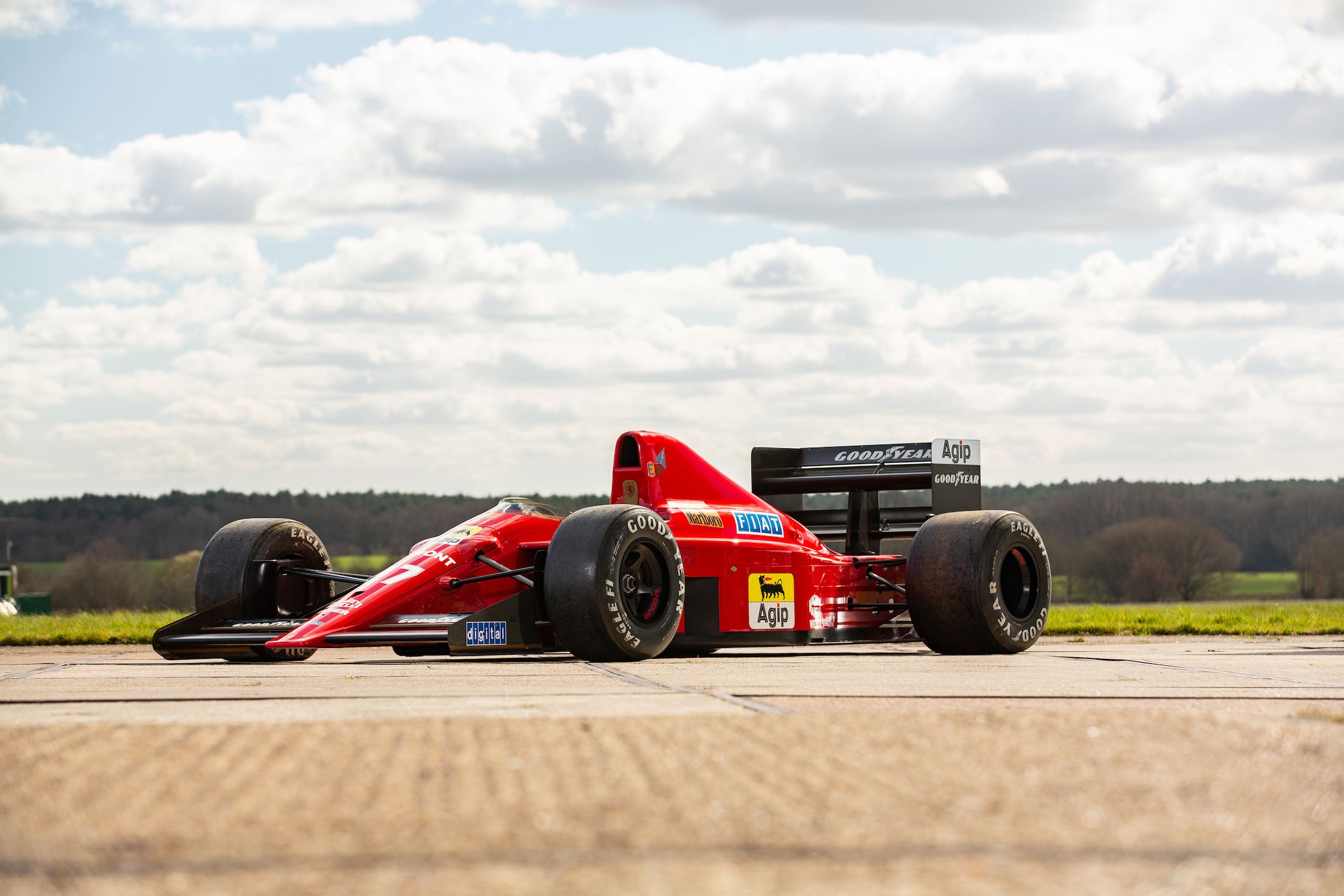
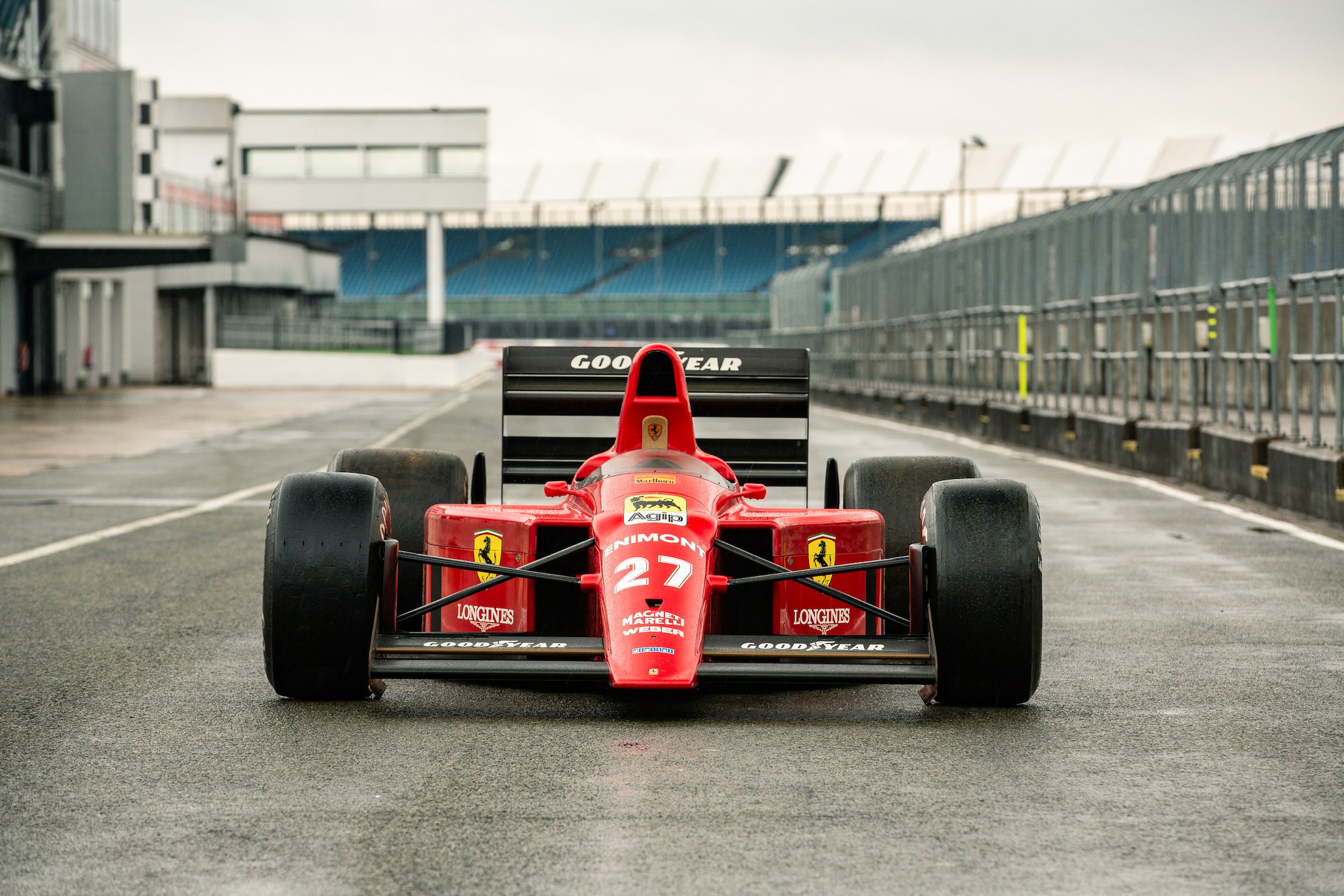
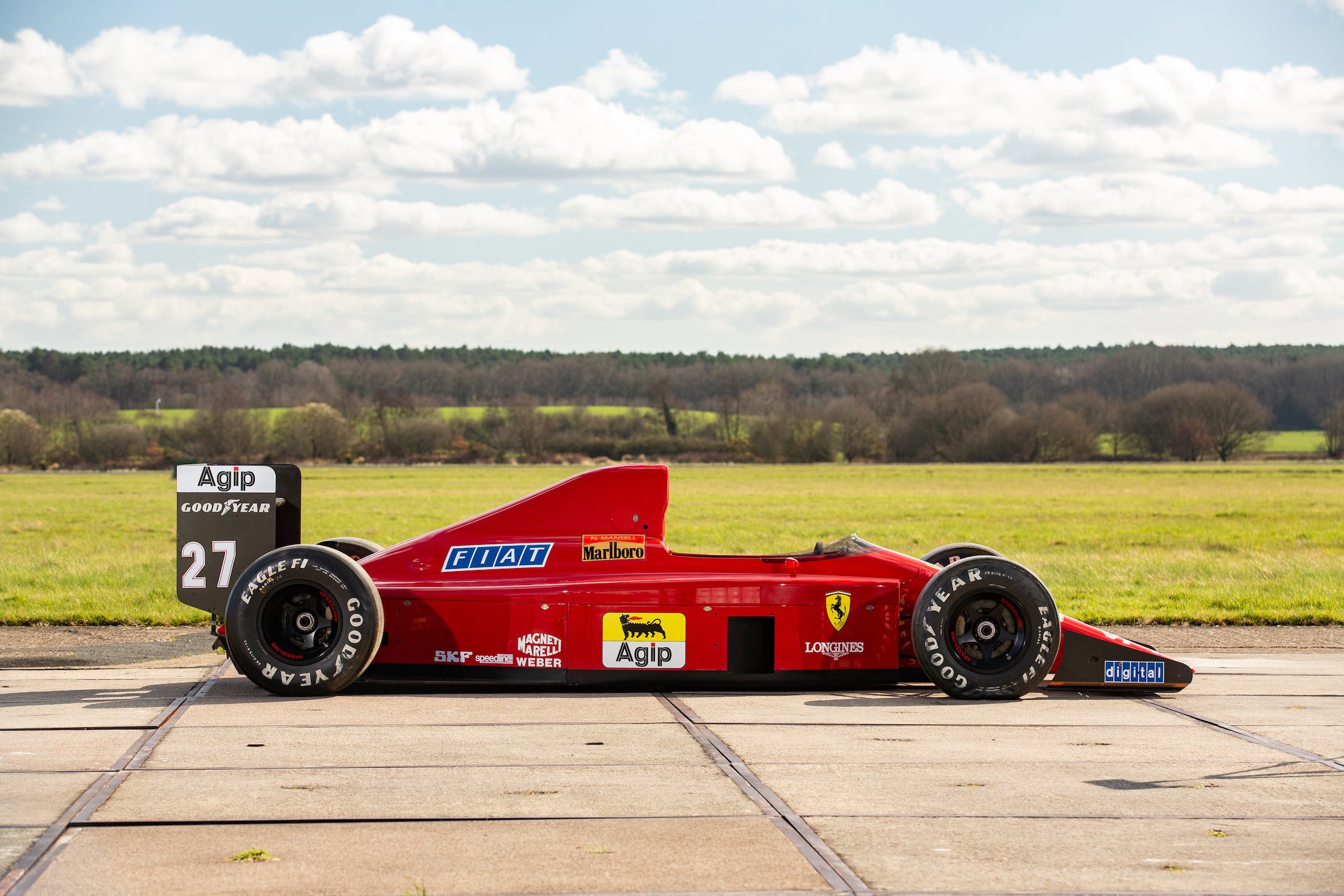
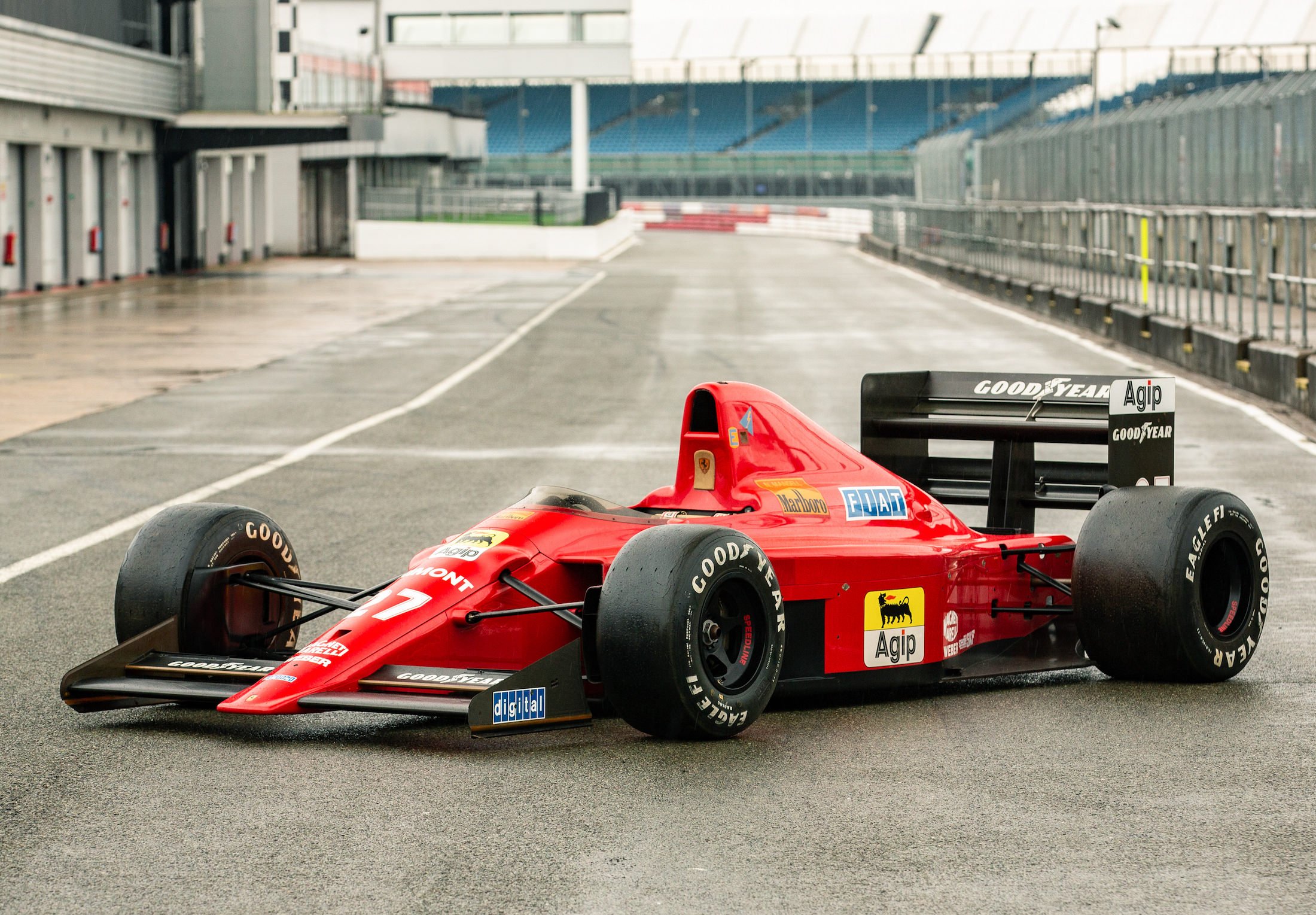
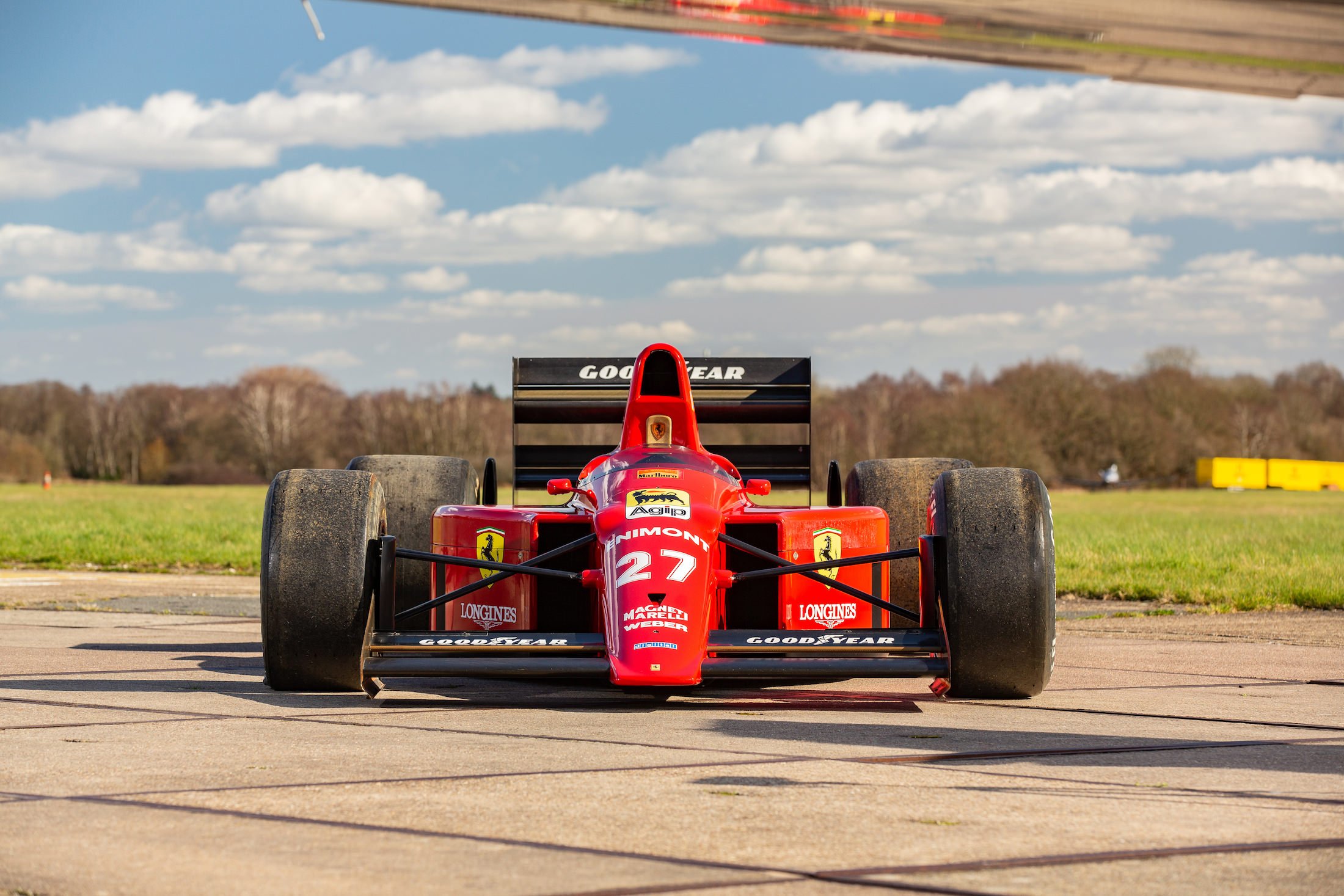
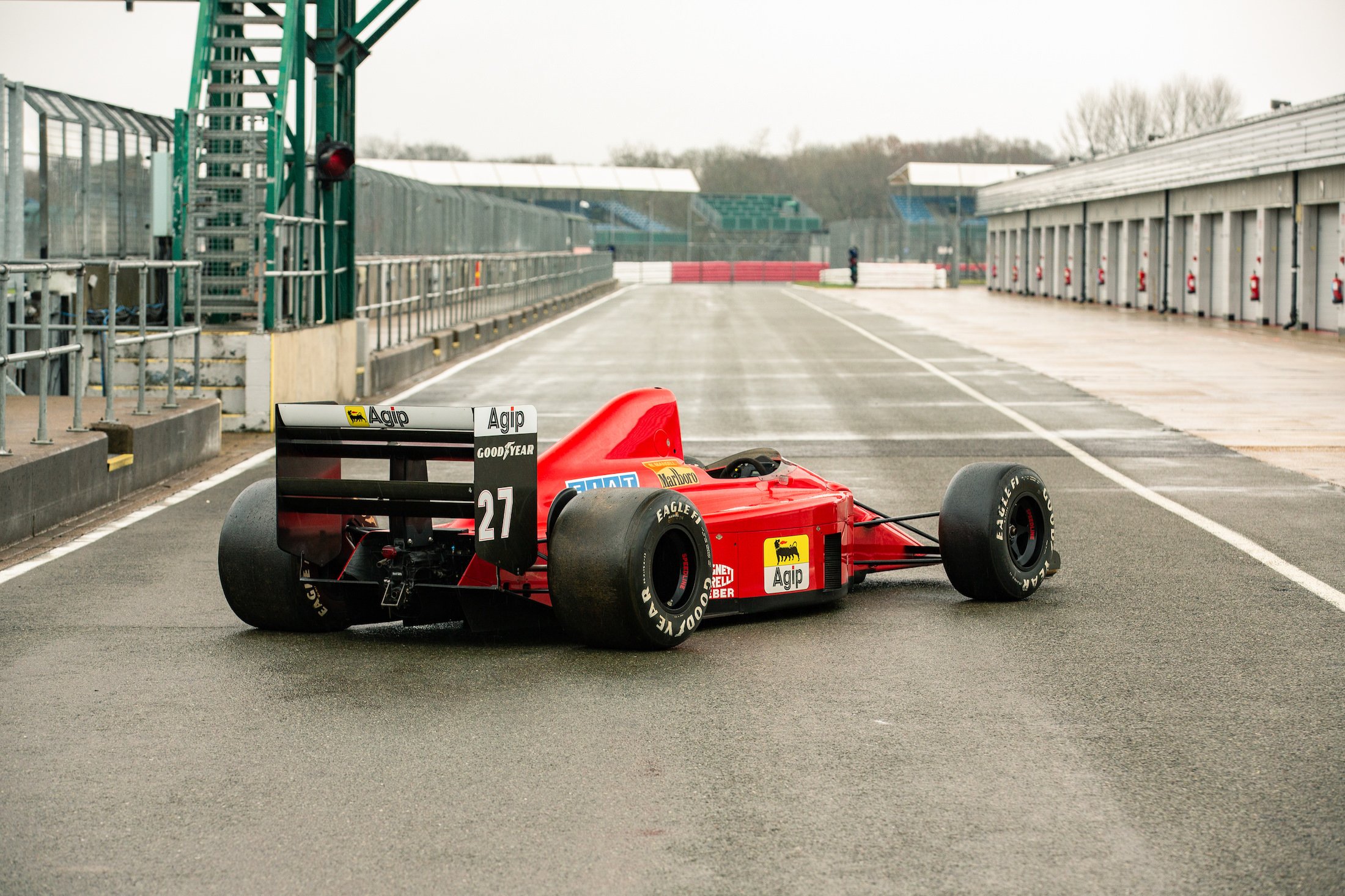
This is the Ferrari 640 F1 car that was driven by Nigel Mansell to wins in both the Brazilian and Hungarian Grands Prix in 1989. After the season this car went home with Mansell, and it’s been in his personal collection ever since.

Mansell has now decided to part with a number of cars from his collection, including this Ferrari, and they’re due to roll across the auction block in Monaco in mid-May.

Fast Facts – Nigel Mansell’s Ferrari 640 F1 Car

  • The Ferrari 640 Formula 1 car was introduced for the 1989 season, it was the first Ferrari with a semi-automatic gearbox and despite reliability issues in testing, Mansell would go on to claim victory in the first race of the season.
  • Mansell’s relationship with Ferrari was a fruitful one, he was the last F1 driver to be personally selected by Enzo Ferrari before his passing in 1988. The Italian Ferrari fans nicknamed Mansell “il leone” (“the lion”) due to his fearless driving style.
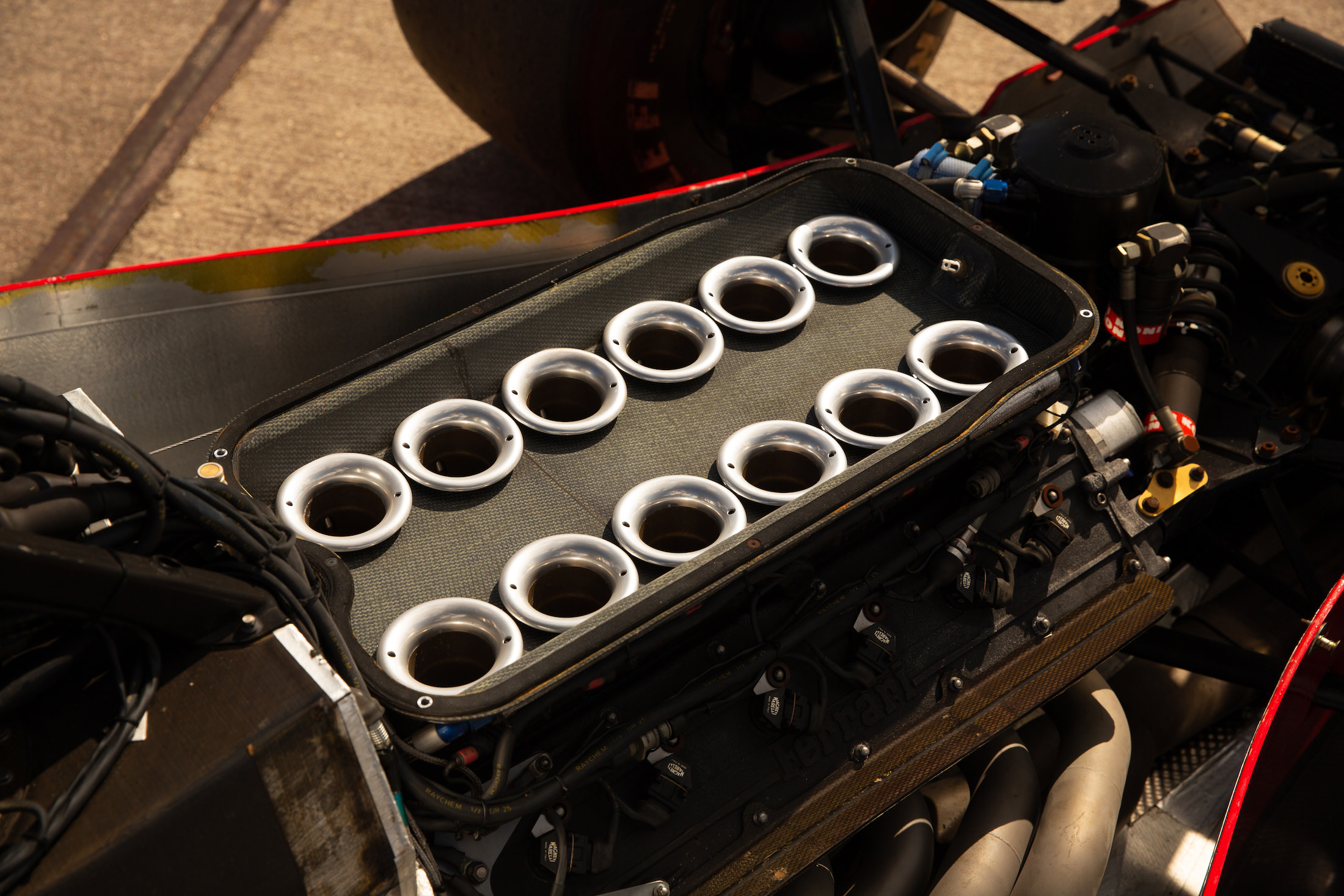
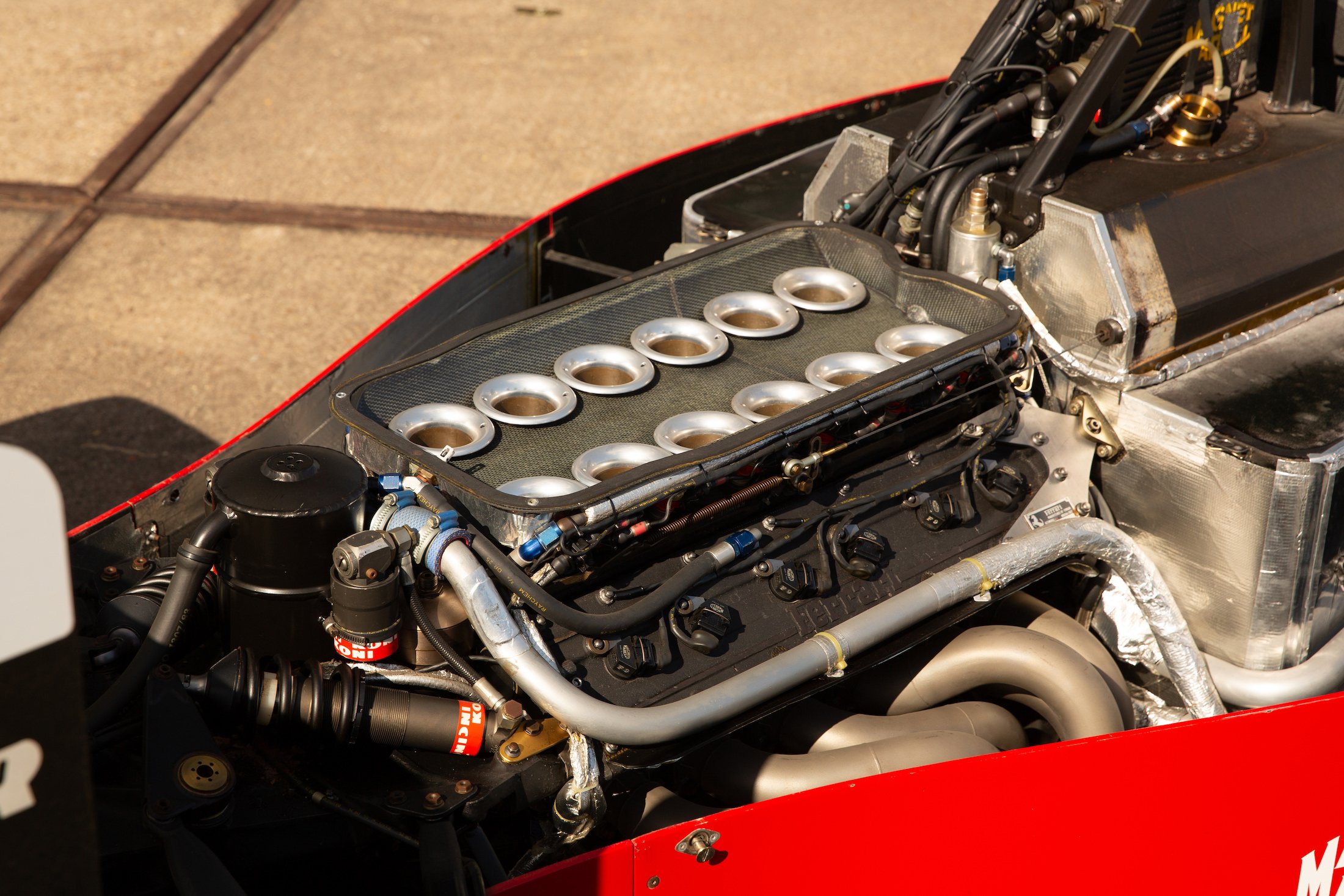
  • The Ferrari 640 was the first of the naturally aspirated Ferraris after the end of the first F1 turbo era, it was powered by a 3.5 liter 65º V12 called the Ferrari Tipo 035/5. This engine produced up to 660 bhp at 13,000 rpm.
  • During the 1989 season the Ferrari 640 would win three races, claim 9 podium places, set four fastest laps, and give Ferrari a 3rd pace finish in the championship.

Nigel Mansell

Nigel Mansell was a driver who came up through the ranks relying entirely on driving skill, not money or connections. He started out racing in karts, moved up to Formula Ford and from there moved into Formula Three.

Nigel Mansell Ferrari 640 F1 Car 15

The Ferrari 640 is powered by the Ferrari Tipo 035/5 engine, a 3.5 liter 65º V12 that produces up to 660 bhp at 13,000 rpm.

He twice broke his back driving in the lower Formulas before he got his first big break – Colin Chapman at Lotus asked him to attend a test day driving the Lotus 79.

Mansell was still suffering the effects of multiple broken vertebra, and so he attended the test loaded up on painkillers. Despite his lack of experience behind the wheel of an F1 car Mansell impressed Chapman, and landed himself a role as official team test driver.

So impressed was Chapman with Mansell’s talent as a test driver that he gave him a trio of race starts in the 1980 season.

After a difficult few years with Lotus he moved to Williams in 1985, in the competitive cars being built by Williams, Mansell managed to come second in the World Driver’s Championship twice, in 1986 and 1987.

In 1989 he moved to Ferrari where he shocked the world by winning his first race for the team driving the Ferrari 640. The car proved fast but unreliable – by the end of the season Mansell would either end up on the podium or he would retire from the race, there was no in-between.

Nigel Mansell Ferrari 640 F1 Car 3

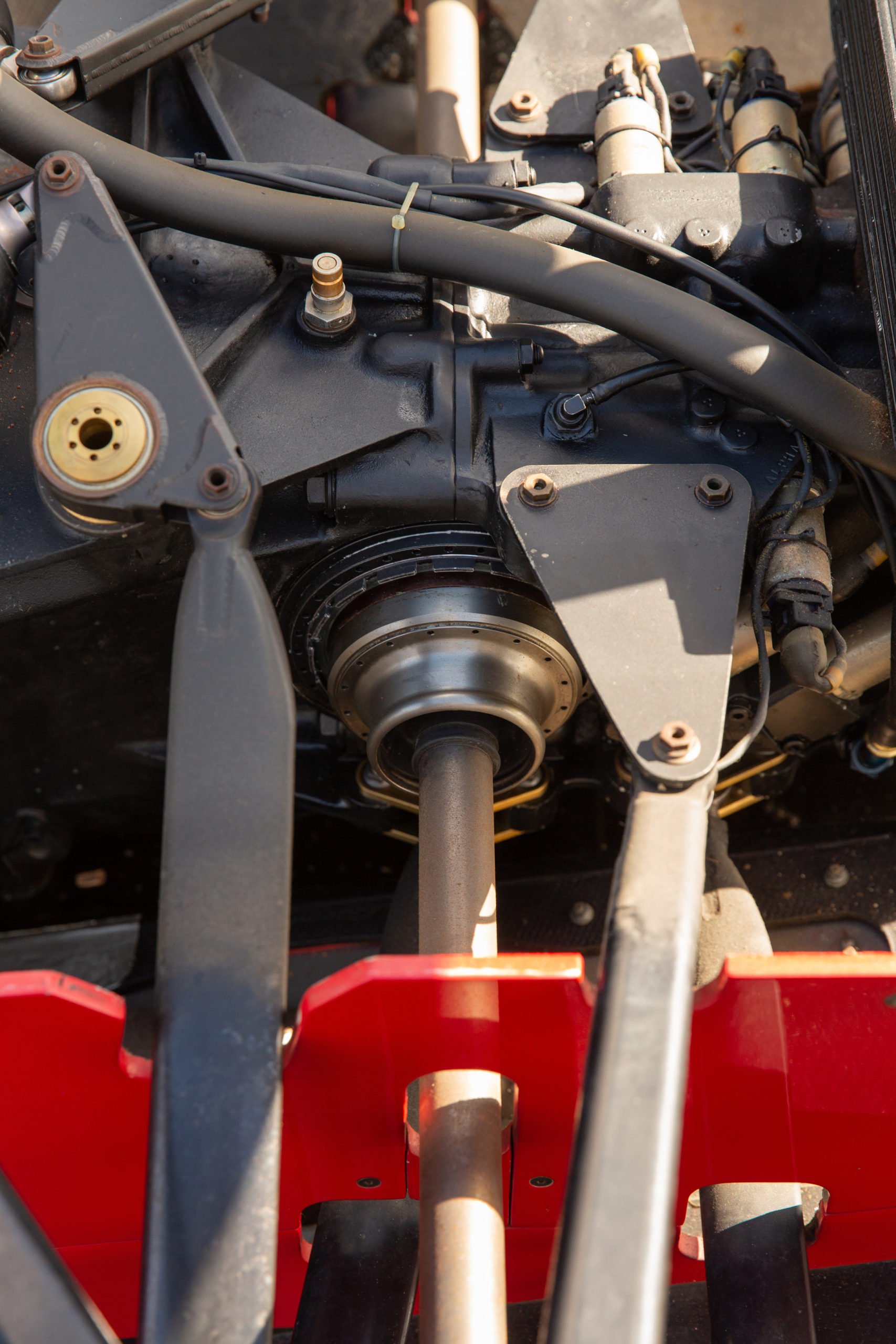
The semi-automatic electro-hydraulic gearbox was the source of many problems for the 640. By the end of the 1989 season Mansell would either end a race on the podium or in retirement.

Later in his career Mansell would move back to Williams, winning the World Driver’s Championship with them in 1992.

He then took the unusual step of moving over to race in the American open-wheeled CART series, where he would become the first person to ever win the championship in their first year.

He was also the first and only person in history to hold both the F1 title and the CART title at the same time.

The 1989 Ferrari 640 F1 Car Shown Here

The car you see here is chassis #109 of the Ferrari 640 series from 1989. This is the car that was shown to the world in February of 1989, the first new Ferrari Formula 1 car to ever be shown without Enzo Ferrari in attendance, as he had died a few months earlier.

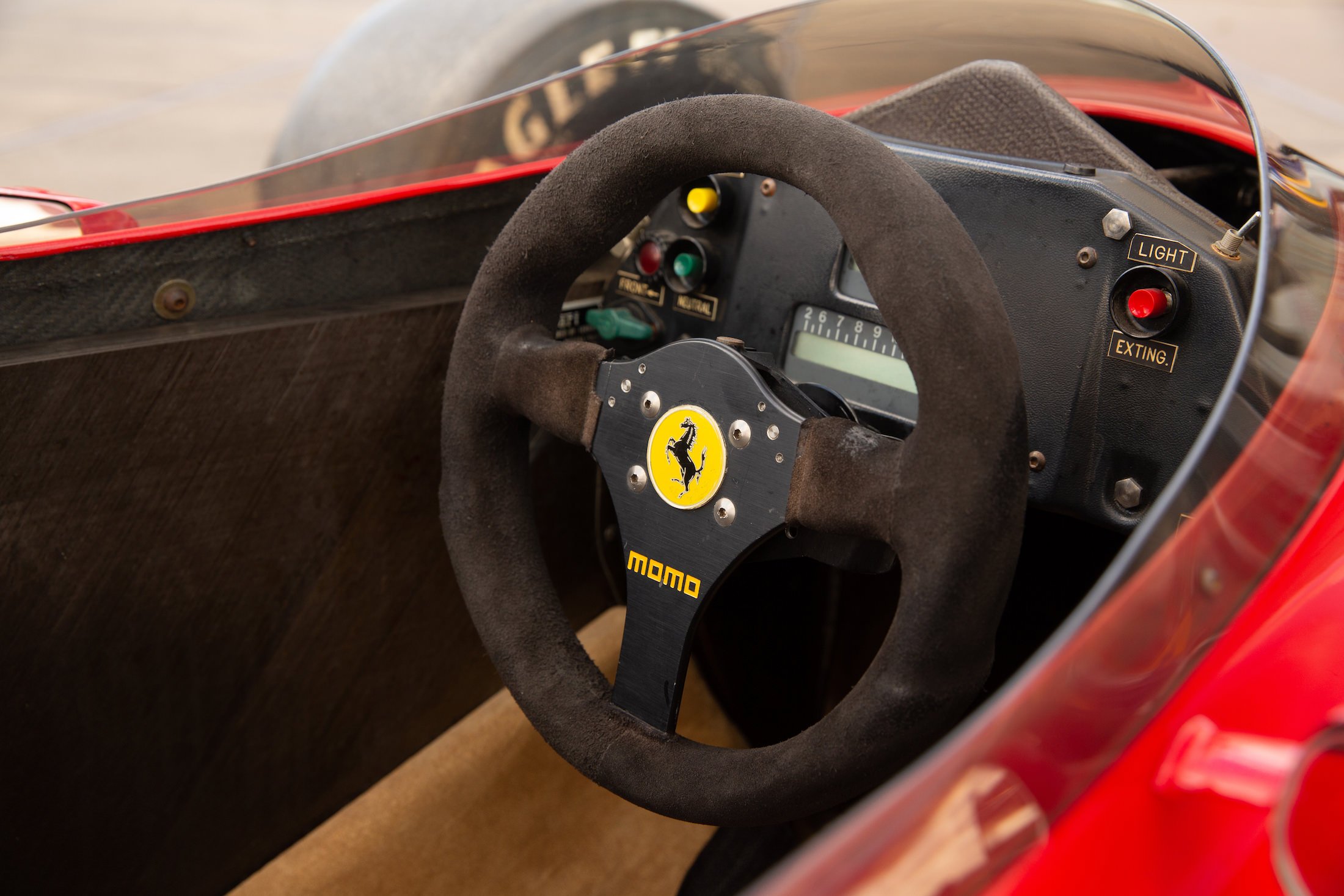
The Ferrari 640 would be the first Ferrari F1 car to use an electro-hydraulic semi-automatic transmission, though it offers fast gear changes it suffered from significant reliability problems.

This transmission had proven unreliable in testing, so much so that after the first race of the season Mansell joked that he had booked his flight home for halfway through the race – believing that the car would only last a few laps.

No one was more surprised than Mansell himself when he went on to win the race convincingly, instantly vindicating the faith that the late Enzo Ferrari had had in him.

Nigel Mansell Ferrari 640 F1 Car 18

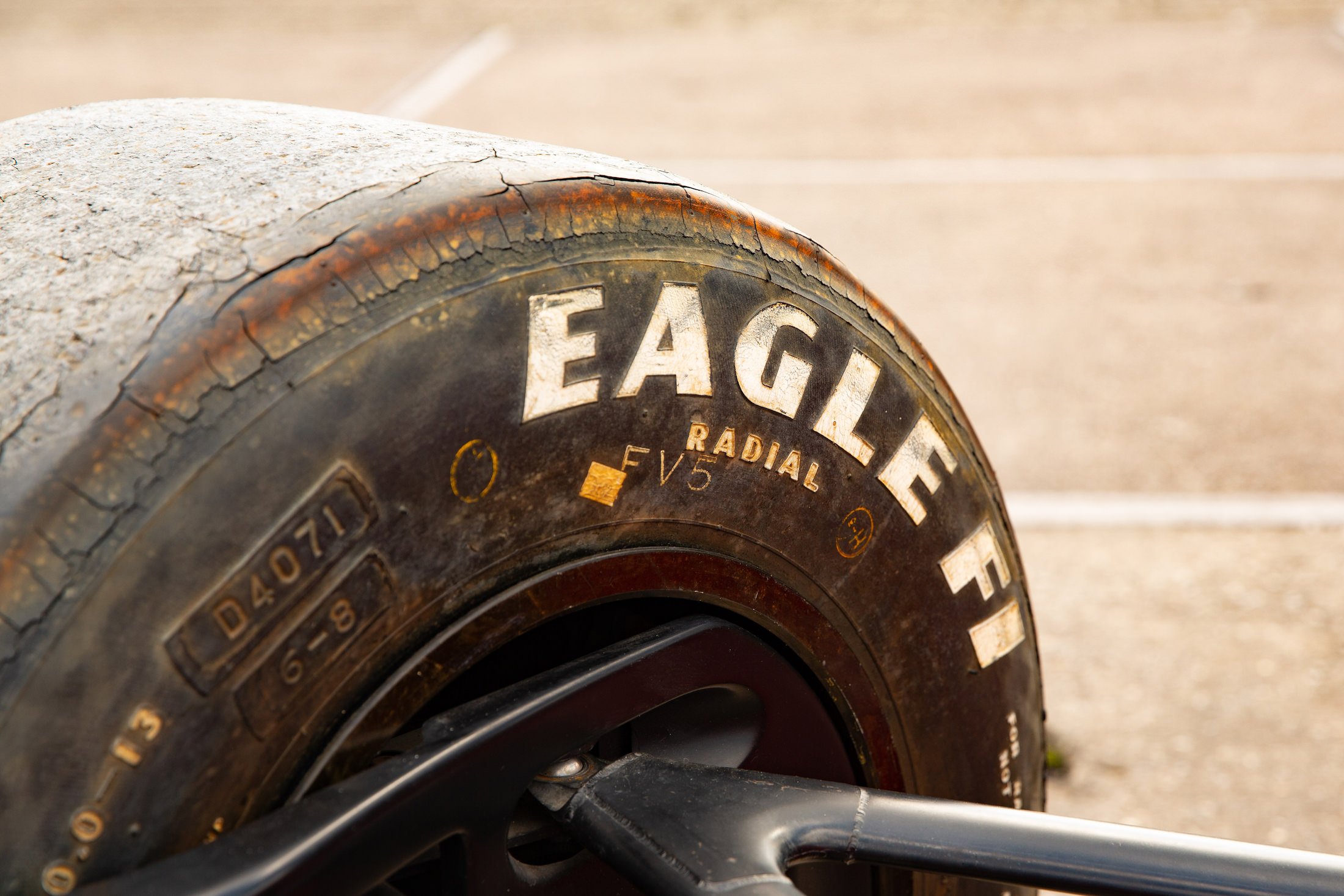
The listing notes that should the new owner wish to drive the car they’ll need to get it fully recommissioned first. It hasn’t been driven since its last race back in 1989 and remains in original condition.

By the end of the 1989 season the Ferrari 640 would take a total of 3 wins, 9 podiums, and 4 fastest laps. The car would finish 3rd in the World Constructor’s Championship with 59 points.

The issues with unreliability would prove ever present throughout the season, Mansell had 7 retirements and his teammate Gerhard Berger had 12.

After the end of the season Ferrari gifted the car you see here to Mansell, it would be the second Ferrari in his collection as Enzo Ferrari had given him a brand new Ferrari F40 as a signing bonus when he joined the team.

Mansell is now parting with a small number of cars from his personal collection including chassis #109.

It’s due to roll across the auction block with RM Sotheby’s on the 14th of May in Monaco, if you’d like to read more about it or register to bid you can click here to visit the listing.
Nigel Mansell Ferrari 640 F1 Car 20 Nigel Mansell Ferrari 640 F1 Car 19 Nigel Mansell Ferrari 640 F1 Car 17 Nigel Mansell Ferrari 640 F1 Car 16 Nigel Mansell Ferrari 640 F1 Car 14 Nigel Mansell Ferrari 640 F1 Car 13 Nigel Mansell Ferrari 640 F1 Car 12 Nigel Mansell Ferrari 640 F1 Car 11 Nigel Mansell Ferrari 640 F1 Car 10 Nigel Mansell Ferrari 640 F1 Car 9 Nigel Mansell Ferrari 640 F1 Car 8 Nigel Mansell Ferrari 640 F1 Car 7 Nigel Mansell Ferrari 640 F1 Car 6 Nigel Mansell Ferrari 640 F1 Car 5 Nigel Mansell Ferrari 640 F1 Car 4 Nigel Mansell Ferrari 640 F1 Car 2 Nigel Mansell Ferrari 640 F1 Car 1

Images: Tom Gidden ©2022 Courtesy of RM Sotheby’s

Nigel Mansell Ferrari 640 F1 Car

The post Nigel Mansell Is Selling His Race-Winning 1989 Ferrari 640 Formula 1 Car appeared first on Silodrome.


from Silodrome https://silodrome.com/nigel-mansell-ferrari-640-formula-1-car/
via gqrds
The New MOMO Prototipo 370MM Steering Wheel

This is the new 370mm version of the MOMO Prototipo steering wheel, it’s been developed to offer a larger diameter than the 350mm original to provide more leverage for those driving cars with no power steering, or those who prefer a wider wheel.
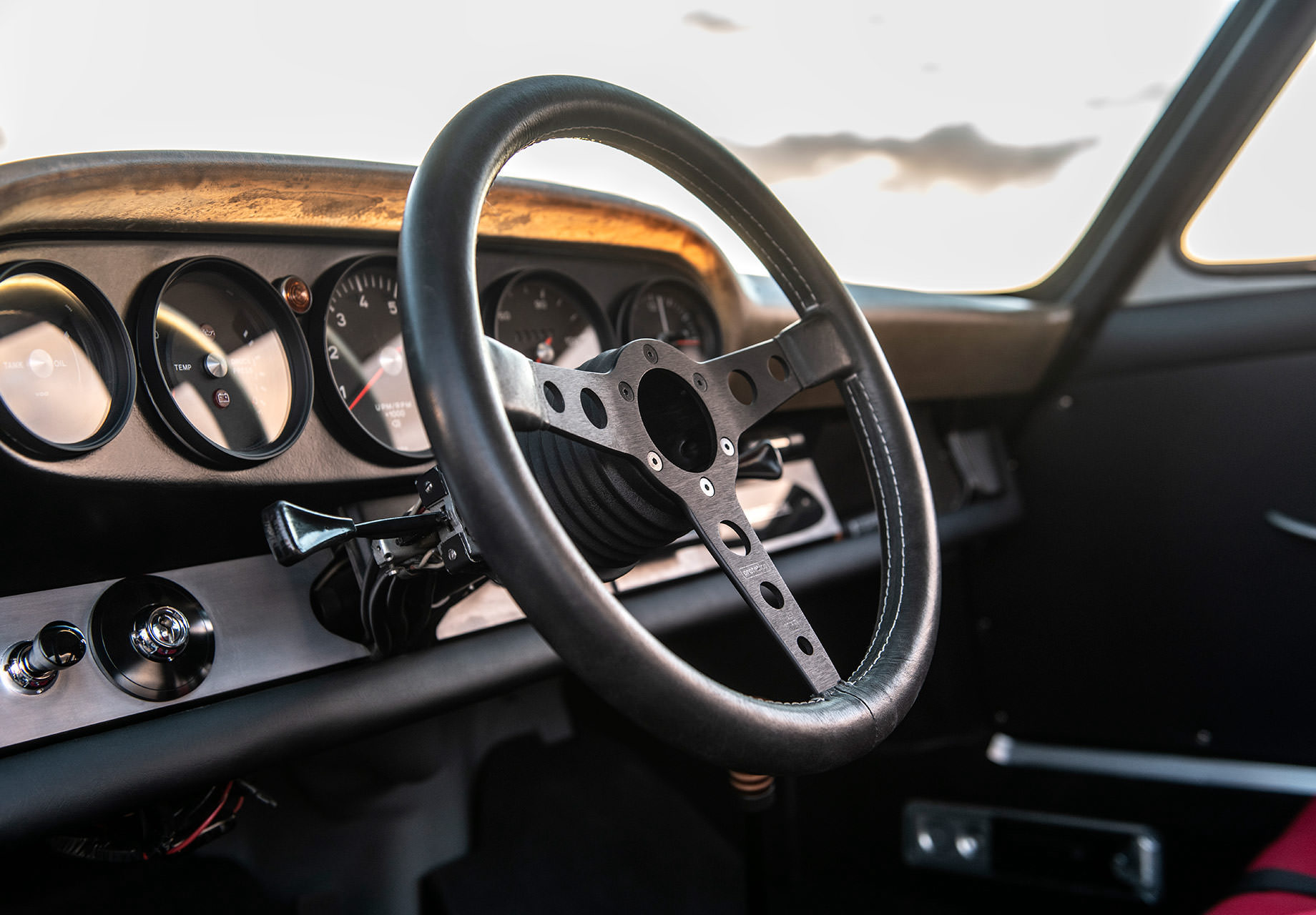
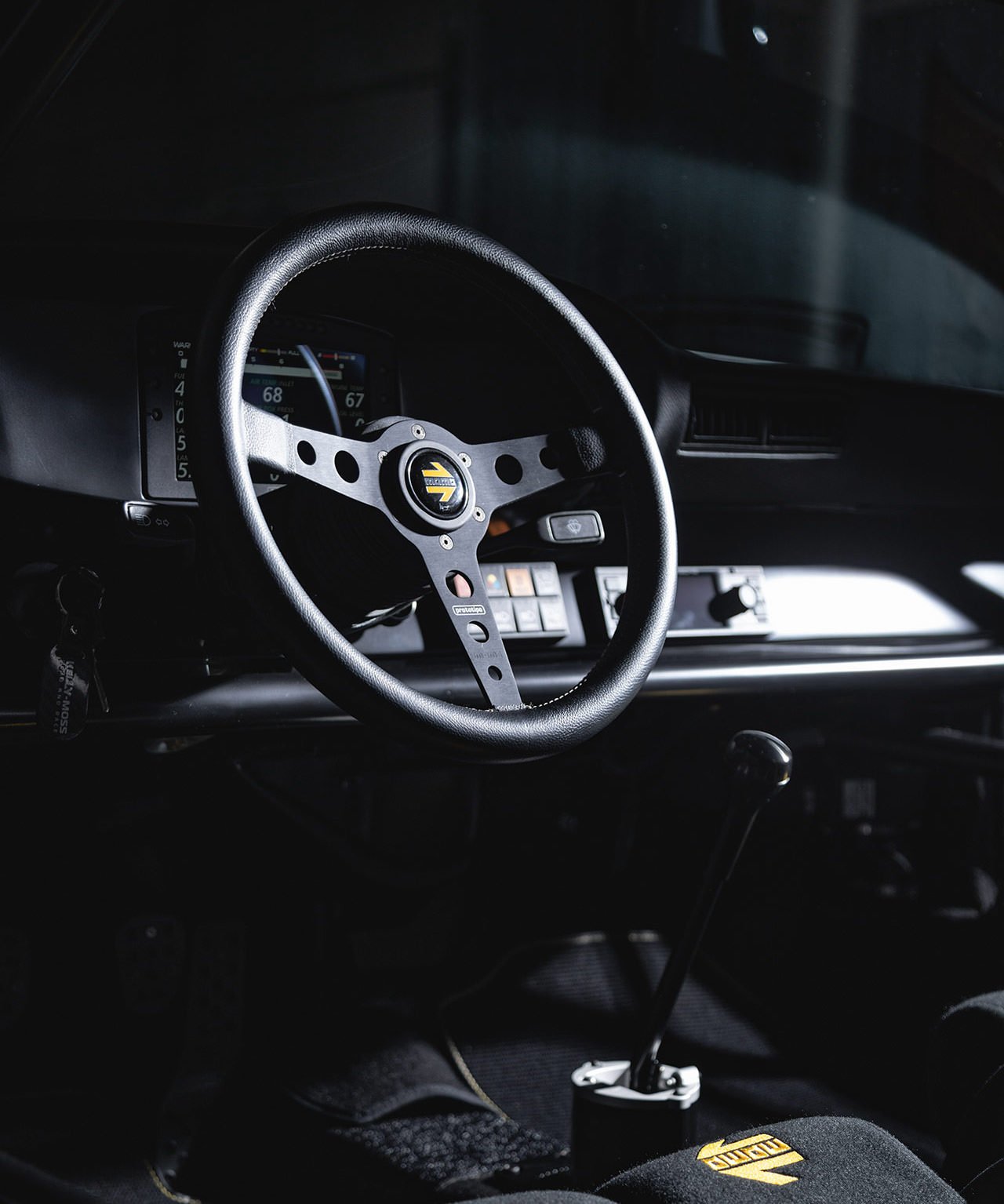
The MOMO Prototipo is one of the most popular aftermarket steering wheels in the world, and it has been for decades. The simple lightweight design makes use of an aluminum alloy structure with a curved wooden rim covered with hand-stitched leather.

The three central spokes of the wheel have circular holes drilled out in order to reduce weight, and a wide array of different colors and variations have been offered over the 50+ year lifespan of the model.


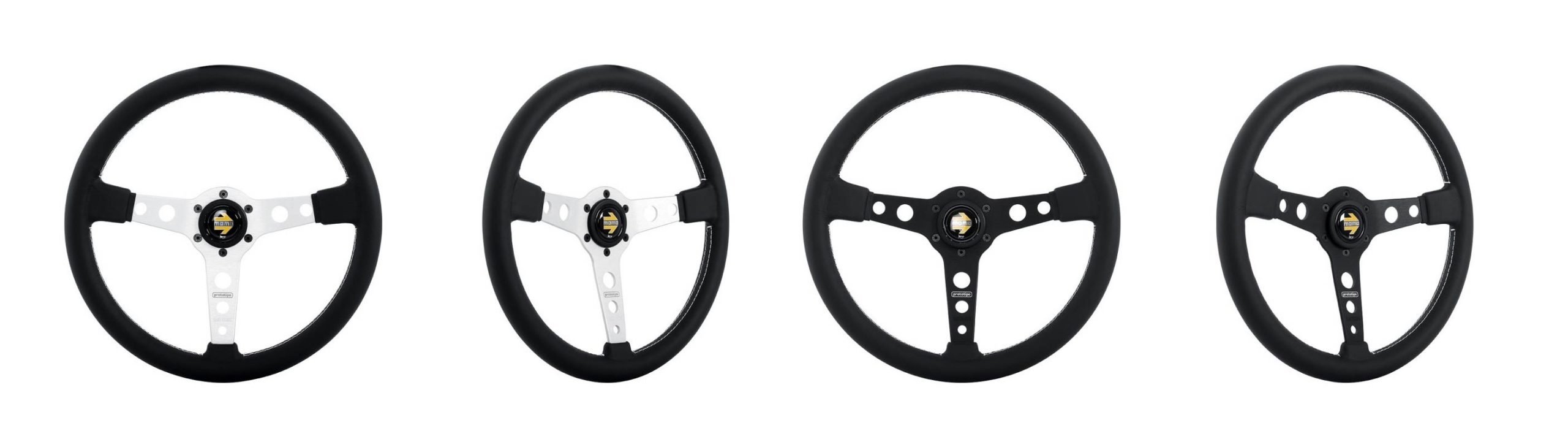
MOMO Prototipo 370MM Steering Wheel Collage

The MOMO Prototipo 370MM is available in either brushed alloy or black anodized finishes, with black leather upholstery around the rim.

MOMO was originally founded back in 1964 by Italian racing driver Gianpiero Moretti almost by accident. He was unhappy with the steering wheel he was racing with, so he approached an Italian craftsman with his own design for a steering wheel.

This Moretti-design wheel had a thicker rim and offered better grip, other drivers soon noticed it and asked him to make them one. One of these drivers was legendary Formula 1 driver John Surtees who fitted a Moretti steering wheel to his Ferrari F1 car in 1964, then went on to win the World Championship with it.

Moretti established a company to build his steering wheels in the Italian city of Monza, he called it “MOMO” as a portmanteau of “MOretti” and “MOnza.” Today, MOMO is inarguably the most famous steering wheel company in the world.

Visit The Store

MOMO Prototipo 370MM Steering Wheel MOMO Prototipo 370MM Steering Wheel 6 MOMO Prototipo 370MM Steering Wheel 1

Images provided by MOMO

MOMO Prototipo 370MM Steering Wheel 7

The post The New MOMO Prototipo 370MM Steering Wheel appeared first on Silodrome.


from Silodrome https://silodrome.com/momo-prototipo-370mm-steering-wheel/
via gqrds