Top Gear Presenter Chris Harris Is Selling His Ferrari 512 TR

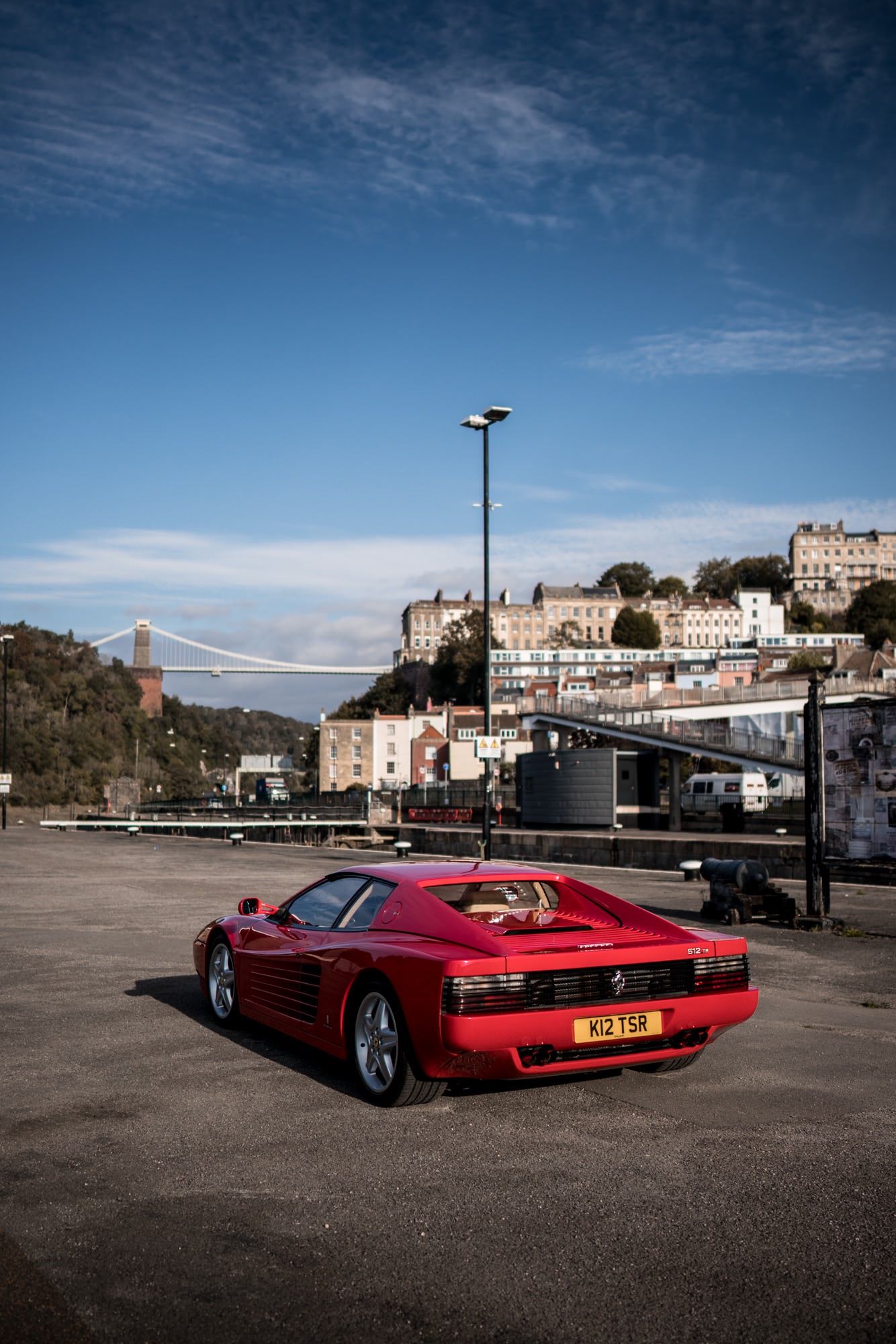
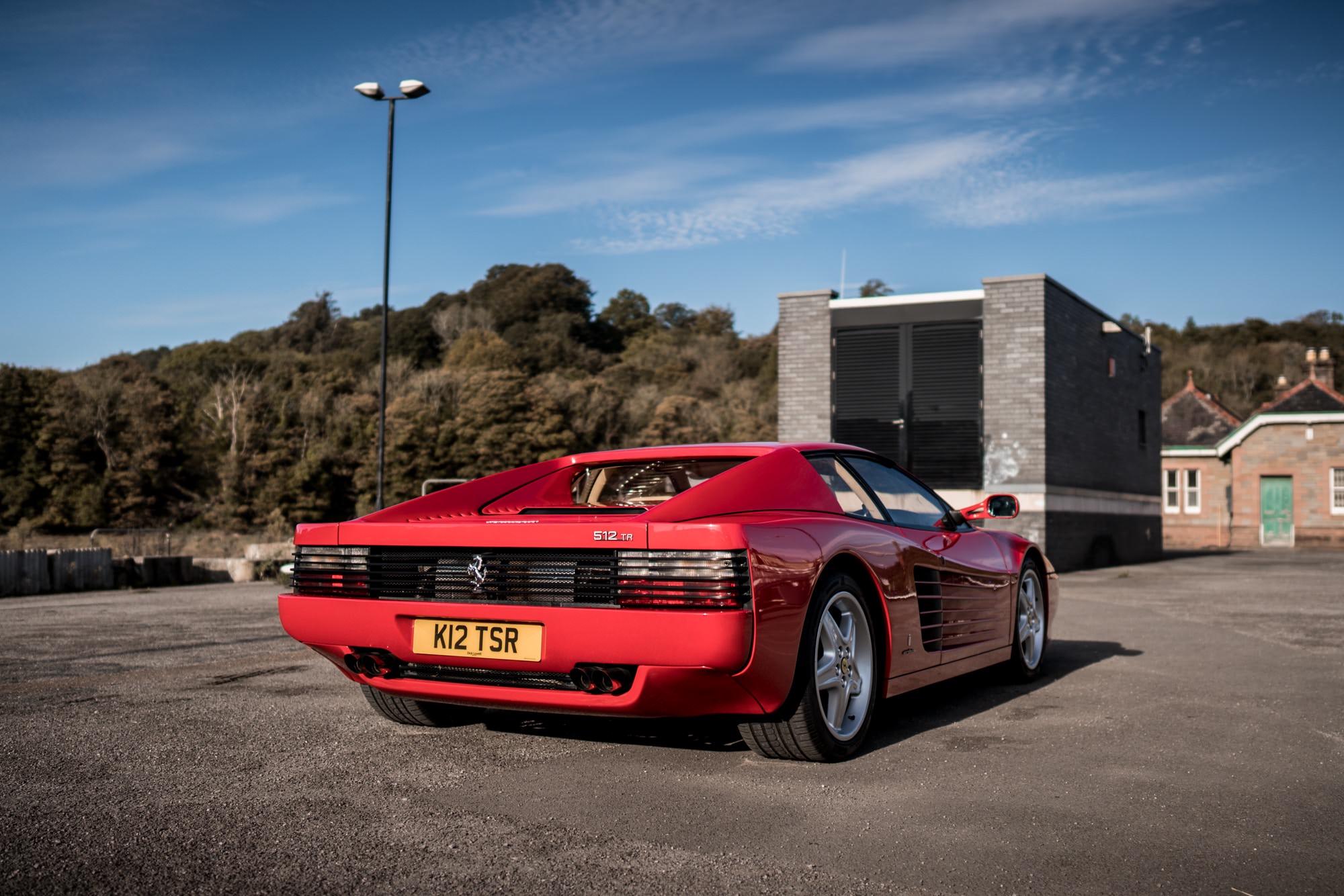
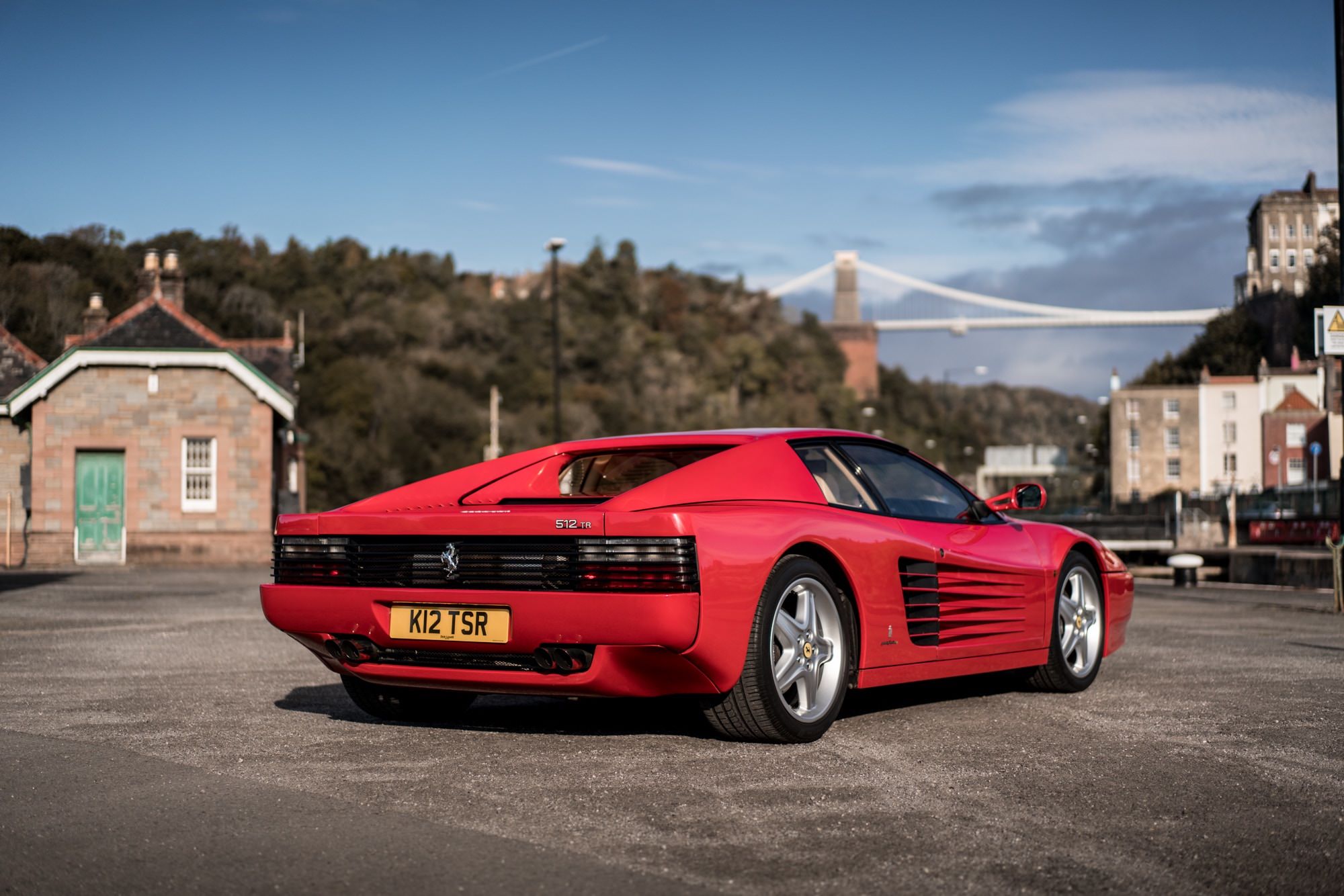
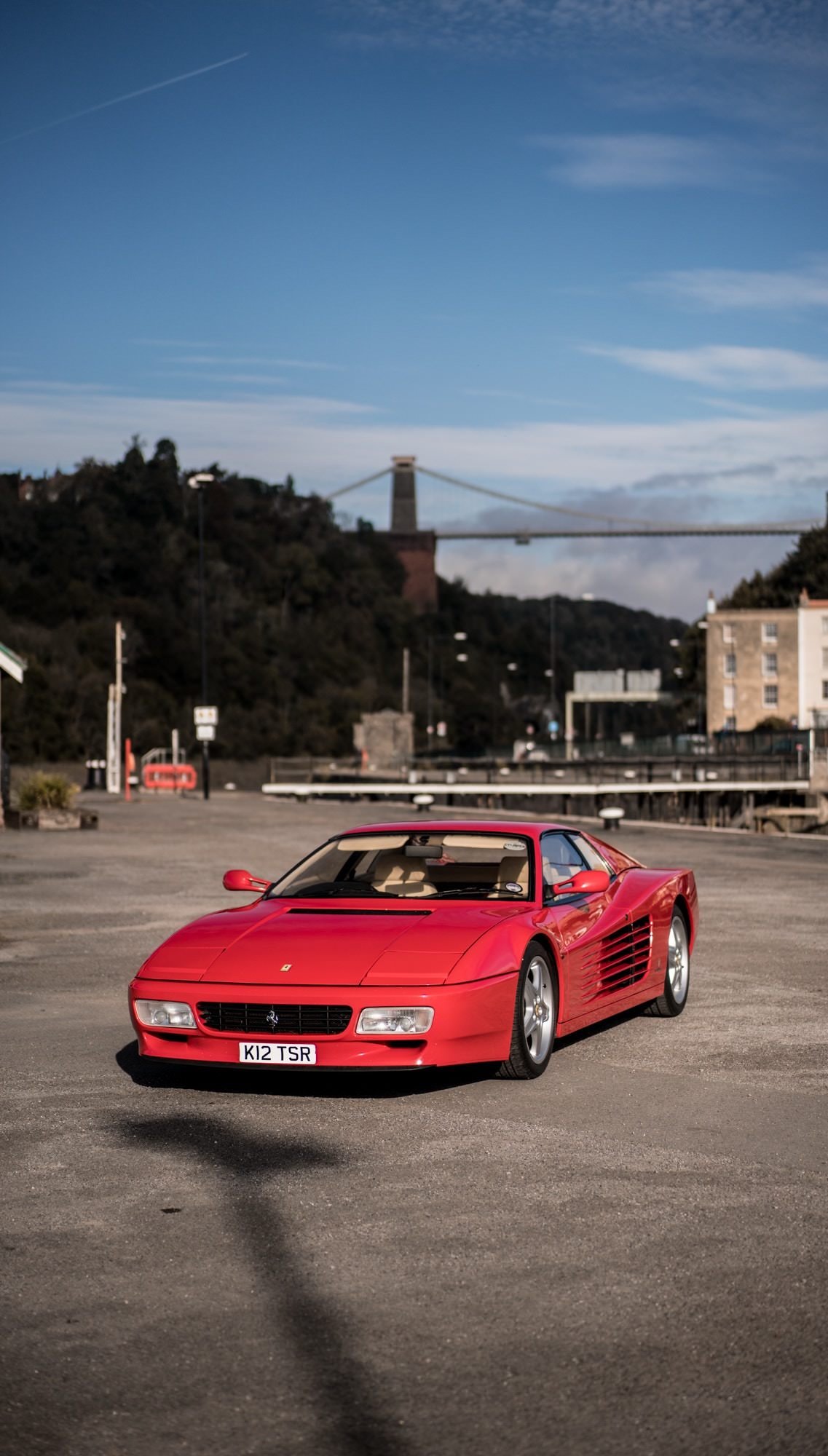
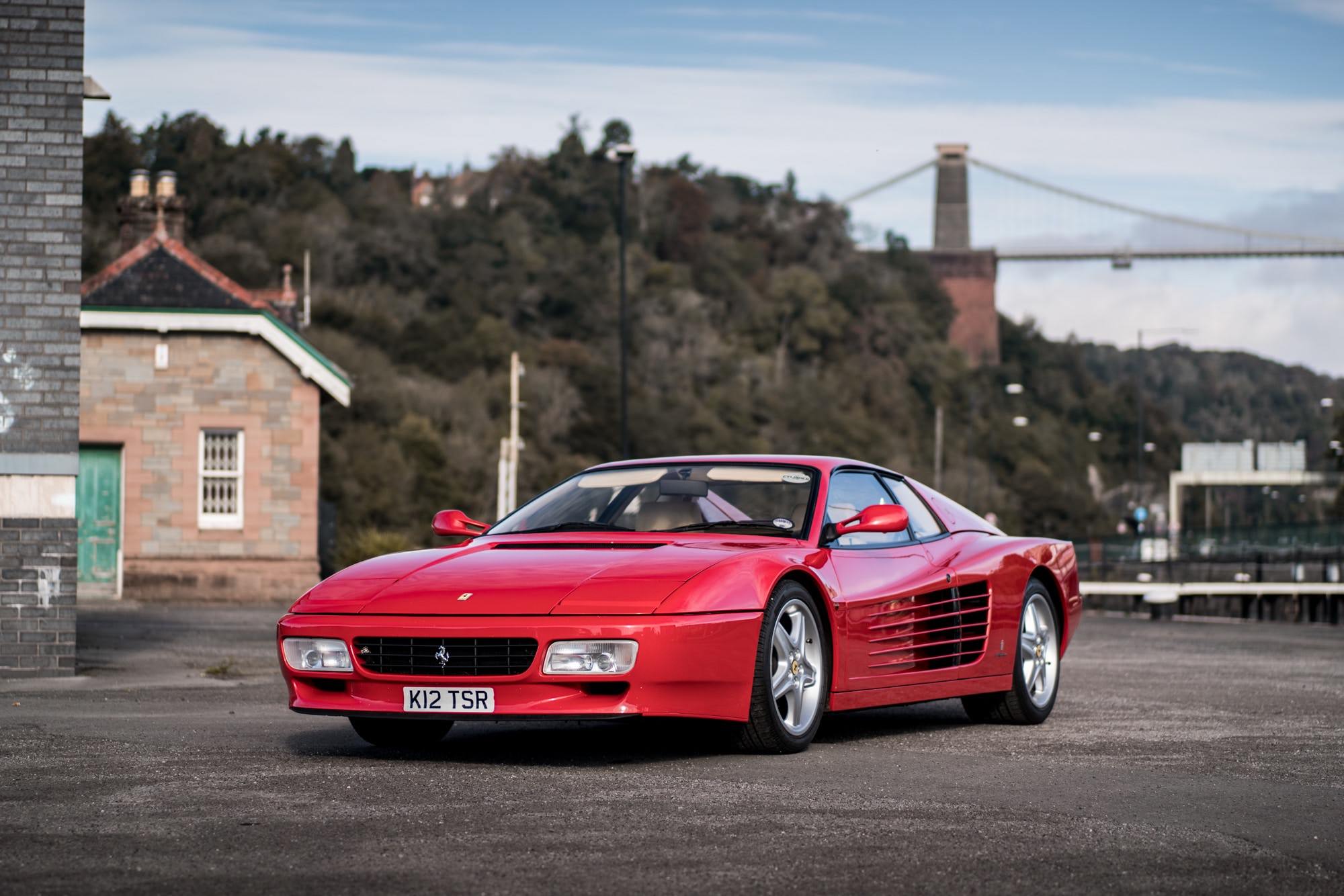
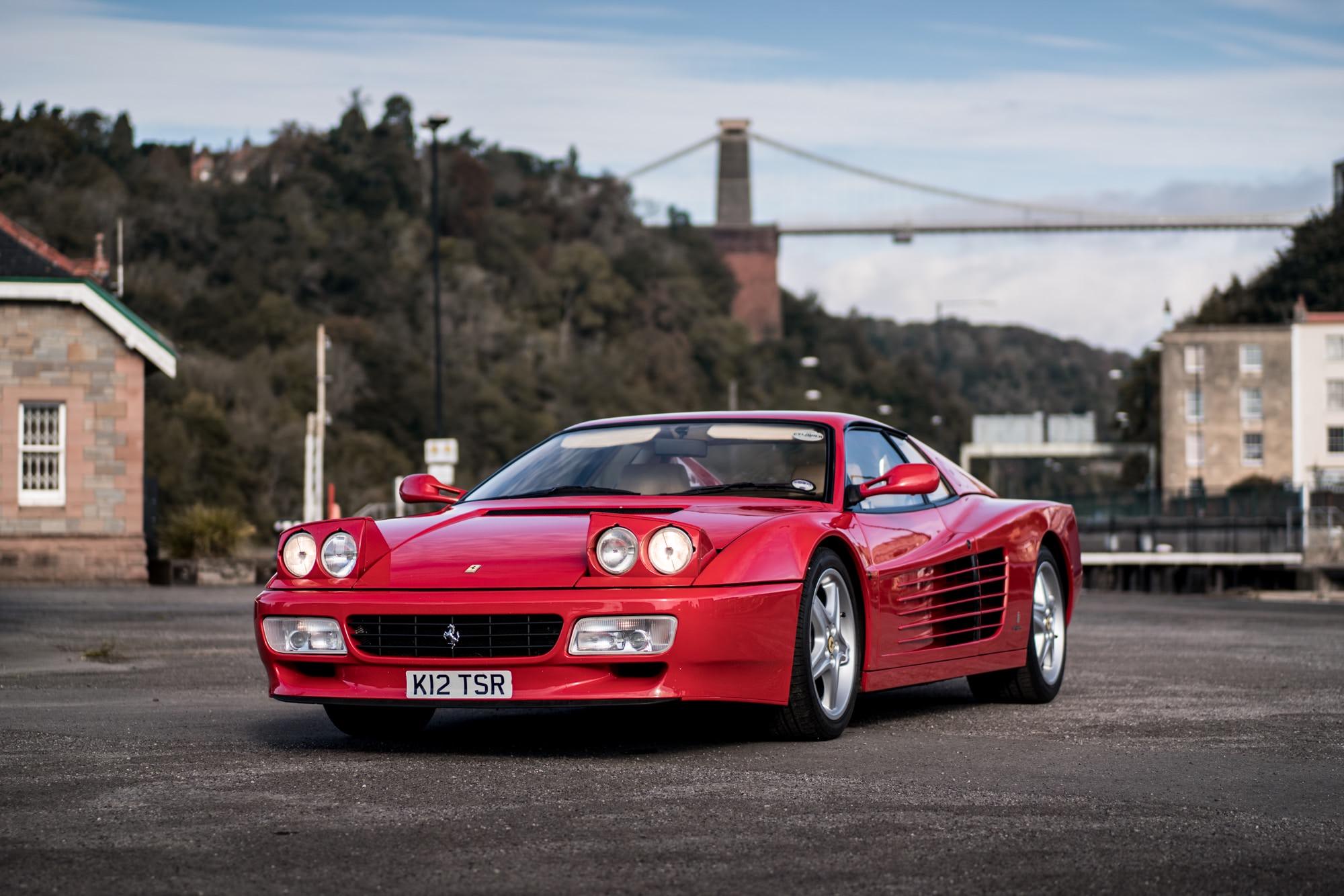
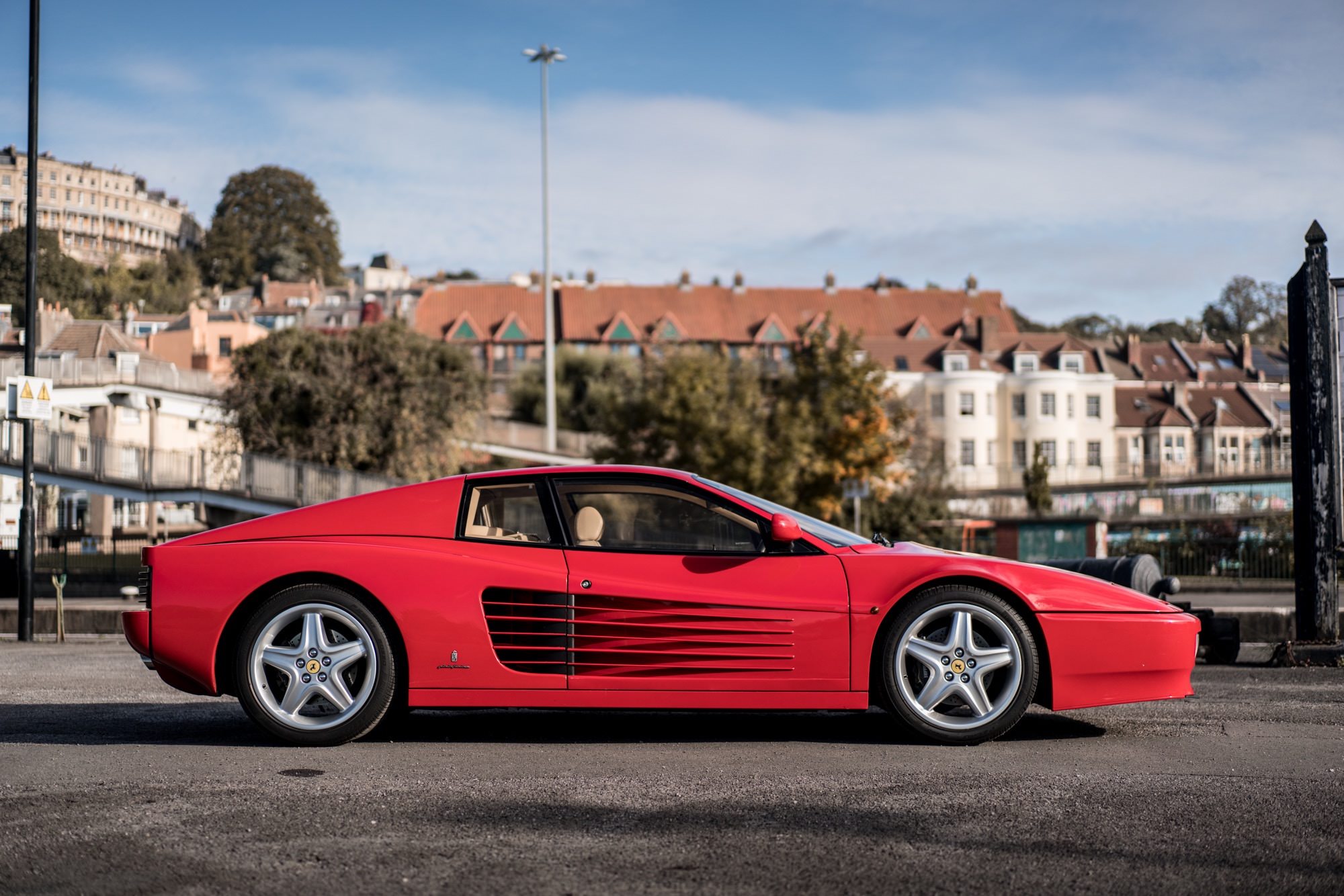
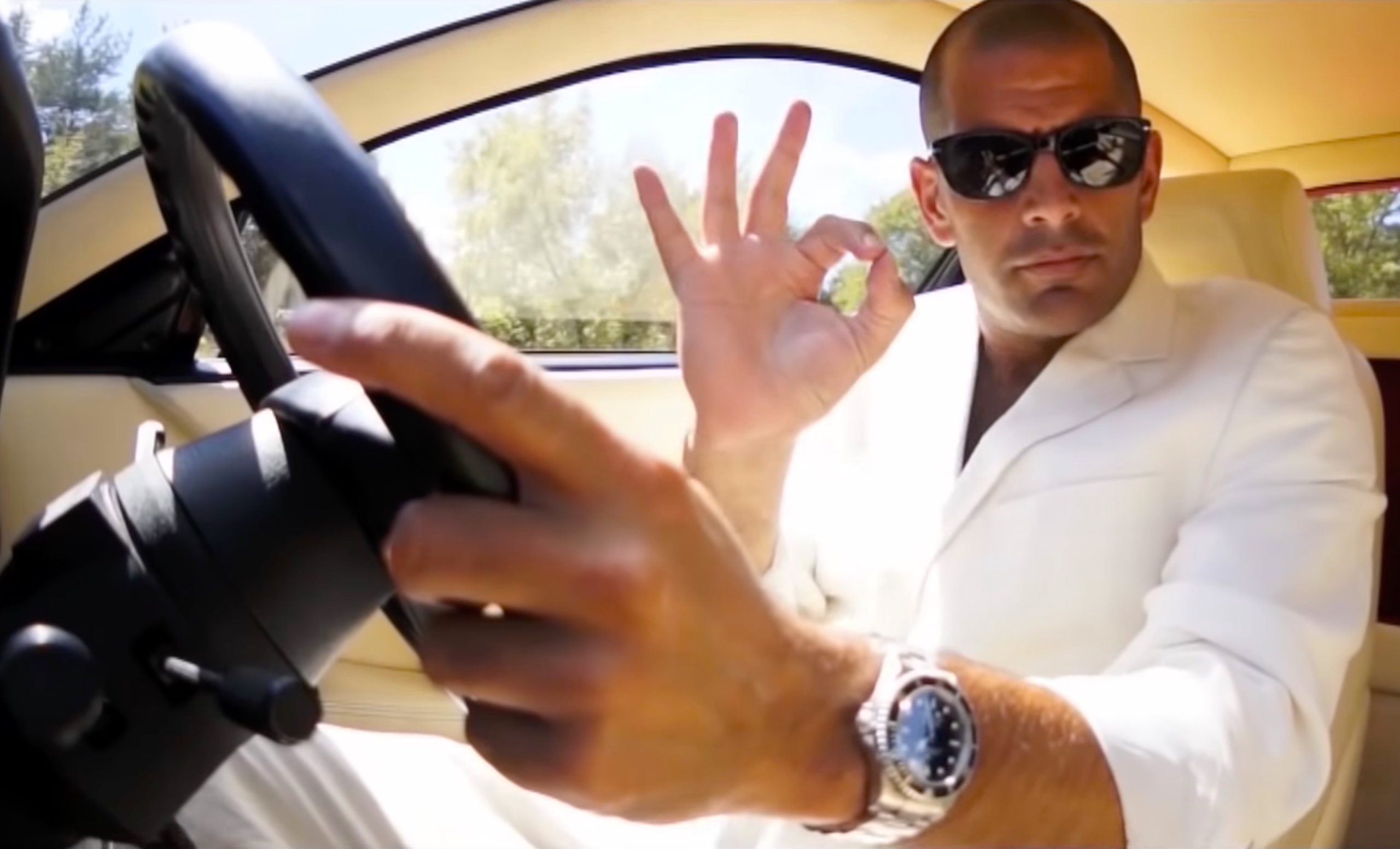
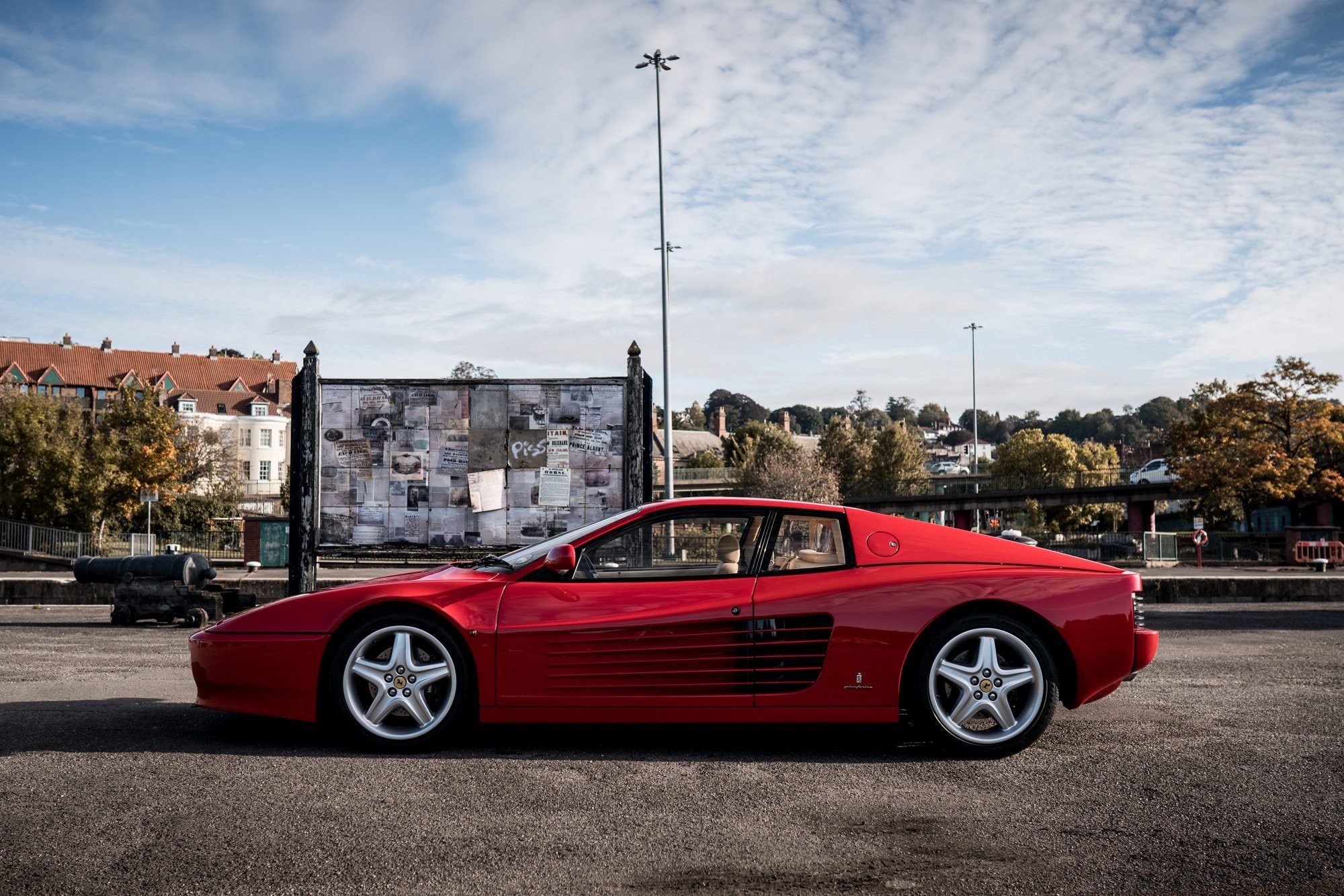
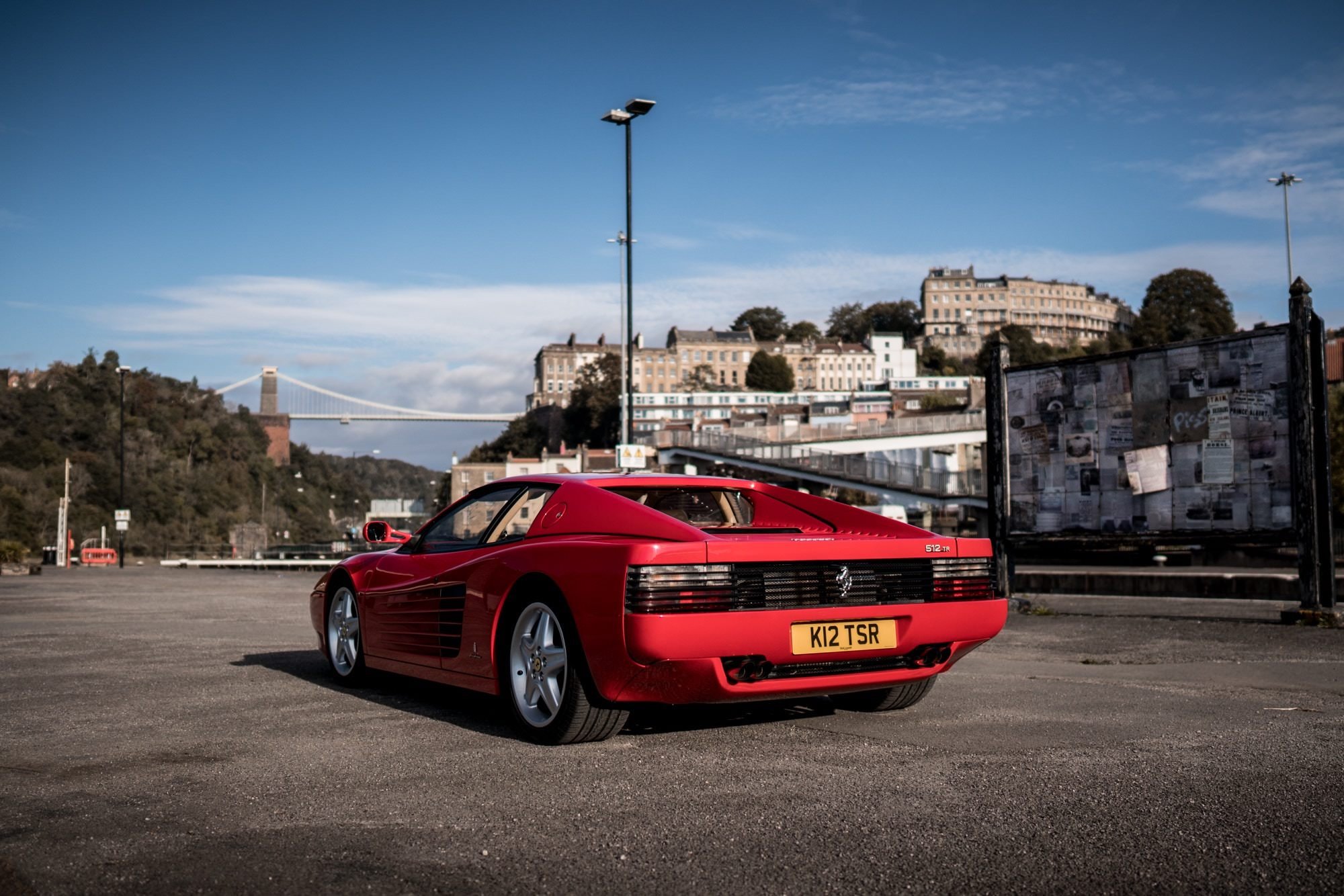
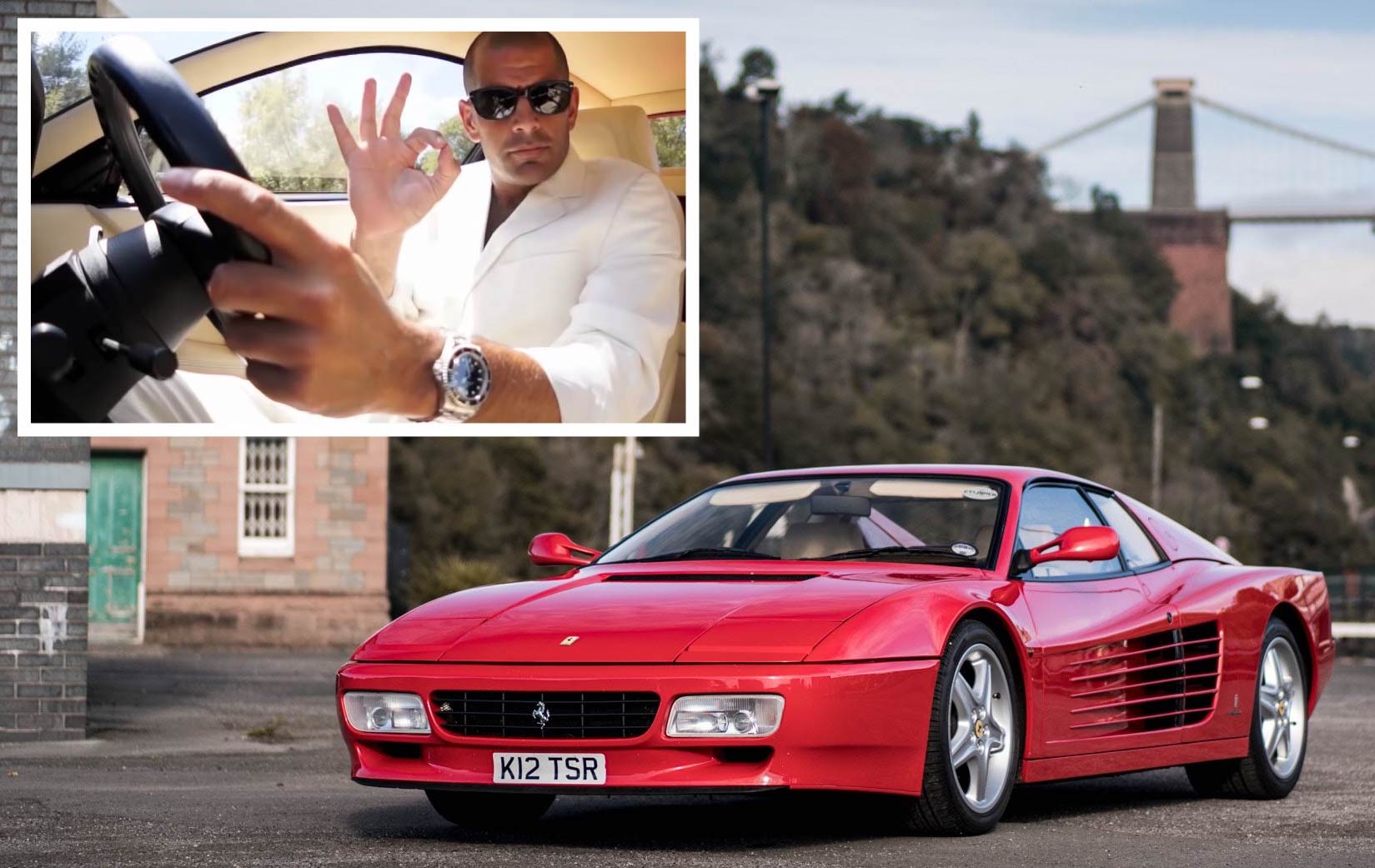
This 1992 Ferrari 512 TR currently belongs to Top Gear presenter Chris Harris, he bought it back in 2013 and featured the car in a film titled “Bread” on the /DRIVE YouTube channel which has now amassed 1.4 million views and counting.

Harris started out at Autocar magazine almost 20 years ago, his first tasks there were menial jobs like cleaning ashtrays, though he quickly rose to become the road-test editor. He would later write for Evo Magazine and Jalopnik among many others, before being appointed as a Top Gear presenter in 2016.

Fast Facts – Chris Harris’ Ferrari 512 TR

  • The Ferrari 512 TR was first released in 1991 as the closely related successor to the Ferrari Testarossa – a supercar that became a ’80s icon thanks in part to its prominent roles in the Miami Vice TV series and the Sega video game OutRun.
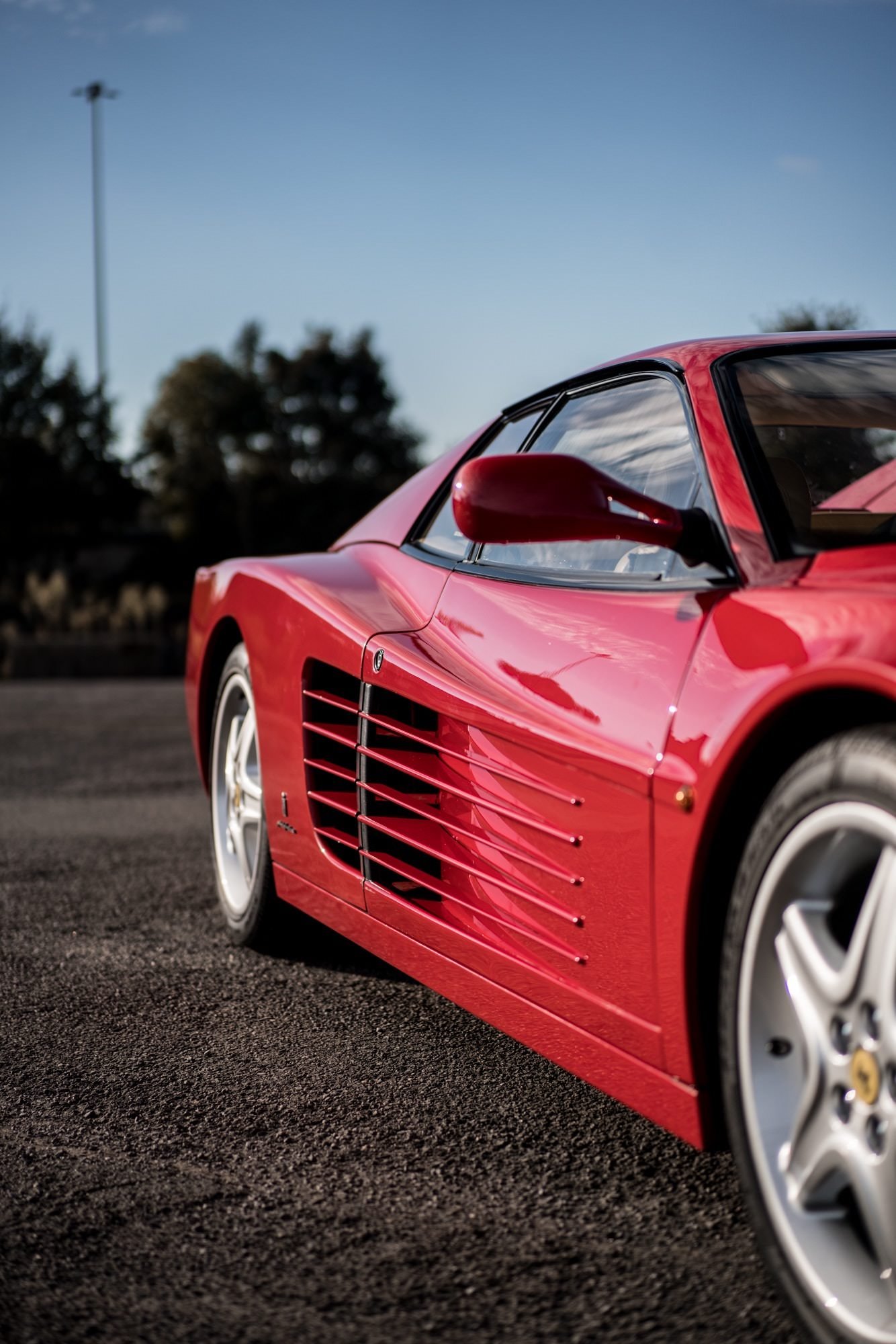
  • Though the 512 TR and the Testarossa look almost indistinguishable to the untrained eye, the 512 TR had a modified chassis, uprated suspension and brakes, a series of engine and transmission modifications, and the engine was lowered by 30mm to further improve handling.
  • Including the closely related Testarossa, 512 TR, and F512 M models Ferrari sold almost 10,000 units, making it one of the Italian marque’s most mass-produced models.
  • The 512 TR you see here was bought by Chris Harris in 2013 with 52,000 miles on the odometer, he’s used it sparingly and today it shows just over 66,000 miles – the car has been regularly serviced by Ferrari Swindon and Bob Houghton.

The Ferrari 512 TR – An Evolution Of The Testarossa

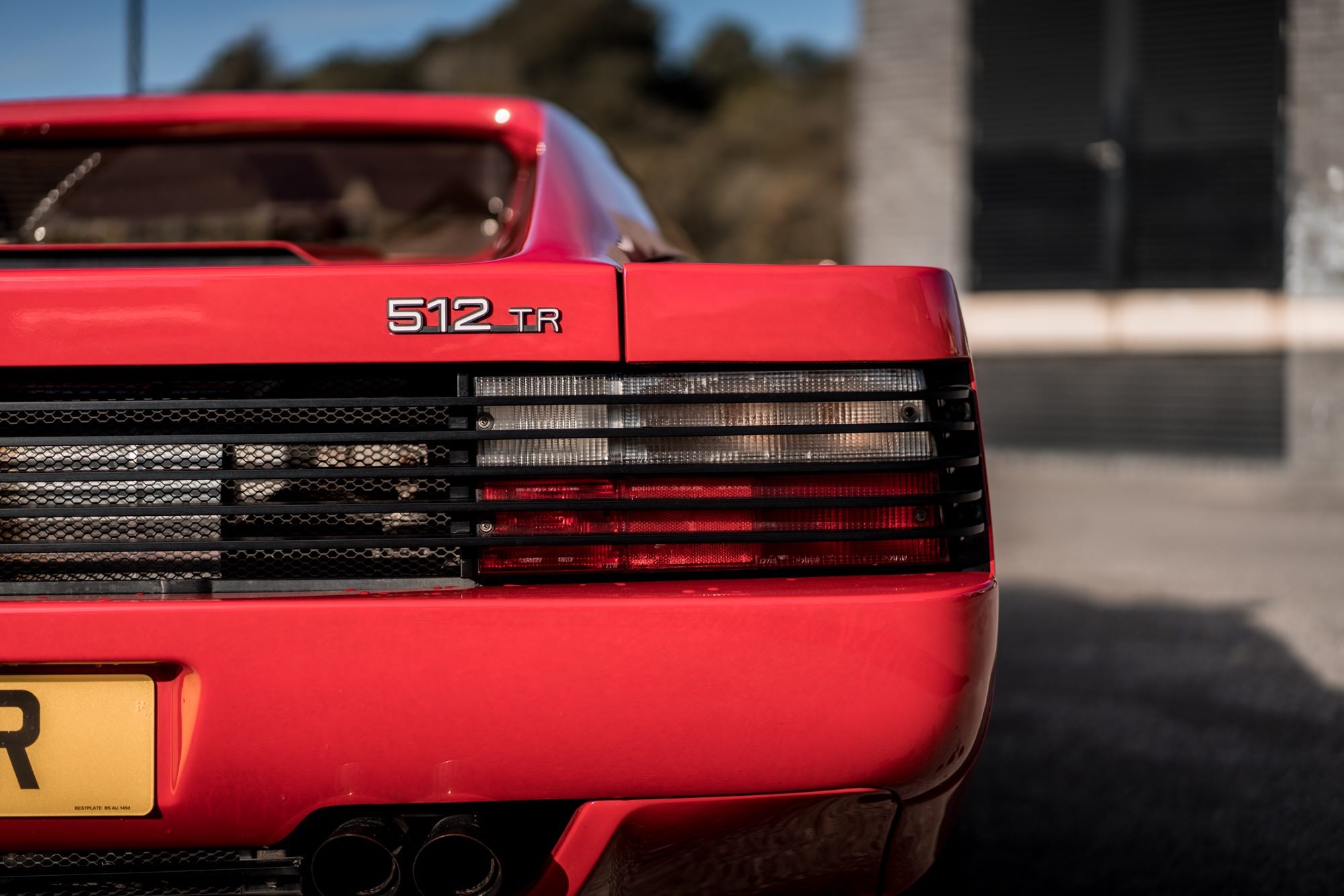
That “TR” at the end of the model name stands for “Testa Rossa,” a hat tip to the Ferrari Testarossa that the car is closely based on, which itself was named after the World Sportscar Championship winning 1957 250 Ferrari Testa Rossa racing car.

Above Video: This is the original episode of /Drive from 2013 that features Chris Harris driving the 512 TR you see here at speed through the French countryside.

The name “Testarossa” means “Red Head” in Italian, this is probably one of the most quoted pieces of automotive pub trivia in the world, along with the fact that British automaker TVR is named for its founder Trevor, and the fact that the Volkswagen Beetle was developed on instructions from Adolf Hitler.

When it was released in 1984 the Ferrari Testarossa lit the automotive world on fire, its primary task was to compete with the Lamborghini Countach, and to replace the outgoing Ferrari 512 BB.

The Testarossa was wider, longer, more spacious, and more powerful than its predecessor, yet it used fundamentally the same engine – a 4,943cc 180° Ferrari flat-12 engine named the Tipo F113.

Ferrari would keep the Pininfarina-designed Testarossa in production from 1984 until 1991, at which point it was replaced with the Ferrari 512 TR – essentially an evolved version of its predecessor.
Chris Harris Ferrari 512 TR 12

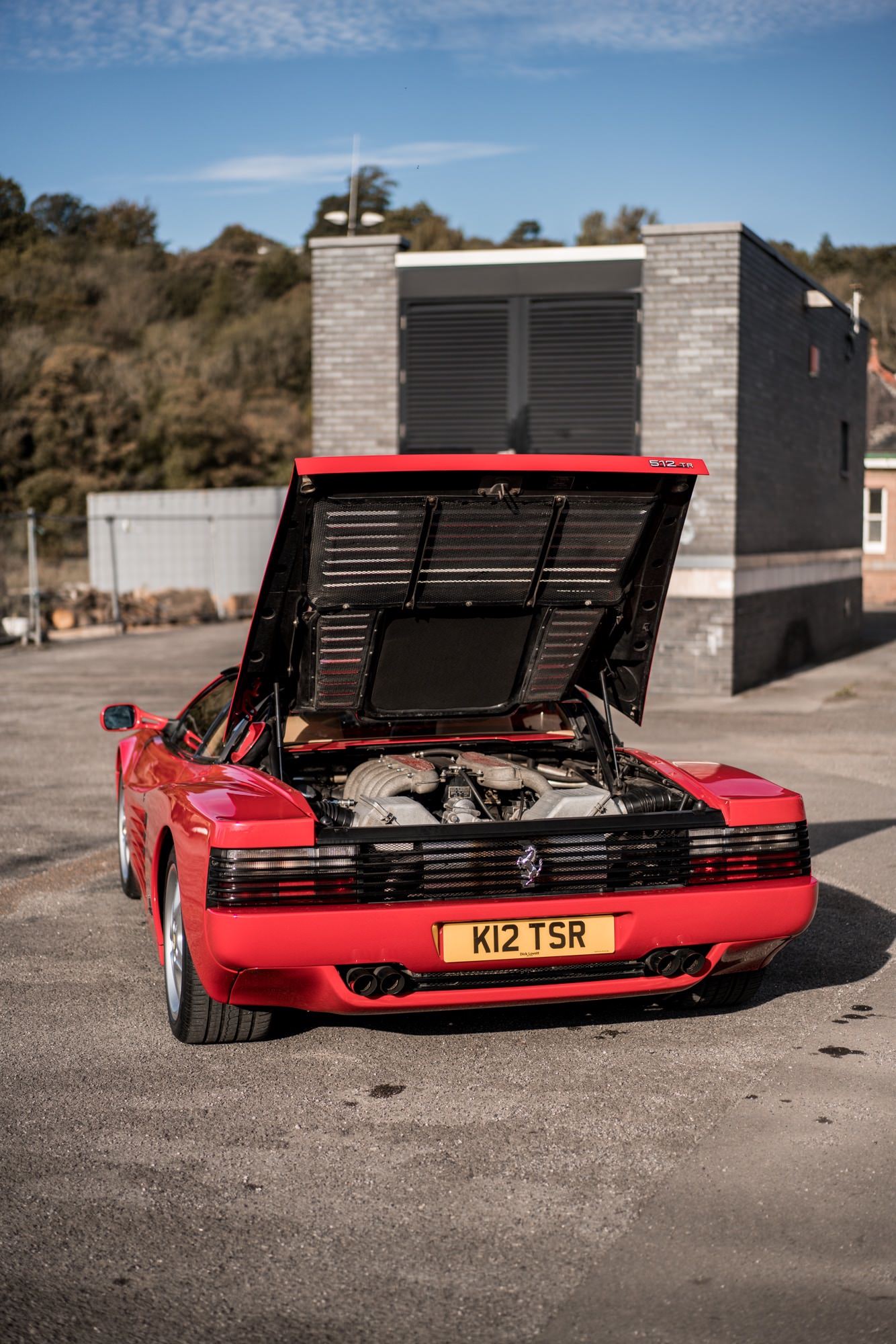
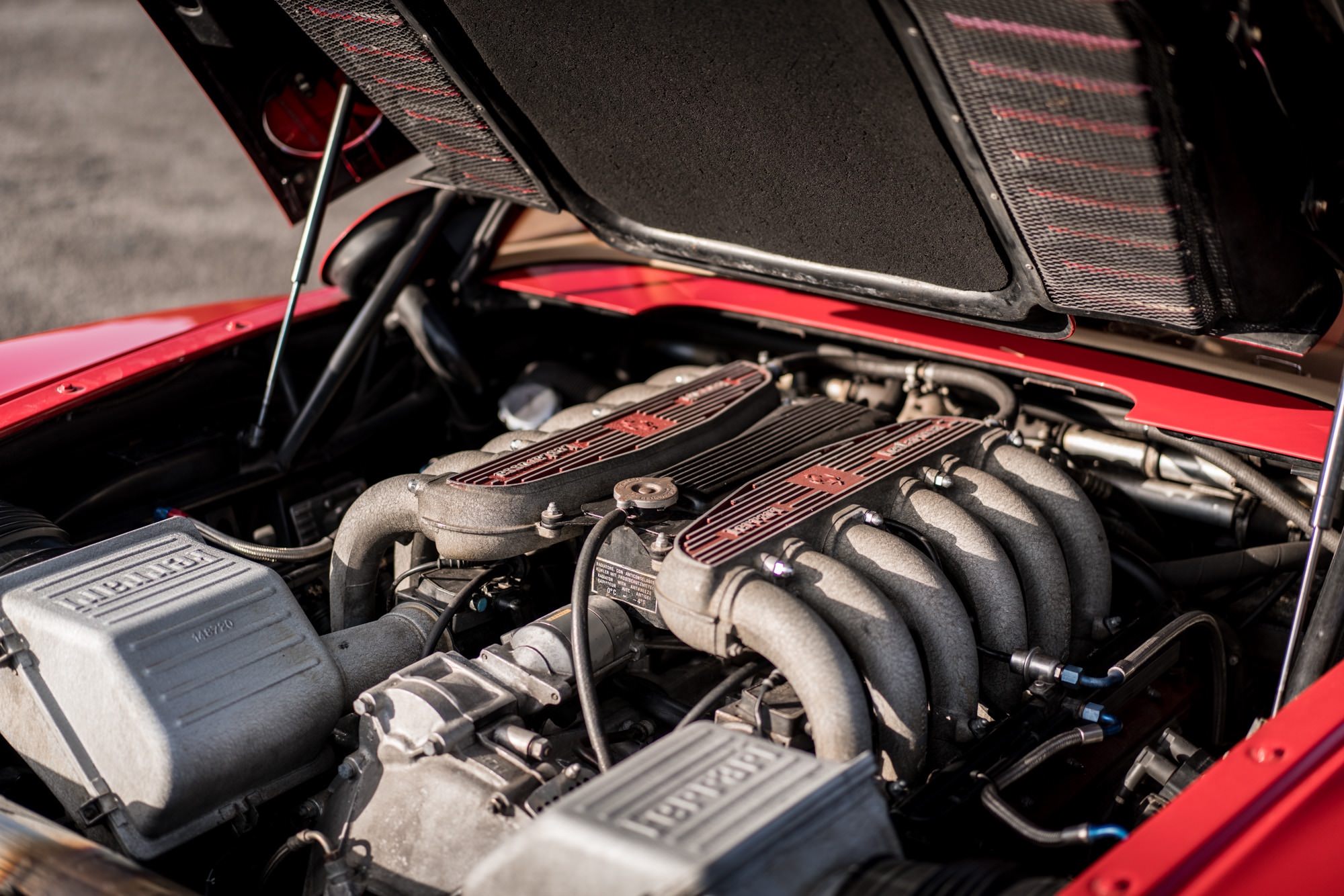
The flat-12 Ferrari Tipo F113 is sometimes referred to as a flat V-12. It has a displacement of 4,943cc, double overhead cams per bank, 48 valves, and it produces 422 bhp at 6,750 rpm.

The Ferrari 512 TR – Specifications

Ferrari incorporated a significant number of upgrades into the 512 TR, the tubular steel chassis was modified, the flat-12 engine was lowered by 30mm, the double A-arm suspension was modified front and rear, improved brakes were fitted, and some minor modifications were made to the body to improve aerodynamics.

The 512 TR was given a modified version of the Tipo F113 flat-12 used in the Testarossa and before that in the 512 BB. The compression ratio was increased from 9.3:1 to 10.0:1, it was given re-profiled camshafts, the ports and valves were enlarged, the inlet plenums were redesigned, and the fuel injection system was changed over to the Bosch Motronic M2.7 model.

Overall the power was increased from 385 bhp to 422 bhp at 6,750 rpm, with torque increasing very slightly from 361 lb ft up to 362 lb ft at 5,500 rpm.

These updates were enough to keep the almost 10 year old Testarossa platform in production for a few more years, the 512 TR is arguably the best example of the breed, and there’s still something otherworldly about the sound that emanates from that engine when its approaching on the red line.

Chris Harris Ferrari 512 TR 8

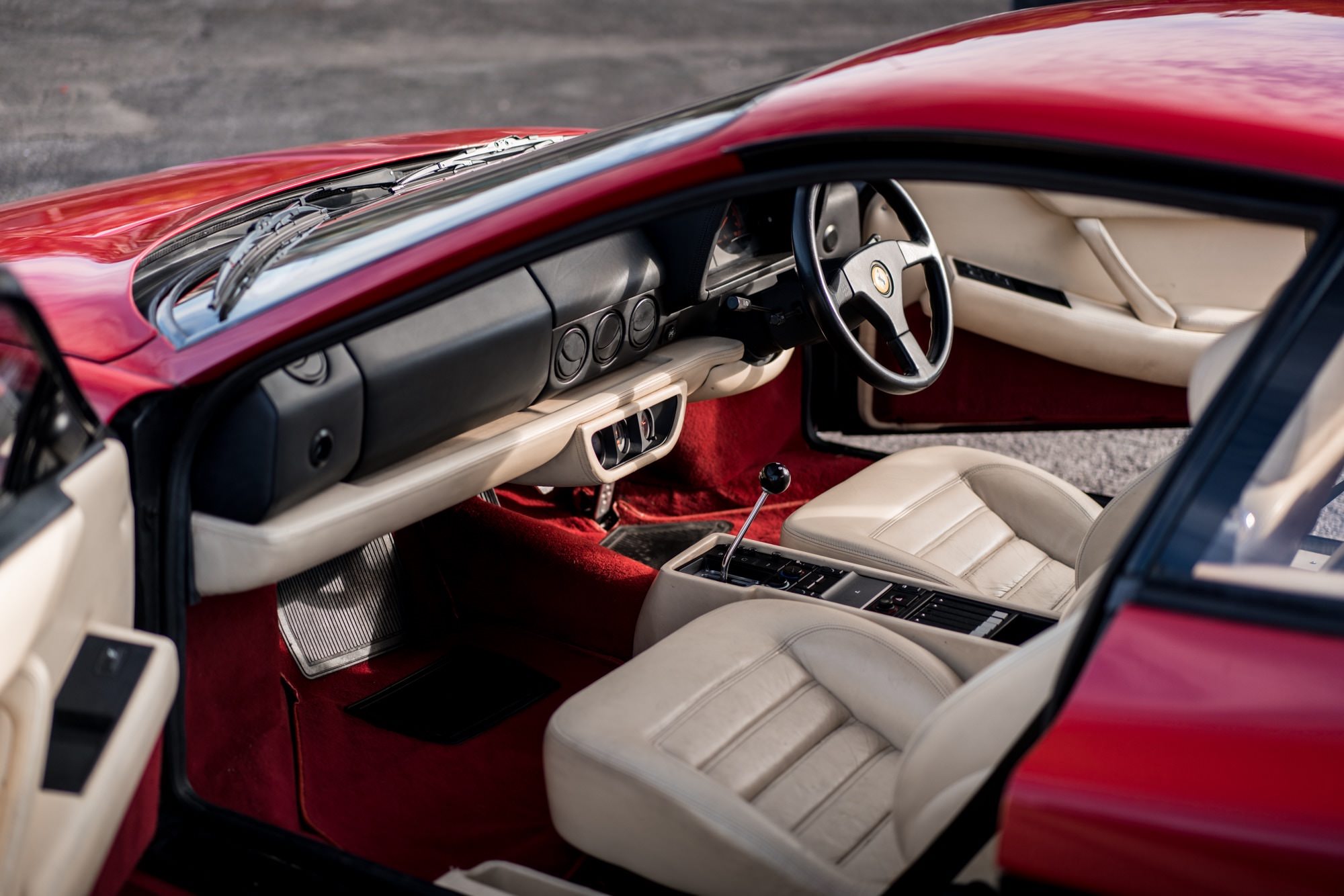
The inside of all the Testarossa model series cars was noticeably bigger than the outgoing 512 BB model, with more width, headroom, and leg room.

Chris Harris’ Ferrari 512 TR

As mentioned above, this is Chris Harris’ Ferrari 512 TR. It’s a car that he’s owned for almost 10 years, he’s used it on a number of trips including a family holiday to France – this is when the /DRIVE film above was made.

He’s now offering it for sale in a live online auction on the Collecting Cars platform, at the time of writing there are six days left to bid and the bidding is currently sitting on £80,000.

If you’d like to read more about it or register to bid you can click here to visit the listing.
Chris Harris Chris Harris Ferrari 512 TR 19 Chris Harris Ferrari 512 TR 18 Chris Harris Ferrari 512 TR 17 Chris Harris Ferrari 512 TR 16 Chris Harris Ferrari 512 TR 15 Chris Harris Ferrari 512 TR 14 Chris Harris Ferrari 512 TR 13 Chris Harris Ferrari 512 TR 11 Chris Harris Ferrari 512 TR 10 Chris Harris Ferrari 512 TR 9 Chris Harris Ferrari 512 TR 7 Chris Harris Ferrari 512 TR 6 Chris Harris Ferrari 512 TR 5 Chris Harris Ferrari 512 TR 4 Chris Harris Ferrari 512 TR 3 Chris Harris Ferrari 512 TR 2 Chris Harris Ferrari 512 TR 1

Images courtesy of Collecting Cars

Chris Harris Ferrari 512 TR

The post Top Gear Presenter Chris Harris Is Selling His Ferrari 512 TR appeared first on Silodrome.


from Silodrome https://silodrome.com/chris-harris-ferrari-512-tr/
via gqrds

The Ford Capri – This Was The “European Ford Mustang”

The Ford Capri was originally intended to be named the Ford “Colt,” an equine reference to the venerable Ford Mustang. Ford hoped that the Capri would mirror the American success of the Mustang and in many ways it did, becoming one of the most popular sports cars in Europe.

The Capri was developed, engineered, and built entirely in Europe by Ford’s European and British subsidiaries. It was designed by American Philip T. Clark, who worked on the design team of the first Mustang.

Fast Facts – The Ford Capri

  • When the Ford Mustang was released in 1964 it became one of the best selling cars in the country, and it single-handedly founded the “Pony Car” genre that went on to become one of the most enduring over the past 50+ years.
  • This incredible success was something that Ford hoped to replicate in Europe, however it was believed that the V8 Mustang was too big and too thirsty to be a top sales contender in Continental Europe and the UK.
  • A new coupe was designed in Europe, using many parts already in production with the Ford Cortina, and making use of Ford’s catalogue of European engines.
  • The Ford Capri was released in late 1968, it received a warm welcome and sales were strong from the start. Over the course of the 1968 to 1986 production run there were three generations built, with over 1.9 million units sold.

The “European Ford Mustang”

The incredible sales success of the Ford Mustang in the United States had almost taken the automaker by surprise. When it was first released they anticipated 100,000 annual sales however actual sales figures exceeded 400,000 units in the first year alone.

Ford Capri 14

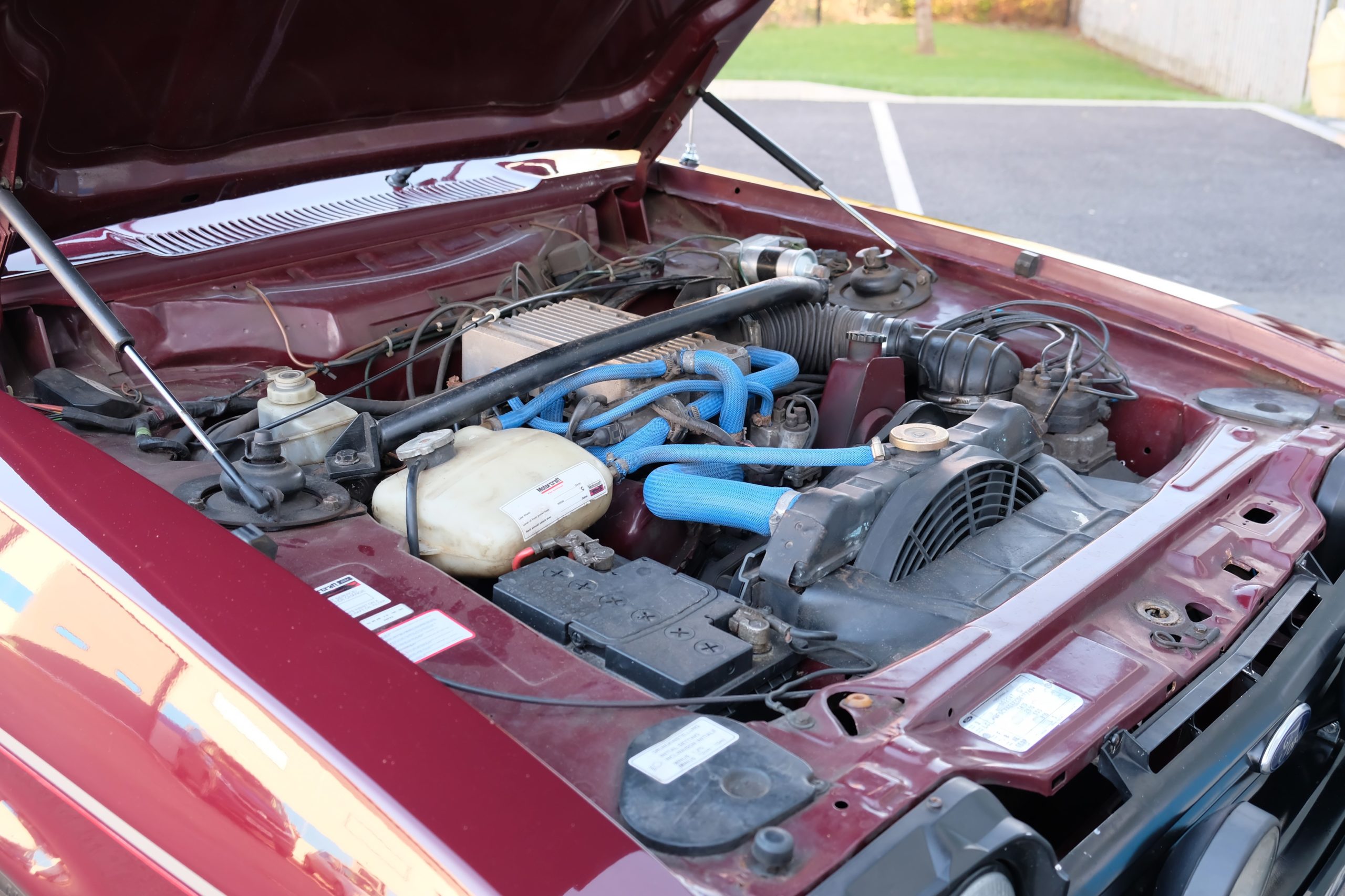
This Capri is fitted with the desirable 2.8 liter fuel-injected Ford Essex V6, an upgrade over the earlier carburetor-fed engine, the fuel-injected engine offered more power and better reliability.

While Ford were enjoying this success they began to wonder how they could replicate it in their second biggest market – Europe. Gas guzzling V8s were never going to be mass-produced best-sellers in Europe due to higher fuel prices, and the physical size of the Mustang was likely too big for European tastes at the time.

What Ford needed was a smaller, more fuel efficient Mustang that made use of pre-existing Ford engines and parts as much as possible to help keep development and production costs as low as possible.

They originally intended to call the car the “Colt,” however Japanese automaker already had this name trademarked, so they went with Capri instead.

The Ford Capri – Design + Specifications

A design team led by American automotive designer Philip T. Clark came up with what we  now know as the Mark I Ford Capri. The car was designed with a steel unibody and it made extensive use of Ford Cortina parts, including the front MacPherson struts and the live axle on leaf springs in the rear.

A number of engine options were offered depending on where the Capri was being built – production took place at the Halewood factory in the UK, the Genk factory in Belgium, and the Saarlouis and Cologne factories in Germany.

Ford Capri 10

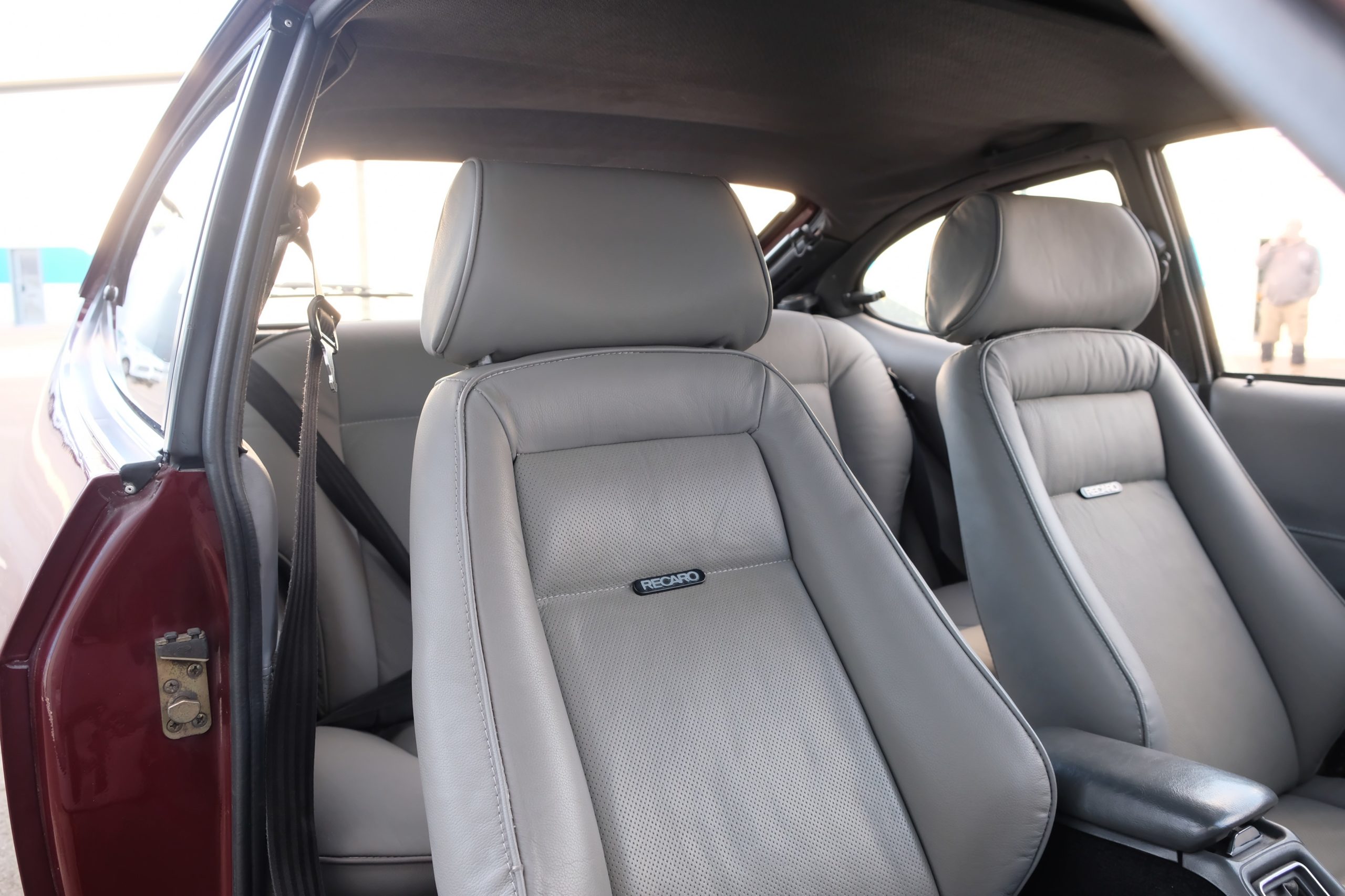
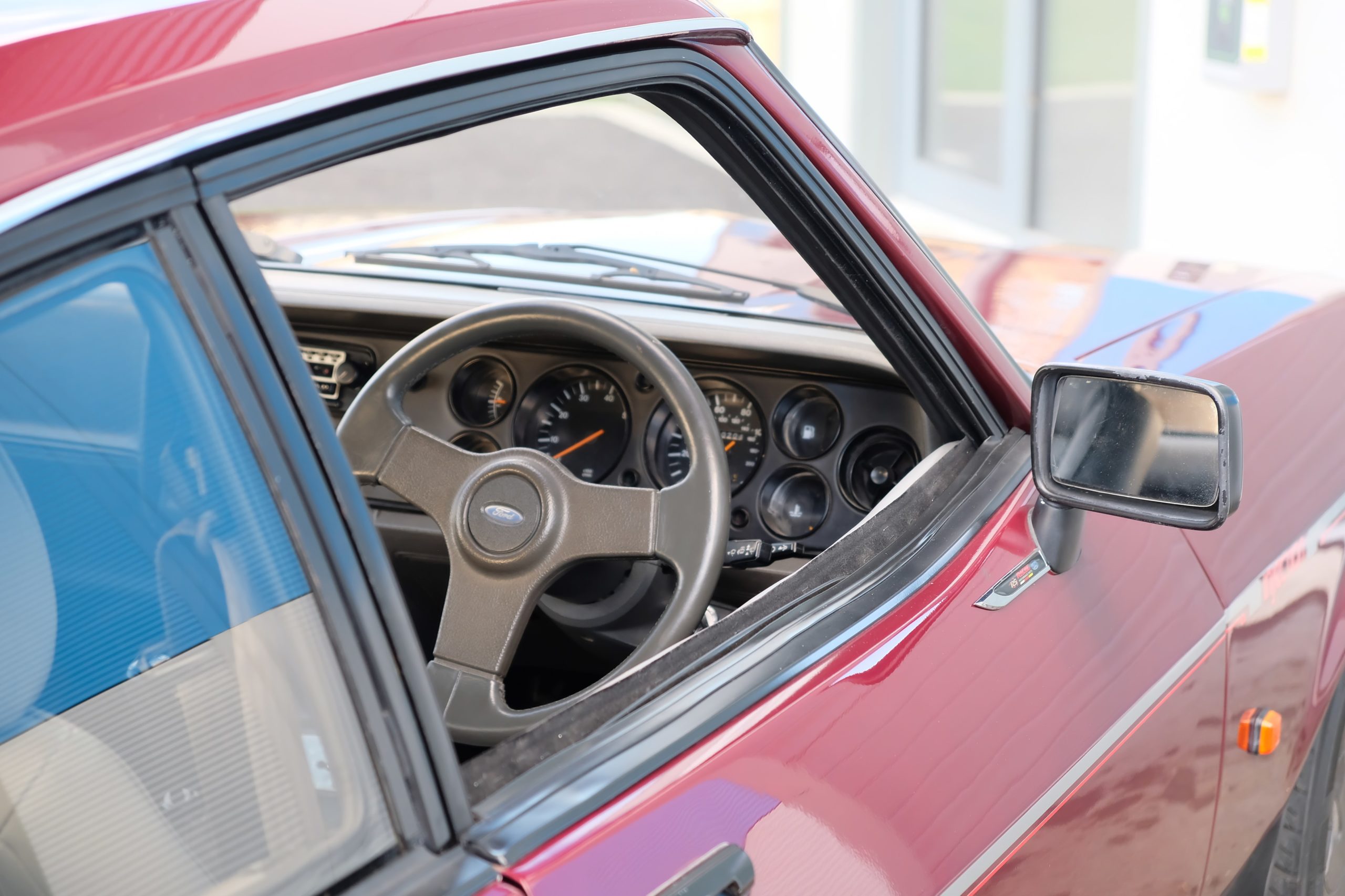
The interior of the car has a classic ’80s feel to it, it’s still fitted with the original stereo and it comes with the 5-speed manual transmission.

Over the course of its production run the Capri would be offered with over a dozen engines starting with the 1.3 liter Kent inline-four and range through the Taunus V4, Cologne V6, Pinto inline-four, all the way up to the 6.0 liter Windsor V8 that was fitted to the South African Perana version.

Ford would keep the Capri in production from 1968 until 1986, selling almost 2 million of them and creating a car that is looked on with all the affection of the Mustang within the European classic car community.

The 1983 Ford Capri 2.8 Injection Shown Here

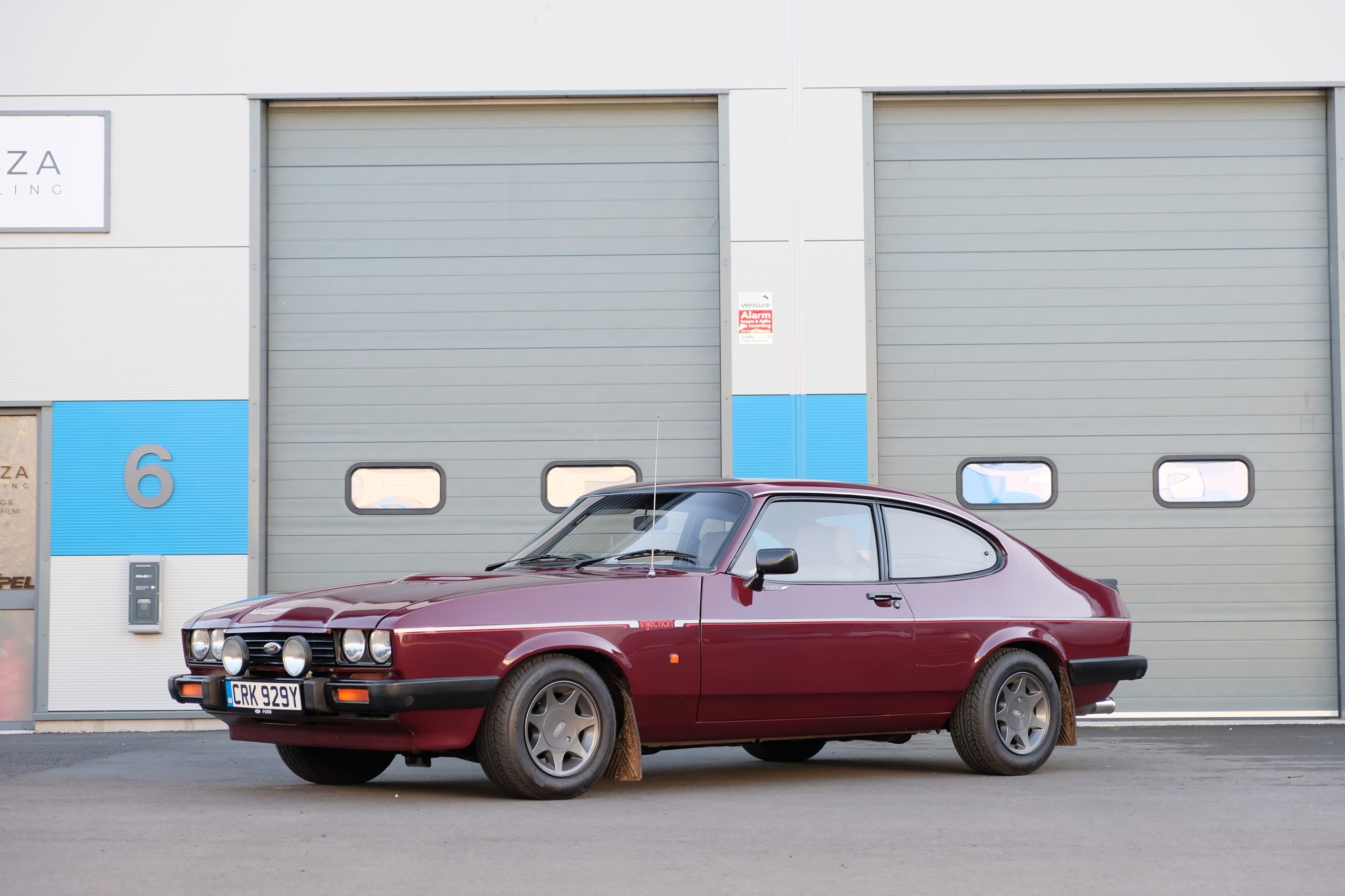
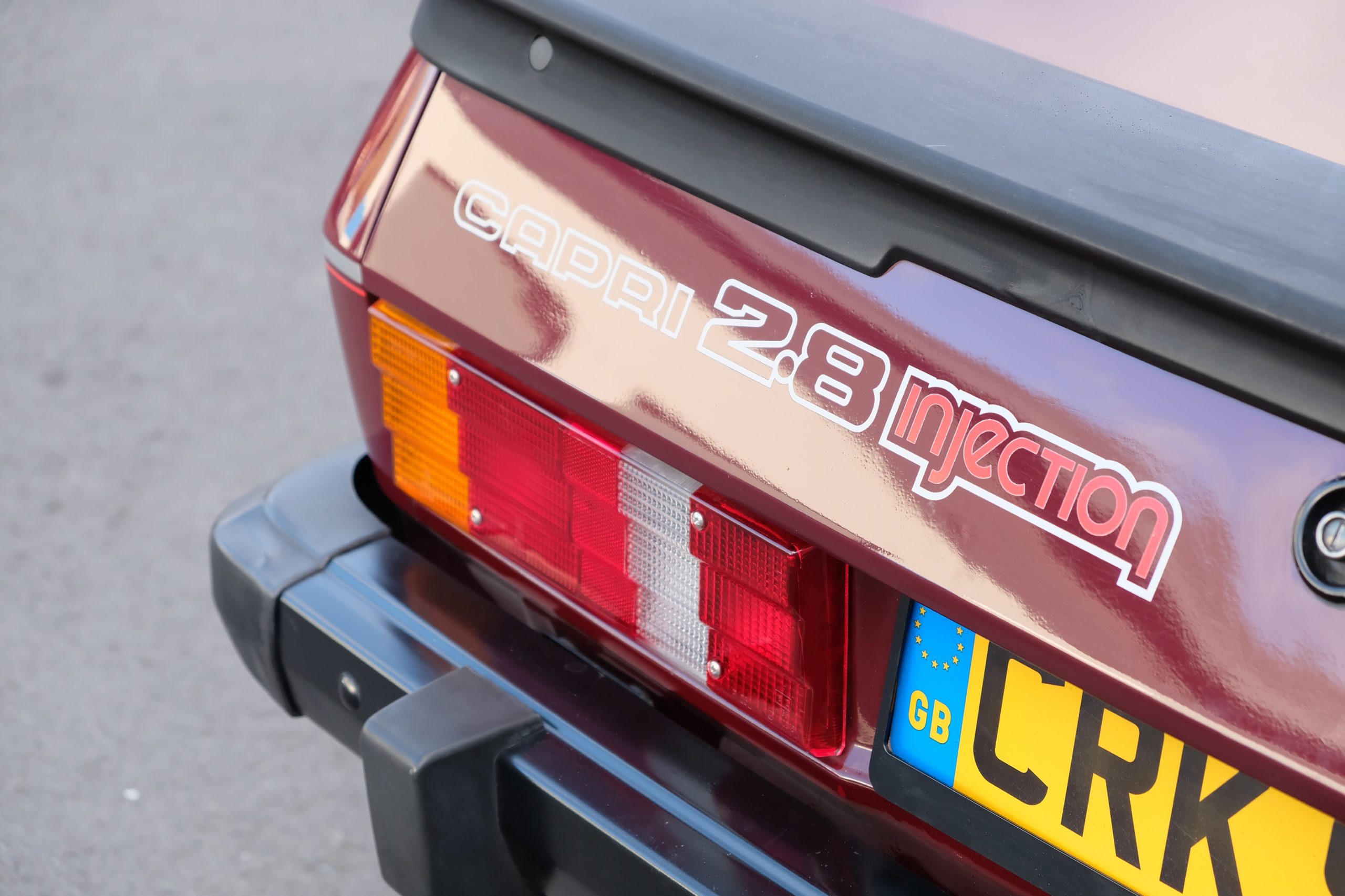
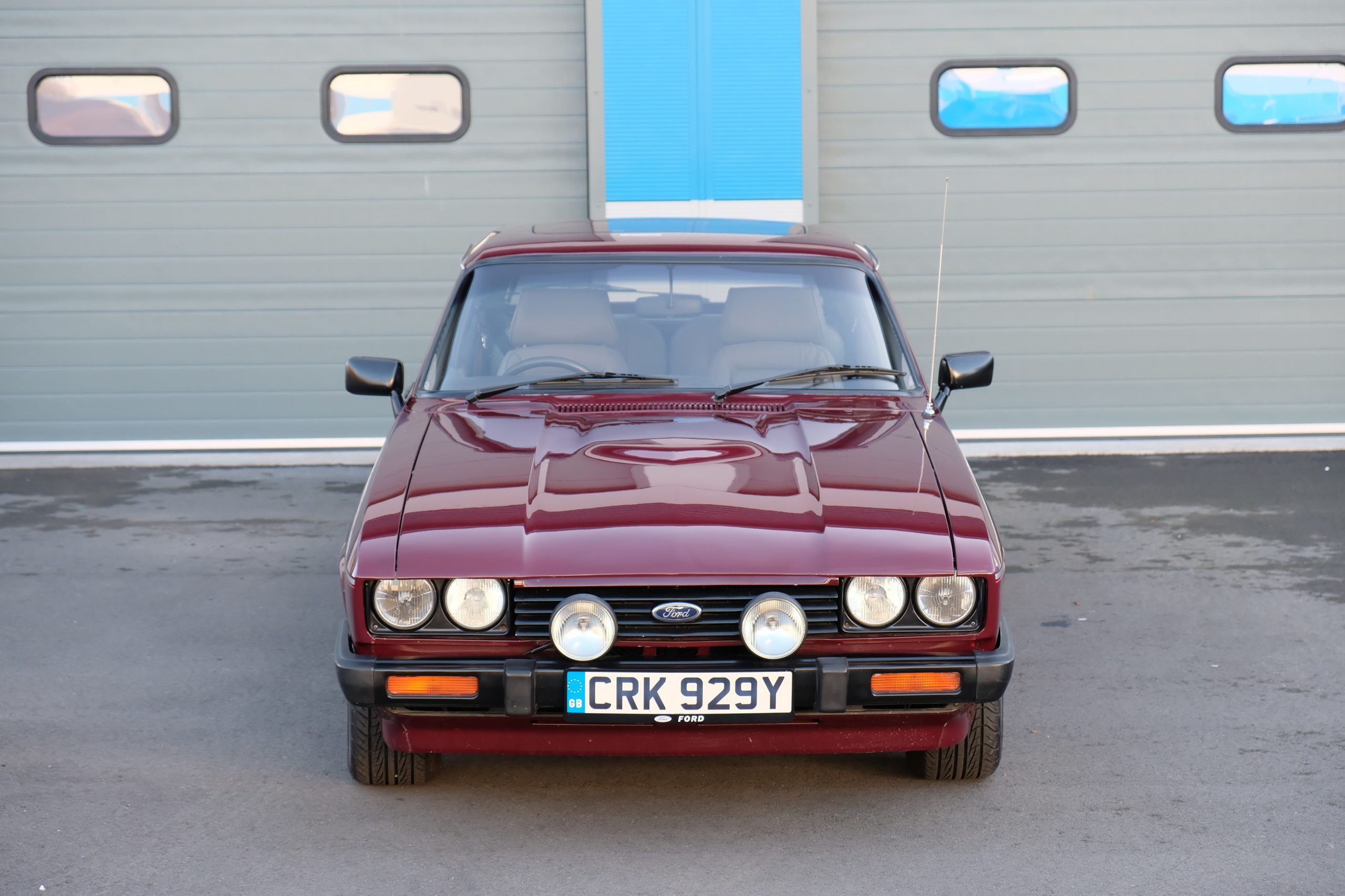
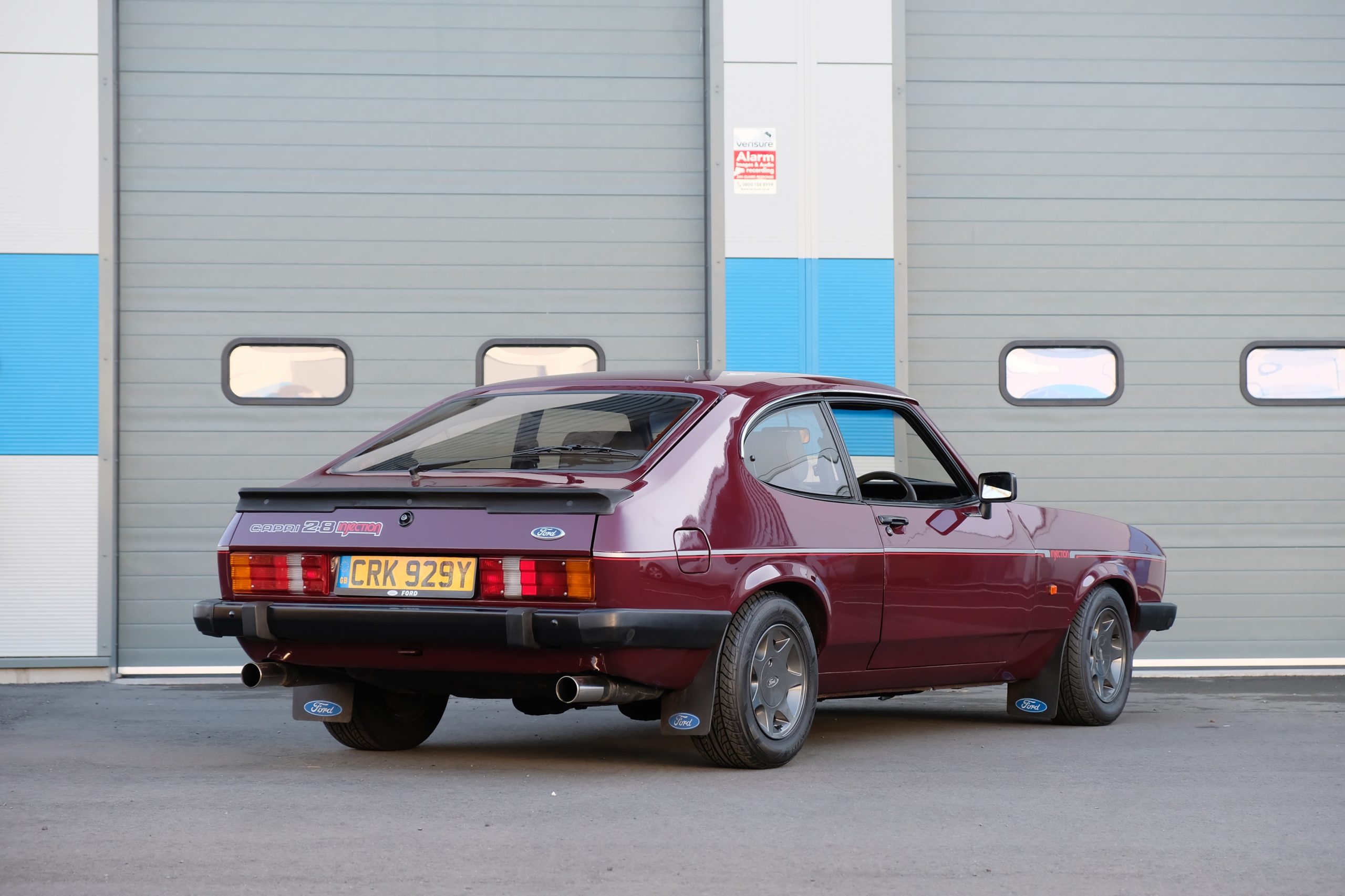
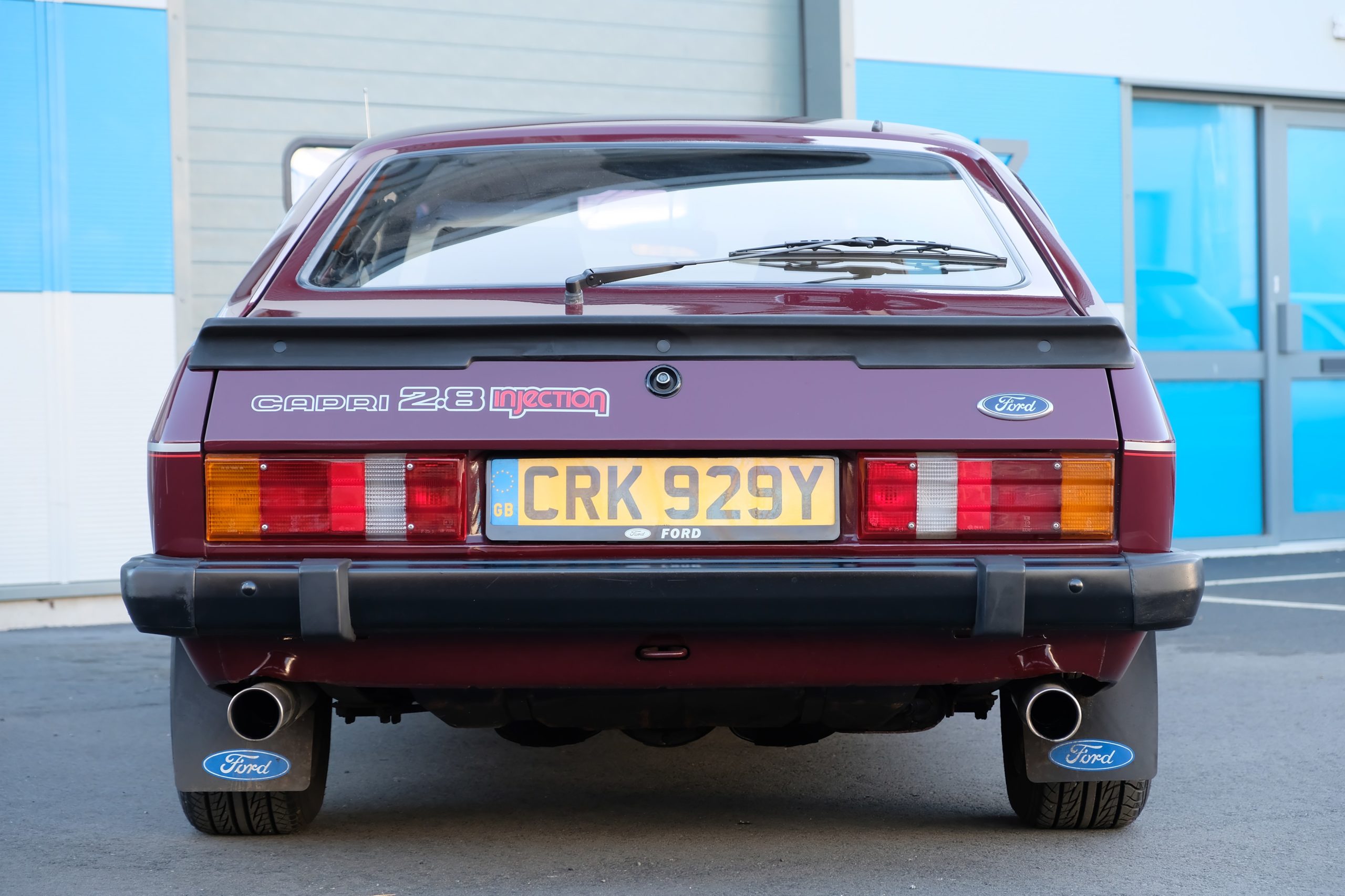
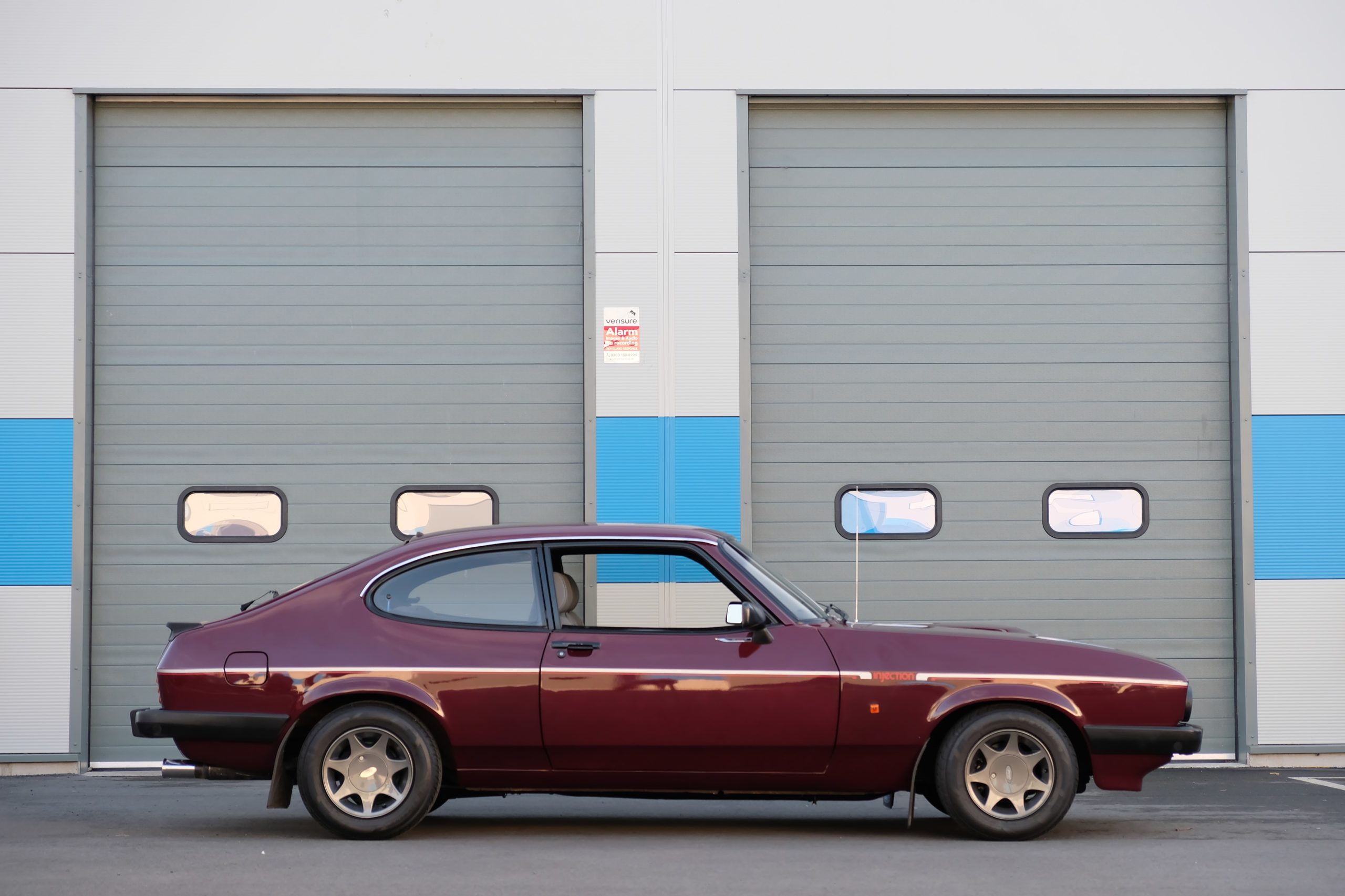
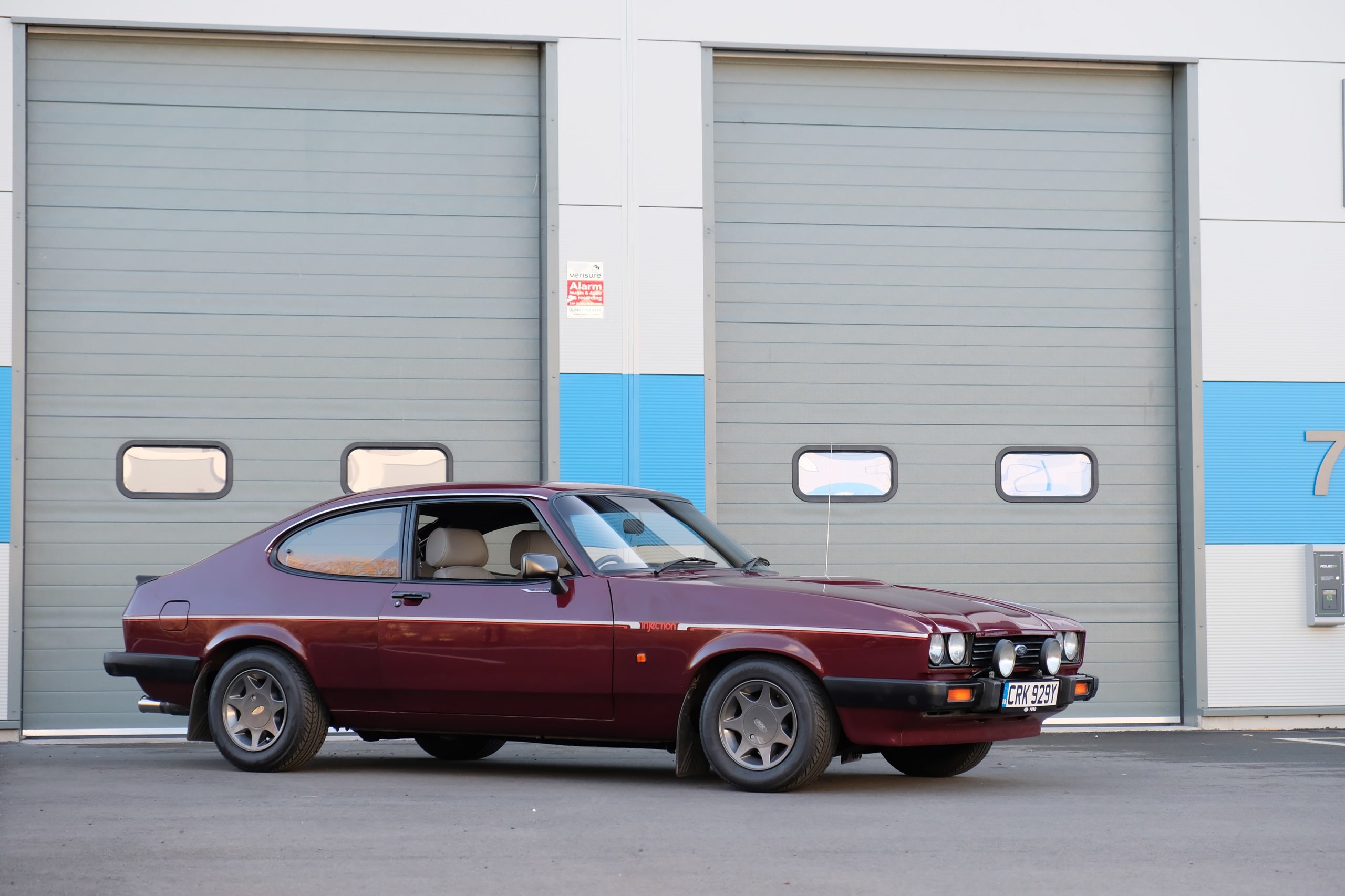
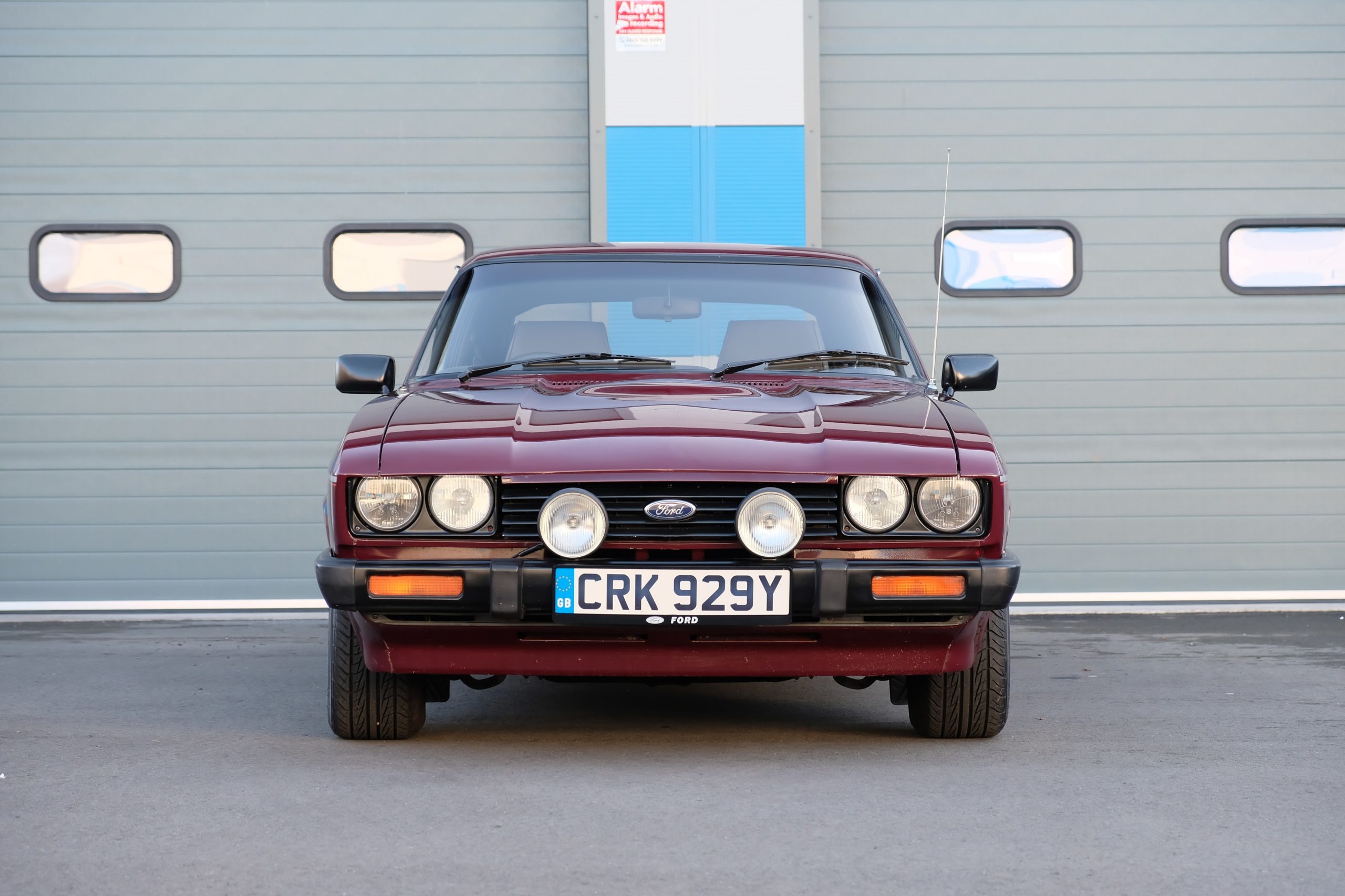
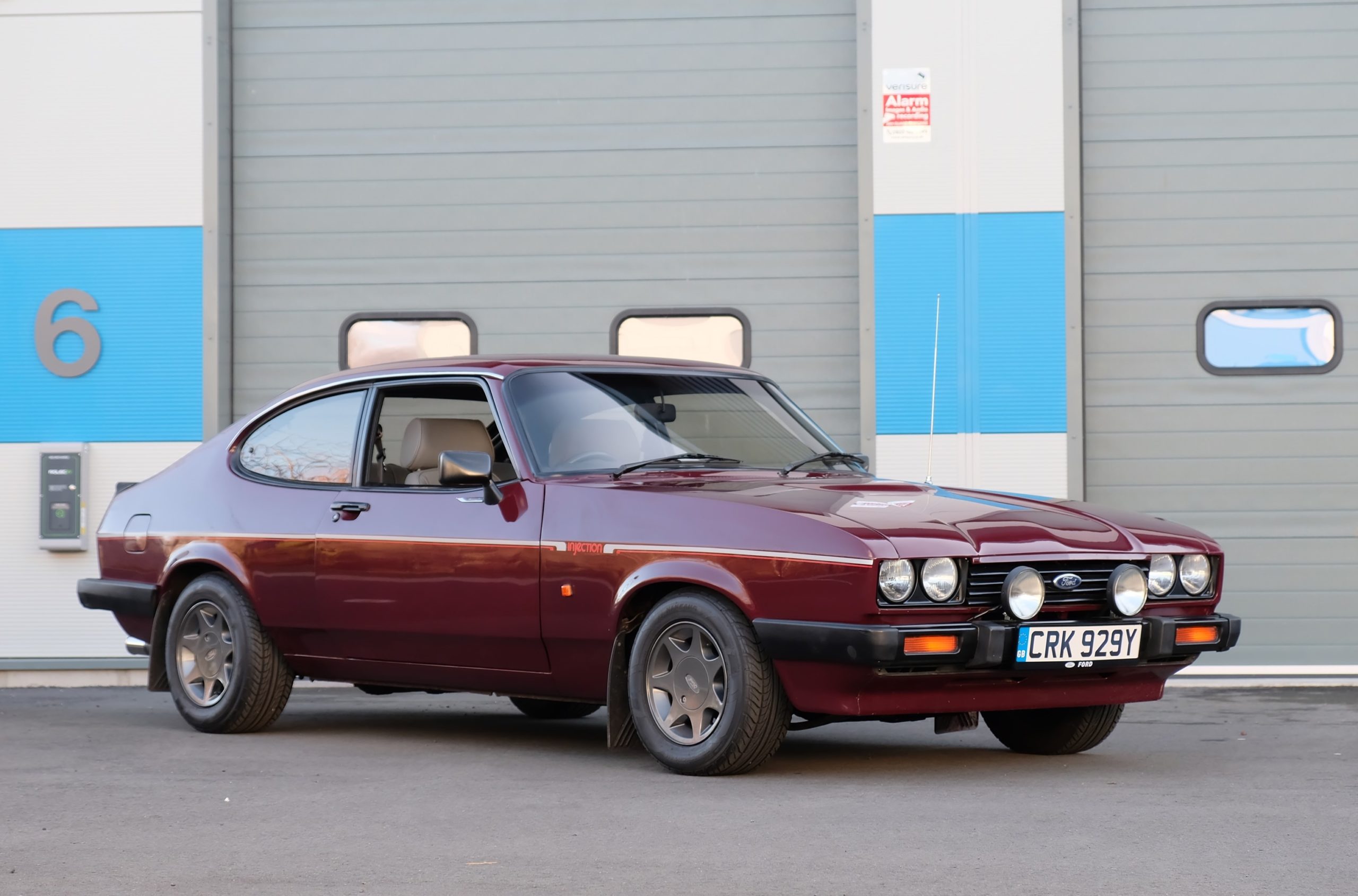
The car you see here is a desirable Ford Capri 2.8 Injection model, as the name suggests it has a 2.8 liter fuel-injected engine – the Essex V6.

This engine was chosen as the replacement for the outgoing carburetor-fed 3.0 liter Essex V6 which could no longer meet increasingly strict emissions requirements.

Ford Capri 2

The fastback styling of the car was influenced by the Mustang, but not so much so as to look like a clone. The Capri would go on to become one of the best selling European sports cars of its time.

In standard trim the 3.0 Essex V6 produced 148 bhp, the newer fuel-injected 2.8 liter unit produced a claimed 158 bhp, it was also easier to start in cold weather and it proved more reliable over all.

The Capri shown here is fitted with the 5-speed manual transmission and it’s finished in Burgundy with a Grey leather interior featuring Recaro sport seats.

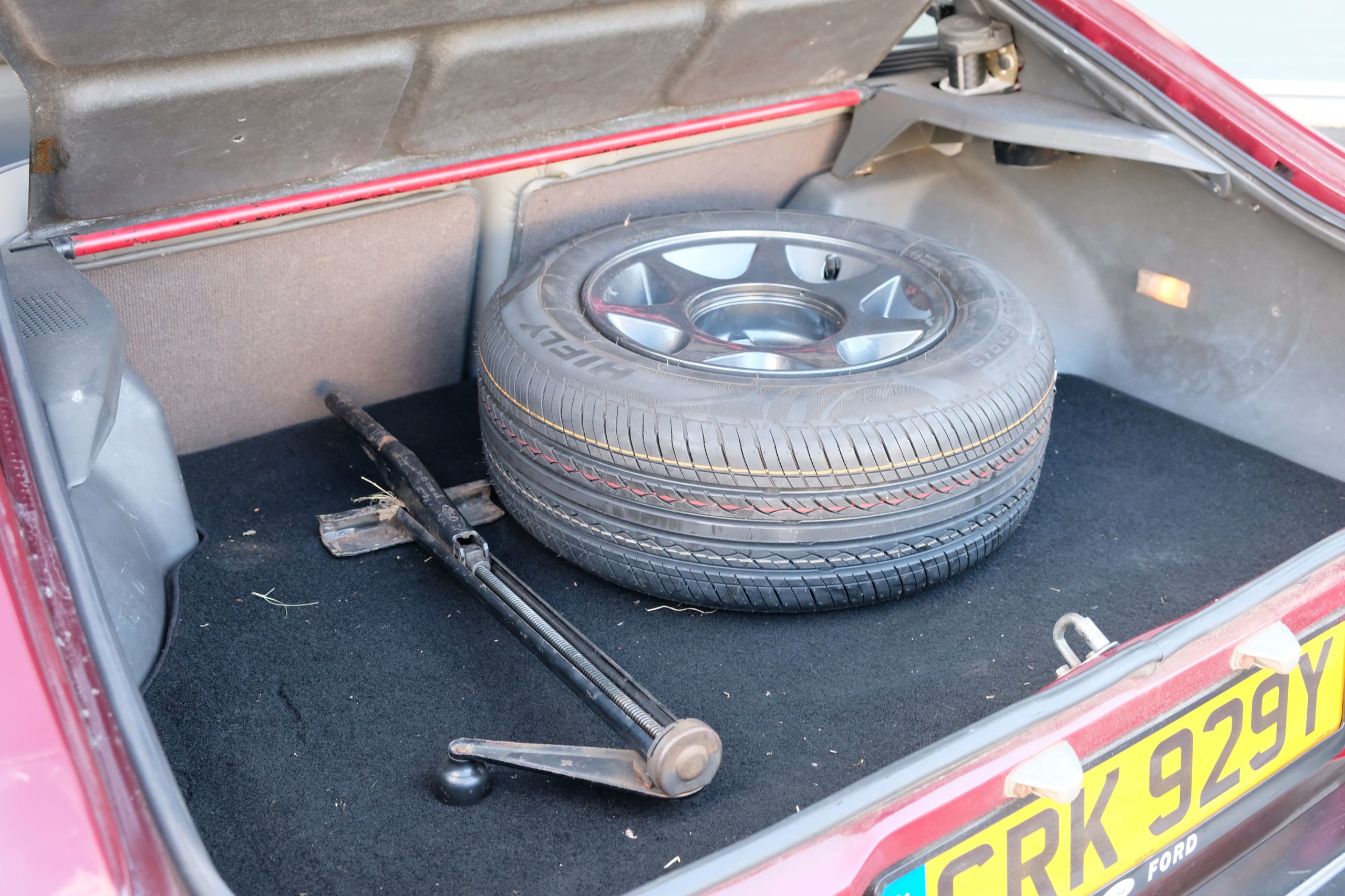
A number of jobs were completed on the car in 2019 including the fitment of replacement track rod arms and ends, a replacement clutch, front discs, pads and calipers, fan belts, oil pump and tappets, as well as a full service.

The car is now due to cross the auction block with H and H Auctions on the 16th of March with a price guide of £12,000 – £14,000, which works out to approximately $15,600 – $18,300 USD. If you’d like to read more about it or register to bid you can click here to visit the listing.
Ford Capri 15 Ford Capri 13 Ford Capri 12 Ford Capri 11 Ford Capri 9 Ford Capri 8 Ford Capri 7 Ford Capri 6 Ford Capri 5 Ford Capri 4 Ford Capri 3 Ford Capri 1

Images courtesy of H and H Auctions

Ford Capri

The post The Ford Capri – This Was The “European Ford Mustang” appeared first on Silodrome.


from Silodrome https://silodrome.com/ford-capri-car/
via gqrds

Full Documentary: “The ’49 Ford In Your Future”

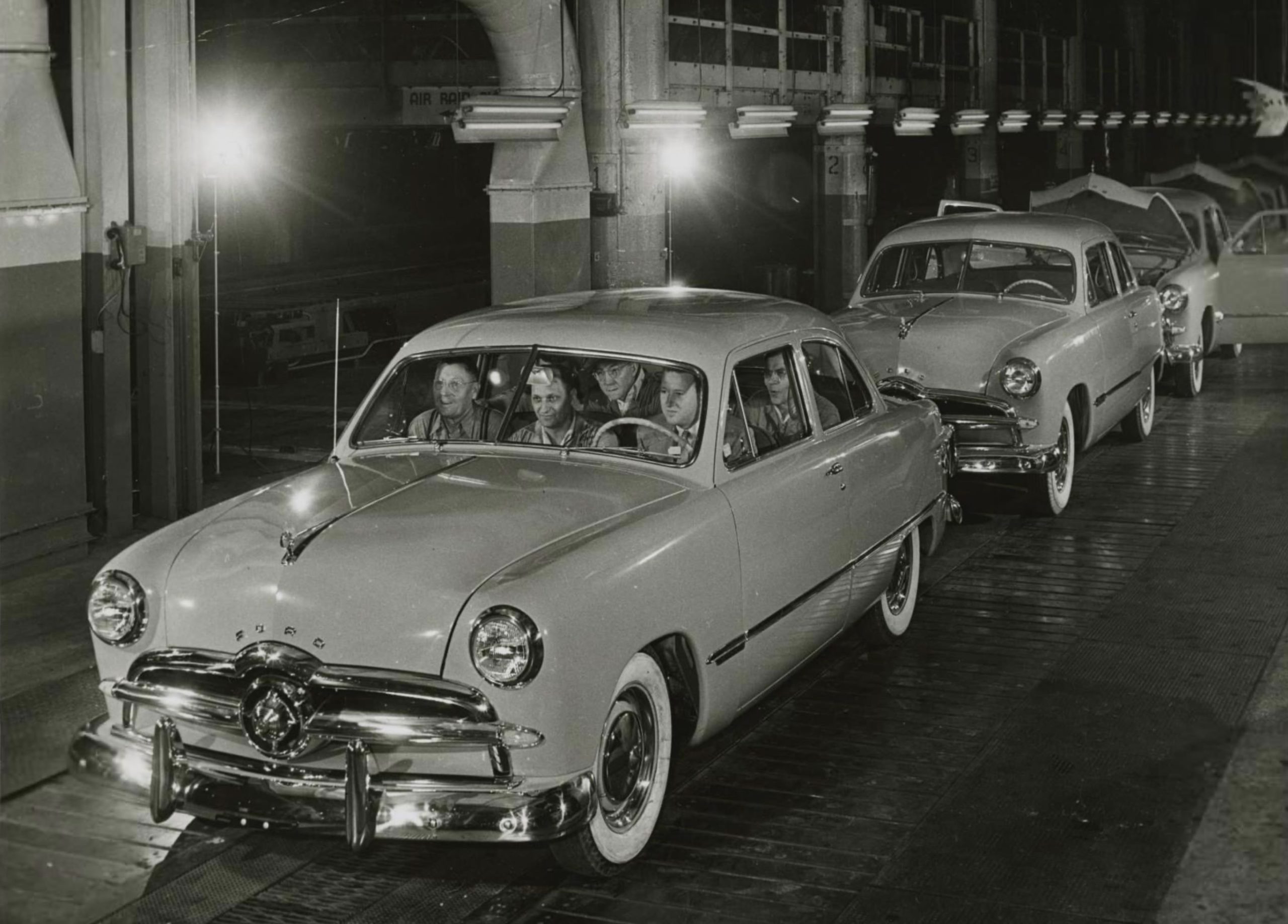
When the 1949 Ford was released it was the first all-new automobile design introduced by an American Big Three automaker after World War II. It’s been called “the car that saved Ford” as its strong sales figures brought in critically needed funds, helping to keep Ford alive.

During WWII America’s automakers were all focussed on the war effort, Ford produced a number of military vehicles, the most famous of which is doubtless the Ford GPW – their own version of the Willys Jeep.

Henry Ford II Driving the First 1949 Ford off Assembly Line at Rouge Plant, 1948

Here you see Henry Ford II driving the first 1949 Ford off the assembly line at the Rouge Plant in 1948, he accompanied by men who worked on the production line – the 1949 Ford could fit three adults sitting abreast front and back.

The war ended in 1945 and automotive production started up not long after, though the cars that were being built were lightly updated pre-war models.

1948 would be the year that the first generation of cars developed after the war were released, Ford led the way with their 1949 model series, beating Chevrolet by 6 months and Plymouth by 9 months.

The styling of the ’49 Ford was revolutionary, it used a sleek, aerodynamic “three box” design that was vastly more modern than anything else on the market at the time. It was a significant influence on both American and European automakers, and it helped set the tone for automotive design in the 1950s.

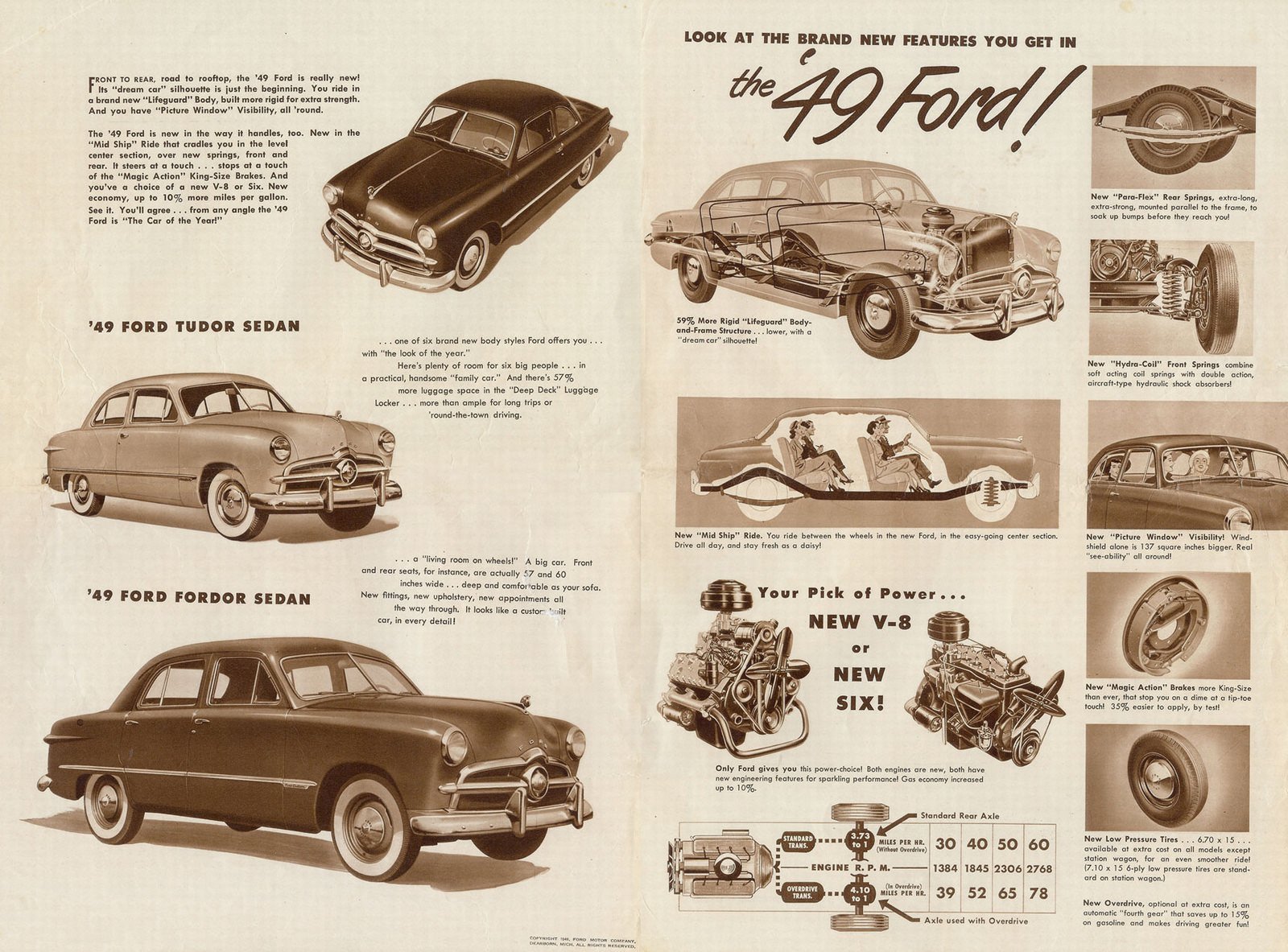
1949 Ford Brochure 2

This page from the original brochure highlights the advancements that had been made in suspension and chassis design, and the focus that had been placed on ride quality.

The 1949 Ford was first shown to the public at the Waldorf-Astoria Hotel in New York City in June of 1948, there was a four-door sedan, a two-door “woodie wagon,” a two-door convertible, and a two-door coupe.

The car was kept in production for a total of 16 months rather than the more common 12 months as Ford had trouble meeting demand for the car – they would ultimately sell 1,118,762 units.

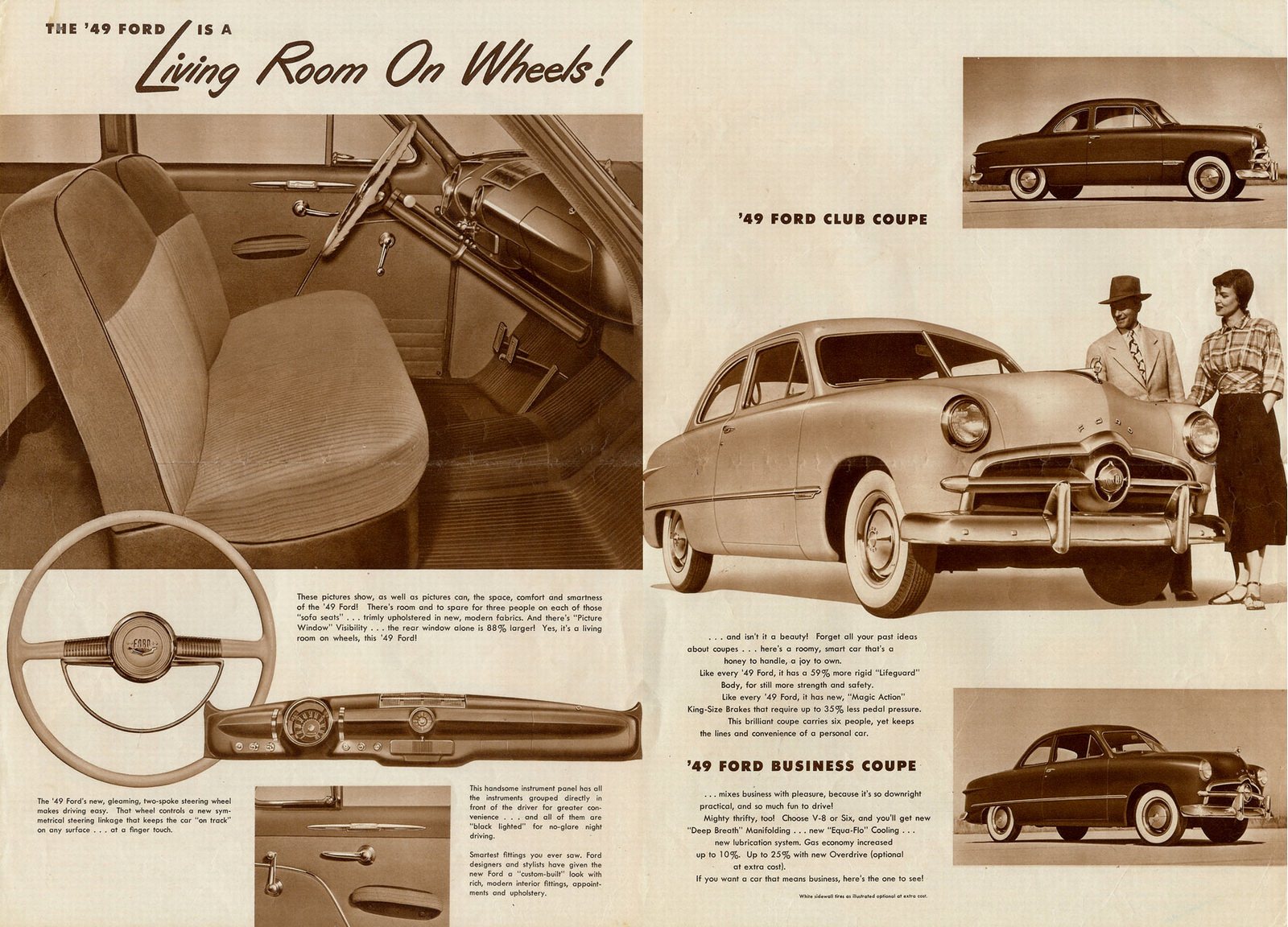
1949 Ford Brochure 1

The engine had been moved forward a few inches compared to similar previous Fords to allow more space for passenger comfort – this was a key consideration in all aspects of the 1949 Ford design.

The 1949 Ford design would remain in production with updates to create the 1950 and 1951 models before they were succeeded by the 1952 Ford, a car that took much of its inspiration from its forebear.

If you’d like to read more about the 1949 Ford you can click here to visit the official page on the model from Ford.

The film above is a promotional documentary about the car that runs at 41 minutes in length, giving a detailed look into the car, its design and development, and its history.

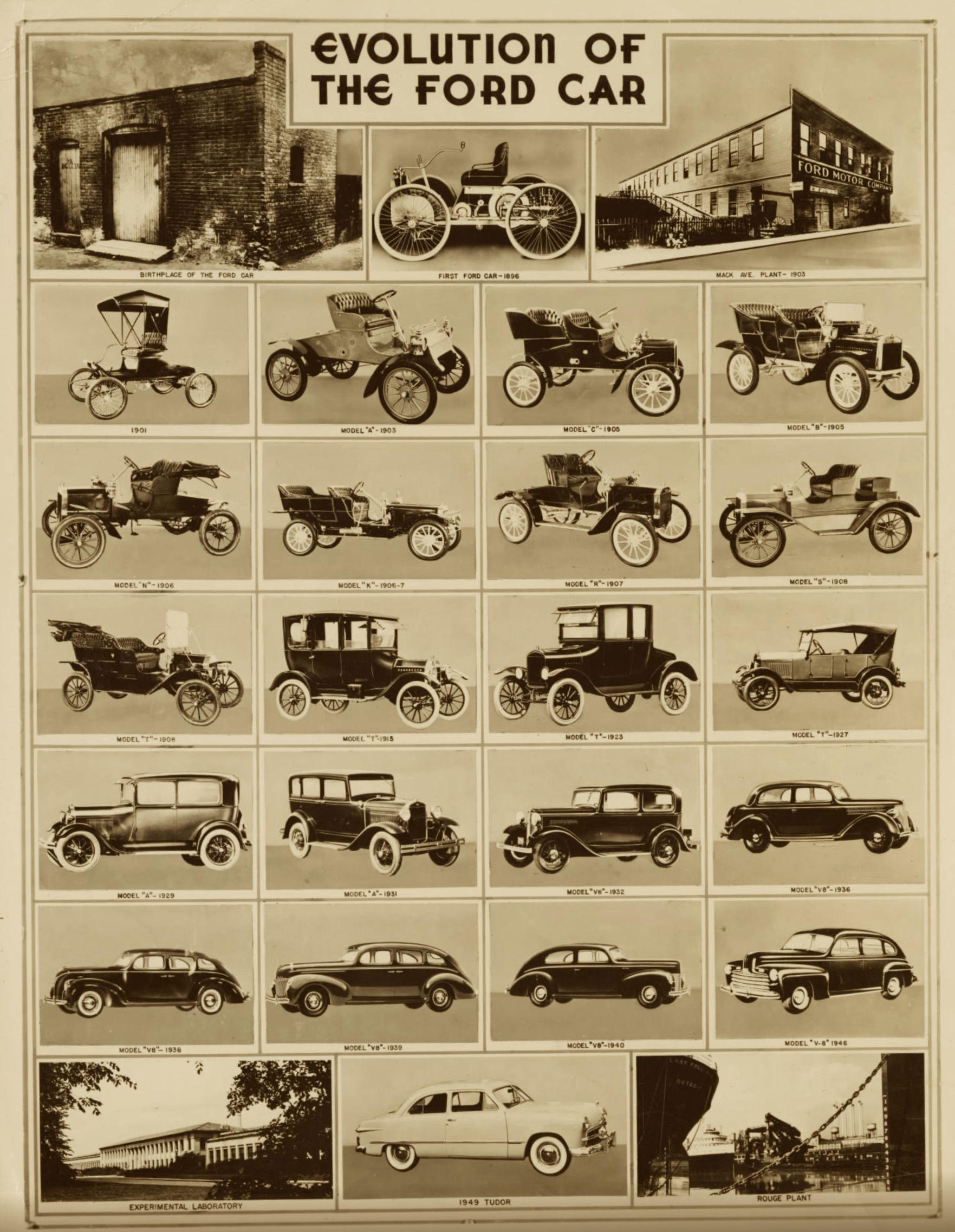
The Evolution of the Ford Car released in 1949.

“The Evolution of the Ford Car” poster, released in 1949 to showcase the 1948 Ford.

All images courtesy of The Henry Ford Museum.

Henry Ford II Driving the First 1949 Ford off Assembly Line at Rouge Plant, 1948

The post Full Documentary: “The ’49 Ford In Your Future” appeared first on Silodrome.


from Silodrome https://silodrome.com/full-documentary-the-49-ford-in-your-future/
via gqrds

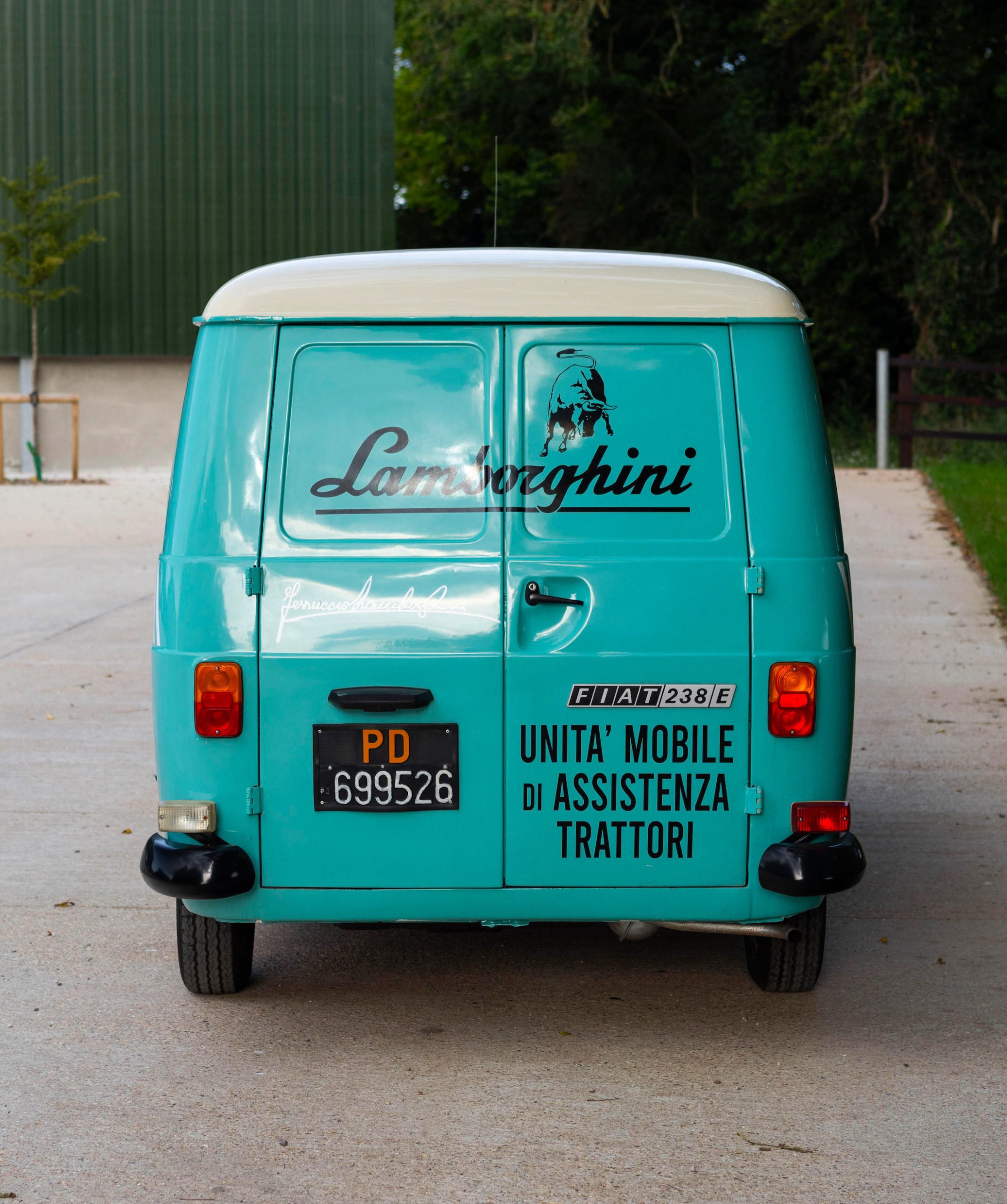
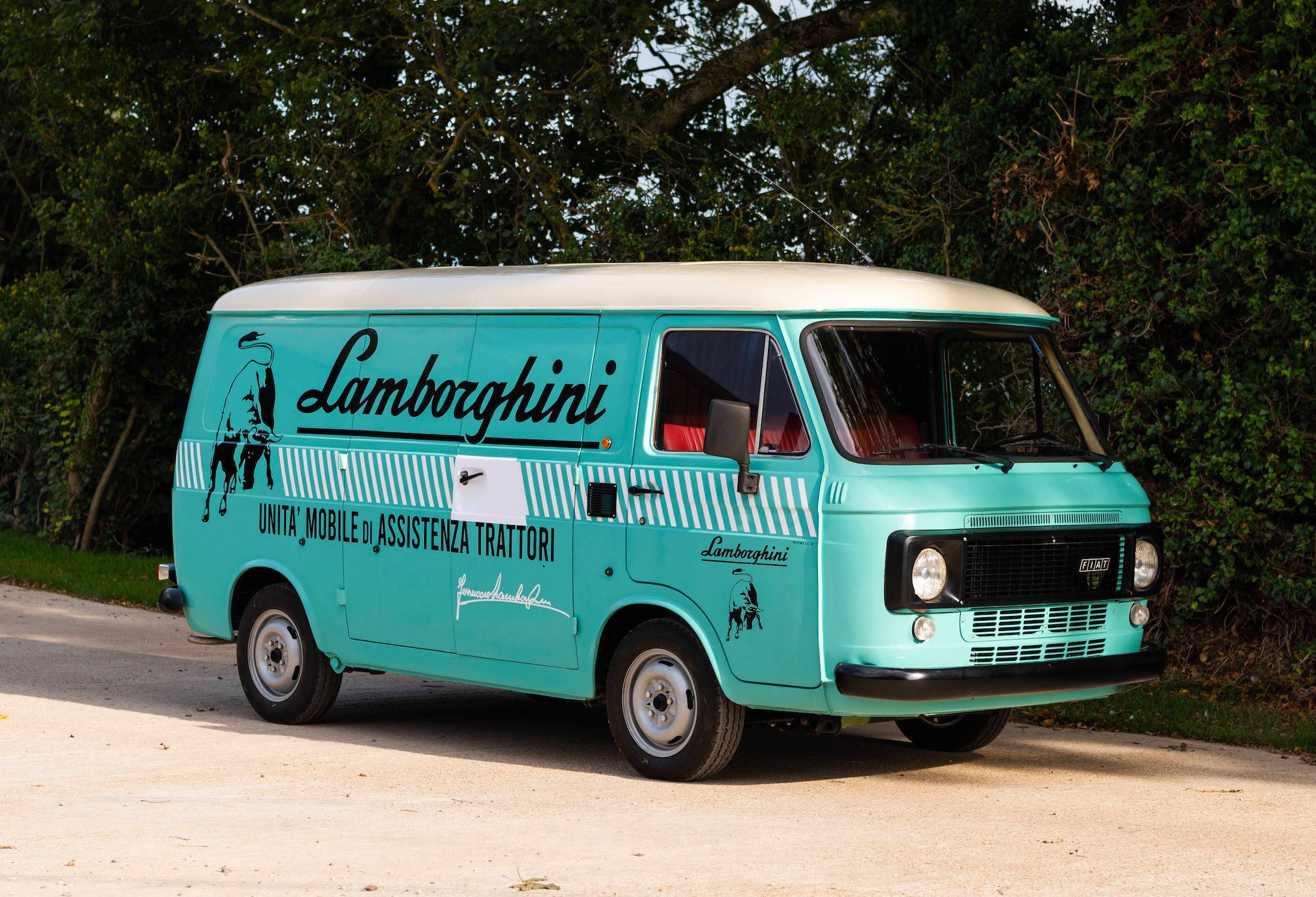
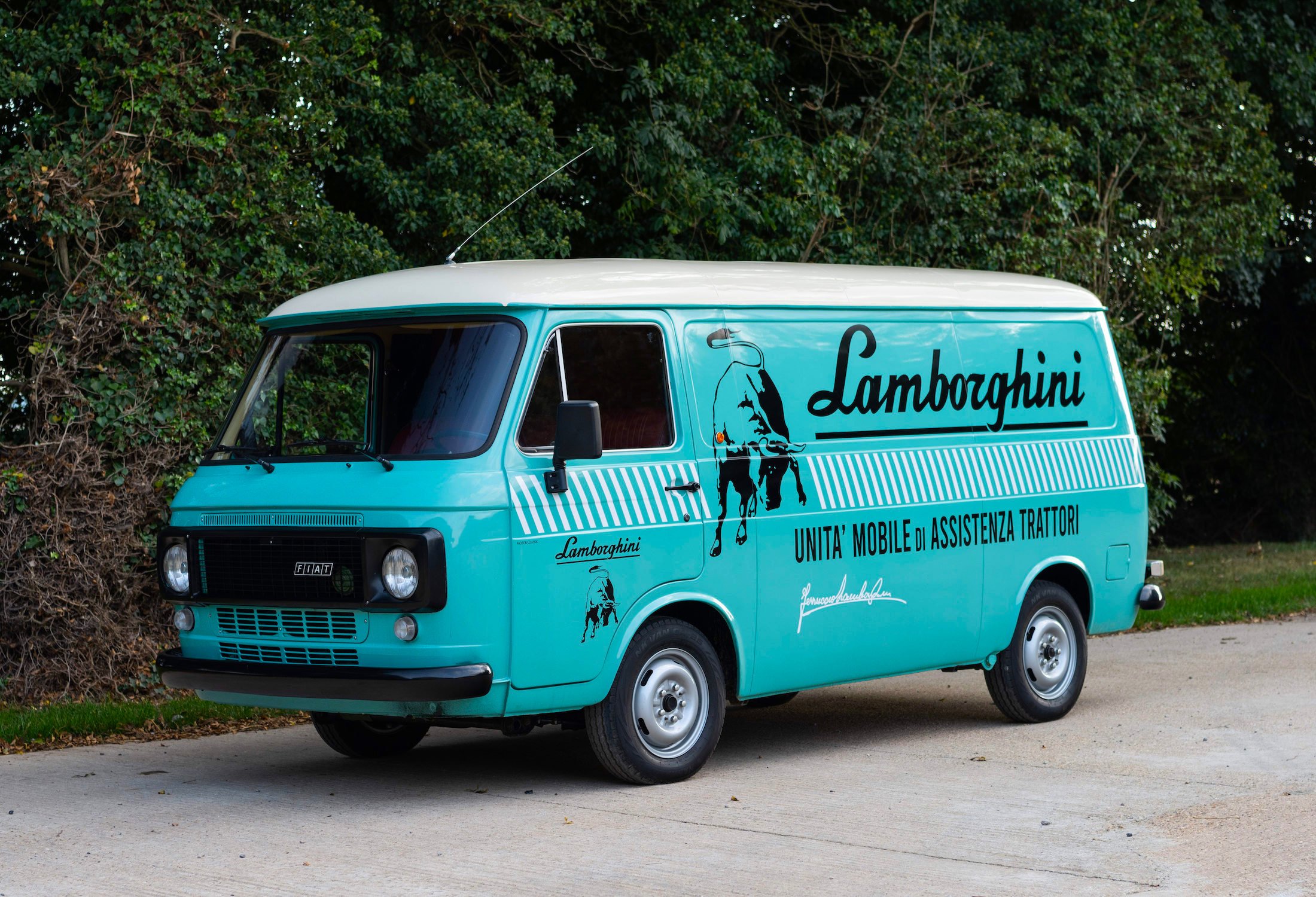
1980 Fiat 238: A Lamborghini “Roadside Assistance” Van

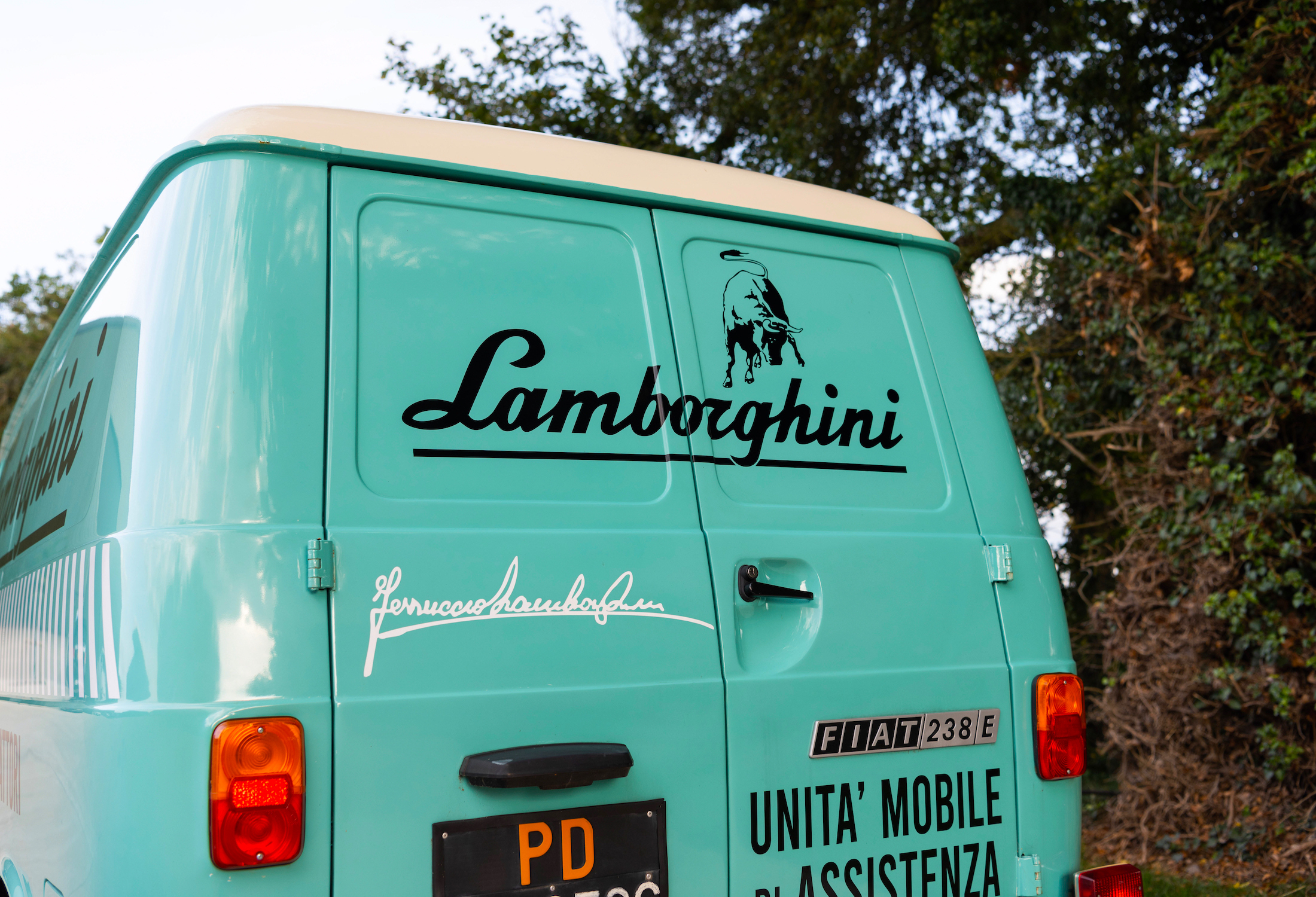
This is a 1980 Fiat 238 van that’s ready to go out and start rescuing Lamborghini owners who have found themselves parked by the side of the road, with a vehicle that’s turned itself into an attractive Italian paperweight.

The Fiat 238 is one of the most popular vans ever made by the Italian automaker and unsurprisingly it’s been used by companies like Ferrari and Lamborghini for roadside assistance duties – typically with their own distinctive livery.

Fast Facts – The Fiat 238 Van

  • The Fiat 238 van was introduced in 1965 as the replacement for the outgoing Fiat 1100T van. The 238 is based on the front-wheel drive Autobianchi Primula platform with power provided by the Fiat 124 engine.
  • The use of front-wheel drive allowed a lower flat floor in the rear, as no driveshaft needed to be accommodated, which maximized the space available for cargo. This design feature also made the 238 popular with camper conversion companies.
  • The Fiat 238 would remain in production until 1983, the original plan had been to phase it out when the Fiat 242 van was introduced in 1974, however the sales of the 238 remained so strong that Fiat kept it in production for 10 more years.
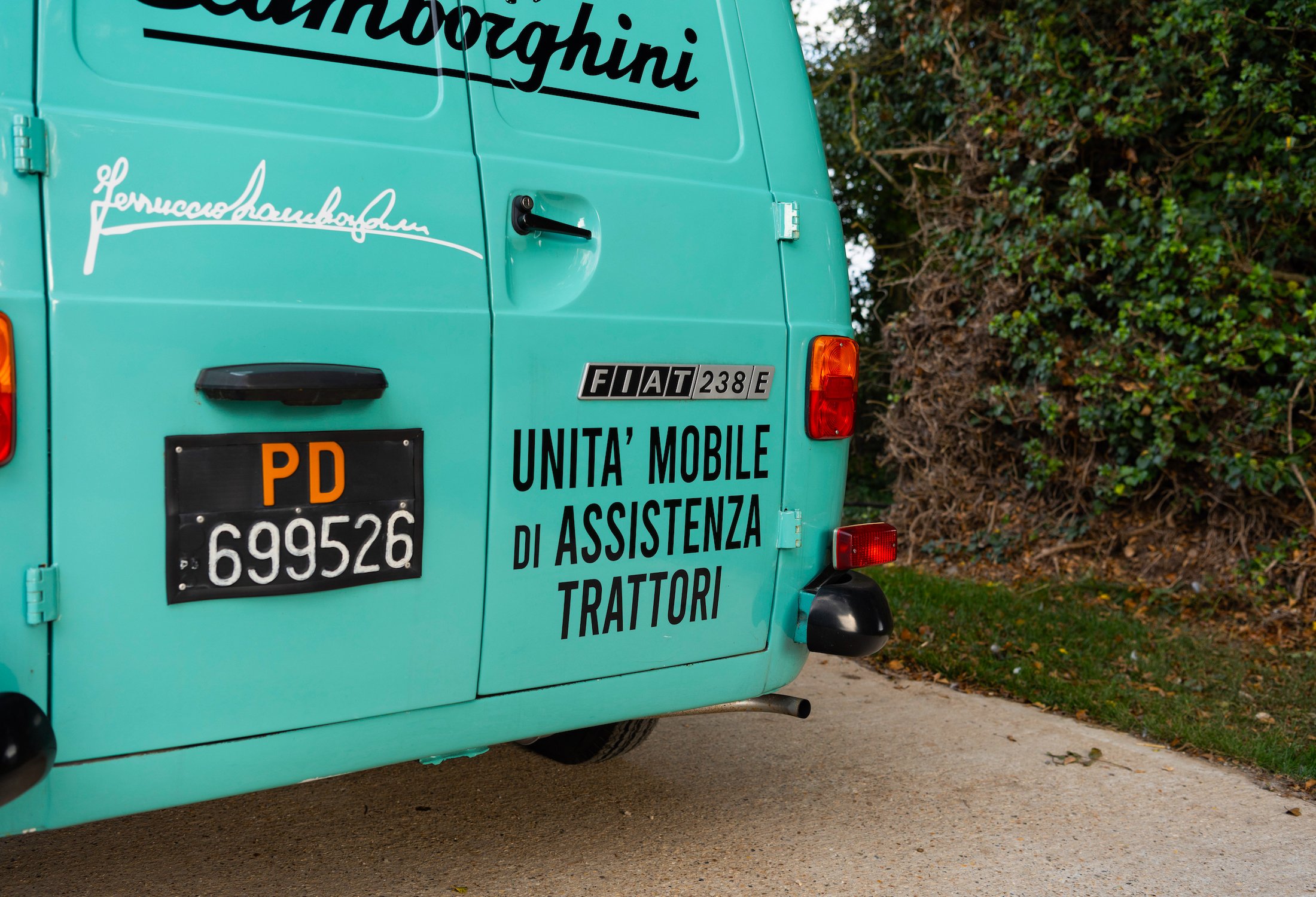
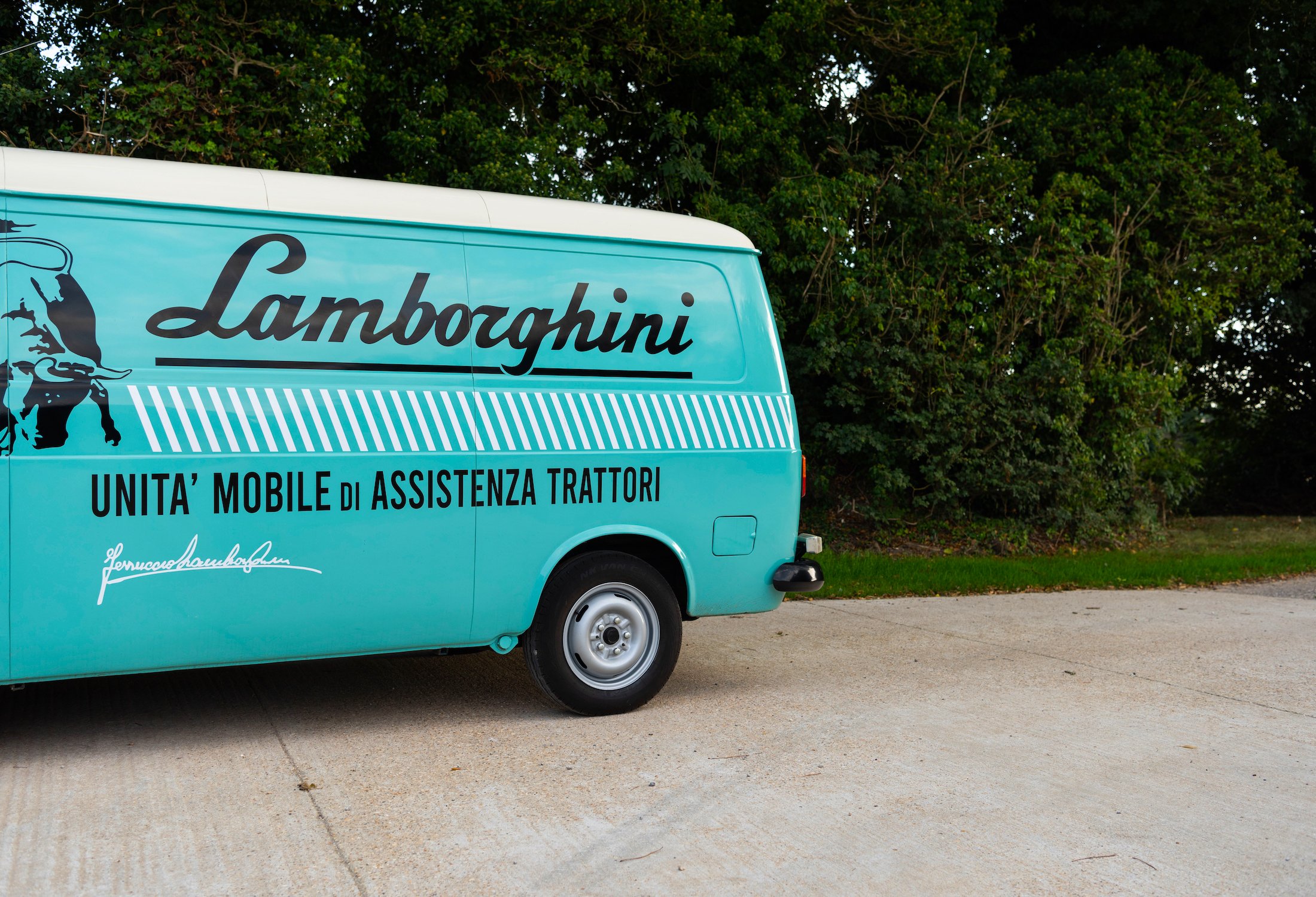
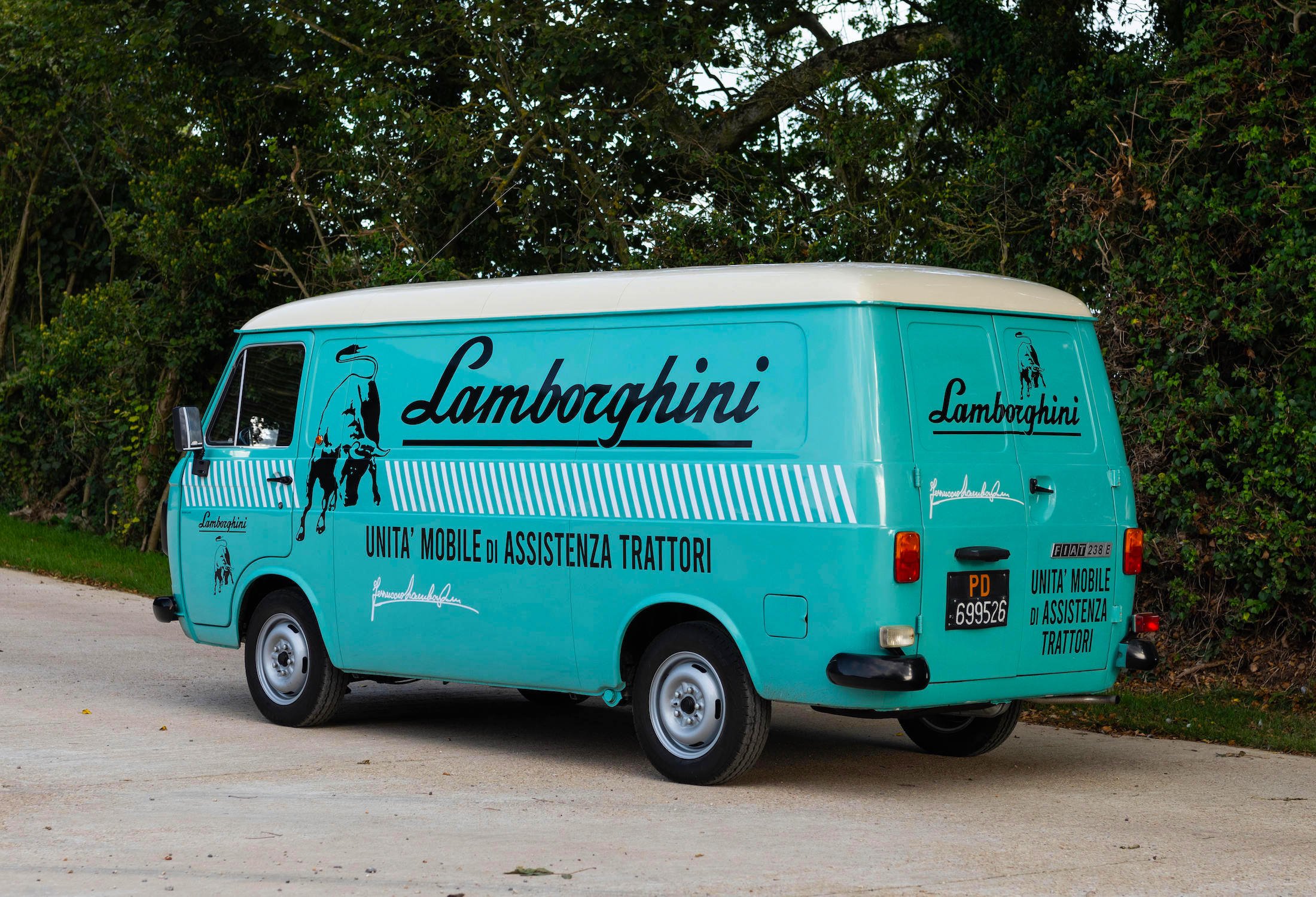
  • The van you see here has been restored to a high level, in fact it’s the nicest job we’ve seen on in 238 in recent memory. It’s been finished in a period correct Lamborghini roadside assistance livery that’ll ensure it always draws a crowd at shows.

The Fiat 238 Van

The Fiat 238 was released in 1965 to replace the venerable Fiat 1100T van, it was a member of a long line of Fiat commercial vehicles dating all the way back to the Fiat 24 Horse Power of 1903.

Fiat 238 Lamborghini Roadside Assistance Van 12

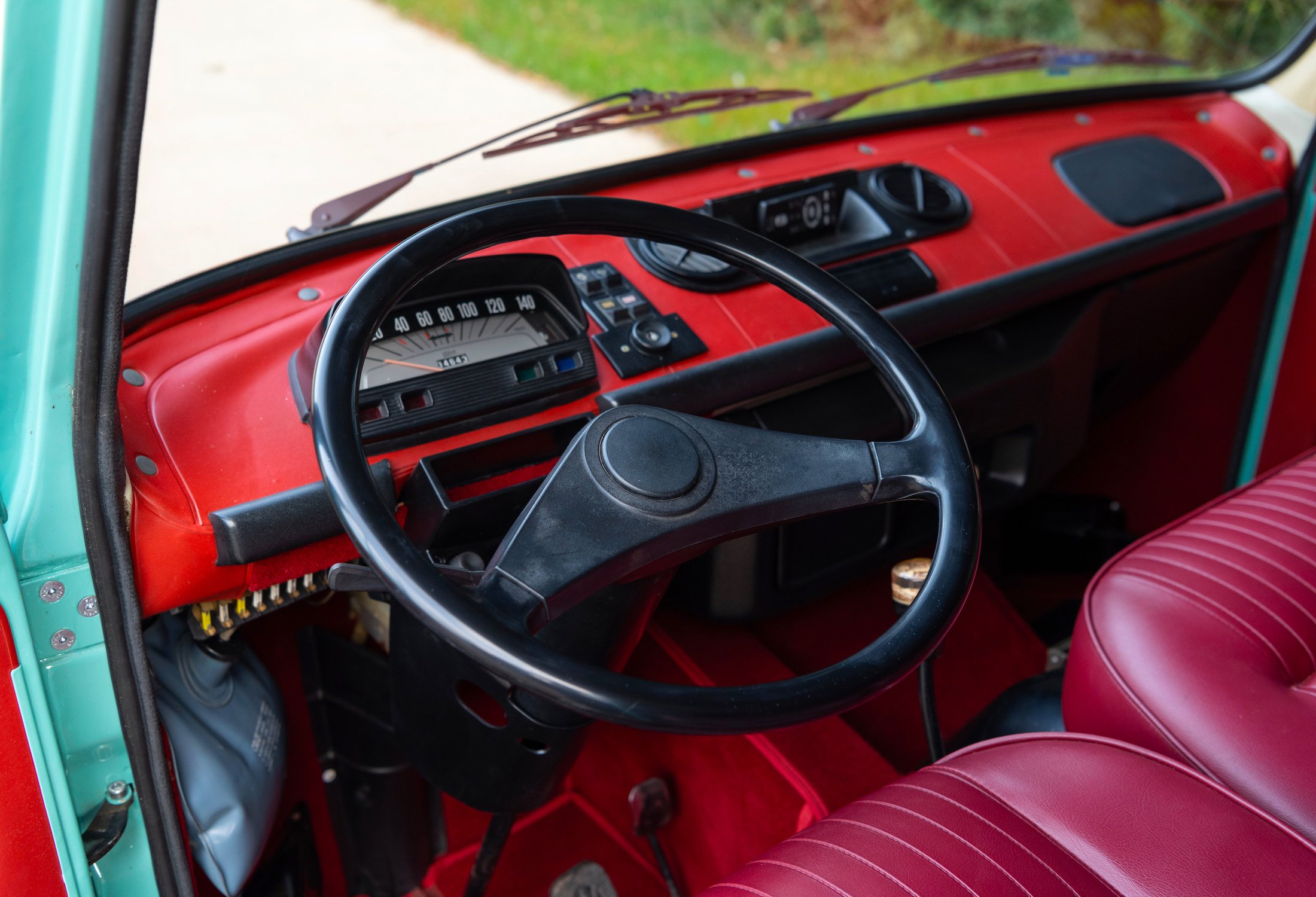
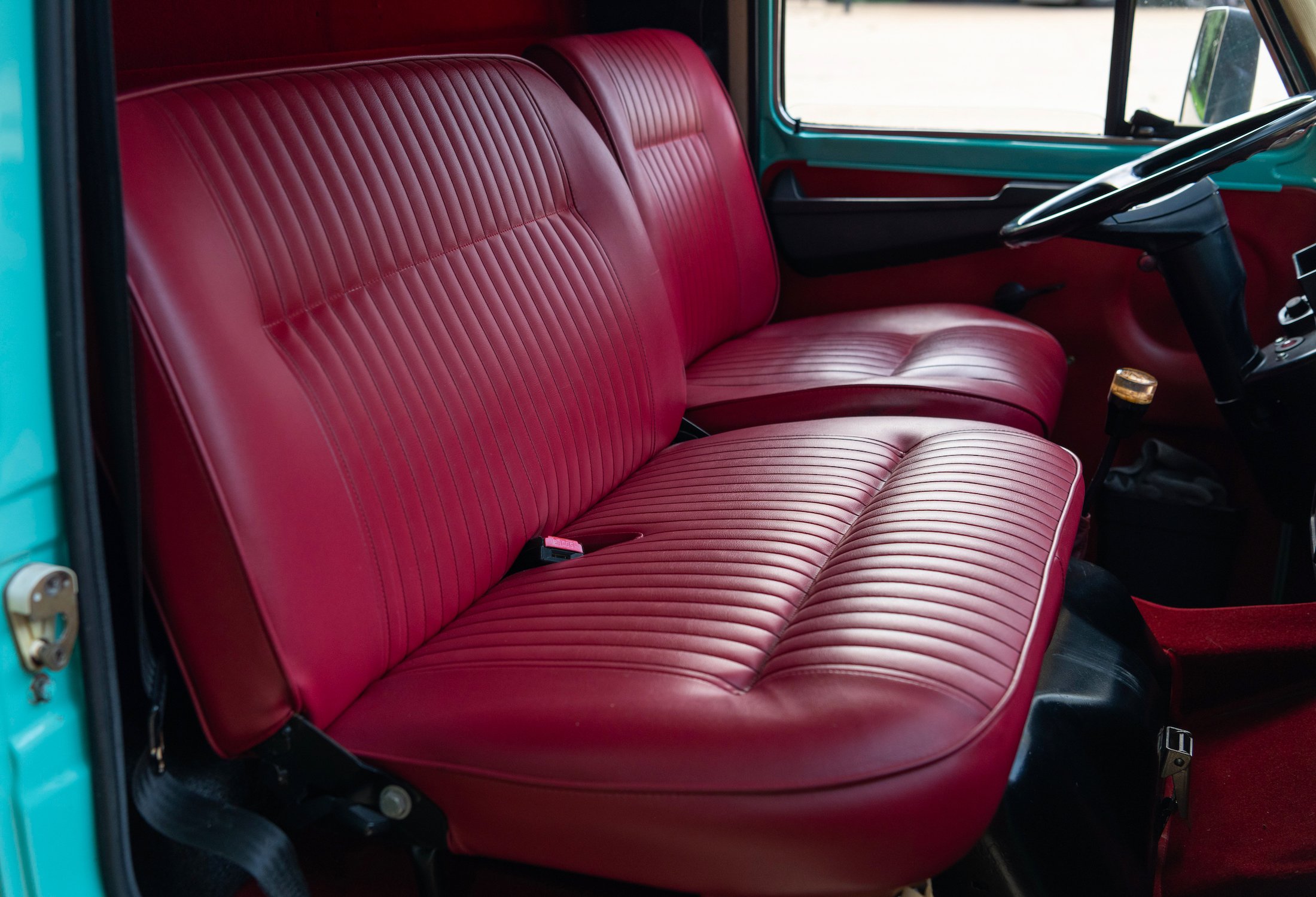
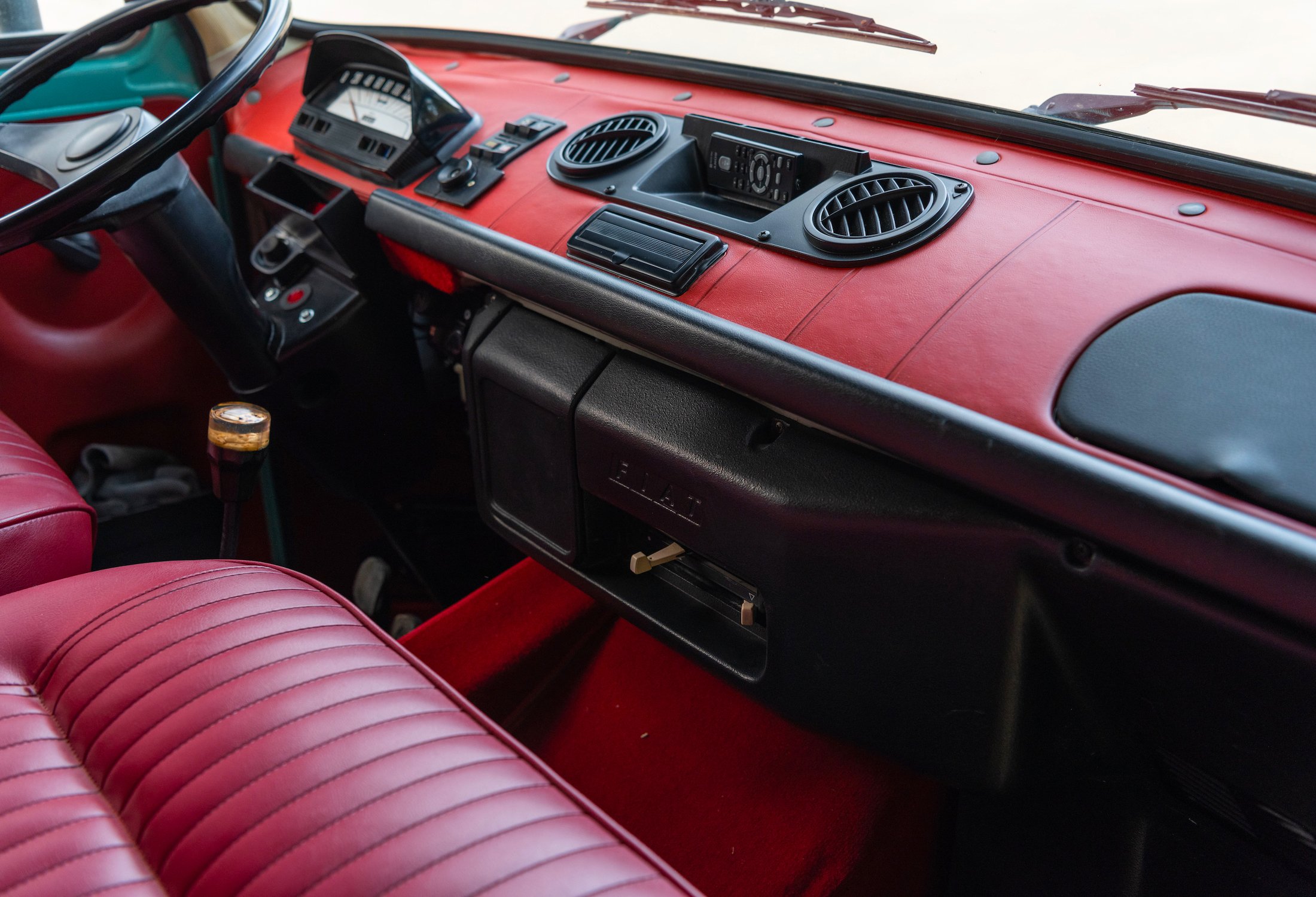
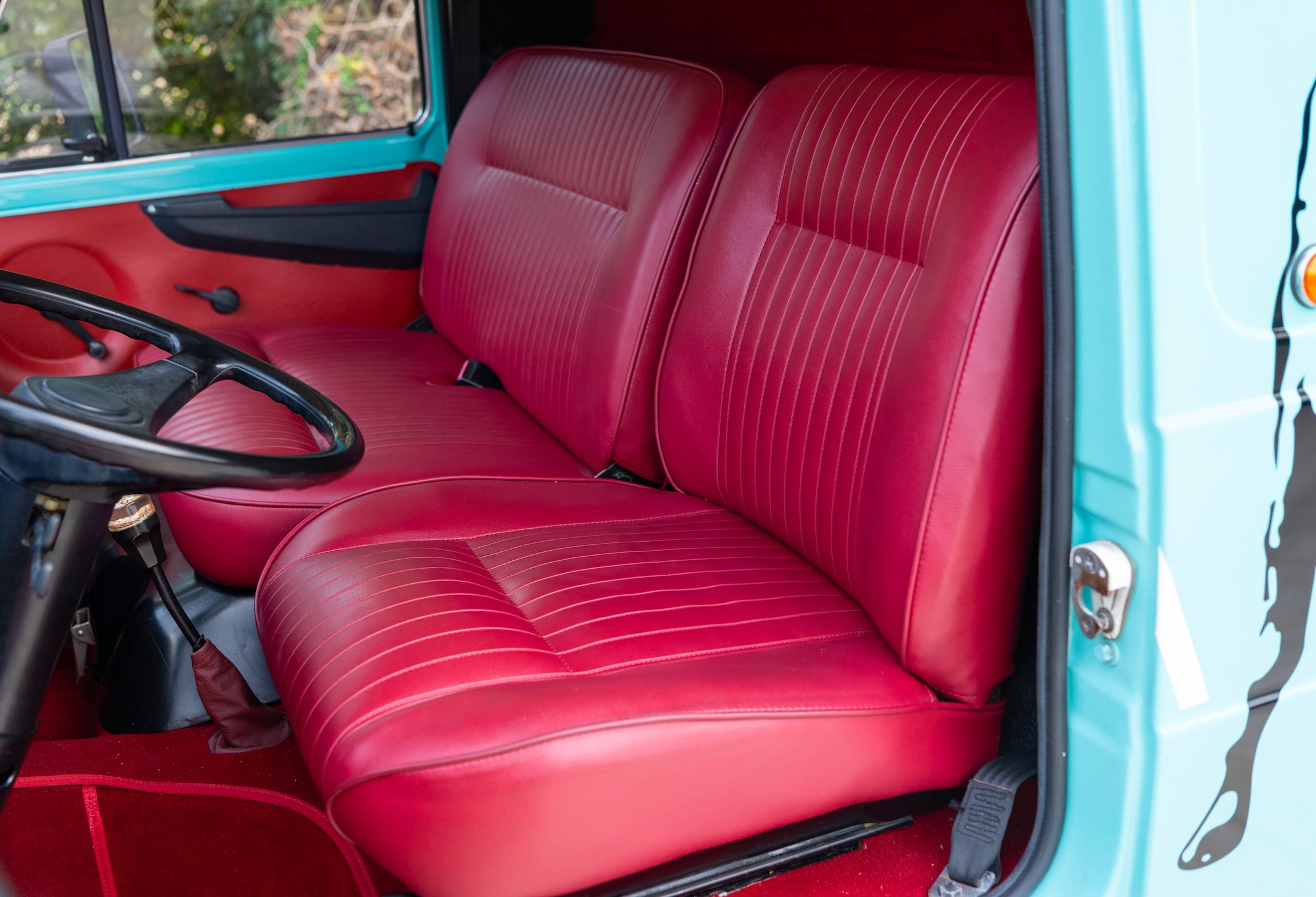
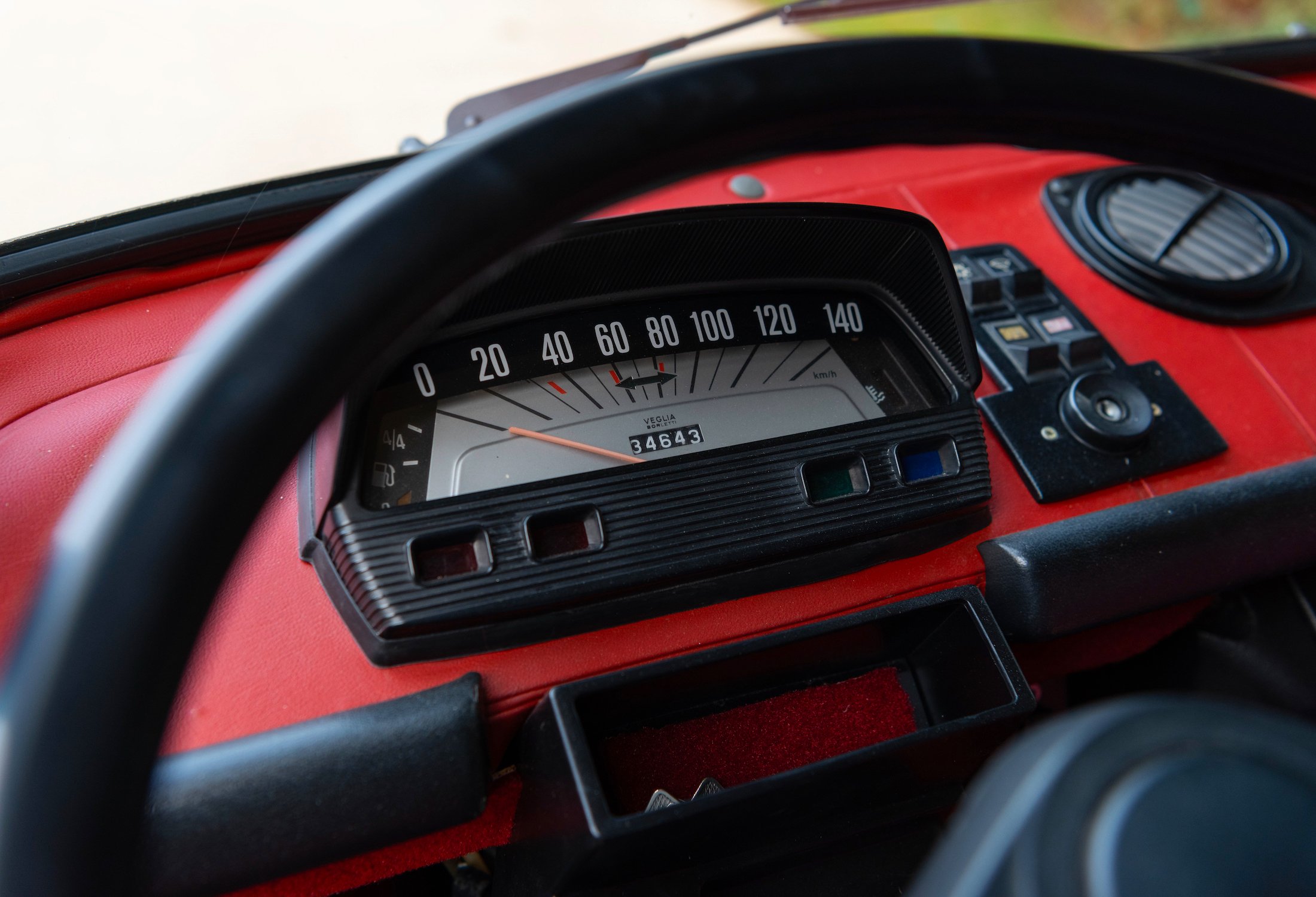
This van is in excellent shape, it has one of the nicest interiors we’ve ever seen on a 238.

Named for its power output of 24 steam horsepower, the 24HP was one of the first vehicles ever developed by Fabbrica Italiana Automobili Torino, better known now simply as FIAT.

A number of truck and van commercial vehicles would follow, production was drastically increased in WWII, with Fiat becoming one of the biggest automotive manufacturers in Europe by the time of the war.

The introduction of the Fiat 238 in the mid-1960s represented a major shift in design attitudes, it was powered by a transversely mounted, front wheel drive arrangement that allowed a lower floor in the rear, as no driveshaft had to be accommodated for.

The Fiat 238 would be built in a huge variety of sub-types, from the standard van to pickup trucks, campers, minibuses, ambulances, and more.

The 238 became a common daily sight on the streets of Italy and Europe as a whole, and as more and more enthusiasts are drawn to vintage vans the popularity of the 238 is climbing steadily.

Fiat 238 Lamborghini Roadside Assistance Van 2

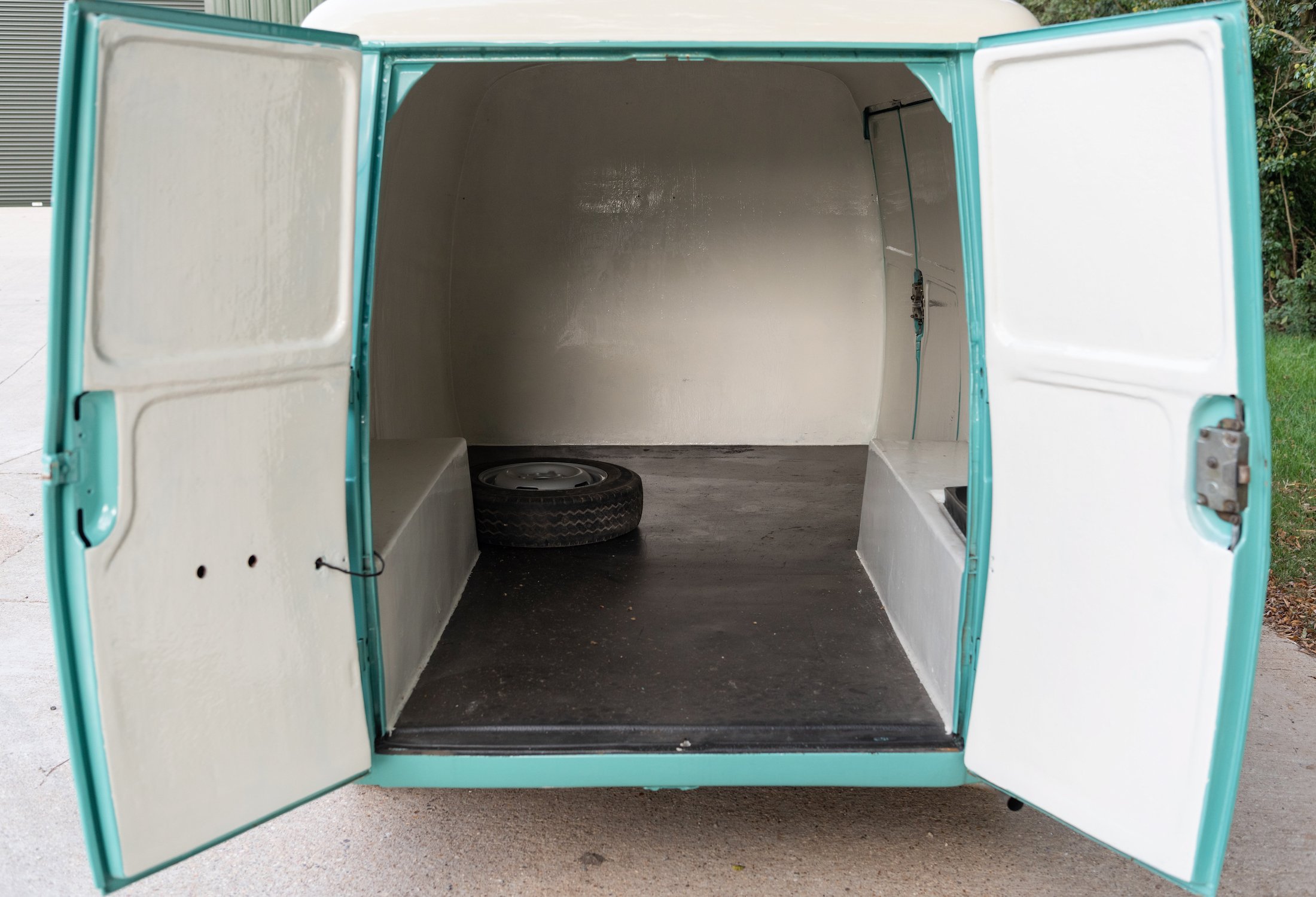
Due to the front wheel drive which allowed low flat floor in the rear, the Fiat 238 was ideal for use as a mobile workshop as there was so much space for shelving, tools, spares, and equipment in the back.

The Fiat 238 Lamborghini Roadside Assistance Van Shown Here

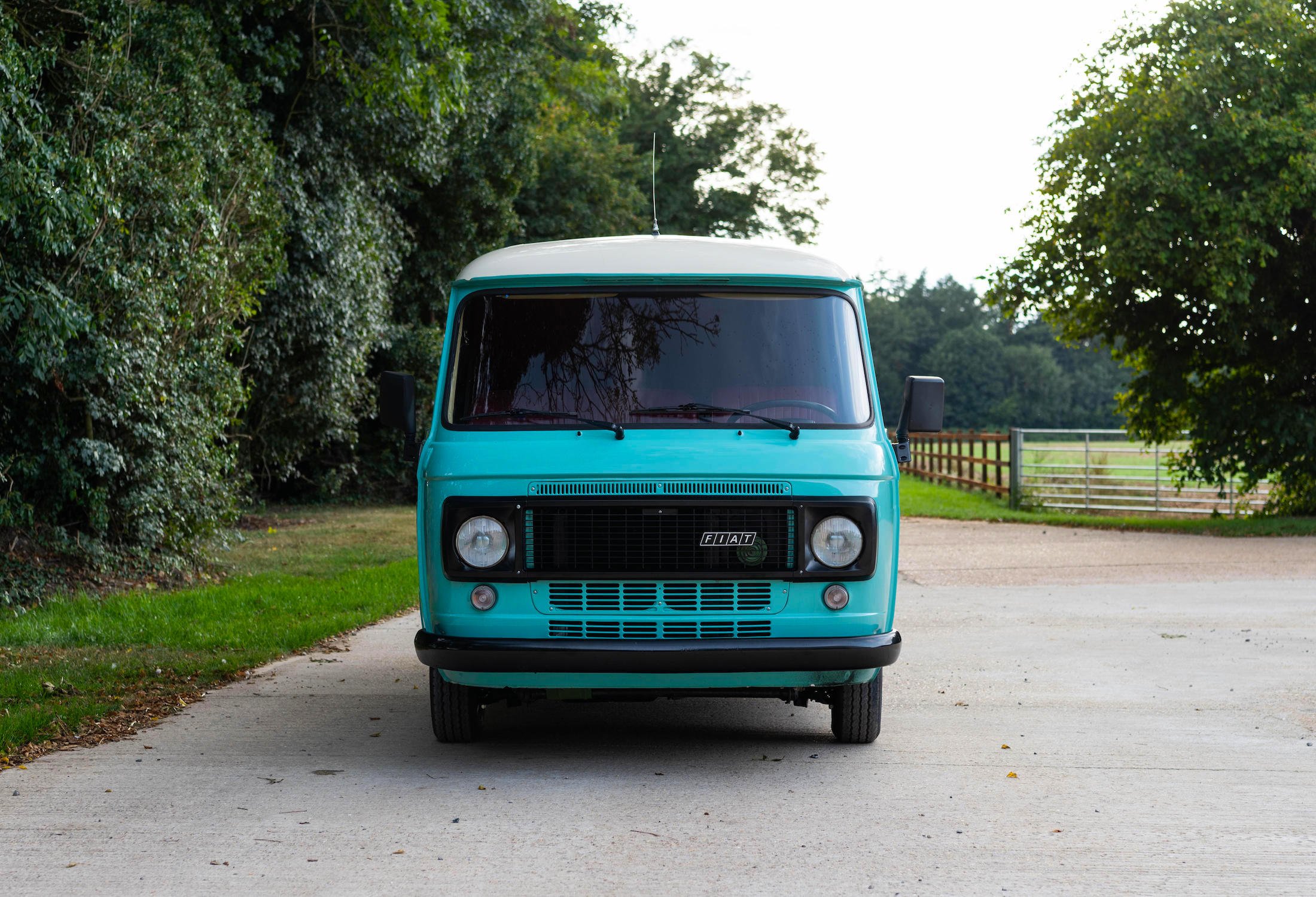
The 238 you see here has clearly been through a comprehensive restoration, in fact the front passenger compartment is the nicest 238 cockpit we’ve ever seen.

The van has a white top to help keep it cool, with aquamarine blue sides featuring Lamborghini livery. It rides on classic steel wheels and the swing doors at the back of the van open to show a tidy but empty interior.

The new owner will be the one to decide if they turn it into a camper, use it as a regular cargo van, or perhaps even fill it with tool and go looking for stranded Italian exotics to rescue.

It’s due to roll across the auction block with Historics Auctioneers on the 12th of March with a price guide of $26,400 – $33,100 USD. If you’d like to read more about it or register to bid you can click here to visit the listing.
Fiat 238 Lamborghini Roadside Assistance Van Back Fiat 238 Lamborghini Roadside Assistance Van Back Fiat 238 Lamborghini Roadside Assistance Van 17 Fiat 238 Lamborghini Roadside Assistance Van 16 Fiat 238 Lamborghini Roadside Assistance Van 15 Fiat 238 Lamborghini Roadside Assistance Van 14 Fiat 238 Lamborghini Roadside Assistance Van 13 Fiat 238 Lamborghini Roadside Assistance Van 11 Fiat 238 Lamborghini Roadside Assistance Van 10 Fiat 238 Lamborghini Roadside Assistance Van 9 Fiat 238 Lamborghini Roadside Assistance Van 8 Fiat 238 Lamborghini Roadside Assistance Van 7 Fiat 238 Lamborghini Roadside Assistance Van 6 Fiat 238 Lamborghini Roadside Assistance Van 5 Fiat 238 Lamborghini Roadside Assistance Van 4 Fiat 238 Lamborghini Roadside Assistance Van 3 Fiat 238 Lamborghini Roadside Assistance Van 1

Images courtesy of Historics Auctioneers

Fiat 238 Lamborghini Roadside Assistance Van

The post 1980 Fiat 238: A Lamborghini “Roadside Assistance” Van appeared first on Silodrome.


from Silodrome https://silodrome.com/fiat-238-lamborghini-roadside-assistance-van/
via gqrds

A Sauber C32 Ferrari Formula 1 Exhaust Sculpture

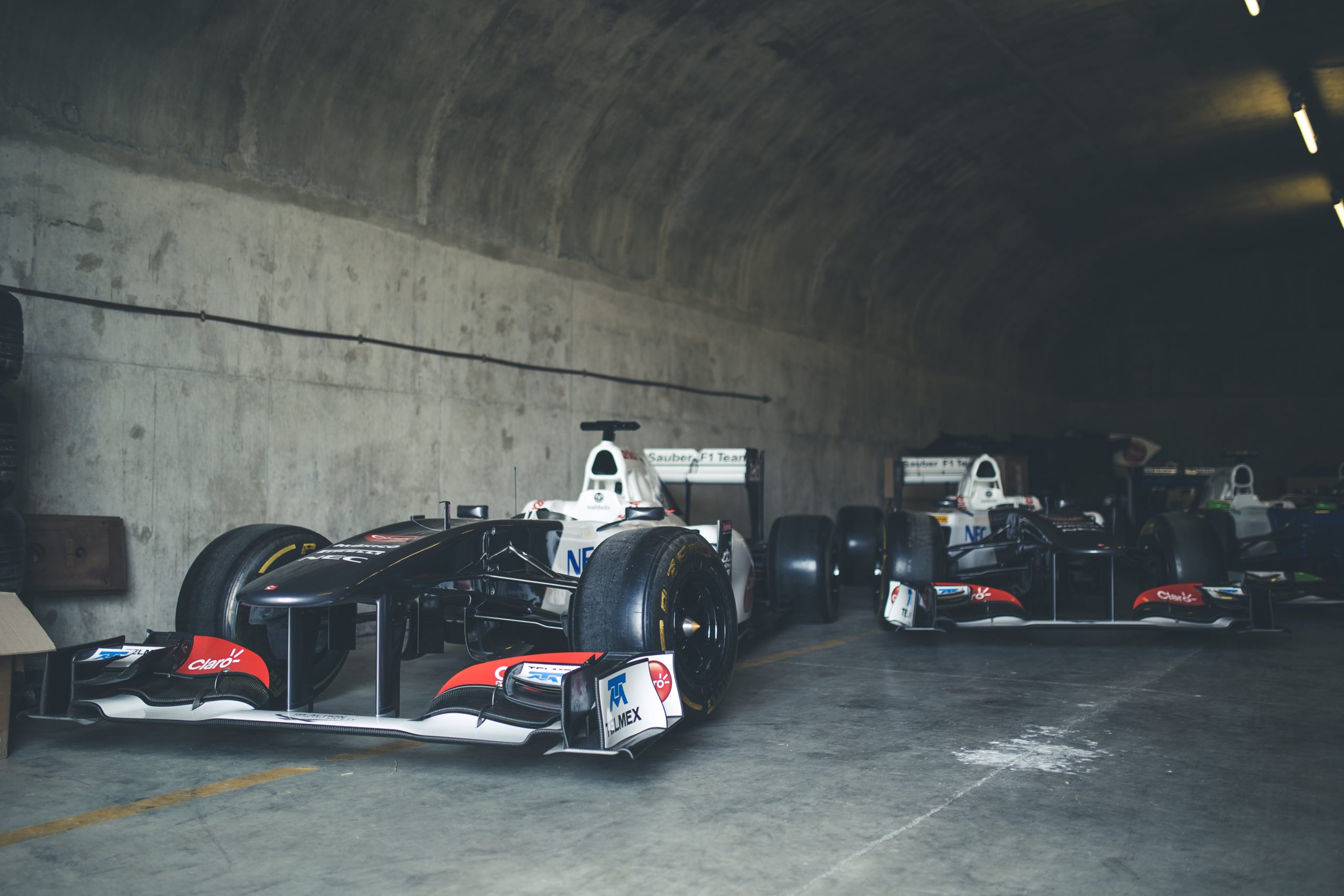
This is a Sauber C32-Ferrari exhaust sculpture by Mike O’Connor, a major figure in the classic Formula 1 world who owns the company Vintage Formula – a company that sells classic F1 cars as well as art created from them.

Back in 2014 O’Connor bought the remains of the Benetton F1 Team including the cars and parts needed to operate them, adding them all to his already expansive collection.

He also founded the Fastest.Club, an owners club for people who own operational classic Formula 1 cars, and the club provides them with opportunities to get their cars out on track as a support event for a number of F1 races around the world.

Sauber C32-Ferrari Exhaust Sculpture 3

These are just a few of the Formula 1 cars that Mike O’Connor has in his collection, all stored away in a bunker at a secret location in England.

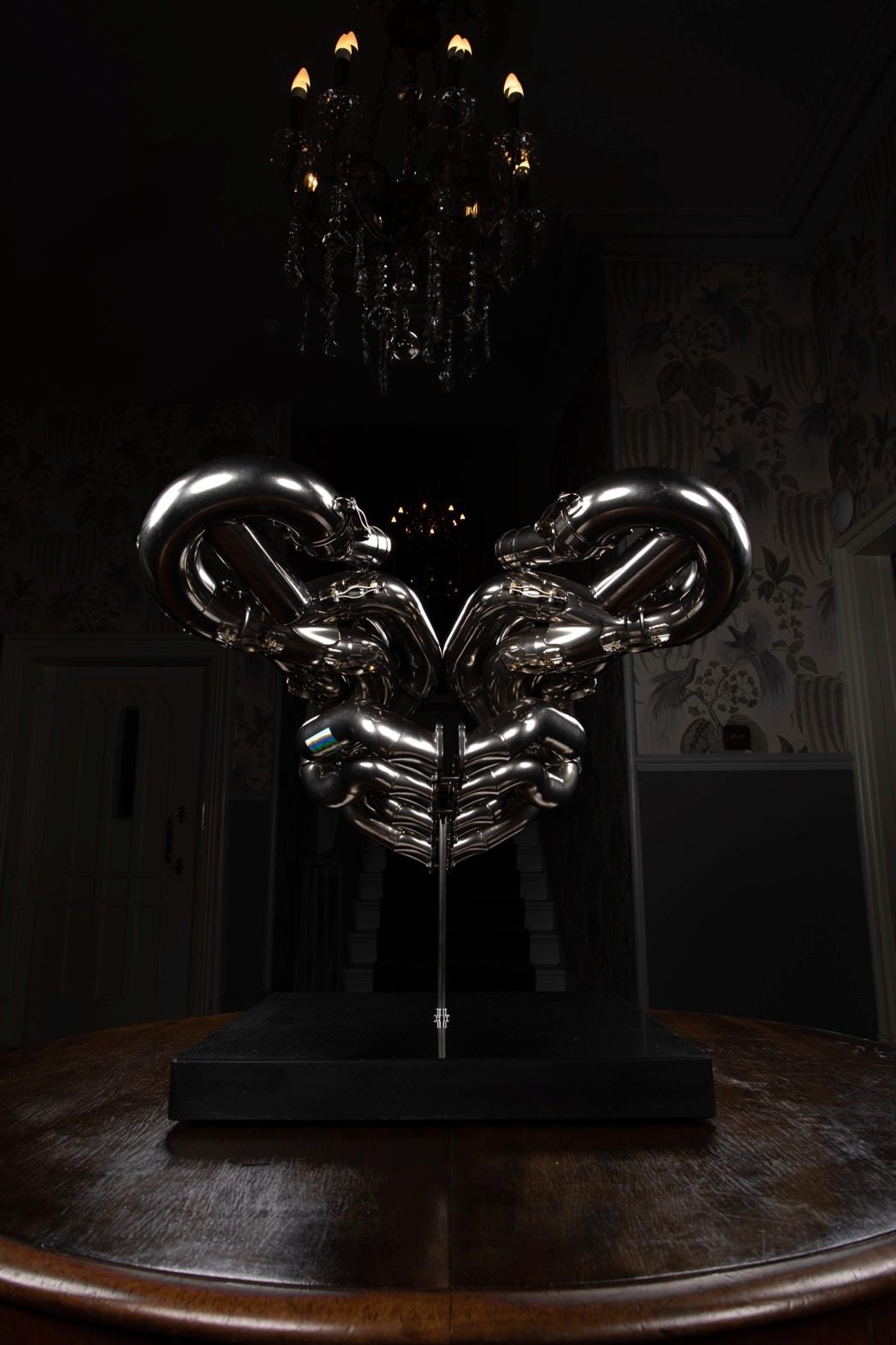
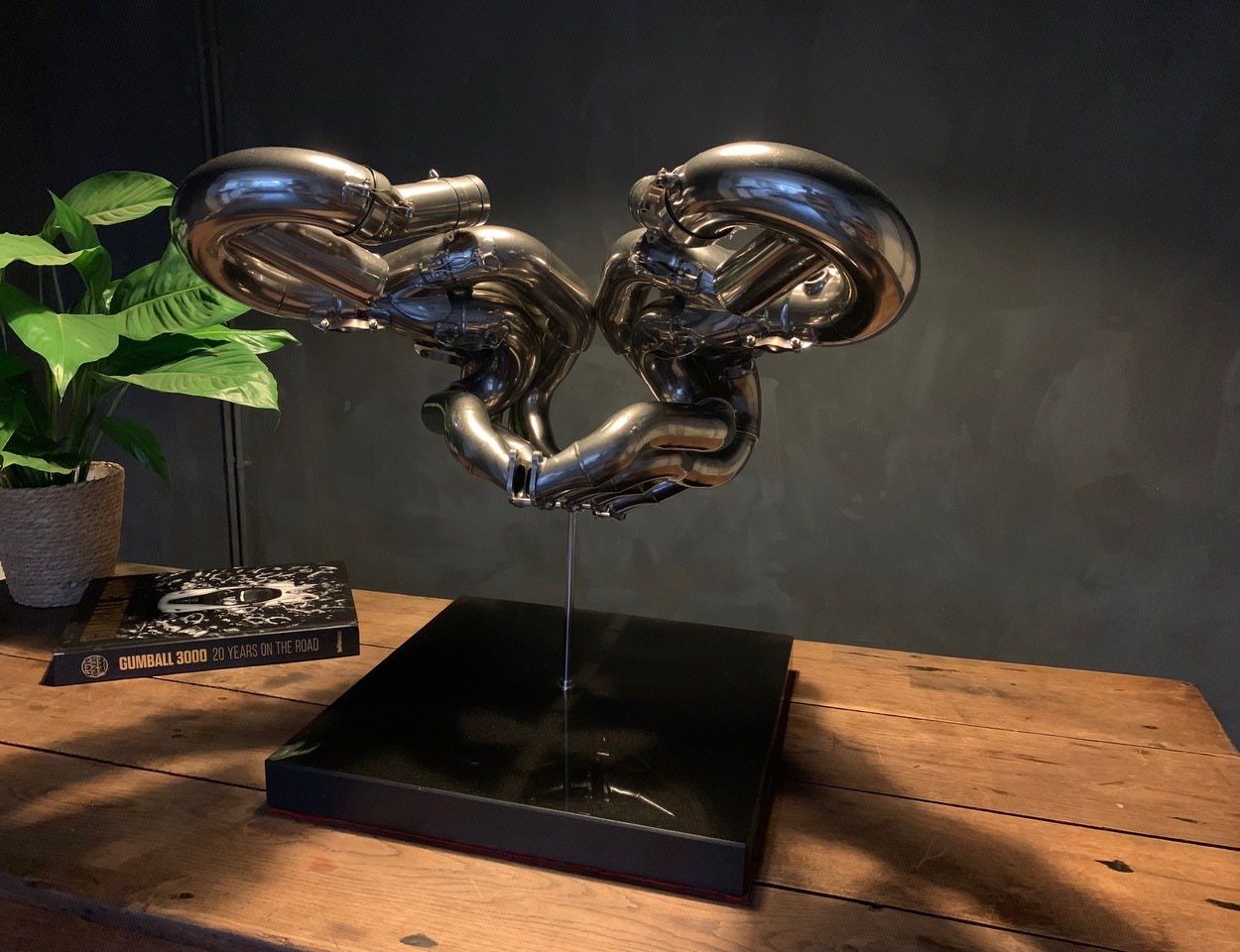
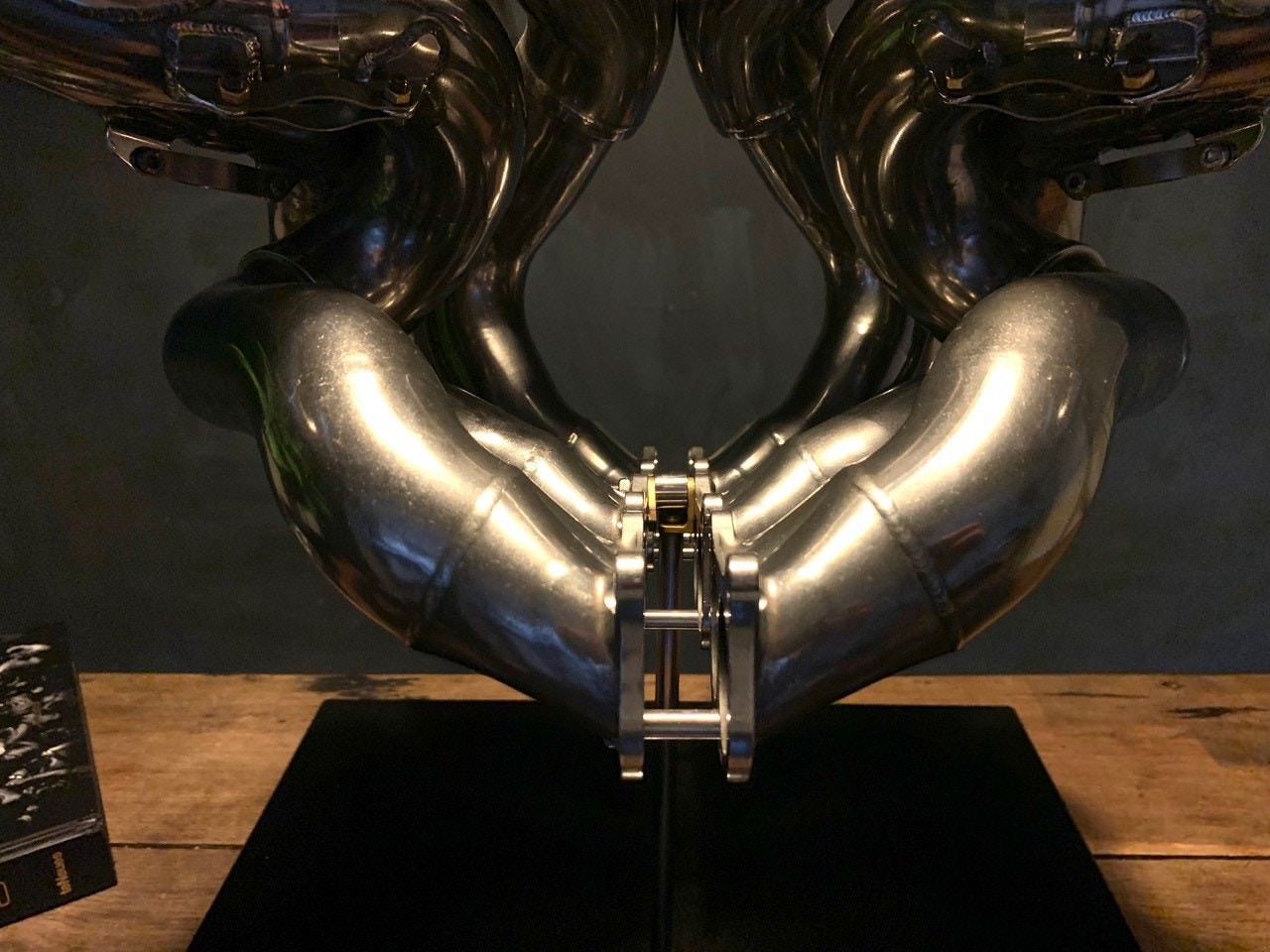
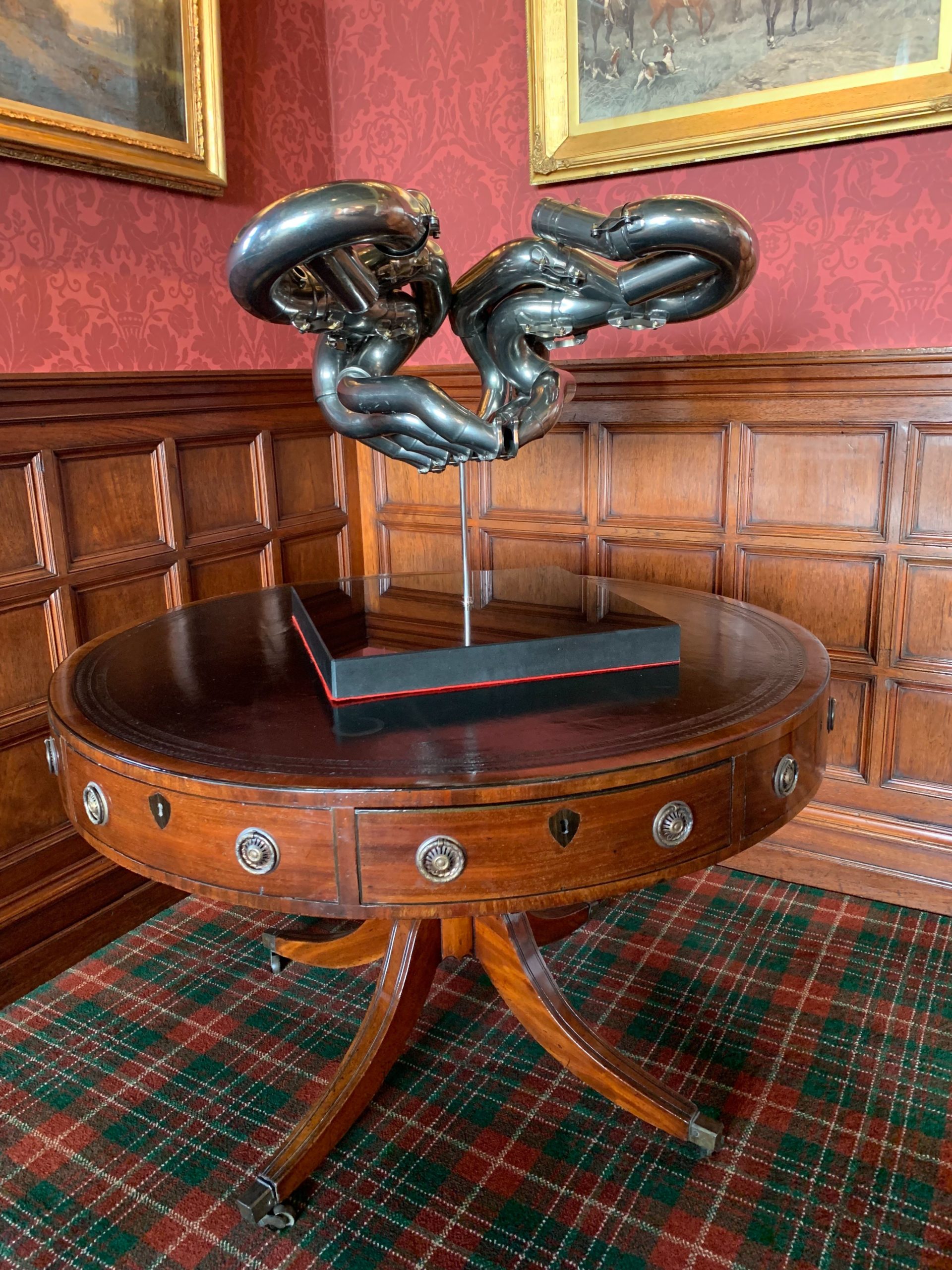
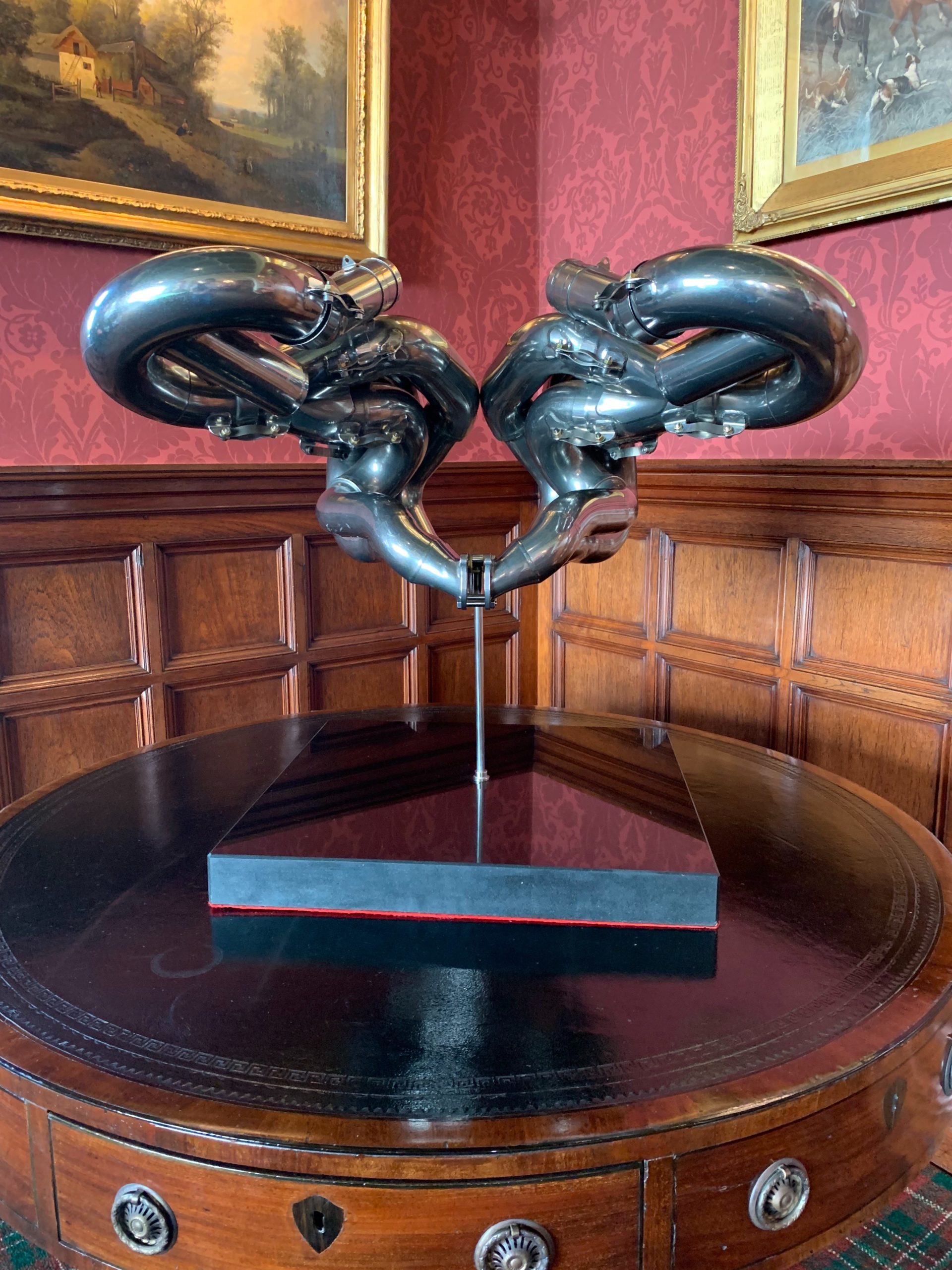
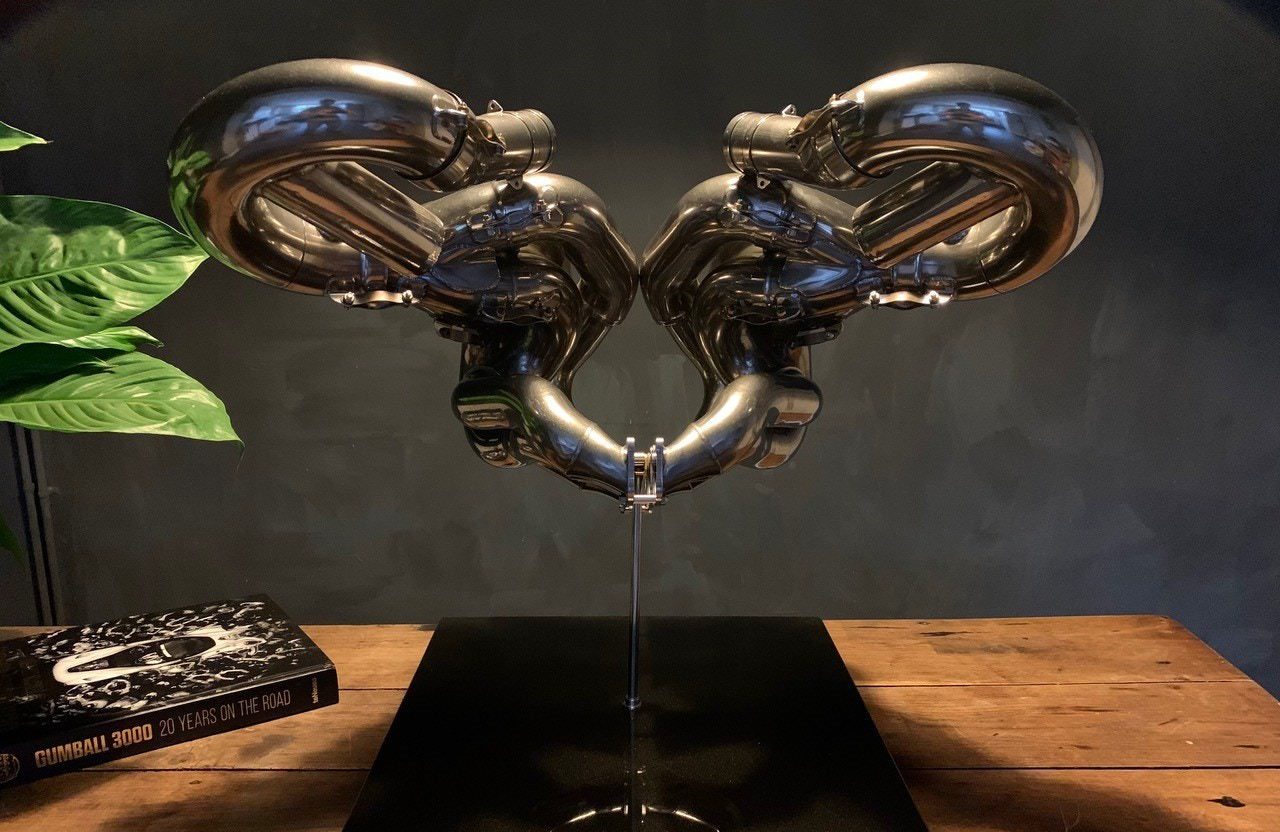
The Sauber C32-Ferrari exhaust sculpture you see here was built from a real exhaust from the 2013 Sauber F1 car. It was powered by a Ferrari Type 056 naturally aspirated 2.4 liter 90ยบ V8 with a 18,000 RPM redline that produces up to 785 hp.

This sculpture by O’Connor features the left and right bank exhaust headers from the engine joined at the ports to create a symmetrical and almost alien-like piece that is mounted to a display stand.

This sculpture is currently for sale out of Britain, it’s being auctioned live online by Collecting Cars and you can click here if you would like to read more or register to bid.

Sauber C32-Ferrari Exhaust Sculpture 2 Sauber C32-Ferrari Exhaust Sculpture 66 Sauber C32-Ferrari Exhaust Sculpture 7 Sauber C32-Ferrari Exhaust Sculpture 5 Sauber C32-Ferrari Exhaust Sculpture 4 Sauber C32-Ferrari Exhaust Sculpture 1

Images courtesy of Collecting Cars
Sauber C32-Ferrari Exhaust Sculpture

The post A Sauber C32 Ferrari Formula 1 Exhaust Sculpture appeared first on Silodrome.


from Silodrome https://silodrome.com/sauber-c32-ferrari-exhaust-sculpture/
via gqrds