Robert Redford’s Porsche 904 GTS Is For Sale

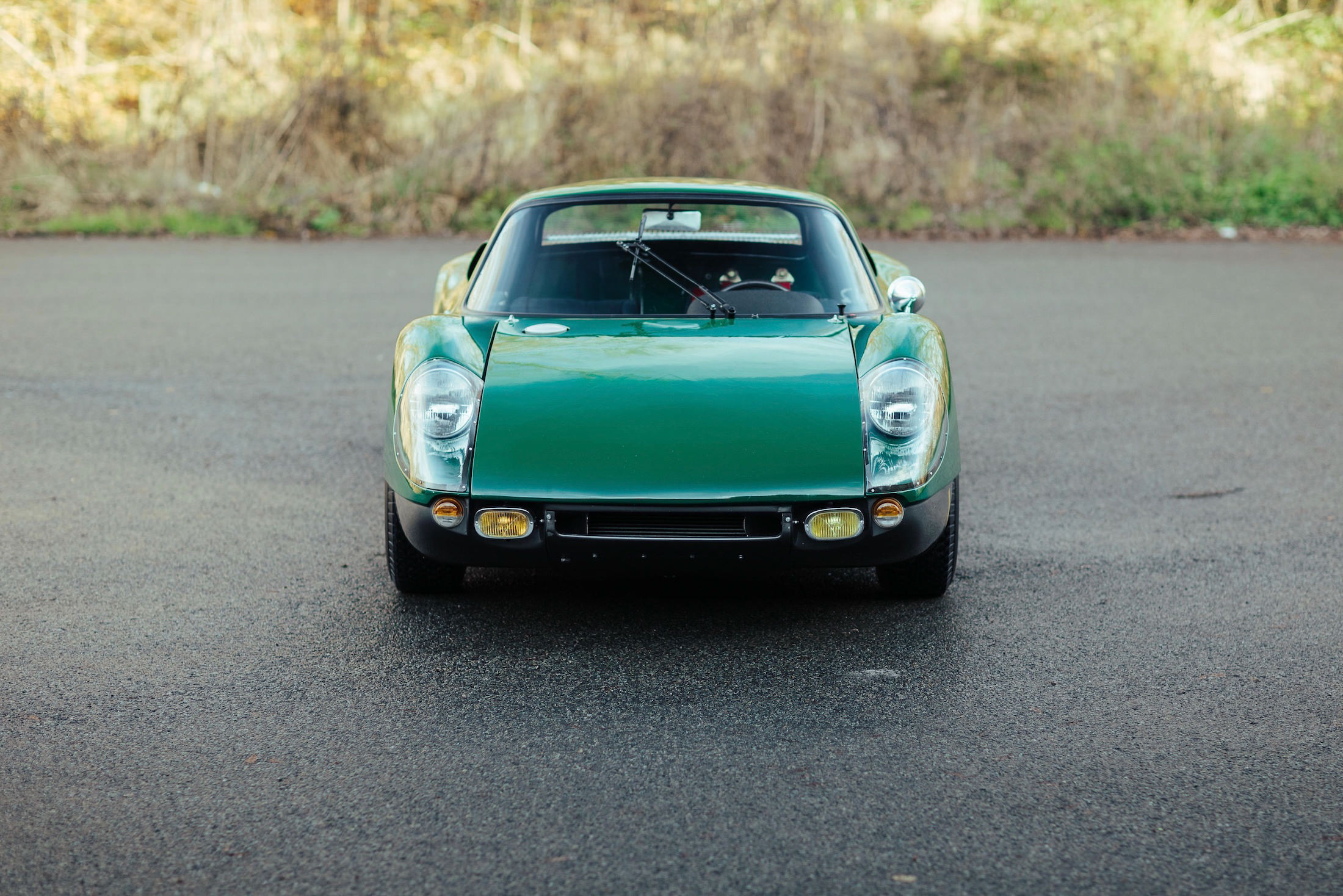
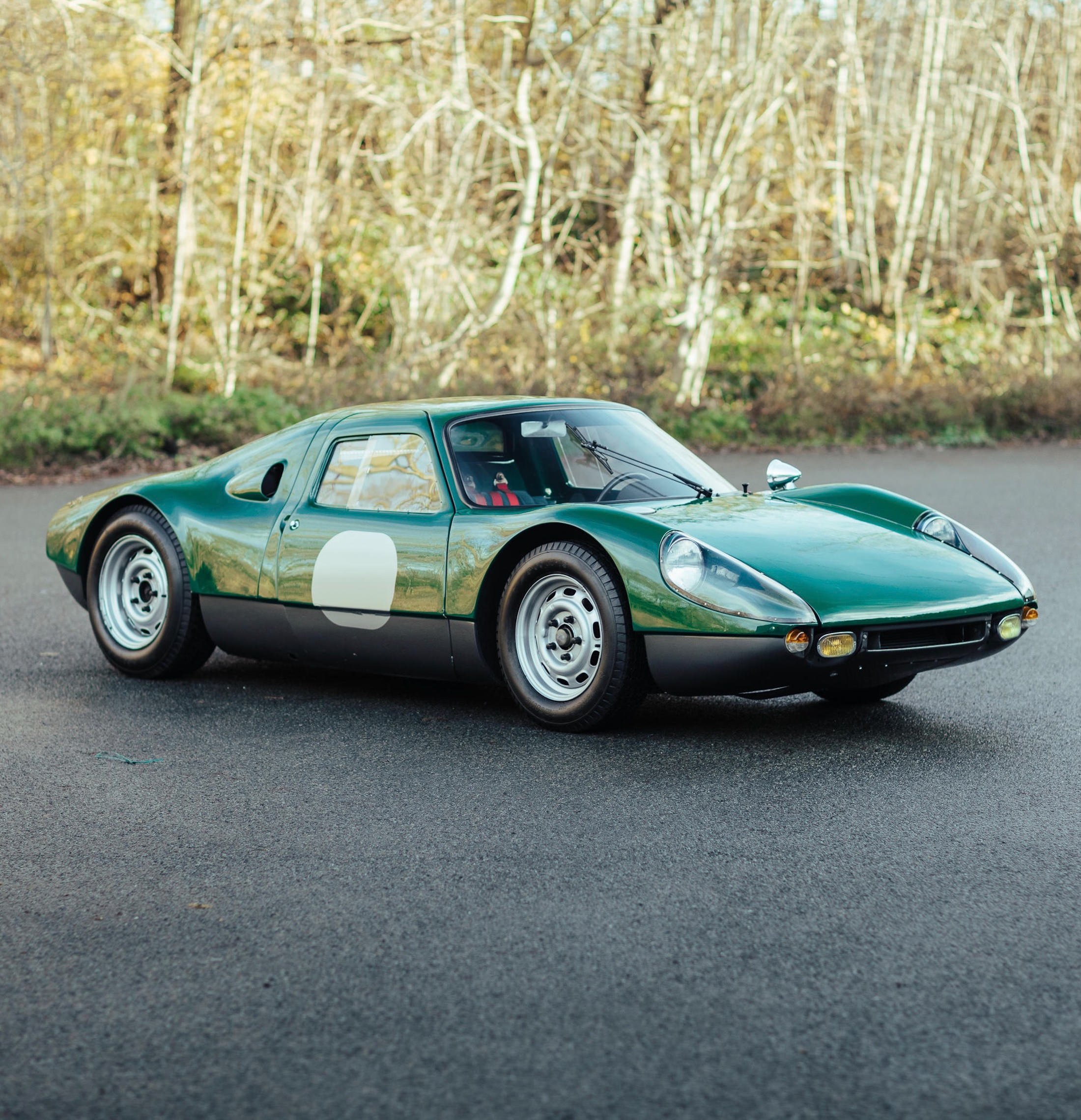
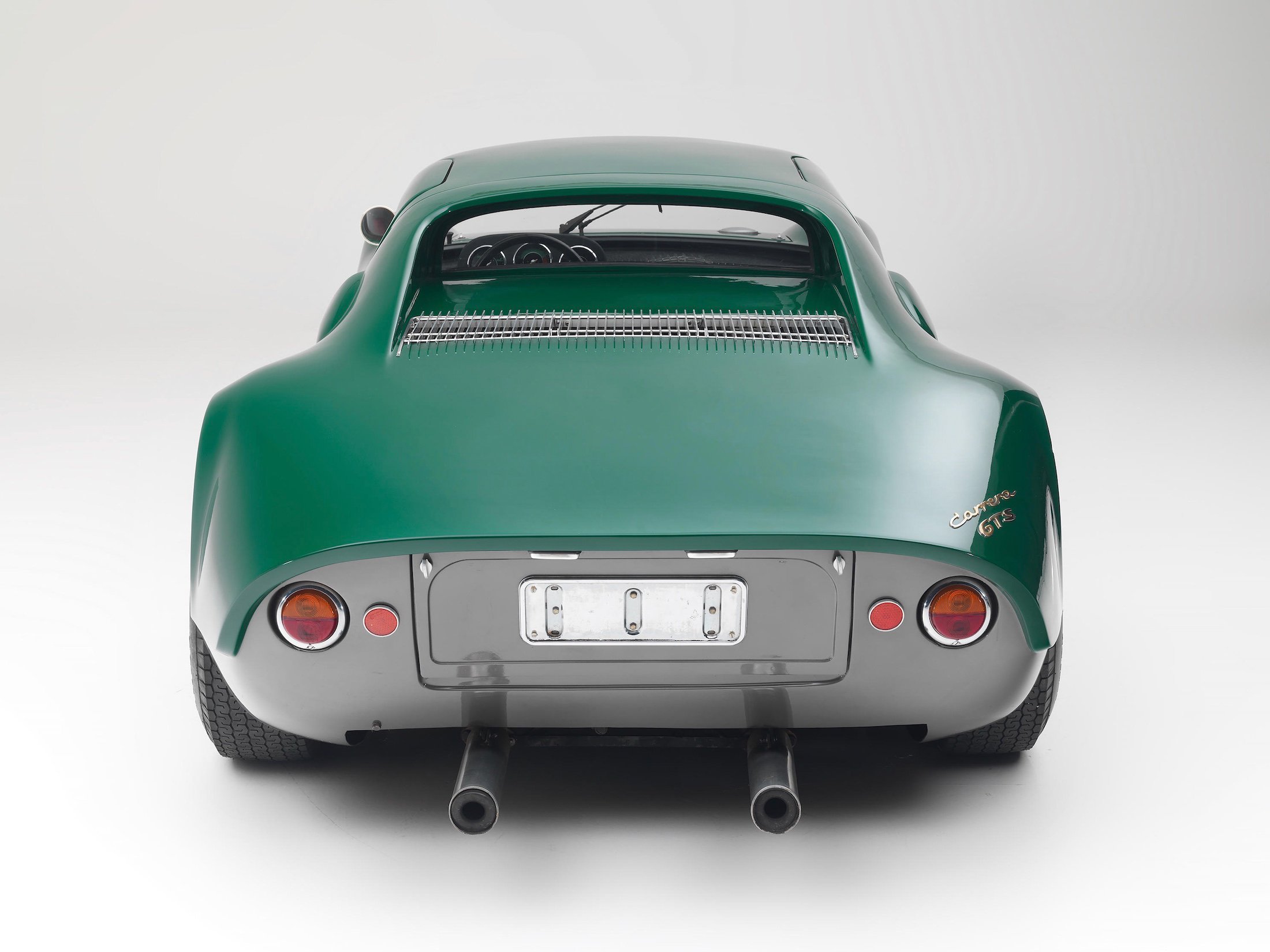
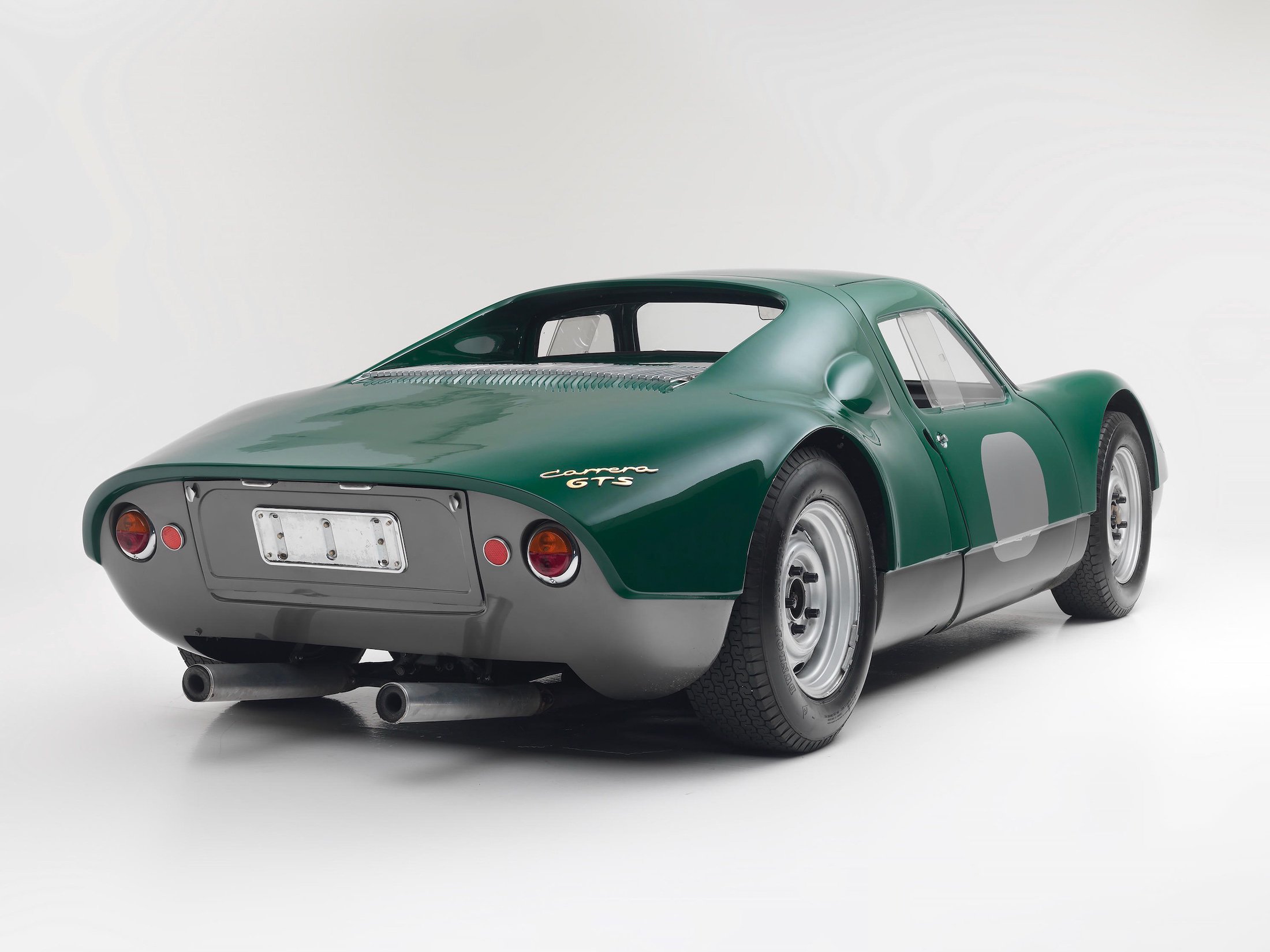
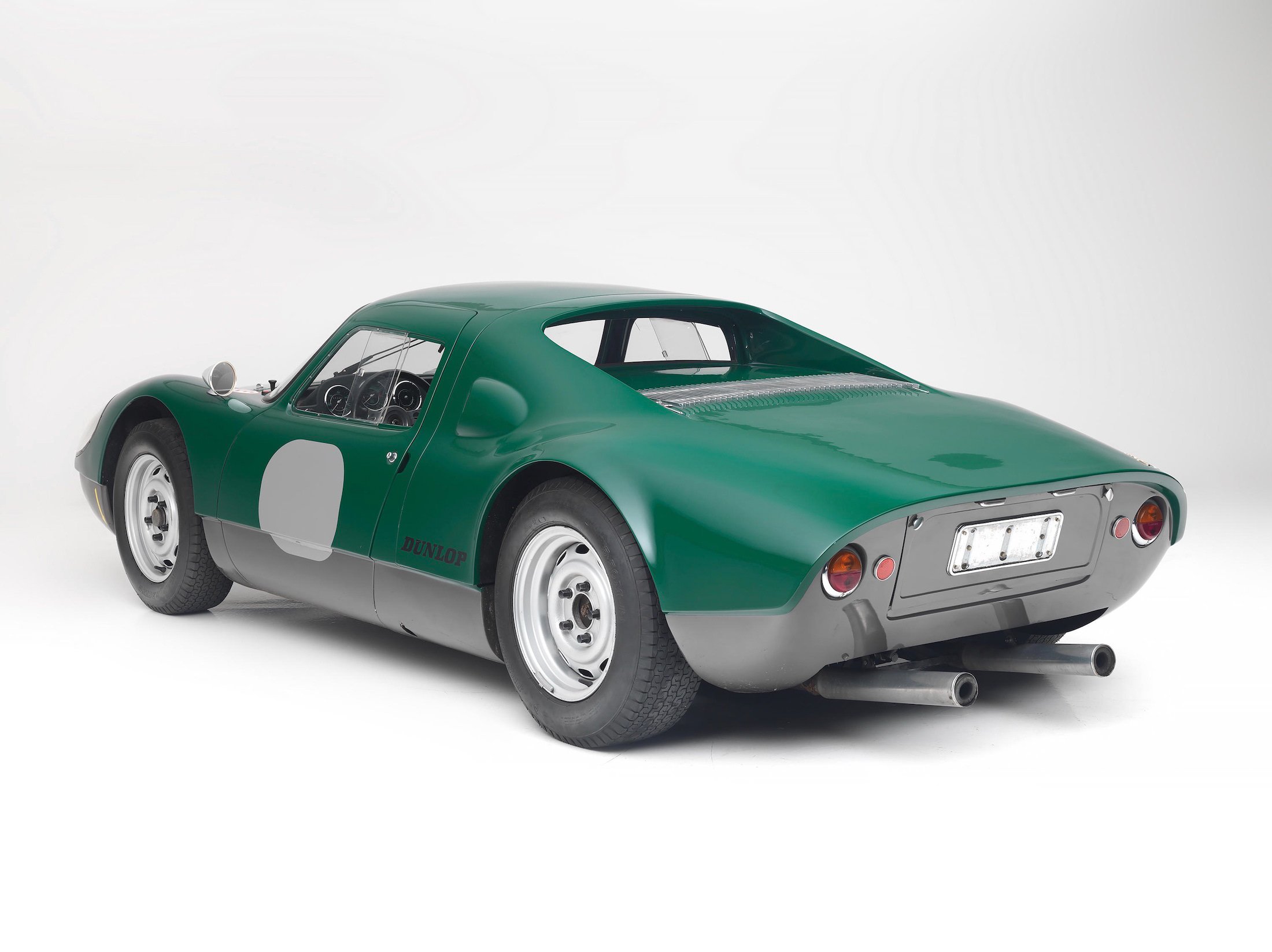
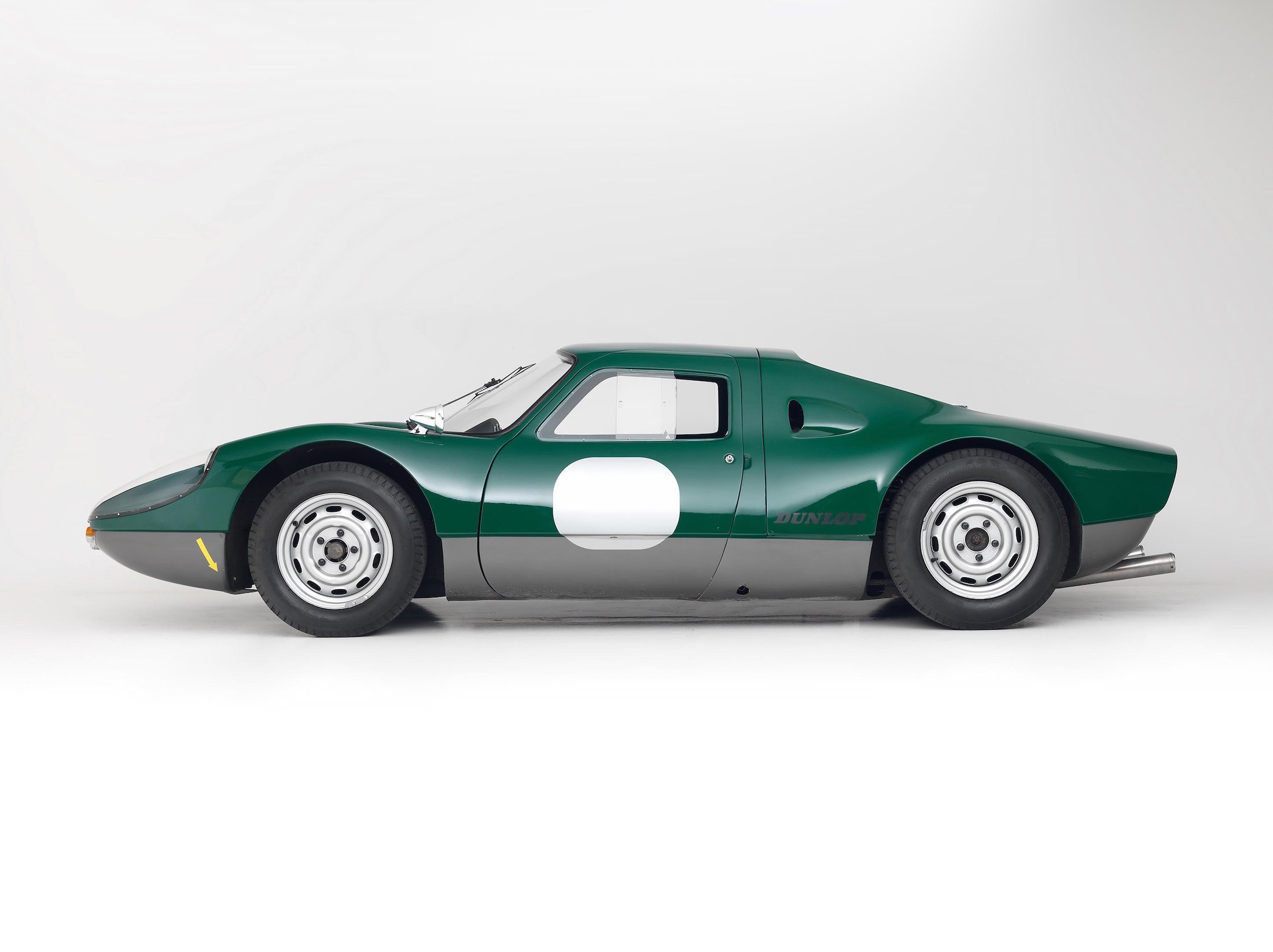
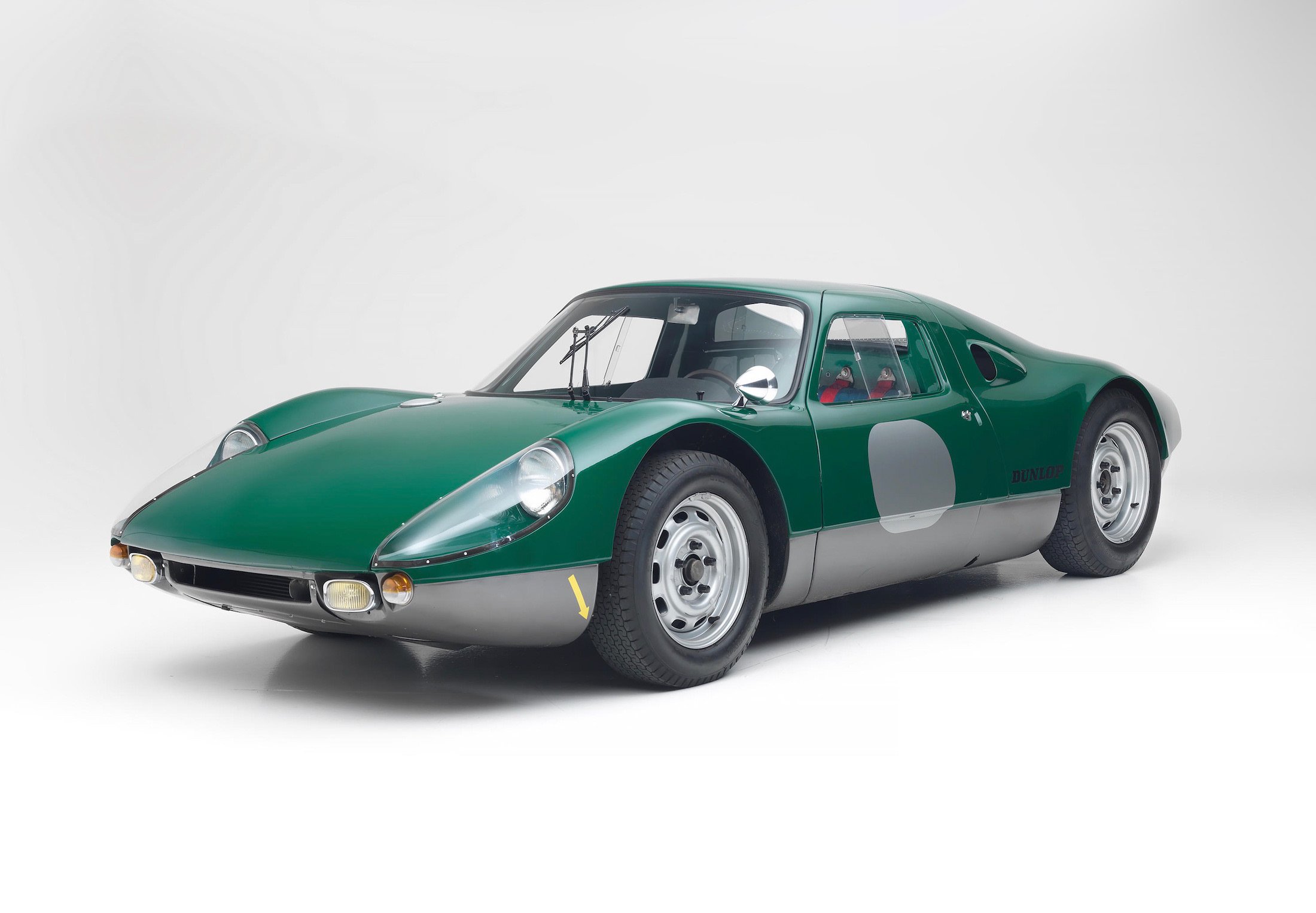
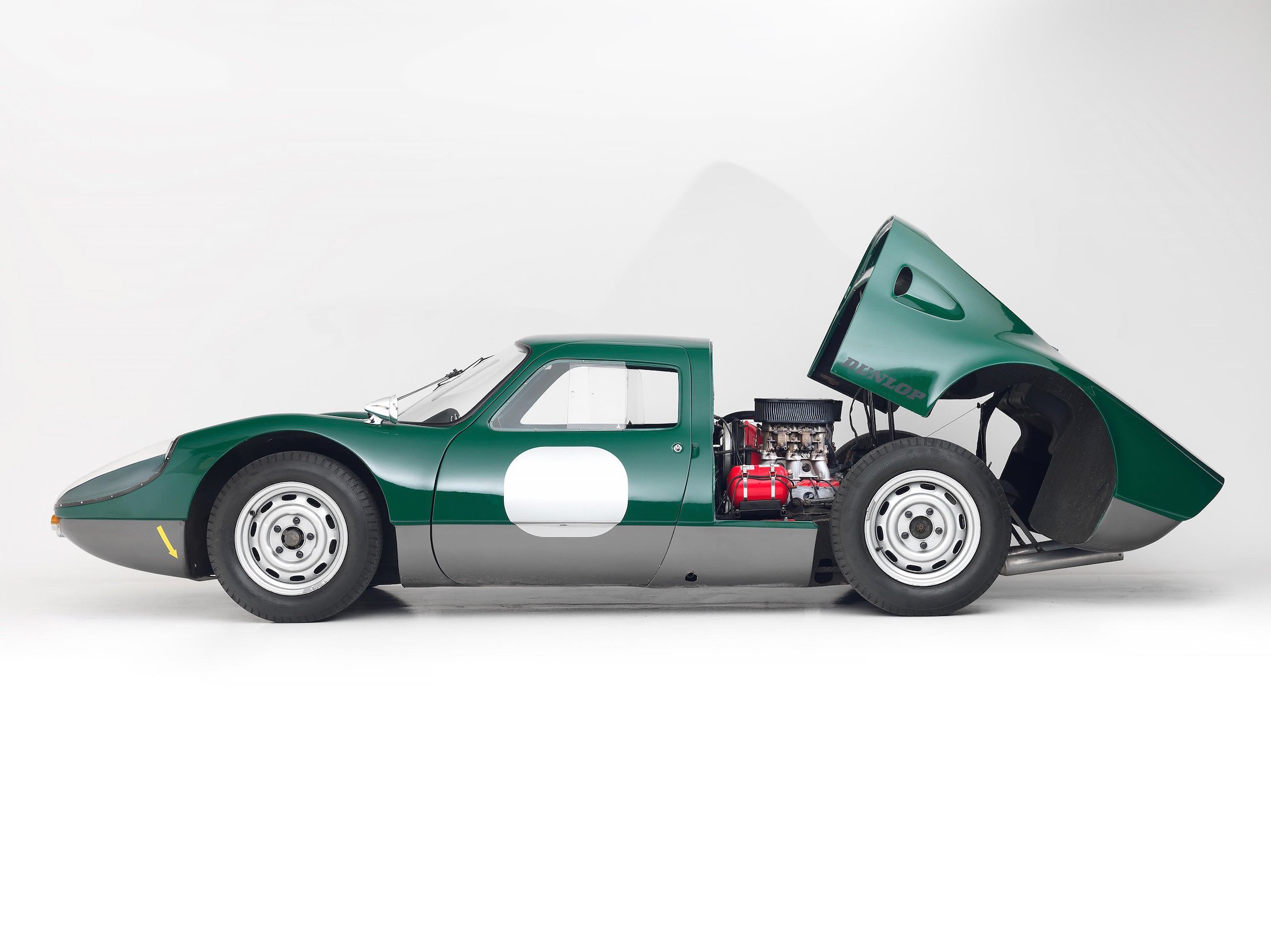
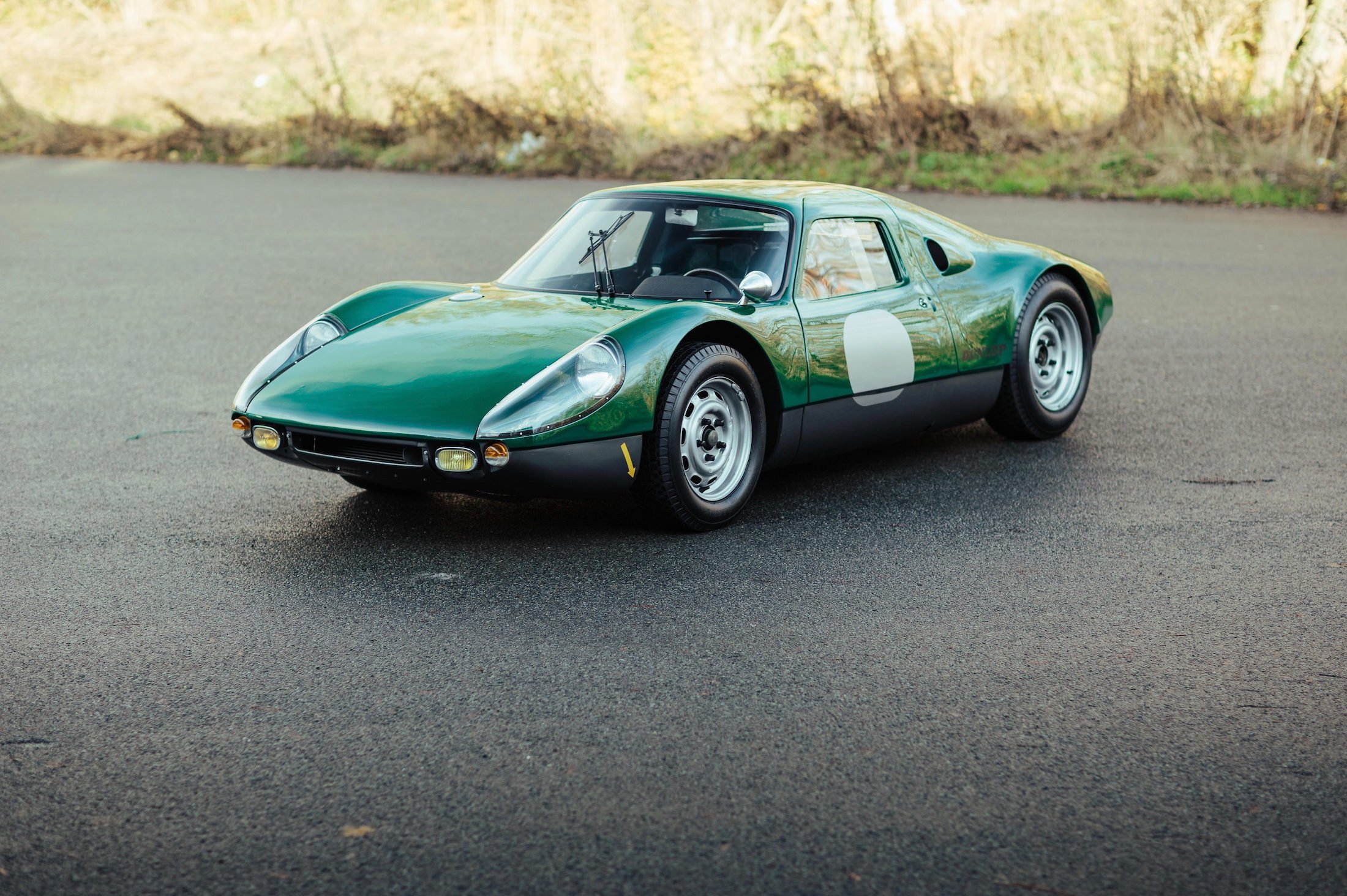
The Porsche 904 GTS was unveiled in 1963 as the German company’s primary sports racing car. It was powered not by their new flat-six but by the tried and tested four-cam flat-four, and it was built with a fiberglass body bonded to a steel ladder chassis.

Interestingly the fiberglass bodies were built by Heinkel – the same company that had built the Heinkel He 111, the primary bomber used by the Luftwaffe during World War II.

Fast Facts – The Porsche 904 GTS

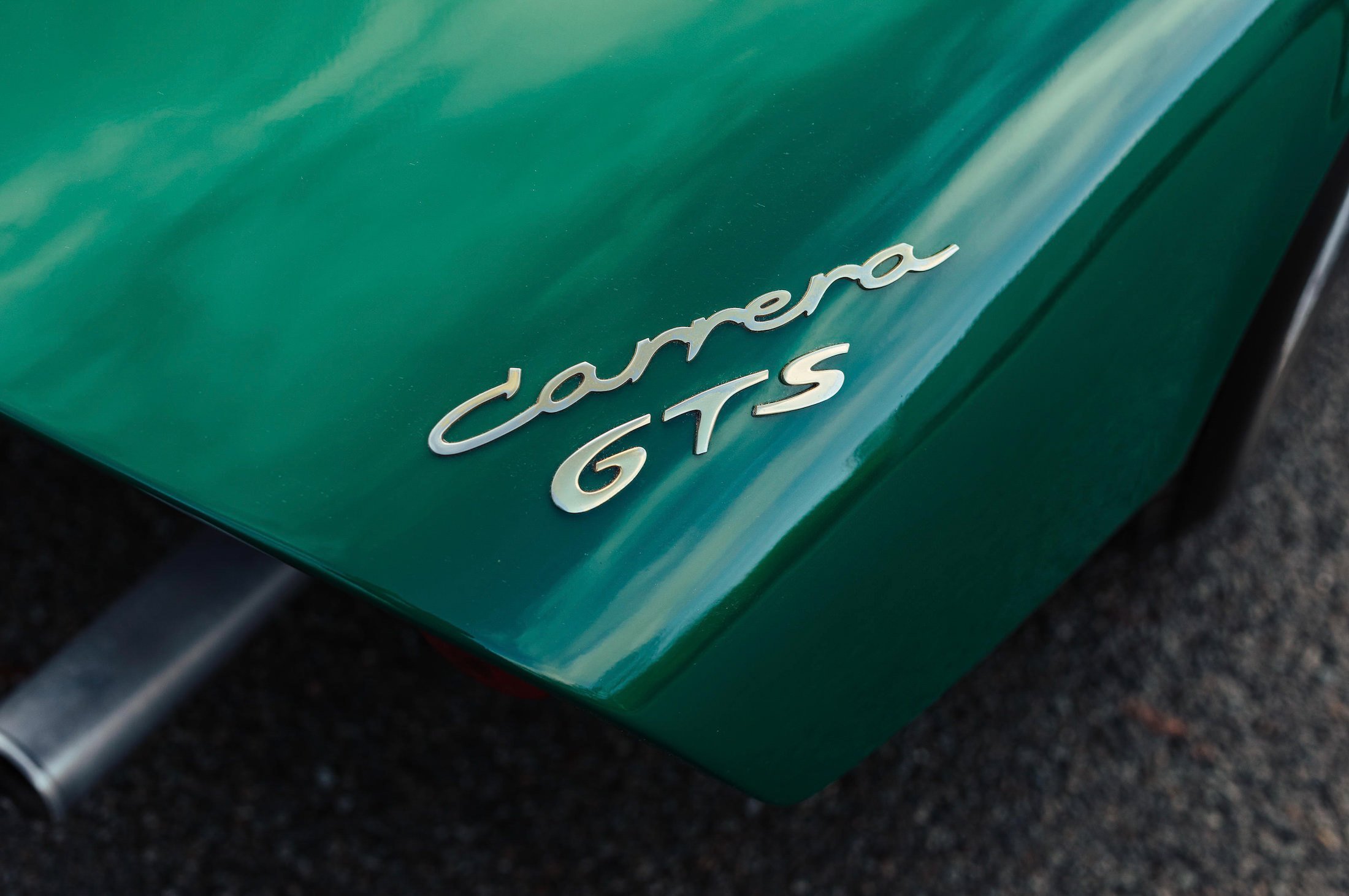
  • Also known as the Porsche Carrera GTS, the 904 GTS was developed by Porsche as they left Formula 1 behind the focus on sports car racing.
  • The 904 made use of an unusual steel ladder type chassis with a fiberglass body bonded onto it for added rigidity. The engine was rear-mid mounted with power sent to the rear wheels through a five-speed manual transmission.
  • Porsche had developed the 904 with a single purpose in mind – racing. The car wouldn’t be a disappointment, winning a slew of overall and class wins through the mid-1960s and starting the series of vehicles that would evolve into the all-conquering Porsche 917.
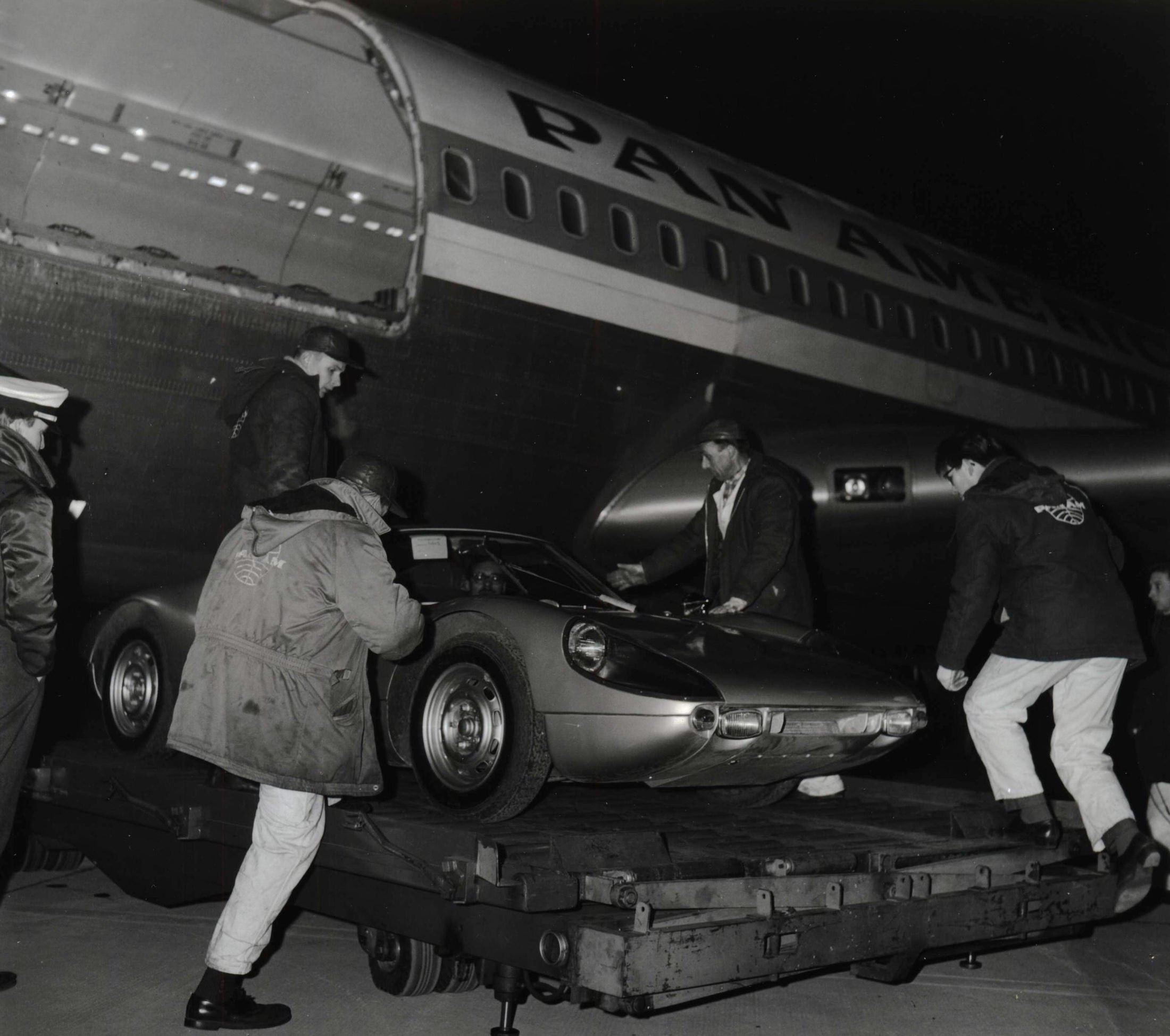
  • The 904 GTS you see here was delivered new (off a Pan Am jet no less) in California in early 1964 to its first owner – Steve Earle. In 1966 the car was sold to Hollywood superstar Robert Redford, who would keep it for almost a decade.

The 904 – A New Kind Of Porsche

The development program for the Porsche 904 rose out of the ashes of the German company’s retreat from Formula 1. Even in the early 1960s the cost of constant development was high in the world of F1, and smaller automakers like Porsche tended to struggle.
Robert Redford Porsche 904 GTS 13

An image of this same car being unloaded from a Pan Am jet at JKF Airport in New York in 1964, destined for the race tracks of the United States.

The most notable successes for Porsche in Formula 1 occurred in their final season – 1962. They had developed the Porsche 804 specifically for F1, as well as an advanced flat-eight engine.

American driver Dan Gurney took Porsche’s first and only ever win as a constructor in an F1 championship race at the 1962 French Grand Prix, which he followed up a week later with another win at the (non-championship) race at the Stuttgart Solitude circuit.

Porsche had left Formula 1 behind in 1963, choosing to instead focus on the development of a new kind of Porsche, specifically developed for sports car racing in the under two liter class.

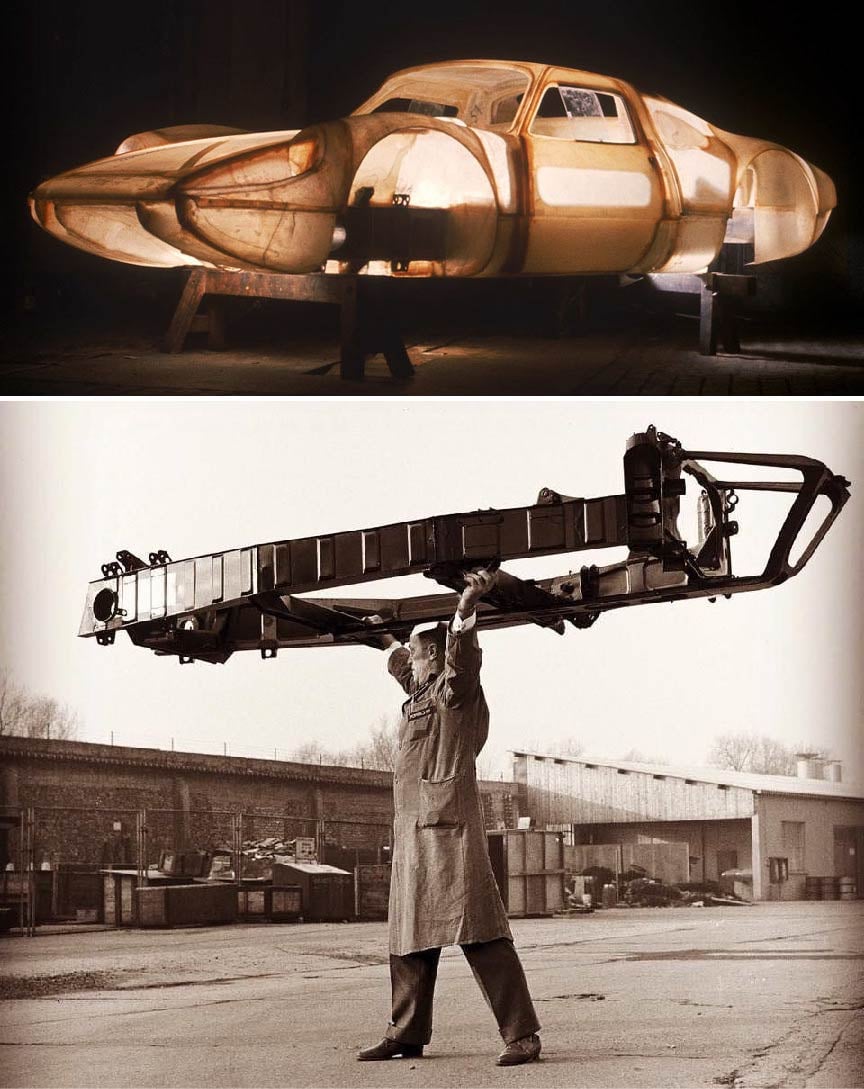
A new steel ladder type chassis was designed in conjunction with a load-bearing fiberglass body that would be built by former aircraft manufacturer Heinkel. Porsche’s famous Type 587 2.0 liter four-cam flat-four would provide the power, which was sent to the rear wheels by way of a rear-mounted 5-speed transaxle.
Robert Redford Porsche 904 GTS 11

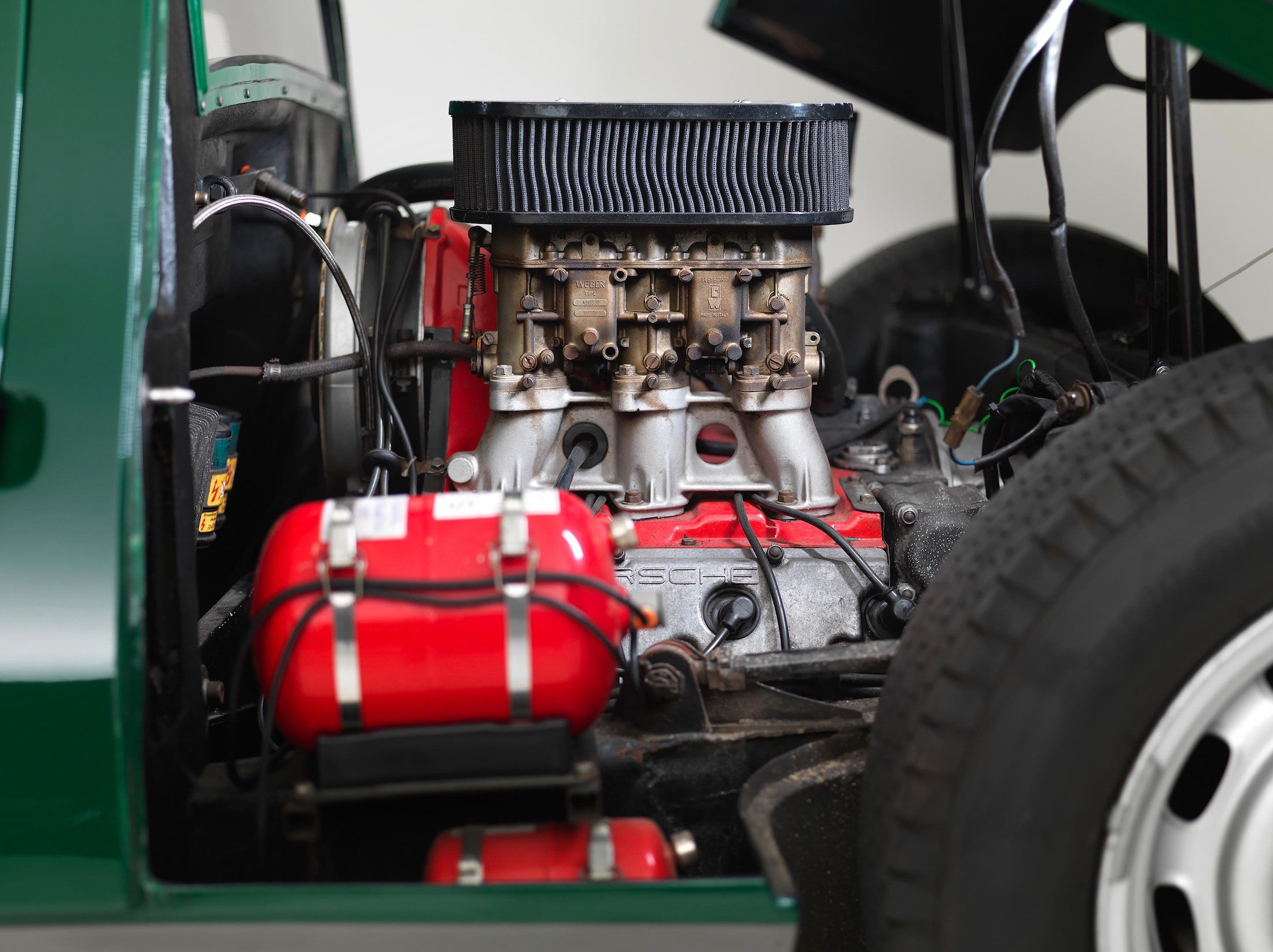
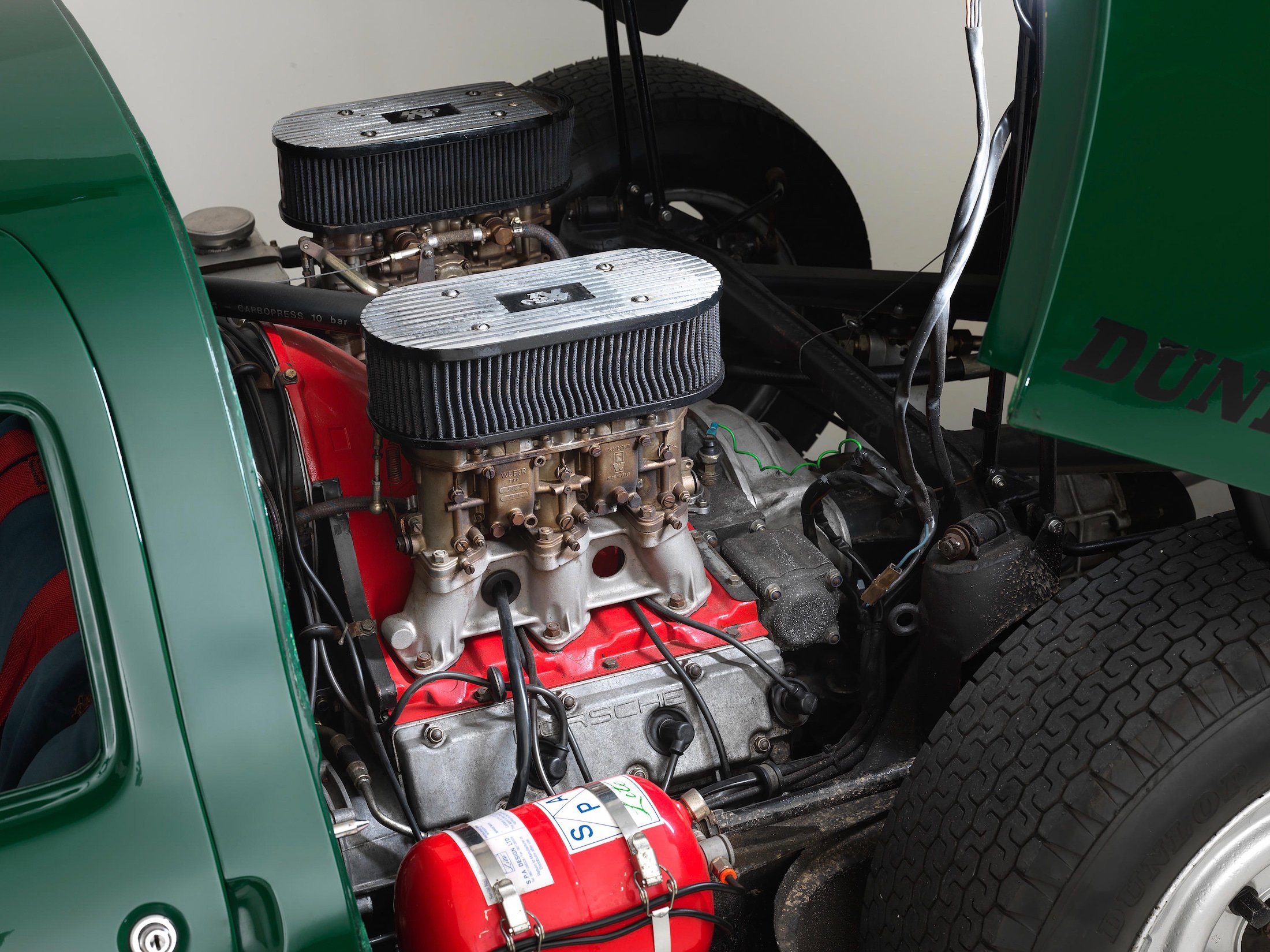
This 904 is now fitted with a flat-six in place of the original four-cam flat-four. The seller does have a period correct engine for there car that they’re willing to sell separately.

Porsche engineers had deliberately designed the engine bay of the 904 to be large enough to accommodate both the newly developed flat-six destined for the then-new Porsche 911, as well as the fire-breathing flat-eight engine they had developed for F1.

While most 904s received the four-cam flat-four, 10 were fitted with the flat-six, and six were fitted with the flat-eight.

Due to homologation requirements Porsche needed to manufacturer and sell 100 or more examples of the car so that they could race it. Between 155 bhp and 180 bhp was produced by the engine depending on the state of tune and the race ready cars weighed just 1,443 lbs (655 kgs).

The Porsche 904 On Track

The race victories for the 904 came thick and fast, taking a class win at Sebring in 1964 followed by an outright victory in the Targa Florio.
Porsche 904 GTS Body + Chassis

The upper image here shows the full fiberglass body of the 904, bonded to the steel chassis. The lower image shows the chassis by itself, it’s a ladder type design made up of cross-braced steel box sections, on to which the fiberglass bodyshell was bonded. Images courtesy of Porsche.

The 904 would then go on to take a slew of class wins and high placements at races from the 24 Hours of Le Mans, the Nürburgring 1,000kms, the Reims 12 Hours, and the Monte Carlo Rally to name but a few.

The Porsche 904 was succeeded by the Porsche 906 in 1966, followed by the 910, eventually culminating in the Porsche 917 – one of the most successful racing cars of all time.

The 1964 Porsche 904 GTS Shown Here

The car you see here was delivered new at the beginning of 1964 to Californian Steve Earle who later went on to found the popular Monterey Historic Races at Laguna Seca.
Robert Redford Porsche 904 GTS 9

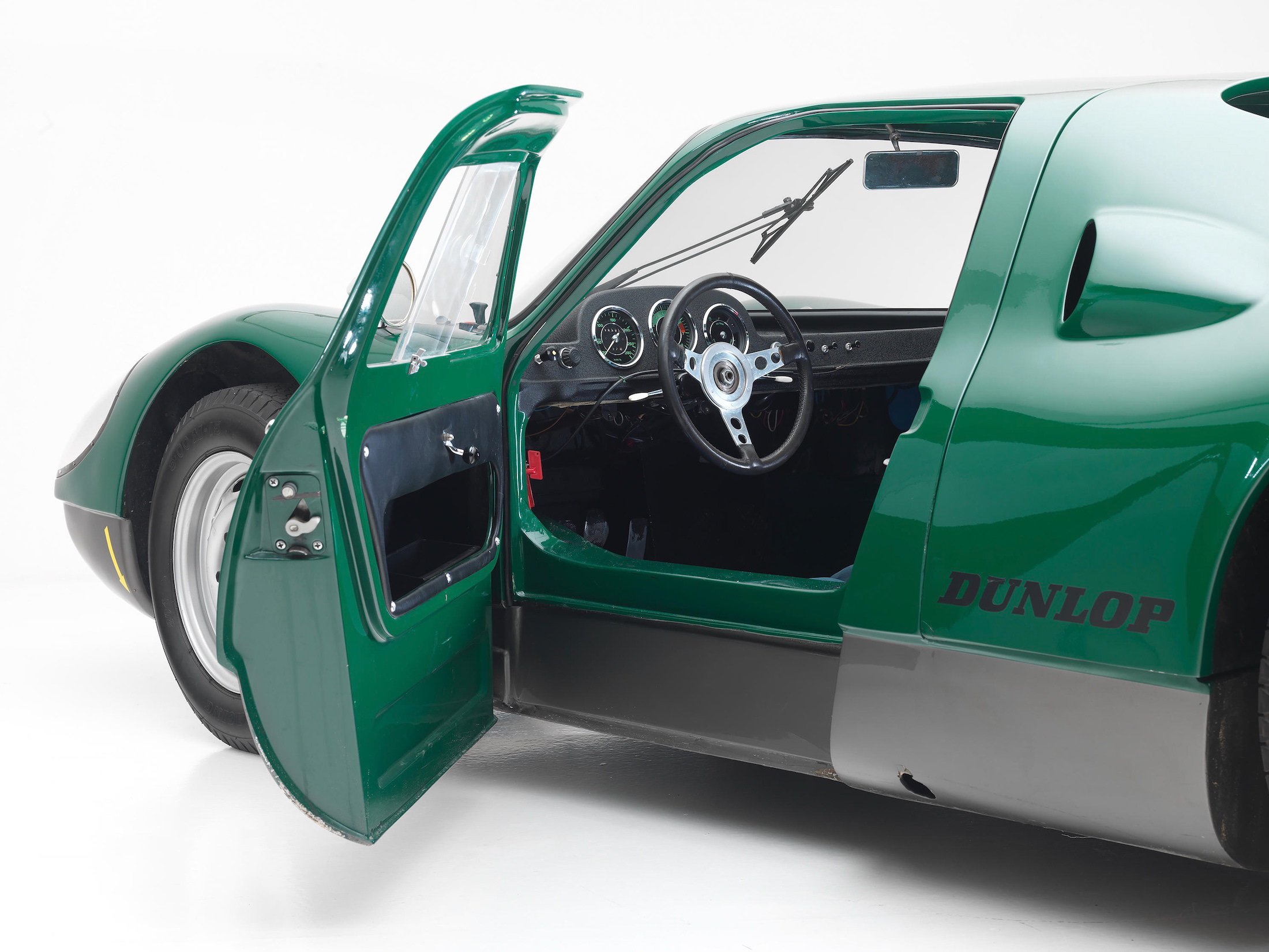
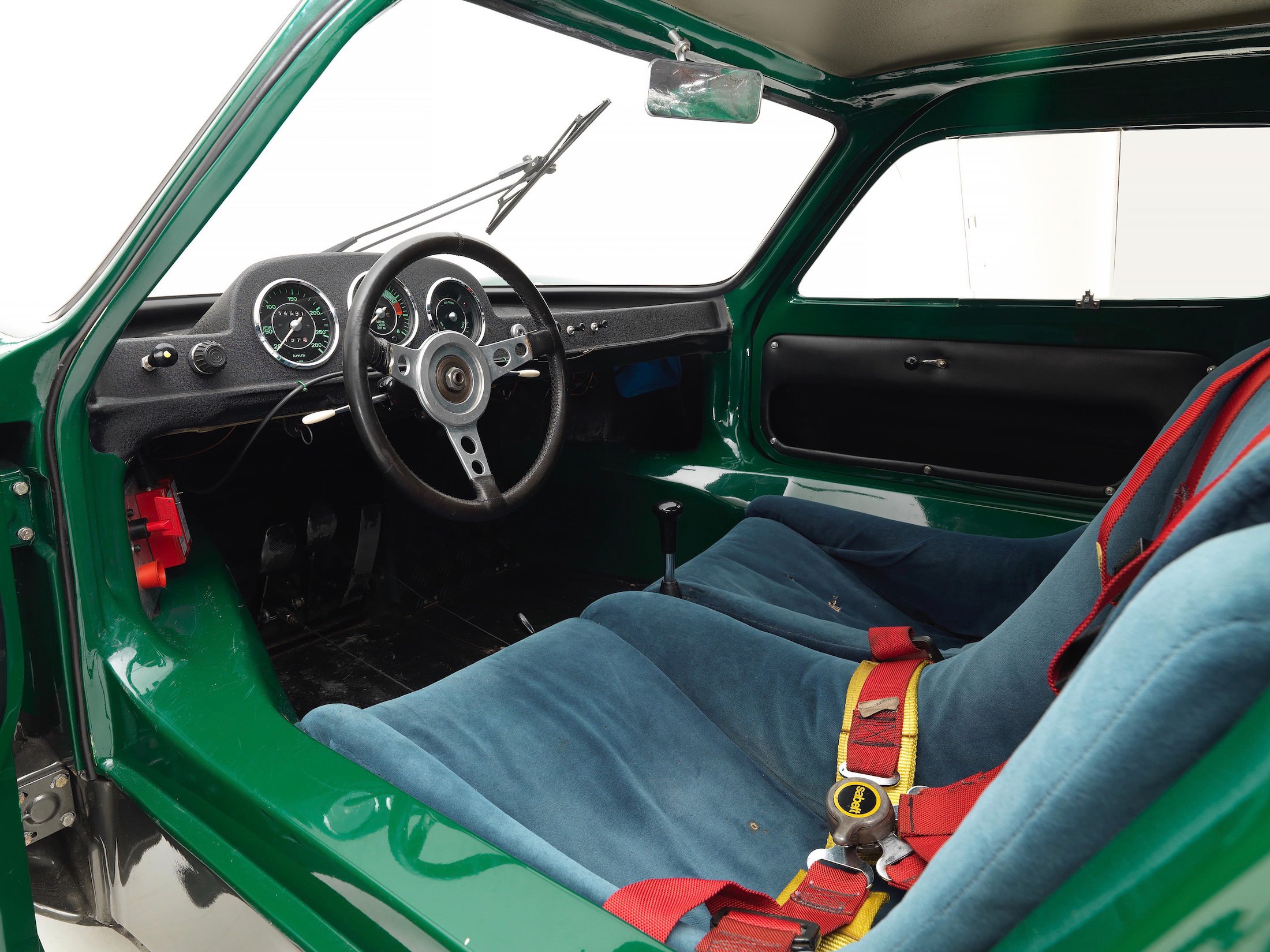
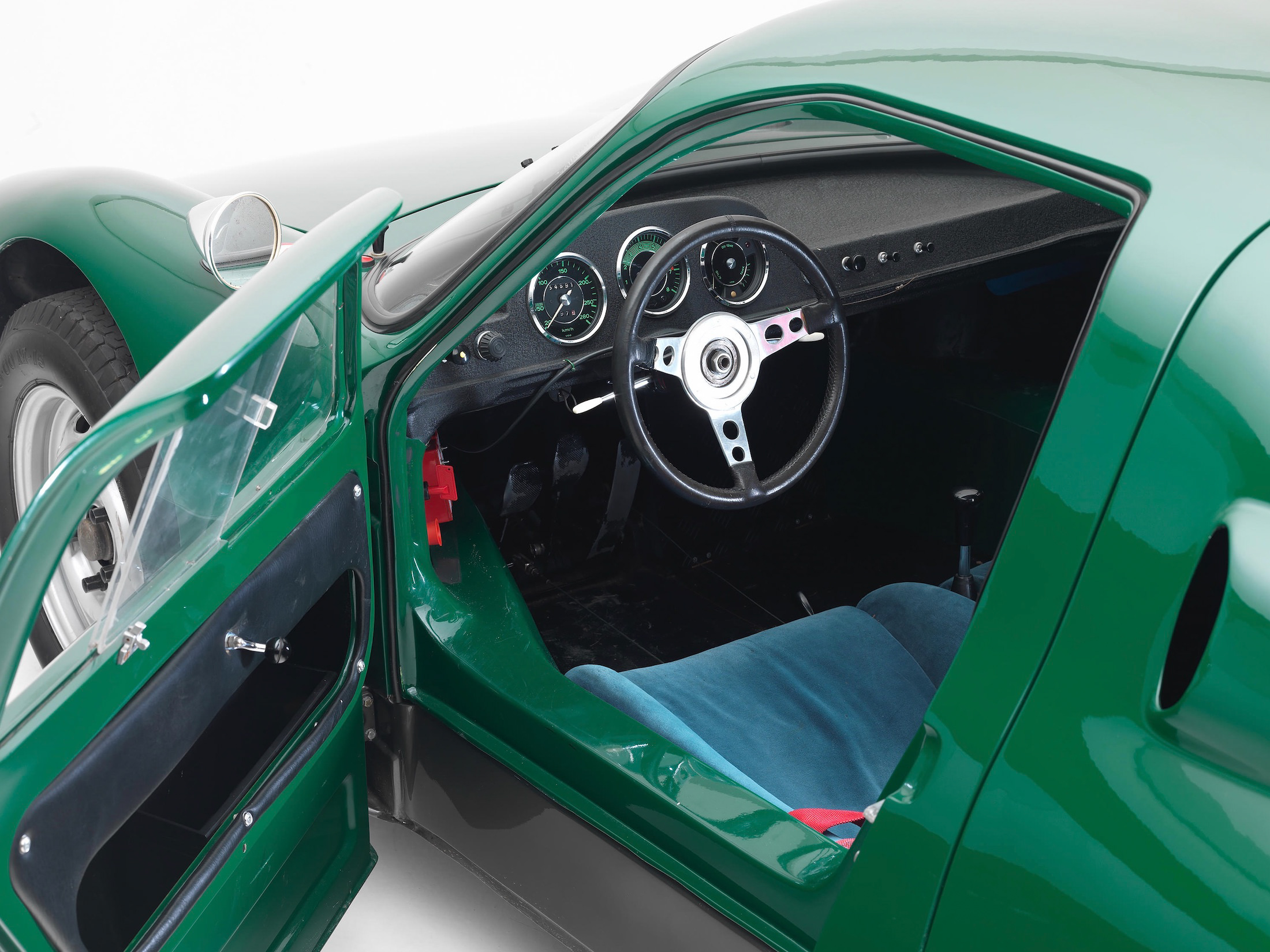
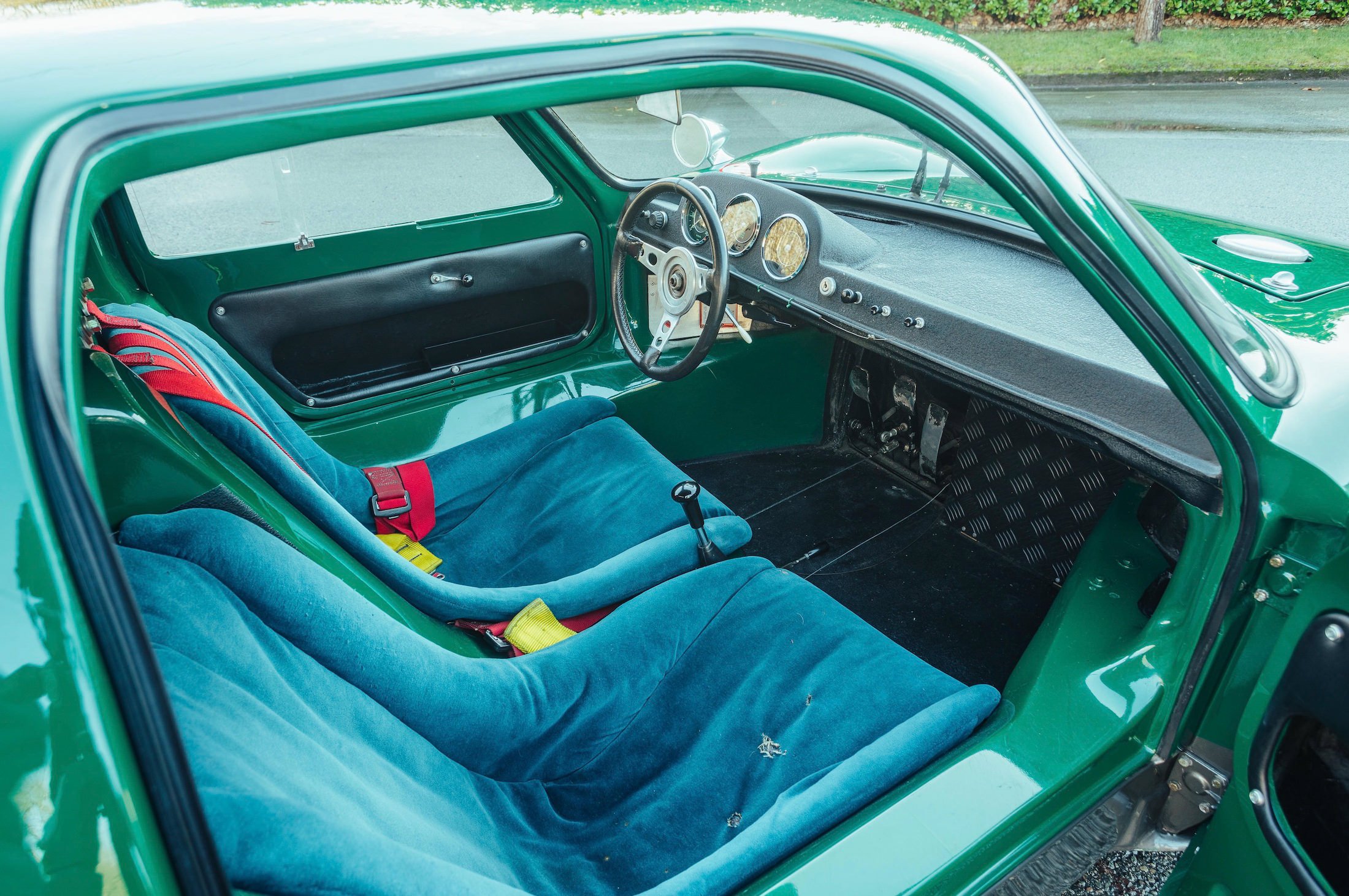
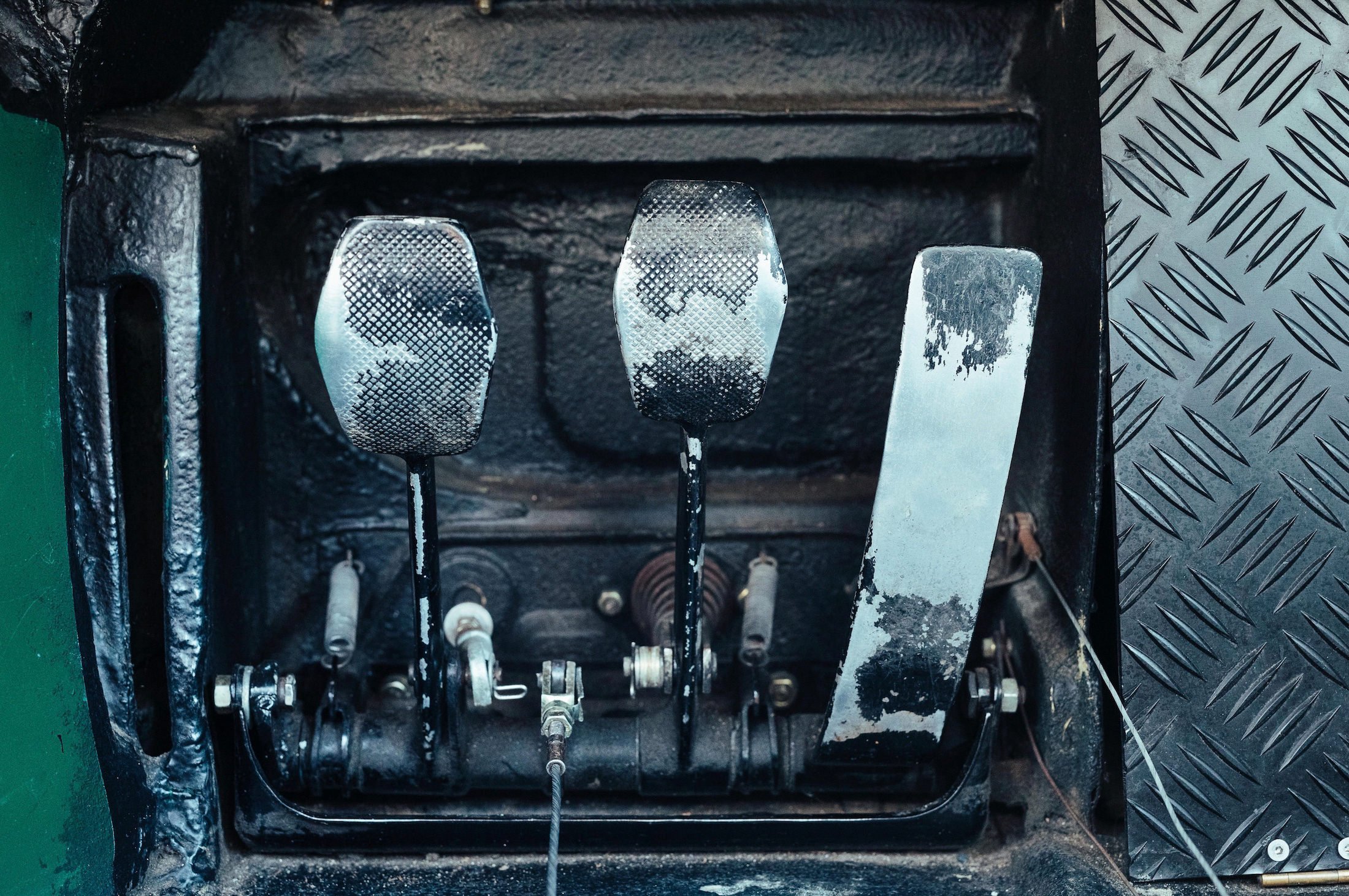
As a homologation special, the interior of the car is relatively spartan for weight saving purposes. The driver sits on the left, there’s a passenger seat on the right, and the dashboard contains only the essential gauges.

Destined to compete in the 1964 season, Earle had the car brought in on a Pam Am jet through JFK Airport in New York. Shortly thereafter the car was sold to Steve Berg and promptly put to work, racing at circuits like Riverside, Laguna Seca, Willow Springs, and the Santa Barbara Road Races.

By 1966 Berg had placed this car up for sale in a 1966 issue of Competition Press as he had a Porsche 906 on the way. This classified ad was seen by Robert Redford, who bought the car and kept it for close to a decade.

In the years since this 904 has been restored and the original engine has vanished, replaced by a more powerful 2.0 liter Porsche flat-six engine – a common upgrade. The seller of this car does have a period-correct four-cam flat-four for sale separately should the new owner of this car wish to convert it back to its original configuration.

Bonhams will be offering this 904 GTS for sale on the 3rd of February with a price estimate of $1.5 – $1.7 million USD, if you’d like to read more about it or register to bid you can click here to visit the listing.
Robert Redford Porsche 904 GTS 2 Robert Redford Porsche 904 GTS 19 Robert Redford Porsche 904 GTS 18 Robert Redford Porsche 904 GTS 17 Robert Redford Porsche 904 GTS 16 Robert Redford Porsche 904 GTS 15 Robert Redford Porsche 904 GTS 14 Robert Redford Porsche 904 GTS 12 Robert Redford Porsche 904 GTS 10 Robert Redford Porsche 904 GTS 8 Robert Redford Porsche 904 GTS 7 Robert Redford Porsche 904 GTS 6 Robert Redford Porsche 904 GTS 5 Robert Redford Porsche 904 GTS 3 Robert Redford Porsche 904 GTS 1

Images courtesy of Bonhams

Robert Redford Porsche 904 GTS

The post Robert Redford’s Porsche 904 GTS Is For Sale appeared first on Silodrome.


from Silodrome https://silodrome.com/robert-redford-porsche-904-gts/
via gqrds

“The Next Great American Supercar” Is For Sale On eBay – The Devon GTX


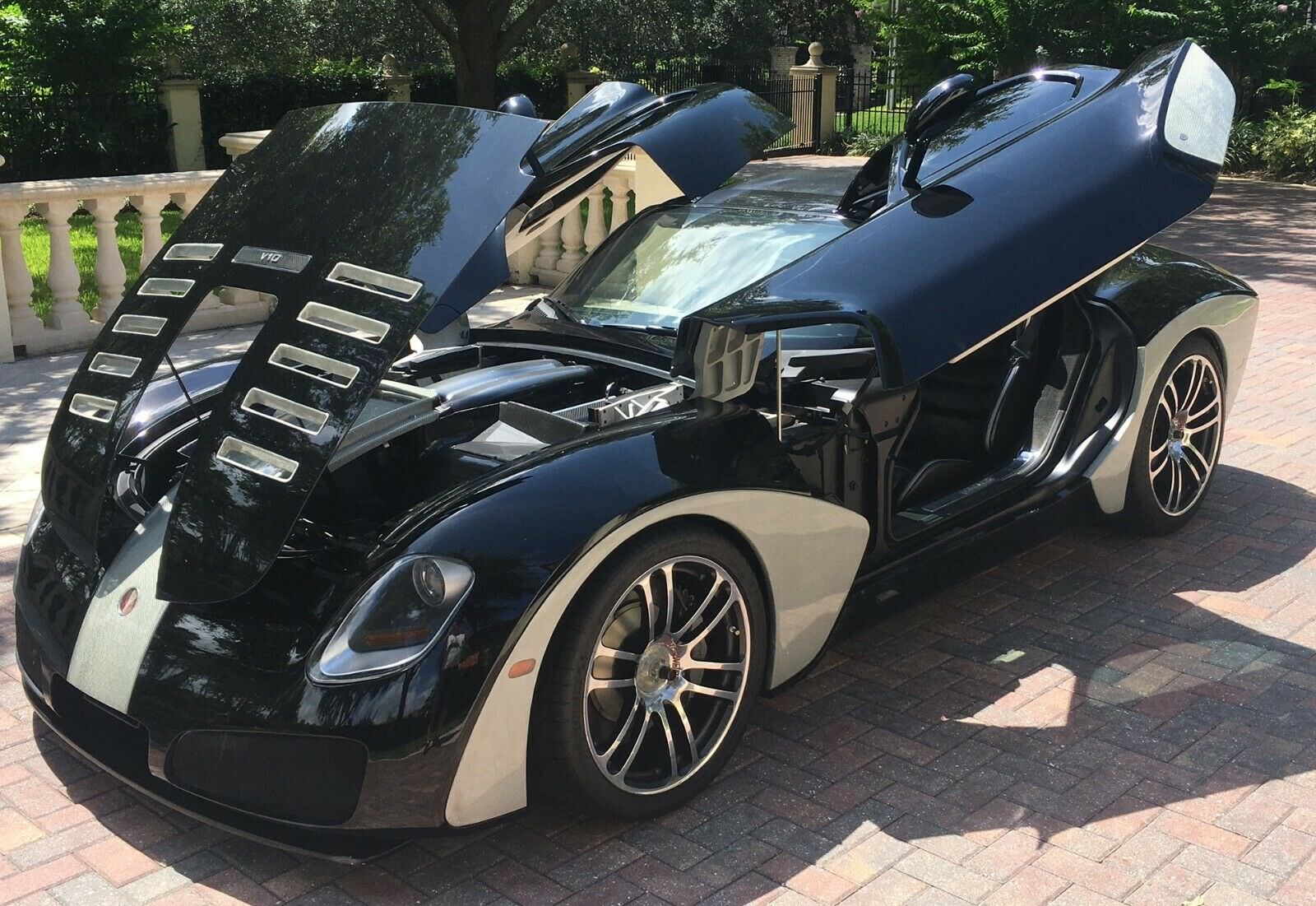
When it was first shown to the public in 2009 the Devon GTX was billed as “The Next Great American Supercar.” The company did have some solid reasoning behind the claim – the car was capable of over 200 mph and it set an unofficial lap record at California’s Willow Springs Raceway.

Unfortunately the timing of the GTX’s release, right into the midst of the Great Recession, left it unlikely to succeed given the proposed $500,000 – $525,000 USD MSRP, and the company was closed shortly thereafter.

Fast Facts – The Devon GTX

  • The Devon GTX was developed by Scott Devon and his team in 2008, with a release in 2009.
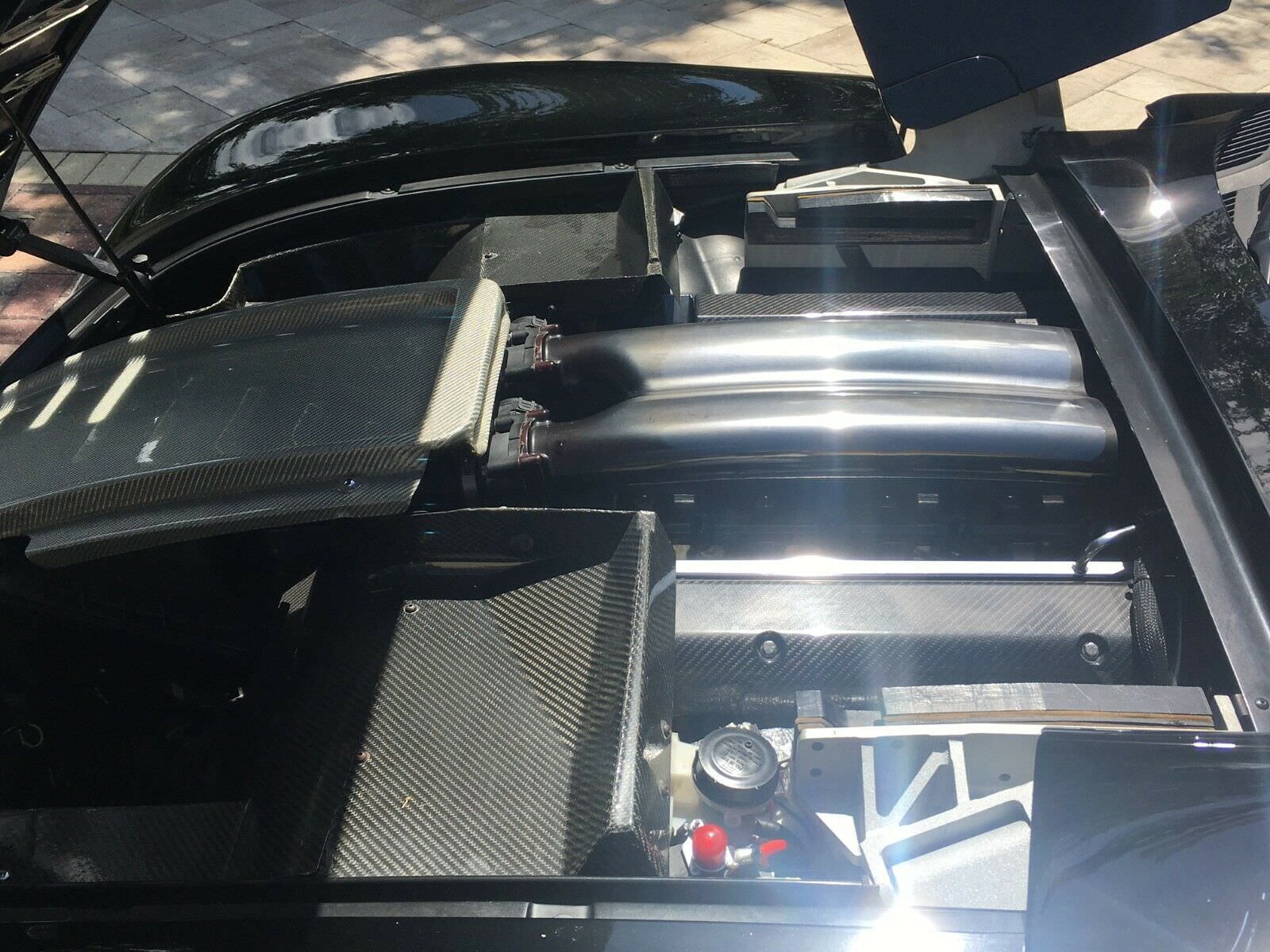
  • The car uses many elements from the Dodge Viper, including the 8.4 liter V10 engine and basic inner frame structure.
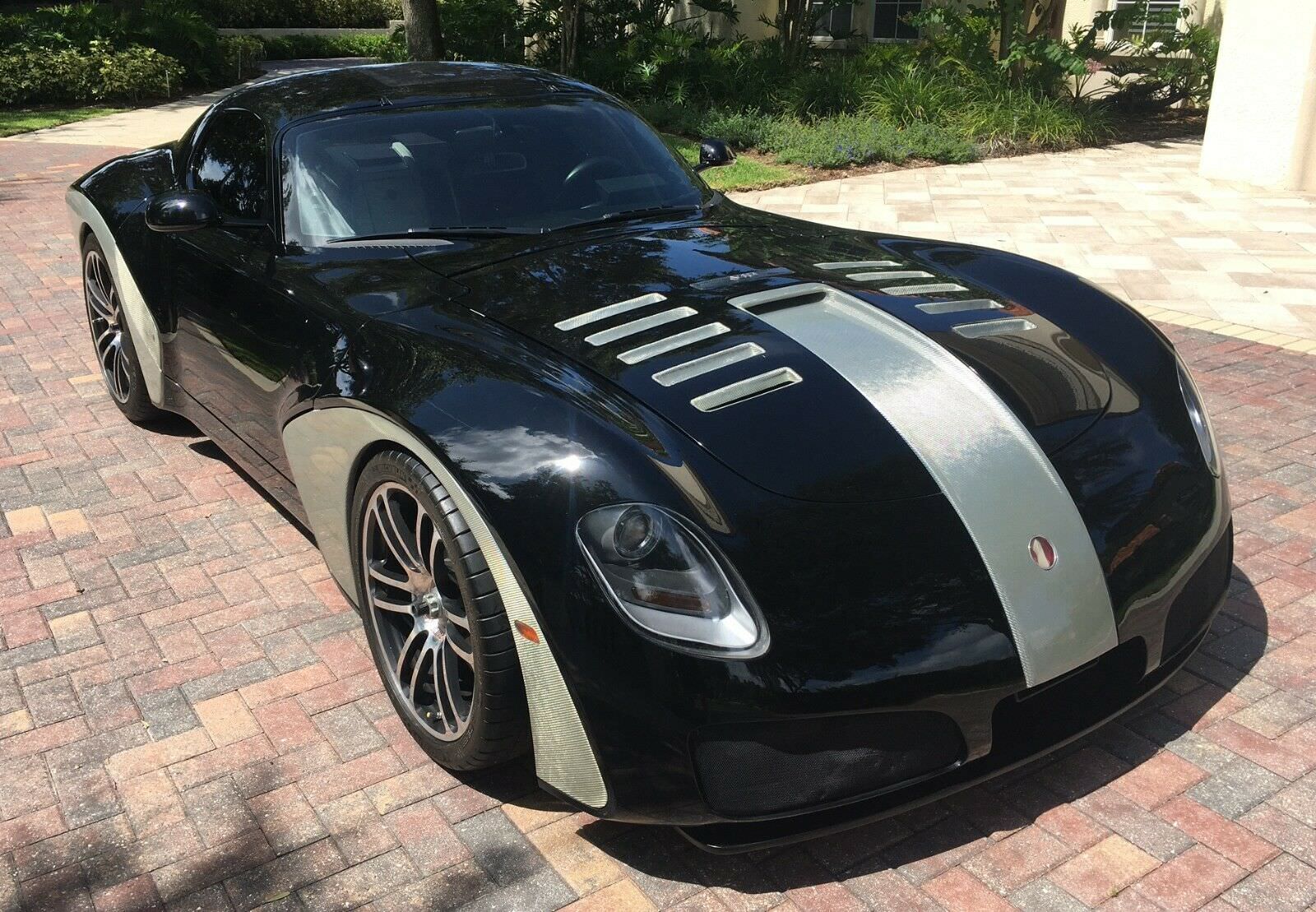
  • The GTX was designed by Daniel Paulin, it uses a one-piece carbon fiber superstructure, carbon fiber body panels, and cast aluminum unequal-length wishbones front and rear with coil-over shock absorbers.
  • The top speed was claimed to be over 200 mph, thanks in no small part to the tuned Viper V10 producing 650 bhp.

Building America’s Next Great Supercar

Small-volume automakers, like TVR, Noble, Factory 5, Ultima, and Ariel often produce cars with designs that set them apart, and would likely never make it into production with a large-scale manufacturer.

Devon GTX 9

The superstructure and body make extensive use of carbon fiber, to keep weight as low as possible while ensuring it remained strong and stiff.

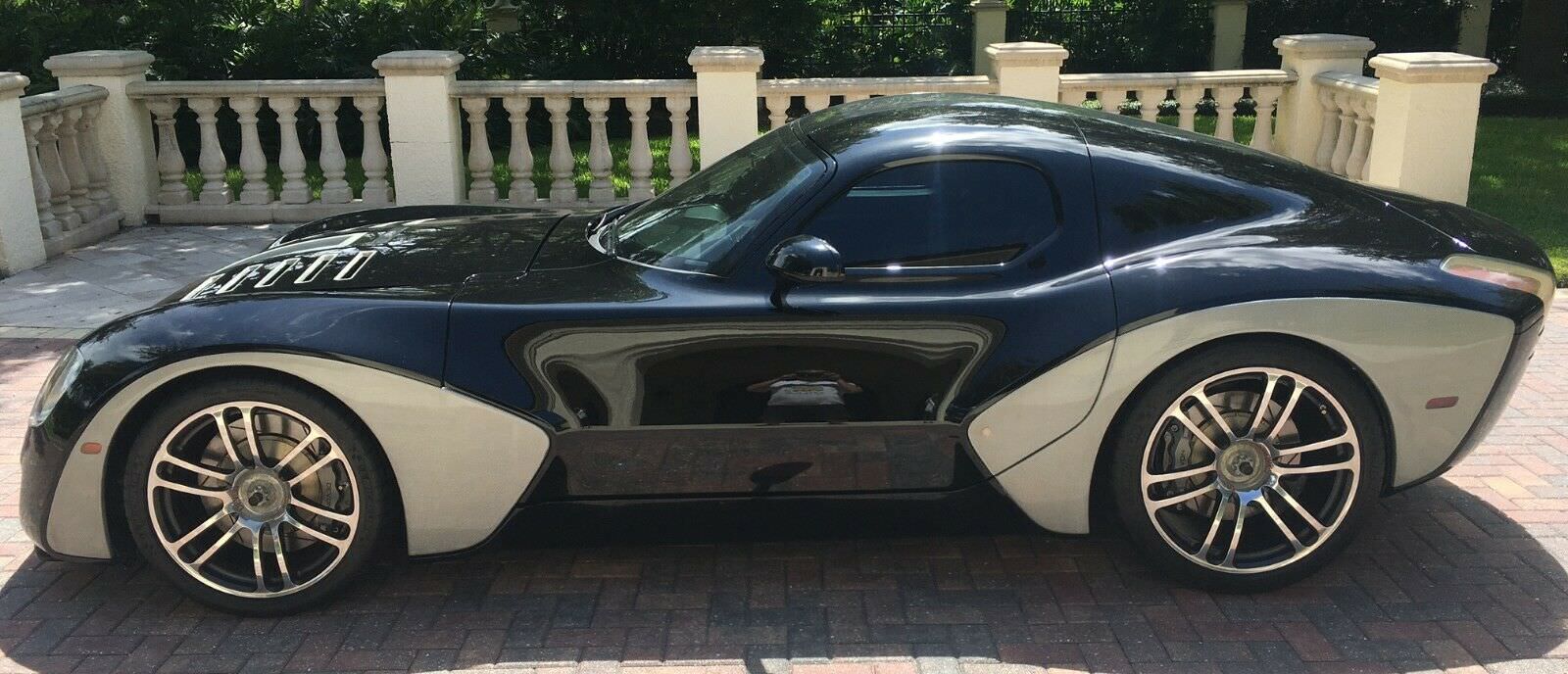
Devon was an American automaker that certainly fits into that mould, no one who has ever seen a GTX has forgotten it, and it would be impossible to mistake the car for a vehicle by any other manufacturer.

Using the basic frame and engine from the Dodge Viper, the Devon GTX had just about every other part custom built specifically for it.

A new body was designed by Art Center in Pasedena graduate and former Ford of Europe stylist Daniel Paulin, with some minor modifications made after wind tunnel tests conducted by Dr Joseph Katz – San Diego State University’s chairman of Aerospace Engineering and Engineering Mechanics.

Devon GTX – Specifications

The body and much of the superstructure is made from carbon fiber to keep weight as low as possible while not compromising on strength. The 8.4 liter V10 was tuned to produce 650 bhp ay 6,100 rpm, up from the original output of ~600 bhp.

Devon GTX 4

Under the long sloping hood you’ll find a modified Dodge Viper V10 with a displacement of 8.4 liters and 650 bhp at 6,100 rpm

Power is sent to the rear wheels via a Tremec 6-speed manual transmission into a limited slip differential, and from there out to the rear wheels. Braking is taken care of with discs front and back, including 15 inch rotors up front with 6-piston calipers from StopTech.

The GTX rides on forged center-lock alloy wheels, with 18 inch wheels up front and 19 inch wheels in the rear. The cars were planned to have active damping and ride height adjustment however these developments never saw the light of day.

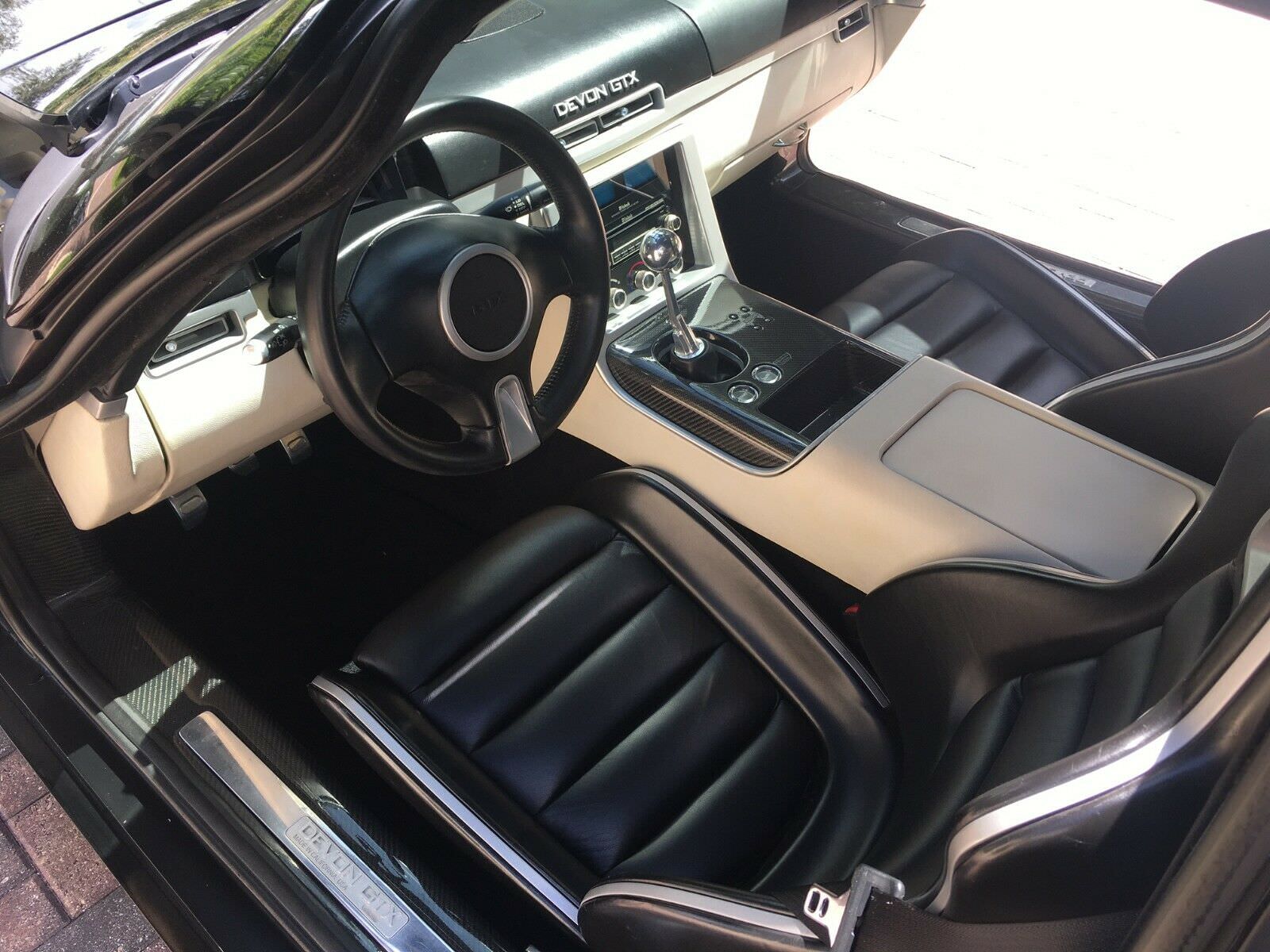
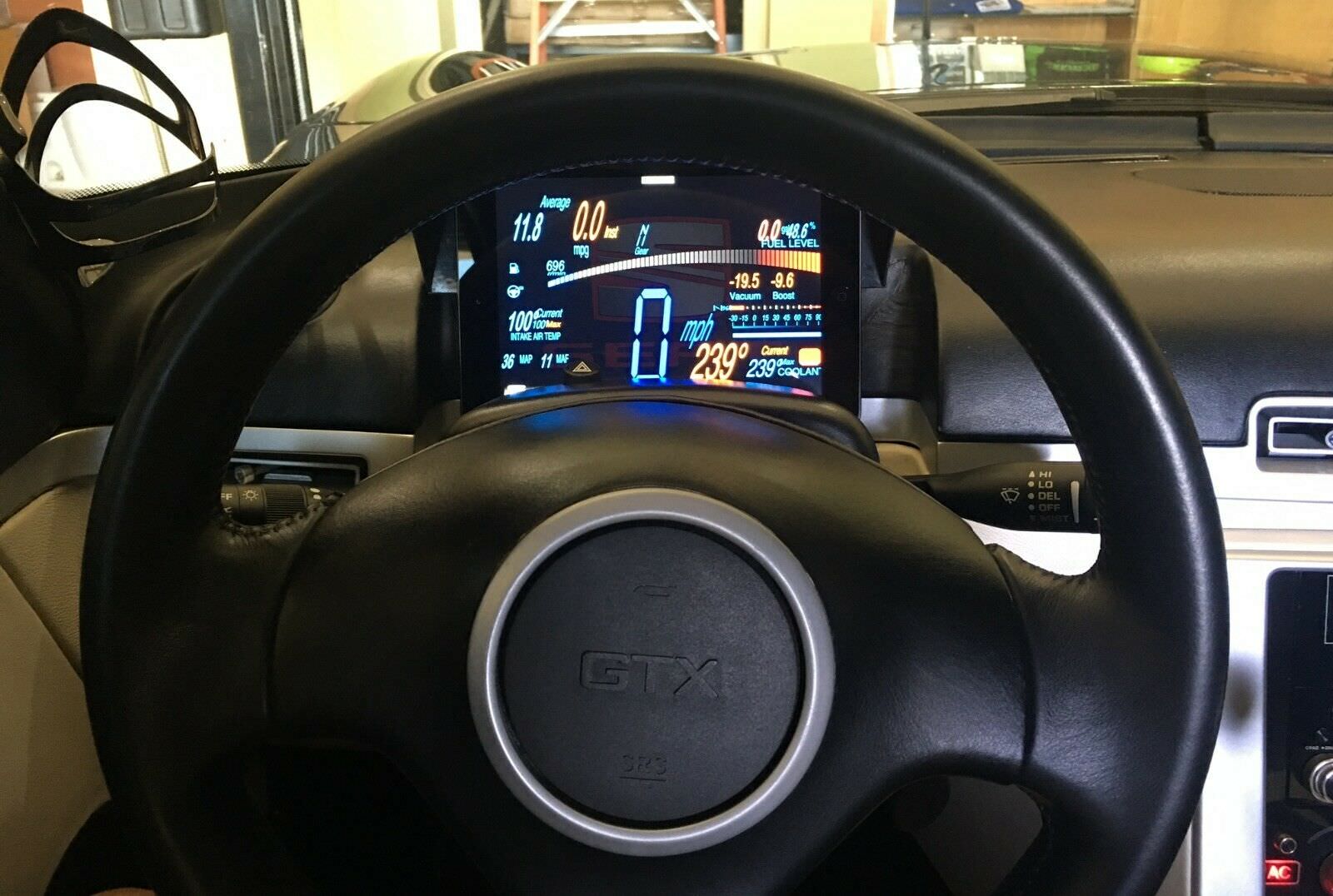
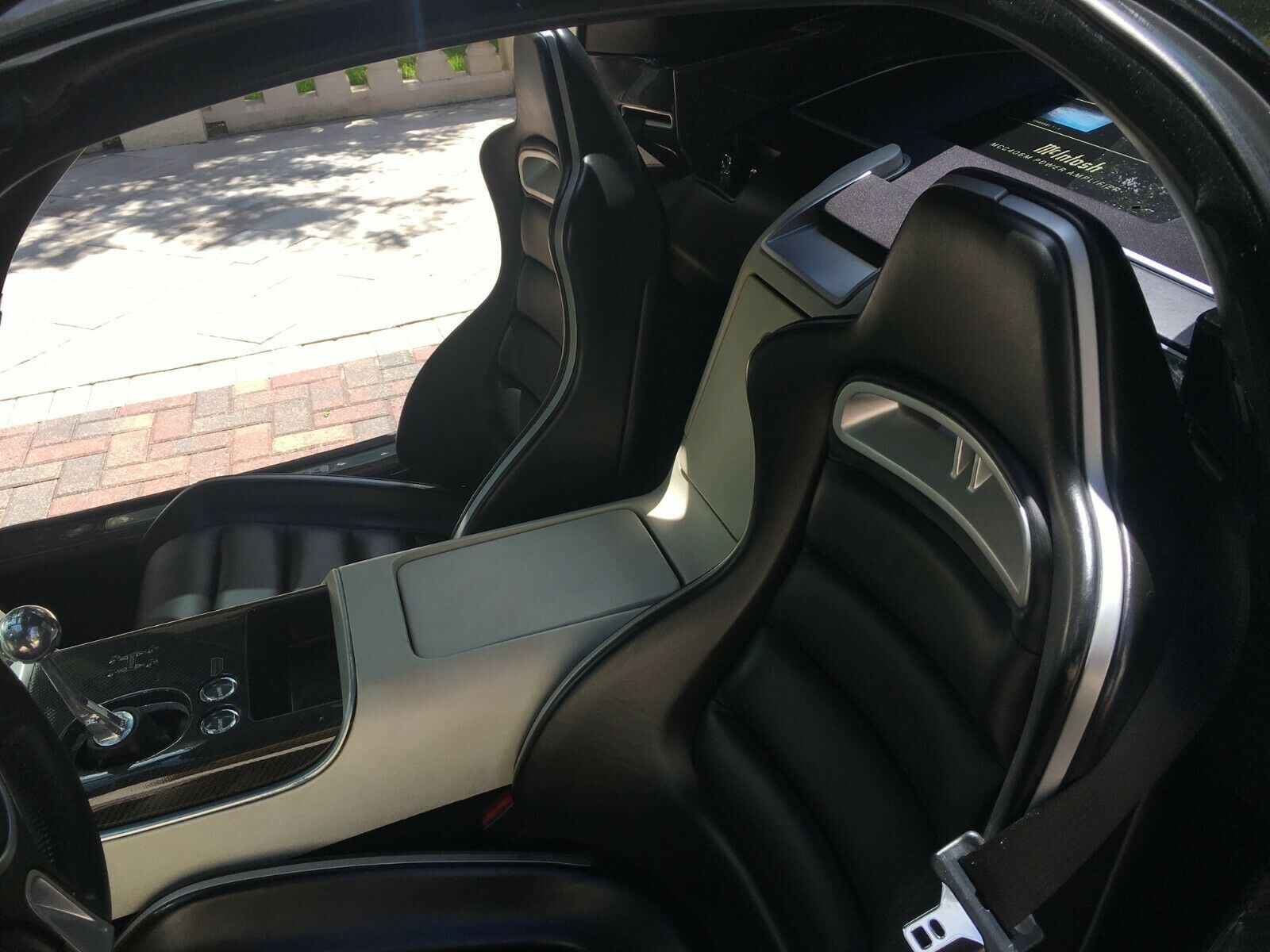
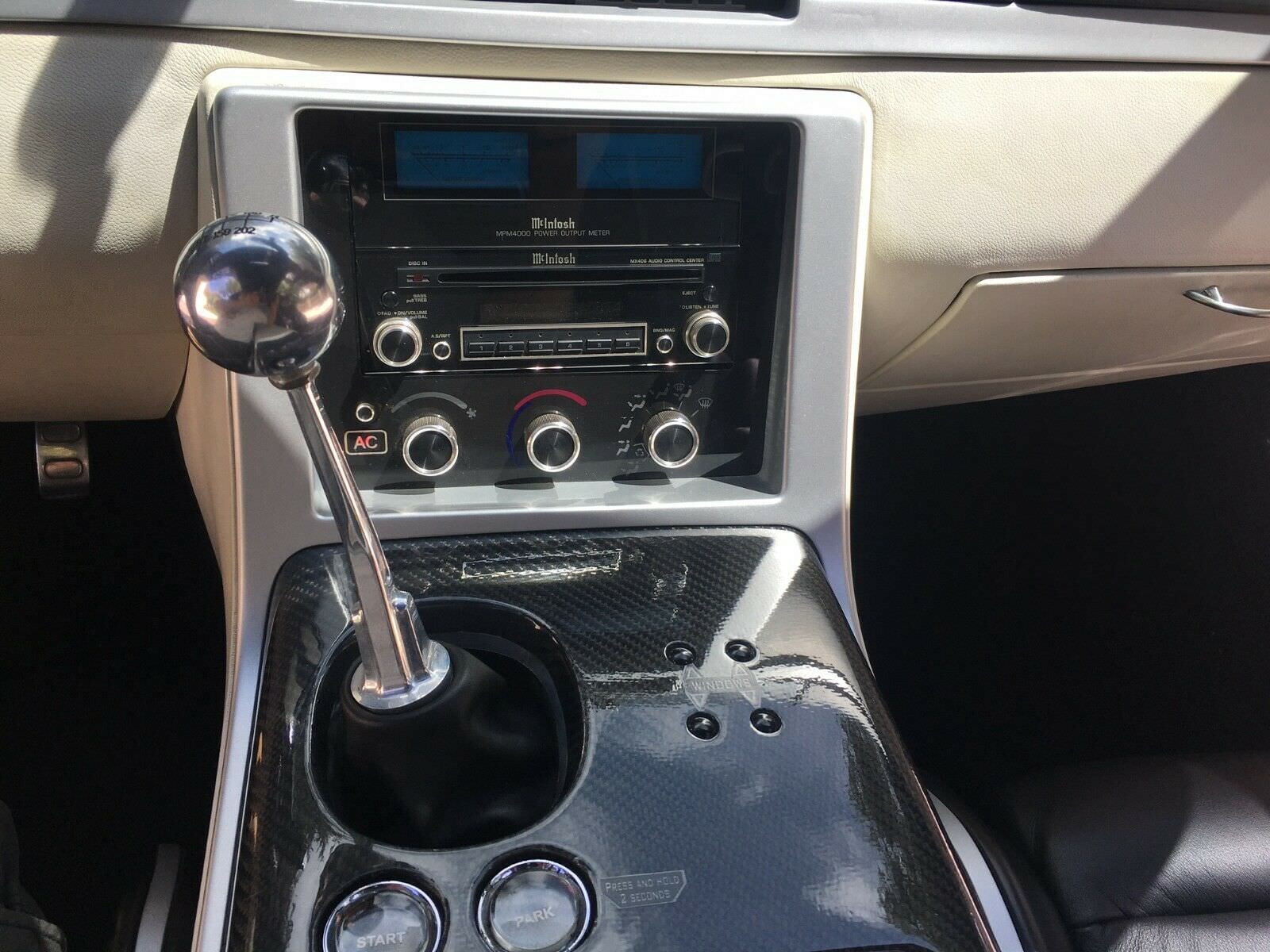
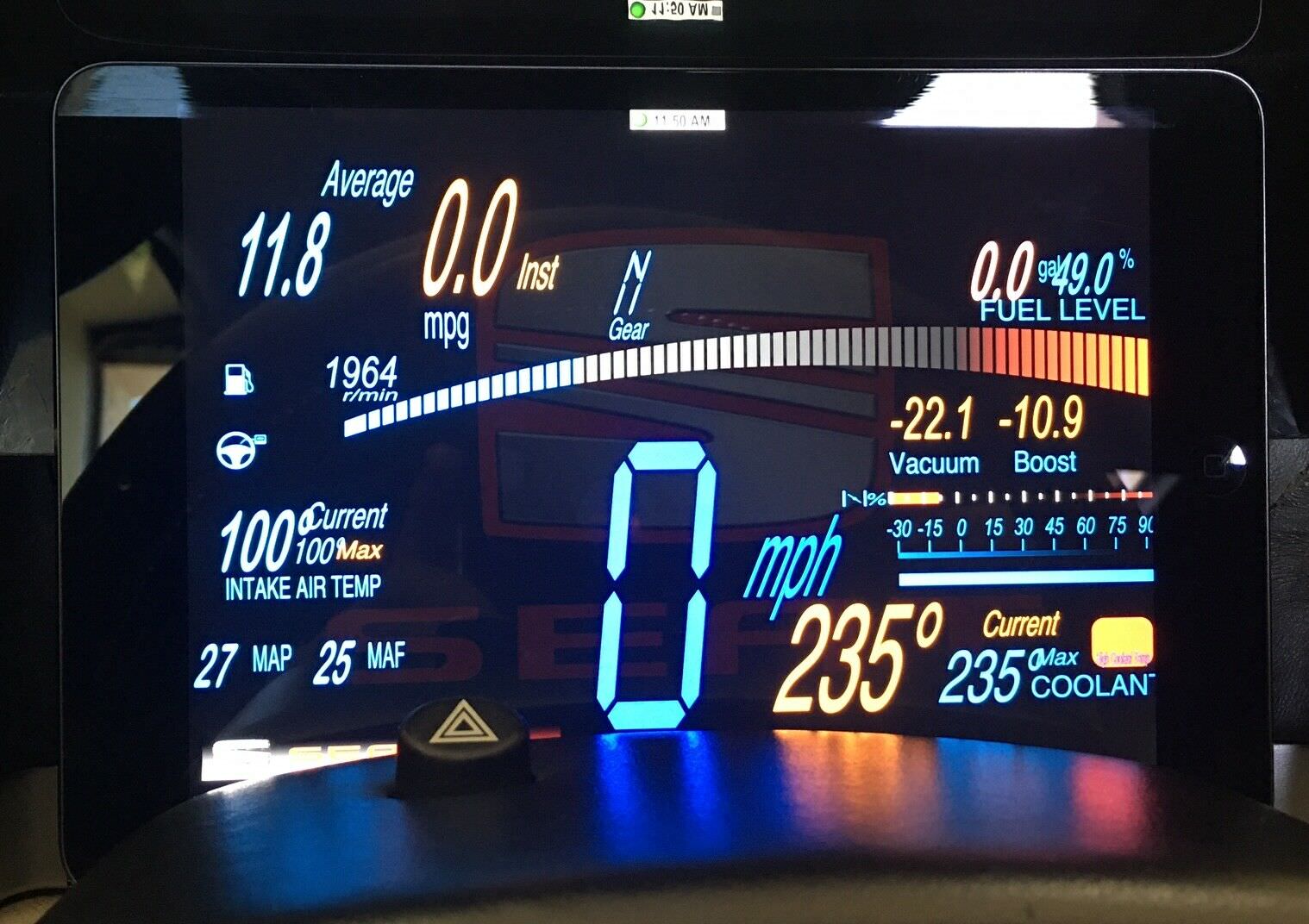
The interior was well appointed for the time, with touch-sensitive switchgear, LCD instrumentation. McIntosh audio system with AM/FM/CD, power-steering, air-conditioning, and ample use of carbon fiber.

No official top speed was ever recorded for the GTX, however the company claimed it was capable of over 200 mph – the spec sheet shows nothing that would dispute this.

End Of The Road

When Dodge announced that 2010 would be the end of the road for the fourth generation Viper, Devon Motorworks had tried to buy the Viper platform. It was put up for open bidding, though Devon was the only bidder the amount was under the $10 million reserve and thus was not accepted by Chrysler.

Devon GTX 5

The interior of the car is very well appointed considering it’s a prototype. It has a high-end stereo, climate control, power steering, and a digital dashboard.

This combination of the Great Recession and the end of the line for the platform that the Devon GTX was based on was the death knell for the car, and the company ceased operations soon after with just two cars completed.

The Devon GTX Shown Here

The car you see here is one of the two that were built, both essentially pre-production prototypes.

Remarkably this one just popped up for sale on eBay a few days ago with an asking price of $250,000 USD, while that’s not cheap it’s considerably less than the $500,000 – $525,000 USD they were originally going to sell for.

This car sold at auction with Barrett-Jackson for $220,000 USD in 2012, and this appears to be the first time it has been sold since.

The seller explains that the car is listed as a 1980 model due to the unique VIN used on the car, it has the mileage listed at 10,000 and he mentions it’s been used on several road/tour rallies and has won a number of best in show awards.

The car is for sale out of Dunedin, Florida. If you’d like to read more about it or register to bid you can click here to visit the listing.
Devon GTX 2 Devon GTX 3 Devon GTX 6 Devon GTX 7 Devon GTX 8 Devon GTX

The post “The Next Great American Supercar” Is For Sale On eBay – The Devon GTX appeared first on Silodrome.


from Silodrome https://silodrome.com/devon-gtx-car/
via gqrds

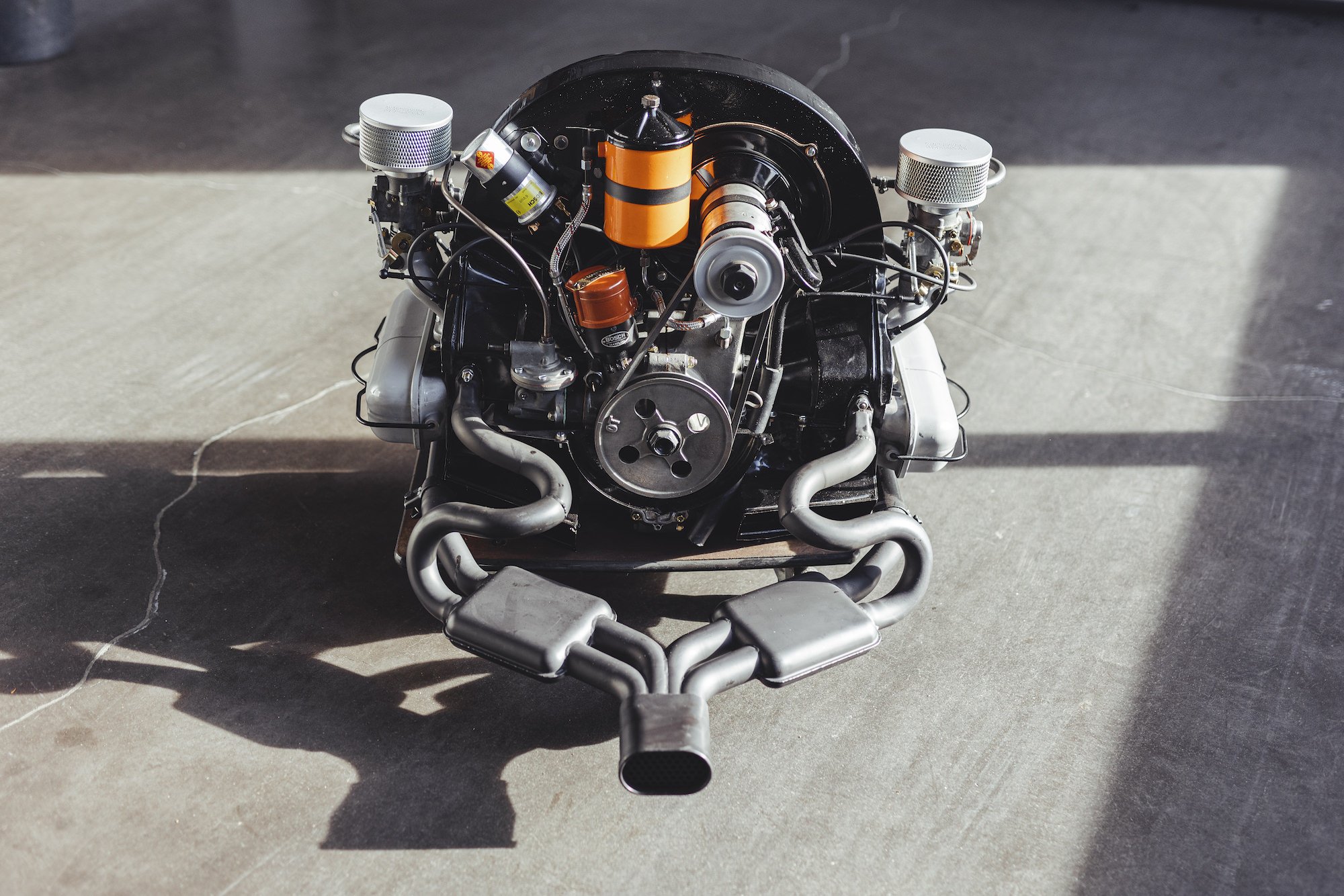
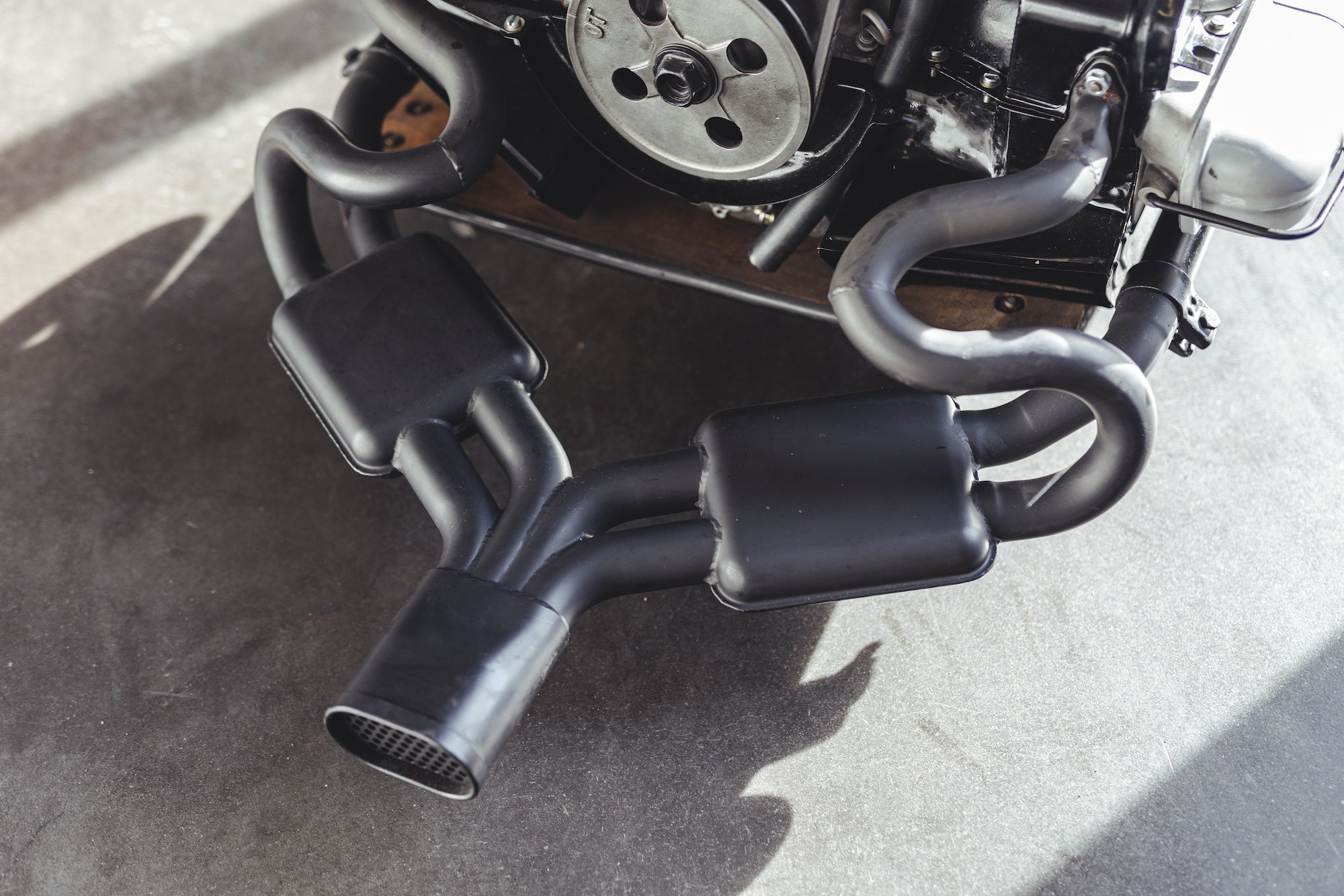
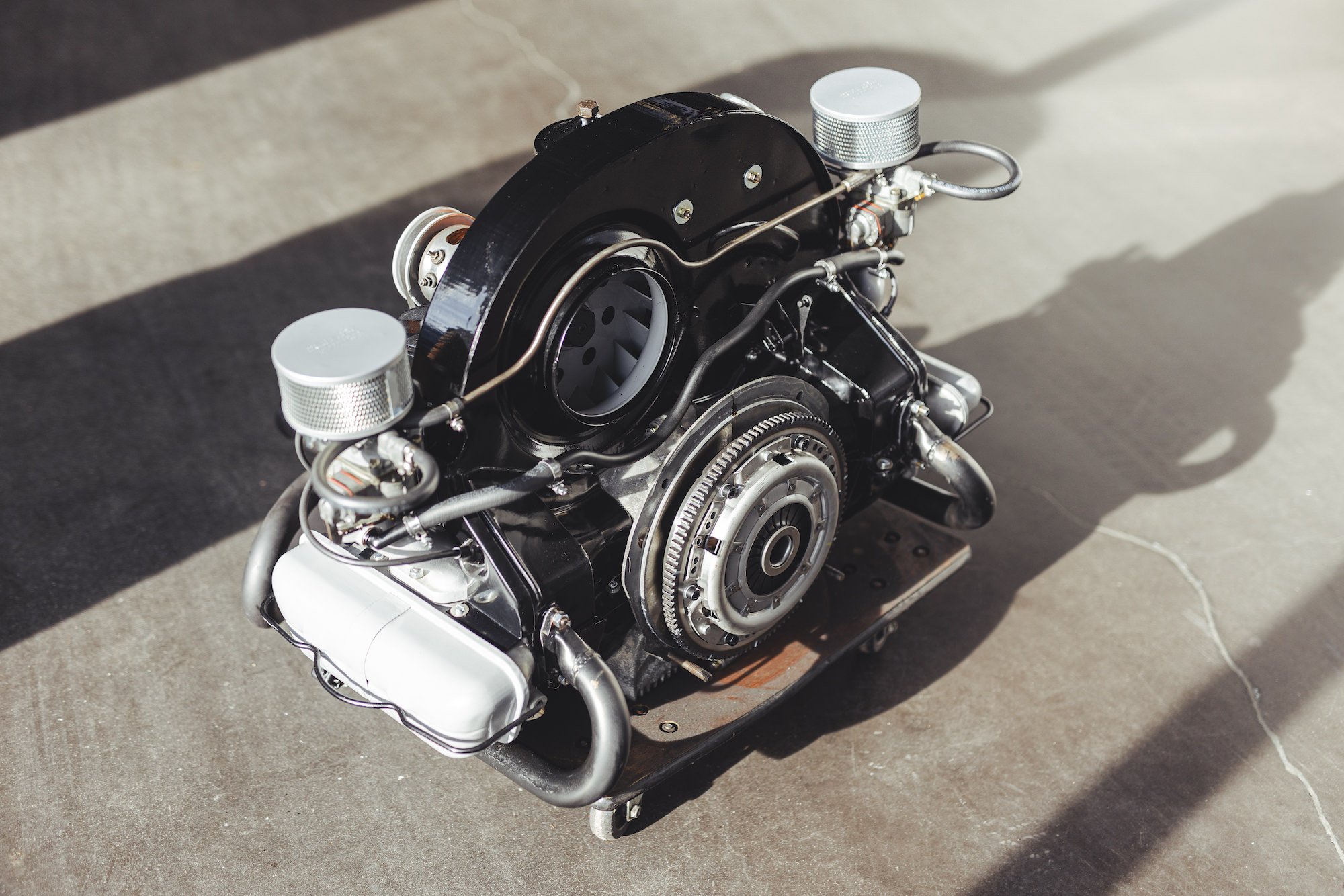
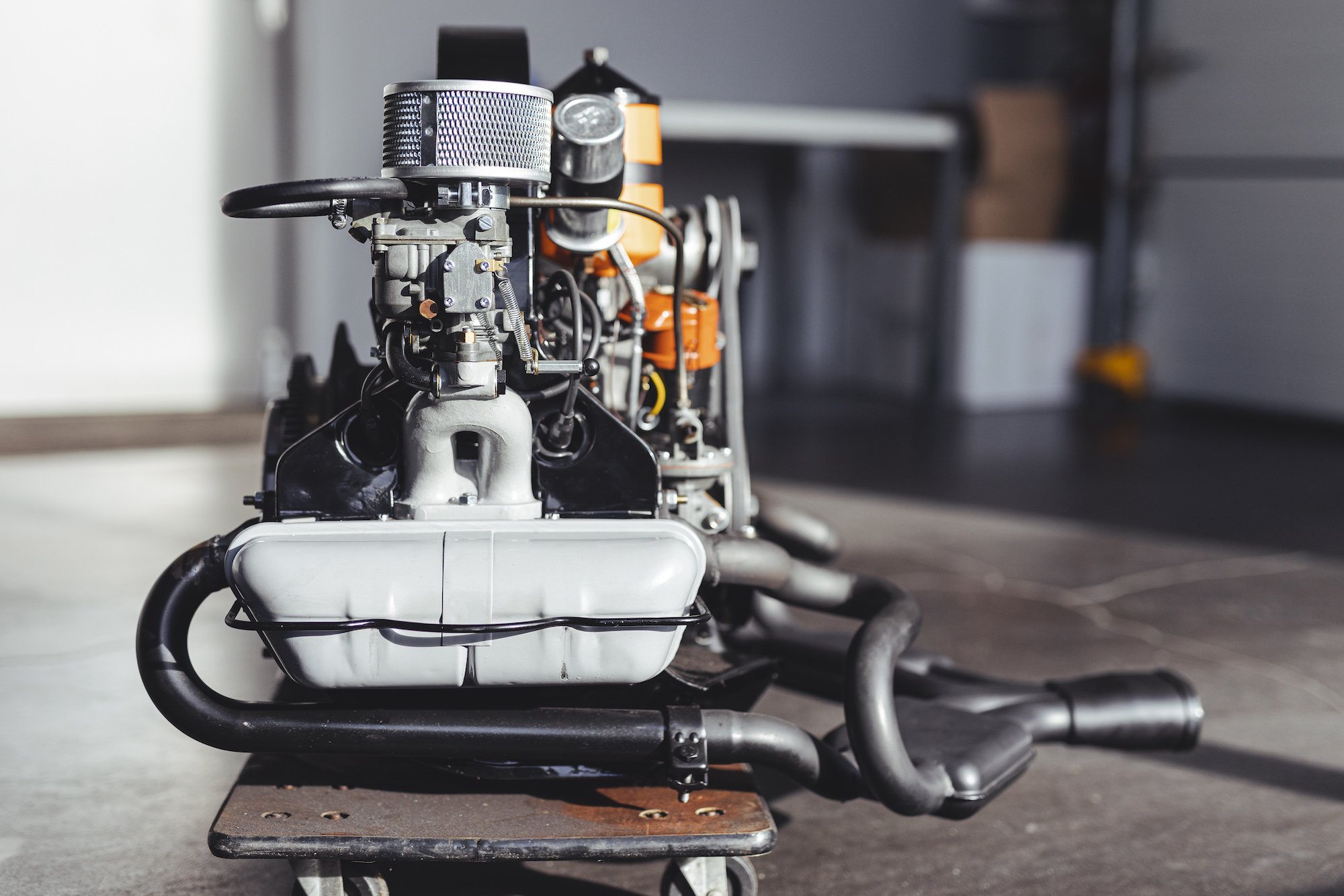
For Sale: A Porsche 356 Speedster Engine

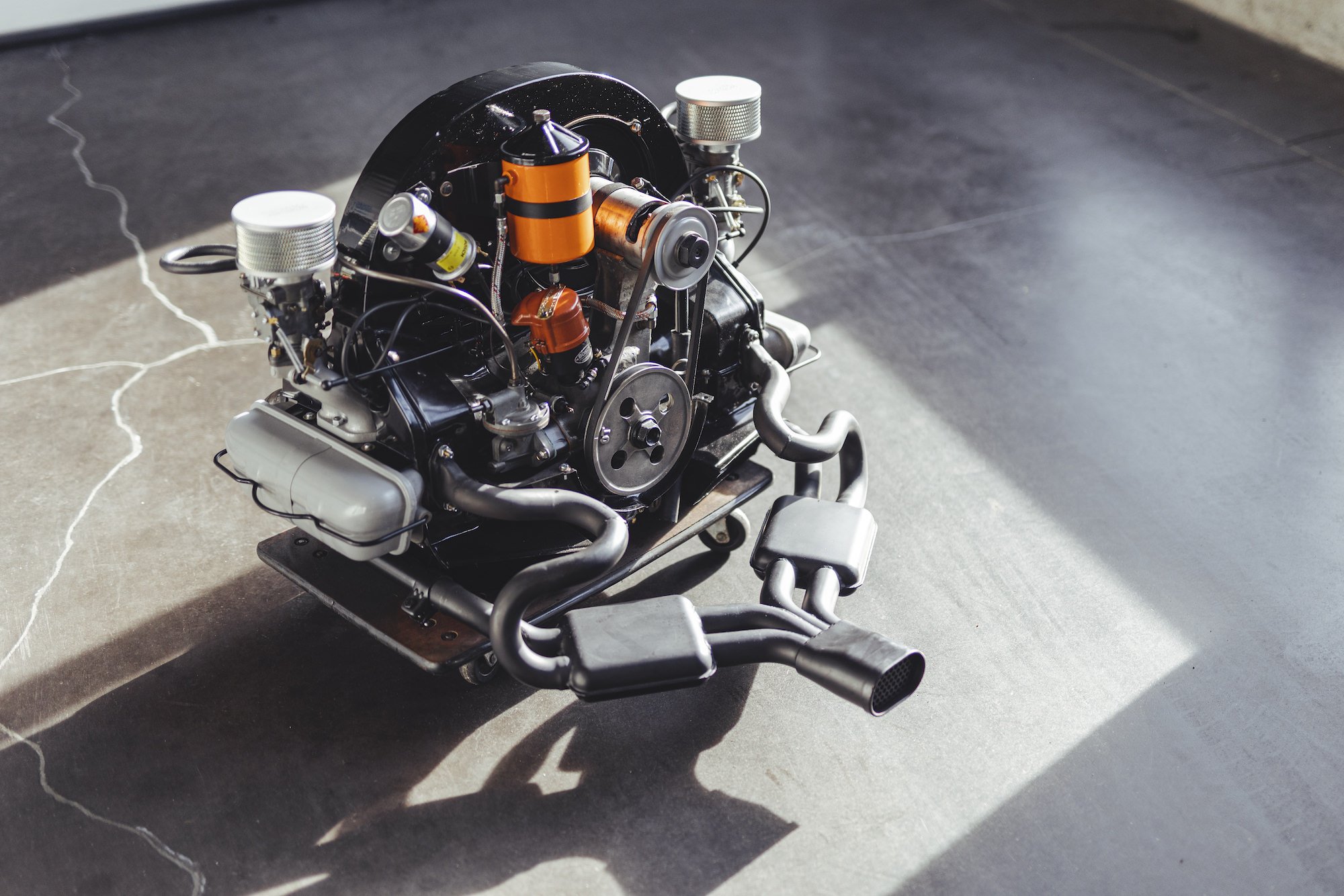
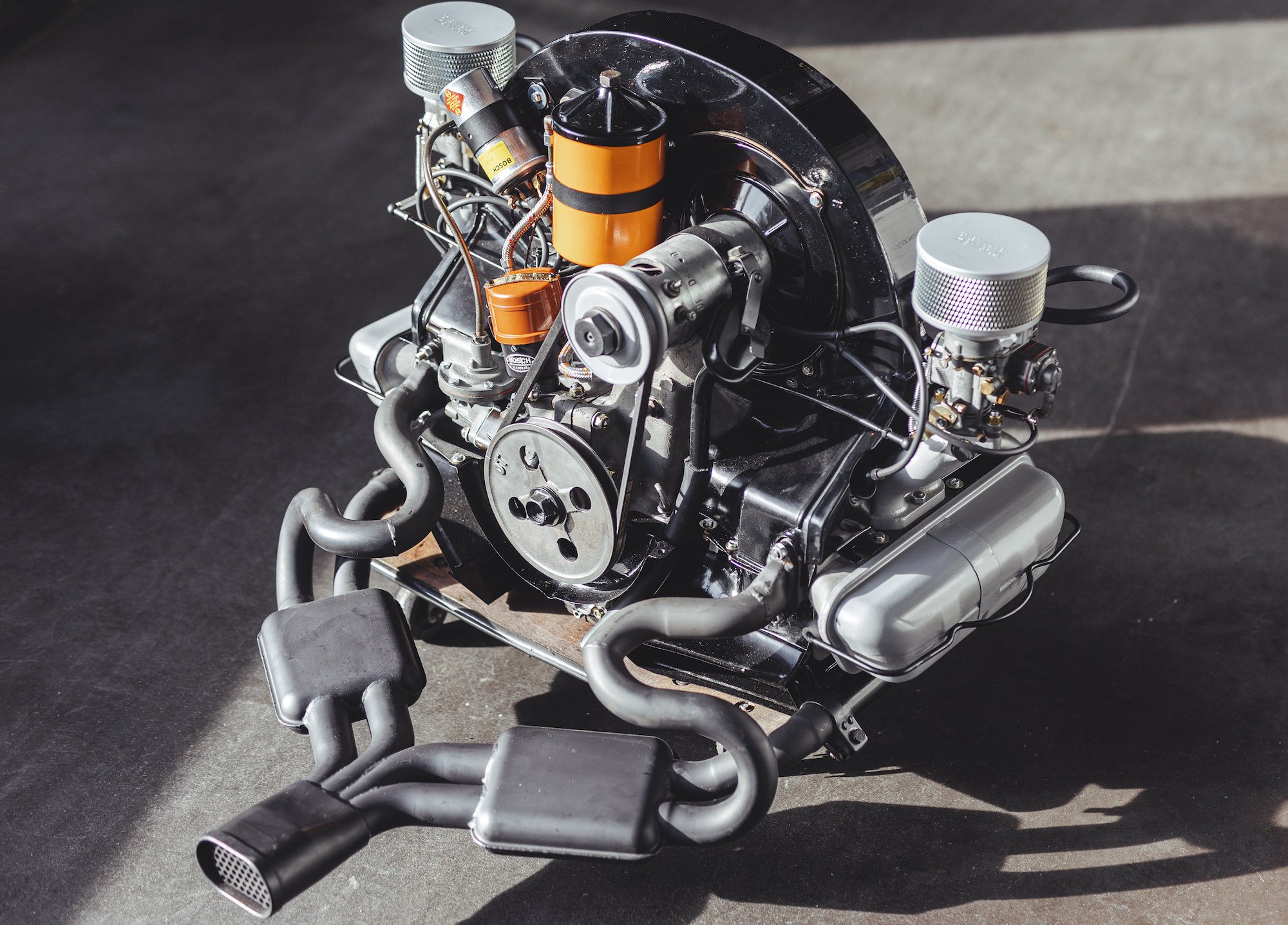
This is a fully-rebuilt Porsche 356 Pre-A Speedster engine from the first year of the model’s production run – 1954.

When new from the factory this air-cooled flat-four was producing 55 bhp (DIN) at 4,400 rpm. It has a displacement of 1,488cc and a compression ratio of 6.8:1. With this engine the car had a claimed top speed of 155 km/h and excellent handling, thanks in part to the kerb weight of approximately 1,675 lbs (~760 kgs).

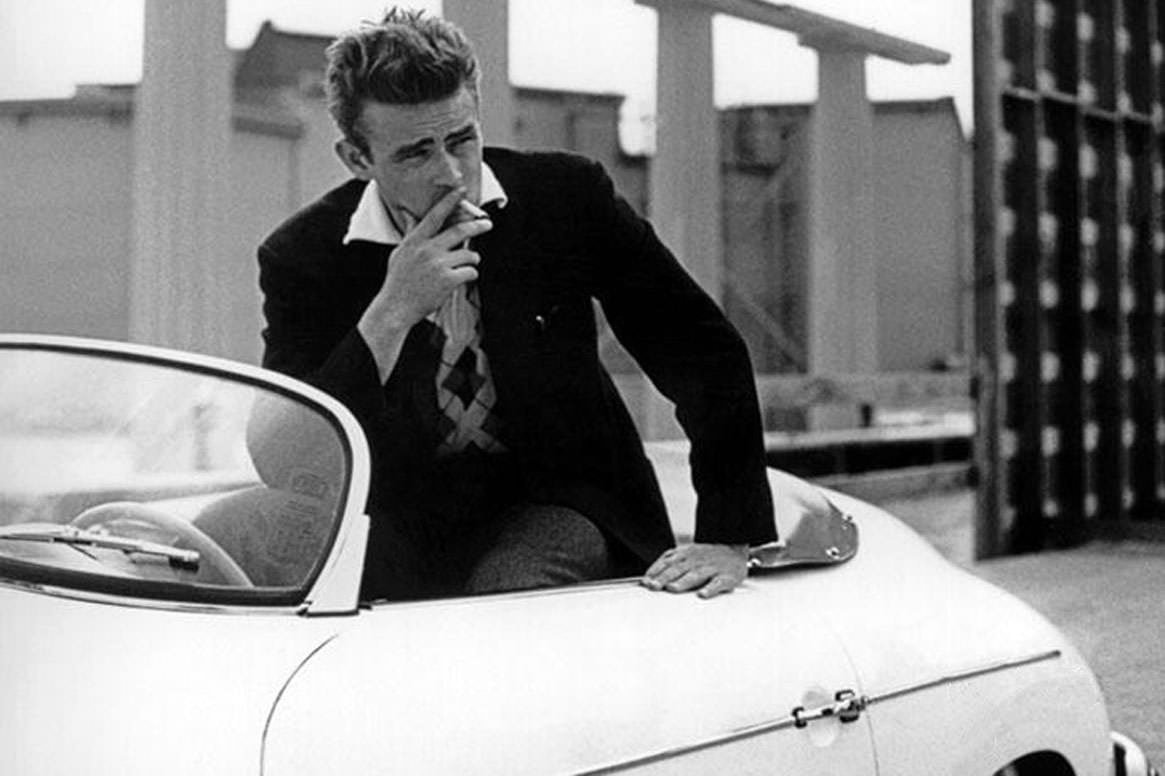
Among the many owners of the Speedster was James Dean, it would spark a love for small lightweight Porsches that would result in him buying a Porsche 550 Spyder – the car in which the was tragically killed in in 1955 when a young driver pulled out in front of him in a Ford Tudor.

There can be little doubt that the 356 Speedster is one of the most important models in the history of the German automaker. It was conceived by legendary New York auto importer Max Hoffman as a competitor for the small, lightweight, and low-cost roadsters pouring out of Britain into the United States.

James Dean in his Porsche 356 Speedster

A photograph of James Dean in his Porsche 356 Speedster in 1955. Image courtesy of Porsche.

Hoffman had stipulated that the 356 Speedster should cost under $3,000 USD to be competitive, that it should be stripped of any superfluous luxury items and sold as an affordable, minimalist sports car capable of being driven to the race track, winning in its class, and then being driven home again.

No one could have known at the time that the Speedster would become one of Porsche’s most desirable models in the decades to follow. They regularly change hands now for many hundreds of thousands of dollars, a far cry from the affordable bare bones racers they started out as.

The engine you see here was rebuilt by S.A. The New Feller Service of Amblainville, France, in November 2021 at a cost of €15,276 ($17,260 USD). It’s now due to roll across the auicvtion block with RM Sotheby’s on the 2nd of February with a price guide of $34,000 – $70,000 USD.

It’s difficult to predict where this engine might end up, it could be bought by a Speedster owner who wants a spare engine of course, though it may end up on display with a Porsche collector, or maybe even in the back of an Outlaw build.

If you’d like to read more about this engine or register to bid you can click here to visit the listing.
Porsche 356 Pre-A Speedster Engine 1 Porsche 356 Pre-A Speedster Engine 6 Porsche 356 Pre-A Speedster Engine 5 Porsche 356 Pre-A Speedster Engine 4 Porsche 356 Pre-A Speedster Engine 3 Porsche 356 Pre-A Speedster Engine 2

Images: Mathieu Bonnevie ©2021 Courtesy of RM Sotheby’s

Porsche 356 Pre-A Speedster Engine

The post For Sale: A Porsche 356 Speedster Engine appeared first on Silodrome.


from Silodrome https://silodrome.com/porsche-356-speedster-engine/
via gqrds

Mille Miglia Eligible Racer: A 1956 Jaguar XK140 MC Roadster

This is a rare Jaguar XK 140 MC Roadster, it was the highest performance version of the XK140 offered to the public at the time of its release. The “MC” in the model name means the car was built to MC-specification, also known as Special Equipment or SE-specification in Europe.

The XK140 was already one of the fastest production cars in the world when it was introduced in 1954 to succeed the outgoing XK120 model. The MC version of the XK140 was fitted with race-derived cylinder heads, larger SU carburetors, heavy duty torsion bars, and a dual exhaust system for significantly improved performance.

Fast Facts – The Jaguar XK 140 MC Roadster

  • The Jaguar XK120 had been a revolutionary sports car when it was released in 1949, it was the fastest production car of the time, and Clark Gable famously bought the first one built.
  • When it came time to update the XK120, Jaguar engineers were careful not to change too much, they incorporated a slew of careful upgrades like rack and pinion steering, more legroom, a more powerful engine, uprated suspension, and better brakes.
  • Power for the XK140 was provided by the Le Mans-winning 3.4 liter Jaguar XK DOHC straight-six, with 190 hp in standard trim and 210 hp in MC/SE trim.
  • The Jaguar XK140 would remain in production from 1954 until 1957 at which point it was replaced by the XK150.

XK120 – The Origin Of Species

Collectors today view the XK140 as an almost perfect middle ground between the speed of the XK120 and the comfort of the later XK150. A slew of improvements were rolled into the XK140 to give it more power, better handling, better steering, better braking, and more interior space for passenger comfort than its predecessor.

Jaguar XK140 12

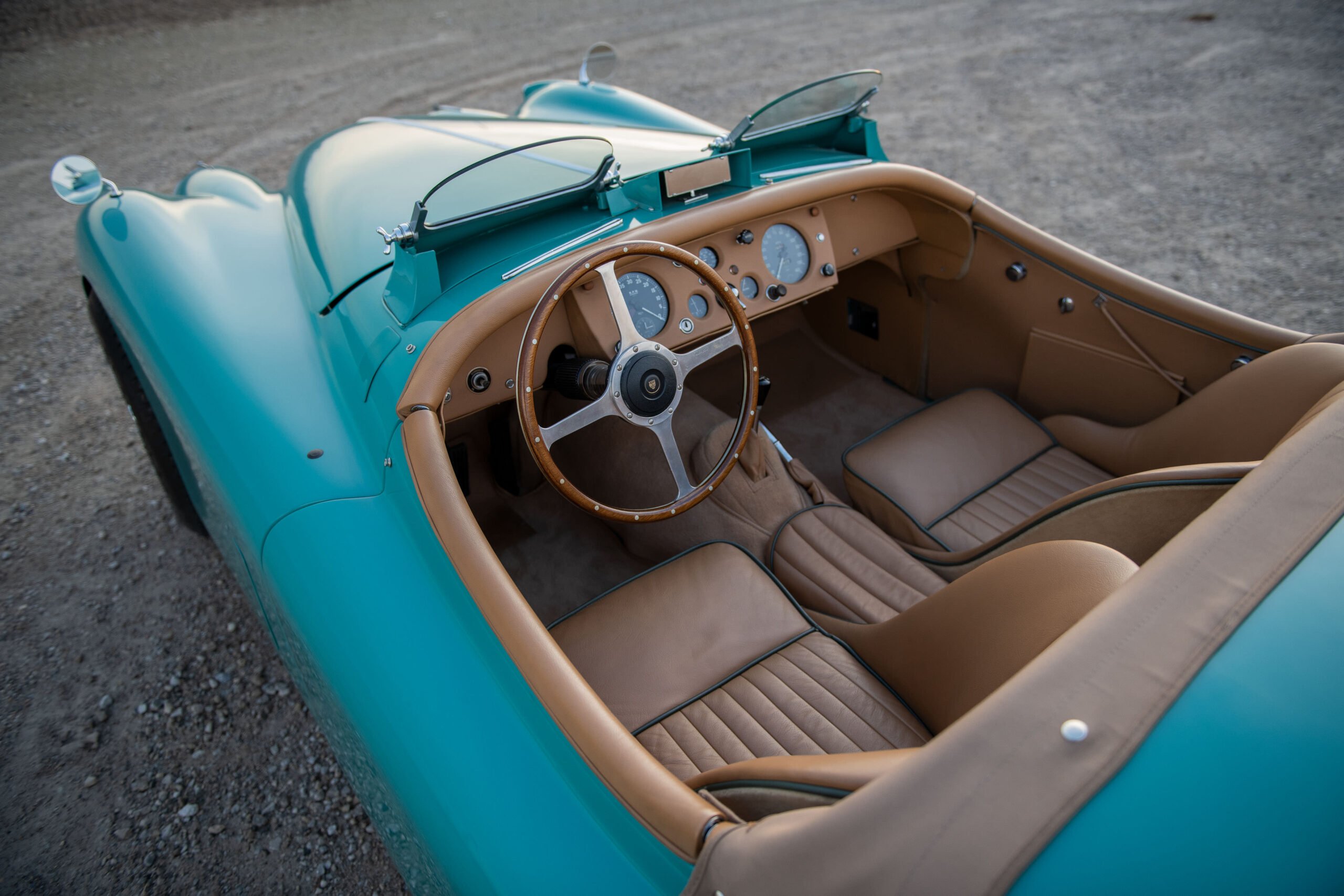
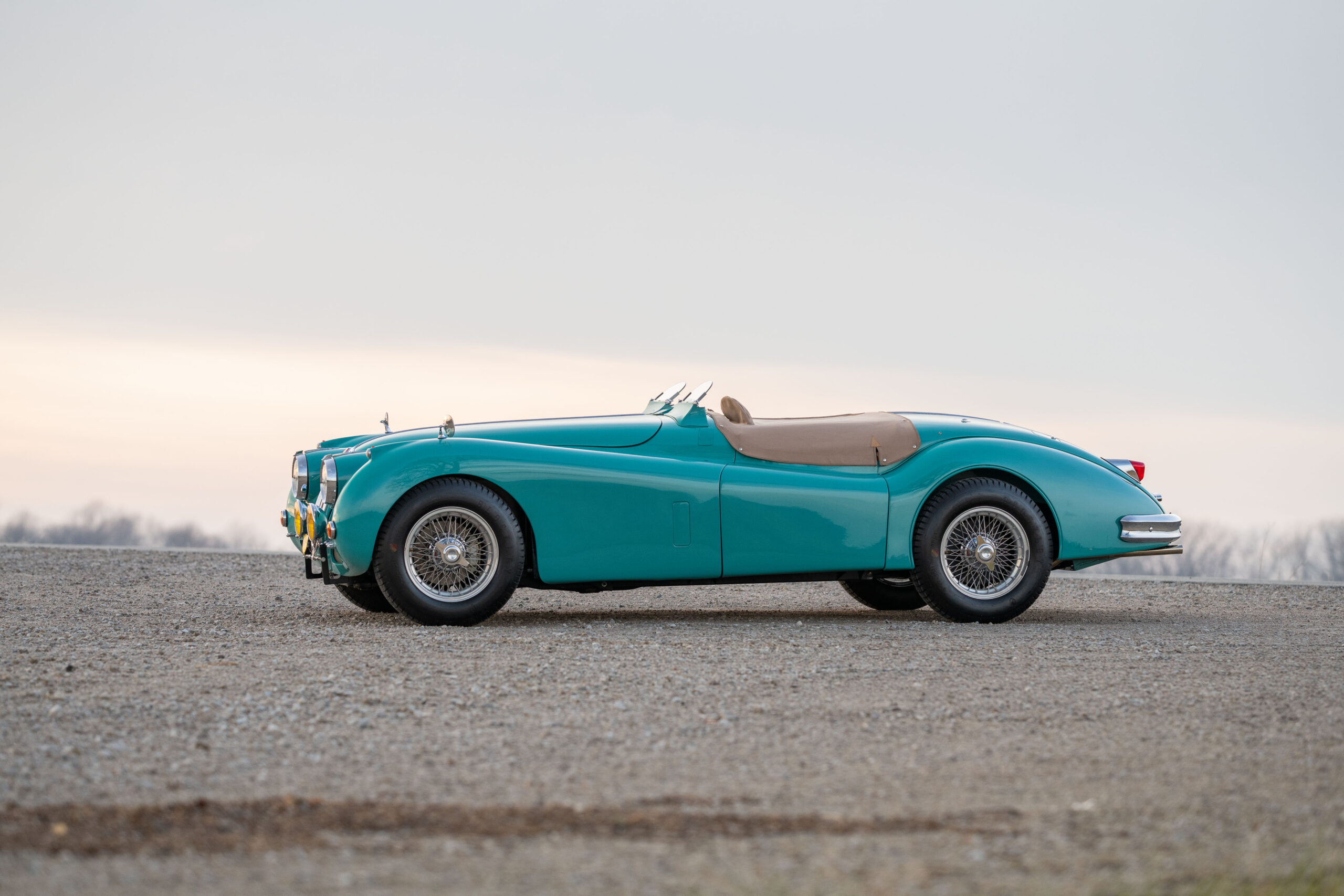
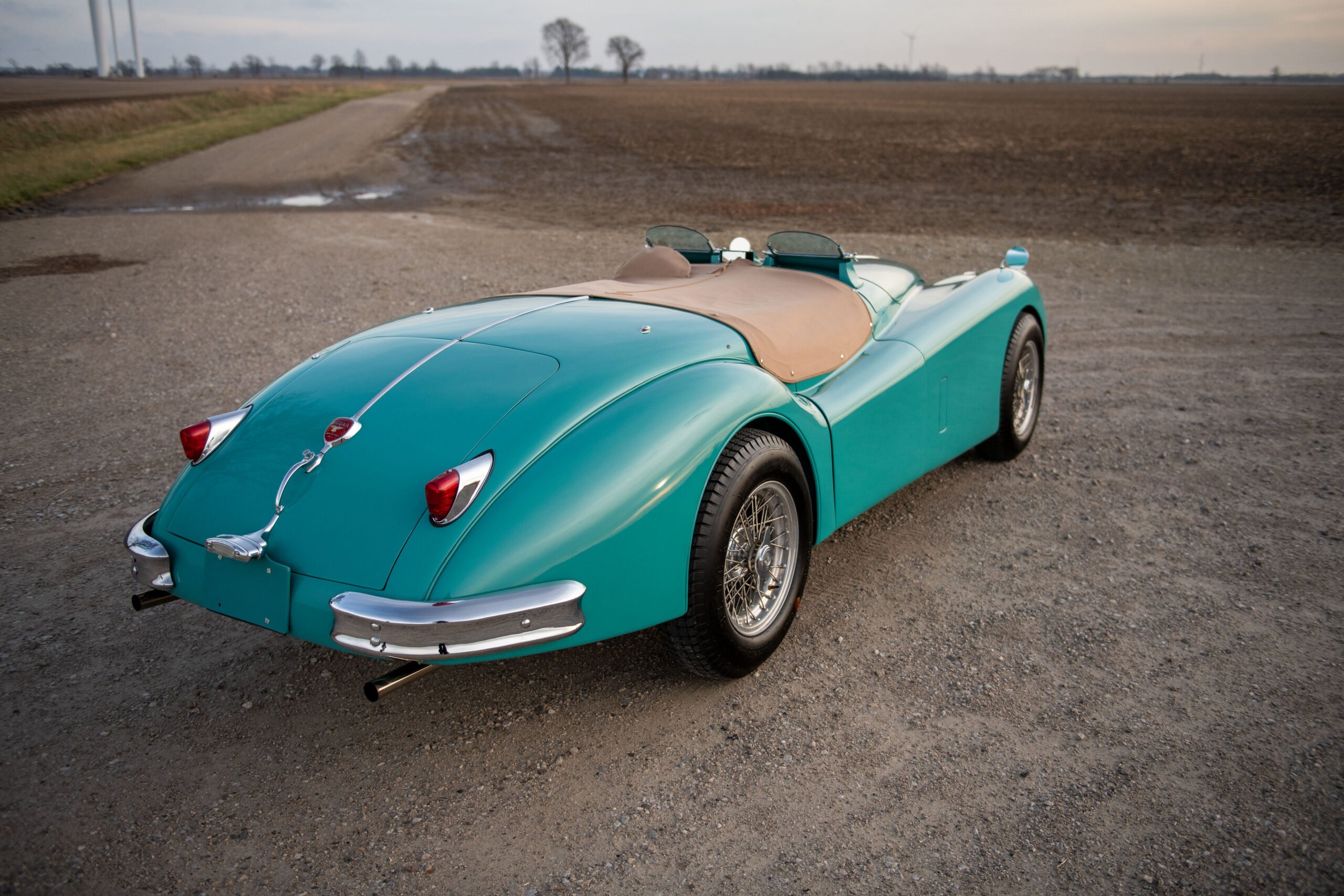
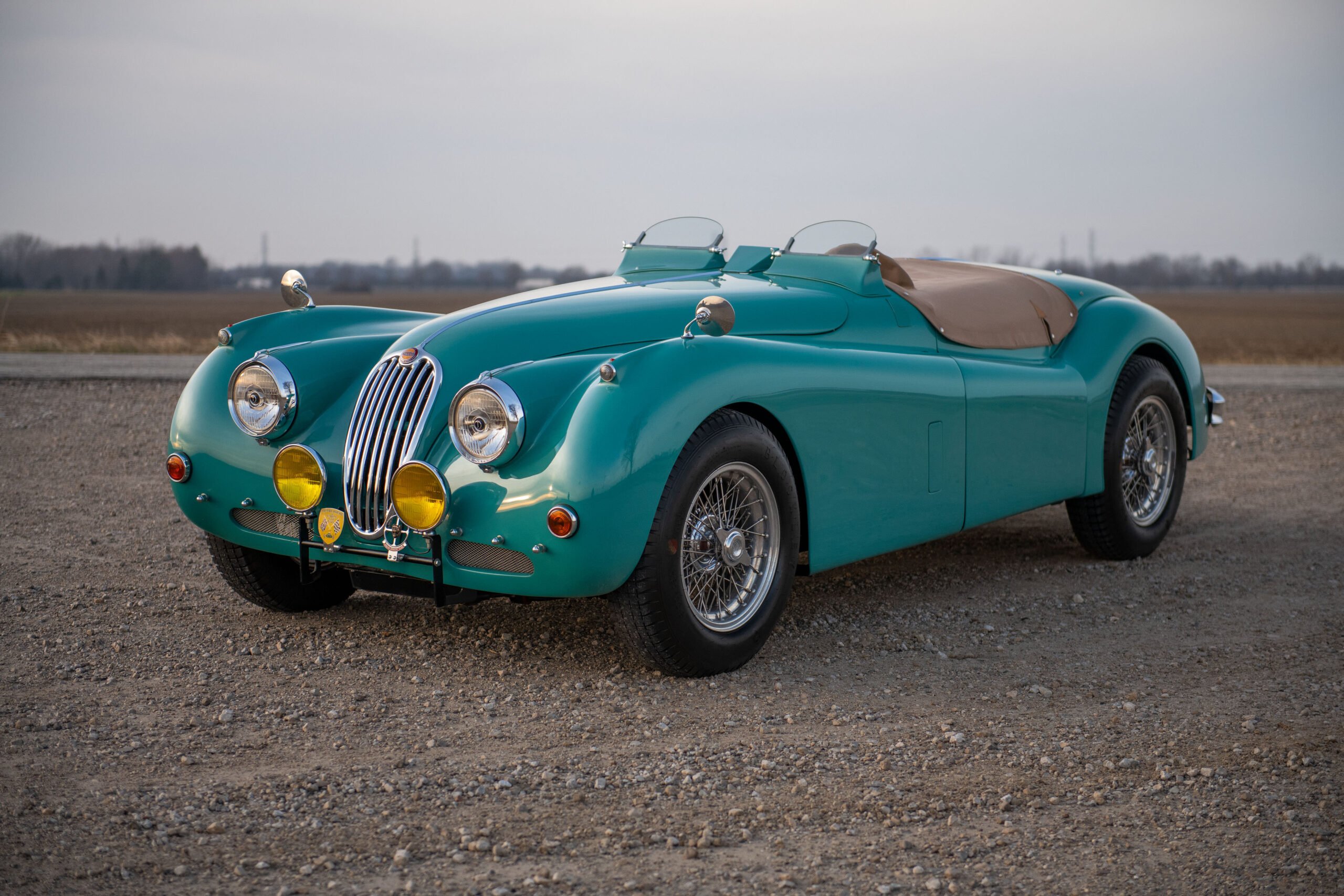
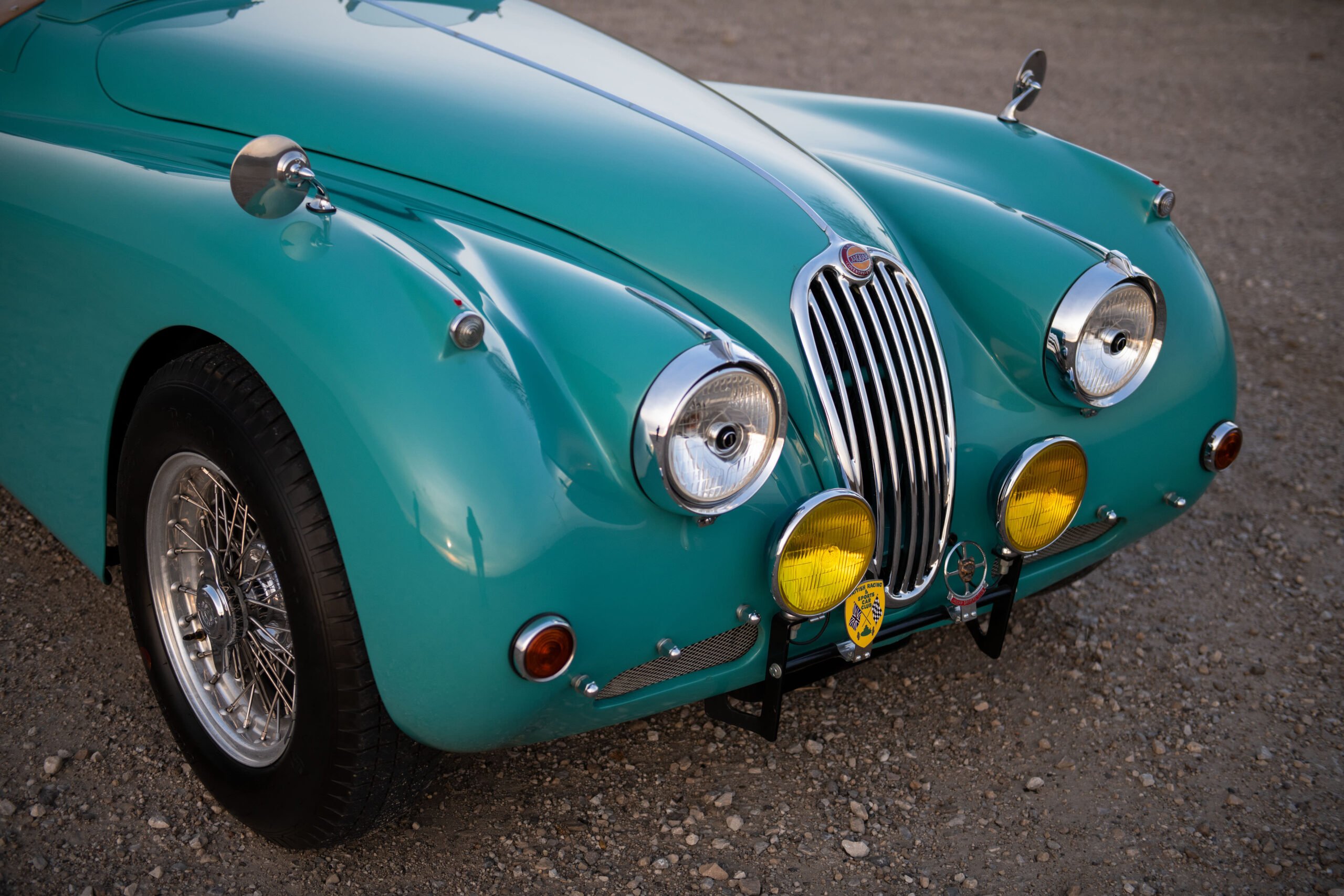
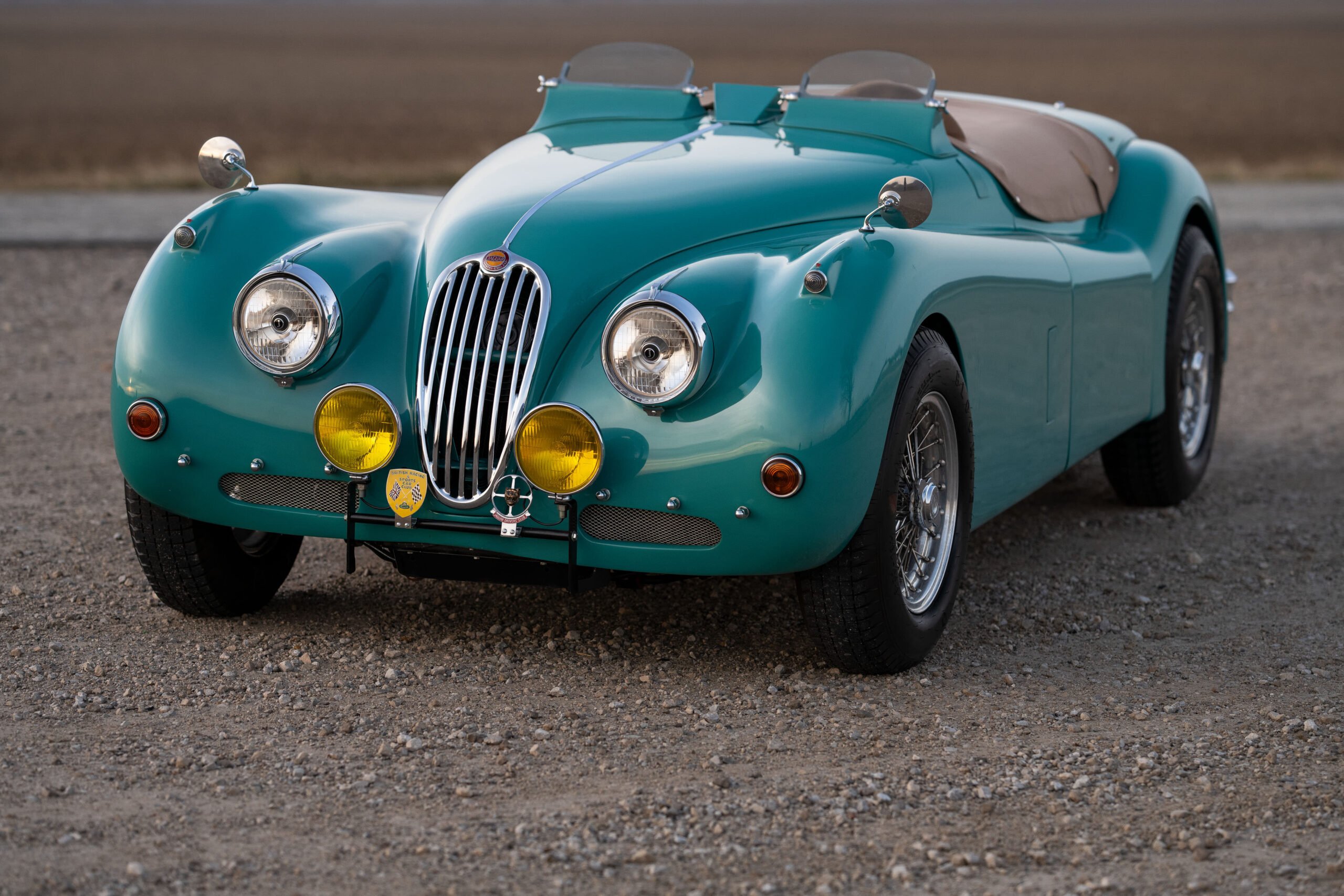
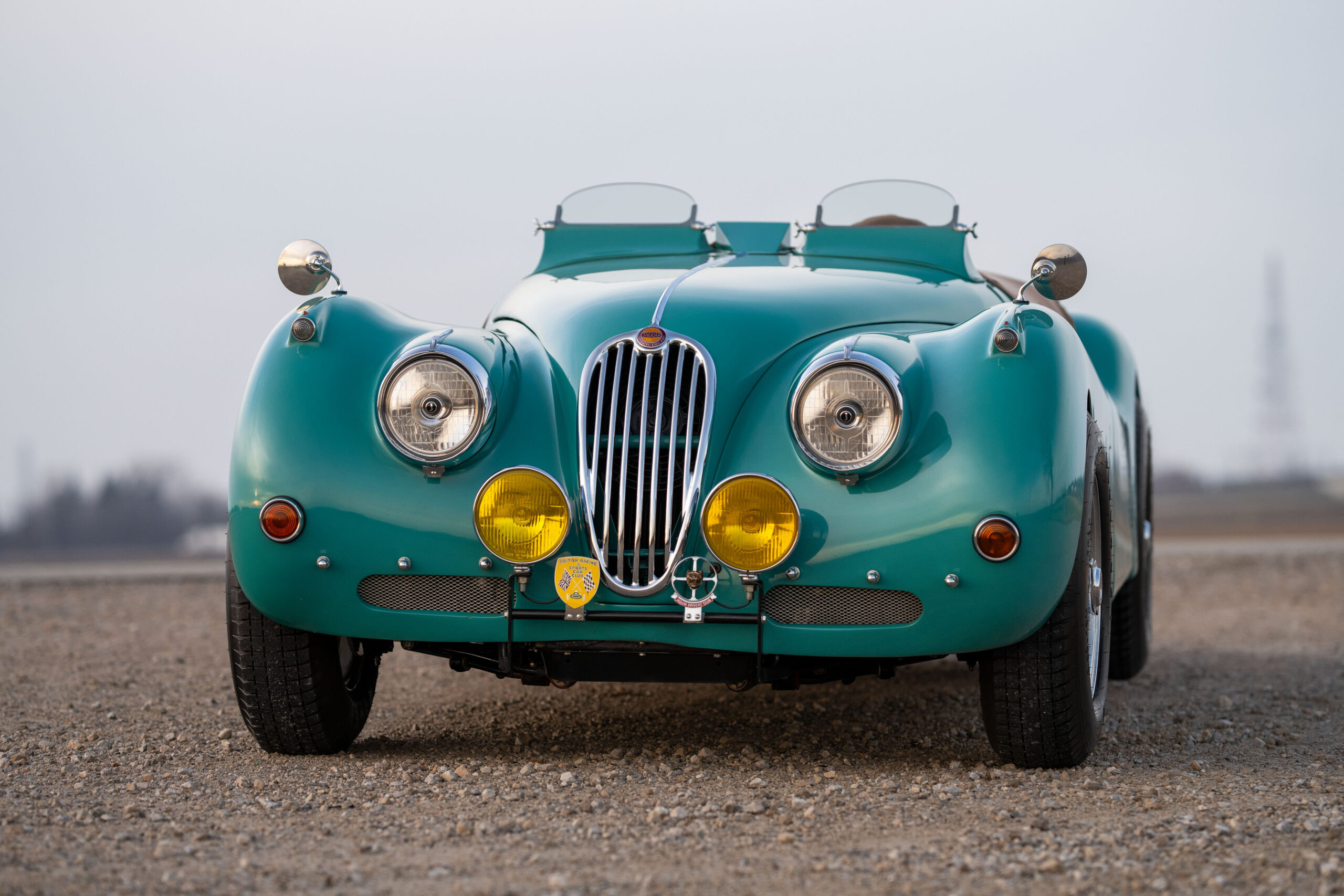
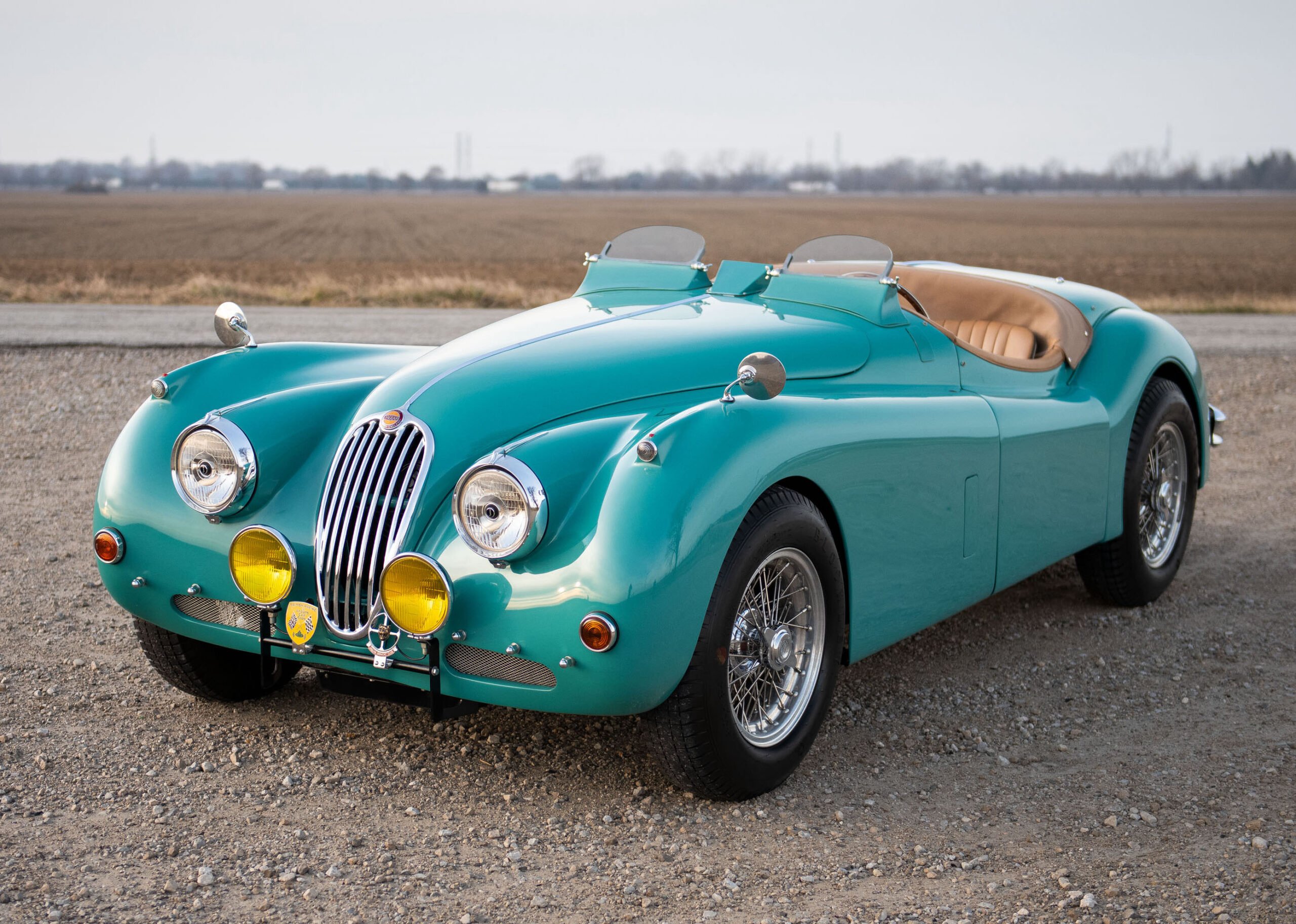
This XK140 is finished in the unusual color combination of Arbour Green over a Biscuit interior. It has twin Brooklands screens in place of a windshield, and it rides on Borrani wire wheels.

When the Jaguar XK120 concept car was first shown to the world in 1948, just three years after the end of WWII, the car caused such a global sensation that it was approved for a full production run.

The original plan had been to just use the XK120 as a way to show off the brand new Jaguar XK engine designed by Jaguar Chief Engineer William Heynes and his team. Though they didn’t know it at the time, this engine would power them to multiple wins in the 24 Hours of Le Mans, and it would stay in production for decades – until 1992 in fact.

Developing The Jaguar XK140

The XK120 had been such a runaway success for Jaguar that there must have been some trepidation about replacing it with a new model. As a result, it was decided to carefully upgrade the car and improve it rather than start anew.

Jaguar XK140 11

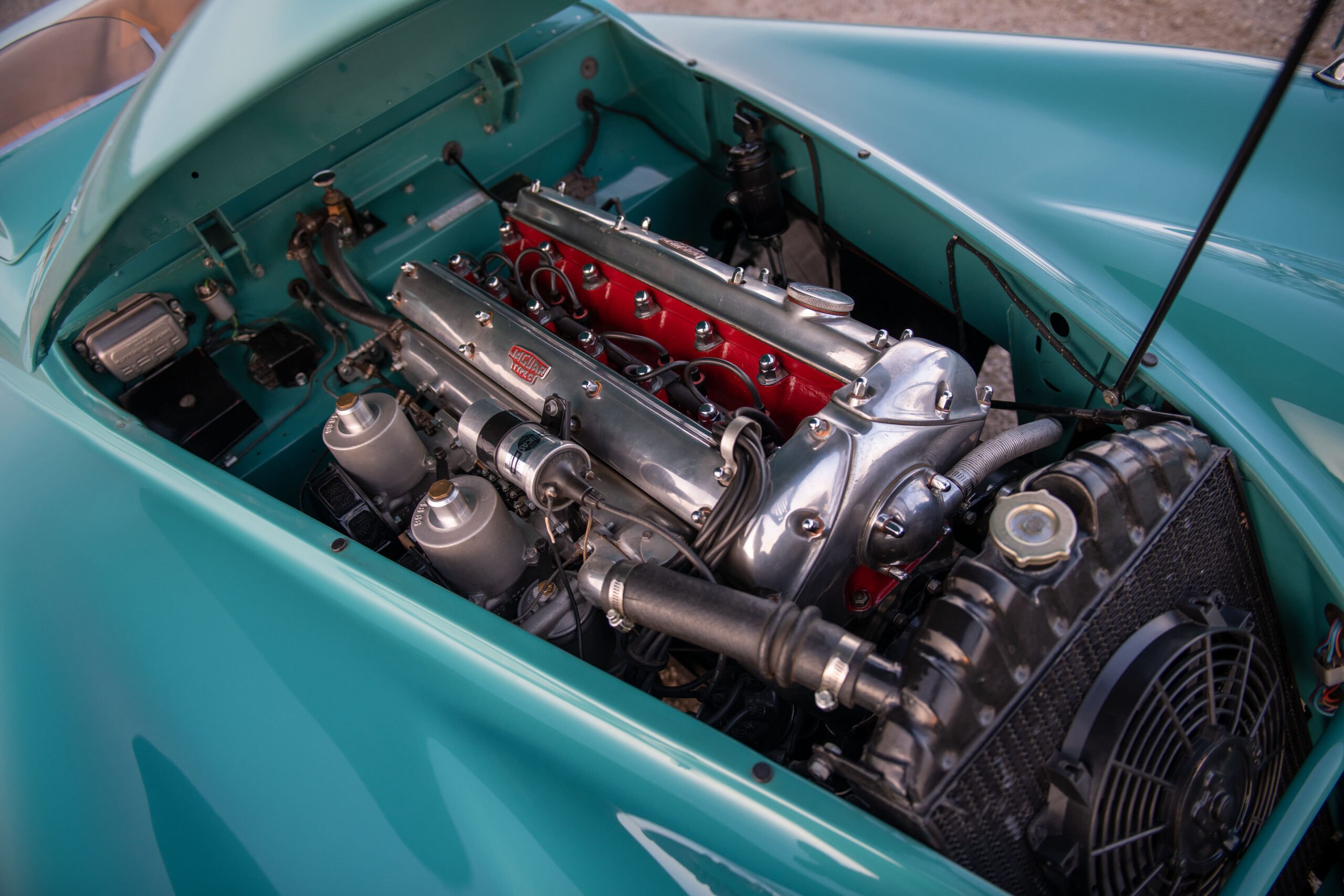
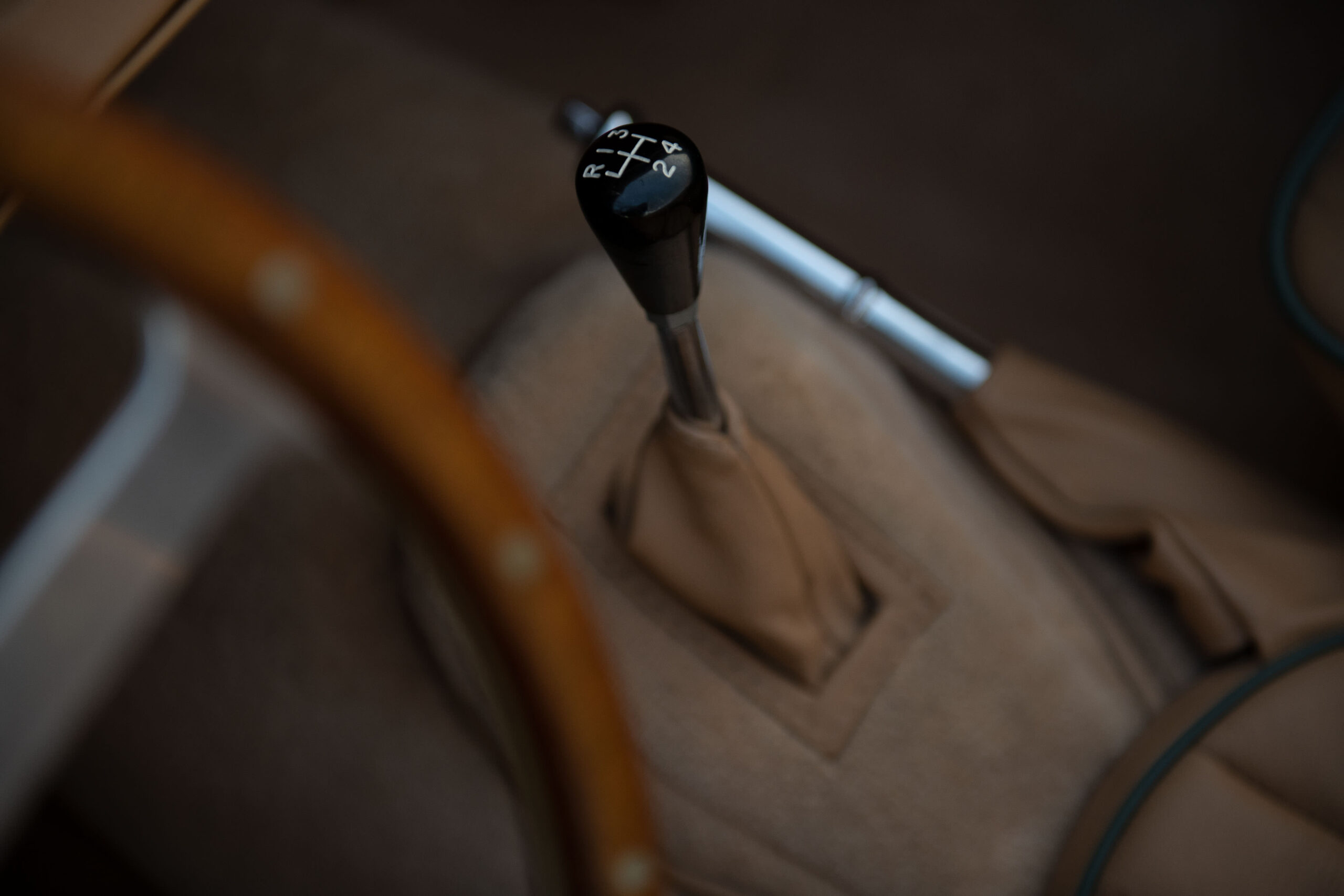
This is the MC or SE specification Jaguar XK140 straight-six, producing 210 bhp at 5,750 rpm, and sending power to the rear wheels via a four-speed transmission with overdrive.

Beginning in the engine bay, an uprated version of the 3.4 liter XK engine was fitted, with power increased by 10 bhp to 190 bhp at 5,500 rpm.

An SE or “Special Equipment” version was also offered, known as the “MC” in the United States. This car used the high-performance cylinder heads from the Jaguar C-Type Le Mans race car, along with largely SU carburetors, and dual exhaust pipes offering a power boost to 210 bhp at 5,750 rpm.

All versions of the XK140 were fitted with tubular shock absorbers in place of the older-style lever arm shocks used on the XK120. Rack and pinion steering was also fitted, as well as additional cabin space, more effective bumpers, flashing indicator lights, improved brakes, more suspension travel, and from 1956 onwards the car could be ordered with an automatic transmission.

As with the earlier XK120, the performance of the XK140 was brisk. The car had a tested top speed of over 125 mph (200+ km/h), it could do the 0-60 mph dash in 8.4 seconds, and it was good for a quarter mile time of 16.6 seconds at 84 mph.

Jaguar XK140 2

The XK series of Jaguars is regularly named among the most beautiful cars ever made, this profile image certainly makes it easy to see why.

Over the course of the 1954 to 1957 production run Jaguar would sell 8,937 examples of the XK140, they’re now highly prized by enthusiasts – particularly the SE/MC versions.

The Jaguar XK140 MC Roadster Shown Here

The car you see here is a Jaguar XK140 MC Roadster that was ordered new with the same colors it’s wearing now – an appealing combination of Arbour Green paint over a Biscuit interior.

This car left the factory as an MC car, with the added performance benefits that go along with it. It was recently restored by Doc’s Jags in Arizona, reportedly with the intention of running the modern Mille Miglia for which it’s eligible.

It’s due to cross the auction block on the 27th of January with a price guide of $130,000 – $160,000 USD. If you’d like to read more about the car or register to bid you can click here to visit the listing.
Jaguar XK140 3 Jaguar XK140 9 Jaguar XK140 8 Jaguar XK140 7 Jaguar XK140 6 Jaguar XK140 5 Jaguar XK140 4 Jaguar XK140 1 Jaguar XK140 10

Images: Darin Schnabel ©2021 Courtesy of RM Sotheby’s

Jaguar XK140

The post Mille Miglia Eligible Racer: A 1956 Jaguar XK140 MC Roadster appeared first on Silodrome.


from Silodrome https://silodrome.com/jaguar-xk140-mc-roadster/
via gqrds