(via A Rare South African Chevrolet El Camino)
from Tumblr https://somar78.tumblr.com/post/669682414779547648
There will likely be two main types of people who read this article, the first will be Americans who have never seen this version of the El Camino, and the second type will be Australians who are here to tell me that this is actually a Holden HQ Ute.
In a way the Australians would be right, this version of the El Camino was never sold outside of South Africa, and it is very closely based on Australia’s venerable Holden HQ Ute.
Although it isn’t common knowledge in the motoring world, the humble ute was actually invented by an Australian lady who lived and worked on a farm in Victoria with her husband. She wrote a letter to Ford Australia asking for “a vehicle to go to church in on a Sunday and which can carry our pigs to market on Mondays.”
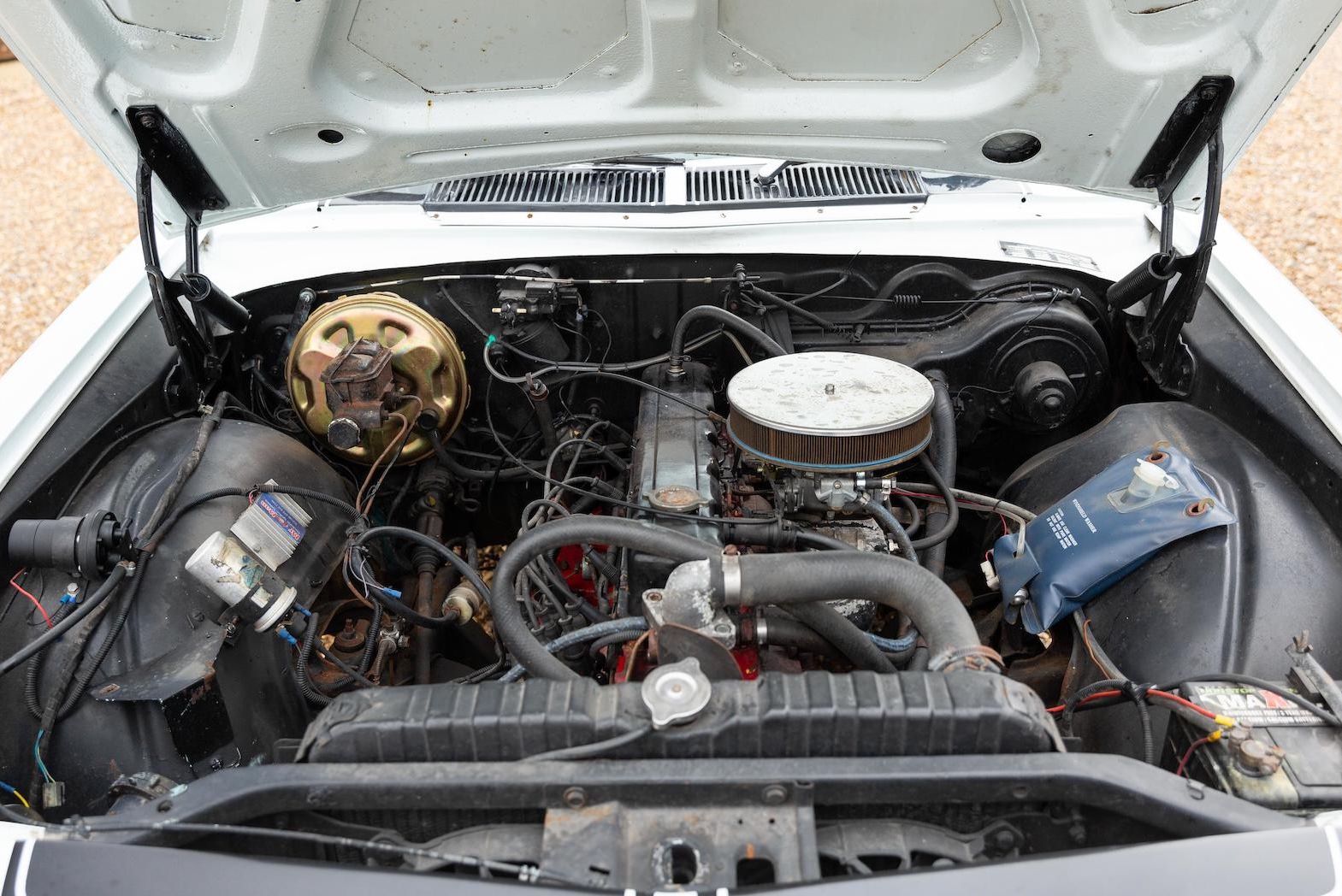
This El Camino is powered by the venerable Holden straight-six with a single carburetor, this same engine has powered innumerable Australian cars over the years.
To their credit, the folks at Ford took her seriously and realized she was onto a good idea. Ford designer Lew Bandt created a two-door coupe with a pickup truck-style rear end and it was released in 1934.
The ute quickly became a cultural touchstone in Australia featuring in songs, films, television shows, books, and magazines. No other country adopted the ute with quite as much enthusiasm as Australia, though they did see some popularity in the USA with the El Camino and the Ford Ranchero.
General Motors saw South Africa as potentially a good market for a ute, and so they had a special version of the Holden HQ Ute built with Chevrolet and El Camino badging. This Ute would sell alongside the Chevrolet Kommando which was the four-door sedan version of the HQ, and the Chevrolet Constantia which was the more luxurious version of the HQ sedan.
The Kommando was offered with just the 4.1 liter Holden straight-six engine, whereas the Kommando could also be ordered with the more powerful 5.0 liter V8. Interestingly, the El Camino could be ordered with either of these engines or the 3.3 liter straight-six.
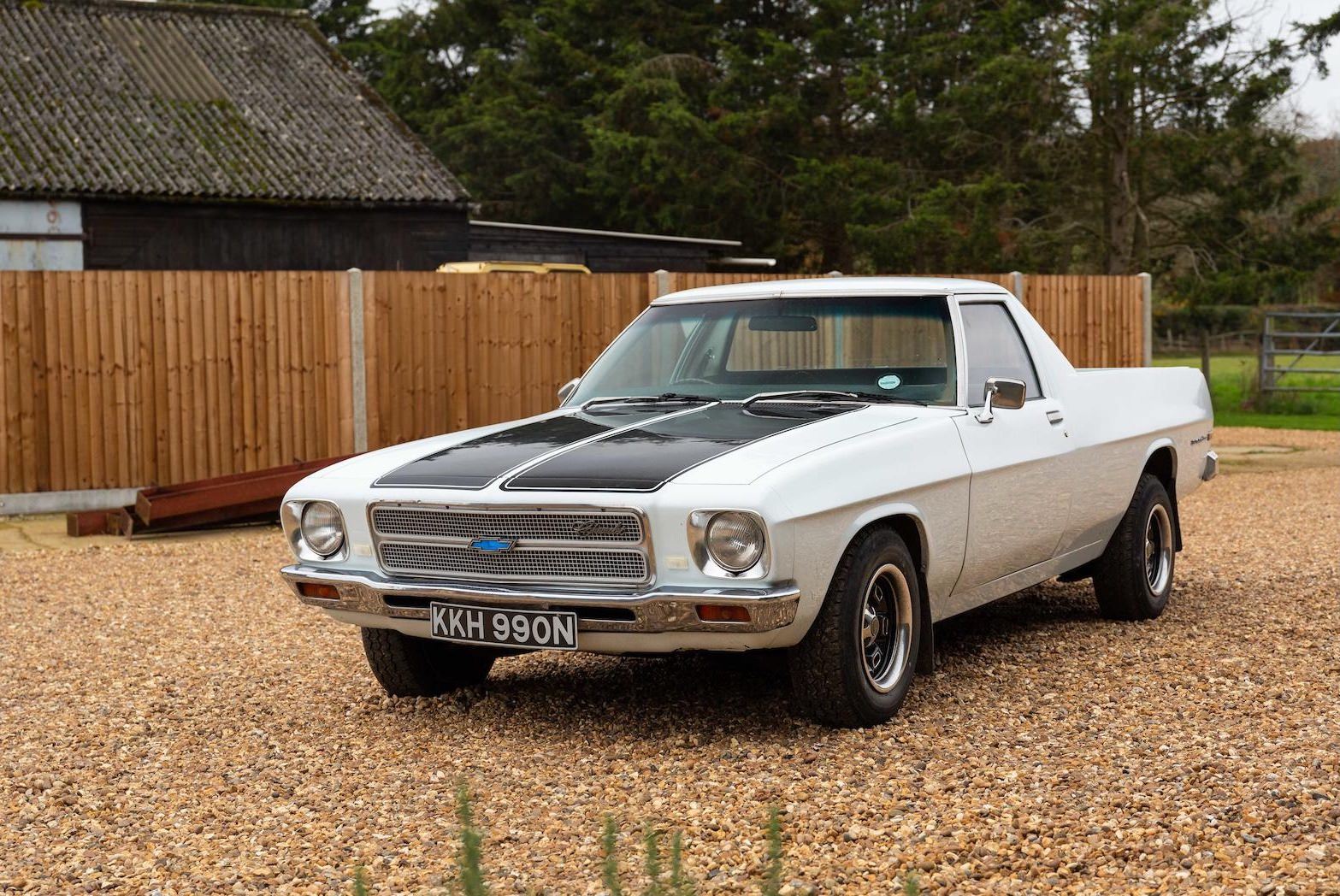
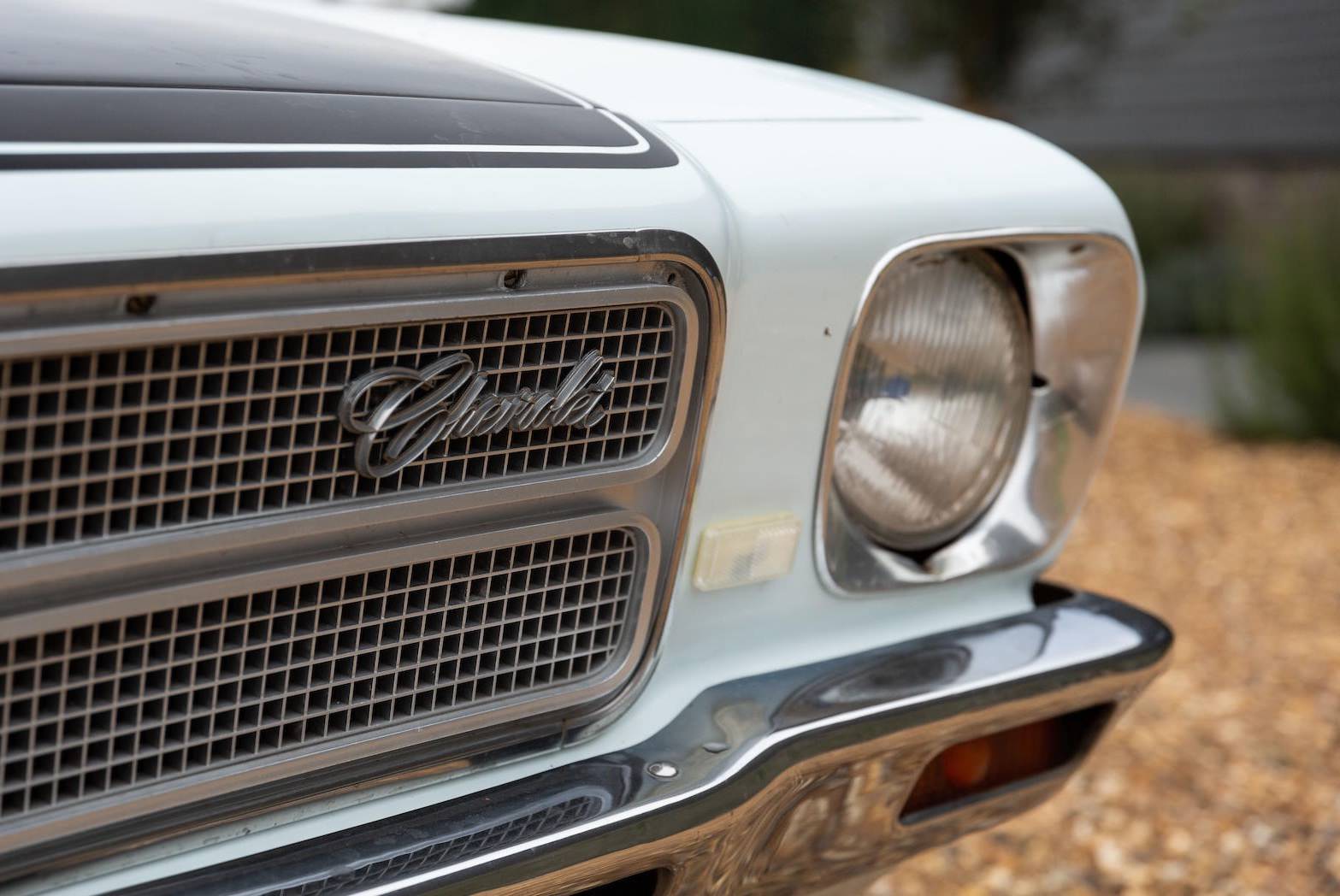
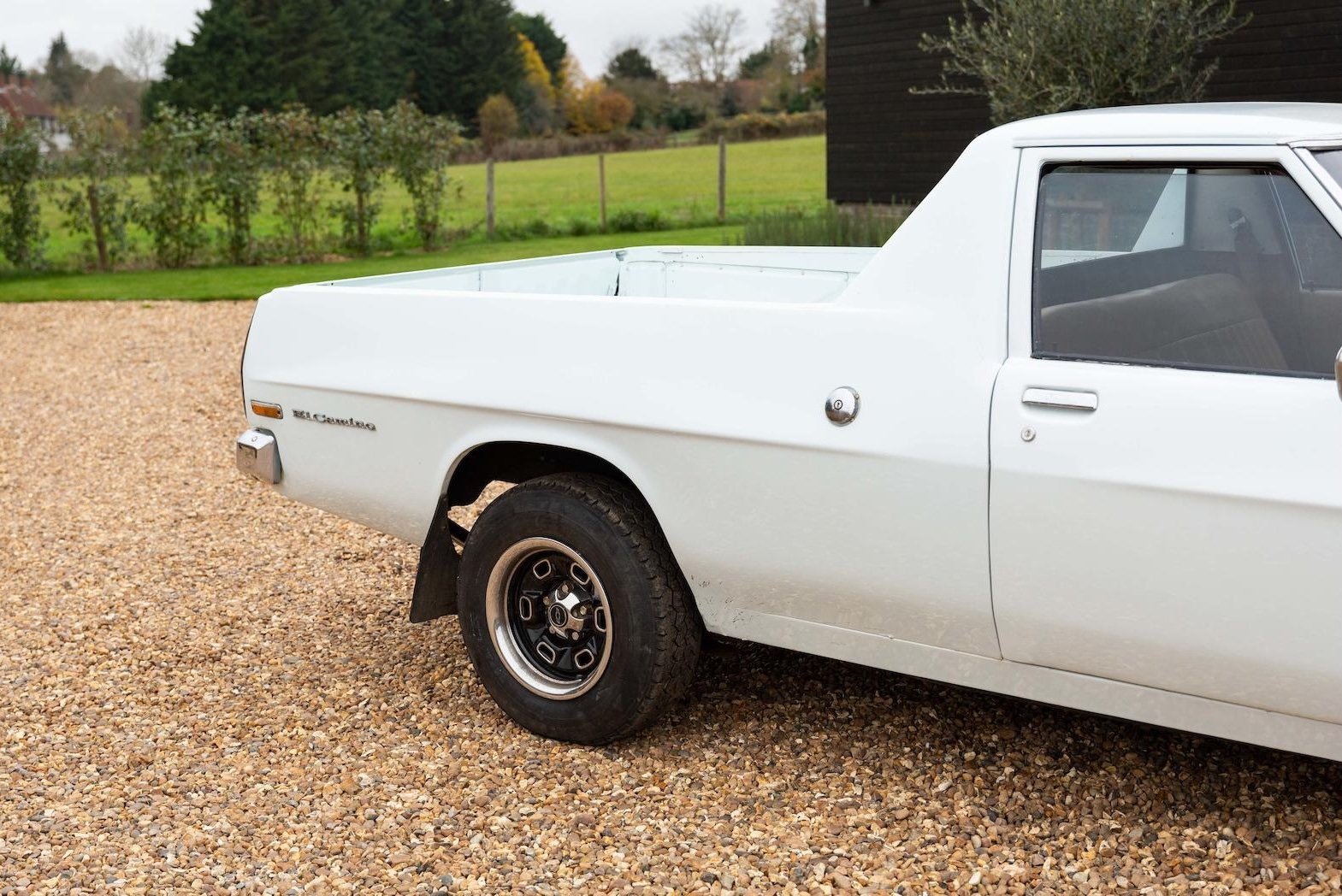
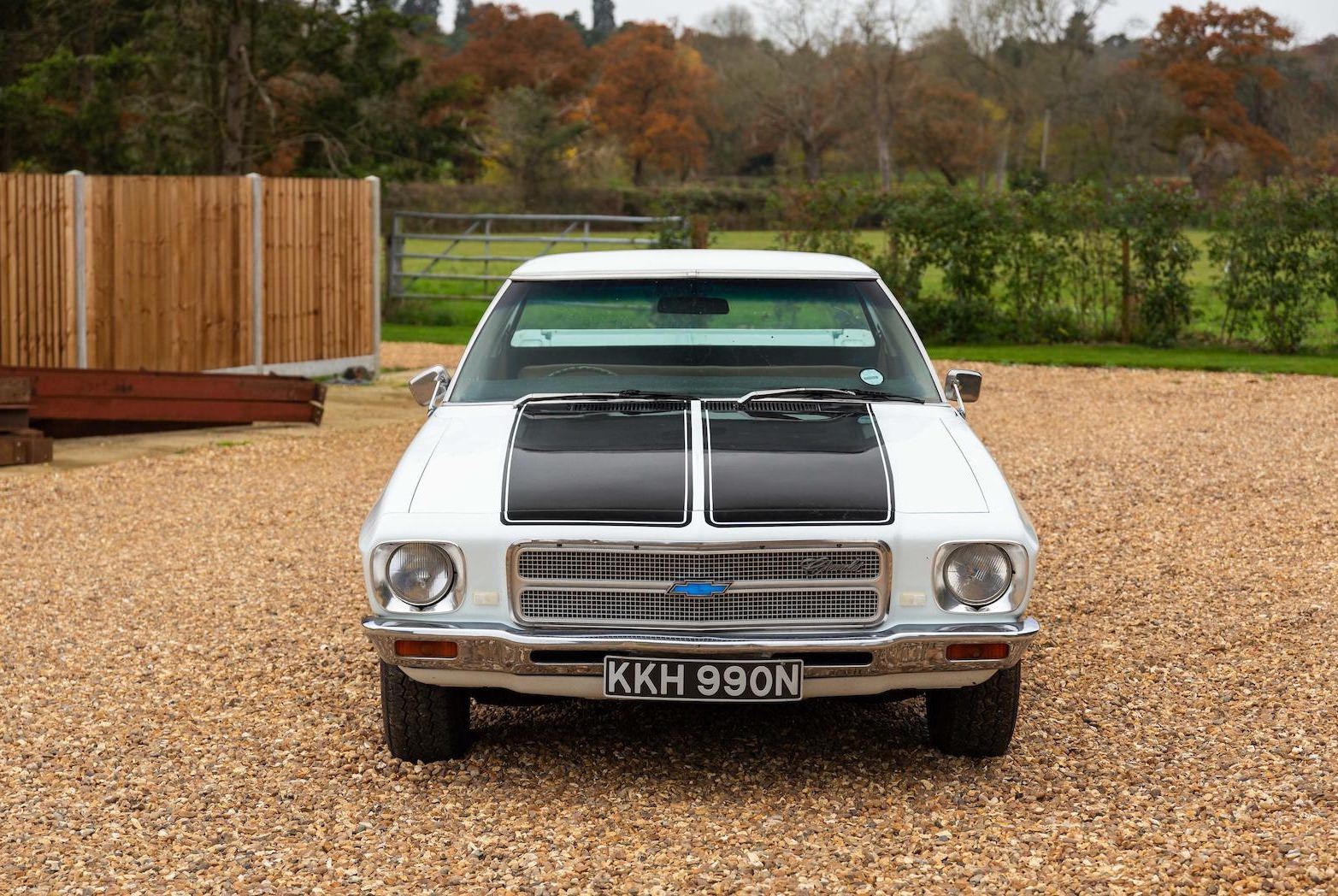
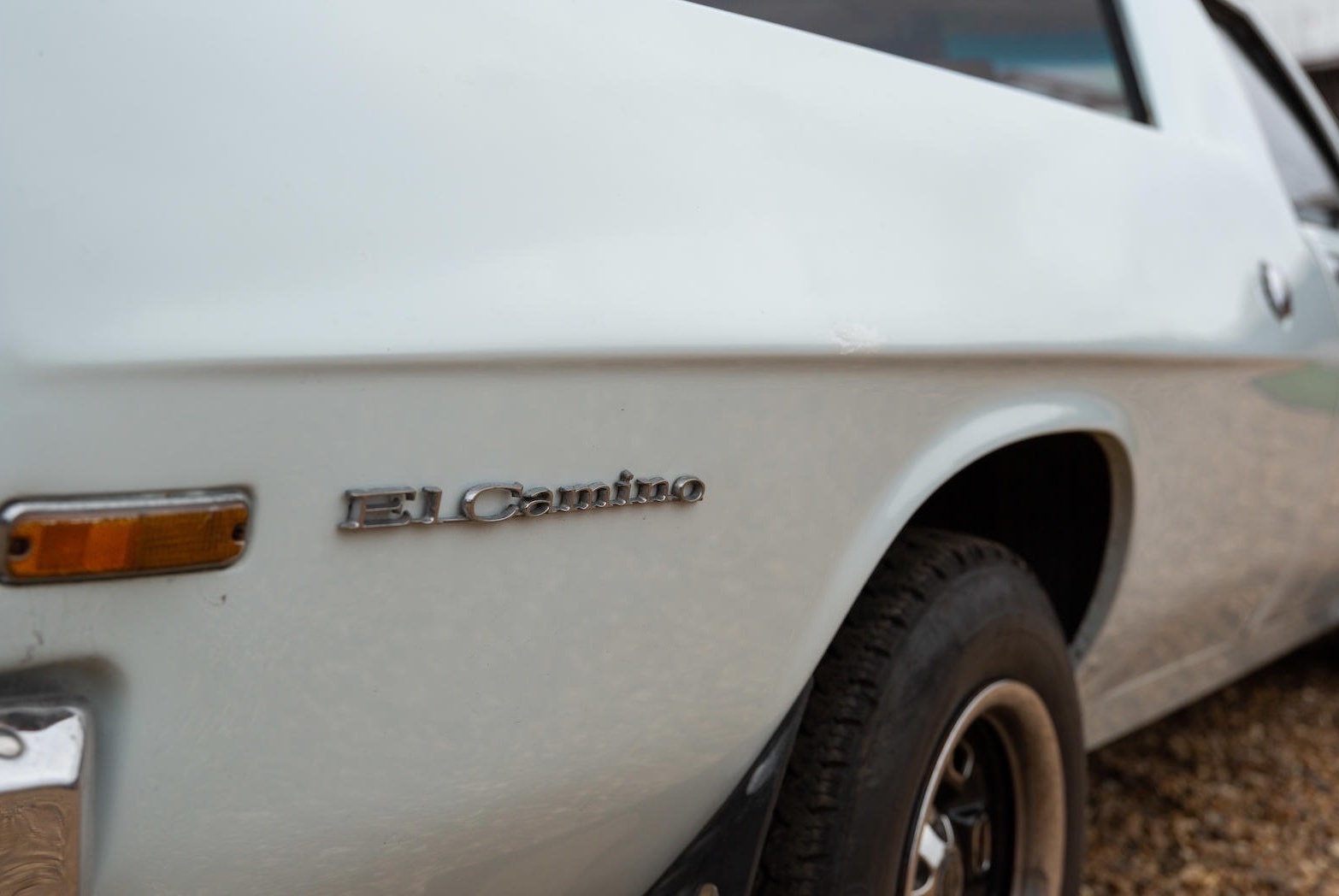
Though it’s badged as an El Camino the car is really a Holden HQ Ute built in Australia for GM’s market in South Africa.
It’s not known how many examples of the HQ-based Chevrolet El Camino remain in South Africa, but we do know that they only very rarely come up for sale outside the country – making the car pictured here all the more unusual.
This vehicle is a 1975 South African Chevrolet El Camino, the final model year before Holden introduced the HJ series. Under the hood you’ll find the popular Holden straight-six engine with a single carburetor, and power is sent to the rear wheels via an automatic transmission.
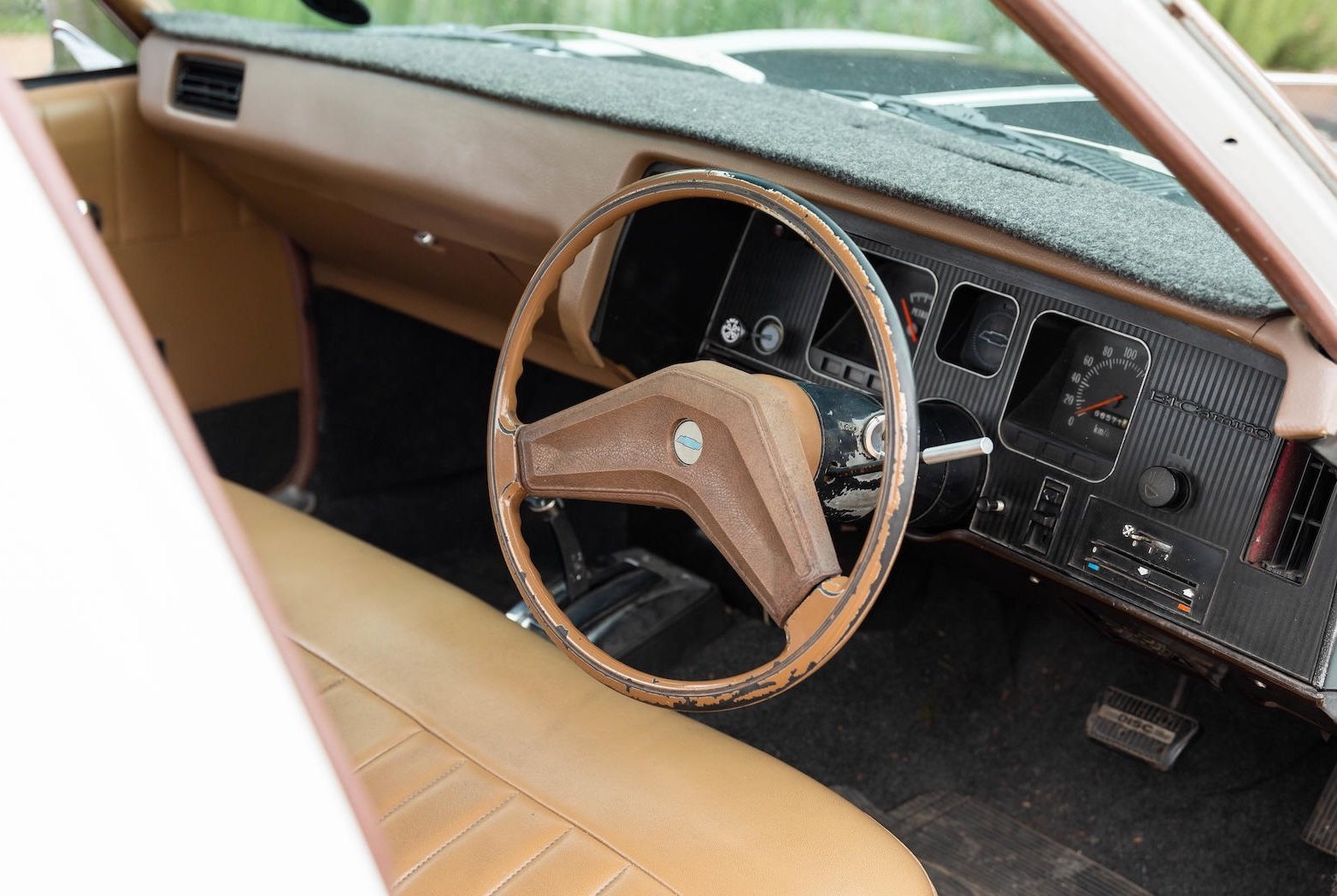
The vehicle looks largely original throughout with a few minor changes here and there, the wheels, badging, and interior all look completely stock.
Bonhams is due to offer this unusual El Camino at the MPH auction on the 11th of December, the price guide is a rather reasonable $13,000 – $20,000 USD. If you’d like to read more about it or register to bid you can click here to visit the listing.


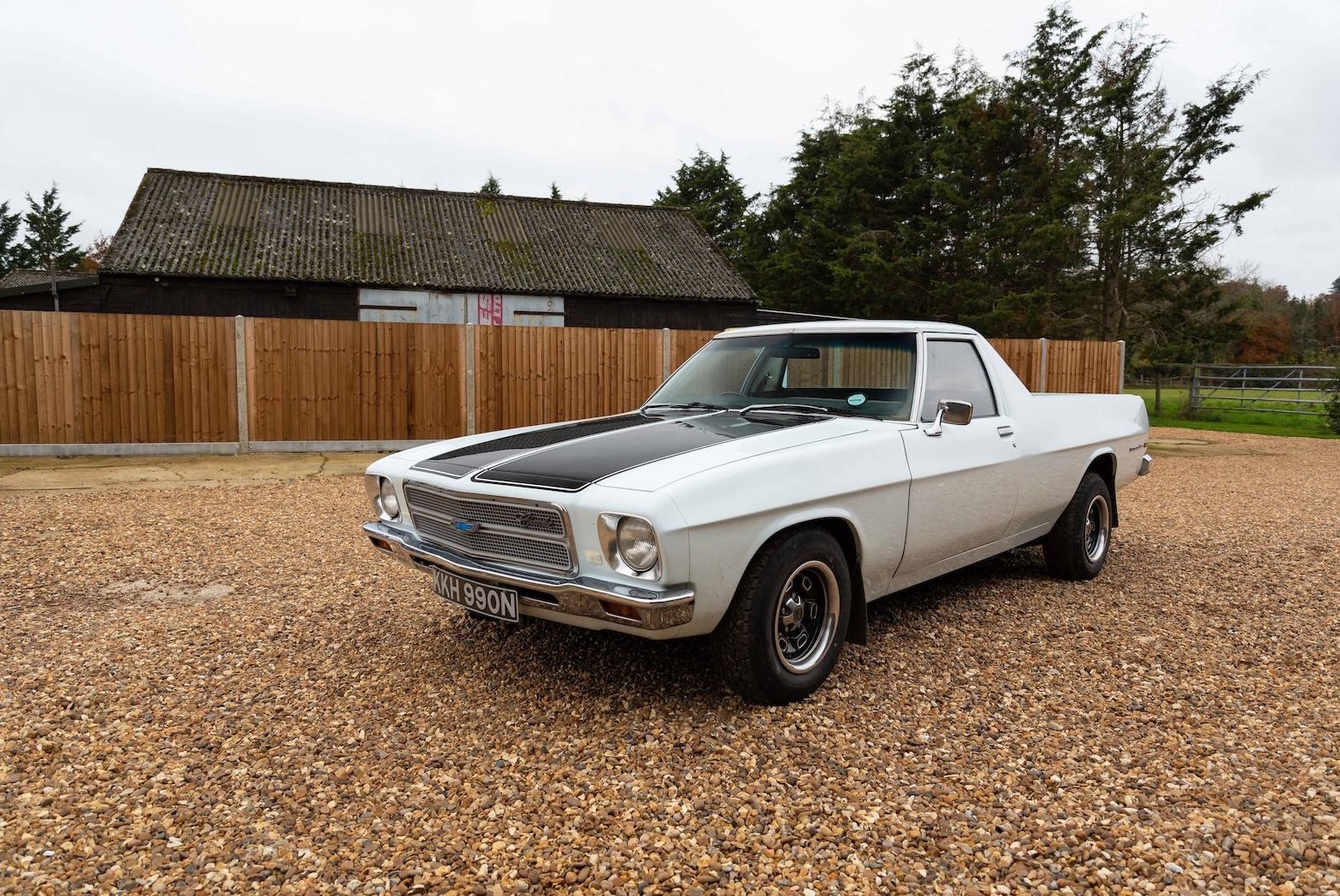
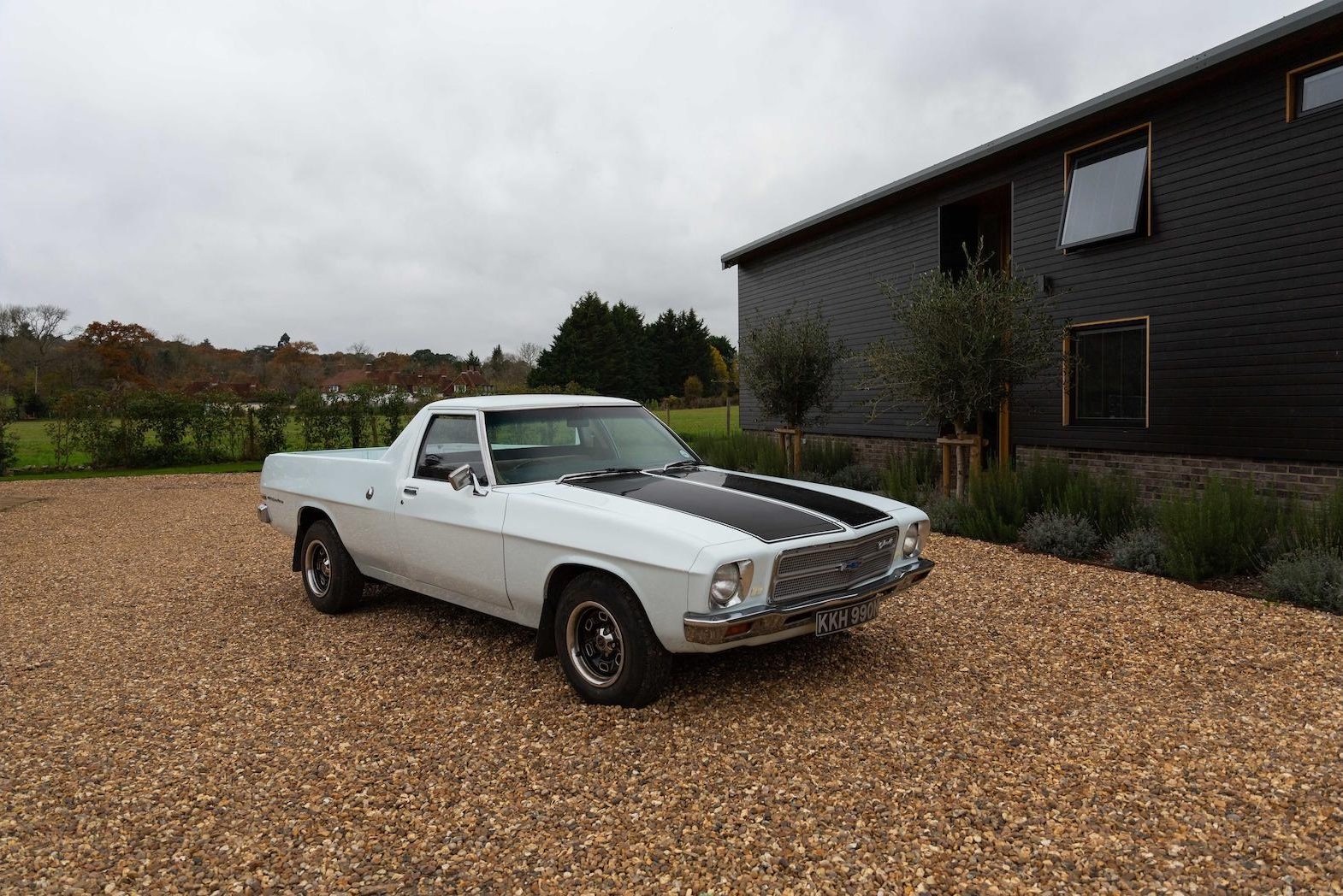

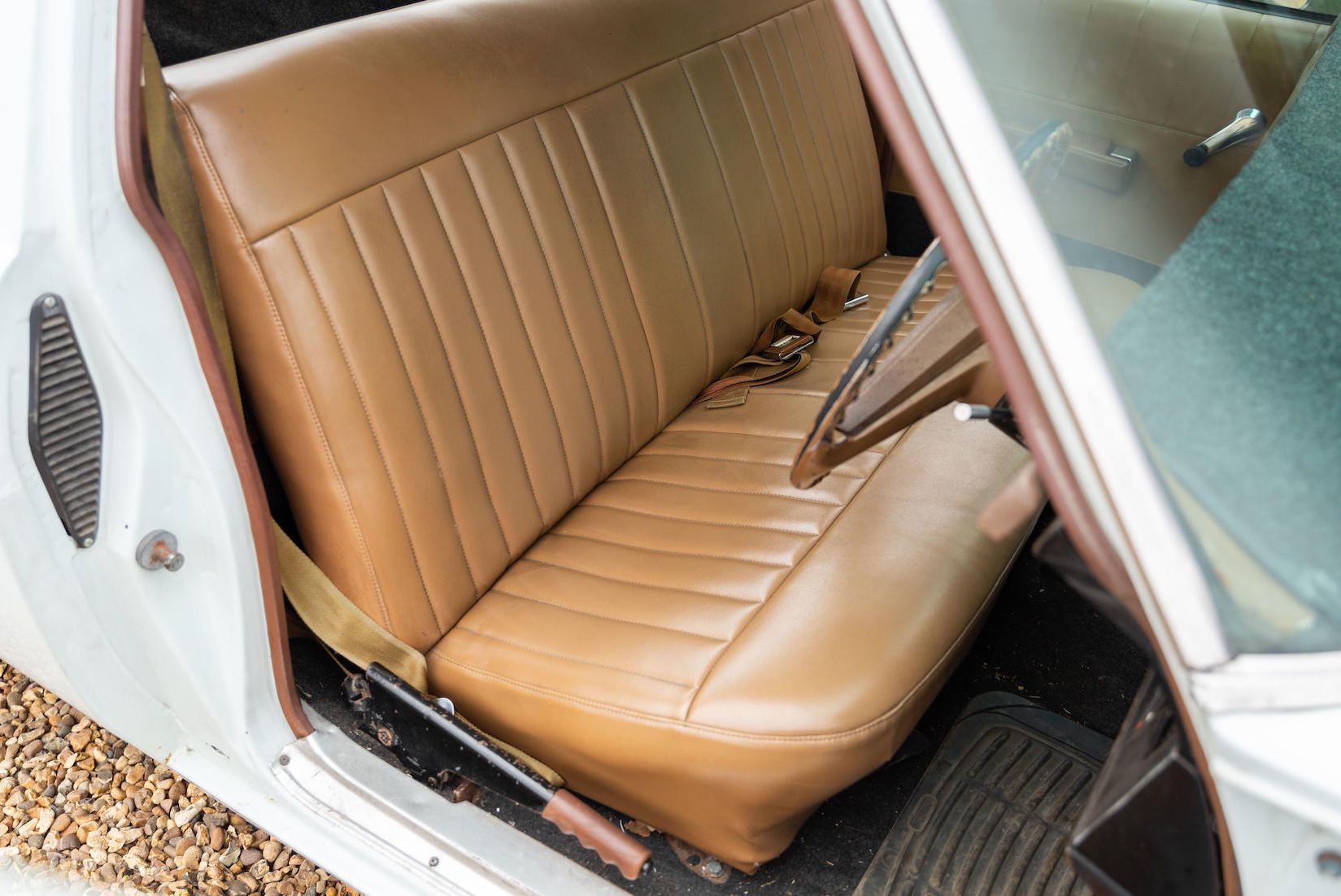
Images courtesy of Bonhams
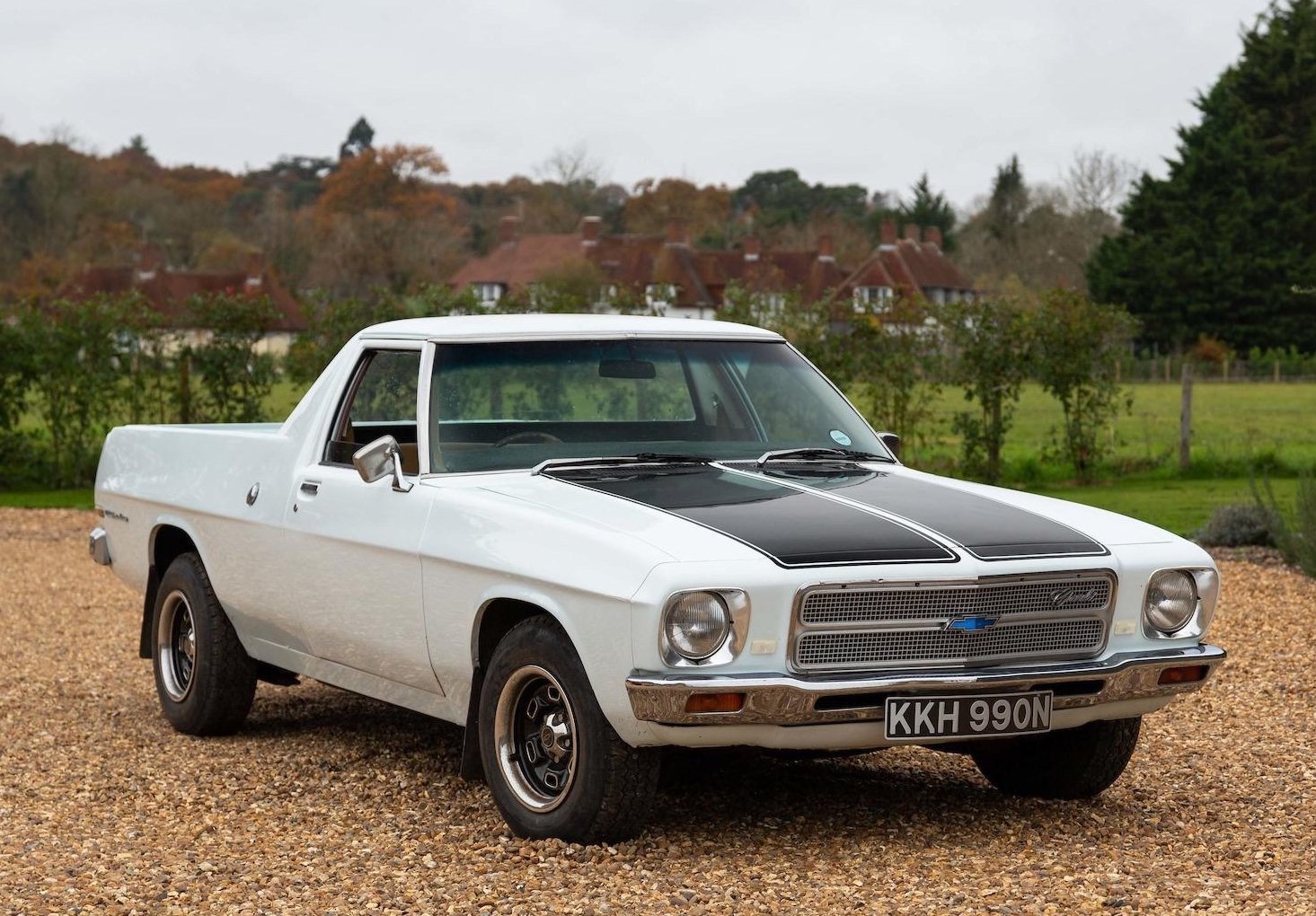
The post A Rare South African Chevrolet El Camino appeared first on Silodrome.

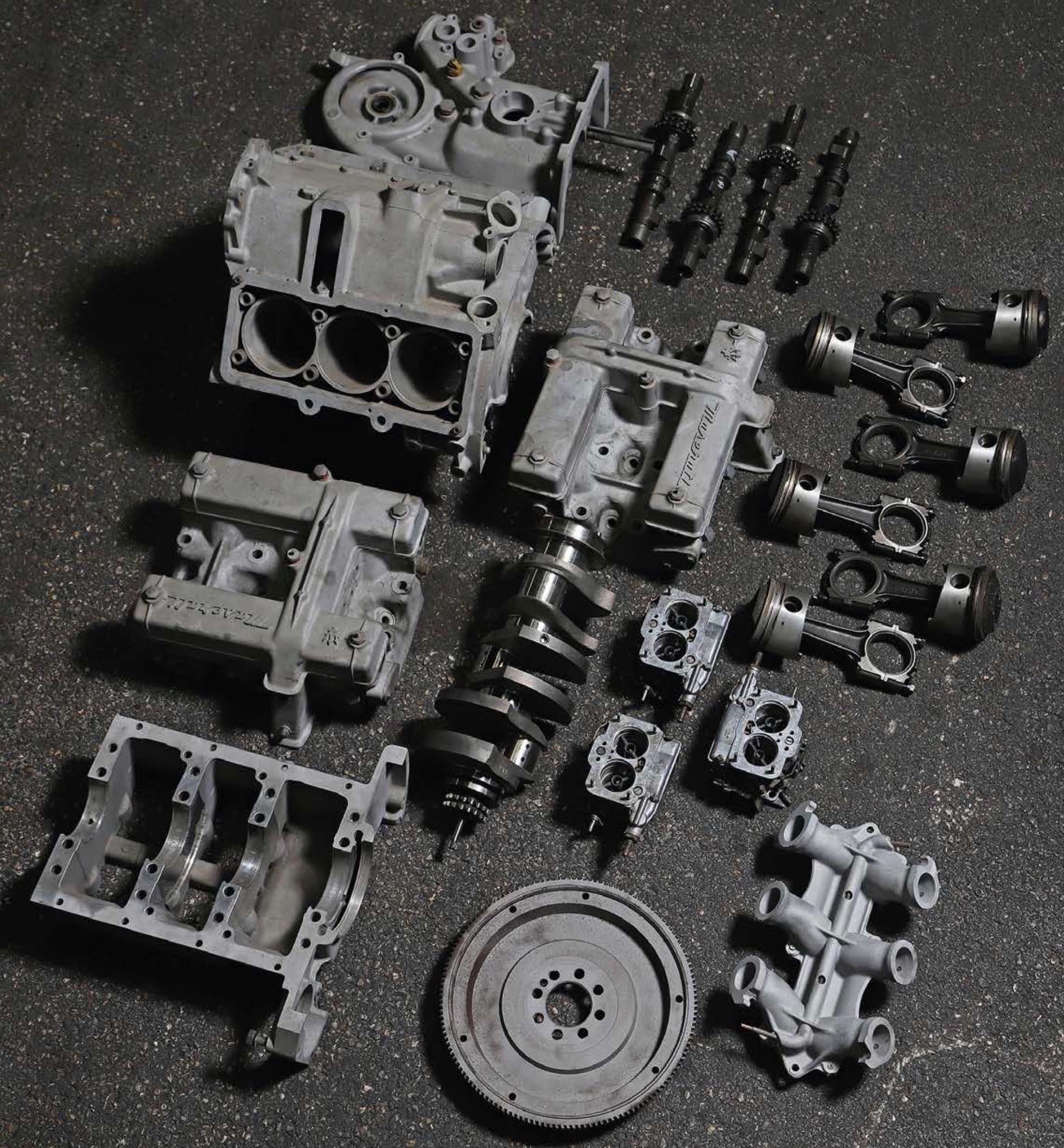
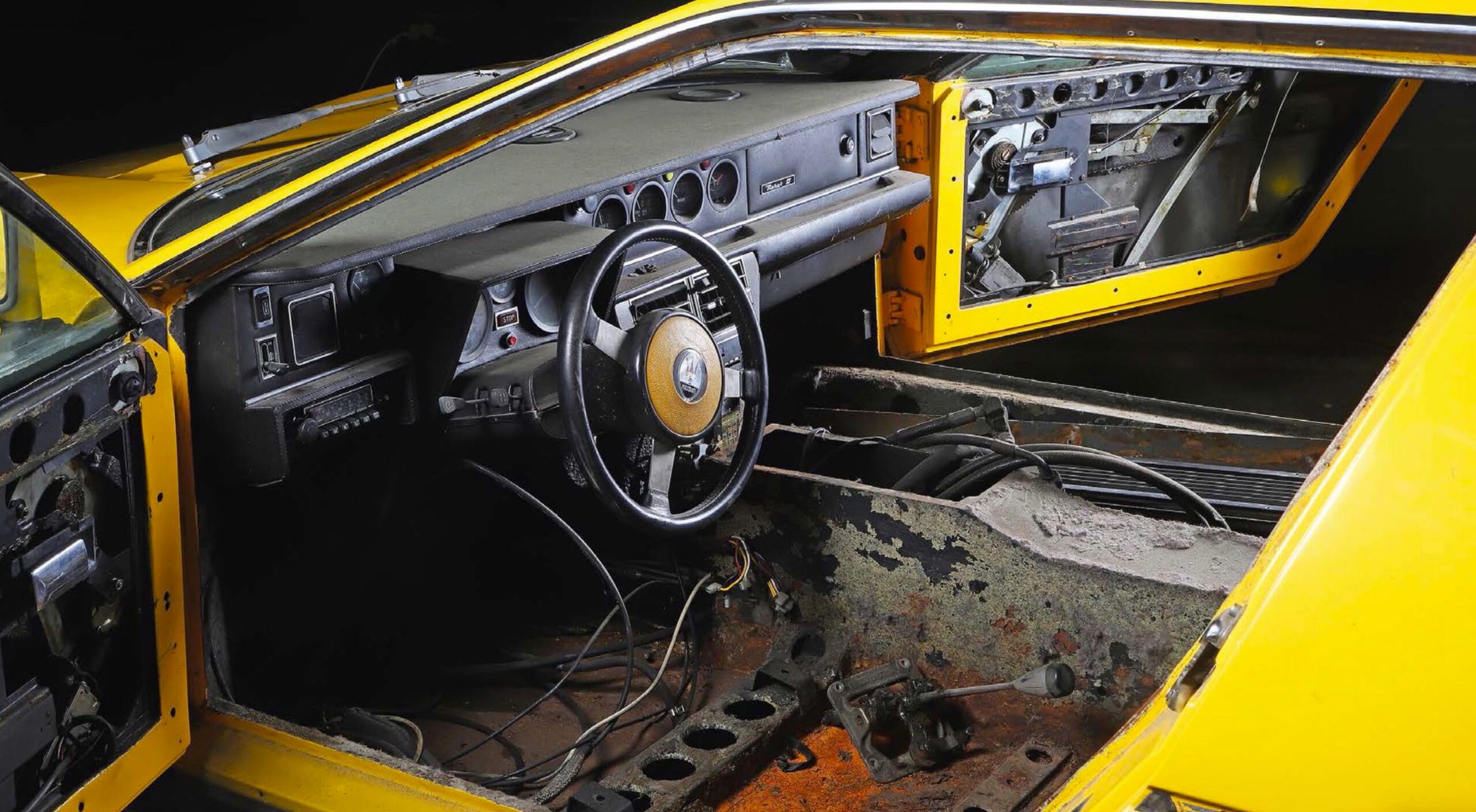
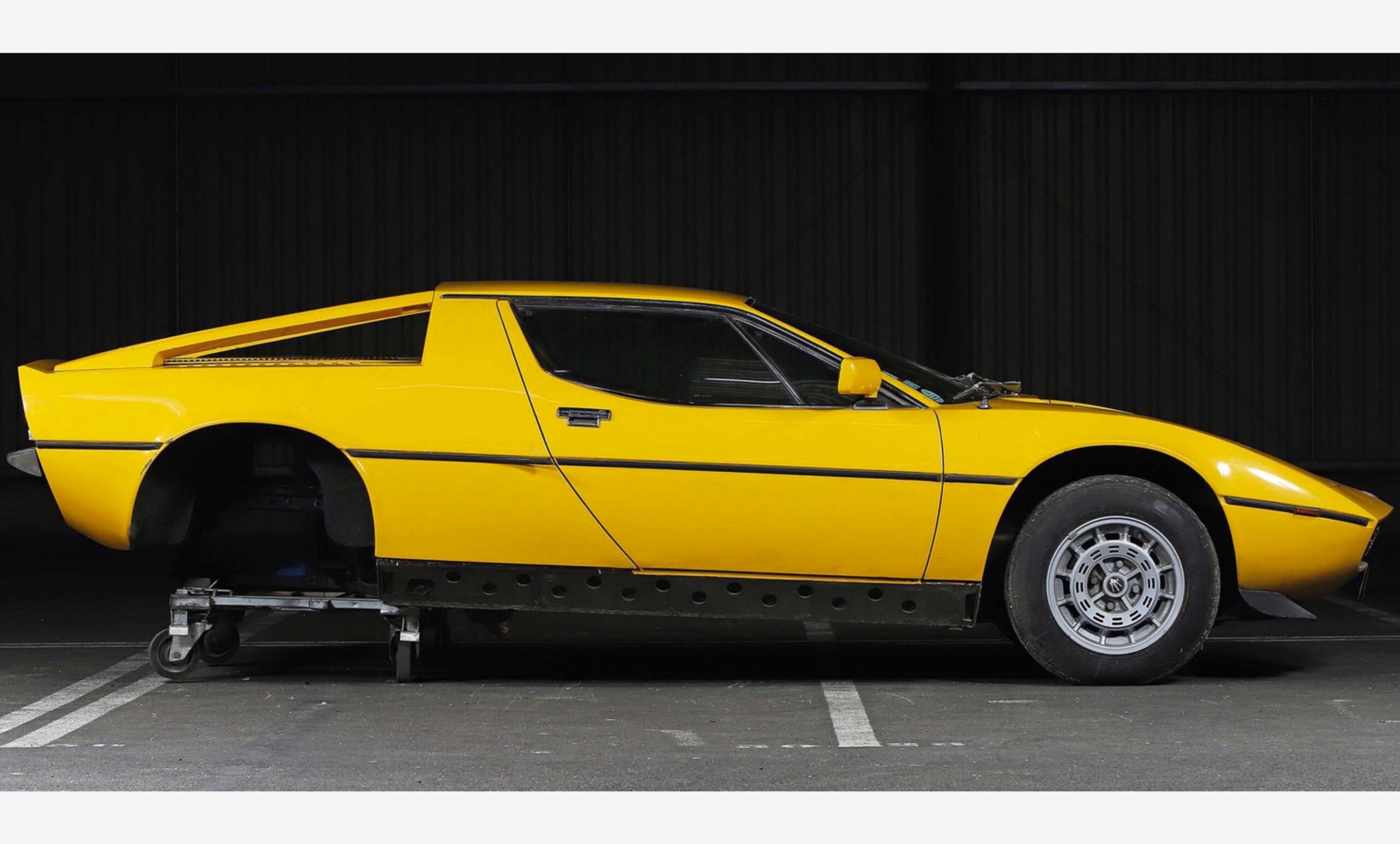
This Maserati Merak SS was partially disassembled for a restoration, however for reasons unknown the project stalled and it’s now being offered for sale with a price guide of $17,000+ USD – vastly lower than the $104,000 USD valuation of a Merak SS that’s had a concours restoration.
The Maserati Merak was developed as a more practical and more affordable version of the earlier Maserati Bora. Thanks to its smaller V6 engine it had two additional seats in the rear, making it a viable option for those with young kids.
The Maserati Bora was first shown to the world at the Geneva Salon in March 1971, it was a V8 powered, mid-engined sports car designed by Giorgetto Giugiaro at Italdesign.

The Giorgetto Giugiaro styling of the Merak is undeniably beautiful, and it added the twin conveniences of better fuel economy and 2+2 seating compared with the Bora.
There was much global interest in the Bora, however it was clear that a pair of rear seats would help the company sell a significant number of additional cars. Maserati was owned by French automaker Citroën at the time, and so it was decided to develop a version of the Bora that was more fuel efficient and affordable, with that much needed 2+2 seating configuration.
Giugiaro was tasked with creating this new car, he kept the design much the same though there are some changes here and there, perhaps most notably in the rear where the full glass fastback was removed and replaced with an open back flanked with flying buttresses.
This new car was introduced to the world at the 1972 Paris Auto Show, it was called the Maserati Merak and its timing couldn’t possibly have been better. Less than a year later the world would be engulfed by the 1973 Oil Crisis which sent gasoline prices soaring around the world, resulting in a sharp decline in the number of fuel-hungry performance cars being sold.
As a more fuel efficient car with a lower price tag than its V8 sibling and practical 2+2 seating, the Merak outsold the Bora by more than a 3:1 ratio. In 1975 Maserati upgraded the car to “SS” specification, power was increased from 190 hp to 220 hp thanks to the use of three larger 44 DCNF 44 carburetors and a higher compression ratio.
Above Video: Maserati Merak SS owner Bruce Wagner talks about this car and its interesting history, this short film also includes some driving footage and engine sound.
Maserati was bought by Alejandro de Tomaso in 1977, he quickly opted to axe the Bora but he would keep the Merak in production well into the 1980s, not replacing it until 1984.
The Merak was originally powered by a V6 engine first designed by Giulio Alfieri in 1967 for the Citroën SM. It was an advanced engine for its time, so advanced in fact that it would stay in production with Maserati into the 1990s with a series of upgrades including twin turbocharging.
This engine is 3.0 liter (2,965cc) 90° V6 with twin chain-driven overhead camshafts per bank operating two valves per cylinder. Power output was originally 190 hp however this increased to 220 hp in the Merak SS.
Power is sent to the rear wheels via a 5-speed Citroën transaxle gearbox into a limited-slip differential.
Much like the Bora, the Merak uses a steel monocoque unibody with a tubular steel rear subframe onto which the powertrain and engine are fitted. Unusually, the engine is mounted longitudinally rather than the more common transverse layout used in competing models like the Ferrari Dino 308 GT4 and the Lamborghini Urraco.
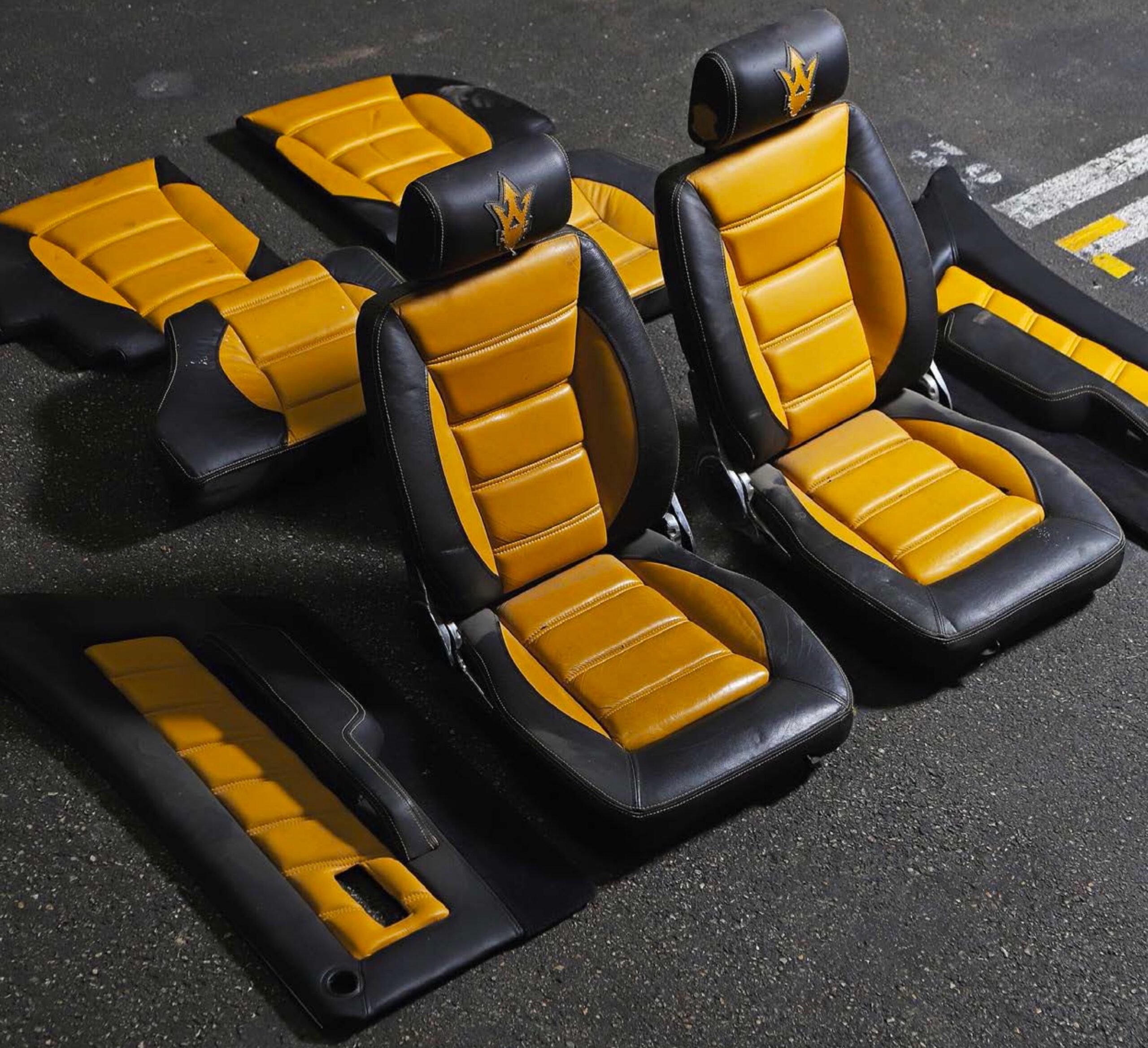
The major interior elements are all accounted for, and look to be in reasonably good condition.
The Merak rides on unequal length A-arms, coil springs, and telescopic shock absorbers front and back with disc brakes fitted at each corner.
The top speed of the Merak SS is listed by Maserati as being 250 km/h or 155 mph, an excellent rate of speed for a 3.0 liter V6 with 2+2 seating in 1975.
The Merak SS you see here is a 1981 model from the third last year of production, as a result in includes all of the upgrades made to the model family over its 11 year production life.
The SS version of the Merak is the most desirable as it has the additional power output that many want in a sports car of this nature. Hagerty currently lists the value of a concours Merak SS at $104,000 USD and the cost of a vehicle in good condition at $67,000 USD.
The Merak SS you see here is estimated to sell for somewhere in the region of $17,000 – $22,670 USD, and the listing states that the car is believed to be complete, it now needs to be restored and reassembled. There’s no doubt that this is a big project, but for the right person or team it could be a rewarding way to stay busy over the winter.
If you’d like to read more about this Maserati or register to bid you can click here to visit the listing on Aguttes. The car is due to cross the auction block on the 12th of December.
Images courtesy of Aguttes
The post An “Affordable” Project Car: A 1981 Maserati Merak SS appeared first on Silodrome.
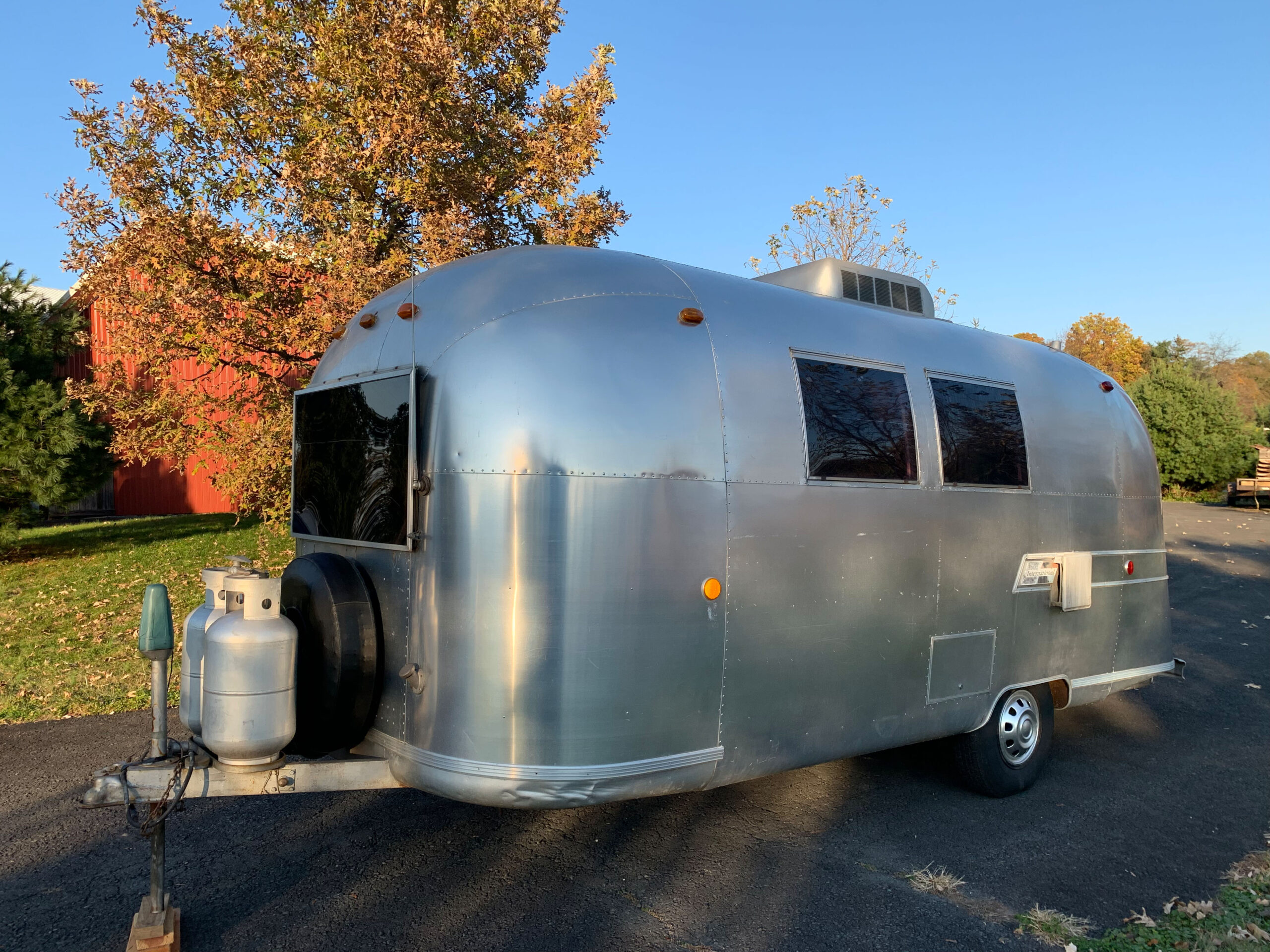
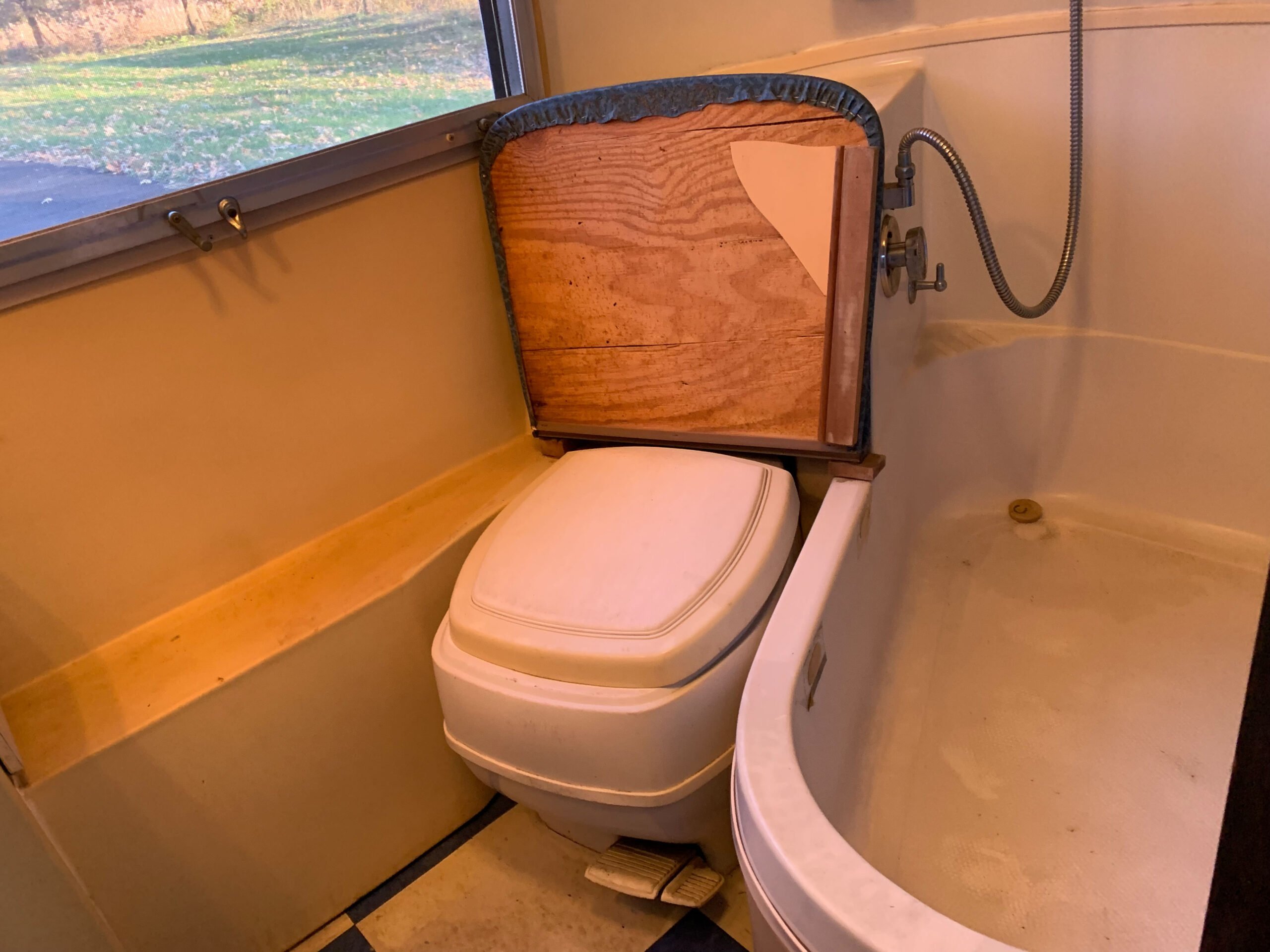
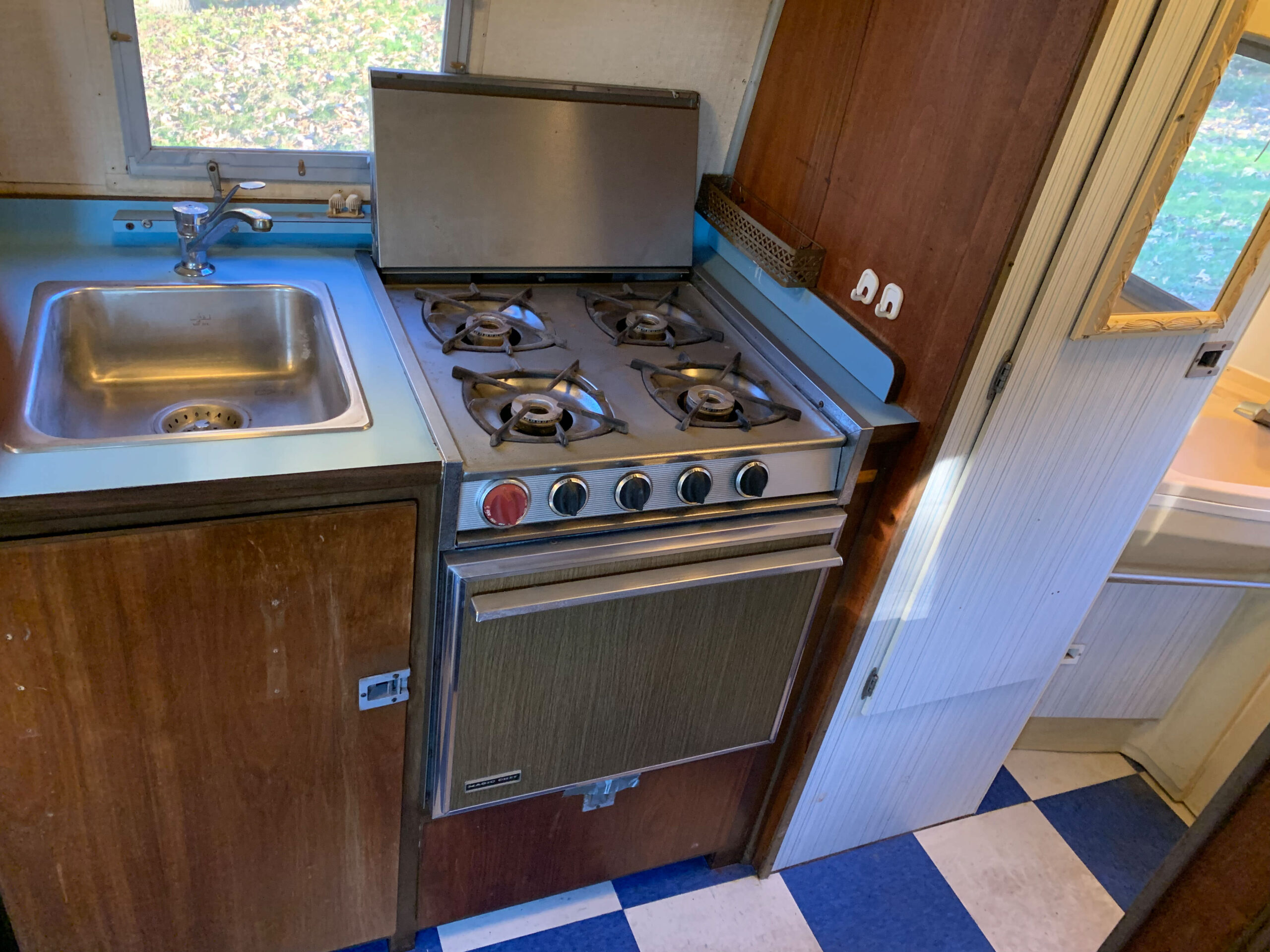
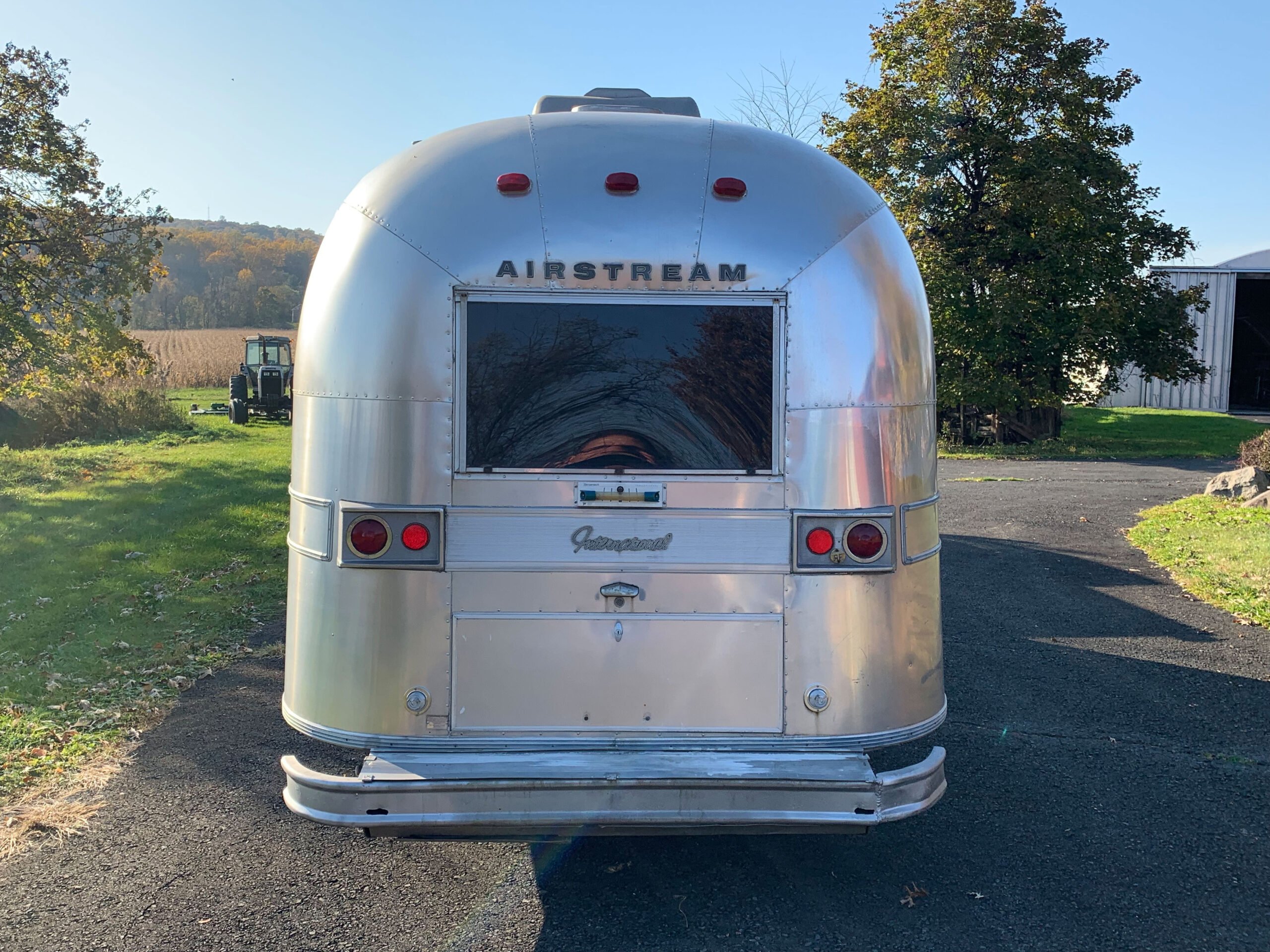
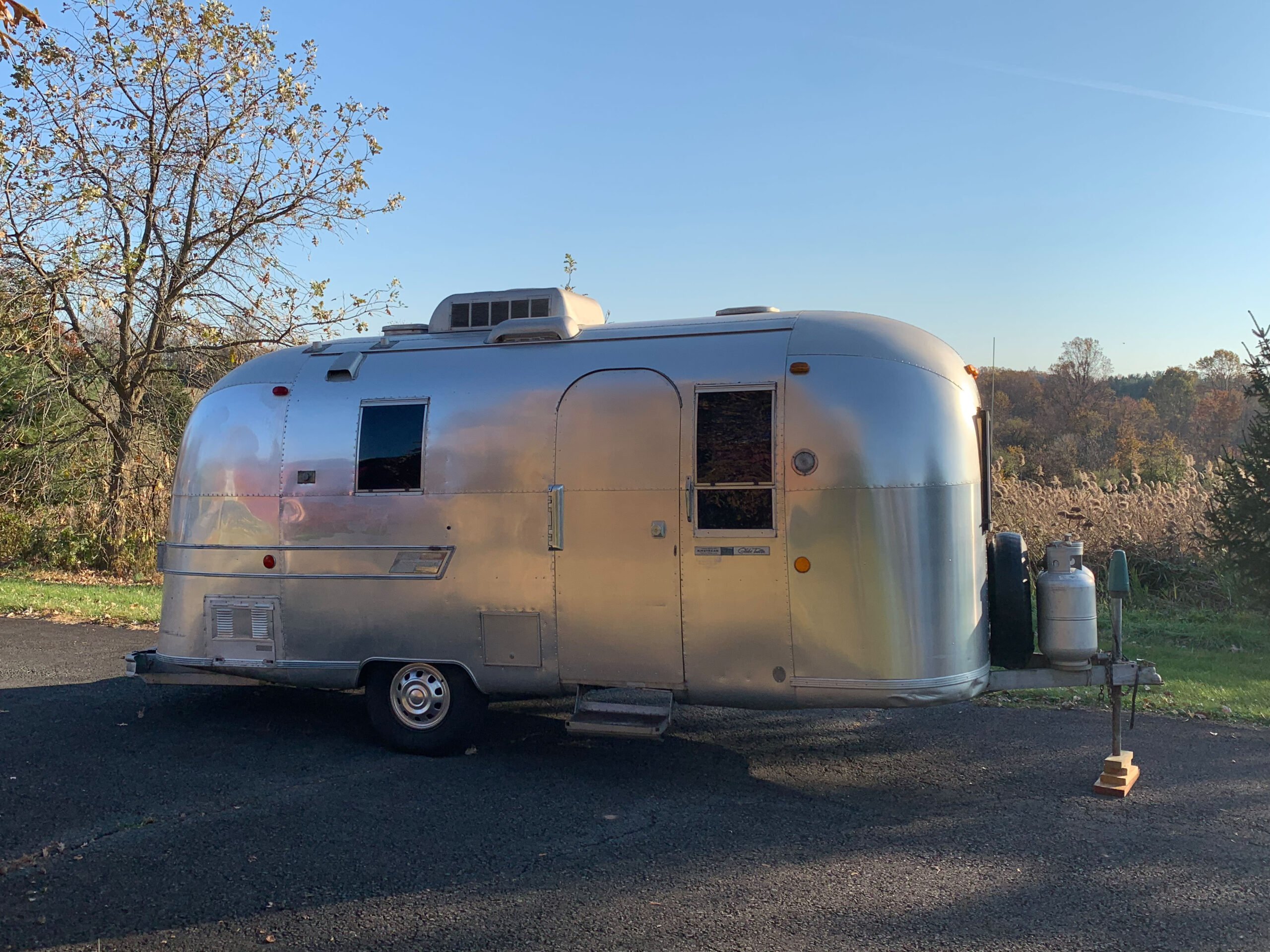
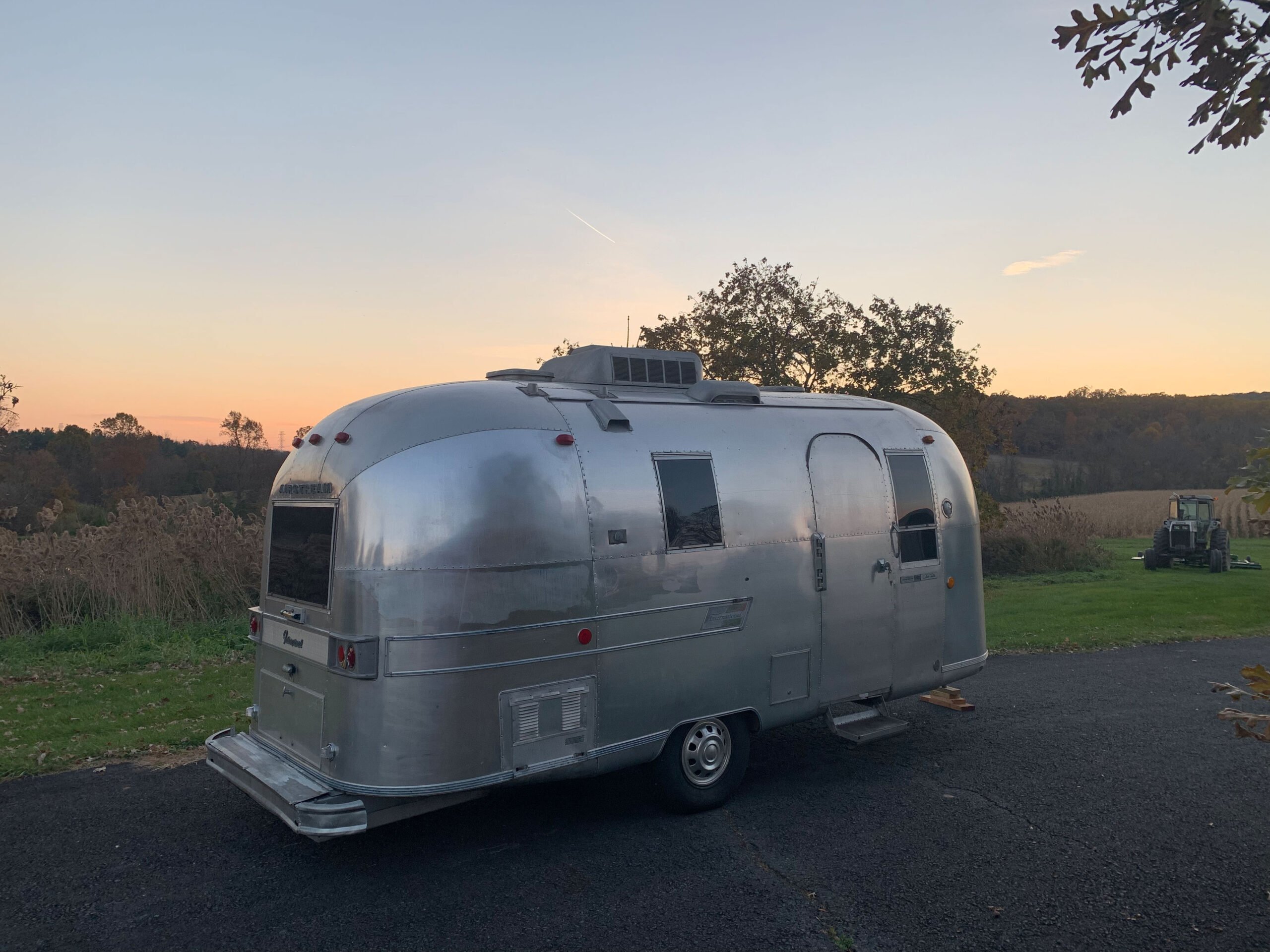
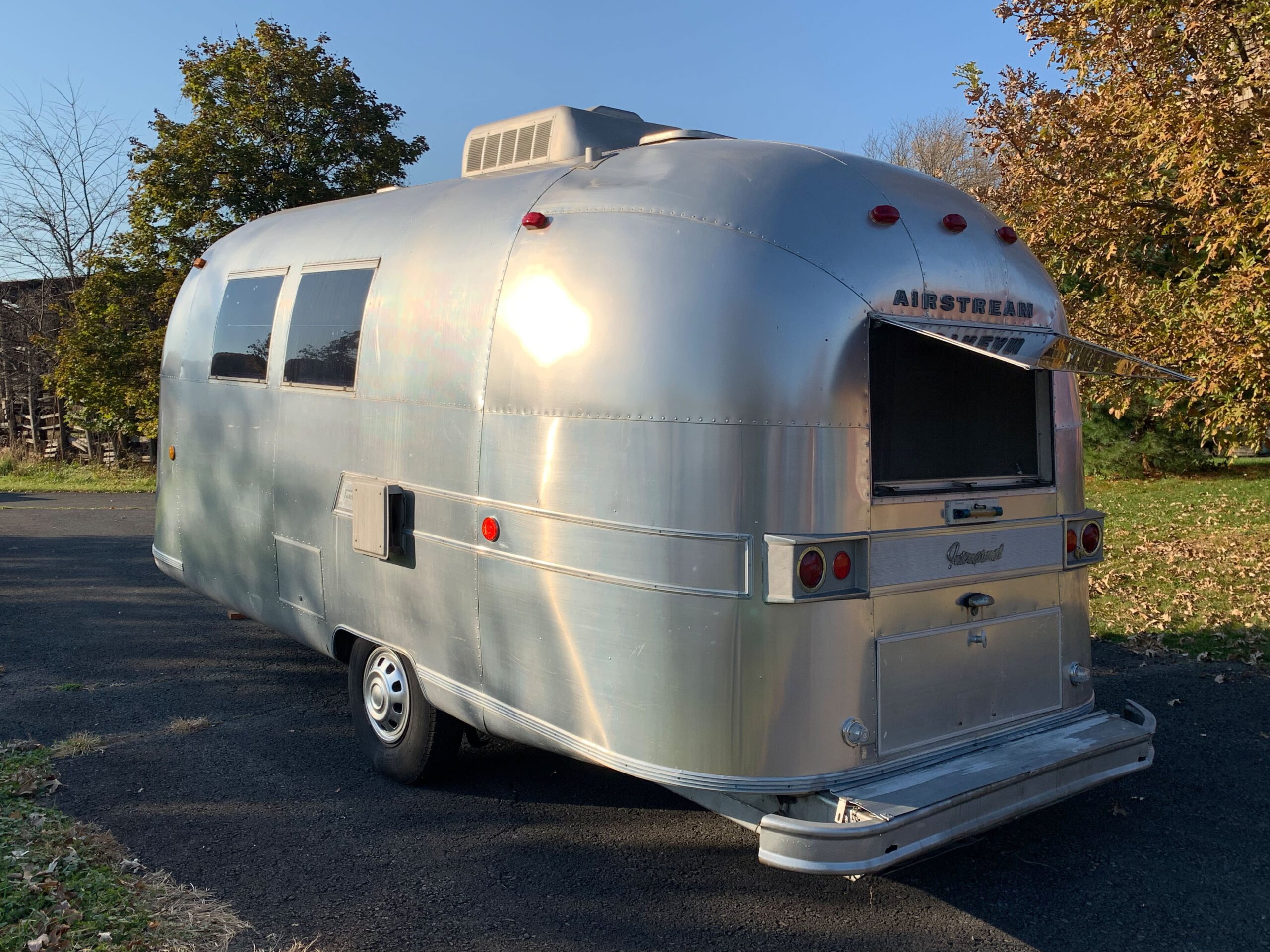
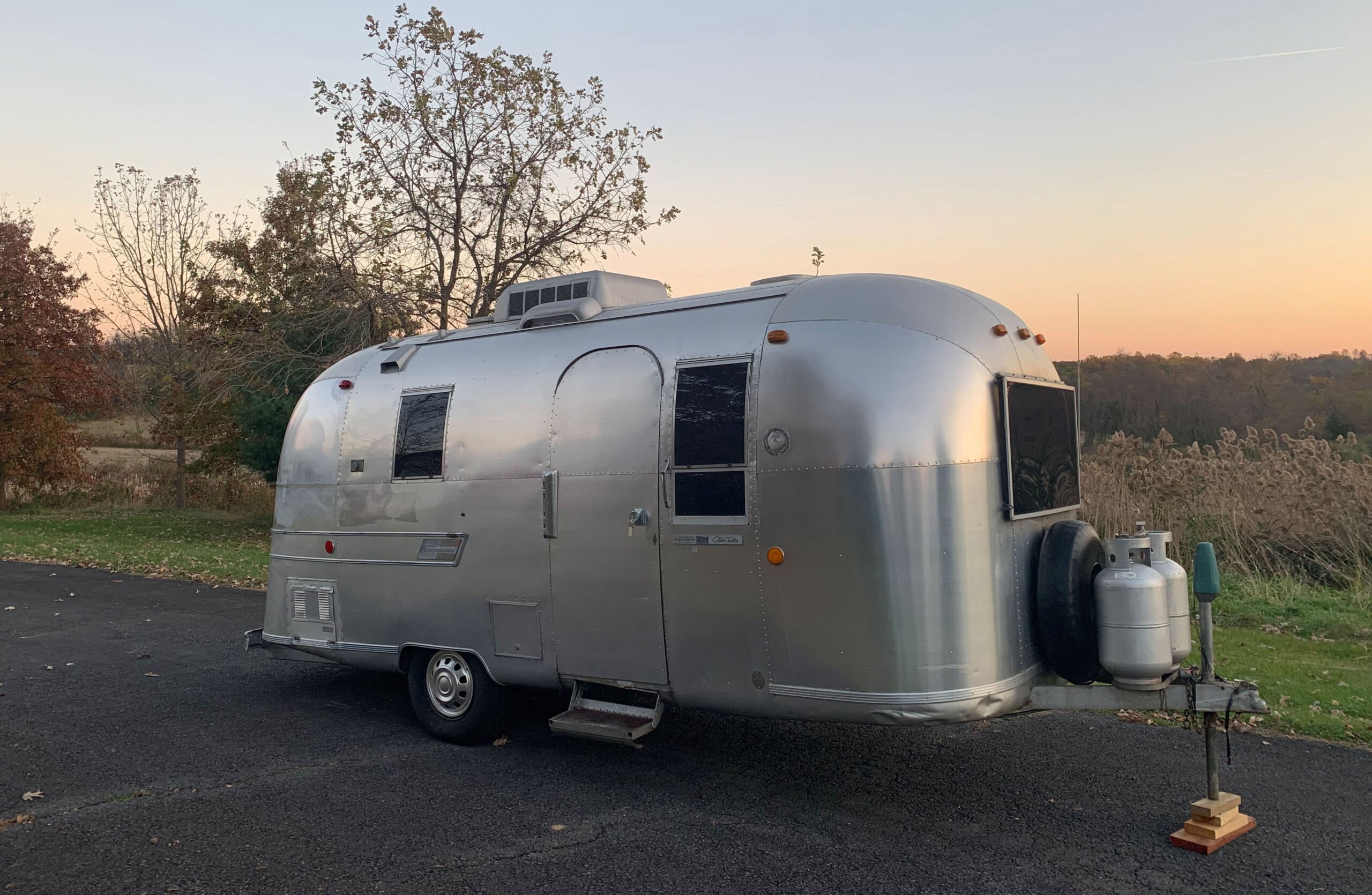
This well-preserved 1968 Airstream Globetrotter is a great example of what travel trailers were like back in the 1960s and earlier. This example has an original interior that includes a bathroom with a toilet, sink, and shower, an electric generator, a gas stove, and lighting throughout.
Airstreams have always been targeted at more well-to-do travelers however this model is the more affordable single axle 20 ft model that’s also much easier to tow than the larger Airstreams.
At some point as the 20the century progressed, the Airstream travel trailer became a global icon. They’ve been used by movie stars like Tom Hanks who had his own custom Airstream built and used it on the sets of movies like Apollo 13, Forrest Gump, Philadelphia, Catch Me If You Can, Castaway, The Polar Express, Sully, and many more.
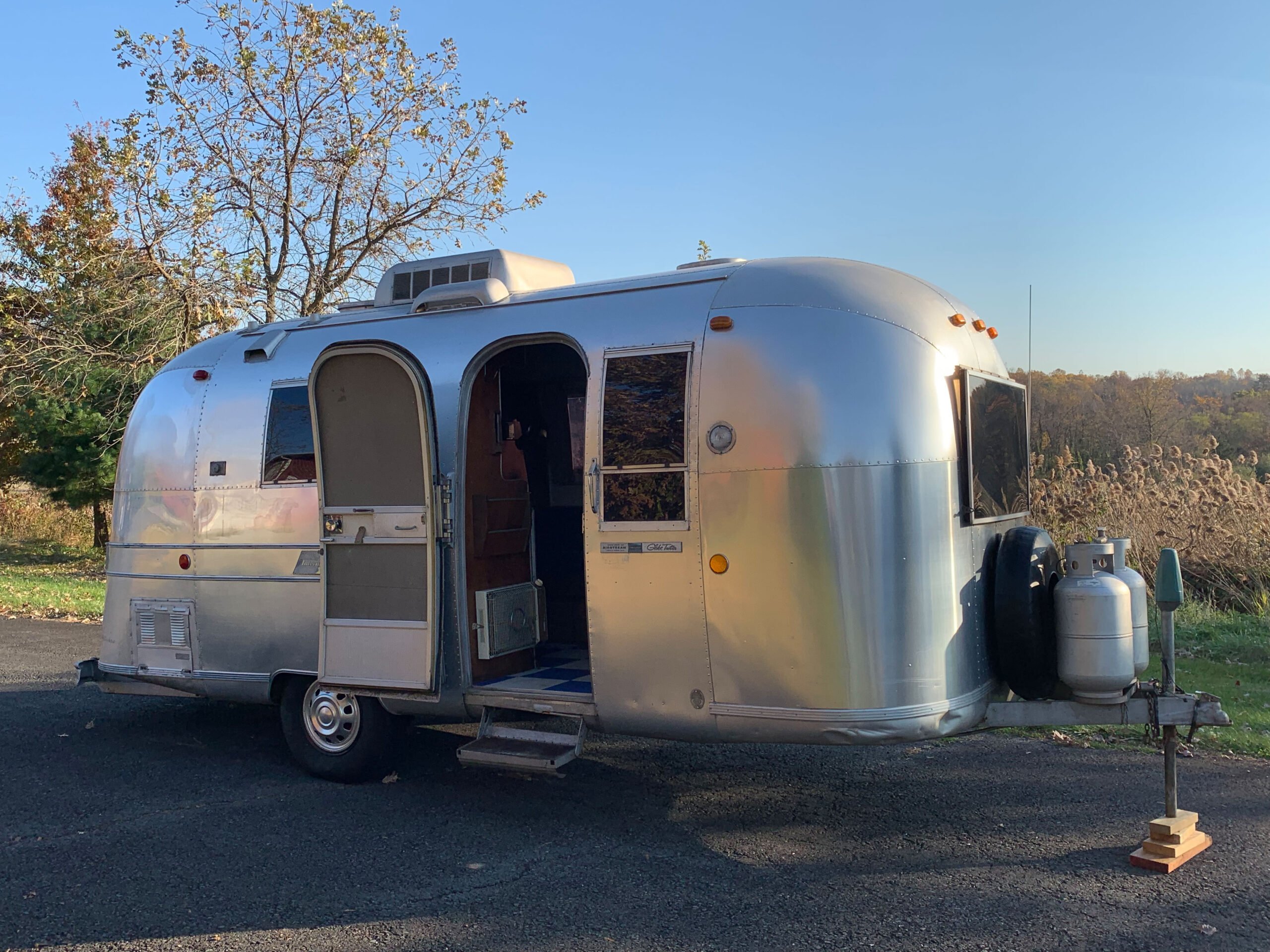
This 20 foot Airstream is an excellent size for a traveling couple, it has all the amenities you could ask for including A/C and an onboard generator, and it can be towed by many tow ball equipped vehicles thanks to its low weight.
Since Airstream first starting building aluminium trailers in 1936, it would be the only company building trailers of this type that survived the Great Depression, however it was shut down shortly after by the US involvement in WWII.
Airstream bounced back after the war, resuming production in 1948 thanks to the availability of aluminum which had been strictly rationed during the conflict and prioritized for aircraft use. This post-WWII period was an economic boom time in the United States and many Americans were buying luxury items like expensive cars, overseas holidays, and things like Airstreams.
This boom continued well into the 1960s, but which time Airstream had their travel trailers down to a fine art.
They could be ordered with all the modern conveniences of home including electrical power, a fully equipped bathroom, a full kitchen, air-conditioning, an onboard generator, built in lighting, and the larger models had seperate living, dining, cooking, and sleeping spaces.

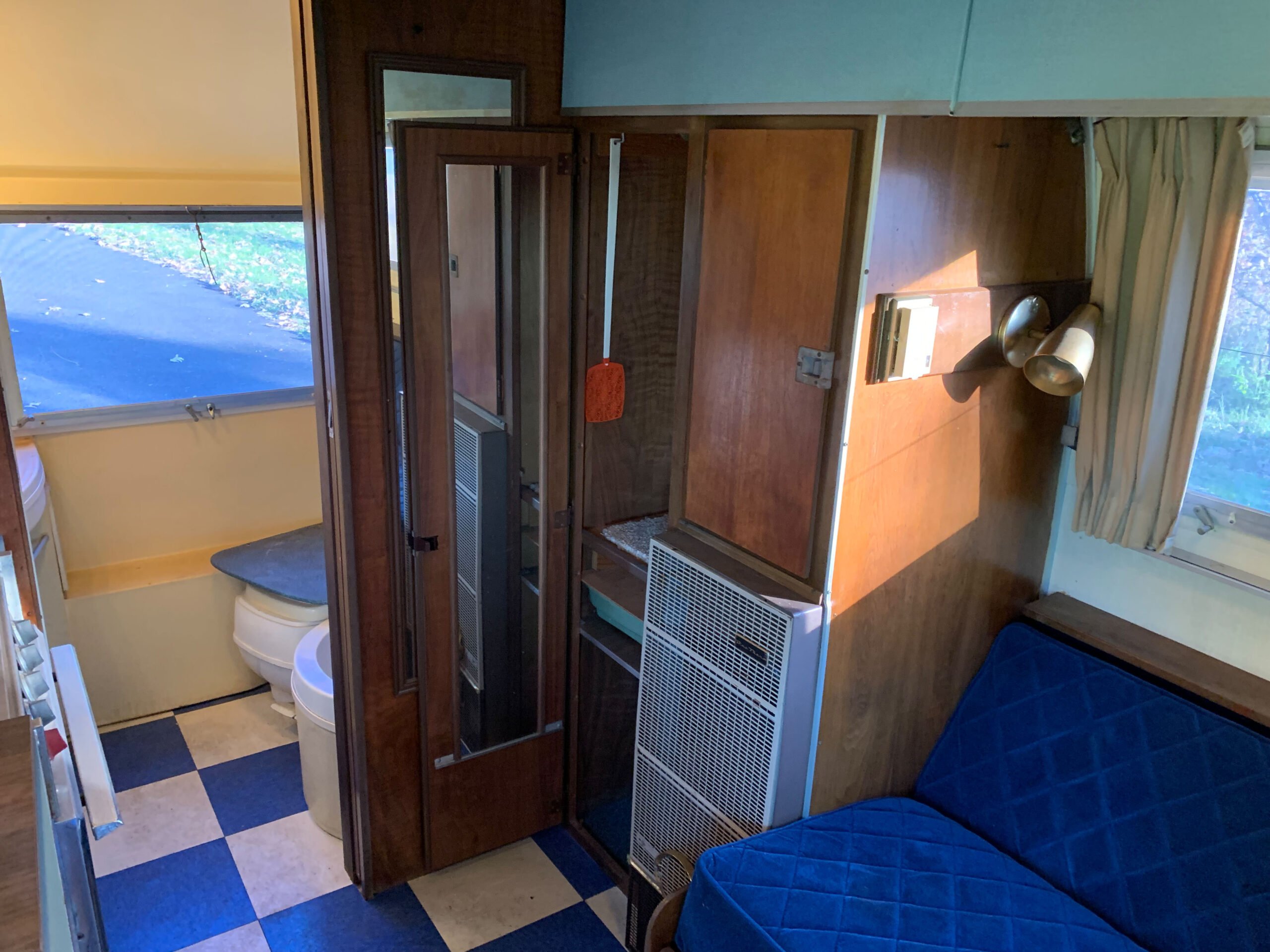
The interior retains its 1960s charm with the original cabinetry, flooring, and upholstery still in place.
The 1968 Airstream Globetrotter you see here is one of the more affordable and easier to tow models, it measures in at just 20 feet long but it still has all the modern conveniences you could ask for in the 1960s. Or the 2020s for that matter.
This Airstream is largely original, with blue diamond-stitched upholstery and blue and white checkerboard flooring in well-preserved condition throughout.
It has many high-end factory amenities including interior paneling, a bathroom with a sink, toilet, and shower, lighting throughout, roll-out windows with both clear and tinted glass, window shades, a Motorola AM/FM radio, a liquid-propane refrigerator and range stove, an electric generator, and a roof-mounted air conditioner.
It’s being offered by the seller with two liquid-propane tanks, its original registration certificate and warranty card, as well as manuals and other paperwork. It’s due to roll across the auction block in the first week of December and at the time of writing there’s no price guide listed.
If you’d like to read more about this time-capsule Airstream or register to bid you can click here to visit the listing on RM Sotheby’s.


Images: ©2021 Courtesy of RM Sotheby’s
The post For Sale: A Vintage 1968 Airstream Globetrotter appeared first on Silodrome.